

Agroecological principles and elements and their implications for transitioning to sustainable food systems. A review
Open accessThe DOI matches its Crossref record; 71 of the 71 references it cites were found in a registry or an index.
Abstract
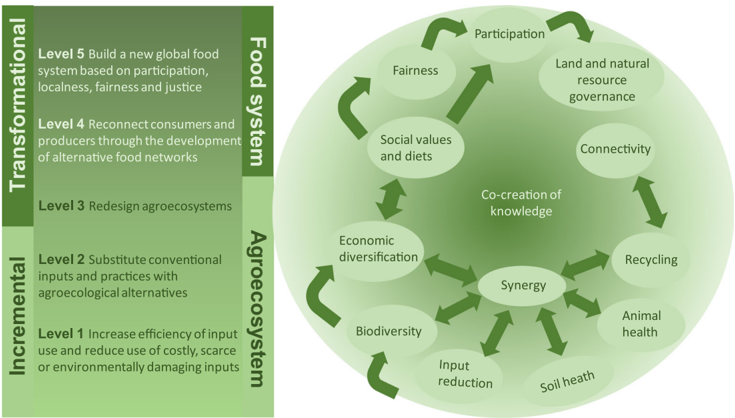
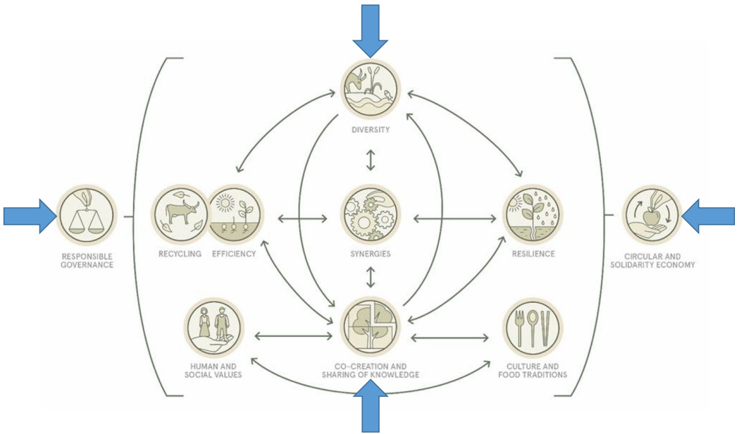
There is consensus that the global food system is not delivering good nutrition for all and is causing environmental degradation and loss of biodiversity, such that a profound transformation is needed to meet the challenges of persistent malnutrition and rural poverty, aggravated by the growing consequences of climate change. Agroecological approaches have gained prominence in scientific, agricultural and political discourse in recent years, suggesting pathways to transform agricultural and food systems that address these issues. Here we present an extensive literature review of concepts, definitions and principles of agroecology, and their historical evolution, considering the three manifestations of agroecology as a science, a set of practices and a social movement; and relate them to the recent dialogue establishing a set of ten iconic elements of agroecology that have emerged from a global multi-stakeholder consultation and synthesis process. Based on this, a consolidated list of principles is developed and discussed in the context of presenting transition pathways to more sustainable food systems. The major outcomes of this paper are as follows. (1) Definition of 13 consolidated agroecological principles: recycling; input reduction; soil health; animal health; biodiversity; synergy; economic diversification; co-creation of knowledge; social values and diets; fairness; connectivity; land and natural resource governance; participation. (2) Confirmation that these principles are well aligned and complementary to the 10 elements of agroecology developed by FAO but articulate requirements of soil and animal health more explicitly and distinguish between biodiversity and economic diversification. (3) Clarification that application of these generic principles can generate diverse pathways for incremental and transformational change towards more sustainable farming and food systems. (4) Identification of four key entry points associated with the elements: diversity; circular and solidarity economy; co-creation and sharing of knowledge; and, responsible governance to enable plausible pathways of transformative change towards sustainable agriculture and food systems.
Overview
The claims and statistics of this paper haven’t been checked yet.
Free: it reads the open-access text and checks the first 5 claims that cite a source we can check. Create a free account to check every claim.
Integrity signals
Registry
Cites
Statistics
Figures




Verification
Claims the paper makes
The claims and statistics of this paper haven’t been checked yet.
Free: it reads the open-access text and checks the first 5 claims that cite a source we can check. Create a free account to check every claim.
Claims other papers make about this one
Each is checked against this paper’s own text: does it say what the citing paper says it does?
The source backs part of the claim, not all of it — or backs it for a different population, condition or comparison.
In the citing paper
“the 13 principles of agroecology (HLPE, 2019) are closely aligned with the 10 elements and serve as a science-policy interface that facilitates debate, bridges diverse knowledge systems, and informs policymaking”
From Agroecology for sustainable development: evidence on multidimensional performance from a cross-country TAPE assessment in Africa (2025) · cites this paper as Wezel et al., 2020
Experimental — accuracy not yet measuredThe cited source says what the claim attributes to it.
In the citing paper
“According to the principles, agroecology concerns the direction of change in agricultural systems (Wezel et al. 2020).”
From Methodological challenges in assessing the viability of agroecological practices: lessons from a multi-case study in Africa (2025) · cites this paper as Wezel et al. 2020
The cited source says what the claim attributes to it.
In the citing paper
“They combine practices that can be related to one or various of the agroecological principles identified by Wezel et al. (2020) to respond to a diversity of constraints and challenges.”
From Methodological challenges in assessing the viability of agroecological practices: lessons from a multi-case study in Africa (2025) · cites this paper as Wezel et al. (2020)
The cited source says what the claim attributes to it.
In the citing paper
“In its conceptual and methodological evolution, agroecology has integrated a larger scope into its analysis, moving from the plot and farm to the landscape unit (Wezel etal., 2020).”
From Agroecological planning of productive systems with functional connectivity to the ecological landscape matrix: two Colombian case studies (2024) · cites this paper as Wezel et al., 2020
The cited source says what the claim attributes to it.
In the citing paper
“Agroecology is identified as an important solution to increase the sustainability of agricultural and food systems.”
From The socio-economic performance of agroecology. A review (2024) · cites this paper as Wezel et al. 2020
1 more claim about this paper
Create a free account to see every claim other papers make about this one.
Self-check
Percentages, sums and reported differences re-computed from the paper’s own numbers.
The self-check needs the paper’s full text.
Citations
Cites
Food and Agriculture Organization of the United Nations
(2022) · Permanent Missions to the United Nations · doi:10.18356/9789210018289c230 · Cited by 5,384
Colman (2022) · doi:10.1073/pnas · Cited by 4,370
Ontologies, socio-technical transitions (to sustainability), and the multi-level perspective
Geels, F. W. (2010) · Research Policy · doi:10.1016/j.respol.2010.01.022 · Cited by 1,718 · cited 4×
“Some transitions begin at a small scale, a ‘niche’ or protected space in which farmer cooperatives, social movements, businesses, local government or other groups experiment with and adapt alternative ways of doing things (Geels 2010; Hinrichs 2014).”
BackgroundMethodInfluentialSmith, A., Voß, J.-P., & Grin, J. (2010) · Research Policy · doi:10.1016/j.respol.2010.01.023 · Cited by 1,691 · cited 2×
“…multi-level perspective has been used, to consider how dynamic processes and interactions across scales can support whole-system transformative change (Geels 2010; Smith et al. 2010), but also what issues of power relations drive changes or establish ‘lock-ins’ (IPES-Food 2018; Leach et al. 2020).”
BackgroundMethodAgroecology as a science, a movement and a practice. A review
Wezel, A., Bellon, S., Doré, T., Francis, C., Vallod, D., & David, C. (2009) · Agronomy for Sustainable Development · doi:10.1051/agro/2009004 · Cited by 1,504
Self-citationAltieri, M. A., & Toledo, V. M. (2011) · Journal of Peasant Studies · doi:10.1080/03066150.2011.582947 · Cited by 1,279 · cited 2×
“eignty, local knowledge, social justice, local identity and culture, and indigenous rights for seeds and breeds (Altieri and Toledo 2011; Nyéléni 2015; Rosset et al. 2011) (Fig.”
BackgroundAgroecological practices for sustainable agriculture. A review
Wezel, A., Casagrande, M., Celette, F., Vian, J.-F., Ferrer, A., & Peigné, J. (2014) · Agronomy for Sustainable Development · doi:10.1007/s13593-013-0180-7 · Cited by 1,227 · cited 1×
“…beneficial biological interactions and synergies amongst the components of agroecosystems (Gliessman 1990), minimizing synthetic and toxic external inputs and using ecological processes and ecosystem services for the development and implementation of agricultural practices (Wezel et al. 2014) (Fig.”
BackgroundSelf-citationAgroecology: The Ecology of Sustainable Food Systems
Gliessman, S. R. (2007) · Andalas University Repository (Andalas University) · Cited by 1,061
Comparative Influences of Precipitation and River Stage on Groundwater Levels in Near-River Areas
Kim, I., Park, D., Kyung, D., Kim, G., Kim, S., & Lee, J. (2015) · Sustainability · doi:10.3390/su8010001 · Cited by 1,060
Global assessment of agricultural system redesign for sustainable intensification
Pretty, J., Benton, T. G., Bharucha, Z. P., Dicks, L. V., Flora, C. B., Godfray, H. C. J., Goulson, D., Hartley, S., Lampkin, N., Morris, C., et al. (2018) · Nature Sustainability · doi:10.1038/s41893-018-0114-0 · Cited by 1,022 · cited 1×
“This consensus acknowledges the need to address aspects that go well beyond a simple metric of productivity, embracing environmental and socially progressive outcomes (Caron et al. 2018; Pretty et al. 2018; Tittonell 2014).”
Background
Research works printed but not linked: 11
- FAO (2015b) Final report for the international symposium on agroecology for food security and nutrition. 18–19 September 2014. Rome. http://www.fao.org/3/a-i4327e.pdf
- FAO (2018c) Second International Symposium on Agroecology. Scaling up agroecology to achieve the sustainable development goals (SDGs). http://www.fao.org/about/meetings/second-international-agroecology-symposium/en/
- FAO (2019) Report of the Conference of FAO. 41st Session. Rome, 22–29 2019. http://www.fao.org/3/na421en/na421en.pdf
- 31. HLPE (2019) Agroecological and other innovative approaches for sus- tainable agriculture and food systems that enhance food security and nutrition. A report by the High Level Panel of Experts on Food Security and Nutrition of the Committee on World Food Security, Rome http://www.fao.org/cfs/cfs-hlpe/en/
- 33. IAASTD (International Assessment of Agricultural Knowledge, Science and Technology for Development) (2009) Agriculture at a cross- roads: global report. B.D. MacIntyre, H.R. Herren, J. Wakhungu, R.T. Watson, eds. Washington, DC, Island Press
- IPCC (2019) Climate change and land. Panel in Climate Change IPCC, Intergovernmental
- 47. Patton (2018) Principles-focus evaluation: the guide. The Guilford Press, New York, NY
- 49. Pimbert M, Lemke S (2018) Food environments: using agroecology to enhance dietary diversity. In: UNSCN (United Nations System Standing Committee on Nutrition) Report 43: addressing equity, equality and non-discrimination in the food system: pathways to reform, pp. 33-42. https://www.unscn.org/uploads/web/news/ UNSCN-News43.pdf
- 56. Silici L (2014) Agroecology -what it is and what it has to offer. IIED, London, UK, 28 p
- 59. Sinclair F, Wezel A, Mbow C, Chomba C, Robiglio V, Harrison R (2019) The contribution of agroecological approaches to realizing climate- resilient agriculture. Background Paper. Global Commission on Adaptation, Rotterdam https://cdn.gca.org/assets/2019-12/ TheContributionsOfAgroecologicalApproaches.pdf
- 67. Tittonell P (2015) Food security and ecosystem services in a changing world: it is time for agroecology. In FAO, Agroecology for Food Security and Nutrition: Proceedings of the FAO International Symposium, pp. 16-35. Rome, Itlay
Cited by
Items 901–1,000 of 1,001
Soto, R. L., Rivera‐Ferre, M. G., Leitheiser, S., Dumont, B., Rossing, W. A. H., Tittonell, P. A., Blaix, C., & Oteros‐Rozas, E. (2026) · Agroecology and Sustainable Food Systems · doi:10.1080/21683565.2026.2703206
Investing in agroecology for resilience and sustainability: Evidence from smallholders in Rwanda
Lucantoni, D., Ajena, F., Hogan, R., Cluset, R., Casavola, V., & Mottet, A. (2026) · Agricultural Systems · doi:10.1016/j.agsy.2026.104873
Rhouma, A. (2026) · UPCommons institutional repository (Universitat Politècnica de Catalunya) · doi:10.5821/dissertation-2117-472607
Casini, D., Bettucci, L., Chiaramonti, D., Alexopoulou, E., Schlecht, V., Lewandowski, I. M., & von Cossel, M. (2026) · Biomass and Bioenergy · doi:10.2139/ssrn.7211142
Kumari, C., Shukla, R., Maskell, G., Carvalho, T. M. N., Riar, A. S., & Gornott, C. (2026) · Agroecology and Sustainable Food Systems · doi:10.1080/21683565.2026.2710291
Vanhuyse, F., & Rouzo, A. L. (2026) · Agroecology and Sustainable Food Systems · doi:10.1080/21683565.2026.2710294
Livestock roles in agroecological transitions in mixed crop-livestock systems of Tunisia
Alary, V., Frija, A., Jones, S. K., Ouerghemmi, H., Shiri, Z., Idoudi, Z., & M’hamed, H. C. (2026) · Agricultural Systems · doi:10.1016/j.agsy.2026.104903
Guye, M. (2026) · Environmental Management · doi:10.1007/s00267-026-02472-7
“These practices exemplify cultural keystone species conservation, where species or ecosystems hold disproportionate cultural and spiritual importance, leading to their protection (Wezel et al., 2020).”
Maulidah, S., Aprilia, A., Retnoningsih, D., Yang, S., Rahman, M. S., & Firdaus, M. W. (2026) · SSRN Electronic Journal · doi:10.2139/ssrn.7230348
Generative AI may bias crop protection advice away from agroecological approaches
Wyckhuys, K. A. G., Dangles, O. J., Krupke, C. H., Sánchez‐Bayo, F., Tooker, J. F., & den Brink, P. J. V. (2026) · Journal of Environmental Management · doi:10.1016/j.jenvman.2026.130669
Alahakoon, A., Jenkins, B., Smith, R., & Reid, N. C. H. (2026) · Agriculture and Human Values · doi:10.1007/s10460-026-10945-y
Chehade, L. A., Pizzileo, G., Atzori, A. S., Chiriacò, M. V., & Debolini, M. (2026) · Cleaner Environmental Systems · doi:10.1016/j.cesys.2026.100483
Anders, M., Graß, I., Taylor, P., Linden, V., Weier, S. M., Swanepoel, L. H., Swanepoel, C. M., Foord, S. H., & Westphal, C. (2026) · Agriculture Ecosystems & Environment · doi:10.1016/j.agee.2026.110666
Wang, Z., Raza, M. A., Xue, L., Khalid, M. H. B., Yasin, H. S., Rahman, M. S. U., Rehman, S. U., 连彩云, Pei, L., Anyu, Z., et al. (2026) · Research Square · doi:10.21203/rs.3.rs-10449390/v1
Agroecological Transition in Kerala during the Post Covid Period
Adithya Vaidhya, K., & Nair, M. S. (2025) · International Journal of Scientific Development and Research · doi:10.56975/ijsdr.v10i6.311279
Vilaboa-Arròniz, J., Ávila, J. A., Martínez-González, E. G., & Heribia-Virués, A. (2026) · Revista Chapingo Serie Agricultura Tropical · doi:10.5154/r.rchsat.2025.11.005
Wigboldus, S., Wezel, A., Dauber, J., Migliorini, P., Schmutz, U., & Hassink, J. (2026) · Agroecology and Sustainable Food Systems · doi:10.1080/21683565.2026.2710292 · Cited by 1
Self-citationKöpke, S. (2026) · Edition Politik · doi:10.14361/9783839404850-143
Apolinar, M. S. A., Pérez, H. A., González, I. A. G., & Moreno-Seceña, J. C. (2026) · Revista Científica de Ingenierías y Arquitectura . · doi:10.56643/rcia.v5i1.239
Fidanza, M. R., Mollari, M., Cerasa, M. T., Zilli, R., Marcoccia, D., & Stillittano, V. (2026) · Pest Management Science · doi:10.1002/ps.71144
Anastasopoulou, A., & Trivellas, P. (2026) · Current Opinion in Environmental Science & Health · doi:10.1016/j.coesh.2026.100759
Intersectionalities within alternative agriculture: veganic agriculture and agroecology
Utter, A., Seymour, M., Méndez, V. E., & Parker, J. (2026) · Agroecology and Sustainable Food Systems · doi:10.1080/21683565.2026.2710285
Tripathi, P. R. M. (2026) · INTERNATIONAL JOURNAL OF CREATIVE RESEARCH THOUGHTS · doi:10.56975/ijcrt.v14i8.312434
Agroecology and Regenerative Agriculture: A Complementary Imperative for Ethiopia
Tefera, T., & Froebrich, J. (2026) · Challenges · doi:10.3390/challe17030029
“Both advocate diversified farming systems, reduce dependence on external inputs, enhance biodiversity, improve soil health, and support long-term ecological sustainability and planetary health [3,5].”
Conway, T. M. (2026) · Elementa Science of the Anthropocene · doi:10.1525/elementa.2025.00021 · Cited by 1
Petropoulos, D. P., Αποστολόπουλος, Ν., Deirmentzoglou, G. A., Anastasopoulou, E. E., Kontodiakou, P., Athanasopoulou, E., van Elsen, T., & Taylor, M. (2026) · Agriculture · doi:10.3390/agriculture16161773
“…medium-scale market gardening aligns with agroecological values and principles, such as reduced use of inputs and stronger connectivity between producers and consumers [7,8], and has the potential to play a key role in transitioning the vegetable food sector towards greater sustainability [7,9].”
InfluentialDesta, S., Bekele, Y., Argeta, U., Endale, R., & Abdissa, F. M. (2026) · American Journal of Environmental and Resource Economics · doi:10.11648/j.ajere.20261103.13
Pawera, L., Augustin, R., Kesamreddy, L., Goh, E. V., de la Parra, J., Pasiecznik, N., & Ndungu, S. M. (2026) · Agricultural Systems · doi:10.1016/j.agsy.2026.104941
Hai, L. P. T., Thu, H. N. T., Huyền, T. N. T., Phuong, T. N., & Van, M. H. (2026) · Research Square · doi:10.21203/rs.3.rs-10440348/v1
Anikwe, M. A. N., Ikengannyia, E. E., & Diobi, B. A. (2026) · Frontiers in Sustainable Food Systems · doi:10.3389/fsufs.2026.1847883
Cropping system diversification effects on yield, yield stability and risk
Bowles, T. M., Bybee‐Finley, K. A., Muller, K. E., White, K. E., Cavigelli, M. A., Schomberg, H. H., Han, E., & Viens, F. G. (2026) · Burleigh Dodds series in agricultural science · doi:10.1201/9781003764564-15
Razafindratsima, A. N. A. A., Naudin, K., Berre, D., Vigne, M., Périnelle, A., Raharimalala, S., Andriandrovola, F., Muller, B., & Razafimbelo, T. (2026) · International Journal of Agricultural Sustainability · doi:10.1080/14735903.2026.2719965
Tópicos em Cafeicultura. Vol. VII
Souza, M. N., Adão, J. E. A., de Souza, F. T. P., de Oliveira, C. H. R., do Amaral, A. A., & da Costa, W. M. (2026) · Mérida Publishers eBooks · doi:10.69570/mp.978-65-84548-47-3
Ndibalema, L. R., & Kalonga, J. S. (2026) · Frontiers in Nutrition · doi:10.3389/fnut.2026.1905908
“…have consistently been associated with improved food security, ecosystem resilience, and dietary diversity when implemented as part of broader food-system transformation (5, 9, 53–55 , Agrobiodiversity is a principal mechanism through which agro-ecology contributes to sustainable diets.”
Procesos de innovación para la transición agroecológica en el sistema milpa maya
Castillo-Caamal, J. B., Triomphe, B., Euán, J. F. E., Flores, J. S. S., Itzá-Kantún, G. M., Trejo-Lizama, W., & Cimé, C. A. G. (2026) · Revista Mexicana de Agroecosistemas · doi:10.60158/3jhscz71
HARENANIAINA, B. O., Ramiarison, C., Verger, E. O., Razafimahatratra, M. H., & Muller, B. (2026) · SSRN Electronic Journal · doi:10.2139/ssrn.7359966
Raza, M. A., Zhiqi, W., Saeed, A., Gul, H., Yasin, H. S., Ranjha, A. N., Ahmed, Z., Raza, G., van der Werf, W., Fatima, A., et al. (2026) · Field Crops Research · doi:10.1016/j.fcr.2026.110695
Javelle, A., Metay, A., & de Tourdonnet, S. (2026) · Agriculture and Human Values · doi:10.1007/s10460-026-10960-z
“Agroecology, as both a scientific field and a set of practices, focuses on enhancing ecological processes to improve system resilience, performance and ecosystem services (Altieri 1995; HLPE 2019; Gliessman 2011; Wezel et al. 2020).”
Montalba, R., Vieli, L., Spirito, F., & Muñoz, E. (2026) · Frontiers in Sustainable Food Systems · doi:10.3389/fsufs.2026.1914152
Kirui, E. C., Okello, D., Kidoido, M. M., Mutyambai, D. M., & Akutse, K. S. (2026) · Frontiers in Sustainable Food Systems · doi:10.3389/fsufs.2026.1899227
Elfkih, S., Elkadri, A., Boussadia, O., Sahnoun, H., Laabidi, A., Ghozzi, G., Bouazza, S., Charfi, A., Charfi, O., & Sardinha, I. D. (2026) · Agriculture · doi:10.3390/agriculture16171912
“The indicator selection was guided by three complementary pillars: (i) an in-depth review of existing sustainability assessment methods [2,25,41,42]; (ii) the multidisciplinary expertise of the research team, combining extensive knowledge of the Tunisian olive sector, particularly olive farming…”
Sustainable Cervid Farming for Meat as a Contributor to Environmental Protection and Enrichment
Kasprzyk, A. (2026) · Sustainability · doi:10.3390/su18179067
Aksan, M. (2026) · Sativa Journal of Agricultural Sciences · doi:10.61978/sativa.v2i1.1429
“Education and extension programs are equally vital, offering farmers the training needed to understand and apply complex ecological strategies (Wezel et al., 2020).”
Dossouhoui, S., Sossou, C. H., Sodjinou, E., Sedegnan, O. A. C., Gouwakinnou, G. N., & Lamien, N. (2026) · Frontiers in Sustainable Food Systems · doi:10.3389/fsufs.2026.1898550
New inequalities in the urban agri-food system—insights from Bengaluru, South India
Purushothaman, S. (2026) · Frontiers in Sustainable Food Systems · doi:10.3389/fsufs.2026.1860147 · Cited by 1
Saade, M. F. (2025) · Sativa Journal of Agricultural Sciences · doi:10.61978/sativa.v1i2.1420
“Both systems emphasize biodiversity, crop diversification, and minimal disturbance elements that not only support soil regeneration but also enhance the resilience of the broader agroecosystem (Montoya et al., 2019; Wezel et al., 2020).”
Cultivating Good Anthropocenes: Innovation Pathways in Agroecological SeedsPreprint
García‐Llorente, M., Pérez‐Ramírez, I., Gutiérrez-Briceño, I., Vizuete, B., & Ochoa, C. Y. (2026) · SSRN Electronic Journal · doi:10.2139/ssrn.7411191
Circular Economy at Food Systems
Bojorges, H., Pérez-Bassart, Z., Biosca, J., & Fabra, M. J. (2026) · Elsevier eBooks · doi:10.1016/b978-0-443-40344-6.00233-7
La chakra andina como sistema socioecológico del Buen Vivir para la soberanía alimentaria
Cachipuendo, C., Churuchumbi, E., & Pilataxi, S. (2026) · Sustainability in Debate · doi:10.18472/sustdeb.v17n2.2026.61655
Gugissa, D. A., Tefera, T. M., & Yesuf, W. M. (2026) · SSRN Electronic Journal · doi:10.2139/ssrn.7430101
Alrhmoun, M., & Pieroni, A. (2026) · Urban Science · doi:10.3390/urbansci10090522
“In resilience terms, such compositional breadth is relevant conceptually because systems drawing on taxa associated with different habitat conditions may have more pathways through which provisioning practices can persist or be reorganised under disturbance [12,27].”
InfluentialEscobar, Y. C., Casadiego-Arévalo, F. F., Madera-Parra, C. A., & García-Meneses, P. M. (2026) · Ingeniería y Competitividad · doi:10.25100/iyc.v28i2.15752
Moreira, M. B., & Pacheco, C. S. G. R. (2026) · Editora Científica Digital eBooks · doi:10.37885/978-65-6155-236-3
The edible landscape: rethinking urban-rural divides in the age of climate change
Lasheen, E. (2026) · International Planning Studies · doi:10.1080/13563475.2026.2733224
Abdullahi, M. A., Rajasekar, A., Niyitanga, E., & Shen, W. (2026) · Agronomy · doi:10.3390/agronomy16181815 · Cited by 1
Reconfiguring Food Systems under Energy Constraints: The Role of Urban and Peri-Urban AgriculturePreprint
Fantini, A. (2026) · SSRN Electronic Journal · doi:10.2139/ssrn.7471785
LEŠNIK, T., Ogello, E., Outa, N. O., & Borec, A. (2026) · International Journal of Agricultural Sustainability · doi:10.1080/14735903.2026.2712702
Living Together, Growing Together: Just Agroecological and Energy Transitions in Uganda’s Farmlands
Bukenya, V. F., Ssekandi, J., & Ssentongo, J. S. (2026) · The anthropocene: Politik - economics - society - science · doi:10.1007/978-3-032-32125-1_16
Unlocking the agroecological transition in intensive farming systems
Delandmeter, M., Bindelle, J., Schutter, O. D., van der Velde, M., Baret, P. V., & Dumont, B. (2026) · Global Food Security · doi:10.1016/j.gfs.2026.100943
Marinchenko, T. E. (2026) · Visegrad Journal on Bioeconomy and Sustainable Development · doi:10.2478/vjbsd-2026-0002
Bittersweet Relationships: Renewable Energy, Integral Agroecology and Climate Action in Uganda
Tumuhe, C. L., Katusiime, D., Ssekamatte, D., Bukenya, V. F., & Diedhiou, L. (2026) · The anthropocene: Politik - economics - society - science · doi:10.1007/978-3-032-32125-1_3
Wang, Z., 林株皓, & Zhu, Y. (2026) · Agriculture · doi:10.3390/agriculture16182031
Consumer valuation of sustainability attributes in floating rice noodles: Evidence from Vietnam
Cuong, O. Q., & Linh, S. N. (2026) · Food Quality and Preference · doi:10.1016/j.foodqual.2026.106123
Ankuyi, F., Okorley, E. L., Abubakari, F. V., & Tham-Agyekum, E. K. (2026) · Frontiers in Sustainable Food Systems · doi:10.3389/fsufs.2026.1961960
Filloux, T., Diepart, J., Sester, M., Kong, R., Sieng, S., & Tivet, F. E. (2026) · Frontiers in Sustainable Food Systems · doi:10.3389/fsufs.2026.1940600
Uparela, K. M., Flórez, R. A., & López, J. A. (2026) · Revista de Estudios Colombianos · doi:10.53556/w5frnp60
Agroecología institucional y su expresión territorial en Papantla, Veracruz
Villegas, E. C., Cruz, M. Á. G., Valverde, B. R., & Rodríguez, A. D. B. (2026) · Matemáticas Ingeniería y Ciencias Ambientales · doi:10.58299/mica.v9i17.117
Ricciardi, D., Selvaggi, G., Briamonte, L., Luca, D. D., Costantini, G., & D’Oronzio, M. A. (2026) · Land · doi:10.3390/land15101816
Alain, K. M., Pierre, N. K. J., & Anjou, B. M. (2026) · International Journal of Innovative Science and Research Technology (IJISRT) · doi:10.38124/ijisrt/26sep381
“This choice is consistent with systemic approaches to agroecology (Duru et al., 2015; Wezel et al., 2020) and with the multidimensional assessment proposed by TAPE (Mottet et al., 2020).”
Agroecology as technoscience: knowledge, power, and Sino–American exchange in reform-era China
Zhang, X. (2026) · Agroecology and Sustainable Food Systems · doi:10.1080/21683565.2026.2736755
Rizzi, I., Peano, C., & Cannizzaro, F. (2026) · Sustainable development goals series · doi:10.1007/978-3-032-34135-8_8
Tidjani, B. B., ADJOVI, I. S. M., & Ismail, M.-M. (2026) · International Journal of Advanced Research · doi:10.21474/ijar01/24163
Okyere, P., & Obeng, E. A. (2026) · Research Square · doi:10.21203/rs.3.rs-10819273/v1
Aldhafeeri, A. A., Ahmed, S. M., & Yasmin, H. (2026) · Springer eBooks · doi:10.1007/978-3-032-32800-7_6
Abdalla, M. S. A., Turk, K. G. B., & Dafaallah, A. B. (2026) · Springer eBooks · doi:10.1007/978-3-032-33565-4_3
Poma, J. F. P., Andi, L. J. S. A. L. J. S., & Guerra, Y. R. (2026) · doi:10.59410/preprint-uea-vfor2626ep01-1216
He, Q., Luo, Y., 刘学勤, Wu, S., 陈淑娟, & Wang, J. (2026) · Insects · doi:10.3390/insects17101030
“This integration can provide a stronger basis for region–specific conservation and management [12,15,16].”
Thomson, L., Onufrey, K., & Mignon, I. (2026) · Environmental Innovation and Societal Transitions · doi:10.1016/j.eist.2026.101204
Comparação do desenvolvimento da alface sob diferentes fontes de adubação
Moura, É. A. D. O., Bernardes, B. V. S., & Conceschi, T. F. D. J. (2026) · Revista fisio&terapia. · doi:10.69849/8w9wep02
Abera, A., Taye, S., Asfaw, A., Kicha, C., & Mogessie, E. (2026) · Discover Environment · doi:10.1007/s44274-026-01113-4
“Literature shows that agroecological practices boost biodiversity, restore degraded lands, build climate resilience, and support sustainable forest farm landscapes [2, 5, 6].”
Interconnections between soil, water, and food security
Ramírez, Q. O., & Rivas, M. J. I. (2026) · Elsevier eBooks · doi:10.1016/b978-0-443-40624-9.00015-x
Díaz-Calderon, J. F., Cañar-Serna, D. Y., & Pachón, E. M. (2026) · Agriculture · doi:10.3390/agriculture16202208
Nzioka, S. M., Ketiem, P. K., Murage, A. W., Wanjala, G. W., Guèye, M., Manjate, J., Khisa, K. N., Kilonzo, R., Bosco, L. L., Golicha, D., et al. (2026) · Research Square · doi:10.21203/rs.3.rs-11131918/v1
Guaña, A. M. J., & Cisneros, A. C. J. (2026) · Ciencia Latina Revista Científica Multidisciplinar · doi:10.37811/cl_rcm.v10i5.26091
Bulungu, R. K. B., Muyekho, F. N., Ogemah, V., Kidane, Y. G., & Mulianga, B. A. (2026) · African Journal of Empirical Research · doi:10.51867/ajernet.7.4.32
Bulungu, R. K. B., Muyekho, F. N., Ogemah, V., Kidane, Y. G., Omollo, J., & Mulianga, B. A. (2026) · African Journal of Empirical Research · doi:10.51867/ajernet.7.4.36
“Diversification, recycling, resource-use efficiency and biological synergy are central agroecological principles (FAO, 2018; Wezel et al., 2020).”
TransFarm: A Farm-scale Tool Evaluating Trade-offs in Agroecological TransitionsPreprint
Aryan, S., Sardeshpande, M., Manjunatha, G., Srinivasan, V., & Vanak, A. T. (2026) · Research Square · doi:10.21203/rs.3.rs-11078747/v1
Para além do alimento: a agroecologia na transformação da cadeia produtiva da moda
Santos, O. S. N. (2026) · REVISTA BRASILEIRA DE AGROECOLOGIA · doi:10.33240/rba.v21i5.62686
Paz, J. V., Souza, A. C., Souza, B. S., Marques, P. E. M., & Schiesari, C. R. (2026) · REVISTA BRASILEIRA DE AGROECOLOGIA · doi:10.33240/rba.v21i5.62671
Nassary, E. K., Shitindi, M. J., Magubika, A. J., Mhagama, E. A., & Kilasi, N. L. (2026) · Ecological Indicators · doi:10.1016/j.ecolind.2026.115685
Pousada, G. R., Barreto, C. G., Lustosa, I. M., de Melo, P. B., & Abreu, V. E. D. S. (2026) · REVISTA BRASILEIRA DE AGROECOLOGIA · doi:10.33240/rba.v21i5.62412
Dıallo, T., & Yılmaz, H. (2026) · Environment Development and Sustainability · doi:10.1007/s10668-026-08231-2 · Cited by 1
Mejri, R., Zlaoui, M. O., Gharbi, I., Souissi, A., Ferchichi, G., Soula, R., Dhehibi, B., & Dhraief, M. Z. (2026) · Frontiers in Sustainable Food Systems · doi:10.3389/fsufs.2026.1903591
Understanding Sustainable Agriculture
Kumar, A., Vikanksha, V., Singh, J., & Wani, A. W. (2026) · Springer eBooks · doi:10.1007/978-3-032-23985-3_1
Somveer, Verma, S. K., Dhakad, V., Yadav, R. R., Kumar, R., Yadav, P. K., Mishra, R., Malik, T., Mohan, A., & Pandey, P. (2026) · Advances in Agriculture · doi:10.1155/aia/3977210
Bacon, C. M., & Sundstrom, W. A. (2026) · Agronomy for Sustainable Development · doi:10.1007/s13593-026-01142-6 · Cited by 1
“When smallholders use agroecological principles to increase farm diversity (e.g., through intercropping, crop rotations, flower strips), it generates interactions that help cycle nutrients, suppress pests, and build soil fertility (Wezel et al. 2020).”
Transformative learning in farmer research networks: insights from Eastern and Southern Africa
Kiptot, E., Angelis, R. D., Matita, M., Mulumba, S., Phiri, C., Richardson, M., Tchuwa, F., Wellard, K., & Coe, R. (2026) · International Journal of Agricultural Sustainability · doi:10.1080/14735903.2026.2725346
Andino, R. A. R., & Obregón, N. D. C. (2026) · Revista Multidisciplinar Innova Scientia · doi:10.70625/rmis/603
Metadata
- Authors
- Wezel, A., Herren, B. G., Kerr, R. B., Barrios, E., Gonçalves, A. L. R., & Sinclair, F.
- Affiliations
- Institut Supérieur d'Agriculture Rhône-Alpes (FR)
- Cornell University (US)
- Food and Agriculture Organization of the United Nations (IT)
- Instituto Federal Catarinense (BR)
- Bangor University (GB)
- Corresponding author
- Wezel, Alexander
- Venue
- Agronomy for Sustainable Development
- Published
- 2020-10-27
- Volume
- 40
- Issue
- 6
- Pages
- 40
- ISSN
- 1773-0155 (ISSN-L)
- 1774-0746
- OpenAlex
- W3095607637
- Semantic Scholar
- c5a128a829b43b2b4d39d83eb9f0c2985df5369a
- Cited by
- 926
- References
- 71
- Citations by year
- 2026: 212 · 2025: 208 · 2024: 173 · 2023: 169 · 2022: 108 · 2021: 55 · 2020: 1
- FWCI
- 125.87
- Type
- journal article
- Language
- en
- Open access
- hybrid
- doi.org
- Licence
- cc-by
- creativecommons.org/licenses/by/4.0 (tdm)
- creativecommons.org/licenses/by/4.0 (vor)
- Locations
- Agronomy for Sustainable Development (publishedVersion, cc-by)
- HAL (submittedVersion, other-oa)
- Funders
- McKnight Foundation
- Consortium of International Agricultural Research Centers
- Topics
- Social Sciences › Development › Agriculture, Land Use, Rural Development
- Life Sciences › Agricultural and Biological Sciences › General Agricultural and Biological Sciences › Plant and soil sciences
- Life Sciences › Agricultural and Biological Sciences › Agronomy and Crop Science › Sustainable Agricultural Systems Analysis
- Keywords
- agroecology, agroecological principles, sustainable food systems, food system transformation, soil health, biodiversity, circular economy, solidarity economy, knowledge co-creation, participatory governance, economic diversification, animal health, food system resilience, climate change adaptation, malnutrition, rural poverty
About these checks
Registry, retraction, Cites and statistics results are computed, not judged, with one exception: a printed reference that no index lists is read once by a model before it counts as a citation error. Claims are extracted by a model and kept only when their quote appears verbatim in the text; each cited source is then checked, with a model’s help, for whether it says what the claim relies on. Those verdicts can be wrong — read the claim’s quote and the cited source before relying on one.
Statistics and arithmetic are recomputed, not judged.
Confidence bands are shown only for fields calibrated on our annotated test set. None is calibrated yet, so no band is shown.
What counts as a claim ›How we measure confidence ›How we check this ›
Are you an author, or do you see a problem with this page? Request a review
Data sources
Bibliographic data: Semantic Scholar, OpenAlex, Crossref.
Contains information from the Semantic Scholar Academic Graph Datasets, made available under the ODC Attribution License (ODC-BY 1.0).
Semantic Scholar’s data is described in: Kinney, R., et al. (2023). The Semantic Scholar Open Data Platform. arXiv:2301.10140.
