

Agroecological principles and elements and their implications for transitioning to sustainable food systems. A review
Open accessThe DOI matches its Crossref record; 71 of the 71 references it cites were found in a registry or an index.
Abstract
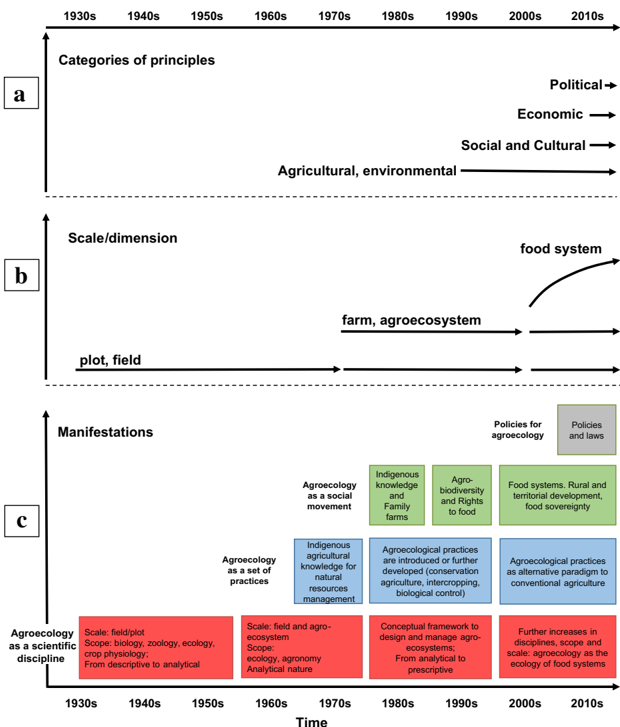
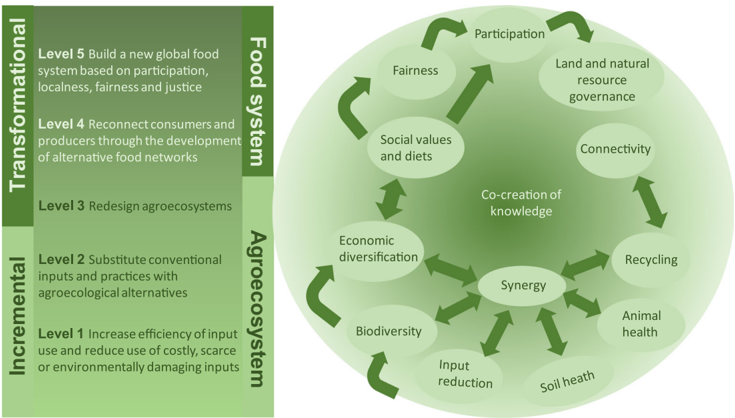
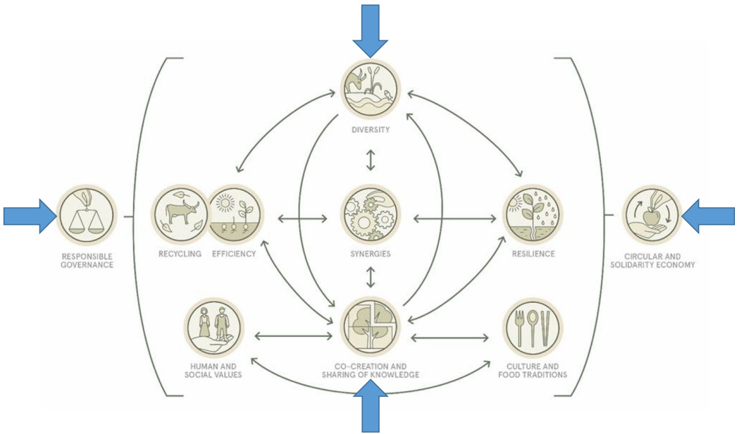
There is consensus that the global food system is not delivering good nutrition for all and is causing environmental degradation and loss of biodiversity, such that a profound transformation is needed to meet the challenges of persistent malnutrition and rural poverty, aggravated by the growing consequences of climate change. Agroecological approaches have gained prominence in scientific, agricultural and political discourse in recent years, suggesting pathways to transform agricultural and food systems that address these issues. Here we present an extensive literature review of concepts, definitions and principles of agroecology, and their historical evolution, considering the three manifestations of agroecology as a science, a set of practices and a social movement; and relate them to the recent dialogue establishing a set of ten iconic elements of agroecology that have emerged from a global multi-stakeholder consultation and synthesis process. Based on this, a consolidated list of principles is developed and discussed in the context of presenting transition pathways to more sustainable food systems. The major outcomes of this paper are as follows. (1) Definition of 13 consolidated agroecological principles: recycling; input reduction; soil health; animal health; biodiversity; synergy; economic diversification; co-creation of knowledge; social values and diets; fairness; connectivity; land and natural resource governance; participation. (2) Confirmation that these principles are well aligned and complementary to the 10 elements of agroecology developed by FAO but articulate requirements of soil and animal health more explicitly and distinguish between biodiversity and economic diversification. (3) Clarification that application of these generic principles can generate diverse pathways for incremental and transformational change towards more sustainable farming and food systems. (4) Identification of four key entry points associated with the elements: diversity; circular and solidarity economy; co-creation and sharing of knowledge; and, responsible governance to enable plausible pathways of transformative change towards sustainable agriculture and food systems.
Overview
The claims and statistics of this paper haven’t been checked yet.
Free: it reads the open-access text and checks the first 5 claims that cite a source we can check. Create a free account to check every claim.
Integrity signals
Registry
Cites
Statistics
Figures




Verification
Claims the paper makes
The claims and statistics of this paper haven’t been checked yet.
Free: it reads the open-access text and checks the first 5 claims that cite a source we can check. Create a free account to check every claim.
Claims other papers make about this one
Each is checked against this paper’s own text: does it say what the citing paper says it does?
The source backs part of the claim, not all of it — or backs it for a different population, condition or comparison.
In the citing paper
“the 13 principles of agroecology (HLPE, 2019) are closely aligned with the 10 elements and serve as a science-policy interface that facilitates debate, bridges diverse knowledge systems, and informs policymaking”
From Agroecology for sustainable development: evidence on multidimensional performance from a cross-country TAPE assessment in Africa (2025) · cites this paper as Wezel et al., 2020
Experimental — accuracy not yet measuredThe cited source says what the claim attributes to it.
In the citing paper
“According to the principles, agroecology concerns the direction of change in agricultural systems (Wezel et al. 2020).”
From Methodological challenges in assessing the viability of agroecological practices: lessons from a multi-case study in Africa (2025) · cites this paper as Wezel et al. 2020
The cited source says what the claim attributes to it.
In the citing paper
“They combine practices that can be related to one or various of the agroecological principles identified by Wezel et al. (2020) to respond to a diversity of constraints and challenges.”
From Methodological challenges in assessing the viability of agroecological practices: lessons from a multi-case study in Africa (2025) · cites this paper as Wezel et al. (2020)
The cited source says what the claim attributes to it.
In the citing paper
“In its conceptual and methodological evolution, agroecology has integrated a larger scope into its analysis, moving from the plot and farm to the landscape unit (Wezel etal., 2020).”
From Agroecological planning of productive systems with functional connectivity to the ecological landscape matrix: two Colombian case studies (2024) · cites this paper as Wezel et al., 2020
The cited source says what the claim attributes to it.
In the citing paper
“Agroecology is identified as an important solution to increase the sustainability of agricultural and food systems.”
From The socio-economic performance of agroecology. A review (2024) · cites this paper as Wezel et al. 2020
1 more claim about this paper
Create a free account to see every claim other papers make about this one.
Self-check
Percentages, sums and reported differences re-computed from the paper’s own numbers.
The self-check needs the paper’s full text.
Citations
Cites
Food and Agriculture Organization of the United Nations
(2022) · Permanent Missions to the United Nations · doi:10.18356/9789210018289c230 · Cited by 5,384
Colman (2022) · doi:10.1073/pnas · Cited by 4,370
Ontologies, socio-technical transitions (to sustainability), and the multi-level perspective
Geels, F. W. (2010) · Research Policy · doi:10.1016/j.respol.2010.01.022 · Cited by 1,718 · cited 4×
“Some transitions begin at a small scale, a ‘niche’ or protected space in which farmer cooperatives, social movements, businesses, local government or other groups experiment with and adapt alternative ways of doing things (Geels 2010; Hinrichs 2014).”
BackgroundMethodInfluentialSmith, A., Voß, J.-P., & Grin, J. (2010) · Research Policy · doi:10.1016/j.respol.2010.01.023 · Cited by 1,691 · cited 2×
“…multi-level perspective has been used, to consider how dynamic processes and interactions across scales can support whole-system transformative change (Geels 2010; Smith et al. 2010), but also what issues of power relations drive changes or establish ‘lock-ins’ (IPES-Food 2018; Leach et al. 2020).”
BackgroundMethodAgroecology as a science, a movement and a practice. A review
Wezel, A., Bellon, S., Doré, T., Francis, C., Vallod, D., & David, C. (2009) · Agronomy for Sustainable Development · doi:10.1051/agro/2009004 · Cited by 1,504
Self-citationAltieri, M. A., & Toledo, V. M. (2011) · Journal of Peasant Studies · doi:10.1080/03066150.2011.582947 · Cited by 1,279 · cited 2×
“eignty, local knowledge, social justice, local identity and culture, and indigenous rights for seeds and breeds (Altieri and Toledo 2011; Nyéléni 2015; Rosset et al. 2011) (Fig.”
BackgroundAgroecological practices for sustainable agriculture. A review
Wezel, A., Casagrande, M., Celette, F., Vian, J.-F., Ferrer, A., & Peigné, J. (2014) · Agronomy for Sustainable Development · doi:10.1007/s13593-013-0180-7 · Cited by 1,227 · cited 1×
“…beneficial biological interactions and synergies amongst the components of agroecosystems (Gliessman 1990), minimizing synthetic and toxic external inputs and using ecological processes and ecosystem services for the development and implementation of agricultural practices (Wezel et al. 2014) (Fig.”
BackgroundSelf-citationAgroecology: The Ecology of Sustainable Food Systems
Gliessman, S. R. (2007) · Andalas University Repository (Andalas University) · Cited by 1,061
Comparative Influences of Precipitation and River Stage on Groundwater Levels in Near-River Areas
Kim, I., Park, D., Kyung, D., Kim, G., Kim, S., & Lee, J. (2015) · Sustainability · doi:10.3390/su8010001 · Cited by 1,060
Global assessment of agricultural system redesign for sustainable intensification
Pretty, J., Benton, T. G., Bharucha, Z. P., Dicks, L. V., Flora, C. B., Godfray, H. C. J., Goulson, D., Hartley, S., Lampkin, N., Morris, C., et al. (2018) · Nature Sustainability · doi:10.1038/s41893-018-0114-0 · Cited by 1,022 · cited 1×
“This consensus acknowledges the need to address aspects that go well beyond a simple metric of productivity, embracing environmental and socially progressive outcomes (Caron et al. 2018; Pretty et al. 2018; Tittonell 2014).”
Background
Research works printed but not linked: 11
- FAO (2015b) Final report for the international symposium on agroecology for food security and nutrition. 18–19 September 2014. Rome. http://www.fao.org/3/a-i4327e.pdf
- FAO (2018c) Second International Symposium on Agroecology. Scaling up agroecology to achieve the sustainable development goals (SDGs). http://www.fao.org/about/meetings/second-international-agroecology-symposium/en/
- FAO (2019) Report of the Conference of FAO. 41st Session. Rome, 22–29 2019. http://www.fao.org/3/na421en/na421en.pdf
- 31. HLPE (2019) Agroecological and other innovative approaches for sus- tainable agriculture and food systems that enhance food security and nutrition. A report by the High Level Panel of Experts on Food Security and Nutrition of the Committee on World Food Security, Rome http://www.fao.org/cfs/cfs-hlpe/en/
- 33. IAASTD (International Assessment of Agricultural Knowledge, Science and Technology for Development) (2009) Agriculture at a cross- roads: global report. B.D. MacIntyre, H.R. Herren, J. Wakhungu, R.T. Watson, eds. Washington, DC, Island Press
- IPCC (2019) Climate change and land. Panel in Climate Change IPCC, Intergovernmental
- 47. Patton (2018) Principles-focus evaluation: the guide. The Guilford Press, New York, NY
- 49. Pimbert M, Lemke S (2018) Food environments: using agroecology to enhance dietary diversity. In: UNSCN (United Nations System Standing Committee on Nutrition) Report 43: addressing equity, equality and non-discrimination in the food system: pathways to reform, pp. 33-42. https://www.unscn.org/uploads/web/news/ UNSCN-News43.pdf
- 56. Silici L (2014) Agroecology -what it is and what it has to offer. IIED, London, UK, 28 p
- 59. Sinclair F, Wezel A, Mbow C, Chomba C, Robiglio V, Harrison R (2019) The contribution of agroecological approaches to realizing climate- resilient agriculture. Background Paper. Global Commission on Adaptation, Rotterdam https://cdn.gca.org/assets/2019-12/ TheContributionsOfAgroecologicalApproaches.pdf
- 67. Tittonell P (2015) Food security and ecosystem services in a changing world: it is time for agroecology. In FAO, Agroecology for Food Security and Nutrition: Proceedings of the FAO International Symposium, pp. 16-35. Rome, Itlay
Cited by
Items 801–900 of 1,001
Saadah, I. N., & Rahardjanto, A. (2024) · International Journal of Multidisciplinary Research and Growth Evaluation · doi:10.54660/.ijmrge.2024.5.6.1836-1840 · Cited by 1
The role of civil society networks in catalyzing agroecological transitions in Uganda
Tumuhe, C. L., Katusiime, D., Ssekamatte, D., Muloi, J. M., Audain, K. A., Kamau, H., Byaruhanga, R., & Molina, G. A. R. (2026) · Journal of Agriculture Food Systems and Community Development · doi:10.5304/jafscd.2026.152.004
Vargas, M. M. C., & García, C. A. P. (2026) · Geografía Aplicada · doi:10.36677/geografiaaplicada.v2i1.27553
Shiri, Z., Ouerghemmi, H., Le, Q. B., & Rejeb, H. (2026) · Research in Cold and Arid Regions · doi:10.1016/j.rcar.2026.02.002
Marketing: driving changes in livestock farming systemsPreprint
Nozières-Petit, M.-O., & Moulin, C. (2026) · Research Square · doi:10.21203/rs.3.rs-8428281/v1
Optimizing Nutrition and Dietetics: Sustainable Approaches for Health and Environmental Impact
Yasin, A. T., & Hadi, P. A. A. (2025) · Eurasian Journal of Science and Engineering · doi:10.23918/eajse.v11i3p10
Achievements in the Agri-Food Supply Chain Leading to Sustainable Foods IV
Skalkos, D. C. (2026) · Sustainability · doi:10.3390/su18042030
Agricultura sostenible y competitividad: políticas, estrategias y prácticas en Ecuador
Castro, D. W. M., Ortega, B. R. M., Cruz, C. S. M., Mejia, N. P. Q., Arias, J. E. A., Palma, R. P., & Mayorga, G. V. S. (2025) · doi:10.63624/risei.book-978-9942-596-93-2
Cheah, S.-P., Ai-Lian, T., Yan-Ling, T., Yiew, T.-H., & Chee-Loong, L. (2026) · Politická ekonomie · doi:10.18267/j.polek.1507
Ka, D.-Y., Loconto, A. M., Gaye, E. H. K., Diouf, L. E., & Belmin, R. (2026) · Agroecology and Sustainable Food Systems · doi:10.1080/21683565.2026.2635084
“By promoting ecological interactions, they aim to contribute to food security and climate change resilience, extending their scope beyond economic productivity (Wezel et al. 2020).”
NIÑEZ, DIVERSIDAD FUNCIONAL Y AGROECOLOGÍA: APRENDIZAJES EN UN HUERTO URBANO INCLUSIVO DE CHILE
Martínez-Lagos, J., Ojeda, H. B., & Peña, G. P. (2026) · doi:10.22533/at.ed.892112621014
Peng, P., Zuo, P., Gu, Y., & Zhang, L. (2026) · Review of Development Economics · doi:10.1111/rode.70142
Community-driven agroecology: roots of resistance in Mexican communities
González, C. F., Garza, H. N., Aguilar, M. Á. E., Espinoza, J. F. N., Pérez-Olvera, M. A., Bellon, S., & Santiago, M. V. G. (2026) · The Journal of Peasant Studies · doi:10.1080/03066150.2026.2624065
Agroecology and Indigenous peoples and territories: a systematic review protocol
Boillat, S., Waeber, P. O., Foladori, S., Savilaakso, S., Serrano, E., & Jurt, C. (2026) · doi:10.1079/protocolrxiv.2026.00020
Massaloux, D., Roume, A., Sarrazin, B., Tolon, V., & Wezel, A. (2026) · European Journal of Entomology · doi:10.14411/eje.2026.010
Self-citationNinnin, P. (2026) · Review of Agricultural Food and Environmental Studies · doi:10.1007/s41130-026-00254-7
Moulai, A., & Bouammar, B. (2026) · Journal of Aridland Agriculture · doi:10.25081/jaa.2026.v12.9912
“This research also fits within the global movement of recognizing ecological intensification as the path forward for Southern agricultures (Wezel et al., 2020).”
Bulger, G., Butler, W. H., Holmes, T., Lowrie, K. W., & Rainford, C. (2026) · Journal of Agriculture Food Systems and Community Development · doi:10.5304/jafscd.2026.152.036
Giua, C., Kaliji, S. A., Brunori, G., & Camanzi, L. (2026) · SSRN Electronic Journal · doi:10.2139/ssrn.6468682
Martínez-Lagos, J., Ojeda, H. B., & Peña, G. P. (2026) · Brazilian Journal of Animal and Environmental Research · doi:10.34188/bjaerv9n1-203
Barclay-Derman, N., Badji, S., Sambou, J. F., Drummond, S., Sadio, A., Gueye, C., Senghor, A., Diatta, B., Diatta, J. P., Manga, N. M., et al. (2026) · Frontiers in Public Health · doi:10.3389/fpubh.2026.1774424
Lantremange, H., Magrini, M.-B., Frayssignes, J., Fortun‐Lamothe, L., Lauri, P., Lebret, B., Gouis, J. L., Lullien‐Pellerin, V., Nozières-Petit, M.-O., Saint-Gès, V., et al. (2026) · Agroecology and Sustainable Food Systems · doi:10.1080/21683565.2026.2649771
“Agroecology is increasingly being put forward as a paradigm for jointly considering the transition of agriculture and food toward sustainability, including ethics and ecology (De Schutter 2010; Gliessman 2014, 2016; Barrios et al. 2020; Wezel et al. 2020).”
Barik, D. K., Satapathy, K. C., & Patra, P. K. (2026) · Food and Humanity · doi:10.1016/j.foohum.2026.101161
Blanc, E. (2021) · theses.fr (ABES) · doi:10.70675/e8fef7b1z7064z4f75z9adezcf6caf2213ba · Cited by 1
Laske, E. (2021) · theses.fr (ABES) · doi:10.70675/82cf3d7fz9d95z4414z8e5bz825fa1e91694 · Cited by 1
Games and sustainable futures for agrobiodiversity and smallholder farmer organizations
Andreotti, F. (2022) · theses.fr (ABES) · doi:10.70675/556461cezf3fbz4e57zb059z32020133c821
Jacques, A. (2023) · theses.fr (ABES) · doi:10.70675/ed5a551dzd07dz4304z8fb3z51c6229c7c79 · Cited by 1
(2026) · Frontiers research topics · doi:10.3389/978-2-8325-7782-0
HCI for Agroecology: Agri-Tech between Grassroots and Capitalism
Prost, S., Crivellaro, C., Collingham, H., Vines, J., Taylor, N., Thackara, J., & Rogers, J. (2026) · CHI Conference on Human Factors in Computing Systems · doi:10.1145/3772318.3791822
“We therefore call on HCI researchers to speculate about and build alternative, hopeful visions of the future of agriculture and agri-tech, in which democratic governance, farmer livelihoods, social and more-than-human connections, and indigenous knowledge are respected and valued [95, 99].”
Utrera, G. M. O., Elizondo, Y. D. L. C., Garcia, J. A., Orozco, N. R., & Castellanos, B. H. (2025) · Ediciones Comunicación Científica eBooks · doi:10.52501/cc.410.05
(2025) · Ediciones Comunicación Científica eBooks · doi:10.52501/cc.410
Transición agroecológica y escuelas de campo del PpB en Altotonga, Veracruz
Gallardo-López, F., Morales-Mendoza, L. E., López-Romero, G., & Hernández-Chontal, M. A. (2025) · Ediciones Comunicación Científica eBooks · doi:10.52501/cc.410.06
Garcia, G. M., Ramírez, Q. O., Bakjejian, X. D. L. M., Domínguez‐Yescas, R., Martínez, E. H., & Balvanera, P. (2026) · People and Nature · doi:10.1002/pan3.70320
“…agroecosystem primarily as a means for short-term profits, an agroecological vision priori-tizes its multifunctional capacity for provisioning nutritious food and ecosystem health for present and future generations (Félix & Holt-Giménez, 2017 ; Toledo & Barrera-Bassols, 2017; Wezel et al., 2020 ).”
Progressing toward agroecology in vineyards through systemic innovation
Robelot, E., Jeuffroy, M.-H., & Mérot, A. (2026) · Agronomy for Sustainable Development · doi:10.1007/s13593-026-01087-w
“Our results, which highlight the contribution of social elements to the overall agroecology score in the surveyed farms, confirm the interest of studying agroecology holistically, as emphasized by Wezel et al. (2020).”
Pereponova, A., Lischeid, G., Grahmann, K., Glemnitz, M., & Brunk, I. (2026) · Landscape Ecology · doi:10.1007/s10980-026-02335-w
“Understanding of causal relationships in agroecosystems is fundamental for paving the way to sustainable agriculture (Wezel et al. 2020; FAO 2021; Ewert et al. 2023).”
Sustainable Farming Practices in Africa
Wiafe, E. D. (2026) · Sustainable development goals series · doi:10.1007/978-3-032-09233-5_5
Aguilar, M. Á. E. (2026) · Ediciones Comunicación Científica eBooks · doi:10.52501/cc.427
Khumairoh, U., Ramadhan, S. W. S., Nurlaelih, E. E., Fajriani, S., Setiawan, A., & Groot, J. C. J. (2026) · Agroecology and Sustainable Food Systems · doi:10.1080/21683565.2026.2660107
“Agroecological approaches that respect social values and diets associated with food culture and local farming systems are suitable alternatives to address locality concerns (Snapp and Pound 2017; Pimbert 2018; Wezel et al. 2020; Batas et al. 2025).”
Historia de la agricultura y procesos de disrupción por una producción sustentable
Aguilar, M. Á. E. (2026) · Ediciones Comunicación Científica eBooks · doi:10.52501/cc.427.01
Belay, F., Alemayehu, M., Mossie, M., Bitew, Y., Enchalew, B., & Tefera, T. M. (2026) · Agriculture · doi:10.3390/agriculture16080908 · Cited by 1
Application of biochar as circular economy practice for improving resilient agroecosystems
Zahid, A., Raza, M. Y., Ahmed, M., Ali, S., Anwar, A., Farooq, U., & Hayat, R. (2026) · Elsevier eBooks · doi:10.1016/b978-0-443-34252-3.00002-0
UAV and AI into Innovation Strategies to Smallholders
Cornejo-Velázquez, E., Clavel-Maqueda, M., & Camacho-Bello, C. (2026) · EAI/Springer Innovations in Communication and Computing · doi:10.1007/978-3-032-13703-6_16
Environmental Risks Associated with UAV-Based Pesticide Application: A Critical Review
Luyen, P. T. H., & Dung, P. T. (2026) · Lecture notes in networks and systems · doi:10.1007/978-3-032-14935-0_7
Coeugnet, P., Duval, J. E., Vourc’h, G., & Labatut, J. (2025) · Natures Sciences Sociétés · doi:10.1051/nss/2026012
Rhouma, A., Midouni, H., Trifa, Y., Trabelsi, T., Rebaï, A., Ismaıl, H. B., Rahmouni, H. B., Turki, S., Beji, S., Beltaifa, L., et al. (2026) · Agricultural Systems · doi:10.1016/j.agsy.2026.104786
Muñoz‐Ulecia, E., & Guarino, R. (2026) · Elsevier eBooks · doi:10.1016/b978-0-443-27396-4.00033-6
Flores, S. G., & Domínguez, B. C. (2026) · Ciencia y Reflexión · doi:10.70747/cr.v5i2.1072
Duarte, L. A., Muñoz‐Rojas, J., & Horstink, L. (2026) · Discover Sustainability · doi:10.1007/s43621-026-03300-y
“Adapted from Gliessmann [44] and Wezel et al. [15] Socioecological impact each initiative/project (Supplementary File 1 is a curated version of this list).”
Ndiwa, A. M., Onyango, K., Bolo, P., Wanyama, R., & Chege, C. G. K. (2026) · Frontiers in Sustainable Food Systems · doi:10.3389/fsufs.2026.1777188 · Cited by 1
Aguirre, G. E. P., Ortiz-Valdés, C., & Rubio, J. S. R. (2026) · Sustainability · doi:10.3390/su18105034
Organic Agriculture Toward Sustainable Agriculture in Supporting Food Security in Indonesia
Purwantini, T. B., Andari, R. N., & Indraningsih, K. S. (2026) · Springer eBooks · doi:10.1007/978-3-032-22171-1_13
Kerr, R. B., Séye, M., Alpha, A., & Sirdey, N. (2026) · Current Developments in Nutrition · doi:10.1016/j.cdnut.2026.107719
“By addressing these questions, we aim to go beyond agroecological production practices to consider other dimensions of agroecology, such as food governance, social inequities, and connectivity between farmers and consumers [18,19].”
Self-citationMurphy, M. M., Ache, G., Alcantara, L. B., Anderson, S. G., Begg, G., Bhagtani, D., Broughton, B., Brown, C. R., Caroo-Afrifa, K., Cayetano, C. B., et al. (2026) · Frontiers in Sustainable Food Systems · doi:10.3389/fsufs.2026.1749286 · Cited by 1
The multidimensional performance of agroecology: what we know and what we are yet to learn
Geck, M. S., Wezel, A., Diallo, A. O., Elizondo, C., Freitas, H. M. D. O., & Tataridas, A. (2026) · Frontiers in Agronomy · doi:10.3389/fagro.2026.1774459 · Cited by 1
Self-citationValverde-Rodríguez, A., Callan, R., & Albornoz, M. E. C. (2025) · Agroalimentaria · doi:10.53766/agroalim/2025.31.61.05
AL-fatlawy, R. S. A.-F., & Lafta, A. H. (2026) · IRAQI JOURNAL OF AGRICULTURAL SCIENCES · doi:10.36103/x91thy50
Timpanaro, G., & Foti, V. T. (2026) · Agricultural Systems · doi:10.1016/j.agsy.2026.104839
From agroecology to regenerative supply chain design: A systematic literature review
Rodríguez, J. A., Rivas, A. A. A., Samaniego, A., Luzzini, D., & Merino‐Gaibor, E. (2026) · Journal of Purchasing and Supply Management · doi:10.1016/j.pursup.2026.101171
Contested transition pathways in pastoral landscapes: Stakeholder perspectives on agroecology
Jiren, T. S. (2026) · Agricultural Systems · doi:10.1016/j.agsy.2026.104850
Yılmaz, H., Doğan, H. G., Kan, M., DAĞ, M. M., & Dıallo, T. (2026) · New Medit · doi:10.30682/nm2602g
Climate-Smart but Ecology-Blind: Assessing Agroecological Integration in Ghana’s Feed Ghana ProgramPreprint
Abazaami, J. (2026) · Research Square · doi:10.21203/rs.3.rs-9665980/v1
Asiimwe, R., Jordan, I., Keding, G. B., Frei, M., Donkor, E., & Teuber, R. (2026) · Agroecology and Sustainable Food Systems · doi:10.1080/21683565.2026.2686749
Adebayo, B. O., Kaufman, E. K., Olowoyo, O., Poudel, S., Seibel, M., Parrella, J., Spence, J., Tyler-Mackey, C., Grove, B. B., Zhu, S., et al. (2026) · Agroecology and Sustainable Food Systems · doi:10.1080/21683565.2026.2686746
Starch conjugate in agriculture: soil amendment, crop protection, and biodegradable mulching
Gogoi, R., Rath, A., Devi, G. T., Sarma, H. H., & Bora, S. S. (2026) · Elsevier eBooks · doi:10.1016/b978-0-443-27586-9.00001-3
Gözel, H., & Çetinkaya, H. (2026) · Agronomy · doi:10.3390/agronomy16121163
Kaluzi, L., Kambewa, D., & Mambo, I. (2026) · Discover Sustainability · doi:10.1007/s43621-026-03781-x
“Thus, agroecology is considered a potential solution to this problem, as it encompasses principles and practices that address and mitigate the multiple negative impacts associated with dominant conventional farming systems [4, 8, 10–15].”
Coeugnet, P., Labatut, J., Auffret, V., Tixier-Boichard, M., Rognon, X., Allais, S., Bédère, N., Brioude, S., Goldringer, I., & Restoux, G. (2026) · SSRN Electronic Journal · doi:10.2139/ssrn.6946398
Ukeje, I. O., Anyigor, K. T., Durokifa, A. A., Udu, O., Nnaji, I. L., Onele, J. C., & Nwangbo, S. O. (2026) · SN Social Sciences · doi:10.1007/s43545-026-01503-8
“Holistic, multi-dimensional frameworks—such as the Sustainable Agriculture and Governance Integration Model—integrate human capital, stakeholder dynamics, and governance to advance SDG progress (Wezel et al. 2020).”
Montalba, R., Sánchez, K., Escobar, N. E., & Muñoz, E. (2026) · Frontiers in Sustainable Food Systems · doi:10.3389/fsufs.2026.1872552
Arbenz, A., Mack, G., Ammann, J., & Möhring, N. (2026) · Ecological Economics · doi:10.1016/j.ecolecon.2026.109103
Of crises, advocates, and framings. The formation of agroecology policy landscapes in Peru and Kenya
Hidalgo, F., Blanco, M., Ritter, T. N., Quintero, M., & Mockshell, J. (2026) · World Development Sustainability · doi:10.1016/j.wds.2026.100338
Gkisakis, V. D., Gallenne, A., Diamantis, P., & Karamitsios, C. (2026) · Acta Horticulturae · doi:10.17660/actahortic.2026.1457.95
Silva, B. B., Brum, D., Loregian, A. C., Urruth, L. M., & Tozetti, A. M. (2026) · Agroforestry Systems · doi:10.1007/s10457-026-01557-w
“At the same time, it is well known that the transition from conventional to AF practices often entails high initial costs, non-trivial technical learning processes, and a profound reassessment of inherited values and conventional farming practices (Wezel et al. 2020; Méndez et al. 2017).”
Логвиненко, В. В. (2026) · Scientific Progress & Innovations · doi:10.31210/spi2026.29.01.01
“…the spatial structure of suitable habitats for V. cardui are consistent with the results of other studies, which show that climate change more often leads not to a sharp expansion or contraction of the range, but to an increase in spatial mosaicism and fragmentation of suitable territories [20–22].”
A fenntarthatóság és élelmezésbiztonság kapcsolata és azok mozgatórugói
Fróna, D. (2026) · Jelenkori Társadalmi és Gazdasági Folyamatok · doi:10.14232/jtgf.2026.2.65-74
Gardner, A., Habib, A., Kakembo, S., Carpenter, S., Sawaf, M., Obeidat, A. N., & Hamoudi, A. H. S. A. (2026) · SSRN Electronic Journal · doi:10.2139/ssrn.7023078
Mazón-Marchán, E. D., Hernández-Pólito, A., Adame-Zambrano, T. D. J., Cruz-Lagunas, B., Hernández-Castro, E., & Damián-Nava, A. (2026) · REVISTA DE EDUCACIÓN AMBIENTAL Y SOSTENIBILIDAD · doi:10.25267/rev_educ_ambient_sostenibilidad.2026.v8.i1.1307
AGROECOLOGIA E SEGURANÇA ALIMENTAR: O PAPEL DA AGRICULTURA FAMILIAR NA PRODUÇÃO SUSTENTÁVEL
da Rocha, E. V., Fausto, J. P., dos Santos, L. K., dos Santos, I. B., de Souza, J. V. T., Silva, X. L. S., Silva, M., Lima, L. E. D. M., Machado, T. R. D. S., Nascimento, J. G. O., et al. (2026) · Revista Tópicos. · doi:10.70773/revistatopicos/782637892
Carini, V., Vico, G., Dietrich, A., Hansson, H., Bergkvist, G., Lundin, O., & Bommarco, R. (2026) · Agriculture Ecosystems & Environment · doi:10.1016/j.agee.2026.110618 · Cited by 1
Ramírez, E. O., García, E. A., & Herrera, J. M. (2026) · Tendencias en energías renovables y sustentabilidad . · doi:10.56845/terys.v5i2.702
Conservation agriculture systems reduce Fall Armyworm pressure in maize crops in Bénin
Ahouansou-karl, M., Atidegla, C. S., Avakoudjo, J., Elégbédé, M. T., Ati, R., Boulakia, S., Sinzogan, A. A. C., Souna, D. A., Togbé, D. R., Aniwanou, C. T. S., et al. (2025) · Bulletin de la Recherche Agronomique du Bénin · doi:10.62344/bz8qpm57
Biodiversity in Action: Case Studies of Resilient Solutions for Food Security
Majeed, M., Abbasi, N. P., Fatima, I., Shah, M., Hasan, M. N. U., Hussain, M., Nazir, S., Fatima, S., Anas, M., Khattak, W. A., et al. (2026) · Springer eBooks · doi:10.1007/978-981-92-1471-6_18
Building consensus on demand-led legume breeding in Europe: Evidence from a Delphi expert study
Wernze, L., Schmitz, M., & Mergenthaler, M. (2026) · Journal of Agriculture and Food Research · doi:10.1016/j.jafr.2026.103142
Ángel-Sánchez, Y. K., Bautista, E. H. D., Suárez, A. E., Quintero-Ángel, M., & Suárez, J. C. (2026) · Revista de Economia e Sociologia Rural · doi:10.1590/1806-9479.2026.296901
Kaluzi, L., Kambewa, D., & Mambo, I. (2026) · The Journal of Agricultural Education and Extension · doi:10.1080/1389224x.2026.2685498
Crop functional trait strategies shift during agroecological transitions
Thapa, A., Muthuprakash, S., Damani, O., Martin, A. R., & Isaac, M. E. (2026) · Experimental Agriculture · doi:10.1017/s0014479726100337
“Agroecological transitions can be defined as a shift towards more biodiverse-mediated models of agricultural systems (Tittonell, 2020; Wezel et al ., 2020).”
Jayasinghe, G. Y., & Perera, H. A. T. N. (2026) · International Soil and Water Conservation Research · doi:10.1016/j.iswcr.2026.100702
Sawek Bangket: Ritual Ecology, Pest Governance, and Social Cohesion in Sasak Agriculture
Maulida, Y., Saputra, B. E., Zidni, Z., & Murcahyanto, H. (2026) · IJE Interdisciplinary Journal of Education · doi:10.61277/ije.v4i2.282
Topp, E. N., Quintas‐Soriano, C., Cicek, H., Dhraief, M. Z., Azhari, M. E., Gharras, O. E., Hantaoui, N. E., Roca, J. P., Iañez, L. R., Sakouili, A., et al. (2026) · Agroecology and Sustainable Food Systems · doi:10.1080/21683565.2026.2703208
AMPOFO, E., Isaac, N., Mary, A., Turkson, F. D., & Charles, A. (2026) · Research Square · doi:10.21203/rs.3.rs-10389273/v1
Termote, C., Akingbemisilu, T. H., Clotuche, E., Aluso, L., Wanyama, R., Cluset, R., & Lachat, C. K. (2026) · Agroecology and Sustainable Food Systems · doi:10.1080/21683565.2026.2702607
Shurson, G. C. (2026) · SDG - Forschung, Konzepte, Lösungsansätze zur Nachhaltigkeit · doi:10.1007/978-3-662-73184-0_2
da Silva, M. S. L., Santana, D. L. D., de Santana, C. C. M., Santos, P. A. D. N., & Ferreira, G. B. (2026) · Revista edUCA - Revista Multidisciplinar da Faculdade Católica Paulista · doi:10.54901/educa.v9-499
Enabling agroecological transition in Europe: insights from national stakeholder perspectives
Averbuch, B., Iversen, S. V., Stone, T. F., Berg, T. R., Castuera, J. M. Á., Bijttebier, J., Notaris, C. D., Fosselle, S., Göldel, B., Jónász, G., et al. (2026) · Agroecology and Sustainable Food Systems · doi:10.1080/21683565.2026.2703213
FOOD WASTE: A BARRIER TO SUSTAINABLE FOOD SYSTEMS
Wunderlich, S., & Feldman, C. H. (2026) · WIT transactions on ecology and the environment · doi:10.2495/eid260251
Diagnostic des pratiques agricoles endogènes dans les exploitations de Tchamba au Togo
(2026) · Agronomie environnement & sociétés · doi:10.54800/mpf018
Contesting the Terms of Agrarian Change: Civil Society, Policy and Law
Gutiérrez, J. A. (2026) · Springer eBooks · doi:10.1007/978-3-032-25228-9_5
Metadata
- Authors
- Wezel, A., Herren, B. G., Kerr, R. B., Barrios, E., Gonçalves, A. L. R., & Sinclair, F.
- Affiliations
- Institut Supérieur d'Agriculture Rhône-Alpes (FR)
- Cornell University (US)
- Food and Agriculture Organization of the United Nations (IT)
- Instituto Federal Catarinense (BR)
- Bangor University (GB)
- Corresponding author
- Wezel, Alexander
- Venue
- Agronomy for Sustainable Development
- Published
- 2020-10-27
- Volume
- 40
- Issue
- 6
- Pages
- 40
- ISSN
- 1773-0155 (ISSN-L)
- 1774-0746
- OpenAlex
- W3095607637
- Semantic Scholar
- c5a128a829b43b2b4d39d83eb9f0c2985df5369a
- Cited by
- 926
- References
- 71
- Citations by year
- 2026: 212 · 2025: 208 · 2024: 173 · 2023: 169 · 2022: 108 · 2021: 55 · 2020: 1
- FWCI
- 125.87
- Type
- journal article
- Language
- en
- Open access
- hybrid
- doi.org
- Licence
- cc-by
- creativecommons.org/licenses/by/4.0 (tdm)
- creativecommons.org/licenses/by/4.0 (vor)
- Locations
- Agronomy for Sustainable Development (publishedVersion, cc-by)
- HAL (submittedVersion, other-oa)
- Funders
- McKnight Foundation
- Consortium of International Agricultural Research Centers
- Topics
- Social Sciences › Development › Agriculture, Land Use, Rural Development
- Life Sciences › Agricultural and Biological Sciences › General Agricultural and Biological Sciences › Plant and soil sciences
- Life Sciences › Agricultural and Biological Sciences › Agronomy and Crop Science › Sustainable Agricultural Systems Analysis
- Keywords
- agroecology, agroecological principles, sustainable food systems, food system transformation, soil health, biodiversity, circular economy, solidarity economy, knowledge co-creation, participatory governance, economic diversification, animal health, food system resilience, climate change adaptation, malnutrition, rural poverty
About these checks
Registry, retraction, Cites and statistics results are computed, not judged, with one exception: a printed reference that no index lists is read once by a model before it counts as a citation error. Claims are extracted by a model and kept only when their quote appears verbatim in the text; each cited source is then checked, with a model’s help, for whether it says what the claim relies on. Those verdicts can be wrong — read the claim’s quote and the cited source before relying on one.
Statistics and arithmetic are recomputed, not judged.
Confidence bands are shown only for fields calibrated on our annotated test set. None is calibrated yet, so no band is shown.
What counts as a claim ›How we measure confidence ›How we check this ›
Are you an author, or do you see a problem with this page? Request a review
Data sources
Bibliographic data: Semantic Scholar, OpenAlex, Crossref.
Contains information from the Semantic Scholar Academic Graph Datasets, made available under the ODC Attribution License (ODC-BY 1.0).
Semantic Scholar’s data is described in: Kinney, R., et al. (2023). The Semantic Scholar Open Data Platform. arXiv:2301.10140.
