

Agroecological principles and elements and their implications for transitioning to sustainable food systems. A review
Open accessThe DOI matches its Crossref record; 71 of the 71 references it cites were found in a registry or an index.
Abstract
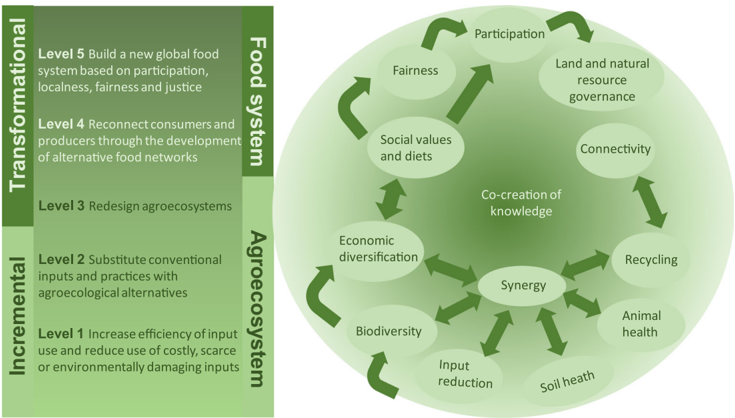
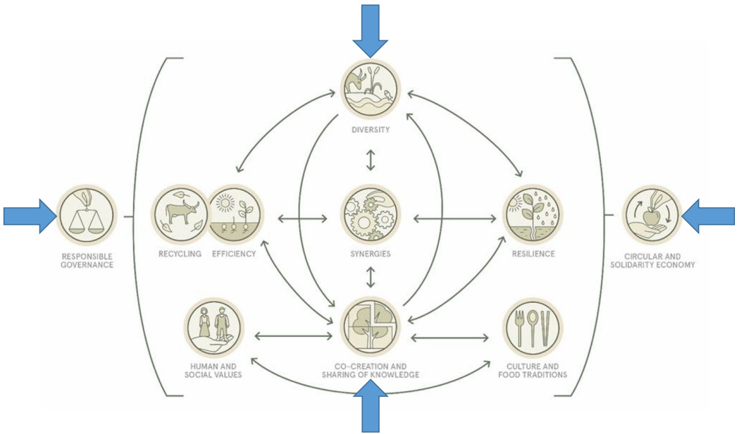
There is consensus that the global food system is not delivering good nutrition for all and is causing environmental degradation and loss of biodiversity, such that a profound transformation is needed to meet the challenges of persistent malnutrition and rural poverty, aggravated by the growing consequences of climate change. Agroecological approaches have gained prominence in scientific, agricultural and political discourse in recent years, suggesting pathways to transform agricultural and food systems that address these issues. Here we present an extensive literature review of concepts, definitions and principles of agroecology, and their historical evolution, considering the three manifestations of agroecology as a science, a set of practices and a social movement; and relate them to the recent dialogue establishing a set of ten iconic elements of agroecology that have emerged from a global multi-stakeholder consultation and synthesis process. Based on this, a consolidated list of principles is developed and discussed in the context of presenting transition pathways to more sustainable food systems. The major outcomes of this paper are as follows. (1) Definition of 13 consolidated agroecological principles: recycling; input reduction; soil health; animal health; biodiversity; synergy; economic diversification; co-creation of knowledge; social values and diets; fairness; connectivity; land and natural resource governance; participation. (2) Confirmation that these principles are well aligned and complementary to the 10 elements of agroecology developed by FAO but articulate requirements of soil and animal health more explicitly and distinguish between biodiversity and economic diversification. (3) Clarification that application of these generic principles can generate diverse pathways for incremental and transformational change towards more sustainable farming and food systems. (4) Identification of four key entry points associated with the elements: diversity; circular and solidarity economy; co-creation and sharing of knowledge; and, responsible governance to enable plausible pathways of transformative change towards sustainable agriculture and food systems.
Overview
The claims and statistics of this paper haven’t been checked yet.
Free: it reads the open-access text and checks the first 5 claims that cite a source we can check. Create a free account to check every claim.
Integrity signals
Registry
Cites
Statistics
Figures




Verification
Claims the paper makes
The claims and statistics of this paper haven’t been checked yet.
Free: it reads the open-access text and checks the first 5 claims that cite a source we can check. Create a free account to check every claim.
Claims other papers make about this one
Each is checked against this paper’s own text: does it say what the citing paper says it does?
The source backs part of the claim, not all of it — or backs it for a different population, condition or comparison.
In the citing paper
“the 13 principles of agroecology (HLPE, 2019) are closely aligned with the 10 elements and serve as a science-policy interface that facilitates debate, bridges diverse knowledge systems, and informs policymaking”
From Agroecology for sustainable development: evidence on multidimensional performance from a cross-country TAPE assessment in Africa (2025) · cites this paper as Wezel et al., 2020
Experimental — accuracy not yet measuredThe cited source says what the claim attributes to it.
In the citing paper
“According to the principles, agroecology concerns the direction of change in agricultural systems (Wezel et al. 2020).”
From Methodological challenges in assessing the viability of agroecological practices: lessons from a multi-case study in Africa (2025) · cites this paper as Wezel et al. 2020
The cited source says what the claim attributes to it.
In the citing paper
“They combine practices that can be related to one or various of the agroecological principles identified by Wezel et al. (2020) to respond to a diversity of constraints and challenges.”
From Methodological challenges in assessing the viability of agroecological practices: lessons from a multi-case study in Africa (2025) · cites this paper as Wezel et al. (2020)
The cited source says what the claim attributes to it.
In the citing paper
“In its conceptual and methodological evolution, agroecology has integrated a larger scope into its analysis, moving from the plot and farm to the landscape unit (Wezel etal., 2020).”
From Agroecological planning of productive systems with functional connectivity to the ecological landscape matrix: two Colombian case studies (2024) · cites this paper as Wezel et al., 2020
The cited source says what the claim attributes to it.
In the citing paper
“Agroecology is identified as an important solution to increase the sustainability of agricultural and food systems.”
From The socio-economic performance of agroecology. A review (2024) · cites this paper as Wezel et al. 2020
1 more claim about this paper
Create a free account to see every claim other papers make about this one.
Self-check
Percentages, sums and reported differences re-computed from the paper’s own numbers.
The self-check needs the paper’s full text.
Citations
Cites
Food and Agriculture Organization of the United Nations
(2022) · Permanent Missions to the United Nations · doi:10.18356/9789210018289c230 · Cited by 5,384
Colman (2022) · doi:10.1073/pnas · Cited by 4,370
Ontologies, socio-technical transitions (to sustainability), and the multi-level perspective
Geels, F. W. (2010) · Research Policy · doi:10.1016/j.respol.2010.01.022 · Cited by 1,718 · cited 4×
“Some transitions begin at a small scale, a ‘niche’ or protected space in which farmer cooperatives, social movements, businesses, local government or other groups experiment with and adapt alternative ways of doing things (Geels 2010; Hinrichs 2014).”
BackgroundMethodInfluentialSmith, A., Voß, J.-P., & Grin, J. (2010) · Research Policy · doi:10.1016/j.respol.2010.01.023 · Cited by 1,691 · cited 2×
“…multi-level perspective has been used, to consider how dynamic processes and interactions across scales can support whole-system transformative change (Geels 2010; Smith et al. 2010), but also what issues of power relations drive changes or establish ‘lock-ins’ (IPES-Food 2018; Leach et al. 2020).”
BackgroundMethodAgroecology as a science, a movement and a practice. A review
Wezel, A., Bellon, S., Doré, T., Francis, C., Vallod, D., & David, C. (2009) · Agronomy for Sustainable Development · doi:10.1051/agro/2009004 · Cited by 1,504
Self-citationAltieri, M. A., & Toledo, V. M. (2011) · Journal of Peasant Studies · doi:10.1080/03066150.2011.582947 · Cited by 1,279 · cited 2×
“eignty, local knowledge, social justice, local identity and culture, and indigenous rights for seeds and breeds (Altieri and Toledo 2011; Nyéléni 2015; Rosset et al. 2011) (Fig.”
BackgroundAgroecological practices for sustainable agriculture. A review
Wezel, A., Casagrande, M., Celette, F., Vian, J.-F., Ferrer, A., & Peigné, J. (2014) · Agronomy for Sustainable Development · doi:10.1007/s13593-013-0180-7 · Cited by 1,227 · cited 1×
“…beneficial biological interactions and synergies amongst the components of agroecosystems (Gliessman 1990), minimizing synthetic and toxic external inputs and using ecological processes and ecosystem services for the development and implementation of agricultural practices (Wezel et al. 2014) (Fig.”
BackgroundSelf-citationAgroecology: The Ecology of Sustainable Food Systems
Gliessman, S. R. (2007) · Andalas University Repository (Andalas University) · Cited by 1,061
Comparative Influences of Precipitation and River Stage on Groundwater Levels in Near-River Areas
Kim, I., Park, D., Kyung, D., Kim, G., Kim, S., & Lee, J. (2015) · Sustainability · doi:10.3390/su8010001 · Cited by 1,060
Global assessment of agricultural system redesign for sustainable intensification
Pretty, J., Benton, T. G., Bharucha, Z. P., Dicks, L. V., Flora, C. B., Godfray, H. C. J., Goulson, D., Hartley, S., Lampkin, N., Morris, C., et al. (2018) · Nature Sustainability · doi:10.1038/s41893-018-0114-0 · Cited by 1,022 · cited 1×
“This consensus acknowledges the need to address aspects that go well beyond a simple metric of productivity, embracing environmental and socially progressive outcomes (Caron et al. 2018; Pretty et al. 2018; Tittonell 2014).”
Background
Research works printed but not linked: 11
- FAO (2015b) Final report for the international symposium on agroecology for food security and nutrition. 18–19 September 2014. Rome. http://www.fao.org/3/a-i4327e.pdf
- FAO (2018c) Second International Symposium on Agroecology. Scaling up agroecology to achieve the sustainable development goals (SDGs). http://www.fao.org/about/meetings/second-international-agroecology-symposium/en/
- FAO (2019) Report of the Conference of FAO. 41st Session. Rome, 22–29 2019. http://www.fao.org/3/na421en/na421en.pdf
- 31. HLPE (2019) Agroecological and other innovative approaches for sus- tainable agriculture and food systems that enhance food security and nutrition. A report by the High Level Panel of Experts on Food Security and Nutrition of the Committee on World Food Security, Rome http://www.fao.org/cfs/cfs-hlpe/en/
- 33. IAASTD (International Assessment of Agricultural Knowledge, Science and Technology for Development) (2009) Agriculture at a cross- roads: global report. B.D. MacIntyre, H.R. Herren, J. Wakhungu, R.T. Watson, eds. Washington, DC, Island Press
- IPCC (2019) Climate change and land. Panel in Climate Change IPCC, Intergovernmental
- 47. Patton (2018) Principles-focus evaluation: the guide. The Guilford Press, New York, NY
- 49. Pimbert M, Lemke S (2018) Food environments: using agroecology to enhance dietary diversity. In: UNSCN (United Nations System Standing Committee on Nutrition) Report 43: addressing equity, equality and non-discrimination in the food system: pathways to reform, pp. 33-42. https://www.unscn.org/uploads/web/news/ UNSCN-News43.pdf
- 56. Silici L (2014) Agroecology -what it is and what it has to offer. IIED, London, UK, 28 p
- 59. Sinclair F, Wezel A, Mbow C, Chomba C, Robiglio V, Harrison R (2019) The contribution of agroecological approaches to realizing climate- resilient agriculture. Background Paper. Global Commission on Adaptation, Rotterdam https://cdn.gca.org/assets/2019-12/ TheContributionsOfAgroecologicalApproaches.pdf
- 67. Tittonell P (2015) Food security and ecosystem services in a changing world: it is time for agroecology. In FAO, Agroecology for Food Security and Nutrition: Proceedings of the FAO International Symposium, pp. 16-35. Rome, Itlay
Cited by
Items 501–600 of 1,001
Terminological basis and perspectives of the use of non-timber products of the forests of Ukraine
Píšová, S., Tokarieva, O., & Levchenko, V. (2023) · Ukrainian Journal of Forest and Wood Science · doi:10.31548/forest/1.2023.124 · Cited by 3
Jung, D.-J., & Yoo, S.-S. (2023) · Agroecology and Sustainable Food Systems · doi:10.1080/21683565.2023.2230928 · Cited by 4
“Recently, agroecology has attracted growing global attention through grassroots social movements that propose agroecology as a solution to agricultural and environmental crises including malnutrition and climate change (Bottazzi and Boillat 2021; Wezel et al. 2020).”
BackgroundGlogoza, B., Aldrich‐Wolfe, L., Prasifka, J. R., & Prischmann‐Voldseth, D. A. (2023) · Journal of Sustainable Agriculture and Environment · doi:10.1002/sae2.12060 · Cited by 3
Zoungrana, S. R., Saadatou, D., Sib, O., Pahimi, A. L., Ouédraogo, S., Bougouma-Yameogo, V. M. C., & Vall, É. (2023) · Revue d’élevage et de médecine vétérinaire des pays tropicaux · doi:10.19182/remvt.37167 · Cited by 13
Land sovereignty in depressed and contested agro-territories: The cases of Portugal and Brazil
Horstink, L., Schwemmlein, K., & Masson, G. A. (2024) · Elementa Science of the Anthropocene · doi:10.1525/elementa.2023.00075 · Cited by 5
van Noordwijk, M. (2021) · Center for International Forestry Research (CIFOR) eBooks · doi:10.17528/cifor/008211 · Cited by 11
“Agroforestry research has since supported the articulation of agroecology principles (Leakey 2010; Prabhu et al. 2015; Wezel et al. 2020; HLPE 2019) that align well with the new “making peace with nature” concepts (UNEP 2021).”
BackgroundZulaica, L., Molpeceres, C., Rouvier, M., Cendón, M. L., & Barral, M. P. (2022) · Revista Geográfica de América Central · doi:10.15359/rgac.69-2.10 · Cited by 10
SOSTENIBILIDAD EN LA PEQUEÑA AGRICULTURA CAMPESINA DEL SECANO DE CHILE CENTRAL, REGIÓN DE VALPARAÍSO
Tapia, A. R., Rossing, W. A. H., Dogliotti, S., & Pedreros, C. H. (2024) · Chilean journal of agricultural & animal science · doi:10.29393/chjaas40-16spac40016 · Cited by 3
Beyond sustainability: five shades of green for tomorrow’s farming and food
Schulte, R. P. O., & Ditzler, L. (2024) · Elsevier eBooks · doi:10.1016/b978-0-443-15690-8.00022-9 · Cited by 1
Identifying pathways to more sustainable farming using archetypes and multi-objective optimisation
Bütikofer, L., Goodwin, C. E. D., Varma, V., Evans, P. M., Redhead, J. W., Bullock, J. M., Pywell, R. F., Mead, A., Richter, G. M., & Storkey, J. (2024) · Ecological Indicators · doi:10.1016/j.ecolind.2024.112433 · Cited by 4
Merfield, C. N. (2024) · Elsevier eBooks · doi:10.1016/b978-0-443-16076-9.00008-1 · Cited by 3
Sustainable Practices in Gastronomic Tourism
Kumar, S., Talukder, M. B., & Bhatnagar, D. (2024) · Advances in hospitality, tourism and the services industry (AHTSI) book series · doi:10.4018/979-8-3693-7096-4.ch031 · Cited by 2
Levi, R. (2025) · Agroecology and Sustainable Food Systems · doi:10.1080/21683565.2025.2456920 · Cited by 3
“As such, agroecology is “recognized as having the potential to facilitate the transformative change in agriculture required to meet the SDGs” (Wezel et al. 2020, 2), i.e., achieving inclusive food security that can tackle global malnutrition and poverty by employing sustainable manufacturing…”
InfluentialRedes alimentarias alternativas en procesos de transición y escalamiento de las agroecologías
Rosas-Domínguez, A., Álvarez, M. D. L. Á. P., Aguilar, M. Á. E., & Valdés-Rodríguez, O. A. (2024) · Regions & Cohesion · doi:10.3167/reco.2024.140102 · Cited by 2
Genest-Richard, P., Devillers, N., Halde, C., Tremblay, S., & Mundler, P. (2025) · Journal of Rural Studies · doi:10.1016/j.jrurstud.2025.103711 · Cited by 4
Banunle, A., & Kpenekuu, F. (2025) · Circular Economy and Sustainability · doi:10.1007/s43615-025-00630-3 · Cited by 4
“Agroecological techniques focus on the use of ecological principles in the design and management of food production systems to enhance biodiver - sity, soil health and ecosystem services [ 85].”
Wezel, A., Migliorini, P., Anna, B., Gaifami, T., Marchetti, A., Floymont, G., Guizard, G., Michel, E., Renaud, M.-A., Škorjanc, K., et al. (2025) · Frontiers in Agronomy · doi:10.3389/fagro.2025.1581667 · Cited by 4
Self-citationAdam, M., Fréville, H., Alami, S., Marrou, H., Pot, D., Ricci, S., Thomas, M., Guichardaz, A., Billot, C., Chantret, N., et al. (2025) · Plants People Planet · doi:10.1002/ppp3.70072 · Cited by 3
“In this paper, we refer to AE as defined by the Food and Agriculture Organization of the United Nations (FAO) (De Schutter, 2010) and the High-Level Panel of Expert on food security and nutrition (Wezel et al., 2020).”
Bwire, P. M., Bakengesa, J., Kabota, S. A., Rweyemamu, E. W., Tairo, J. C., Majubwa, R. O., Mwatawala, M. W., Virgilio, M., Meyer, M. D., Deguine, J., et al. (2025) · Journal of Applied Entomology · doi:10.1111/jen.13459 · Cited by 3
Integrating eco-friendly farming techniques to combat soil degradation
Offor, C. B., & Opoku, L. K. (2025) · World Journal of Advanced Research and Reviews · doi:10.30574/wjarr.2025.27.1.2605 · Cited by 3
A one government approach for agroecology policy coordination in Zimbabwe
Marenya, P., Chiduwa, M. S., Ngoma, H., Chipindu, L., Nohayi, N., & Chimonyo, V. G. P. (2025) · Agroecology and Sustainable Food Systems · doi:10.1080/21683565.2025.2541375 · Cited by 2
Ebile, P. A., Schuler, J., Tega, Y., Ouattara, B., Ouédraogo, S., Sawadogo-Compaore, E. M. F. W., Sawadogo, H., & Ndah, H. T. (2025) · Agroecology and Sustainable Food Systems · doi:10.1080/21683565.2025.2543386 · Cited by 3
“These priorities align with core agroecological principles, such as promoting ecological balance and sustainability (Wezel et al. 2020).”
Agroforestry homegardens for indigenous resilience: a participatory study in Brazil
Jung, D. R., & Vendrametto, O. (2025) · Agroforestry Systems · doi:10.1007/s10457-025-01293-7 · Cited by 2
“These principles support family farming, improve soil and animal health, and increase the resilience of agroecosystems (Wezel et al. 2020).”
Mahalakshmi, D., & Adeyeye, S. A. O. (2025) · Nutrition & Food Science · doi:10.1108/nfs-04-2025-0132 · Cited by 2
Agroecology and Transformative Adaptation to Climate Change
Castella, J. (2025) · Asia Pacific Viewpoint · doi:10.1111/apv.70013 · Cited by 2
Sumahaf, N. P. I., & Mesra, R. (2025) · Collaborative Journal of Community Service · doi:10.64924/8j9wtc30 · Cited by 2
Sadler, A., Bharath, Y., da Silva, J. T., de Abreu, D. C., Shankar, E., Bassetto, K. V., & Jaacks, L. M. (2025) · Frontiers in Sustainable Food Systems · doi:10.3389/fsufs.2025.1670638 · Cited by 3
“From farm to nowhere: The broken promise of Organic Agriculture for Philippine smallholders”
Lagunda, S. J., Sy, F. A. R., & Degorio, E. P. (2025) · Outlook on Agriculture · doi:10.1177/00307270251376046 · Cited by 2
“Organic agriculture represents one component of agroecological systems, which encompass ecological, social economic principles beyond certi fi cation (Wezel et al., 2020).”
Impact of Different Agroecological Practices for Weed Management on Weeds and Crops Development
Chirilli, C., Biafora, A., Giaccardi, A., Benedettelli, S., & Migliorini, P. (2025) · Agronomy · doi:10.3390/agronomy15102335 · Cited by 3
Food security of the staple food in Africa: A focus on rice, maize (corn), millet, cassava, and yam
Ayuba, D., Elizabeth, O. O., Olayinka, K. E., Precious, F. K., Ogaya, J. B., Lucero-Prisno, D. E., Lacaba, L. D., Espinas, A. D., & Kouwenhoven, M. B. N. (2025) · Advances in food security and sustainability · doi:10.1016/bs.af2s.2025.09.004 · Cited by 6
de Lucio, J. V., Montes, D., & Seijo, F. (2025) · Agroecology and Sustainable Food Systems · doi:10.1080/21683565.2025.2575013 · Cited by 2
“…that agroecology cannot be understood only as a science but also constitutes a set of practices and a social movement (Gliessman 2015; Nicholls and Altieri 2018; FAO 2019, 2021; Altieri and Nicholls 2020; Mottet et al. 2020; Nicholls et al. 2020; Wezel et al. 2020; López-García et al. 2021).”
Mahmoudi, S., Damghani, A. M., Mahmoudi, H., & Kambouzia, J. (2025) · Environmental and Sustainability Indicators · doi:10.1016/j.indic.2025.101007 · Cited by 2
Unveiling agroecological transitions in Northern Patagonia: a comparative typology approach
E., A., Mujtar, V. A. E., Cardozo, A., Cáceres, L. Á. S., Heinzle, L. Y., Castán, E., & Tittonell, P. A. (2025) · Frontiers in Agronomy · doi:10.3389/fagro.2025.1657083 · Cited by 2
Ouattara, S. D., Sib, O., Orounladji, B. M., Sanogo, S., Bougouma-Yameogo, V. M. C., & Vall, É. (2025) · Frontiers in Agronomy · doi:10.3389/fagro.2025.1657477 · Cited by 2
Chávez, D. L. L., Rodriguez-Perez, L. E., Liza, Y. F. A., Espinoza, R. F. R., Marina, D. C., Vallejos-Torres, G., Azabache-Aliaga, Y. D., Bardalez-Tuesta, C. M., & Teran, M. G. B. (2025) · Advances in Agriculture · doi:10.1155/aia/5018672 · Cited by 2
Olivencia, Y. J., Rodríguez, L. P., Calcerrada, R. R., & Brito, R. M. (2026) · Sustainability · doi:10.3390/su18020569 · Cited by 3
Luna-Coronel, M. E., Cortés-Vega, C. M., Dorado-González, G. E., García-Cervantes, D., Muñoz-Salas, L. C., & Bañuelos, H. G. (2026) · Agro Productividad · doi:10.32854/79gh1y36 · Cited by 2
González-Rosado, M., Sánchez‐Navarro, V., Lozano‐García, B., Aguilera-Huertas, J., Parras‐Alcántara, L., Lóczy, D., Almagro, M., Martínez‐Mena, M., Boix‐Fayos, C., Díaz‐Pereira, E., et al. (2026) · Soil and Tillage Research · doi:10.1016/j.still.2026.107073 · Cited by 2
Paunovic, S., Jacobi, J., Ndung’u, P. W., Michalscheck, M., & Merbold, L. (2026) · Frontiers in Sustainable Food Systems · doi:10.3389/fsufs.2025.1717931 · Cited by 2
Damene, S. (2026) · Discover Sustainability · doi:10.1007/s43621-026-02650-x · Cited by 2
“In this regard, studies by Wezel et al. [68] and Rakkar et al. [49] have shown that such traditional conservation agriculture based practices play an important role in conserving organic matter, enhancing nutrient cycling, and improving overall soil health, where the practices are also critical to…”
Moving forward AKIS research and practice for agroecological transitions in Europe
Zerbian, T., Gallagher-Squires, C., & López-García, D. (2026) · The Journal of Agricultural Education and Extension · doi:10.1080/1389224x.2026.2640918 · Cited by 2
Milestad, R., Adamson, C., Öhlund, E., Andersson, M., Iwarsson, E., & Ståhl, I. (2026) · Frontiers in Sustainable Food Systems · doi:10.3389/fsufs.2026.1733279 · Cited by 3
“Food systems are increasingly vulnerable, and there is consensus in the literature that a transformation towards greater resilience and sustainability is needed (Tendall et al., 2015; Candel and Pereira, 2017; Campbell et al., 2017; Wezel et al., 2020; Edwards et al., 2024; Keegan et al., 2024).”
Slijper, T. (2026) · Land Use Policy · doi:10.1016/j.landusepol.2026.108091 · Cited by 2
Agricultural practices for cleaner water: a global synthesis of meta-evidence
Canning, A. D. (2026) · Environmental Reviews · doi:10.1139/er-2025-0263 · Cited by 2
STAKEHOLDER ANALYSIS IN MULTI-AGRICULTURAL INTEGRATION SYSTEM TAKALAR REGENCY, INDONESIA
Jumiati, J., Khaeriyah, A., Mappa, N., Rumallang, A., Akbar, A., Molla, S., & Amin, A. A. (2025) · AgroLife Scientific Journal · doi:10.17930/agl2025211 · Cited by 2
Starting points of agroecological transitions in Africa: Why and how farm structure matter
Girard, P., Mercandalli, S., Berre, D., Andrieu, N., Kerr, R. B., Coe, R., Dedieu, B., Madsen, S., Scopel, É., Asnake, W., et al. (2026) · Ecological Economics · doi:10.1016/j.ecolecon.2026.109117 · Cited by 2
Self-citationBisht, I. S. (2026) · Agroecology and Sustainable Food Systems · doi:10.1080/21683565.2026.2702610 · Cited by 2
Derunova, E. A., Vasilchenko, M., Firsova, А., Vavilina, A. V., Makarova, E. L., & Makarova, E. A. (2026) · Sustainability · doi:10.3390/su18157994 · Cited by 2
Actualizations of agroecology among Scottish farmers
Hutcheson, M., Morton, A., & Blair, S. (2023) · Agroecology and Sustainable Food Systems · doi:10.1080/21683565.2023.2270493 · Cited by 2
“Agroecosystem redesign is only one objective of transformative agroecol-ogy; it also has an integral social dimension (Wezel et al. 2020).”
BackgroundCorson, M. S., Mondière, A., Morel, L., & van der Werf, H. M. G. (2023) · INRAE Productions Animales · doi:10.20870/productions-animales.2023.36.3.7714 · Cited by 5
Monitoring agroecological transitions: how to measure complexity in an agile manner
van Wijk, M. T., Hammond, J., & Barahona, C. (2023) · Current Opinion in Environmental Sustainability · doi:10.1016/j.cosust.2023.101377 · Cited by 2
Educating the Rural Woman Farmer for Climate Resilience in the Global South: Enablers and Barriers
Gyimah, A. B. K., Antwi‐Agyei, P., & Adom‐Asamoah, G. (2023) · Springer eBooks · doi:10.1007/978-3-031-25960-9_94-1 · Cited by 2
Agroecological transition and amplification in San Pablo Huitzo, Oaxaca: preliminary findings
Cruz-López, V., Pacheco, R. P., Granados-Echegoyen, C. A., Zelaya-Benavidez, E. A., Orrego, L. M. B., & Álvarez‐Lopeztello, J. (2023) · Agroecology and Sustainable Food Systems · doi:10.1080/21683565.2023.2299014 · Cited by 2
“One of the most recent sets of agroecological principles was proposed by the High-Level Panel of Experts (HLPE) on Food Security and Nutrition (Wezel et al. 2020).”
BackgroundMethodInfluentialAgroecological transitions: reading, writing, and thinking across disciplinary divides
Cusworth, G. (2024) · Frontiers in Agronomy · doi:10.3389/fagro.2024.1281393 · Cited by 2
Plant traits mediate agroecological outcomes in restored agricultural lands
Rolhauser, A. G., & Isaac, M. E. (2024) · Ecological Indicators · doi:10.1016/j.ecolind.2024.111951 · Cited by 2
AGROECOLOGY IMPLEMENTED THROUGH BIOSYSTEMS ENGINEERING TECHNIQUES FOR RURAL LANDSCAPE PROTECTION
Puglisi, R., Margiotta, S., Statuto, D., & Picuno, P. (2024) · Public recreation and landscape protection ... · doi:10.11118/978-80-7509-963-1-0009 · Cited by 2
Cakewalk or catastrophe? Exploring the realities of climate diet
Thankappan, S. (2024) · Geography · doi:10.1080/00167487.2024.2351774 · Cited by 2
“Transforming this system to align with the principles of climate diet necessitates co-ordinated efforts across sectors (Wezel et al. , 2020), including agriculture and (Djekic et al ., 2018).”
BackgroundNguyen-Ba, H., Veysset, P. P., Marty, I. O., Monteils, V., Cantalapiedra-Hijar, G., Dumont, B., & Ferlay, A. (2025) · animal · doi:10.1016/j.animal.2025.101423 · Cited by 2
Akensous, F.-Z., Mazouni, N. E., & Meddich, A. (2025) · Advances in finance, accounting, and economics book series · doi:10.4018/979-8-3693-7570-9.ch015 · Cited by 3
Rodríguez-Robayo, K. J., Polo-Murcia, S. M., Cárdenas, C. M. F., Alferes, E. B. P., Polanco, L. R., Devia, É. H. V., Tovar, M. D. L., Mogollón, M. V. Z., & Piniero, M. (2025) · Nativa · doi:10.31413/nat.v13i2.18801 · Cited by 1
“Agroecological production emerges as an alternative to progress on this path (WEZEL et al. , 2020).”
System Approaches for Enhancing Soil Health and Food Security
Roy, S., Bag, S., Dadhich, D. K., Das, T., & Dutta, S. (2025) · Springer eBooks · doi:10.1007/978-981-96-3392-0_7 · Cited by 4
Temmer, J., Spring, A., Simba, R., & Chicot, L. (2025) · Frontiers in Climate · doi:10.3389/fclim.2025.1642633 · Cited by 3
Ujj, A., Ramos-Diaz, F., & Jancsovszka, P. (2022) · European Countryside · doi:10.2478/euco-2022-0023 · Cited by 3
Combining Conventional and Organic Practices to Reduce Climate Impacts of Agriculture
Lorenz, K. E., & Lal, R. (2022) · Springer eBooks · doi:10.1007/978-3-031-17215-1_5 · Cited by 7
Foncier et dispositifs environnementalistes
Meur, P. L., & Rodary, E. (2022) · IRD Éditions eBooks · doi:10.4000/books.irdeditions.45513 · Cited by 6
Livestock grazing systems and sustainable development in the Mediterranean and Tropical areas
Ickowicz, A., & Moulin, C. (2023) · Éditions Quæ eBooks · doi:10.35690/978-2-7592-3711-1 · Cited by 3
Van Dien, L. C., & Fuchs, L. E. (2023) · Center for International Forestry Research (CIFOR) eBooks · doi:10.17528/cifor-icraf/008921 · Cited by 2
Saraswat, S., Khan, R., Kumar, A., & Singh, A. P. (2023) · Advances in environmental engineering and green technologies book series · doi:10.4018/979-8-3693-0200-2.ch012 · Cited by 2
Trajectoires et services supports d’innovations agroécologiques dans un pays en développement
Adam, N. S., Temple, L., Mathé, S., & Blundo‐Canto, G. (2023) · Économie rurale · doi:10.4000/economierurale.12041 · Cited by 5
Kanjanja, S. M., & Mosha, D. B. (2023) · Journal of Agricultural Extension and Rural Development · doi:10.5897/jaerd2023.1385 · Cited by 2
“As highlighted by Wezel et al. (2020), this approach not only bolsters social and economic equity but also fosters environmental conservation—the very foundation sustaining agricultural endeavors’.”
BackgroundInfluentialCanudas, F. (2024) · Historia Agraria Revista de agricultura e historia rural · doi:10.26882/histagrar.092e08c · Cited by 3
Assessing priorities for food systems transformation among UK alternative actors
Gibson, M., & Gibson, A. (2024) · Environmental Research Food Systems · doi:10.1088/2976-601x/ad73dc · Cited by 4
A agroecologia e os serviços ecossistêmicos no contexto latino americano: uma revisão sistemática
dos Santos, R. A. A., & Vestena, L. R. (2024) · REVISTA BRASILEIRA DE AGROECOLOGIA · doi:10.33240/rba.v19i3.53881 · Cited by 2
Pope, K., Reynaldo, R. G., Borba, J., Lana, M., Sieber, S., & Bonatti, M. (2024) · Agroecology and Sustainable Food Systems · doi:10.1080/21683565.2024.2413581 · Cited by 3
Vineyard Edges Increase Bird Richness and Abundance and Conservation Opportunities in Central Chile
Muñoz‐Sáez, A. (2024) · Agriculture · doi:10.3390/agriculture14122098 · Cited by 4
Exploring the role of a social carrier in advancing agroecology and territorial autonomy
James, D., Blesh, J., Liebert, J. A., Magnanti, N. J., Mehrabi, Z., Motter, C., & Wittman, H. K. (2024) · Agroecology and Sustainable Food Systems · doi:10.1080/21683565.2024.2431863 · Cited by 2
“The evidence that agroecological approaches can improve food security, nutrition, and environmental outcomes has led social movements, civil society, scholars, and policymakers to increasingly endorse agroecology – commonly defined as a science, practice, and social movement (Wezel et al. 2009) – as a promising pathwa…”
InfluentialSocial Determinants of Health at the Human–Animal–Ecosystem Interface
Cediel, N. M., Guerra-Zúñiga, M., Castro, A. M., Panadero, A. N., Jiménez, N., & Collins, R. (2024) · CABI eBooks · doi:10.1079/9781800623002.0009 · Cited by 2
Diffusion of constructed resources and specialism promote facilitation in spatial systems
Ardichvili, A. N., Barot, S., Lata, J., & Loeuille, N. (2025) · Oikos · doi:10.1002/oik.11025 · Cited by 2
“…improve nutrient cycling in agricultural landscapes, agroecologists suggest using companion plants, i.e. growing a target plant with a neighbour of a different species improving the growth conditions of the target plant (e.g. repelling predators, improving nutrient availability, Wezel et al. 2020).”
Mafuse, N., Mafuse, D., Rubhara, T. T., & Mandumbu, R. (2025) · Springer eBooks · doi:10.1007/978-3-031-71164-0_65-1 · Cited by 2
Just food transitions: a plurality of framings and repertoires from below
Cabral, L., Volonterio, M., Peša, I., Millar, G. M., & Levick-Parkin, M. (2025) · The Journal of Peasant Studies · doi:10.1080/03066150.2025.2488812 · Cited by 5
“On this basis, the United Nations Committee on World Food Security established 13 operational principles to achieve resource-use efficiency, system resilience, and social equity to guide multiple transition pathways towards more sustainable and equitable food systems (Wezel et al. 2020).”
He, S., & Wang, B. (2026) · Ecology and Society · doi:10.5751/es-17374-310225 · Cited by 2
Kpienbaareh, D., Wang, J., Luginaah, I., Kerr, R. B., Lupafya, E., & Dakishoni, L. (2023) · The Professional Geographer · doi:10.1080/00330124.2022.2146908 · Cited by 2
“The principles of agroecology emphasize the efficient use of resources such as nitrogen, atmospheric carbon and solar radiation to improve crop yield (Wezel et al. 2020), which explains the improved health crops on the agroecology farms.”
InfluentialSelf-citationLa alimentación agroecológica base para la sostenibilidad urbana
Jiménez, M. D. R. (2023) · kult-ur revista interdisciplinària sobre la cultura de la ciutat · doi:10.6035/kult-ur.7198 · Cited by 3
Koch, O., Ibisch, P. L., & Bloch, R. (2022) · Agroecology and Sustainable Food Systems · doi:10.1080/21683565.2022.2067930 · Cited by 3
“Participation is a consolidated agroecological principle (Wezel et al. 2020), showing successes at transitioning food systems in the face of aggregated land use and climate change challenges (Benezer Kerr et al., 2019).”
BackgroundAgroecological practices are widely used by African farmers
Viability Project (2023) · Center for International Forestry Research (CIFOR) eBooks · doi:10.17528/cifor-icraf/008817 · Cited by 2
“We defined practices as agroecological if they addressed | Working paper 22 at least one of the set of 13 principles drawn from the scientific literature and highlighted in the United Nations High Level Panel of Experts report on agroecology (HLPE 2019; Wezel et al. 2020).”
MethodAchieving Agroecosystem Resilience through an Agroecological Approach
Diacono, M., & Montemurro, F. (2023) · Agronomy · doi:10.3390/agronomy13081962 · Cited by 3
Transforming Food Systems: The Role of Public ProcurementPreprint
Andhov, M., Mikulic, S., & Nielsen, L. R. (2025) · SSRN Electronic Journal · doi:10.2139/ssrn.5038975 · Cited by 4
Eastwood, C., Edwards, J. P., Ingram, J., Ayre, M. L., Fielke, S., & Renwick, A. (2025) · Frontiers in Sustainable Food Systems · doi:10.3389/fsufs.2025.1616512 · Cited by 3
Editorial: Agroecological practices to enhance resilience of farming systems
Scordia, D., von Cossel, M., & Gresta, F. (2025) · Frontiers in Agronomy · doi:10.3389/fagro.2025.1641522 · Cited by 2
Soil and crop data from a long-term organic fertilization trial in Sub-Sahelian market gardening
Vermeire, M.-L., Basse, P., Legros, S., Diallo, F., Desnues, A., & Feder, F. (2026) · Data in Brief · doi:10.1016/j.dib.2026.112456 · Cited by 2
Sustainable Food in Teacher Training: Evaluation of a Proposal for Educational Intervention
Ortega-Quevedo, V., Santamaría–Cárdaba, N., & Puente, C. G. (2023) · Sustainability · doi:10.3390/su15129673 · Cited by 2
Blasi, A. D., Manoli, C., Banliat, C., Plantureux, S., Petit, T., Couvreur, S., & Michaud, A. (2023) · Sustainability · doi:10.3390/su152416793 · Cited by 1
AGRICULTURA FAMILIAR E OS DESAFIOS DA TRANSIÇÃO AGROECOLÓGICA: UMA ANÁLISE A PARTIR DA MATRIZ SWOT
Neto, A. D. S. P., Santos, M. H. L. C., Santos, E. E., & Pacheco, C. S. G. R. (2024) · Editora Científica Digital eBooks · doi:10.37885/240215807 · Cited by 1
Mainstreaming gender in agroecology: coffee cropping systems in Veracruz, Mexico
Beltrán-Vargas, H. J., García, V. V., Flores-Sánchez, D., & Palma, G. I. (2024) · Agroecology and Sustainable Food Systems · doi:10.1080/21683565.2024.2345748 · Cited by 1
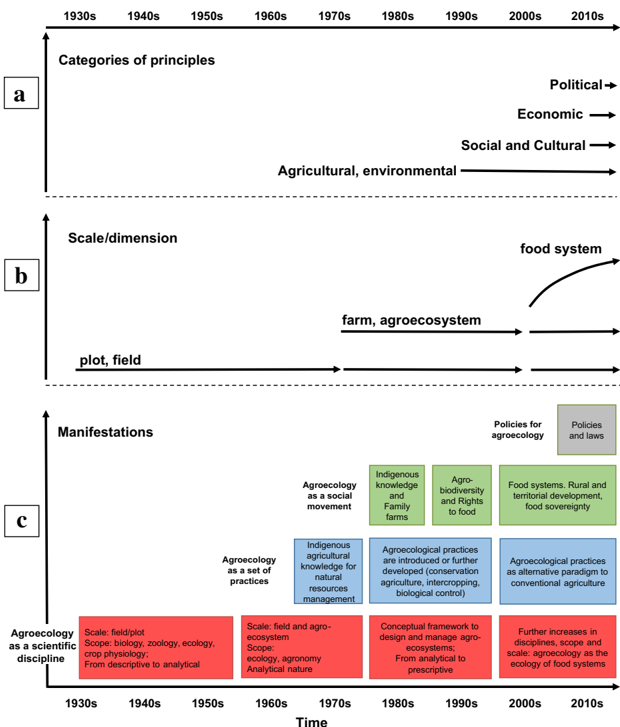
“Sevilla Guzmán and Woodgate (2013) have suggested three equally important areas (productive/ ecological, socioeconomic and sociocultural/political), while CIDSE (2018) and Wezel et al. (2020) recommend four: environmental, economic, social and political.”
BackgroundMethodInfluentialAn agroecological approach to preparation and use of a milk protein production baseline
Coles, G. D., & Rowarth, J. S. (2024) · PeerJ · doi:10.7717/peerj.18103 · Cited by 1
“It is noted that the concept of agroecology has been progressively co-opted towards something governing not only the interaction of agricultural practice with its immediate environment, but also food production systems and their contribution to smallholder welfare ( Wezel et al., 2020 ).”
BackgroundMethodVázquez-Martin, Á. E., Aguilar–Rivera, N., & Torres-Cantú, G. B. (2024) · Sustainability Science · doi:10.1007/s11625-024-01598-z · Cited by 3
“As suggested by Wezel et al. (2020), we considered the territory’s agroeco-logical characteristics.”
Heine, B., Gaspart, F., & Biot, N. (2025) · Frontiers in Sustainable Food Systems · doi:10.3389/fsufs.2025.1608860 · Cited by 1
Towards multiservice irrigation for an agroecological future
Léauthaud, C., & Leenhardt, D. (2025) · npj Sustainable Agriculture · doi:10.1038/s44264-025-00094-w · Cited by 3
“AE complies with a set of well-established principles — encompassing agronomic and ecological features, while also having broader socioeconomic, political and cultural facets — to guide decision making, action and behaviour 23 .”
Foletto, J. P., & Nobre, A. G. (2025) · Sustainability · doi:10.3390/su17198955 · Cited by 1
Worsdell, L. S., Maughan, C., Wright, J., Hill‐Butler, C., & Félix, G. F. (2025) · Agroecology and Sustainable Food Systems · doi:10.1080/21683565.2025.2584306 · Cited by 1
“In practice, agroecology remains as wide ranging and diverse as its definitions (Wezel et al. 2020).”
Metadata
- Authors
- Wezel, A., Herren, B. G., Kerr, R. B., Barrios, E., Gonçalves, A. L. R., & Sinclair, F.
- Affiliations
- Institut Supérieur d'Agriculture Rhône-Alpes (FR)
- Cornell University (US)
- Food and Agriculture Organization of the United Nations (IT)
- Instituto Federal Catarinense (BR)
- Bangor University (GB)
- Corresponding author
- Wezel, Alexander
- Venue
- Agronomy for Sustainable Development
- Published
- 2020-10-27
- Volume
- 40
- Issue
- 6
- Pages
- 40
- ISSN
- 1773-0155 (ISSN-L)
- 1774-0746
- OpenAlex
- W3095607637
- Semantic Scholar
- c5a128a829b43b2b4d39d83eb9f0c2985df5369a
- Cited by
- 926
- References
- 71
- Citations by year
- 2026: 212 · 2025: 208 · 2024: 173 · 2023: 169 · 2022: 108 · 2021: 55 · 2020: 1
- FWCI
- 125.87
- Type
- journal article
- Language
- en
- Open access
- hybrid
- doi.org
- Licence
- cc-by
- creativecommons.org/licenses/by/4.0 (tdm)
- creativecommons.org/licenses/by/4.0 (vor)
- Locations
- Agronomy for Sustainable Development (publishedVersion, cc-by)
- HAL (submittedVersion, other-oa)
- Funders
- McKnight Foundation
- Consortium of International Agricultural Research Centers
- Topics
- Social Sciences › Development › Agriculture, Land Use, Rural Development
- Life Sciences › Agricultural and Biological Sciences › General Agricultural and Biological Sciences › Plant and soil sciences
- Life Sciences › Agricultural and Biological Sciences › Agronomy and Crop Science › Sustainable Agricultural Systems Analysis
- Keywords
- agroecology, agroecological principles, sustainable food systems, food system transformation, soil health, biodiversity, circular economy, solidarity economy, knowledge co-creation, participatory governance, economic diversification, animal health, food system resilience, climate change adaptation, malnutrition, rural poverty
About these checks
Registry, retraction, Cites and statistics results are computed, not judged, with one exception: a printed reference that no index lists is read once by a model before it counts as a citation error. Claims are extracted by a model and kept only when their quote appears verbatim in the text; each cited source is then checked, with a model’s help, for whether it says what the claim relies on. Those verdicts can be wrong — read the claim’s quote and the cited source before relying on one.
Statistics and arithmetic are recomputed, not judged.
Confidence bands are shown only for fields calibrated on our annotated test set. None is calibrated yet, so no band is shown.
What counts as a claim ›How we measure confidence ›How we check this ›
Are you an author, or do you see a problem with this page? Request a review
Data sources
Bibliographic data: Semantic Scholar, OpenAlex, Crossref.
Contains information from the Semantic Scholar Academic Graph Datasets, made available under the ODC Attribution License (ODC-BY 1.0).
Semantic Scholar’s data is described in: Kinney, R., et al. (2023). The Semantic Scholar Open Data Platform. arXiv:2301.10140.
