

Agroecological principles and elements and their implications for transitioning to sustainable food systems. A review
Open accessThe DOI matches its Crossref record; 71 of the 71 references it cites were found in a registry or an index.
Abstract
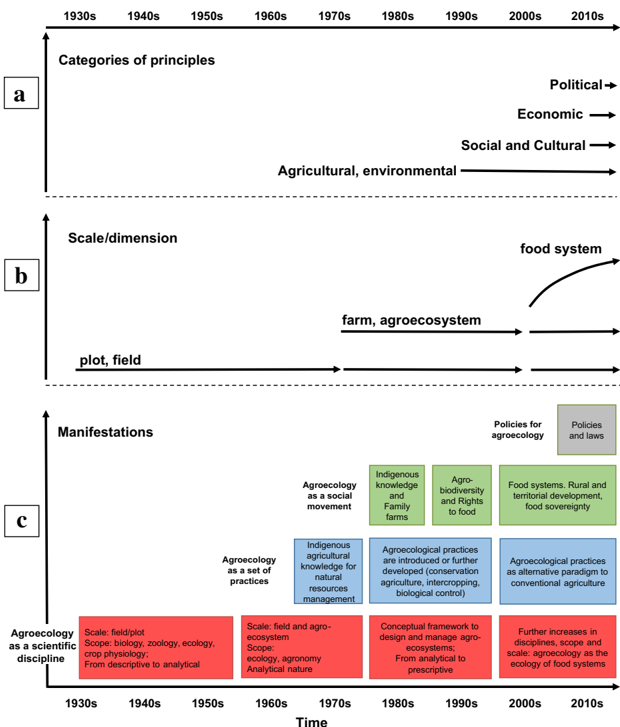
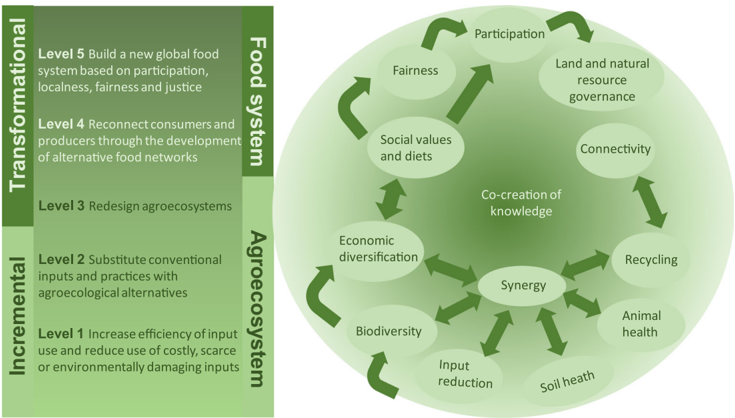
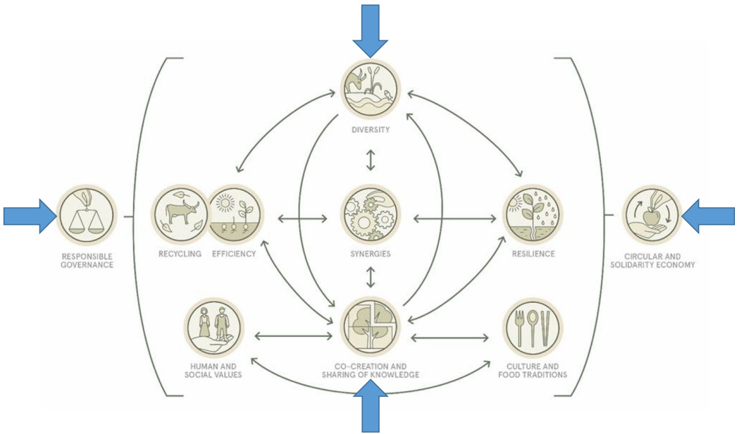
There is consensus that the global food system is not delivering good nutrition for all and is causing environmental degradation and loss of biodiversity, such that a profound transformation is needed to meet the challenges of persistent malnutrition and rural poverty, aggravated by the growing consequences of climate change. Agroecological approaches have gained prominence in scientific, agricultural and political discourse in recent years, suggesting pathways to transform agricultural and food systems that address these issues. Here we present an extensive literature review of concepts, definitions and principles of agroecology, and their historical evolution, considering the three manifestations of agroecology as a science, a set of practices and a social movement; and relate them to the recent dialogue establishing a set of ten iconic elements of agroecology that have emerged from a global multi-stakeholder consultation and synthesis process. Based on this, a consolidated list of principles is developed and discussed in the context of presenting transition pathways to more sustainable food systems. The major outcomes of this paper are as follows. (1) Definition of 13 consolidated agroecological principles: recycling; input reduction; soil health; animal health; biodiversity; synergy; economic diversification; co-creation of knowledge; social values and diets; fairness; connectivity; land and natural resource governance; participation. (2) Confirmation that these principles are well aligned and complementary to the 10 elements of agroecology developed by FAO but articulate requirements of soil and animal health more explicitly and distinguish between biodiversity and economic diversification. (3) Clarification that application of these generic principles can generate diverse pathways for incremental and transformational change towards more sustainable farming and food systems. (4) Identification of four key entry points associated with the elements: diversity; circular and solidarity economy; co-creation and sharing of knowledge; and, responsible governance to enable plausible pathways of transformative change towards sustainable agriculture and food systems.
Overview
The claims and statistics of this paper haven’t been checked yet.
Free: it reads the open-access text and checks the first 5 claims that cite a source we can check. Create a free account to check every claim.
Integrity signals
Registry
Cites
Statistics
Figures




Verification
Claims the paper makes
The claims and statistics of this paper haven’t been checked yet.
Free: it reads the open-access text and checks the first 5 claims that cite a source we can check. Create a free account to check every claim.
Claims other papers make about this one
Each is checked against this paper’s own text: does it say what the citing paper says it does?
The source backs part of the claim, not all of it — or backs it for a different population, condition or comparison.
In the citing paper
“the 13 principles of agroecology (HLPE, 2019) are closely aligned with the 10 elements and serve as a science-policy interface that facilitates debate, bridges diverse knowledge systems, and informs policymaking”
From Agroecology for sustainable development: evidence on multidimensional performance from a cross-country TAPE assessment in Africa (2025) · cites this paper as Wezel et al., 2020
Experimental — accuracy not yet measuredThe cited source says what the claim attributes to it.
In the citing paper
“According to the principles, agroecology concerns the direction of change in agricultural systems (Wezel et al. 2020).”
From Methodological challenges in assessing the viability of agroecological practices: lessons from a multi-case study in Africa (2025) · cites this paper as Wezel et al. 2020
The cited source says what the claim attributes to it.
In the citing paper
“They combine practices that can be related to one or various of the agroecological principles identified by Wezel et al. (2020) to respond to a diversity of constraints and challenges.”
From Methodological challenges in assessing the viability of agroecological practices: lessons from a multi-case study in Africa (2025) · cites this paper as Wezel et al. (2020)
The cited source says what the claim attributes to it.
In the citing paper
“In its conceptual and methodological evolution, agroecology has integrated a larger scope into its analysis, moving from the plot and farm to the landscape unit (Wezel etal., 2020).”
From Agroecological planning of productive systems with functional connectivity to the ecological landscape matrix: two Colombian case studies (2024) · cites this paper as Wezel et al., 2020
The cited source says what the claim attributes to it.
In the citing paper
“Agroecology is identified as an important solution to increase the sustainability of agricultural and food systems.”
From The socio-economic performance of agroecology. A review (2024) · cites this paper as Wezel et al. 2020
1 more claim about this paper
Create a free account to see every claim other papers make about this one.
Self-check
Percentages, sums and reported differences re-computed from the paper’s own numbers.
The self-check needs the paper’s full text.
Citations
Cites
Food and Agriculture Organization of the United Nations
(2022) · Permanent Missions to the United Nations · doi:10.18356/9789210018289c230 · Cited by 5,384
Colman (2022) · doi:10.1073/pnas · Cited by 4,370
Ontologies, socio-technical transitions (to sustainability), and the multi-level perspective
Geels, F. W. (2010) · Research Policy · doi:10.1016/j.respol.2010.01.022 · Cited by 1,718 · cited 4×
“Some transitions begin at a small scale, a ‘niche’ or protected space in which farmer cooperatives, social movements, businesses, local government or other groups experiment with and adapt alternative ways of doing things (Geels 2010; Hinrichs 2014).”
BackgroundMethodInfluentialSmith, A., Voß, J.-P., & Grin, J. (2010) · Research Policy · doi:10.1016/j.respol.2010.01.023 · Cited by 1,691 · cited 2×
“…multi-level perspective has been used, to consider how dynamic processes and interactions across scales can support whole-system transformative change (Geels 2010; Smith et al. 2010), but also what issues of power relations drive changes or establish ‘lock-ins’ (IPES-Food 2018; Leach et al. 2020).”
BackgroundMethodAgroecology as a science, a movement and a practice. A review
Wezel, A., Bellon, S., Doré, T., Francis, C., Vallod, D., & David, C. (2009) · Agronomy for Sustainable Development · doi:10.1051/agro/2009004 · Cited by 1,504
Self-citationAltieri, M. A., & Toledo, V. M. (2011) · Journal of Peasant Studies · doi:10.1080/03066150.2011.582947 · Cited by 1,279 · cited 2×
“eignty, local knowledge, social justice, local identity and culture, and indigenous rights for seeds and breeds (Altieri and Toledo 2011; Nyéléni 2015; Rosset et al. 2011) (Fig.”
BackgroundAgroecological practices for sustainable agriculture. A review
Wezel, A., Casagrande, M., Celette, F., Vian, J.-F., Ferrer, A., & Peigné, J. (2014) · Agronomy for Sustainable Development · doi:10.1007/s13593-013-0180-7 · Cited by 1,227 · cited 1×
“…beneficial biological interactions and synergies amongst the components of agroecosystems (Gliessman 1990), minimizing synthetic and toxic external inputs and using ecological processes and ecosystem services for the development and implementation of agricultural practices (Wezel et al. 2014) (Fig.”
BackgroundSelf-citationAgroecology: The Ecology of Sustainable Food Systems
Gliessman, S. R. (2007) · Andalas University Repository (Andalas University) · Cited by 1,061
Comparative Influences of Precipitation and River Stage on Groundwater Levels in Near-River Areas
Kim, I., Park, D., Kyung, D., Kim, G., Kim, S., & Lee, J. (2015) · Sustainability · doi:10.3390/su8010001 · Cited by 1,060
Global assessment of agricultural system redesign for sustainable intensification
Pretty, J., Benton, T. G., Bharucha, Z. P., Dicks, L. V., Flora, C. B., Godfray, H. C. J., Goulson, D., Hartley, S., Lampkin, N., Morris, C., et al. (2018) · Nature Sustainability · doi:10.1038/s41893-018-0114-0 · Cited by 1,022 · cited 1×
“This consensus acknowledges the need to address aspects that go well beyond a simple metric of productivity, embracing environmental and socially progressive outcomes (Caron et al. 2018; Pretty et al. 2018; Tittonell 2014).”
Background
Research works printed but not linked: 11
- FAO (2015b) Final report for the international symposium on agroecology for food security and nutrition. 18–19 September 2014. Rome. http://www.fao.org/3/a-i4327e.pdf
- FAO (2018c) Second International Symposium on Agroecology. Scaling up agroecology to achieve the sustainable development goals (SDGs). http://www.fao.org/about/meetings/second-international-agroecology-symposium/en/
- FAO (2019) Report of the Conference of FAO. 41st Session. Rome, 22–29 2019. http://www.fao.org/3/na421en/na421en.pdf
- 31. HLPE (2019) Agroecological and other innovative approaches for sus- tainable agriculture and food systems that enhance food security and nutrition. A report by the High Level Panel of Experts on Food Security and Nutrition of the Committee on World Food Security, Rome http://www.fao.org/cfs/cfs-hlpe/en/
- 33. IAASTD (International Assessment of Agricultural Knowledge, Science and Technology for Development) (2009) Agriculture at a cross- roads: global report. B.D. MacIntyre, H.R. Herren, J. Wakhungu, R.T. Watson, eds. Washington, DC, Island Press
- IPCC (2019) Climate change and land. Panel in Climate Change IPCC, Intergovernmental
- 47. Patton (2018) Principles-focus evaluation: the guide. The Guilford Press, New York, NY
- 49. Pimbert M, Lemke S (2018) Food environments: using agroecology to enhance dietary diversity. In: UNSCN (United Nations System Standing Committee on Nutrition) Report 43: addressing equity, equality and non-discrimination in the food system: pathways to reform, pp. 33-42. https://www.unscn.org/uploads/web/news/ UNSCN-News43.pdf
- 56. Silici L (2014) Agroecology -what it is and what it has to offer. IIED, London, UK, 28 p
- 59. Sinclair F, Wezel A, Mbow C, Chomba C, Robiglio V, Harrison R (2019) The contribution of agroecological approaches to realizing climate- resilient agriculture. Background Paper. Global Commission on Adaptation, Rotterdam https://cdn.gca.org/assets/2019-12/ TheContributionsOfAgroecologicalApproaches.pdf
- 67. Tittonell P (2015) Food security and ecosystem services in a changing world: it is time for agroecology. In FAO, Agroecology for Food Security and Nutrition: Proceedings of the FAO International Symposium, pp. 16-35. Rome, Itlay
Cited by
Items 101–200 of 1,001
Brunin, J., Allès, B., Péneau, S., Reuzé, A., Pointereau, P., Touvier, M., Herçberg, S., Lairon, D., Baudry, J., & Kesse‐Guyot, E. (2022) · Cleaner and Responsible Consumption · doi:10.1016/j.clrc.2022.100062 · Cited by 36
Land governance for agroecology
Wittman, H. K., & James, D. (2022) · Elementa Science of the Anthropocene · doi:10.1525/elementa.2021.00100 · Cited by 49
Quero, A. L., Yoldi, U. I., Gava, O., Schwarz, G., Povellato, A., & Astrain, C. (2022) · Sustainability · doi:10.3390/su14159261 · Cited by 44
Exploring Sustainability Implications of Transitions to Agroecology: a Transdisciplinary Perspective
Schwarz, G., Vanni, F., Miller, D., Helin, J. A., Pražan, J., Albanito, F., Frățilă, M., Galioto, F., Gava, O., Irvine, K. N., et al. (2022) · EuroChoices · doi:10.1111/1746-692x.12377 · Cited by 31
Rodenburg, J., Mollee, E., Coe, R., & Sinclair, F. (2022) · Field Crops Research · doi:10.1016/j.fcr.2022.108504 · Cited by 28
Self-citationSustainable production and consumption of animal products
Pulina, G., Lunesu, M. F., Pirlo, G., Ellies‐Oury, M., Chriki, S., & Hocquette, J.-F. J.-F. (2022) · Current Opinion in Environmental Science & Health · doi:10.1016/j.coesh.2022.100404 · Cited by 28
The 10 elements of agroecology interconnected: making them operational in FAO’S work on agroecology
Bicksler, A. J., Mottet, A., Lucantoni, D., Sy, M. R., & Barrios, E. (2023) · Elem Sci Anth · doi:10.1525/elementa.2022.00041 · Cited by 27
Self-citationÁngel-Lozano, G. D., Aguilar, M. Á. E., del Moral, J. B., & Reyes, V. C. (2023) · Revista Mexicana de Ciencias Pecuarias · doi:10.22319/rmcp.v14i3.6287 · Cited by 36
Steinke, J., Ivanova, Y., Jones, S. K., Minh, T. T., Sánchez, A., Sánchez-Choy, J., & Mockshell, J. (2024) · World Development Sustainability · doi:10.1016/j.wds.2024.100185 · Cited by 36
“Secondly, agricultural sustainability is a complex, multi-faceted, often gradual phenomenon, including aspects beyond on-farm practices, such as short distribution networks or decentralized food system governance [41,43].”
Addressing landscape multifunctionality in conservation and restoration
Jay, M., & Plieninger, T. (2025) · Nature Reviews Biodiversity · doi:10.1038/s44358-025-00091-4 · Cited by 30
An approach for comparing agricultural development to societal visions
Helfenstein, J., Diogo, V., Bürgi, M., Verburg, P. H., Schüpbach, B., Szerencsits, E., Mohr, F., Siegrist, M., Swart, R., & Herzog, F. (2022) · Agronomy for Sustainable Development · doi:10.1007/s13593-021-00739-3 · Cited by 31
Vogel, C., Poveda, K., Iverson, A. L., Boetzl, F. A., Mkandawire, T., Chunga, T. L., Küstner, G., Keller, A., Kerr, R. B., & Steffan-Dewenter, I. D. (2023) · Journal of Applied Ecology · doi:10.1111/1365-2664.14380 · Cited by 35
Self-citationMachine Learning as a Strategic Tool for Helping Cocoa Farmers in Côte D’Ivoire
Ferraris, S., Meo, R., Pinardi, S., Salis, M., & Sartor, G. (2023) · Sensors · doi:10.3390/s23177632 · Cited by 34
Vall, É., Orounladji, B. M., Berre, D., Assouma, M. H., Dabiré, D., Sanogo, S., & Sib, O. (2023) · Agronomy for Sustainable Development · doi:10.1007/s13593-023-00908-6 · Cited by 26
“These new forms of livestock farming and crop-livestock by-products recycling emerge as important agroecological levers that bring into play the biotechnical principles of recycling, and synergy, which lie at the heart of agroecology at production system level (Wezel et al. 2020).”
BackgroundMethodInfluentialReview of conceptual frameworks for smallholder farmers to achieve sustainable palm oil production
Ayompe, L. M., Nkongho, R. N., Acobta, A. N., Tambasi, E. E., Masso, C., & Egoh, B. N. (2025) · Journal of Cleaner Production · doi:10.1016/j.jclepro.2025.145525 · Cited by 31
Challenging Agroecology—Promise and Pitfalls for Agrarian Studies
McKay, B. M., Catacora‐Vargas, G., Castellanos-Navarrete, A., Kerr, R. B., & Luna, J. K. (2025) · Journal of Agrarian Change · doi:10.1111/joac.70019 · Cited by 29
Self-citationMcGreevy, S. R., Tamura, N., Kobayashi, M., Zollet, S., Hitaka, K., Nicholls, C. I., & Altieri, M. A. (2021) · Frontiers in Sustainable Food Systems · doi:10.3389/fsufs.2021.699694 · Cited by 37
“Research into what hinders the spread of agroecological uptake and drives upscaling processes has flourished in recent years (Mier y Terán Giménez Cacho et al., 2018; Bergez et al., 2019; Magrini et al., 2019; Wezel et al., 2020).”
BackgroundThe Social Ecology of Food: Where Agroecology and Heritage Meet
Rahman, D. F., Moussouri, T., & Alexopoulos, G. (2021) · Sustainability · doi:10.3390/su132413981 · Cited by 32
Using property law to expand agroecology: Scotland’s land reforms based on human rights
Calo, A. J., Shields, K., & Iles, A. (2022) · The Journal of Peasant Studies · doi:10.1080/03066150.2022.2083506 · Cited by 34
“Agroecology provides principles and practices that can be locally adapted in places worldwide, reflecting their specific social, ecological, and environmental conditions (Wezel et al. 2020).”
BackgroundCan low-income consumers choose food from sustainable production methods?
Hough, G., & Contarini, A. (2023) · Current Opinion in Food Science · doi:10.1016/j.cofs.2023.101035 · Cited by 35
The Role of Actor Networks in Enabling Agroecological Innovation: Lessons from Laos
Castella, J., Lestrelin, G., Phimmasone, S., Quoc, H. T., & Lienhard, P. (2022) · Sustainability · doi:10.3390/su14063550 · Cited by 33
“Doing so, the AeISs enlarged the scope of agroecology by incorporating additional practices from conservation agriculture to systems of rice intensification and agroforestry, as well as principles of agroecology starting from managing diversity, synergies, and recycling through co-creating of knowledge and then moving…”
BackgroundAgricultural sector circular economy development: Agroecological approach
Dovgal, O., Potryvaieva, N., Bіlichenko, O., Kuzoma, V., & Borko, T. (2024) · Ekonomika APK · doi:10.32317/ekon.apk/4.2024.10 · Cited by 25
AI through the looking glass: an empirical study of structural social and ethical challenges in AI
Ryan, M., de Roo, N., Wang, H., Blok, V., & Atik, C. (2024) · AI & Society · doi:10.1007/s00146-024-02146-0 · Cited by 40
“…especially those who believe in agroecol-ogy, may not embrace these efficiency-focused approaches but may adopt some methods that prioritize community connection and eco-friendliness, such as diversified cropping systems, organic practices, or agroecological approaches (Wezel et al. 2020).”
Vicente‐Vicente, J. L., Sanz-Sanz, E., Napoléone, C., Mouléry, M., & Piorr, A. (2021) · Agriculture · doi:10.3390/agriculture11020143 · Cited by 40
Grounding a global tool—Principles and practice for agroecological assessments inspired by TAPE
Namirembe, S., Mhango, W., Njoroge, R., Tchuwa, F., Wellard, K., & Coe, R. (2022) · Elementa Science of the Anthropocene · doi:10.1525/elementa.2022.00022 · Cited by 34
Agroecological practices for sustainable weed management in Mediterranean farming landscapes
Boutagayout, A., Bouiamrine, E. H., Synowiec, A., Oihabi, K. E., Romero, P., Rhioui, W., Nassiri, L., & Belmalha, S. (2023) · Environment Development and Sustainability · doi:10.1007/s10668-023-04286-7 · Cited by 28
Business strategies towards climate‐smart agriculture in Europe: A literature review
Isakhanyan, G., Galgo, C., Gemtou, M., & Pedersen, S. M. (2024) · Business Strategy and the Environment · doi:10.1002/bse.3741 · Cited by 29
Picasso, V., Berti, M. T., Cassida, K. A., Collier, S. M., Fang, D., Finan, A., Krome, M., Hannaway, D. B., Lamp, W. O., Stevens, A. W., et al. (2022) · Grassland Research · doi:10.1002/glr2.12020 · Cited by 32
Exploring scenarios for the food system–zoonotic risk interface
Shepon, A., Wu, T., Kremen, C., Dayan, T., Perfecto, I., Fanzo, J., Eshel, G., & Golden, C. D. W. (2023) · The Lancet Planetary Health · doi:10.1016/s2542-5196(23)00007-4 · Cited by 43
Lucantoni, D., & Domarle, J. (2023) · Agroecology and Sustainable Food Systems · doi:10.1080/21683565.2023.2230931 · Cited by 26
“…maps of sample farm before (left) and after (right) the process of agroecological transition triggered by the project. principles (HLPE 2019; Wezel et al. 2020) well adapted to the local conditions and implemented to counter problems perceived as crucial by local farmers (Mapfumo et al.…”
BackgroundCicek, H., Topp, E. N., Plieninger, T., Blanco‐Moreno, J. M., Gultekin, I., Mohamed, H. C., & Gharras, O. E. (2023) · Agronomy for Sustainable Development · doi:10.1007/s13593-023-00926-4 · Cited by 27
“According to Wezel et al. (2020), the major agroecological principles include recycling, input reduction, soil health, animal health, biodiversity and synergy.”
InfluentialCarolina, Q., Arce, A., & Nadine, A. (2023) · Agroecology and Sustainable Food Systems · doi:10.1080/21683565.2023.2273835 · Cited by 35
“Yet, and most recently, agroecology also stands for a social movement with manifold political vindications worldwide (Wezel et al., 2020).”
BackgroundDumont, B., Barlagne, C., Cassart, P., Duval, J. E., Fanchone, A., Gourdine, J.-L., Huguenin‐Elie, O., Kazakova-Mateva, Y., Klötzli, J., LÜSCHER, A., et al. (2024) · animal · doi:10.1016/j.animal.2024.101367 · Cited by 30
A critical review of how UAVs can transform precision agriculture in the realm of Agroecology
Narzari, R., Choudhury, B. U., Singhal, G., & Choudhary, K. K. (2025) · Discover Soil. · doi:10.1007/s44378-025-00055-2 · Cited by 23
Plateau, L., Roudart, L., Hudon, M., & Maréchal, K. (2021) · Ecological Economics · doi:10.1016/j.ecolecon.2021.107048 · Cited by 30
“…cannot be considered separately from social and economic dimensions (Aubron et al., 2016; Bacon et al., 2012; Dumont et al., 2016; Kapgen and Roudart, 2020) and the changes necessary for an agroecological transition extend well beyond the farm level (Francis et al., 2003; Wezel et al., 2016, 2020).”
BackgroundMartinelli, F., Vollheyde, A., Cebrián‐Piqueras, M. A., von Haaren, C., Lorenzetti, E., Bàrberi, P., Loreto, F., Piergiovanni, A. R., Valkov, V. T., Bedini, A., et al. (2022) · Agronomy · doi:10.3390/agronomy12010132 · Cited by 29
Policy Instruments to Support Agroecological Transitions in Europe
Gava, O., Povellato, A., Galioto, F., Pražan, J., Schwarz, G., Quero, A. L., Yoldi, U. I., Massa, C. A., Zīlāns, A., & Carolus, J. (2022) · EuroChoices · doi:10.1111/1746-692x.12367 · Cited by 28
Status and determinants of crop diversification: evidence from Indian States
Kumar, C. R., Nayak, C., & Pradhan, A. K. (2023) · Letters in Spatial and Resource Sciences · doi:10.1007/s12076-023-00366-4 · Cited by 26
“…2023), gender differences and crop diversification in China (Ge et al. 2023), crop diversification and sustainable food systems (Bonke and Musshoff 2020 ; Wezel et al. 2020), understanding the relationship between crop diversification, land fragmentation and incomes in Cameroon (Ndip et al. 2023).”
BackgroundNutrition as a driver and outcome of agroecology
van Zutphen, K. G., van den Berg, S., Gavin-Smith, B., Imbo, E., Kraemer, K., Monroy-Gomez, J., Pannatier, M., Prytherch, H., Six, J., Thoennissen, C., et al. (2022) · Nature Food · doi:10.1038/s43016-022-00631-7 · Cited by 22
“Out of the 13 principles, we propose that seven (2, 5, 7, 9, 10, 11, 13) could make a direct contribution to nutrition, whereas for six (1, 3, 4, 6, 8, 12) the relationship is less direct (Fig.”
BackgroundMeasuring agroecology: Introducing a methodological framework and a community of practice approach
Moeller, N. I., Geck, M., Anderson, C., Barahona, C., Broudic, C., Cluset, R., Henriques, G., Leippert, F., Mills, D., Minhaj, A., et al. (2023) · Elementa Science of the Anthropocene · doi:10.1525/elementa.2023.00042 · Cited by 33
“Yet, the 13 consolidated principles are slightly more differentiated and “articulated as actionable statements containing normative . . . and causative . . . aspects” (Wezel et al., 2020).”
BackgroundKuria, A. W., Bolo, P., Adoyo, B., Korir, H., Sakha, M. A., Gumo, P., Mbelwa, M., Orero, L., Ntinyari, W., Syano, N. M., et al. (2024) · Frontiers in Sustainable Food Systems · doi:10.3389/fsufs.2024.1456620 · Cited by 30
Patterns and Drivers of Pollen Temperature Tolerance
Tushabe, D., & Rosbakh, S. A. (2024) · Plant Cell & Environment · doi:10.1111/pce.15207 · Cited by 27
Rastorgueva, N., Bassignana, C. F., Angarita, E., Fasso, A., Hassink, J., Goris, M., Schmutz, U., Conroy, J., DİNÇ, S., Wezel, A., et al. (2025) · Agroecology and Sustainable Food Systems · doi:10.1080/21683565.2025.2477215 · Cited by 25
“The 13 principles of agroecology (HLPE 2019; Wezel et al. 2020) provided a framework for describing the development of ALLs and their contributions to and connections with the agroecological transition.”
Self-citationViera, W., Binego, L., Rayns, F., López, D., Moya, M., Vera, L., & Caicedo, C. (2025) · Sustainability · doi:10.3390/su17136053 · Cited by 29
Muramoto, J., Parr, D., Perez, J., & Wong, D. G. (2022) · Frontiers in Sustainable Food Systems · doi:10.3389/fsufs.2022.839648 · Cited by 27
Cruz-López, V., Granados-Echegoyen, C. A., Pacheco, R. P., Robles, C., Álvarez‐Lopeztello, J., Morales, I., Orrego, L. M. B., García-Pérez, F., Dorantes-Jiménez, J., & Landero-Valenzuela, N. (2024) · Frontiers in Sustainable Food Systems · doi:10.3389/fsufs.2024.1336810 · Cited by 26
Optimizing cropping systems to close the gap between economic profitability and environmental health
Yang, X., Delgado‐Baquerizo, M., Niu, Y., Christie, P., Chen, J., Hu, H., & Chen, Y. (2023) · New Phytologist · doi:10.1111/nph.19310 · Cited by 27
Pour une gestion durable des sols en Afrique subsaharienne
Dugué, P., Andrieu, N., & Bakker, T. (2024) · Cahiers Agricultures · doi:10.1051/cagri/2024003 · Cited by 29
The evolution of agroecology in Mexico, 1920–2023
Toledo, V. M., & Argueta, Q. (2024) · Elementa Science of the Anthropocene · doi:10.1525/elementa.2023.00092 · Cited by 29
Štreimikis, J., Bathaei, A., & Štreimikienė, D. (2024) · Sustainable Development · doi:10.1002/sd.2993 · Cited by 26
The ties that bind: how trees can enhance agroecological transitions
Isaac, M. E., Sinclair, F., Laroche, G., Olivier, A., & Thapa, A. (2024) · Agroforestry Systems · doi:10.1007/s10457-024-01014-6 · Cited by 28
“This mirrors the expansion of the scope of agroecological science over the past half century, from a focus on agroecosystem management to embracing whole food system transformation (Wezel et al. 2020).”
InfluentialSelf-citationRice-fish coculture: Enhancing resource management and food security
Samaddar, A., Kacha, D., Kaviraj, A., Freed, S., Panemangalore, A. P., & Saha, S. (2024) · Aquaculture · doi:10.1016/j.aquaculture.2024.741476 · Cited by 28
Chaturvedi, S., Kumar, A., Liu, M., Mohan, K., Singh, N., & Kumar, R. (2025) · Land Degradation and Development · doi:10.1002/ldr.5446 · Cited by 22
“Agroecological methods include crop diversification, cover crops, agroforestry, biological pest management, and minimizing synthetic inputs (Gliessman 2020; Wezel et al. 2020).”
Bhandari, S., Yadav, B., Yadav, P. K., Lahutiya, V., & Koirala, S. (2024) · Asian Journal of Research in Agriculture and Forestry · doi:10.9734/ajraf/2024/v10i1271 · Cited by 20
Hassan, R., Martino, M. D., & Daher, B. T. (2025) · Frontiers in Sustainable Food Systems · doi:10.3389/fsufs.2025.1479691 · Cited by 25
Sustainable Food Systems Through Livestock–Pasture Integration
Rapiya, M., Mndela, M., & Ramoelo, A. (2025) · Agriculture · doi:10.3390/agriculture15090967 · Cited by 23
Soininen, N., Ruhl, J. B., Cosens, B. A., & Gunderson, L. (2025) · Environmental Innovation and Societal Transitions · doi:10.1016/j.eist.2025.101020 · Cited by 28
Community forest and mushrooms: Collective action initiatives in rural areas of Galicia
Rodríguez, D. C., Neira, D. P., Vázquez, A. M., & Fernández, X. S. (2021) · Forest Policy and Economics · doi:10.1016/j.forpol.2021.102660 · Cited by 20
de Otálora, X. D., Dragoni, F., del Prado, A., Estellés, F., Wilfart, A., Król, D., Balaine, L., Anestis, V., & Amon, B. (2022) · Agronomy for Sustainable Development · doi:10.1007/s13593-022-00830-3 · Cited by 26
“In this way, synergies between farmers could be facilitated, thereby enabling the interrelationships between the different components of the agrological production and promoting agroecological principles (Bonaudo et al. 2014; Wezel et al. 2020).”
BackgroundSustainable pathways toward reimagining India’s agricultural systems
Bawa, K. S., & Seidler, R. (2023) · Communications Earth & Environment · doi:10.1038/s43247-023-00902-6 · Cited by 25
Advancing agroecology and sustainability with agricultural robots at field level: A scoping review
Naim, M., Rizzo, D., Sauvée, L., & Medici, M. (2025) · Computers and Electronics in Agriculture · doi:10.1016/j.compag.2025.110650 · Cited by 24
Sustainability implications of Rwanda’s Vision 2050 long-term development strategy
Pérez-Guzmán, K., Imanirareba, D., Jones, S. K., Neubauer, R., Niyitanga, F., & Naramabuye, F. X. (2022) · Sustainability Science · doi:10.1007/s11625-022-01266-0 · Cited by 31
Understanding the role of value chain formation in the scaling of crop diversification
Weituschat, C. S., Pascucci, S., Materia, V. C., & Blasi, E. (2023) · Agronomy for Sustainable Development · doi:10.1007/s13593-023-00866-z · Cited by 28
A new Rothamsted long-term field experiment for the twenty-first century: principles and practice
Li, X., Storkey, J., Mead, A., Shield, I. F., Clark, I. M., Ostler, R., Roberts, B., & Dobermann, A. (2023) · Agronomy for Sustainable Development · doi:10.1007/s13593-023-00914-8 · Cited by 24
“2018), agroecological (Wezel et al. 2020), regenerative (Giller et al.”
BackgroundReassessing science communication for effective farmland biodiversity conservation
Velado‐Alonso, E., Kleijn, D., & Bartomeus, Í. (2024) · Trends in Ecology & Evolution · doi:10.1016/j.tree.2024.01.007 · Cited by 22
Savels, R., Dessein, J., Lucantoni, D., & Speelman, S. (2024) · Frontiers in Sustainable Food Systems · doi:10.3389/fsufs.2024.1359083 · Cited by 23
Principios sociales de las agroecologías emancipadoras
Giraldo, O. F., & Rosset, P. M. (2021) · Desenvolvimento e Meio Ambiente · doi:10.5380/dma.v58i0.77785 · Cited by 55
Zamani, F., Amirnia, R., Rezaei‐Chiyaneh, E., Gheshlaghi, M., von Cossel, M., & Siddique, K. H. M. (2022) · Archives of Agronomy and Soil Science · doi:10.1080/03650340.2022.2105320 · Cited by 21
“One step toward sustainable farming systems is using species/cultivar mixtures (Hussain et al. 2020; Wezel et al. 2020).”
BackgroundScenarios for an agroecological transition of smallholder family farmers: a case study in Guadeloupe
Andrieu, N., Blundo-Canto, G., Chia, E., Diman, J. L., Dugué, P., Fanchone, A., Howland, F., Ott, S., & Poulayer, C. (2022) · Agronomy for Sustainable Development · doi:10.1007/s13593-022-00828-x · Cited by 21
“The targeted agroecological practices were the ones mentioned in steps 2 and 3 by farmers that followed the agroecological principles of diversification, recycling of nutriments and biomass, soil, and animal health (Wezel et al. 2020).”
BackgroundAguilar, G. C. S., & Paulino, S. R. (2025) · Agroecology and Sustainable Food Systems · doi:10.1080/21683565.2025.2469066 · Cited by 21
“To transcend these limitations, RA must integrate agroecology’s scientific knowledge, practical applications, and social movement dimensions (Wezel et al. 2020), which together enable a holistic approach across multiple scales and issues (Gallardo-López et al. 2018).”
Ortiz-Valverde, R., & Peris, J. (2022) · Sustainability · doi:10.3390/su14052695 · Cited by 26
The Role of the Ugly = Bad Stereotype in the Rejection of Misshapen Produce
Spielmann, N., Gomez, P., & Minton, E. A. (2023) · Journal of Business Ethics · doi:10.1007/s10551-023-05420-1 · Cited by 22
“There is growing institutional interest in developing sustainable food systems ((Wezel et al., 2020).”
Developing the agroecological niche in Nicaragua: The roles of knowledge flows and intermediaries
Schiller, K., Klerkx, L., Centeno, D. J. S., & Poortvliet, P. M. (2023) · Proceedings of the National Academy of Sciences · doi:10.1073/pnas.2206195120 · Cited by 22
“Agroecological farming systems are based on principles including biodiversity, use of locally produced farming inputs, soil and animal health, economic diversification, knowledge cocreation, and connectivity (12, 17).”
BackgroundPacker, G., & Zanasi, C. (2023) · Frontiers in Sustainable Food Systems · doi:10.3389/fsufs.2023.1229505 · Cited by 26
Rana, J. C., Bisht, I. S., Mathur, P., Fadda, C., Mittra, S., Ahlawat, S. P., Vishwakarma, H., & Yadav, R. (2024) · Sustainability · doi:10.3390/su16219417 · Cited by 26
Wach, E. (2021) · Sustainability · doi:10.3390/su13041927 · Cited by 25
“Some of those advocating a ‘food systems’ approach to agroecology and the realisation of food sovereignty propose strategies which sit comfortably within capitalism, such as promoting economic diversification, local markets and using innovations to shift food retail, consumption and production practices (see [18,21]).”
BackgroundWinara, A., Fauziyah, E., Suhartono, S., Widiyanto, A., Sanudin, S., Sudomo, A., Siarudin, M., Hani, A., Indrajaya, Y., Achmad, B., et al. (2022) · Sustainability · doi:10.3390/su141911981 · Cited by 20
Magnolo, F., Candel, J., & Speelman, S. (2024) · Energy Research & Social Science · doi:10.1016/j.erss.2024.103793 · Cited by 24
Leakey, R. R. B., & Harding, P. E. (2025) · Sustainability · doi:10.3390/su17135876 · Cited by 18
Agroecological farming promotes yield and biodiversity but may require subsidy to be profitable
Woodcock, B. A., Cook, S. M., Hulmes, L., Hulmes, S., Torrance, M. T., Redhead, J. W., Swain, J. L., Ostler, R., Rainey, J., Weites, M. G., et al. (2025) · Journal of Applied Ecology · doi:10.1111/1365-2664.70079 · Cited by 20
Transitioning toward sustainable dairy systems in Europe: A systematic literature review
Alrhmoun, M., Gauly, M., & Zanon, T. (2025) · Journal of Dairy Science · doi:10.3168/jds.2025-27018 · Cited by 17
Stone, T. F., Alami, S., Bach, J. L., Bindelle, J., Busse, M., Ciaccia, C., Rivera‐Ferre, M. G., García, D. L., Kozar, R., Plaas, E., et al. (2025) · Agroecology and Sustainable Food Systems · doi:10.1080/21683565.2025.2560915 · Cited by 24
“Incremental change is thus not sufficient, yet holistic transformations are challenging because they demand both methodological and institutional alterations (Loorbach and Rotmans 2006; Touzard and Fournier 2014; Wezel et al. 2020).”
Berre, D., Adam, M., Koffi, C. K., Vigne, M., & Gautier, D. (2022) · Agricultural Systems · doi:10.1016/j.agsy.2022.103369 · Cited by 19
Costa-Pereira, I., Aguiar, A. A. R. M., Delgado, F., & Costa, C. A. (2024) · Sustainability · doi:10.3390/su16103955 · Cited by 20
Laske, E., & Michel, S. (2022) · Agroecology and Sustainable Food Systems · doi:10.1080/21683565.2022.2107595 · Cited by 20
“However, for many, agroecology also conveys a political vision of society involving social dimensions at the food system scale (Gliessman 2016; Wezel et al. 2020).”
BackgroundBacon, C. M., Gómez, M. E. F., Shin, V., Ballardo, G., Kriese, S., McCurry, E., Martinez, E., & Rivas, M. (2023) · Agroecology and Sustainable Food Systems · doi:10.1080/21683565.2023.2171172 · Cited by 22
“There are multiple ways to define agroecological diversification (Stratton, Wittman, and Blesh 2021), but for the purposes of this article we will focus on the presence of diversified farming activities, and specifically crop species richness as well as farm management guided by a set of agroecological principles or e…”
BackgroundControversial topics in agroecology: A European perspective
Migliorini, P., Bàrberi, P., Bellon, S., Gaifami, T., Gkisakis, V. D., Peeters, A., & Wezel, A. (2020) · International Journal of Agriculture and Natural Resources · doi:10.7764/ijanr.v47i3.2265 · Cited by 16
Self-citationCurrent policies for promoting neglected and underutilized crop species in Burkina Faso and Niger
Rokka, S., Bilali, H. E., Borelli, T., Calabrese, G. J., Lecci, S., Otieno, G., Tietiambou, F. R. S., Bteich, M. R., Grazioli, F., Kabré, B., et al. (2025) · International Journal of Agricultural Sustainability · doi:10.1080/14735903.2025.2459541 · Cited by 16
“…sustainable agricultural and food systems to achieve Zero Hunger (SDG 2) and numerous other SDGs. Agroecology through the element of diversity and the principle of biodiversity (Wezel et al., 2020) connects the transition to a sustainable food system to the sustainable use of genetic resources.”
More than food production: Assemblages of values underpinning women‐led agroecological initiatives
Vizuete, B., Groß, M., García‐Llorente, M., Oteros‐Rozas, E., & Martín‐López, B. (2025) · People and Nature · doi:10.1002/pan3.70006 · Cited by 18
Kozicka, M., Jones, S. K., Gotor, E., & Enahoro, D. K. (2021) · Sustainability Science · doi:10.1007/s11625-021-01082-y · Cited by 17
“Further research is needed to identify the best option for increasing maize productivity while maintaining ESS provision, but is likely to require agroecological intensification strategies compatible with a shift towards sustainable food systems (Wezel et al. 2020).”
BackgroundMarchi, M. D., Diantini, A., & Pappalardo, S. E. (2022) · CRC Press eBooks · doi:10.1201/9780429052842 · Cited by 20
Adoption of agroecological intensification practices in Southern Africa: A scientific review
Manyanga, M., Pedzisa, T., & Hanyani-Mlambo, B. (2023) · Cogent Food & Agriculture · doi:10.1080/23311932.2023.2261838 · Cited by 21
Co-design of diversified cropping systems in the Mediterranean area
Hossard, L., Blanc, L., Lambarraa-Lehnhardt, F., Dordas, C. A., Papakaloudis, P., Michalitsis, A., Lampurlanés, J., Latati, M., Touama, R., Kherif, O., et al. (2023) · European Journal of Agronomy · doi:10.1016/j.eja.2023.127050 · Cited by 20
Jiménez‐Soto, E., Fairbairn, M., Muramoto, J., & Shennan, C. (2024) · Agroecology and Sustainable Food Systems · doi:10.1080/21683565.2024.2303454 · Cited by 17
“Agroecological transitions refers to the process through which farmers shift from low-diversity, high-input agriculture to a system that uses agroecological practices and relations (Blesh and Wolf 2014; DeLonge, Miles, and Carlisle 2016; Wezel et al. 2020).”
BackgroundKerr, R. B., & Wynberg, R. (2024) · Elementa Science of the Anthropocene · doi:10.1525/elementa.2023.00051 · Cited by 23
Self-citationAgri vs. food? Perceptions of local policymakers on agri-food policies from a multilevel approach
García, D. L., Maceín, J. L. C., & DiPaula, M. (2024) · Frontiers in Sustainable Food Systems · doi:10.3389/fsufs.2024.1399746 · Cited by 22
Verkuil, L. A., Verburg, P. H., Levers, C., Stratton, A. E., & Schulp, C. J. E. (2024) · Agricultural Systems · doi:10.1016/j.agsy.2024.104086 · Cited by 20
Characterizing Agroecology in North Africa, a Review of 88 Sustainable Agriculture Projects
Requier-Desjardins, M., Boughamoura, O., & Lemaître-Curri, E. (2024) · Land · doi:10.3390/land13091457 · Cited by 24
“From the point of view of principles, this point refers mainly to justice, a principle that is largely absent from the data available on the projects studied.”
Wegenast, T. C., Hänze, N., Haer, R., & Birulés, M. (2025) · Agriculture & Food Security · doi:10.1186/s40066-024-00512-1 · Cited by 20
“Examples of traditional farming practices include multi-cropping, intercropping, the use of organic fertilizers and traditional crops, agroforestry, terracing, crop rotation, and crop-livestock integration [33].”
Metadata
- Authors
- Wezel, A., Herren, B. G., Kerr, R. B., Barrios, E., Gonçalves, A. L. R., & Sinclair, F.
- Affiliations
- Institut Supérieur d'Agriculture Rhône-Alpes (FR)
- Cornell University (US)
- Food and Agriculture Organization of the United Nations (IT)
- Instituto Federal Catarinense (BR)
- Bangor University (GB)
- Corresponding author
- Wezel, Alexander
- Venue
- Agronomy for Sustainable Development
- Published
- 2020-10-27
- Volume
- 40
- Issue
- 6
- Pages
- 40
- ISSN
- 1773-0155 (ISSN-L)
- 1774-0746
- OpenAlex
- W3095607637
- Semantic Scholar
- c5a128a829b43b2b4d39d83eb9f0c2985df5369a
- Cited by
- 926
- References
- 71
- Citations by year
- 2026: 212 · 2025: 208 · 2024: 173 · 2023: 169 · 2022: 108 · 2021: 55 · 2020: 1
- FWCI
- 125.87
- Type
- journal article
- Language
- en
- Open access
- hybrid
- doi.org
- Licence
- cc-by
- creativecommons.org/licenses/by/4.0 (tdm)
- creativecommons.org/licenses/by/4.0 (vor)
- Locations
- Agronomy for Sustainable Development (publishedVersion, cc-by)
- HAL (submittedVersion, other-oa)
- Funders
- McKnight Foundation
- Consortium of International Agricultural Research Centers
- Topics
- Social Sciences › Development › Agriculture, Land Use, Rural Development
- Life Sciences › Agricultural and Biological Sciences › General Agricultural and Biological Sciences › Plant and soil sciences
- Life Sciences › Agricultural and Biological Sciences › Agronomy and Crop Science › Sustainable Agricultural Systems Analysis
- Keywords
- agroecology, agroecological principles, sustainable food systems, food system transformation, soil health, biodiversity, circular economy, solidarity economy, knowledge co-creation, participatory governance, economic diversification, animal health, food system resilience, climate change adaptation, malnutrition, rural poverty
About these checks
Registry, retraction, Cites and statistics results are computed, not judged, with one exception: a printed reference that no index lists is read once by a model before it counts as a citation error. Claims are extracted by a model and kept only when their quote appears verbatim in the text; each cited source is then checked, with a model’s help, for whether it says what the claim relies on. Those verdicts can be wrong — read the claim’s quote and the cited source before relying on one.
Statistics and arithmetic are recomputed, not judged.
Confidence bands are shown only for fields calibrated on our annotated test set. None is calibrated yet, so no band is shown.
What counts as a claim ›How we measure confidence ›How we check this ›
Are you an author, or do you see a problem with this page? Request a review
Data sources
Bibliographic data: Semantic Scholar, OpenAlex, Crossref.
Contains information from the Semantic Scholar Academic Graph Datasets, made available under the ODC Attribution License (ODC-BY 1.0).
Semantic Scholar’s data is described in: Kinney, R., et al. (2023). The Semantic Scholar Open Data Platform. arXiv:2301.10140.
