

Agroecological principles and elements and their implications for transitioning to sustainable food systems. A review
Open accessThe DOI matches its Crossref record; 71 of the 71 references it cites were found in a registry or an index.
Abstract
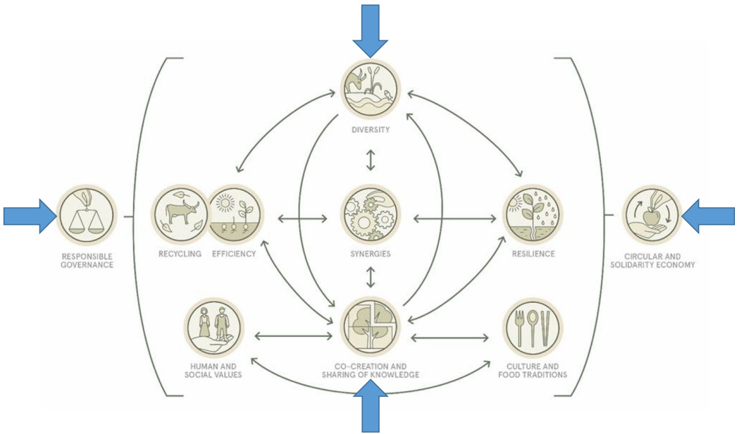
There is consensus that the global food system is not delivering good nutrition for all and is causing environmental degradation and loss of biodiversity, such that a profound transformation is needed to meet the challenges of persistent malnutrition and rural poverty, aggravated by the growing consequences of climate change. Agroecological approaches have gained prominence in scientific, agricultural and political discourse in recent years, suggesting pathways to transform agricultural and food systems that address these issues. Here we present an extensive literature review of concepts, definitions and principles of agroecology, and their historical evolution, considering the three manifestations of agroecology as a science, a set of practices and a social movement; and relate them to the recent dialogue establishing a set of ten iconic elements of agroecology that have emerged from a global multi-stakeholder consultation and synthesis process. Based on this, a consolidated list of principles is developed and discussed in the context of presenting transition pathways to more sustainable food systems. The major outcomes of this paper are as follows. (1) Definition of 13 consolidated agroecological principles: recycling; input reduction; soil health; animal health; biodiversity; synergy; economic diversification; co-creation of knowledge; social values and diets; fairness; connectivity; land and natural resource governance; participation. (2) Confirmation that these principles are well aligned and complementary to the 10 elements of agroecology developed by FAO but articulate requirements of soil and animal health more explicitly and distinguish between biodiversity and economic diversification. (3) Clarification that application of these generic principles can generate diverse pathways for incremental and transformational change towards more sustainable farming and food systems. (4) Identification of four key entry points associated with the elements: diversity; circular and solidarity economy; co-creation and sharing of knowledge; and, responsible governance to enable plausible pathways of transformative change towards sustainable agriculture and food systems.
Overview
The claims and statistics of this paper haven’t been checked yet.
Free: it reads the open-access text and checks the first 5 claims that cite a source we can check. Create a free account to check every claim.
Integrity signals
Registry
Cites
Statistics
Figures

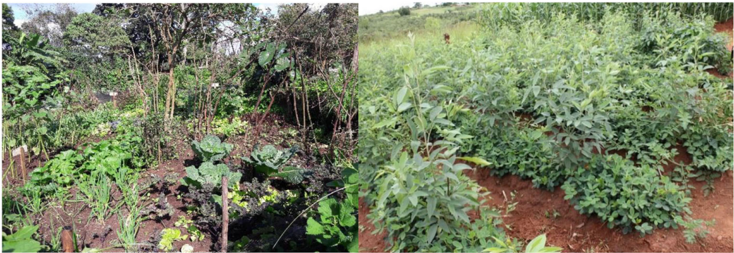
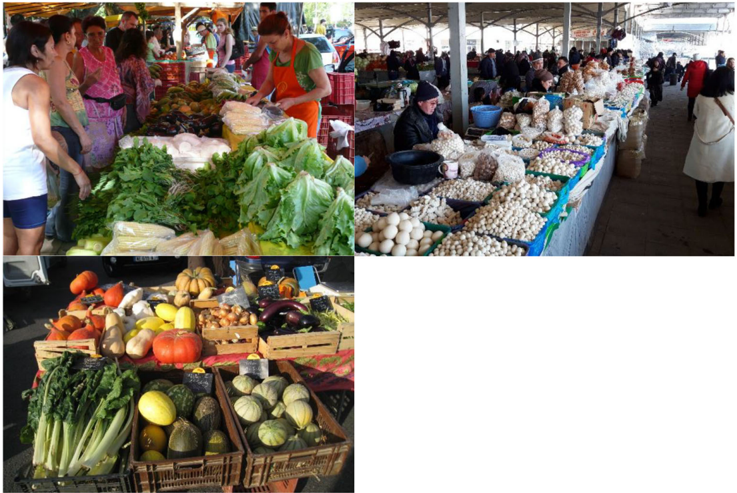

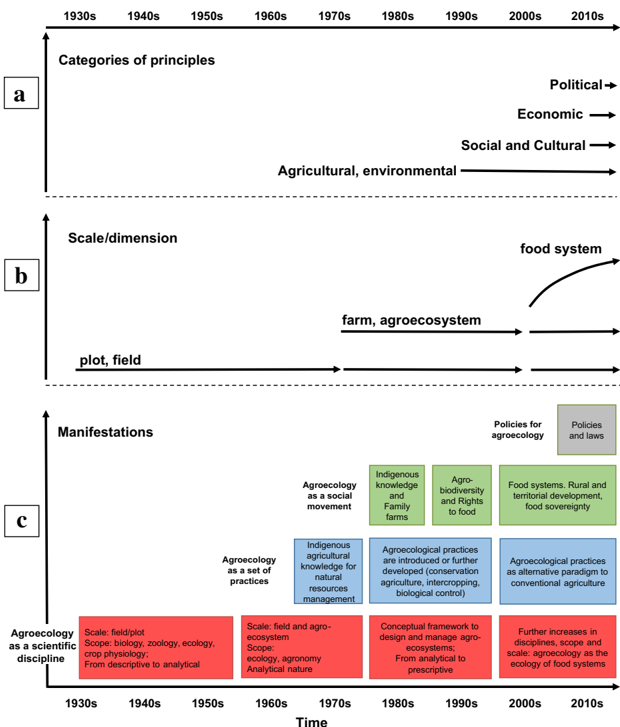
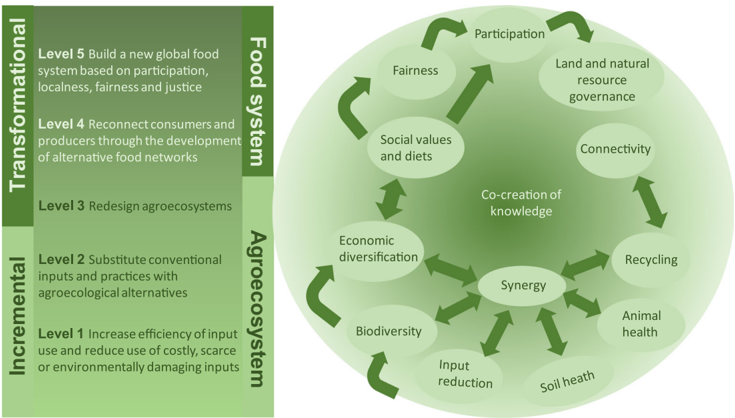


Verification
Claims the paper makes
The claims and statistics of this paper haven’t been checked yet.
Free: it reads the open-access text and checks the first 5 claims that cite a source we can check. Create a free account to check every claim.
Claims other papers make about this one
Each is checked against this paper’s own text: does it say what the citing paper says it does?
The source backs part of the claim, not all of it — or backs it for a different population, condition or comparison.
In the citing paper
“the 13 principles of agroecology (HLPE, 2019) are closely aligned with the 10 elements and serve as a science-policy interface that facilitates debate, bridges diverse knowledge systems, and informs policymaking”
From Agroecology for sustainable development: evidence on multidimensional performance from a cross-country TAPE assessment in Africa (2025) · cites this paper as Wezel et al., 2020
Experimental — accuracy not yet measuredThe cited source says what the claim attributes to it.
In the citing paper
“According to the principles, agroecology concerns the direction of change in agricultural systems (Wezel et al. 2020).”
From Methodological challenges in assessing the viability of agroecological practices: lessons from a multi-case study in Africa (2025) · cites this paper as Wezel et al. 2020
The cited source says what the claim attributes to it.
In the citing paper
“They combine practices that can be related to one or various of the agroecological principles identified by Wezel et al. (2020) to respond to a diversity of constraints and challenges.”
From Methodological challenges in assessing the viability of agroecological practices: lessons from a multi-case study in Africa (2025) · cites this paper as Wezel et al. (2020)
The cited source says what the claim attributes to it.
In the citing paper
“In its conceptual and methodological evolution, agroecology has integrated a larger scope into its analysis, moving from the plot and farm to the landscape unit (Wezel etal., 2020).”
From Agroecological planning of productive systems with functional connectivity to the ecological landscape matrix: two Colombian case studies (2024) · cites this paper as Wezel et al., 2020
The cited source says what the claim attributes to it.
In the citing paper
“Agroecology is identified as an important solution to increase the sustainability of agricultural and food systems.”
From The socio-economic performance of agroecology. A review (2024) · cites this paper as Wezel et al. 2020
1 more claim about this paper
Create a free account to see every claim other papers make about this one.
Self-check
Percentages, sums and reported differences re-computed from the paper’s own numbers.
The self-check needs the paper’s full text.
Citations
Cites
Food and Agriculture Organization of the United Nations
(2022) · Permanent Missions to the United Nations · doi:10.18356/9789210018289c230 · Cited by 5,384
Colman (2022) · doi:10.1073/pnas · Cited by 4,370
Ontologies, socio-technical transitions (to sustainability), and the multi-level perspective
Geels, F. W. (2010) · Research Policy · doi:10.1016/j.respol.2010.01.022 · Cited by 1,718 · cited 4×
“Some transitions begin at a small scale, a ‘niche’ or protected space in which farmer cooperatives, social movements, businesses, local government or other groups experiment with and adapt alternative ways of doing things (Geels 2010; Hinrichs 2014).”
BackgroundMethodInfluentialSmith, A., Voß, J.-P., & Grin, J. (2010) · Research Policy · doi:10.1016/j.respol.2010.01.023 · Cited by 1,691 · cited 2×
“…multi-level perspective has been used, to consider how dynamic processes and interactions across scales can support whole-system transformative change (Geels 2010; Smith et al. 2010), but also what issues of power relations drive changes or establish ‘lock-ins’ (IPES-Food 2018; Leach et al. 2020).”
BackgroundMethodAgroecology as a science, a movement and a practice. A review
Wezel, A., Bellon, S., Doré, T., Francis, C., Vallod, D., & David, C. (2009) · Agronomy for Sustainable Development · doi:10.1051/agro/2009004 · Cited by 1,504
Self-citationAltieri, M. A., & Toledo, V. M. (2011) · Journal of Peasant Studies · doi:10.1080/03066150.2011.582947 · Cited by 1,279 · cited 2×
“eignty, local knowledge, social justice, local identity and culture, and indigenous rights for seeds and breeds (Altieri and Toledo 2011; Nyéléni 2015; Rosset et al. 2011) (Fig.”
BackgroundAgroecological practices for sustainable agriculture. A review
Wezel, A., Casagrande, M., Celette, F., Vian, J.-F., Ferrer, A., & Peigné, J. (2014) · Agronomy for Sustainable Development · doi:10.1007/s13593-013-0180-7 · Cited by 1,227 · cited 1×
“…beneficial biological interactions and synergies amongst the components of agroecosystems (Gliessman 1990), minimizing synthetic and toxic external inputs and using ecological processes and ecosystem services for the development and implementation of agricultural practices (Wezel et al. 2014) (Fig.”
BackgroundSelf-citationAgroecology: The Ecology of Sustainable Food Systems
Gliessman, S. R. (2007) · Andalas University Repository (Andalas University) · Cited by 1,061
Comparative Influences of Precipitation and River Stage on Groundwater Levels in Near-River Areas
Kim, I., Park, D., Kyung, D., Kim, G., Kim, S., & Lee, J. (2015) · Sustainability · doi:10.3390/su8010001 · Cited by 1,060
Global assessment of agricultural system redesign for sustainable intensification
Pretty, J., Benton, T. G., Bharucha, Z. P., Dicks, L. V., Flora, C. B., Godfray, H. C. J., Goulson, D., Hartley, S., Lampkin, N., Morris, C., et al. (2018) · Nature Sustainability · doi:10.1038/s41893-018-0114-0 · Cited by 1,022 · cited 1×
“This consensus acknowledges the need to address aspects that go well beyond a simple metric of productivity, embracing environmental and socially progressive outcomes (Caron et al. 2018; Pretty et al. 2018; Tittonell 2014).”
Background
Research works printed but not linked: 11
- FAO (2015b) Final report for the international symposium on agroecology for food security and nutrition. 18–19 September 2014. Rome. http://www.fao.org/3/a-i4327e.pdf
- FAO (2018c) Second International Symposium on Agroecology. Scaling up agroecology to achieve the sustainable development goals (SDGs). http://www.fao.org/about/meetings/second-international-agroecology-symposium/en/
- FAO (2019) Report of the Conference of FAO. 41st Session. Rome, 22–29 2019. http://www.fao.org/3/na421en/na421en.pdf
- 31. HLPE (2019) Agroecological and other innovative approaches for sus- tainable agriculture and food systems that enhance food security and nutrition. A report by the High Level Panel of Experts on Food Security and Nutrition of the Committee on World Food Security, Rome http://www.fao.org/cfs/cfs-hlpe/en/
- 33. IAASTD (International Assessment of Agricultural Knowledge, Science and Technology for Development) (2009) Agriculture at a cross- roads: global report. B.D. MacIntyre, H.R. Herren, J. Wakhungu, R.T. Watson, eds. Washington, DC, Island Press
- IPCC (2019) Climate change and land. Panel in Climate Change IPCC, Intergovernmental
- 47. Patton (2018) Principles-focus evaluation: the guide. The Guilford Press, New York, NY
- 49. Pimbert M, Lemke S (2018) Food environments: using agroecology to enhance dietary diversity. In: UNSCN (United Nations System Standing Committee on Nutrition) Report 43: addressing equity, equality and non-discrimination in the food system: pathways to reform, pp. 33-42. https://www.unscn.org/uploads/web/news/ UNSCN-News43.pdf
- 56. Silici L (2014) Agroecology -what it is and what it has to offer. IIED, London, UK, 28 p
- 59. Sinclair F, Wezel A, Mbow C, Chomba C, Robiglio V, Harrison R (2019) The contribution of agroecological approaches to realizing climate- resilient agriculture. Background Paper. Global Commission on Adaptation, Rotterdam https://cdn.gca.org/assets/2019-12/ TheContributionsOfAgroecologicalApproaches.pdf
- 67. Tittonell P (2015) Food security and ecosystem services in a changing world: it is time for agroecology. In FAO, Agroecology for Food Security and Nutrition: Proceedings of the FAO International Symposium, pp. 16-35. Rome, Itlay
Cited by
Items 701–800 of 1,001
Roop, R., Weaver, M. W., Fonseca, A. P., & Matouq, M. (2023) · Implementing the UN sustainable development goals - regional perspectives · doi:10.1007/978-3-030-91188-1_112-1 · Cited by 1
Colnago, P., & Galván, G. A. (2023) · Agrociencia Uruguay · doi:10.31285/agro.27.1204
Microbial Characterization of Jeevamrutha and its Effect on Beneficial Soil Microorganisms
Vibha, G., Lingaraju, H. G., & Kalikeri, S. (2023) · International Journal of Zoological Investigations · doi:10.33745/ijzi.2023.v09i01.078
“Such solutions have been promoted as alternative agricultural production approaches that are more closely aligned with the UN Sustainable Development Goals (SDGs) (Rockström et al., 2017; Wezel et al., 2020).”
BackgroundKnowledge Evolution in Agroecology in Mediterranean Areas: A Bibliometric Analysis
Mosquera‐Losada, M. R., Grandas, T. I. F., Torres, F. C. F., Trindade, H., Álvarez‐López, V., & Domínguez, N. F. (2023) · Global NEST International Conference on Environmental Science & Technology · doi:10.30955/gnc2023.00115 · Cited by 2
“Perhaps this is due to increased research, formal teaching (as a subject in higher education) and non-formal education (Francis et al., 2009; Migliorini et al., 2018, Østergaard et al., 2010; Rivera-Ferré et al., 2021; Wezel et al., 2020).”
From Resilience to Vulnerability: Indigenous Agri-Food Systems of Wayanad District
Swaran, V., Chandrika, C. S., & Jamir, C. (2023) · Springer eBooks · doi:10.1007/978-981-99-2206-2_21
de Otálora, X. D. (2023) · RiuNet (Universitat Politècnica de València) · doi:10.4995/thesis/10251/196465
Foodsheds and Regional Food Systems
Miller, M. (2023) · Elsevier eBooks · doi:10.1016/b978-0-323-90386-8.00083-8
Lagerquist, E. (2023) · Acta universitatis agriculturae Sueciae · doi:10.54612/a.1kgdlrtecc
AKIS and Sustainable Management of Natural Resources: Current Trends and Future Research PrioritiesPreprint
Kountios, G., Ragkos, A., Koutsou, S., & Papadavid, G. (2023) · Preprints.org · doi:10.20944/preprints202311.1326.v1
Lantremange, H., Magrini, M.-B., Frayssignes, J., Fortun‐Lamothe, L., Lauri, P., Lebret, B., Gouis, J. L., Lullien‐Pellerin, V., Nozières-Petit, M.-O., Saint-Gès, V., et al. (2023) · SSRN Electronic Journal · doi:10.2139/ssrn.4665942
Bai, L., Allender, S. E., & Waterlander, W. E. (2024) · Frontiers research topics · doi:10.3389/978-2-8325-4255-2
Sensor Learning Application for Precision Agriculture
Jusoh, W. N. S. E. W., Daud, M. R., Azizan, M. I. S., & Zakaria, S. (2023) · Journal of Technology and Humanities · doi:10.53797/jthkkss.v4i2.2.2023
Ortiz, E. H. S. (2023) · Magna Scientia UCEVA · doi:10.54502/msuceva.v3n2a10
Maternal education and child malnutrition in Cameroon: Does housing quality matter?
Tangwa, M. W., Epo, B. N., & Baye, F. M. (2024) · Social Sciences & Humanities Open · doi:10.1016/j.ssaho.2024.100901 · Cited by 2
Agricultura Órgano-Biológica: desafios e perspectivas atuais (Coletânea Interdisciplinar)
Moreira, M. B. (2024) · Editora Científica Digital eBooks · doi:10.37885/978-65-5360-557-2
Chand, R., Juyal, R., & Prasad, R. (2022) · Journal of Survey in Fisheries Sciences · doi:10.53555/sfs.v8i3.2391
Sustainable intensification of smallholder farming systems in Sub-Saharan Africa and South Asia
Karikari, B., Tetteh, F., Kizito, F., Folorunso, M. A., Mutungi, C., Kotu, B. H., Ansah, T., & Rahman, N. A. (2024) · Frontiers research topics · doi:10.3389/978-2-8325-4647-5
Small farmers strife to develop: market and sustainability challenges
Razzano, C. C., Mura, G., & Borrelli, N. (2024) · SOCIOLOGIA URBANA E RURALE · doi:10.3280/sur2024-133009
Transição agroecológica: conectando teoria à prática
Gonçalves, L. M., Vargas, T. D. O., Godoy, C. M. T., & dos Santos, L. S. (2024) · Revista de Gestão Ambiental e Sustentabilidade · doi:10.5585/2024.23798 · Cited by 1
Stark, F., Ryschawy, J., Grillot, M., Jouven, M., Martin, G., Moulin, C., Puech, T., & Moraine, M. (2023) · Le Nouveau Praticien Vétérinaire élevages & santé · doi:10.1051/npvelsa/2024016
Valente, L. C. M., & Saravia, C. T. (2024) · REVISTA BRASILEIRA DE AGROECOLOGIA · doi:10.33240/rba.v19i1.51378
Magne, M.-A., Bedoussac, L., Pujos, A., Díaz, M., Guerrier, F., Penel, A. L., Degrange, B., Gaborieau, I., Berger, B., Gilly, É., et al. (2024) · Pour · doi:10.3917/pour.248.0291 · Cited by 1
Theoretical Foundations of Soil Ecology and Land Resources
Aytar, E. C., Durmaz, A., Torunoğlu, E. İ., Aydın, B., & Çolak, A. M. (2024) · Advances in environmental engineering and green technologies book series · doi:10.4018/979-8-3693-3374-7.ch001
Acción colectiva para la transición agroecológica en el altiplano Boliviano
Carrasco-Torrontegui, A., Quispe, M., Pardo, R., Apaza, M., Cota, R., Bucini, G., Gallegos, C. A., Anderson, C., Caswell, M., & Méndez, E. (2024) · L’Ordinaire des Amériques · doi:10.4000/123fn · Cited by 1
Takawira, D., Zuma, M. K., & Mbhenyane, X. G. (2024) · PLoS ONE · doi:10.1371/journal.pone.0308012
“FGD participants also confirmed that they relied mostly on their production for household consumption [25, 26].”
BackgroundCiências Agrárias em Foco: uma Visão Multi e Interdisciplinar - Volume 2
da Silva, C. M., da Silva, A. V., Silva, K. L., & de Souza, J. P. (2024) · doi:10.29327/5415848
Casierra–Posada, F., & Fischer, G. (2024) · Advances in environmental engineering and green technologies book series · doi:10.4018/979-8-3693-4240-4.ch014
Çeltik Üreticilerinin Sürdürülebilir Tarım Algılamalarının Faktör Analiziyle İncelenmesi
Avkıran, B., & Yılmaz, H. (2024) · Türkiye Tarımsal Araştırmalar Dergisi · doi:10.19159/tutad.1472020
Saget, S., Styles, D., & Williams, M. (2024) · The Science of The Total Environment · doi:10.1016/j.scitotenv.2024.175870 · Cited by 1
Critical Praxis and the Social Imaginary for Sustainable Food Systems
Zanotti, L. (2024) · Frontiers research topics · doi:10.3389/978-2-8325-5480-7
Territorial capacities for the scaling of agroecological innovations
Ortiz, E. H. S., & Coq, J.-F. L. (2024) · Revista de Investigación Desarrollo e Innovación · doi:10.19053/uptc.20278306.v14.n2.2024.18159 · Cited by 1
Current Practices in Agricultural Economics
Karakaya, E. (2024) · doi:10.69860/nobel.9786053359319.12
Agroökologie – ein transformativer Ansatz zum Erreichen der UN-Nachhaltigkeitsziele
Steinhäuser, C., & Buttschardt, T. K. (2024) · Springer eBooks · doi:10.1007/978-3-662-68008-7_6
Meneses-Buitrago, D. H., Benavides, M. M. B., Delgadillo, D. L. C., Herrera, W. F. B., Puertas, D. R., Acosta, P. P. B., Peña, L. M. R., Ramos-Zambrano, H. S., Rendón, J. F. L., Tintinago, J. J. B., et al. (2024) · Corporación Colombiana de Investigación Agropecuaria (Agrosavia) eBooks · doi:10.21930/agrosavia.analisis.7407310
Feminist agroecologies in Guatemala during economic shock
Rice, A. M. (2025) · Agriculture and Human Values · doi:10.1007/s10460-025-10706-3
From advice to action: Experimental evidence on agroecology messaging in Mali
Grovermann, C., Wossen, T., Blockeel, J., Bèye, A., Abdoulaye, T., & Graeub, B. E. (2026) · Journal of Environmental Management · doi:10.1016/j.jenvman.2026.130167 · Cited by 1
Characterization of Sustainable Food Initiatives: Preliminary Study
Florença, S. G., Amaral, A. L., Costa, F., Guiné, R. P. F., & Costa, C. A. (2025) · Sustainability · doi:10.3390/su17052035
Enhancing Adoption of Agroecological Practices Among Smallholder Farmers in Kenya
Kithinji, B., Echessa, B. K., Kabaka, L. C., & Bakari, E. K. (2025) · Springer eBooks · doi:10.1007/978-3-031-83165-2_27 · Cited by 2
Nutrient deposition in the pampas and its impact on crop production
Berhongaray, G., & Álvarez, R. (2025) · Soil Science & Plant Nutrition · doi:10.1080/00380768.2025.2495699
“…also be present in While agroecological practices have been proposed as a means to increase crop productivity while reducing reliance on external inputs like mineral fertilizers and pesticides (Wezel et al. 2020), atmospheric deposition alone is unlikely to meet crop nutrient requirements fully.”
Les échanges fonciers agricoles, levier pour la transition agroécologique de l’élevage ?
Fouqueray, T., Langlais, A., & Houet, T. (2025) · Cybergeo · doi:10.4000/13w2e
Planejamento Permacultural para o Núcleo Varjão Verde no município de Teodoro Sampaio/SP
Garbim, I. B., Prates, M. P., & Okimoto, F. S. (2025) · Periódico Técnico e Científico Cidades Verdes · doi:10.17271/23178604134020255648
Diacono, M., Persiani, A., Alfano, V., Fiore, A., Scazzarriello, R., & Montemurro, F. (2025) · Acta Horticulturae · doi:10.17660/actahortic.2025.1427.26
Domínguez, J. U. G., Apararicio, Y. V., Sanchez, C. F. V., Gutiérrez, A. M., Velasco, V. A. V., & Zorrilla, G. O. D. (2025) · LATAM Revista Latinoamericana de Ciencias Sociales y Humanidades · doi:10.56712/latam.v6i3.3966
Pimentel, V. S., & Carrillo, J. E. F. (2025) · Naturaleza y Sociedad Desafíos Medioambientales · doi:10.53010/nys12.03
SISTEMAS AGROFLORESTAIS COMO POSSIBILIDADE PARA ENSINO DE GEOGRAFIA NO ÂMBITO UNIVERSITÁRIO
de Lima, A. R., Silva, A., & Barbeiro, R. M. (2025) · Journal of Education Science and Health · doi:10.52832/jesh.v5i2.557
y la Agricultura, O. D. L. N. U. P. L. A., Herrera-Ramírez, D., Andina, F. U. D. Á., Buelvas, L., del Cesar, U. P., Boom-Cárcamo, E., & Guajira, U. P. D. C. U. D. L. (2025) · Revista U D C A Actualidad & Divulgación Científica · doi:10.31910/rudca.v28.n1.2025.2418 · Cited by 1
Amat, A., & Coromina, L. S. (2025) · Cultural Studies of Science Education · doi:10.1007/s11422-025-10256-4
Land exchange, a lever for the agroecological transition of livestock farming?
Fouqueray, T., Langlais, A., & Houet, T. (2025) · Cybergeo · doi:10.4000/14ehu
Cunningham, T., de la Colina, C., Pérez, M., Quintana, G., Amico, M. D., Berretta, M. F., Niz, J., Ferrelli, M. L., & Salvador, R. (2026) · BioControl · doi:10.1007/s10526-026-10414-9
Gesundheit und Nachhaltigkeit in der Betriebsgastronomie
Speck, M. E.-M., Wagner, L., & Börries, G. (2025) · Springer eBooks · doi:10.1007/978-3-662-70049-5_26
The Evolution of Feeding Concepts and Technologies: Past, Present, and Future
Ammar, E. E., Sallam, A. S., Ekramy, S., EL-Shershaby, N. A., & Zou, X. (2025) · Emerald Group Publishing Limited eBooks · doi:10.1108/978-1-83608-388-720251005
Murillo, R. A. L., Solórzano, J., Tigselema, I. E. P., Dueñas-Tovar, J., Bravo-Montero, L., & Jaya-Montalvo, M. (2025) · Agriculture · doi:10.3390/agriculture15161781
Technological Advances in Agriculture Engineering for Soil Conservation
Saleem, M. F., Rasool, S., Tahir, A., Iqbal, Z., Bilal, M. F., Raza, A., Rasool, M., & Malik, S. (2025) · Frontier studies in soil science · doi:10.1007/978-3-031-91114-9_17
Santini, C. (2025) · Elsevier eBooks · doi:10.1016/b978-0-443-15976-3.00135-5
Bézard, M., Barlagne, C., Angeon, V., Caperaa, M., Ozier‐Lafontaine, H., Diman, J., & Andrieu, N. (2025) · The Journal of Agricultural Education and Extension · doi:10.1080/1389224x.2025.2536328
“It is hoped that the development of agroecology will help farmers to tackle these challenges (Wezel et al. 2020) thereby making it possible to address the needs of the growing world population through the sustainable management of productive resources, in a context of global change.”
Iyiade, A. A., & Adetunji, R. O. (2025) · De Gruyter eBooks · doi:10.1515/9783111441238-012
Revolutionizing Sustainable Environmental Strategy: The Agroecological Breakthrough
Jena, P. (2025) · National Academy Science Letters · doi:10.1007/s40009-025-01780-6
How our diets drive biodiversity loss
de Baan, L. (2025) · Nature Food · doi:10.1038/s43016-025-01221-z
Molina, Y. A., Rodríguez, M. A., & Fernández-Covarrubias, A. (2025) · Territorios · doi:10.12804/revistas.urosario.edu.co/territorios/a.14524
TransFarm: An Empirical Tool for Evaluating Trade-offs in Agroecological TransitionsPreprint
Aryan, S. P., Sardeshpande, M., Manjunatha, G. R., Srinivasan, V., & Vanak, A. T. (2025) · SSRN Electronic Journal · doi:10.2139/ssrn.5493407
A Comprehensive Operational Framework for Transforming Agriculture, Agrifood, and Livelihood Systems
Khanal, N., & Pandey, Y. R. (2025) · Springer eBooks · doi:10.1007/978-3-031-91717-2_4
Marroquín-Agreda, F. A., Pohlan, H. A. J., Dennis, J. S.-C., & Toledo, E. T. (2025) · Agro Productividad · doi:10.32854/famxgt14
Food Security and Innovative Food Production
Mejía, P. A., Cisternas, R. M. M., & Prado, J. K. (2025) · CABI eBooks · doi:10.1079/9781800623248.0008
Valente, L. C. M., Benedetti, A. C., & do Carmo, D. D. F. (2025) · World sustainability series · doi:10.1007/978-3-031-96251-6_34
Water footprints of the global agriculture sector
Dahiya, R., Parashar, D., & Giri, A. (2025) · Elsevier eBooks · doi:10.1016/b978-0-443-30246-6.00006-x
Pelvé, J. L., Vepierre, L., & Ducourtieux, O. (2025) · Review of Agricultural Food and Environmental Studies · doi:10.1007/s41130-025-00237-0
“In theory, the recent economic crisis could have been a window of opportunity for Sri Lanka to shift towards agroecology (Méndez et al., 2016; Tittonell, 2023; Wezel et al., 2020).”
Kim, D. (2025) · PLOS Sustainability and Transformation · doi:10.1371/journal.pstr.0000207 · Cited by 1
“This narrow metric of success has created powerful institutional biases, pushing farmers toward monocropping and systematically devaluing the very systems that hold the key to resilient food security, thereby marginalizing the Indigenous and local communities who steward them [10].”
A territorialização do Polo Agroecológico e de Produção Orgânica da Zona da Mata de Minas Gerais
Oliveira, L. B., Mendonça, M. A. F. C., & Magno, L. (2025) · Cuadernos de Educación y Desarrollo · doi:10.55905/cuadv17n11-019
Judijanto, L. (2024) · Jambura Agribusiness Journal · doi:10.37046/jaj.v5i2.31153
Moreira, M. B., & Pacheco, C. S. G. R. (2025) · Editora Científica Digital eBooks · doi:10.37885/978-65-83998-85-9
Li, C.-M., Cheng, T.-H., Chen, Y.-J., Liang, Y.-R., & Huang, C. (2025) · Scientific Reports · doi:10.1038/s41598-025-23818-x
“These effects are largely mediated by secondary metabolites such as hydrogen cyanide, antibiotics, 2,4-diacetylphloroglucinol 67,68 .”
Social movements and the circulation of agroecology in Madrid’s policy and sociopolitical landscapes
Houde-Tremblay, É., Cloutier, G., McClintock, N., & Olivier, A. (2025) · Environment and Planning C Politics and Space · doi:10.1177/23996544251398332
“In recent years, agroecology has become increasingly widespread and institutionalized (Wezel et al., 2009, 2020).”
Andrieu, N., Chia, E., Carámbula, M., Rossi, V., & Sierra, M. (2025) · Agrociencia Uruguay · doi:10.31285/agro.29.1836
Espinoza, M. J. L. (2025) · LATAM Revista Latinoamericana de Ciencias Sociales y Humanidades · doi:10.56712/latam.v6i6.4935
Developing a conceptual framework for a citizen Science-based agroecology self-assessment tool
Mupangwa, W., Maharaj, U., Taylor, J., Dickens, C. W. S., Choruma, D. J., Pike, T., Dirwai, T. L., Nyawira, S. S., Geck, M. S., & Braithwaite, I. (2025) · Frontiers in Agronomy · doi:10.3389/fagro.2025.1646470
Solé, M., Brendel, S., Aldrich, A., Dauber, J., Ewald, J. A., Duquesne, S., Gottschalk, E., Hoffmann, J., Kuemmerlen, M., Leake, A. R., et al. (2024) · Figshare · doi:10.6084/m9.figshare.26944497
Chanthini, K. M.-P., Senthil‐Nathan, S., Sivanesh, H., Ramasubramanian, R., Stanley‐Raja, V., Karthi, S., Shyam-Sundar, N., Ali, M. A., & Alwahibi, M. S. (2024) · Figshare · doi:10.6084/m9.figshare.26632825
Fadhil, F. A., & Surtikanti, H. K. (2025) · Journal of Critical Ecology. · doi:10.61511/jcreco.v2i2.2101
“The agricultural system that sustains this food tradition is closely aligned with the principles of agroecology, an approach to farming that integrates ecological and social considerations (Primasongko & Raihandhany, 2023; Wezel et al., 2020).”
Auer, A. D., Molpeceres, C., Río, J. D., Mikkelsen, C. A., & Zulaica, L. (2025) · Mundo Agrario · doi:10.24215/15155994e302
Jaziri, S., Zoghlami, R. I., Khelil, M. B., Hmissi, I., & R’him, T. (2025) · International Journal of Agronomy · doi:10.1155/ioa/8755410
Dıallo, T., & Yılmaz, H. (2025) · Present Environment and Sustainable Development · doi:10.47743/pesd2025192003
A Review on Optimization of Farm Revenue to Mitigate Global Food Insecurity Dynamics
Rath, P. K., Perke, D. S., Bharti, S., Chavan, R. V., Pathrikar, D. T., Gangakhedkar, P. S., Kamble, R., & Asewar, B. (2026) · Smart innovation, systems and technologies · doi:10.1007/978-3-032-07171-2_26
Berrutti, M. M., Alvarez, J. A., Suárez, F. G., & Linari, G. (2026) · Agrociencia Uruguay · doi:10.31285/agro.30.1770
“However, it requires careful planning and stable markets that support such diversification (Wezel et al., 2020).”
Belgrave, J. R., Lopez, F. B., & Alleyne, A. T. (2026) · Frontiers in Sustainable Food Systems · doi:10.3389/fsufs.2025.1705369
Brazier, A., Drimie, S., & Armstrong, J. (2026) · Critical African Studies · doi:10.1080/21681392.2025.2606744
“In addition, agroecology has been proposed by several scholars as a viable way to achieve sustainable food system transformation (see for example Wezel et al. 2020 and Kato et al. 2022).”
Power relations and challenges for organic soy and sustainability transitions in Paraná, Brazil
Cintrão, R. P., Trivilin, M. I., Sigrist, M., Thom, B., Malembaka, R. B., & Jacobi, J. (2026) · The Journal of Peasant Studies · doi:10.1080/03066150.2025.2595445
“Its principles encompass ecological, social and economic factors (HLPE 2019; Nicholls, Altierit, and Vazquez 2017; Wezel et al. 2020).”
Berríos-Ortiz, L., Kubinski, E. G., Lattes, S., Menalled, F. D., & Ebel, R. H. (2026) · Frontiers in Sustainable Food Systems · doi:10.3389/fsufs.2025.1715791
Diagnosis of Agroecological Practices in the Commune of Savalou, Tchetti District
Ouikoun, C. G., Aholou, F. B. E., Ekpo, K. J., Yalinkpon, F., Agbangba, C. E., & Chougourou, D. C. (2026) · Journal of Environmental Protection · doi:10.4236/jep.2026.171002 · Cited by 1
Priya, D. M., & Geetha, S. (2026) · International Journal Of Informative and Futuristic Research · doi:10.64672/ijifr/26.01.13.05.016
Tabanlı, S. M., & Sunay, M. M. (2026) · İstanbul Ticaret Üniversitesi Girişimcilik Dergisi · doi:10.55830/tje.1734564
Welderufael, S., Gidey, T., Gebreslassie, H., Hishe, M., & Gebrehiwet, H. (2026) · Discover Sustainability · doi:10.1007/s43621-026-02638-7
“In Laelay Mychew, these practices were not only economic strategies but also expressions of cohesion and cultural traditions, reflecting the cooperation framework in seed system resilience [47] and the notions of socioecological embeddedness in resilience [60].”
Tabary, L., Kazakou, E., Tomás, V. D. D. O., Lefevre, L. M., Návia, D., Tixier, M., & Garcia, L. (2026) · Agriculture Ecosystems & Environment · doi:10.1016/j.agee.2026.110263
Kaiser, C., Meuer, K., Welp, M., Hope, K. N., Agyeman, Y. B., & Cremer, T. (2026) · Frontiers in Sustainable Food Systems · doi:10.3389/fsufs.2026.1665695
Reinmuth, E., Quiédeville, S., Pérez-Bernal, S., Scheurich, P., Herforth‐Rahmé, J., Wezel, A., Giagnocavo, C., Grard, B., Mouratiadou, I., Defossez, E., et al. (2026) · SSRN Electronic Journal · doi:10.2139/ssrn.6178781
Self-citation
Metadata
- Authors
- Wezel, A., Herren, B. G., Kerr, R. B., Barrios, E., Gonçalves, A. L. R., & Sinclair, F.
- Affiliations
- Institut Supérieur d'Agriculture Rhône-Alpes (FR)
- Cornell University (US)
- Food and Agriculture Organization of the United Nations (IT)
- Instituto Federal Catarinense (BR)
- Bangor University (GB)
- Corresponding author
- Wezel, Alexander
- Venue
- Agronomy for Sustainable Development
- Published
- 2020-10-27
- Volume
- 40
- Issue
- 6
- Pages
- 40
- ISSN
- 1773-0155 (ISSN-L)
- 1774-0746
- OpenAlex
- W3095607637
- Semantic Scholar
- c5a128a829b43b2b4d39d83eb9f0c2985df5369a
- Cited by
- 926
- References
- 71
- Citations by year
- 2026: 212 · 2025: 208 · 2024: 173 · 2023: 169 · 2022: 108 · 2021: 55 · 2020: 1
- FWCI
- 125.87
- Type
- journal article
- Language
- en
- Open access
- hybrid
- doi.org
- Licence
- cc-by
- creativecommons.org/licenses/by/4.0 (tdm)
- creativecommons.org/licenses/by/4.0 (vor)
- Locations
- Agronomy for Sustainable Development (publishedVersion, cc-by)
- HAL (submittedVersion, other-oa)
- Funders
- McKnight Foundation
- Consortium of International Agricultural Research Centers
- Topics
- Social Sciences › Development › Agriculture, Land Use, Rural Development
- Life Sciences › Agricultural and Biological Sciences › General Agricultural and Biological Sciences › Plant and soil sciences
- Life Sciences › Agricultural and Biological Sciences › Agronomy and Crop Science › Sustainable Agricultural Systems Analysis
- Keywords
- agroecology, agroecological principles, sustainable food systems, food system transformation, soil health, biodiversity, circular economy, solidarity economy, knowledge co-creation, participatory governance, economic diversification, animal health, food system resilience, climate change adaptation, malnutrition, rural poverty
About these checks
Registry, retraction, Cites and statistics results are computed, not judged, with one exception: a printed reference that no index lists is read once by a model before it counts as a citation error. Claims are extracted by a model and kept only when their quote appears verbatim in the text; each cited source is then checked, with a model’s help, for whether it says what the claim relies on. Those verdicts can be wrong — read the claim’s quote and the cited source before relying on one.
Statistics and arithmetic are recomputed, not judged.
Confidence bands are shown only for fields calibrated on our annotated test set. None is calibrated yet, so no band is shown.
What counts as a claim ›How we measure confidence ›How we check this ›
Are you an author, or do you see a problem with this page? Request a review
Data sources
Bibliographic data: Semantic Scholar, OpenAlex, Crossref.
Contains information from the Semantic Scholar Academic Graph Datasets, made available under the ODC Attribution License (ODC-BY 1.0).
Semantic Scholar’s data is described in: Kinney, R., et al. (2023). The Semantic Scholar Open Data Platform. arXiv:2301.10140.
