

Agroecological principles and elements and their implications for transitioning to sustainable food systems. A review
Open accessThe DOI matches its Crossref record; 71 of the 71 references it cites were found in a registry or an index.
Abstract
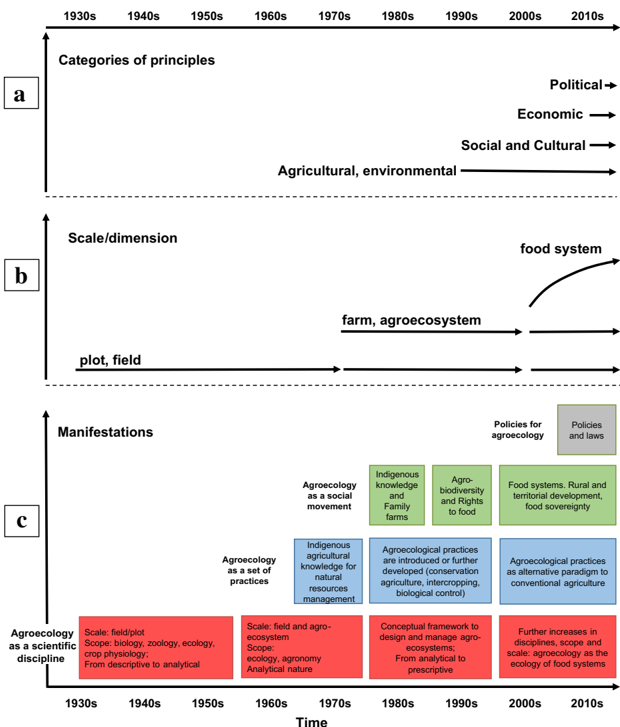
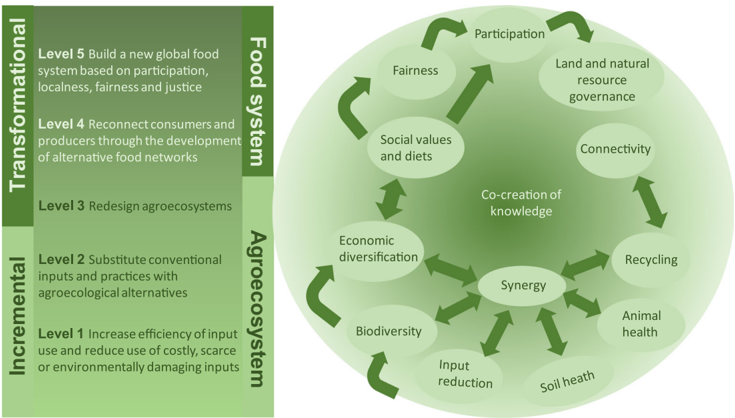
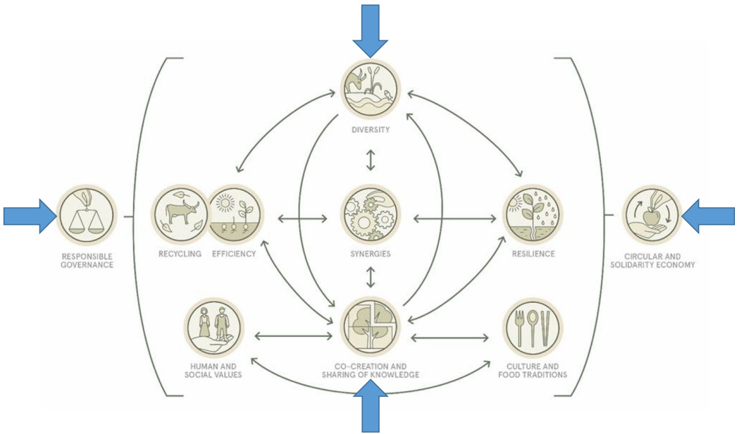
There is consensus that the global food system is not delivering good nutrition for all and is causing environmental degradation and loss of biodiversity, such that a profound transformation is needed to meet the challenges of persistent malnutrition and rural poverty, aggravated by the growing consequences of climate change. Agroecological approaches have gained prominence in scientific, agricultural and political discourse in recent years, suggesting pathways to transform agricultural and food systems that address these issues. Here we present an extensive literature review of concepts, definitions and principles of agroecology, and their historical evolution, considering the three manifestations of agroecology as a science, a set of practices and a social movement; and relate them to the recent dialogue establishing a set of ten iconic elements of agroecology that have emerged from a global multi-stakeholder consultation and synthesis process. Based on this, a consolidated list of principles is developed and discussed in the context of presenting transition pathways to more sustainable food systems. The major outcomes of this paper are as follows. (1) Definition of 13 consolidated agroecological principles: recycling; input reduction; soil health; animal health; biodiversity; synergy; economic diversification; co-creation of knowledge; social values and diets; fairness; connectivity; land and natural resource governance; participation. (2) Confirmation that these principles are well aligned and complementary to the 10 elements of agroecology developed by FAO but articulate requirements of soil and animal health more explicitly and distinguish between biodiversity and economic diversification. (3) Clarification that application of these generic principles can generate diverse pathways for incremental and transformational change towards more sustainable farming and food systems. (4) Identification of four key entry points associated with the elements: diversity; circular and solidarity economy; co-creation and sharing of knowledge; and, responsible governance to enable plausible pathways of transformative change towards sustainable agriculture and food systems.
Overview
The claims and statistics of this paper haven’t been checked yet.
Free: it reads the open-access text and checks the first 5 claims that cite a source we can check. Create a free account to check every claim.
Integrity signals
Registry
Cites
Statistics
Figures




Verification
Claims the paper makes
The claims and statistics of this paper haven’t been checked yet.
Free: it reads the open-access text and checks the first 5 claims that cite a source we can check. Create a free account to check every claim.
Claims other papers make about this one
Each is checked against this paper’s own text: does it say what the citing paper says it does?
The source backs part of the claim, not all of it — or backs it for a different population, condition or comparison.
In the citing paper
“the 13 principles of agroecology (HLPE, 2019) are closely aligned with the 10 elements and serve as a science-policy interface that facilitates debate, bridges diverse knowledge systems, and informs policymaking”
From Agroecology for sustainable development: evidence on multidimensional performance from a cross-country TAPE assessment in Africa (2025) · cites this paper as Wezel et al., 2020
Experimental — accuracy not yet measuredThe cited source says what the claim attributes to it.
In the citing paper
“According to the principles, agroecology concerns the direction of change in agricultural systems (Wezel et al. 2020).”
From Methodological challenges in assessing the viability of agroecological practices: lessons from a multi-case study in Africa (2025) · cites this paper as Wezel et al. 2020
The cited source says what the claim attributes to it.
In the citing paper
“They combine practices that can be related to one or various of the agroecological principles identified by Wezel et al. (2020) to respond to a diversity of constraints and challenges.”
From Methodological challenges in assessing the viability of agroecological practices: lessons from a multi-case study in Africa (2025) · cites this paper as Wezel et al. (2020)
The cited source says what the claim attributes to it.
In the citing paper
“In its conceptual and methodological evolution, agroecology has integrated a larger scope into its analysis, moving from the plot and farm to the landscape unit (Wezel etal., 2020).”
From Agroecological planning of productive systems with functional connectivity to the ecological landscape matrix: two Colombian case studies (2024) · cites this paper as Wezel et al., 2020
The cited source says what the claim attributes to it.
In the citing paper
“Agroecology is identified as an important solution to increase the sustainability of agricultural and food systems.”
From The socio-economic performance of agroecology. A review (2024) · cites this paper as Wezel et al. 2020
1 more claim about this paper
Create a free account to see every claim other papers make about this one.
Self-check
Percentages, sums and reported differences re-computed from the paper’s own numbers.
The self-check needs the paper’s full text.
Citations
Cites
Food and Agriculture Organization of the United Nations
(2022) · Permanent Missions to the United Nations · doi:10.18356/9789210018289c230 · Cited by 5,384
Colman (2022) · doi:10.1073/pnas · Cited by 4,370
Ontologies, socio-technical transitions (to sustainability), and the multi-level perspective
Geels, F. W. (2010) · Research Policy · doi:10.1016/j.respol.2010.01.022 · Cited by 1,718 · cited 4×
“Some transitions begin at a small scale, a ‘niche’ or protected space in which farmer cooperatives, social movements, businesses, local government or other groups experiment with and adapt alternative ways of doing things (Geels 2010; Hinrichs 2014).”
BackgroundMethodInfluentialSmith, A., Voß, J.-P., & Grin, J. (2010) · Research Policy · doi:10.1016/j.respol.2010.01.023 · Cited by 1,691 · cited 2×
“…multi-level perspective has been used, to consider how dynamic processes and interactions across scales can support whole-system transformative change (Geels 2010; Smith et al. 2010), but also what issues of power relations drive changes or establish ‘lock-ins’ (IPES-Food 2018; Leach et al. 2020).”
BackgroundMethodAgroecology as a science, a movement and a practice. A review
Wezel, A., Bellon, S., Doré, T., Francis, C., Vallod, D., & David, C. (2009) · Agronomy for Sustainable Development · doi:10.1051/agro/2009004 · Cited by 1,504
Self-citationAltieri, M. A., & Toledo, V. M. (2011) · Journal of Peasant Studies · doi:10.1080/03066150.2011.582947 · Cited by 1,279 · cited 2×
“eignty, local knowledge, social justice, local identity and culture, and indigenous rights for seeds and breeds (Altieri and Toledo 2011; Nyéléni 2015; Rosset et al. 2011) (Fig.”
BackgroundAgroecological practices for sustainable agriculture. A review
Wezel, A., Casagrande, M., Celette, F., Vian, J.-F., Ferrer, A., & Peigné, J. (2014) · Agronomy for Sustainable Development · doi:10.1007/s13593-013-0180-7 · Cited by 1,227 · cited 1×
“…beneficial biological interactions and synergies amongst the components of agroecosystems (Gliessman 1990), minimizing synthetic and toxic external inputs and using ecological processes and ecosystem services for the development and implementation of agricultural practices (Wezel et al. 2014) (Fig.”
BackgroundSelf-citationAgroecology: The Ecology of Sustainable Food Systems
Gliessman, S. R. (2007) · Andalas University Repository (Andalas University) · Cited by 1,061
Comparative Influences of Precipitation and River Stage on Groundwater Levels in Near-River Areas
Kim, I., Park, D., Kyung, D., Kim, G., Kim, S., & Lee, J. (2015) · Sustainability · doi:10.3390/su8010001 · Cited by 1,060
Global assessment of agricultural system redesign for sustainable intensification
Pretty, J., Benton, T. G., Bharucha, Z. P., Dicks, L. V., Flora, C. B., Godfray, H. C. J., Goulson, D., Hartley, S., Lampkin, N., Morris, C., et al. (2018) · Nature Sustainability · doi:10.1038/s41893-018-0114-0 · Cited by 1,022 · cited 1×
“This consensus acknowledges the need to address aspects that go well beyond a simple metric of productivity, embracing environmental and socially progressive outcomes (Caron et al. 2018; Pretty et al. 2018; Tittonell 2014).”
Background
Research works printed but not linked: 11
- FAO (2015b) Final report for the international symposium on agroecology for food security and nutrition. 18–19 September 2014. Rome. http://www.fao.org/3/a-i4327e.pdf
- FAO (2018c) Second International Symposium on Agroecology. Scaling up agroecology to achieve the sustainable development goals (SDGs). http://www.fao.org/about/meetings/second-international-agroecology-symposium/en/
- FAO (2019) Report of the Conference of FAO. 41st Session. Rome, 22–29 2019. http://www.fao.org/3/na421en/na421en.pdf
- 31. HLPE (2019) Agroecological and other innovative approaches for sus- tainable agriculture and food systems that enhance food security and nutrition. A report by the High Level Panel of Experts on Food Security and Nutrition of the Committee on World Food Security, Rome http://www.fao.org/cfs/cfs-hlpe/en/
- 33. IAASTD (International Assessment of Agricultural Knowledge, Science and Technology for Development) (2009) Agriculture at a cross- roads: global report. B.D. MacIntyre, H.R. Herren, J. Wakhungu, R.T. Watson, eds. Washington, DC, Island Press
- IPCC (2019) Climate change and land. Panel in Climate Change IPCC, Intergovernmental
- 47. Patton (2018) Principles-focus evaluation: the guide. The Guilford Press, New York, NY
- 49. Pimbert M, Lemke S (2018) Food environments: using agroecology to enhance dietary diversity. In: UNSCN (United Nations System Standing Committee on Nutrition) Report 43: addressing equity, equality and non-discrimination in the food system: pathways to reform, pp. 33-42. https://www.unscn.org/uploads/web/news/ UNSCN-News43.pdf
- 56. Silici L (2014) Agroecology -what it is and what it has to offer. IIED, London, UK, 28 p
- 59. Sinclair F, Wezel A, Mbow C, Chomba C, Robiglio V, Harrison R (2019) The contribution of agroecological approaches to realizing climate- resilient agriculture. Background Paper. Global Commission on Adaptation, Rotterdam https://cdn.gca.org/assets/2019-12/ TheContributionsOfAgroecologicalApproaches.pdf
- 67. Tittonell P (2015) Food security and ecosystem services in a changing world: it is time for agroecology. In FAO, Agroecology for Food Security and Nutrition: Proceedings of the FAO International Symposium, pp. 16-35. Rome, Itlay
Cited by
Items 401–500 of 1,001
Rethinking Global Food Governance From Historical Perspectives for a Sustainable Future
Abbass, M., Abbas, U., Wani, S. A., & Akhai, S. (2025) · Advances in marketing, customer relationship management, and e-services book series · doi:10.4018/979-8-3693-8542-5.ch022 · Cited by 5
Terroir and farming practices drive arbuscular mycorrhizal fungal communities in French vineyards
Battie‐Laclau, P., Taudière, A., Bernard, M., Bodénan, L., Duchemin, M., de Roman, Y., Yol, A., & Barry‐Etienne, D. (2025) · Frontiers in Microbiology · doi:10.3389/fmicb.2024.1463326 · Cited by 5
Marshall, K. N., Hodson, A. K., Bowles, T. M., Jarvis-Shean, K. S., & Gaudin, A. C. M. (2025) · Applied Soil Ecology · doi:10.1016/j.apsoil.2025.106066 · Cited by 6
He, S., & Wang, B. (2025) · Sustainable Futures · doi:10.1016/j.sftr.2025.100989 · Cited by 5
Padró, R., & Tello, E. (2022) · Land · doi:10.3390/land11060824 · Cited by 7
“Committee on World Food Security [5–8], the FAO [9,10] and the European Commission [11,12], that this entails an agroecology transition [13,14], capable of scaling up the best farm practices [15] and other sustainable‐oriented ways of food provisioning and con‐”
BackgroundSarku, R., Tauzie, M., & Whitfield, S. (2023) · Frontiers in Sustainable Food Systems · doi:10.3389/fsufs.2022.1033152 · Cited by 5
Food challenges, technological changes and food geopolitics
Flexor, G. (2024) · Revista de Economia e Sociologia Rural · doi:10.1590/1806-9479.2022.269655 · Cited by 9
“According to some authors, agroecology is fundamentally distinct from other sustainable food production strategies (Altieri, 2018; Food and Agriculture Organization of the United Nations, 2018; Wezel et al., 2020 ).”
BackgroundAgricultural Knowledge and Innovation Systems and Sustainable Management of Natural Resources
Kountios, G., Chatzis, I., & Papadavid, G. (2024) · International Conference of the Hellenic Association of Agricultural Economists · doi:10.3390/proceedings2024094010 · Cited by 5
Moulin-Rouyard, C., Vaillant, V., Angeon, V., Diman, J., Vaillant, J., & Loranger‐Merciris, G. (2024) · Soil Systems · doi:10.3390/soilsystems8010026 · Cited by 5
“Agroecology offers concepts, tools, and practices allowing the coherent use of ecological processes and the valuation of natural resources [12].”
BackgroundHoude-Tremblay, É., Cloutier, G., McClintock, N., & Olivier, A. (2025) · Agriculture and Human Values · doi:10.1007/s10460-024-10700-1 · Cited by 5
“Agroecology was first formulated in terms of application of principles of ecology in agriculture, and later at the scale of food systems (Altieri 1995 ; Francis et al. 2003; Wezel et al. 2020).”
Schnyder, M. (2021) · Agroecology and Sustainable Food Systems · doi:10.1080/21683565.2021.1935395 · Cited by 7
“…consider here in that they “encompass social and cultural aspects of whole food systems in addition to those related to agricultural practice at field, farm and landscape scales,” and highlight the environmental values through which these principles can be locally applied (Wezel et al. 2020, 40).”
BackgroundTransformative Agroecology-Based Alternatives for a Sustainable and Biodiverse Future
Prabhu, R., Dhyani, S. K., Nayak, D., & Rizvi, J. (2022) · India studies in business and economics · doi:10.1007/978-981-19-0763-0_7 · Cited by 5
Understanding farmers’ motivations to produce pulses and promote better agroecological practices
Milou, C., Corso, J.-P. D., & Képhaliacos, C. (2023) · Agroecology and Sustainable Food Systems · doi:10.1080/21683565.2023.2210542 · Cited by 6
“Indeed, the development of agroecology requires reestablishing links between producers and consumers (Francis et al. 2003; Gliessman 2015a; Wezel et al. 2020), which necessitates the implementation of new modes of coordination and learning between actors in local supply chains (Duru, Therond, and…”
BackgroundOptimizing organic no‐till planted soybean with cover crop selection and termination timing
Liebert, J. A., Mirsky, S. B., Pelzer, C. J., & Ryan, M. R. (2023) · Agronomy Journal · doi:10.1002/agj2.21390 · Cited by 7
Stathers, T. E., & Lamboll, R. (2022) · Enterprise Development and Microfinance · doi:10.3362/1755-1986.22-00071 · Cited by 6
Strengthening the Voices for Agroecology
Gliessman, S. (2023) · Agroecology and Sustainable Food Systems · doi:10.1080/21683565.2023.2158555 · Cited by 5
Acevedo-Osorio, Á., Cárdenas, J. S., & Martín-Pérez, A. M. (2024) · Frontiers in Sustainable Food Systems · doi:10.3389/fsufs.2024.1257540 · Cited by 4
Cassart, P., Frei, A., Hauggaard-Nielsen, H., Kruse Rasmussen, H., Swartebroeckx, A., Froidmont, E., Stilmant, D., & Rossing, W. (2025) · Ecology and Society · doi:10.5751/es-15770-300210 · Cited by 4
Indicators addressing agroecology in grassland-based farming systems. A review
Benedetti del Rio, E., Michaud, A., Berton, M., & Sturaro, E. (2025) · Agronomy for Sustainable Development · doi:10.1007/s13593-025-01028-z · Cited by 4
“In fact, the continuous evolution of principles, explained in Wezel et al. (2020), shows that it is an evolving process, which aims to capture the interaction between the field, the farm and food system components.”
Nudel, A., Abbo, S., & Kerem, Z. (2024) · Foods · doi:10.3390/foods13162528 · Cited by 4
“Broadening BV cultivation may be a promising solution when considering sustainable economic development and the need for the diversification of modern farming systems [19].”
BackgroundSustainable agriculture made easy: CETARA-NF's self-certification
Vashishat, R. K., Sharma, S. C., Chandel, R. S., Dev, I., Chauhan, G. S., Divyanshu, Gupta, A., Gupta, M., & Laishram, C. (2024) · Journal of Agriculture and Food Research · doi:10.1016/j.jafr.2024.101404 · Cited by 8
Muchiutti, A. A., Jacobo, E. J., Quintana, R. D., & Attademo, A. M. (2024) · Agroecology and Sustainable Food Systems · doi:10.1080/21683565.2024.2406459 · Cited by 7
“All FAO elements correspond to one or more principles of agroecology (Wezel et al. 2020).”
Fuchs, L. E., Van Dien, L. C., Mondardini, M. R. ‘., Penunia, M. E. A., Baguilat, I. P., Macías, S. I. L., Souza, M. S., Formighieri, E. F., Gonçalves, M. G., Westphalen, R. B., et al. (2025) · Citizen Science Theory and Practice · doi:10.5334/cstp.727 · Cited by 4
Mapping stakeholders' perceptions of agroecological farming practices adoption in Crete, Greece
Gouta, P., Konstantidelli, V., Henderson, S., & Tzouramani, I. (2025) · Environmental Science & Policy · doi:10.1016/j.envsci.2025.104030 · Cited by 5
Interventions designed to promote the consumption of locally produced foods: a scoping review
Haynes, E., Brown, C. R., Halliday, C., Alcantara, L. B., Cayetano, C. B., Creencia, L. A., Gajardo, L. J., Goodwin, A., Guell, C., Howitt, C., et al. (2025) · Frontiers in Sustainable Food Systems · doi:10.3389/fsufs.2025.1544092 · Cited by 6
Biocultural vulnerability of traditional crops in the Indian Trans-Himalaya
Jaggi, H., Anand, A., Solari, K. A., Echeverri, A., Tobge, R., Tsewang, T., Suryawanshi, K. R., & Tuljapurkar, S. D. (2025) · Science Advances · doi:10.1126/sciadv.adu6611 · Cited by 5
Musazura, W., Nkomo, N., Otieno, B., Badza, T., Odindo, A. O., & Ojwach, S. O. (2025) · Frontiers in Sustainable Food Systems · doi:10.3389/fsufs.2025.1616479 · Cited by 4
Multiple agroecological practices use and climate change mitigation. A review
Wezel, A., Marchetti, A., Nichenametla, C. K., Boughamoura, O., Kamilia, K., & Bàrberi, P. (2025) · Agronomy for Sustainable Development · doi:10.1007/s13593-025-01048-9 · Cited by 8
“The agroecological approach constitutes also a preferential avenue to ensure food security (Bezner Kerr et al. 2021) as well as to improve the sustainability of agroecosystems and food systems (HLPE 2019; Wezel et al. 2020) towards a stable Earth system respectful of the planetary boundaries.”
Self-citationGarcia, G. M., Kuhl, L., & Orians, C. M. (2025) · Human Ecology · doi:10.1007/s10745-025-00638-1 · Cited by 4
“Diversifying income sources, whether on or off the farm, is a well-supported way to increase smallholder farmers’ resilience against various stressors (Blesh et al., 2023; Darn-hofer, 2010; Scoones, 1998; Stratton et al., 2021; Wezel et al., 2020).”
Growing vegetables: A gateway to biodiversity in domestic gardens?
Collard, B., Dutertre, Q., & Baudry, E. (2025) · Landscape and Urban Planning · doi:10.1016/j.landurbplan.2025.105520 · Cited by 6
Suárez-Córdoba, Y. D., Barrera-García, J. A., Sterling, A., Rodríguez‐León, C. H., & Tittonell, P. A. (2025) · Sustainability · doi:10.3390/su17209024 · Cited by 10
Off-target: Herbicides in cereal fields favour competitive weeds over non-target species
Humann‐Guilleminot, S., Bretagnolle, V., & Gaba, S. (2025) · Agriculture Ecosystems & Environment · doi:10.1016/j.agee.2025.110026 · Cited by 4
Biot, N., Hecquet, C., Maréchal, K., Lobet, G., & Dendoncker, N. (2025) · Agroecology and Sustainable Food Systems · doi:10.1080/21683565.2025.2597006 · Cited by 4
“In this section, we build upon the results related to the research questions one and two to discuss how farm characteristics, distribution channels and the issues associated with the market gardening food chain in Coeur de Condroz may influence the viability of market gardeners.”
InfluentialKassymova, S., Mustafayev, K., & Kabiyeva, A. (2025) · Economics · doi:10.2478/eoik-2025-0099 · Cited by 5
Sustainable Livestock Farming in Chile: Challenges and Opportunities
Morales, R., Martínez, M. E., Rodriguez, M. A., Beltran, I. E., & Hepp, C. (2026) · Sustainability · doi:10.3390/su18031626 · Cited by 5
Jones, S. K., Sánchez, A. C., Dickens, C., Geck, M. S., Wickramaratne, C., Alary, V., Bolo, P., Choruma, D. J., Douangsavanh, S., Fall, M. G., et al. (2026) · Environmental and Sustainability Indicators · doi:10.1016/j.indic.2026.101374 · Cited by 4
“HLPE's 13 principles (Wezel et al., 2020b) were used as a basis for assessing ag-roecology adherence.”
Lybæk, R., & Hauggaard‐Nielsen, H. (2023) · Sustainability · doi:10.3390/su15076103 · Cited by 4
Food Sustainability: Challenges and Strategies
Sehgal, S., Aggarwal, S., Kaushik, P., Trehan, S., & Deepanshu, D. (2024) · World sustainability series · doi:10.1007/978-3-031-47122-3_5 · Cited by 11
Perdomo, O., Becker, R., & Singer, R. B. (2024) · Plants · doi:10.3390/plants13111562 · Cited by 4
Ying, W., & Egermann, M. (2024) · Sustainability Science · doi:10.1007/s11625-024-01535-0 · Cited by 9
“Principles 1–7 relate to the agroecosystem scale and are incremental changes that lead to a transformation at the farming system level, and principles 9–13 affect the greater food system with a particular focus on the co-creation of knowledge across scales (Wezel et al. 2020).”
Endris, G. S., Aweke, C. S., Wordofa, M. G., Tolesa, G. N., Lemma, T., Hassen, J. Y., & Lucantoni, D. (2024) · Sustainable Environment · doi:10.1080/27658511.2024.2408929 · Cited by 4
“…transforming food systems by applying ecological principles to agriculture and ensuring a regenerative use of natural resources and ecosystem services while also addressing the need for a socially equitable, gender inclusive, fair and sustainable food systems (FAO, 2021, 2019; Wezel et al., 2020).”
InfluentialCommunity reconstruction of biocultural landscapes. Application in the Kokonuko Indigenous Territory
Montaño, M. E., Sanabria, O., Quilindo, O., Urrego-Mesa, A., Tello, E., & Marull, J. (2024) · Ecological Economics · doi:10.1016/j.ecolecon.2024.108447 · Cited by 5
Production and Development of Nutraceuticals Using Sustainable Food System
Prabhakar, S., Prabhakar, P., Nimesh, A., & Banerjee, M. (2025) · Springer eBooks · doi:10.1007/978-981-97-9723-3_3 · Cited by 5
Candau, J., & Axon, S. (2025) · Land · doi:10.3390/land14040909 · Cited by 4
“Sustainable food systems, conversely, are defined by promoting healthy and affordable food that is equitably accessible with minimal environmental impacts and is economically just to those who work in the food sector while also being resilient to future challenges such as climate change [16].”
Rice, A. M., & Goldberg, Z. A. (2021) · Journal of Agriculture Food Systems and Community Development · doi:10.5304/jafscd.2021.111.010 · Cited by 5
“, 2009) based on the application of ecological principles such as recycling, efficiency, diversity, regulation, and synergies (Francis et al., 2003; Wezel et al., 2020).”
BackgroundLauvie, A., Couix, N., & Sorba, J. M. (2022) · Genetic Resources · doi:10.46265/genresj.hjeh3830 · Cited by 4
How to Remediate Heavy Metal Contamination in Soil?
Rahman, A. (2022) · Science Insights · doi:10.15354/si.22.re082 · Cited by 5
“Agroecological restoration involves modifying unsuitable farming practices and management frameworks in accordance with the farming environment (41).”
BackgroundLaske, E. (2022) · International Journal of Sustainable Development & World Ecology · doi:10.1080/13504509.2022.2147597 · Cited by 4
“The most recent work on defining agroecology incorporates these new principles (Bourgoin et al. 2020; Wezel et al. 2020).”
BackgroundCrop Protection Under Climate Change: The Effect on Tri-trophic Relations Concerning Pest Control
Shah, F. M., Razaq, M., Ahmad, F., Rehman, A. U., & Umar, U. U. D. (2023) · Springer eBooks · doi:10.1007/978-3-031-26692-8_19 · Cited by 6
Spatial Distribution Pattern, Evolution and Influencing Mechanism of Ecological Farms in China
Guo, D., Lin, Y., Wang, M., & Huang, Z. (2023) · Land · doi:10.3390/land12071395 · Cited by 4
Agroecology: Searching in the wrong place
Wood, D. M. (2023) · Outlook on Agriculture · doi:10.1177/00307270231191809 · Cited by 4
“Wood (1988) calculated the value of introduced crops to be around USD 100 bn annually for developing countries.”
BackgroundAgroecology: Can it inform disaster risk management in fragile settings?
Hauser, M. (2023) · Outlook on Agriculture · doi:10.1177/00307270231197700 · Cited by 6
“What agroecology constitutes is best explained through its 13 principles (HLPE, 2019; Wezel et al., 2020; FAO, 2018; Barrios et al., 2020), which can be applied to various agricultural production systems (see elsewhere in this special issue).”
BackgroundAssa, B. G., Bhowmick, A., & Cholo, B. E. (2024) · Environmental Advances · doi:10.1016/j.envadv.2024.100528 · Cited by 7
A Profuse Pipeline of Promising Options
Barrett, C. B., Benton, T. G., Fanzo, J., Herrero, M., Nelson, R., Bageant, E., Buckler, E. S., Cooper, K., Culotta, I., Fan, S., et al. (2022) · Sustainable development goals series · doi:10.1007/978-3-030-88802-2_6 · Cited by 4
Accompagner le changement des agriculteurs vers l’agroécologie : une activité d’intermédiation ?
Cerf, M. (2024) · Pour · doi:10.3917/pour.248.0119 · Cited by 4
Soil priorities around the world - an introduction
Arrouays, D., & Dawson, L. (2022) · Geoderma Regional · doi:10.1016/j.geodrs.2022.e00555 · Cited by 5
The conceptual babel of agroecologies is related to their diverse origins and objectives
Espinosa-García, F. J., de la Barrera, E., & Jácome, A. G. (2023) · Agroecology and Sustainable Food Systems · doi:10.1080/21683565.2023.2270938 · Cited by 3
“Also, the term has permeated international organizations, such as the UN and FAO, where it is considered key to sustainable rural development (González Giraldo and Rosset 2018; Wezel et al. 2020).”
BackgroundInfluentialComparative profitability of agroecological practices in Ethiopian wheat farming
Ng’ang’a, S. K., Ogutu, S., Tibebe, D., Akinyi, D. P., & Mockshell, J. (2025) · Frontiers in Agronomy · doi:10.3389/fagro.2024.1502786 · Cited by 3
Gallego, D. O., & Córdoba, D. (2025) · Agroecology and Sustainable Food Systems · doi:10.1080/21683565.2025.2538143 · Cited by 5
Évolution des démarches d’accompagnement des transitions agroécologiques en Tunisie
Jaouadi, R., Lestrelin, G., & Mimoun, M. B. (2025) · Cahiers Agricultures · doi:10.1051/cagri/2025030 · Cited by 4
Digital Agroecology and the Inhuman: Paradigm Crossroads
Tsagdis, G. (2025) · Journal of Agricultural and Environmental Ethics · doi:10.1007/s10806-025-09957-1 · Cited by 4
“Agroecology can be moreover understood as a “transdisciplinary approach that embraces science, a set of practices and a social movement” (Wezel et al., 2020).”
InfluentialUnraveling the Role of Plant-Microbe Interactions in Sustainable Agriculture
Atapattu, A. J., Nuwarapaksha, T. D., Dissanayaka, N. S., & Udumann, S. S. (2025) · Springer eBooks · doi:10.1007/978-3-031-98700-7_1 · Cited by 5
ElDidi, H., Cruz, A. P. N., Piraux, M., Vall, É., Tristán, M. C., Chimonyo, V. G. P., Fuchs, L. E., Singh, S., & Frija, A. (2025) · Agroecology and Sustainable Food Systems · doi:10.1080/21683565.2025.2556433 · Cited by 5
“Furthermore, co-creation of knowledge is a fundamental principle in agroecology (Wezel et al. 2020).”
Advancing agroecology through networking in Uganda
Tumuhe, C. L., Katusiime, D., Ssekamatte, D., Muloi, J. M., Kamau, H., Bwambale, B. B., Kaire, S., Slivesteri, S., Naigaga, H., Mugabo, I., et al. (2025) · Agroecology and Sustainable Food Systems · doi:10.1080/21683565.2025.2573794 · Cited by 4
“To overcome these challenges, collective action through networks has emerged as a viable solution (Andersson and Gabrielsson 2012) and this aligns to the social movement facet of agroecology (Wezel et al. 2020).”
InfluentialOrounladji, B. M., Sib, O., Kouakou, P. K., Darmaun, M., Sanogo, S., & Vall, É. (2025) · Frontiers in Sustainable Food Systems · doi:10.3389/fsufs.2025.1657011 · Cited by 4
Amoak, D., Najjar, D., Nyantakyi‐Frimpong, H., Amil, R. E., Maalouf, F., & Jilal, A. (2025) · Agriculture and Human Values · doi:10.1007/s10460-025-10826-w · Cited by 3
“…impacts of cli - matic stressors, including entrenching gender inequalities, scholars have called for the global science community to come together, using more holistic approaches, particularly within the framework of sustainable development and poverty eradication (McBean 2021, Wezel et al. 2020).”
Bourceret, A., Barbe, A., & Robert, C. (2026) · Agricultural Systems · doi:10.1016/j.agsy.2026.104634 · Cited by 3
Timpanaro, G., Bissanti, G., Cascone, G., Guarnaccia, P., & Foti, V. T. (2026) · Land Use Policy · doi:10.1016/j.landusepol.2026.108001 · Cited by 3
Pragmatic principles for supporting the agroecological transition in the field: a review
Hazard, L., Crivits, M., Ducos, A., Levain, A., Magrini, M.-B., & Salembier, C. (2026) · Agronomy for Sustainable Development · doi:10.1007/s13593-026-01092-z · Cited by 3
“This aligns with the principle of “social values and diets” in Agroecology (Wezel et al. 2020).”
InfluentialAverbuch, B., Stone, T. F., Sandén, T., Schwarz, G., Thorsøe, M. H., Bindelle, J., Boeraeve, F., Cassart, P., Dalgaard, T., Dumont, B., et al. (2026) · Frontiers in Sustainable Food Systems · doi:10.3389/fsufs.2026.1762693 · Cited by 4
Building capacities in regional food systems: mapping change towards transformation
Blay‐Palmer, A., Anderson, M. D., Aunio, A., Ballamingie, P., Carey, R., Gudu, S. O., Mullinix, K., Murphy, M., Pulasinghage, C., Spring, A., et al. (2026) · Agriculture and Human Values · doi:10.1007/s10460-025-10840-y · Cited by 3
“…information about these food systems can extend and refine theories and practices that build regional capacities and allow us to challenge the dominant political economy of food that prioritizes profits over people and the health of the planet (Schutter and Oliv - ier 2017 ; Wezel et al. 2020).”
Domené-Painenao, O. E., Vázquez-Nava, L., Morales, H., & Santos, I. (2026) · Globalisation Societies and Education · doi:10.1080/14767724.2026.2660778 · Cited by 3
Arshad, M., Amjath-Babu, T. S., Aravindakshan, S., Krupnik, T. J., & Sieber, S. (2026) · Communications Sustainability · doi:10.1038/s44458-026-00081-3 · Cited by 3
PRINCIPLES OF A CIRCULAR ECONOMY IN THE FOOD SECTOR: A SYSTEMATIC LITERATURE REVIEW
Dekšne, J., & Litavniece, L. (2022) · Journal of Regional Economic and Social Development · doi:10.17770/jresd2022vol14.6969 · Cited by 3
“…system does not provide good nutrition for all, and leads to environmental degradation and loss of biodiversity; therefore, a deep transformation is needed to solve problems caused by persistent malnutrition and rural poverty, exacerbated by the increasing effects of climate (Wezel et al., 2020).”
BackgroundXenorhabdus- and Photorhabdus-based products
Vicente‐Díez, I., Pou, A., & Campos‐Herrera, R. (2023) · Elsevier eBooks · doi:10.1016/b978-0-323-95290-3.00012-1 · Cited by 3
Bourceret, A., Accatino, F., & Robert, C. (2024) · Ecological Modelling · doi:10.1016/j.ecolmodel.2024.110727 · Cited by 7
“The application of agroecology to the design and management of sustainable agroecosystems brings sustainability to all components of food systems (Gliessman, 2018; Wezel et al., 2020, 2014).”
Matheri, F., Ongeso, N., Bautze, D., Runo, S. M., Mwangi, M., Kambura, A. K., Karanja, E., Tanga, C. M., & Kiboi, M. (2024) · Sustainability · doi:10.3390/su16156534 · Cited by 3
Shirazi, S. M. H. A., Khoshbakht, K., & Mahmoudi, H. (2024) · Agriculture & Food Security · doi:10.1186/s40066-024-00478-0 · Cited by 3
Inoculation of Microorganisms into the Soil and Rhizosphere
Vio, S. A., Sbrancia, C. M., Gortari, C., Galar, M. L., & Luna, M. F. (2024) · Methods and protocols in food science · doi:10.1007/978-1-0716-4180-4_50 · Cited by 3
Les arthropodes du cotonnier. Diversité et modalités de gestion des ravageurs
Silvie, P. J., & Papierok, B. (2024) · Éditions Quæ eBooks · doi:10.35690/978-2-7592-4001-2 · Cited by 4
Context Matters: Soil Ecosystem Status Varies across Diverse Conservation Agriculture Systems
Preez, G. D., Loggenberg, A., Fourie, D., Silva, J., Martin, T. K., Ramphisa, P. D., Smith, H. J., & Sprunger, C. D. (2025) · Journal of soil science and plant nutrition · doi:10.1007/s42729-025-02285-3 · Cited by 4
“As a result, the design and implementation of agricultural systems aimed at restoring and maintaining healthy soils have increased in recent years (Khangura et al. 2023 ; Mont - gomery and Biklé 2021 ; Wezel et al. 2020 ).”
Environmental factors are an important part of farmers’ assessments of the value of agroecology
Coe, R., Andrieu, N., Alary, V., Ky‐Dembele, C., Magaju, C., Orounladji, B. M., Vall, É., & Sinclair, F. (2025) · Frontiers in Sustainable Food Systems · doi:10.3389/fsufs.2025.1618006 · Cited by 6
Self-citationKihoma, L., Ayubu, J. C., Camilius, A. S., & Tisselli, E. (2021) · Journal of Agricultural Extension and Rural Development · doi:10.5897/jaerd2021.1259 · Cited by 4
Robayo-Avendaño, A., & Prato-García, D. (2021) · Quality Management Journal · doi:10.1080/10686967.2021.2003728 · Cited by 3
“This type of analysis would allow knowing the adequacy and main features of the farming system at the site and foresee how possible future scenarios might affect it (e.g., climate, technology, and regulatory changes) (Duru, Therond, and Fares 2015; Wezel et al. 2020).”
BackgroundSoluções tecnológicas emergentes para uma agricultura sustentável: microrganismos eficientes
Cargnelutti, D., Bampi, E., Santiago, G. D. M., da Luz, V. C., Garbin, E., Castamann, A., & Mossi, A. J. (2021) · Mérida Publishers eBooks · doi:10.4322/mp.978-65-991393-9-0.c2 · Cited by 12
Gatti, A., & Zanoli, A. (2022) · CRC Press eBooks · doi:10.1201/9780429052842-6 · Cited by 3
Crianza de abejas nativas: una pedagogía agroecológica con raíces
Delgado, Y. G. L., Maya, E. M. A., Vides‐Borrell, E., Morales, H., & Rosset, P. M. (2022) · Revista Brasileira de Educação do Campo · doi:10.20873/uft.rbec.e14508 · Cited by 3
Pinardi, S., Salis, M., Sartor, G., & Meo, R. (2023) · Social Sciences · doi:10.3390/socsci12070398 · Cited by 7
“…integration of production into the environment and aims to increase biodiversity, the protection of the water cycle, supplement forest and agricultural production, and—this is not marginal— respect for local customs and traditions and cultures (Dalgaard et al. 2003; Pretty 2008; Wezel et al. 2020).”
Durabilité des systèmes pour la sécurité alimentaire
Thomas, A., Alpha, A., Barczak, A., & Zakhia-Rozis, N. (2024) · Éditions Quæ eBooks · doi:10.35690/978-2-7592-3853-8 · Cited by 5
Circular Economy Models in Agriculture in Vietnam
Triệu, T. Q. (2023) · Vietnam Academy of Social Sciences s VSSR · doi:10.56794/vssr.5(217).30-45 · Cited by 3
Sager, M. T., & Petrosino, A. J. (2024) · Discover Education · doi:10.1007/s44217-024-00196-6 · Cited by 6
“While agroecology is both a science and a set of practices, utilizing innovative agricultural production methods to maximize outputs [40, 45, 53, 79, 80], the specific socioecological aspect of agroecology was formed to resist the power of corporate farms and lobbyists that dictate agricultural…”
Meitei Agroecology: nurturing sustainable food systems and cultural conservation in North-East India
Pandey, D. K., Brearley, F. Q., & Ram, D. (2024) · Agroecology and Sustainable Food Systems · doi:10.1080/21683565.2024.2378698 · Cited by 5
“Therefore, implementation of agroecological approaches must consider geographical, cultural, and social contexts (Rahman, Moussouri, and Alexopoulos 2021; Wezel et al. 2020).”
How to measure agroecology? A rapid appraisal approach based on focus group discussions
Aye, Z. C., Castella, J., Xiong, M., Phimmasone, S., & Ehrensperger, A. (2024) · Agroecology and Sustainable Food Systems · doi:10.1080/21683565.2024.2386477 · Cited by 4
“Finally, the scientific community involved in the High-Level Panel of Experts (HLPE) on Food Security and Nutrition expanded the scope of agroecology to embrace the entire global food system and called for a sociotechnical regime shift away from industrial agrifood systems (Wezel et al. 2020).”
Ringo, N. J., Kessy, J. F., & Malisa, E. T. (2024) · Discover Agriculture · doi:10.1007/s44279-024-00140-0 · Cited by 4
“This approach relies on principles such as the reduction of external inputs, enhancement of soil health, nutrient cycling, and biodiversity conservation [12] in the design and management of farming systems to enhance productivity, resilience and sustainability [13, 14].”
Irrigation and agroecology: a scientific mismatch? A literature review
Léauthaud, C., Ameur, F., & Leenhardt, D. (2025) · Agroecology and Sustainable Food Systems · doi:10.1080/21683565.2025.2481405 · Cited by 8
“The main difficulty we had in undertaking this review was to extract papers from the WoS relative to agroecology as broadly defined by Wezel et al. (2020).”
InfluentialExploring Mushroom Cultivation Under the 13 Principles of the Agroecological Transition. A Review
Leithäuser, H., Kirschner, R., & Tsai, M.-J. (2025) · Journal of Sustainable Forestry · doi:10.1080/10549811.2025.2532823 · Cited by 4
“From these articles, we included those that discuss mushroom cultivation in relation to at least one of the 13 principles of agroecology in this review, borrowing the concise explanations of Wezel et al. (2020, p. 40) as a guideline for inclusion or exclusion criteria.”
InfluentialTilting relationalities: Exploring the world through possible futures of agriculture
Moore, H. L., & Moreno, J. M. (2022) · The Sociological Review · doi:10.1177/00380261221084778 · Cited by 4
“Agroecological approaches to repairing this rift have gained traction in recent years and have been proposed to transform food systems, ecosystem health, household nutrition and food sovereignty (Bezner Kerr et al., 2019a; FAO, 2018; Gliessman, 2018; Wezel et al., 2020).”
BackgroundMoulin, C., Pruneau, L., Vaillant, V., & Loranger‐Merciris, G. (2023) · FEMS Microbiology Ecology · doi:10.1093/femsec/fiad030 · Cited by 4
Januar, R., Affandi, D. Y., & Tanaya, S. (2022) · IOP Conference Series Earth and Environmental Science · doi:10.1088/1755-1315/1111/1/012035 · Cited by 3
Agroecología: Hitos hacia un nuevo paradigma alimentario socioproductivo en Argentina
Goites, E. (2023) · Eutopía - Revista de Desarrollo Económico Territorial · doi:10.17141/eutopia.23.2022.5247 · Cited by 3
Metadata
- Authors
- Wezel, A., Herren, B. G., Kerr, R. B., Barrios, E., Gonçalves, A. L. R., & Sinclair, F.
- Affiliations
- Institut Supérieur d'Agriculture Rhône-Alpes (FR)
- Cornell University (US)
- Food and Agriculture Organization of the United Nations (IT)
- Instituto Federal Catarinense (BR)
- Bangor University (GB)
- Corresponding author
- Wezel, Alexander
- Venue
- Agronomy for Sustainable Development
- Published
- 2020-10-27
- Volume
- 40
- Issue
- 6
- Pages
- 40
- ISSN
- 1773-0155 (ISSN-L)
- 1774-0746
- OpenAlex
- W3095607637
- Semantic Scholar
- c5a128a829b43b2b4d39d83eb9f0c2985df5369a
- Cited by
- 926
- References
- 71
- Citations by year
- 2026: 212 · 2025: 208 · 2024: 173 · 2023: 169 · 2022: 108 · 2021: 55 · 2020: 1
- FWCI
- 125.87
- Type
- journal article
- Language
- en
- Open access
- hybrid
- doi.org
- Licence
- cc-by
- creativecommons.org/licenses/by/4.0 (tdm)
- creativecommons.org/licenses/by/4.0 (vor)
- Locations
- Agronomy for Sustainable Development (publishedVersion, cc-by)
- HAL (submittedVersion, other-oa)
- Funders
- McKnight Foundation
- Consortium of International Agricultural Research Centers
- Topics
- Social Sciences › Development › Agriculture, Land Use, Rural Development
- Life Sciences › Agricultural and Biological Sciences › General Agricultural and Biological Sciences › Plant and soil sciences
- Life Sciences › Agricultural and Biological Sciences › Agronomy and Crop Science › Sustainable Agricultural Systems Analysis
- Keywords
- agroecology, agroecological principles, sustainable food systems, food system transformation, soil health, biodiversity, circular economy, solidarity economy, knowledge co-creation, participatory governance, economic diversification, animal health, food system resilience, climate change adaptation, malnutrition, rural poverty
About these checks
Registry, retraction, Cites and statistics results are computed, not judged, with one exception: a printed reference that no index lists is read once by a model before it counts as a citation error. Claims are extracted by a model and kept only when their quote appears verbatim in the text; each cited source is then checked, with a model’s help, for whether it says what the claim relies on. Those verdicts can be wrong — read the claim’s quote and the cited source before relying on one.
Statistics and arithmetic are recomputed, not judged.
Confidence bands are shown only for fields calibrated on our annotated test set. None is calibrated yet, so no band is shown.
What counts as a claim ›How we measure confidence ›How we check this ›
Are you an author, or do you see a problem with this page? Request a review
Data sources
Bibliographic data: Semantic Scholar, OpenAlex, Crossref.
Contains information from the Semantic Scholar Academic Graph Datasets, made available under the ODC Attribution License (ODC-BY 1.0).
Semantic Scholar’s data is described in: Kinney, R., et al. (2023). The Semantic Scholar Open Data Platform. arXiv:2301.10140.
