

Agroecological principles and elements and their implications for transitioning to sustainable food systems. A review
Open accessThe DOI matches its Crossref record; 71 of the 71 references it cites were found in a registry or an index.
Abstract
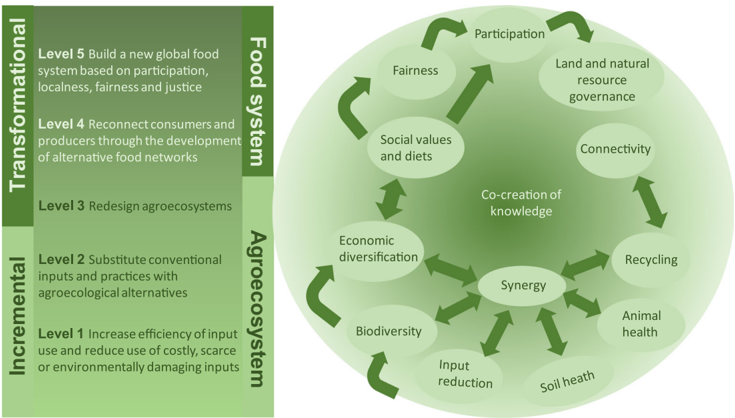
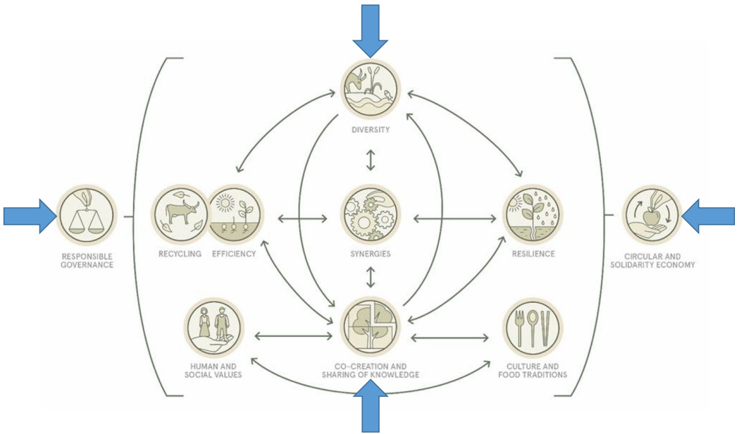
There is consensus that the global food system is not delivering good nutrition for all and is causing environmental degradation and loss of biodiversity, such that a profound transformation is needed to meet the challenges of persistent malnutrition and rural poverty, aggravated by the growing consequences of climate change. Agroecological approaches have gained prominence in scientific, agricultural and political discourse in recent years, suggesting pathways to transform agricultural and food systems that address these issues. Here we present an extensive literature review of concepts, definitions and principles of agroecology, and their historical evolution, considering the three manifestations of agroecology as a science, a set of practices and a social movement; and relate them to the recent dialogue establishing a set of ten iconic elements of agroecology that have emerged from a global multi-stakeholder consultation and synthesis process. Based on this, a consolidated list of principles is developed and discussed in the context of presenting transition pathways to more sustainable food systems. The major outcomes of this paper are as follows. (1) Definition of 13 consolidated agroecological principles: recycling; input reduction; soil health; animal health; biodiversity; synergy; economic diversification; co-creation of knowledge; social values and diets; fairness; connectivity; land and natural resource governance; participation. (2) Confirmation that these principles are well aligned and complementary to the 10 elements of agroecology developed by FAO but articulate requirements of soil and animal health more explicitly and distinguish between biodiversity and economic diversification. (3) Clarification that application of these generic principles can generate diverse pathways for incremental and transformational change towards more sustainable farming and food systems. (4) Identification of four key entry points associated with the elements: diversity; circular and solidarity economy; co-creation and sharing of knowledge; and, responsible governance to enable plausible pathways of transformative change towards sustainable agriculture and food systems.
Overview
The claims and statistics of this paper haven’t been checked yet.
Free: it reads the open-access text and checks the first 5 claims that cite a source we can check. Create a free account to check every claim.
Integrity signals
Registry
Cites
Statistics
Figures




Verification
Claims the paper makes
The claims and statistics of this paper haven’t been checked yet.
Free: it reads the open-access text and checks the first 5 claims that cite a source we can check. Create a free account to check every claim.
Claims other papers make about this one
Each is checked against this paper’s own text: does it say what the citing paper says it does?
The source backs part of the claim, not all of it — or backs it for a different population, condition or comparison.
In the citing paper
“the 13 principles of agroecology (HLPE, 2019) are closely aligned with the 10 elements and serve as a science-policy interface that facilitates debate, bridges diverse knowledge systems, and informs policymaking”
From Agroecology for sustainable development: evidence on multidimensional performance from a cross-country TAPE assessment in Africa (2025) · cites this paper as Wezel et al., 2020
Experimental — accuracy not yet measuredThe cited source says what the claim attributes to it.
In the citing paper
“According to the principles, agroecology concerns the direction of change in agricultural systems (Wezel et al. 2020).”
From Methodological challenges in assessing the viability of agroecological practices: lessons from a multi-case study in Africa (2025) · cites this paper as Wezel et al. 2020
The cited source says what the claim attributes to it.
In the citing paper
“They combine practices that can be related to one or various of the agroecological principles identified by Wezel et al. (2020) to respond to a diversity of constraints and challenges.”
From Methodological challenges in assessing the viability of agroecological practices: lessons from a multi-case study in Africa (2025) · cites this paper as Wezel et al. (2020)
The cited source says what the claim attributes to it.
In the citing paper
“In its conceptual and methodological evolution, agroecology has integrated a larger scope into its analysis, moving from the plot and farm to the landscape unit (Wezel etal., 2020).”
From Agroecological planning of productive systems with functional connectivity to the ecological landscape matrix: two Colombian case studies (2024) · cites this paper as Wezel et al., 2020
The cited source says what the claim attributes to it.
In the citing paper
“Agroecology is identified as an important solution to increase the sustainability of agricultural and food systems.”
From The socio-economic performance of agroecology. A review (2024) · cites this paper as Wezel et al. 2020
1 more claim about this paper
Create a free account to see every claim other papers make about this one.
Self-check
Percentages, sums and reported differences re-computed from the paper’s own numbers.
The self-check needs the paper’s full text.
Citations
Cites
Food and Agriculture Organization of the United Nations
(2022) · Permanent Missions to the United Nations · doi:10.18356/9789210018289c230 · Cited by 5,384
Colman (2022) · doi:10.1073/pnas · Cited by 4,370
Ontologies, socio-technical transitions (to sustainability), and the multi-level perspective
Geels, F. W. (2010) · Research Policy · doi:10.1016/j.respol.2010.01.022 · Cited by 1,718 · cited 4×
“Some transitions begin at a small scale, a ‘niche’ or protected space in which farmer cooperatives, social movements, businesses, local government or other groups experiment with and adapt alternative ways of doing things (Geels 2010; Hinrichs 2014).”
BackgroundMethodInfluentialSmith, A., Voß, J.-P., & Grin, J. (2010) · Research Policy · doi:10.1016/j.respol.2010.01.023 · Cited by 1,691 · cited 2×
“…multi-level perspective has been used, to consider how dynamic processes and interactions across scales can support whole-system transformative change (Geels 2010; Smith et al. 2010), but also what issues of power relations drive changes or establish ‘lock-ins’ (IPES-Food 2018; Leach et al. 2020).”
BackgroundMethodAgroecology as a science, a movement and a practice. A review
Wezel, A., Bellon, S., Doré, T., Francis, C., Vallod, D., & David, C. (2009) · Agronomy for Sustainable Development · doi:10.1051/agro/2009004 · Cited by 1,504
Self-citationAltieri, M. A., & Toledo, V. M. (2011) · Journal of Peasant Studies · doi:10.1080/03066150.2011.582947 · Cited by 1,279 · cited 2×
“eignty, local knowledge, social justice, local identity and culture, and indigenous rights for seeds and breeds (Altieri and Toledo 2011; Nyéléni 2015; Rosset et al. 2011) (Fig.”
BackgroundAgroecological practices for sustainable agriculture. A review
Wezel, A., Casagrande, M., Celette, F., Vian, J.-F., Ferrer, A., & Peigné, J. (2014) · Agronomy for Sustainable Development · doi:10.1007/s13593-013-0180-7 · Cited by 1,227 · cited 1×
“…beneficial biological interactions and synergies amongst the components of agroecosystems (Gliessman 1990), minimizing synthetic and toxic external inputs and using ecological processes and ecosystem services for the development and implementation of agricultural practices (Wezel et al. 2014) (Fig.”
BackgroundSelf-citationAgroecology: The Ecology of Sustainable Food Systems
Gliessman, S. R. (2007) · Andalas University Repository (Andalas University) · Cited by 1,061
Comparative Influences of Precipitation and River Stage on Groundwater Levels in Near-River Areas
Kim, I., Park, D., Kyung, D., Kim, G., Kim, S., & Lee, J. (2015) · Sustainability · doi:10.3390/su8010001 · Cited by 1,060
Global assessment of agricultural system redesign for sustainable intensification
Pretty, J., Benton, T. G., Bharucha, Z. P., Dicks, L. V., Flora, C. B., Godfray, H. C. J., Goulson, D., Hartley, S., Lampkin, N., Morris, C., et al. (2018) · Nature Sustainability · doi:10.1038/s41893-018-0114-0 · Cited by 1,022 · cited 1×
“This consensus acknowledges the need to address aspects that go well beyond a simple metric of productivity, embracing environmental and socially progressive outcomes (Caron et al. 2018; Pretty et al. 2018; Tittonell 2014).”
Background
Research works printed but not linked: 11
- FAO (2015b) Final report for the international symposium on agroecology for food security and nutrition. 18–19 September 2014. Rome. http://www.fao.org/3/a-i4327e.pdf
- FAO (2018c) Second International Symposium on Agroecology. Scaling up agroecology to achieve the sustainable development goals (SDGs). http://www.fao.org/about/meetings/second-international-agroecology-symposium/en/
- FAO (2019) Report of the Conference of FAO. 41st Session. Rome, 22–29 2019. http://www.fao.org/3/na421en/na421en.pdf
- 31. HLPE (2019) Agroecological and other innovative approaches for sus- tainable agriculture and food systems that enhance food security and nutrition. A report by the High Level Panel of Experts on Food Security and Nutrition of the Committee on World Food Security, Rome http://www.fao.org/cfs/cfs-hlpe/en/
- 33. IAASTD (International Assessment of Agricultural Knowledge, Science and Technology for Development) (2009) Agriculture at a cross- roads: global report. B.D. MacIntyre, H.R. Herren, J. Wakhungu, R.T. Watson, eds. Washington, DC, Island Press
- IPCC (2019) Climate change and land. Panel in Climate Change IPCC, Intergovernmental
- 47. Patton (2018) Principles-focus evaluation: the guide. The Guilford Press, New York, NY
- 49. Pimbert M, Lemke S (2018) Food environments: using agroecology to enhance dietary diversity. In: UNSCN (United Nations System Standing Committee on Nutrition) Report 43: addressing equity, equality and non-discrimination in the food system: pathways to reform, pp. 33-42. https://www.unscn.org/uploads/web/news/ UNSCN-News43.pdf
- 56. Silici L (2014) Agroecology -what it is and what it has to offer. IIED, London, UK, 28 p
- 59. Sinclair F, Wezel A, Mbow C, Chomba C, Robiglio V, Harrison R (2019) The contribution of agroecological approaches to realizing climate- resilient agriculture. Background Paper. Global Commission on Adaptation, Rotterdam https://cdn.gca.org/assets/2019-12/ TheContributionsOfAgroecologicalApproaches.pdf
- 67. Tittonell P (2015) Food security and ecosystem services in a changing world: it is time for agroecology. In FAO, Agroecology for Food Security and Nutrition: Proceedings of the FAO International Symposium, pp. 16-35. Rome, Itlay
Cited by
Items 301–400 of 1,001
Ahmad, N., & Köpke, S. (2024) · Frontiers in Sustainable Food Systems · doi:10.3389/fsufs.2024.1443002 · Cited by 10
Bio-Control Agents: A Sustainable Approach for Enhancing Soil Nutrients Use Efficiency in Farming
Karuppiah, P., Thayalan, K. J., Gopukumar, S. T., & Uma, E. (2025) · Springer eBooks · doi:10.1007/978-981-96-3232-9_10 · Cited by 11
Nordstrom, K. L., Horner, C. E., Méndez, V. E., Izzo, V. M., Carpenter, N., Faulkner, J. W., & Caswell, M. (2022) · Frontiers in Sustainable Food Systems · doi:10.3389/fsufs.2021.760995 · Cited by 10
“Transdisciplinary Co-learning Through PAR Knowledge co-creation is a key agroecology principle (FAO, 2018; Wezel et al., 2020).”
BackgroundCusset, E., Bennegadi-Laurent, N., Recous, S., Bernard, P.-Y., Perrin, A., Tscheiller, R., Trinsoutrot‐Gattin, I., & Riah‐Anglet, W. (2024) · Ecological Indicators · doi:10.1016/j.ecolind.2024.112706 · Cited by 14
Reza, M. S., Sultana, N., Vega, S. M., & Sabau, G. (2025) · Agroecology and Sustainable Food Systems · doi:10.1080/21683565.2025.2476176 · Cited by 9
“Wezel et al. (2009, 2020) and Varghese (2022) characterize agroecology as a scientific discipline, a set of agricultural practices and as a political or social movement.”
Ogutu, S., Mockshell, J., Minh, T. T., & Remans, R. (2025) · PLoS ONE · doi:10.1371/journal.pone.0321029 · Cited by 11
“It entails 13 principles including recycling, input reduction, soil health, animal health, biodiversity, synergy, economic diversification, knowledge co-creation, social values and diets, fairness, connectivity, land, and natural resource governance, and participation (see Table 1) [4,5].”
Assessing the multidimensional impacts of agroecological practices in Southeast Asia. A review
Blundo‐Canto, G., Kangogo, D., Castella, J., Biénabe, E., Fauzi, D., & Simo, A. V. D. M. (2025) · Agronomy for Sustainable Development · doi:10.1007/s13593-025-01021-6 · Cited by 10
“The principles are normative and causative statements formulated to be adapted to different scales and contextualized, while the ten elements focus on orientating governments in support of agroecological transitions (Wezel et al. 2020).”
Frija, A., Carpentier, I., Alary, V., Ouerghemmi, H., & Dhehibi, B. (2025) · Agroecology and Sustainable Food Systems · doi:10.1080/21683565.2025.2541373 · Cited by 12
“…and maintaining biodiversity and biomass, such as grazing, etc.), synergies (between livestock production as part of its rangeland ecosystem) (Wezel et (Leeuw et al. 2019; Traoré et al. 2019), animal health through greater involvement of government veterinary services and related markets…”
InfluentialDigitalisation of Agri-Food Systems: A Paradigm Shift?
Veraart, R., & Blok, V. (2025) · Journal of Agricultural and Environmental Ethics · doi:10.1007/s10806-025-09954-4 · Cited by 8
“…ecological health and animal welfare and consider how agriculture has traditionally been ‘soil-based’, concerned with the naturalness of living things and how to nurture them, make them spring, grow and flourish as well as possible (Nanzyo & Kanno, 2018; Parrott, 2021; Wezel et al., 2020).”
Monroy‐Sais, A. S., Astier, M., Wies, G., Pavesi, R., Loera, R. D. M.-D., & García-Barrios, L. E. (2022) · Frontiers in Sustainable Food Systems · doi:10.3389/fsufs.2022.908779 · Cited by 8
Sustainable Agriculture and Cultivation Practices
Khanal, N. (2022) · Elsevier eBooks · doi:10.1016/b978-0-12-823960-5.00080-9 · Cited by 8
Building US food‐energy‐water security requires avoiding unintended consequences for ecosystems
Kucharik, C. J., Booth, E. G., Loheide, S. P., Power, R., Rissman, A. R., Seifert, J., & Turner, M. G. (2023) · Frontiers in Ecology and the Environment · doi:10.1002/fee.2634 · Cited by 9
“2019; Wezel et al .”
Song, Z., Liu, F., Lv, W., & Yan, J. (2023) · Agriculture · doi:10.3390/agriculture13091734 · Cited by 8
La Modernización Agroindustrial y el Surgimiento de la Agroecología en México (1920-1960)
Argueta, Q., & Toledo, V. M. (2023) · Historia Ambiental Latinoamericana y Caribeña (HALAC) revista de la Solcha · doi:10.32991/2237-2717.2023v13i3.p76-106 · Cited by 9
Using best-worst scaling to inform agroecological interventions in Western Kenya
Zander, K. K., Drucker, A. G., Aluso, L., Mengistu, D. K., Fadda, C., Termote, C., & Davis, K. (2024) · Environment Development and Sustainability · doi:10.1007/s10668-024-05173-5 · Cited by 12
Akakpo, K., Ameur, F., Bouarfa, S., & Léauthaud, C. (2024) · Agroecology and Sustainable Food Systems · doi:10.1080/21683565.2024.2405891 · Cited by 9
“The aim is to develop more sustainable and equitable agricultural and food systems (Gliessman 2018; Wezel et al. 2020).”
Empowering smallholder olive growers in northwest Tunisia through an agroecological business model
Mejri, R., Dhraief, M. Z., Souissi, A., Dhehibi, B., Zlaoui, M. O., Charry, A., Frija, A., Ouerghemmi, H., Oumer, A. M., Fendri, M., et al. (2025) · Frontiers in Sustainable Food Systems · doi:10.3389/fsufs.2025.1587318 · Cited by 11
Kryshtal, H. O., Беженар, І., Хіміч, С., & Skyba, H. (2025) · Ekonomika APK · doi:10.32317/ekon.apk/2.2025.28 · Cited by 8
Bonfanti, J., Langridge, J., Avadí, Á., Casajus, N., Chaudhary, A., Damour, G., Estrada-Carmona, N., Jones, S. K., Makowski, D., Mitchell, M. G. E., et al. (2025) · Ecology Letters · doi:10.1111/ele.70220 · Cited by 10
Balcom, R., Abebe, G. K., Yiridoe, E. K., & Hartt, C. M. (2023) · Frontiers in Sustainable Food Systems · doi:10.3389/fsufs.2023.1121006 · Cited by 11
“How food is produced, processed, distributed, and consumed significantly impacts the sustainability of food supply chains (Govindan, 2018; Wang et al., 2019; Wezel et al., 2020).”
BackgroundCurrent agricultural diversification strategies are already agroecological
Lenné, J. M. (2023) · Outlook on Agriculture · doi:10.1177/00307270231199796 · Cited by 9
“Not unexpectedly, ‘ soil health ’ , which includes soil biodiversity, is the third consolidated agroecological principle (HLPE, 2019; Wezel et al., 2020).”
BackgroundSinyangwe, S., Mwamakamba, S., Mkandawire, R., & Madzivhandila, T. (2023) · Preprints.org · doi:10.20944/preprints202305.0009.v1 · Cited by 9
Food Networks and Agroecology in the Province of Trento – Italy
de Souza, M. C., Rover, Ó. J., & Forno, F. (2023) · Frontiers in Sustainable Food Systems · doi:10.3389/fsufs.2023.1130082 · Cited by 9
Singh, S., Singh, A. B., Mandal, A., Thakur, J. K., Sinha, N., Das, A., Elanchezhian, R., Rajput, P. S., & Sharma, G. K. (2024) · Eurasian Soil Science · doi:10.1134/s106422932460012x · Cited by 8
“Long-term benefits of adopting organic farming practices include environmental improvements, economic viability, social welfare, improved health, and nutritional value [39, 50, 84].”
Grass-livestock interaction: a critical review of current research progress
Zhu, X., Tan, D., Li, Y., Shao, C., Yan, R., Zhou, W., & Xin, X. (2024) · Frontiers in Sustainable Food Systems · doi:10.3389/fsufs.2024.1378058 · Cited by 10
Ecomuseums in the Mediterranean Area and the Promotion of Sustainable Food Systems
Borrelli, N., Pigozzi, L. N. R., & Mura, G. (2024) · Sustainability · doi:10.3390/su16187891 · Cited by 7
“Within the literature, there is a large body of scientific articles, research endeavors, and grassroots initiatives integrating sustainability principles into food systems [1–9].”
BackgroundSoil Degradation Effects on Human Malnutrition and Under-Nutrition
Lal, R. (2024) · Medical Research Archives · doi:10.18103/mra.v12i10.5753 · Cited by 7
Nielsen, P. A., Christensen, A. A., & Bolwig, S. (2024) · Sustainability Science · doi:10.1007/s11625-024-01595-2 · Cited by 12
“…approaches to land management exist, ideas from biodynamic agriculture are seen in regenerative farming, agroecology, and organic agricultural movements and practices, although often without the spiritual dimension (Regeneration International 2019; Rodale Institute 2023; Wezel et al. 2020).”
Experiences in Assessing the Impact of Circular Economy Interventions in Agrifood Systems—A Review
Hermans, T., Beintema, N., Alho, C. F. B. V., & van der Poel, M. (2025) · Sustainability · doi:10.3390/su17041406 · Cited by 8
Lavandero, B. I., González-Chang, M., Jara‐Rojas, R., Gallardo, I., & Wyckhuys, K. A. G. (2025) · Farming System · doi:10.1016/j.farsys.2025.100154 · Cited by 11
Jacques, A., Tixier‐Boichard, M., & Restoux, G. (2025) · Journal of Animal Breeding and Genetics · doi:10.1111/jbg.70000 · Cited by 8
Montoro, P., Alami, S., Haris, U., Charloq, R., Oktavia, F., Penot, É., Purwestri, Y. A., Rahutomo, S., Kadir, S., Subandiyah, S., et al. (2025) · Sustainability · doi:10.3390/su17156884 · Cited by 7
Dynamics of Using Digital Technologies in Agroecological Settings: A Case Study Approach
Meesala, H., & Brunori, G. (2025) · Agriculture · doi:10.3390/agriculture15151636 · Cited by 8
Motivations and challenges in adopting food security strategies: Insights from rural Indonesia
Yusriadi, Y., Cahaya, A., & Hamzah, F. (2026) · Social Sciences & Humanities Open · doi:10.1016/j.ssaho.2026.102497 · Cited by 10
Local Food Systems: Making Visible the Invisible Through Urban Agroecology
Pengue, W. (2022) · Frontiers in Sustainable Cities · doi:10.3389/frsc.2022.867691 · Cited by 9
Evaluación del desempeño agroecológico de sistemas hortícolas del partido de General Pueyrredon
Zulaica, L., Molpeceres, C., Rouvier, M., Cendón, M. L., & Lucantoni, D. (2021) · Revista Estudios Ambientales - Environmental Studies Journal · doi:10.47069/estudios-ambientales.v9i2.1263 · Cited by 17
Khanal, N., & Thapa, S. (2023) · Nepal Public Policy Review · doi:10.59552/nppr.v3i1.57 · Cited by 12
“The model emphasizes the co-creation of innovation and practices through the blend of indigenous wisdom and scientific knowledge (Anderson et al., 2021; Wezel et al., 2020).”
BackgroundHoude-Tremblay, É., Cloutier, G., McClintock, N., Audet, R., & Olivier, A. (2023) · Agroecology and Sustainable Food Systems · doi:10.1080/21683565.2023.2207473 · Cited by 10
“…based on Indigenous or traditional knowledge), but also by highlighting alternative ways of living and ways of doing that require rethinking human relationships with nature at individual, community, and societal scales (Altieri and Manuel Toledo 2011; Olivier 2021; Pimbert 2015; Wezel et al. 2020).”
BackgroundChristiansen, G., Simonneaux, J., & Hazard, L. (2023) · Agriculture and Human Values · doi:10.1007/s10460-023-10430-w · Cited by 8
“…aimed at restoring functional agroecosystems allowing for sustainable agricultural production, defined by the FAO (2018) and consolidated by Wezel et al. (2020): recycling, input reduction, soil health, animal health, biodiversity, synergy, economic diversification, co-creation of…”
BackgroundAGROBIODIVERSITY: CONSERVATION, THREATS, CHALLENGES, AND STRATEGIES FOR THE 21ST CENTURY
Ruiz‐González, M. X., & Vicente, Ó. (2023) · AgroLife Scientific Journal · doi:10.17930/agl2023120 · Cited by 14
Batkai, M., Hugé, J., Huitema, D., Semeijn, J., Lambrechts, W., & Stoorvogel, J. J. (2023) · NJAS Impact in Agricultural and Life Sciences · doi:10.1080/27685241.2023.2278906 · Cited by 9
“As it stands, these transformations often call for an alternative approach to farming practices that requires many resources including financial resources, labour, time, and diverse knowledge (Boillat & Bottazzi, 2020; Wezel et al., 2020).”
BackgroundClimate-Smart Strategies for Integrated Pest Management
Ashfaq, M., Mushtaq, I., Mehmood, M. A., Kayani, S. B., & Rauf, A. (2024) · Springer eBooks · doi:10.1007/978-3-031-56011-8_13 · Cited by 11
Rosillón, M. N. (2023) · Ciencia y Tecnología Agropecuaria. · doi:10.24054/cyta.v8i2.2896 · Cited by 9
Phenotypic limits of crop diversity: a data exploration of functional trait space
Rolhauser, A. G., Isaac, M. E., Violle, C., Martin, A. R., Vasseur, F., Lemoine, T., Mahaut, L., Fort, F., Rotundo, J. L., & Vile, D. (2024) · New Phytologist · doi:10.1111/nph.20050 · Cited by 8
The science behind functional foods: unraveling the nutritional secrets
Elhadef, K., Akermi, S., Chaari, M., Hosseini, E., Ali, D. S., Hlima, H. B., D’Amore, T., Mellouli, L., & Smaoui, S. (2025) · Elsevier eBooks · doi:10.1016/b978-0-443-28862-3.00002-9 · Cited by 7
Berger, I., Bhan, M., Bhangaonkar, R., Chaudhary, A., Mallapu, G. R., Nair, T., Ramireddy, E., Rengalakshmi, R., Ramprasad, V., Sankararaman, V., et al. (2025) · Frontiers in Sustainable Food Systems · doi:10.3389/fsufs.2025.1594356 · Cited by 7
Understanding spatial patterns of ecosystem service supply and demand in Savannakhet Province, Laos
Eckert, S., Thanasack, P., Hett, C., & Zaehringer, J. G. (2025) · Ecosystem Services · doi:10.1016/j.ecoser.2025.101769 · Cited by 7
Development of agroecology in Austria and Germany
Anna, B., Wezel, A., Dauber, J., Breland, T. A., & Grard, B. (2023) · Open Research Europe · doi:10.12688/openreseurope.15431.1 · Cited by 9
“, increase recognition of practice and give access to this knowledge (Coolsaet, 2016) also plays a key role in the development of farming and food systems according to agroecological knowledge, principles and approaches (HLPE, 2019; Wezel et al., 2020).”
BackgroundMethodSelf-citationThe ELIXIR Biodiversity Community: Understanding short- and long-term changes in biodiversity
Waterhouse, R. M., Adam‐Blondon, A., Balech, B., Barta, E., Chua, P., Cola, V. D., Heil, K. F., Hughes, G. M., Jermiin, L. S., Kalaš, M., et al. (2023) · F1000Research · doi:10.12688/f1000research.133724.1 · Cited by 8
Hett, C., Aye, Z. C., Gironde, C., Beban, A., Castella, J., Bernhard, R., & Ehrensperger, A. (2023) · Journal of Land Use Science · doi:10.1080/1747423x.2023.2248980 · Cited by 8
“…is dominant in the assessed publications, is an important tool at the farm level, but it needs to be accompanied by changes at higher levels in governance, behaviour, and economic incentives to achieve agroecological transformation of entire food systems (Gilard et al. 2015; Wezel et al., 2020).”
BackgroundInfluentialTaschen, E., Dezette, D., Guillot, E., Abadie, J., Arnal, D., Plassard, C., Taudière, A., Violle, C., Enjalbert, J., Roux, X. L., et al. (2023) · Plant and Soil · doi:10.1007/s11104-023-06440-6 · Cited by 7
“The diversification of cropping systems is a key constituent of a more sustainable, ecological intensification of agroecosystems (Gaba et al. 2015) or agroecology (Wezel et al. 2020).”
Kotobiodjo, M. N., Egah, J., Dato, S. M., & Baco, M. N. (2024) · Frontiers in Sustainable Food Systems · doi:10.3389/fsufs.2024.1267686 · Cited by 10
Nakata, H., & Ogata, S. (2024) · Agronomy · doi:10.3390/agronomy14020398 · Cited by 7
Liang, B., Shi, G., Ye, T., Zhou, K., & Sun, Z. (2024) · Land · doi:10.3390/land13030308 · Cited by 7
“Social development generally includes many elements, such as politics, culture, ecology, and economy [44].”
BackgroundJones, S. K., Sánchez, A. C., Lamanna, C. A., Dickens, C. W. S., Geck, M. S., Wickramaratne, C., Alary, V., Bolo, P., Choruma, D. J., Douangsavanh, S., et al. (2024) · SSRN Electronic Journal · doi:10.2139/ssrn.4891979 · Cited by 12
Bohn, F. J., Sioen, G. B., Bastos, A., Ernst, Y., Jarzebski, M. P., Koh, N. S., Martin, R., Rammig, A., Godoy‐Faúndez, Á., Gasparatos, A., et al. (2025) · doi:10.5194/egusphere-2025-3619 · Cited by 10
Xueyun, Z., Mamun, A. A., & Hayat, N. (2024) · Food Ethics · doi:10.1007/s41055-024-00150-0 · Cited by 6
“This finding is consistent with the results of a previous study by Wezel et al. (2020 ) and Wong-Parodi ( 2022 ), which showed that individuals who know 1 3 sustainable food production are more likely to be aware of the problems associated with unsustainable food production practices and are more…”
Variations and Commonalities of Farming Systems Based on Ecological Principles
Shrestha, A., & Horwitz, D. (2024) · Crops · doi:10.3390/crops4030021 · Cited by 7
“Furthermore, Wezel et al. [21] developed a list of thirteen principles of agroecology that include recycling, input reduction, soil health, animal health, biodiversity, synergy, economic diversification, the co-creation of knowledge, social values and diets, fairness, connectivity, land and natural…”
BackgroundInfluentialKuria, A. W., Pagella, T. F., Muthuri, C. W., & Sinclair, F. (2025) · Frontiers in Agronomy · doi:10.3389/fagro.2025.1537012 · Cited by 9
Self-citationTeixeira, N., Rodrigues, R., & Antunes, T. (2025) · Circular Economy and Sustainability · doi:10.1007/s43615-025-00571-x · Cited by 7
“Agricultural cooperatives exert a strategic and direct impact at the socio-environmental level through their transition to sustainable systems [ 14, 87].”
Baur, P., Petersen-Rockney, M., Bowles, T. M., & Ahmed, S. (2025) · Nature Food · doi:10.1038/s43016-025-01185-0 · Cited by 6
“The field of agroecology has long argued for a holistic understanding of food systems, often represented as normative principles spanning ecological and social domains that guide transitions to sustainable food systems 13 .”
A novel framework for assessing ecosystem services through agroecological practices
Bassignana, C. F., Bruno, V., & Migliorini, P. (2025) · Frontiers in Agronomy · doi:10.3389/fagro.2025.1648022 · Cited by 7
Assessing the agroecological impact of digital tools in livestock production: A systematic review
Anastasiou, E., Kasimati, A., Papadopoulos, G., Vatsanidou, A., Gemtou, M., Schwierz, F., Meyer‐Aurich, A., & Fountas, S. (2025) · Smart Agricultural Technology · doi:10.1016/j.atech.2025.101480 · Cited by 8
Ujj, A., Pércsi, K. N., Ramos-Diaz, F., Marjanović, J., Horstink, L., Queiroga-Bento, R., Mukosha, C. E., Moudrý, J., Györke, D. K., & Jancsovszka, P. (2025) · Agriculture · doi:10.3390/agriculture15232414 · Cited by 8
How crop models and government visions foreclose imaginaries of agroecological futures
Johansson, E., & van Beek, L. (2025) · Futures · doi:10.1016/j.futures.2025.103701 · Cited by 7
A Conceptual Framework for an Agroecological Business Model Canvas
Stempfle, S., Carlucci, D., Roselli, L., & Gennaro, B. D. (2025) · Sustainability · doi:10.3390/su17198937 · Cited by 6
Rega, C., Partidärio, M. R., Martins, R., & Baldizzone, G. (2022) · Land · doi:10.3390/land11020168 · Cited by 9
Snapp, S. S., Kebede, Y., Wollenberg, E., Dittmer, K. M., Brickman, S., Egler, C., & Shelton, S. (2023) · Springer eBooks · doi:10.1007/978-3-031-15703-5_28 · Cited by 8
Agroecological transitions to sustainability and biosphere reserves
de Lucio, J. V., & Seijo, F. (2023) · Agroecology and Sustainable Food Systems · doi:10.1080/21683565.2023.2231370 · Cited by 8
“In Table 4 we check Likert scale questions derived for the preliminary open interviews with the consolidated set of 13 agroecological principles (Wezel et al. 2020) Calculation of the community resilience indicators Results of the interviews were analyzed to develop a measurement of community…”
MethodMishra, S., Chaubey, A. K., Gaur, A. S., Tripathi, K. M., Prajapati, D., & Sahu, S. (2023) · International Journal of Environment and Climate Change · doi:10.9734/ijecc/2023/v13i103006 · Cited by 6
Elements for Re-Designing Sustainability Strategies with Groups of Small Coffee Producers
Solarte, M. R., Findji, M. T., Grass, J. F., & Montes, C. (2023) · Sustainability · doi:10.3390/su152014805 · Cited by 8
Vogel, C., Mkandawire, T., Mkandawire, M., Küstner, G., Dakishoni, L., Kerr, R. B., Iverson, A. L., Poveda, K., & Steffan-Dewenter, I. D. (2023) · Basic and Applied Ecology · doi:10.1016/j.baae.2023.10.004 · Cited by 8
Self-citationAngon, P. B., Suchi, S. A., & Roy, A. R. (2023) · International Journal of Agronomy · doi:10.1155/2023/1939379 · Cited by 6
“Policies should prioritize the following: (1) Fostering participation from stakeholders through regional and national venues [30].”
BackgroundBenítez, G., Estrada‐Contreras, I., Lascurain-Rangel, M., Gómez‐Díaz, J. A., Falfán, I., Guerrero, I. Q., & Equihua, M. (2024) · Regional Environmental Change · doi:10.1007/s10113-024-02231-6 · Cited by 8
“This approach simultaneously addresses malnutrition, environmental degradation and biodiversity loss (Uphoff 2013; Wezel et al. 2020).”
Navarrete, I., Parra, F., de Scurrah, M. M., Bonifacio, A., & Andrade-Piedra, J. L. (2024) · Current Opinion in Environmental Sustainability · doi:10.1016/j.cosust.2024.101454 · Cited by 7
Vega-Martinez, A., Cialdella, N., & Andrieu, N. (2024) · Agricultural Systems · doi:10.1016/j.agsy.2024.104093 · Cited by 8
Fein-Cole, M. J., Esham, M., Jayathilake, N., Otoo, M., Koliba, C., Galford, G. L., Porterfield, K. K., Wijethunga, I. B., & Roy, E. D. (2024) · ACS Sustainable Resource Management · doi:10.1021/acssusresmgt.4c00149 · Cited by 7
Alary, V., Frija, A., Abdeladhim, M. A., Sghaier, M., Léauthaud, C., Farhat, M., & Sghaïer, M. (2024) · Agroecology and Sustainable Food Systems · doi:10.1080/21683565.2024.2419407 · Cited by 10
“The “synergy” principle is usually related to the positive ecological interactions between agroecosystem elements (Wezel et al. 2020).”
Ouerghemmi, H., Frija, A., Shiri, Z., & Rejeb, H. (2024) · Frontiers in Sustainable Food Systems · doi:10.3389/fsufs.2024.1470442 · Cited by 7
“Similarly, agroecology is a set of emerging transformative agricultural innovations, characterized by a holistic framework with a bundle of 13 principles that transcends mere techniques (Wezel et al., 2020).”
Bibliometric Analysis of Sustainable Food Systems
Diaconeasa, M. C., Zaharia, A., Ladaru, G. R., & Mocanu, S. (2024) · Amfiteatru Economic · doi:10.24818/ea/2024/s18/1224 · Cited by 6
“Regarding the term „product”, it has connections with terms surrounding production regulation, as part of the sustainable food system, which is in line with multiple papers such as the one of Story et al. (2009), Wezel et al. (2020) or Lădaru and Negrei (2023).”
Martín del Valle, M., Shields, K., Borthwick, F., Grant, L., Boza, S., Valle, J. P. D., Luchsinger, J. A., & Fierro, R. D. (2025) · Agroecology and Sustainable Food Systems · doi:10.1080/21683565.2025.2456935 · Cited by 7
“However, Wezel et al. (2020) indicate that sustainable practices alone are insufficient, and advocate for addressing the broader power inequalities in food systems to achieve a significant impact on food security and nutrition.”
Rudolph, M. J., & Zenda, M. (2025) · Frontiers in Sustainable Food Systems · doi:10.3389/fsufs.2025.1519382 · Cited by 7
Larvoe, N., Baba, Y., Herralde, F. D., & Kallas, Z. (2025) · Journal of Cleaner Production · doi:10.1016/j.jclepro.2025.145979 · Cited by 7
Resilience of short food supply chains to external shocks: an Ecuadorian cocoa case study
Merino‐Gaibor, E., Rivas, A. A. A., de Barcellos, M. D., & Gellynck, X. (2025) · Agroecology and Sustainable Food Systems · doi:10.1080/21683565.2025.2524739 · Cited by 9
“As agroe-cology functions both as a scientific discipline and a socio-political movement (Duru, Therond, and Fares 2015; Gliessman 2016; Wezel et al. 2020), these supply chains are frequently structured through SFSCs, which emphasize close producer-consumer relationships.”
Garrido-Garza, F., Loconto, A. M., & Robinson, D. K. R. (2025) · Entrepreneurship and Regional Development · doi:10.1080/08985626.2025.2530563 · Cited by 12
“Agroecological transitions around the world have received increased attention in the scientific literature, where scholars are exploring how they occur and how the direction of their change might be influenced (Anderson et al. 2019; Gliessman 2016, 2007; Wezel et al., 2020, 2009).”
Assessing Sustainability Priorities of U.S. Food Hub Managers: Results from a National Survey
Shariatmadary, H., O’Hara, S., Graham, R., & Stuiver, M. (2023) · Foods · doi:10.3390/foods12132458 · Cited by 6
Qualitative soil quality assessment is efficient in a grazing system with or without trees
Comin, J. J., Bourscheid, C. A., Giumbelli, L. D., Teixeira, M. S., Couto, R. D. R., Lovato, P. E., Brunetto, G., Vezzani, F. M., Lourenzi, C. R., & Loss, A. (2023) · Journal of the Science of Food and Agriculture · doi:10.1002/jsfa.13084 · Cited by 7
Gordon, M. R., Peña, A. N., Beal, T., & Kerr, R. B. (2023) · Current Developments in Nutrition · doi:10.1016/j.cdnut.2023.101998 · Cited by 8
Self-citationPhotovoice as a method for co-constructing agroecological knowledge in northern Malawi
Enloe, S. K., Banda, D. C., Moyo, P., Dakishoni, L., Msachi, R., & Kerr, R. B. (2021) · Agroecology and Sustainable Food Systems · doi:10.1080/21683565.2021.1901831 · Cited by 13
“Over the past few decades, the academic field of agroecology has expanded from its roots in agronomy and ecology to include more transdisciplinary, participatory approaches with applied and often political objectives (Méndez, Bacon, and Cohen 2013; Wezel & Soldat 2009).”
BackgroundSelf-citationPathways towards Net Zero emissions in grain cropping farms
Tan, Z., de Voil, P. G., Zhao, J., Zhao, D., McGowan, H. A., Xiao, L., & Rodríguez, D. (2025) · Agricultural Systems · doi:10.1016/j.agsy.2025.104401 · Cited by 5
The role of intermediaries in transitions to agroecology in the Upper Midwest
Conway, T. (2025) · Agriculture and Human Values · doi:10.1007/s10460-025-10762-9 · Cited by 4
“…more transformational, politicized expression of agroecol-ogy, grounded in notions of community self-determination (Nyéléni 2015), democratic governance (Wezel et al. 2020), honoring diverse knowledge systems, and challenging the political-economic power of the dominant, unsustainable food system.”
InfluentialPolicy principles for sustainable and just land systems
Garrett, R. D., Meyfroidt, P., de Bremond, A., Wartenberg, A. C., Barbieri, L. K., Fernández‐Llamazares, Á., Acheampong, E., Addoah, T., Adeleye, M. A., Alexander, P., et al. (2025) · Royal Society Open Science · doi:10.1098/rsos.250810 · Cited by 8
“Agroecology-oriented policies, in contrast, are inherently rooted in bottom-up community processes, including building social movements to counter dominant practices and support marginalized communities [154].”
Isgren, E., Ocen, L., Atwiine, A., & Byaruhanga, R. (2025) · Agroecology and Sustainable Food Systems · doi:10.1080/21683565.2025.2602789 · Cited by 6
“Rooted in the work of peasant organizations, mainly from the global South (Dunford 2017) food sovereignty favors diverse agroecosystems wherein farmers combine traditional practices and local knowledge with scientific agroecological advances in highly contextual ways (Wezel et al. 2020).”
Nadi, F., González, J. I. A., & Neira, D. P. (2026) · Agricultural Water Management · doi:10.1016/j.agwat.2025.110100 · Cited by 6
D’Annolfo, R., & Demaria, F. (2026) · International Journal of Agricultural Sustainability · doi:10.1080/14735903.2026.2616059 · Cited by 6
Agroecological transition assessment frameworks: a critical scoping review
Sean, C., Peeters, A., Blundo-Canto, G., Antoine‐Moussiaux, N., & Lassois, L. (2026) · Frontiers in Sustainable Food Systems · doi:10.3389/fsufs.2025.1703907 · Cited by 7
Exploring the Impact of Humic Biostimulants on Cassava Yield and Nutrition in Northeast Brazil
Santos, M. D. C., Cavalcanti, M. T., Pessoa, L. N., da Silva, Z. G., da Silva, A. M., Souza, T., Henschel, J. M., Pereira, E. M., Neto, M. A. D., & Diniz, B. L. M. T. (2024) · Sustainability · doi:10.3390/su16104088 · Cited by 5
Dagoudo, B. A., Ssekyewa, C., Ssekandi, J., Ngom, K., Naigaga, H., Moumouni-Moussa, I., & Noba, K. (2024) · Discover Agriculture · doi:10.1007/s44279-024-00047-w · Cited by 6
Persiani, A., Diacono, M., & Montemurro, F. (2024) · European Journal of Agronomy · doi:10.1016/j.eja.2024.127398 · Cited by 6
Monteverde, C., Quandt, A., Ribeiro, J. G. D. S., & Sales, F. D. (2024) · PLOS Climate · doi:10.1371/journal.pclm.0000522 · Cited by 7
Metadata
- Authors
- Wezel, A., Herren, B. G., Kerr, R. B., Barrios, E., Gonçalves, A. L. R., & Sinclair, F.
- Affiliations
- Institut Supérieur d'Agriculture Rhône-Alpes (FR)
- Cornell University (US)
- Food and Agriculture Organization of the United Nations (IT)
- Instituto Federal Catarinense (BR)
- Bangor University (GB)
- Corresponding author
- Wezel, Alexander
- Venue
- Agronomy for Sustainable Development
- Published
- 2020-10-27
- Volume
- 40
- Issue
- 6
- Pages
- 40
- ISSN
- 1773-0155 (ISSN-L)
- 1774-0746
- OpenAlex
- W3095607637
- Semantic Scholar
- c5a128a829b43b2b4d39d83eb9f0c2985df5369a
- Cited by
- 926
- References
- 71
- Citations by year
- 2026: 212 · 2025: 208 · 2024: 173 · 2023: 169 · 2022: 108 · 2021: 55 · 2020: 1
- FWCI
- 125.87
- Type
- journal article
- Language
- en
- Open access
- hybrid
- doi.org
- Licence
- cc-by
- creativecommons.org/licenses/by/4.0 (tdm)
- creativecommons.org/licenses/by/4.0 (vor)
- Locations
- Agronomy for Sustainable Development (publishedVersion, cc-by)
- HAL (submittedVersion, other-oa)
- Funders
- McKnight Foundation
- Consortium of International Agricultural Research Centers
- Topics
- Social Sciences › Development › Agriculture, Land Use, Rural Development
- Life Sciences › Agricultural and Biological Sciences › General Agricultural and Biological Sciences › Plant and soil sciences
- Life Sciences › Agricultural and Biological Sciences › Agronomy and Crop Science › Sustainable Agricultural Systems Analysis
- Keywords
- agroecology, agroecological principles, sustainable food systems, food system transformation, soil health, biodiversity, circular economy, solidarity economy, knowledge co-creation, participatory governance, economic diversification, animal health, food system resilience, climate change adaptation, malnutrition, rural poverty
About these checks
Registry, retraction, Cites and statistics results are computed, not judged, with one exception: a printed reference that no index lists is read once by a model before it counts as a citation error. Claims are extracted by a model and kept only when their quote appears verbatim in the text; each cited source is then checked, with a model’s help, for whether it says what the claim relies on. Those verdicts can be wrong — read the claim’s quote and the cited source before relying on one.
Statistics and arithmetic are recomputed, not judged.
Confidence bands are shown only for fields calibrated on our annotated test set. None is calibrated yet, so no band is shown.
What counts as a claim ›How we measure confidence ›How we check this ›
Are you an author, or do you see a problem with this page? Request a review
Data sources
Bibliographic data: Semantic Scholar, OpenAlex, Crossref.
Contains information from the Semantic Scholar Academic Graph Datasets, made available under the ODC Attribution License (ODC-BY 1.0).
Semantic Scholar’s data is described in: Kinney, R., et al. (2023). The Semantic Scholar Open Data Platform. arXiv:2301.10140.
