

Agroecological principles and elements and their implications for transitioning to sustainable food systems. A review
Open accessThe DOI matches its Crossref record; 71 of the 71 references it cites were found in a registry or an index.
Abstract
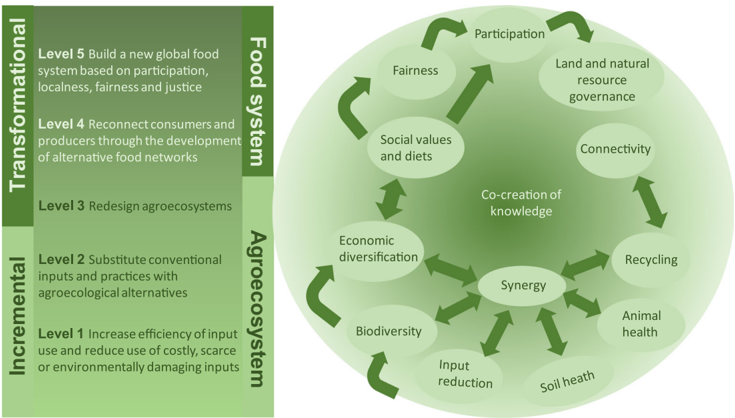
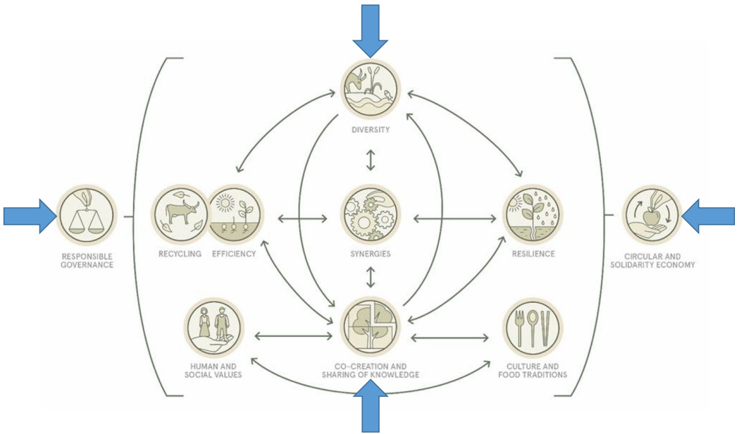
There is consensus that the global food system is not delivering good nutrition for all and is causing environmental degradation and loss of biodiversity, such that a profound transformation is needed to meet the challenges of persistent malnutrition and rural poverty, aggravated by the growing consequences of climate change. Agroecological approaches have gained prominence in scientific, agricultural and political discourse in recent years, suggesting pathways to transform agricultural and food systems that address these issues. Here we present an extensive literature review of concepts, definitions and principles of agroecology, and their historical evolution, considering the three manifestations of agroecology as a science, a set of practices and a social movement; and relate them to the recent dialogue establishing a set of ten iconic elements of agroecology that have emerged from a global multi-stakeholder consultation and synthesis process. Based on this, a consolidated list of principles is developed and discussed in the context of presenting transition pathways to more sustainable food systems. The major outcomes of this paper are as follows. (1) Definition of 13 consolidated agroecological principles: recycling; input reduction; soil health; animal health; biodiversity; synergy; economic diversification; co-creation of knowledge; social values and diets; fairness; connectivity; land and natural resource governance; participation. (2) Confirmation that these principles are well aligned and complementary to the 10 elements of agroecology developed by FAO but articulate requirements of soil and animal health more explicitly and distinguish between biodiversity and economic diversification. (3) Clarification that application of these generic principles can generate diverse pathways for incremental and transformational change towards more sustainable farming and food systems. (4) Identification of four key entry points associated with the elements: diversity; circular and solidarity economy; co-creation and sharing of knowledge; and, responsible governance to enable plausible pathways of transformative change towards sustainable agriculture and food systems.
Overview
The claims and statistics of this paper haven’t been checked yet.
Free: it reads the open-access text and checks the first 5 claims that cite a source we can check. Create a free account to check every claim.
Integrity signals
Registry
Cites
Statistics
Figures




Verification
Claims the paper makes
The claims and statistics of this paper haven’t been checked yet.
Free: it reads the open-access text and checks the first 5 claims that cite a source we can check. Create a free account to check every claim.
Claims other papers make about this one
Each is checked against this paper’s own text: does it say what the citing paper says it does?
The source backs part of the claim, not all of it — or backs it for a different population, condition or comparison.
In the citing paper
“the 13 principles of agroecology (HLPE, 2019) are closely aligned with the 10 elements and serve as a science-policy interface that facilitates debate, bridges diverse knowledge systems, and informs policymaking”
From Agroecology for sustainable development: evidence on multidimensional performance from a cross-country TAPE assessment in Africa (2025) · cites this paper as Wezel et al., 2020
Experimental — accuracy not yet measuredThe cited source says what the claim attributes to it.
In the citing paper
“According to the principles, agroecology concerns the direction of change in agricultural systems (Wezel et al. 2020).”
From Methodological challenges in assessing the viability of agroecological practices: lessons from a multi-case study in Africa (2025) · cites this paper as Wezel et al. 2020
The cited source says what the claim attributes to it.
In the citing paper
“They combine practices that can be related to one or various of the agroecological principles identified by Wezel et al. (2020) to respond to a diversity of constraints and challenges.”
From Methodological challenges in assessing the viability of agroecological practices: lessons from a multi-case study in Africa (2025) · cites this paper as Wezel et al. (2020)
The cited source says what the claim attributes to it.
In the citing paper
“In its conceptual and methodological evolution, agroecology has integrated a larger scope into its analysis, moving from the plot and farm to the landscape unit (Wezel etal., 2020).”
From Agroecological planning of productive systems with functional connectivity to the ecological landscape matrix: two Colombian case studies (2024) · cites this paper as Wezel et al., 2020
The cited source says what the claim attributes to it.
In the citing paper
“Agroecology is identified as an important solution to increase the sustainability of agricultural and food systems.”
From The socio-economic performance of agroecology. A review (2024) · cites this paper as Wezel et al. 2020
1 more claim about this paper
Create a free account to see every claim other papers make about this one.
Self-check
Percentages, sums and reported differences re-computed from the paper’s own numbers.
The self-check needs the paper’s full text.
Citations
Cites
Food and Agriculture Organization of the United Nations
(2022) · Permanent Missions to the United Nations · doi:10.18356/9789210018289c230 · Cited by 5,384
Colman (2022) · doi:10.1073/pnas · Cited by 4,370
Ontologies, socio-technical transitions (to sustainability), and the multi-level perspective
Geels, F. W. (2010) · Research Policy · doi:10.1016/j.respol.2010.01.022 · Cited by 1,718 · cited 4×
“Some transitions begin at a small scale, a ‘niche’ or protected space in which farmer cooperatives, social movements, businesses, local government or other groups experiment with and adapt alternative ways of doing things (Geels 2010; Hinrichs 2014).”
BackgroundMethodInfluentialSmith, A., Voß, J.-P., & Grin, J. (2010) · Research Policy · doi:10.1016/j.respol.2010.01.023 · Cited by 1,691 · cited 2×
“…multi-level perspective has been used, to consider how dynamic processes and interactions across scales can support whole-system transformative change (Geels 2010; Smith et al. 2010), but also what issues of power relations drive changes or establish ‘lock-ins’ (IPES-Food 2018; Leach et al. 2020).”
BackgroundMethodAgroecology as a science, a movement and a practice. A review
Wezel, A., Bellon, S., Doré, T., Francis, C., Vallod, D., & David, C. (2009) · Agronomy for Sustainable Development · doi:10.1051/agro/2009004 · Cited by 1,504
Self-citationAltieri, M. A., & Toledo, V. M. (2011) · Journal of Peasant Studies · doi:10.1080/03066150.2011.582947 · Cited by 1,279 · cited 2×
“eignty, local knowledge, social justice, local identity and culture, and indigenous rights for seeds and breeds (Altieri and Toledo 2011; Nyéléni 2015; Rosset et al. 2011) (Fig.”
BackgroundAgroecological practices for sustainable agriculture. A review
Wezel, A., Casagrande, M., Celette, F., Vian, J.-F., Ferrer, A., & Peigné, J. (2014) · Agronomy for Sustainable Development · doi:10.1007/s13593-013-0180-7 · Cited by 1,227 · cited 1×
“…beneficial biological interactions and synergies amongst the components of agroecosystems (Gliessman 1990), minimizing synthetic and toxic external inputs and using ecological processes and ecosystem services for the development and implementation of agricultural practices (Wezel et al. 2014) (Fig.”
BackgroundSelf-citationAgroecology: The Ecology of Sustainable Food Systems
Gliessman, S. R. (2007) · Andalas University Repository (Andalas University) · Cited by 1,061
Comparative Influences of Precipitation and River Stage on Groundwater Levels in Near-River Areas
Kim, I., Park, D., Kyung, D., Kim, G., Kim, S., & Lee, J. (2015) · Sustainability · doi:10.3390/su8010001 · Cited by 1,060
Global assessment of agricultural system redesign for sustainable intensification
Pretty, J., Benton, T. G., Bharucha, Z. P., Dicks, L. V., Flora, C. B., Godfray, H. C. J., Goulson, D., Hartley, S., Lampkin, N., Morris, C., et al. (2018) · Nature Sustainability · doi:10.1038/s41893-018-0114-0 · Cited by 1,022 · cited 1×
“This consensus acknowledges the need to address aspects that go well beyond a simple metric of productivity, embracing environmental and socially progressive outcomes (Caron et al. 2018; Pretty et al. 2018; Tittonell 2014).”
Background
Research works printed but not linked: 11
- FAO (2015b) Final report for the international symposium on agroecology for food security and nutrition. 18–19 September 2014. Rome. http://www.fao.org/3/a-i4327e.pdf
- FAO (2018c) Second International Symposium on Agroecology. Scaling up agroecology to achieve the sustainable development goals (SDGs). http://www.fao.org/about/meetings/second-international-agroecology-symposium/en/
- FAO (2019) Report of the Conference of FAO. 41st Session. Rome, 22–29 2019. http://www.fao.org/3/na421en/na421en.pdf
- 31. HLPE (2019) Agroecological and other innovative approaches for sus- tainable agriculture and food systems that enhance food security and nutrition. A report by the High Level Panel of Experts on Food Security and Nutrition of the Committee on World Food Security, Rome http://www.fao.org/cfs/cfs-hlpe/en/
- 33. IAASTD (International Assessment of Agricultural Knowledge, Science and Technology for Development) (2009) Agriculture at a cross- roads: global report. B.D. MacIntyre, H.R. Herren, J. Wakhungu, R.T. Watson, eds. Washington, DC, Island Press
- IPCC (2019) Climate change and land. Panel in Climate Change IPCC, Intergovernmental
- 47. Patton (2018) Principles-focus evaluation: the guide. The Guilford Press, New York, NY
- 49. Pimbert M, Lemke S (2018) Food environments: using agroecology to enhance dietary diversity. In: UNSCN (United Nations System Standing Committee on Nutrition) Report 43: addressing equity, equality and non-discrimination in the food system: pathways to reform, pp. 33-42. https://www.unscn.org/uploads/web/news/ UNSCN-News43.pdf
- 56. Silici L (2014) Agroecology -what it is and what it has to offer. IIED, London, UK, 28 p
- 59. Sinclair F, Wezel A, Mbow C, Chomba C, Robiglio V, Harrison R (2019) The contribution of agroecological approaches to realizing climate- resilient agriculture. Background Paper. Global Commission on Adaptation, Rotterdam https://cdn.gca.org/assets/2019-12/ TheContributionsOfAgroecologicalApproaches.pdf
- 67. Tittonell P (2015) Food security and ecosystem services in a changing world: it is time for agroecology. In FAO, Agroecology for Food Security and Nutrition: Proceedings of the FAO International Symposium, pp. 16-35. Rome, Itlay
Cited by
Items 201–300 of 1,001
Kpienbaareh, D., Luginaah, I., Kerr, R. B., Wang, J., Poveda, K., Steffan-Dewenter, I. D., Lupafya, E., & Dakishoni, L. (2022) · Land Degradation and Development · doi:10.1002/ldr.4238 · Cited by 21
Self-citationAgroecological Approach to Farming for Sustainable Development: The Indian Scenario
Singh Bisht, I., Chand Rana, J., Jones, S., Estrada-Carmona, N., & Yadav, R. (2022) · Biodiversity of Ecosystems · doi:10.5772/intechopen.100281 · Cited by 15
“To facilitate the adoption and transition towards agroecological production systems, various efforts have helped to condense and integrate the various principles and elements put forward as key enablers of agroecology as a social movement and science [2, 6, 10, 11, 12].”
BackgroundGenerating regenerative agriculture
Garbisu, C., Unamunzaga, O., & Alkorta, I. (2025) · Frontiers in Sustainable Food Systems · doi:10.3389/fsufs.2025.1545811 · Cited by 17
Agroecology supports sustainable development in Africa. A review
Madsen, S., Kerr, R. B., Kamilia, K., Cevallos, M. F., Bazille, C., Paracchini, M. L., & Wezel, A. (2025) · Agronomy for Sustainable Development · doi:10.1007/s13593-024-00976-2 · Cited by 18
“Agroecology is one agricultural approach proposed (Wezel et al. 2020a) and, in this review, we assess the potential of agroecological practices to contribute to sustainable development based on evidence from 17 African countries with high levels of food insecurity.”
Self-citationKpienbaareh, D., Kerr, R. B., Nyantakyi‐Frimpong, H., Iverson, A. L., Luginaah, I., Lupafya, E., Dakishoni, L., & Shumba, L. (2024) · Applied Geography · doi:10.1016/j.apgeog.2024.103372 · Cited by 17
Self-citationAltieri, M. A., Salazar-Rojas, Á., Nicholls, C. I., & Giacomelli, A. (2025) · Agriculture · doi:10.3390/agriculture15090909 · Cited by 15
“Agroecological principles have evolved in the last decade to include social, cultural, economic and political dimensions of food systems, in addition to those related to agricultural practice at the farm level [34].”
Kanjanja, S. M., Mosha, D. B., & Haule, S. C. (2022) · European Journal of Agriculture and Food Sciences · doi:10.24018/ejfood.2022.4.5.571 · Cited by 19
“The findings conform to what [16] and [28] reported that intercropping and crop rotation is an important role in soil fertility restoration and breaking down the life cycle of pests leading to low disease”
Kelinsky‐Jones, L. R., Niewolny, K. L., & Stephenson, M. O., Jr. (2023) · Frontiers in Sustainable Food Systems · doi:10.3389/fsufs.2023.1128430 · Cited by 19
Chapter 11 : Agriculture, Food Systems, and Rural Communities. Fifth National Climate Assessment
Bolster, C. H., Mitchell, R. B., Kitts, A., Campbell, A., Cosh, M. H., Farrigan, T., Franzluebbers, A. J., Hoover, D. L., Jin, V. L., Peck, D. E., et al. (2023) · doi:10.7930/nca5.2023.ch11 · Cited by 31
Agroecology as agricultural practices for sustainable management in north African countries
Boutagayout, A., Belmalha, S., Rehali, M., Nassiri, L., & Bouiamrine, E. H. (2023) · International Journal of Plant Production · doi:10.1007/s42106-023-00251-6 · Cited by 14
Mockshell, J., Omulo, G., Hidalgo, F., Quintero, M., Ritter, T. N., Ramirez, G. A. O., & Place, F. (2025) · Agroecology and Sustainable Food Systems · doi:10.1080/21683565.2025.2524730 · Cited by 18
“…al. 2023; Hilmi 2019; Levidow, Sansolo, and Schiavinatto 2021; Lianu, Radulescu, and Lianu 2024; Lockie and Carpenter 2011; Mehrabi, Perez-Mesa, and Giagnocavo 2022; Muñoz et al. 2021; Ong and Liao 2020; Tilzey 2021; Timmermann and Félix 2015; Torres 2023; Walthall et al. 2024; Wezel et al. 2020).”
InfluentialBimonte, S., Bellocchi, G., Pinet, F., Chalhoub, G., Sakr, M. A., & Skrzypczyński, P. (2025) · Journal Of Big Data · doi:10.1186/s40537-025-01253-z · Cited by 16
Production and use of homemade dry manure-based tea in fertigation systems in North Africa
Léauthaud, C., Ameur, F., Richa, A., Yahmed, J. B., Tadjer, N., Bakouchi, S., Akakpo, K., Djezzar, M., & Amichi, H. (2022) · Renewable Agriculture and Food Systems · doi:10.1017/s174217052100051x · Cited by 15
Agroecologically-conducive policies: A review of recent advances and remaining challenges
Place, F., & Niederle, P. A. (2022) · Center for International Forestry Research (CIFOR) eBooks · doi:10.17528/cifor-icraf/008593 · Cited by 26
Ortíz, A. I., Beñayas, J. M. R., & Cayuela, L. (2022) · Forests · doi:10.3390/f13122045 · Cited by 16
Plant breeding is needed to meet agroecological requirements: Legume crops as a case study
Rubiales, D. (2023) · Outlook on Agriculture · doi:10.1177/00307270231195641 · Cited by 14
“Increased legume cultivation is very much in line with ‘Agroecology’ principles, contributing towards the needed shift to more sustainable agricultural practices, maintaining farm productivity and economic viability coupled with securing environmental improvements by preserving natural resources such as soils, water,…”
BackgroundChanthini, K. M.-P., Senthil‐Nathan, S., Sivanesh, H., Ramasubramanian, R., Stanley‐Raja, V., Karthi, S., Shyam-Sundar, N., Ali, M. A., & Alwahibi, M. S. (2023) · Chemical and Biological Technologies in Agriculture · doi:10.1186/s40538-023-00484-7 · Cited by 16
“This necessitates the use of sustainable agriculture techniques [2].”
MethodNikiema, T., Ezin, E. C., & Chogou, S. K. (2023) · Sustainability · doi:10.3390/su152115616 · Cited by 16
Tello, E., Sacristán, V., Olarieta, J. R., Cattaneo, C., Marull, J., Pons, M., Gingrich, S., Krausmann, F., Galán, E., Marco, I., et al. (2023) · Agronomy for Sustainable Development · doi:10.1007/s13593-023-00925-5 · Cited by 18
“…al. 2015; Pagani et al. 2017) can be compensated for by the higher landscape agroecological synergies that characterized the circular bioeconomy of many traditional organic farming and are now being recovered by new agroecology farm man-agements (Padró et al. 2017, 2019, 2020; Wezel et al. 2020).”
BackgroundOrounladji, B. M., Sib, O., Berre, D., Assouma, M. H., Dabiré, D., Sanogo, S., & Vall, É. (2024) · Agroecology and Sustainable Food Systems · doi:10.1080/21683565.2024.2307902 · Cited by 18
“…diverse ways dependent on local context: recycling, input reduction, soil health, animal health, biodiversity, synergy, economic diversification, co-creation of knowledge, social values and diets, fairness, connectivity, land and natural resource governance, and participation (Wezel et al. 2020).”
BackgroundMethodInfluentialGrovermann, C., Hoi, P. V., Yen, N. T. B., Schreinemachers, P., Ngo, M. H., & Ferrand, P. (2024) · International Journal of Agricultural Sustainability · doi:10.1080/14735903.2024.2338028 · Cited by 21
“…a set of sustainable production practices by including aspects of knowledge sharing, social equity, and circularity, while addressing issues of environmental integrity, food and nutrition security, and live-lihoods (FAO, 2019; Kerr et al., 2021; van der Ploeg et al., 2019; Wezel et al., 2020).”
Dosso, M., Nandjui, J., & Avadí, Á. (2024) · Agricultural Systems · doi:10.1016/j.agsy.2024.103971 · Cited by 17
Byaruhanga, R. (2024) · Agriculture and Human Values · doi:10.1007/s10460-024-10645-5 · Cited by 19
“The ecological aspect, linked to climate change, positioned agroecology as a more environmentally sustainable approach to developing food systems (Wezel et al. 2020), a perspective shared by several respondents.”
Feminist resistance building in the Brazilian agroecology movement: A gender decoloniality study
Naves, F. C. R., & Fontoura, Y. (2021) · Gender Work and Organization · doi:10.1111/gwao.12767 · Cited by 24
Yan, E., Martin, P., & Carozzi, M. (2024) · Agricultural Systems · doi:10.1016/j.agsy.2024.104196 · Cited by 14
Regenerative agriculture—a definition and philosophy
Congreves, K. A. (2025) · npj Sustainable Agriculture · doi:10.1038/s44264-025-00097-7 · Cited by 15
The current status, opportunities, challenges and coping strategies of sustainable agriculture
Chen, B., Zou, C., Zhang, Z., Caiming, G., & Li, J. (2025) · Discover Sustainability · doi:10.1007/s43621-025-02100-0 · Cited by 19
“…loss [101] Biodiversity Species Diversity : Promote species diversity in agricultural ecosystems, including crops, animals, and microorganisms [102] Genetic Diversity : Protect and utilize crop genetic resources to improve crop stress resistance and adaptability Ecosystem Services: Enhance…”
Sachet, E., Mertz, O., Vanegas, M., García, G. S. C., Beltrán, M., Ángel-Sánchez, Y. K., Zapata, Y. C., Lavelle, P., Solarte, A., Suarez, J. C., et al. (2023) · Agroecology and Sustainable Food Systems · doi:10.1080/21683565.2022.2164638 · Cited by 16
“The agroecological transition entails arranging multi-stakeholder participation at different levels and consolidating several viewpoints on implementing agroecology for diverse contexts (Tittonell 2019; Wezel et al. 2020).”
BackgroundAwoke, M. D., Löhr, K., Kimaro, A. A., Matavel, C., Lana, M., Hafner, J. M., & Sieber, S. (2025) · Agroecology and Sustainable Food Systems · doi:10.1080/21683565.2025.2466439 · Cited by 16
“AE, the second strategy, focuses on diversified and context-specific agricultural activities designed to stabilize food supply in the face of climate change, taking into account social and human dimensions (Wezel et al. 2020).”
A bibliometric analysis of agroecological practices: trends, impacts, and future directions
Chimi, P. M., Fobane, J. L., Onguene, E. M. A., Nkoué, B. B., Kamdem, M. E. K., Pokam, E. Y. N., Djoumbi, B. L. T., Yonga, G., Dikoume, A. M. N., Abdel, K. N., et al. (2025) · ENVIRONMENTAL SYSTEMS RESEARCH · doi:10.1186/s40068-025-00395-6 · Cited by 14
“Agroecology adapts to local contexts, with no one-size-fits-all solution (Dumont et al. 2021; Gliessman et al. 2022; Liere et al. 2017; Sachet et al. 2021; Wezel et al. 2009, 2014, 2020).”
InfluentialAgroecology and the metropolitan biopolitics of food in Cape Town and Johannesburg
Kroll, F. (2021) · Urban Agriculture & Regional Food Systems · doi:10.1002/uar2.20010 · Cited by 19
Frank, M., Kaufmann, B. A., Ejarque, M., Lamaisón, M. G., Nessi, M. V., & Amoroso, M. M. (2022) · Frontiers in Sustainable Food Systems · doi:10.3389/fsufs.2022.866004 · Cited by 18
Speich, C., Jaeggi, T., Musard, C., Havugimana, C., Nwokoro, C. C., Gakuba, E., Zamil, F., Sécula, F., Thönnissen, C., Six, J., et al. (2023) · Frontiers in Public Health · doi:10.3389/fpubh.2023.1081535 · Cited by 18
“Containing ecological as well as social components focused on empowering the local context, agroecology may serve as the key overarching concept for sustainable food systems transformation (10).”
BackgroundVapa–Tankosić, J., Prodanović, R. V., & Medović, V. (2023) · Sustainability · doi:10.3390/su151612476 · Cited by 13
“The strong involvement of the policy actors as well as agricultural producers, and all the actors in the supply chain, is crucial for “creating stronger markets for agri ecologically grown foods, developing social solidarity economies, pushing for agri ecological procurement by institutions, shifting public awareness…”
BackgroundKatre, A., Bertossi, T., Clarke-Sather, A., & Parsatoon, M. (2022) · Sustainability · doi:10.3390/su14063160 · Cited by 12
Cetrone, H., Santoso, M. V., Kerr, R. B., Petito, L. C., Blacker, L. S., Nonga, T., Martin, H., Kassim, N., Mtinda, E., & Young, S. L. (2021) · Public Health Nutrition · doi:10.1017/s1368980021001014 · Cited by 13
“Hallmarks of an agroecological approach include collective action between farmers, explicit efforts to draw on local knowledge in culturally appropriate ways, attention to improving social support and gender relations, and addressing food production holistically with positive environmental, health, social, and nutriti…”
BackgroundSelf-citationAndreotti, F., Neher, C. M., Speelman, E. N., & Bazile, D. (2023) · Agronomy for Sustainable Development · doi:10.1007/s13593-023-00891-y · Cited by 14
Vogel, C., Mayer, V., Mkandawire, M., Küstner, G., Kerr, R. B., Krauß, J., & Steffan-Dewenter, I. D. (2023) · Journal of Applied Ecology · doi:10.1111/1365-2664.14446 · Cited by 14
Self-citationThe transformative value chain: rethinking food system interventions
Mechri, A., Hanisch, M., & Hänke, H. (2023) · Frontiers in Sustainable Food Systems · doi:10.3389/fsufs.2023.1149054 · Cited by 14
Articulating Organic Agriculture and Sustainable Development Goals: Serbia Case Study
Šeremešıć, S., Dоliјаnоvić, Ž., Simin, M. T., Milašinović‐Šeremešić, M., Vojnov, B., Brankov, T., & Rajković, M. M. (2024) · Sustainability · doi:10.3390/su16051842 · Cited by 12
Ouko, K. O., Yugi, C. L., Oketch, M. O., Mboya, J. B., Ogola, R. J. O., Muthoka, M., & Midamba, D. C. (2024) · Cogent Social Sciences · doi:10.1080/23311886.2024.2363491 · Cited by 19
“…been proposed as a more viable option for sustainable food systems (iocola et al., 2022). recognized as a science, practice, and social movement (wezel et al., 2020), agroecology encompasses using scientific, experiential, and indigenous socio-ecological knowledge to agrifood systems in order…”
InfluentialHow Agroecological Transition Frameworks Are Reshaping Agroecology: A Review
Fonseca, A. F., Polita, F., & Madureira, L. (2024) · Land · doi:10.3390/land13111930 · Cited by 18
Pérez, L., Jepsen, M. R., & Castro-Nunez, A. C. (2024) · World Development · doi:10.1016/j.worlddev.2024.106888 · Cited by 15
Characterizing the agroecological transition of Italian farming systems using FADN database
Stempfle, S., Russo, S., Fiore, V., Sardaro, R., Sala, P. L., & Roselli, L. (2025) · Environmental and Sustainability Indicators · doi:10.1016/j.indic.2025.100616 · Cited by 13
García, D. L., García-García, J., García, V. G., Sereno, O. R., & Vázquez-Macías, G. (2025) · Agroecology and Sustainable Food Systems · doi:10.1080/21683565.2025.2456946 · Cited by 15
“…recent years, participatory planning is receiving special attention in both policy and research discussions on sustainability transitions in the agri-food system, with an important development in the co-production of public policies (Gascuel-Odoux et al. 2022; Snapp et al. 2023; Wezel et al. 2020).”
Bonatti, M., Reynaldo, R. G., Martín‐López, B., Bolívar, S., Cordero-Fernández, M., Chavez-Miguel, G., Martin, A., Hämmerle, J., Schröter, B., Erismann, C., et al. (2025) · Global Environmental Change · doi:10.1016/j.gloenvcha.2025.103042 · Cited by 15
Surchat, M., Wezel, A., Tolon, V., Breland, T. A., Couraud, P., & Vian, J.-F. (2021) · Frontiers in Sustainable Food Systems · doi:10.3389/fsufs.2021.708647 · Cited by 15
Self-citationKlebl, F., Walthall, B., & Vicente‐Vicente, J. L. (2022) · Frontiers in Sustainable Food Systems · doi:10.3389/fsufs.2022.913412 · Cited by 20
“However, they are mainly incremental; they focus on reforming specific aspects of the food system, but they do not address the fundamental characteristics of the system (Wezel et al., 2020).”
BackgroundIocola, I., Ciaccia, C., Colombo, L., Grard, B., Maurino, S., Wezel, A., & Canali, S. (2022) · Open Research Europe · doi:10.12688/openreseurope.15264.1 · Cited by 16
Self-citationKozar, R., Djalante, R., Leimona, B., Subramanian, S. M., & Saitô, O. (2023) · Earth System Governance · doi:10.1016/j.esg.2023.100164 · Cited by 18
Wordofa, M. G., Aweke, C. S., Endris, G. S., Tolesa, G. N., Lemma, T., Hassen, J. Y., Lucantoni, D., & Mottet, A. (2023) · Data in Brief · doi:10.1016/j.dib.2023.109988 · Cited by 13
“…practice of agroecology – conceptualized as the integrative study of the ecology of the entire food system, encompassing ecological, economic, and social dimensions seeking to contribute to transforming food systems by ensuring a regenerative use of natural resources and ecosystem services [ 2 ].”
Adoyo, B., Geck, M. S., Adeyemi, C., Alpuerto, J., Arinloye, A. A. D.-D., Ateku, D., Autfray, P., Barahona, C., Chacha, R., Cluset, R., et al. (2025) · Frontiers in Sustainable Food Systems · doi:10.3389/fsufs.2025.1667882 · Cited by 11
Gallardo-López, F., Landini, F., & Hernández-Chontal, M. A. (2022) · Sustainability · doi:10.3390/su14074062 · Cited by 14
MASIFICACIÓN DE SISTEMAS SILVOPASTORILES: UN LARGO Y SINUOSO CAMINO
Apan-Salcedo, G. W., Jiménez‐Ferrer, G., Nahed-Toral, J., Pérez-Luna, E. D. J., & Piñeiro-Vázquez, Á. T. (2021) · Tropical and Subtropical Agroecosystems · doi:10.56369/tsaes.3524 · Cited by 11
Becoming agroecologists: A pedagogical model to support graduate student learning and practice
Nicklay, J. A., Perrone, S. V., & Wauters, V. M. (2023) · Frontiers in Sustainable Food Systems · doi:10.3389/fsufs.2023.770862 · Cited by 15
Darmaun, M., Hossard, L., de Tourdonnet, S., Chotte, J., Lairez, J., Scopel, É., Faye, N. F., Chapuis‐Lardy, L., N’Diénor, M., Cissé, M. F. N., et al. (2023) · Italian Journal of Agronomy · doi:10.4081/ija.2023.2195 · Cited by 13
Lohrum, N., Normand, S., Dalgaard, T., & Graversgaard, M. (2024) · Journal of Environmental Management · doi:10.1016/j.jenvman.2024.120934 · Cited by 12
Zampieri, E., Sillo, F., Metelli, G., Cucu, M. A., Montesano, V., Quagliata, G., Philipp, L., Brescia, F., Conte, A. M., Giovannini, L., et al. (2024) · Biology and Fertility of Soils · doi:10.1007/s00374-024-01872-3 · Cited by 12
“The design and management of sustainable agriculture and food systems are necessary to account for ecological and social principles (Wezel et al. 2020).”
Ameur, F., & Léauthaud, C. (2024) · Agroecology and Sustainable Food Systems · doi:10.1080/21683565.2024.2417266 · Cited by 14
“With this tool, a series of questions aim to identify the extent to which each of the 13 agroecology principles (as defined by HLPE 2019; Wezel et al. 2020) are reflected in farm activities.”
Territorial embeddedness of sustainable agri-food systems: A systematic review
Duarte, L. A., Rivera, M., & Muñoz‐Rojas, J. (2025) · Agroecology and Sustainable Food Systems · doi:10.1080/21683565.2024.2448201 · Cited by 17
“While Altieri’s work is more empirically driven, most of Wezel’s papers are review articles, making Wezel one of the scholars with the highest number of in-depth agroecological analyses (Wezel et al. 2009, 2020).”
InfluentialFeminist Agroecology: Towards Gender-Equal and Sustainable Food Systems in Sub-Saharan Africa
Sibanda, M. (2025) · Agricultural & Rural Studies · doi:10.59978/ar03010001 · Cited by 21
“Agroecology, by contrast, offers a robust alternative by utilizing diversified planting and organic methods that restore ecosystem health while still producing sufficient yields (Wezel et al., 2020).”
InfluentialKitole, F. A. (2025) · Preventive Veterinary Medicine · doi:10.1016/j.prevetmed.2025.106511 · Cited by 11
Agroecology and resilient supply chains: Building sustainability from farm to fork
Alum, E. U. (2025) · Sustainable Futures · doi:10.1016/j.sftr.2025.101135 · Cited by 12
Agroecology and invasive alien plants: A winner-take-all game
Tataridas, A., Travlos, I. S., & Freitas, H. M. D. O. (2023) · Frontiers in Plant Science · doi:10.3389/fpls.2023.1143814 · Cited by 12
Bézard, M., Barlagne, C., Diman, J., Angeon, V., Morin, R., Ozier‐Lafontaine, H., & Andrieu, N. (2023) · Agronomy for Sustainable Development · doi:10.1007/s13593-023-00879-8 · Cited by 17
Farmers who tinker: Grounded alternatives to incrementalism and the growth imperative
Comi, M. (2023) · Sociologia Ruralis · doi:10.1111/soru.12445 · Cited by 14
Tarsiguel, L., Dorey, E., Dorel, M., & Andrieu, N. (2023) · Agricultural Systems · doi:10.1016/j.agsy.2023.103710 · Cited by 17
Sustainable Transformation of Agrifood Systems: A Circular Economic and Agroecological Perspective
Acharya, G. D. (2023) · SAARC Journal of Agriculture · doi:10.3329/sja.v21i1.66340 · Cited by 11
Scarlato, M., Rieppi, M., Alliaume, F., Illarze, G., Bajsa, N., Bertoni, P., Bianchi, F. J. J. A., Echeverriborda, G., Galván, G. A., de Souza, M. G., et al. (2024) · Soil and Tillage Research · doi:10.1016/j.still.2024.106061 · Cited by 12
“…soil health is fundamental for reaching global sustainability goals (Kraamwinkel et al., 2021; Lehmann et al., 2020) and is a crucial agroecological principle in any transition strategy to more sustainable agricultural systems (Hoffland et al., 2020; Nicholls et al., 2016; Wezel et al., 2020).”
BackgroundVermeire, M.-L., Thiour‐Mauprivez, C., & Clerck, C. D. (2024) · FEMS Microbiology Ecology · doi:10.1093/femsec/fiae031 · Cited by 16
“…systems: the DABFS standard for biodynamic farming; the IFOAM norms for organic farming; the papers of Wezel et al. ( 2014 ), HLPE report ( 2019 ), Wezel et al. ( 2020 ) and the website a gr oeco.or g for a gr oe-cology; the book of Holmgr en ( 2002 ), the pa per of Kr ebs and Bac h ( 2018 ) and…”
BackgroundMethodEnthoven, L., & den Broeck, G. V. (2023) · Ecological Economics · doi:10.1016/j.ecolecon.2023.107929 · Cited by 12
Girard, L., Wezel, A., & Robin, J. (2023) · Open Research Europe · doi:10.12688/openreseurope.16363.1 · Cited by 10
“Agroecology is based on 13 principles (HLPE, 2019; Wezel et al ., 2020), some of which are applicable to aquaculture and fish pond agr-oecosystems management.”
Self-citationSimon, C., Thoumazeau, A., Chambon, B., Sajjaphan, K., & Metay, A. (2024) · Agronomy for Sustainable Development · doi:10.1007/s13593-024-00944-w · Cited by 12
“Increasing agrobiodiversity at the plot scale has been identified as a key means of leverage in agroecological transition, as it strengthens the ecological and socio-economic resilience of agricultural systems (Hufnagel et al. 2020; Wezel et al. 2020; Côte et al. 2022).”
Wordofa, M. G., Aweke, C. S., Endris, G. S., Tolesa, G. N., Lemma, T., Hassen, J. Y., Lucantoni, D., & Mottet, A. (2024) · Agroecology and Sustainable Food Systems · doi:10.1080/21683565.2024.2370316 · Cited by 13
“…and improve socio-economic, ecological, and environmental outcomes (Gliessman 2016; Pronti and Coccia 2021; Wezel et al. 2009), political and cultural aspects of food systems (Barrios et al. 2020; Wezel et al. 2020), and achieve resilience and sustainable development (Leippert et al. 2020).”
Ariadi, G., Werastuti, D. N. S., & Inggarwati, K. (2024) · Measuring Business Excellence · doi:10.1108/mbe-12-2023-0195 · Cited by 15
A two-decade bibliometric review of climate resilience in agriculture using the Dimensions platform
Chimi, P. M., Fobane, J. L., Matick, J. H., & Mala, W. A. (2025) · Discover Applied Sciences · doi:10.1007/s42452-025-06707-w · Cited by 10
What good is agroecology? Predominant narratives about agroecology in Africa
Madsen, S., Laske, E., Fisher, J., Sall, A. N., Enloe, S. K., & Kerr, R. B. (2025) · Journal of Rural Studies · doi:10.1016/j.jrurstud.2025.103706 · Cited by 15
Self-citationBlaix, C., Dumont, B., Bloor, J., Zagaria, C., Fleurance, G., Joly, F., & Huguenin‐Elie, O. (2025) · Agriculture Ecosystems & Environment · doi:10.1016/j.agee.2025.109938 · Cited by 17
Animating the transition: How agriculture 5.0 revitalises agroecological principles
Na’im, M., & Boukhizzou, A. (2026) · Smart Agricultural Technology · doi:10.1016/j.atech.2026.101788 · Cited by 11
d’Orbcastel, E. R., Lutier, M., Floc’h, E. L., Ruelle, F., Triplet, S., Gall, P. L., Hubert, C., Fortune, M., Laugier, T., Geoffroy, T., et al. (2022) · Aquaculture International · doi:10.1007/s10499-022-00953-0 · Cited by 13
Bellotti, G., Taskin, E., Sello, S., Sudiro, C., Bortolaso, R., Bandini, F., Guerrieri, M. C., Cocconcelli, P. S., Vuolo, F., & Puglisi, E. (2022) · Land · doi:10.3390/land11091544 · Cited by 10
Rediscovering wild food to diversify production across Australia's agricultural landscapes
Canning, A. D. (2022) · Frontiers in Sustainable Food Systems · doi:10.3389/fsufs.2022.865580 · Cited by 11
“Creating a sustainable food system will inevitably require the application of ecology to agricultural/food systems or “agroecology” (Gliessman, 2016; Wezel et al., 2020; Bezner Kerr et al., 2021).”
BackgroundNorton, L., Maskell, L. C., McVittie, A., Smith, L. G., Wagner, M., Waterton, C., & Watson, C. A. (2022) · Frontiers in Sustainable Food Systems · doi:10.3389/fsufs.2022.1012691 · Cited by 13
“The “new era” anticipated by Nerbonne and Lentz (2003) and further advocated by others (Gosnell et al., 2020; Wezel et al., 2020) in which farmers and researchers build new knowledge together using holistic, transdisciplinary approaches remains in its relative infancy.”
BackgroundICT4Agroecology: a participatory research methodology for agroecological field research in Tanzania
Hilbeck, A., Tisselli, E., Crameri, S., Sibuga, K. P., Constantine, J., Shitindi, M. J., Kilasara, M. M., Churi, A. J., Sanga, C. A., Kihoma, L., et al. (2023) · Agroecology and Sustainable Food Systems · doi:10.1080/21683565.2023.2259828 · Cited by 13
“…systems that have been widely recognized as unsustainable (De Schutter 2011; IAASTD International Assessment of Agricultural Knowledge Science and Technology for Development 2009; IPES-Food International Panel of Expets on Sustainable Food Systems 2018; Roman-Acalà 2018; Wezel et al. 2020).”
BackgroundThe Future of Coconut as an Economic Crop WorldWide
Johnson, V. B., Aguilar, E. A., Alouw, J. C., Biddle, J., Lacsina, J. C., & Manohar, E. C. (2024) · Botany, production and uses. · doi:10.1079/9781789249736.0014 · Cited by 16
Andrieu, N., Dedieu, B., Girard, P., Scopel, E., Magaju, C., Dembele, C., Mekuria, W., & Coe, R. (2025) · Agronomy for Sustainable Development · doi:10.1007/s13593-025-01010-9 · Cited by 9
“According to the principles, agroecology concerns the direction of change in agricultural systems (Wezel et al. 2020).”
InfluentialGreenberg, S., Drimie, S., Losch, B., & May, J. (2023) · Sustainability · doi:10.3390/su152115521 · Cited by 9
Kpienbaareh, D., Kerr, R. B., Nyantakyi‐Frimpong, H., Amoak, D., Poveda, K., Nagothu, U. S., Vogel, C., Iverson, A. L., Tesfai, M., Luginaah, I., et al. (2022) · Advances in ecological research/Advances in Ecological Research · doi:10.1016/bs.aecr.2022.04.001 · Cited by 18
Self-citationDecision analytical methods for assessing the efficacy of agroecology interventions
Whitney, C., Biber‐Freudenberger, L., & Luedeling, E. (2023) · CABI Agriculture and Bioscience · doi:10.1186/s43170-023-00151-9 · Cited by 12
“Agroecology is a dynamic concept that is gaining prominence in scientific, agricultural and political discourse (Wezel et al. 2020).”
BackgroundPachoud, C., Dendoncker, N., & Girard, S. (2024) · Sustainability Science · doi:10.1007/s11625-024-01513-6 · Cited by 13
“The industrial model requires a profound transformation towards sustainable agrifood systems that respect humans and their environment (Wezel et al. 2020).”
Sciurano, J. P., Arfini, F., & Maccari, M. (2024) · Frontiers in Sustainable Food Systems · doi:10.3389/fsufs.2024.1304558 · Cited by 14
Solé, M., Brendel, S., Aldrich, A., Dauber, J., Ewald, J. A., Duquesne, S., Gottschalk, E., Hoffmann, J., Kuemmerlen, M., Leake, A. R., et al. (2024) · Environmental Sciences Europe · doi:10.1186/s12302-024-00977-8 · Cited by 12
“To address this concern, alternative and more sus - tainable solutions are being explored, such as for instance expanding organic farming and implementing agroecological methods [17, 18].”
BackgroundAdvancement of genetic engineering applications for enhancing legume crop improvement in agriculture
Demelash, A. (2024) · Cogent Food & Agriculture · doi:10.1080/23311932.2024.2446652 · Cited by 10
“…range of regulatory and policy frameworks, including biosafety regulations, seed laws, and trade agreements. ethical considerations include the need to ensure that these frameworks are transparent, fair, and effective in promoting the sustainable development and use of legumes (wezel et al., 2020).”
Experiencias de transición ecosocial en Ecuador desde la economía social solidaria y la agroecología
Barona, C. C., Villalba‐Eguiluz, U., Hurtado, G., & Salazar, N. V. (2025) · Revista iberoamericana de estudios de desarrollo = Iberoamerican journal of development studies · doi:10.26754/ojs_ried/ijds.10636 · Cited by 9
Oladele, O. I., & Ngidi, M. S. C. (2025) · Climate Services · doi:10.1016/j.cliser.2025.100541 · Cited by 10
“The actionable guidelines on climate-smart agriculture emphasized the repositioning of food systems to be reactive to societal demands in a sustainable manner [Wezel, et al 2020, Steinhäuser, 2020].”
Adams, Z., Modi, A. T., & Kuria, S. K. (2025) · Agriculture · doi:10.3390/agriculture15060581 · Cited by 10
Neyra, J. M. V., Schmitt, V. G. H., & Cequea, M. M. (2025) · Agricultural and Food Economics · doi:10.1186/s40100-025-00423-0 · Cited by 11
“In peasant contexts, this logic materializes not through external tech-nification but through strategies rooted in traditional knowledge, incremental innovation, the ecological and cultural recycling of local resources (Wezel et al. 2020; Atkins et al. 2024).”
Lin, K., Ishihara, H., Tsai, C., Hung, S., & Mizoguchi, M. (2022) · Sustainability · doi:10.3390/su14031858 · Cited by 10
“There is a growing consensus that a transformation is necessary for the global agrifood system to meet various challenges, such as degradation and loss of biodiversity, malnutrition, and rural poverty, which is further aggravated by climate change [1].”
BackgroundDorvlo, S. Y., Mkandawire, E., Roelich, K. E., & Jumbe, C. B. (2023) · Sustainability · doi:10.3390/su152215888 · Cited by 10
Bisht, S., Ranjana, & Roy, S. (2024) · Advanced Agrochem · doi:10.1016/j.aac.2024.07.004 · Cited by 10
Metadata
- Authors
- Wezel, A., Herren, B. G., Kerr, R. B., Barrios, E., Gonçalves, A. L. R., & Sinclair, F.
- Affiliations
- Institut Supérieur d'Agriculture Rhône-Alpes (FR)
- Cornell University (US)
- Food and Agriculture Organization of the United Nations (IT)
- Instituto Federal Catarinense (BR)
- Bangor University (GB)
- Corresponding author
- Wezel, Alexander
- Venue
- Agronomy for Sustainable Development
- Published
- 2020-10-27
- Volume
- 40
- Issue
- 6
- Pages
- 40
- ISSN
- 1773-0155 (ISSN-L)
- 1774-0746
- OpenAlex
- W3095607637
- Semantic Scholar
- c5a128a829b43b2b4d39d83eb9f0c2985df5369a
- Cited by
- 926
- References
- 71
- Citations by year
- 2026: 212 · 2025: 208 · 2024: 173 · 2023: 169 · 2022: 108 · 2021: 55 · 2020: 1
- FWCI
- 125.87
- Type
- journal article
- Language
- en
- Open access
- hybrid
- doi.org
- Licence
- cc-by
- creativecommons.org/licenses/by/4.0 (tdm)
- creativecommons.org/licenses/by/4.0 (vor)
- Locations
- Agronomy for Sustainable Development (publishedVersion, cc-by)
- HAL (submittedVersion, other-oa)
- Funders
- McKnight Foundation
- Consortium of International Agricultural Research Centers
- Topics
- Social Sciences › Development › Agriculture, Land Use, Rural Development
- Life Sciences › Agricultural and Biological Sciences › General Agricultural and Biological Sciences › Plant and soil sciences
- Life Sciences › Agricultural and Biological Sciences › Agronomy and Crop Science › Sustainable Agricultural Systems Analysis
- Keywords
- agroecology, agroecological principles, sustainable food systems, food system transformation, soil health, biodiversity, circular economy, solidarity economy, knowledge co-creation, participatory governance, economic diversification, animal health, food system resilience, climate change adaptation, malnutrition, rural poverty
About these checks
Registry, retraction, Cites and statistics results are computed, not judged, with one exception: a printed reference that no index lists is read once by a model before it counts as a citation error. Claims are extracted by a model and kept only when their quote appears verbatim in the text; each cited source is then checked, with a model’s help, for whether it says what the claim relies on. Those verdicts can be wrong — read the claim’s quote and the cited source before relying on one.
Statistics and arithmetic are recomputed, not judged.
Confidence bands are shown only for fields calibrated on our annotated test set. None is calibrated yet, so no band is shown.
What counts as a claim ›How we measure confidence ›How we check this ›
Are you an author, or do you see a problem with this page? Request a review
Data sources
Bibliographic data: Semantic Scholar, OpenAlex, Crossref.
Contains information from the Semantic Scholar Academic Graph Datasets, made available under the ODC Attribution License (ODC-BY 1.0).
Semantic Scholar’s data is described in: Kinney, R., et al. (2023). The Semantic Scholar Open Data Platform. arXiv:2301.10140.
