

Agroecological principles and elements and their implications for transitioning to sustainable food systems. A review
Open accessThe DOI matches its Crossref record; 71 of the 71 references it cites were found in a registry or an index.
Abstract
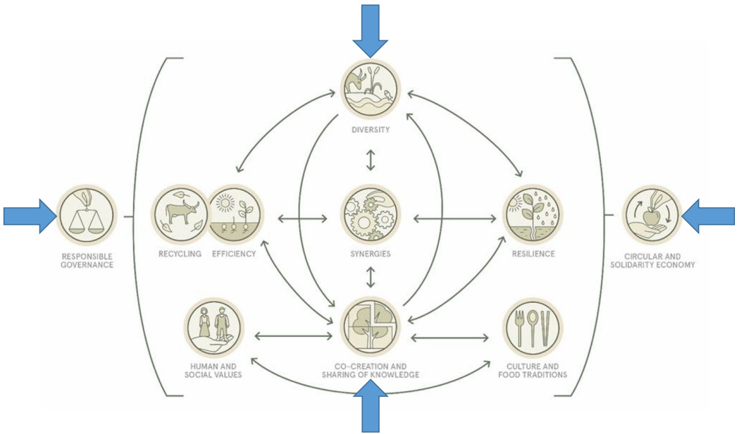
There is consensus that the global food system is not delivering good nutrition for all and is causing environmental degradation and loss of biodiversity, such that a profound transformation is needed to meet the challenges of persistent malnutrition and rural poverty, aggravated by the growing consequences of climate change. Agroecological approaches have gained prominence in scientific, agricultural and political discourse in recent years, suggesting pathways to transform agricultural and food systems that address these issues. Here we present an extensive literature review of concepts, definitions and principles of agroecology, and their historical evolution, considering the three manifestations of agroecology as a science, a set of practices and a social movement; and relate them to the recent dialogue establishing a set of ten iconic elements of agroecology that have emerged from a global multi-stakeholder consultation and synthesis process. Based on this, a consolidated list of principles is developed and discussed in the context of presenting transition pathways to more sustainable food systems. The major outcomes of this paper are as follows. (1) Definition of 13 consolidated agroecological principles: recycling; input reduction; soil health; animal health; biodiversity; synergy; economic diversification; co-creation of knowledge; social values and diets; fairness; connectivity; land and natural resource governance; participation. (2) Confirmation that these principles are well aligned and complementary to the 10 elements of agroecology developed by FAO but articulate requirements of soil and animal health more explicitly and distinguish between biodiversity and economic diversification. (3) Clarification that application of these generic principles can generate diverse pathways for incremental and transformational change towards more sustainable farming and food systems. (4) Identification of four key entry points associated with the elements: diversity; circular and solidarity economy; co-creation and sharing of knowledge; and, responsible governance to enable plausible pathways of transformative change towards sustainable agriculture and food systems.
Overview
The claims and statistics of this paper haven’t been checked yet.
Free: it reads the open-access text and checks the first 5 claims that cite a source we can check. Create a free account to check every claim.
Integrity signals
Registry
Cites
Statistics
Figures

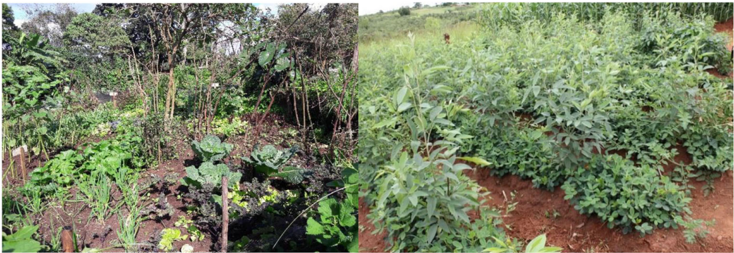
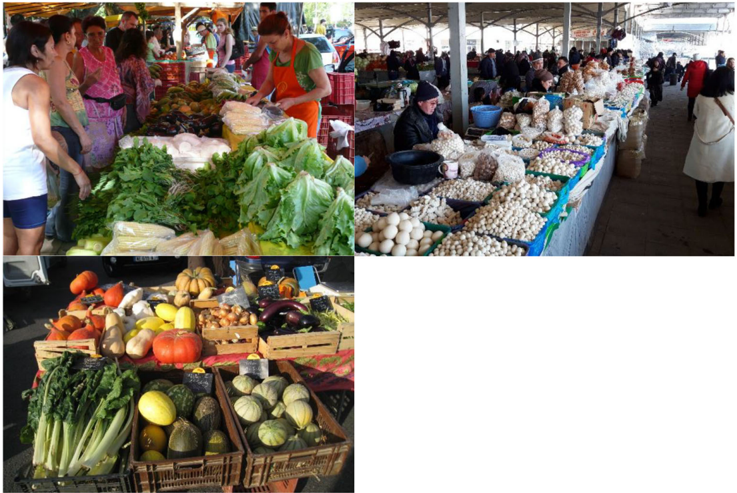

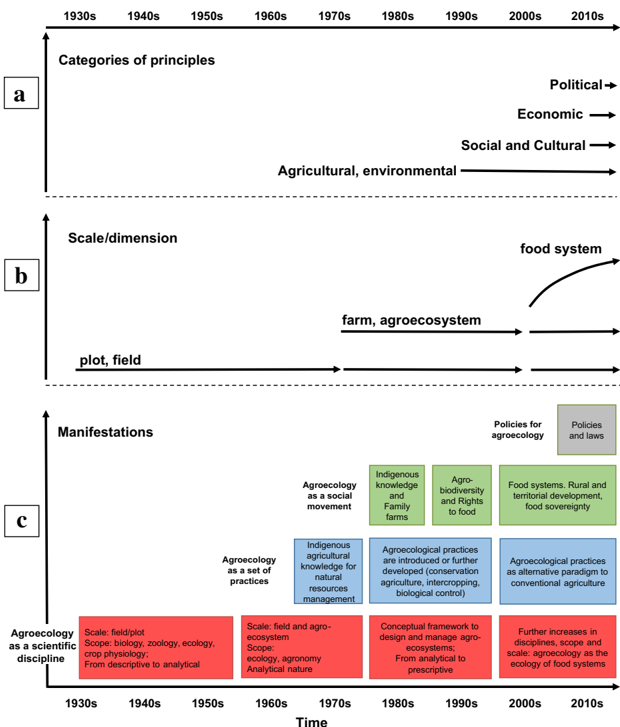
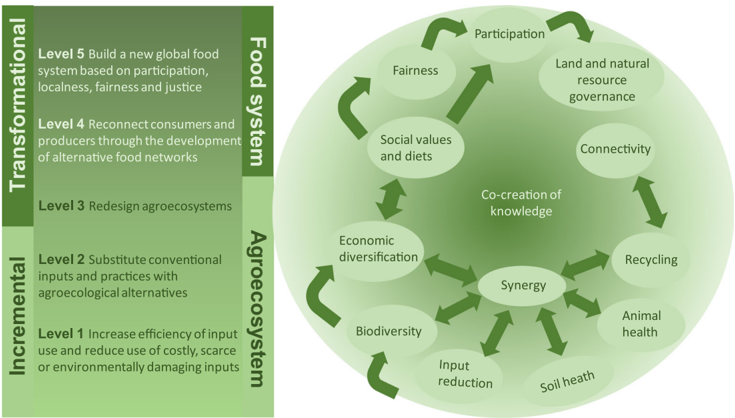


Verification
Claims the paper makes
The claims and statistics of this paper haven’t been checked yet.
Free: it reads the open-access text and checks the first 5 claims that cite a source we can check. Create a free account to check every claim.
Claims other papers make about this one
Each is checked against this paper’s own text: does it say what the citing paper says it does?
The source backs part of the claim, not all of it — or backs it for a different population, condition or comparison.
In the citing paper
“the 13 principles of agroecology (HLPE, 2019) are closely aligned with the 10 elements and serve as a science-policy interface that facilitates debate, bridges diverse knowledge systems, and informs policymaking”
From Agroecology for sustainable development: evidence on multidimensional performance from a cross-country TAPE assessment in Africa (2025) · cites this paper as Wezel et al., 2020
Experimental — accuracy not yet measuredThe cited source says what the claim attributes to it.
In the citing paper
“According to the principles, agroecology concerns the direction of change in agricultural systems (Wezel et al. 2020).”
From Methodological challenges in assessing the viability of agroecological practices: lessons from a multi-case study in Africa (2025) · cites this paper as Wezel et al. 2020
The cited source says what the claim attributes to it.
In the citing paper
“They combine practices that can be related to one or various of the agroecological principles identified by Wezel et al. (2020) to respond to a diversity of constraints and challenges.”
From Methodological challenges in assessing the viability of agroecological practices: lessons from a multi-case study in Africa (2025) · cites this paper as Wezel et al. (2020)
The cited source says what the claim attributes to it.
In the citing paper
“In its conceptual and methodological evolution, agroecology has integrated a larger scope into its analysis, moving from the plot and farm to the landscape unit (Wezel etal., 2020).”
From Agroecological planning of productive systems with functional connectivity to the ecological landscape matrix: two Colombian case studies (2024) · cites this paper as Wezel et al., 2020
The cited source says what the claim attributes to it.
In the citing paper
“Agroecology is identified as an important solution to increase the sustainability of agricultural and food systems.”
From The socio-economic performance of agroecology. A review (2024) · cites this paper as Wezel et al. 2020
1 more claim about this paper
Create a free account to see every claim other papers make about this one.
Self-check
Percentages, sums and reported differences re-computed from the paper’s own numbers.
The self-check needs the paper’s full text.
Citations
Cites
Food and Agriculture Organization of the United Nations
(2022) · Permanent Missions to the United Nations · doi:10.18356/9789210018289c230 · Cited by 5,384
Colman (2022) · doi:10.1073/pnas · Cited by 4,370
Ontologies, socio-technical transitions (to sustainability), and the multi-level perspective
Geels, F. W. (2010) · Research Policy · doi:10.1016/j.respol.2010.01.022 · Cited by 1,718 · cited 4×
“Some transitions begin at a small scale, a ‘niche’ or protected space in which farmer cooperatives, social movements, businesses, local government or other groups experiment with and adapt alternative ways of doing things (Geels 2010; Hinrichs 2014).”
BackgroundMethodInfluentialSmith, A., Voß, J.-P., & Grin, J. (2010) · Research Policy · doi:10.1016/j.respol.2010.01.023 · Cited by 1,691 · cited 2×
“…multi-level perspective has been used, to consider how dynamic processes and interactions across scales can support whole-system transformative change (Geels 2010; Smith et al. 2010), but also what issues of power relations drive changes or establish ‘lock-ins’ (IPES-Food 2018; Leach et al. 2020).”
BackgroundMethodAgroecology as a science, a movement and a practice. A review
Wezel, A., Bellon, S., Doré, T., Francis, C., Vallod, D., & David, C. (2009) · Agronomy for Sustainable Development · doi:10.1051/agro/2009004 · Cited by 1,504
Self-citationAltieri, M. A., & Toledo, V. M. (2011) · Journal of Peasant Studies · doi:10.1080/03066150.2011.582947 · Cited by 1,279 · cited 2×
“eignty, local knowledge, social justice, local identity and culture, and indigenous rights for seeds and breeds (Altieri and Toledo 2011; Nyéléni 2015; Rosset et al. 2011) (Fig.”
BackgroundAgroecological practices for sustainable agriculture. A review
Wezel, A., Casagrande, M., Celette, F., Vian, J.-F., Ferrer, A., & Peigné, J. (2014) · Agronomy for Sustainable Development · doi:10.1007/s13593-013-0180-7 · Cited by 1,227 · cited 1×
“…beneficial biological interactions and synergies amongst the components of agroecosystems (Gliessman 1990), minimizing synthetic and toxic external inputs and using ecological processes and ecosystem services for the development and implementation of agricultural practices (Wezel et al. 2014) (Fig.”
BackgroundSelf-citationAgroecology: The Ecology of Sustainable Food Systems
Gliessman, S. R. (2007) · Andalas University Repository (Andalas University) · Cited by 1,061
Comparative Influences of Precipitation and River Stage on Groundwater Levels in Near-River Areas
Kim, I., Park, D., Kyung, D., Kim, G., Kim, S., & Lee, J. (2015) · Sustainability · doi:10.3390/su8010001 · Cited by 1,060
Global assessment of agricultural system redesign for sustainable intensification
Pretty, J., Benton, T. G., Bharucha, Z. P., Dicks, L. V., Flora, C. B., Godfray, H. C. J., Goulson, D., Hartley, S., Lampkin, N., Morris, C., et al. (2018) · Nature Sustainability · doi:10.1038/s41893-018-0114-0 · Cited by 1,022 · cited 1×
“This consensus acknowledges the need to address aspects that go well beyond a simple metric of productivity, embracing environmental and socially progressive outcomes (Caron et al. 2018; Pretty et al. 2018; Tittonell 2014).”
Background
Research works printed but not linked: 11
- FAO (2015b) Final report for the international symposium on agroecology for food security and nutrition. 18–19 September 2014. Rome. http://www.fao.org/3/a-i4327e.pdf
- FAO (2018c) Second International Symposium on Agroecology. Scaling up agroecology to achieve the sustainable development goals (SDGs). http://www.fao.org/about/meetings/second-international-agroecology-symposium/en/
- FAO (2019) Report of the Conference of FAO. 41st Session. Rome, 22–29 2019. http://www.fao.org/3/na421en/na421en.pdf
- 31. HLPE (2019) Agroecological and other innovative approaches for sus- tainable agriculture and food systems that enhance food security and nutrition. A report by the High Level Panel of Experts on Food Security and Nutrition of the Committee on World Food Security, Rome http://www.fao.org/cfs/cfs-hlpe/en/
- 33. IAASTD (International Assessment of Agricultural Knowledge, Science and Technology for Development) (2009) Agriculture at a cross- roads: global report. B.D. MacIntyre, H.R. Herren, J. Wakhungu, R.T. Watson, eds. Washington, DC, Island Press
- IPCC (2019) Climate change and land. Panel in Climate Change IPCC, Intergovernmental
- 47. Patton (2018) Principles-focus evaluation: the guide. The Guilford Press, New York, NY
- 49. Pimbert M, Lemke S (2018) Food environments: using agroecology to enhance dietary diversity. In: UNSCN (United Nations System Standing Committee on Nutrition) Report 43: addressing equity, equality and non-discrimination in the food system: pathways to reform, pp. 33-42. https://www.unscn.org/uploads/web/news/ UNSCN-News43.pdf
- 56. Silici L (2014) Agroecology -what it is and what it has to offer. IIED, London, UK, 28 p
- 59. Sinclair F, Wezel A, Mbow C, Chomba C, Robiglio V, Harrison R (2019) The contribution of agroecological approaches to realizing climate- resilient agriculture. Background Paper. Global Commission on Adaptation, Rotterdam https://cdn.gca.org/assets/2019-12/ TheContributionsOfAgroecologicalApproaches.pdf
- 67. Tittonell P (2015) Food security and ecosystem services in a changing world: it is time for agroecology. In FAO, Agroecology for Food Security and Nutrition: Proceedings of the FAO International Symposium, pp. 16-35. Rome, Itlay
Cited by
Items 601–700 of 1,001
A Review of Sustainable Agriculture – A Way to Modify Food Systems
Jain, M., & Pandey, S. (2025) · Springer proceedings in earth and environmental sciences · doi:10.1007/978-3-031-93444-5_14 · Cited by 1
Environmental Governance in Africa: The Challenge of Food Security
Abourabi, Y. (2025) · Springer eBooks · doi:10.1007/978-3-032-04431-0_5 · Cited by 1
Chisadza, B. (2026) · AMBIO · doi:10.1007/s13280-025-02330-6 · Cited by 1
Zindi, B. (2026) · Sustainable development goals series · doi:10.1007/978-3-032-09881-8_15 · Cited by 1
Agroecology for Food Sovereignty: A Science, a Practice, and a Social Movement
Wang, S., & Caldwell, C. D. (2026) · Springer eBooks · doi:10.1007/978-3-032-08689-1_9 · Cited by 1
Lopez-Merino, P., Stull, V. J., Bell, M., Cloninger, K. M., Cloninger, C. R., Garcia, D., & Gratton, C. (2026) · Frontiers in Sustainable Food Systems · doi:10.3389/fsufs.2026.1757486 · Cited by 1
Kim, S. K., Taremwa, N. K., Vasanthakaalam, H., Bayer, T., Robertson, V., Majiwa, E., & Macharia, I. (2026) · Circular Economy and Sustainability · doi:10.1007/s43615-026-00749-x · Cited by 3
“Moreover, these practices may lead to long-term adverse environmental and health effects [ 3 ].”
Linking climate-smart agriculture awareness and crop diversity in semi-arid South Africa
Dzvene, A. R., & Zhou, L. (2026) · Mitigation and Adaptation Strategies for Global Change · doi:10.1007/s11027-026-10297-2 · Cited by 1
Toukabri, W., Alary, V., Shiri, Z., Barbouchi, M., Bahri, H., Atassi, L., Worqlul, A. W., Idoudi, Z., Le, Q. B., Rudiger, U., et al. (2026) · Frontiers in Agronomy · doi:10.3389/fagro.2026.1719829 · Cited by 1
“Within the HOLPA framework, these dimensions correspond to the enabling conditions that allow agroecological transitions to consolidate (Wezel et al., 2020).”
InfluentialGosa, A. S. (2026) · GeoJournal · doi:10.1007/s10708-026-11572-0 · Cited by 2
Kaluzi, L., Kambewa, D., & Mambo, I. (2026) · Agroecology and Sustainable Food Systems · doi:10.1080/21683565.2026.2649770 · Cited by 2
Ethics, Bias Mitigation, and Model Risk Management
Parween, S., Dubey, N., Bharadwaj, R., Reddy, B. A., Sanghavi, H., Prasan, U. D., & Bhoopathy, V. (2026) · Advances in computational intelligence and robotics book series · doi:10.4018/979-8-3373-6851-1.ch006 · Cited by 1
Sustainable Food Systems: Tech-Driven Innovations for Agriculture and Supply Chains
Shafik, W. (2026) · Sustainable development and biodiversity · doi:10.1007/978-981-95-3632-0_11 · Cited by 1
Designing innovative cropping systems to meet sustainable development goals
Farooq, U., Ilyas, N., Raza, M. Y., Faraz, A., Ahmed, M., Mehmood, Z., Asad, S. A., & Abbas, S. H. (2026) · Elsevier eBooks · doi:10.1016/b978-0-443-34252-3.00037-8 · Cited by 1
Soil-health frameworks in agri-food systems. A review
Mponela, P., Chimonyo, V. G. P., Chiduwa, M., Kachali, R. W., Grevulo-Minofu, J., Kawanga, C., López‐Ridaura, S., & Snapp, S. (2026) · Agronomy for Sustainable Development · doi:10.1007/s13593-026-01111-z · Cited by 2
“This branching contrasts with Wezel et al. (2020), who aggregated the biophysical principles into two pathways (resource efficiency vs resilience).”
InfluentialAscani, M., Zanetti, B., Briamonte, L., Luca, D. D., Ricciardi, D., Selvaggi, G., & D’Oronzio, M. A. (2026) · Sustainability · doi:10.3390/su18136781 · Cited by 1
Yasin, H. S., Raza, M. A., Feng, L., & Han, J. (2026) · Plants · doi:10.3390/plants15142111 · Cited by 2
“Consequently, researchers are communicating that these systems threaten the future sustainability of farming activities and the delivery of food system outcomes, including a stable and healthy food supply, preserved biodiversity, and farm incomes [4,11].”
Graeuwe, M. D., Brostaux, Y., & Maréchal, K. (2026) · Frontiers in Sustainable Food Systems · doi:10.3389/fsufs.2026.1808583 · Cited by 1
The allure and delusion of vertical plant factories in Canada and the politics of continuity
Bloomfield, R. S., Weis, T., & Bowness, E. (2026) · Agriculture and Human Values · doi:10.1007/s10460-026-10983-6 · Cited by 1
“…the fact that while these are a fundamental component of industrial agriculture, there are a variety of agroecological techniques that can sustain healthy soils in perpetuity without external fertilization (Bezner-Kerr et al. 2021; Badgley et al. 2007 ; van der Ploeg 2020; Wezel et al. 2020).”
Roop, R., Weaver, M. W., Fonseca, A. P., & Matouq, M. (2023) · Implementing the UN sustainable development goals - regional perspectives · doi:10.1007/978-3-031-16017-2_112 · Cited by 1
SOIL HEALTH INDICATORS FOR ANALYZING SUSTAINABILITY IN CONVENTIONAL AND TRADITIONAL AGROECOSYSTEMS
Quiroga-Arcila, A. M., Baumann, M. D., & Ósorio, A. A. (2023) · Tropical and Subtropical Agroecosystems · doi:10.56369/tsaes.4525 · Cited by 1
Effect of vegetational diversification on the gene flow of natural enemies in a plum orchard
Zepeda‐Paulo, F. A., Cabrera, N., Villegas, C. M., & Lavandero, B. I. (2023) · Biological Control · doi:10.1016/j.biocontrol.2023.105400 · Cited by 1
Agroecología y enseñanza de las ciencias naturales: una relación a considerar en la escuela rural
Quevedo, N. P. N., & Barbosa, R. H. (2023) · Cadernos CIMEAC · doi:10.18554/cimeac.v13i2.6965 · Cited by 1
Derecho al medio ambiente y agricultura sostenible
Mora, J. E. M., del Carmen, J. M. R., Sarabia, A. G., Mora, J. G. M., & Villa, X. C. H. (2024) · LATAM Revista Latinoamericana de Ciencias Sociales y Humanidades · doi:10.56712/latam.v5i5.2703 · Cited by 1
Flores, M. A. G., Videla, M., Serra, G., Narmona, L. R., Barbero, J. G., Barcenilla, M. R., & Argüello, E. B. (2024) · Agroecology and Sustainable Food Systems · doi:10.1080/21683565.2024.2417267 · Cited by 2
“Production systems based on agroecological principles (FAO 2019; Wezel et al. 2020) are also present in the ARCC, but on a smaller portion of cultivated land.”
From multifunctionality and ecosystem services to a just transition of agri-food systems
Mann, S., Buergi, E., Schader, C., & Jacobi, J. (2024) · International Journal of Social Economics · doi:10.1108/ijse-09-2023-0740 · Cited by 1
Pandey, A. (2025) · IGI Global eBooks · doi:10.4018/979-8-3373-1280-4.ch001 · Cited by 2
Impact of Climate Change on Plant Nematodes and Diseases Complexes
Rashidifard, M., Singh, S. K., Preez, G. D., & Ashrafi, S. (2025) · CABI eBooks · doi:10.1079/9781800625228.0016 · Cited by 2
Christiansen, G., Lévy, R., Akimowicz, M., Berrier, C., Cancian, N., Chrétien, F., Faurie, I., Dervillé, M., Girard, N., Giraud, N. J., et al. (2025) · Sustainability Science · doi:10.1007/s11625-025-01711-w · Cited by 1
“These transitions aim to transform agri-food systems to make them more sustainable (Francis et al. 2003; Altieri and Toledo 2011; Wezel et al. 2009, 2020).”
An agroecological perspective for climate-smart agriculture
Camargo, A. F., Kubeneck, S., Saldanha, L. F., Nerling, J. P., Longo, V. D., Romani, L. C., Júnior, F. R., Mossi, A. J., & Treichel, H. (2025) · Elsevier eBooks · doi:10.1016/b978-0-443-26520-4.00007-x · Cited by 1
Esponda-Pérez, J. A., Zúñiga, E. J. L., Barrera, A. P. F., Lemus, M. B. C., & Leyva, F. J. R. (2025) · Ciencia y reflexión : · doi:10.70747/cr.v4i3.527 · Cited by 1
Migairou-Leprince, J., Jeuffroy, M.-H., Pénicaud, C., & Leclère, M. (2025) · Agroecology and Sustainable Food Systems · doi:10.1080/21683565.2025.2578247 · Cited by 2
“Interactions among actors from different domains of the agri-food system are essential for advancing the agroecological transition (Francis et al. 2003; Wezel et al. 2020).”
Recherches sur le pastoralisme en France : état des lieux des connaissances et questions vives
Dedieu, B., Hubert, B., Aubron, C., Hazard, D., Lauvie, A., Magne, M.-A., Meuret, M., Rapey, H., Stark, F., & Nozières-Petit, M.-O. (2025) · Cahiers Agricultures · doi:10.1051/cagri/2025036 · Cited by 1
Scarlato, M., Rieppi, M., Ferreira, I., Irurueta, S., Fernández, D., Bianchi, F. J. J. A., Rossing, W. A. H., & Dogliotti, S. (2025) · Agricultural Systems · doi:10.1016/j.agsy.2025.104617 · Cited by 1
The Effects of Weeds on Biodiversity: A Bibliometric Analysis
KOÇ, E. (2025) · Journal of Agriculture · doi:10.46876/ja.1811934 · Cited by 1
Analysis of Agroecological Bioeconomy
González, C. A. Z., Sáenz-Rojas, S. J., Toruño, P. J., & Canales, W. A. R. (2026) · Springer eBooks · doi:10.1007/978-3-032-09787-3_10 · Cited by 1
Phyconomy Applied to Global Environment Solutions Through Enterprise Ecology Systems
Neish, I. C. (2026) · Developments in applied phycology. · doi:10.1007/978-3-032-02955-3_2 · Cited by 1
Rational use of agricultural land: agroecological zoning
Ospanova, A. A., & Ozeranskaya, N. L. (2025) · Problems of AgriMarket · doi:10.46666/2025-4.2708-9991.13 · Cited by 1
Stakeholders' critical perception of diversification strategies in cereal-based rotations
Rezgui, F., Blanc, L., Plaza‐Bonilla, D., Lampurlanés, J., Dordas, C. A., Papakaloudis, P., Michalitsis, A., Hossard, L., Lambarraa-Lehnhardt, F., Bellingrath‐Kimura, S. D., et al. (2026) · European Journal of Agronomy · doi:10.1016/j.eja.2026.128000 · Cited by 1
Corso, J.-P. D., Lévy, R., Gillet, G. G., Atidegla, C. S., Bahé, K., Boullot, A., Fall, F., Gallai, N., Gnamkoulamba, A., Marie-Sainte, M., et al. (2026) · Agroecology and Sustainable Food Systems · doi:10.1080/21683565.2026.2626317 · Cited by 1
“…learned from this knowledge made it possible to directly or indirectly address several key agronomic and socio-economic principles of agroecology (Wezel et al. 2020), such as reducing inputs, preserving and improving soil health, strengthening positive ecological interactions, the importance of…”
Nikiema, T., Katic, P., Chogou, S. K., & Ezin, E. C. (2026) · Agriculture & Food Security · doi:10.1186/s40066-025-00572-x · Cited by 2
Research on pastoralism in France: state of knowledge and current issues
Dedieu, B., Hubert, B., Aubron, C., Hazard, D., Lauvie, A., Magne, M.-A., Meuret, M., Rapey, H., Stark, F., & Nozières-Petit, M.-O. (2026) · Cahiers Agricultures · doi:10.1051/cagri/2025040 · Cited by 1
Andrieu, N., Naulleau, A., Coq, J.-F. L., & Hrabanski, M. (2026) · Springer eBooks · doi:10.1007/978-3-032-04331-3_3 · Cited by 1
Carolan, M. (2026) · Agroecology and Sustainable Food Systems · doi:10.1080/21683565.2026.2668666 · Cited by 1
“Nicholls and Altieri (2018); Wezel et al. (2020) which means situating those transitions within a history that has been enabled by ableism, colonialism, class, heteronormativity, patriarchy, racism, and white supremacy.”
Hambo, C. L., Shitindi, M. J., Sibuga, K. P., & Nzogela, Y. B. (2026) · Frontiers in Soil Science · doi:10.3389/fsoil.2026.1816869 · Cited by 1
Zhang, Q. F. (2026) · The Journal of Peasant Studies · doi:10.1080/03066150.2026.2663525 · Cited by 2
Vasios, G. K., Gialeli, M., Antasouras, G., & Giaginis, C. (2026) · Nutrients · doi:10.3390/nu18121925 · Cited by 2
INTEGRATING AGROECOLOGY FOR SUSTAINABLE HORTICULTURE
Tüzel, Y., & Durdu, T. (2025) · AgroLife Scientific Journal · doi:10.17930/agl2025122 · Cited by 3
Jarroudi, M. E., Habib, H., & Wellens, J. (2026) · Frontiers in Sustainable Food Systems · doi:10.3389/fsufs.2026.1844109 · Cited by 1
Aderele, M. O., Haas, E., Liu, L., Serra, J., Kraus, D., Butterbach‐Bahl, K., & Rahimi, J. (2026) · Geoscientific model development · doi:10.5194/gmd-19-6335-2026 · Cited by 3
“…empirical data is valuable, it only covers a narrow slice of the management practices currently used, missing much of the plausible decision space needed for trade-off analysis and optimisation We bridge this gap by creating a synthetic dataset that combines observed and hypothetical…”
Casadiego-Arévalo, F. F., Escobar, Y. C., García-Meneses, P. M., Molina, A. M., & Triana-Madrid, J. C. (2026) · Agroecology and Sustainable Food Systems · doi:10.1080/21683565.2026.2699109 · Cited by 1
Chandra, K. K., Shukla, A. K., Bhardwaj, A. K., Kumar, R., Manpoong, C., Singh, A. K., Chanda, R., & Tripathi, S. K. (2026) · Agroforestry Systems · doi:10.1007/s10457-026-01614-4 · Cited by 1
Jana, C., & Contreras, C. (2026) · Agro Sur · doi:10.4206/agrosur.e5405 · Cited by 1
Amessaghrou, H., Jarroudi, M. E., Daoui, K., Lahlali, R., & Echchgadda, G. (2026) · Sustainability · doi:10.3390/su18199740 · Cited by 1
Farm Size in Organic Agriculture: Analysis of European Countries and Russia
Nesterenko, N., Kolyshkin, A. V., & Iakovleva, T. V. (2022) · Environmental footprints and eco-design of products and processes · doi:10.1007/978-981-16-8731-0_19 · Cited by 1
González-Chang, M., Faulkner, J., Shields, M., & Lavandero, B. (2022) · Agro Sur · doi:10.4206/agrosur.2021.v49n3-05 · Cited by 1
Introduction: Agroforestry for Sustaining the Global Agriculture in a Changing Environment
Dagar, J. C., Gupta, S. R., & Sileshi, G. W. (2023) · Sustainability Sciences in Asia and Africa · doi:10.1007/978-981-19-4602-8_1 · Cited by 3
Study on the Feasibility of Agrivoltaics in the Kansai Region of Japan
Nakata, H., & Ogata, S. (2023) · International Electronic Conference on Agronomy (IECAG) · doi:10.3390/iecag2023-15489 · Cited by 1
Georgin, J., Bourscheid, J. L. W., Toebe, C. S., Toebe, J., Pinzon, J., & Nascimento, S. G. R. D. (2024) · Contribuciones a las Ciencias Sociales · doi:10.55905/revconv.17n.1-541 · Cited by 1
L’agroécologie, un cadre pertinent pour penser l’évolution de nos systèmes agricoles et alimentaires
Ducos, A., Brun, H., Candau, O., Deiber, M., Florsheimer, L., Larribeau, L., & Portet-Tixidor, B. (2023) · Le Nouveau Praticien Vétérinaire élevages & santé · doi:10.1051/npvelsa/2024002 · Cited by 2
The Future of Soil Science in Italy
Terribile, F., Renella, G., Ajmone-Marsan, F., Ciampalini, R., Comolli, R., Ferraris, S., Freppaz, M., Gardi, C., Mileti, F. A., Padoan, E., et al. (2024) · Springer eBooks · doi:10.1007/978-3-031-52744-9_7 · Cited by 2
Kanjanja, S. M., Mosha, D. B., & Haule, S. C. (2024) · Journal of Agricultural Science · doi:10.5539/jas.v16n7p72 · Cited by 1
A Socioecological Systems Approach to Assessing Family Food Sovereignty
Martínez, B. S., Aguilar-Benítez, G., Gálvez, R. J., Hooft, A. V. ‘., & Rivera, R. C. (2024) · Food Studies An Interdisciplinary Journal · doi:10.18848/2160-1933/cgp/v14i01/79-131 · Cited by 4
Can Agroecology Close the Health Disparities Gap for Urban Vulnerable Communities in South Africa?
Rudolph, M. J., & Muchesa, E. (2024) · Suid-Afrikaanse tydskrif vir landbouvoorligting/South African journal of agricultural extension · doi:10.17159/2413-3221/2024/v52n3a15733 · Cited by 1
Estrategias agroecológicas para una agricultura sostenible
Fariño, J. E. C., Mata, B. E. G., Barcos, L. L. Z., Chevez, D. C. N., & Jiménez-Icaza, M. G. (2024) · Reincisol · doi:10.59282/reincisol.v3(6)6784-6795 · Cited by 1
Agroecological Approaches for Sustainable Intensification
Gudadhe, N. N., Babu, S., Singh, R., Ramkrushna, G. I., Pandey, A., Devi, K., Nayak, D., & Kumar, S. (2024) · Sustainability Sciences in Asia and Africa · doi:10.1007/978-981-97-7517-0_15 · Cited by 4
Aslam, M. T., Khan, İ., Chattha, M. U., Raza, A. A., Chattha, M. B., Ali, M., Hassan, M., & Fatima, I. (2025) · Agricultural sciences. · doi:10.5772/intechopen.1006600 · Cited by 2
Rao, S. (2025) · Elementa Science of the Anthropocene · doi:10.1525/elementa.2022.00150 · Cited by 1
Freed, S., Lo, M. G. Y., McCartney, M. P., Allison, E. H., Smith, D. M., Joffre, O. M., & Sinclair, F. (2025) · Nature Food · doi:10.1038/s43016-025-01152-9 · Cited by 2
“To assess the extent to which water and aquatic foods are integrated in agroecological theory and science, we examined the presence of each in the 13 principles 2 , published scientific literature on agroecol-ogy, and monitoring and assessment frameworks for agroecology.”
Self-citationSynnestvedt, T., Maviza, G., & Maphosa, M. (2025) · Frontiers in Sustainable Food Systems · doi:10.3389/fsufs.2025.1564638 · Cited by 1
Whelan, M. P. (2025) · Cambridge University Press eBooks · doi:10.1017/9781009158213 · Cited by 1
Canfield, M. C. (2025) · Annual Review of Law and Social Science · doi:10.1146/annurev-lawsocsci-061824-073903 · Cited by 1
Scope of agroecology during the agroecological transition of the local food system
Vázquez, L. L. (2025) · Journal of Applied Biotechnology & Bioengineering · doi:10.15406/jabb.2025.12.00385 · Cited by 2
Ziegler, A. D., Srinuansom, K., Boonta, T., Mukdajaturaphak, N., Sangcharoen, N., Lothongkham, A., Somboonchai, S., Wirasith, C., & Promya, J. (2025) · Food Security · doi:10.1007/s12571-025-01615-8 · Cited by 1
“…or farming is increasingly constrained—provided they remain socially acceptable, economically feasible, and environmentally sustainable (Chumnongsittathum, 2008; Kawara-zuka & Béné, 2010; Ateweberhan et al., 2018; Boyd et al., 2020; Barrios et al., 2020; Wezel et al., 2020; Ewert et al., 2023).”
4. Networked climate sovereignties: linking agroecology, food sovereignty, and climate justice
Aistara, G. A. (2021) · Congress of the European Society for Agricultural and Food Ethics (EurSafe) · doi:10.3920/978-90-8686-915-2_4 · Cited by 1
Élevages au pâturage et développement durable des territoires méditerranéens et tropicaux
Ickowicz, A., & Moulin, C. (2022) · Éditions Quæ eBooks · doi:10.35690/978-2-7592-3486-8 · Cited by 12
Alberdi, G., & Zubillaga, M. B. (2024) · Environmental and Sustainability Indicators · doi:10.1016/j.indic.2024.100538 · Cited by 2
Indicadores de qualidade do solo em sistemas agroecológicos no Cerrado Mineiro
Rocha, A. F. B. (2021) · doi:10.14393/ufu.di.2021.183 · Cited by 1
Chrisendo, D. N., Jalava, M., Deryng, D., Heino, M., & Kummu, M. (2022) · Research Square · doi:10.21203/rs.3.pex-1863/v1 · Cited by 1
COP26 Futures We Want - Brazil Country ProfilePreprint
Nehring, R., Monte-Mór, R. L. D. M., Sparn, J., Canhoto, O. M. F., Lamarão, C. V., & Shuckburgh, E. F. (2021) · doi:10.33774/coe-2021-hb1j8 · Cited by 2
Growing agroecology in Nicaragua : Towards a multi-scale perspective on agroecological transitions
Schiller, K. (2023) · doi:10.18174/585945 · Cited by 1
Keller, D. A. (2022) · San José State University ScholarWorks (San Jose State University) · doi:10.31979/etd.edfx-t8z3 · Cited by 2
“a rich source of experiential knowledge (Wezel et al. 2020).”
Strategies and tools for the transition to agroecological-based vegetable production systems
Scarlato, M., & Colnago, P. (2023) · Agrociencia Uruguay · doi:10.31285/agro.27.1207 · Cited by 1
“This process involves learning and changing our practices to produce, observe, evaluate, and make decisions(2)(9-10).”
BackgroundNakbanpote, W., Srihaban, P., Chokkuea, W., Dungkaew, W., Taya, U., Khanema, P., Munjit, R., Jitto, P., Busababodhin, P., Khankhum, S., et al. (2023) · Wiley eBooks · doi:10.1002/9781119911999.ch8 · Cited by 1
Brewing resilience: Insights on ecosystem-based adaptation from Indonesia’s coffee sector
Salamanca, A., Davis, M., & Takama, T. (2025) · doi:10.51414/sei2025.029 · Cited by 1
Challenges and opportunities for taking transformational steps toward agroecology in North Africa
Léauthaud, C., & Gliessman, S. R. (2025) · Agroecology and Sustainable Food Systems · doi:10.1080/21683565.2025.2526862 · Cited by 1
“Underpinned by these theoretical frameworks and analyses, this special issue explores soil and water issues using a multi-dimensional approach integrated within the 13 principles framework (Wezel et al. 2020).”
Saralegui-Díez, P., Aguilera, E., Cerrillo, I., de Molina, M. G., Casado, G. G., López, L., Moranta, J., Morilla, R., Olea, N., Ramos, M., et al. (2025) · doi:10.22541/essoar.175883407.73871690/v1 · Cited by 2
Youth Engagement in Environmental Governance in Uganda: Climate Action Initiatives and OutcomesPreprint
Nambassa, G., & Purnomo, E. P. (2026) · Research Square · doi:10.21203/rs.3.rs-8541059/v1 · Cited by 1
Fernández, V. I. (2021) · El Servicio de Difusión de la Creación Intelectual (National University of La Plata) · doi:10.35537/10915/127621 · Cited by 1
COP26 Futures We Want - Brazil Country ProfilePreprint
Nehring, R., Monte-Mór, R. L. D. M., Sparn, J., Canhoto, O. M. F., Lamarão, C. V., & Shuckburgh, E. F. (2021) · doi:10.33774/coe-2021-hb1j8-v2
Ampliando el horizonte de la agroecología: principios, práctica y cadena de valor
Estrada, E. M., & Garrido Fernández Fernando, E. (2022) · XIII Congreso de Economía Agroalimentaria · doi:10.31428/10317/10525
Produção animal e comportamento ingestivo de bovinos em sistema integrado de produção agropecuária
Elejalde, D. A. G., Soares, A. B., Missio, R. L., Assmann, T. S., Bernardon, A., & Zatta, A. C. (2021) · Agropecuária Catarinense · doi:10.52945/rac.v34i3.1248
Bakker, T., Dugué, P., Roesch, K., Phillips, S., & Poisot, A.-S. (2022) · FAO eBooks · doi:10.4060/cb9920fr · Cited by 2
Cisgenesis and Organic Farming
Alduvín, C. (2022) · Concepts and strategies in plant sciences · doi:10.1007/978-3-031-06628-3_7
Crop up! : adoption and value chain organisation in crop diversification transitions
Weituschat, C. S. (2022) · doi:10.18174/570534
Palm, J. L., Schmitt, C. J., & Lamine, C. (2021) · Redes · doi:10.17058/redes.v26i0.16892
Piñeiro, V. A., Comezaña, M. M., Cuppari, S. Y., Palacios, P., Saldungaray, M. C., & Roig-Tierno, N. (2022) · Revista del Ministerio de Trabajo y Economía Social · doi:10.55617/revmites.17 · Cited by 2
Agroecology, Service-Learning, and Social Responsibility: A Case Study for Spain
Fernández-Gonzalez, R., Puime-Guillén, F., Apostu, S. A., & Fernández-Rumbo, L. (2023) · Springer eBooks · doi:10.1007/978-3-031-26277-7_8 · Cited by 1
Metadata
- Authors
- Wezel, A., Herren, B. G., Kerr, R. B., Barrios, E., Gonçalves, A. L. R., & Sinclair, F.
- Affiliations
- Institut Supérieur d'Agriculture Rhône-Alpes (FR)
- Cornell University (US)
- Food and Agriculture Organization of the United Nations (IT)
- Instituto Federal Catarinense (BR)
- Bangor University (GB)
- Corresponding author
- Wezel, Alexander
- Venue
- Agronomy for Sustainable Development
- Published
- 2020-10-27
- Volume
- 40
- Issue
- 6
- Pages
- 40
- ISSN
- 1773-0155 (ISSN-L)
- 1774-0746
- OpenAlex
- W3095607637
- Semantic Scholar
- c5a128a829b43b2b4d39d83eb9f0c2985df5369a
- Cited by
- 926
- References
- 71
- Citations by year
- 2026: 212 · 2025: 208 · 2024: 173 · 2023: 169 · 2022: 108 · 2021: 55 · 2020: 1
- FWCI
- 125.87
- Type
- journal article
- Language
- en
- Open access
- hybrid
- doi.org
- Licence
- cc-by
- creativecommons.org/licenses/by/4.0 (tdm)
- creativecommons.org/licenses/by/4.0 (vor)
- Locations
- Agronomy for Sustainable Development (publishedVersion, cc-by)
- HAL (submittedVersion, other-oa)
- Funders
- McKnight Foundation
- Consortium of International Agricultural Research Centers
- Topics
- Social Sciences › Development › Agriculture, Land Use, Rural Development
- Life Sciences › Agricultural and Biological Sciences › General Agricultural and Biological Sciences › Plant and soil sciences
- Life Sciences › Agricultural and Biological Sciences › Agronomy and Crop Science › Sustainable Agricultural Systems Analysis
- Keywords
- agroecology, agroecological principles, sustainable food systems, food system transformation, soil health, biodiversity, circular economy, solidarity economy, knowledge co-creation, participatory governance, economic diversification, animal health, food system resilience, climate change adaptation, malnutrition, rural poverty
About these checks
Registry, retraction, Cites and statistics results are computed, not judged, with one exception: a printed reference that no index lists is read once by a model before it counts as a citation error. Claims are extracted by a model and kept only when their quote appears verbatim in the text; each cited source is then checked, with a model’s help, for whether it says what the claim relies on. Those verdicts can be wrong — read the claim’s quote and the cited source before relying on one.
Statistics and arithmetic are recomputed, not judged.
Confidence bands are shown only for fields calibrated on our annotated test set. None is calibrated yet, so no band is shown.
What counts as a claim ›How we measure confidence ›How we check this ›
Are you an author, or do you see a problem with this page? Request a review
Data sources
Bibliographic data: Semantic Scholar, OpenAlex, Crossref.
Contains information from the Semantic Scholar Academic Graph Datasets, made available under the ODC Attribution License (ODC-BY 1.0).
Semantic Scholar’s data is described in: Kinney, R., et al. (2023). The Semantic Scholar Open Data Platform. arXiv:2301.10140.
