

Role of Gut Microbiota-Generated Short-Chain Fatty Acids in Metabolic and Cardiovascular Health
Open accessThe DOI matches its Crossref record; 93 of the 93 references it cites were found in a registry or an index.
Abstract
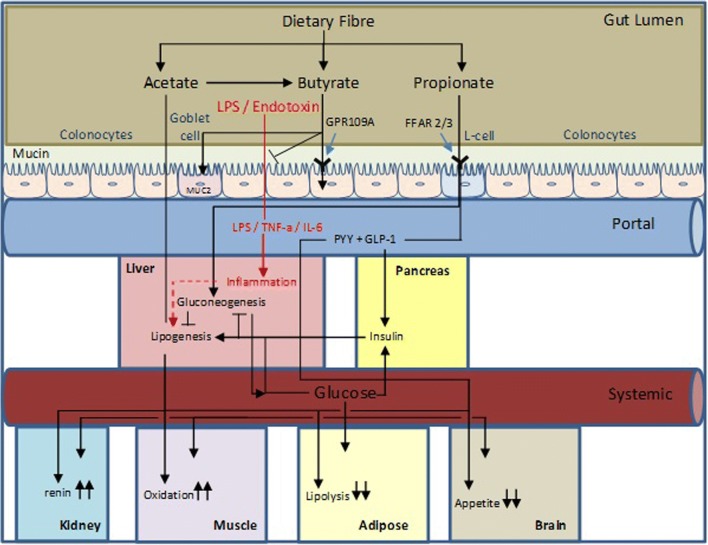
PURPOSE OF THIS REVIEW: This review assesses the latest evidence linking short-chain fatty acids (SCFA) with host metabolic health and cardiovascular disease (CVD) risk and presents the latest evidence on possible biological mechanisms. RECENT FINDINGS: SCFA have a range of effects locally in the gut and at both splanchnic and peripheral tissues which together appear to induce improved metabolic regulation and have direct and indirect effects on markers of CVD risk. SCFA produced primarily from the microbial fermentation of dietary fibre appear to be key mediators of the beneficial effects elicited by the gut microbiome. Not only does dietary fibre fermentation regulate microbial activity in the gut, SCFA also directly modulate host health through a range of tissue-specific mechanisms related to gut barrier function, glucose homeostasis, immunomodulation, appetite regulation and obesity. With the increasing burden of obesity worldwide, the role for gut microbiota-generated SCFA in protecting against the effects of energy dense diets offers an intriguing new avenue for regulating metabolic health and CVD risk.
Overview
The claims and statistics of this paper haven’t been checked yet.
Free: it reads the open-access text and checks the first 5 claims that cite a source we can check. Create a free account to check every claim.
Integrity signals
Registry
Cites
Statistics
Figures
Verification
Claims the paper makes
The claims and statistics of this paper haven’t been checked yet.
Free: it reads the open-access text and checks the first 5 claims that cite a source we can check. Create a free account to check every claim.
Claims other papers make about this one
Each is checked against this paper’s own text: does it say what the citing paper says it does?
The cited source says what the claim attributes to it.
In the citing paper
“Dietary fiber may induce an array of metabolic effects [219], including reduced systemic inflammation by regulating cytokine expression, primarily interleukin-18, improved fat oxidation and insulin sensitivity [220,221,222,223].”
From Impact of Protein Intake in Older Adults with Sarcopenia and Obesity: A Gut Microbiota Perspective (2020) · cites this paper as [220]
Self-check
Percentages, sums and reported differences re-computed from the paper’s own numbers.
The self-check needs the paper’s full text.
Citations
Cites
Diet rapidly and reproducibly alters the human gut microbiome
David, L. A., Maurice, C. F., Carmody, R. N., Gootenberg, D. B., Button, J. E., Wolfe, B. E., Ling, A. V., Devlin, A. S., Varma, Y., Fischbach, M. A., et al. (2014) · Nature · doi:10.1038/nature12820 · Cited by 10,100
Heart Disease and Stroke Statistics—2016 Update: A Report From the American Heart Association
Mozaffarian, D., Benjamin, E. J., Go, A. S., Arnett, D. K., Blaha, M. J., Cushman, M., Das, S. R., de Ferranti, S., Després, J.-P., Fullerton, H. J., et al. (2016) · Circulation · doi:10.1161/cir.0000000000000350 · Cited by 6,596
Commensal microbe-derived butyrate induces the differentiation of colonic regulatory T cells
Furusawa, Y., Obata, Y., Fukuda, S., Endo, T. A., Nakato, G., Takahashi, D., Nakanishi, Y., Uetake, C., Kato, K., Kato, T., et al. (2013) · Nature · doi:10.1038/nature12721 · Cited by 5,549
Metabolites produced by commensal bacteria promote peripheral regulatory T-cell generation
Arpaia, N., Campbell, C., Fan, X., Dikiy, S., van der Veeken, J., deRoos, P., Liu, H., Cross, J. R., Pfeffer, K., Coffer, P. J., et al. (2013) · Nature · doi:10.1038/nature12726 · Cited by 4,838
Formation of short chain fatty acids by the gut microbiota and their impact on human metabolism
Morrison, D. J., & Preston, T. (2016) · Gut Microbes · doi:10.1080/19490976.2015.1134082 · Cited by 3,781
Self-citationGlobal atlas on cardiovascular disease prevention and control.
Mendis, S., Puska, P., & Norrving, B. G. (2011) · Virtual Defense Library (Ministerio de Defensa) · Cited by 3,438
Tolhurst, G., Heffron, H., Lam, Y. S., Parker, H. E., Habib, A. M., Diakogiannaki, E., Cameron, J., Grosse, J., Reimann, F., & Gribble, F. M. (2012) · Diabetes · doi:10.2337/db11-1019 · Cited by 2,404
Singh, N., Gurav, A., Sivaprakasam, S., Brady, E., Padia, R., Shi, H., Thangaraju, M., Prasad, P. D., Manicassamy, S., Munn, D. H., et al. (2014) · Immunity · doi:10.1016/j.immuni.2013.12.007 · Cited by 2,368
Microbiota-Generated Metabolites Promote Metabolic Benefits via Gut-Brain Neural Circuits
De Vadder, F., Kovatcheva-Datchary, P., Goncalves, D., Vinera, J., Zitoun, C., Duchampt, A., Bäckhed, F., & Mithieux, G. (2014) · Cell · doi:10.1016/j.cell.2013.12.016 · Cited by 2,200
Cited by
Items 301–400 of 732
Analysis of gut microbiota in patients with acute myocardial infarction by 16S rRNA sequencing
Qian, X., Liu, A., Chen, L., He, L., Xu, Z., & Tang, S. (2022) · Annals of Translational Medicine · doi:10.21037/atm-22-5671 · Cited by 22
Age-Dependent Prebiotic Effects of Soluble Corn Fiber in M-SHIME® Gut Microbial Ecosystems
Calatayud, M., Laurie, I., Rotsaert, C., Marzorati, M., Risso, D. S., & Karnik, K. (2023) · Plant Foods for Human Nutrition · doi:10.1007/s11130-023-01043-z · Cited by 21
Cante, R. C., Nigro, F., Passannanti, F., Lentini, G., Gallo, M., Nigro, R., & Budelli, A. (2024) · Comprehensive Reviews in Food Science and Food Safety · doi:10.1111/1541-4337.13356 · Cited by 23
Đurašević, S., Nikolić, G., Zaletel, I. V., Grigorov, I., Memon, L., Mitić-Ćulafić, D., Vujovic, P. Z., Đorđević, J., & Todorović, Z. (2019) · Journal of Functional Foods · doi:10.1016/j.jff.2019.103601 · Cited by 22
Nagano, T., Hirano, R., Kurihara, S., & Nishinari, K. (2020) · Bioscience Biotechnology and Biochemistry · doi:10.1080/09168451.2020.1741337 · Cited by 21
“The main metabolites produced by the gut microbiota are SCFAs, such as acetate, propionate, and butyrate [24].”
BackgroundWang, Y., Wang, H., Howard, A. G., Tsilimigras, M. C. B., Avery, C. L., Meyer, K. A., Sha, W., Sun, S., Zhang, J., Su, C., et al. (2020) · American Journal of Clinical Nutrition · doi:10.1093/ajcn/nqaa263 · Cited by 22
Fortuna, R., Hart, D. A., Sharkey, K. A., Schachar, R., Johnston, K. D., & Reimer, R. A. (2021) · Trials · doi:10.1186/s13063-021-05212-w · Cited by 21
Vila-Real, C., Costa, C. M., Pimenta‐Martins, A., Mbugua, S. K., Hagrétou, S.-L., Katina, K., Maina, N. H., Pinto, E. C. B., & Gomes, A. (2025) · Foods · doi:10.3390/foods14030433 · Cited by 27
Diabetogenically beneficial gut microbiota alterations in third trimester of pregnancy
Amabebe, E., & Anumba, D. O. C. (2021) · Reproduction and Fertility · doi:10.1530/raf-20-0034 · Cited by 23
Guo, Y., Zou, J., Xu, X., Zhou, H., Sun, X., Wu, L., Zhang, S., Zhong, X., Xiong, Z., Lin, Y., et al. (2021) · Clinical Nutrition · doi:10.1016/j.clnu.2021.04.007 · Cited by 20
Bonifácio-Lopes, T., Catarino, M. D., Vilas-Boas, A. A., Ribeiro, T. B., Campos, D. A., Teixeira, J. A., & Pintado, M. (2022) · Foods · doi:10.3390/foods11152279 · Cited by 21
“These three acids play an important role in the maintenance of intestinal homeostasis [78,79].”
BackgroundPharmacotherapies of NAFLD: updated opportunities based on metabolic intervention
Shao, Y., Chen, S., Liu, H., & Liu, J. (2023) · Nutrition & Metabolism · doi:10.1186/s12986-023-00748-x · Cited by 21
“Short-chain fatty acids (SCFAs), another beneficial product derived from nondigestible carbohydrates [241], help to maintain metabolic homeo-”
BackgroundHuang, S., Li, F., Quan, C., & Jin, D. (2024) · Gut Microbes · doi:10.1080/19490976.2024.2423024 · Cited by 21
“116,117 Over the past decades, studies have found that SCFAs directly modulate insulin secretion and tissue sensitivity, reduce inflammatory responses, and improve islet cell function by affecting the immune system.”
BackgroundDevelopment of Resistant Starch Film Coated Microparticles for an Oral Colon‐Specific Drug Delivery
Khan, A., Bibi, A., Ali, H., Rehman, A. U., Qindeel, M., Irfan, M., Shah, A. A., Badshah, M., Hasan, F., & Khan, S. (2020) · Starch - Stärke · doi:10.1002/star.201900262 · Cited by 20
Skonieczna‐Żydecka, K., Kaźmierczak-Siedlecka, K., Kaczmarczyk, M., Śliwa‐Dominiak, J., Maciejewska, D., Janda, K., Stachowska, E., Łoniewska, B., Malinowski, D., Borecki, K., et al. (2020) · Journal of Clinical Medicine · doi:10.3390/jcm9061788 · Cited by 22
Brown Adipose Tissue: New Challenges for Prevention of Childhood Obesity. A Narrative Review
Verduci, E., Calcaterra, V., Profio, E. D., Fiore, G., Rey, F., Magenes, V. C., Todisco, C. F., Carelli, S., & Zuccotti, G. (2021) · Nutrients · doi:10.3390/nu13051450 · Cited by 22
Probiotics as a Treatment for “Metabolic Depression”? A Rationale for Future Studies
Gawlik-Kotelnicka, O., & Strzelecki, D. (2021) · Pharmaceuticals · doi:10.3390/ph14040384 · Cited by 20
Non/Low-Caloric Artificial Sweeteners and Gut Microbiome: From Perturbed Species to Mechanisms
Feng, J., Peng, J., Hsiao, Y.-C., Liu, C., Yang, Y., Zhao, H., Teitelbaum, T., Wang, X., & Lü, K. (2024) · Metabolites · doi:10.3390/metabo14100544 · Cited by 24
“These interactions due to co-exposure of multiple NAS can result in unpredictable changes in microbial composition and function, which subsequently influence the understanding of the gut microbiome–metabolic syndrome axis.”
Backgroundvan Deuren, T., Umanets, A., Venema, K., Moreno, L. L., Zoetendal, E. G., Canfora, E. E., & Blaak, E. E. (2025) · Food Research International · doi:10.1016/j.foodres.2025.116271 · Cited by 21
Imbalance in the force: the dark side of the microbiota on stroke risk and progression
Kumar, K. P., & Wong, C. H. Y. (2019) · Current Opinion in Neurobiology · doi:10.1016/j.conb.2019.10.002 · Cited by 19
Role of Gut Microbiome in Cardiovascular Events: A Systematic Review
Mansuri, N. M., Mann, N. K., Rizwan, S., Mohamed, A. E., Elshafey, A. E., Khadka, A., Mosuka, E. M., Thilakarathne, K. N., & Mohammed, L. (2022) · Cureus · doi:10.7759/cureus.32465 · Cited by 23
“2018 [9] Published online Traditional Review Metabolic and cardiovascular health 1.”
BackgroundKajiwara‐Kubota, M., Uchiyama, K., Asaeda, K., Kobayashi, R., Hashimoto, H., Yasuda, T., Sugino, S., Sugaya, T., Hirai, Y., Mizushima, K., et al. (2023) · npj Science of Food · doi:10.1038/s41538-023-00184-4 · Cited by 23
“SCFAs have also been reported to affect host health at the cellular, tissue, and organ levels by mechanisms related to gut barrier function, glucose homeostasis, immunomodulation, and obesity 12 .”
Targeting the Gut Microbiome to Treat Cardiometabolic Disease
Theofilis, P., Vlachakis, P. K., Oikonomou, E. K., Tsioufis, K. P., & Tousoulis, D. (2024) · Current Atherosclerosis Reports · doi:10.1007/s11883-023-01183-2 · Cited by 22
“The most common SCFAs are acetate, butyrate, and propionate, which as aforementioned serve various functions, with their primary role being the modulation of the host immune system [28].”
Interactions between anthocyanins and gut microbiota in promoting healthy aging
Chen, Y., Song, G., Zhao, C., Qi, W., & Wang, Y. (2024) · Journal of Future Foods · doi:10.1016/j.jfutfo.2024.07.002 · Cited by 19
Gut Microbiota Alterations in Patients With Kawasaki Disease
Jena, P. K., Arditi, M., & Rivas, M. N. (2025) · Arteriosclerosis Thrombosis and Vascular Biology · doi:10.1161/atvbaha.124.321201 · Cited by 20
“66 These SCFAs promote intestinal barrier functions and regulate the host immune response.”
Jin, J., Sun, X., & Wang, L. (2025) · BMC Cardiovascular Disorders · doi:10.1186/s12872-025-04776-8 · Cited by 19
“Specifically, nutritional components covered by the DI-GM Index, such as fibre, polyphenols, and dietary precursors of SCFA, have been shown to have the ability to modulate the structure and function of the gut flora, which in turn influences host metabolic and immune responses [25, 26].”
Obese adipose tissue modulates proinflammatory responses of mouse airway epithelial cells
Ather, J. L., Vliet, K. E. V. D., Mank, M. M., Reed, L. F., Dixon, A. E., & Poynter, M. E. (2021) · American Journal of Physiology-Regulatory, Integrative and Comparative Physiology · doi:10.1152/ajpregu.00316.2020 · Cited by 19
Collins, S. M., Gibson, G. R., Kennedy, O. B., Walton, G., Rowland, I. R., & Commane, D. M. (2021) · FEMS Microbiology Ecology · doi:10.1093/femsec/fiab101 · Cited by 20
Gawlik-Kotelnicka, O., & Strzelecki, D. (2021) · Life · doi:10.3390/life11020117 · Cited by 19
“There is also some evidence that SCFAs can play an important role in regulating metabolic and cardiovascular health, by supporting reduced obesity, increasing the level of satiety factors and improving insulin sensitivity [61,80].”
BackgroundBoby, N., Abbas, M. A., Lee, E., Im, Z.-E., Lee, S., & Park, S. (2022) · Biomedicine & Pharmacotherapy · doi:10.1016/j.biopha.2022.113629 · Cited by 18
Huang, H., Li, M., Wang, Y., Wu, X., Wang, Q., Shen, J., Xiao, Z., 赵曰水, Du, F., Li, J., et al. (2022) · Food Frontiers · doi:10.1002/fft2.185 · Cited by 19
Microbiota‐related metabolites fueling the understanding of ischemic heart disease
Fan, Y., Ying, J., Ma, H., & Cui, H. (2023) · iMeta · doi:10.1002/imt2.94 · Cited by 18
“Most prebiotics are carbohydrates, which can induce the increase in SCFAs and improve metabolic health [134, 135].”
BackgroundNayak, S. P. R. R., Das, A., Choi, K. C., Arasu, M. V., Namasivayam, S. K. R., Guru, A., & Arockiaraj, J. (2025) · Medicine in Microecology · doi:10.1016/j.medmic.2025.100133 · Cited by 19
Zhang, F., Qi, N., Zeng, Y., Bao, M., Chen, Y., Liao, J., Wei, L., Cao, D., Huang, S., Luo, Q., et al. (2020) · Frontiers in Microbiology · doi:10.3389/fmicb.2020.557342 · Cited by 20
“Those short-chain fatty acids (SCFAs) or other metabolites produced by Akkermansia can influence glucose and lipid homeostasis and even systemic homeostasis (Chambers et al., 2018).”
BackgroundBiopolysaccharides: Properties and Applications
Tunçer, S. (2021) · Wiley eBooks · doi:10.1002/9781119711414.ch6 · Cited by 20
Simas, A. M., Kramer, C. D., & Genco, C. A. (2022) · Frontiers in Oral Health · doi:10.3389/froh.2021.784448 · Cited by 18
Zhong, C., Bai, X., Chen, Q., Ma, Y., Li, J., Zhang, J., Luo, Q., & Cai, K. (2022) · Acta Diabetologica · doi:10.1007/s00592-022-01948-2 · Cited by 19
Ovary metabolome and cecal microbiota changes in aged laying hens supplemented with vitamin E
Wang, Y., Xue, Y., Yan, C., Yu, X., Zhang, L., Wang, Y., Lan, Y., & Zhang, X. (2024) · Poultry Science · doi:10.1016/j.psj.2024.103760 · Cited by 18
“In addition, SCFAs are an important source of energy for host utilization and can provide 70% of the energy required by colonic epithelial cells (Chambers et al., 2018; Bana-siewicz et al., 2020).”
BackgroundKomorniak, N., Pawlus, J., Gaweł, K., Hawryłkowicz, V., & Stachowska, E. (2024) · Nutrients · doi:10.3390/nu16152551 · Cited by 19
“…effects on the human body take place on many levels—they have been observed to have beneficial effects on body weight, regulation of hunger and satiety, lipid metabolism, tissue sensitivity to insulin and the ability to strengthen the intestinal barrier and thus reduce inflammation [103].”
BackgroundGut enterotypes are stable during Bifidobacterium and Lactobacillus probiotic supplementation
Haddad, E. N., Sugino, K. Y., Tucker, R. M., & Comstock, S. S. (2020) · Journal of Food Science · doi:10.1111/1750-3841.15127 · Cited by 17
Biesek, J., Dunisławska, A., Banaszak, M., Siwek, M. Z., & Adamski, M. (2021) · Animals · doi:10.3390/ani11082224 · Cited by 17
LaGamma, E. F., Hu, F., Cruz, F. P., Bouchev, P., & Nankova, B. B. (2021) · Neurobiology of Stress · doi:10.1016/j.ynstr.2021.100376 · Cited by 17
Brignardello, J., Fountana, S., Posma, J. M., Chambers, E. S., Nicholson, J. K., Wist, J., Frost, G. S., García‐Pérez, I., & Holmes, E. C. (2021) · American Journal of Clinical Nutrition · doi:10.1093/ajcn/nqab211 · Cited by 18
Self-citationIntrarectal Capsazepine Administration Modulates Colonic Mucosal Health in Mice
Kumar, V., Kumar, V., Devi, K., Kumar, A., Khan, R., Singh, R. P., Rajarammohan, S., Kondepudi, K. K., Chopra, K., & Bishnoi, M. (2022) · International Journal of Molecular Sciences · doi:10.3390/ijms23179577 · Cited by 18
Valcheva, R. S., Armstrong, H., Kovic, O., Bording‐Jorgensen, M., Veniamin, S., Pérez-Muñoz, M. E., Haskey, N., Silva, M., Peerani, F., Wong, K., et al. (2022) · medRxiv · doi:10.1101/2022.01.16.22269376 · Cited by 19
John, R. M., Raj, A. L. T., Dinakarkumar, Y., Arokiyaraj, S., & Radhakrishnan, M. (2025) · International Journal of Biological Macromolecules · doi:10.1016/j.ijbiomac.2025.148071 · Cited by 19
Trust Your Gut: The Human Gut Microbiome in Health and Disease
AboNahas, H. H., Darwish, A. M. G., El-Kareem, H. F. A., AboNahas, Y. H., Mansour, S. A., Korra, Y. H., Sayyed, R. Z., Abdel-Azeem, A. M., & Saied, E. M. (2022) · Springer eBooks · doi:10.1007/978-981-16-1626-6_3 · Cited by 24
Castaño, C., Novials, A., & Párrizas, M. (2023) · International Journal of Molecular Sciences · doi:10.3390/ijms24032071 · Cited by 17
Voros, C., Mavrogianni, D., Minaoglou, A., Karakasis, A., Papahliou, A.-M., Topalis, V., Varthaliti, A., Mantzioros, R., Kondili, P., Darlas, M., et al. (2024) · Biomedicines · doi:10.3390/biomedicines13010064 · Cited by 16
Effects of Extrinsic Wheat Fiber Supplementation on Fecal Weight; A Randomized Controlled Trial
Brandl, B., Lee, Y.-M., Dunkel, A., Hofmann, T. F., Hauner, H., & Skurk, T. (2020) · Nutrients · doi:10.3390/nu12020298 · Cited by 18
“As humans are unable to digest fibers, we take advantage of the intestinal microbiota, which produces SCFAs like acetate or butyrate [28].”
BackgroundMetabolomics of Respiratory Diseases
Moitra, S., Bandyopadhyay, A., & Lacy, P. (2022) · Handbook of experimental pharmacology · doi:10.1007/164_2022_614 · Cited by 17
Characteristics and bioactive properties of agro-waste and yeast derived manno-oligosaccharides
Ayimbila, F., & Keawsompong, S. (2022) · Biocatalysis and Agricultural Biotechnology · doi:10.1016/j.bcab.2022.102522 · Cited by 16
Hu, R. (2023) · Frontiers in Endocrinology · doi:10.3389/fendo.2022.1105073 · Cited by 19
“SCFAs have been proved to stimulate energy consumption by promoting lipid oxidation, and the increase in SCFAs production can stimulate a large number of hormones and Frontiers in Endocrinology 09 neural signals in different organs and tissue sites, thereby cumulatively inhibiting short-term appetite and energy intake…”
BackgroundInfluentialConte, M., Conte, G., Martucci, M., Monti, D., Casarosa, L., Serra, A., Mele, M. L., Franceschi, C., & Salvioli, S. (2019) · GeroScience · doi:10.1007/s11357-019-00143-6 · Cited by 17
Gut microbiota dysbiosis in patients with preeclampsia: A systematic review
Wei, Q., Shi, Y., Zhou, H., & Chen, M. (2021) · Medicine in Microecology · doi:10.1016/j.medmic.2021.100047 · Cited by 16
Modifying microbially derived short chain fatty acids to promote health
Ornelas, A., Countess, J. A., Kim, J. Y., & Colgan, S. P. (2025) · The Journal of Physiology · doi:10.1113/jp287585 · Cited by 17
“(Chambers et al., 2018).”
Huang, X., Tang, X., He, Q., Tadese, D. A., Cao, K., Gao, J., Xu, Q., Cheng, R., Lu, Q., Chen, Y., et al. (2025) · Cell Reports Medicine · doi:10.1016/j.xcrm.2025.102260 · Cited by 16
Dietary Modulation of the Gut Microbiota in Dogs and Cats and Its Role in Disease Management
Yang, B., Zhong, S., Wang, J., & Yu, W. (2025) · Microorganisms · doi:10.3390/microorganisms13122669 · Cited by 16
“These carbohydrates and fiber are digested by the gut microbes to yield short-chain fatty acids (SCFAs)—including acetate, butyrate, and propionate—which play indispensable roles in maintaining gut health and supporting metabolic functions [10].”
Jiang, T., Du, P., Liu, D., Chen, H., Ma, Y., Hu, B., Li, J., Jiang, H., & Li, X. (2025) · Frontiers in Pharmacology · doi:10.3389/fphar.2025.1520439 · Cited by 15
“SCFAs play a crucial role in maintaining host health by modulating intestinal barrier function, microbial activity, and mechanisms associated with glucose homeostasis (Chambers et al., 2018).”
Low, D. Y., Pluschke, A. M., Flanagan, B. M., Sonni, F., Grant, L. J., Williams, B. A., & Gidley, M. J. (2021) · Food Hydrocolloids · doi:10.1016/j.foodhyd.2021.106723 · Cited by 15
Effect of Fiber and Fecal Microbiota Transplantation Donor on Recipient Mice Gut Microbiota
Zhong, Y., Cao, J., Deng, Z., Ma, Y., Liu, J., & Wang, H. (2021) · Frontiers in Microbiology · doi:10.3389/fmicb.2021.757372 · Cited by 17
“Moreover, Akkermansia with the highest linear discriminant analysis score was observed to be enriched in WF mice, which has been reported to convert dietary fiber into acetate, propionate, and butyrate in the gut (Chambers et al., 2018; Xu et al., 2020).”
BackgroundPanattoni, A., Calvigioni, M., Benvenuti, L., D’Antongiovanni, V., Pellegrini, C., Salvo, C. D., Mazzantini, D., Celandroni, F., Fornai, M., Antonioli, L., et al. (2022) · Frontiers in Microbiology · doi:10.3389/fmicb.2022.1054097 · Cited by 15
“, 2017) and can counteract the onset of obesity by reducing appetite, energy intake, systemic inflammation, and blood pressure, and improve the gut barrier function (Le Blanc et al., 2017; Chambers et al., 2018).”
BackgroundNaseri, K., Dabiri, H., Olfatifar, M., Shahrbaf, M. A., Yadegar, A., Soheilian‐Khorzoghi, M., Sadeghi, A., Saadati, S., Rostami‐Nejad, M., Verma, A. K., et al. (2023) · BMC Gastroenterology · doi:10.1186/s12876-023-02649-y · Cited by 16
“Additionally, propionate production plays a crucial role in human health since it promotes satiety and prevents hepatic lipogenesis, which in turn lowers cholesterol production [52, 53].”
BackgroundIntestine microbiota and SCFAs response in naturally Cryptosporidium-infected plateau yaks
Dong, H., Chen, X., Zhao, X., Zhao, C., Mehmood, K., Kulyar, M. F., Bhutta, Z. A., Zeng, J., Nawaz, S., Wu, Q., et al. (2023) · Frontiers in Cellular and Infection Microbiology · doi:10.3389/fcimb.2023.1105126 · Cited by 18
“SCFAs play very important roles in host physiology and energy homeostasis (Chambers et al., 2018).”
BackgroundBreast cancers as ecosystems: a metabolic perspective
Martino, F., Lupi, M., Giraudo, E., & Lanzetti, L. (2023) · Cellular and Molecular Life Sciences · doi:10.1007/s00018-023-04902-9 · Cited by 18
“These metabolites are produced by a host of intestinal bacteria through the metabolism of indigestible dietary fibers [324] and act as local or longdistance signaling molecules mostly through their interaction with G-protein-coupled receptors [325].”
BackgroundAssociation between gut microbiota and spinal stenosis: a two-sample mendelian randomization study
Li, J., Wei, J., Wang, J., Xu, T., Wu, B., Yang, S., Jing, S., Wu, H. K., & Hao, H. (2024) · Frontiers in Immunology · doi:10.3389/fimmu.2024.1360132 · Cited by 15
Yu, X., Li, M., & Li, H. (2025) · Biomedicine & Pharmacotherapy · doi:10.1016/j.biopha.2025.118846 · Cited by 14
Jiang, Y., Gong, W., Xian, Z., Xu, W., Hu, J., Ma, Z., Dong, H., Lin, C., Fu, S., & Chen, X. (2023) · Molecular and Cellular Probes · doi:10.1016/j.mcp.2023.101927 · Cited by 14
Jardou, M., Brossier, C., Marquet, P., Picard, N., Druilhe, A., & Lawson, R. (2024) · Frontiers in Cellular and Infection Microbiology · doi:10.3389/fcimb.2024.1342354 · Cited by 14
The impacts of obesity in rheumatoid arthritis and insights into therapeutic purinergic modulation
Braga, G. D. C., Simões, J. L. B., dos Santos, Y. J. T., Filho, J. C. M., & Bagatini, M. D. (2024) · International Immunopharmacology · doi:10.1016/j.intimp.2024.112357 · Cited by 16
Electrochemical biosensor for aerobic acetate detection
Forner, E., Ezenarro, J. J., Pérez-Montero, M., Vigués, N., Asensio‐Grau, A., Andrés, A., Mas, J., Baeza, M., Muñoz‐Berbel, X., Villa, R., et al. (2023) · Talanta · doi:10.1016/j.talanta.2023.124882 · Cited by 14
Myhrstad, M. C. W., de Mello, V. D., Dahlman, I. A., Kolehmainen, M., Paananen, J., Rundblad, A., Carlberg, C., Olstad, O. K., Pihlajamäki, J., Holven, K. B., et al. (2019) · Molecular Nutrition & Food Research · doi:10.1002/mnfr.201801405 · Cited by 15
Kleber, M. E., Lammert, A., Delgado, G. E., Krämer, B. K., Scharnagl, H., Fauler, G., Stojaković, T., & März, W. (2020) · Experimental and Clinical Endocrinology & Diabetes · doi:10.1055/a-1069-7330 · Cited by 14
Targeting Histone Deacetylases to Modulate Graft-Versus-Host Disease and Graft-Versus-Leukemia
Kim, S., Santhanam, S., Lim, S., & Choi, J. (2020) · International Journal of Molecular Sciences · doi:10.3390/ijms21124281 · Cited by 14
“Butyrate, a short-chain fatty acid produced by the colon microbiota, is a well-known pan-HDAC inhibitor [55,56].”
BackgroundXu, W., Zhang, S., Yang, Y., Zhan, J., Zang, C., Yu, H., & Wu, C. (2024) · Food Frontiers · doi:10.1002/fft2.341 · Cited by 14
Wang, Y., Lu, Y., Fang, Z., Yan, H., Li, J., Ye, Z., Yu, Y., & Shan, W. (2024) · Scientific Reports · doi:10.1038/s41598-024-55925-6 · Cited by 16
“Beyond amino acids, short-chain fatty acids produced in the gut exhibit various positive effects on energy metabolism, including direct impacts on peripheral tissues, enhancement of lipid metabolism 15 , and reduction of cardiovascular risk 16 .”
BackgroundSilva, A. T. D. A., Cavalcanti, I. D. L., Fernandes, M. A. D. L., Coimbra, C. G. D. O., & Lima, G. M. D. S. (2020) · Clinical Nutrition · doi:10.1016/j.clnu.2020.04.002 · Cited by 13
The Other Obesity Epidemic—Of Drugs and Bugs
Sfera, A., Osorio, C. P., Diaz, E. L., Maguire, G. A., & Cummings, M. (2020) · Frontiers in Endocrinology · doi:10.3389/fendo.2020.00488 · Cited by 13
Zorgetto-Pinheiro, V. A., Machate, D. J., Figueiredo, P. S., Marcelino, G., Hiane, P. A., Pott, A., Guimarães, R. D. C. A., & Bogo, D. (2022) · Journal of Medicinal Food · doi:10.1089/jmf.2021.0012 · Cited by 16
Direct and Indirect Methods for Studying Human Gut Microbiota
Ivashkin, V. T., Os, M., Poluektova, E. A., Kudryavtseva, A. V., Bakhtogarimov, I. R., & Karchevskaya, A. Е. (2022) · Russian Journal of Gastroenterology Hepatology Coloproctology · doi:10.22416/1382-4376-2022-32-2-19-34 · Cited by 15
Hashemnia, S. M. R., Meshkani, R., Zamani‐Garmsiri, F., Shabani, M., Ebrahimi, M. T., Kashani, I. R., Siadat, S. D., Azadi, S. M., & Emamgholipour, S. (2022) · Life Sciences · doi:10.1016/j.lfs.2022.121286 · Cited by 14
The association between dietary fiber intake and sarcopenia
Kao, C.-C., Yang, Z., & Chen, W. (2023) · Journal of Functional Foods · doi:10.1016/j.jff.2023.105437 · Cited by 14
Multiomics reveals the mechanism of B. longum in promoting the formation of mixed-species biofilms
Xu, T., Xiao, Y., Wang, H., Zhu, J., Lu, W., & Chen, W. (2023) · Food & Function · doi:10.1039/d3fo01751f · Cited by 14
Zhang, M., Pi, Y., Ma, L., Li, F., Luo, J., Cai, Y., Wu, Y., Liu, M., Dai, Y., Zheng, F. Y., et al. (2023) · Rapid Communications in Mass Spectrometry · doi:10.1002/rcm.9640 · Cited by 13
Yang, T., Wu, C., Li, Y., Wang, C., Mao, Z., Huo, W. Q., Yan, L., Li, Y., Xing, W., & Li, L. (2024) · Nutrition Metabolism and Cardiovascular Diseases · doi:10.1016/j.numecd.2024.03.014 · Cited by 14
Enzymatic Processes of Dietary Fibers
Spotti, M. J., & Campanella, O. H. (2020) · Food engineering series · doi:10.1007/978-3-030-38654-2_13 · Cited by 14
Gut microbiome, body weight, and mammographic breast density in healthy postmenopausal women
Yaghjyan, L., Mai, V., Wang, X., Ukhanova, M., Tagliamonte, M., Martinez, Y. C., Rich, S. N., & Egan, K. M. (2021) · Cancer Causes & Control · doi:10.1007/s10552-021-01420-6 · Cited by 17
Role of the Endocannabinoidome in Human and Mouse Atherosclerosis
Piscitelli, F., & Silvestri, C. (2019) · Current Pharmaceutical Design · doi:10.2174/1381612825666190826162735 · Cited by 13
Dietary fibers in osteoarthritis: What are the evidences?
Saidane, O., Courties, A., & Sellam, J. (2018) · Joint Bone Spine · doi:10.1016/j.jbspin.2018.10.010 · Cited by 13
Corrêa, T. A. F., Tobaruela, E. D. C., Capetini, V. C., Quintanilha, B. J., Cortez, R. V., Taddei, C. R., Hassimotto, N. M. A., Hoffmann, C., Rogero, M. M., & Lajolo, F. M. (2023) · Frontiers in Microbiology · doi:10.3389/fmicb.2023.1199383 · Cited by 12
“Gut microbiota has emerged as a modifiable therapeutic target to reduce cardiometabolic risk (Chambers et al., 2018).”
BackgroundMarino, M., Venturi, S., Gargari, G., Bo’, C. D., Martini, D., Porrini, M., Guglielmetti, S., & Riso, P. (2023) · Food Reviews International · doi:10.1080/87559129.2023.2276765 · Cited by 13
“[54] Pertinently, the Roseburia spp. were also observed to increase in another intervention study with magnolia berry extract.”
Rebalancing the Gut: Glucagon-Like Peptide-1 Agonists as a Strategy for Obesity and Metabolic Health
Singh, K., Aulakh, S. K., Nijjar, G. S., Singh, S., Sandhu, A. P. S., Luthra, S., Tanvir, F., Kaur, Y., Singla, A., & Kaur, M. S. (2024) · Cureus · doi:10.7759/cureus.64738 · Cited by 20
“By altering this composition, they help increase the production of SCFAs, which strengthens satiety signals and reduces cravings for unhealthy foods, ultimately supporting healthier weight management [49].”
Backgroundde dos Santos, É. D. F., Sabino, Y. N. V., Montenegro, E. N., Faria, C. A., de Almeida, T. C., Gameiro, J., Luquetti, S. C. P. D., Machado, A. B. F., & Machado, J. C. (2025) · Journal of Functional Foods · doi:10.1016/j.jff.2025.107026 · Cited by 18
Drapkina, O. M., & Kaburova, A. N. (2020) · Rational Pharmacotherapy in Cardiology · doi:10.20996/1819-6446-2020-04-02 · Cited by 14
“КЦЖК представлены преимущественно ацетатом, пропионатом и бутиратом [30].”
Song, W., Wang, T., Cui, X., Li, L., Chen, B. Y., Li, Y., & Yue, T. (2023) · Journal of the Science of Food and Agriculture · doi:10.1002/jsfa.12774 · Cited by 13
Breaking bugs: gut microbes metabolize dietary components and modulate vascular health
Babu, A. K. S., Srinivasan, H., & Babu, P. V. A. (2023) · Critical Reviews in Food Science and Nutrition · doi:10.1080/10408398.2023.2251616 · Cited by 12
“SCFAs are the end product metabolites formed by the fermentation of nondigestible dietary carbohydrates (oligosaccharides, plant cell wall polysaccharides, and starches) from anaerobic gut microbes in the colon (Chambers et al. 2018).”
Zhong, H., Luo, X., Abdullah, Liu, X., Hussain, M., & Guan, R. (2025) · Critical Reviews in Food Science and Nutrition · doi:10.1080/10408398.2025.2458741 · Cited by 12
“Various bacterial species such as Lactobacillus spp. and Bifidobacterium spp. have a positive impact on gastrointestinal health (Chambers et al. 2018).”
Intestinal Microbiota and Cardiovascular Diseases
da Luz, P. L., Haas, E. A., & Favarato, D. (2020) · International Journal of Cardiovascular Sciences · doi:10.36660/ijcs.20200043 · Cited by 14
Ribeiro, T. R. M., Salgaço, M. K., Adorno, M. Â. T., da Silva, M. A., Piazza, R. M. F., Sivieri, K., & Moreira, C. G. (2021) · BMC Microbiology · doi:10.1186/s12866-021-02220-3 · Cited by 12
Ameri, P., Schiattarella, G. G., Crotti, L., Torchio, M., Bertero, E., Rodolico, D., Forte, M., Mauro, V. D., Paolillo, R., Chimenti, C., et al. (2020) · International Journal of Molecular Sciences · doi:10.3390/ijms21041192 · Cited by 13
“For CVD gene transfer, serotypes AAV1, AAV6, and AAV9 have emerged as the most promising ones and several pre-clinical works are currently translating toward Ph1 studies (e.g., Audentes Therapeutics with the AAV-CASQ2 gene therapy for the long-term treatment of Catecholaminergic Polymorphic Ventricular Tachycardia).”
BackgroundInfluential
Metadata
- Authors
- Chambers, E. S., Preston, T., Frost, G., & Morrison, D. J.
- Affiliations
- Hammersmith Hospital (GB)
- Scottish Universities Environmental Research Centre (GB)
- Corresponding author
- Morrison, Douglas J.
- Venue
- Current Nutrition Reports
- Published
- 2018-09-28
- Volume
- 7
- Issue
- 4
- Pages
- 198-206
- ISSN
- 2161-3311 (ISSN-L)
- PMC
- PMC6244749
- OpenAlex
- W2894133314
- Cited by
- 691
- References
- 93
- Citations by year
- 2026: 72 · 2025: 90 · 2024: 86 · 2023: 88 · 2022: 93 · 2021: 129 · 2020: 95 · 2019: 34 · 2018: 3
- FWCI
- 6.40
- Type
- journal article
- Language
- en
- Open access
- hybrid
- doi.org
- Licence
- cc-by
- creativecommons.org/licenses/by/4.0 (tdm)
- Locations
- Current Nutrition Reports (publishedVersion, cc-by)
- Europe PMC (PubMed Central) (publishedVersion, other-oa)
- PubMed Central (publishedVersion, cc-by)
- PubMed (publishedVersion)
- ENLIGHTEN (Jurnal Bimbingan dan Konseling Islam) (acceptedVersion, cc-by-sa)
- Funders
- University of Glasgow
- Topics
- Life Sciences › Biochemistry, Genetics and Molecular Biology › Molecular Biology › Gut microbiota and health
- Health Sciences › Nursing › Nutrition and Dietetics › Microbial Metabolites in Food Biotechnology
- Health Sciences › Medicine › Public Health, Environmental and Occupational Health › Nutritional Studies and Diet
- Keywords
- short-chain fatty acids, gut microbiota, dietary fiber fermentation, cardiovascular risk, metabolic health, intestinal barrier, glucose homeostasis, immunomodulation, appetite regulation, obesity, energy-dense diet
- MeSH terms
- Gastrointestinal Microbiome, Animals, Bacteria, Cardiovascular Diseases, Dietary Fiber, Energy Metabolism, Fatty Acids, Fermentation, Health Status, Humans, Intestines, Metabolic Diseases, Prognosis, Risk Factors, Risk Assessment, Host-Pathogen Interactions
About these checks
Registry, retraction, Cites and statistics results are computed, not judged, with one exception: a printed reference that no index lists is read once by a model before it counts as a citation error. Claims are extracted by a model and kept only when their quote appears verbatim in the text; each cited source is then checked, with a model’s help, for whether it says what the claim relies on. Those verdicts can be wrong — read the claim’s quote and the cited source before relying on one.
Statistics and arithmetic are recomputed, not judged.
Confidence bands are shown only for fields calibrated on our annotated test set. None is calibrated yet, so no band is shown.
What counts as a claim ›How we measure confidence ›How we check this ›
Are you an author, or do you see a problem with this page? Request a review
Data sources
Bibliographic data: Semantic Scholar, OpenAlex, Crossref.
Contains information from the Semantic Scholar Academic Graph Datasets, made available under the ODC Attribution License (ODC-BY 1.0).
Semantic Scholar’s data is described in: Kinney, R., et al. (2023). The Semantic Scholar Open Data Platform. arXiv:2301.10140.
