

Role of Gut Microbiota-Generated Short-Chain Fatty Acids in Metabolic and Cardiovascular Health
Open accessThe DOI matches its Crossref record; 93 of the 93 references it cites were found in a registry or an index.
Abstract
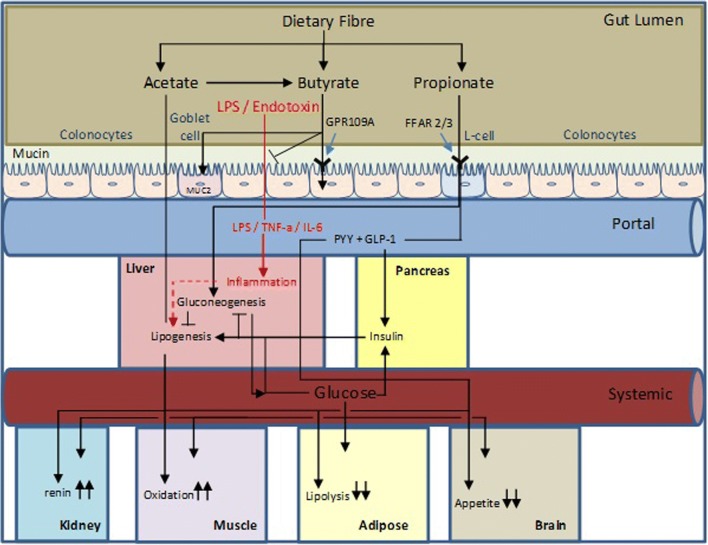
PURPOSE OF THIS REVIEW: This review assesses the latest evidence linking short-chain fatty acids (SCFA) with host metabolic health and cardiovascular disease (CVD) risk and presents the latest evidence on possible biological mechanisms. RECENT FINDINGS: SCFA have a range of effects locally in the gut and at both splanchnic and peripheral tissues which together appear to induce improved metabolic regulation and have direct and indirect effects on markers of CVD risk. SCFA produced primarily from the microbial fermentation of dietary fibre appear to be key mediators of the beneficial effects elicited by the gut microbiome. Not only does dietary fibre fermentation regulate microbial activity in the gut, SCFA also directly modulate host health through a range of tissue-specific mechanisms related to gut barrier function, glucose homeostasis, immunomodulation, appetite regulation and obesity. With the increasing burden of obesity worldwide, the role for gut microbiota-generated SCFA in protecting against the effects of energy dense diets offers an intriguing new avenue for regulating metabolic health and CVD risk.
Overview
The claims and statistics of this paper haven’t been checked yet.
Free: it reads the open-access text and checks the first 5 claims that cite a source we can check. Create a free account to check every claim.
Integrity signals
Registry
Cites
Statistics
Figures
Verification
Claims the paper makes
The claims and statistics of this paper haven’t been checked yet.
Free: it reads the open-access text and checks the first 5 claims that cite a source we can check. Create a free account to check every claim.
Claims other papers make about this one
Each is checked against this paper’s own text: does it say what the citing paper says it does?
The cited source says what the claim attributes to it.
In the citing paper
“Dietary fiber may induce an array of metabolic effects [219], including reduced systemic inflammation by regulating cytokine expression, primarily interleukin-18, improved fat oxidation and insulin sensitivity [220,221,222,223].”
From Impact of Protein Intake in Older Adults with Sarcopenia and Obesity: A Gut Microbiota Perspective (2020) · cites this paper as [220]
Self-check
Percentages, sums and reported differences re-computed from the paper’s own numbers.
The self-check needs the paper’s full text.
Citations
Cites
Diet rapidly and reproducibly alters the human gut microbiome
David, L. A., Maurice, C. F., Carmody, R. N., Gootenberg, D. B., Button, J. E., Wolfe, B. E., Ling, A. V., Devlin, A. S., Varma, Y., Fischbach, M. A., et al. (2014) · Nature · doi:10.1038/nature12820 · Cited by 10,100
Heart Disease and Stroke Statistics—2016 Update: A Report From the American Heart Association
Mozaffarian, D., Benjamin, E. J., Go, A. S., Arnett, D. K., Blaha, M. J., Cushman, M., Das, S. R., de Ferranti, S., Després, J.-P., Fullerton, H. J., et al. (2016) · Circulation · doi:10.1161/cir.0000000000000350 · Cited by 6,596
Commensal microbe-derived butyrate induces the differentiation of colonic regulatory T cells
Furusawa, Y., Obata, Y., Fukuda, S., Endo, T. A., Nakato, G., Takahashi, D., Nakanishi, Y., Uetake, C., Kato, K., Kato, T., et al. (2013) · Nature · doi:10.1038/nature12721 · Cited by 5,549
Metabolites produced by commensal bacteria promote peripheral regulatory T-cell generation
Arpaia, N., Campbell, C., Fan, X., Dikiy, S., van der Veeken, J., deRoos, P., Liu, H., Cross, J. R., Pfeffer, K., Coffer, P. J., et al. (2013) · Nature · doi:10.1038/nature12726 · Cited by 4,838
Formation of short chain fatty acids by the gut microbiota and their impact on human metabolism
Morrison, D. J., & Preston, T. (2016) · Gut Microbes · doi:10.1080/19490976.2015.1134082 · Cited by 3,781
Self-citationGlobal atlas on cardiovascular disease prevention and control.
Mendis, S., Puska, P., & Norrving, B. G. (2011) · Virtual Defense Library (Ministerio de Defensa) · Cited by 3,438
Tolhurst, G., Heffron, H., Lam, Y. S., Parker, H. E., Habib, A. M., Diakogiannaki, E., Cameron, J., Grosse, J., Reimann, F., & Gribble, F. M. (2012) · Diabetes · doi:10.2337/db11-1019 · Cited by 2,404
Singh, N., Gurav, A., Sivaprakasam, S., Brady, E., Padia, R., Shi, H., Thangaraju, M., Prasad, P. D., Manicassamy, S., Munn, D. H., et al. (2014) · Immunity · doi:10.1016/j.immuni.2013.12.007 · Cited by 2,368
Microbiota-Generated Metabolites Promote Metabolic Benefits via Gut-Brain Neural Circuits
De Vadder, F., Kovatcheva-Datchary, P., Goncalves, D., Vinera, J., Zitoun, C., Duchampt, A., Bäckhed, F., & Mithieux, G. (2014) · Cell · doi:10.1016/j.cell.2013.12.016 · Cited by 2,200
Cited by
Items 201–300 of 732
Zhu, L., Chen, J., Pi, X., Li, J., Liu, W., Ding, Q., Wang, X., & Jia, W. (2021) · BMC Microbiology · doi:10.1186/s12866-021-02103-7 · Cited by 41
Purdel, C. N., Margina, D. M., Adam-Dima, I., & Ungurianu, A. (2023) · Nutrients · doi:10.3390/nu15235005 · Cited by 41
“…in the colon as energy sources for local bacteria, who transform them into SCFAs (e.g., acetate, butyrate, and propionate), recognised for their involvement in different physiologic processes such as modulation of energy homeostasis, glucose/lipid metabolism, inflammation, and immunity [28–30].”
BackgroundBragg, M., Freeman, E. W., Lim, H. C., Songsasen, N., & Muletz‐Wolz, C. R. (2020) · Frontiers in Microbiology · doi:10.3389/fmicb.2020.590212 · Cited by 40
Arellano-García, L., Portillo, M. P., Martínez, J. A., & Milton‐Laskibar, I. (2022) · International Journal of Molecular Sciences · doi:10.3390/ijms23063167 · Cited by 41
Jia, Z., Chen, X., Chen, J., Zhang, L., Oprescu, S. N., Luo, N., Xiong, Y., Yue, F., & Kuang, S. (2022) · Clinical and Translational Medicine · doi:10.1002/ctm2.665 · Cited by 39
“9–13 To date, three ACSS members (ACSS1–3) have been identified in mammals, with ACSS1 and ACSS2 serving as the main enzymes to produce acetyl coenzyme A (acetyl-CoA) from free acetate in mitochondria and cytoplasm.”
Saadati, S., Naseri, K., Asbaghi, O., Yousefi, M., Golalipour, E., & de Courten, B. V. (2023) · Obesity Reviews · doi:10.1111/obr.13667 · Cited by 40
Subbiah, V., Ebrahimi, F., Ağar, O. T., Dunshea, F. R., Barrow, C. J., & Suleria, H. A. R. (2024) · Scientific Reports · doi:10.1038/s41598-024-54312-5 · Cited by 44
“00 ” m e a n s t h e b i o a cc e ss i b i l i t y o f t h e c o m p o u n d i s t oo l o w t o q u a n t i f y u s i n g t h e e q u a t i o n . in the colon region, modulating the release of insulin levels and reducing appetite to decrease the intake of the calorie 42 .”
BackgroundRole of gut microbiota and derived metabolites in cardiovascular diseases
Yu, J., Yang, Y., Chen, W., Hu, J., Jin, Z., Wu, C., & Li, Y. (2025) · iScience · doi:10.1016/j.isci.2025.113247 · Cited by 40
“232 Most prebiotics induce an increase in SCFAs and improve metabolic health, 233,234 for example, inulin mitigates atherosclerosis by promoting lipid metabolism, diminishing inflammation, and enhancing the integrity of the intestinal barrier.”
Fasting intervention and its clinical effects on the human host and microbiome
Forslund, S. K. (2022) · Journal of Internal Medicine · doi:10.1111/joim.13574 · Cited by 39
Koutromanos, I., Legaki, E., Gazouli, M., Vasilopoulos, E., Kouzoupis, A. V., & Tzavellas, E. (2024) · World Journal of Methodology · doi:10.5662/wjm.v14.i1.88519 · Cited by 40
Mechanism of Obesity-Related Lipotoxicity and Clinical Perspective
Engin, A. B. (2024) · Advances in experimental medicine and biology · doi:10.1007/978-3-031-63657-8_5 · Cited by 43
Prebiotics and Gut Health: Mechanisms, Clinical Evidence, and Future Directions
Monteiro, C. R. A. V., Bogéa, E. G., Campos, C. D. L., Filho, J. L. P., Almeida, V. S. S., Vale, A. Á. M., de Azevedo-Santos, A. P. S., & Monteiro‐Neto, V. (2026) · Nutrients · doi:10.3390/nu18030372 · Cited by 41
“Moreover, the impact of SCFAs extends beyond the gut, as they have been shown to interact with various organs and systems in the body [48,51,68,69].”
Liu, T., Zhao, M., Zhang, Y., Wang, Z., Yuan, B., Zhao, C., & Wang, M. (2023) · International Journal of Biological Macromolecules · doi:10.1016/j.ijbiomac.2023.124854 · Cited by 39
The Impact of Migration on the Gut Metagenome of South Asian Canadians
Copeland, J. K., Chao, G. Y. C., Vanderhout, S. M., Acton, E., Wang, P. W., Benchimol, E. I., El‐Sohemy, A., Croitoru, K., Gommerman, J. L., Guttman, D. S., et al. (2021) · Gut Microbes · doi:10.1080/19490976.2021.1902705 · Cited by 39
“Western diets may alter the P/B ratio, affecting the amount and type of SCFA produced, potentially contributing to a proinflammatory state in the gut.(43) We sought to investigate the effect of migration on the gut metagenome of Canadians of SA ancestry.”
BackgroundAcharya, K. D., Graham, M. E., Raman, H. N., Parakoyi, A. E. R., Corcoran, A., Belete, M. K., Ramaswamy, B., Koul, S., Sachar, I., Derendorf, K., et al. (2023) · Scientific Reports · doi:10.1038/s41598-023-31783-6 · Cited by 39
Hosken, B. D. O., Pereira, G. V. D. M., Lima, T. T. M., Ribeiro, J. B., de Magalhães, W. C. P., & Martin, J. G. P. (2023) · Fermentation · doi:10.3390/fermentation9050409 · Cited by 38
“SCFA contribute to health benefits, such as the regulation of energy metabolism, protection against colorectal cancer and inflammatory bowel disorders and obesity prevention [119].”
BackgroundWang, Y., Zhang, X., Tang, G., Deng, P., Qin, Y., Han, J., Wang, S., Sun, X., Li, D., & Chen, Z. (2023) · Frontiers in Microbiology · doi:10.3389/fmicb.2023.1268935 · Cited by 40
Bahitham, W., Banoun, Y., Aljahdali, M., Almuaiqly, G., Bahshwan, S. M., Aljahdali, L., Sanai, F. M., Rosado, A. S., & Sergi, C. M. (2025) · Frontiers in Nutrition · doi:10.3389/fnut.2025.1637071 · Cited by 41
Excessive Intake of Longan Arillus Alters gut Homeostasis and Aggravates Colitis in Mice
Huang, H., Li, M., Wang, Y., Wu, X., Shen, J., Xiao, Z., Zhao, Y., Du, F., Chen, Y., Wu, Z., et al. (2021) · Frontiers in Pharmacology · doi:10.3389/fphar.2021.640417 · Cited by 36
“The SCFAs are the end products of bacterial fermentation in gut and have been recognized as mediators of host health (Chambers et al., 2018).”
BackgroundA large survey of the fatty acid profile and gross composition of Brazilian artisanal cheeses
Margalho, L. P., Kamimura, B. A., Pimentel, T. C., Balthazar, C. F., Araújo, J. V. A., Silva, R., Conte‐Júnior, C. A., Raices, R. S. L., da Cruz, A. G., & Sant’Ana, A. S. (2021) · Journal of Food Composition and Analysis · doi:10.1016/j.jfca.2021.103955 · Cited by 36
Comparative analysis of oral-gut microbiota between captive and wild long-tailed macaque in Thailand
Sawaswong, V., Praianantathavorn, K., Chanchaem, P., Khamwut, A., Kemthong, T., Hamada, Y., Malaivijitnond, S., & Payungporn, S. (2021) · Scientific Reports · doi:10.1038/s41598-021-93779-4 · Cited by 36
Modulation of gut microbiota by foods and herbs to prevent cardiovascular diseases
Panyod, S., Wu, W.-K., Chen, C., Wu, M., Ho, C., & Sheen, L. (2021) · Journal of Traditional and Complementary Medicine · doi:10.1016/j.jtcme.2021.09.006 · Cited by 36
Short-chain fatty acids–microbiota crosstalk in the coronavirus disease (COVID-19)
Włodarczyk, J., Czerwiński, B., & Fichna, J. (2022) · Pharmacological Reports · doi:10.1007/s43440-022-00415-7 · Cited by 36
“Circulating SCFAs act on a myriad of cells all around the body, modulating adipose tissue, skeletal muscle, pancreas and liver tissue function [32].”
BackgroundZaborin, A., Bernabé, B. P., Keskey, R. C., Sangwan, N., Hyoju, S. K., Gottel, N., Gilbert, J. A., Zaborina, O. Y., & Alverdy, J. C. (2020) · mSystems · doi:10.1128/msystems.00377-20 · Cited by 35
“The murine cecum is a well-recognized intestinal organ that harbors a specialized microbiome involved in the fermentation of dietary fiber to produce short-chain fatty acids (3).”
The potential role of lactulose pharmacotherapy in the treatment and prevention of diabetes
Chu, N. H. S., Ling, J., He, J., Leung, K. H. T., & Poon, E. (2022) · Frontiers in Endocrinology · doi:10.3389/fendo.2022.956203 · Cited by 36
Food Peptides, Gut Microbiota Modulation, and Antihypertensive Effects
Tsafack, P. B., Li, C., & Tsopmo, A. (2022) · Molecules · doi:10.3390/molecules27248806 · Cited by 36
Mietus‐Snyder, M., Perak, A. M., Cheng, S. C., Hayman, L. L., Haynes, N., Meikle, P. J., Shah, S. H., & Suglia, S. F. (2023) · Circulation · doi:10.1161/cir.0000000000001185 · Cited by 35
Clark, J. S., Simpson, B. S., & Murphy, K. J. (2021) · British Journal Of Nutrition · doi:10.1017/s0007114521003251 · Cited by 38
Modulation of the food microbiome by apple fruit processing
Wicaksono, W. A., Buko, A., Kusstatscher, P., Sinkkonen, A., Laitinen, O. H., Virtanen, S. M., Hyöty, H., Cernava, T., & Berg, G. (2022) · Food Microbiology · doi:10.1016/j.fm.2022.104103 · Cited by 36
Biofilms associated with poultry processing equipment.
Lindsay, D., Geornaras, I., & von Holy, A. (1996) · PubMed · Cited by 43
Phan, J., Nair, D., Jain, S., Montagne, T., Flores, D. V., Nguyen, A., Dietsche, S., Gombar, S., & Cotter, P. (2021) · mSystems · doi:10.1128/msystems.01215-21 · Cited by 33
Córdova, R., Kim, J., Thompson, A. S., Noh, H., Shah, S., Dahm, C. C., Jensen, C. F., Mellemkjær, L., Tjønneland, A. M., Katzke, V. A., et al. (2025) · The Lancet Healthy Longevity · doi:10.1016/j.lanhl.2025.100742 · Cited by 35
Genomic Determinants of Hypertension With a Focus on Metabolomics and the Gut Microbiome
Louca, P., Menni, C., & Padmanabhan, S. (2020) · American Journal of Hypertension · doi:10.1093/ajh/hpaa022 · Cited by 37
Germ-Free Swiss Webster Mice on a High-Fat Diet Develop Obesity, Hyperglycemia, and Dyslipidemia
Logan, I. E., Bobe, G., Miranda, C. L., Vasquez‐Perez, S., Choi, J., Lowry, M. B., Sharpton, T. J., Morgun, A., Maier, C. S., Stevens, J. F., et al. (2020) · Microorganisms · doi:10.3390/microorganisms8040520 · Cited by 33
“Acetate production by the IMB mostly escapes first pass metabolism in the liver, but it can aid in lipogenesis by providing acetyl units and could explain why male CV Tac:SW mice on the LFD gained weight, whereas GF mice on the same diet did not [89].”
BackgroundAguirre‐Calvo, T. R., Molino, S., Perullini, M., Rufián‐Henares, J. Á., & Santagapita, P. R. (2020) · Food Chemistry · doi:10.1016/j.foodchem.2020.127483 · Cited by 36
Modulating the Gut Microbiota of Humans by Dietary Intervention with Plant Glycans
Tannock, G. W. (2020) · Applied and Environmental Microbiology · doi:10.1128/aem.02757-20 · Cited by 33
Oncina-Cánovas, A., Vioqué, J., González‐Palacios, S., Martínez‐González, M. Á., Salas‐Salvadó, J., Corella, D., Zomeño, M. D., Martínez, J. A., Alonso‐Gómez, Á. M., Wärnberǵ, J., et al. (2021) · European Journal of Nutrition · doi:10.1007/s00394-021-02647-4 · Cited by 34
Bai, Z., Wu, Y., Gao, D., Dong, Y., Pan, Y., & Gu, S. (2024) · International Journal of Molecular Sciences · doi:10.3390/ijms252010871 · Cited by 35
“According to the existing evidence, identified microbial metabolic signatures have been associated with obesity [6], such as short-chain fatty acids (SCFAs) [7], trimethylamine N-oxide (TMAO) [8], bile acids [9], linoleic acid [10], and branched-chain fatty acids (BCFAs).”
Morán‐Ramos, S., Kauffer, L. R. M., López-Contreras, B. E., Villamil‐Ramírez, H., Ocampo‐Medina, E., León‐Mimila, P., Del-Rio-Navarro, B. E., Granados‐Portillo, O., Ibarra‐González, I., Vela-Amieva, M. B., et al. (2021) · Molecular Medicine · doi:10.1186/s10020-021-00371-7 · Cited by 32
Redondo‐Castillejo, R., Garcimartín, A., Hernández-Martín, M., López‐Oliva, M. E., Bocanegra, A., Macho‐González, A., Bastida, S., Benedí, J., & Sánchez-Muniz, F. J. (2023) · International Journal of Molecular Sciences · doi:10.3390/ijms24065369 · Cited by 33
Grosu, I. A., Pistol, G. C., Marin, D. E., Cișmileanu, A. E., Palade, L. M., & Țăranu, I. (2020) · Frontiers in Veterinary Science · doi:10.3389/fvets.2020.00031 · Cited by 32
Kanmani, S., Son, T., Kim, K., & Koo, B. (2020) · Microbial Pathogenesis · doi:10.1016/j.micpath.2020.104583 · Cited by 33
Ahmad, F., Saha, P., Singh, V., Wahid, M., Mandal, R. K., Mishra, B. N., Fagoonee, S., & Haque, S. (2022) · Food Chemistry · doi:10.1016/j.foodchem.2022.135320 · Cited by 33
Exploring the Impact of the Gut Microbiome on Obesity and Weight Loss: A Review Article
Noor, J., Chaudhry, A., Batool, S. A., Noor, R., & Fatima, G. (2023) · Cureus · doi:10.7759/cureus.40948 · Cited by 44
“According to estimates, SCFA may supply up to 10% of daily energy requirements and up to 70% of the energy required for colonic epithelial cells to breathe [10].”
BackgroundThe microbiota–gut–brain axis: A promising avenue to foster healthy developmental outcomes
Brett, B. E., & de Weerth, C. (2019) · Developmental Psychobiology · doi:10.1002/dev.21824 · Cited by 32
Wu, X., Zhang, N., Kan, J., Tang, S., Sun, R., Wang, Z., Chen, M., Liu, J., & Jin, C. (2021) · Journal of Food Biochemistry · doi:10.1111/jfbc.13731 · Cited by 35
Nicese, M. N., Bijkerk, R., van Zonneveld, A. J., van den Berg, B. M., & Rotmans, J. I. (2023) · International Journal of Molecular Sciences · doi:10.3390/ijms241713090 · Cited by 31
Kwok, D., Scott, C. E., Strom, N., Au‐Yeung, F., Lam, C., Chakrabarti, A., Hutton, T., & Wolever, T. M. S. (2024) · Journal of Nutrition · doi:10.1016/j.tjnut.2024.01.032 · Cited by 32
Colosimo, R., Harris, H. C., Ahn‐Jarvis, J. H., Troncoso‐Rey, P., Finnigan, T. J. A., Wilde, P. J., & Warren, F. J. (2024) · Communications Biology · doi:10.1038/s42003-024-05893-4 · Cited by 31
Rahman, M. N., Diantini, A., Fattah, M., Barliana, M. I., & Wijaya, A. (2021) · Analytical and Bioanalytical Chemistry · doi:10.1007/s00216-021-03639-3 · Cited by 30
“SCFAs also directly modulate host health through a range of tissue-specific mechanisms related to gut barrier function, glucose homeostasis, immunomodulation, and appetite and obesity regulation [5].”
BackgroundEffect of Environmental Exposures on the Gut Microbiota from Early Infancy to Two Years of Age
Sugino, K. Y., Ma, T., Paneth, N., & Comstock, S. S. (2021) · Microorganisms · doi:10.3390/microorganisms9102140 · Cited by 31
“However, it is hypothesized that short-chain fatty acid production (mainly acetate, propionate, and butyrate) by members of the Lachnospiraceae family contribute to obesity risk by upregulating lipogenesis [31] and altering immune system responses to the normal gut flora and their metabolites [32,33].”
BackgroundArnone, A. A., Wilson, A. S., Soto‐Pantoja, D. R., & Cook, K. L. (2024) · Cancer Prevention Research · doi:10.1158/1940-6207.capr-24-0055 · Cited by 29
“The gut microbiota regulates energy intake through the production of short-chain fatty acids (SCFA) from nondigestible polysaccharides (10).”
Emamat, H., Ghalandari, H., Tangestani, H., Abdollahi, A., & Hekmatdoost, A. (2020) · EXCLI journal · doi:10.17179/excli2020-1226 · Cited by 39
“SCFAs including acid acetic acid, propionic acid, and butyric acid are fatty acids with seven or fewer carbon atoms, mainly produced from indigestible carbohydrate fermentation (Chambers et al., 2018).”
BackgroundJacobson, D. K., Honap, T. P., Monroe, C., Lund, J. R., Houk, B. A., Novotny, A. C., Robin, C., Marini, E., & Lewis, C. M. (2020) · Philosophical Transactions of the Royal Society B Biological Sciences · doi:10.1098/rstb.2019.0586 · Cited by 30
Lung microbiota: implications and interactions in chronic pulmonary diseases
Zhou, J., Hou, W., Zhong, H., & Liu, D. (2024) · Frontiers in Cellular and Infection Microbiology · doi:10.3389/fcimb.2024.1401448 · Cited by 30
Fu, L., Wang, M., Li, D., Ma, S., Zhang, F.-L., & Zheng, L. (2025) · Frontiers in Cell and Developmental Biology · doi:10.3389/fcell.2025.1624415 · Cited by 34
“These metabolites influence host health by participating in the maintenance of glucose homeostasis, immune responses, and intestinal barrier function (Chambers et al., 2018).”
Stubbs, B. J., Blade, T., Mills, S., Thomas, J. A., Yufei, X., Nelson, F. R., Higley, N. A., Nikiforov, A. I., Rhiner, M. O., Verdin, E. M., et al. (2020) · Food and Chemical Toxicology · doi:10.1016/j.fct.2020.111859 · Cited by 29
Gut microbiome supplementation as therapy for metabolic syndrome
Antony, M. A., Chowdhury, A., Edem, D., Raj, R., Nain, P., Joglekar, M., Verma, V. K., & Kant, R. (2023) · World Journal of Diabetes · doi:10.4239/wjd.v14.i10.1502 · Cited by 31
Slavin, M., Li, H., Frankenfeld, C. L., & Cheskin, L. J. (2019) · Headache The Journal of Head and Face Pain · doi:10.1111/head.13658 · Cited by 29
“The impact of SCFAs on broader health and metabolism is increasingly appreciated, including reduced risk for cardiovascular disease and regulation of appetite.(103,104) Notably, a fraction of the microbially produced SCFA are absorbed into the bloodstream and are capable of”
BackgroundZhu, X., Zhao, L., Liang, L., Zhu, Y., Xu, J., & Liu, L. (2024) · Microbiological Research · doi:10.1016/j.micres.2024.127654 · Cited by 29
Dikmen, H., Özcan, F. Ş., Özcan, N. A., Bozkurt, F., & Sağdıç, O. (2024) · Journal of Food Science · doi:10.1111/1750-3841.17261 · Cited by 27
Diotallevi, C., Gaudioso, G., Fava, F., Angeli, A., Lotti, C., Vrhovšek, U., Rinott, E., Shai, I., Gobbetti, M., & Tuohy, K. M. (2021) · Journal of Functional Foods · doi:10.1016/j.jff.2021.104597 · Cited by 28
Role of gut microbe-derived metabolites in cardiometabolic diseases: Systems based approach
Cao, Y., Aquino-Martínez, R., Hutchison, E. R., Allayee, H., Lusis, A. J., & Rey, F. E. (2022) · Molecular Metabolism · doi:10.1016/j.molmet.2022.101557 · Cited by 29
“SCFAs are mainly excreted through feces, lungs and, to a less extent, via urine [151,157,158].”
BackgroundManipulation of the diet–microbiota–brain axis in Alzheimer’s disease
Lee, D. D., Lee, V. M. ‐., & Hur, S. K. (2022) · Frontiers in Neuroscience · doi:10.3389/fnins.2022.1042865 · Cited by 29
“SCFAs are involved in plant-based food consumption and are associated with mucus production, the promotion of intestinal barrier integrity, and limits the translocation of bacterial proinflammatory molecules (Fukuda et al., 2011; Chambers et al., 2018; Silva et al., 2020).”
BackgroundMadsen, M. T. B., Landberg, R., Nielsen, D. S., Zhang, Y., Anneberg, O. M., Lauritzen, L., & Damsgaard, C. T. (2023) · American Journal of Clinical Nutrition · doi:10.1016/j.ajcnut.2023.10.025 · Cited by 28
Host genetics and gut microbiota jointly regulate blood biochemical indicators in chickens
Jiang, X., Zhang, B., Lan, F., Zhong, C., Jin, J., Li, X., Zhou, Q., Li, J., Yang, N., Wen, C., et al. (2023) · Applied Microbiology and Biotechnology · doi:10.1007/s00253-023-12814-8 · Cited by 26
“…influence inflammation and oxidative stress, which are related to the development of various blood biochemical-related diseases, such as metabolic syndrome, type 2 diabetes, cardiovascular disease, and liver diseases (Lin et al. 2012; den Besten et al. 2013; Koh et al. 2016; Chambers et al. 2018).”
BackgroundResearch Progress on Hypoglycemic Mechanisms of Resistant Starch: A Review
Liu, J., Lu, W., Liang, Y., Wang, L., Jin, N., Zhao, H., Fan, B., & Wang, F. (2022) · Molecules · doi:10.3390/molecules27207111 · Cited by 28
“Different from the mechanisms that affect glucose homeostasis directly, SCFAs impact the host health at the cellular, tissue and organ levels [18].”
BackgroundElechi, J. O. G., Sirianni, R., Conforti, F. L., Cione, E., & PELLEGRINO, M. A. (2023) · Foods · doi:10.3390/foods12122286 · Cited by 34
“Preservation of the gut barrier function is crucial for preventing uncontrolled permeability and bacterial translocation [35,40,41].”
BackgroundWoolf, E. K., Lee, S. Y., Ghanem, N., Vazquez, A. R., & Johnson, S. A. (2023) · Nutrition Research · doi:10.1016/j.nutres.2023.09.007 · Cited by 27
Harnessing AI and Gut Microbiome Research for Precision Health
Saxena, R., Sharma, V., Saxena, A. R., & Patel, A. (2024) · Journal of Artificial Intelligence General science (JAIGS) · doi:10.60087/jaigs.v3i1.68 · Cited by 38
Schizophrenia and obesity: May the gut microbiota serve as a link for the pathogenesis?
Wu, H., Liu, Y., Wang, J., Chen, S., Xie, L., & Wu, X. (2023) · iMeta · doi:10.1002/imt2.99 · Cited by 26
Microbiome interactions with different risk factors in development of myocardial infarction
Bijla, M., Saini, S. K., Pathak, A. K., Bharadwaj, K. P., Sukhavasi, K., Patil, A., Saini, D., Yadav, R. K., Singh, S., Leeuwenburgh, C., et al. (2024) · Experimental Gerontology · doi:10.1016/j.exger.2024.112409 · Cited by 25
“In general, the SCFAs concentrations vary between 50 and 100 mM in colon (Chambers et al., 2018; Martin-Gallausiaux et al., 2021).”
BackgroundNonalcoholic Fatty Liver Disease
Ding, L., Oligschlaeger, Y., Shiri‐Sverdlov, R., & Houben, T. (2020) · Handbook of experimental pharmacology · doi:10.1007/164_2020_352 · Cited by 30
Mammalian metabolism of erythritol: a predictive biomarker of metabolic dysfunction
Ortiz, S. R., & Field, M. S. (2020) · Current Opinion in Clinical Nutrition & Metabolic Care · doi:10.1097/mco.0000000000000665 · Cited by 25
“SCFAs have abundant downstream signaling targets that effect glucose homeostasis [21].”
BackgroundReyes, R. E., Omran, A. J. A., Davies, D. L., & Asatryan, L. (2020) · Brain Research · doi:10.1016/j.brainres.2020.147067 · Cited by 25
“SCFAs can affect colonocytes, energy storage, metabolism, gut-barrier function, and the immune system (Chambers et al., 2018).”
BackgroundGopal, R. K., Ganesh, P. S., & Pathoor, N. N. (2024) · Molecular Nutrition & Food Research · doi:10.1002/mnfr.202400677 · Cited by 27
Role of microbial metabolites in cardiovascular and human health
Singh, A. S. C. (2022) · Elsevier eBooks · doi:10.1016/b978-0-12-822238-6.00009-1 · Cited by 34
Chou, P., Yang, I.-H., Kuo, C.-M., Wu, M., Lin, T.-C., Fong, Y.-O., Juan, C.-H., & Lai, C. (2023) · International Journal of Molecular Sciences · doi:10.3390/ijms241310796 · Cited by 24
“SCFAs reduce cardiovascular disease risk through glucose homeostasis, immunomodulation, appetite regulation, and obesity [15].”
BackgroundNagy-Grócz, G., Spekker, E., & Vécsei, L. (2024) · International Journal of Molecular Sciences · doi:10.3390/ijms25031698 · Cited by 24
“SCFAs have been shown to positively impact mitochondrial function and overall cellular health [84].”
BackgroundA review on gut microbiota and miRNA crosstalk: implications for Alzheimer’s disease
Ayyanar, M. P., & Vijayan, M. (2024) · GeroScience · doi:10.1007/s11357-024-01432-5 · Cited by 25
“Dietary fiber breakdown by B . fragilis yields SCFAs, including acetate, butyrate, and propionate [228, 440–442].”
Jacobson, D. K., Honap, T. P., Ozga, A. T., Méda, N., Kagone, T., Carabin, H., Spicer, P., Tito, R. Y., Obregón-Tito, A. J., Marin-Reyes, L., et al. (2021) · Scientific Reports · doi:10.1038/s41598-021-81257-w · Cited by 25
Impact of Dietary Lipids on the Reverse Cholesterol Transport: What We Learned from Animal Studies
Papotti, B., Escolá‐Gil, J. C., Julve, J., Potì, F., & Zanotti, I. (2021) · Nutrients · doi:10.3390/nu13082643 · Cited by 27
Awari, A., Kaushik, D., Kumar, A., Öz, E., Çadırcı, K., Brennan, C. S., Proestos, C., Kumar, M., & Öz, F. (2025) · MedComm · doi:10.1002/mco2.70169 · Cited by 27
Implications of gut microbiome on coronary artery disease
Xu, J., & Yang, Y. (2020) · Cardiovascular Diagnosis and Therapy · doi:10.21037/cdt-20-428 · Cited by 25
“Besides, butyrate and other SCFA produced by gut microbiota can directly feed colonocytes which contribute to preventing inflammation and gut leakage (60).”
BackgroundTransorgan short-chain fatty acid fluxes in the fasted and postprandial state in the pig
Kirschner, S. K., Have, G. A. M. T., ENGELEN, M. P. K. J., & Deutz, N. E. P. (2021) · American Journal of Physiology-Endocrinology and Metabolism · doi:10.1152/ajpendo.00121.2021 · Cited by 23
Shih, M., Tain, Y., Cheng, C. C., Hsu, C., Chen, Y., Huang, H., Chang, C., & Hou, C. (2021) · International Journal of Molecular Sciences · doi:10.3390/ijms222413539 · Cited by 23
Immunomodulation by Gut Microbiome on Gastrointestinal Cancers: Focusing on Colorectal Cancer
AL-Ishaq, R. K., Koklesová, L., Kubatka, P., & Büsselberg, D. (2022) · Cancers · doi:10.3390/cancers14092140 · Cited by 24
Kang, J. Y., Lee, B., Kim, C. H., Choi, J. H., & Kim, M. (2022) · LWT · doi:10.1016/j.lwt.2022.113830 · Cited by 28
Yuan, M., Zhang, Z., Liu, T., Hua, F., Liu, Y., & Chen, K. (2024) · Foods · doi:10.3390/foods13132157 · Cited by 23
Gallego-Lobillo, P., Ferreira-Lazarte, Á., Hernández‐Hernández, O., Montilla, A., & Villamiel, M. (2020) · Food & Function · doi:10.1039/d0fo00236d · Cited by 23
Michael, O. S., Dibia, C., Soetan, O. A., Adeyanju, O. A., Oyewole, A. L., Badmus, O. O., Adetunji, C. O., & Soladoye, A. O. (2020) · Life Sciences · doi:10.1016/j.lfs.2020.118127 · Cited by 23
Gerardi, G., Cavia-Sáiz, M., & Múñiz, P. (2021) · Critical Reviews in Food Science and Nutrition · doi:10.1080/10408398.2021.1914542 · Cited by 27
“There are clear associations between dietary fiber intake and colonic health, gut motility and risk for cardiovascular diseases (Chambers et al. 2018; Das et al. 2020).”
BackgroundLiu, Y., Xue, K., Iversen, K., Qu, Z., Dong, C., Jin, T., Hallmans, G., Åman, P., Johansson, A. S., He, G., et al. (2021) · Food & Function · doi:10.1039/d1fo01423d · Cited by 23
Johnstone, N., Dart, S., Knytl, P., Nauta, A., Hart, K. H., & Kadosh, K. C. (2021) · Nutrients · doi:10.3390/nu13124384 · Cited by 23
Li, Y., Xu, Y., Roy, C. I. L., Hu, J., Steves, C. J., Bell, J. T., Spector, T. D., Gibson, R., Menni, C., & Rodriguez‐Mateos, A. (2023) · Nutrients · doi:10.3390/nu15081900 · Cited by 23
“The ability of gut microbes to produce bioactive phenolic metabolites and short-chain fatty acids, including propionate and butyrate, might have a favourable impact on the gut ecosystem, glucose homeostasis, and vascular function [83,84].”
BackgroundDou, P., Li, X., Zou, X., Wang, K., Yao, L., Sun, Z., Hong, H., Luo, Y., & Tan, Y. (2023) · Food Science and Human Wellness · doi:10.26599/fshw.2022.9250164 · Cited by 23
Bacterial biomechanics—From individual behaviors to biofilm and the gut flora
Ishikawa, T., Omori, T., & Kikuchi, K. (2020) · APL Bioengineering · doi:10.1063/5.0026953 · Cited by 28
“SCFAs are fermented and produced from dietary fiber by the gut microbiota, and they modulate host health by influencing gut barrier function, glucose homeostasis, immunity, appetite, and obesity (Chambers et al., 2018).”
BackgroundInfluentialZhen, H., Yan, Q., Liu, Y., Li, Y., Yang, S., & Jiang, Z. (2022) · Food Science and Human Wellness · doi:10.1016/j.fshw.2022.03.027 · Cited by 22
Microbial contribution to metabolic niche formation varies across the respiratory tract
Wong, K. K., Wu, B. G., Chung, M. C., Li, Q., Darawshy, F., Tsay, J.-C. J., Holub, M., Barnett, C. R., Kwok, B., Kugler, M. C., et al. (2025) · Cell Host & Microbe · doi:10.1016/j.chom.2025.06.002 · Cited by 21
Gut Microbiome and Cardiovascular Health: Mechanisms, Therapeutic Potential and Future Directions
Edpuganti, S., Subhash, S., Subrahmaniyan, S. L., Latheef, S., & Albarari, S. S. A. (2025) · Heart International · doi:10.17925/hi.2025.19.2.3 · Cited by 23
Metadata
- Authors
- Chambers, E. S., Preston, T., Frost, G., & Morrison, D. J.
- Affiliations
- Hammersmith Hospital (GB)
- Scottish Universities Environmental Research Centre (GB)
- Corresponding author
- Morrison, Douglas J.
- Venue
- Current Nutrition Reports
- Published
- 2018-09-28
- Volume
- 7
- Issue
- 4
- Pages
- 198-206
- ISSN
- 2161-3311 (ISSN-L)
- PMC
- PMC6244749
- OpenAlex
- W2894133314
- Cited by
- 691
- References
- 93
- Citations by year
- 2026: 72 · 2025: 90 · 2024: 86 · 2023: 88 · 2022: 93 · 2021: 129 · 2020: 95 · 2019: 34 · 2018: 3
- FWCI
- 6.40
- Type
- journal article
- Language
- en
- Open access
- hybrid
- doi.org
- Licence
- cc-by
- creativecommons.org/licenses/by/4.0 (tdm)
- Locations
- Current Nutrition Reports (publishedVersion, cc-by)
- Europe PMC (PubMed Central) (publishedVersion, other-oa)
- PubMed Central (publishedVersion, cc-by)
- PubMed (publishedVersion)
- ENLIGHTEN (Jurnal Bimbingan dan Konseling Islam) (acceptedVersion, cc-by-sa)
- Funders
- University of Glasgow
- Topics
- Life Sciences › Biochemistry, Genetics and Molecular Biology › Molecular Biology › Gut microbiota and health
- Health Sciences › Nursing › Nutrition and Dietetics › Microbial Metabolites in Food Biotechnology
- Health Sciences › Medicine › Public Health, Environmental and Occupational Health › Nutritional Studies and Diet
- Keywords
- short-chain fatty acids, gut microbiota, dietary fiber fermentation, cardiovascular risk, metabolic health, intestinal barrier, glucose homeostasis, immunomodulation, appetite regulation, obesity, energy-dense diet
- MeSH terms
- Gastrointestinal Microbiome, Animals, Bacteria, Cardiovascular Diseases, Dietary Fiber, Energy Metabolism, Fatty Acids, Fermentation, Health Status, Humans, Intestines, Metabolic Diseases, Prognosis, Risk Factors, Risk Assessment, Host-Pathogen Interactions
About these checks
Registry, retraction, Cites and statistics results are computed, not judged, with one exception: a printed reference that no index lists is read once by a model before it counts as a citation error. Claims are extracted by a model and kept only when their quote appears verbatim in the text; each cited source is then checked, with a model’s help, for whether it says what the claim relies on. Those verdicts can be wrong — read the claim’s quote and the cited source before relying on one.
Statistics and arithmetic are recomputed, not judged.
Confidence bands are shown only for fields calibrated on our annotated test set. None is calibrated yet, so no band is shown.
What counts as a claim ›How we measure confidence ›How we check this ›
Are you an author, or do you see a problem with this page? Request a review
Data sources
Bibliographic data: Semantic Scholar, OpenAlex, Crossref.
Contains information from the Semantic Scholar Academic Graph Datasets, made available under the ODC Attribution License (ODC-BY 1.0).
Semantic Scholar’s data is described in: Kinney, R., et al. (2023). The Semantic Scholar Open Data Platform. arXiv:2301.10140.
