

Role of Gut Microbiota-Generated Short-Chain Fatty Acids in Metabolic and Cardiovascular Health
Open accessThe DOI matches its Crossref record; 93 of the 93 references it cites were found in a registry or an index.
Abstract
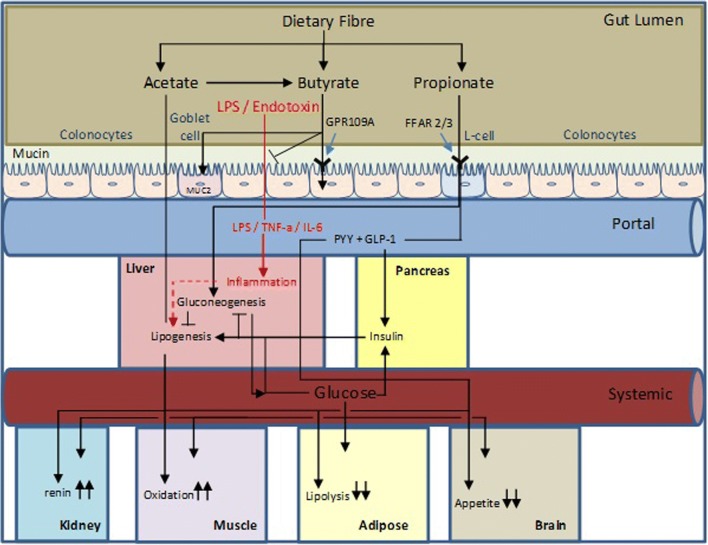
PURPOSE OF THIS REVIEW: This review assesses the latest evidence linking short-chain fatty acids (SCFA) with host metabolic health and cardiovascular disease (CVD) risk and presents the latest evidence on possible biological mechanisms. RECENT FINDINGS: SCFA have a range of effects locally in the gut and at both splanchnic and peripheral tissues which together appear to induce improved metabolic regulation and have direct and indirect effects on markers of CVD risk. SCFA produced primarily from the microbial fermentation of dietary fibre appear to be key mediators of the beneficial effects elicited by the gut microbiome. Not only does dietary fibre fermentation regulate microbial activity in the gut, SCFA also directly modulate host health through a range of tissue-specific mechanisms related to gut barrier function, glucose homeostasis, immunomodulation, appetite regulation and obesity. With the increasing burden of obesity worldwide, the role for gut microbiota-generated SCFA in protecting against the effects of energy dense diets offers an intriguing new avenue for regulating metabolic health and CVD risk.
Overview
The claims and statistics of this paper haven’t been checked yet.
Free: it reads the open-access text and checks the first 5 claims that cite a source we can check. Create a free account to check every claim.
Integrity signals
Registry
Cites
Statistics
Figures
Verification
Claims the paper makes
The claims and statistics of this paper haven’t been checked yet.
Free: it reads the open-access text and checks the first 5 claims that cite a source we can check. Create a free account to check every claim.
Claims other papers make about this one
Each is checked against this paper’s own text: does it say what the citing paper says it does?
The cited source says what the claim attributes to it.
In the citing paper
“Dietary fiber may induce an array of metabolic effects [219], including reduced systemic inflammation by regulating cytokine expression, primarily interleukin-18, improved fat oxidation and insulin sensitivity [220,221,222,223].”
From Impact of Protein Intake in Older Adults with Sarcopenia and Obesity: A Gut Microbiota Perspective (2020) · cites this paper as [220]
Self-check
Percentages, sums and reported differences re-computed from the paper’s own numbers.
The self-check needs the paper’s full text.
Citations
Cites
Diet rapidly and reproducibly alters the human gut microbiome
David, L. A., Maurice, C. F., Carmody, R. N., Gootenberg, D. B., Button, J. E., Wolfe, B. E., Ling, A. V., Devlin, A. S., Varma, Y., Fischbach, M. A., et al. (2014) · Nature · doi:10.1038/nature12820 · Cited by 10,100
Heart Disease and Stroke Statistics—2016 Update: A Report From the American Heart Association
Mozaffarian, D., Benjamin, E. J., Go, A. S., Arnett, D. K., Blaha, M. J., Cushman, M., Das, S. R., de Ferranti, S., Després, J.-P., Fullerton, H. J., et al. (2016) · Circulation · doi:10.1161/cir.0000000000000350 · Cited by 6,596
Commensal microbe-derived butyrate induces the differentiation of colonic regulatory T cells
Furusawa, Y., Obata, Y., Fukuda, S., Endo, T. A., Nakato, G., Takahashi, D., Nakanishi, Y., Uetake, C., Kato, K., Kato, T., et al. (2013) · Nature · doi:10.1038/nature12721 · Cited by 5,549
Metabolites produced by commensal bacteria promote peripheral regulatory T-cell generation
Arpaia, N., Campbell, C., Fan, X., Dikiy, S., van der Veeken, J., deRoos, P., Liu, H., Cross, J. R., Pfeffer, K., Coffer, P. J., et al. (2013) · Nature · doi:10.1038/nature12726 · Cited by 4,838
Formation of short chain fatty acids by the gut microbiota and their impact on human metabolism
Morrison, D. J., & Preston, T. (2016) · Gut Microbes · doi:10.1080/19490976.2015.1134082 · Cited by 3,781
Self-citationGlobal atlas on cardiovascular disease prevention and control.
Mendis, S., Puska, P., & Norrving, B. G. (2011) · Virtual Defense Library (Ministerio de Defensa) · Cited by 3,438
Tolhurst, G., Heffron, H., Lam, Y. S., Parker, H. E., Habib, A. M., Diakogiannaki, E., Cameron, J., Grosse, J., Reimann, F., & Gribble, F. M. (2012) · Diabetes · doi:10.2337/db11-1019 · Cited by 2,404
Singh, N., Gurav, A., Sivaprakasam, S., Brady, E., Padia, R., Shi, H., Thangaraju, M., Prasad, P. D., Manicassamy, S., Munn, D. H., et al. (2014) · Immunity · doi:10.1016/j.immuni.2013.12.007 · Cited by 2,368
Microbiota-Generated Metabolites Promote Metabolic Benefits via Gut-Brain Neural Circuits
De Vadder, F., Kovatcheva-Datchary, P., Goncalves, D., Vinera, J., Zitoun, C., Duchampt, A., Bäckhed, F., & Mithieux, G. (2014) · Cell · doi:10.1016/j.cell.2013.12.016 · Cited by 2,200
Cited by
Items 401–500 of 732
Moon, S., Tsay, J. J., Lampert, H. C., Dom, Z. I. M., Kostic, A. D., Smiles, A. M., & Niewczas, M. A. (2021) · Scientific Reports · doi:10.1038/s41598-021-87585-1 · Cited by 12
Wang, Y., Wang, H., Yu, X., Wu, Q., Lv, X., Zhou, X. J., Chen, Y., & Geng, S. (2024) · Journal of Translational Medicine · doi:10.1186/s12967-024-05615-8 · Cited by 11
“Recent studies have highlighted the importance of heme metabolism in adipose tissue function and insulin sensitivity2 [25].”
BackgroundAnhê, F. F., Zlitni, S., Barra, N. G., Foley, K. P., Nilsson, M. I., Nederveen, J. P., Koch, L. G., Britton, S. L., Tarnopolsky, M. A., & Schertzer, J. D. (2022) · Physiological Reports · doi:10.14814/phy2.15215 · Cited by 12
Malinowska, A. M., Majcher, M. A., Hooiveld, G. J. E. J., Przydatek, H., Szaban, M., Kurowiecka, A., & SCHMIDT, M. T. (2023) · Journal of Nutrition · doi:10.1016/j.tjnut.2023.08.007 · Cited by 14
Microbes little helpers and suppliers for therapeutic asthma approaches
Reuter, S., Raspe, J., & Taube, C. (2024) · Respiratory Research · doi:10.1186/s12931-023-02660-7 · Cited by 13
“Precise information concerning the mechanisms describing the interplay between the microbiome and other organs have been reviewed elsewhere (e.g. cardio-vascular system [93], liver [94], adipose tissue [95] and the brain [96].”
BackgroundLuangphiphat, W., Prombutara, P., Muangsillapasart, V., Sukitpunyaroj, D., Eeckhout, É., & Taweechotipatr, M. (2024) · Frontiers in Microbiology · doi:10.3389/fmicb.2024.1384146 · Cited by 12
Lai, M. D., Ong, K. C., Arumugam, B., & Kuppusamy, U. R. (2024) · Food Bioscience · doi:10.1016/j.fbio.2024.104768 · Cited by 12
Bangolo, A., Amoozgar, B., Habibi, M., Simms, E., Nagesh, V. K., Wadhwani, S., Wadhwani, N., Auda, A., Eliáš, D., Mansour, C., et al. (2025) · World Journal of Gastrointestinal Pharmacology and Therapeutics · doi:10.4292/wjgpt.v16.i2.105375 · Cited by 11
Insulin resistance, type 2 diabetes mellitus and sarcopenia
Kurmaev, D. P., Bulgakova, S. V., & Treneva, E. V. (2024) · Экспериментальная и клиническая гастроэнтерология · doi:10.31146/1682-8658-ecg-222-2-141-148 · Cited by 14
Shi, Y.-C., Wu, S., Lin, Y.-C., Zheng, Y.-J., Huang, C., & Lee, B. (2024) · Food Chemistry · doi:10.1016/j.foodchem.2024.140373 · Cited by 11
Gindt, M., Lück, R., & Deppenmeier, U. (2024) · Applied Microbiology and Biotechnology · doi:10.1007/s00253-024-13303-2 · Cited by 11
“(Mann et al. 2024; Chambers et al. 2018).”
Glycaemic sugar metabolism and the gut microbiota: past, present and future
Westerbeke, F. H. M., Attaye, I., Ríos-Morales, M., & Nieuwdorp, M. (2024) · FEBS Journal · doi:10.1111/febs.17293 · Cited by 12
“Consequently, SCFAs can exert a beneficial impact on the host’s metabolic health [82,83].”
The Probiotic Strain Clostridium butyricum TO-A Produces Butyrate by Utilizing Lactate and Acetate
Honda, S., Eguchi, H., Okino, Y., & Wang, D.-S. (2025) · International Journal of Molecular Sciences · doi:10.3390/ijms26072951 · Cited by 10
Costabile, G., Vitale, M., Testa, R., Rivieccio, A., Palmnäs, M. S. A., López-Sánchez, P., Landberg, R., Riccardi, G., & Giacco, R. (2025) · European Journal of Nutrition · doi:10.1007/s00394-025-03741-7 · Cited by 10
“In particular, butyrate and propionate contribute to the regulation of glucose homeostasis by several mechanisms [7–9].”
Misokalou, P., Kasti, A. N., Katsas, K., & Angouras, D. C. (2025) · Microorganisms · doi:10.3390/microorganisms13081748 · Cited by 10
“Future research should explicitly compare microbiota and metabolite profiles across CVD states to identify disease-specific therapeutic targets while capitalizing on shared pathways like SCFA restoration or LPS neutralization [12,17,37].”
Jawad, M., Xu, H., Nasir, S., Yin, J., Wu, C., Wang, A., Hong, N., & Li, M. (2025) · Journal of Hazardous Materials · doi:10.1016/j.jhazmat.2025.140295 · Cited by 10
Inokuma, K., Sasaki, D., Kurata, K., Ichikawa, M., Otsuka, Y., & Kondo, A. (2023) · Scientific Reports · doi:10.1038/s41598-023-38849-5 · Cited by 10
“SCFAs generated in the colon play important roles in maintaining intestinal homeostasis, can be absorbed by the host, and exert various beneficial effects through a wide variety of mechanisms 25,26 .”
Wang, M. X., Shandilya, U. K., Wu, X., Huyben, D. C., & Karrow, N. A. (2023) · Toxins · doi:10.3390/toxins15100588 · Cited by 11
“The most common SCFAs are acetate, propionate, and butyrate, and they have all been shown to elicit beneficial effects in many species, including humans, livestock, and even some fish species [2,3].”
BackgroundChong-Nguyen, C., Yılmaz, B., Coles, B., Sokol, H., Macpherson, A. J., Siepe, M., Reineke, D., Mosbahi, S., Tomii, D., Nakase, M., et al. (2025) · European Journal of Clinical Investigation · doi:10.1111/eci.14381 · Cited by 10
“…of dietary fibres have been linked to improved glucose, lipid and energy metabolism such as respiratory chain, potentially reducing the risk of CVD. 19 Bifidobacterium longum , a probiotic, has been shown to increase osteogenesis gene expression and SCFA levels, although no direct correlation with…”
InfluentialSayers, B., Wijeyesekera, A., & Gibson, G. R. (2021) · Journal of Functional Foods · doi:10.1016/j.jff.2021.104753 · Cited by 11
The Impact of Gut Microbiota on Post-Stroke Management
Zhao, J., Liu, S., Yan, J., & Zhu, X. (2021) · Frontiers in Cellular and Infection Microbiology · doi:10.3389/fcimb.2021.724376 · Cited by 10
Pozzo, L., Alcántara, C., Selma‐Royo, M., García‐Mantrana, I., Bramanti, E., Longo, V. G., Collado, M. C., & Pucci, L. (2022) · Journal of Functional Foods · doi:10.1016/j.jff.2022.105007 · Cited by 10
Souders, C. L., Zubcevic, J. A., & Martyniuk, C. J. (2021) · Cellular and Molecular Neurobiology · doi:10.1007/s10571-021-01044-z · Cited by 10
Latino, C., Gianatti, E. J., Mehta, S., Lo, J., Devine, A., & Christophersen, C. T. (2022) · BMC Pregnancy and Childbirth · doi:10.1186/s12884-021-04366-4 · Cited by 12
Oliva, F., Bartoli, A., Garofalo, E., Calabrese, M., Oliva, G., & Maffulli, N. (2023) · Muscles Ligaments and Tendons Journal · doi:10.32098/mltj.01.2023.01 · Cited by 10
Cancer, deuterium, and gut microbes: A novel perspective
Seneff, S., & Kyriakopoulos, A. M. (2025) · Endocrine and Metabolic Science · doi:10.1016/j.endmts.2025.100215 · Cited by 10
Myers, B. A., Reddy, V. D., Brownstone, N. D., Chan, S. Y., Thibodeaux, Q. G., Chang, H.-W., Bhutani, T., & Liao, W. J. (2020) · Journal of Psoriasis and Psoriatic Arthritis · doi:10.1177/2475530320964781 · Cited by 9
“Short-chain fatty acids, especially acetate and butyrate, have many beneficial effects for the host: reducing appetite, supporting glucose homeostasis, modulating the immune system to favor regulatory T-cell expansion, a cell-type integral in producing antiinflammatory cytokines and preventing autoimmunity, and mainta…”
BackgroundFranck, M., de Toro‐Martín, J., & Vohl, M. (2022) · Evolutionary Biology · doi:10.1007/s11692-022-09569-x · Cited by 9
A bibliometric analysis of studies on the gut microbiota in cardiovascular disease from 2004 to 2022
Sheng, M., Xu, S., Chen, W., Li, F., Zhong, Y., Ouyang, Y.-X., Liao, Y.-L., & Lai, P. (2023) · Frontiers in Cellular and Infection Microbiology · doi:10.3389/fcimb.2022.1083995 · Cited by 10
“, 2006), but, with the development of GM studies, the function of short-chain fatty acids has been further elucidated (Chambers et al., 2018; Bartolomaeus et al., 2019), and it is likely that short-chain fatty acids will continue to be a hot topic in the future.”
BackgroundMicrobiome and Colorectal Cancer Management
Alrahawy, M., Javed, S., Atif, H., ElSanhoury, K., Mekhaeil, K., & Eskander, G. H. (2022) · Cureus · doi:10.7759/cureus.30720 · Cited by 12
“Obesity, diabetes, irritable bowel syndrome, IBD, depression, and cardiovascular disease are also studied for microbiome-based therapy [92-97].”
BackgroundLactulose: the Advantages and Place of the Drug in Clinical Recommendations
Bordin, D. S., Indeykina, L. K., Vinnitskaya, E. V., Danilov, M. A., & Ea, S. (2023) · Effective Pharmacotherapy · doi:10.33978/2307-3586-2023-19-35-42-49 · Cited by 8
Cui, M., Yang, W., & Yao, P. (2025) · Scientific Reports · doi:10.1038/s41598-025-86823-0 · Cited by 9
“Previous studies indicated that acetic acid could be one of the main SCFAs produced by fermentation of carbohydrates 30 , contributing to immune regulation and simultaneously enhancing intestinal absorption of minerals, such as calcium and magnesium 31 .”
Pessotti, R. D. C., Guerville, M., Agostinho, L. L., Bogsan, C. S. B., Salgaço, M. K., Ligneul, A., de Freitas, M. N., Guimarães, C. R. W., & Sivieri, K. (2025) · Nutrition Research · doi:10.1016/j.nutres.2025.02.006 · Cited by 9
Ding, Y., Liu, W., Zhang, X., Xue, B., Yang, X., Zhao, C., Li, C., Wang, S., Qiu, Z., Li, C., et al. (2025) · Nutrients · doi:10.3390/nu17060998 · Cited by 8
“Changes in this ratio are intricately linked to the host’s health status, influencing aging [42], immune regulation [43,44], and metabolic processes [45,46], and are considered important indicators of gut microbiota health.”
Guidelines for diet-induced models of cardiometabolic syndrome
Sveeggen, T. M., Bagher, P., Toba, H., Lindsey, M. L., Ritchie, R. H., Miksztowicz, V., & Gonzalez, G. E. (2025) · American Journal of Physiology-Heart and Circulatory Physiology · doi:10.1152/ajpheart.00359.2025 · Cited by 9
Al-Juhani, A. A., Desoky, M. S., Almuhaimid, A. A., Zaheer, M., Alhaqbani, H. F., Abalkhail, E. A., Alanazi, S. A., Alzahrani, R. S., Alrefaai, M. M., & Desoky, R. M. (2025) · Cureus · doi:10.7759/cureus.92881 · Cited by 10
“In clinical ramifications for adults with metabolic disorders, initial microbiome interventions should prioritize dietary fiber enhancement through prebiotic-rich foods or specific prebiotics, due to their molecular plausibility and clinical consistency [19-21, 26, 35 ].”
Probiotics, gut microbiota, and brain health: Exploring therapeutic pathways.
Vijayaram, S., Mahendran, K., Razafindralambo, H. L., Ringø, E., Kannan, S., & Sun, Y. (2025) · Europe PMC (PubMed Central) · doi:10.3934/microbiol.2025022 · Cited by 12
Decoding the HMO‒microbiome axis: bridging maternal milk to infant health outcomes
Song, J. M., Ding, M., Joyce, P. W. S., Pi, X., Zhang, B., & Li, B. (2026) · Gut Microbes · doi:10.1080/19490976.2026.2649456 · Cited by 8
Sun, L.-Y., Sun, G.-Y., Nan, Y., Wang, H., Sun, Y., Shi, Y., Yang, Y., & Wang, Q.-F. (2026) · Frontiers in Nutrition · doi:10.3389/fnut.2026.1778473 · Cited by 9
“Studies have demonstrated that SCFAs promote fatty acid oxidation and energy expenditure through AMPK activation while inhibiting lipoprotein lipase activity, reducing fatty acid release (79).”
Das, O., Kundu, J., Ghosh, A., Gautam, A., Ghosh, S., Chakraborty, M., Masid, A., Gauri, S. S., Mitra, D., Dutta, M., et al. (2022) · Frontiers in Cellular and Infection Microbiology · doi:10.3389/fcimb.2022.1011386 · Cited by 9
“Gut microbiota on fermentation of nondigestible carbohydrates produce short-chain fatty acids (SCFAs) like acetate, propionate, and butyrate at a ratio of 3:1:1 (Chambers et al., 2018).”
BackgroundKirby, T. O., Townsend, J. R., Sapp, P. A., Govaert, M., Duysburgh, C., Marshall, T. M., Marzorati, M., & Esposito, R. (2023) · Nutraceuticals · doi:10.3390/nutraceuticals3040035 · Cited by 9
Han, Y., Zhang, Q., Chen, W. S., Li, Z. L., Xie, D., Zhang, S., Lu, H., Wang, L. W., Xu, Z. H., & Zhang, L. (2023) · Beneficial Microbes · doi:10.1163/18762891-20230039 · Cited by 8
Sapp, P. A., Townsend, J. R., Kirby, T. O., Govaert, M., Duysburgh, C., Verstrepen, L., Marzorati, M., Marshall, T. M., & Esposito, R. (2024) · Microorganisms · doi:10.3390/microorganisms12071263 · Cited by 8
“SCFAs have been shown to modulate host health via tissue-specific pathways like glucose homeostasis, immunomodulation, and obesity, but the most compelling impact is on gut barrier integrity [49].”
BackgroundThe Role of the Microbiome in Allergy, Asthma, and Occupational Lung Disease
Peer, A., & Samuelson, D. R. (2024) · Current Allergy and Asthma Reports · doi:10.1007/s11882-024-01156-8 · Cited by 9
Qiu, J. Q., Ye, B., & Feng, L. (2024) · Food Science & Nutrition · doi:10.1002/fsn3.4263 · Cited by 9
“Although the proportion of Lactobacillus and Bifidobacterium in the human body is small, they contribute significantly to gut health (Chambers et al., 2018 ).”
BackgroundEvaluation of antiobesogenic properties of fermented foods: In silico insights
Jimoh, A. A., & Adebo, J. A. (2025) · Journal of Food Science · doi:10.1111/1750-3841.70074 · Cited by 9
Zheng, L., Liu, L., An, S. Y., Chen, X., Hua, H., & Zhao, J. (2025) · Phytomedicine · doi:10.1016/j.phymed.2025.156979 · Cited by 8
Janczy, A., Szymański, M., Stankiewicz, M., Kaska, Ł., Waleron, K., Stelmańska, E., Śledziński, T., & Mika, A. (2023) · Obesity Surgery · doi:10.1007/s11695-023-06518-1 · Cited by 10
Liu, L., Kaur, G. I. J., Kumar, A., Kanwal, A., & Singh, S. P. (2024) · Cardiovascular & Hematological Agents in Medicinal Chemistry · doi:10.2174/0118715257273506231208045308 · Cited by 8
Pihelgas, S., Ehala-Aleksejev, K., Kuldjärv, R., Jõeleht, A., Kazantseva, J., & Adamberg, K. (2024) · FEMS Microbes · doi:10.1093/femsmc/xtae001 · Cited by 8
Tiwari, D. P., Shah, P., den Abbeele, P. V., Marzorati, M., Calatayud, M., Ghyselinck, J., Dubey, A. K., Narayanan, S., & Jain, M. (2021) · FEMS Microbiology Letters · doi:10.1093/femsle/fnab147 · Cited by 10
Dietary Trends, Microbiome, and Cardiovascular Health: A Narrative Review
Sanchis‐Gomar, F., Pareja-Galeano, H., Moya-Morales, J. M., Vázquez-González, S., & Pérez-Quilis, C. (2025) · Heart and Mind · doi:10.4103/hm.hm-d-24-00109 · Cited by 10
Ruiz-Álvarez, B. E., la Rosa, J. D. P.-D., González‐Ávila, M., Sandoval, G., & Desjardins, Y. (2025) · Life · doi:10.3390/life15060967 · Cited by 8
Interplay between gut microbiota and intestinal lipid metabolism: mechanisms and implications
Hang, B., & Wang, Y. (2025) · Journal of Zhejiang University SCIENCE B · doi:10.1631/jzus.b2500102 · Cited by 7
Adhikary, P., Maddheshiya, A., Takkar, B., Das, T., & Mukherjee, S. (2025) · Diabetes Research and Clinical Practice · doi:10.1016/j.diabres.2025.113043 · Cited by 7
Bestavashvili, A., Glazachev, O. S., Ibragimova, S. I., Suvorov, А. Y., Bestavasvili, A., Ibraimov, S. G., Zhang, X., Zhang, Y., Pavlov, C. S., Сыркина, Е. А., et al. (2023) · International Journal of Molecular Sciences · doi:10.3390/ijms241914498 · Cited by 7
Impact of gut microbiota on cardiac aging
Yin, Z., Fu, L., Wang, Y., & Tai, S. (2024) · Archives of Gerontology and Geriatrics · doi:10.1016/j.archger.2024.105639 · Cited by 7
Relationship of SCFAs to Maternal and Child Anthropometric Measurements
Szczuko, M., Szabunia, N., Radkiewicz, J., Jamioł-Milc, D., Machałowski, T., & Ziętek, M. (2025) · International Journal of Molecular Sciences · doi:10.3390/ijms26136424 · Cited by 7
“Anthropometric measurements, which include parameters used to assess nutritional state, can be influenced by SCFAs, which affect carbohydrate metabolism, intestinal barrier tightness, immune system modulation, and appetite control [1,2].”
Atanasova-Pančevska, N., Stojchevski, R., Hadzi‐Petrushev, N., Mitrokhin, V. M., Avtanski, D. B., & Mladenov, M. I. (2022) · Life · doi:10.3390/life12111708 · Cited by 7
“Bacteroidetes, which break down soluble fiber into short-chain fatty acids (SCFA) via microbial fermentation, have been linked to the initiation and progression of diabetes [43,44].”
BackgroundFermented foods and gut microbiome: a focus on African Indigenous fermented foods
Fasogbon, B. M., Ademuyiwa, O. H., & Adebo, O. A. (2023) · Elsevier eBooks · doi:10.1016/b978-0-323-98341-9.00018-9 · Cited by 7
Isoxanthohumol, a hop-derived flavonoid, alters the metabolomics profile of mouse feces
FUKIZAWA, S., YAMASHITA, M., Fujisaka, S., Tobe, K., Nonaka, Y., & Murayama, N. (2020) · Bioscience of Microbiota Food and Health · doi:10.12938/bmfh.2019-045 · Cited by 7
Role of probiotics and prebiotics in digestion, metabolism, and immunity
Kurian, S. J., Baral, T., Miraj, S. S., & Rao, M. (2022) · Elsevier eBooks · doi:10.1016/b978-0-12-821232-5.00026-4 · Cited by 10
Microbiome Medicine: Microbiota in Development and Management of Cardiovascular Diseases
Garg, Y., Kanwar, N., Chopra, S., Tambuwala, M. M., Dodiya, H. B., Bhatia, A., & Kanwal, A. (2022) · Endocrine Metabolic & Immune Disorders - Drug Targets · doi:10.2174/1871530322666220624161712 · Cited by 7
Are South African Wild Foods the Answer to Rising Rates of Cardiovascular Disease?
Sadgrove, N. J. (2022) · Diversity · doi:10.3390/d14121014 · Cited by 9
Gut microbiota and arterial hypertension (a literature review)
Koval, S. M., Yushko, K. O., & Snihurska, I. O. (2020) · Zaporozhye Medical Journal · doi:10.14739/2310-1210.2020.4.208409 · Cited by 7
Holistic Fitness: Microbiomes are Part of the Holobiont’s Fitness
ROSENBERG, E. B. (2021) · The microbiomes of humans, animals, plants, and the environment · doi:10.1007/978-3-030-65317-0_4 · Cited by 7
Cuervo-Zanatta, D., Pérez-Grijalva, B., González-Magaña, E., Hernández-Acosta, J., Murugesan, S., García-Mena, J., & Perez‐Cruz, C. (2021) · Studies in natural products chemistry · doi:10.1016/b978-0-12-819489-8.00019-3 · Cited by 8
Xiong, J., Liu, G., Jia, T., Yang, Q., Zhu, C., & Wang, S. (2025) · Journal of Molecular and Cellular Cardiology · doi:10.1016/j.yjmcc.2025.10.005 · Cited by 6
Alsanie, S. A. (2026) · Frontiers in Nutrition · doi:10.3389/fnut.2026.1818528 · Cited by 6
“This acidification not only extend the life of the food it but also improves the bioaccessibility of the phytochemicals and alters the starch structure, which is important in glycemic management (52).”
Exposure to greenspaces sourced soils improves mice gut microbiota
Zhou, G.-L., Xie, Y., Zhang, Y., Wang, L., Xie, Y., Qiu, H.-L., Zhu, X., Jiang, J.-C., Yang, Y., Xiang, M., et al. (2024) · Environmental Pollution · doi:10.1016/j.envpol.2024.124931 · Cited by 6
A Narrative Review of the Mediterranean Lifestyle and Its Role in Obesity Prevention and Management
Laoutari, S., Christodoulou, E., & Koutelidakis, A. Ε. (2025) · Obesities · doi:10.3390/obesities5020043 · Cited by 6
Gupta, R., Chang, C., Vergnes, L., Sulaiman, D., Yin, F., Stewart, J. A., Mehrabian, M., Kaufman, J. D., Jacobs, J. P., Lusis, A. J., et al. (2025) · Ecotoxicology and Environmental Safety · doi:10.1016/j.ecoenv.2025.118654 · Cited by 6
“…have shown that SCFAs play a protective role against high fat diet-induced obesity (Shimizu et al., 2019), as well as regulating lipid metabolism (He et al., 2020; Shah et al., 2021), in association with reduced risk of CV and metabolic diseases (Bartolomaeus et al., 2019; Chambers et al., 2018).”
Sasaki, H., Masutomi, H., Yamauchi, Y., Ishihara, K., & Fukuda, S. (2025) · Frontiers in Microbiology · doi:10.3389/fmicb.2025.1607918 · Cited by 6
Intimate ecosystems: the microbiome and the ecological determinants of health
Elton, S. (2021) · Canadian Journal of Public Health · doi:10.17269/s41997-021-00582-9 · Cited by 6
“Shortchain fatty acids are important to immune system regulation and are anti-inflammatory—they help to reduce the risk of cardiovascular disease, for example (Chambers et al., 2018).”
BackgroundThe role of r esistant starch in human nutrition
Zurbó, Z., & Csapó, J. (2021) · Acta Universitatis Sapientiae Alimentaria · doi:10.2478/ausal-2021-0004 · Cited by 6
“SCFAs also have a direct and indirect impact on risk factors for cardiovascular diseases through a range of tissue-specifi c pathways linked to intestinal barrier function, glucose homeostasis, immunological modulation, appetite regulation, and obesity (Chambers et al., 2018).”
BackgroundKhumalo, S., Duma, Z., Bekker, L., Nkoana, K., & Pheeha, S. M. (2024) · Diagnostics · doi:10.3390/diagnostics14151636 · Cited by 6
“According to Chambers et al. (2018), Akkermansia muciniphila , a probiotic that has the potential to lower the risk of metabolic syndrome, converts dietary fiber into SCFAs [19].”
BackgroundThe Effects of Tocotrienol on Gut Microbiota: A Scoping Review
Kumareswaran, A., Ekeuku, S. O., Mohamed, N., Muhammad, N., Hanafiah, A., Pang, K.-L., Wong, S. K., Chew, D. C. H., & Chin, K. (2023) · Life · doi:10.3390/life13091882 · Cited by 6
“SCFAs have important physiological roles because they enhance phagocytosis and chemotaxis, exert anti-inflammatory and anti-microbial effects, and alter gut integrity [20,21].”
BackgroundKashtanova, D. A., & Ткачева, О. Н. (2020) · CARDIOVASCULAR THERAPY AND PREVENTION · doi:10.15829/1728-8800-2020-2474 · Cited by 8
Nutrition, health and microbial ecology of traditional fermented foods in Zambia
Chileshe, J. (2019) · doi:10.18174/499123 · Cited by 9
Mora-Ortiz, M., Oregioni, A., & Claus, S. P. (2019) · bioRxiv (Cold Spring Harbor Laboratory) · doi:10.1101/836114 · Cited by 9
“Increased levels of SCFAs were previously described associated to microbial fermentation of fibre in human and animal studies, showing an inverse relationship with body weight and adiposity (Lin et al., 2016, Chambers et al., 2018).”
BackgroundSarcopenic Obesity: The Underlying Molecular Pathophysiology and Prospect Therapies
Meiliana, A., Dewi, N. M., Defi, I. R., Rosdianto, A. M., Qiantori, A. A., & Wijaya, A. (2024) · The Indonesian Biomedical Journal · doi:10.18585/inabj.v16i4.3176 · Cited by 7
Kramer, C. S., Monsegue, A. P., Morwani‐Mangnani, J., Grootswagers, P., Beekman, M., Slagboom, P. E., Verdijk, L. B., & de Groot, C. P. G. M. (2024) · Mechanisms of Ageing and Development · doi:10.1016/j.mad.2024.112002 · Cited by 5
“SCFAs are absorbed via the portal vein (Chambers et al., 2018) and play a role in many physiological functions, ranging from energy balance and metabolism to the modulation of adipose tissue, immunity, liver tissue and skeletal muscle function (Valdes et al., 2018; Canfora et al., 2015).”
Sasaki, H., Masutomi, H., Kobayashi, Y., Toyohara, K., Imaizumi, K., Nakayama, Y., & Ishihara, K. (2025) · Food Science & Nutrition · doi:10.1002/fsn3.70252 · Cited by 5
Chen, X.-X., Tao, L., & Wang, Y. (2025) · Diabetology & Metabolic Syndrome · doi:10.1186/s13098-025-01810-9 · Cited by 5
“…calcium, iron, and zinc, which are crucial for cardiovascular health, as demonstrated by Shah et al. [19]; (2) research by Chambers et al. [20] suggests that very high fiber intake may alter the gut microbiota composition, potentially disrupting the production of beneficial short-chain…”
Hypertension Remission After Bariatric Surgery: Metrics, Mechanisms, and Patient Selection
Shirmohamadi, E., Ghasemloo, N., Ramezanpour, M. R., & Mohammadzadeh, N. (2025) · Current Cardiology Reports · doi:10.1007/s11886-025-02280-1 · Cited by 6
“SCFAs engage with G-protein-coupled receptors (GPCRs) on vascular cells, promoting vasodilation and lowering blood pressure [34].”
Linking gut, heart and metabolic health through cholesterol conversion by Akkermansia muciniphila
Kazemian, N., Karimianghadim, R., Golzan, S. A., Nitin, N., Irungu, J. D. W., Coombs, G. B., Low, J. L., Little, J. P., Zandberg, W. F., Halperin, F. A., et al. (2025) · Chemical Engineering Journal · doi:10.1016/j.cej.2025.167391 · Cited by 5
Abolhassani, A., Moghadasian, M. H., Sedaghatnezhad, N., & Jafarnejad, S. (2025) · Heart and Mind · doi:10.4103/hm.hm-d-24-00161 · Cited by 5
Finta, H., Ruţă, F. D., Călin, A., Simona, T. F., & Georgescu, I. M. (2026) · Nutrients · doi:10.3390/nu18040691 · Cited by 7
“These clinical findings are consistent with the data processed in the present study, namely that diets rich in viscous and fermentable fibers lead to an increased production of short-chain fatty acids (SCFAs) [77,78].”
The gut microbiome in colorectal anastomotic leakage: from mechanisms to precision
Sun, S., Long, F., Su, B., Chen, J., Luo, Y., Zhong, Y., & 张光军 (2026) · Frontiers in Medicine · doi:10.3389/fmed.2026.1781458 · Cited by 5
“Beyond fueling repair, SCFAs can regulate inflammatory signaling via G-protein–coupled receptors (e.g., GPR43 and GPR109A) and, in the case of butyrate, through histone deacetylase inhibition that likely shifts transcriptional programs toward anti-inflammatory states (35, 36).”
Ornelas, A., Countess, J. A., Kim, J. Y., Cohen, R. H., Gomez, B., Roer, R. L., Minhajuddin, F., Sai, K. Y. V., Zhou, L., Dunn, J. L. M., et al. (2026) · Proceedings of the National Academy of Sciences · doi:10.1073/pnas.2527863123 · Cited by 5
“Depending on dietary substrates, SCFAs can reach tolerable high concentrations in the colon of up to 150 mM (8–10).”
Unraveling Alzheimer’s: Exploring the Gut Microbiota–Brain Axis as a New Frontier in Understanding
Rashid, S. M., Razak, R., Tantray, A. K., James, A. W., Showkat, N., Shehjar, F., Jan, F., Ahmad, S. B., Khan, A., & Shah, Z. A. (2024) · Journal of dementia and Alzheimer's disease · doi:10.3390/jdad1010003 · Cited by 5
“As evident from various scientific findings, gut microbes play an essential role in maintaining the homeostasis of the brain by secreting some bioactive molecules [12].”
BackgroundDarwish, O. H., Sulieman, A. E. M., Shalaby, H., Alkhudhayri, D. A., Dahran, N. A., Hashim, M. A., Hafiz, A. A., & Elmahallawy, E. K. (2025) · Italian Journal of Food Science · doi:10.15586/ijfs.v37i1.2679 · Cited by 7
“Although SCFAs have been studied in a variety of contexts and linked to gut health (Chambers et al. , 2018), it is worth noting that these compounds can also enter the circulation and spread to various periphery organs (e.g., the liver, adipose tissue, and the brain (Canfora et al. , 2015).”
Wei, X., Wang, M., Yu, S., Han, Z., Li, C., Zhong, Y. Q., Zhang, M., & Yang, T. (2025) · Medicine · doi:10.1097/md.0000000000041368 · Cited by 6
Tingstad, R. H., Witczak, O., Beajani, S., Seo, S. H., Løvsletten, N. G., Skagen, C., Myhrstad, M. C. W., Telle‐Hansen, V. H., Eide, L., Rustan, A. C., et al. (2025) · Endocrinology Diabetes & Metabolism · doi:10.1002/edm2.70042 · Cited by 5
Dwaib, H. S., AlZaim, I., Ajouz, G., Eid, A. H., & EL‐Yazbi, A. F. (2021) · Molecular Pharmacology · doi:10.1124/molpharm.121.000338 · Cited by 5
“Another important component of HFD-induced dysbiosis is the decline in SCFA generation; mainly acetate, propionate and butyrate, which were correlated with numerous metabolic and cardiovascular disorders (Canfora et al., 2015; Chambers et al., 2018).”
BackgroundTakkinsatian, P., Mairiang, D., Sangkanjanavanich, S., Chiewchalermsri, C., Tripipitsiriwat, A., & Sompornrattanaphan, M. (2022) · Journal of Asthma and Allergy · doi:10.2147/jaa.s364964 · Cited by 5
“The high fiber component in the Mediterranean Diet is further fermented by gut microbiome, generating SCFAs.(71) Butyrate is the”
BackgroundNew dawn of ginsenosides: regulating gut microbiota to treat metabolic syndrome
Bai, X., Fu, R., Deng, J., Yang, H., Zhu, C., & Fan, D. (2024) · Phytochemistry Reviews · doi:10.1007/s11101-024-09920-4 · Cited by 5
“Studies conducted on mice have revealed that the supplementation of SCFAs improves insulin sensitivity, dyslipidemia, prevents weight gain, and enhances energy expenditure in diet-induced obese mice (Chambers et al. 2018; Sanna et al. 2019).”
Nutritional Biomarkers for Predicting Pancreatic Beta Cell Failure in Central Obesity
Rahman, M. N., Diantini, A., Fattah, M., & Barliana, M. I. (2021) · The Indonesian Biomedical Journal · doi:10.18585/inabj.v13i1.1440 · Cited by 7
“Because of that, SCFAs are considered as metabolic regulator.(46) The involvements of SCFAs in many metabolic processes have generated a theory of a possible mechanistic link to the metabolic syndrome and central obesity as the main risk factors.”
BackgroundKahleová, H., Rembert, E., Alwarith, J., Nowak, A., Agnello, M., Chutkan, R. K., Holubkov, R., & Barnard, N. D. (2021) · Research Square · doi:10.21203/rs.3.rs-427495/v1 · Cited by 5
Non-starch polysaccharides and health: gut-target organ axis influencing obesity
Shen, Q., Yang, Z. Z., Hu, C., Liu, Y., Zhao, L., Li, C., Ma, Y., & Bian, H. (2024) · Food Science and Biotechnology · doi:10.1007/s10068-024-01745-3 · Cited by 4
“These SCFAs are absorbed and bind to endogenous receptors containing GPR41 and GPR43 in the liver, influencing de novo lipid synthesis (Chambers et al., 2018; Lu et al., 2016; Martin-Gallausiaux et al., 2021).”
Metadata
- Authors
- Chambers, E. S., Preston, T., Frost, G., & Morrison, D. J.
- Affiliations
- Hammersmith Hospital (GB)
- Scottish Universities Environmental Research Centre (GB)
- Corresponding author
- Morrison, Douglas J.
- Venue
- Current Nutrition Reports
- Published
- 2018-09-28
- Volume
- 7
- Issue
- 4
- Pages
- 198-206
- ISSN
- 2161-3311 (ISSN-L)
- PMC
- PMC6244749
- OpenAlex
- W2894133314
- Cited by
- 691
- References
- 93
- Citations by year
- 2026: 72 · 2025: 90 · 2024: 86 · 2023: 88 · 2022: 93 · 2021: 129 · 2020: 95 · 2019: 34 · 2018: 3
- FWCI
- 6.40
- Type
- journal article
- Language
- en
- Open access
- hybrid
- doi.org
- Licence
- cc-by
- creativecommons.org/licenses/by/4.0 (tdm)
- Locations
- Current Nutrition Reports (publishedVersion, cc-by)
- Europe PMC (PubMed Central) (publishedVersion, other-oa)
- PubMed Central (publishedVersion, cc-by)
- PubMed (publishedVersion)
- ENLIGHTEN (Jurnal Bimbingan dan Konseling Islam) (acceptedVersion, cc-by-sa)
- Funders
- University of Glasgow
- Topics
- Life Sciences › Biochemistry, Genetics and Molecular Biology › Molecular Biology › Gut microbiota and health
- Health Sciences › Nursing › Nutrition and Dietetics › Microbial Metabolites in Food Biotechnology
- Health Sciences › Medicine › Public Health, Environmental and Occupational Health › Nutritional Studies and Diet
- Keywords
- short-chain fatty acids, gut microbiota, dietary fiber fermentation, cardiovascular risk, metabolic health, intestinal barrier, glucose homeostasis, immunomodulation, appetite regulation, obesity, energy-dense diet
- MeSH terms
- Gastrointestinal Microbiome, Animals, Bacteria, Cardiovascular Diseases, Dietary Fiber, Energy Metabolism, Fatty Acids, Fermentation, Health Status, Humans, Intestines, Metabolic Diseases, Prognosis, Risk Factors, Risk Assessment, Host-Pathogen Interactions
About these checks
Registry, retraction, Cites and statistics results are computed, not judged, with one exception: a printed reference that no index lists is read once by a model before it counts as a citation error. Claims are extracted by a model and kept only when their quote appears verbatim in the text; each cited source is then checked, with a model’s help, for whether it says what the claim relies on. Those verdicts can be wrong — read the claim’s quote and the cited source before relying on one.
Statistics and arithmetic are recomputed, not judged.
Confidence bands are shown only for fields calibrated on our annotated test set. None is calibrated yet, so no band is shown.
What counts as a claim ›How we measure confidence ›How we check this ›
Are you an author, or do you see a problem with this page? Request a review
Data sources
Bibliographic data: Semantic Scholar, OpenAlex, Crossref.
Contains information from the Semantic Scholar Academic Graph Datasets, made available under the ODC Attribution License (ODC-BY 1.0).
Semantic Scholar’s data is described in: Kinney, R., et al. (2023). The Semantic Scholar Open Data Platform. arXiv:2301.10140.
