

Role of Gut Microbiota-Generated Short-Chain Fatty Acids in Metabolic and Cardiovascular Health
Open accessThe DOI matches its Crossref record; 93 of the 93 references it cites were found in a registry or an index.
Abstract
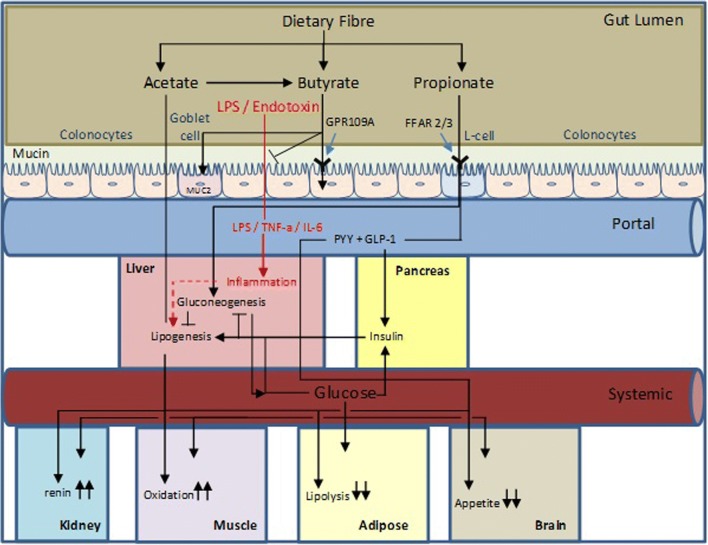
PURPOSE OF THIS REVIEW: This review assesses the latest evidence linking short-chain fatty acids (SCFA) with host metabolic health and cardiovascular disease (CVD) risk and presents the latest evidence on possible biological mechanisms. RECENT FINDINGS: SCFA have a range of effects locally in the gut and at both splanchnic and peripheral tissues which together appear to induce improved metabolic regulation and have direct and indirect effects on markers of CVD risk. SCFA produced primarily from the microbial fermentation of dietary fibre appear to be key mediators of the beneficial effects elicited by the gut microbiome. Not only does dietary fibre fermentation regulate microbial activity in the gut, SCFA also directly modulate host health through a range of tissue-specific mechanisms related to gut barrier function, glucose homeostasis, immunomodulation, appetite regulation and obesity. With the increasing burden of obesity worldwide, the role for gut microbiota-generated SCFA in protecting against the effects of energy dense diets offers an intriguing new avenue for regulating metabolic health and CVD risk.
Overview
The claims and statistics of this paper haven’t been checked yet.
Free: it reads the open-access text and checks the first 5 claims that cite a source we can check. Create a free account to check every claim.
Integrity signals
Registry
Cites
Statistics
Figures
Verification
Claims the paper makes
The claims and statistics of this paper haven’t been checked yet.
Free: it reads the open-access text and checks the first 5 claims that cite a source we can check. Create a free account to check every claim.
Claims other papers make about this one
Each is checked against this paper’s own text: does it say what the citing paper says it does?
The cited source says what the claim attributes to it.
In the citing paper
“Dietary fiber may induce an array of metabolic effects [219], including reduced systemic inflammation by regulating cytokine expression, primarily interleukin-18, improved fat oxidation and insulin sensitivity [220,221,222,223].”
From Impact of Protein Intake in Older Adults with Sarcopenia and Obesity: A Gut Microbiota Perspective (2020) · cites this paper as [220]
Self-check
Percentages, sums and reported differences re-computed from the paper’s own numbers.
The self-check needs the paper’s full text.
Citations
Cites
Diet rapidly and reproducibly alters the human gut microbiome
David, L. A., Maurice, C. F., Carmody, R. N., Gootenberg, D. B., Button, J. E., Wolfe, B. E., Ling, A. V., Devlin, A. S., Varma, Y., Fischbach, M. A., et al. (2014) · Nature · doi:10.1038/nature12820 · Cited by 10,100
Heart Disease and Stroke Statistics—2016 Update: A Report From the American Heart Association
Mozaffarian, D., Benjamin, E. J., Go, A. S., Arnett, D. K., Blaha, M. J., Cushman, M., Das, S. R., de Ferranti, S., Després, J.-P., Fullerton, H. J., et al. (2016) · Circulation · doi:10.1161/cir.0000000000000350 · Cited by 6,596
Commensal microbe-derived butyrate induces the differentiation of colonic regulatory T cells
Furusawa, Y., Obata, Y., Fukuda, S., Endo, T. A., Nakato, G., Takahashi, D., Nakanishi, Y., Uetake, C., Kato, K., Kato, T., et al. (2013) · Nature · doi:10.1038/nature12721 · Cited by 5,549
Metabolites produced by commensal bacteria promote peripheral regulatory T-cell generation
Arpaia, N., Campbell, C., Fan, X., Dikiy, S., van der Veeken, J., deRoos, P., Liu, H., Cross, J. R., Pfeffer, K., Coffer, P. J., et al. (2013) · Nature · doi:10.1038/nature12726 · Cited by 4,838
Formation of short chain fatty acids by the gut microbiota and their impact on human metabolism
Morrison, D. J., & Preston, T. (2016) · Gut Microbes · doi:10.1080/19490976.2015.1134082 · Cited by 3,781
Self-citationGlobal atlas on cardiovascular disease prevention and control.
Mendis, S., Puska, P., & Norrving, B. G. (2011) · Virtual Defense Library (Ministerio de Defensa) · Cited by 3,438
Tolhurst, G., Heffron, H., Lam, Y. S., Parker, H. E., Habib, A. M., Diakogiannaki, E., Cameron, J., Grosse, J., Reimann, F., & Gribble, F. M. (2012) · Diabetes · doi:10.2337/db11-1019 · Cited by 2,404
Singh, N., Gurav, A., Sivaprakasam, S., Brady, E., Padia, R., Shi, H., Thangaraju, M., Prasad, P. D., Manicassamy, S., Munn, D. H., et al. (2014) · Immunity · doi:10.1016/j.immuni.2013.12.007 · Cited by 2,368
Microbiota-Generated Metabolites Promote Metabolic Benefits via Gut-Brain Neural Circuits
De Vadder, F., Kovatcheva-Datchary, P., Goncalves, D., Vinera, J., Zitoun, C., Duchampt, A., Bäckhed, F., & Mithieux, G. (2014) · Cell · doi:10.1016/j.cell.2013.12.016 · Cited by 2,200
Cited by
Gut microbiome and health: mechanistic insights
de Vos, W. M., Tilg, H., Van Hul, M., & Cani, P. D. (2022) · Gut · doi:10.1136/gutjnl-2021-326789 · Cited by 2,388
The Effect of Probiotics on the Production of Short-Chain Fatty Acids by Human Intestinal Microbiome
Markowiak-Kopeć, P., & Śliżewska, K. (2020) · Nutrients · doi:10.3390/nu12041107 · Cited by 1,219
“SCFAs also directly modulate host health through a number of tissue-specific mechanisms associated with intestinal barrier function, glucose homeostasis, immunomodulation, appetite regulation, obesity, and have a direct and indirect effect on cardiovascular disease (CVD) risk markers [70].”
BackgroundDRAM for distilling microbial metabolism to automate the curation of microbiome function
Shaffer, M., Borton, M. A., McGivern, B. B., Zayed, A. A., La Rosa, S. L., Solden, L. M., Liu, P., Narrowe, A. B., Rodríguez-Ramos, J., Bolduc, B., et al. (2020) · Nucleic Acids Research · doi:10.1093/nar/gkaa621 · Cited by 1,126
“In the mammalian gut, beyond the digestion of carbohydrates with CAZymes, microorganisms also play critical roles in processing dietary protein into amino acids via peptidases (86) and producing short chain fatty acids for host energy as a fermentation byproduct (87).”
BackgroundShort chain fatty acids in human gut and metabolic health
Blaak, E. E., Canfora, E. E., Theis, S., Frost, G., Groen, A. K., Mithieux, G., Nauta, A., Scott, K., Stahl, B., van Harsselaar, J., et al. (2020) · Beneficial Microbes · doi:10.3920/bm2020.0057 · Cited by 1,103
“All three human studies also support the observations in rodent models that administration of SCFA stimulates whole-body lipid oxidation (Canfora et al. , 2017b; Chambers et al. , 2018b; Van der Beek et al. , 2016).”
Self-citationGut Microbiome: Profound Implications for Diet and Disease
Hills, R., Pontefract, B., Mishcon, H., Black, C., Sutton, S., & Theberge, C. (2019) · Nutrients · doi:10.3390/nu11071613 · Cited by 1,092
Gut Microbiota and Short Chain Fatty Acids: Implications in Glucose Homeostasis
Portincasa, P., Bonfrate, L., Vacca, M., De Angelis, M., Farella, I., Lanza, E., Khalil, M., Wang, D. Q.-H., Sperandio, M., & Di Ciaula, A. (2022) · International Journal of Molecular Sciences · doi:10.3390/ijms23031105 · Cited by 969
“Although fiber fermentation plays an essential role in the modulation of gut microbiota physiology and composition, SCFAs also impact on host health at cellular, tissue, and organs levels by mechanisms related to gut barrier function, glucose homeostasis, immunomodulation, and obesity [4].”
BackgroundNogal, A., Valdes, A. M., & Menni, C. (2021) · Gut Microbes · doi:10.1080/19490976.2021.1897212 · Cited by 917
“Indeed, most of the previous reviews do not discuss in detail SCFAs23 nor their beneficial role in cardiometabolic health,20 nor how different types of diet can increase SCFAs production to improve the health of patients suffering from CMDs.21,22,24,25 In the present review, on the contrary, we specifically focus on t…”
BackgroundInfluentialLiu, P., Wang, Y., Yang, G., Zhang, Q., Meng, L., Xin, Y., & Jiang, X. (2021) · Pharmacological Research · doi:10.1016/j.phrs.2021.105420 · Cited by 761
Singh, V., Lee, G., Son, H., Koh, H., Kim, E. S., Unno, T., & Shin, J.-H. (2023) · Frontiers in Microbiology · doi:10.3389/fmicb.2022.1103836 · Cited by 705
Gut Microbiota as a Trigger for Metabolic Inflammation in Obesity and Type 2 Diabetes
Scheithauer, T. P. M., Rampanelli, E., Nieuwdorp, M., Vallance, B. A., Verchere, C. B., van Raalte, D. H., & Herrema, H. (2020) · Frontiers in Immunology · doi:10.3389/fimmu.2020.571731 · Cited by 673
Role of gut-brain axis, gut microbial composition, and probiotic intervention in Alzheimer's disease
Kesika, P., Suganthy, N., Sivamaruthi, B. S., & Chaiyasut, C. (2021) · Life Sciences · doi:10.1016/j.lfs.2020.118627 · Cited by 479
García-Montero, C., Fraile-Martínez, O., Gómez-Lahoz, A. M., Pekarek, L., Castellanos, A. J., Noguerales-Fraguas, F., Coca, S., Guijarro, L. G., García-Honduvilla, N., Asúnsolo, A., et al. (2021) · Nutrients · doi:10.3390/nu13020699 · Cited by 431
Xu, Y., Wang, N., Tan, H.-Y., Li, S., Zhang, C., & Feng, Y. (2020) · Frontiers in Microbiology · doi:10.3389/fmicb.2020.00219 · Cited by 420
“Meanwhile, AmEVs reduced body weight, improved glucose tolerance, and ameliorated gut permeability in HFD-induced diabetic mice, as well as enhancing tight junctions via upregulating the expression of occludin in lipopolysaccharide (LPS)-induced Caco-2 cells (Chelakkot et al., 2018).”
BackgroundTrøseid, M., Andersen, G. Ø., Broch, K., & Hov, J. R. (2020) · EBioMedicine · doi:10.1016/j.ebiom.2020.102649 · Cited by 408
“Prebiotics promoting microbial fermentation of dietary fibers to SCFAs may therefore be of potential benefit in the gut, as well as in splanchnic and peripheral tissues, which in total may result in improved metabolic regulation [86].”
BackgroundThe Gut Microbiome Influences Host Endocrine Functions
Rastelli, M., Cani, P. D., & Knauf, C. (2019) · Endocrine Reviews · doi:10.1210/er.2018-00280 · Cited by 307
Aoun, A., Darwish, F., & Hamod, N. (2020) · Preventive Nutrition and Food Science · doi:10.3746/pnf.2020.25.2.113 · Cited by 276
“SCFAs are also able to strengthen the intestinal barrier, thus reducing inflammation, and have a positive effect on lipid metabolism (Chambers et al., 2018).”
BackgroundRelationship between gut microbiota and circulating metabolites in population-based cohorts
Vojinovic, D., Radjabzadeh, D., Kurilshikov, A., Amin, N., Wijmenga, C., Franke, L., Ikram, M. A., Uitterlinden, A. G., Zhernakova, A., Fu, J., et al. (2019) · Nature Communications · doi:10.1038/s41467-019-13721-1 · Cited by 271
Gastrointestinal biofilms in health and disease
Motta, J.-P., Wallace, J. L., Buret, A. G., Deraison, C., & Vergnolle, N. (2021) · Nature Reviews Gastroenterology & Hepatology · doi:10.1038/s41575-020-00397-y · Cited by 270
Sung, J. J. Y., Coker, O. O., Chu, E., Szeto, C. H., Luk, S. T. Y., Lau, H. C. H., & Yu, J. (2020) · Gut · doi:10.1136/gutjnl-2019-319826 · Cited by 267
Metabolite exchange between mammalian organs quantified in pigs
Jang, C., Hui, S., Zeng, X., Cowan, A. J., Wang, L., Chen, L., Morscher, R. J., Reyes, J., Frezza, C., Hwang, H. Y., et al. (2019) · Cell Metabolism · doi:10.1016/j.cmet.2019.06.002 · Cited by 256
Bifidobacterium Longum: Protection against Inflammatory Bowel Disease
Yao, S., Zhao, Z., Wang, W., & Liu, X. (2021) · Journal of Immunology Research · doi:10.1155/2021/8030297 · Cited by 255
“Moreover, SCFA has an impact on the population and function of innate immune cells through G-protein coupled receptor signaling and HDAC inhibition and plays an important role in maintaining the intestinal barrier function [91, 93].”
BackgroundPascale, A., Marchesi, N., Govoni, S., Coppola, A., & Gazzaruso, C. (2019) · Current Opinion in Pharmacology · doi:10.1016/j.coph.2019.03.011 · Cited by 240
Amabebe, E., & Anumba, D. O. C. (2020) · Frontiers in Immunology · doi:10.3389/fimmu.2020.02184 · Cited by 236
Vaiserman, A., Romanenko, M., Piven, L., Moseiko, V., Lushchak, O., Kryzhanovska, N., Guryanov, V., & Koliada, A. (2020) · BMC Microbiology · doi:10.1186/s12866-020-01903-7 · Cited by 214
Sanchez-Rodriguez, E., Egea-Zorrilla, A., Plaza-Díaz, J., Aragón-Vela, J., Muñoz-Quezada, S., Tercedor-Sánchez, L., & Abadia-Molina, F. (2020) · Nutrients · doi:10.3390/nu12030605 · Cited by 214
Zhang, S., Zhao, J., Xie, F., He, H., Johnston, L. J., Dai, X., Wu, C., & Ma, X. (2021) · Obesity Reviews · doi:10.1111/obr.13316 · Cited by 209
Gut microbiota in overweight and obesity: crosstalk with adipose tissue
Cani, P. D., & Van Hul, M. (2024) · Nature Reviews Gastroenterology & Hepatology · doi:10.1038/s41575-023-00867-z · Cited by 194
The Impact of Artificial Sweeteners on Body Weight Control and Glucose Homeostasis
Pang, M. D., Goossens, G. H., & Blaak, E. E. (2021) · Frontiers in Nutrition · doi:10.3389/fnut.2020.598340 · Cited by 180
Dysbiosis and Implication of the Gut Microbiota in Diabetic Retinopathy
Huang, Y., Wang, Z., Ma, H., Ji, S., Chen, Z., Cui, Z., Chen, J., & Tang, S. (2021) · Frontiers in Cellular and Infection Microbiology · doi:10.3389/fcimb.2021.646348 · Cited by 180
“Previous studies reported that SCFAs could improve glucose homeostasis and were associated with reduced risk of T2DM, obesity, and cardiovascular disease (Chambers et al., 2018; Zhao et al., 2018).”
BackgroundTargeting the gut microbiota and its metabolites for type 2 diabetes mellitus
Wu, J., Yang, K., Fan, H., Wei, M., & Xiong, Q. (2023) · Frontiers in Endocrinology · doi:10.3389/fendo.2023.1114424 · Cited by 202
Dietary short-chain fatty acid intake improves the hepatic metabolic condition via FFAR3
Shimizu, H., Masujima, Y., Ushiroda, C., Mizushima, R., Taira, S., Ohue-Kitano, R., & Kimura, I. (2019) · Scientific Reports · doi:10.1038/s41598-019-53242-x · Cited by 177
Intersection of the Gut Microbiome and Circadian Rhythms in Metabolism
Frazier, K., & Chang, E. B. (2020) · Trends in Endocrinology & Metabolism · doi:10.1016/j.tem.2019.08.013 · Cited by 173
“Although they have been observed to influence many aspects of host metabolism, glucose metabolism is directly regulated by SCFAs via hormone signaling, modulation of gut barrier function, and more[27].”
BackgroundVitamin D and the Host-Gut Microbiome: A Brief Overview
Akimbekov, N. S., Digel, I., Sherelkhan, D. K., Lutfor, A. B., & Razzaque, M. S. (2020) · ACTA HISTOCHEMICA ET CYTOCHEMICA · doi:10.1267/ahc.20011 · Cited by 178
Seaweed Components as Potential Modulators of the Gut Microbiota
Shannon, E., Conlon, M., & Hayes, M. (2021) · Marine Drugs · doi:10.3390/md19070358 · Cited by 157
“SCFA also regulate liver mitochondrial function, insulin secretion, and induce the production of gut hormones γ-aminobutyric acid and serotonin by interacting with their receptors on enteroendocrine cells [26,27].”
BackgroundLange, O., Proczko-Stepaniak, M., & Mika, A. (2023) · Current Obesity Reports · doi:10.1007/s13679-023-00503-6 · Cited by 180
Li, X., Guo, R., Wu, X., Liu, X., Ai, L., Sheng, Y., Song, Z., & Wu, Y. (2020) · Carbohydrate Polymers · doi:10.1016/j.carbpol.2020.116194 · Cited by 165
Gestational diabetes is driven by microbiota-induced inflammation months before diagnosis
Pinto, Y., Frishman, S., Turjeman, S., Eshel, A., Nuriel-Ohayon, M., Shtossel, O., Ziv, O., Walters, W., Parsonnet, J., Ley, C., et al. (2023) · Gut · doi:10.1136/gutjnl-2022-328406 · Cited by 163
“34 Our findings in T1, both in the focal cohort and in FMT experiments, support inflammation as an early marker of GDM.”
BackgroundInfluentialIstas, G., Wood, E., Sayec, M. L., Rawlings, C., Yoon, J., Dandavate, V., Cera, D., Rampelli, S., Costabile, A., Fromentin, E., et al. (2019) · American Journal of Clinical Nutrition · doi:10.1093/ajcn/nqz075 · Cited by 169
Human milk composition promotes optimal infant growth, development and health
Perrella, S. L., Gridneva, Z., Lai, C. T., Stinson, L. F., George, A. D., Bilston-John, S. H., & Geddes, D. T. (2021) · Seminars in Perinatology · doi:10.1016/j.semperi.2020.151380 · Cited by 169
Butyrate as a promising therapeutic target in cancer: From pathogenesis to clinic (Review)
Sun, J., Chen, S., Zang, D., Sun, H., Sun, Y., & Chen, J. (2024) · International Journal of Oncology · doi:10.3892/ijo.2024.5632 · Cited by 165
“…stress, and mainly influencing Butyrate as a promising therapeutic target in cancer: From pathogenesis to clinic (Review) cellular energy metabolism and cell apoptosis through the activation of G protein‑coupled receptors (GPCRs) and effec‑ tive inhibition of histone deacetylases (HDACs) (9).”
BackgroundSex, gut microbiome, and cardiovascular disease risk
Razavi, A. C., Potts, K. S., Kelly, T. N., & Bazzano, L. (2019) · Biology of Sex Differences · doi:10.1186/s13293-019-0240-z · Cited by 168
Shah, B. R., Li, B., Sabbah, H. A., Xu, W., & Mráz, J. (2020) · Trends in Food Science & Technology · doi:10.1016/j.tifs.2020.06.010 · Cited by 157
Manzoor, M., Singh, J., Bandral, J. D., Gani, A., & Shams, R. (2020) · International Journal of Biological Macromolecules · doi:10.1016/j.ijbiomac.2020.09.182 · Cited by 156
Akkermansia muciniphila : is it the Holy Grail for ameliorating metabolic diseases?
Yan, J., Sheng, L., & Li, H. (2021) · Gut Microbes · doi:10.1080/19490976.2021.1984104 · Cited by 154
“The beneficial effects of SCFAs on host metabolism have been extensively investigated and reviewed in CVD.(95,96) In summary, A.”
BackgroundAnthocyanins-gut microbiota-health axis: A review
Liang, A., Leonard, W., Beasley, J. T., Fang, Z., Zhang, P., & Ranadheera, C. S. (2023) · Critical Reviews in Food Science and Nutrition · doi:10.1080/10408398.2023.2187212 · Cited by 157
“The beneficial bacterial groups such as Lactobacillus spp. and Bifidobacterium spp. significantly contribute to gut health although in a small proportion (Chambers et al. 2018).”
InfluentialCheng, H., Liu, J., Tan, Y., Feng, W., & Peng, C. Y. (2021) · Journal of Pharmaceutical Analysis · doi:10.1016/j.jpha.2021.10.003 · Cited by 150
van Leeuwen, S. S., Poele, E. M. T., Chatziioannou, A. C., Benjamins, E., Haandrikman, A. J., & Dijkhuizen, L. (2020) · Journal of Agricultural and Food Chemistry · doi:10.1021/acs.jafc.0c03766 · Cited by 148
Butyrate generated by gut microbiota and its therapeutic role in metabolic syndrome
Bridgeman, S. C., Northrop, W., Melton, P. E., Ellison, G., Newsholme, P., & Mamotte, C. D. S. (2020) · Pharmacological Research · doi:10.1016/j.phrs.2020.105174 · Cited by 144
Low-Dose Lactulose as a Prebiotic for Improved Gut Health and Enhanced Mineral Absorption
Karakan, T., Tuohy, K. M., & Solingen, G. J.-V. (2021) · Frontiers in Nutrition · doi:10.3389/fnut.2021.672925 · Cited by 148
Pathophysiology of Type 1 Diabetes and Gut Microbiota Role
CHIERICO, F. D., Rapini, N., Deodati, A., Matteoli, M. C., Cianfarani, S., & Putignani, L. (2022) · International Journal of Molecular Sciences · doi:10.3390/ijms232314650 · Cited by 146
Costa, D. A., Nobre, J. G., Batista, M. V., Ribeiro, C., Callé, C., Cortés, A., Marhold, M., Negreiros, I., Borralho, P., Brito, M., et al. (2021) · Frontiers in Microbiology · doi:10.3389/fmicb.2021.584332 · Cited by 140
Gut microbiota and old age: Modulating factors and interventions for healthy longevity
Coman, V., & Vodnar, D. C. (2020) · Experimental Gerontology · doi:10.1016/j.exger.2020.111095 · Cited by 118
“, 2004), the main metabolites of bacterial fermentation, which are thought to be key biological mediators that modulate immunologic and inflammatory responses (Chambers et al., 2018; Rios-Covian et al., 2016; Sanna et al., 2019),”
Molecular and Cellular Mechanisms Influenced by Postbiotics
Jastrząb, R., Graczyk, D., & Siedlecki, P. S. (2021) · International Journal of Molecular Sciences · doi:10.3390/ijms222413475 · Cited by 139
Koutoukidis, D. A., Jebb, S. A., Zimmerman, M., Otunla, A. A., Henry, J. A., Ferrey, A. E., Schofield, E., Kinton, J., Aveyard, P. N., & Marchesi, J. R. (2022) · Gut Microbes · doi:10.1080/19490976.2021.2020068 · Cited by 137
Pathological Mechanisms Underlying Myalgic Encephalomyelitis/Chronic Fatigue Syndrome
Missailidis, D., Annesley, S. J., & Fisher, P. R. (2019) · Diagnostics · doi:10.3390/diagnostics9030080 · Cited by 120
“Additionally, many studies have demonstrated a link between the gut microbiota and host mitochondrial function or metabolism with disturbances in one resulting in subsequent dysfunction in the other [131-136].”
BackgroundLordan, C., Roche, A. K., Delsing, D. J. M., Nauta, A., Groeneveld, A., MacSharry, J. A., Cotter, P. D., & van Sinderen, D. (2024) · Microbiology and Molecular Biology Reviews · doi:10.1128/mmbr.00094-23 · Cited by 131
“Propionate can be involved in the mediation of microbiota and host homeostasis, appetite regulation, and participate in gluconeogenesis in the liver (225, 226).”
BackgroundThe Implication of Short-Chain Fatty Acids in Obesity and Diabetes
Anachad, O., Taouil, A., Taha, W., Bennis, F., & Chegdani, F. (2023) · Microbiology Insights · doi:10.1177/11786361231162720 · Cited by 130
Choi, B. S.-Y., Daniel, N., Houde, V. P., Ouellette, A., Marcotte, B., Varin, T. V., Vors, C., Feutry, P., Ilkayeva, O., Ståhlman, M., et al. (2021) · Nature Communications · doi:10.1038/s41467-021-23782-w · Cited by 126
Wang, X., Li, X., Zhang, L., An, L., Guo, L., Huang, L., & Gao, W. (2023) · Critical Reviews in Food Science and Nutrition · doi:10.1080/10408398.2023.2248631 · Cited by 126
Early-Life Origins of Metabolic Syndrome: Mechanisms and Preventive Aspects
Hsu, C., Hou, C., Hsu, W.-H., & Tain, Y. (2021) · International Journal of Molecular Sciences · doi:10.3390/ijms222111872 · Cited by 127
Jian, C., Carpén, N., Helve, O., de Vos, W. M., Korpela, K., & Salonen, A. (2021) · EBioMedicine · doi:10.1016/j.ebiom.2021.103475 · Cited by 122
Prokopidis, K., Chambers, E., Ni Lochlainn, M., & Witard, O. C. (2021) · Frontiers in Physiology · doi:10.3389/fphys.2021.770455 · Cited by 102
Self-citationDaily, J. W., & Park, S. (2022) · Cells · doi:10.3390/cells11030338 · Cited by 125
“Gut microbiota produces SCFA that may influence the host’s glucose metabolism by promoting the gut–liver, gut–skeletal muscle, gut–islet, and gut–brain axes [63].”
BackgroundSun, M., Ma, K., Wen, J., Wang, G., Zhang, C., Li, Q., Bao, X., & Wang, H. (2020) · Journal of Alzheimer’s Disease · doi:10.3233/jad-190872 · Cited by 113
“The function of the gut microbiome is extensive, with metabolic capabilities including synthesis of vitamins (e.g., vitamin K) [23], synthesis and catabolism of amino acids [24], and formation of short chain fatty acids (SCFAs) which may be used as energy substrates and signaling molecules [25].”
The metabolic, protective, and immune functions of Akkermansia muciniphila
Ghotaslou, R., Nabizadeh, E., Memar, M. Y., Law, W. M. H., Ozma, M. A., Abdi, M., Yekani, M., Kadkhoda, H., Hosseinpour, R., Bafadam, S., et al. (2022) · Microbiological Research · doi:10.1016/j.micres.2022.127245 · Cited by 115
Chambers, E. S., Byrne, C. S., Rugyendo, A., Morrison, D. J., Preston, T., Tedford, C., Bell, J. D., Thomas, L., Akbar, A. N., Riddell, N. E., et al. (2019) · Diabetes, Obesity and Metabolism · doi:10.1111/dom.13500 · Cited by 109
Self-citationWang, X., Shi, L., Wang, X., Feng, Y., & Wang, Y. (2019) · International Journal of Biological Macromolecules · doi:10.1016/j.ijbiomac.2019.09.007 · Cited by 112
The immunology of Parkinson’s disease
Zhu, B., Yin, D., Zhao, H., & Zhang, L. (2022) · Seminars in Immunopathology · doi:10.1007/s00281-022-00947-3 · Cited by 119
Potential Role of Quercetin Glycosides as Anti-Atherosclerotic Food-Derived Factors for Human Health
Terao, J. (2023) · Antioxidants · doi:10.3390/antiox12020258 · Cited by 117
The Role of the Oral Microbiome in the Development of Diseases
Kozak, M., & Pawlik, A. (2023) · International Journal of Molecular Sciences · doi:10.3390/ijms24065231 · Cited by 109
“LPS increases the expression of chemokines and adhesion molecules, enhances the formation of foam cells and increases the adhesion of monocytes to endothelial cells [106].”
BackgroundNaomi, R., Yazid, M. D., Bahari, H., Yong, Y. K., Rajandram, R., Embong, H., Teoh, S. H., Halim, S., & Othman, F. (2022) · International Journal of Molecular Sciences · doi:10.3390/ijms23062969 · Cited by 108
Skonieczna-Żydecka, K., Łoniewski, I., Misera, A., Stachowska, E., Maciejewska, D., Marlicz, W., & Galling, B. (2019) · Psychopharmacology · doi:10.1007/s00213-018-5102-6 · Cited by 98
“…of gut microbiota, the content of the microbiome metabolites, e.g., SCFAs or secondary bile acids, which play an important role in metabolic and cardiovascular health, would comprehensively decipher the impact of SGA-induced dysbiosis on human metabolism (Alemán et al. 2018; Chambers et al. 2018).”
BackgroundMoles, L., & Otaegui, D. (2020) · Nutrients · doi:10.3390/nu12061654 · Cited by 111
“The Mediterranean diet is associated with a higher production of SCFAs in the gut [107,108].”
BackgroundCavaliere, G., Cimmino, F., Trinchese, G., Catapano, A., Petrella, L., D’Angelo, M., Lucchin, L., & Mollica, M. P. (2023) · Antioxidants · doi:10.3390/antiox12061172 · Cited by 118
“SCFAs may play beneficial roles in appetite regulation and lipid and glucose metabolism by epigenetically regulating related genes [216,217].”
BackgroundKapoor, P., Tiwari, A., Sharma, S., Tiwari, V., Sheoran, B., Ali, U., & Garg, M. (2023) · Scientific Reports · doi:10.1038/s41598-023-28764-0 · Cited by 106
Mosterd, C. M., Kanbay, M., van den Born, B. H., van Raalte, D. H., & Rampanelli, E. (2021) · Best Practice & Research Clinical Endocrinology & Metabolism · doi:10.1016/j.beem.2021.101484 · Cited by 104
Impact of Protein Intake in Older Adults with Sarcopenia and Obesity: A Gut Microbiota Perspective
Prokopidis, K., Cervo, M. M., Gandham, A., & Scott, D. (2020) · Nutrients · doi:10.3390/nu12082285 · Cited by 99
Busnelli, M., Manzini, S., & Chiesa, G. (2019) · Nutrients · doi:10.3390/nu12010079 · Cited by 98
Omics Biomarkers in Obesity: Novel Etiological Insights and Targets for Precision Prevention
Aleksandrova, K., Rodrigues, C. E., Floegel, A., & Ahrens, W. (2020) · Current Obesity Reports · doi:10.1007/s13679-020-00393-y · Cited by 106
Short-Chain Fatty Acid and FFAR2 Activation – A New Option for Treating Infections?
Schlatterer, K., Peschel, A., & Kretschmer, D. (2021) · Frontiers in Cellular and Infection Microbiology · doi:10.3389/fcimb.2021.785833 · Cited by 98
Cheong, K., Yu, B., Chen, J., & Zhong, S. (2022) · Foods · doi:10.3390/foods11223550 · Cited by 99
“It is possible that the direct effect of modulating CVD risk is the SCFA regulation of blood pressure, increased lipid metabolism, energy depletion, and peptide YY release, while inhibiting the phosphorylation of adipose triglyceride lipase [60].”
BackgroundVijay, A., Kouraki, A., Gohir, S., Turnbull, J., Kelly, A., Chapman, V., Barrett, D. A., Bulsiewicz, W. J., & Valdes, A. M. (2021) · Gut Microbes · doi:10.1080/19490976.2021.1997559 · Cited by 93
Lung Microbiome in Asthma: Current Perspectives
Loverdos, K., Bellos, G., Kokolatou, L., Vasileiadis, I., Giamarellos‐Bourboulis, E. J., Pecchiari, M., Koulouris, N. G., Koutsoukou, A., & Rovina, N. (2019) · Journal of Clinical Medicine · doi:10.3390/jcm8111967 · Cited by 94
“SCFAs have been implicated in numerous mechanisms promoting maintenance of homeostasis in health, including preservation of gut barrier integrity, control of appetite and energy intake, protection against autoimmunity and tumorigenesis in colon, and regulation of blood–brain barrier permeability, among others [63,64].”
BackgroundNutritional and health factors affecting the bioavailability of calcium: a narrative review
Wawrzyniak, N., & Suliburska, J. (2021) · Nutrition Reviews · doi:10.1093/nutrit/nuaa138 · Cited by 101
Sugars and Gastrointestinal Health
Arnone, D., Chabot, C., Heba, A.-C., Kökten, T., Caron, B., Hansmannel, F., Dreumont, N., Ananthakrishnan, A. N., Quilliot, D., & Peyrin‐Biroulet, L. (2021) · Clinical Gastroenterology and Hepatology · doi:10.1016/j.cgh.2021.12.011 · Cited by 105
Recent Advances in Understanding the Structure and Function of the Human Microbiome
Mousa, W. K., Chehadeh, F., & Husband, S. (2022) · Frontiers in Microbiology · doi:10.3389/fmicb.2022.825338 · Cited by 98
Next-Generation Probiotics and Chronic Diseases: A Review of Current Research and Future Directions
Tiwari, A. K., Krisnawati, D. I., Susilowati, E., Mutalik, C., & Kuo, T. (2024) · Journal of Agricultural and Food Chemistry · doi:10.1021/acs.jafc.4c08702 · Cited by 95
The emerging role of microbiota-derived short-chain fatty acids in immunometabolism
Jasim, S. A., Opulencia, M. J. C., Ramírez‐Coronel, A. A., Abdelbasset, W. K., Abed, M. H., Markov, A. A., Al‐Awsi, G. R. L., Shamsiev, J. A., Hammid, A. T., Shalaby, M. N., et al. (2022) · International Immunopharmacology · doi:10.1016/j.intimp.2022.108983 · Cited by 96
Gut Dysbiosis and Immune System in Atherosclerotic Cardiovascular Disease (ACVD)
Yoo, J. Y., Sniffen, S. E., Percy, K. C. M., Chidipi, B., & Pallaval, V. B. (2022) · Microorganisms · doi:10.3390/microorganisms10010108 · Cited by 96
“The most prominent SCFAs are acetate, butyrate, and propionate [62].”
BackgroundEpigenetics: Linking Early Postnatal Nutrition to Obesity Programming?
Marousez, L., Lésage, J., & Eberlé, D. (2019) · Nutrients · doi:10.3390/nu11122966 · Cited by 90
Epigenetic effects of short-chain fatty acids from the large intestine on host cells
Stein, R. A., & Riber, L. (2023) · microLife · doi:10.1093/femsml/uqad032 · Cited by 93
The heart-gut axis: new target for atherosclerosis and congestive heart failure therapy
Forkosh, E., & Ilan, Y. (2019) · Open Heart · doi:10.1136/openhrt-2018-000993 · Cited by 90
“27 The most abundant SCFAs are acetate, propionate and butyrate, which are mostly metabolised in the colon and have numerous effects within the gastro-intestinal tract, including maintaining the integrity of the large and small intestinal barrier.”
BackgroundProbiotics ameliorate alveolar bone loss by regulating gut microbiota
Jia, L., Tu, Y., Jia, X., Du, Q., Zheng, X. M., Yuan, Q., Zheng, L., Zhou, X., & Xu, X. (2021) · Cell Proliferation · doi:10.1111/cpr.13075 · Cited by 86
“Promoting gut-derived SCFAs generation has shown protective effects in multiple diseases including IBS, cardiovascular diseases, Alzheimer’s disease and rheumatoid arthritis[58, 64-66].”
BackgroundPolysaccharide Structures and Their Hypocholesterolemic Potential
Silva, I. M. V., Machado, F., Moreno, M. J., Nunes, C., Coimbra, M. A., & Coreta-Gomes, F. M. (2021) · Molecules · doi:10.3390/molecules26154559 · Cited by 86
The role of pulses in improving human health: A review
Didinger, C., & Thompson, H. J. (2022) · Legume Science · doi:10.1002/leg3.147 · Cited by 95
“These SCFAs are associated with abundant benefits, including reduced chronic disease risk, strengthened gut barrier function, and improved glucose homeostasis (Chambers et al., 2018; Myhrstad et al., 2020).”
BackgroundFunctional lower airways genomic profiling of the microbiome to capture active microbial metabolism
Sulaiman, I., Wu, B. G., Li, Y., Tsay, J.-C. J., Sauthoff, M., Scott, A. S., Ji, K., Koralov, S. B., Weiden, M. D., Clemente, J. C., et al. (2021) · European Respiratory Journal · doi:10.1183/13993003.03434-2020 · Cited by 84
Interactions between dietary fibre and the gut microbiota
Thomson, C. L., García, A. L., & Edwards, C. A. (2021) · Proceedings of The Nutrition Society · doi:10.1017/s0029665121002834 · Cited by 95
“There is growing interest in the health effects of individual SCFA through their potential roles in modulating metabolic health, gut barrier function, glucose homoeostasis, immune function, obesity and appetite regulation((67)).”
BackgroundBabu, A. F., Csader, S., Männistö, V., Tauriainen, M., Pentikäinen, H., Savonen, K. P., Klåvus, A., Koistinen, V., Hanhineva, K., & Schwab, U. (2022) · Scientific Reports · doi:10.1038/s41598-022-10481-9 · Cited by 85
Butterworth, P., Bajka, B. H., Edwards, C. H., Warren, F. J., & Ellis, P. R. (2021) · Trends in Food Science & Technology · doi:10.1016/j.tifs.2021.11.015 · Cited by 86
Targeting Carbohydrates and Polyphenols for a Healthy Microbiome and Healthy Weight
Hul, M. V., & Cani, P. D. (2019) · Current Nutrition Reports · doi:10.1007/s13668-019-00281-5 · Cited by 85
Metadata
- Authors
- Chambers, E. S., Preston, T., Frost, G., & Morrison, D. J.
- Affiliations
- Hammersmith Hospital (GB)
- Scottish Universities Environmental Research Centre (GB)
- Corresponding author
- Morrison, Douglas J.
- Venue
- Current Nutrition Reports
- Published
- 2018-09-28
- Volume
- 7
- Issue
- 4
- Pages
- 198-206
- ISSN
- 2161-3311 (ISSN-L)
- PMC
- PMC6244749
- OpenAlex
- W2894133314
- Cited by
- 691
- References
- 93
- Citations by year
- 2026: 72 · 2025: 90 · 2024: 86 · 2023: 88 · 2022: 93 · 2021: 129 · 2020: 95 · 2019: 34 · 2018: 3
- FWCI
- 6.40
- Type
- journal article
- Language
- en
- Open access
- hybrid
- doi.org
- Licence
- cc-by
- creativecommons.org/licenses/by/4.0 (tdm)
- Locations
- Current Nutrition Reports (publishedVersion, cc-by)
- Europe PMC (PubMed Central) (publishedVersion, other-oa)
- PubMed Central (publishedVersion, cc-by)
- PubMed (publishedVersion)
- ENLIGHTEN (Jurnal Bimbingan dan Konseling Islam) (acceptedVersion, cc-by-sa)
- Funders
- University of Glasgow
- Topics
- Life Sciences › Biochemistry, Genetics and Molecular Biology › Molecular Biology › Gut microbiota and health
- Health Sciences › Nursing › Nutrition and Dietetics › Microbial Metabolites in Food Biotechnology
- Health Sciences › Medicine › Public Health, Environmental and Occupational Health › Nutritional Studies and Diet
- Keywords
- short-chain fatty acids, gut microbiota, dietary fiber fermentation, cardiovascular risk, metabolic health, intestinal barrier, glucose homeostasis, immunomodulation, appetite regulation, obesity, energy-dense diet
- MeSH terms
- Gastrointestinal Microbiome, Animals, Bacteria, Cardiovascular Diseases, Dietary Fiber, Energy Metabolism, Fatty Acids, Fermentation, Health Status, Humans, Intestines, Metabolic Diseases, Prognosis, Risk Factors, Risk Assessment, Host-Pathogen Interactions
About these checks
Registry, retraction, Cites and statistics results are computed, not judged, with one exception: a printed reference that no index lists is read once by a model before it counts as a citation error. Claims are extracted by a model and kept only when their quote appears verbatim in the text; each cited source is then checked, with a model’s help, for whether it says what the claim relies on. Those verdicts can be wrong — read the claim’s quote and the cited source before relying on one.
Statistics and arithmetic are recomputed, not judged.
Confidence bands are shown only for fields calibrated on our annotated test set. None is calibrated yet, so no band is shown.
What counts as a claim ›How we measure confidence ›How we check this ›
Are you an author, or do you see a problem with this page? Request a review
Data sources
Bibliographic data: Semantic Scholar, OpenAlex, Crossref.
Contains information from the Semantic Scholar Academic Graph Datasets, made available under the ODC Attribution License (ODC-BY 1.0).
Semantic Scholar’s data is described in: Kinney, R., et al. (2023). The Semantic Scholar Open Data Platform. arXiv:2301.10140.
