

Role of Gut Microbiota-Generated Short-Chain Fatty Acids in Metabolic and Cardiovascular Health
Open accessThe DOI matches its Crossref record; 93 of the 93 references it cites were found in a registry or an index.
Abstract
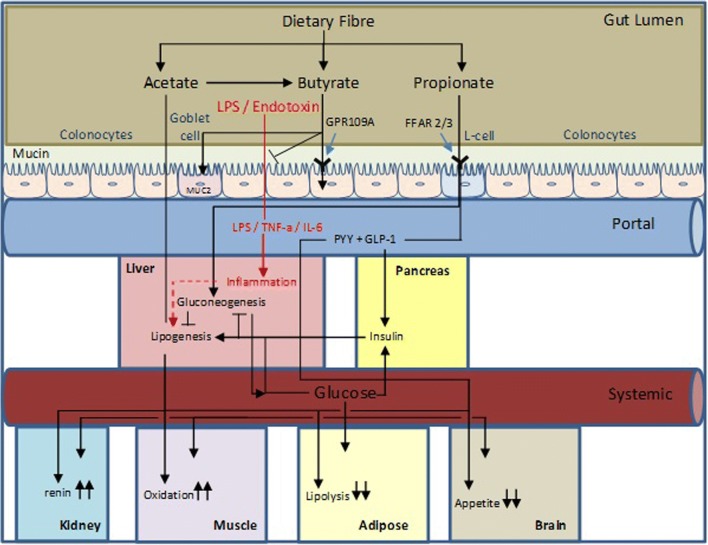
PURPOSE OF THIS REVIEW: This review assesses the latest evidence linking short-chain fatty acids (SCFA) with host metabolic health and cardiovascular disease (CVD) risk and presents the latest evidence on possible biological mechanisms. RECENT FINDINGS: SCFA have a range of effects locally in the gut and at both splanchnic and peripheral tissues which together appear to induce improved metabolic regulation and have direct and indirect effects on markers of CVD risk. SCFA produced primarily from the microbial fermentation of dietary fibre appear to be key mediators of the beneficial effects elicited by the gut microbiome. Not only does dietary fibre fermentation regulate microbial activity in the gut, SCFA also directly modulate host health through a range of tissue-specific mechanisms related to gut barrier function, glucose homeostasis, immunomodulation, appetite regulation and obesity. With the increasing burden of obesity worldwide, the role for gut microbiota-generated SCFA in protecting against the effects of energy dense diets offers an intriguing new avenue for regulating metabolic health and CVD risk.
Overview
The claims and statistics of this paper haven’t been checked yet.
Free: it reads the open-access text and checks the first 5 claims that cite a source we can check. Create a free account to check every claim.
Integrity signals
Registry
Cites
Statistics
Figures
Verification
Claims the paper makes
The claims and statistics of this paper haven’t been checked yet.
Free: it reads the open-access text and checks the first 5 claims that cite a source we can check. Create a free account to check every claim.
Claims other papers make about this one
Each is checked against this paper’s own text: does it say what the citing paper says it does?
The cited source says what the claim attributes to it.
In the citing paper
“Dietary fiber may induce an array of metabolic effects [219], including reduced systemic inflammation by regulating cytokine expression, primarily interleukin-18, improved fat oxidation and insulin sensitivity [220,221,222,223].”
From Impact of Protein Intake in Older Adults with Sarcopenia and Obesity: A Gut Microbiota Perspective (2020) · cites this paper as [220]
Self-check
Percentages, sums and reported differences re-computed from the paper’s own numbers.
The self-check needs the paper’s full text.
Citations
Cites
Diet rapidly and reproducibly alters the human gut microbiome
David, L. A., Maurice, C. F., Carmody, R. N., Gootenberg, D. B., Button, J. E., Wolfe, B. E., Ling, A. V., Devlin, A. S., Varma, Y., Fischbach, M. A., et al. (2014) · Nature · doi:10.1038/nature12820 · Cited by 10,100
Heart Disease and Stroke Statistics—2016 Update: A Report From the American Heart Association
Mozaffarian, D., Benjamin, E. J., Go, A. S., Arnett, D. K., Blaha, M. J., Cushman, M., Das, S. R., de Ferranti, S., Després, J.-P., Fullerton, H. J., et al. (2016) · Circulation · doi:10.1161/cir.0000000000000350 · Cited by 6,596
Commensal microbe-derived butyrate induces the differentiation of colonic regulatory T cells
Furusawa, Y., Obata, Y., Fukuda, S., Endo, T. A., Nakato, G., Takahashi, D., Nakanishi, Y., Uetake, C., Kato, K., Kato, T., et al. (2013) · Nature · doi:10.1038/nature12721 · Cited by 5,549
Metabolites produced by commensal bacteria promote peripheral regulatory T-cell generation
Arpaia, N., Campbell, C., Fan, X., Dikiy, S., van der Veeken, J., deRoos, P., Liu, H., Cross, J. R., Pfeffer, K., Coffer, P. J., et al. (2013) · Nature · doi:10.1038/nature12726 · Cited by 4,838
Formation of short chain fatty acids by the gut microbiota and their impact on human metabolism
Morrison, D. J., & Preston, T. (2016) · Gut Microbes · doi:10.1080/19490976.2015.1134082 · Cited by 3,781
Self-citationGlobal atlas on cardiovascular disease prevention and control.
Mendis, S., Puska, P., & Norrving, B. G. (2011) · Virtual Defense Library (Ministerio de Defensa) · Cited by 3,438
Tolhurst, G., Heffron, H., Lam, Y. S., Parker, H. E., Habib, A. M., Diakogiannaki, E., Cameron, J., Grosse, J., Reimann, F., & Gribble, F. M. (2012) · Diabetes · doi:10.2337/db11-1019 · Cited by 2,404
Singh, N., Gurav, A., Sivaprakasam, S., Brady, E., Padia, R., Shi, H., Thangaraju, M., Prasad, P. D., Manicassamy, S., Munn, D. H., et al. (2014) · Immunity · doi:10.1016/j.immuni.2013.12.007 · Cited by 2,368
Microbiota-Generated Metabolites Promote Metabolic Benefits via Gut-Brain Neural Circuits
De Vadder, F., Kovatcheva-Datchary, P., Goncalves, D., Vinera, J., Zitoun, C., Duchampt, A., Bäckhed, F., & Mithieux, G. (2014) · Cell · doi:10.1016/j.cell.2013.12.016 · Cited by 2,200
Cited by
Items 501–600 of 732
Lin, M., Huang, R., Li, W., Peng, H., Chen, J., Qiu, Y., Liu, Y., & Chen, L. (2025) · Archives of Biochemistry and Biophysics · doi:10.1016/j.abb.2025.110441 · Cited by 4
Zhang, Y., Belkassem, N., Umanets, A., Santana-Filho, A. P., Venema, K., Schols, H. A., Penders, J., Jonkers, D. M. A. E., & Abboud, K. Y. (2025) · Carbohydrate Polymers · doi:10.1016/j.carbpol.2025.124090 · Cited by 4
Organ-on-a-Chip Models for Studying Gut–Brain Axis and Appetite Regulation
Jeong, S., & Lee, S. (2025) · BioChip Journal · doi:10.1007/s13206-025-00243-w · Cited by 5
“Prebiotic fibers, for instance, are known to increase SCFA production and promote satiety; a gut microbiome-on-chip system can be fed different fibers to see which leads to the greatest beneficial metabolite profile and gut peptide release [27, 86].”
Kim, K.-N., Kang, M., Joo, N., Lee, H.-R., Jung, S., Ju, S.-Y., Lee, Y.-J., Lee, K. W., Jung, S., Im, J., et al. (2025) · Nutrients · doi:10.3390/nu17233652 · Cited by 5
“Altogether, these findings provide a plausible mechanistic explanation for the elevated adiposity and TG levels observed in the HRS group [32].”
Vaz, A. A., Odriozola‐Serrano, I., Oms‐Oliu, G., Martín‐Belloso, O., & Bellí, G. (2025) · Food Hydrocolloids for Health · doi:10.1016/j.fhfh.2025.100257 · Cited by 5
Pais, A. C. S., Ribeiro, T. B., Coscueta, E. R., Salsinha, A. S., Pintado, M. M., Silvestre, A. J. D., & Santos, S. A. O. (2025) · Food Research International · doi:10.1016/j.foodres.2025.118167 · Cited by 4
Bile Acids: The Contribution of the Gut Microbiota to Atherosclerosis
Xu, L., Yang, H., He, C., Zhang, H., Jiang, Z., Zhang, Y., Luan, K., & Hu, H. (2026) · Reviews in Cardiovascular Medicine · doi:10.31083/rcm44050 · Cited by 4
“For example, dietary fibers can be fermented by gut microbes to produce SCFAs, which not only enhance intestinal barrier integrity but also indirectly affect BA synthesis and transformation, subsequently modulating the FXR and TGR5 signaling pathways [84].”
Gut microbiota and macrophage crosstalk: implications for colitis-associated colorectal cancer
Lyu, W., Zhang, Z., Liu, L., Sun, Y., Wang, B., Zhou, C., Liu, Z., & Feng, B. (2026) · Frontiers in Cellular and Infection Microbiology · doi:10.3389/fcimb.2026.1778244 · Cited by 5
Bifidobacterial Postbiotics as Health-promoting Agents in Dairy Products
Rad, A. H., Moghadam, S. K., Mortazavian, A. M., Abachi, S., & Allahmadadi, S. (2023) · Current Functional Foods · doi:10.2174/2666862901666230818093034 · Cited by 4
Circulating short chain fatty acid levels and body composition in type 2 diabetes mellitus
Hsu, C.-H., Tsai, Y., Yu, P.-S., Hung, W., Hung, W., Hwang, S., & Tsai, H.-J. (2025) · International Journal of Medical Sciences · doi:10.7150/ijms.111920 · Cited by 5
“Fasting reduces colonic fermentation activity because there is less dietary substrate available [48].”
Lim, E. C. N., Yu, W. T. S., & Lim, C. E. D. (2025) · Journal of Traditional Chinese Medical Sciences · doi:10.1016/j.jtcms.2025.07.002 · Cited by 6
Gut Oxidative Modulation of Polyphenol, Prebiotic, Probiotic, and Postbiotic in Vitro
Tan, R., & Loke, W. M. (2022) · Current Research in Nutrition and Food Science Journal · doi:10.12944/crnfsj.10.1.05 · Cited by 4
Peanut supplementation affects compositions and functions of gut microbiome in Ugandan children
Wang, J.-S., Xue, K. S., Li, Z., Ssempebwa, J. C., Maina, G. W., Musinguzi, G., Rhoads, J., Hoisington, D. A., & Tang, L. (2024) · Food & Function · doi:10.1039/d3fo04645a · Cited by 4
Bejcek, A., Ancha, A., Lewis, M. A., Beaver, R., Tecson, K. M., Bomar, J., & Johnson, C. (2024) · Journal of Gastroenterology and Hepatology · doi:10.1111/jgh.16720 · Cited by 4
“26 Patients with IBD in current remission have been reported previously to test positive for C. difficile with a frequency of 8.2% compared with 1.0% in healthy controls without IBD, demonstrating a higher carrier rate for this population.”
InfluentialMicrobiota intestinal y obesidad en la infancia
Guillot, C. C. (2020) · Revista cubana de pediatría · Cited by 8
Ahmed, A., Afzaal, M., Ali, S. W., Muzammil, H. S., Masood, A., Saleem, M. A., Saeed, F., Hussain, M., Rasheed, A., & Jbawi, E. M. A. (2022) · International Journal of Food Properties · doi:10.1080/10942912.2022.2120495 · Cited by 4
“human health, particularly in the prevention and management of certain diseases and inflammatory situations, as well as the absorption of some vitamins.([73,74]) An adequate amount of omega-6 fats (linolenic acid and arachidonic acid) is present in healthy VDs.”
BackgroundRetractedConnecting Cryptococcal Meningitis and Gut Microbiome
Ma, Y., Yang, L., Jiang, M., Zhao, X., & Xue, P. (2023) · International Journal of Molecular Sciences · doi:10.3390/ijms241713515 · Cited by 4
Implications of microbe-mediated crosstalk in the gut: Impact on metabolic diseases
Beg, R., Gonzalez, K., & Martinez, K. (2022) · Biochimica et Biophysica Acta (BBA) - Molecular and Cell Biology of Lipids · doi:10.1016/j.bbalip.2022.159180 · Cited by 4
Short-Chain Fatty AcidsPreprint
Markowiak‐Kopeć, P., & Śliżewska, K. (2020) · doi:10.32545/encyclopedia202005.0006.v2 · Cited by 4
Huang, S., Xiao, H., Xiao, H., Liu, L., & Cai, S. (2025) · Frontiers in Nutrition · doi:10.3389/fnut.2025.1592969 · Cited by 3
“These SCFAs effectively reduce blood lipid levels by inhibiting hepatic lipogenesis and regulating cholesterol metabolism (44), while also influencing blood pressure through effects on vascular tone and renal sodium excretion (45).”
Metagenomic Analysis Reveals the Anti-Inflammatory Properties of Mare Milk
Wang, R., Ren, W., Liu, S., Li, Z., Li, L., Ma, S., Yao, X., Meng, J., Zeng, Y., & Wang, J. (2025) · International Journal of Molecular Sciences · doi:10.3390/ijms26178239 · Cited by 3
“As microbial metabolites, they can reduce the expression of inflammatory cytokines by lowering inflammation levels, thus regulating mechanisms related to intestinal barrier function [40], microbial activity, and glucose homeostasis to maintain host health [41].”
Żeber‐Lubecka, N., Kulecka, M., Bałabas, A., Czarnowski, P., Pyśniak, K., Dąbrowska, M., Ostrowski, J., & Hennig, E. E. (2025) · Biology · doi:10.3390/biology14091278 · Cited by 3
“Some SCFAs, such as acetic acid, butyric acid, and propionic acid (90–95% of SCFAs), are produced exclusively by the gut microbiota [37].”
Micelle‐Based Phytogenic Compounds in Nonruminant Nutrition: A Review
Ahammad, G. S., & Kim, I. H. (2025) · Journal of Animal Physiology and Animal Nutrition · doi:10.1111/jpn.70009 · Cited by 3
Wu, H., Zhao, D., Yu, X., Chai, H., Liu, H., Peng, W., Xu, L., & Hou, G. (2026) · Microorganisms · doi:10.3390/microorganisms14020370 · Cited by 3
“Existing literature demonstrates that these organic acids exert substantial effects on human health by modulating gut homeostasis, regulating metabolic pathways, supporting immune function, and contributing to cardiovascular well-being [70,80].”
Benito‐Vázquez, I., Yépez-Notario, C., Díez‐Municio, M., Requena, T., & Moreno, F. J. (2026) · Food Bioscience · doi:10.1016/j.fbio.2026.108472 · Cited by 3
Ghosh, D., Yadav, A., & Pandey, D. (2026) · Exploration of Immunology · doi:10.37349/ei.2026.1003238 · Cited by 3
Zhou, Y., Yang, R., Wang, Q., Li, J., Yang, Y., Shi, Y., & Liu, J. (2026) · Frontiers in Nutrition · doi:10.3389/fnut.2026.1810613 · Cited by 6
“SCFAs are also products of the fermentation process by gut micro-flora, which are mainly responsible for the degradation of polysaccharides and production of various metabolites (78), playing important roles in the prevention and treatment of T2DM (160, 161).”
Riley, T. M., Nagpal, R., Dawson, M. A., Hughes, D., Lee, Y., Kris‐Etherton, P. M., & Berryman, C. E. (2026) · Clinical Nutrition ESPEN · doi:10.1016/j.clnesp.2026.103414 · Cited by 3
Willis, N., Cannavale, C. N., Walk, A. M., Burd, N. A., Holscher, H. D., & Khan, N. A. (2025) · Nutrition Research · doi:10.1016/j.nutres.2025.03.006 · Cited by 3
Ji, Z., Yu, X., Gu, H., Wang, P., Meng, L., Lin, H., & Lv, H. (2025) · Frontiers in Cardiovascular Medicine · doi:10.3389/fcvm.2025.1677684 · Cited by 3
“For instance, SCFAs such as acetic acid, propionic acid, and butyric acid have been shown to confer cardiovascular benefits by enhancing insulin sensitivity and mitigating inflammation ( 117, 118).”
Microbiome Diagnostics and Interventions in Health and Disease
Dasgupta, N., Srivastava, A., Rao, A., Murugkar, V., Shroff, R., & Das, G. (2021) · Springer eBooks · doi:10.1007/978-981-16-3156-6_10 · Cited by 5
An in vitro study: prebiotic effects of edible palm hearts in batch human fecal fermentation system
Lee‐Ling, C., Yan, T. H., Saupi, N., Saari, N., & Sarbini, S. R. (2022) · Journal of the Science of Food and Agriculture · doi:10.1002/jsfa.12088 · Cited by 4
Dysbiosis of Gut Microbiota in Patients Undergoing Cardiac Surgery
Paneri, M., & Sevta, P. (2022) · Global Journal of Medical Pharmaceutical and Biomedical Update · doi:10.25259/gjmpbu_33_2022 · Cited by 4
Metformin, Microbiota and Health
Paz, G. S., & Fernandes, J. (2022) · Journal of Exploratory Research in Pharmacology · doi:10.14218/jerp.2022.00032 · Cited by 3
Characterization and Stability of a Novel Toxin in Scallop Mantle Tissue
Maeda, N., Yumoto, T., Xiong, G., & Hasegawa, Y. (2023) · Foods · doi:10.3390/foods12173224 · Cited by 3
Skladaný, Ľ., Koller, T., Kukla, M., & Šoltýs, K. (2023) · Advances in predictive, preventive and personalised medicine · doi:10.1007/978-3-031-34884-6_9 · Cited by 4
Wang, J., Wang, R., Li, A., Liu, A., Luo, P., Zhan, M., Zhou, X., Chen, L., Zhang, J., Cai, K., et al. (2023) · Food Bioengineering · doi:10.1002/fbe2.12074 · Cited by 3
Hypothesis-driven mediation analysis for compositional data: an application to gut microbiome
Kartiosuo, N., Nevalainen, J., Raitakari, O. T., Pahkala, K., & Auranen, K. J. (2024) · Biostatistics & Epidemiology · doi:10.1080/24709360.2024.2360375 · Cited by 3
“SCFAs in turn may play a role in insulin sensitivity via the gut barrier function and reduced inflammation [23,25].”
Plant Food Structure and Lipid Digestibility
Grundy, M. M.-L., & Wilde, P. J. (2021) · Springer eBooks · doi:10.1007/978-3-030-56909-9_7 · Cited by 3
Habibi, G. S., Kabat, B., Cannon, M. L., Gashkoff, M., & Zurek, R. (2020) · Edelweiss Journal of Biomedical Research and Review · doi:10.33805/2690-2613.112 · Cited by 3
Les fibres alimentaires contre l’arthrose : quels éléments de preuve ?
Saidane, O., Courties, A., & Sellam, J. (2019) · Revue du Rhumatisme · doi:10.1016/j.rhum.2019.08.004 · Cited by 4
Ribeiro, T. R. M., Salgaço, M. K., Adorno, M. Â. T., da Silva, M. A., Piazza, R. M. F., Sivieri, K., & Moreira, C. G. (2021) · BMC Microbiology · doi:10.1186/s12866-021-02266-3 · Cited by 3
Zhang, B., Chen, W., Qin, X., Liu, Z., Yang, Z., Wen, L., Nong, K., Shi, H., Li, L., Wang, X., et al. (2025) · International Immunopharmacology · doi:10.1016/j.intimp.2025.115818 · Cited by 2
Li, X., Tao, Y., Li, H., Mai, L., He, X., Yan, J., & Yang, X. (2025) · Helicobacter · doi:10.1111/hel.70092 · Cited by 2
Hane, M., Shimamoto, K., Matsui, R., Shimizu, K., Katto, M., Asahara, T., Shishido, Y., & Kurakawa, T. (2025) · Applied and Environmental Microbiology · doi:10.1128/aem.01836-25 · Cited by 2
“acetate, propionate, and butyrate, are major beneficial metabolites produced by gut bacteria via the degradation of indigestible dietary fibers (4).”
Zhou, Y., Guo, S., Qi, B., Li, M., Su, B., Liang, T., Zhang, Z., Yan, H., Wang, Q., & Jin, L. (2025) · Food Bioscience · doi:10.1016/j.fbio.2025.107806 · Cited by 1
Gao, W., Luo, N., Ou, Y., Lu, J., Tian, C., & Zhong, S. (2025) · Urolithiasis · doi:10.1007/s00240-025-01921-y · Cited by 2
“Characterized by rich fiber, high DI-GM diets were fermented by gut microbiota into SCFAs, which exerted anti-inflammatory effects through immuno - modulatory pathways [38, 39].”
Gut microbial diversity impacts carbohydrate fermentation by children with severe acute malnutrition
Bisht, A., Ahn‐Jarvis, J. H., Corbin, K. R., Harris, S., Troncoso‐Rey, P., Olupot‐Olupot, P., Calder, N., Walsh, K., Maitland, K., Frost, G. S., et al. (2026) · iScience · doi:10.1016/j.isci.2026.114640 · Cited by 2
Self-citationden Abbeele, P. V., Vu, L. D., Poppe, J., van Hengel, I. A. J., Baudot, A., Zhang, Y., Chen, Z., & Yan, J. (2026) · Frontiers in Microbiology · doi:10.3389/fmicb.2025.1697734 · Cited by 3
Cares, K., Bryner, A., DiPiazza, B., Chakos, K., Schmidt, M. L., & Gabel, K. (2026) · Advances in Nutrition · doi:10.1016/j.advnut.2026.100605 · Cited by 2
“Additionally, microbial metabolites, such as short-chain fatty acids, activate receptors related to intestinal motility and hormone secretion [39,87], which would further promote cardiometabolic health.”
Ribichini, E., Scalese, G., Mocci, C., Amicis, N. D., & Severi, C. (2026) · Frontiers in Pharmacology · doi:10.3389/fphar.2026.1738562 · Cited by 2
“Short-chain fatty acids (SCFAs), the main products of gut microbiota fermentation of soluble fibers, activate free fatty acid receptors (FFAR2 and FFAR3) on enteroendocrine L cells, stimulating GLP-1 and PYY secretion and modulating motility (Chambers et al., 2018).”
InfluentialJayathilaka, N. S., Wijekoon, K. J., Sachinthani, S. D. D., Weththasinghe, A. V., Ganamurali, N., & Sabarathinam, S. (2026) · Journal of Diabetes & Metabolic Disorders · doi:10.1007/s40200-026-01887-7 · Cited by 2
“Although microbial engraftment is commonly achieved, consistent restoration of incretin secretion or sustained metabolic improvement has not been demonstrated [85].”
Saadeh, M., Hong, G., Rabeeah, S., Dutta, P., Oldfield, E. C., & Johnson, D. A. (2026) · Microorganisms · doi:10.3390/microorganisms14061309 · Cited by 2
“SCFAs, such as acetate, propionate, and butyrate, are thought to be critical in many physiologic processes including maintenance of the gut barrier, modulating metabolism, and regulating inflammatory pathways [20].”
Short-Chain Fatty Acids: A Key Modulator of Sepsis-Associated Acute Respiratory Distress Syndrome
Sun, Y., He, M., Li, J., Wu, C., & Pan, S. (2026) · Journal of Inflammation Research · doi:10.2147/jir.s608128 · Cited by 2
“…Resistant starch, dietary fiber 31 Tissue Distribution Systemic distribution; can reach lung, brain, liver, muscle and other peripheral tissues 31,34,35 Primarily metabolized in the liver; minimal entry into peripheral circulation 34 Primarily utilized by colonocytes; minimal entry into…”
Koh, S. P. (2020) · Biomedical Journal of Scientific & Technical Research · doi:10.26717/bjstr.2020.29.004817 · Cited by 2
“Changes in SCFA composition following consumption of fermentable carbohydrates were shown to be well associated with improved health conditions in the context of glucose homeostasis, blood lipid profile, reduction of body weight and colon cancer risk [23-26].”
BackgroundInfluentialChlorella modulation of gut microbiota dysbiosis in patients with type-2 diabetes
Martins, F., de Castro, T. C. L., Santos, A., Guadagnini, D., Trevisane, R. C. G., Moreira, R. P., Taninaga, E. K., Saad, M. J. A., Queiroz, M. L. S., & Torello, C. O. (2023) · Fundamental Toxicological Sciences · doi:10.2131/fts.10.45 · Cited by 3
A Systematic Review of Human Trials on Mycoprotein - Way towards a Sustainable Ecosystem
Iqbal, S., Intikhab, A., Zafar, S., Akram, S., Farooq, U., Abid, J., Parveen, Z., & Ahmad, A. M. R. (2022) · Cellular and Molecular Biology · doi:10.14715/cmb/2022.68.12.2 · Cited by 2
Assessment of intestinal status in MPLW515L mutant myeloproliferative neoplasms mice model
Zhu, S., Xu, K., Li, S., Yu, X., Liu, Y., Zhang, Q., Zeng, L., Kailin, X., & Xu, K. (2023) · International Immunopharmacology · doi:10.1016/j.intimp.2023.111091 · Cited by 2
The Ageing Microbiome, Pharmaceutical Considerations, and Therapeutic Opportunities
Favaron, A., McCoubrey, L. E., Elbadawi, M., Basit, A. W., & Orlu, M. (2023) · AAPS advances in the pharmaceutical sciences series · doi:10.1007/978-3-031-35811-1_8 · Cited by 2
Viana, R., Rocha, A. C., Sousa, A. P., Ferreira, D., Fernandes, R., Almeida, C., Pais, P. J., Baylina, P., & Pereira, A. C. (2024) · Applied Sciences · doi:10.3390/app14020951 · Cited by 2
Karoń, Ł. M., Zygmunt, A. E., Karoń, K., Pedrycz, D., Drapała, G., Grabowski, W., & Pedrycz, E. (2024) · Journal of Education Health and Sport · doi:10.12775/jehs.2024.75.56153 · Cited by 2
Zhang, Y., Li, Q., Tan, H., & Nie, S. (2025) · Elsevier eBooks · doi:10.1016/b978-0-443-21630-5.00015-0 · Cited by 2
Thomas, K. L., Wahlquist, A. E., James, D., Clark, W. A., & Wagner, C. L. (2025) · Nutrients · doi:10.3390/nu17060987 · Cited by 3
“Propionic acid, predominantly produced by Firmicutes and Bacteroidetes, is a satiety inducer, which also plays a role in cholesterol (lowering LDL and increasing HDL), lipid (modulation of hepatic lipid accumulation), and glucose (gluconeogenic) metabolism [54–59].”
Peng, L., Liu, Y., Deng, Y., Jing, J., Chen, G., Liu, Y., Wu, M., Lin, J., & Yin, W. (2025) · Lipids in Health and Disease · doi:10.1186/s12944-025-02507-8 · Cited by 2
Udi, O. A. (2025) · Journal of applied science and environmental management · doi:10.4314/jasem.v29i2.9 · Cited by 4
“Research is exploring how OG may alter the composition and function of the microbiota and the production of metabolites , particularly short-chain fatty acids (SCFAs) ( O'Riordan et al ., 2022; Chambers et al ., 2018).”
Gut Microbiota and Aging: A Broad Perspective
Pitchumoni, C. S., Mishra, S. P., & Yadav, H. (2020) · Springer eBooks · doi:10.1007/978-3-319-90761-1_59-1 · Cited by 4
Recent Advancements in Microbiome–Immune Homeostasis and their Involvement in Cancer Immunotherapy
Konatala, A., Parackel, F., & Pola, S. (2021) · Springer eBooks · doi:10.1007/978-981-16-3156-6_12 · Cited by 2
The Effects of Berry Bioactive Compounds on Vascular Function
Rodriguez‐Mateos, A., Sayec, M. L., Istas, G., & Johnson, S. A. (2022) · Royal Society of Chemistry eBooks · doi:10.1039/9781839165450-00120 · Cited by 3
Swaby, A. M., & Agellon, L. B. (2022) · Recent Progress in Nutrition · doi:10.21926/rpn.2202014 · Cited by 2
Conway, J., Rees, N. P., & Duggal, N. A. (2023) · Healthy ageing and longevity · doi:10.1007/978-3-031-14023-5_3 · Cited by 4
Mayorga-Gross, A. L., & Montoya‐Arroyo, A. (2023) · Elsevier eBooks · doi:10.1016/b978-0-12-823811-0.00009-2 · Cited by 2
Acetaldehyde and Butyrate: Their Biological Effects on the Liver and the Gut Axis
Liu, L., Kanwal, A., Singh, S. P., & Kumar, A. (2024) · The International Journal of Gastroenterology and Hepatology Diseases · doi:10.2174/0126662906273512231201050937 · Cited by 2
Tang, L., Lv, J., Zhang, X., Wang, C., & Wang, D. (2024) · Journal of Experimental Biology · doi:10.1242/jeb.249264 · Cited by 2
The gut way to health : In vitro studies on immunomodulatory food compounds
Koper, J. E. B. (2020) · doi:10.18174/505381 · Cited by 3
Liu, A., Tian, B., Qiu, C., Su, K.-J., Jiang, L., Zhao, C., Song, M., Liu, Y., Qu, G., Zhou, Z., et al. (2024) · bioRxiv (Cold Spring Harbor Laboratory) · doi:10.1101/2024.09.25.614767 · Cited by 2
Kaur, S., Diwan, F., & Reddersen, B. (2022) · Applied Microbiology Theory & Technology · doi:10.37256/amtt.4120232096 · Cited by 1
“Similarly, in several metabolic diseases such as obesity, obesity-related disease - Nonalcoholic Fatty Liver Disease (NAFLD), type 2 diabetes [70], cardiovascular diseases [71] as well as in cognitive well-being [72], the SCFAs play a central role.”
BackgroundWeb-Based 24-Hour Dietary Recall Tool for Russian Adults and School-Aged Children: Validation Study
Pigat, S., Soshina, M., Berezhnaya, Y., & Kryzhanovskaya, E. (2023) · JMIR Formative Research · doi:10.2196/41774 · Cited by 1
Terhorst, I., Oberhuber, A., & Eierhoff, T. (2023) · Gefässchirurgie · doi:10.1007/s00772-023-01004-5 · Cited by 2
PREDICTION OF VITAMINS AND SHORT-CHAIN FATTY ACIDS SYNTHESIS PATHWAYS IN OBESE ADULTS
Shestopalov, A. V., Ganenko, L. A., Kolesnikova, I. M., Grigoryeva, T. V., Vasilyev, I. Y., Naboka, Y. L., Волкова, Н. И., Borisenko, O. V., & Roumiantsev, S. A. (2023) · Журнал эволюционной биохимии и физиологии · doi:10.31857/s0044452923050078 · Cited by 1
Fermented Foods and Their Impact on Gut Health
Cherian, E., Mohan, L., & Rosamma (2024) · Springer eBooks · doi:10.1007/978-3-031-72757-3_18 · Cited by 3
Glynn, T. R., Broedlow, C. A., Rodriguez, V. J., Nogueira, N. F., Londono, V., Brophy, T., Pallikkuth, S., Roach, M. E., Pahwa, S. G., Fein, L. A., et al. (2024) · Transgender Health · doi:10.1089/trgh.2024.0042 · Cited by 1
“61,62 Elevated TMAO levels are associated with an increased risk of CVD and atherosclerosis, partly by promoting in fl ammation and oxidative stress.”
Free Fatty Acid Receptor Agonists for the Management of Type 2 Diabetes Mellitus
Kaur, G., Rani, L., Sood, P., Mittal, N., & Devi, S. (2024) · Pharmaceutical Chemistry Journal · doi:10.1007/s11094-025-03283-6 · Cited by 1
Potential Probiotics for the Therapy of Metabolic Dysfunction-Associated Steatotic Liver Disease
Li, X., Yu, L., Peng, Z., Lv, T., & Li, H. (2025) · IntechOpen eBooks · doi:10.5772/intechopen.1009922 · Cited by 2
Gut Microbiota - A Key Player in Overall Human Pathologies
Nv, B. (2025) · IntechOpen eBooks · doi:10.5772/intechopen.1005949 · Cited by 1
Cardiovascular Diseases and Gut Microbial Metabolites
Hussain, S., Chutia, P., & Mahanta, S. K. (2025) · BENTHAM SCIENCE PUBLISHERS eBooks · doi:10.2174/9789815324549125010007 · Cited by 2
Coffee Melanoidins and Gut Health
Troise, A. D., Salman, M. K., & Vitaglione, P. (2025) · Royal Society of Chemistry eBooks · doi:10.1039/9781839166853-00133 · Cited by 1
Unveiling the gut microbiota's role: Monascus fermented ginseng's impact on hyperlipidemia in vitro
Zhou, Q. S., Zhang, Y., Jia, M., Qu, Q., Peng, X., Ren, W., Li, G., Xie, Y., Li, B., & Shi, X. (2025) · Food Nutrition · doi:10.1016/j.fnutr.2025.100018 · Cited by 1
Ye, C., Lian, G., Wang, T., Wang, H., & Xie, L. (2025) · Medicine · doi:10.1097/md.0000000000046523 · Cited by 1
Zou, L., Fu, Y., Wu, L., Cheng, J., Yang, Y., Li, M., Xu, Y., Jiang, Y., Wang, Q., & Wu, C. (2026) · Journal of Food Biochemistry · doi:10.1155/jfbc/2627240 · Cited by 1
Chen, W., Wang, S., Xu, Q., Zhang, H., Yang, M., Zhang, L., & Sun, D. (2026) · Journal of Agricultural and Food Chemistry · doi:10.1021/acs.jafc.5c14630 · Cited by 1
Li, L., Gao, J., Wang, X., Lai, Y., Zhang, Z., Guo, S., & Ding, B. (2026) · World s Poultry Science Journal · doi:10.1080/00439339.2026.2642167 · Cited by 1
“These SCFAs activate G protein-coupled receptors in the gut (such as GPR43), thereby regulating glucose and lipid metabolism (Chambers et al .”
Alaqdawi, A. H. T., Al-Samarraee, M. F., Ahmed, S. A., & Abdulla, J. K. (2026) · Clinical Nutrition Open Science · doi:10.1016/j.nutos.2026.100657 · Cited by 1
Gut microbiota and their role in male reproductive health
Shi, X., Hu, Y., Wang, C., Hua, G., & Liu, S. (2026) · npj Science of Food · doi:10.1038/s41538-026-00845-0 · Cited by 3
“27 .”
Yang, R. J., Dong, M., Wu, J., 王丽娟, Liu, Y., Cong, M., & Liang, J. (2026) · Journal of Microbiology and Biotechnology · doi:10.4014/jmb.2512.12028 · Cited by 1
Lasik, L., & Ukleja-Sokołowska, N. (2026) · International Journal of Molecular Sciences · doi:10.3390/ijms27114658 · Cited by 1
“In the post-treatment period, reduced energy expenditure, muscle loss, and potential micronutrient deficiencies may contribute to an environment conducive to weight regain and deterioration of metabolic function [9,10,14].”
InfluentialReshaping of the fecal proteome and metaproteome in obese patients 2 years after bariatric surgery
Tanca, A., Diego, L. D., Deledda, M. A., Maio, F. D., Boru, C. E., Musella, M., Raffaelli, M., Silecchia, G., Delogu, G., & Uzzau, S. (2026) · mSystems · doi:10.1128/msystems.01764-25 · Cited by 1
Scott, C. E., Stamataki, N. S., & McLaughlin, J. T. (2026) · Nutrients · doi:10.3390/nu18122002 · Cited by 1
Fei, S., Rao, Y., Lai, J., Zhang, B., Ma, H. F., Ma, X. L., & Liu, Y. (2026) · Frontiers in Nutrition · doi:10.3389/fnut.2026.1825606 · Cited by 1
Li, Q., Fan, B., Xiao, Y., Zhang, Z., Zhao, S., Liao, B., Zeng, J., Shan, X., Ye, H., Wen, Y., et al. (2026) · Gut Microbes · doi:10.1080/19490976.2026.2698204 · Cited by 1
“35 36-39 BCAAs, as another crucial class of metabolic molecules, serve not only as vital nutritional sources—such as Leu, which plays a significant role in proteins—but also function as signaling molecules.”
Yoon, Y., Hwang, J., Yang, C. C.-K., Moon, M., Lee, J.-J., Lam, K. H. S., de Castro, J. C., Suryadi, T., Suhaimi, A., & Lee, J.-J. (2026) · International Journal of Molecular Sciences · doi:10.3390/ijms27146287 · Cited by 1
“In parallel, reduced SCFA signaling through FFAR2/GPR43, FFAR3/GPR41, and GPR109A may impair enteroendocrine, immune, metabolic, and vascular homeostasis [10,14–16].”
Influential
Metadata
- Authors
- Chambers, E. S., Preston, T., Frost, G., & Morrison, D. J.
- Affiliations
- Hammersmith Hospital (GB)
- Scottish Universities Environmental Research Centre (GB)
- Corresponding author
- Morrison, Douglas J.
- Venue
- Current Nutrition Reports
- Published
- 2018-09-28
- Volume
- 7
- Issue
- 4
- Pages
- 198-206
- ISSN
- 2161-3311 (ISSN-L)
- PMC
- PMC6244749
- OpenAlex
- W2894133314
- Cited by
- 691
- References
- 93
- Citations by year
- 2026: 72 · 2025: 90 · 2024: 86 · 2023: 88 · 2022: 93 · 2021: 129 · 2020: 95 · 2019: 34 · 2018: 3
- FWCI
- 6.40
- Type
- journal article
- Language
- en
- Open access
- hybrid
- doi.org
- Licence
- cc-by
- creativecommons.org/licenses/by/4.0 (tdm)
- Locations
- Current Nutrition Reports (publishedVersion, cc-by)
- Europe PMC (PubMed Central) (publishedVersion, other-oa)
- PubMed Central (publishedVersion, cc-by)
- PubMed (publishedVersion)
- ENLIGHTEN (Jurnal Bimbingan dan Konseling Islam) (acceptedVersion, cc-by-sa)
- Funders
- University of Glasgow
- Topics
- Life Sciences › Biochemistry, Genetics and Molecular Biology › Molecular Biology › Gut microbiota and health
- Health Sciences › Nursing › Nutrition and Dietetics › Microbial Metabolites in Food Biotechnology
- Health Sciences › Medicine › Public Health, Environmental and Occupational Health › Nutritional Studies and Diet
- Keywords
- short-chain fatty acids, gut microbiota, dietary fiber fermentation, cardiovascular risk, metabolic health, intestinal barrier, glucose homeostasis, immunomodulation, appetite regulation, obesity, energy-dense diet
- MeSH terms
- Gastrointestinal Microbiome, Animals, Bacteria, Cardiovascular Diseases, Dietary Fiber, Energy Metabolism, Fatty Acids, Fermentation, Health Status, Humans, Intestines, Metabolic Diseases, Prognosis, Risk Factors, Risk Assessment, Host-Pathogen Interactions
About these checks
Registry, retraction, Cites and statistics results are computed, not judged, with one exception: a printed reference that no index lists is read once by a model before it counts as a citation error. Claims are extracted by a model and kept only when their quote appears verbatim in the text; each cited source is then checked, with a model’s help, for whether it says what the claim relies on. Those verdicts can be wrong — read the claim’s quote and the cited source before relying on one.
Statistics and arithmetic are recomputed, not judged.
Confidence bands are shown only for fields calibrated on our annotated test set. None is calibrated yet, so no band is shown.
What counts as a claim ›How we measure confidence ›How we check this ›
Are you an author, or do you see a problem with this page? Request a review
Data sources
Bibliographic data: Semantic Scholar, OpenAlex, Crossref.
Contains information from the Semantic Scholar Academic Graph Datasets, made available under the ODC Attribution License (ODC-BY 1.0).
Semantic Scholar’s data is described in: Kinney, R., et al. (2023). The Semantic Scholar Open Data Platform. arXiv:2301.10140.
