

Role of Gut Microbiota-Generated Short-Chain Fatty Acids in Metabolic and Cardiovascular Health
Open accessThe DOI matches its Crossref record; 93 of the 93 references it cites were found in a registry or an index.
Abstract
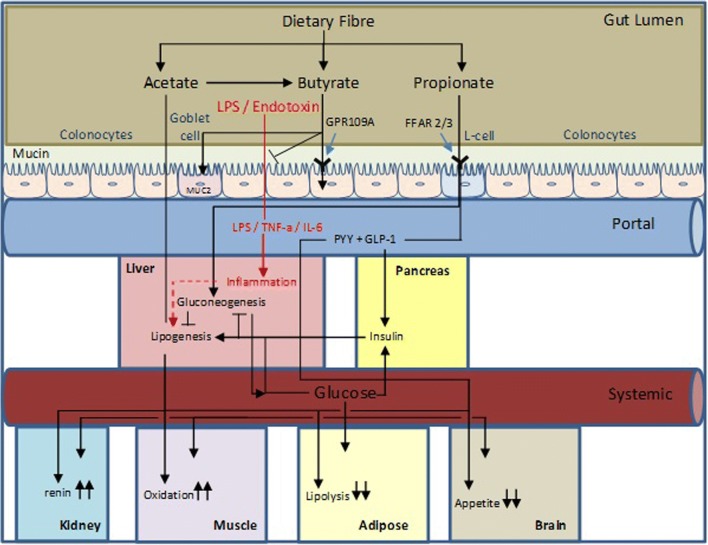
PURPOSE OF THIS REVIEW: This review assesses the latest evidence linking short-chain fatty acids (SCFA) with host metabolic health and cardiovascular disease (CVD) risk and presents the latest evidence on possible biological mechanisms. RECENT FINDINGS: SCFA have a range of effects locally in the gut and at both splanchnic and peripheral tissues which together appear to induce improved metabolic regulation and have direct and indirect effects on markers of CVD risk. SCFA produced primarily from the microbial fermentation of dietary fibre appear to be key mediators of the beneficial effects elicited by the gut microbiome. Not only does dietary fibre fermentation regulate microbial activity in the gut, SCFA also directly modulate host health through a range of tissue-specific mechanisms related to gut barrier function, glucose homeostasis, immunomodulation, appetite regulation and obesity. With the increasing burden of obesity worldwide, the role for gut microbiota-generated SCFA in protecting against the effects of energy dense diets offers an intriguing new avenue for regulating metabolic health and CVD risk.
Overview
The claims and statistics of this paper haven’t been checked yet.
Free: it reads the open-access text and checks the first 5 claims that cite a source we can check. Create a free account to check every claim.
Integrity signals
Registry
Cites
Statistics
Figures
Verification
Claims the paper makes
The claims and statistics of this paper haven’t been checked yet.
Free: it reads the open-access text and checks the first 5 claims that cite a source we can check. Create a free account to check every claim.
Claims other papers make about this one
Each is checked against this paper’s own text: does it say what the citing paper says it does?
The cited source says what the claim attributes to it.
In the citing paper
“Dietary fiber may induce an array of metabolic effects [219], including reduced systemic inflammation by regulating cytokine expression, primarily interleukin-18, improved fat oxidation and insulin sensitivity [220,221,222,223].”
From Impact of Protein Intake in Older Adults with Sarcopenia and Obesity: A Gut Microbiota Perspective (2020) · cites this paper as [220]
Self-check
Percentages, sums and reported differences re-computed from the paper’s own numbers.
The self-check needs the paper’s full text.
Citations
Cites
Diet rapidly and reproducibly alters the human gut microbiome
David, L. A., Maurice, C. F., Carmody, R. N., Gootenberg, D. B., Button, J. E., Wolfe, B. E., Ling, A. V., Devlin, A. S., Varma, Y., Fischbach, M. A., et al. (2014) · Nature · doi:10.1038/nature12820 · Cited by 10,100
Heart Disease and Stroke Statistics—2016 Update: A Report From the American Heart Association
Mozaffarian, D., Benjamin, E. J., Go, A. S., Arnett, D. K., Blaha, M. J., Cushman, M., Das, S. R., de Ferranti, S., Després, J.-P., Fullerton, H. J., et al. (2016) · Circulation · doi:10.1161/cir.0000000000000350 · Cited by 6,596
Commensal microbe-derived butyrate induces the differentiation of colonic regulatory T cells
Furusawa, Y., Obata, Y., Fukuda, S., Endo, T. A., Nakato, G., Takahashi, D., Nakanishi, Y., Uetake, C., Kato, K., Kato, T., et al. (2013) · Nature · doi:10.1038/nature12721 · Cited by 5,549
Metabolites produced by commensal bacteria promote peripheral regulatory T-cell generation
Arpaia, N., Campbell, C., Fan, X., Dikiy, S., van der Veeken, J., deRoos, P., Liu, H., Cross, J. R., Pfeffer, K., Coffer, P. J., et al. (2013) · Nature · doi:10.1038/nature12726 · Cited by 4,838
Formation of short chain fatty acids by the gut microbiota and their impact on human metabolism
Morrison, D. J., & Preston, T. (2016) · Gut Microbes · doi:10.1080/19490976.2015.1134082 · Cited by 3,781
Self-citationGlobal atlas on cardiovascular disease prevention and control.
Mendis, S., Puska, P., & Norrving, B. G. (2011) · Virtual Defense Library (Ministerio de Defensa) · Cited by 3,438
Tolhurst, G., Heffron, H., Lam, Y. S., Parker, H. E., Habib, A. M., Diakogiannaki, E., Cameron, J., Grosse, J., Reimann, F., & Gribble, F. M. (2012) · Diabetes · doi:10.2337/db11-1019 · Cited by 2,404
Singh, N., Gurav, A., Sivaprakasam, S., Brady, E., Padia, R., Shi, H., Thangaraju, M., Prasad, P. D., Manicassamy, S., Munn, D. H., et al. (2014) · Immunity · doi:10.1016/j.immuni.2013.12.007 · Cited by 2,368
Microbiota-Generated Metabolites Promote Metabolic Benefits via Gut-Brain Neural Circuits
De Vadder, F., Kovatcheva-Datchary, P., Goncalves, D., Vinera, J., Zitoun, C., Duchampt, A., Bäckhed, F., & Mithieux, G. (2014) · Cell · doi:10.1016/j.cell.2013.12.016 · Cited by 2,200
Cited by
Items 101–200 of 732
Kaur, H., Golovko, S., Golovko, M. Y., Singh, S., Darland, D. C., & Combs, C. K. (2020) · Journal of Alzheimer’s Disease · doi:10.3233/jad-200436 · Cited by 76
Gut Microbiome: Profound Implications for Diet and Disease
Hills, R. D., Pontefract, B., Mishcon, H. R., Black, C. A., Sutton, S. C., & Theberge, C. R. (2022) · Kompass Nutrition & Dietetics · doi:10.1159/000523712 · Cited by 87
“Short-chain fatty acids (SCFAs) have attracted considerable attention for their role in human health [28].”
BackgroundInfluentialRole of the Gut Microbiome in the Development of Atherosclerotic Cardiovascular Disease
Samarraie, A. A., Pichette, M., & Rousseau, G. (2023) · International Journal of Molecular Sciences · doi:10.3390/ijms24065420 · Cited by 90
“The most frequent SCFAs produced are acetate, butyrate, and propionate [31].”
BackgroundThe role of bread in the UK diet: An update
Lockyer, S., & Spiro, A. (2020) · Nutrition Bulletin · doi:10.1111/nbu.12435 · Cited by 83
Artificial intelligence and synthetic biology approaches for human gut microbiome
Kumar, P., Sinha, R., & Shukla, P. (2022) · Critical Reviews in Food Science and Nutrition · doi:10.1080/10408398.2020.1850415 · Cited by 71
Murakami, R., Hashikura, N., Yoshida, K., Xiao, J., & Odamaki, T. (2021) · Food Research International · doi:10.1016/j.foodres.2021.110326 · Cited by 80
Effect of Diet on the Gut Microbiota Associated with Obesity
Kim, B., Choi, H., & Yim, J. (2019) · Journal of Obesity & Metabolic Syndrome · doi:10.7570/jomes.2019.28.4.216 · Cited by 86
St‐Onge, M., & Zuraikat, F. M. (2019) · Current Atherosclerosis Reports · doi:10.1007/s11883-019-0772-z · Cited by 84
Alexandrov, P., Zhai, Y., Li, W., & Lukiw, W. (2019) · Folia Neuropathologica · doi:10.5114/fn.2019.88449 · Cited by 72
“fragilis), as a normal commensal microbe of the human GI-tract, are thought to be ordinarily beneficial to human health due to their multiple capabilities: (i) to biosynthesize useful metabolic co-factors and products such as polysaccharides, transport proteins, volatile fatty acids and other nutrients [9,14,47,62,74]…”
BackgroundInsights into the Role of Human Gut Microbiota in Clostridioides difficile Infection
Kachrimanidou, M., & Tsintarakis, E. (2020) · Microorganisms · doi:10.3390/microorganisms8020200 · Cited by 82
“The positive patients had a decrease in Bacteroides, Prevotella, and Bifobacteria genera and an increase in the members of the Lactobacillaceae and Enterobacteriaceae families [63,64].”
BackgroundLuo, Y., Yang, L.-L., & Yao, X. (2024) · Molecular Neurodegeneration · doi:10.1186/s13024-024-00720-0 · Cited by 79
Yu, W., Sun, S., Yan, Y., Zhou, H., Liu, Z., & Fu, Q. (2025) · Frontiers in Immunology · doi:10.3389/fimmu.2025.1519925 · Cited by 82
Fidélix, M. P., Milenković, D., Sivieri, K., & Cesar, T. B. (2020) · Food & Function · doi:10.1039/c9fo02623a · Cited by 75
Handakas, E., Chang, K., Khandpur, N., Vamos, E. P., Millett, C., Sassi, F., Vineis, P., & Robinson, O. (2022) · Clinical Nutrition · doi:10.1016/j.clnu.2022.09.002 · Cited by 62
Verdugo‐Meza, A., Ye, J., Dadlani, H., Ghosh, S., & Gibson, D. L. (2020) · Nutrients · doi:10.3390/nu12051434 · Cited by 72
“SCFA Control systemic energy metabolism and regulate intestinal immune response [143].”
BackgroundMicrobiota and body weight control: Weight watchers within?
Boscaini, S., Leigh, S., Lavelle, A., García‐Cabrerizo, R., Lipuma, T., Clarke, G. A., Schellekens, H., & Cryan, J. F. (2021) · Molecular Metabolism · doi:10.1016/j.molmet.2021.101427 · Cited by 74
Deciphering the Anti-obesity Benefits of Resveratrol: The “Gut Microbiota-Adipose Tissue” Axis
Zhou, L., Xiao, X., Zhang, Q., Zheng, J., & Deng, M. (2019) · Frontiers in Endocrinology · doi:10.3389/fendo.2019.00413 · Cited by 69
Li, Z., Zhou, E., Liu, C., Wicks, H., Yildiz, S., Razack, F., Ying, Z., Kooijman, S., Koonen, D. P. Y., Heijink, M., et al. (2023) · JCI Insight · doi:10.1172/jci.insight.166655 · Cited by 68
“JCI Insight 2023;8(4):e166655 https://doi.”
BackgroundGalié, S., García-Gavilán, J. F., Papandreou, C., Camacho‐Barcia, L., Arcelin, P., Galindo, A. P., Rabassa, A., & Bulló, M. (2021) · Clinical Nutrition · doi:10.1016/j.clnu.2021.04.028 · Cited by 68
Abnormal composition of microbiota in the gut and skin of imiquimod-treated mice
Shinno-Hashimoto, H., Hashimoto, Y., Wei, Y., Chang, L., Fujita, Y., Ishima, T., Matsue, H., & Hashimoto, K. (2021) · Scientific Reports · doi:10.1038/s41598-021-90480-4 · Cited by 66
Impact of Phlorotannin Extracts from Fucus vesiculosus on Human Gut Microbiota
Catarino, M. D., Marçal, C., Bonifácio-Lopes, T., Campos, D. A., Mateus, N. F. D. C. B., Silva, A. M. S., Pintado, M. M., & Cardoso, S. M. (2021) · Marine Drugs · doi:10.3390/md19070375 · Cited by 65
“In particular, acetate plays a very important role in energy homeostasis, contributing to appetite regulation, promoting fat oxidation, improving insulin sensitivity and glucose homeostasis, and enhancing the inflammatory status [45].”
BackgroundThe impact of gut microbiota metabolites on cellular bioenergetics and cardiometabolic health
Tomášová, L., Grman, M., Ondriaš, K., & Ufnal, M. (2021) · Nutrition & Metabolism · doi:10.1186/s12986-021-00598-5 · Cited by 70
Casirati, A., Somaschini, A., Perrone, M., Vandoni, G., Sebastiani, F., Montagna, E., Somaschini, M., & Caccialanza, R. (2022) · Frontiers in Nutrition · doi:10.3389/fnut.2022.978271 · Cited by 70
Gut microbiota dysbiosis in preeclampsia patients in the second and third trimesters
Wang, J., Shi, Z., Yang, J., Wei, Y., Wang, X.-Y., & Zhao, Y. (2020) · Chinese Medical Journal · doi:10.1097/cm9.0000000000000734 · Cited by 67
Review of short-chain fatty acids effects on the immune system and cancer
Fattahi, Y., Heidari, H. R., & Khosroushahi, A. Y. (2020) · Food Bioscience · doi:10.1016/j.fbio.2020.100793 · Cited by 64
Kim, S., Park, S., Choi, T. G., & Kim, S. S. (2022) · Nutrients · doi:10.3390/nu14142982 · Cited by 71
Psoriasis: Interplay between dysbiosis and host immune system
Kapoor, B., Gulati, M., Rani, P., & Gupta, R. (2022) · Autoimmunity Reviews · doi:10.1016/j.autrev.2022.103169 · Cited by 65
Microbiota-Mitochondria Inter-Talk: A Potential Therapeutic Strategy in Obesity and Type 2 Diabetes
Vezza, T., Abad‐Jiménez, Z., Martí‐Cabrera, M., Rocha, M., & Víctor, V. M. (2020) · Antioxidants · doi:10.3390/antiox9090848 · Cited by 68
“Both soluble and insoluble fibers play essential roles at the intestinal level by ameliorating oxidative status and mucosal inflammation and regulating transepithelial fluid transport, as well as reinforcing the epithelial defense barrier [95].”
BackgroundSowah, S. A., Milanese, A., Schübel, R., Wirbel, J., Kartal, E., Johnson, T., Hirche, F., Grafetstätter, M., Nonnenmacher, T., Kirsten, R., et al. (2022) · Genome Medicine · doi:10.1186/s13073-022-01030-0 · Cited by 67
“, short-chain fatty acids (SCFAs) [6], secondary bile acids [7], trimethylamine-N-Oxide (TMAO) [8] or amino acids [9], acting locally or systemically, may mediate the links between the gut microbiome, obesity, and obesityassociated chronic diseases.”
BackgroundDifferential Gut Microbiota Compositions Related With the Severity of Major Depressive Disorder
Zhong, Q., Chen, J., Wang, Y., Shao, W., Zhou, C., & Xie, P. (2022) · Frontiers in Cellular and Infection Microbiology · doi:10.3389/fcimb.2022.907239 · Cited by 64
Dietary Fat Modulation of Gut Microbiota and Impact on Regulatory Pathways Controlling Food Intake
Hamamah, S., Amin, A., Al-Kassir, A. L., Chuang, J., & Covașă, M. (2023) · Nutrients · doi:10.3390/nu15153365 · Cited by 65
Back to the Roots: Revisiting the Use of the Fiber-Rich Cichorium intybus L. Taproots
Puhlmann, M.-L., & de Vos, W. M. (2020) · Advances in Nutrition · doi:10.1093/advances/nmaa025 · Cited by 63
Far, M. E., Durand, M., Turcotte, I., Larouche-Anctil, E., Sylla, M., Zaidan, S., Chartrand‐Lefebvre, C., Bunet, R., Ramani, H., Sadouni, M., et al. (2021) · Frontiers in Immunology · doi:10.3389/fimmu.2021.664371 · Cited by 63
Sost, M. M., Ahles, S., Verhoeven, J., Verbruggen, S. E. L., Stevens, Y., & Venema, K. (2021) · Nutrients · doi:10.3390/nu13113915 · Cited by 60
“Acetate has been shown to be the main energy source for the liver and is also used for lipogenesis in adipose tissue, and oxidized by muscle and brain cells [53,54].”
BackgroundBanasiewicz, T., Domagalska, D., Borycka-Kiciak, K., & Rydzewska, G. M. (2020) · Gastroenterology Review · doi:10.5114/pg.2020.95556 · Cited by 70
“Recently, it has been stressed that SCFA affect not only processes occurring in the lumen of the gastrointestinal tract but also other systems and organs, such as circulatory or nervous systems, through mechanisms associated with the intestinal barrier, carbohydrate metabolism, immunomodulation, and appetite control,…”
BackgroundSadeghi, A., Ebrahimi, M. T., Kharazmi, M. S., & Jafari, S. M. (2023) · Food Chemistry · doi:10.1016/j.foodchem.2023.135478 · Cited by 59
The Role of the Gut Microbiome and Trimethylamine Oxide in Atherosclerosis and Age-Related Disease
Hage, R. E., Al-Arawe, N., & Hinterseher, I. (2023) · International Journal of Molecular Sciences · doi:10.3390/ijms24032399 · Cited by 62
“NDCs are an important fraction of dietary fibers, and SCFAs are the main products of the favorable saccharolytic fermentation of NDC in the gut [62].”
BackgroundYntema, T., Koonen, D. P. Y., & Kuipers, F. (2023) · Nutrients · doi:10.3390/nu15081850 · Cited by 60
“In addition, the gut microbiota has been implicated in CVD through the actions of microbiota-derived metabolites, such as short-chain fatty acids (SCFAs) [13], trimethylamine (TMA) [14], and bile acids (BAs) [15]; the latter will be elaborated on in this review.”
BackgroundThe Interface of Vibrio cholerae and the Gut Microbiome
Cho, J. Y., Liu, R., Macbeth, J. C., & Hsiao, A. (2021) · Gut Microbes · doi:10.1080/19490976.2021.1937015 · Cited by 61
Zhong, S.-R., Kuang, Q., Zhang, F., Chen, B., & Zhong, Z.-G. (2021) · Translational Neuroscience · doi:10.1515/tnsci-2020-0206 · Cited by 59
“The gut microbiota ecosystem is beneficial to human health in several ways: (1) Biosynthesis of metabolic co-factors, polysaccharides, and fatty acids to supplement host nutrition [35,36]; (2) Metabolism of products such as cleavage of dietary fiber into short-chain fatty acids (SCFAs), which can modulate intestinal e…”
BackgroundColosimo, R., Warren, F. J., Edwards, C. H., Ryden, P., Dyer, P. S., Finnigan, T. J. A., & Wilde, P. J. (2021) · Trends in Food Science & Technology · doi:10.1016/j.tifs.2021.02.001 · Cited by 58
Li, J. H., Gu, F. T., Yang, Y., Zhao, Z. C., Huang, L. X., Zhu, Y. Y., Chen, S., & Wu, J. (2024) · Carbohydrate Polymers · doi:10.1016/j.carbpol.2024.122478 · Cited by 58
Dai, D., Qi, G., Wang, J., Zhang, H., Qiu, K., Han, Y., Wu, Y., & Wu, S. (2022) · Journal of Animal Science and Biotechnology/Journal of animal science and biotechnology · doi:10.1186/s40104-022-00776-2 · Cited by 57
Link between Viral Infections, Immune System, Inflammation and Diet
Suardi, C., Cazzaniga, E., Graci, S., Dongo, D., & Palestini, P. (2021) · International Journal of Environmental Research and Public Health · doi:10.3390/ijerph18052455 · Cited by 59
“Dietary changes towards a western diet rich in fats and proteins and low in fiber, fruits, and vegetables, increase the risk of chronic immune diseases, such as inflammatory bowel disease [53].”
BackgroundXie, M., Tao, W., Wu, F., Wu, K., Huang, X., Ling, G., Zhao, C., Lv, Q., Wang, Q., Zhou, X., et al. (2021) · International Journal of Biological Macromolecules · doi:10.1016/j.ijbiomac.2021.07.008 · Cited by 57
Kan, J., Cheng, J., Xu, L., Hood, M. M., Zhong, D.-F., Cheng, M., Liu, Y., Chen, L., & Du, J. C. (2019) · European Journal of Nutrition · doi:10.1007/s00394-019-02020-6 · Cited by 58
Wouk, J., Dekker, R. F. H., de Queiroz, E. A. I. F., & Barbosa‐Dekker, A. M. (2021) · International Journal of Biological Macromolecules · doi:10.1016/j.ijbiomac.2021.02.087 · Cited by 59
Carey, R. A., & Montag, D. (2021) · BMJ Open Sport & Exercise Medicine · doi:10.1136/bmjsem-2020-000930 · Cited by 63
“16 There is evidence that the effects of SCFAs in health and disease are diverse, 17–19 and the expression of these receptors throughout the body supports the hypothesis that SCFAs are essential in physiological signalling and control of metabolism throughout multiple organs.”
BackgroundMethodNagano, T., Arai, Y., Yano, H., Aoki, T., Kurihara, S., Hirano, R., & Nishinari, K. (2020) · Food Hydrocolloids · doi:10.1016/j.foodhyd.2020.105964 · Cited by 57
Almugadam, B. S., Liu, Y., Chen, S.-M., Wang, C., Shao, C., Ren, B.-W., Tang, L., & Hatziagelaki, E. E. (2020) · Journal of Diabetes Research · doi:10.1155/2020/7253978 · Cited by 56
“Modern studies showed that SCFAs improve blood glucose level and metabolic syndrome [33].”
BackgroundHuang, W.-C., Tung, C., Yang, Y. S. H., Lin, I., Ng, X. E., & Tung, Y. (2022) · Scientific Reports · doi:10.1038/s41598-022-07317-x · Cited by 55
Lipids in Clinical Nutrition and Health: Narrative Review and Dietary Recommendations
Frydrych, A., Kulita, K., Jurowski, K., & Piekoszewski, W. (2025) · Foods · doi:10.3390/foods14030473 · Cited by 65
“The removal of bacterial flora (germ-free) in mice is associated with several immune-mediated abnormalities including a thinner epithelial mucus layer and an impaired structure of lymphoid organs [89,90].”
du Preez, R., Majzoub, M. E., Thomas, T., Panchal, S. K., & Brown, L. (2020) · Metabolites · doi:10.3390/metabo10120500 · Cited by 53
“These effects are likely due to dietary fibre increasing SCFA production as SCFAs are used as an energy source by selected gut microbiota.”
BackgroundInfluentialDietary fibre complexity and its influence on functional groups of the human gut microbiota
Louis, P., Solvang, M., Duncan, S. H., Walker, A. W., & Mukhopadhya, I. (2021) · Proceedings of The Nutrition Society · doi:10.1017/s0029665121003694 · Cited by 53
“These SCFA influence gut and systemic health via several mechanistic routes, including by interaction with host receptors, which has been reviewed elsewhere((11)).”
BackgroundJeong, S., Chokkalla, A. K., Davis, C. K., & Vemuganti, R. (2023) · Molecular Psychiatry · doi:10.1038/s41380-023-02099-8 · Cited by 54
Yuan, T., Yin, Z., Yan, Z., Hao, Q., Zeng, J., Li, L., & Zhao, J. (2020) · Fitoterapia · doi:10.1016/j.fitote.2020.104665 · Cited by 52
The gut microbiome and microbial metabolites in acute myocardial infarction
Liu, C., Sun, Z., Shali, S., Mei, Z., Chang, S., Mo, H., Xu, L., Pu, Y., Guan, H., Chen, G., et al. (2021) · Journal of genetics and genomics/Journal of Genetics and Genomics · doi:10.1016/j.jgg.2021.12.007 · Cited by 54
Khaledi, M., Poureslamfar, B., Alsaab, H. O., Tafaghodi, S., Hjazi, A. M., Singh, R., Alawadi, A. H., Alsaalamy, A. H., Qasim, Q. A., & Sameni, F. (2024) · Annals of Microbiology · doi:10.1186/s13213-023-01744-5 · Cited by 59
“…by antibiotic treatment (Wood-mansey et al. 2004), which are vital biological regulators of immunological responses and modulators of inflammation in older adults, and are produced as key metabolites during bacterial fermentation (Chambers et al. 2018; Ríos-Covián et al. 2016; Sanna et al. 2019).”
BackgroundTengeler, A. C., Gart, E., Wiesmann, M., Arnoldussen, I. A. C., van Duyvenvoorde, W., Hoogstad, M., Dederen, P. J. W. C., Verweij, V., Geenen, B., Kozicz, T., et al. (2020) · The FASEB Journal · doi:10.1096/fj.202000455r · Cited by 52
Dietary Fatty Acids and Microbiota-Brain Communication in Neuropsychiatric Diseases
Marrone, M. C., & Coccurello, R. (2019) · Biomolecules · doi:10.3390/biom10010012 · Cited by 45
Pohl, A., Schünemann, F., Bersiner, K., & Gehlert, S. (2021) · Nutrients · doi:10.3390/nu13113884 · Cited by 49
Pedrosa, L. D. F., Raz, A., & Fabi, J. P. (2022) · Biomolecules · doi:10.3390/biom12020289 · Cited by 54
Short-chain fatty acids as a link between diet and cardiometabolic risk: a narrative review
Birkeland, E., Gharagozlian, S., Valeur, J., & Aas, A. (2023) · Lipids in Health and Disease · doi:10.1186/s12944-023-01803-5 · Cited by 52
Chen, H., Fu, X., Wu, X., Zhao, J., Qiu, F., Wang, Z., Wang, Z., Chen, X., Xie, D., Huang, J., et al. (2024) · Bone Research · doi:10.1038/s41413-024-00336-6 · Cited by 49
“73 We performed prediction of functional pro fi les based on 16S rRNA gene sequencing data of C57BL/6J and DBA/1J mice, and also conducted targeted and untargeted metabolomics using plasma samples of RA patients and HC individuals.”
MethodYang, J., Chen, W., Chen, J., Xie, D., Wang, Y., & Zhou, J. (2025) · Advances in Nutrition · doi:10.1016/j.advnut.2025.100545 · Cited by 53
“At the genus level, Bifidobacterium and Lactobacillus are the dominant species which make an indispensable contribution to intestinal health [107].”
Łagowska, K., Malinowska, A. M., Zawieja, B. E., & Zawieja, E. E. (2020) · Scientific Reports · doi:10.1038/s41598-020-74773-8 · Cited by 49
Nutrition and Human Health Benefits of Dry Beans and Other Pulses
Didinger, C., Foster, M. T., Bunning, M., & Thompson, H. J. (2021) · Wiley eBooks · doi:10.1002/9781119776802.ch19 · Cited by 64
Bailey, M. J., Holzhausen, E. A., Morgan, Z. E. M., Naik, N. C., Shaffer, J. P., Liang, D., Chang, H. H., Sarnat, J. A., Sun, S., Berger, P. K., et al. (2022) · Gut Microbes · doi:10.1080/19490976.2022.2105096 · Cited by 50
Gut Microbiome in Chronic Coronary Syndrome Patients
Sawicka, E., Bondarczuk, K., Bauer, W., Niemira, M., Szalkowska, A., Raczkowska, J., Kwaśniewski, M., Tarasiuk, E., Dubatówka, M., Łapińska, M., et al. (2021) · Journal of Clinical Medicine · doi:10.3390/jcm10215074 · Cited by 51
“by stimulating the host’s immune system, modulating metabolic health, and improving metrics of cardiovascular risk factors such as blood pressure, metabolism, and the integrity of the intestinal barrier [34].”
BackgroundJuan, Y., Chen, Y., & Xu, M. (2022) · Clinical Immunology · doi:10.1016/j.clim.2022.109013 · Cited by 48
Modulation of gut microbiota in healthy rats after exposure to nutritional supplements
Čoklo, M., Maslov, D. R., & Pavelić, S. K. (2020) · Gut Microbes · doi:10.1080/19490976.2020.1779002 · Cited by 52
Low‐carbohydrate high‐fat weight reduction diet induces changes in human gut microbiota
Jaagura, M., Viiard, E., Karu-Lavits, K., & Adamberg, K. (2021) · MicrobiologyOpen · doi:10.1002/mbo3.1194 · Cited by 52
“Bacterial fermentation of DF has a major influence on intestinal function— the production of organic acids influences glucose and lipid metabolism, the immune system, and hormone secretion (Chambers et al., 2018).”
BackgroundLaBouyer, M., Holtrop, G., Horgan, G. W., Gratz, S. W., Belenguer, Á., Smith, N., Walker, A. W., Duncan, S. H., Johnstone, A. M., Louis, P., et al. (2022) · Gut Microbiome · doi:10.1017/gmb.2022.1 · Cited by 50
“The three predominant SCFA products (acetate, propionate and butyrate) differ in their distribution through the host, modes of action and consequences for health (Chambers et al., 2018).”
BackgroundShort-chain fatty acids: key antiviral mediators of gut microbiota
Xu, Z., Wang, T., Wang, Y., Li, Y., Sun, Y., & Qiu, H. (2025) · Frontiers in Immunology · doi:10.3389/fimmu.2025.1614879 · Cited by 60
Hsu, C., Lu, P., Hou, C., & Tain, Y. (2019) · Journal of Clinical Medicine · doi:10.3390/jcm8081090 · Cited by 47
Wang, Y., Wang, H., Howard, A. G., Meyer, K. A., Tsilimigras, M. C. B., Avery, C. L., Sha, W., Sun, S., Zhang, J., Su, C., et al. (2020) · Nutrients · doi:10.3390/nu12072127 · Cited by 48
“SCFAs like butyrate are major products of microbiota fermentation of dietary carbohydrates, especially soluble fiber and resistant starch [4].”
BackgroundCabral, D. J., Wurster, J. I., Korry, B. J., Penumutchu, S., & Belenky, P. A. (2020) · mSystems · doi:10.1128/msystems.00317-20 · Cited by 48
The Effect of Probiotics in Stroke Treatment
Zhong, D., Li, L., Ma, R.-M., & Deng, Y. (2021) · Evidence-based Complementary and Alternative Medicine · doi:10.1155/2021/4877311 · Cited by 47
Tain, Y., Jheng, L., Chang, S. K. C., Chen, Y., Huang, L., Liao, J.-X., & Hou, C. (2020) · Molecules · doi:10.3390/molecules25184199 · Cited by 46
“Furthermore, SCFAs have recently become popular targets of scientific research aiming to link gut microbiota to pathological conditions and potential health-beneficial effects in humans [17,18].”
BackgroundSemenova, M. G., Antipova, A. S., Martirosova, E. I., Zelikina, D. V., Palmina, N. P., & Chebotarev, S. A. (2021) · Food Hydrocolloids · doi:10.1016/j.foodhyd.2021.106890 · Cited by 48
Khosravi, Z., Hadi, A., Tutunchi, H., Jafarabadi, M. A., Naeinie, F., Roshanravan, N., Ostadrahimi, A., & Fadel, A. (2022) · Clinical Nutrition ESPEN · doi:10.1016/j.clnesp.2022.03.008 · Cited by 45
Chaiwong, S., Chatturong, U., Chanasong, R., Deetud, W., To‐on, K., Puntheeranurak, S., Chulikorn, E., Kajsongkram, T., Raksanoh, V., Chinda, K., et al. (2021) · Journal of Traditional and Complementary Medicine · doi:10.1016/j.jtcme.2021.02.006 · Cited by 46
Chen, S., Yang, M., Wang, R., Fan, X., Tang, T., Li, P., Zhou, X., & Qi, K. (2022) · European Journal of Nutrition · doi:10.1007/s00394-021-02769-9 · Cited by 48
“Members of the Lachnospiraceae family, being able to produce short-chain fatty acid (mainly acetate, propionate, and butyrate), are hypothesized to contribute to obesity by upregulating lipogenesis and altering immune responses to gut flora and their metabolites [68, 69].”
BackgroundWang, Y., Jia, X., & Cong, B. (2024) · Frontiers in Microbiology · doi:10.3389/fmicb.2024.1396031 · Cited by 51
“…the proliferation of colonic epithelial L cells and are bound to GPR43 above them, increasing intracytoplasmic calcium ion and cyclic adenosine cAMP concentrations and increasing GLP-1 secretion (Chambers et al., 2018; Rodriguez et al., 2018) which inhibits glucose uptake by intestinal wall cells.”
BackgroundLi, J., Zhao, J., Tian, C., Dong, L., Kang, Z., Wang, J., Zhao, S., Li, M., & Tong, X. (2024) · Nutrition & Metabolism · doi:10.1186/s12986-024-00829-5 · Cited by 44
Kumari, T., Bag, K. K., Das, A. B., & Deka, S. C. (2024) · Food Bioengineering · doi:10.1002/fbe2.12107 · Cited by 49
Nolan, R., Shannon, O. M., Robinson, N., Joel, A., Houghton, D., & Malcomson, F. C. (2020) · Nutrients · doi:10.3390/nu12051398 · Cited by 52
Consumer perceptions of functional foods: a scoping review focusing on non-processed foods
Ponte, L. G. S., Ribeiro, S. F., Pereira, J. C. V., Antunes, A. E. C., Bezerra, R. M. N., & da Cunha, D. T. (2025) · Food Reviews International · doi:10.1080/87559129.2025.2453030 · Cited by 43
Gut Microbiome-Based Diagnostic Model to Predict Coronary Artery Disease
Zheng, Y., Wu, T., Liu, Z., Li, A., Guo, Q., Ma, Y., Zhang, Z.-L., Xun, Y.-L., Zhang, J., Wang, W.-R., et al. (2020) · Journal of Agricultural and Food Chemistry · doi:10.1021/acs.jafc.0c00225 · Cited by 47
Immune System Modulations by Products of the Gut Microbiota
Chénard, T., Prévost, K., Dubé, J., & Massé, É. (2020) · Vaccines · doi:10.3390/vaccines8030461 · Cited by 44
“SCFA, fatty acids with less than six carbon atoms, are byproducts of the saccharolytic fermentation (converting hexoses to pyruvate) of non-digestible carbohydrates through various bacteria of the microbiome, and have a large number of potential positive effects on the hosts immune system [10].”
BackgroundMoles, L., Delgado, S., Gorostidi-Aicua, M., Sepúlveda, L., Alberro, A., Iparraguirre, L., Suárez, J. A., Romarate, L., Arruti, M., Castillo‐Triviño, T., et al. (2022) · Frontiers in Immunology · doi:10.3389/fimmu.2022.960761 · Cited by 45
van den Brûle, S., Rappe, M., Ambroise, J., Bouzin, C., Dessy, C., Paquot, A., Muccioli, G. G., & Lison, D. (2021) · Particle and Fibre Toxicology · doi:10.1186/s12989-021-00400-7 · Cited by 42
Perez, L., Scarcello, E., Ibouraadaten, S., Yakoub, Y., Leinardi, R., Ambroise, J., Bearzatto, B., Gala, J., Paquot, A., Muccioli, G. G., et al. (2021) · Food and Chemical Toxicology · doi:10.1016/j.fct.2021.112352 · Cited by 43
Gut Microbiome-Based Diagnostic Model to Predict Diabetes Mellitus
Yang, H.-T., Liu, J., Xiu, W., Yang, Y., Zheng, Y.-Y., Hou, X., Wu, T.-T., wu, C., & Xie, X. (2021) · Bioengineered · doi:10.1080/21655979.2021.2009752 · Cited by 42
“The genus Alistipes is currently considered to be a bacterium that produces short-chain fatty acids (SCFAs), which have a number of potential roles in modulating metabolic health and DM risk factors, such as blood glucose regulation and metabolic regulation, and maintaining the integrity of the intestinal barrier [25].”
BackgroundOudat, Q., & Okour, A. (2025) · Acta Microbiologica Hellenica · doi:10.3390/amh70010005 · Cited by 52
“…intestinal homeostasis through specific signaling pathways, promote cellular metabolism via SCFA-mediated transporters, and improve metabolic regulation while reducing cardiovascular disease risk, highlighting their critical role in supporting metabolic health and weight management [15,17,18].”
Stanimirov, B., Đanić, M., Pavlović, N., Zaklan, D., Lazarević, S., Mikov, M., & Stankov, K. (2025) · International Journal of Molecular Sciences · doi:10.3390/ijms262412167 · Cited by 44
“…by fibre-fermenting taxa (e.g., Faecalibacterium , Roseburia , Anaerostipes ), activate FFAR2/3 on enteroendocrine L cells, stimulate GLP-1 and PYY secretion, and upregulate intestinal expression of both TGR5 and FXR, thereby increasing sensitivity to secondary bile acid signaling [157,158].”
Thiruvengadam, M., Subramanian, U., Venkidasamy, B., Thirupathi, P., Samynathan, R., Shariati, M. A., Ребезов, М. Б., Chung, I., & Rengasamy, K. R. R. (2021) · Critical Reviews in Food Science and Nutrition · doi:10.1080/10408398.2021.1954874 · Cited by 42
“In addition, they are fermented by the gut microbial flora to produce SCFAs such as acetate, butyrate, and propionate (Fernandes et al. 2014; Chambers et al. 2018).”
BackgroundGut-Brain Axis and Neurological Disorders-How Microbiomes Affect our Mental Health
Bhatia, N. Y., Jalgaonkar, M. P., Hargude, A. B., Sherje, A. P., Oza, M. J., & Doshi, G. (2022) · CNS & Neurological Disorders - Drug Targets · doi:10.2174/1871527321666220822172039 · Cited by 44
Protein- and Calcium-Mediated GLP-1 Secretion: A Narrative Review
Watkins, J. D., Koumanov, F., & Gonzalez, J. T. (2021) · Advances in Nutrition · doi:10.1093/advances/nmab078 · Cited by 40
Effects of valerate on intestinal barrier function in cultured Caco-2 epithelial cell monolayers
Gao, G., Zhou, J., Wang, H., Ding, Y., Zhou, J., Chong, P. H., Zhu, L., Ke, L., Wang, X., Rao, P., et al. (2022) · Molecular Biology Reports · doi:10.1007/s11033-021-06991-w · Cited by 40
“Mounting evidence implicated that it plays a vital role in maintaining intestinal and immune homeostasis [2, 3], preventing the metabolic syndrome [4], cancer [5], and cardiovascular disease [6].”
Background
Metadata
- Authors
- Chambers, E. S., Preston, T., Frost, G., & Morrison, D. J.
- Affiliations
- Hammersmith Hospital (GB)
- Scottish Universities Environmental Research Centre (GB)
- Corresponding author
- Morrison, Douglas J.
- Venue
- Current Nutrition Reports
- Published
- 2018-09-28
- Volume
- 7
- Issue
- 4
- Pages
- 198-206
- ISSN
- 2161-3311 (ISSN-L)
- PMC
- PMC6244749
- OpenAlex
- W2894133314
- Cited by
- 691
- References
- 93
- Citations by year
- 2026: 72 · 2025: 90 · 2024: 86 · 2023: 88 · 2022: 93 · 2021: 129 · 2020: 95 · 2019: 34 · 2018: 3
- FWCI
- 6.40
- Type
- journal article
- Language
- en
- Open access
- hybrid
- doi.org
- Licence
- cc-by
- creativecommons.org/licenses/by/4.0 (tdm)
- Locations
- Current Nutrition Reports (publishedVersion, cc-by)
- Europe PMC (PubMed Central) (publishedVersion, other-oa)
- PubMed Central (publishedVersion, cc-by)
- PubMed (publishedVersion)
- ENLIGHTEN (Jurnal Bimbingan dan Konseling Islam) (acceptedVersion, cc-by-sa)
- Funders
- University of Glasgow
- Topics
- Life Sciences › Biochemistry, Genetics and Molecular Biology › Molecular Biology › Gut microbiota and health
- Health Sciences › Nursing › Nutrition and Dietetics › Microbial Metabolites in Food Biotechnology
- Health Sciences › Medicine › Public Health, Environmental and Occupational Health › Nutritional Studies and Diet
- Keywords
- short-chain fatty acids, gut microbiota, dietary fiber fermentation, cardiovascular risk, metabolic health, intestinal barrier, glucose homeostasis, immunomodulation, appetite regulation, obesity, energy-dense diet
- MeSH terms
- Gastrointestinal Microbiome, Animals, Bacteria, Cardiovascular Diseases, Dietary Fiber, Energy Metabolism, Fatty Acids, Fermentation, Health Status, Humans, Intestines, Metabolic Diseases, Prognosis, Risk Factors, Risk Assessment, Host-Pathogen Interactions
About these checks
Registry, retraction, Cites and statistics results are computed, not judged, with one exception: a printed reference that no index lists is read once by a model before it counts as a citation error. Claims are extracted by a model and kept only when their quote appears verbatim in the text; each cited source is then checked, with a model’s help, for whether it says what the claim relies on. Those verdicts can be wrong — read the claim’s quote and the cited source before relying on one.
Statistics and arithmetic are recomputed, not judged.
Confidence bands are shown only for fields calibrated on our annotated test set. None is calibrated yet, so no band is shown.
What counts as a claim ›How we measure confidence ›How we check this ›
Are you an author, or do you see a problem with this page? Request a review
Data sources
Bibliographic data: Semantic Scholar, OpenAlex, Crossref.
Contains information from the Semantic Scholar Academic Graph Datasets, made available under the ODC Attribution License (ODC-BY 1.0).
Semantic Scholar’s data is described in: Kinney, R., et al. (2023). The Semantic Scholar Open Data Platform. arXiv:2301.10140.
