

Feedstock choice, pyrolysis temperature and type influence biochar characteristics: a comprehensive meta-data analysis review
Open accessThe DOI matches its Crossref record; 106 of the 106 references it cites were found in a registry or an index.
Abstract
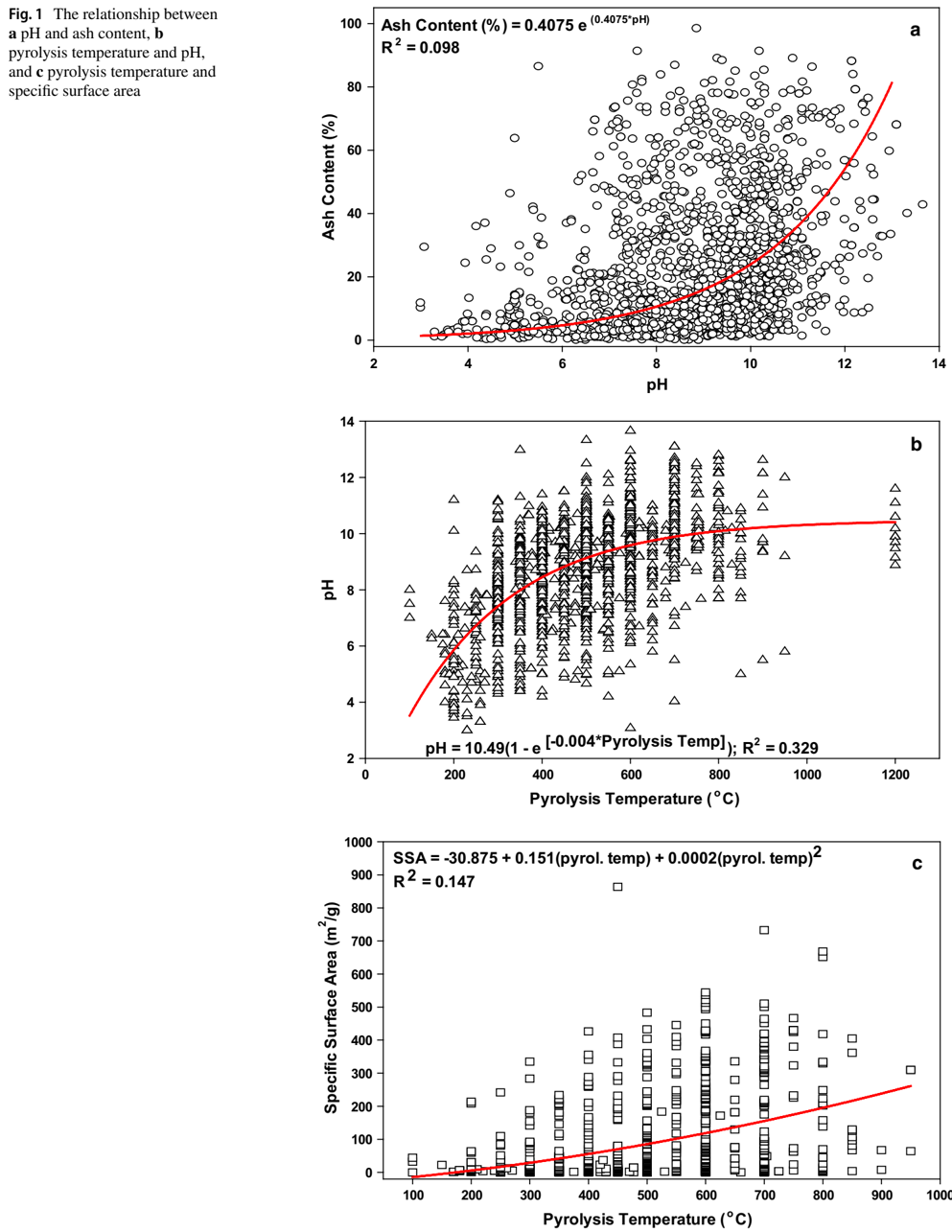
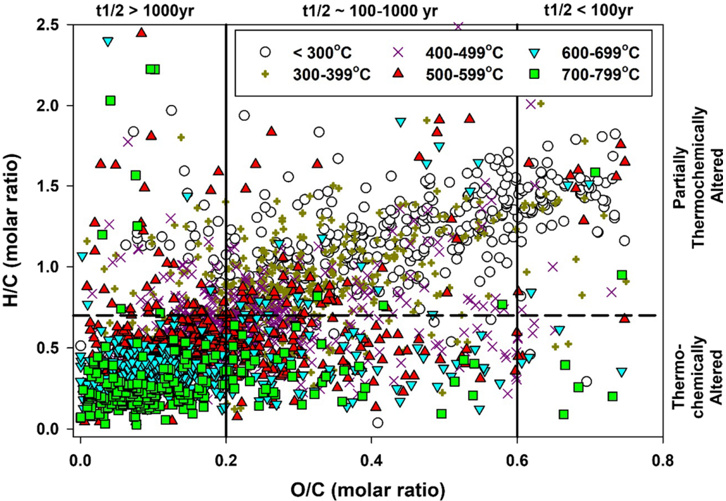
Various studies have established that feedstock choice, pyrolysis temperature, and pyrolysis type influence final biochar physicochemical characteristics. However, overarching analyses of pre-biochar creation choices and correlations to biochar characteristics are severely lacking. Thus, the objective of this work was to help researchers, biochar-stakeholders, and practitioners make more well-informed choices in terms of how these three major parameters influence the final biochar product. Utilizing approximately 5400 peer-reviewed journal articles and over 50,800 individual data points, herein we elucidate the selections that influence final biochar physical and chemical properties, total nutrient content, and perhaps more importantly tools one can use to predict biochar’s nutrient availability. Based on the large dataset collected, it appears that pyrolysis type (fast or slow) plays a minor role in biochar physico- (inorganic) chemical characteristics; few differences were evident between production styles. Pyrolysis temperature, however, affects biochar’s longevity, with pyrolysis temperatures > 500 °C generally leading to longer-term (i.e., > 1000 years) half-lives. Greater pyrolysis temperatures also led to biochars containing greater overall C and specific surface area (SSA), which could promote soil physico-chemical improvements. However, based on the collected data, it appears that feedstock selection has the largest influence on biochar properties. Specific surface area is greatest in wood-based biochars, which in combination with pyrolysis temperature could likely promote greater changes in soil physical characteristics over other feedstock-based biochars. Crop- and other grass-based biochars appear to have cation exchange capacities greater than other biochars, which in combination with pyrolysis temperature could potentially lead to longer-term changes in soil nutrient retention. The collected data also suggest that one can reasonably predict the availability of various biochar nutrients (e.g., N, P, K, Ca, Mg, Fe, and Cu) based on feedstock choice and total nutrient content. Results can be used to create designer biochars to help solve environmental issues and supply a variety of plant-available nutrients for crop growth.
Overview
The claims and statistics of this paper haven’t been checked yet.
Free: it reads the open-access text and checks the first 5 claims that cite a source we can check. Create a free account to check every claim.
Integrity signals
Registry
Cites
Statistics
Figures
Verification
Claims the paper makes
The claims and statistics of this paper haven’t been checked yet.
Free: it reads the open-access text and checks the first 5 claims that cite a source we can check. Create a free account to check every claim.
Claims other papers make about this one
Each is checked against this paper’s own text: does it say what the citing paper says it does?
The source backs part of the claim, not all of it — or backs it for a different population, condition or comparison.
In the citing paper
“Firstly, converting waste biomass into biochar, bio-oil, and syn-gas intrinsically stores 2.20 × 10 9 t CO2e annually, because it turns labile carbon that will be rapidly mineralized into recalcitrant carbon whose half life exceeds 1000 years (Ippolito et al. 2020; Lehmann et al. 2021; Spokas 2010).”
From Role of biochar toward carbon neutrality (2023) · cites this paper as Ippolito et al. 2020
Experimental — accuracy not yet measured
Self-check
Percentages, sums and reported differences re-computed from the paper’s own numbers.
The self-check needs the paper’s full text.
Citations
Cites
Biochar effects on soil biota – A review
Lehmann, J., Rillig, M. C., Thies, J., Masiello, C. A., Hockaday, W. C., & Crowley, D. (2011) · Soil Biology and Biochemistry · doi:10.1016/j.soilbio.2011.04.022 · Cited by 5,074
Biochar for Environmental Management: Science, Technology and Implementation
(2015) · doi:10.4324/9780203762264 · Cited by 2,280
Black Carbon Increases Cation Exchange Capacity in Soils
Liang, B., Lehmann, J., Solomon, D., Kinyangi, J., Grossman, J., O'Neill, B., Skjemstad, J. O., Thies, J., Luizão, F. J., Petersen, J., et al. (2006) · Soil Science Society of America Journal · doi:10.2136/sssaj2005.0383 · Cited by 2,191
Funke, A., & Ziegler, F. (2010) · Biofuels Bioproducts and Biorefining · doi:10.1002/bbb.198 · Cited by 2,001
Lehmann, J., Pereira da Silva, J., Steiner, C., Nehls, T., Zech, W., & Glaser, B. (2003) · Plant and Soil · doi:10.1023/a:1022833116184 · Cited by 1,878
Chen, B., Zhou, D., & Zhu, L. (2008) · Environmental Science & Technology · doi:10.1021/es8002684 · Cited by 1,823
Effect of process parameters on production of biochar from biomass waste through pyrolysis: A review
Tripathi, M., Sahu, J. N., & Ganesan, P. (2016) · Renewable and Sustainable Energy Reviews · doi:10.1016/j.rser.2015.10.122 · Cited by 1,759
Lehmann, J. (2007) · Frontiers in Ecology and the Environment · doi:10.1890/1540-9295(2007)5[381:bitb]2.0.co;2 · Cited by 1,714 · cited 1×
“1a) as also shown by Lehmann (2007).”
The Art, Science, and Technology of Charcoal Production
Antal, M. J., & Grønli, M. (2003) · Industrial & Engineering Chemistry Research · doi:10.1021/ie0207919 · Cited by 1,623
Weber, K., & Quicker, P. (2018) · Fuel · doi:10.1016/j.fuel.2017.12.054 · Cited by 1,522
Research works printed but not linked: 1
- Lissbrant S, Berg WK, Volanec J, Brouder S, Joern B, Cunningham S, Johnson K (2009) Phosphorus and potassium fertilization of alfalfa. Purdue University Extension Bulletin AY-331-W
Cited by
Items 901–1,000 of 1,000
Sofyan, E. T., Livia, K. S., Mulyani, O., Citraresmini, A., & Rachmadi, M. (2026) · International Journal of Life Science and Agriculture Research · doi:10.55677/ijlsar/v05i06y2026-06
Gunn, P. F. E., Liu, Y., Liu, J., Gu, L., & Zhuge, Y. (2026) · Cleaner Materials · doi:10.1016/j.clema.2026.100417
Le, Q. T. N., Lee, G. M., & Hwang, I. (2026) · Journal of environmental chemical engineering · doi:10.1016/j.jece.2026.123639
Chen, Y., 李金英, Xin, X., Lian, J., Hu, X., Hamid, Y., Wang, X., Jiang, J., & Yang, X. (2026) · Journal of Analytical and Applied Pyrolysis · doi:10.1016/j.jaap.2026.107925
Cichy, P., Kalka, J., Żabczyński, S., Wąsik, P., Korus, A., Chabiński, M., & Szlęk, A. (2026) · Applied Sciences · doi:10.3390/app16126104
Babu, C. S., Kumar, V. P., & Sreehari, A. (2026) · International Journal of Advanced Chemistry Research · doi:10.33545/26646781.2026.v8.i6a.686
Khudair, M. Y., Al-yassein, R. N., & Al-Faiz, N. A. (2026) · Asian Journal of Water Environment and Pollution · doi:10.36922/ajwep026140095
Yang, L., Allaoui, B. E., Wu, X., Wu, T., Chai, W. S., & Pang, C. H. (2026) · Bioresource Technology · doi:10.1016/j.biortech.2026.135221
Torboli, A., Fiori, L., Ceccato, R., Maniglio, D., Bruni, L., & Foladori, P. (2026) · Water Science & Technology · doi:10.2166/wst.2026.299
Zhang, S., Jia, J., Guan, H., Ma, Y., Xiao, B., Yuan, H., Wang, Y., Wang, W., & Zhang, B. (2026) · Journal of soil science and plant nutrition · doi:10.1007/s42729-026-03397-0
“Compared to pyrolysis conditions, the selection of biochar feedstock exerts the greatest influence on its characteris - tics (Ippolito et al. 2020 ).”
Multifunctional and sustainable plant-derived superabsorbent polymers for biomedical applications
Snehal, Sapre, N., Salian, A., Singh, P., & Tiwari, R. M. (2026) · Polymer Bulletin · doi:10.1007/s00289-026-06553-9
Park, H. K., Youn, H. S., Lee, J. K., Kim, Y. J., Kim, S., Shin, M. C., & Hwang, J. (2026) · Bioresource Technology · doi:10.1016/j.biortech.2026.135268
Prediction of the effect of biochar on soil CEC improvement based on machine learning
Yang, H., Zhao, C., He, H., Lv, X., Wang, P., Zhi, M., Ma, B., & Chen, A. (2026) · Scientific Reports · doi:10.1038/s41598-026-58902-3
Wan, H., Cao, G., Zhang, X., Xie, N., Ma, J., Di, Y., Ye, H., Hou, J., Wei, Z., Zhang, H., et al. (2026) · Agronomy · doi:10.3390/agronomy16131262
Singh, J., & Verma, M. (2026) · RSC Advances · doi:10.1039/d6ra02626e
Chalatsi-Diamanti, P., Isari, E. A., Grilla, E., Kokkinos, P. A., & Kalavrouziotis, I. K. (2026) · Environments · doi:10.3390/environments13070380
“…are typically classified into three main types based on temperature and residence time: slow, fast, and flash pyrolysis; however, ongoing research continues to expand this spectrum to include innovative variants such as microwave-assisted pyrolysis, co-pyrolysis, wet pyrolysis, etc. [52,53].”
InfluentialNyamador, R. K., Boakye, P., Oduro–Kwarteng, S., Awuah, E., & Buamah, R. A. (2026) · Asian Journal of Water Environment and Pollution · doi:10.36922/ajwep026180121
Jiang, G., Zhang, H., Xu, J., Hao, J., Lu, J., Zhai, Y., & Kong, Y. (2026) · Agronomy · doi:10.3390/agronomy16141329 · Cited by 1
Sani, M. N. H., Vali, N., Ylitervo, P., Pettersson, A., Caspersen, S., Bergstrand, K.-J., Prade, T., & Yong, J. W. H. (2026) · Bioresource Technology Reports · doi:10.1016/j.biteb.2026.102932
БИОЧАР – ИНСТРУМЕНТ ЭКОЛОГИЧЕСКОЙ БИОТЕХНОЛОГИИ
Nurzhanova, A. A., Муратова, А. Ю., Nurmagambetova, A. S., Zhumasheva, Z., & Mamirova, A. (2026) · Experimental biology · doi:10.26577/bb1072202615
Biochar for Improving Soil Quality and Carbon Cycling
Islam, M. Z. A., Aonti, A. J., Sabikunnahar, Sohel, M. M. K., & Hossain, A. (2026) · Springer eBooks · doi:10.1007/978-3-032-19855-6_3
Applications of Artificial Intelligence (AI) and Machine Learning (ML) in Biochar Optimization
Sarowar, S. G., Sen, P., Pal, T., Saha, C., Sarkar, D., Roy, J., Garain, S., & Dutta, S. (2026) · Springer eBooks · doi:10.1007/978-3-032-19855-6_18
Algal Biochar: Production Strategies and Sustainable Application Perspectives
Nath, P., Chanu, Y. N., Paul, T., & Rout, J. (2026) · Springer eBooks · doi:10.1007/978-3-032-19855-6_15
Unsomsri, N., Wiriyasart, S., Sriromreun, P., Koedthong, P., Pantanod, K., Tathaduang, N., Thaneephoon, S., & Kaewluan, S. (2026) · Case Studies in Chemical and Environmental Engineering · doi:10.1016/j.cscee.2026.101454
Converting vineyard by-products into modified biochars for copper remediation in viticultural soils
Henaut, H., Chafik, Y., Sena-Vélez, M., Cagnon, B., Morabito, D., & Bourgerie, S. (2026) · Italian Journal of Agronomy · doi:10.1016/j.ijagro.2026.100111
Mabaso, T. N., & Nyirenda, G. P. (2026) · International Journal of Agriculture and Food Science · doi:10.33545/2664844x.2026.v8.i5h.1723
Biochar effects on tomato fruit quality and volatile compounds
Alam, S. T., Siddiqui, S., Siddiqui, M. H., Ahmad, M. M., & Rao, P. S. (2026) · Discover Plants. · doi:10.1007/s44372-026-00765-z
“Varied biochar nature is one of the key issues because it is highly dependent on the nature of feedstock and conditions of pyrolysis during the process of its production [26].”
Acorn review: Biochar and its applications in US forestry
Dhungel, G., Baker, J. S., Henderson, J. D., & Cook, R. L. (2026) · Forest Ecology and Management · doi:10.1016/j.foreco.2026.124134
Samanhudi, Zhang, L., Bashir, H., Rahayu, M., Setyawati, A., & Iswahyudi (2026) · Gunung Djati Conference Series · doi:10.15575/gdcs.v66i.3388
Chen, Q., Feng, M., & Tian, F. (2026) · Journal of environmental chemical engineering · doi:10.1016/j.jece.2026.124478
Dissanayake, D. K. R. P. L., Omidvar, N., Farrar, M. B., Joseph, S., Guo, L., Reverchon, F., Gallart, M., Kichamu‐Wachira, E., Muqaddas, B., & Bai, S. H. (2026) · GCB Bioenergy · doi:10.1111/gcbb.70165
“P leaching reduced because fertilisers often contain high soluble P that can readily leach by rainfall and irrigation, whereas P in biochar is present in less soluble forms (Glaser and Lehr 2019; Ippolito et al. 2020; Zhang, Ge, et al. 2025).”
Okoye, C. T., Nduka, J. K., & Amanambu, O. V. (2026) · Next Nanotechnology · doi:10.1016/j.nxnano.2026.100676
Kaiaidarova, A. K., Bobrova, V., Kasperovich, A., Lezhnev, S. N., Panin, E., Nechipurenko, S., & Efremov, S. (2026) · Polymers · doi:10.3390/polym18161967
“There are numerous studies in the literature that focus on the effect of processing temperature on the various physical and chemical properties of biomaterials, including their specific surface area [28,29,32,41–43].”
zu Drewer, J. M., Bromm, T., Bucheli, T. D., Conte, P., Arranz, J. M. D. L. R., Fitzek, H., Ghafarpour, A., Glaser, B., Kappler, A. A., Librici, C., et al. (2026) · PLoS ONE · doi:10.1371/journal.pone.0355781
Khan, I., Wang, F., Rehman, A., Nadeem, F., Bashir, W., Liu, T., & Zhuang, P. (2026) · International Journal of Phytoremediation · doi:10.1080/15226514.2026.2705293
Nasir, A. S. M., Bi, X. T., Li, L. Y., & Xiong, Q. (2026) · Chinese Journal of Chemical Engineering · doi:10.1016/j.cjche.2026.08.003
Biochar-Derived Ethylene Scavengers for the Preservation of Bananas
Samson, M. (2026) · RIT Scholar Works (Rochester Institute of Technology)
Hydraulic buffer potential of tailings based geo-composites for mine closure
Wijepala, U., Zhu, Y., Roy, S., Baniasadi, H., & Bordoloi, S. (2026) · Environmental Geotechnics · doi:10.1680/jenge.26.00036
Yorou, M., Tovihoudji, P. G., Abiola, W. A., Yessoufou, M. W. I. A., Zakari, S., & Diogo, R. V. C. (2026) · Frontiers in Sustainable Food Systems · doi:10.3389/fsufs.2026.1871502
Engineered biochar in electrochemical sensing and biosensing
Cancelliere, R., Rea, G., Padilla, A. S., Grattagliano, A., Scroccarello, A., Compagnone, D., & Pelle, F. D. (2026) · Biosensors and Bioelectronics · doi:10.1016/j.bios.2026.119135
Effects of mealworm frass and frass-derived biochar on soil enzyme activity in an arid soil
Sanchez-Hernandez, J. C., Cares, X. A., & Megharaj, M. (2026) · Journal of Arid Environments · doi:10.1016/j.jaridenv.2026.105719
From feedstock to remediation: biochar’s potential in soil restoration
Milone, J., Casas, C., & Vega, A. S. (2026) · Chemistry and Ecology · doi:10.1080/02757540.2026.2718193
“Biochars derived from nutrient-rich materials – such as animal manure, biosolids, and certain crop residues – generally contain higher N concentrations than those produced from lignocellulosic biomass (e.g. wood or fibrous plant materials) [28].”
Li, S., Shi, Y., Ning, X., Gao, Q., Yang, D., & Duan, L. (2026) · Journal of environmental chemical engineering · doi:10.1016/j.jece.2026.124703
Sharma, N., Lal, S., & Bansal, N. (2026) · Journal of Thermoplastic Composite Materials · doi:10.1177/08927057261478995
Zeng, J., Wada, O. Z., Tanveer, A., Al-Naema, N. M., Bekele, A., Saeed, S., Al‐Ansari, T. A., McKay, G., & Mahmoud, K. A. (2026) · Carbon Resources Conversion · doi:10.1016/j.crcon.2026.100469
Microbial Biorefineries: Global Innovations in Waste Beneficiation and Circular Economy Solutions
Sekoai, P. T., Ndlovu, S., & Habimana, O. (2026) · CRC Press eBooks · doi:10.1201/9781003745150
Transformation of keratinous waste into biochar for sustainable multifunctional applications
MarathakaRani, S. A., Nija, R. J., Kamaraj, M., & Nithya, T. G. (2026) · Discover Environment · doi:10.1007/s44274-026-00995-8
Yarali, S., Rohani, A., Bayati, M. R., & Abhari, M. (2026) · Energy Conversion and Management X · doi:10.1016/j.ecmx.2026.102238 · Cited by 2
Witte, F., Juadjur, A., Heinz, V., Visscher, C., Weiß, J., & Terjung, N. (2026) · C – Journal of Carbon Research · doi:10.3390/c12030066
Role of biochar coated and blended nitrogen fertilizers on maize yield and nitrogen use efficiency
Alam, S. M. M., Mia, S., Saha, G., Masud, M. M., Al-Amin, M., Mim, M. J., Islam, M. M., & Jindo, K. (2026) · Discover Plants. · doi:10.1007/s44372-026-00835-2
“Previous studies have suggested that these formulations may slow nitrogen release, improve nutrient retention, and synchronize nitrogen availability with crop demand [24, 25].”
Koprivica, M., Simić, M., Dimitrijević, J., Ercegović, M., & Petrović, J. T. (2026) · Plants · doi:10.3390/plants15172637
“Nevertheless, excessively microporous biochars may limit the diffusion of larger molecules, highlighting the importance of both pore size distribution and total surface area in soil applications [81].”
InfluentialUnderstanding and Managing Phase Instability and Aging Reactions of Coalgae Pyrolysis Oils
Poswayo, O., Dembaremba, T. O., Ogunlaja, A. S., Dugmore, G., & Tshentu, Z. R. (2026) · ACS Omega · doi:10.1021/acsomega.6c00546
Influence of biochar on soil nitrogen dynamics: Critical review with bibliometric insights
Sinha, A., Dash, B., Prusty, A. K., Pholane, L. P., Pati, S., Sudham, V., Mishra, A. P., & Sahoo, K. C. (2026) · Plant Science Today · doi:10.14719/pst.14745
Park, J.-M., Kim, H.-G., Lee, S.-J., Joo, H.-W., Park, S.-H., Ju, J.-H., Yoon, Y.-H., & 박재현 (2026) · Journal of Environmental Science International · doi:10.5322/jesi.2026.35.8.647
Effects of Biochar-Based Organic Fertilizer on Soil Aggregates and Soil Organic Carbon
Peng, Y., Li, Y., Li, D., Li, M., & Gao, X. (2026) · Agronomy · doi:10.3390/agronomy16171666
Thennakoon, T. M. D. G., Awanthi, M. G. G., Dissanayaka, N. S., Udumann, S. S., Nuwarapaksha, T. D., & Atapattu, A. J. (2026) · Frontiers in Sustainable Food Systems · doi:10.3389/fsufs.2026.1899786
Zou, J., Wang, J., Qi, Y., & Jiang, Z. (2026) · Agricultural Environment and Sustainability · doi:10.1016/j.ages.2026.100041
Dhanwar, R. S., Singh, A. K., Alateeqi, M., Thakur, R. S., Berde, S. N., Nahar, G. A., Lodha, T. D., Ross, A. B., Chauhan, A., & Prakash, O. (2026) · Frontiers in Microbiology · doi:10.3389/fmicb.2026.1869658 · Cited by 1
Bhatia, T., Mehta, S., & Sindhu, S. S. (2026) · Discover Agriculture · doi:10.1007/s44279-026-00726-w
Ferrazza, A. C. (2025) · Lume (Universidade Federal do Rio Grande do Sul)
Wu, R., Adnan, F. H., Siow, P. Y., & Abidin, M. I. I. Z. (2026) · Physics and Chemistry of the Earth Parts A/B/C · doi:10.1016/j.pce.2026.104829
Chen, Y., Tang, J., Yang, Q., Ren, X., & Sha, Z. (2026) · European Journal of Agronomy · doi:10.1016/j.eja.2026.128315
Arumugam, K., Harini, S., Revathipriya, K., Flora, J., Kowsalya, S., & Firdous, S. (2026) · Frontiers in Agronomy · doi:10.3389/fagro.2026.1922494
Larrea-Cedeño, A. S., García-García, C., Tuesta-Popolizio, D. A., Díaz-Torres, O., & Buentello-Montoya, D. A. (2026) · Frontiers in Soil Science · doi:10.3389/fsoil.2026.1911074
Zhang, X., Shen, Z., Zhang, X., Yanwei, Z., Zhang, L., Zhang, Y., Zhang, G., & Zhang, Z. (2026) · Biomass and Bioenergy · doi:10.1016/j.biombioe.2026.110032
Rounas, R., Laurén, A., Pumpanen, J., & Palviainen, M. (2026) · GCB Bioenergy · doi:10.1111/gcbb.70180
“Biochar is a solid residual product from biomass pyrolysis conducted at 250°C–700°C under low-oxygen conditions (Lehmann and Joseph 2015; Ippolito et al. 2020).”
InfluentialOreste, E. Q., Krammer, K. B., Arias, A. S., Navarrete, R. G., Gonçalves, J. O., Arias, J. L. D. O., Soares, K. L., Dias, D., Prímel, E. G., Christ-Ribeiro, A., et al. (2026) · Separations · doi:10.3390/separations13090257
Thakur, D. S. (2026) · Research Square · doi:10.21203/rs.3.rs-10999689/v1
Tang, M., lin, Z., Liu, Y., Zhang, C., Jia, Z., Xie, Z., Wang, H., & Xie, L. (2026) · Frontiers in Plant Science · doi:10.3389/fpls.2026.1969372
“Nevertheless, biochar responses vary with feedstock, pyrolysis conditions, application rate, and initial soil properties, and its effects on soil pH, electrical conductivity, and crop yield are not consistently positive (Ippolito et al., 2020; Su et al., 2024).”
Creating a ‘Crackle’ Decorative Effect in Ceramic Glaze Using a Bio-Based Precursor
Khalilov, Y., Akbarova, S., Shahmarov, V., Agamaliyeva, Y., & Malikova, I. (2026) · Ceramics · doi:10.3390/ceramics9110118
Owczarek, M., Siwek, H., & Świechowski, K. (2026) · Molecules · doi:10.3390/molecules31183277
Biochar effects on rhizobium–alfalfa interactions and biological nitrogen fixation
Khan, S., KORAI, Z., Qasim, M., Li, S., Zulfiqar, U., Alotaibi, M. S., Asadullaeva, D., Muminov, M. M., Gururani, M. A., & Korai, S. K. (2026) · Archives of Agronomy and Soil Science · doi:10.1080/03650340.2026.2721006
Scoz, L. (2026) · Epsilon Archive for Student Projects (Swedish University of Agricultural Sciences)
Verma, M., Singh, P., Chang, S., & Dhanorkar, M. N. (2026) · Sustainable Environment Research · doi:10.1186/s42834-026-00307-y
“…and water hyacinth, were 70.9%, 72.4%, and 52.0%, respectively, and was observed at a lower temperature of 300 °C. Similar results were reported in earlier studies, where an increase in pyrolysis temperature led to a decrease in the yield and volatile matter content of bio-char [19, 21, 22].”
InfluentialBrain Therapy For Children With Special Needs With The Smart Iqra’ Method Learning Approach
Kadir, A., Rugaiyah, R., Madhakomala, M., Abdulmajeed, G., Samsuddin, S., Azis, M. N. I., & Azizah, B. N. (2026) · Eduprof Islamic Education Journal · doi:10.47453/eduprof.v8i2.325
Tolba, M., Nasr, M., & Ibrahim, M. G. E. (2026) · Construction and Building Materials · doi:10.1016/j.conbuildmat.2026.148267
Forest residue biochars: feedstock, pyrolysis, and properties
Mosquera-Losada, M. R., Azizi, P., Rodríguez-Rigueiro, F. J., Couso-Viana, A., Santiago-Freijanes, J. J., & Ferreiro‐Domínguez, N. (2026) · Frontiers in Agronomy · doi:10.3389/fagro.2026.1823692
Biochar-driven CO2 mineralization into stable inorganic carbon via mineral carbonation
Jeong, W., Lee, G., Abeysinghe, S. S., Sarkar, B., & Baek, K. (2026) · Biomass and Bioenergy · doi:10.1016/j.biombioe.2026.110111
Enhancing filler for elastomeric compositions based on sunflower husk carbonizates
Kaiaidarova, A. K., Bobrova, V., Kasperovich, A., Lezhnev, S., Panin, E., Nechipurenko, S., Efremov, S., & Burkitbayev, M. M. (2026) · Scientific Reports · doi:10.1038/s41598-026-73038-0
Investigation into Adsorption Performance and Mechanism for Copper on Red Mud Modified Biochar
Pei, J., Chang, S., Liu, X., & Liu, X. (2026) · Water · doi:10.3390/w18192380
Xu, Y., Jiang, J., Wu, H., Lv, H., Yuan, X., Bai, T., Dong, D., & Liu, T. (2026) · Bioresource Technology · doi:10.1016/j.biortech.2026.135947
Biochar in Ecological Restoration of Degraded Lands, Soil Health, and Food Crops Safety
Kumar, P. (2026) · Environmental Quality Management · doi:10.1002/tqem.70468
Maragkaki, A., Alexandraki, E., Katsanis, V., Koutantou, S., Lialios, I., Mpagki, V., Nomikou, C., Petrakis, N., Tavladoraki, C., Tzagkaraki, E., et al. (2026) · Sustainability · doi:10.3390/su18199940
Hernández-Mena, L. E., Cardozo, M. E., Fernandez, E., Tancredi, N., Bizzo, W. A., & Ibáñez, C. M. (2026) · Sustainability · doi:10.3390/su18199974
Khudeeda, G. D., & Kochary, S. A. (2026) · Zanin Journal of Science and Engineering · doi:10.64362/zjse.268
Maftu’ah, E., Maharani, P. H., Sulaeman, Y., Mukhlis, M., Napisah, K., Hairani, A., Ningsih, R. D., Sunardi, S., Utami, S. N. H., & Siswadi, S. (2026) · Journal of Degraded and Mining Lands Management · doi:10.15243/jdmlm.2026.134.11313
Animali, L., Mitillo, N., Giorcelli, M., Mattei, M., Ricci, A., Tuccimei, P., & Corrado, S. (2026) · Biogeotechnics · doi:10.1016/j.bgtech.2026.100273
Norouzi, M. A., Aliakbari, A., Arvanitidis, J., & Hajimohammadi, A. (2026) · Construction and Building Materials · doi:10.1016/j.conbuildmat.2026.148416
KOTEY, T. J., & コーティ, タ. ジ. (2026) · Institutional Repositories DataBase (IRDB) · doi:10.15068/0002026023
Olowoake, A. A., & Akinrinola, T. B. (2024) · Technoscience Journal for Community Development in Africa
Manurung, A. Q., Andayani, N., & Ardiani, F. (2026) · Jurnal Online Mahasiswa
Miedzianowska, J., Masłowski, M., & Wyderkiewicz, W. (2026) · Materials · doi:10.3390/ma19194224
Смирнова, Е. В., Giniyatullin, K. G., & Sakhabiev, I. A. (2026) · Eurasian Soil Science · doi:10.1134/s106422932660137x
“Technological methods and temperature regimes of pyrolysis are very diverse and are continuously being updated [31, 77].”
Gascó, G., Mateos, H., Escobar, N. M., Almendros, P., & Méndez, A. (2026) · Cleaner Waste Systems · doi:10.1016/j.clwas.2026.100589
Metz, R., Kerzenmacher, S., Santiago, Ó. B., Morken, J., & Kocatürk‐Schumacher, N. P. (2026) · Cleaner Materials · doi:10.1016/j.clema.2026.100440
Guimarães, D. P. D. S., Carneiro, A. D. C. O., Ucella-Filho, J. G. M., Abreu, E. L., Evangelista, E. L. C., Torres, F. T. P., & Abranches, G. F. (2026) · Biomass Conversion and Biorefinery · doi:10.1007/s13399-026-07281-w
“These characteristics are also influenced by production conditions and feedstock properties, contributing to the substantial variability observed among biochars [60, 63].”
Han, X., Sun, B., Sun, J., Li, H., Jinren, L., Li, Y., & Bao, M. (2026) · Journal of environmental chemical engineering · doi:10.1016/j.jece.2026.125410
Biochar-based biosensors: from sustainable carbon materials to next-generation sensing platforms
Kumar, S., Anand, S., & Kumar, V. (2026) · Analytical Methods · doi:10.1039/d6ay01381c
Ahmad, M., Ahmad, J., Al-Wabel, M. I., Usama, M., & Al-Farraj, A. S. F. (2026) · Springer eBooks · doi:10.1007/978-981-92-2230-8_3
Oliveira, A. M. D. P., Antunes, L. F. D. S., Batista, R. O., de Souza, D. C. S., Souza, C. M. M., Silva, D. V., de Oliveira, R. R. A., do Carmo, F. R., do Nascimento, E. K. Á., Silva, G. A. M., et al. (2026) · Journal of soil science and plant nutrition · doi:10.1007/s42729-026-03588-9
Metadata
- Authors
- Ippolito, J. A., Cui, L., Kammann, C., Wrage-Mönnig, N., Estavillo, J. M., Fuertes-Mendizabal, T., Cayuela, M. L., Sigua, G., Novak, J., Spokas, K., & Borchard, N.
- Affiliations
- Colorado State University (US)
- Yancheng Institute of Technology (CN)
- Hochschule Geisenheim University (DE)
- Agricultural Research Service (US)
- University of Minnesota (US)
- Natural Resources Institute Finland (FI)
- Corresponding author
- Borchard, Nils
- Venue
- Biochar
- Published
- 2020-09-28
- Volume
- 2
- Issue
- 4
- Pages
- 421-438
- ISSN
- 2524-7867 (ISSN-L)
- 2524-7972
- OpenAlex
- W3091306688
- Semantic Scholar
- ba1c49a14858f364790007359ee1f59f635bc195
- Cited by
- 927
- References
- 105
- Citations by year
- 2026: 221 · 2025: 185 · 2024: 186 · 2023: 164 · 2022: 104 · 2021: 67
- FWCI
- 26.32
- Type
- journal article
- Language
- en
- Open access
- hybrid
- doi.org
- Licence
- cc-by
- creativecommons.org/licenses/by/4.0 (tdm)
- creativecommons.org/licenses/by/4.0 (vor)
- Locations
- Biochar (publishedVersion, cc-by)
- Hispana (acceptedVersion, cc-by)
- Communities in ADDI (Universidad del Pais Vasco) (submittedVersion, cc-by)
- Jukuri (Natural Resources Institute Finland (Luke)) (submittedVersion)
- Funders
- National Institute of Food and Agriculture (6657-12130-002-08I)
- Natural Resources Institute Finland
- Topics
- Physical Sciences › Energy › Fuel Technology › Thermochemical Biomass Conversion Processes
- Life Sciences › Agricultural and Biological Sciences › Soil Science › Soil Carbon and Nitrogen Dynamics
- Physical Sciences › Environmental Science › Global and Planetary Change › Fire effects on ecosystems
- Keywords
- pyrolysis temperature, fast pyrolysis, slow pyrolysis, biochar physicochemical properties, specific surface area, cation exchange capacity, nutrient availability, soil amendment, wood-based biochar
About these checks
Registry, retraction, Cites and statistics results are computed, not judged, with one exception: a printed reference that no index lists is read once by a model before it counts as a citation error. Claims are extracted by a model and kept only when their quote appears verbatim in the text; each cited source is then checked, with a model’s help, for whether it says what the claim relies on. Those verdicts can be wrong — read the claim’s quote and the cited source before relying on one.
Statistics and arithmetic are recomputed, not judged.
Confidence bands are shown only for fields calibrated on our annotated test set. None is calibrated yet, so no band is shown.
What counts as a claim ›How we measure confidence ›How we check this ›
Are you an author, or do you see a problem with this page? Request a review
Data sources
Bibliographic data: Semantic Scholar, OpenAlex, Crossref.
Contains information from the Semantic Scholar Academic Graph Datasets, made available under the ODC Attribution License (ODC-BY 1.0).
Semantic Scholar’s data is described in: Kinney, R., et al. (2023). The Semantic Scholar Open Data Platform. arXiv:2301.10140.
