

Feedstock choice, pyrolysis temperature and type influence biochar characteristics: a comprehensive meta-data analysis review
Open accessThe DOI matches its Crossref record; 106 of the 106 references it cites were found in a registry or an index.
Abstract
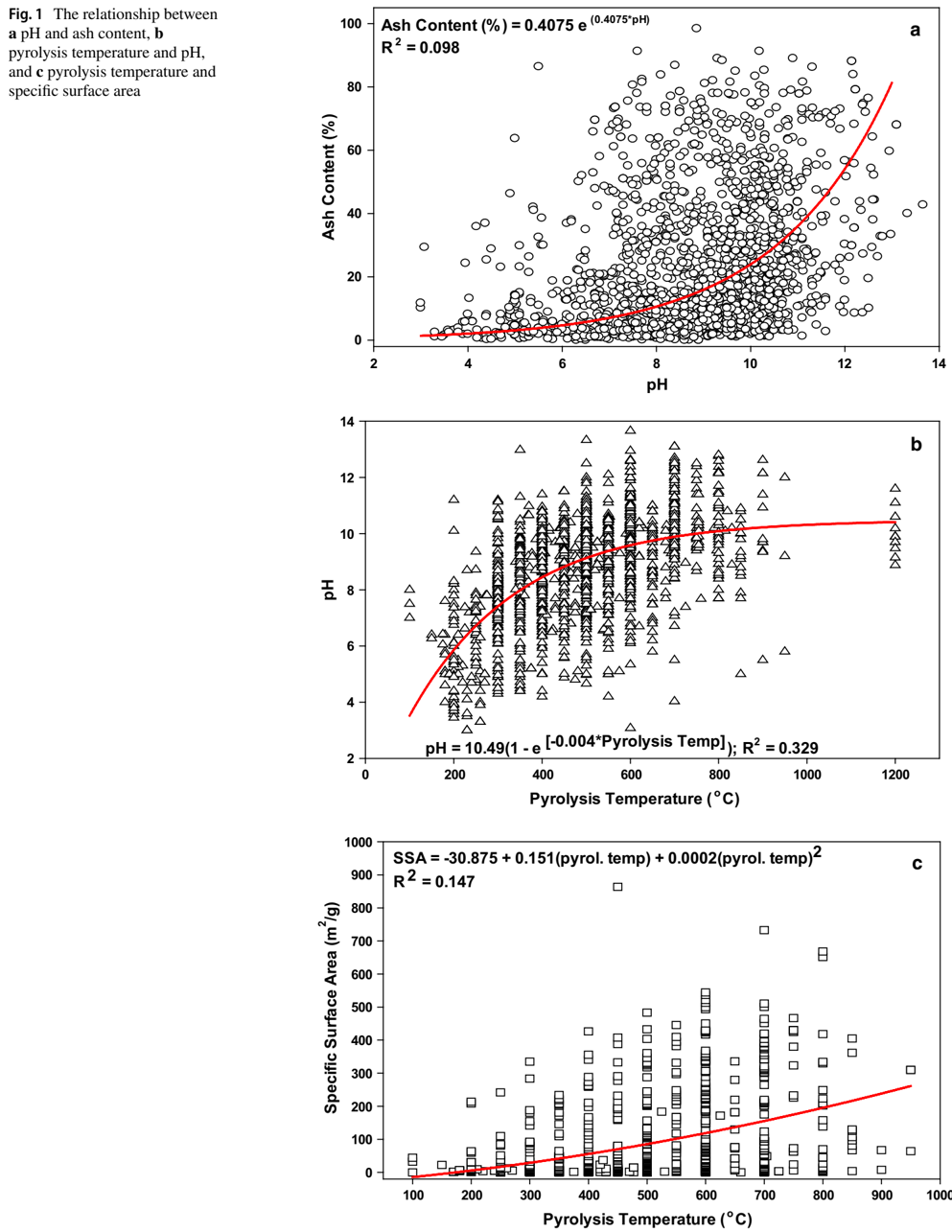
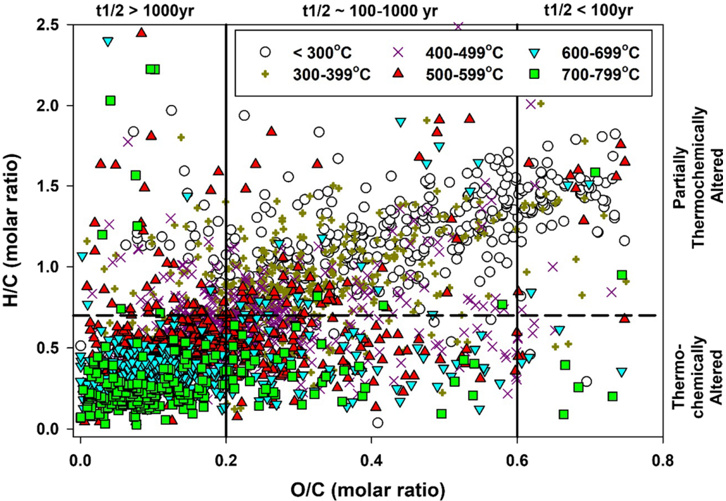
Various studies have established that feedstock choice, pyrolysis temperature, and pyrolysis type influence final biochar physicochemical characteristics. However, overarching analyses of pre-biochar creation choices and correlations to biochar characteristics are severely lacking. Thus, the objective of this work was to help researchers, biochar-stakeholders, and practitioners make more well-informed choices in terms of how these three major parameters influence the final biochar product. Utilizing approximately 5400 peer-reviewed journal articles and over 50,800 individual data points, herein we elucidate the selections that influence final biochar physical and chemical properties, total nutrient content, and perhaps more importantly tools one can use to predict biochar’s nutrient availability. Based on the large dataset collected, it appears that pyrolysis type (fast or slow) plays a minor role in biochar physico- (inorganic) chemical characteristics; few differences were evident between production styles. Pyrolysis temperature, however, affects biochar’s longevity, with pyrolysis temperatures > 500 °C generally leading to longer-term (i.e., > 1000 years) half-lives. Greater pyrolysis temperatures also led to biochars containing greater overall C and specific surface area (SSA), which could promote soil physico-chemical improvements. However, based on the collected data, it appears that feedstock selection has the largest influence on biochar properties. Specific surface area is greatest in wood-based biochars, which in combination with pyrolysis temperature could likely promote greater changes in soil physical characteristics over other feedstock-based biochars. Crop- and other grass-based biochars appear to have cation exchange capacities greater than other biochars, which in combination with pyrolysis temperature could potentially lead to longer-term changes in soil nutrient retention. The collected data also suggest that one can reasonably predict the availability of various biochar nutrients (e.g., N, P, K, Ca, Mg, Fe, and Cu) based on feedstock choice and total nutrient content. Results can be used to create designer biochars to help solve environmental issues and supply a variety of plant-available nutrients for crop growth.
Overview
The claims and statistics of this paper haven’t been checked yet.
Free: it reads the open-access text and checks the first 5 claims that cite a source we can check. Create a free account to check every claim.
Integrity signals
Registry
Cites
Statistics
Figures
Verification
Claims the paper makes
The claims and statistics of this paper haven’t been checked yet.
Free: it reads the open-access text and checks the first 5 claims that cite a source we can check. Create a free account to check every claim.
Claims other papers make about this one
Each is checked against this paper’s own text: does it say what the citing paper says it does?
The source backs part of the claim, not all of it — or backs it for a different population, condition or comparison.
In the citing paper
“Firstly, converting waste biomass into biochar, bio-oil, and syn-gas intrinsically stores 2.20 × 10 9 t CO2e annually, because it turns labile carbon that will be rapidly mineralized into recalcitrant carbon whose half life exceeds 1000 years (Ippolito et al. 2020; Lehmann et al. 2021; Spokas 2010).”
From Role of biochar toward carbon neutrality (2023) · cites this paper as Ippolito et al. 2020
Experimental — accuracy not yet measured
Self-check
Percentages, sums and reported differences re-computed from the paper’s own numbers.
The self-check needs the paper’s full text.
Citations
Cites
Biochar effects on soil biota – A review
Lehmann, J., Rillig, M. C., Thies, J., Masiello, C. A., Hockaday, W. C., & Crowley, D. (2011) · Soil Biology and Biochemistry · doi:10.1016/j.soilbio.2011.04.022 · Cited by 5,074
Biochar for Environmental Management: Science, Technology and Implementation
(2015) · doi:10.4324/9780203762264 · Cited by 2,280
Black Carbon Increases Cation Exchange Capacity in Soils
Liang, B., Lehmann, J., Solomon, D., Kinyangi, J., Grossman, J., O'Neill, B., Skjemstad, J. O., Thies, J., Luizão, F. J., Petersen, J., et al. (2006) · Soil Science Society of America Journal · doi:10.2136/sssaj2005.0383 · Cited by 2,191
Funke, A., & Ziegler, F. (2010) · Biofuels Bioproducts and Biorefining · doi:10.1002/bbb.198 · Cited by 2,001
Lehmann, J., Pereira da Silva, J., Steiner, C., Nehls, T., Zech, W., & Glaser, B. (2003) · Plant and Soil · doi:10.1023/a:1022833116184 · Cited by 1,878
Chen, B., Zhou, D., & Zhu, L. (2008) · Environmental Science & Technology · doi:10.1021/es8002684 · Cited by 1,823
Effect of process parameters on production of biochar from biomass waste through pyrolysis: A review
Tripathi, M., Sahu, J. N., & Ganesan, P. (2016) · Renewable and Sustainable Energy Reviews · doi:10.1016/j.rser.2015.10.122 · Cited by 1,759
Lehmann, J. (2007) · Frontiers in Ecology and the Environment · doi:10.1890/1540-9295(2007)5[381:bitb]2.0.co;2 · Cited by 1,714 · cited 1×
“1a) as also shown by Lehmann (2007).”
The Art, Science, and Technology of Charcoal Production
Antal, M. J., & Grønli, M. (2003) · Industrial & Engineering Chemistry Research · doi:10.1021/ie0207919 · Cited by 1,623
Weber, K., & Quicker, P. (2018) · Fuel · doi:10.1016/j.fuel.2017.12.054 · Cited by 1,522
Research works printed but not linked: 1
- Lissbrant S, Berg WK, Volanec J, Brouder S, Joern B, Cunningham S, Johnson K (2009) Phosphorus and potassium fertilization of alfalfa. Purdue University Extension Bulletin AY-331-W
Cited by
Items 801–900 of 1,000
Yang, Y., Liu, N., Ding, L., Wang, R., Zhao, Y., Yang, R., Wu, Q., & Zhou, Y. (2024) · SSRN Electronic Journal · doi:10.2139/ssrn.4725893
Biochar from Raw Materials Arundo Spp; Effect on Corn Plant Growth and Production
Barus, I., Darman, G., Syahrullah, Upe, A., & Sau, T. (2024) · Jurnal Pertanian Tropik/Jurnal Online Pertanian Tropik · doi:10.32734/jpt.v10i2.15181
Poonia, P., Gaur, L., & Panwar, N. L. (2024) · Research Square · doi:10.21203/rs.3.rs-3344041/v2
Pyrolysis Kinetics of Pumpkin Seeds
Selem, N. Y. (2024) · Journal of Advanced Engineering Trends · doi:10.21608/jaet.2023.194112.1239 · Cited by 1
Bio-Derived Carbons and Their Applications
Stasi, C. D., Ayala-Cortés, A., Suelves, I., & Pinilla, J. L. (2024) · Elsevier eBooks · doi:10.1016/b978-0-443-15742-4.00130-7
Improving soil properties by biochar under abiotic stressors
Soussani, F.-E., Abouraïcha, E. F., Meddich, A., & Baslam, M. (2024) · Elsevier eBooks · doi:10.1016/b978-0-443-24137-6.00012-4
Chetia, J., Gogoi, N., & Baruah, D. C. (2024) · International Journal of Environmental Research · doi:10.1007/s41742-024-00680-9
“This higher surface alkalinity, along with pH-dependent charges in TL biochars could be a factor in the observed higher cation exchange capacity (CEC) as suggested by Ippolito et al. (2020).”
Feedstock selection influences performance and mechanism of DNA adsorption onto biochar
Schmidt, M. P., Rupp, S., Ashworth, D. J., Phan, D., Bhattacharjee, A. S., Ferreira, J., Men, Y., & Ibekwe, A. M. (2025) · Environmental Nanotechnology Monitoring & Management · doi:10.1016/j.enmm.2025.101040 · Cited by 3
Biochar modification methods: property engineering for diverse value-added applications
Braghiroli, F. L., & Amaral-Labat, G. (2025) · Elsevier eBooks · doi:10.1016/b978-0-443-29855-4.00020-5
Biochar from Biobased Materials: Applications, Clean Technologies, and Novel Production Methods
Tiwari, A. K., Kapoor, A., Pal, D. B., & Othmani, A. (2025) · Fungal biology · doi:10.1007/978-3-031-82599-6_8
Park, S. H., Muchlas, M., Kim, T., & Lee, B. (2025) · Han-guk choji josaryo hakoeji · doi:10.5333/kgfs.2025.45.1.82
Comparative study on safranin adsorption using modified macadamia nutshell biochar
Tanghirunchai, S., Tocharoen, S., Nisamaneenate, J., Atong, D., & Sricharoenchaikul, V. (2025) · IOP Conference Series Earth and Environmental Science · doi:10.1088/1755-1315/1500/1/012083
“The H/C ratio decreased from 0.121 to 0.024, suggesting that MNC is rich in carbon, particularly aromatic-C [19].”
InfluentialAmponsah, S. K., Frimpong, F., Danquah, E. O., Amankwaa-Yeboah, P., Amengor, N. E., Adu, J., & Frimpong, T. D. (2025) · Journal of Applied and Natural Science · doi:10.31018/jans.v17i2.6427
Daniel, L. E., Bassey, M. O., & Antia, E. O. (2025) · SPE Nigeria Annual International Conference and Exhibition · doi:10.2118/228702-ms
Loria, N., & Lal, R. (2025) · Springer eBooks · doi:10.1007/978-3-032-00842-8_4
Lovemore, M., Culver, M., Musabayana, Z., & Mathema, N. (2025) · International Journal of Plant Physiology and Biochemistry · doi:10.5897/ijppb2024.0321
Ronghan, L., Dai, L., Tu, C., Tang, Y., Cheng, J., & Huang, C. (2025) · EARTH AND ENVIRONMENT · doi:10.3724/ee.1672-9250.2025.53.076
Catalytic pyrolysis of refuse derived fuels with biomass-based and mineral catalysts
Lavie, J. D., Kemausuor, F., Boye, I., Anderson, M. K., Laari, P. Y., Bart-Plange, A., & Commeh, M. K. (2025) · Next Sustainability · doi:10.1016/j.nxsust.2025.100177
Leavell, A. J. (2024) · ScholarWorks (Boise State University) · doi:10.18122/td.2312.boisestate
KAMAL, R. (2025) · Advanced International Journal for Research · doi:10.63363/aijfr.2025.v06i05.1278
The Role of Biochar in Improving Soil Quality and Rice Yields in Indonesia: A Narrative Review
Triana, A. P., Sofyan, E. T., & Sudirja, R. (2025) · International Journal of Life Science and Agriculture Research · doi:10.55677/ijlsar/v04i09y2025-02
He, D., Hu, D., Zhang, J., Dong, Z., & Zhu, B. (2025) · Journal of Integrative Agriculture · doi:10.1016/j.jia.2025.07.008 · Cited by 1
Kim, J. Y., Kim, H. R., Pei, M., Kim, S. H., Kim, S., & Jung, Y. (2025) · Journal of Electrochemical Science and Technology · doi:10.33961/jecst.2025.00808
Agricultural Waste Biomass-Derived Biochar for Water Purification Application: A Review
合日班·麦麦提, 米. (2024) · Hans Journal of Soil Science · doi:10.12677/hjss.2024.122005
Sustainability in Thermoplastics and Polymer Composites
Riley, S. (2025) · Springer series on polymer and composite materials · doi:10.1007/978-3-032-04901-8_5
Barreiro, A. C. (2025) · Buleria (Universidad de León) · doi:10.18002/10612/26513
Mahgoub, S. M., Alawam, A. S., Allam, A. A., M., M. M. M., Mokhtar, A. M., Radalla, A. M., & Mahmoud, R. (2025) · RSC Advances · doi:10.1039/d5ra06953j
“15,16 Finally, this study is among the rst to assess both the greenness and blueness of the analytical method using established tools such as GAPI, AGREE, and BAGI, addressing the o en-overlooked sustainability aspect in encapsulation method development.”
Biochar for carbon sequestration and greenhouse gas mitigation
Sivaramakrishnan, S., & Shrinithivihahshini, N. D. (2025) · Elsevier eBooks · doi:10.1016/b978-0-443-43794-6.00011-3
Tackling nitrogen pollution in water streams using chemically modified biochar
Samberger, C. (2025) · Elsevier eBooks · doi:10.1016/b978-0-443-27352-0.00012-4
Lee, I., Cho, H.-N., Park, J.-H., Lee, C.-G., Song, J.-M., Cho, J.-S., Cheong, Y. H., & Kang, S. (2025) · 한국토양비료학회지 · doi:10.7745/kjssf.2025.58.4.442
Smoak, R. A. (2024) · Iowa Research Online (The University of Iowa) · doi:10.25820/etd.006614
Ahmad, S., Zhai, X., Wang, M., Shi, Y., Chen, Y., Liang, Q., He, B., & Wen, R. (2024) · Figshare · doi:10.6084/m9.figshare.26684307
Anaerobic digestion of organic waste mixtures with the addition of biochar
Saucedo, S. L. (2024) · cIRcle (University of British Columbia) · doi:10.14288/1.0444014 · Cited by 2
Effect of Biochar and Moisture Regimes on the Physiology and Yield of Maize
Naz, Z., & Jahan, S. (2024) · International Journal of Agriculture Innovations and Cutting-Edge Research · doi:10.67244/jai.bwo-researches.v2i4.a82
Kumar, A., Joseph, S., Gräber, E. R., Taherymoosavi, S., Mitchell, D. R. G., Munroe, P., Tsechansky, L., Lerdahl, O., Aker, W., & Sæbø, M. (2021) · Figshare · doi:10.6084/m9.figshare.14576354
Biohiilen valmistus biokaasulaitoksen mädätysjäännöksestä
Muhonen, S. (2024) · Theseus (Ammattikorkeakoulujen) · Cited by 1
Comparative Assessment Of The Effects Biochar Particle Size Has On Microbial Activity
NC DOCKS at Appalachian State University, & Pope, C. (2023) · NC Digital Online Collection of Knowledge and Scholarship (The University of North Carolina at Greensboro)
Espinoza-Vaca, J. S. (2024) · Dipòsit Digital de la Universitat de Barcelona (Universitat de Barcelona)
Investigating a novel application for magnetic biochar: Practical barriers and policy considerations
Gillingham, M. D. (2024) · Nottingham ePrints (University of Nottingham) · Cited by 1
Techniky získávání biouhlu pyrolýzou odpadních organických materiálů
Toušková, K. (2024) · DSpace VŠB-TUO (VŠB-TUO)
The effects of biochar on growth and carbonstorage in Varvsparken, Malmö
Frieberg, C. (2023) · DiVA (Linnaeus University)
Maatilamittakaavan biohiilituotannon mahdollisuudet ja kannattavuus
Juva, K. (2023) · Theseus (Ammattikorkeakoulujen)
Jansen, D. (2023) · Epsilon Archive for Student Projects (Swedish University of Agricultural Sciences) · Cited by 1
Osoko, T. O. (2022) · ThinkTech (Texas Tech University) · Cited by 1
Törngren, V. (2025) · DiVA (Stockholm University)
Wang, C., Fang, Z., Chen, H., Chen, J., Han, Q., LIU, J., Leng, Y., Guo, Y., Gao, Y., & Wang, H. (2025) · SSRN Electronic Journal · doi:10.2139/ssrn.5536909
Coffee Ground-Based Modified Biochar for Effective Treatment of Nutrient-Rich Swine Wastewater
Thuy, N. T., Iswara, A. P., Phung, L. T., Hieu, T. H. H., Thuy, V. T. T., Hien, L. P. T., Thanh, N. L., Huy, N. N., & Abdillah, S. F. I. (2025) · Evergreen · doi:10.5109/7388853
Hong, S.-Y., Kim, M.-G., Kim, D.-M., Hong, S.-Y., Kim, H.-Y., Heo, S.-J., Kim, K.-S., & Kim, H.-S. (2025) · Korean Journal of Environmental Agriculture · doi:10.5338/kjea.2025.44.47
Elbagory, M., El-Khateeb, N. M. M., El-Nahrawy, S., Omara, A. E.-D., Mohamed, I., Elbyaly, M. Y. H., El‐Sharkawy, M., Zayed, A., Sirić, I., & Kumar, P. (2025) · Water Air & Soil Pollution · doi:10.1007/s11270-025-08914-y
Waste‐derived Biochar as Targeting Plant Disease Suppressors
Wei, M., Liu, Z., Sun, Y., & Tan, J. (2025) · Wiley eBooks · doi:10.1002/9781394250301.ch07
Impact of Carbon-Based Biochar Application on Red Pepper Yield and Soil Carbon Sequestration
Yun, Y., Cho, Y.-G., Lee, J. S., Choi, S.-H., Kim, S., Ju, J., Lee, J.-H., & Lee, K. (2025) · Agronomy · doi:10.3390/agronomy16010084
Chemical and biological properties of soil enriched with biochar and cultivated with sugarcane
Vega, C. F. P. (2024) · LA Referencia (Red Federada de Repositorios Institucionales de Publicaciones Científicas)
Uso de pós de rocha e biocarvão para a produção do tomateiro
Junior, E. D. D. O. (2024) · LA Referencia (Red Federada de Repositorios Institucionales de Publicaciones Científicas)
Machado, C. M. B., de Mello, A. F. M., Bittencourt, G. A., Neyra, L. C. R., Jo, G. S. C., Soccol, C. R., & Vandenberghe, L. P. D. S. (2026) · Sustainability Science and Technology · doi:10.1088/2977-3504/ae3d3c
“However, Ippolito et al [38] claimed that the main parameters influencing the characteristics of biochar produced by pyrolysis are the feedstock characteristics and the reaction temperature.”
InfluentialEffects of Pyrolytic Char as A Soil Amendment on Soil Properties and Plant Growth
Lavie, J. D., Kemausuor, F., Laari, P. Y., Akohene, J., Asante-Mensah, L., Sefa, R. J., Mbaa, W., & Commeh, M. K. (2025) · Journal of Science and Technology (Ghana) · doi:10.4314/just.v43i3.2
Waste to a Value-Added Material: Production of Biochar from Young Coconut Waste
Anwar, K., Mahidin, Ramli, I., Faisal, M., Desvita, H., Wulandari, Y. R., & Ramli, M. Z. (2025) · International Journal of Design & Nature and Ecodynamics · doi:10.18280/ijdne.201208
Raut, N. B. (2026) · Ecological Engineering & Environmental Technology · doi:10.12912/27197050/216485
Efficient electro-assisted adsorption of pharmaceuticals by PAN-encapsulated gorse biochar
Bernárdez-Rodas, N., Rosales, E., Pazos, M., & Sanromán, M. Á. (2026) · Journal of environmental chemical engineering · doi:10.1016/j.jece.2026.121740
Kır, A. B. (2026) · OpenMETU (Middle East Technical University)
Plekhanova, I. O., & Dryakhlova, P. M. (2026) · Lomonosov Soil Science Journal · doi:10.55959/msu0137-0944-17-2026-81-1-46-57
Biochar as Sustainable Adsorbent for Antibiotics Removal from Water: A Review
Saini, R., Sethi, G., Marak, D., Narayanan, N., & Singh, N. (2026) · Chemistry Africa · doi:10.1007/s42250-025-01527-2
Dafalla, M., Inayat, A., Ghenaï, C., Aljomard, H., & Shanableh, A. (2025) · Advances in Science and Engineering Technology International Conferences (ASET) · doi:10.1109/aset66891.2025.11428066
“Higher temperatures (>500°C) often enhance bio-oil calorific value but also increase gas and char formation due to secondary cracking [22], [28].”
Challenges in the Realm of Biochar Applications
Sharma, S., Sharma, S., Kulkarni, H., Giri, A., & Kumar, P. (2026) · Springer eBooks · doi:10.1007/978-3-032-16746-0_10
Bardhan, S., Kumar, R., & Chanda, D. K. (2026) · Springer eBooks · doi:10.1007/978-3-032-16746-0_15 · Cited by 1
Ma, T., Wu, Y., & Li, H. (2026) · Journal of environmental chemical engineering · doi:10.1016/j.jece.2026.122512 · Cited by 1
Plekhanova, I. O., & Dryakhlova, P. M. (2026) · Moscow University Soil Science Bulletin · doi:10.3103/s0147687425700735
Abiola, W. A., Tovihoudji, P. G., & Diogo, R. V. C. (2026) · Journal of soil science and plant nutrition · doi:10.1007/s42729-026-03126-7
Saldarriaga, J. F., Käslin, T., Fernandez, E., Amutio, M., López, G., Santamaria, L., Querejeta, N., & López, J. E. (2026) · Biofuels Bioproducts and Biorefining · doi:10.1002/bbb.70155
“31–33 This suggests that the pyrolysis temperatures attained in both systems are optimal for producing biochar with a high degree of carbonization and a low amount of unburnt or plant residues.”
Morcom, T., Shu, W., Caldwell, C. D., Price, G. W., Lumactud, R. A., & Jiang, Y. (2026) · Journal of Sustainable Agriculture and Environment · doi:10.1002/sae2.70167
Lab- and pilot-scale biochar production from cotton gin waste
Takal, D., Howell, N. L., Partheepan, J., Bhattacharia, S. K., Koziel, J. A., Brewer, C. E., Bednarz, C. W., & Guerrero, B. (2026) · Cleaner Engineering and Technology · doi:10.1016/j.clet.2026.101222
Tunklová, B., Velebil, J., Malaťák, J., & Aniszewska, M. (2026) · Plants · doi:10.3390/plants15091292 · Cited by 1
“Biochar is defined as a porous carbonaceous material produced by the thermal decomposition of biomass under oxygen-limited conditions and intended for applications other than energy production [16].”
KAUSHIK, P., & Mathur, A. (2026) · Springer Link (Chiba Institute of Technology) · doi:10.1051/bioconf/202623302016/pdf
Vorrath, M.-E., zu Drewer, J. M., Smet, I., Aldrich, C., Stoeck, L., Feiertag, L., Nauenburg, S., Neumann, I., Scherzinger, M., Siegmund, T., et al. (2026) · doi:10.70212/cdrxiv.2026511.v1
Self-citationEnvironmental benefits/impacts of emerging biochar compounds
Ntuli, F., Kandjou, V., & Lekgoba, T. (2026) · Elsevier eBooks · doi:10.1016/b978-0-443-29865-3.00018-2
Biochar production: Recent developments, applications, and challenges
Sahu, P., Panda, T., Goyal, A., Yadav, V., Anshu, Das, S., Shakya, A., Anupam, K., & Singh, R. (2026) · Elsevier eBooks · doi:10.1016/b978-0-443-29865-3.00015-7
Akhter, A., Raza, M. Y., Arshad, H., Anwar, W., Ali, N., Khan, H. A. A., Baloch, Z. K., Javed, S., Butt, S. J., Zahid, A., et al. (2026) · Elsevier eBooks · doi:10.1016/b978-0-443-34252-3.00020-2
Biomass-based biochar for wastewater treatment and management
Chen, Z., Nasr, M., Ighalo, J. O., Osman, A. I., Wang, L., Aziz, F., Kurniawan, T. A., & Yap, P. (2026) · Elsevier eBooks · doi:10.1016/b978-0-443-29865-3.00010-8
Chen, B., Hu, J., Peng, K., Huang, W., Li, J., Wei, M., Zeng, Z., Xing, D., Fu, B., Cao, J., et al. (2026) · Biochar X · doi:10.48130/bchax-0026-0010
MacDonald, J. (2026) · cIRcle (University of British Columbia) · doi:10.14288/1.0452436
The Effects of Biochar Characteristics, Production Methods, and Mechanisms on Acid Soil Remediation
Kamaleshwaran, R., & Elayaraja, D. (2026) · doi:10.34293/blp.9789395659581.ch001
Kaur, R., & Mathpal, B. (2026) · Journal of soil science and plant nutrition · doi:10.1007/s42729-026-03325-2
“…depen - dent on biochar’s physicochemical characteristics including feedstock type, pyrolysis temperature and surface functionalization as well as application rate and the initial fertility status and pH of the soil (de Oliveira Paiva et al. 2024; Ghorbani et al. 2025; Ippolito et al. 2020).”
Ionescu, G., Macavei, M. G., Pătrașcu, M., Mlonka-Mędrala, A., Petcu, G., Sobek, S., Magdziarz, A., & Mărculescu, C. (2026) · Bioresource Technology · doi:10.1016/j.biortech.2026.134860
Bandyopadhyay, R., Bhar, R., Taksal, P. A., Bhattacharya, J., Dubey, B., & Tiwary, C. S. (2026) · Green Chemistry · doi:10.1039/d6gc00729e
Hu, L., Zhu, S., Liu, X., Deng, H., Li, A., Li, L., Pan, L., & Huang, Y. (2026) · Agriculture · doi:10.3390/agriculture16101122
“LHG vines were crushed, sieved, dried, and then carbonized in a muffle furnace under oxygen-limited conditions at a heating rate of 10 ◦ C · min − 1 to 500 ◦ C for 2 h to produce LHG vine biochar [21].”
Reassessing biochar in the organic agriculture paradigm: Carbon-rich paths to sustainability
Ramisetty, N. B. C., Deoranto, P., Inthasan, J., & Bhuyar, P. (2026) · Next research. · doi:10.1016/j.nexres.2026.101920
Kabir, M. P., Kamal, M. Z. U., Shams-Al-Mahmud, Shraboni, F. A., & Masud, M. Z. (2026) · Sustainability Sciences in Asia and Africa · doi:10.1007/978-981-95-7746-0_12 · Cited by 1
Wang, N., Pan, S., Zhu, K., Yuan, J., Su, P., & Li, L. (2026) · Environmental Technology & Innovation · doi:10.1016/j.eti.2026.105006
Williams, E. M. (2026) · Carolina Digital Repository (University of North Carolina at Chapel Hill) · doi:10.17615/9nba-kk68
Nano-biochar applications in environmental remediation
Nouri, M. (2026) · Elsevier eBooks · doi:10.1016/b978-0-443-27763-4.00016-7
Khan, S., Alshehri, A. S., Phulpoto, I. A., Muqaddas, Deng, Z., Zhao, R., & Yu, Z. (2026) · Energy Conversion and Management X · doi:10.1016/j.ecmx.2026.102031
Technoeconomic and life cycle assessment of biochar applications for wastewater treatment
Manga, M., Muoghalu, C., Ekyalimpa, R., Patrick, J., & Kaboggoza, H. C. (2026) · Elsevier eBooks · doi:10.1016/b978-0-443-44581-1.00003-x
Artificial intelligence in biochar development and application process optimization
Malik, A., Irfan, M., Giwa, A. S., & Ali, N. (2026) · Elsevier eBooks · doi:10.1016/b978-0-443-44581-1.00027-2
Biochar from Sugarcane Bagasse for Environmental Pollution Remediation
SAH, U., & Jayanand, J. (2026) · International Journal of Science Strategic Management and Technology · doi:10.55041/ijsmt.v2i6.047
Application of biochar in composting
Karamova, K., Galitskaya, P., & Selivanovskaya, S. Y. (2026) · Učënye zapiski Kazanskogo universiteta. Seriâ Estestvennye nauki/Učënye zapiski Kazanskogo universiteta. Seriâ Estestvennye nauki/Učenye zapiski Kazanskogo gosudarstvennogo universiteta. Seriâ Estestvennye nauki · doi:10.26907/2542-064x.2026.2.249-284
Metadata
- Authors
- Ippolito, J. A., Cui, L., Kammann, C., Wrage-Mönnig, N., Estavillo, J. M., Fuertes-Mendizabal, T., Cayuela, M. L., Sigua, G., Novak, J., Spokas, K., & Borchard, N.
- Affiliations
- Colorado State University (US)
- Yancheng Institute of Technology (CN)
- Hochschule Geisenheim University (DE)
- Agricultural Research Service (US)
- University of Minnesota (US)
- Natural Resources Institute Finland (FI)
- Corresponding author
- Borchard, Nils
- Venue
- Biochar
- Published
- 2020-09-28
- Volume
- 2
- Issue
- 4
- Pages
- 421-438
- ISSN
- 2524-7867 (ISSN-L)
- 2524-7972
- OpenAlex
- W3091306688
- Semantic Scholar
- ba1c49a14858f364790007359ee1f59f635bc195
- Cited by
- 927
- References
- 105
- Citations by year
- 2026: 221 · 2025: 185 · 2024: 186 · 2023: 164 · 2022: 104 · 2021: 67
- FWCI
- 26.32
- Type
- journal article
- Language
- en
- Open access
- hybrid
- doi.org
- Licence
- cc-by
- creativecommons.org/licenses/by/4.0 (tdm)
- creativecommons.org/licenses/by/4.0 (vor)
- Locations
- Biochar (publishedVersion, cc-by)
- Hispana (acceptedVersion, cc-by)
- Communities in ADDI (Universidad del Pais Vasco) (submittedVersion, cc-by)
- Jukuri (Natural Resources Institute Finland (Luke)) (submittedVersion)
- Funders
- National Institute of Food and Agriculture (6657-12130-002-08I)
- Natural Resources Institute Finland
- Topics
- Physical Sciences › Energy › Fuel Technology › Thermochemical Biomass Conversion Processes
- Life Sciences › Agricultural and Biological Sciences › Soil Science › Soil Carbon and Nitrogen Dynamics
- Physical Sciences › Environmental Science › Global and Planetary Change › Fire effects on ecosystems
- Keywords
- pyrolysis temperature, fast pyrolysis, slow pyrolysis, biochar physicochemical properties, specific surface area, cation exchange capacity, nutrient availability, soil amendment, wood-based biochar
About these checks
Registry, retraction, Cites and statistics results are computed, not judged, with one exception: a printed reference that no index lists is read once by a model before it counts as a citation error. Claims are extracted by a model and kept only when their quote appears verbatim in the text; each cited source is then checked, with a model’s help, for whether it says what the claim relies on. Those verdicts can be wrong — read the claim’s quote and the cited source before relying on one.
Statistics and arithmetic are recomputed, not judged.
Confidence bands are shown only for fields calibrated on our annotated test set. None is calibrated yet, so no band is shown.
What counts as a claim ›How we measure confidence ›How we check this ›
Are you an author, or do you see a problem with this page? Request a review
Data sources
Bibliographic data: Semantic Scholar, OpenAlex, Crossref.
Contains information from the Semantic Scholar Academic Graph Datasets, made available under the ODC Attribution License (ODC-BY 1.0).
Semantic Scholar’s data is described in: Kinney, R., et al. (2023). The Semantic Scholar Open Data Platform. arXiv:2301.10140.
