

Feedstock choice, pyrolysis temperature and type influence biochar characteristics: a comprehensive meta-data analysis review
Open accessThe DOI matches its Crossref record; 106 of the 106 references it cites were found in a registry or an index.
Abstract
Various studies have established that feedstock choice, pyrolysis temperature, and pyrolysis type influence final biochar physicochemical characteristics. However, overarching analyses of pre-biochar creation choices and correlations to biochar characteristics are severely lacking. Thus, the objective of this work was to help researchers, biochar-stakeholders, and practitioners make more well-informed choices in terms of how these three major parameters influence the final biochar product. Utilizing approximately 5400 peer-reviewed journal articles and over 50,800 individual data points, herein we elucidate the selections that influence final biochar physical and chemical properties, total nutrient content, and perhaps more importantly tools one can use to predict biochar’s nutrient availability. Based on the large dataset collected, it appears that pyrolysis type (fast or slow) plays a minor role in biochar physico- (inorganic) chemical characteristics; few differences were evident between production styles. Pyrolysis temperature, however, affects biochar’s longevity, with pyrolysis temperatures > 500 °C generally leading to longer-term (i.e., > 1000 years) half-lives. Greater pyrolysis temperatures also led to biochars containing greater overall C and specific surface area (SSA), which could promote soil physico-chemical improvements. However, based on the collected data, it appears that feedstock selection has the largest influence on biochar properties. Specific surface area is greatest in wood-based biochars, which in combination with pyrolysis temperature could likely promote greater changes in soil physical characteristics over other feedstock-based biochars. Crop- and other grass-based biochars appear to have cation exchange capacities greater than other biochars, which in combination with pyrolysis temperature could potentially lead to longer-term changes in soil nutrient retention. The collected data also suggest that one can reasonably predict the availability of various biochar nutrients (e.g., N, P, K, Ca, Mg, Fe, and Cu) based on feedstock choice and total nutrient content. Results can be used to create designer biochars to help solve environmental issues and supply a variety of plant-available nutrients for crop growth.
Overview
The claims and statistics of this paper haven’t been checked yet.
Free: it reads the open-access text and checks the first 5 claims that cite a source we can check. Create a free account to check every claim.
Integrity signals
Registry
Cites
Statistics
Figures
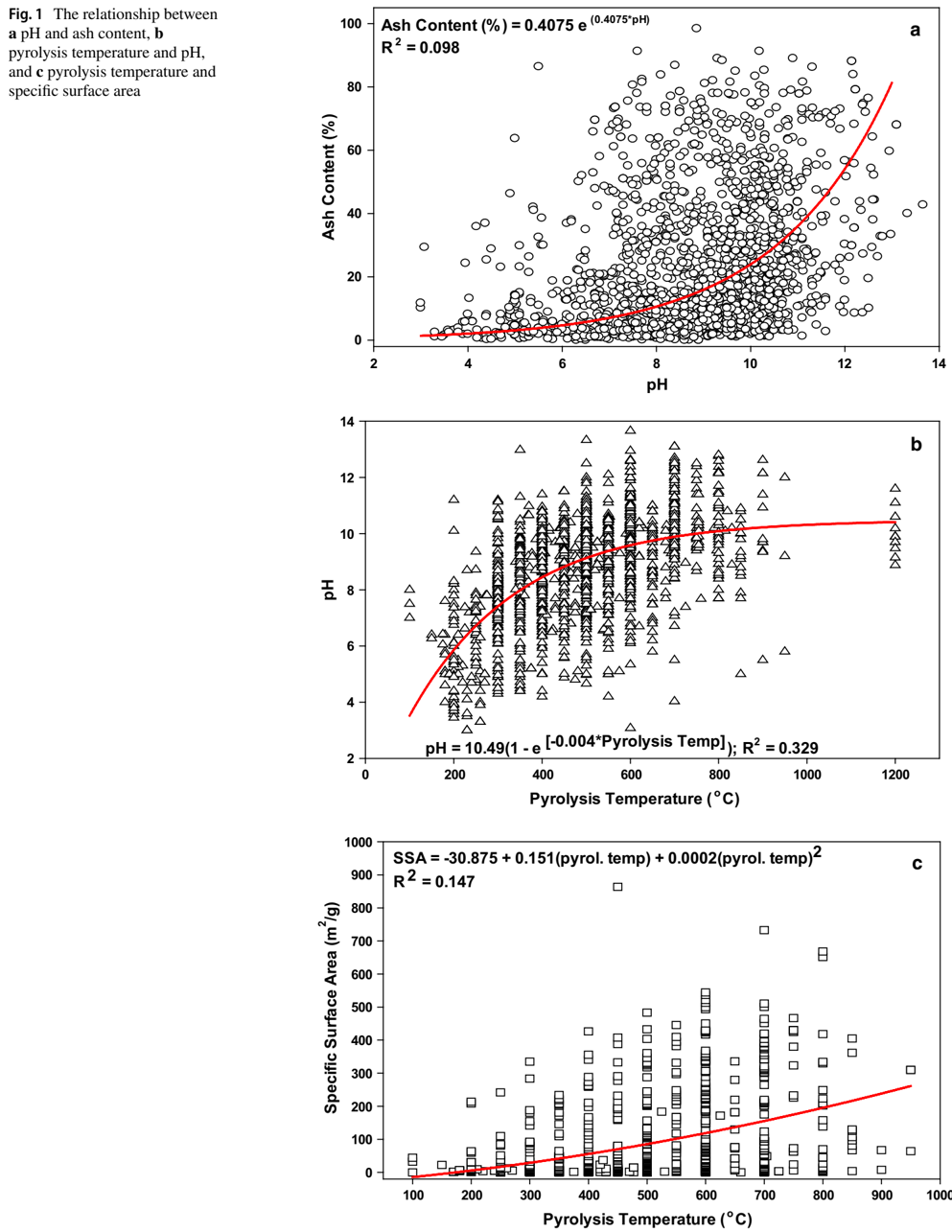
Verification
Claims the paper makes
The claims and statistics of this paper haven’t been checked yet.
Free: it reads the open-access text and checks the first 5 claims that cite a source we can check. Create a free account to check every claim.
Claims other papers make about this one
Each is checked against this paper’s own text: does it say what the citing paper says it does?
The source backs part of the claim, not all of it — or backs it for a different population, condition or comparison.
In the citing paper
“Firstly, converting waste biomass into biochar, bio-oil, and syn-gas intrinsically stores 2.20 × 10 9 t CO2e annually, because it turns labile carbon that will be rapidly mineralized into recalcitrant carbon whose half life exceeds 1000 years (Ippolito et al. 2020; Lehmann et al. 2021; Spokas 2010).”
From Role of biochar toward carbon neutrality (2023) · cites this paper as Ippolito et al. 2020
Experimental — accuracy not yet measured
Self-check
Percentages, sums and reported differences re-computed from the paper’s own numbers.
The self-check needs the paper’s full text.
Citations
Cites
Biochar effects on soil biota – A review
Lehmann, J., Rillig, M. C., Thies, J., Masiello, C. A., Hockaday, W. C., & Crowley, D. (2011) · Soil Biology and Biochemistry · doi:10.1016/j.soilbio.2011.04.022 · Cited by 5,074
Biochar for Environmental Management: Science, Technology and Implementation
(2015) · doi:10.4324/9780203762264 · Cited by 2,280
Black Carbon Increases Cation Exchange Capacity in Soils
Liang, B., Lehmann, J., Solomon, D., Kinyangi, J., Grossman, J., O'Neill, B., Skjemstad, J. O., Thies, J., Luizão, F. J., Petersen, J., et al. (2006) · Soil Science Society of America Journal · doi:10.2136/sssaj2005.0383 · Cited by 2,191
Funke, A., & Ziegler, F. (2010) · Biofuels Bioproducts and Biorefining · doi:10.1002/bbb.198 · Cited by 2,001
Lehmann, J., Pereira da Silva, J., Steiner, C., Nehls, T., Zech, W., & Glaser, B. (2003) · Plant and Soil · doi:10.1023/a:1022833116184 · Cited by 1,878
Chen, B., Zhou, D., & Zhu, L. (2008) · Environmental Science & Technology · doi:10.1021/es8002684 · Cited by 1,823
Effect of process parameters on production of biochar from biomass waste through pyrolysis: A review
Tripathi, M., Sahu, J. N., & Ganesan, P. (2016) · Renewable and Sustainable Energy Reviews · doi:10.1016/j.rser.2015.10.122 · Cited by 1,759
Lehmann, J. (2007) · Frontiers in Ecology and the Environment · doi:10.1890/1540-9295(2007)5[381:bitb]2.0.co;2 · Cited by 1,714 · cited 1×
“1a) as also shown by Lehmann (2007).”
The Art, Science, and Technology of Charcoal Production
Antal, M. J., & Grønli, M. (2003) · Industrial & Engineering Chemistry Research · doi:10.1021/ie0207919 · Cited by 1,623
Weber, K., & Quicker, P. (2018) · Fuel · doi:10.1016/j.fuel.2017.12.054 · Cited by 1,522
Research works printed but not linked: 1
- Lissbrant S, Berg WK, Volanec J, Brouder S, Joern B, Cunningham S, Johnson K (2009) Phosphorus and potassium fertilization of alfalfa. Purdue University Extension Bulletin AY-331-W
Cited by
Items 601–700 of 1,000
Jin, S.-Y., & Ko, J. H. (2025) · Journal of Material Cycles and Waste Management · doi:10.1007/s10163-025-02365-7 · Cited by 3
“The surface characteristics and the element composition in biochar vary with the nature of feedstocks [14, 25].”
Pan, C., Li, X., Hu, C., Cao, X., Wang, C., Yao, S., & Wang, Z. (2025) · Separation and Purification Technology · doi:10.1016/j.seppur.2025.135125 · Cited by 4
Sequential causal machine learning assisted design of biochar for laccase immobilization
Lu, Y., Wu, Y., Hou, Z., Yin, W.-X., Liang, H., & Gao, D. (2025) · Journal of Hazardous Materials · doi:10.1016/j.jhazmat.2025.139822 · Cited by 5
Nkrumah, C., Boahemaa, H. A., Ntow, P., Alabilla, G., Laari, P., Lamptey, G. N. L., Oppong-Agyemang, A. A., Okine, J. N. A., & Konyannik, B. Y. (2025) · International Journal of Agriculture and Food Science · doi:10.33545/2664844x.2025.v7.i10b.854 · Cited by 3
Torrefied biomass (Biotorr) potential for agricultural applications. A review
Lesaint, L., Rumpel, C., & Houben, D. (2025) · Waste Management · doi:10.1016/j.wasman.2025.115197 · Cited by 5
Sulaiman, S., Hernandez‐Ramirez, G., Navaranjan, N., & Sulaiman, Z. (2025) · Journal of Environmental Quality · doi:10.1002/jeq2.70121 · Cited by 3
“In addition, biochar properties vary with pyrolysis temperature and residence time (Ippolito et al., 2020; Wang et al., 2020).”
Biochar production, yield and quality characterization from different feedstocks and kilns
Sarpong, A. K., Kumi, F., Ofori-Manfo, P., Sewu, D. D., Opoku, V. A., Toku, M., & Frimpong, K. A. (2025) · Journal of Analytical and Applied Pyrolysis · doi:10.1016/j.jaap.2025.107401 · Cited by 4
Xiong, X., Li, Y., Zhou, Y., Gao, Y., & Zhang, C. (2025) · Water Research · doi:10.1016/j.watres.2025.125227 · Cited by 3
Le, L. B., Nguyen, B. T., & Dinh, T. D. (2026) · Water Air & Soil Pollution · doi:10.1007/s11270-026-09109-9 · Cited by 3
“For example, wood-based biochar has higher surface area, enhancing soil physical structure while crop-and grass-based BCs improve nutrient retention via greater cation exchange capacity (Ippolito et al., 2020).”
Masara, D. O., Cherop, P. T., Osore, E. A. E., & Masinde, H. B. (2026) · International Journal of Environmental Science and Technology · doi:10.1007/s13762-026-07055-x · Cited by 3
“A meta-analysis of how feed-stock choice, pyrolysis temperature, and type influence bio-char properties concluded that tailored pyrolysis processes are necessary for specific uses (Ippolito et al. 2020).”
Oxygen-rich torrefaction of bamboo: Multivariate process optimization and environmental assessment
Chen, W., Lin, Y.-T., Biswas, P. P., Kwon, E. E., Tung, T.-C., Lee, C.-E., Ryšavý, J., & Čespiva, J. (2026) · Process Safety and Environmental Protection · doi:10.1016/j.psep.2026.108473 · Cited by 3
Loginova, I., Bilyera, N., Banfield, C. C., Kuzyakov, Y. V., & Dippold, M. A. (2026) · Plant and Soil · doi:10.1007/s11104-026-08277-1 · Cited by 3
Gagnon, B., & Ziadi, N. (2026) · Soil Systems · doi:10.3390/soilsystems10020022 · Cited by 3
Nyasapoh, J. B. A., Danso, E. O., Arthur, E., Obour, P. B., Amponsah, W., Sabi, E. B., Blankson, D., Opoku, V. A., & Andersen, M. N. (2026) · Soil Science Society of America Journal · doi:10.1002/saj2.70195 · Cited by 3
Haider, M. A., Gul, J., Khan, M. N. A., & Juchelková, D. (2026) · Process Safety and Environmental Protection · doi:10.1016/j.psep.2026.108639 · Cited by 3
Tan, Y., Liu, Y., Chu, T., Wang, C., Gu, Y., Chen, C., Fu, W., Yuan, J., Chen, H., & Peng, C. (2026) · Biochar X · doi:10.48130/bchax-0026-0006 · Cited by 3
Kaudza, C., Raude, J. M., & Ngumba, E. K. (2026) · Environmental Science and Pollution Research · doi:10.1007/s11356-026-37564-8 · Cited by 3
Lawal, A. A., Ariffin, H., Ibrahim, I., Yusoff, M. Z. M., Zakaria, M. R., Hassan, M. S., & Shirai, Y. (2026) · Biomass and Bioenergy · doi:10.1016/j.biombioe.2026.109308 · Cited by 3
Lu, J., Han, Y., Sun, B., Cao, Y., Zhang, S., Kong, Q., & Zhang, J. (2026) · Water Research · doi:10.1016/j.watres.2026.125806 · Cited by 3
Al-Gaashani, R., Shahid, O., Wada, O. Z., Simson, S., Gomez, T., Pasha, M., Hassan, O. E., Suwailem, A., Rasool, K., McKay, G., et al. (2026) · Scientific Reports · doi:10.1038/s41598-026-54140-9 · Cited by 4
“Therefore, the selected conditions (300–600 °C and 20–120 min) were chosen to systematically evaluate these effects, consistent with previous studies 32,36,37 .”
Sam, E. S., & Ragavendran, C. (2026) · Nano-Structures & Nano-Objects · doi:10.1016/j.nanoso.2026.101718 · Cited by 3
Raman spectroscopy and reflectance as probes for structural evolution of biochar
Lis, G. P., Drobniak, A., & Mastalerz, M. (2026) · International Journal of Coal Geology · doi:10.1016/j.coal.2026.105076 · Cited by 4
Jin, Y., Tian, Y., Yang, R., Li, W., Liu, C., & Li, T. (2023) · Forests · doi:10.3390/f14061114 · Cited by 3
Biochar Development in the Urban Environment: A Case Study of Sludge Char Production in Finland
Iliescu, O., & Jalas, M. (2024) · Green energy and technology · doi:10.1007/978-3-031-47215-2_8 · Cited by 4
Jiao, Z., Ge, S., Chen, M., Jeyakumar, P., Wang, H., Xu, X., & Wang, Y. (2024) · Bulletin of Environmental Contamination and Toxicology · doi:10.1007/s00128-024-03881-2 · Cited by 3
“Furthermore, many studies have reported that livestock-manure can be directly used to stabilize heavy metals in soil (Thouin et al. 2019; Ippolito et al. 2020).”
Poonia, P., & Gaur, L. (2024) · Current World Environment · doi:10.12944/cwe.19.1.7 · Cited by 3
Biochar mitigation potential in Norway estimated by IPCC Tier 1 and Tier 2 methods
Hagenbo, A., O’Toole, A., Astrup, R., & Rasse, D. P. (2024) · Carbon Management · doi:10.1080/17583004.2024.2410823 · Cited by 5
Mohammadi-Aragh, M. K., Norris, K. L., Chesser, G. D., Lowe, J. W., Evans, J. D., PURSWELL, J. L., & Linhoss, J. E. (2024) · The Journal of Applied Poultry Research · doi:10.1016/j.japr.2024.100499 · Cited by 3
Phytotoxicity and Metals Mobility Assessment in Mining Wastes Amended with Various Biochars
Chafik, Y., Sena-Vélez, M., Henaut, H., Oujdi, M., Ceriani, A., Carpin, S., Morabito, D., & Bourgerie, S. (2025) · Land · doi:10.3390/land14020372 · Cited by 3
Zhao, Q., Li, B., & Zhou, X. (2025) · Journal of Rare Earths · doi:10.1016/j.jre.2025.04.018 · Cited by 3
Cervera‐Mata, A., Mondini, C., Fernández‐Arteaga, A., Sinicco, T., & Delgado, G. A. (2023) · Archives of Agronomy and Soil Science · doi:10.1080/03650340.2023.2214079 · Cited by 3
“On the other hand, it is known that increasing pyrolysis temperature generally leads to an increase in the C/N ratio of biochar (Ippolito et al. 2020).”
BackgroundShin, J., Lee, D. B., Shim, C.-K., Nam, J., Park, S.-W., Hong, S.-G., Song, J., & Jeong, C. (2024) · Environmental Pollution · doi:10.1016/j.envpol.2024.124250 · Cited by 4
Gibbert, A. M., Guimarães, T., da Silva, E. M. G., da Silva, L. B. X., Vilca, F. Z., & Mendes, K. F. (2024) · Journal of Environmental Science and Health Part B · doi:10.1080/03601234.2024.2414360 · Cited by 3
“[16,17] Biomass for the production of biochar comes from the use of agro-industrial waste, such as the olive stone ( Olea Europaea L.).”
Use of Biochar for Mitigating Greenhouse Gas Emission in Agriculture
Gogoi, L., Baruah, N., Taifa, P., & Gogoi, N. (2024) · Springer eBooks · doi:10.1007/978-981-97-7554-5_8 · Cited by 3
Anandapadmanaban, B. H., Chan, Y. S., Lin, C., & Liu, S.-H. (2025) · Environment Development and Sustainability · doi:10.1007/s10668-025-06187-3 · Cited by 3
Mu, M., Nie, W., Zhao, S., Jiang, J., Wang, Z., Wu, Y., Zheng, L., Wang, Z., Cui, G., & Yin, X. (2024) · Research Square · doi:10.21203/rs.3.rs-4679541/v1 · Cited by 4
The efficacy of Pb, As( v ) and Sb( iii ) removal by biochar is determined by solution chemistry
Chaudhuri, S., Sigmund, G., Kumar, N., Hüffer, T., Mautner, A., & Hofmann, T. (2024) · Environmental Science Water Research & Technology · doi:10.1039/d3ew00726j · Cited by 2
Naseefa, P. K., Sukanya, V., Nimitha, K., Sruthi, M., Shanthi, T. R., & Harilal, C. C. (2024) · Journal of soil science and plant nutrition · doi:10.1007/s42729-024-01847-1 · Cited by 2
“05 l e v e l material that had not been entirely pyrolyzed (Ippolito et al. 2020).”
Zhou, Z., Sun, K., & Qian, W. (2024) · Journal of Sustainable Civil Engineering and Technology · doi:10.24191/jscet.v3i2.78-92 · Cited by 2
Palviainen, M., Hanssen, K. H., & Laurén, A. (2025) · Elsevier eBooks · doi:10.1016/b978-0-443-21903-0.00013-8 · Cited by 2
Biochar Application in Sorption and Remediation of Heavy Metals: Mechanisms, Efficacy and Challenges
Jaiswal, S., Dev, P., Goswami, S., & Singh, S. K. (2025) · Sustainable landscape planning and natural resources management · doi:10.1007/978-3-031-73154-9_14 · Cited by 2
Gence, C. Ç., & Erdem, H. (2025) · Turkish Journal of Agriculture - Food Science and Technology · doi:10.24925/turjaf.v13i4.985-990.7409 · Cited by 2
Canatoy, R. C., & Galgo, S. J. C. (2025) · Agricultural Research · doi:10.1007/s40003-025-00860-9 · Cited by 3
Vega, C. F. P., Mota, M. F. C., Lopes, É. M. G., Júnior, J. M. D. S., Colen, F., Frazão, L. A., Pegoraro, R. F., Parra-Serrano, L. J., Napoli, A., & Fernandes, L. A. (2025) · Pedosphere · doi:10.1016/j.pedsph.2025.08.002 · Cited by 3
Xing, X., Fu, W., Zhao, D., Zhao, X., Wang, L., Wang, Y., Bi, X. T., Zhang, J., & Zhu, Y. (2025) · Renewable Energy · doi:10.1016/j.renene.2025.124532 · Cited by 2
Igberase, V. I., Parsons, J. G., Cheng, C., Kim, J., & Kang, J. (2025) · International Journal of Environmental Science and Technology · doi:10.1007/s13762-025-06757-y · Cited by 2
“Previous studies used various lignocellulosic biomass (e.g., corn stover, straw, pine needle, orange peel, wood) as well as wastewater sludge, animal waste, and marine algae for biochar production (Tan et al. 2015; Mireles et al. 2019; Ippolito et al. 2020; Grana-dos et al. 2022).”
Azeem, M., Ma, J., Yao, Z., Wang, Z., Han, R., Dong, Z., Rafiq, N., Akmal, M., Li, H., & Li, G. (2025) · Biomass Conversion and Biorefinery · doi:10.1007/s13399-025-06912-y · Cited by 2
“The pyrolysis temperatures of 400 °C and 700 °C were selected to represent low and high pyrolysis temperatures (LPT and HPT), a range consistently used in literature, including meta-analyses to elucidate the fundamental impact of temperature on biochar properties [23–25].”
Kim, J., Kang, Y., Lee, J., Kim, J.-H., Choi, J.-H., & Oh, T. (2025) · Environmental Research Communications · doi:10.1088/2515-7620/ae219d · Cited by 2
Circular Solutions Centered on Biochar Could Improve the Carbon Footprint of Coffee With Co‐Benefits
Ladd, B., Cornelissen, G., Sørmo, E., Ortiz, R., de la Rosa, R. A., & Borchard, N. (2025) · Food and Energy Security · doi:10.1002/fes3.70134 · Cited by 2
Self-citationCaccia, S., Casartelli, M., Bruno, D., & Tettamanti, G. (2025) · Journal of Insects as Food and Feed · doi:10.1163/23524588-20250005 · Cited by 2
Carbon-Based Catalysts in Ozonation of Aqueous Organic Pollutants
Leinweber, P., Malý, J., & Weidlich, T. (2026) · Catalysts · doi:10.3390/catal16010041 · Cited by 3
Quantifying the climate mitigation potential of China's South-to-North Water Transfer Megaproject
Shi, W., Li, Z. B., Lü, P., & Xu, Z. (2026) · Journal of Cleaner Production · doi:10.1016/j.jclepro.2026.147503 · Cited by 2
Lykouras, M., Isari, E. A., Grilla, E., Kokkinos, P. A., & Kalavrouziotis, I. K. (2026) · Environmental Processes · doi:10.1007/s40710-026-00814-5 · Cited by 2
“Woody feedstocks tend to produce biochar with superior SSA and porosity, in comparison to non-woody materials (Ippolito et al. 2020 ), affecting the adsorption capacity of biochar (Nguyen et al. 2023 ; Dayoub et al. 2024 ).”
Cao, Y., Chen, J., Zhang, H., Sheng, H., Lv, K., Cheng, J., Chen, X., Chen, D., & Yu, X. (2026) · Green Energy and Resources · doi:10.1016/j.gerr.2026.100167 · Cited by 4
Altıkat, A., Alma, M. H., Altıkat, S., & Gürbüz, R. (2026) · International Journal of Environmental Science and Technology · doi:10.1007/s13762-026-07122-3 · Cited by 2
Nieddu, M., Garau, M., Vasileiadis, S., Mangia, N. P., Sanna, A., Roggero, P. P., Castaldi, P., & Garau, G. (2026) · Italian Journal of Agronomy · doi:10.1016/j.ijagro.2026.100096 · Cited by 4
Deciphering biochar–PGPR–plant synergies for sustainable soil rhizoremediation of organic pollutants
Sharma, A. (2026) · Archives of Microbiology · doi:10.1007/s00203-026-04818-5 · Cited by 2
“…elemental composition, pH, and surface functional groups are often reported with different analytical tech - niques and units, or omitted entirely, preventing meaningful comparisons among studies and confounding efforts to link biochar traits with biological outcomes (Ippolito et al. 2020 ).”
Olivera-Begué, E., Chicano-Massaguer, A., González, D., & Sánchez, A. (2026) · Waste and Biomass Valorization · doi:10.1007/s12649-026-03578-z · Cited by 2
“Biochar is a carbon-rich solid generated from the pyrolysis of waste biomass (using typically agricultural and forestry residues) [14].”
Navas-Romero, A. L., Sanchez, E. Y., Zabaleta, R., Torres, E., Maldonado, V. N. F., Riveros-Gomez, M., Bres, P. A., Mazza, G., Fabani, M. P., & Rodríguez, R. (2026) · Bioresources and Bioprocessing · doi:10.1186/s40643-026-01014-7 · Cited by 2
“Although numerous studies have explored the influence of feedstock type and pyrolysis temperature on bio-char properties, most research has focused on soil-based applications or lignocellulosic materials with low mineral and ash content (Ippolito et al. 2020; Das et al. 2021; Pariyar et al. 2020).”
Cho, Y.-C., Fang, L., Qiu, W.-L., & Lin, Y.-P. (2026) · Sustainable Environment Research · doi:10.1186/s42834-026-00277-1 · Cited by 2
Biochar for the adsorptive removal of pesticide and microplastics from soil
Heo, J. M., Lee, H. J., & Jho, E. H. (2026) · Environmental Engineering Research · doi:10.4491/eer.2026.022 · Cited by 2
“Conversely, manure-derived biochars exhibit higher nutrient contents but lower carbon content due to their abundant inorganic fractions and lower lignin content [37].”
Characterization of acid-modified corn cob biochar for potential alkaline soil remediation
Hassan, M. A. M., El-Sayed, M. E. A., Abdallah, M. H., & Gahlan, A. A. (2026) · Asian Journal of Agriculture · doi:10.13057/asianjagric/g100125 · Cited by 2
Effect of biochar as filler and partial cement replacement in sustainable concrete
Abbas, A. A., & Gwachha, S. (2026) · Discover Concrete and Cement · doi:10.1007/s44416-026-00068-2 · Cited by 2
“Conversely, biochar from agricultural waste and manure often contains more nutrients, making it suitable for soil amendment rather than concrete applications [14–15].”
Kašková, A., Kwapińska, M., Pazdzior, K., Kwapiński, W., & Leahy, J. J. (2026) · Energy · doi:10.1016/j.energy.2026.141545 · Cited by 2
Mautone, A., Finzi, A., di Perta, E. S., Cervelli, E., & Pindozzi, S. (2026) · Sustainability · doi:10.3390/su18126229 · Cited by 2
Babar, S., Qasim, M., Baloch, A., Wang, J., Memon, S. P., Xia, X., & Jiang, C. (2026) · Land Degradation and Development · doi:10.1002/ldr.70439 · Cited by 2
“Nutrient availability in biochar-amended soil varies, depending on feedstock type, pyrolytic conditions, biochar application rate, and nature of the soil (Ippolito et al. 2020).”
Núñez-Gómez, D., Bini, L., Nin, S., Legua, P., Martínez-Nicolás, J. J., & Giordani, E. (2026) · Scientia Horticulturae · doi:10.1016/j.scienta.2026.114978 · Cited by 2
Raza, M., Inayat, A., Ali, L., Altarawneh, M., Kuttiyathil, M. S., & Maqsood, S. (2026) · Biomass and Bioenergy · doi:10.1016/j.biombioe.2026.109911 · Cited by 2
Pereira, A. C. (2026) · Journal International Review of Research Studies · doi:10.66104/hk5sra49 · Cited by 2
Labanya, R., Srivastava, P. C., Pachauri, S. P., Shukla, A. K., Shrivastava, M., & Srivastava, P. (2023) · Journal of Plant Nutrition · doi:10.1080/01904167.2023.2191627 · Cited by 3
Circularity of Nutrients for Food Security: a Case Study of By-products from Meat Industry
Ferrazza, A. C., Maluf, J. U., & Talamini, E. (2023) · Circular Economy and Sustainability · doi:10.1007/s43615-023-00294-x · Cited by 2
“Biochar application in the soil may play a role in climate change mitigation since it rests stably by hundreds to thousands of years [32, 52].”
InfluentialBiochar as a Versatile Resource for Achieving Sustainability in Agri-food Chains
Kumari, S., Širić, I., & Fayssal, S. A. (2023) · AgroEnvironmental Sustainability · doi:10.59983/s20230101010 · Cited by 2
Tarımsal kökenli atıkların yavaş pirolizinden elde edilen biyoçarların karakterizasyonu
Mawalla, D. E., & Gülser, C. (2023) · Toprak Bilimi ve Bitki Besleme Dergisi · doi:10.33409/tbbbd.1383845 · Cited by 2
Ruan, J., Wang, J., Yang, C., Liu, W., He, F., & Zhong, B. (2023) · Ecotoxicology and Environmental Safety · doi:10.1016/j.ecoenv.2023.115857 · Cited by 2
Zhang, X., Zhu, W., Li, X., Chen, Z., Ren, D., & Zhang, S. (2024) · Environmental Geochemistry and Health · doi:10.1007/s10653-024-02120-1 · Cited by 2
“C groups), and a well-developed pore structure(Ippolito et al., 2020; Kushwaha et al., 2023; Qin et al., 2020).”
Biochar impacts on plant water dynamics under drought and salinity stress
Mia, S., Suhi, A. A., Makino, T., Islam, T., Masud, M. M., Rahman, M. M., & Kader, M. A. (2024) · Elsevier eBooks · doi:10.1016/b978-0-443-24137-6.00005-7 · Cited by 3
Salifu, A. S., Commeh, M. K., Ampiaw, F., Oteng‐Peprah, M., Agyei‐Tuffour, B., & Dodoo‐Arhin, D. (2024) · Cogent Engineering · doi:10.1080/23311916.2024.2427253 · Cited by 2
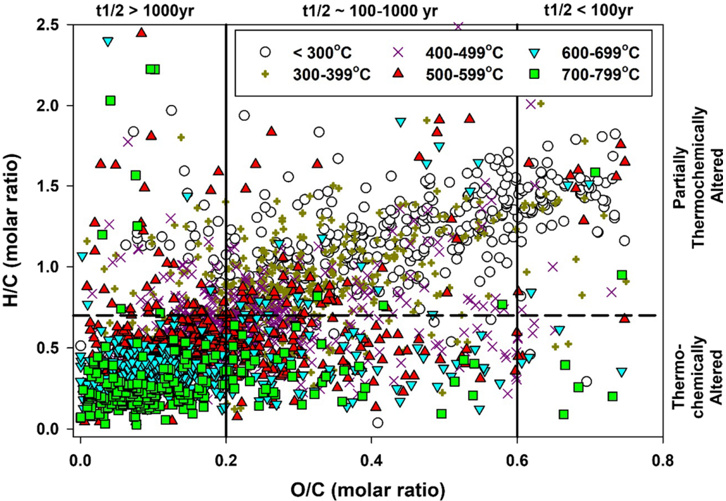
“Biochar with an O/C ratio < 0.2 is highly stable (half-life > 1000 years), between 0.2, and 0.6 is moderate stability (half-life, 100 (cid:6) 1000 years), and > 0.6 are relatively unstable (half-life 100 years) (Ippolito et al., 2020).”
InfluentialSave the Planet 2.0: A Mini Review of Improving Agricultural Soil with Terra Preta
Sazali, N., Kettner, M., & Salim, N. (2025) · Journal of Advanced Research in Fluid Mechanics and Thermal Sciences · doi:10.37934/arfmts.126.2.226236 · Cited by 2
Azman, N. A. N. M. N., Asmadi, M., & Zainol, M. M. (2025) · Elsevier eBooks · doi:10.1016/b978-0-443-29855-4.00018-7 · Cited by 4
Review: Biochar from Co-Pyrolysis of Biomass and Plastic
Jamilatun, S., Arifah, Z., Astuti, E., Rahayu, A., & Ardiansyah, R. S. (2023) · Indonesian Journal of Chemical Engineering · doi:10.26555/ijce.v1i1.458 · Cited by 3
“While mixing biochar in the soil, the effect on soil quality and the impact on crop yields has been reviewed by Lehmann et al. 2011 [6], that the type and composition of raw materials and pyrolysis temperature can significantly affect carbon absorption [7].”
Samson, V. M., Zhi, Y., Xi, Y., Guo, Y., Wei, Y., & Mao, Y. (2025) · Journal of soil science and plant nutrition · doi:10.1007/s42729-025-02492-y · Cited by 2
“The diver - gent outcomes of biochar on N retention can be explained by the differences in biochar properties, which arise from the attributes of the feedstock and the pyrolysis processes (Ippolito et al. 2020; Li et al. 2023).”
Non-conventional approaches to producing biochars for environmental and energy applications
Fuentes, A. L. B., Dazon, C., Celzard, A., & Fierro, V. (2025) · REVIEWS ON ADVANCED MATERIALS SCIENCE · doi:10.1515/rams-2025-0116 · Cited by 4
Ebido, N. E., Awaogu, C. E., Akubue, J. C., Ozongwu, O. V., Unagwu, B. O., Obalum, S. E., & Igwe, C. A. (2025) · Journal of Tropical Soils · doi:10.5400/jts.2025.v30i2.69-83 · Cited by 3
Biochar: A Sustainable Solution for Agriculture and Environment
Singh, N. K., Maurya, V. K., & Kumar, D. (2025) · Springer eBooks · doi:10.1007/978-981-95-0425-1_2 · Cited by 4
Hamid, Y., Liu, L., Ulhassan, Z., Aziz, M. Z., Haris, M. N., Usman, M., Yang, X., & Zhou, W. (2022) · Elsevier eBooks · doi:10.1016/b978-0-323-91914-2.00009-x · Cited by 4
Role of Biochar as a Sustainable Sorbent for Fipronil Removal from Aqueous and Soil Environments
Sharma, R. K., Singh, T. P., Azad, D., Adhikari, H., & Verma, A. (2024) · Springer eBooks · doi:10.1007/978-981-99-9617-9_9 · Cited by 2
A review on the interplay between bioeconomy and soil organic carbon stocks maintenance.Preprint
Díaz, C. A., Albers, A., Zamora-Ledezma, E., & Hamelin, L. (2022) · Research Square · doi:10.21203/rs.3.rs-1447842/v2 · Cited by 2
Biochar: Properties, mechanisms, and interactions in the soil
Singh, B., Mia, S., & Arbestain, M. C. (2023) · Elsevier eBooks · doi:10.1016/b978-0-12-822974-3.00149-x · Cited by 3
Fernandez, M. E. L., Tomasek, S., Fáyköd, C., & Somogyi, A. (2022) · Hungarian Journal of Industry and Chemistry · doi:10.33927/hjic-2022-15 · Cited by 1
Aina, B. M., Saliu, A. O., & Adewole, M. B. (2023) · Green energy and technology · doi:10.1007/978-3-031-22382-2_9 · Cited by 1
Biochar for the Improvement of Crop Production
Singh, J., Soni, S. K., & Ranjan, R. (2023) · Springer eBooks · doi:10.1007/978-981-99-4090-5_13 · Cited by 1
Application of Biochar in Agricultural Soil Green Remediation and Sustainable Development
Chen, L., Sun, C., Zhou, Y., Sun, S., & Zhuo, Y. (2024) · Frontier studies in soil science · doi:10.1007/978-3-031-50503-4_12 · Cited by 1
Agronomic response of the cowpea and soil quality bioindicators to the application of biochar
Ferreira, K. D. D. R., Duarte, A. C. S., Pena, A. N. L., de Freitas, I. C., Fernandes, L. A., Colen, F., & Frazão, L. A. (2024) · Ciência Agronômica/Revista ciência agronômica · doi:10.5935/1806-6690.20250003 · Cited by 1
Chen, L., Zhuo, Y., Zhou, Y., Chen, Q., Peng, Y., Liu, H., Deng, J., Xiao, J., Ai, W., Sun, S., et al. (2024) · Agronomy · doi:10.3390/agronomy14091898 · Cited by 1
Characteristics of rain tree seed (Samanea saman) biochar at different pyrolysis temperatures
Rahmat, A., Rahman, N. A., Latuponu, H., Sutiharni, S., Elfina, Y., Lidiyawati, A., Asni, A., Yusnaini, Y., Rosnina, A. G., Wirda, Z., et al. (2024) · IOP Conference Series Earth and Environmental Science · doi:10.1088/1755-1315/1388/1/012025 · Cited by 3
Cann, J., Tang, E., & Thomas, S. C. (2024) · Seeds · doi:10.3390/seeds3040037 · Cited by 2
“Biochar directly provides significant amounts of bioavailable P, K, Ca, and Mg, but most N present in feedstock material is either lost due to volatilization or covalently bound in the biochar structure during pyrolysis [12,13].”
Mitigation of organic chemicals/contaminants stress in plants by biochar application
Kassout, J., Issaoui, K. E., Oulbi, S., Chokrane, B., Chraka, A., Souali, H., & Azenzem, R. (2024) · Elsevier eBooks · doi:10.1016/b978-0-443-24137-6.00016-1 · Cited by 1
Permana, I., Nurcahya, I., Hakim, A., Mustofa, R. F., & Dewi, T. K. (2024) · JURNAL BIOLOGI TROPIS · doi:10.29303/jbt.v24i4.7937 · Cited by 1
“Bahan baku menjadi salah satu factor yang mempengaruhi hasil prouksi dan kualitas mutu biochar (Ippolito et al., 2020).”
Sazali, N., Kettner, M., & Salim, N. (2025) · Journal of Advanced Research in Fluid Mechanics and Thermal Sciences · doi:10.37934/arfmts.126.2.1325 · Cited by 1
“The principal process of making biochar is known as a pyrolysis must be to accommodate higher volume of biomass while still yielding a high-quality output [44,45,49,53,54].”
Biochar: A Revolutionizing Approach for Turning Waste into Value Through Pyrolysis
George, J. T., & Gujeran, N. (2025) · Springer eBooks · doi:10.1007/978-3-031-78420-0_4 · Cited by 2
Metadata
- Authors
- Ippolito, J. A., Cui, L., Kammann, C., Wrage-Mönnig, N., Estavillo, J. M., Fuertes-Mendizabal, T., Cayuela, M. L., Sigua, G., Novak, J., Spokas, K., & Borchard, N.
- Affiliations
- Colorado State University (US)
- Yancheng Institute of Technology (CN)
- Hochschule Geisenheim University (DE)
- Agricultural Research Service (US)
- University of Minnesota (US)
- Natural Resources Institute Finland (FI)
- Corresponding author
- Borchard, Nils
- Venue
- Biochar
- Published
- 2020-09-28
- Volume
- 2
- Issue
- 4
- Pages
- 421-438
- ISSN
- 2524-7867 (ISSN-L)
- 2524-7972
- OpenAlex
- W3091306688
- Semantic Scholar
- ba1c49a14858f364790007359ee1f59f635bc195
- Cited by
- 927
- References
- 105
- Citations by year
- 2026: 221 · 2025: 185 · 2024: 186 · 2023: 164 · 2022: 104 · 2021: 67
- FWCI
- 26.32
- Type
- journal article
- Language
- en
- Open access
- hybrid
- doi.org
- Licence
- cc-by
- creativecommons.org/licenses/by/4.0 (tdm)
- creativecommons.org/licenses/by/4.0 (vor)
- Locations
- Biochar (publishedVersion, cc-by)
- Hispana (acceptedVersion, cc-by)
- Communities in ADDI (Universidad del Pais Vasco) (submittedVersion, cc-by)
- Jukuri (Natural Resources Institute Finland (Luke)) (submittedVersion)
- Funders
- National Institute of Food and Agriculture (6657-12130-002-08I)
- Natural Resources Institute Finland
- Topics
- Physical Sciences › Energy › Fuel Technology › Thermochemical Biomass Conversion Processes
- Life Sciences › Agricultural and Biological Sciences › Soil Science › Soil Carbon and Nitrogen Dynamics
- Physical Sciences › Environmental Science › Global and Planetary Change › Fire effects on ecosystems
- Keywords
- pyrolysis temperature, fast pyrolysis, slow pyrolysis, biochar physicochemical properties, specific surface area, cation exchange capacity, nutrient availability, soil amendment, wood-based biochar
About these checks
Registry, retraction, Cites and statistics results are computed, not judged, with one exception: a printed reference that no index lists is read once by a model before it counts as a citation error. Claims are extracted by a model and kept only when their quote appears verbatim in the text; each cited source is then checked, with a model’s help, for whether it says what the claim relies on. Those verdicts can be wrong — read the claim’s quote and the cited source before relying on one.
Statistics and arithmetic are recomputed, not judged.
Confidence bands are shown only for fields calibrated on our annotated test set. None is calibrated yet, so no band is shown.
What counts as a claim ›How we measure confidence ›How we check this ›
Are you an author, or do you see a problem with this page? Request a review
Data sources
Bibliographic data: Semantic Scholar, OpenAlex, Crossref.
Contains information from the Semantic Scholar Academic Graph Datasets, made available under the ODC Attribution License (ODC-BY 1.0).
Semantic Scholar’s data is described in: Kinney, R., et al. (2023). The Semantic Scholar Open Data Platform. arXiv:2301.10140.
