

Feedstock choice, pyrolysis temperature and type influence biochar characteristics: a comprehensive meta-data analysis review
Open accessThe DOI matches its Crossref record; 106 of the 106 references it cites were found in a registry or an index.
Abstract
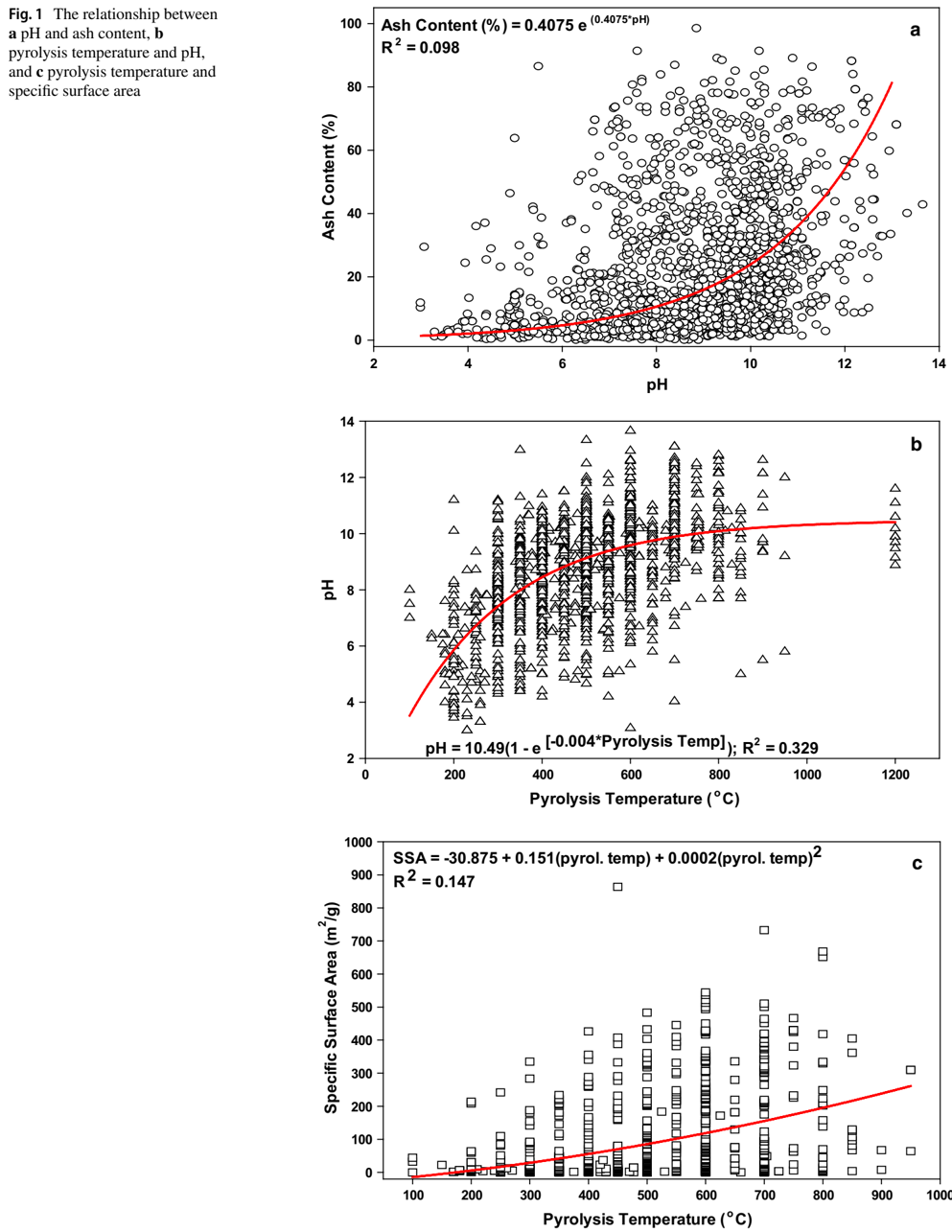
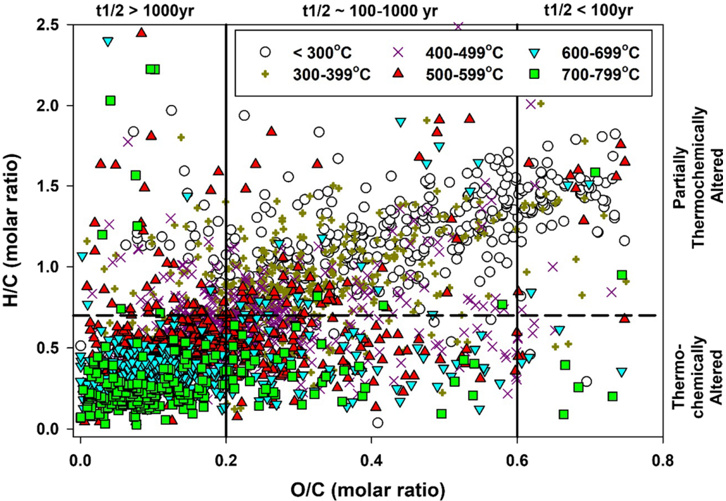
Various studies have established that feedstock choice, pyrolysis temperature, and pyrolysis type influence final biochar physicochemical characteristics. However, overarching analyses of pre-biochar creation choices and correlations to biochar characteristics are severely lacking. Thus, the objective of this work was to help researchers, biochar-stakeholders, and practitioners make more well-informed choices in terms of how these three major parameters influence the final biochar product. Utilizing approximately 5400 peer-reviewed journal articles and over 50,800 individual data points, herein we elucidate the selections that influence final biochar physical and chemical properties, total nutrient content, and perhaps more importantly tools one can use to predict biochar’s nutrient availability. Based on the large dataset collected, it appears that pyrolysis type (fast or slow) plays a minor role in biochar physico- (inorganic) chemical characteristics; few differences were evident between production styles. Pyrolysis temperature, however, affects biochar’s longevity, with pyrolysis temperatures > 500 °C generally leading to longer-term (i.e., > 1000 years) half-lives. Greater pyrolysis temperatures also led to biochars containing greater overall C and specific surface area (SSA), which could promote soil physico-chemical improvements. However, based on the collected data, it appears that feedstock selection has the largest influence on biochar properties. Specific surface area is greatest in wood-based biochars, which in combination with pyrolysis temperature could likely promote greater changes in soil physical characteristics over other feedstock-based biochars. Crop- and other grass-based biochars appear to have cation exchange capacities greater than other biochars, which in combination with pyrolysis temperature could potentially lead to longer-term changes in soil nutrient retention. The collected data also suggest that one can reasonably predict the availability of various biochar nutrients (e.g., N, P, K, Ca, Mg, Fe, and Cu) based on feedstock choice and total nutrient content. Results can be used to create designer biochars to help solve environmental issues and supply a variety of plant-available nutrients for crop growth.
Overview
The claims and statistics of this paper haven’t been checked yet.
Free: it reads the open-access text and checks the first 5 claims that cite a source we can check. Create a free account to check every claim.
Integrity signals
Registry
Cites
Statistics
Figures
Verification
Claims the paper makes
The claims and statistics of this paper haven’t been checked yet.
Free: it reads the open-access text and checks the first 5 claims that cite a source we can check. Create a free account to check every claim.
Claims other papers make about this one
Each is checked against this paper’s own text: does it say what the citing paper says it does?
The source backs part of the claim, not all of it — or backs it for a different population, condition or comparison.
In the citing paper
“Firstly, converting waste biomass into biochar, bio-oil, and syn-gas intrinsically stores 2.20 × 10 9 t CO2e annually, because it turns labile carbon that will be rapidly mineralized into recalcitrant carbon whose half life exceeds 1000 years (Ippolito et al. 2020; Lehmann et al. 2021; Spokas 2010).”
From Role of biochar toward carbon neutrality (2023) · cites this paper as Ippolito et al. 2020
Experimental — accuracy not yet measured
Self-check
Percentages, sums and reported differences re-computed from the paper’s own numbers.
The self-check needs the paper’s full text.
Citations
Cites
Biochar effects on soil biota – A review
Lehmann, J., Rillig, M. C., Thies, J., Masiello, C. A., Hockaday, W. C., & Crowley, D. (2011) · Soil Biology and Biochemistry · doi:10.1016/j.soilbio.2011.04.022 · Cited by 5,074
Biochar for Environmental Management: Science, Technology and Implementation
(2015) · doi:10.4324/9780203762264 · Cited by 2,280
Black Carbon Increases Cation Exchange Capacity in Soils
Liang, B., Lehmann, J., Solomon, D., Kinyangi, J., Grossman, J., O'Neill, B., Skjemstad, J. O., Thies, J., Luizão, F. J., Petersen, J., et al. (2006) · Soil Science Society of America Journal · doi:10.2136/sssaj2005.0383 · Cited by 2,191
Funke, A., & Ziegler, F. (2010) · Biofuels Bioproducts and Biorefining · doi:10.1002/bbb.198 · Cited by 2,001
Lehmann, J., Pereira da Silva, J., Steiner, C., Nehls, T., Zech, W., & Glaser, B. (2003) · Plant and Soil · doi:10.1023/a:1022833116184 · Cited by 1,878
Chen, B., Zhou, D., & Zhu, L. (2008) · Environmental Science & Technology · doi:10.1021/es8002684 · Cited by 1,823
Effect of process parameters on production of biochar from biomass waste through pyrolysis: A review
Tripathi, M., Sahu, J. N., & Ganesan, P. (2016) · Renewable and Sustainable Energy Reviews · doi:10.1016/j.rser.2015.10.122 · Cited by 1,759
Lehmann, J. (2007) · Frontiers in Ecology and the Environment · doi:10.1890/1540-9295(2007)5[381:bitb]2.0.co;2 · Cited by 1,714 · cited 1×
“1a) as also shown by Lehmann (2007).”
The Art, Science, and Technology of Charcoal Production
Antal, M. J., & Grønli, M. (2003) · Industrial & Engineering Chemistry Research · doi:10.1021/ie0207919 · Cited by 1,623
Weber, K., & Quicker, P. (2018) · Fuel · doi:10.1016/j.fuel.2017.12.054 · Cited by 1,522
Research works printed but not linked: 1
- Lissbrant S, Berg WK, Volanec J, Brouder S, Joern B, Cunningham S, Johnson K (2009) Phosphorus and potassium fertilization of alfalfa. Purdue University Extension Bulletin AY-331-W
Cited by
Items 701–800 of 1,000
Kuncara, J., Setyawan, M., & Hakika, D. C. (2025) · EKUILIBIUM · doi:10.20961/equilibrium.v8i2.95545 · Cited by 1
“Previous research also provides results that pyrolysis temperature affects surface area and pore volume [33,34,21].”
Kumar, A., Kumari, P., Solanki, M. K., & Prasad, M. N. V. (2025) · Elsevier eBooks · doi:10.1016/b978-0-443-29855-4.00002-3 · Cited by 2
Tao, X., Li, Y., Chen, Z., Kong, C., Feng, B., Zhu, C., Zhang, Y., Xue, J., & Cheng, H. (2025) · Agriculture · doi:10.3390/agriculture15111177 · Cited by 1
Molina, R. G. A., Masís-Meléndez, F., & Villagra-Mendoza, K. (2025) · Revista e-Agronegocios · doi:10.18845/ea.v11i1.7568 · Cited by 1
Vázquez-Núñez, E., Fernández-Luqueño, F., Muñoz, A. H. S., Reyes, I. V., Hernández, H. P., Dar, A., & Hafeez, M. (2025) · Royal Society of Chemistry eBooks · doi:10.1039/9781837677313-00142 · Cited by 1
Investigation of process parameters in the pyrolysis of sheep manure using a two-level factorial
Rizianiza, I., Siswantara, A. I., & Kusrini, E. (2025) · AIMS energy · doi:10.3934/energy.2025037 · Cited by 1
Sayğan, E. P., Aydemir, S., & Bilgili, A. V. (2025) · Harran Tarım ve Gıda Bilimleri Dergisi · doi:10.29050/harranziraat.1598601 · Cited by 1
High thermal conductivity biomass-derived carbon by K 2 FeO 4 activation for thermal energy storage
Li, X., Chen, H., & Shao, S. (2025) · Fullerenes Nanotubes and Carbon Nanostructures · doi:10.1080/1536383x.2025.2559706 · Cited by 1
“This phenomenon may be attributed to the high carbonization temperature, which led to an increased release of CO 2 , H 2 O, and CH 4 generated from the decomposition of cellulose and phenolic compounds [36] in wheat straw, ultimately causing the collapse of the carbon structure.”
Effect of Processing Solid Organic Municipal Wastes on Their Phosphorus Fertilizer Value
Hazratqulov, S., Beßler, H., Adam, A., Radelhof, T., & Engels, C. (2025) · Agronomy · doi:10.3390/agronomy15102296 · Cited by 1
Mitigating Cadmium Leaching and Improving Soil Fertility Through Biochar Application
Himaya, S. M. M. S., Kumara, N. T., Premanandarajah, P., & Thariq, M. G. M. (2025) · Environmental Quality Management · doi:10.1002/tqem.70196 · Cited by 1
Bedru, T. K., Garuma, W. B., Jayakumar, M., & Asfaw, B. T. (2025) · Elsevier eBooks · doi:10.1016/b978-0-443-29275-0.00003-7 · Cited by 2
Assessment of Waste-Derived Biochars on the Health and Biological Activity of Soil
Shaw, A., Muscalu, R. D., & Wimmerová, L. (2025) · Journal of Visualized Experiments · doi:10.3791/68994 · Cited by 1
Wang, X., Jin, H. Z., Zhang, J., Yang, H., Wang, J., Hu, Q., Lou, H., Niu, Z., Dong, C., Tang, Y., et al. (2025) · Chemical Engineering and Processing - Process Intensification · doi:10.1016/j.cep.2025.110616 · Cited by 2
John, V. T., Braga, A. R. D. O., Falção, N. P. D. S., Guerra, J. F. C., & Marques-dos-Santos, C. S. C. (2025) · Elsevier eBooks · doi:10.1016/b978-0-443-22320-4.00022-0 · Cited by 2
Zhang, X., Xue, L., & Xiong, Z. (2025) · Environmental Technology & Innovation · doi:10.1016/j.eti.2025.104663 · Cited by 1
Sapkota, S., Sharma, B., & Ghimire, R. (2025) · Carbon Management · doi:10.1080/17583004.2025.2602999 · Cited by 2
“While previous studies suggest that biochar efficiency increases with increasing pyrolysis temperatures due to enhanced aromatic C content [40,42], our findings demonstrate that biochar produced at 500 ° C, especially PB500, optimises C stability in arid soils more effectively than biochars…”
Stephan, P., Leglize, P., Garcia, L., Charrois, L., Hartmeyer, P., Fauvet, A., & Piutti, S. (2025) · PLoS ONE · doi:10.1371/journal.pone.0338385 · Cited by 1
“These differences may be related to the physical and chemical properties of the carbon matrices, which are strongly influenced by the characteristics of the raw materials used by production conditions such as temperature and duration of pyrolysis, or the presence and type of activation [21,54,55].”
Ducusin, L. A. E., Andres, S. N. D., & Belmonte, B. A. (2026) · Process Integration and Optimization for Sustainability · doi:10.1007/s41660-025-00657-x · Cited by 1
“Ippolito et al. (2020), in their meta-analysis, emphasized that among various biochar production variables, the feedstock type is a key determinant of the availability of exchangeable cations in both biochar and the soil-biochar mixture.”
Characterisation of biochar produced from agricultural residues and its effect on soil properties
Dheenadhayalan, E., Jothimani, S., Baskar, K., Saravana, P. P., Joseph, M., Srinivasan, S., Mohamed, R. A. F. M., & Varanasi, S. T. (2026) · Plant Science Today · doi:10.14719/pst.10352 · Cited by 1
Manore, D., Gizachew, S., & Ayalew, T. (2026) · Air Soil and Water Research · doi:10.1177/11786221261417562 · Cited by 1
Unraveling the physical genome of biochar
Ji, Y., Kirk, D. W., Cai, Z., & Jia, C. Q. (2026) · Biochar X · doi:10.48130/bchax-0026-0003 · Cited by 2
Gao, X., Zhang, H., Zhang, X., Li, C., Gao, X., Wang, L., Shan, S., Rajput, V. D., & Fang, J. (2026) · Ecotoxicology and Environmental Safety · doi:10.1016/j.ecoenv.2026.119836 · Cited by 1
Robles, A., Agyei, B. K., Singh, M. P., Tiemann, L. K., & Miesel, J. (2026) · Soil Science Society of America Journal · doi:10.1002/saj2.70204 · Cited by 1
From Biomass Waste to Green Fuel: Biochar-Based Catalysts for Hydrogen Production
Rubiano, K. M., Jilani, A., & Ibrahim, H. (2026) · Energies · doi:10.3390/en19041087 · Cited by 2
“…and they found that the biochar derived from manure and sludges are produced with a lower surface area with a low distinct porous structure [79], due to phenomena such as deformation, structural cracking micropore blockage, and the lack of lignin that is associated with increases in…”
Black gold - biochar: transforming agro-based biomasses into sustainable environmental solutions
Mulla, A., Chakraborty, R., Rai, G., Kandwal, B., Das, T., Hulkane, S., Banat, I. M., Joshi, S. J., & Satpute, S. (2026) · AIMS bioengineering · doi:10.3934/bioeng.2026004 · Cited by 1
Wang, M., Zhang, J., Zhang, J., Wu, S., Ou, S., Shen, C., Li, Z., Zhang, C., & Zhang, J. (2026) · Molecules · doi:10.3390/molecules31050765 · Cited by 2
Guan, R. F., Wang, L. H., Guan, J., Liu, J., Zhang, Y., Jia, X., & Xin, Y. (2026) · Journal of environmental chemical engineering · doi:10.1016/j.jece.2026.121960 · Cited by 2
Use of Biochar and Lime to Reduce the Acidity of Agrosoddy-Podzolic Soils in a Laboratory Experiment
Orlova, E. E., Орлова, Н. Е., Xu, S., Leontiev, A. A., Николаевич, Ч. С., & Smirnova, K. A. (2026) · Eurasian Soil Science · doi:10.1134/s1064229325603890 · Cited by 1
Hardie, A. G., de Bod, R., & Raath, P. J. (2026) · Journal of soil science and plant nutrition · doi:10.1007/s42729-026-03176-x · Cited by 1
“…organic carbon (DOC), consisting of soluble organic acids, which arise from the volatile fraction of compounds in the biochar (Fidel et al. 2017; Ippolito et al. 2020; Liu The XRD-detectable sources of alkalinity identified in the wood ash were CaSiO 3 (wollastonite) and K 2 Ca(CO 3 ) 2…”
InfluentialMachine Learning-Based Prediction and Optimization of Heavy Metal Adsorption Performance of Biochar
Huang, X., Bai, X., Yang, Y., Li, W., & Xu, D. (2026) · Forests · doi:10.3390/f17030326 · Cited by 1
Sapkota, S., Frene, J. P., Kasera, N., Adhikari, P., Adhikari, S., & Ghimire, R. (2026) · Frontiers in Soil Science · doi:10.3389/fsoil.2026.1669356 · Cited by 1
“…in SOC storage potential, soil health, and GHG mitigation bene fi ts of biochar due to differences in feedstock, preparation methods, biochar properties, application rates, soil characteristics, other management practices (e.g., fertilization, tillage), and the duration of application (8, 18, 19).”
Gao, S.-Y., Hu, W., Gao, L., Tang, C.-C., Chen, X.-Y., Zhou, A.-J., Li, W., Liu, W., & He, Z.-W. (2026) · Journal of Water Process Engineering · doi:10.1016/j.jwpe.2026.109831 · Cited by 1
Porato, E., & Yousefpour, R. (2026) · Sustainability · doi:10.3390/su18052662 · Cited by 1
Cong, H., Chen, M., Song, W., Feng, J., Ma, B., & An, J. (2026) · Biochar X · doi:10.48130/bchax-0026-0011 · Cited by 1
Mustaffa, M. R. A. F., Pandian, K., Vijayakumar, S., Govindaraj, S., Gajendiran, M., Varanasi, S. T., & Prince, A. J. (2026) · Journal of soil science and plant nutrition · doi:10.1007/s42729-026-03183-y · Cited by 1
“Biochar influences NUE primarily through its ability to modify soil physical structure, surface chemistry and microbial processes, thereby regulating nutrient transformations rather than simply acting as a direct nutrient source (Ippolito et al. 2020 ).”
Kumar, A., Singh, E., Chiueh, P.-T., & Lo, S.-I. (2026) · Journal of environmental chemical engineering · doi:10.1016/j.jece.2026.122402 · Cited by 1
Biochar Production and Characteristics
Soni, M., Kanani, K., Singh, S., Shukla, N., & Dwivedi, K. (2026) · Springer eBooks · doi:10.1007/978-3-032-16746-0_1 · Cited by 1
Nwaiwu, D. H., Lin, D., Wei, X., & Liu, F. (2026) · Materials · doi:10.3390/ma19081598 · Cited by 1
KAUSHIK, P., & Mathur, A. (2026) · BIO Web of Conferences · doi:10.1051/bioconf/202623302016 · Cited by 1
Global evaluation of a new biochar model for supporting climate-smart agriculture
Ren, W., Kumar, Y., & Huang, Y. (2026) · Biochar · doi:10.1007/s42773-026-00609-9 · Cited by 1
Kaboggoza, H. C., Williams, E. M., Lebu, S., Muoghalu, C., Mccoy, L. M., & Manga, M. (2026) · Bioresource Technology Reports · doi:10.1016/j.biteb.2026.102781 · Cited by 1
Roy, H., Asif, M. N., Kwak, J. H., Chang, S. X., & Islam, M. M. (2026) · International Journal of Environmental Science and Technology · doi:10.1007/s13762-026-07243-9 · Cited by 1
“The differences in carbonization behavior and ash content contributed to variations in surface chemistry and porosity, thereby affecting adsorption efficiency (Ippolito et al. 2020).”
Potential Application of Ferrate-Modified Commercial Biochar to Control Ammonia and Hydrogen Sulfide
Kim, Y., & Kim, S.-H. (2026) · Applied Sciences · doi:10.3390/app16105140 · Cited by 1
Biogenic, Agriwaste, and Urban-Derived Biochar in Minimizing HMs Load in Crops
Sadia, M. M., Mridha, D., & Antonângelo, J. A. (2026) · Sustainability Sciences in Asia and Africa · doi:10.1007/978-981-95-7746-0_2 · Cited by 1
Wang, L., Feng, Q., Luo, L., Chen, Y., & Hou, R. (2026) · Journal of environmental chemical engineering · doi:10.1016/j.jece.2026.123300 · Cited by 2
Soil-based adaptation strategies of rubber plantations to climate change: a global synthesis
Ali, W., Shehzad, K., Shah, A., Li, Z., Zhao, C., & Xia, Z. (2026) · Forestry Research Advances · doi:10.48130/fra-0025-0003 · Cited by 1
Machine learning/AI for predicting biochar characteristics
Balakrishnan, P. (2026) · Elsevier eBooks · doi:10.1016/b978-0-443-27763-4.00007-6 · Cited by 1
Curi-Zavala, C., Arroyo-Julca, M. K., Flores‐Marquez, R., Calero-Rios, E., Garcia, S., & Solórzano-Acosta, R. (2026) · Frontiers in Microbiology · doi:10.3389/fmicb.2026.1794830 · Cited by 1
Jiang, Z., Liu, B., Chen, R., LianKai, Z., & Chen, G. (2026) · Bioresources and Bioprocessing · doi:10.1186/s40643-026-01070-z · Cited by 1
“…temperature enhances biochar pH, electrical conductivity (EC), C/N ratio, ash content, Zeta potential, and specific surface area, while reducing the O/C and H/C ratios and the abundance of oxygen-containing groups (Ippolito et al. 2020; Ortiz et al. 2020; Tomczyk et al. 2020; Zhu et al. 2026).”
InfluentialRohani, A., Hoseinpour, M., & Karami, R. (2026) · Industrial & Engineering Chemistry Research · doi:10.1021/acs.iecr.5c05402 · Cited by 1
Biochar-enhanced direct interspecies electron transfer in anaerobic digestion: A review
Saleh, N. A., Changey, F., Garcìa-Pèrez, M., Guédon, E., & Etienne, M. (2026) · Bioelectrochemistry · doi:10.1016/j.bioelechem.2026.109359 · Cited by 2
Peng, J., Zhang, Y., Fu, Y., Feng, Y., Lin, N., Li, Y., Su, J., Zhang, M., & Wang, X. (2026) · Green Carbon · doi:10.1016/j.greenca.2026.03.016 · Cited by 1
Schmidt, M. P., Ashworth, D. J., Phan, D., Bhattacharjee, A. S., Ferreira, J. F. S., & Ibekwe, A. M. (2026) · Bioresource Technology Reports · doi:10.1016/j.biteb.2026.102903 · Cited by 1
Aumtong, S., Soongsoongnoen, P., & Wanwinit, D. (2026) · Scientific Reports · doi:10.1038/s41598-026-59314-z · Cited by 1
“…to the Ca-rich profile: (i) longan wood is a tropical hardwood that accumulates more Ca than the temperate softwoods used in many biochar studies 3,8 ; (ii) pyrolysis at 400–500 °C volatilises C and N while retaining alkaline-earth phases, concentrating Ca in the ash-rich solid (bulk ash content…”
InfluentialA Review of Catalytic Methane Decomposition on Biochar
Kopenhagen, L. F., Jensen, A. D., & Wu, H. (2026) · Energy & Fuels · doi:10.1021/acs.energyfuels.6c01643 · Cited by 3
Reducing Nitrous Oxide Emissions Associated With Fertiliser Using Nitrogen Enriched Biochar
Lindhardt, J. H., Schnorr, K., Bruun, S., & Jensen, L. S. (2026) · European Journal of Soil Science · doi:10.1111/ejss.70375 · Cited by 1
Cheng, Y., Feng, W., Wang, Y., Yang, F., Miao, Q., Ho, C., Huo, Y., & Liao, H. (2026) · Chemical Engineering Journal · doi:10.1016/j.cej.2026.179008 · Cited by 1
Peng, S., Zhang, X., Han, X., Liu, N., & Duan, B. (2026) · Forestry Research Advances · doi:10.48130/fra-0026-0006 · Cited by 1
Biochar as a carrier for beneficial microorganisms: a novel strategy for soil sustainability
Rajendran, G., Kanuri, K. S. K., Tenzimit, L., Quadriya, H., Adelly, A., Selvam, H., Manasa, V., Umarajashekhar, A., Venkatanna, B., Borah, M., et al. (2026) · Elsevier eBooks · doi:10.1016/b978-0-443-44099-1.00003-7 · Cited by 1
Yang, M., Guo, J., Du, J., Feng, L., Li, W., Huang, M., Zhang, H., & Feng, H. (2026) · Journal of Cleaner Production · doi:10.1016/j.jclepro.2026.149127 · Cited by 1
Biochar Production: Toward Safe, Effective, and Sustainable Agriculture
Ojewumi, O. E., Chen, G., & Ojewumi, M. E. (2026) · Green · doi:10.3390/green1020007 · Cited by 1
Mourão, S. A., Pimenta, A. S., Zanúncio, J. C., Helfer, F., Gratchev, I., & Michael, R. N. (2026) · Journal of Environmental Management · doi:10.1016/j.jenvman.2026.130644 · Cited by 1
Dorndorf, T., Hagemann, N., Merfort, A., Fuss, S., & Strefler, J. (2026) · Energy Research & Social Science · doi:10.1016/j.erss.2026.104882 · Cited by 2
“While higher pyrolysis temperatures reduce biochar yield, they enhance aromatization and hence the stability of the carbon [45 – 47] (see the SI for details).”
Magdziarz, A., Korzeniowski, Ł., Plata, M., Sieradzka, M., Mlonka-Mędrala, A., Kalemba–Rec, I., & Jerzak, W. (2026) · Renewable Energy · doi:10.1016/j.renene.2026.126291 · Cited by 1
Effects of Biochar and Nitrogen‐Enriched Biochar on Tree Growth in Scots Pine Stands
Hanssen, K. H., Stokland, J. N., & Astrup, R. (2026) · GCB Bioenergy · doi:10.1111/gcbb.70148 · Cited by 1
“Biochars produced at high temperatures have a larger specific surface area (SSA) (Ippolito et al. 2020) and have higher potential for mitigating N losses and improving N use efficiency (Kohira et al. 2025).”
InfluentialGui, X., Zhao, Z., Zhang, Y., Zhou, D., He, J., Chu, C., Wang, Q., Hu, L., Li, F., Wu, S., et al. (2026) · Biochar · doi:10.1007/s42773-026-00649-1 · Cited by 1
“Wood-derived biochar generally has a larger specific surface area, crop residue-derived biochar typically has higher CEC, and manure-derived biochar is rich in macro-and micronutrients (Ippolito et al. 2020).”
Abdelfadeel, I. A., Alotaibi, K. D., & Alkoiak, F. N. (2026) · Agronomy · doi:10.3390/agronomy16181775 · Cited by 1
“The BC produced at higher pyrolysis temperatures typically possesses a larger surface area and greater stability, while BC made at lower temperatures retains more functional groups and labile nutrients [14].”
Rebuilding Urban Soil Health: Roles of Bioswales and Organic Amendments in Enhancing Soil Resilience
Shokta, M., Prabukumar, G., Kannan, P., Senthivelu, M., & Prasad, V. B. R. (2026) · Applied and Environmental Soil Science · doi:10.1155/aess/1289539 · Cited by 1
Silver–Biochar Nanocomposites for Sustainable Escherichia coli Disinfection: A Review
Stuvart, A., Arun, T. R., & Raman, N. (2026) · ChemistrySelect · doi:10.1002/slct.74705 · Cited by 2
CHEN, N., Li, W., Zhong, J.-L., Hu, S.-Y., Dai, T., Liu, J.-S., ZHONG, X., ZHOU, J. H., GAO, G. Q., CHEN, Y. W., et al. (2022) · Applied Ecology and Environmental Research · doi:10.15666/aeer/2006_54335448 · Cited by 1
“Nutrient elements remain in the pores of biochar during the preparation of biochar (Qian et al., 2013; Ippolito et al., 2020).”
Backgroundde Rozario, J. (2024) · Borneo Journal of Sciences and Technology · doi:10.35370/bjost.2024.6.2-02 · Cited by 1
Ajit, K., John, J., & Krishnan, H. (2025) · Surfaces and Interfaces · doi:10.1016/j.surfin.2025.106103 · Cited by 1
Ponthieu, M., Beucher, J., Guillaneuf, A., Guyader, E. L., Miconnet, V., Gommeaux, M., Guimbari, R. A., Mazlouzi, M. E., Marin, B., & Morvan, X. (2025) · IOP Conference Series Earth and Environmental Science · doi:10.1088/1755-1315/1455/1/012006 · Cited by 1
Ranaweera, M. S. K., Edirisinghe, E. A. N. K., Narayana, M., Athapattu, B. C. L., Vithanage, E., Piyarathna, W. G. R. T., & Vithanage, M. S. (2025) · Proceedings in Technology Transfer · doi:10.1007/978-981-96-1399-1_17 · Cited by 2
Wijitkosum, S. (2025) · Sustainable landscape planning and natural resources management · doi:10.1007/978-3-031-73154-9_4 · Cited by 1
Immobilisation of soil cadmium and lead by an integrated approach of SICP and absorbent additives
Wang, Y., Li, M., Zhang, S., Ni, J., & Kamchoom, V. (2025) · Environmental Geotechnics · doi:10.1680/jenge.24.00174 · Cited by 2
Influence of Biochar Application Rates on Watermelon Growth, Yield, and Soil Nutrient Availability
(2025) · Journal of Food Chemistry and Nanotechnology · doi:10.17756/jfcn.2025-s1-006 · Cited by 1
Wang, G., Zhou, S., Yang, Z., Chen, D., Zhao, H., Chen, Z., Hu, S., Rahman, S. T., & Wu, Q. (2025) · ACS Omega · doi:10.1021/acsomega.5c05966 · Cited by 1
Mobasser, S., Olanrewaju, T. O., Jafvert, C. T., Johnston, C. T., & Engelberth, A. S. (2025) · Bioresources and Bioproducts · doi:10.3390/bioresourbioprod1010005 · Cited by 2
“Specifically, biochar often exhibits enhanced cation exchange capacity, which further augments its versatility in environmental applications [17].”
Pyrolytic Product Distribution Analysis on Co-Pyrolysis of Face Mask Waste and Lignocellulosic Waste
Mahendra, R. A. (2024) · METAL Jurnal Sistem Mekanik dan Termal · doi:10.25077/metal.7.2.%p.2023 · Cited by 1
Díaz, C. A., Clivot, H., Albers, A., Zamora-Ledezma, E., & Hamelin, L. (2022) · Research Square · doi:10.21203/rs.3.rs-1447950/v2 · Cited by 1
Díaz, C. A., Clivot, H., Albers, A., Zamora-Ledezma, E., & Hamelin, L. (2022) · Research Square · doi:10.21203/rs.3.rs-1447950/v1 · Cited by 1
Díaz, C. A., Balugani, E., Zamora-Ledezma, E., & Hamelin, L. (2023) · Research Square · doi:10.21203/rs.3.rs-3086337/v1 · Cited by 1
(2021) · SOIL · doi:10.5194/soil-2021-131-rc1
(2022) · SOIL · doi:10.5194/soil-2021-131-ec1
Balugani, E. (2022) · SOIL · doi:10.5194/soil-2021-131-ac3
(2022) · SOIL · doi:10.5194/soil-2021-131-rc3
(2021) · SOIL · doi:10.5194/soil-2021-131-rc2
Balugani, E. (2021) · SOIL · doi:10.5194/soil-2021-131-ac2
Balugani, E. (2021) · SOIL · doi:10.5194/soil-2021-131-ac1
Developing motorway balancing ponds with long-term net ecological value
CAIRNS, S. C. (2023) · Cronfa (Swansea University) · doi:10.23889/suthesis.63279
Aderhold, J., Ford, M., Lambert, H., Huynh, H., Böhringer, J., Steele, M., & Johnson, B. (2023) · Iron & Steel Technology Conference and Exposition (AISTech) · doi:10.33313/387/066
(2023) · Elsevier eBooks · doi:10.1016/b978-0-443-13784-6.00004-4
Gabetto, F. P. (2023) · Digital Library of Theses and Dissertations (Universidade de São Paulo) · doi:10.11606/d.11.2023.tde-12092023-155305
Poonia, P., Gaur, L., & Panwar, N. L. (2023) · Research Square · doi:10.21203/rs.3.rs-3344041/v1
Laan, M. M., Kayler, Z. E., Huerta, J., & Strawn, D. G. (2023) · Agrosystems Geosciences & Environment · doi:10.1002/agg2.20423
Biochar as bioretention systems for water quality improvement in Malaysia
Selvarajoo, A., Balakrishnan, D., Aman, A. M. N., & Wai, Y. T. (2023) · E3S Web of Conferences · doi:10.1051/e3sconf/202346701032
Khandelwal, N., & Darbha, G. K. (2024) · Elsevier eBooks · doi:10.1016/b978-0-443-19183-1.00014-3
USE OF BIOCHAR FROM NON-NATIVE TREES AS A GROWING MEDIA COMPONENT FOR BASIL
Flores‐Mangual, M. L., Pagán-Lopéz, M. A., & Román-Aponte, E. A. (2023) · The Journal of Agriculture of the University of Puerto Rico · doi:10.46429/jaupr.v107i2.21240
Influence of Biochar on Cd Bioavailability in Agricultural Soil-Plant Systems: A Meta-AnalysisPreprint
Zhang, F., Hu, B., Pang, M., Chen, Y., Meng, L., Song, W., Feng, Y., & Ma, Y. (2024) · SSRN Electronic Journal · doi:10.2139/ssrn.4717829
Metadata
- Authors
- Ippolito, J. A., Cui, L., Kammann, C., Wrage-Mönnig, N., Estavillo, J. M., Fuertes-Mendizabal, T., Cayuela, M. L., Sigua, G., Novak, J., Spokas, K., & Borchard, N.
- Affiliations
- Colorado State University (US)
- Yancheng Institute of Technology (CN)
- Hochschule Geisenheim University (DE)
- Agricultural Research Service (US)
- University of Minnesota (US)
- Natural Resources Institute Finland (FI)
- Corresponding author
- Borchard, Nils
- Venue
- Biochar
- Published
- 2020-09-28
- Volume
- 2
- Issue
- 4
- Pages
- 421-438
- ISSN
- 2524-7867 (ISSN-L)
- 2524-7972
- OpenAlex
- W3091306688
- Semantic Scholar
- ba1c49a14858f364790007359ee1f59f635bc195
- Cited by
- 927
- References
- 105
- Citations by year
- 2026: 221 · 2025: 185 · 2024: 186 · 2023: 164 · 2022: 104 · 2021: 67
- FWCI
- 26.32
- Type
- journal article
- Language
- en
- Open access
- hybrid
- doi.org
- Licence
- cc-by
- creativecommons.org/licenses/by/4.0 (tdm)
- creativecommons.org/licenses/by/4.0 (vor)
- Locations
- Biochar (publishedVersion, cc-by)
- Hispana (acceptedVersion, cc-by)
- Communities in ADDI (Universidad del Pais Vasco) (submittedVersion, cc-by)
- Jukuri (Natural Resources Institute Finland (Luke)) (submittedVersion)
- Funders
- National Institute of Food and Agriculture (6657-12130-002-08I)
- Natural Resources Institute Finland
- Topics
- Physical Sciences › Energy › Fuel Technology › Thermochemical Biomass Conversion Processes
- Life Sciences › Agricultural and Biological Sciences › Soil Science › Soil Carbon and Nitrogen Dynamics
- Physical Sciences › Environmental Science › Global and Planetary Change › Fire effects on ecosystems
- Keywords
- pyrolysis temperature, fast pyrolysis, slow pyrolysis, biochar physicochemical properties, specific surface area, cation exchange capacity, nutrient availability, soil amendment, wood-based biochar
About these checks
Registry, retraction, Cites and statistics results are computed, not judged, with one exception: a printed reference that no index lists is read once by a model before it counts as a citation error. Claims are extracted by a model and kept only when their quote appears verbatim in the text; each cited source is then checked, with a model’s help, for whether it says what the claim relies on. Those verdicts can be wrong — read the claim’s quote and the cited source before relying on one.
Statistics and arithmetic are recomputed, not judged.
Confidence bands are shown only for fields calibrated on our annotated test set. None is calibrated yet, so no band is shown.
What counts as a claim ›How we measure confidence ›How we check this ›
Are you an author, or do you see a problem with this page? Request a review
Data sources
Bibliographic data: Semantic Scholar, OpenAlex, Crossref.
Contains information from the Semantic Scholar Academic Graph Datasets, made available under the ODC Attribution License (ODC-BY 1.0).
Semantic Scholar’s data is described in: Kinney, R., et al. (2023). The Semantic Scholar Open Data Platform. arXiv:2301.10140.
