

Feedstock choice, pyrolysis temperature and type influence biochar characteristics: a comprehensive meta-data analysis review
Open accessThe DOI matches its Crossref record; 106 of the 106 references it cites were found in a registry or an index.
Abstract
Various studies have established that feedstock choice, pyrolysis temperature, and pyrolysis type influence final biochar physicochemical characteristics. However, overarching analyses of pre-biochar creation choices and correlations to biochar characteristics are severely lacking. Thus, the objective of this work was to help researchers, biochar-stakeholders, and practitioners make more well-informed choices in terms of how these three major parameters influence the final biochar product. Utilizing approximately 5400 peer-reviewed journal articles and over 50,800 individual data points, herein we elucidate the selections that influence final biochar physical and chemical properties, total nutrient content, and perhaps more importantly tools one can use to predict biochar’s nutrient availability. Based on the large dataset collected, it appears that pyrolysis type (fast or slow) plays a minor role in biochar physico- (inorganic) chemical characteristics; few differences were evident between production styles. Pyrolysis temperature, however, affects biochar’s longevity, with pyrolysis temperatures > 500 °C generally leading to longer-term (i.e., > 1000 years) half-lives. Greater pyrolysis temperatures also led to biochars containing greater overall C and specific surface area (SSA), which could promote soil physico-chemical improvements. However, based on the collected data, it appears that feedstock selection has the largest influence on biochar properties. Specific surface area is greatest in wood-based biochars, which in combination with pyrolysis temperature could likely promote greater changes in soil physical characteristics over other feedstock-based biochars. Crop- and other grass-based biochars appear to have cation exchange capacities greater than other biochars, which in combination with pyrolysis temperature could potentially lead to longer-term changes in soil nutrient retention. The collected data also suggest that one can reasonably predict the availability of various biochar nutrients (e.g., N, P, K, Ca, Mg, Fe, and Cu) based on feedstock choice and total nutrient content. Results can be used to create designer biochars to help solve environmental issues and supply a variety of plant-available nutrients for crop growth.
Overview
The claims and statistics of this paper haven’t been checked yet.
Free: it reads the open-access text and checks the first 5 claims that cite a source we can check. Create a free account to check every claim.
Integrity signals
Registry
Cites
Statistics
Figures
Verification
Claims the paper makes
The claims and statistics of this paper haven’t been checked yet.
Free: it reads the open-access text and checks the first 5 claims that cite a source we can check. Create a free account to check every claim.
Claims other papers make about this one
Each is checked against this paper’s own text: does it say what the citing paper says it does?
The source backs part of the claim, not all of it — or backs it for a different population, condition or comparison.
In the citing paper
“Firstly, converting waste biomass into biochar, bio-oil, and syn-gas intrinsically stores 2.20 × 10 9 t CO2e annually, because it turns labile carbon that will be rapidly mineralized into recalcitrant carbon whose half life exceeds 1000 years (Ippolito et al. 2020; Lehmann et al. 2021; Spokas 2010).”
From Role of biochar toward carbon neutrality (2023) · cites this paper as Ippolito et al. 2020
Experimental — accuracy not yet measured
Self-check
Percentages, sums and reported differences re-computed from the paper’s own numbers.
The self-check needs the paper’s full text.
Citations
Cites
Biochar effects on soil biota – A review
Lehmann, J., Rillig, M. C., Thies, J., Masiello, C. A., Hockaday, W. C., & Crowley, D. (2011) · Soil Biology and Biochemistry · doi:10.1016/j.soilbio.2011.04.022 · Cited by 5,074
Biochar for Environmental Management: Science, Technology and Implementation
(2015) · doi:10.4324/9780203762264 · Cited by 2,280
Black Carbon Increases Cation Exchange Capacity in Soils
Liang, B., Lehmann, J., Solomon, D., Kinyangi, J., Grossman, J., O'Neill, B., Skjemstad, J. O., Thies, J., Luizão, F. J., Petersen, J., et al. (2006) · Soil Science Society of America Journal · doi:10.2136/sssaj2005.0383 · Cited by 2,191
Funke, A., & Ziegler, F. (2010) · Biofuels Bioproducts and Biorefining · doi:10.1002/bbb.198 · Cited by 2,001
Lehmann, J., Pereira da Silva, J., Steiner, C., Nehls, T., Zech, W., & Glaser, B. (2003) · Plant and Soil · doi:10.1023/a:1022833116184 · Cited by 1,878
Chen, B., Zhou, D., & Zhu, L. (2008) · Environmental Science & Technology · doi:10.1021/es8002684 · Cited by 1,823
Effect of process parameters on production of biochar from biomass waste through pyrolysis: A review
Tripathi, M., Sahu, J. N., & Ganesan, P. (2016) · Renewable and Sustainable Energy Reviews · doi:10.1016/j.rser.2015.10.122 · Cited by 1,759
Lehmann, J. (2007) · Frontiers in Ecology and the Environment · doi:10.1890/1540-9295(2007)5[381:bitb]2.0.co;2 · Cited by 1,714 · cited 1×
“1a) as also shown by Lehmann (2007).”
The Art, Science, and Technology of Charcoal Production
Antal, M. J., & Grønli, M. (2003) · Industrial & Engineering Chemistry Research · doi:10.1021/ie0207919 · Cited by 1,623
Weber, K., & Quicker, P. (2018) · Fuel · doi:10.1016/j.fuel.2017.12.054 · Cited by 1,522
Impact of pyrolysis temperature and manure source on physicochemical characteristics of biochar
Cantrell, K. B., Hunt, P. G., Uchimiya, M., Novak, J. M., & Ro, K. S. (2012) · Bioresource Technology · doi:10.1016/j.biortech.2011.11.084 · Cited by 1,502
Self-citationAhmad, M., Lee, S. S., Dou, X., Mohan, D., Sung, J.-K., Yang, J. E., & Ok, Y. S. (2012) · Bioresource Technology · doi:10.1016/j.biortech.2012.05.042 · Cited by 1,357
Biochar stability in soil: meta-analysis of decomposition and priming effects
Wang, J., Xiong, Z., & Kuzyakov, Y. (2016) · GCB Bioenergy · doi:10.1111/gcbb.12266 · Cited by 1,316 · cited 3×
“The creation of biochar from these products places C into a recalcitrant form which could last hundreds to over thousands of years (Spokas 2010; Kuzyakov et al. 2014; Wang et al. 2016), suggesting that biochar could aid in climate change mitigation (Tripathi et al.”
BackgroundMethodInfluentialProduction and utilization of biochar: A review
Cha, J. S., Park, S. H., Jung, S.-C., Ryu, C., Jeon, J.-K., Shin, M.-C., & Park, Y.-K. (2016) · Journal of Industrial and Engineering Chemistry · doi:10.1016/j.jiec.2016.06.002 · Cited by 1,293
Biochar for environmental management: an introduction
(2015) · Biochar for Environmental Management · doi:10.4324/9780203762264-8 · Cited by 1,273 · cited 1×
“Biochars are carbon (C) rich materials typically produced via biomass pyrolysis at relatively low temperatures (300–700 °C) under limited oxygen conditions (Lehmann and Joseph 2009).”
BackgroundProperties of dairy-manure-derived biochar pertinent to its potential use in remediation
Cao, X., & Harris, W. (2010) · Bioresource Technology · doi:10.1016/j.biortech.2010.02.052 · Cited by 1,173
Review of the stability of biochar in soils: predictability of O:C molar ratios
Spokas, K. A. (2010) · Carbon Management · doi:10.4155/cmt.10.32 · Cited by 1,160 · cited 5×
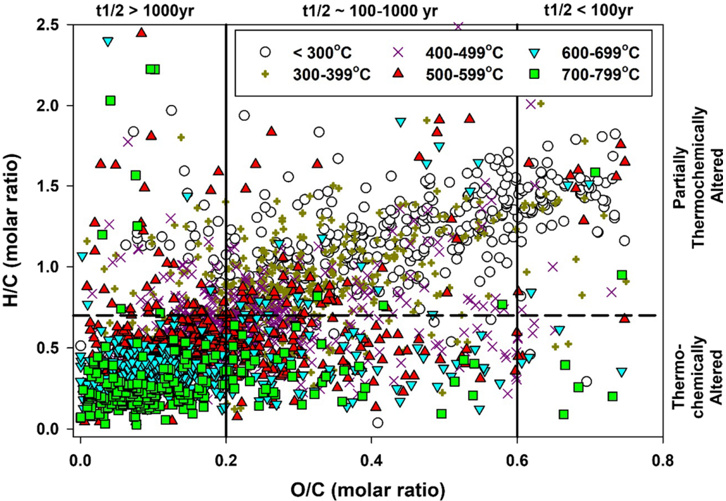
“2016) and low O/C and H/C ratios (Spokas 2010) should be applied to soils.”
BackgroundInfluentialSelf-citationKloss, S., Zehetner, F., Dellantonio, A., Hamid, R., Ottner, F., Liedtke, V., Schwanninger, M., Gerzabek, M. H., & Soja, G. (2012) · Journal of Environmental Quality · doi:10.2134/jeq2011.0070 · Cited by 1,014
A Review of Biochar and Soil Nitrogen Dynamics
Clough, T., Condron, L., Kammann, C., & Müller, C. (2013) · Agronomy · doi:10.3390/agronomy3020275 · Cited by 969
Self-citation(2009) · Cited by 884
Self-citationHow does fire affect the nature and stability of soil organic nitrogen and carbon? A review
Knicker, H. (2007) · Biogeochemistry · doi:10.1007/s10533-007-9104-4 · Cited by 874 · cited 2×
“Although not strongly illustrated in Table 2, it is important to note that P-containing compounds can volatilize above 760 °C (Knicker 2007) causing total P concentrations to decrease.”
BackgroundLiu, X., Zhang, A., Ji, C., Joseph, S., Bian, R., Li, L., Pan, G., & Paz-Ferreiro, J. (2013) · Plant and Soil · doi:10.1007/s11104-013-1806-x · Cited by 793
Qambrani, N. A., Rahman, M. M., Won, S., Shim, S., & Ra, C. (2017) · Renewable and Sustainable Energy Reviews · doi:10.1016/j.rser.2017.05.057 · Cited by 774
Effects of biochar on soil available inorganic nitrogen: a review and meta-analysis
Nguyen, T. T. N., Xu, C.-Y., Tahmasbian, I., Che, R., Xu, Z., Zhou, X., Wallace, H. M., & Bai, S. H. (2017) · Geoderma · doi:10.1016/j.geoderma.2016.11.004 · Cited by 715
Kim, K. H., Kim, J.-Y., Cho, T.-S., & Choi, J. W. (2012) · Bioresource Technology · doi:10.1016/j.biortech.2012.04.094 · Cited by 696
Kuzyakov, Y., Bogomolova, I., & Glaser, B. (2014) · Soil Biology and Biochemistry · doi:10.1016/j.soilbio.2013.12.021 · Cited by 664
Physical Properties of Biochar
Downie, A. E., Crosky, A., & Munroe, P. R. (2012) · doi:10.4324/9781849770552-9 · Cited by 662
Domingues, R. R., Trugilho, P. F., Silva, C. A., Melo, I. C. N. A. D., Melo, L. C. A., Magriotis, Z. M., & Sánchez-Monedero, M. A. (2017) · PLOS ONE · doi:10.1371/journal.pone.0176884 · Cited by 654
Organic coating on biochar explains its nutrient retention and stimulation of soil fertility
Hagemann, N., Joseph, S., Schmidt, H.-P., Kammann, C. I., Harter, J., Borch, T., Young, R. B., Varga, K., Taherymoosavi, S., Elliott, K. W., et al. (2017) · Nature Communications · doi:10.1038/s41467-017-01123-0 · Cited by 616
Self-citationTransformation and Release to the Gas Phase of Cl, K, and S during Combustion of Annual Biomass
Knudsen, J. N., Jensen, P. A., & Dam-Johansen, K. (2004) · Energy & Fuels · doi:10.1021/ef049944q · Cited by 595
Borchard, N., Schirrmann, M., Cayuela, M. L., Kammann, C., Wrage-Mönnig, N., Estavillo, J. M., Fuertes-Mendizábal, T., Sigua, G., Spokas, K., Ippolito, J. A., et al. (2019) · Science of The Total Environment · doi:10.1016/j.scitotenv.2018.10.060 · Cited by 592 · cited 1×
“2011), reduce greenhouse gas emissions (e.g., FuertesMendizábal et al. 2019; Borchard et al. 2018; Jeffery et al. 2016), and improve crop growth (e.”
BackgroundSelf-citationPlant growth improvement mediated by nitrate capture in co-composted biochar
Kammann, C. I., Schmidt, H.-P., Messerschmidt, N., Linsel, S., Steffens, D., Müller, C., Koyro, H.-W., Conte, P., & Joseph, S. (2015) · Scientific Reports · doi:10.1038/srep11080 · Cited by 535 · cited 2×
“The coating is enriched in functional groups that improve the ability of biochar to capture and release nitrate (and to a lesser extent ammonium) (Kammann et al. 2015; Hagemann et al. 2017a).”
BackgroundSelf-citationOne Step Forward toward Characterization: Some Important Material Properties to Distinguish Biochars
Schimmelpfennig, S., & Glaser, B. (2012) · Journal of Environmental Quality · doi:10.2134/jeq2011.0146 · Cited by 518
Hydrologic properties of biochars produced at different temperatures
Kinney, T. J., Masiello, C. A., Dugan, B., Hockaday, W. C., Dean, M. R., Zygourakis, K., & Barnes, R. T. (2012) · Biomass and Bioenergy · doi:10.1016/j.biombioe.2012.01.033 · Cited by 517
Pariyar, P., Kumari, K., Jain, M. K., & Jadhao, P. S. (2020) · Science of The Total Environment · doi:10.1016/j.scitotenv.2019.136433 · Cited by 454
Influence of biochar on drought tolerance of Chenopodium quinoa willd and on soil-plant relations
Kammann, C. I., Linsel, S., Gößling, J. W., & Koyro, H.-W. (2011) · Plant and Soil · doi:10.1007/s11104-011-0771-5 · Cited by 425 · cited 1×
“1 3 affect soil water relations (e.g., Lentz et al. 2019; Kammann et al. 2011), reduce greenhouse gas emissions (e.”
BackgroundSelf-citationBiochar, climate change and soil: a review to guide future research
Sohi, S.-C. (2009) · CSIRO · doi:10.4225/08/58597219a199a · Cited by 420
Biochar effects on methane emissions from soils: A meta-analysis
Jeffery, S., Verheijen, F. G. A., Kammann, C., & Abalos, D. (2016) · Soil Biology and Biochemistry · doi:10.1016/j.soilbio.2016.07.021 · Cited by 413
Self-citationBiochar for composting improvement and contaminants reduction. A review
Godlewska, P., Schmidt, H. P., Ok, Y. S., & Oleszczuk, P. (2017) · Bioresource Technology · doi:10.1016/j.biortech.2017.07.095 · Cited by 410
Smith, P., Adams, J., Beerling, D. J., Beringer, T., Calvin, K. V., Fuss, S., Griscom, B., Hagemann, N., Kammann, C., Kraxner, F., et al. (2019) · Annual Review of Environment and Resources · doi:10.1146/annurev-environ-101718-033129 · Cited by 380 · cited 1×
“2016) as one of the few negative greenhouse gas emission technologies with sustainable development co-benefits (Smith et al. 2019).”
BackgroundSelf-citationSources of Biomass Feedstock Variability and the Potential Impact on Biofuels Production
Williams, C. L., Westover, T. L., Emerson, R. M., Tumuluru, J. S., & Li, C. (2016) · BioEnergy Research · doi:10.1007/s12155-015-9694-y · Cited by 365
Maize biochars accelerate short-term soil nitrogen dynamics in a loamy sand soil
Nelissen, V., Rütting, T., Huygens, D., Staelens, J., Ruysschaert, G., & Boeckx, P. (2012) · Soil Biology and Biochemistry · doi:10.1016/j.soilbio.2012.05.019 · Cited by 364
Haider, G., Steffens, D., Moser, G., Müller, C., & Kammann, C. I. (2017) · Agriculture, Ecosystems & Environment · doi:10.1016/j.agee.2016.12.019 · Cited by 334
Self-citationTsai, W.-T., Liu, S.-C., Chen, H.-R., Chang, Y.-M., & Tsai, Y.-L. (2012) · Chemosphere · doi:10.1016/j.chemosphere.2012.05.085 · Cited by 329
Wang, Y., Hu, Y., Zhao, X., Wang, S., & Xing, G. (2013) · Energy & Fuels · doi:10.1021/ef400972z · Cited by 314
Ahmad, M., Lee, S. S., Lim, J. E., Lee, S.-E., Cho, J. S., Moon, D. H., Hashimoto, Y., & Ok, Y. S. (2014) · Chemosphere · doi:10.1016/j.chemosphere.2013.09.077 · Cited by 292
Effect of feedstock and pyrolysis temperature on properties of biochar governing end use efficacy
Zhang, H., Chen, C., Gray, E. M., & Boyd, S. E. (2017) · Biomass and Bioenergy · doi:10.1016/j.biombioe.2017.06.024 · Cited by 264
Joseph, S., Kammann, C. I., Shepherd, J. G., Conte, P., Schmidt, H.-P., Hagemann, N., Rich, A. M., Marjo, C. E., Allen, J., Munroe, P., et al. (2018) · Science of The Total Environment · doi:10.1016/j.scitotenv.2017.09.200 · Cited by 262 · cited 1×
“completely understood (Joseph et al. 2017) and deserves further attention.”
Self-citationChicken Manure Biochar as Liming and Nutrient Source for Acid Appalachian Soil
Hass, A., Gonzalez, J. M., Lima, I. M., Godwin, H. W., Halvorson, J. J., & Boyer, D. G. (2012) · Journal of Environmental Quality · doi:10.2134/jeq2011.0124 · Cited by 256
Guo, J., & Chen, B. (2014) · Environmental Science & Technology · doi:10.1021/es405647e · Cited by 254 · cited 1×
“Greater pyrolysis temperatures tend to create relatively stable, aromatic C compounds and silicate–carbon complexes that are usually regarded as recalcitrant to microbial oxidation (Guo and Chen 2014).”
BackgroundApplication of biochar-based catalysts in biomass upgrading: A review
Cao, X., Sun, S., & Sun, R. (2017) · RSC Adv. · doi:10.1039/c7ra09307a · Cited by 249
Properties of biomass-derived biochars: Combined effects of operating conditions and biomass types
Luo, L., Xu, C., Chen, Z., & Zhang, S. (2015) · Bioresource Technology · doi:10.1016/j.biortech.2015.05.054 · Cited by 239 · cited 1×
“Specific surface area increased with increasing pyrolysis temperature, as shown by others (Domingues et al. 2017; Luo et al. 2015).”
BackgroundRestoration of Soil Quality Using Biochar and Brown Coal Waste: A Review
Amoah-Antwi, C., Kwiatkowska-Malina, J., Thornton, S. F., Fenton, O., Malina, G., & Szara, E. (2020) · Science of The Total Environment · doi:10.1016/j.scitotenv.2020.137852 · Cited by 236
Biochar and Manure Affect Calcareous Soil and Corn Silage Nutrient Concentrations and Uptake
Lentz, R. D., & Ippolito, J. A. (2012) · Journal of Environmental Quality · doi:10.2134/jeq2011.0126 · Cited by 230
Self-citationThe molar H:Corg ratio of biochar is a key factor in mitigating N2O emissions from soil
Cayuela, M. L., Jeffery, S., & van Zwieten, L. (2015) · Agriculture, Ecosystems & Environment · doi:10.1016/j.agee.2014.12.015 · Cited by 213
Self-citationNitrate capture and slow release in biochar amended compost and soil
Hagemann, N., Kammann, C. I., Schmidt, H.-P., Kappler, A., & Behrens, S. (2017) · PLOS ONE · doi:10.1371/journal.pone.0171214 · Cited by 191
Self-citationBorchard, N., Siemens, J., Ladd, B., Möller, A., & Amelung, W. (2014) · Soil and Tillage Research · doi:10.1016/j.still.2014.07.016 · Cited by 186
Self-citationPyrogenic carbon capture and storage
Schmidt, H., Anca‐Couce, A., Hagemann, N., Werner, C., Gerten, D., Lucht, W., & Kammann, C. (2019) · GCB Bioenergy · doi:10.1111/gcbb.12553 · Cited by 186
Self-citationNovak, J. M., Cantrell, K. B., Watts, D. W., Busscher, W. J., & Johnson, M. G. (2014) · Journal of Soils and Sediments · doi:10.1007/s11368-013-0680-8 · Cited by 181
Self-citationSchrauzer, G. N. (2006) · Biological Trace Element Research · doi:10.1385/bter:109:3:301 · Cited by 179 · cited 1×
“This is a function of manures/ biosolids feedstocks being fortified with micro-nutrients that were not assimilated by livestock or as a waste product from municipal/industrial sources (Sistani and Novak 2006).”
BackgroundCarpenter, D. L., Bain, R. L., Davis, R. E., Dutta, A., Feik, C. J., Gaston, K. R., Jablonski, W., Phillips, S. D., & Nimlos, M. R. (2010) · Industrial & Engineering Chemistry Research · doi:10.1021/ie900595m · Cited by 174
Bolan, N. S., Kunhikrishnan, A., Choppala, G. K., Thangarajan, R., & Chung, J. W. (2012) · Science of The Total Environment · doi:10.1016/j.scitotenv.2012.02.061 · Cited by 164
Speciation of Sulfur in Biochar Produced from Pyrolysis and Gasification of Oak and Corn Stover
Cheah, S., Malone, S. C., & Feik, C. J. (2014) · Environmental Science & Technology · doi:10.1021/es500073r · Cited by 155
Biochar elemental composition and factors infl uencing nutrient retention
(2015) · Biochar for Environmental Management · doi:10.4324/9780203762264-14 · Cited by 155 · cited 2×
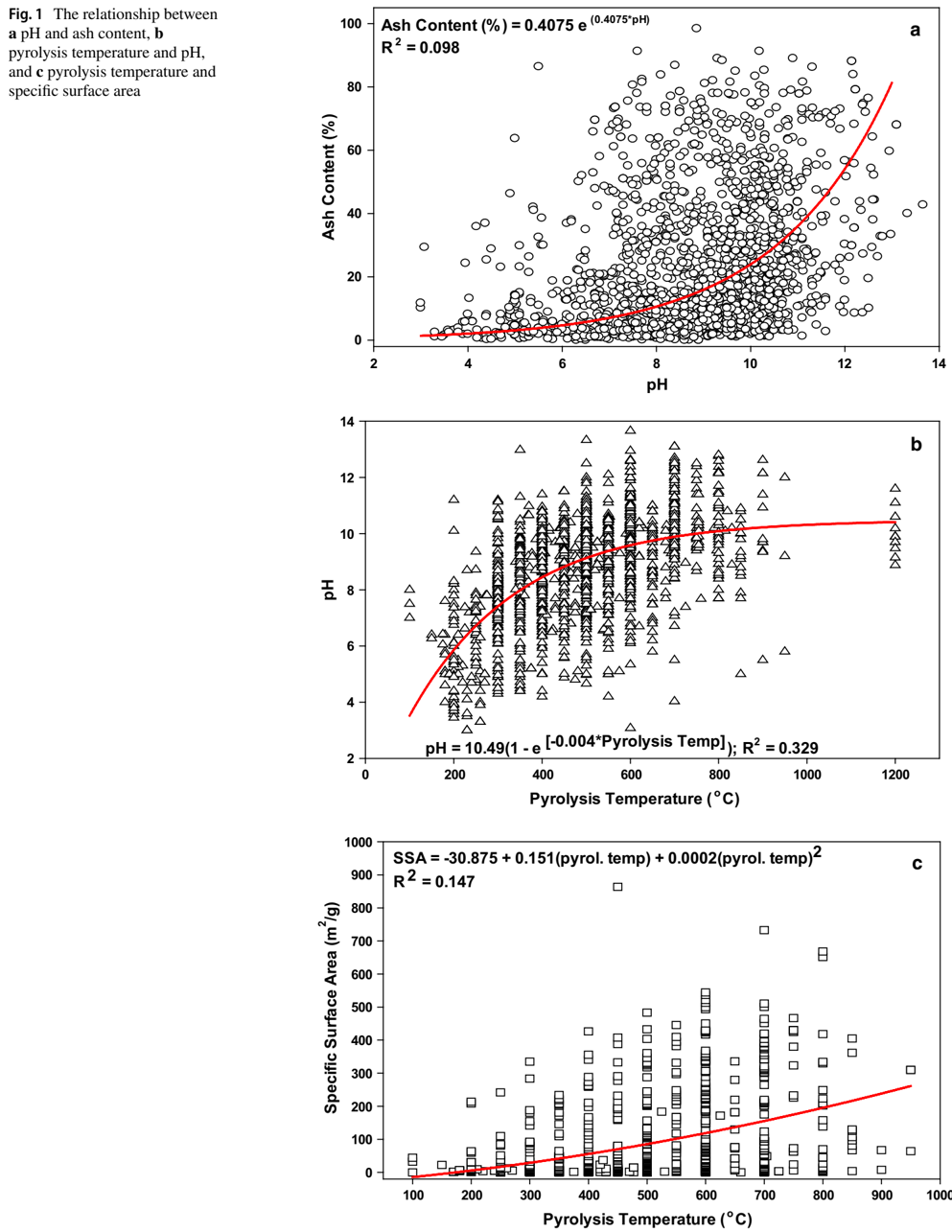
“Specifically, with increasing pyrolysis temperature one typically observes increasing biochar C, P, K, Ca, ash content, pH, specific surface area (SSA), and decreasing N, H, and O content (e.g., Weber and Quicker 2018; Ippolito et al. 2015).”
BackgroundSelf-citationSulfur forms in organic substrates affecting S mineralization in soil
Churka Blum, S., Lehmann, J., Solomon, D., Caires, E. F., & Alleoni, L. R. F. (2013) · Geoderma · doi:10.1016/j.geoderma.2013.02.003 · Cited by 154
Ajayi, A. E., & Horn, R. (2016) · Soil and Tillage Research · doi:10.1016/j.still.2016.01.011 · Cited by 151
Characterization of chars pyrolyzed from oil palm stones for the preparation of activated carbons
Guo, J. Y., & Lua, A. C. (1998) · Journal of Analytical and Applied Pyrolysis · doi:10.1016/s0165-2370(98)00074-6 · Cited by 143
Dieguez-Alonso, A., Funke, A., Anca-Couce, A., Rombolà, A., Ojeda, G., Bachmann, J., & Behrendt, F. (2018) · Energies · doi:10.3390/en11030496 · Cited by 141
Evaluation of structural features of chars from pyrolysis of biomass of different particle sizes
Asadullah, M., Zhang, S., & Li, C. (2009) · Fuel Processing Technology · doi:10.1016/j.fuproc.2009.08.008 · Cited by 139
Towards reconstruction of past fire regimes from geochemical analysis of charcoal
Wolf, M., Lehndorff, E., Wiesenberg, G. L. B., Stockhausen, M., Schwark, L., & Amelung, W. (2012) · Organic Geochemistry · doi:10.1016/j.orggeochem.2012.11.002 · Cited by 136
Zhao, S., Schmidt, S., Qin, W., Ji, L., Li, G., & Zhang, W. (2019) · The Science of The Total Environment · doi:10.1016/j.scitotenv.2019.135401 · Cited by 132
Schmidt, H., Pandit, B. H., Cornelissen, G., & Kammann, C. I. (2017) · Land Degradation & Development · doi:10.1002/ldr.2761 · Cited by 121
Self-citationMacroscopic and Molecular Investigations of Copper Sorption by a Steam-Activated Biochar
Ippolito, J. A., Strawn, D. G., Scheckel, K. G., Novak, J. M., Ahmedna, M., & Niandou, M. A. S. (2012) · Journal of Environmental Quality · doi:10.2134/jeq2011.0113 · Cited by 120 · cited 2×
“2003; Lentz and Ippolito 2012).”
Self-citationBiomass Compositional Analysis for Conversion to Renewable Fuels and Chemicals
Williams, C. L., Emerson, R., & Tumuluru, J. S. (2017) · InTech eBooks · doi:10.5772/65777 · Cited by 119
Ngatia, L. W., Hsieh, Y. P., Nemours, D., Fu, R., & Taylor, R. W. (2017) · Chemosphere · doi:10.1016/j.chemosphere.2017.04.012 · Cited by 118
Lian, F., Huang, F., Chen, W., Xing, B., & Zhu, L. Y. (2011) · Environmental Pollution · doi:10.1016/j.envpol.2011.01.002 · Cited by 115
Standard Extraction Methods May Underestimate Nitrate Stocks Captured by Field‐Aged Biochar
Haider, G., Steffens, D., Müller, C., & Kammann, C. I. (2016) · Journal of Environmental Quality · doi:10.2134/jeq2015.10.0529 · Cited by 115 · cited 2×
“There may be ways to increase the ability of biochar to provide plant-available N, even though NO3 and NH4 content of freshly produced biochar is near-zero (e.g. Kammann et al. 2015; Haider et al. 2016).”
BackgroundSelf-citationChemical characterization of char derived from slow pyrolysis of microalgal residue
Chang, Y.-M., Tsai, W.-T., & Li, M.-H. (2015) · Journal of Analytical and Applied Pyrolysis · doi:10.1016/j.jaap.2014.12.004 · Cited by 109
Laird, D. A., Novak, J. M., Collins, H. P., Ippolito, J. A., Karlen, D. L., Lentz, R. D., Sistani, K. R., Spokas, K. A., & Pelt, R. S. V. (2016) · Geoderma · doi:10.1016/j.geoderma.2016.11.025 · Cited by 104
Self-citationNovak, J. M., Ippolito, J. A., Watts, D. W., Sigua, G. C., Ducey, T. F., & Johnson, M. G. (2019) · Biochar · doi:10.1007/s42773-019-00004-7 · Cited by 103
Self-citationBiochars Reduce Mine Land Soil Bioavailable Metals
Ippolito, J. A., Berry, C. M., Strawn, D. G., Novak, J. M., Levine, J., & Harley, A. (2017) · Journal of Environmental Quality · doi:10.2134/jeq2016.10.0388 · Cited by 103 · cited 2×
“The increased CEC may also be attributed to elevated pH leading to pH-dependent charge, or insoluble precipitates present in the ash that act as reaction sites (Ippolito et al. 2017).”
BackgroundMethodSelf-citationExtent of Pyrolysis Impacts on Fast Pyrolysis Biochar Properties
Brewer, C. E., Hu, Y.-Y., Schmidt-Rohr, K., Loynachan, T. E., Laird, D. A., & Brown, R. C. (2012) · Journal of Environmental Quality · doi:10.2134/jeq2011.0118 · Cited by 98
Tuning the surface properties of biochar by thermal treatment
de Mendonça, F. G., da Cunha, I. T., Soares, R. R., Tristão, J. C., & Lago, R. M. (2017) · Bioresource Technology · doi:10.1016/j.biortech.2017.07.099 · Cited by 98
Physical and Chemical Properties of Pinus ponderosa Charcoal: Implications for Soil Modification
Briggs, C., Breiner, J. M., & Graham, R. C. (2012) · Soil Science · doi:10.1097/ss.0b013e3182482784 · Cited by 96
Soil Health, Crop Productivity, Microbial Transport, and Mine Spoil Response to Biochars
Novak, J. M., Ippolito, J. A., Lentz, R. D., Spokas, K. A., Bolster, C. H., Sistani, K. R., Trippe, K. M., Phillips, C. L., & Johnson, M. G. (2016) · BioEnergy Research · doi:10.1007/s12155-016-9720-8 · Cited by 79
Self-citationBiogeochemical potential of biomass pyrolysis systems for limiting global warming to 1.5 °C
Werner, C., Schmidt, H.-P., Gerten, D., Lucht, W., & Kammann, C. (2018) · Environmental Research Letters · doi:10.1088/1748-9326/aabb0e · Cited by 69
Self-citationLü, J., Li, J., Li, Y., Chen, B., & Bao, Z. (2012) · Journal of Agricultural and Food Chemistry · doi:10.1021/jf3009734 · Cited by 67
Zhao, Y., Zhao, L., Mei, Y., Li, F., & Cao, X. (2018) · Environmental Science and Pollution Research · doi:10.1007/s11356-017-0668-9 · Cited by 66
Zhang, H., Voroney, R. P., & Price, G. W. (2017) · Journal of Environmental Quality · doi:10.2134/jeq2017.02.0043 · Cited by 64
Lin, Q., Xu, X. Y., Wang, L., Chen, Q., Fang, J., Shen, X., Lou, L., & Tian, G. (2017) · Frontiers of Environmental Science & Engineering · doi:10.1007/s11783-017-0924-8 · Cited by 55
Fuertes-Mendizábal, T., Huérfano, X., Vega‐Mas, I., Torralbo, F., Menéndez, S., Ippolito, J. A., Kammann, C. I., Wrage, N., Cayuela, M. L., Borchard, N., et al. (2019) · Scientific Reports · doi:10.1038/s41598-019-38697-2 · Cited by 51
Self-citationGondek, K., & Mierzwa–Hersztek, M. (2016) · Soil Use and Management · doi:10.1111/sum.12285 · Cited by 48
Sigua, G. C., Novak, J., Watts, D. W., Ippolito, J. A., Ducey, T. F., Johnson, M. G., & Spokas, K. A. (2019) · Environments · doi:10.3390/environments6060069 · Cited by 47
Self-citationLiu, Y., Liu, Y., Ding, Y., Zheng, J., Zhou, T., Pan, G., Crowley, D. E., Li, L., Zheng, J., Zhang, X., et al. (2014) · PLoS ONE · doi:10.1371/journal.pone.0102000 · Cited by 44
Novak, J. M., Sigua, G. C., Ducey, T. F., Watts, D. W., & Stone, K. C. (2019) · Environments · doi:10.3390/environments6060064 · Cited by 38
Self-citationCantrell, K. B., & Martin, J. H. (2012) · Journal of the Science of Food and Agriculture · doi:10.1002/jsfa.4617 · Cited by 37
Chen, H., Lin, G., Wang, X., Chen, Y., Liu, Y., Yang, H., & Shao, J. (2016) · Journal of Renewable and Sustainable Energy · doi:10.1063/1.4942784 · Cited by 37
Remediation of organic halogen- contaminated wetland soils using biochar
Cui, L., Yin, C., Chen, T., Quan, G., Ippolito, J. A., Liu, B., Yan, J., Ding, C., Hussain, Q., & Umer, M. (2019) · The Science of The Total Environment · doi:10.1016/j.scitotenv.2019.134087 · Cited by 34
Self-citationBiochar for Climate Change Mitigation
Woolf, D., Lehmann, J. C., Cowie, A., Cayuela, M. L., Whitman, T. L., & Sohi, S. (2018) · CRC Press eBooks · doi:10.1201/b21225-8 · Cited by 33
Self-citationSigua, G. C., Novak, J. M., & Watts, D. W. (2015) · Chemosphere · doi:10.1016/j.chemosphere.2015.06.016 · Cited by 27
Self-citationTrace Metal Accumulation, Movement, and Remediation in Soils Receiving Animal Manure
Sistani, K. R., & Novak, J. (2005) · CRC Press eBooks · doi:10.1201/9781420032048.ch33 · Cited by 22 · cited 1×
“This is a function of manures/ biosolids feedstocks being fortified with micro-nutrients that were not assimilated by livestock or as a waste product from municipal/industrial sources (Sistani and Novak 2006).”
BackgroundSelf-citationBiochar, Manure, and Sawdust Alter Long‐Term Water Retention Dynamics in Degraded Soil
Lentz, R. D., Ippolito, J. A., & Lehrsch, G. A. (2019) · Soil Science Society of America Journal · doi:10.2136/sssaj2019.04.0115 · Cited by 22
Self-citationLevels of Sulfur as an Essential Nutrient Element in the Soil-Crop-Food System in Austria
Sager, M. (2012) · Agriculture · doi:10.3390/agriculture2010001 · Cited by 17 · cited 2×
“Biochars containing elevated S content (e.g., manures; Sager 2012) have been shown to increase soil S bioavailability (Blum et al.”
BackgroundSigua, G. C., Novak, J. M., Watts, D. W., et al. (2019) · Preprints.org · doi:10.20944/preprints201905.0019.v1 · Cited by 17 · cited 1×
“This correlation could be useful for practitioners designing pyrolysis systems for creating biochars needed for soil liming purposes (e.g., in acidic or acid generating mines soils; Ippolito et al. 2017; Sigua et al. 2019; Godlewska et al. 2017).”
MethodSelf-citationSmith, P., Adams, J. B., Beerling, D. J., Beringer, T., Calvin, K., Fuss, S., Griscom, B. W., Hagemann, N., Kammann, C. I., Kraxner, F., et al. (2019) · White Rose Research Online (University of Leeds, The University of Sheffield, University of York) · Cited by 12
Self-citationManaging Crop Nutrients Through Soil, Manure and Effluent Testing
McFarland, M. L., Provin, T. L., & Feagley, S. E. (1992) · OakTrust (Texas A&M University Libraries) · Cited by 5
Research works printed but not linked: 1
- Lissbrant S, Berg WK, Volanec J, Brouder S, Joern B, Cunningham S, Johnson K (2009) Phosphorus and potassium fertilization of alfalfa. Purdue University Extension Bulletin AY-331-W
Cited by
Joseph, S., Cowie, A. L., Van Zwieten, L., Bolan, N., Budai, A., Buss, W., Cayuela, M. L., Graber, E. R., Ippolito, J. A., Kuzyakov, Y., et al. (2021) · GCB Bioenergy · doi:10.1111/gcbb.12885 · Cited by 1,090
Self-citationAl-Rumaihi, A., Shahbaz, M., Mckay, G., Mackey, H., & Al-Ansari, T. (2022) · Renewable and Sustainable Energy Reviews · doi:10.1016/j.rser.2022.112715 · Cited by 650
Alkharabsheh, H. M., Seleiman, M. F., Battaglia, M. L., Shami, A., Jalal, R. S., Alhammad, B. A., Almutairi, K. F., & Al-Saif, A. M. (2021) · Agronomy · doi:10.3390/agronomy11050993 · Cited by 538
“Thus, wood-based biochars are suitable when the final objective is carbon storage in soil [44,45], while biochars from animal manures and grasses are used when the objective is to increase the soil N, P, K, Ca, Mg, and S contents [45,46].”
BackgroundOsman, A. I., Fawzy, S., Farghali, M., El-Azazy, M., Elgarahy, A. M., Fahim, R. A., Maksoud, M. I. A. A., Ajlan, A. A., Yousry, M., Saleem, Y., et al. (2022) · Environmental Chemistry Letters · doi:10.1007/s10311-022-01424-x · Cited by 515
Biochar in agriculture – A systematic review of 26 global meta‐analyses
Schmidt, H., Kammann, C., Hagemann, N., Leifeld, J., Bucheli, T. D., Sánchez Monedero, M. A., & Cayuela, M. L. (2021) · GCB Bioenergy · doi:10.1111/gcbb.12889 · Cited by 490
“Biochars may contain and release relevant amounts of macro- and micronutrients when produced from mineralrich feedstock, especially from manures and biosolids (Ippolito et al., 2020).”
BackgroundSelf-citation
Metadata
- Authors
- Ippolito, J. A., Cui, L., Kammann, C., Wrage-Mönnig, N., Estavillo, J. M., Fuertes-Mendizabal, T., Cayuela, M. L., Sigua, G., Novak, J., Spokas, K., & Borchard, N.
- Affiliations
- Colorado State University (US)
- Yancheng Institute of Technology (CN)
- Hochschule Geisenheim University (DE)
- Agricultural Research Service (US)
- University of Minnesota (US)
- Natural Resources Institute Finland (FI)
- Corresponding author
- Borchard, Nils
- Venue
- Biochar
- Published
- 2020-09-28
- Volume
- 2
- Issue
- 4
- Pages
- 421-438
- ISSN
- 2524-7867 (ISSN-L)
- 2524-7972
- OpenAlex
- W3091306688
- Semantic Scholar
- ba1c49a14858f364790007359ee1f59f635bc195
- Cited by
- 927
- References
- 105
- Citations by year
- 2026: 221 · 2025: 185 · 2024: 186 · 2023: 164 · 2022: 104 · 2021: 67
- FWCI
- 26.32
- Type
- journal article
- Language
- en
- Open access
- hybrid
- doi.org
- Licence
- cc-by
- creativecommons.org/licenses/by/4.0 (tdm)
- creativecommons.org/licenses/by/4.0 (vor)
- Locations
- Biochar (publishedVersion, cc-by)
- Hispana (acceptedVersion, cc-by)
- Communities in ADDI (Universidad del Pais Vasco) (submittedVersion, cc-by)
- Jukuri (Natural Resources Institute Finland (Luke)) (submittedVersion)
- Funders
- National Institute of Food and Agriculture (6657-12130-002-08I)
- Natural Resources Institute Finland
- Topics
- Physical Sciences › Energy › Fuel Technology › Thermochemical Biomass Conversion Processes
- Life Sciences › Agricultural and Biological Sciences › Soil Science › Soil Carbon and Nitrogen Dynamics
- Physical Sciences › Environmental Science › Global and Planetary Change › Fire effects on ecosystems
- Keywords
- pyrolysis temperature, fast pyrolysis, slow pyrolysis, biochar physicochemical properties, specific surface area, cation exchange capacity, nutrient availability, soil amendment, wood-based biochar
About these checks
Registry, retraction, Cites and statistics results are computed, not judged, with one exception: a printed reference that no index lists is read once by a model before it counts as a citation error. Claims are extracted by a model and kept only when their quote appears verbatim in the text; each cited source is then checked, with a model’s help, for whether it says what the claim relies on. Those verdicts can be wrong — read the claim’s quote and the cited source before relying on one.
Statistics and arithmetic are recomputed, not judged.
Confidence bands are shown only for fields calibrated on our annotated test set. None is calibrated yet, so no band is shown.
What counts as a claim ›How we measure confidence ›How we check this ›
Are you an author, or do you see a problem with this page? Request a review
Data sources
Bibliographic data: Semantic Scholar, OpenAlex, Crossref.
Contains information from the Semantic Scholar Academic Graph Datasets, made available under the ODC Attribution License (ODC-BY 1.0).
Semantic Scholar’s data is described in: Kinney, R., et al. (2023). The Semantic Scholar Open Data Platform. arXiv:2301.10140.
