

The DOI matches its Crossref record; 95 of the 95 references it cites were found in a registry or an index.
Weaning stress and gastrointestinal barrier development: Implications for lifelong gut health in pigs
Open accessAbstract
The gastrointestinal (GI) barrier serves a critical role in survival and overall health of animals and humans. Several layers of barrier defense mechanisms are provided by the epithelial, immune and enteric nervous systems. Together they act in concert to control normal gut functions (e.g., digestion, absorption, secretion, immunity, etc.) whereas at the same time provide a barrier from the hostile conditions in the luminal environment. Breakdown of these critical GI functions is a central pathophysiological mechanism in the most serious GI disorders in pigs. This review will focus on the development and functional properties of the GI barrier in pigs and how common early life production stressors, such as weaning, can alter immediate and long-term barrier function and disease susceptibility. Specific stress-related pathophysiological mechanisms responsible for driving GI barrier dysfunction induced by weaning and the implications to animal health and performance will be discussed.
Overview
The claims and statistics of this paper haven’t been checked yet.
Run the check — free, no account needed. It reads the open-access text and checks the sources it cites.
Integrity signals
Registry
Cites
Statistics
Figures
Verification
Claims the paper makes
The claims and statistics of this paper haven’t been checked yet.
Run the check — free, no account needed. It reads the open-access text and checks the sources it cites.
Claims other papers make about this one
Each is checked against this paper’s own text: does it say what the citing paper says it does?
The cited source says what the claim attributes to it.
In the citing paper
“In piglets, early weaning stress impairs intestinal barrier function (271) and increases inflammation (272) and oxidative stress (273).”
From Diet and the Microbiota–Gut–Brain Axis: Sowing the Seeds of Good Mental Health (2021) · cites this paper as [271]
Self-check
Percentages, sums and reported differences re-computed from the paper’s own numbers.
The self-check needs the paper’s full text.
Citations
Cites
Changes of Intestinal Functions in Liver Cirrhosis
Fukui, H., & Wiest, R. (2016) · Inflammatory Intestinal Diseases · doi:10.1159/000444436 · Cited by 6,820
Host-Bacterial Mutualism in the Human Intestine
Bäckhed, F., Ley, R. E., Sonnenburg, J. L., Peterson, D. A., & Gordon, J. I. (2005) · Science · doi:10.1126/science.1104816 · Cited by 5,277
Intestinal mucosal barrier function in health and disease
Turner, J. R. (2009) · Nature reviews. Immunology · doi:10.1038/nri2653 · Cited by 3,952 · cited 2×
“…barrier, which is regulated predominantly by the tight junctions (TJs), which consist of numerous intracellular and apical intercellular membrane proteins (e.g., zonula occludens, occludin, and claudins) (Edelblum and Turner, 2009; Groschwitz and Hogan, 2009; Marchiando et al., 2010; Turner, 2009).”
BackgroundThe microbiota in adaptive immune homeostasis and disease
Honda, K., & Littman, D. R. (2016) · Nature · doi:10.1038/nature18848 · Cited by 1,846 · cited 1×
“…receivedmuch attention as an important defense barrier through several proposed mechanisms, reviewing the body of microbiome studies is beyond the scope of this review, but we direct readers to other excellent reviews on the topic (Backhed et al., 2005; Honda and Littman, 2016; Kelly et al., 2015).”
BackgroundIgE and mast cells in allergic disease
Galli, S. J., & Tsai, M. (2012) · Nature Medicine · doi:10.1038/nm.2755 · Cited by 1,799 · cited 2×
“Mast cells are required for host defense and wound healing; however, excessive activation of mast cells is a central pathophysiologic mechanisms in inflammatory disease such as allergy and asthma and functional stress-related GI disorders including irritable bowel syndrome in humans (Boeckxstaens, 2015; Galli and Tsai…”
BackgroundIntestinal barrier function: molecular regulation and disease pathogenesis
Groschwitz, K. R., & Hogan, S. P. (2009) · Journal of Allergy and Clinical Immunology · doi:10.1016/j.jaci.2009.05.038 · Cited by 1,775 · cited 1×
“…barrier, which is regulated predominantly by the tight junctions (TJs), which consist of numerous intracellular and apical intercellular membrane proteins (e.g., zonula occludens, occludin, and claudins) (Edelblum and Turner, 2009; Groschwitz and Hogan, 2009; Marchiando et al., 2010; Turner, 2009).”
BackgroundBarbara, G., Stanghellini, V., De Giorgio, R., Cremon, C., Cottrell, G. S., Santini, D., Pasquinelli, G., Morselli-Labate, A. M., Grady, E. F., Bunnett, N. W., et al. (2004) · Gastroenterology · doi:10.1053/j.gastro.2003.11.055 · Cited by 1,475 · cited 4×
“Similar to human IBS, Pohl et al. (2017) demonstrated that adult pigs that were previously early weaned (16 d wean age) exhibited enhanced co-localization of intestinal mast cells with enteric nerves, compared with late weaned pigs (weaned at 28 d of age) (Pohl et al., 2017).”
BackgroundInfluentialThe role of gut microbiota in immune homeostasis and autoimmunity
Wu, H.-J., & Wu, E. (2012) · Gut Microbes · doi:10.4161/gmic.19320 · Cited by 1,426 · cited 1×
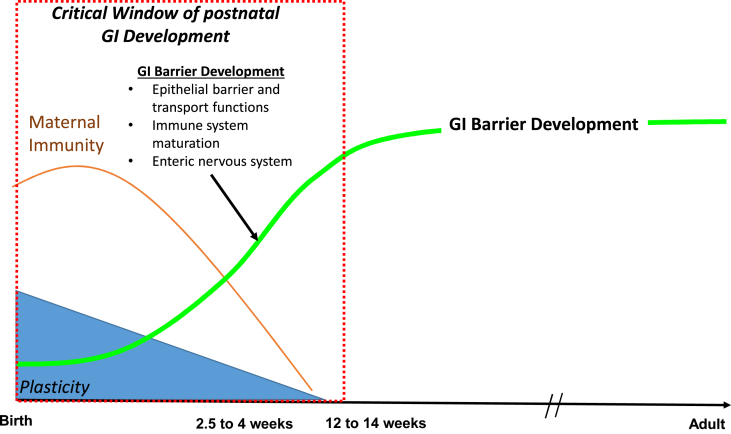
“…complete by 12 to 14 ity and shape the adult phenotype and function of the GI barrier. to a wide variety of antigen including self-antigen and bacteria, help in differentiating between self and non-self-antigen and further facilitate to achieve homeostasis (Martin et al., 2010; Wu and Wu, 2012).”
BackgroundKelly, J. R., Kennedy, P. J., Cryan, J. F., Dinan, T. G., Clarke, G., & Hyland, N. P. (2015) · Frontiers in Cellular Neuroscience · doi:10.3389/fncel.2015.00392 · Cited by 1,110 · cited 2×
“Whereas the microbiome has receivedmuch attention as an important defense barrier through several proposed mechanisms, reviewing the body of microbiome studies is beyond the scope of this review, but we direct readers to other excellent reviews on the topic (Backhed et al., 2005; Honda and Littman, 2016; Kelly et al.,…”
BackgroundThe alarmin IL-33 promotes regulatory T-cell function in the intestine
Schiering, C., Krausgruber, T., Chomka, A., Fröhlich, A., Adelmann, K., Wohlfert, E. A., Pott, J., Griseri, T., Bollrath, J., Hegazy, A. N., et al. (2014) · Nature · doi:10.1038/nature13577 · Cited by 1,007 · cited 2×
“, IL-17A, IL-33, IL-23 and transforming growth factor-b), which have important immunomodulatory properties (Schiering et al., 2014).”
Background
Cited by
Sorted by citations
Items 201–300 of 453
Han, L., Tao, H., Kang, L., Wang, S., Diao, Q., Han, D., & Cui, K. (2022) · Frontiers in Veterinary Science · doi:10.3389/fvets.2022.809188 · Cited by 9
“The small intestine, a critical multifunctional organ, plays crucial roles in digesting and absorbing nutrients, regulating immune response, and secreting various enzymes and immunoglobulins (8, 9).”
BackgroundHu, H., Xu, K., Wang, K., Zhang, F., & Bai, X. (2022) · Frontiers in Microbiology · doi:10.3389/fmicb.2022.862882 · Cited by 9
Effect of feeding raw potato starch on the composition dynamics of the piglet intestinal microbiome
Yi, S.-W., Lee, H. G., So, K.-M., Kim, E., Jung, Y., Kim, M., Jeong, J. Y., Kim, K. H., Oem, J., Hur, T., et al. (2022) · Animal Bioscience · doi:10.5713/ab.22.0045 · Cited by 9
“Hence, weaning transition in piglets can cause intestinal immune dysfunction, poor growth performance, and post-weaning diarrhea, resulting in large economic losses to the swine industry [3,5].”
BackgroundChen, W., Yin, C., Li, J., Sun, W., Li, Y., Wang, C., Pi, Y., Cordero, G., Li, X., & Jiang, X. (2023) · Biology · doi:10.3390/biology12030441 · Cited by 9
“It has been demonstrated that the plasma IgA and IgG concentrations will decrease directly after weaning [25,26], causing severe weaning stress [27].”
BackgroundEarly feeding leads to molecular maturation of the gut mucosal immune system in suckling piglets
Choudhury, R., Gu, Y., Bolhuis, J. E., & Kleerebezem, M. (2023) · Frontiers in Immunology · doi:10.3389/fimmu.2023.1208891 · Cited by 9
“At the time of weaning in commercial pig-husbandry systems (around 3-4 weeks of age), the gastrointestinal tract of the piglets is still developing (26), including drastic adaptations in microbiota colonisation and the mucosal immune system (10, 27).”
BackgroundDing, S., Cheng, Y., Azad, M. A. K., Zhu, Q., Huang, P., & Kong, X. (2023) · Animal nutrition · doi:10.1016/j.aninu.2023.09.005 · Cited by 8
Garavito-Duarte, Y., Bonetti, A., Tugnoli, B., Choi, H., Piva, A., Grilli, E., & Kim, S. W. (2025) · Journal of Animal Science · doi:10.1093/jas/skaf047 · Cited by 10
“Weaning stress also delays the development of the gastrointestinal and immune systems (Moeser et al., 2017; St-Pierre et al., 2023).”
Shin, I., Kang, Y.-G., Ahn, J., Kim, Y.-H., Nam, J., Kim, K., Kim, J.-M., Kim, H. W., Yang, J., Kim, Y., et al. (2025) · Journal of Animal Science · doi:10.1093/jas/skaf089 · Cited by 8
Garcias, B., Martı́n, M., & Darwich, L. (2024) · Animals · doi:10.3390/ani14030487 · Cited by 9
“In natural conditions, piglets are weaned in a gradual way at 12 weeks of life [1].”
BackgroundWei, Y., Mao, J., Liu, J., Zhang, Y., Deng, Z., Lv, J., He, M., Liu, J., & Wang, H. (2021) · Microorganisms · doi:10.3390/microorganisms9061342 · Cited by 8
“intestinal barrier, furthermore worsened the absorptive capacity of the small intestine [2], which would decrease growth performance and eventually cause economic losses [3].”
BackgroundEngelsmann, M. N., Nielsen, T. S., Hedemann, M. S., Krogh, U., & Nørgaard, J. V. (2023) · Livestock Science · doi:10.1016/j.livsci.2023.105186 · Cited by 8
Bonetti, A., Piva, A., & Grilli, E. (2023) · Frontiers in Veterinary Science · doi:10.3389/fvets.2023.1141561 · Cited by 8
Machado, I., Petznick, T., Silva, A. P. S. P., Wang, C., Karriker, L. A., Linhares, D. C. L., & Silva, G. S. (2024) · Preventive Veterinary Medicine · doi:10.1016/j.prevetmed.2024.106350 · Cited by 7
Rasmussen, P. B., Walker, J., Stubbs, S. R., Udrea, A. C., & Shen, C. (2025) · Microorganisms · doi:10.3390/microorganisms13061247 · Cited by 7
“Gut barrier disruption (commonly known as a “leaky gut”) facilitates the entry of pathogenic bacteria and bacterial toxins into the systemic circulation, where they provoke systemic inflammation and trigger diseases such as PWD [44].”
Figueroa, J., Valenzuela, C., V, & Guzmán-Pino, S. A. (2022) · Veterinary Sciences · doi:10.3390/vetsci9050233 · Cited by 7
Bon, M. L., Tötemeyer, S. S., Emes, R. D., & Mellits, K. H. (2022) · Frontiers in Genetics · doi:10.3389/fgene.2022.961474 · Cited by 9
“In addition, Moeser et al. (2017) demonstrated that colonic and jejunal transepithelial resistance was increased resulting in impaired permeability of the gut barrier as a result of weaning, which may facilitate infiltration of luminal component such as bacteria or bacterial products.”
BackgroundPartial Replacement of Synthetic Vitamin E by Polyphenols in Post-Weaning Piglets
Pastorelli, G., Benamri, R., Faustini, M., Bellis, R. D., Serra, V., Turin, L., Haumont, M., Durand, P., Bianchessi, L., Prost-Camus, E., et al. (2023) · Antioxidants · doi:10.3390/antiox12091752 · Cited by 7
“…defense molecule against infections, has been reported to decrease in concentration after weaning at the time of depletion of maternal immunity [54,55], and subsequently increases as an effect of the beginning of piglets’ own synthesis of IgG, which starts at day 7, increases up to day 28 [56]…”
BackgroundKerr, B. J., Trachsel, J., Bearson, B. L., Loving, C. L., Bearson, S. M. D., Byrne, K. A., Pearce, S., Ramirez, S. M., Gabler, N. K., Schweer, W., et al. (2022) · Journal of Animal Science · doi:10.1093/jas/skac282 · Cited by 7
Samuel, R. S. (2022) · Veterinary Sciences · doi:10.3390/vetsci9110622 · Cited by 7
“The intestinal nutrient absorptive capacity and gut wall integrity can be negatively affected by diarrhea such that the gut becomes more permeable to toxins and pathogenic microorganisms [18].”
BackgroundUso de aditivos em dietas para leitões em fase de creche: uma revisão
de Lima, M. D., Lopes, I. M. G., da Silva, K. F., Miranda, H. A. F., de Almeida, A. C., & Duarte, E. R. (2020) · Research Society and Development · doi:10.33448/rsd-v9i12.11081 · Cited by 7
de Groot, N., Fariñas, F., Fabà, L., Hambrecht, E., Cabrera-Gómez, C. G., Pallarés, F. J., & Ramis, G. (2021) · Porcine Health Management · doi:10.1186/s40813-021-00241-y · Cited by 7
“Previous research has shown that the process of weaning in piglets is associated with an increased inflammation response in the intestine [4, 5], and the potential negative effect of increased expression of inflammation markers on intestinal integrity [6, 7], morphology of intestinal structures such as villous length…”
BackgroundMa, W., Li, Y., Hu, Y., Liu, X., Guo, Z., Zhong, B., Qiu, H., & Li, J. (2024) · Frontiers in Microbiology · doi:10.3389/fmicb.2024.1482925 · Cited by 6
He, J., Huang, C., Kong, L., Huang, Y., Ou, Z., Yang, M., Wu, J., Yang, Y., Yao, H., Yi, J., et al. (2025) · International Immunopharmacology · doi:10.1016/j.intimp.2025.114097 · Cited by 6
Li, X., Meng, M., Shi, H., Zhou, S., Ma, N., & Shen, X. (2025) · International Journal of Biological Macromolecules · doi:10.1016/j.ijbiomac.2025.142849 · Cited by 6
Carnino, B. B., Muro, B. B. D., Carnevale, R. F., Coelho, F. D. A., da Silva, C. A., Andretta, I., Millet, S., & Garbossa, C. A. P. (2025) · Nutrition Research Reviews · doi:10.1017/s095442242510005x · Cited by 7
Wongchanla, S., Dixit, K., Park, S., Kim, K., Sun, S., Marco, M. L., Palomares, S., Mejía-Caballero, A., Mohan, S. C., Li, X., et al. (2025) · Journal of Animal Science and Biotechnology/Journal of animal science and biotechnology · doi:10.1186/s40104-025-01266-x · Cited by 6
“These biological and psychological stressors profoundly affect gut health and overall well-being by disrupting intestinal physiology, morphology, immunity, and microbiota balance [1].”
Risk Factors for Antimicrobial Use on Irish Pig Farms
O’Neill, L., Díaz, J. A. C., da Costa, M. R., Oakes, S., Leonard, F. C., & Manzanilla, E. G. (2021) · Animals · doi:10.3390/ani11102828 · Cited by 6
“Older weaning age has been associated with lower AMU on European farms [17,24], likely because older piglets are less susceptible to the associated stresses of moving, mixing and diet change [68,69].”
BackgroundChance, J. A., DeRouchey, J. M., Amachawadi, R. G. G., Ishengoma, V. L., Nagaraja, T. G., Goodband, R. D., Woodworth, J. C., Tokach, M. D., Kang, Q., Loughmiller, J. A., et al. (2022) · Journal of Animal Science · doi:10.1093/jas/skac165 · Cited by 6
“…prolific sows and shortened lactation periods has led to pigs entering the nursery at a lighter BW. Lower entry BW has often been associated with under-developed gastrointestinal tracts and immune systems leading to a lag in performance and chances of enteric infections (Moeser et al., 2017).”
BackgroundHarayama, T., Tsukahara, T., Fukuta, K., Oda, M., & Inoüe, R. (2022) · Animals · doi:10.3390/ani12111445 · Cited by 6
“Under the current breeding systems of commercial farms, weaning is one of the most stressful events for growing piglets [11] and those considered still underdeveloped [12].”
BackgroundGenova, J. L., Melo, A. D. B., Rupolo, P. E., de Macedo, R. E. F., Filho, J. R. E., Carvalho, S. T., Faucitano, L., Costa, L. B., & Carvalho, P. L. D. O. (2022) · Revista Brasileira de Zootecnia · doi:10.37496/rbz5120210144 · Cited by 6
“As auxiliary and complementary mechanisms to mitigate these effects mentioned above, piglets have enteroendocrine cells that play important roles, such as pathogen detection, synthesis and release of neuropeptides (Moeser et al., 2017), recognition of pathogenic signalling molecules, and interleukin secretion (Pluske…”
BackgroundSatitsri, S., Akrimajirachoote, N., Nunta, K., Ruennarong, N., Amnucksoradej, O., & Muanprasat, C. (2023) · BMC Veterinary Research · doi:10.1186/s12917-022-03536-6 · Cited by 6
“, heat-stable toxins (STa) and intestinal barrier disruption via oxidative stress and proinflammatory responses [6].”
BackgroundHansen, S. V., Canibe, N., Nielsen, T. S., & Woyengo, T. A. (2024) · Journal of Animal Science · doi:10.1093/jas/skae018 · Cited by 6
Nam, J., Cho, J. H., Kim, H. B., Ahn, J., Kang, Y., Kim, S., Kim, J. T., Jung, S. W., Song, M., & Kyoung, H. (2024) · Journal of Animal Science and Technology · doi:10.5187/jast.2024.e70 · Cited by 5
“In addition, HCT in the blood profiles, which increases with dehydration and is used as an indicator of increases in diarrhea [47], did not differ among the dietary treatments in the first week after weaning.”
Nisley, M. J., Miller, K. A., Spencer, J. D., Mendoza, O. F., Krishnan, H. B., & Gabler, N. K. (2025) · Journal of Animal Science · doi:10.1093/jas/skaf253 · Cited by 5
“There were no observed differences in stool consistency during the first week, likely due to the stress of weaning exacerbating post-weaning diarrhea and masking any dietary effects (Moeser et al., 2017; Tang et al., 2022).”
Ng’ang’a, Z. W., Tous, N., Ballester, M., Leskovec, J., Jimenez-Moya, B., Beltrán‐Debón, R., Torrallardona, D., & Tarradas, J. (2025) · Frontiers in Veterinary Science · doi:10.3389/fvets.2025.1645900 · Cited by 8
Ruggeri, R., Bee, G., Correa, F., Trevisi, P., & Ollagnier, C. (2025) · Animal Microbiome · doi:10.1186/s42523-024-00358-9 · Cited by 5
“It also acts as a defensive barrier against pathogens, dietary toxins, and antigens [7].”
Bouwhuis, M., Nooijen, I., van de Steeg, E., & O'Connell, S. (2025) · BMC Veterinary Research · doi:10.1186/s12917-025-04832-7 · Cited by 5
“This has significant implications on the structure and function of the gastro-intestinal tract (GIT), causing inflammation, impaired barrier function and increasing gut permeability [3, 4].”
Júnior, D. T. V., Rodrigues, G. D. A., Soares, M. H., Rocha, G. C., Campos, P. H. R. F., & Saraiva, A. (2021) · Livestock Science · doi:10.1016/j.livsci.2021.104566 · Cited by 5
Lyderik, K. K., Madsen, J. G., Larsen, C., Pedersen, M. L. M., Kjeldsen, N. J., Williams, A. R., Hedemann, M. S., & Amdi, C. (2023) · animal · doi:10.1016/j.animal.2023.100801 · Cited by 5
“The international journal of animal biosciences 12–14 weeks of age (Moeser et al., 2017).”
BackgroundBrowne, N., Daly, D., & Horgan, K. A. (2023) · Porcine Health Management · doi:10.1186/s40813-023-00312-2 · Cited by 5
“The barrier’s selectivity is regulated by tight junctions including claudins, occludin and zonula occludens (tight junctional protein) that can mechanically compartmentalise the absorption of nutrients in tandem with selective ion transporters [1, 2].”
BackgroundInfluentialWater- and feed-based arginine impacts on gut integrity in weanling pigs
Greiner, L. L., Humphrey, D. C., Kerr, B. J., Becker, S. L., Breuer, S., Hagen, C. S., Elefson, S., & Haydon, K. D. (2023) · Translational Animal Science · doi:10.1093/tas/txad059 · Cited by 5
“In addition, various studies have documented that the age of weaning can influence intestinal integrity (Spreeuwenberg et al., 2001; Moeser et al., 2007, 2017; Xun et al., 2018).”
BackgroundHagen, C. S., Humphrey, D. C., Wileman, C. M., Haydon, K. D., & Greiner, L. L. (2024) · Translational Animal Science · doi:10.1093/tas/txae102 · Cited by 5
“Many studies have documented the negative impact of weaning on intestinal integrity (Spreeuwenberg et al., 2001; Moeser et al., 2007, 2017; Xun et al., 2018).”
BackgroundKittiwan, N., Yamsakul, P., Tadee, P., Tadee, P., Nuangmek, A., Chuammitri, P., & Patchanee, P. (2019) · Veterinary Immunology and Immunopathology · doi:10.1016/j.vetimm.2019.109935 · Cited by 5
Xu, Y., Li, Q., Ge, P., Mao, H., & Yang, C. (2021) · Journal of Animal Physiology and Animal Nutrition · doi:10.1111/jpn.13664 · Cited by 5
Cheng, L., & Kim, I. H. (2019) · Journal of Applied Animal Research · doi:10.1080/09712119.2019.1626240 · Cited by 5
“Weaning stress could decrease feed intake, impair digestive and absorptive capacity of piglets (Campbell et al. 2013; Moeser et al. 2017).”
BackgroundWooten, H., Kim, H., Rakhshandeh, A. R., & Rakhshandeh, A. (2020) · Animals · doi:10.3390/ani10060953 · Cited by 5
“While increased villus height has long been associated with more surface area for nutrient absorption [9], the findings of the current study suggest that villus density may be a better indicator of absorptive capacity, since GRA−treated pigs experienced higher ADG, BW and G:F ratio, despite shorter villi, than control…”
BackgroundResultInfluential9. Weaning age and its long-term influence on health and performance
Edwards, S. A., Turpin, D. L., & Pluske, J. R. (2020) · Wageningen Academic Publishers eBooks · doi:10.3920/978-90-8686-894-0_9 · Cited by 5
An, J., Lee, J., Song, M., Oh, H. J., Chang, S., Song, D., Cho, H., Park, S., Jeon, K., Kim, H. B., et al. (2024) · Journal of Animal Science and Technology · doi:10.5187/jast.2024.e35 · Cited by 4
Hou, X., Chen, Y., Chen, F., Yin, Y., & Xu, K. (2025) · Animal Bioscience · doi:10.5713/ab.25.0100 · Cited by 4
“During this period, piglets are particularly vulnerable to infections due to their immature intestinal immune systems [8].”
Alarcón, E. A. P., Valeriano, T. D. J. H., Landín, G. M., & de Souza, T. C. R. (2022) · Revista Mexicana de Ciencias Pecuarias · doi:10.22319/rmcp.v13i2.5980 · Cited by 4
Effect of Olive Pomace Extract on the Gut Health in Weaned Piglets
Martínez, G., Diéguez, S. N., Decundo, J. M., Gaudio, D. S. P., Romanelli, A., Amanto, F. A., & Soraci, A. L. (2024) · Proceedings of the National Academy of Sciences India Section B Biological Sciences · doi:10.1007/s40011-023-01534-8 · Cited by 4
Early behavioral indicators of aberrant feces in newly-weaned piglets
Witjes, V. L., Veldkamp, F., Velkers, F. C., de Jong, I. C., Meijer, E., Rebel, J. M. J., Stegeman, A., & Tobias, T. (2024) · Porcine Health Management · doi:10.1186/s40813-024-00396-4 · Cited by 4
“In round 2 piglets were supplemented with another pelleted feed in the farrowing stable compared to the nursery stable and all pens were socially mixed at weaning, which is an important risk factor of PWD [4, 40, 42, 54].”
MethodEffect of the probiotic Lactobacillus reuteri on the immune status of piglets after weaning
Овчарова, А. Н., Остренко, К. С., & Пьянкова, Е. В. (2021) · Journal of Livestock Science · doi:10.33259/jlivestsci.2022.33-37 · Cited by 4
“In piglets received probiotics, there is an increase in the height of the villi and the depth of the crypts (Moeser et al 2017).”
BackgroundJiao, Y., Li, H., Ren, T., & Kim, I. H. (2023) · Canadian Journal of Animal Science · doi:10.1139/cjas-2022-0141 · Cited by 4
Expression Profile of miR-199a and Its Role in the Regulation of Intestinal Inflammation
Wu, Z., Yan, Y., Li, W., Li, Y., & Yang, H. (2023) · Animals · doi:10.3390/ani13121979 · Cited by 4
“Stress associated with early weaning in piglets is often characterized by enhanced mucosal immune activation and impaired barrier function [11,12].”
BackgroundPéter, G., Lukić, J., Brlás-Molnár, Z., Ardó, L., Horváth, Z., Rónyai, A., Bársony, P., & Ljubobratović, U. (2023) · Aquaculture Reports · doi:10.1016/j.aqrep.2023.101702 · Cited by 4
Bonetti, A., Toschi, A., Tugnoli, B., Piva, A., & Grilli, E. (2023) · Frontiers in Veterinary Science · doi:10.3389/fvets.2023.1275802 · Cited by 4
Novel Antioxidants for Animal Nutrition
Rossi, L., & Dell’Anno, M. (2024) · MDPI eBooks · doi:10.3390/books978-3-7258-1157-1 · Cited by 5
Dietary fiber and weaning age affect stress and immune markers in saliva of sows and their offspring
Grześkowiak, Ł., Cerón, J. M. C., López-Arjona, M., Martínez-Vallespín, B., Holthausen, J. S., Krüsselmann, P., Metges, C. C., Kuhla, B., Vahjen, W., Zentek, J., et al. (2024) · Journal of Animal Science · doi:10.1093/jas/skae312 · Cited by 4
de Oliveira, M. J. K., Babatunde, O. O., Rodrigues, L. A., Erinle, T. J., Htoo, J. K., Mendoza, S. M., & Columbus, D. A. (2024) · Journal of Animal Science · doi:10.1093/jas/skae374 · Cited by 6
Lv, W., Wang, T., He, S., Zhang, W., Tong, Y., Liu, M., Wang, Z., Chen, R., Jin, W., Ma, Y., et al. (2025) · Phytomedicine · doi:10.1016/j.phymed.2025.156528 · Cited by 4
Wang, P., Zhang, J., Tian, Y., Yu, B., He, J., Yu, J., & Zheng, P. (2025) · Animals · doi:10.3390/ani15101369 · Cited by 4
“In early between 21 challenges, digestive [23,36,37].”
Review: Intrauterine growth restriction, diagnosis and physiological characterisation in pigs
Ruggeri, R., Bee, G., & Ollagnier, C. (2025) · animal · doi:10.1016/j.animal.2025.101590 · Cited by 4
Rumeau, M., Chadi, S., Pepke, F., Beaumont, M., Vicente, C. M., Juppeau, A., Vandecasteele, C., Cauquil, L., Pascal, G., Langella, P., et al. (2025) · BMC Microbiology · doi:10.1186/s12866-025-04205-y · Cited by 4
“Effectively managing microbial colonization in these animals in early life is crucial for improving their health [35].”
Foraging in the farrowing room to stimulate feeding : getting piglets to eat is bittersweet
Middelkoop, A. (2020) · doi:10.18174/516612 · Cited by 4
Dumas, G., Verso, L. L., & Guay, F. (2025) · Canadian Journal of Animal Science · doi:10.1139/cjas-2024-0140 · Cited by 3
Zhang, B., Tian, M., Yahui, Y., Qiu, Y., Wang, L., Xiao, H., Zhu, X., Qin, L., Yang, X., & Jiang, Z. (2025) · Porcine Health Management · doi:10.1186/s40813-025-00440-x · Cited by 5
“Intestinal integrity is an important indicator for evaluating the intestinal health of piglets [24, 25].”
Gao, Y., Liu, J., Yang, R., Fan, X., Liang, C., Shi, X., & Jin, J. (2025) · Animal Research and One Health · doi:10.1002/aro2.70023 · Cited by 3
Wiarda, J., Watkins, H. R., Monson, M. S., Anderson, C. L., & Loving, C. L. (2025) · BMC Veterinary Research · doi:10.1186/s12917-025-04850-5 · Cited by 3
“…practices in the pig industry involve weaning animals at a relatively young age, resulting in shifts to the microbiota, increased stress, abrupt dietary change, and compromised intestinal barrier integrity [15, 18, 26–30] – all factors known to affect T-IEL prevalence and behavior in the intestine.”
InfluentialZhang, J., Zhao, M., Zhang, H., Han, M., Tan, Z., & Shang, P. (2025) · Frontiers in Animal Science · doi:10.3389/fanim.2025.1634097 · Cited by 3
Mitchell, T. M., Moeser, H. A., & Moeser, A. J. (2025) · American Journal of Physiology-Gastrointestinal and Liver Physiology · doi:10.1152/ajpgi.00022.2025 · Cited by 4
Faecal inflammatory biomarkers as non-invasive indicators of feed intake status in weaned piglets
Suppi, J., Salgado-López, P., Llauradó-Calero, E., Coma, J., Pelegrí-Pineda, A., Saco, Y., Bassols, A., Farré, M., & Solà‐Oriol, D. (2025) · animal · doi:10.1016/j.animal.2025.101684 · Cited by 3
Isusi, S., Usero-Alonso, G., Murillo, J. A., Gonzalez-Guijarro, A. B., Muñoz, A., & Ramis, G. (2025) · Animals · doi:10.3390/ani15233422 · Cited by 4
“Early weaning re-sults in increased intestinal permeability and decreased expression of tight junction proteins in piglets [3].”
Chen, Y., Tang, D., Dong, S., Yu, Y., He, Y., He, D., Wu, M., Qu, C., Wang, X., & Wang, B. (2026) · BMC Veterinary Research · doi:10.1186/s12917-026-05380-4 · Cited by 3
“The physical barrier centers on tight-junction proteins (ZO-1, Claudins, Occludin) that regulate paracellular permeability and maintain epithelial integrity [7].”
Li, T., Zhang, R., Gao, Q., Chang, J., Zeng, X., 冯宪龙, Zhang, Z., Wei, S., Xu, C., & Qiao, L. (2026) · Animals · doi:10.3390/ani16142117 · Cited by 3
“Therefore, stable early colonization should not be viewed only as passive microbial acquisition, but as a co-ordinated process shaped by delivery-associated seeding, colostrum intake, milk immune factors, milk glycans, and the immature intestinal niche [6–8].”
Abele, N., Münz, F., Zink, F., Gröger, M., Hoffmann, A., Wolfschmitt, E.-M., Hogg, M., Calzia, E., Waller, C., Radermacher, P., et al. (2023) · International Journal of Molecular Sciences · doi:10.3390/ijms242417293 · Cited by 3
4: Gut nutrition and health in pigs and poultry
Pluske, J. R., & Zentek, J. (2019) · Wageningen Academic Publishers eBooks · doi:10.3920/978-90-8686-884-1_4 · Cited by 3
Dang, D. X., Han, K., & Kim, I. H. (2021) · Journal of Applied Animal Nutrition · doi:10.3920/jaan2021.0009 · Cited by 3
Pre- and Probiotic Effects on Innate Immunity and Metabolism in Cattle and Swine
Sanchez, N. C. B., Broadway, P. R., & Carroll, J. A. (2022) · The microbiomes of humans, animals, plants, and the environment · doi:10.1007/978-3-030-90303-9_14 · Cited by 3
Wang, J., Zhu, Y., Tian, S., Shi, Q., Yang, H., Wang, J., & Zhu, W. (2022) · Frontiers in Veterinary Science · doi:10.3389/fvets.2022.877130 · Cited by 3
“During their weaning period, dietshifting is an important factor that puts the piglets under dramatic stress, resulting in their gut dysfunction, bacterial infectious diarrhea, and growth retardation (2).”
BackgroundMarin, D. E., Anghel, A. C., Bulgaru, C. V., Grosu, I. A., Pistol, G. C., Cișmileanu, A. E., & Țăranu, I. (2022) · Agriculture · doi:10.3390/agriculture12081142 · Cited by 3
Effects of mat feeding on the growth performance, removal, and mortality of pigs after weaning
Wensley, M. R., Potter, M. L., Tokach, M. D., Woodworth, J. C., Goodband, R. D., DeRouchey, J. M., Gebhardt, J. T., Menegat, M. B., & Allerson, M. W. (2022) · Journal of Animal Science · doi:10.1093/jas/skac344 · Cited by 3
Wen, C., Geervliet, M., de Vries, H., Fabà, L., den Hil, P. J. R.-V., Skovgaard, K., Savelkoul, H. F. J., Schols, H. A., Wells, J. M., Tijhaar, E. J., et al. (2023) · Animal Microbiome · doi:10.1186/s42523-023-00244-w · Cited by 3
“The weaning associated psychological, environmental and nutritional stressors have the potential to disrupt the pig’s gastrointestinal (GI) health, increase disease susceptibility, thereby compromising animal health, welfare and growth performance [1].”
BackgroundJustino, L. R., Maiorka, A., Eskinazi, S., Jacob, D. V., de Araújo, W. A. G., Gonçalves, M. F., Pereira, T. S. B., Brito, S. K., Martins, L. T. S., Miranda, A. L., et al. (2023) · Livestock Science · doi:10.1016/j.livsci.2023.105238 · Cited by 3
Vodolazs'ka, D., Feyera, T., Foldager, L., & Lauridsen, C. (2023) · Livestock Science · doi:10.1016/j.livsci.2023.105321 · Cited by 3
“This state can lead to dysfunction of the intestinal immune system making piglets highly susceptible to enteric pathogens after weaning (Adam et al., 2017).”
BackgroundSchregel, J., Holthausen, J. S., Sciascia, Q. L., Görs, S., Li, Z., Tuchscherer, A., Albrecht, E., Zentek, J., & Metges, C. C. (2024) · PLoS ONE · doi:10.1371/journal.pone.0296427 · Cited by 3
“The selected LBW piglet population had a BiW below the lowest BiW quartile of the FBN experimental pig herd [33] and a significantly lower probability of survival compared to piglets with a birthweight > 1.18 kg [34].”
InfluentialTowards identification of new genetic determinants for post‐weaning diarrhea in piglets
Ibragimov, E., Eriksen, E. Ø., Nielsen, J. P., Jørgensen, C. B., Fredholm, M., & Karlskov‐Mortensen, P. (2024) · Animal Genetics · doi:10.1111/age.13406 · Cited by 3
Evaluating the effects of benzoic acid on nursery and finishing pig growth performance
Gaffield, K. N., Bromm, J. J., DeRouchey, J. M., Tokach, M. D., Woodworth, J. C., Goodband, R. D., Berg, K. M., Jong, J. A. D., Pohlen, C. L., & Gebhardt, J. T. (2024) · Translational Animal Science · doi:10.1093/tas/txae049 · Cited by 3
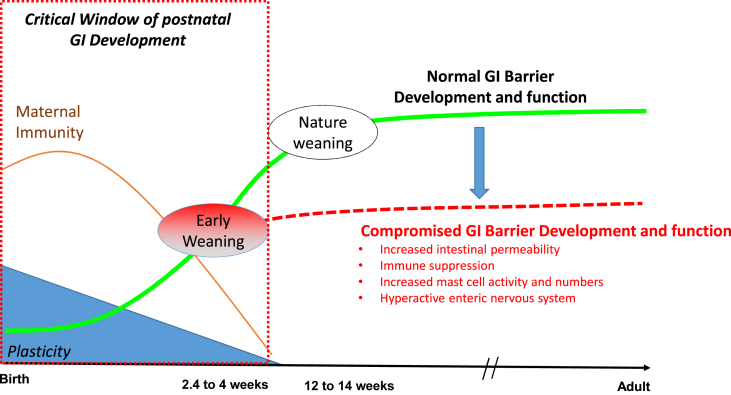
“Weaning is a stressful event in a pig’s life and typically occurs during a critical window of immune and intestinal development (Moeser et al., 2017).”
BackgroundBonetti, A., Tugnoli, B., Ghiselli, F., Markley, G. I., Cooper, E., Piva, A., Stahl, C. H., & Grilli, E. (2024) · Journal of Animal Science · doi:10.1093/jas/skae277 · Cited by 3
Effect of Longer Pre-Starter Diet Allowance on Post-Weaning Performance of Lightweight Piglets
González-Solé, F., Solà‐Oriol, D., Villagómez‐Estrada, S., Muns, R., & Pérez, J. F. (2024) · Animals · doi:10.3390/ani14233471 · Cited by 3
Geervliet, M. (2021) · doi:10.18174/553257 · Cited by 2
Utilizing Pigs as a Model for Studying Intestinal Barrier Function – A Review
Pieszka, M., Szczepanik, K., & Łoniewski, I. (2024) · Annals of Animal Science · doi:10.2478/aoas-2024-0094 · Cited by 2
The effect of different weaning strategies on piglet growth, feed intake and gut health
Leal, D. F., de Paula, Y. H., Faria, C. B. D. S., Costa, G. A. M. E., Tavares, I. C., & Cantarelli, V. D. S. (2024) · Tropical Animal Health and Production · doi:10.1007/s11250-024-04118-4 · Cited by 2
“Other authors also report higher intestinal permeability in piglets weaned early compared to those weaned after 21 days (Moeser et al. 2017; Smith et al. 2010).”
Koo, B., Yang, C., & Nyachoti, C. M. (2024) · Canadian Journal of Animal Science · doi:10.1139/cjas-2023-0128 · Cited by 2
“…(Jayaraman et al. 2017) to lysine ratios were obtained for optimal growth performance in weaned pigs raised under poor sanitary conditions, and this is more important especially for nursery pigs whose immune systems are often compromised by various types of weaning stress (Moeser et al. 2017).”
Yao, R., van Hees, H. M. J., Cools, A., Ballari, S. A., Maes, D. G. D., & Janssens, G. P. J. (2025) · Porcine Health Management · doi:10.1186/s40813-025-00439-4 · Cited by 2
“Therefore, they need a robust gastrointestinal tract for this early transition to solid feed and other weaning-associated stressors [29, 33, 48].”
Liu, J., Xu, W., Xia, B., He, Y., Huang, S., & Zhao, J. (2025) · Protein Expression and Purification · doi:10.1016/j.pep.2025.106827 · Cited by 2
Gormley, A. R., Deng, Z., Ashburn, B., Bryant, R. W., & Kim, S. W. (2025) · Journal of Animal Science · doi:10.1093/jas/skaf425 · Cited by 2
Cheng, Y.-C., Son, J., & Kim, S. W. (2025) · Animal Feed Science and Technology · doi:10.1016/j.anifeedsci.2025.116504 · Cited by 2
Mechanism of Action of Plant Extracts in Preventing Post-Weaning Diarrhea in Piglets: A Review
Jiang, X., Xiao, H., & Huang, P. (2026) · Veterinary Sciences · doi:10.3390/vetsci13040312 · Cited by 2
“Stressors such as maternal separation, transportation, regrouping, fighting and establishment of new social hierarchies, and vaccination can lead to excessive production of reactive oxygen species (ROS) in piglets [30].”
Tang, Q., Zhen, R., Yang, B., Miao, Z., Wei, Y., Ruan, S., He, Y., Xiong, Y., Wu, Q., Wang, L., et al. (2026) · Journal of Animal Science and Biotechnology/Journal of animal science and biotechnology · doi:10.1186/s40104-026-01405-y · Cited by 2
“Early weaning (at 3–4 weeks of age) exposes piglets to nutritional and environmental stress, which compromises the physiological function, morphology, immunity, and microbial balance of the intestine [1, 2].”
Metadata
- Authors
- Moeser, A. J., Pohl, C. S., & Rajput, M.
- Affiliations
- Michigan State University (US)
- Corresponding author
- Moeser, Adam J.
- Venue
- Animal nutrition
- Publisher
- Elsevier BV
- Published
- 2017-12
- Volume
- 3
- Issue
- 4
- Pages
- 313-321
- ISSN
- 2405-6383 (ISSN-L)
- 2405-6545
- PMC
- PMC5941262
- OpenAlex
- W2732972012
- Cited by
- 452
- References
- 95
- Citations by year
- 2026: 54 · 2025: 53 · 2024: 61 · 2023: 63 · 2022: 85 · 2021: 60 · 2020: 38 · 2019: 34 · 2018: 4
- FWCI
- 2.53
- Type
- journal article
- Language
- en
- Open access
- gold
- doi.org
- Licence
- Locations
- Animal nutrition (publishedVersion, cc-by-nc-nd)
- Europe PMC (PubMed Central) (publishedVersion, cc-by-nc-nd)
- PubMed Central (publishedVersion, cc-by-nc-nd)
- PubMed (publishedVersion)
- DOAJ (DOAJ: Directory of Open Access Journals) (submittedVersion, cc-by-sa)
- Funders
- National Institutes of Health (HD072968)
- USDA National Institute of Food and Agriculture (2017-67015-26673)
- Topics
- Life Sciences › Agricultural and Biological Sciences › Animal Science and Zoology › Animal Nutrition and Physiology
- Health Sciences › Veterinary › Small Animals › Veterinary medicine and infectious diseases
- Health Sciences › Medicine › Gastroenterology › Gastrointestinal motility and disorders
- Keywords
- weaning stress, gastrointestinal barrier, pigs, gut health, intestinal epithelium, enteric nervous system, intestinal immunity, disease susceptibility, early life stress, barrier dysfunction
About these checks
Registry, retraction, Cites and statistics results are computed, not judged, with one exception: a printed reference that no index lists is read once by a model before it counts as a citation error. Claims are extracted by a model and kept only when their quote appears verbatim in the text; each cited source is then checked, with a model’s help, for whether it says what the claim relies on. Those verdicts can be wrong — read the claim’s quote and the cited source before relying on one.
Statistics and arithmetic are recomputed, not judged.
Confidence bands are shown only for fields calibrated on our annotated test set. None is calibrated yet, so no band is shown.
What counts as a claim ›How we measure confidence ›How we check this ›
Are you an author, or do you see a problem with this page? Request a review
