

The DOI matches its Crossref record; 95 of the 95 references it cites were found in a registry or an index.
Weaning stress and gastrointestinal barrier development: Implications for lifelong gut health in pigs
Open accessAbstract
The gastrointestinal (GI) barrier serves a critical role in survival and overall health of animals and humans. Several layers of barrier defense mechanisms are provided by the epithelial, immune and enteric nervous systems. Together they act in concert to control normal gut functions (e.g., digestion, absorption, secretion, immunity, etc.) whereas at the same time provide a barrier from the hostile conditions in the luminal environment. Breakdown of these critical GI functions is a central pathophysiological mechanism in the most serious GI disorders in pigs. This review will focus on the development and functional properties of the GI barrier in pigs and how common early life production stressors, such as weaning, can alter immediate and long-term barrier function and disease susceptibility. Specific stress-related pathophysiological mechanisms responsible for driving GI barrier dysfunction induced by weaning and the implications to animal health and performance will be discussed.
Overview
The claims and statistics of this paper haven’t been checked yet.
Run the check — free, no account needed. It reads the open-access text and checks the sources it cites.
Integrity signals
Registry
Cites
Statistics
Figures
Verification
Claims the paper makes
The claims and statistics of this paper haven’t been checked yet.
Run the check — free, no account needed. It reads the open-access text and checks the sources it cites.
Claims other papers make about this one
Each is checked against this paper’s own text: does it say what the citing paper says it does?
The cited source says what the claim attributes to it.
In the citing paper
“In piglets, early weaning stress impairs intestinal barrier function (271) and increases inflammation (272) and oxidative stress (273).”
From Diet and the Microbiota–Gut–Brain Axis: Sowing the Seeds of Good Mental Health (2021) · cites this paper as [271]
Self-check
Percentages, sums and reported differences re-computed from the paper’s own numbers.
The self-check needs the paper’s full text.
Citations
Cites
Changes of Intestinal Functions in Liver Cirrhosis
Fukui, H., & Wiest, R. (2016) · Inflammatory Intestinal Diseases · doi:10.1159/000444436 · Cited by 6,820
Host-Bacterial Mutualism in the Human Intestine
Bäckhed, F., Ley, R. E., Sonnenburg, J. L., Peterson, D. A., & Gordon, J. I. (2005) · Science · doi:10.1126/science.1104816 · Cited by 5,277
Intestinal mucosal barrier function in health and disease
Turner, J. R. (2009) · Nature reviews. Immunology · doi:10.1038/nri2653 · Cited by 3,952 · cited 2×
“…barrier, which is regulated predominantly by the tight junctions (TJs), which consist of numerous intracellular and apical intercellular membrane proteins (e.g., zonula occludens, occludin, and claudins) (Edelblum and Turner, 2009; Groschwitz and Hogan, 2009; Marchiando et al., 2010; Turner, 2009).”
BackgroundThe microbiota in adaptive immune homeostasis and disease
Honda, K., & Littman, D. R. (2016) · Nature · doi:10.1038/nature18848 · Cited by 1,846 · cited 1×
“…receivedmuch attention as an important defense barrier through several proposed mechanisms, reviewing the body of microbiome studies is beyond the scope of this review, but we direct readers to other excellent reviews on the topic (Backhed et al., 2005; Honda and Littman, 2016; Kelly et al., 2015).”
BackgroundIgE and mast cells in allergic disease
Galli, S. J., & Tsai, M. (2012) · Nature Medicine · doi:10.1038/nm.2755 · Cited by 1,799 · cited 2×
“Mast cells are required for host defense and wound healing; however, excessive activation of mast cells is a central pathophysiologic mechanisms in inflammatory disease such as allergy and asthma and functional stress-related GI disorders including irritable bowel syndrome in humans (Boeckxstaens, 2015; Galli and Tsai…”
BackgroundIntestinal barrier function: molecular regulation and disease pathogenesis
Groschwitz, K. R., & Hogan, S. P. (2009) · Journal of Allergy and Clinical Immunology · doi:10.1016/j.jaci.2009.05.038 · Cited by 1,775 · cited 1×
“…barrier, which is regulated predominantly by the tight junctions (TJs), which consist of numerous intracellular and apical intercellular membrane proteins (e.g., zonula occludens, occludin, and claudins) (Edelblum and Turner, 2009; Groschwitz and Hogan, 2009; Marchiando et al., 2010; Turner, 2009).”
BackgroundBarbara, G., Stanghellini, V., De Giorgio, R., Cremon, C., Cottrell, G. S., Santini, D., Pasquinelli, G., Morselli-Labate, A. M., Grady, E. F., Bunnett, N. W., et al. (2004) · Gastroenterology · doi:10.1053/j.gastro.2003.11.055 · Cited by 1,475 · cited 4×
“Similar to human IBS, Pohl et al. (2017) demonstrated that adult pigs that were previously early weaned (16 d wean age) exhibited enhanced co-localization of intestinal mast cells with enteric nerves, compared with late weaned pigs (weaned at 28 d of age) (Pohl et al., 2017).”
BackgroundInfluentialThe role of gut microbiota in immune homeostasis and autoimmunity
Wu, H.-J., & Wu, E. (2012) · Gut Microbes · doi:10.4161/gmic.19320 · Cited by 1,426 · cited 1×
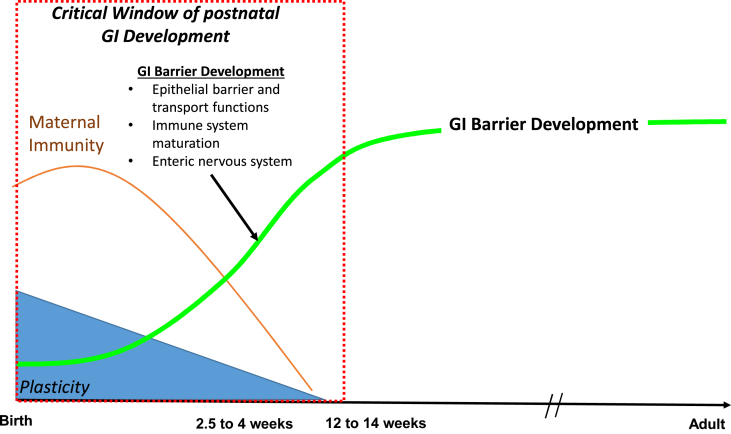
“…complete by 12 to 14 ity and shape the adult phenotype and function of the GI barrier. to a wide variety of antigen including self-antigen and bacteria, help in differentiating between self and non-self-antigen and further facilitate to achieve homeostasis (Martin et al., 2010; Wu and Wu, 2012).”
BackgroundKelly, J. R., Kennedy, P. J., Cryan, J. F., Dinan, T. G., Clarke, G., & Hyland, N. P. (2015) · Frontiers in Cellular Neuroscience · doi:10.3389/fncel.2015.00392 · Cited by 1,110 · cited 2×
“Whereas the microbiome has receivedmuch attention as an important defense barrier through several proposed mechanisms, reviewing the body of microbiome studies is beyond the scope of this review, but we direct readers to other excellent reviews on the topic (Backhed et al., 2005; Honda and Littman, 2016; Kelly et al.,…”
BackgroundThe alarmin IL-33 promotes regulatory T-cell function in the intestine
Schiering, C., Krausgruber, T., Chomka, A., Fröhlich, A., Adelmann, K., Wohlfert, E. A., Pott, J., Griseri, T., Bollrath, J., Hegazy, A. N., et al. (2014) · Nature · doi:10.1038/nature13577 · Cited by 1,007 · cited 2×
“, IL-17A, IL-33, IL-23 and transforming growth factor-b), which have important immunomodulatory properties (Schiering et al., 2014).”
Background
Cited by
Sorted by citations
Items 301–400 of 453
Kim, S. W., Duarte, M. E., & Gormley, A. R. (2026) · Animal Frontiers · doi:10.1093/af/vfag021 · Cited by 2
Taksinanan, N., Tartrakoon, W., Attamangkune, S., Incharoen, T., & Charoensook, R. (2020) · American Journal of Animal and Veterinary Sciences · doi:10.3844/ajavsp.2020.81.88 · Cited by 2
“Villus atrophy leading to low feed intake has been observed within 24 to 48 h after weaning (Kitt et al., 2001; Moeser et al., 2017).”
BackgroundManaging Intestinal Health in Farm Animals: A Critical View
Rostagno, M. H. (2022) · The microbiomes of humans, animals, plants, and the environment · doi:10.1007/978-3-030-90303-9_1 · Cited by 2
Wensley, M. R., Tokach, M. D., Woodworth, J. C., Goodband, R. D., DeRouchey, J. M., Gebhardt, J. T., McKilligan, D. M., & Upah, N. (2022) · Translational Animal Science · doi:10.1093/tas/txac170 · Cited by 2
Soluble and insoluble fibre sources in weaning piglets’ diets
Spagnol, R. D. S., de Medeiros, J. M., Borba, A., Schneider, L. I., Klein, D. R., de Quadros, A. R. B., Gewehr, C. E., & de Oliveira, V. (2024) · Brazilian Journal of Veterinary Research and Animal Science · doi:10.11606/issn.1678-4456.bjvras.2024.212782 · Cited by 2
Gachman, A. M., Outlaw, A. C., Newell, B., Bartosh, J., & Rudar, M. (2024) · Journal of Animal Science · doi:10.1093/jas/skae348 · Cited by 2
Hong, J., Kim, H. S., Adams, S., Scaria, J., Patterson, R., & Woyengo, T. A. (2025) · animal · doi:10.1016/j.animal.2025.101448 · Cited by 3
Use of Antimicrobials in Practice (Targeted on Cattle, Pigs, Poultry, Horses)
Briyne, N. D., Iatridou, D., Vanderhaeghen, W., & Ignate, K. (2020) · Springer eBooks · doi:10.1007/978-3-030-46721-0_4 · Cited by 2
11. Stressors and weaned pig welfare: impact and mitigation
Marchant, J. N., Duttlinger, A. W., Richert, B. T., & Johnson, J. S. (2020) · Wageningen Academic Publishers eBooks · doi:10.3920/978-90-8686-894-0_11 · Cited by 2
Yang, P., Wu, Y., Qian, J., Cai, K., Cao, L., Zheng, Z. X., Luo, S., Jiang, S., & Zhu, X. (2019) · Brazilian Journal of Pharmaceutical Sciences · doi:10.1590/s2175-97902019000217819 · Cited by 2
What might Brexit mean for trade and animal welfare in the Latin American pork industry?
Vargas‐Bello‐Pérez, E., Miguel-Pacheco, G. G., Figueroa, J., & Lensink, J. (2019) · Animal Welfare · doi:10.1017/s0962728600011015 · Cited by 2
Sterndale, S. O., Miller, D. W., Mansfield, J. P., Kim, J.-C., & Pluske, J. R. (2021) · Livestock Science · doi:10.1016/j.livsci.2021.104785 · Cited by 1
McConn, B. R., Kpodo, K. R., Rivier, J., Behan, D. P., Richert, B. T., Radcliffe, J. S., Lay, D. C., Jr., & Johnson, J. S. (2023) · Frontiers in Physiology · doi:10.3389/fphys.2023.1266409 · Cited by 1
“The stress response related to weaning and transport has a negative impact on intestinal barrier development in pigs (Moeser et al., 2017).”
Münz, F., Abele, N., Zink, F., Wolfschmitt, E.-M., Hogg, M., Barck, C., Anetzberger, J., Hoffmann, A., Gröger, M., Calzia, E., et al. (2024) · Biomolecules · doi:10.3390/biom14111385 · Cited by 1
“…the Rheinische Friedrich-Wilhelms-University, Bonn, Germany; and ( iii ) it aims to circumvent pathological clinical manifestations associated with earlier weaning (at day 16–18) observed in other ELS models, e.g., diarrhea, weight loss, and/or dysfunction of the intestinal mucosal barrier [35–38].”
Zhong, T., Wu, Y., Wang, Y., Lei, A., Wang, X., Hou, D., Zhan, S., Wang, L., Cao, J., Guo, J., et al. (2024) · Small Ruminant Research · doi:10.1016/j.smallrumres.2024.107409 · Cited by 1
Modulation of the Plasma Lipidomic Profile in Piglets Fed Polar Lipid-Rich Diets
Larsen, R., Chakroun, S., Létourneau-Montminy, M.-P., Lévesque, J., de Oliveira, D. E., Rico, J. E., & Rico, D. E. (2024) · Metabolites · doi:10.3390/metabo14120673 · Cited by 1
“The abrupt transition from a liquid to a solid diet during the weaning period leads to a reduction in feed intake and changes in the intestinal structure in piglets [1].”
Effects of fermented bamboo fiber on intestinal health and fecal pollutants in weaned piglets
Jia, Y., Huang, Q., Song, R. Y., Tang, Y., Feng, M., & Lu, J. (2025) · Frontiers in Nutrition · doi:10.3389/fnut.2025.1538560 · Cited by 1
“This disruption is usually marked by increased serum levels of D-lactate (D-LA), diamine oxidase (DAO), and endotoxin (ET) (48, 49).”
Aida, M., Yamada, R., Kawase, T., Matsuo, T., & Tsukahara, T. (2025) · Frontiers in Veterinary Science · doi:10.3389/fvets.2025.1537913 · Cited by 1
“It is well known that weaning stress induces the leaky gut condition and this gut dysfunction causes disease susceptibility (53).”
Integrated Transcriptome and Metabolome Analysis of the Porcine Small Intestine During Weaning
Yoon, J. W., Shin, S., Kim, T. H., & Lee, S. I. (2025) · Genes · doi:10.3390/genes16070727 · Cited by 1
“…alterations to the digestive and immune systems, including changes to activated metabolic enzymes, immunocytes, inflammatory cytokines, and immunoglobulins, and facilitates the invasion of pathogens, triggered by exposure to novel feed types and other exogenous/endogenous factors [13,14].”
Hong, J., Tallaksen, J. E., & Urriola, P. E. (2025) · Environments · doi:10.3390/environments12080279 · Cited by 1
Zheng, L., Son, J., & Kim, S. W. (2025) · Animal Bioscience · doi:10.5713/ab.25.0402 · Cited by 1
The quality of creep feed affects consumption and growth performance of pre- and post-weaning pigs
Sulabo, R. C., Faccin, J. E. G., Tokach, M. D., Bergstrom, J. R., DeRouchey, J. M., Goodband, R. D., & Dritz, S. S. (2025) · Translational Animal Science · doi:10.1093/tas/txaf126 · Cited by 1
Choi, H., Deng, Z., & Kim, S. W. (2025) · Journal of Animal Science and Biotechnology/Journal of animal science and biotechnology · doi:10.1186/s40104-025-01271-0 · Cited by 1
“Weaning represents the most vulnerable period in a pig’s life, during which environmental, immunological, and nutritional stressors disrupt the intestinal microbiota, impair intestinal health, and reduce growth [13, 14].”
Jansen, M., Ludorf, C., Barber, R., Polniak, V. I., Luttman, A. M., Rozeboom, D. W., & Kim, K. (2026) · Journal of Animal Science · doi:10.1093/jas/skag005 · Cited by 1
Kyoung, H., Nam, J., Cho, J. H., Choe, J., Park, K. S., Ahn, J., Kang, Y., Kim, H. B., & Kang, Y.-G. (2026) · Journal of Animal Science · doi:10.1093/jas/skag017 · Cited by 1
Capsaicin Improves Lipid Metabolism Disorders Caused by LPS-Induced Immune Stress in Weaned Piglets
Zhao, J., Liu, W., Zhang, X., Xie, Z., Liu, S., Zhou, W., & Zhang, L. (2026) · Veterinary Sciences · doi:10.3390/vetsci13020155 · Cited by 1
“…reproductive and respiratory syndrome virus), and conditional pathogenic bacteria (e.g., Escherichia coli ), can activate the host immune system through pattern recognition receptors (e.g., TLR4) and induce the overexpression of pro-inflammatory cytokines (e.g., TNF-α , IL-1 β , and IL-6 ) [2].”
Chen, H., Liu, Y., Jin, S., Wang, C., He, Y., Zhou, H., Chen, M., Feng, Y., Wang, W., Ma, H., et al. (2026) · Animal nutrition · doi:10.1016/j.aninu.2025.10.009 · Cited by 1
Hagen, C. S., Şahin, O., Thomas, J., & Greiner, L. L. (2026) · Translational Animal Science · doi:10.1093/tas/txag019 · Cited by 1
“Weaning-induced villous atrophy and reduced brush border enzyme activity impair protein digestion, with up to 40% of dietary protein reaching the hind-gut undigested (Moeser et al. 2017; Montagne et al. 2007; H € ogberg and Lindberg, 2004).”
Gao, M., Xie, Z., Mao, P., Zhang, X., Zhao, L., & Ma, W. (2026) · BMC Veterinary Research · doi:10.1186/s12917-025-05272-z · Cited by 1
“As the organ directly contacting with the external environment, the intestine coordinates nutrients digestion and absorption, while providing defense against invading pathogens [12, 13].”
He, Z.-Y., Wang, L.-X., Deng, X.-L., Tan, J.-J., Wang, A., Huang, Y., Wu, H.-Y., Du, J.-Y., Zhao, D., & Lin, R.-Q. (2026) · Parasites & Vectors · doi:10.1186/s13071-026-07291-7 · Cited by 1
“The weaning process involves significant stressors, including dietary changes and environmental transitions, which can lead to temporary immunosuppression and compromise intestinal barrier integrity [62, 63].”
Brackett, M. N., Oladele, P. O., Lu, H., Horn, N. L., & Ajuwon, K. M. (2026) · Toxins · doi:10.3390/toxins18030141 · Cited by 1
“The gastrointestinal tract is responsible for nutrient digestion and absorption, as well as maintaining a barrier between luminal contents and internal bodily systems [1].”
Weaning Influences Epithelial Morphology, Gene Expression and Gut Microbiota Composition in Piglets
Mouchtoglou, C., Goossens, E., Aluwé, M., Ducatelle, R., & Immerseel, F. V. (2026) · Animals · doi:10.3390/ani16060961 · Cited by 1
Wongchanla, S., Park, S., Sun, S. X.-L., Ji, P., & Liu, Y. (2026) · Metabolites · doi:10.3390/metabo16040247 · Cited by 1
“The immature immune system of post-weaning piglets increases their susceptibility to pathogenic infections, particularly ETEC, a major etiological agent of post-weaning diarrhea (PWD) [1,2].”
Regulating Gut Microbiota in Post-Weaned Pigs: The Role of Digestive Capacity and Substrate Flow
Connolly, K. R., Maher, S., Sweeney, T., & O’Doherty, J. V. (2026) · Agriculture · doi:10.3390/agriculture16111244 · Cited by 1
“Stress-associated neuroendocrine activation may additionally impair epithelial integrity and alter gastrointestinal motility, further increasing nutrient escape to the distal intestine [6].”
InfluentialGog, K. K.-V., Krooshoop, E., Wijnands, T., & Reiner, G. (2026) · Animals · doi:10.3390/ani16131962 · Cited by 1
Gormley, A. R., Sung, J. Y., & Kim, S. W. (2026) · Journal of Animal Science · doi:10.1093/jas/skag200 · Cited by 1
“Modern pig production systems wean pigs an average of 8weeks earlier than they would naturally be weaned (Moeser et al. 2017).”
Gerrard, S. D., Shafron, A. J., Biase, F. H., Gabler, N. K., & Najt, C. P. (2026) · Journal of Animal Science · doi:10.1093/jas/skag222 · Cited by 1
“…one of the most critical and stressful transitions in swine production that combines abrupt maternal separation, transition to solid diets from milk, social mixing, and transport stress that decrease growth performance and impair intestinal barrier function (Main et al. 2004; Moeser et al. 2017).”
Wooten, H., Kim, H., Rakhshandeh, A. R., & Rakhshandeh, A. (2020) · Animals · doi:10.3390/ani10071124 · Cited by 1
Mechanical and immunological intestinal barriers
Olszewski, J., Adamski, A., Skrzypek, T., Ferenc, K., & Zabielski, R. (2021) · Elsevier eBooks · doi:10.1016/b978-0-12-818958-0.00008-9 · Cited by 1
Gastrointestinal Tract Barrier Efficiency: Function and Threats
Yakout, H. M., & Eckhardt, E. R. M. (2022) · The microbiomes of humans, animals, plants, and the environment · doi:10.1007/978-3-030-90303-9_2 · Cited by 1
Ternus, E. M., Piroca, L., Matté, F., Dias, C. P., Callegari, M. A., Oliveira, E. R., Cristani, J., Traverso, S. D., de Carvalho, R. H., & da Silva, C. A. (2022) · Semina Ciências Agrárias · doi:10.5433/1679-0359.2022v43n5p2221 · Cited by 1
Besteiro, R., Arango, T., Rodríguez, M. R., & Fernández, M. D. G. (2023) · Agriculture · doi:10.3390/agriculture14010079 · Cited by 1
Zou, L., Shao, Y., Xiong, X., & Yin, Y. (2024) · Scientia Sinica Vitae · doi:10.1360/ssv-2023-0264 · Cited by 1
Hulshof, T. G., Resink, J. W., & van Hees, H. M. J. (2024) · Journal of Animal Physiology and Animal Nutrition · doi:10.1111/jpn.14016 · Cited by 1
de Paula, Y. H., Resende, M., Chaves, R. F., Barbosa, J. A., Garbossa, C. A. P., Costa, M. D. O., Rigo, F., BARDUCCI, R. S., Santos, A. A. D., Pacheco, L. G., et al. (2024) · Translational Animal Science · doi:10.1093/tas/txae104 · Cited by 1
“The changes are associated with the great challenges that weaning provides, as it is associated with intestinal inflammation and digestive disorders (Smith et al., 2010; Campbell et al., 2013; Moeser et al., 2017).”
BackgroundGinarte, R. A., Gao, G., Li, Y., Zhang, Y., Rodríguez, R., Martínez, Y., & Li, X. (2024) · Animals · doi:10.3390/ani14233382 · Cited by 1
“Diarrhea is the loss of electrolytes and water in liquid and semi-liquid feces, which, although not considered a disease, can cause dehydration, induce diseases, and compromise animal welfare, affecting the feed efficiency of piglets and increasing their mortality and production costs [3,4].”
Quisirumbay-Gaibor, J. R. (2020) · La Granja · doi:10.17163/lgr.n31.2020.07 · Cited by 1
“Stress during weaning alters the development of the barrier functions of the gastro-intestinal tract that leads to permanent harmful consequences for intestinal health during the life of the pig (Moeser et al., 2017; Pluske et al., 2018).”
BackgroundDigestible threonine-to-lysine ratio for piglets under health challenge
Júnior, G. M. D. O., Rodrigues, V. V., Campos, P. F., Formigoni, A. D. S., dos Santos, W. G., Silva, C. M., de Jesus, M. R. R., Rodrigues, P. G., Vieira, J. S., & Ferreira, A. S. (2020) · Research Society and Development · doi:10.33448/rsd-v9i12.10899 · Cited by 1
Choi, J. (2019) · Mspace (University of Manitoba) · Cited by 1
Early-life feeding in piglets: the impact on intestinal microbiota and mucosal development
Choudhury, R. (2021) · doi:10.18174/533912 · Cited by 1
Venardou, B., O’Doherty, J. V., Maher, S., Ryan, M. T., Gath, V., Ravindran, R., Kiely, C., Rajauria, G., García‐Vaquero, M., & Sweeney, T. (2021) · Research Square · doi:10.21203/rs.3.rs-910533/v2 · Cited by 1
Metabolism of the challenged intestinal epithelial cell
Bekebrede, A. F. (2023) · doi:10.18174/578215 · Cited by 1
Organoid based models to study the role of gut microbiota metabolites in post-weaning diarrhea
van der Hee, B. (2023) · doi:10.18174/630692 · Cited by 1
Nisley, M. J. (2023) · doi:10.31274/td-20240329-450 · Cited by 1
Impact of probiotics on commensal and pathogenic swine intestinal microbes
Wang, W. (2019) · ERA: Education and Research Archive (University of Alberta) · doi:10.7939/r3-7akn-0y16
Arce, F. H., Cervantes, A. M., Araiza, O. T., & Morales, A. (2020) · Archivos de Zootecnia · doi:10.21071/az.v69i266.5113
Nakasone, D. H. (2020) · Digital Library of Theses and Dissertations (Universidade de São Paulo) · doi:10.11606/d.10.2020.tde-04092020-125846
Reyes-Camacho, D., Pérez, J. F., Vinyeta, E., Aumiller, T., Criado‐Mesas, L., Palade, L. M., Țăranu, I., Folch, J. M., van der Klis, J. D., & Solà‐Oriol, D. (2020) · Research Square · doi:10.21203/rs.3.rs-52150/v1
“It is reported that several factors including inherent genetic programming, microbial colonization, and colostrum and milk components are involved in the neonatal epithelial barrier establishment [11].”
BackgroundXu, Y., Pu, G., Li, Q., Mao, H., & Yang, C. (2021) · Research Square · doi:10.21203/rs.3.rs-150006/v1
Pathogenic disease modulation of pig intestinal function and integrity
Helm, E. T. (2020) · Iowa State University Digital Repository (Iowa State University) · doi:10.31274/etd-20210114-59
Venardou, B., O’Doherty, J. V., Maher, S., Ryan, M. T., Gath, V., Ravindran, R., Kiely, C., Rajauria, G., García‐Vaquero, M., & Sweeney, T. (2021) · Research Square · doi:10.21203/rs.3.rs-910533/v1
Cayo, P., More, M. J., Aragón, E., Mena, R., & Quisirumbay, J. G. (2021) · Revista Veterinaria · doi:10.30972/vet.3225749
Овчарова, А. Н., & Остренко, К. С. (2021) · Lecture notes in networks and systems · doi:10.1007/978-3-030-91405-9_81
Extrato de malte como aditivo nutricional para leitões na fase de creche
de Souza, J. C. D. S. M. (2021) · doi:10.11606/t.10.2021.tde-07022022-103248
Azevedo, C. P. F. (2022) · Digital Library of Theses and Dissertations (Universidade de São Paulo) · doi:10.11606/t.11.2022.tde-12052022-153454
Koo, B., Choi, J., Holanda, D. M., Yang, C., & Nyachoti, C. M. (2022) · Research Square · doi:10.21203/rs.3.rs-1850674/v1
Moita, V. H. C., Silva, B. A. N., Cardoso, D., Chaves, R. F., Cardoso, H. M. C., Gonçalves, M. F., Lima, V. R., de Araújo, W. A. G., Duarte, M. E., & de Abreu, M. L. T. (2022) · Research Society and Development · doi:10.33448/rsd-v11i16.38715
“The weaning process includes a myriad of environmental and physiological changes that can result in negative impacts on the intestinal health and subsequent performance of nursery pigs (Campbell et al., 2013; Moeser et al., 2017).”
BackgroundChuaychu, S. B. (2020) · doi:10.58837/chula.the.2020.471
“Challenging issues of porcine viral infection during nursery period Nursery piglets encounter to several types of stressors leading to disease susceptibility (Moeser et al., 2017).”
BackgroundСамойлюк, В. В., Козій, М. С., & Білий, Д. Д. (2023) · Bulletin of Sumy National Agrarian University The series Veterinary Medicine · doi:10.32782/bsnau.vet.2023.1.15
Anticipation of probiotics usage under “prudent use of antimicrobials for animal therapy”
Tsukahara, T. (2022) · Japanese Journal of Lactic Acid Bacteria · doi:10.4109/jslab.33.86
Bautista-Marín, S. E., Valeriano, T. D. J. H., Landín, G. M., Soto, J. G. G., Briones, C. I. N., García, K. E., & de Souza, T. C. R. (2023) · Archivos Latinoamericanos de Producción Animal · doi:10.53588/alpa.310201
de Paula, G. Z., Bez, I. C. C., Garrido, L. F. C., Rodrigues, C. C., de Oliveira, A. C. F., Rupolo, P. E., de Azevedo, L. B., Hernandez, E. M. E., Genova, J. L., Wéber, H., et al. (2023) · Research Square · doi:10.21203/rs.3.rs-3528137/v1
Machado, I. F., Petznick, T., Silva, A. P. S. P., Wang, C., Karriker, L. A., Linhares, D. C. L., & Silva, G. S. (2023) · SSRN Electronic Journal · doi:10.2139/ssrn.4660816
Agnol, J. D., Meneghetti, F., Gaggini, T. S., Rodrigues, G. A., Genova, J. L., Carvalho, P. L. D. O., Carvalho, S. T., Costa, L. B., Paiano, D., Saraiva, A., et al. (2024) · South African Journal of Animal Science · doi:10.4314/sajas.v53i3.10
“However, piglets showed a reduction in amylase concentration in the first week of the nursery and this is attributed to the effects of post-weaning stress, affecting feed intake (Celi et al., 2017; Jayaraman & Nyachoti, 2017; Moeser et al., 2017) and consequently the available amylolytic substrates.”
BackgroundCan We Influence Gut Health to Reduce the Need for Antimicrobials in Pig Production?
Hall, H. (2023) · Animal Science Cases · doi:10.1079/animalsciencecases.2023.0001
Xia, B., Zhong, R., Wu, W., Luo, C., Meng, Q., Gao, Q., Zhao, Y., Chen, L., Zhang, S., Zhao, X., et al. (2022) · Figshare · doi:10.6084/m9.figshare.20762916
Xia, B., Zhong, R., Wu, W., Luo, C., Meng, Q., Gao, Q., Zhao, Y., Chen, L., Zhang, S., Zhao, X., et al. (2022) · Figshare · doi:10.6084/m9.figshare.20762949
Qi, K., Wu, J., Deng, B., & Xu, Z. (2024) · Research Square · doi:10.21203/rs.3.rs-4525882/v1
Chang, S. Y., Lee, J., Jung, S., Song, D., Park, S., Jeon, K., Kim, H., & Cho, J. H. (2024) · Journal of Animal Science and Technology · doi:10.5187/jast.2024.e107
“Weaning pigs with underdeveloped mucosal immunity and impaired intestinal barrier function are highly susceptible to pathogenic bacteria [5,6].”
A comparative study of the effects of crude chicory and inulin on gut health in weaning piglets
Kulkarni, T. S., Siegien, P., Comer, L., Vandel, J., Châtaigné, G., Richel, A., Wavreille, J., Cudennec, B., Lucau‐Danila, A., Everaert, N., et al. (2024) · Journal of Functional Foods · doi:10.1016/j.jff.2024.106578 · Cited by 2
Park, S., Kovanda, L. L., Sokale, A. O., Barri, A., & Liu, Y. (2023) · Journal of Animal Science · doi:10.1093/jas/skae372
Bei, W., Ao, J., Yuan, F., Wei, K., Yang, X., Wang, R., & Chen, H. (2025) · SSRN Electronic Journal · doi:10.2139/ssrn.5136416
Pendón, M. D., Ferreyra, M., Valette, E., Girardi, J. I., Errea, A. J., Dardis, C., Bengoa, A. A., Tanco, M. E., Machuca, M., Williams, S., et al. (2025) · Research Square · doi:10.21203/rs.3.rs-6590564/v1
Automated Feeder Activity Measurement System for Weaned Pigs in Nursery PensPreprint
Park, Y., Yeung, C., Shumaly, M., Soares, V. M., Steibel, J. P., Rosero, D. S., & Pandey, S. (2025) · SSRN Electronic Journal · doi:10.2139/ssrn.5365156
Görge, H., Dittrich, I., Wilder, T., Kemper, N., & Krieter, J. (2025) · Archives animal breeding/Archiv für Tierzucht · doi:10.5194/aab-68-589-2025
80. Deep learning-based computer vision for early detection of fall-behind weaned pigs
Acharya, B., Shumaly, M., Steibel, J. P., Gabler, N. K., & Rosero, D. S. (2025) · Animal - science proceedings · doi:10.1016/j.anscip.2025.08.235
Souza, V. H. S., Rahman, M., Silva, M. C., Benicio, L. M., Cantarelli, V. D. S., & Condotta, I. C. F. D. S. (2025) · Animal - science proceedings · doi:10.1016/j.anscip.2025.08.172
Negrini, C., Luise, D., Correa, F., Mazzoni, M., Serra, A., Monteiro, A., & Trevisi, P. (2025) · Veterinary and Animal Science · doi:10.1016/j.vas.2025.100518
“Confirming the detrimental effect of early weaning on the gut health of immature piglets, the morphological data indicated a marked stress in the E weaned piglets (Smith et al., 2010; Moeser et al., 2017).”
Safaie, E. S., Kelly, A. L., Kwon, C. H., Torres, J. A., Lee, J., Lindemann, M. D., McKinley, E. T., Hernandez, S., Lourenco, J. M., & Jang, Y. D. (2025) · Revista Colombiana de Ciencias Pecuarias · doi:10.17533/udea.rccp.e361541
Wang, H., Ma, R., Qi, R., Liu, Z., Li, Y., Wu, X., Zhao, C., Ma, Q., & Zhan, K. (2025) · Frontiers in Nutrition · doi:10.3389/fnut.2025.1704168
“Early weaning induces weaning stress in piglets, leading to gut microbiota dysbiosis and mucosal barrier dysfunction, which manifests as reduced physical condition, severe diarrhea, compromised immunity, and systemic inflammatory response (22, 23).”
Zhu, L., Zhang, X., Yang, Z., Fan, Z., Lv, C., Qiu, J., Xiao, T., Ye, D., & Guo, P. (2025) · Journal of Animal Science · doi:10.1093/jas/skaf391
Massimini, M., Vecchio, G. D., Ciaramellano, F., Fusaro, I., Barca, A., Romanucci, M., Giammarco, M., Amatetti, C., Bachetti, B., Domenico, M. D., et al. (2025) · PLoS ONE · doi:10.1371/journal.pone.0332920
Xia, B., Zhong, R., Wu, W., Luo, C., Meng, Q., Gao, Q., Zhao, Y., Chen, L., Zhang, S., Zhao, X., et al. (2022) · Figshare · doi:10.6084/m9.figshare.20762922
Xia, B., Zhong, R., Wu, W., Luo, C., Meng, Q., Gao, Q., Zhao, Y., Chen, L., Zhang, S., Zhao, X., et al. (2022) · Figshare · doi:10.6084/m9.figshare.20762940
de Groot, N., Fariñas, F., Fabà, L., Hambrecht, E., Cabrera-Gómez, C. G., Pallares, F. J., & Ramis, G. (2021) · Figshare · doi:10.6084/m9.figshare.17157053
Eriksen, E. Ø., Kudirkienė, E., Christensen, A. E., Agerlin, M. V., Weber, N. R., Nødtvedt, A., Nielsen, J. P., Hartmann, K. T., Skade, L., Larsen, L. E., et al. (2021) · Figshare · doi:10.6084/m9.figshare.16779544
Xia, B., Zhong, R., Wu, W., Luo, C., Meng, Q., Gao, Q., Zhao, Y., Chen, L., Zhang, S., Zhao, X., et al. (2022) · Figshare · doi:10.6084/m9.figshare.20762928
Metadata
- Authors
- Moeser, A. J., Pohl, C. S., & Rajput, M.
- Affiliations
- Michigan State University (US)
- Corresponding author
- Moeser, Adam J.
- Venue
- Animal nutrition
- Publisher
- Elsevier BV
- Published
- 2017-12
- Volume
- 3
- Issue
- 4
- Pages
- 313-321
- ISSN
- 2405-6383 (ISSN-L)
- 2405-6545
- PMC
- PMC5941262
- OpenAlex
- W2732972012
- Cited by
- 452
- References
- 95
- Citations by year
- 2026: 54 · 2025: 53 · 2024: 61 · 2023: 63 · 2022: 85 · 2021: 60 · 2020: 38 · 2019: 34 · 2018: 4
- FWCI
- 2.53
- Type
- journal article
- Language
- en
- Open access
- gold
- doi.org
- Licence
- Locations
- Animal nutrition (publishedVersion, cc-by-nc-nd)
- Europe PMC (PubMed Central) (publishedVersion, cc-by-nc-nd)
- PubMed Central (publishedVersion, cc-by-nc-nd)
- PubMed (publishedVersion)
- DOAJ (DOAJ: Directory of Open Access Journals) (submittedVersion, cc-by-sa)
- Funders
- National Institutes of Health (HD072968)
- USDA National Institute of Food and Agriculture (2017-67015-26673)
- Topics
- Life Sciences › Agricultural and Biological Sciences › Animal Science and Zoology › Animal Nutrition and Physiology
- Health Sciences › Veterinary › Small Animals › Veterinary medicine and infectious diseases
- Health Sciences › Medicine › Gastroenterology › Gastrointestinal motility and disorders
- Keywords
- weaning stress, gastrointestinal barrier, pigs, gut health, intestinal epithelium, enteric nervous system, intestinal immunity, disease susceptibility, early life stress, barrier dysfunction
About these checks
Registry, retraction, Cites and statistics results are computed, not judged, with one exception: a printed reference that no index lists is read once by a model before it counts as a citation error. Claims are extracted by a model and kept only when their quote appears verbatim in the text; each cited source is then checked, with a model’s help, for whether it says what the claim relies on. Those verdicts can be wrong — read the claim’s quote and the cited source before relying on one.
Statistics and arithmetic are recomputed, not judged.
Confidence bands are shown only for fields calibrated on our annotated test set. None is calibrated yet, so no band is shown.
What counts as a claim ›How we measure confidence ›How we check this ›
Are you an author, or do you see a problem with this page? Request a review
