

The DOI matches its Crossref record; 95 of the 95 references it cites were found in a registry or an index.
Weaning stress and gastrointestinal barrier development: Implications for lifelong gut health in pigs
Open accessAbstract
The gastrointestinal (GI) barrier serves a critical role in survival and overall health of animals and humans. Several layers of barrier defense mechanisms are provided by the epithelial, immune and enteric nervous systems. Together they act in concert to control normal gut functions (e.g., digestion, absorption, secretion, immunity, etc.) whereas at the same time provide a barrier from the hostile conditions in the luminal environment. Breakdown of these critical GI functions is a central pathophysiological mechanism in the most serious GI disorders in pigs. This review will focus on the development and functional properties of the GI barrier in pigs and how common early life production stressors, such as weaning, can alter immediate and long-term barrier function and disease susceptibility. Specific stress-related pathophysiological mechanisms responsible for driving GI barrier dysfunction induced by weaning and the implications to animal health and performance will be discussed.
Overview
The claims and statistics of this paper haven’t been checked yet.
Run the check — free, no account needed. It reads the open-access text and checks the sources it cites.
Integrity signals
Registry
Cites
Statistics
Figures
Verification
Claims the paper makes
The claims and statistics of this paper haven’t been checked yet.
Run the check — free, no account needed. It reads the open-access text and checks the sources it cites.
Claims other papers make about this one
Each is checked against this paper’s own text: does it say what the citing paper says it does?
The cited source says what the claim attributes to it.
In the citing paper
“In piglets, early weaning stress impairs intestinal barrier function (271) and increases inflammation (272) and oxidative stress (273).”
From Diet and the Microbiota–Gut–Brain Axis: Sowing the Seeds of Good Mental Health (2021) · cites this paper as [271]
Self-check
Percentages, sums and reported differences re-computed from the paper’s own numbers.
The self-check needs the paper’s full text.
Citations
Cites
Changes of Intestinal Functions in Liver Cirrhosis
Fukui, H., & Wiest, R. (2016) · Inflammatory Intestinal Diseases · doi:10.1159/000444436 · Cited by 6,820
Host-Bacterial Mutualism in the Human Intestine
Bäckhed, F., Ley, R. E., Sonnenburg, J. L., Peterson, D. A., & Gordon, J. I. (2005) · Science · doi:10.1126/science.1104816 · Cited by 5,277
Intestinal mucosal barrier function in health and disease
Turner, J. R. (2009) · Nature reviews. Immunology · doi:10.1038/nri2653 · Cited by 3,952 · cited 2×
“…barrier, which is regulated predominantly by the tight junctions (TJs), which consist of numerous intracellular and apical intercellular membrane proteins (e.g., zonula occludens, occludin, and claudins) (Edelblum and Turner, 2009; Groschwitz and Hogan, 2009; Marchiando et al., 2010; Turner, 2009).”
BackgroundThe microbiota in adaptive immune homeostasis and disease
Honda, K., & Littman, D. R. (2016) · Nature · doi:10.1038/nature18848 · Cited by 1,846 · cited 1×
“…receivedmuch attention as an important defense barrier through several proposed mechanisms, reviewing the body of microbiome studies is beyond the scope of this review, but we direct readers to other excellent reviews on the topic (Backhed et al., 2005; Honda and Littman, 2016; Kelly et al., 2015).”
BackgroundIgE and mast cells in allergic disease
Galli, S. J., & Tsai, M. (2012) · Nature Medicine · doi:10.1038/nm.2755 · Cited by 1,799 · cited 2×
“Mast cells are required for host defense and wound healing; however, excessive activation of mast cells is a central pathophysiologic mechanisms in inflammatory disease such as allergy and asthma and functional stress-related GI disorders including irritable bowel syndrome in humans (Boeckxstaens, 2015; Galli and Tsai…”
BackgroundIntestinal barrier function: molecular regulation and disease pathogenesis
Groschwitz, K. R., & Hogan, S. P. (2009) · Journal of Allergy and Clinical Immunology · doi:10.1016/j.jaci.2009.05.038 · Cited by 1,775 · cited 1×
“…barrier, which is regulated predominantly by the tight junctions (TJs), which consist of numerous intracellular and apical intercellular membrane proteins (e.g., zonula occludens, occludin, and claudins) (Edelblum and Turner, 2009; Groschwitz and Hogan, 2009; Marchiando et al., 2010; Turner, 2009).”
BackgroundBarbara, G., Stanghellini, V., De Giorgio, R., Cremon, C., Cottrell, G. S., Santini, D., Pasquinelli, G., Morselli-Labate, A. M., Grady, E. F., Bunnett, N. W., et al. (2004) · Gastroenterology · doi:10.1053/j.gastro.2003.11.055 · Cited by 1,475 · cited 4×
“Similar to human IBS, Pohl et al. (2017) demonstrated that adult pigs that were previously early weaned (16 d wean age) exhibited enhanced co-localization of intestinal mast cells with enteric nerves, compared with late weaned pigs (weaned at 28 d of age) (Pohl et al., 2017).”
BackgroundInfluentialThe role of gut microbiota in immune homeostasis and autoimmunity
Wu, H.-J., & Wu, E. (2012) · Gut Microbes · doi:10.4161/gmic.19320 · Cited by 1,426 · cited 1×
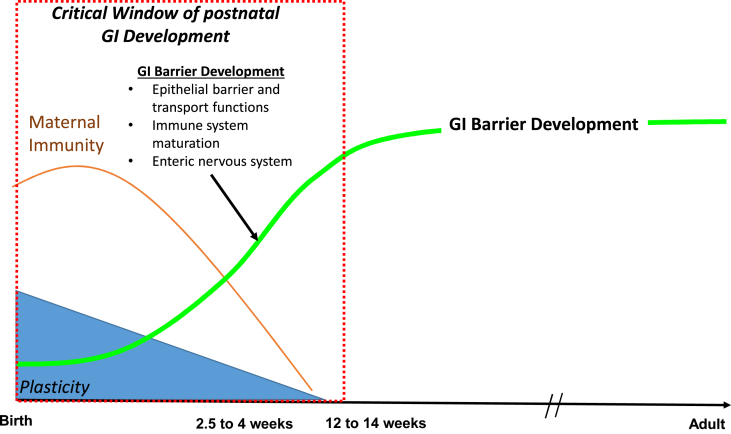
“…complete by 12 to 14 ity and shape the adult phenotype and function of the GI barrier. to a wide variety of antigen including self-antigen and bacteria, help in differentiating between self and non-self-antigen and further facilitate to achieve homeostasis (Martin et al., 2010; Wu and Wu, 2012).”
BackgroundKelly, J. R., Kennedy, P. J., Cryan, J. F., Dinan, T. G., Clarke, G., & Hyland, N. P. (2015) · Frontiers in Cellular Neuroscience · doi:10.3389/fncel.2015.00392 · Cited by 1,110 · cited 2×
“Whereas the microbiome has receivedmuch attention as an important defense barrier through several proposed mechanisms, reviewing the body of microbiome studies is beyond the scope of this review, but we direct readers to other excellent reviews on the topic (Backhed et al., 2005; Honda and Littman, 2016; Kelly et al.,…”
BackgroundThe alarmin IL-33 promotes regulatory T-cell function in the intestine
Schiering, C., Krausgruber, T., Chomka, A., Fröhlich, A., Adelmann, K., Wohlfert, E. A., Pott, J., Griseri, T., Bollrath, J., Hegazy, A. N., et al. (2014) · Nature · doi:10.1038/nature13577 · Cited by 1,007 · cited 2×
“, IL-17A, IL-33, IL-23 and transforming growth factor-b), which have important immunomodulatory properties (Schiering et al., 2014).”
BackgroundSÁNCHEZ, M. M., LADD, C. O., & PLOTSKY, P. M. (2001) · Development and Psychopathology · doi:10.1017/s0954579401003029 · Cited by 1,003 · cited 2×
“, psychological trauma, inflammation, infection) are risk factors for GI inflammatory and functional diseases later in life (Bradford et al., 2012; Chaloner and Greenwood-Van Meerveld, 2013; Maccari et al., 2014; Park et al., 2016; Sanchez et al., 2001).”
BackgroundMast cell-orchestrated immunity to pathogens
Abraham, S. N., & John, A. L. S. (2010) · Nature reviews. Immunology · doi:10.1038/nri2782 · Cited by 959
Types of neurons in the enteric nervous system
Furness, J. B. (2000) · Journal of the Autonomic Nervous System · doi:10.1016/s0165-1838(00)00127-2 · Cited by 855 · cited 1×
“The proportion of ChAT neurons in postnatal life increases dramatically and can account for approximately 44% of all neurons in the submucosal plexus, and 62% in the myenteric plexus by maturity (Furness, 2000; Hao et al., 2013).”
BackgroundMast Cell-Dependent Excitation of Visceral-Nociceptive Sensory Neurons in Irritable Bowel Syndrome
Barbara, G., Wang, B., Stanghellini, V., de Giorgio, R., Cremon, C., Di Nardo, G., Trevisani, M., Campi, B., Geppetti, P., Tonini, M., et al. (2007) · Gastroenterology · doi:10.1053/j.gastro.2006.11.039 · Cited by 783 · cited 2×
“Similar to human IBS, Pohl et al. (2017) demonstrated that adult pigs that were previously early weaned (16 d wean age) exhibited enhanced co-localization of intestinal mast cells with enteric nerves, compared with late weaned pigs (weaned at 28 d of age) (Pohl et al., 2017).”
BackgroundImmunomodulatory mast cells: negative, as well as positive, regulators of immunity
Galli, S. J., Grimbaldeston, M. A., & Tsai, M. M. (2008) · Nature reviews. Immunology · doi:10.1038/nri2327 · Cited by 757 · cited 2×
“…mast cells are also potent positive and negative modulators of immune responses (Abraham and St John, 2010; Chan et al., 2013; Choi et al., 2013; Galli et al., 2008) and enteric neurons (Barbara et al., 2004; Kirsch and Riddell, 2006; Kobayashi et al., 1999; Wouters et al., 2016), mast cells…”
BackgroundEpithelial Barriers in Homeostasis and Disease
Marchiando, A. M., Graham, W. V., & Turner, J. R. (2010) · Annual Review of Pathology Mechanisms of Disease · doi:10.1146/annurev.pathol.4.110807.092135 · Cited by 612 · cited 4×
“, zonula occludens, occludin, and claudins) (Edelblum and Turner, 2009; Groschwitz and Hogan, 2009; Marchiando et al., 2010; Turner, 2009).”
BackgroundInfluentialIntestinal ion transport and the pathophysiology of diarrhea
Field, M. (2003) · Journal of Clinical Investigation · doi:10.1172/jci18326 · Cited by 578 · cited 2×
“…by sensory fibers beneath the epithelium, which in turn convey signals and activation of secretomotor neuron activation, mediated via release of neurochemicals vasoactive intestinal peptide and acetylcholine, which drive electrolyte and fluid secretion (Field, 2003; Lundgren, 2002; Wood, 2010).”
BackgroundTurner, J. R., Rill, B. K., Carlson, S. L., Carnes, D., Kerner, R., Mrsny, R. J., & Madara, J. (1997) · American Journal of Physiology-Cell Physiology · doi:10.1152/ajpcell.1997.273.4.c1378 · Cited by 553 · cited 1×
“Whereas a tight or resistant epithelium is critical for barrier function, the epitheliummust exhibit a normal physiologic degree of paracellular and transcellular permeability required for solutedriven water absorption and transcellular antigen uptake (Turner et al., 1997).”
BackgroundProtection of the Neonate by the Innate Immune System of Developing Gut and of Human Milk
Newburg, D. S., & Walker, W. A. (2007) · Pediatric Research · doi:10.1203/01.pdr.0000250274.68571.18 · Cited by 524
Early weaning stress impairs development of mucosal barrier function in the porcine intestine
Smith, F., Clark, J. E., Overman, B. L., Tozel, C. C., Huang, J. H., Rivier, J., Blikslager, A. T., & Moeser, A. J. (2009) · American Journal of Physiology-Gastrointestinal and Liver Physiology · doi:10.1152/ajpgi.00081.2009 · Cited by 502 · cited 13×
“, 2007b) and develop a persistent intestinal mast cell hyperplasia that was evident at 9 weeks post-weaning (Smith et al., 2010) and into adulthood (Pohl et al.”
BackgroundResultInfluentialRogier, E. W., Frantz, A. L., Bruno, M. E. C., Wedlund, L., Cohen, D. A., Stromberg, A. J., & Kaetzel, C. S. (2014) · Proceedings of the National Academy of Sciences · doi:10.1073/pnas.1315792111 · Cited by 489 · cited 2×
“Developmental processes occurring this time exhibit a high degree of plastic and colostrum and milk factors (Fawzy et al., 2011; Rogier et al., 2014).”
BackgroundIntestinal ion transport and the pathophysiology of diarrhea
Field, M. (2003) · Journal of Clinical Investigation · doi:10.1172/jci200318326 · Cited by 468
Intestinal barrier function and absorption in pigs after weaning: a review
Wijtten, P. J. A., van der Meulen, J., & Verstegen, M. W. A. (2011) · British Journal Of Nutrition · doi:10.1017/s0007114510005660 · Cited by 443 · cited 1×
“In response to weaning there are a number of morphological, enzymatic, and inflammatory changes, which take place in the GI tract of pigs and have been reviewed previously (Boudry et al., 2004; Montagne et al., 2007; Wijtten et al., 2011).”
BackgroundHu, C., Xiao, K., Luan, Z. S., & Song, J. (2012) · Journal of Animal Science · doi:10.2527/jas.2012-5796 · Cited by 403 · cited 3×
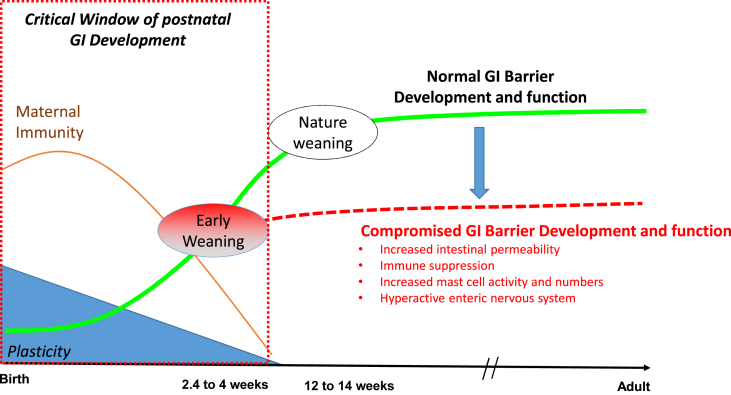
“Results of several studies have demonstrated that weaning in pigs induces a breakdown in intestinal barrier function characterized by a significant decline in intestinal transepithelial electrical resistance and increased permeability to paracellular probes in Ussing chamber experiments (Hu et al., 2013; Moeser et al.…”
BackgroundBoudry, G., Péron, V., Huërou‐Luron, I. L., Lallès, J. P., & Sève, B. (2004) · Journal of Nutrition · doi:10.1093/jn/134.9.2256 · Cited by 390 · cited 1×
“In response to weaning there are a number of morphological, enzymatic, and inflammatory changes, which take place in the GI tract of pigs and have been reviewed previously (Boudry et al., 2004; Montagne et al., 2007; Wijtten et al., 2011).”
BackgroundEnteric nervous system development: migration, differentiation, and disease
Lake, J. I., & Heuckeroth, R. O. (2013) · American Journal of Physiology-Gastrointestinal and Liver Physiology · doi:10.1152/ajpgi.00452.2012 · Cited by 383 · cited 1×
“During postnatal life, major changes take place in the enteric nervous system including formation of functional neurocircuits, gangliogenesis, and changes in the neurochemical phenotype (Lake and Heuckeroth, 2013; Sasselli et al., 2012).”
BackgroundThe Consequences of Early‐Life Adversity: Neurobiological, Behavioural and Epigenetic Adaptations
Maccari, S., Krugers, H. J., Morley‐Fletcher, S., Szyf, M., & Brunton, P. J. (2014) · Journal of Neuroendocrinology · doi:10.1111/jne.12175 · Cited by 367 · cited 2×
“, psychological trauma, inflammation, infection) are risk factors for GI inflammatory and functional diseases later in life (Bradford et al., 2012; Chaloner and Greenwood-Van Meerveld, 2013; Maccari et al., 2014; Park et al., 2016; Sanchez et al., 2001).”
BackgroundProbiotic bacteria induce maturation of intestinal claudin 3 expression and barrier function
Patel, R. M., Myers, L. S., Kurundkar, A. R., Maheshwari, A., Nusrat, A., & Lin, P. W. (2012) · The American Journal of Pathology · doi:10.1016/j.ajpath.2011.10.025 · Cited by 341
Early life: gut microbiota and immune development in infancy
Martin, R., Nauta, A., Ben Amor, K., Knippels, L., Knol, J., & Garssen, J. (2010) · Beneficial Microbes · doi:10.3920/bm2010.0027 · Cited by 338 · cited 2×
“to a wide variety of antigen including self-antigen and bacteria, help in differentiating between self and non-self-antigen and further facilitate to achieve homeostasis (Martin et al., 2010; Wu and Wu, 2012).”
BackgroundWeaning Anorexia May Contribute to Local Inflammation in the Piglet Small Intestine
McCracken, B. A., Spurlock, M. E., Roos, M. A., Zuckermann, F. A., & Gaskins, H. R. (1999) · Journal of Nutrition · doi:10.1093/jn/129.3.613 · Cited by 333 · cited 1×
“At the same time that epithelial barrier function is disrupted, an upregulation of proinflammatory cytokines has been reported indicating a robust activation of the GI immune system following weaning (Hu et al., 2013; McCracken et al., 1999).”
BackgroundAssociation Between Early Adverse Life Events and Irritable Bowel Syndrome
Bradford, K., Shih, W., Videlock, E. J., Presson, A. P., Naliboff, B. D., Mayer, E. A., & Chang, L. (2011) · Clinical Gastroenterology and Hepatology · doi:10.1016/j.cgh.2011.12.018 · Cited by 330 · cited 2×
“, psychological trauma, inflammation, infection) are risk factors for GI inflammatory and functional diseases later in life (Bradford et al., 2012; Chaloner and Greenwood-Van Meerveld, 2013; Maccari et al., 2014; Park et al., 2016; Sanchez et al., 2001).”
BackgroundThe tight junction in inflammatory disease: communication breakdown
Edelblum, K. L., & Turner, J. R. (2009) · Current Opinion in Pharmacology · doi:10.1016/j.coph.2009.06.022 · Cited by 328 · cited 2×
“…barrier, which is regulated predominantly by the tight junctions (TJs), which consist of numerous intracellular and apical intercellular membrane proteins (e.g., zonula occludens, occludin, and claudins) (Edelblum and Turner, 2009; Groschwitz and Hogan, 2009; Marchiando et al., 2010; Turner, 2009).”
BackgroundStress signaling pathways activated by weaning mediate intestinal dysfunction in the pig
Moeser, A. J., Klok, C. V., Ryan, K. A., Wooten, J. G., Little, D., Cook, V. L., & Blikslager, A. T. (2006) · American Journal of Physiology-Gastrointestinal and Liver Physiology · doi:10.1152/ajpgi.00197.2006 · Cited by 320 · cited 14×
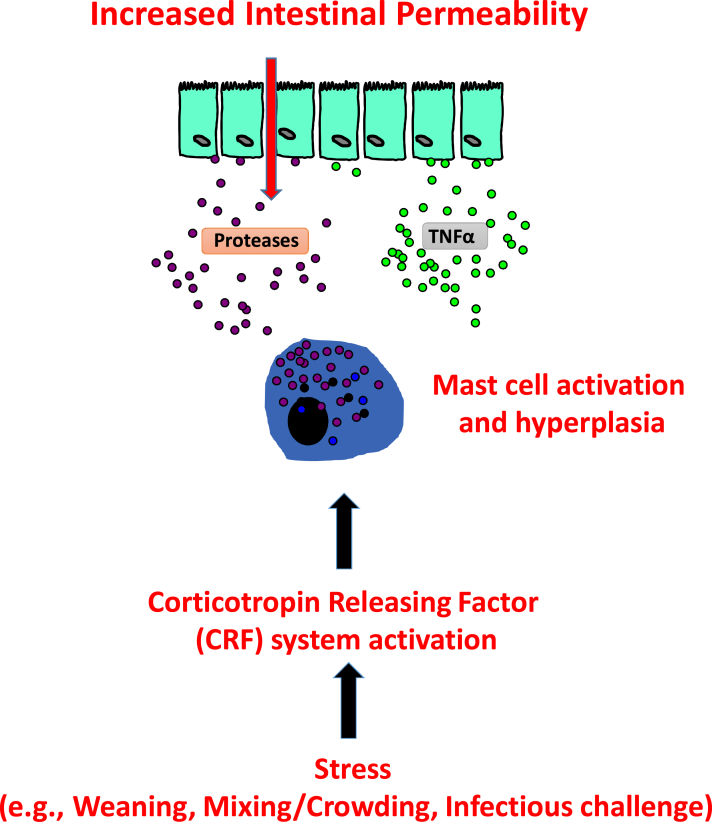
“More importantly, administration of CRF receptor antagonists to early weaned pigs at weaning, or 9 weeks post-weaning, reduced the early (Moeser et al., 2007a) and chronic (Smith et al., 2010) elevations in intestinal permeability thus demonstrating a central role for the intestinal CRF receptor…”
BackgroundResultInfluentialThe role of mast cells in functional GI disorders
Wouters, M. M., Vicario, M., & Santos, J. (2016) · Gut · doi:10.1136/gutjnl-2015-309151 · Cited by 308 · cited 4×
“…et al., 2013; Choi et al., 2013; Galli et al., 2008) and enteric neurons (Barbara et al., 2004; Kirsch and Riddell, 2006; Kobayashi et al., 1999; Wouters et al., 2016), mast cells might be major players regulating immune and ENS dysfunction observed in early weaned pigs, but the precise role of…”
BackgroundInfluentialThe vagal innervation of the gut and immune homeostasis
Matteoli, G., & Boeckxstaens, G. E. (2013) · Gut · doi:10.1136/gutjnl-2012-302550 · Cited by 276 · cited 1×
“…nervous system in modulating immune responses, secretory diarrhea and the epithelial barrier (Dhawan et al., 2012; Hirota and McKay, 2006; Matteoli and Boeckxstaens, 2013), there are potential implications for an upregulated cholinergic system in early weaned pigs as a pathogenic…”
BackgroundSasselli, V., Pachnis, V., & Burns, A. J. (2012) · Developmental Biology · doi:10.1016/j.ydbio.2012.01.012 · Cited by 267
Moeser, A. J., Ryan, K. A., Nighot, P. K., & Blikslager, A. T. (2007) · American Journal of Physiology-Gastrointestinal and Liver Physiology · doi:10.1152/ajpgi.00304.2006 · Cited by 260 · cited 14×
“More importantly, administration of CRF receptor antagonists to early weaned pigs at weaning, or 9 weeks post-weaning, reduced the early (Moeser et al., 2007a) and chronic (Smith et al., 2010) elevations in intestinal permeability thus demonstrating a central role for the intestinal CRF receptor…”
BackgroundResultInfluentialMcLamb, B., Gibson, A. J., Overman, E. L., Stahl, C. H., & Moeser, A. J. (2013) · PLoS ONE · doi:10.1371/journal.pone.0059838 · Cited by 257 · cited 6×
“coli challenge, early weaned pigs (15 to 16 d weaning age) had increased incidence of clinical disease (diarrhea and growth performance reductions) and increased intestinal permeability compared with later-weaned pigs (22 dweaning age) (McLamb et al., 2013).”
BackgroundInfluentialMontagné, L., Boudry, G., Favier, C. F., Huërou‐Luron, I. L., Lallès, J. P., & Sève, B. (2007) · British Journal Of Nutrition · doi:10.1017/s000711450720580x · Cited by 255 · cited 1×
“In response to weaning there are a number of morphological, enzymatic, and inflammatory changes, which take place in the GI tract of pigs and have been reviewed previously (Boudry et al., 2004; Montagne et al., 2007; Wijtten et al., 2011).”
BackgroundNeural immunoregulation: emerging roles for nerves in immune homeostasis and disease
Downing, J. R., & Miyan, J. A. (2000) · Immunology Today · doi:10.1016/s0167-5699(00)01635-2 · Cited by 235 · cited 1×
“The nervous system is also a major regulator of systemic and local GI immune responses via neuro-immune synapses, and can modulate bacterial toxin sensing and adherence (Dhawan et al., 2012; Downing and Miyan, 2000; Fernandez-Cabezudo et al., 2010).”
BackgroundIntestinal Permeability. Changes during the First Month
Catassi, C., Bonucci, A., Coppa, G. V., Carlucci, A., & Giorgi, P. L. (1995) · Journal of Pediatric Gastroenterology and Nutrition · doi:10.1097/00005176-199511000-00003 · Cited by 214 · cited 2×
“Although species differences exist, in most animals the development of intestinal epithelial barrier function occurs within the first 2 to 3 weeks of postnatal life characterized by a decline in intestinal permeability (Catassi et al., 1995; De Quelen et al., 2011; Mackey et al., 2016; Patel et al., 2012).”
BackgroundCRF induces intestinal epithelial barrier injury via the release of mast cell proteases and TNF-α
Overman, E. L., Rivier, J. E., & Moeser, A. J. (2012) · PLoS ONE · doi:10.1371/journal.pone.0039935 · Cited by 207 · cited 1×
“In vivo and ex vivo studies demonstrated an interplay between the CRF receptor activation andmast cells as CRF applied to porcine intestinewas shown to increase intestinal permeability via a mechanism involving release of mast cell proteases and TNFa (Overman et al., 2012; Smith et al., 2010).”
BackgroundSelf-citationNeuron size and number in the myenteric plexus of the newborn and adult rat.
Gabella, G. (1971) · PubMed · Cited by 175
Garcia, A. M., Fadel, S. A., Cao, S., & Sarzotti‐Kelsoe, M. (2000) · Immunologic Research · doi:10.1385/ir:22:2-3:177 · Cited by 165 · cited 1×
“Moreover, a shorter complementarity-determining region 3 (CDR3), where binding of molecules to their specific antigen on T cell receptors (TcR) occur, makes neonatal T cells less reactive (Garcia et al., 2000).”
BackgroundNotable postnatal alterations in the myenteric plexus of normal human bowel
Wester, T., O’Briain, D. S., & Puri, P. (1999) · Gut · doi:10.1136/gut.44.5.666 · Cited by 163 · cited 1×
“Following neurogenesis and proliferation is a period of neuronal number decline, or “neuron pruning”, resulting in the adult neuronal phenotype (Aoki et al., 2007; Gabella, 1971; Medland et al., 2016; Schafer et al., 1999; Wester et al., 1999).”
BackgroundMast Cell Interleukin-10 Drives Localized Tolerance in Chronic Bladder Infection
Chan, C. Y., John, A. L. S., & Abraham, S. N. (2013) · Immunity · doi:10.1016/j.immuni.2012.10.019 · Cited by 161 · cited 2×
“Given that mast cells are also potent positive and negative modulators of immune responses (Abraham and St John, 2010; Chan et al., 2013; Choi et al., 2013; Galli et al., 2008) and enteric neurons (Barbara et al., 2004; Kirsch and Riddell, 2006; Kobayashi et al., 1999; Wouters et al., 2016), mast…”
BackgroundAcquisition of Adult-Like TLR4 and TLR9 Responses during the First Year of Life
Nguyen, M., Leuridan, E. E., Zhang, T., Wit, D. D., Willems, F., Damme, P. V., Goldman, M., & Goriely, S. (2010) · PLoS ONE · doi:10.1371/journal.pone.0010407 · Cited by 160 · cited 1×
“An additional mechanism to prevent over-activation of the immune system during GI immune development, neonates are born with few lymphocytes and reduced co-stimulatory molecules expression (Nguyen et al., 2010; Upham et al., 2006).”
BackgroundPark, S. H., Videlock, E. J., Shih, W., Presson, A. P., Mayer, E. A., & Chang, L. (2016) · Neurogastroenterology & Motility · doi:10.1111/nmo.12826 · Cited by 156 · cited 2×
“, psychological trauma, inflammation, infection) are risk factors for GI inflammatory and functional diseases later in life (Bradford et al., 2012; Chaloner and Greenwood-Van Meerveld, 2013; Maccari et al., 2014; Park et al., 2016; Sanchez et al., 2001).”
BackgroundPeace, R. M., Campbell, J. M., Polo, J., Crenshaw, J., Russell, L., & Moeser, A. J. (2011) · Journal of Nutrition · doi:10.3945/jn.110.136796 · Cited by 148 · cited 2×
“…et al. (2007a) demonstrated that, compared with age-matched, non-weaned littermate pigs, weaned pigs exhibited increased intestinal permeability that wasmost pronounced at 24 h post weaning and then gradually declined over the first 2 weeks post-weaning (Moeser et al., 2007a; Peace et al., 2011).”
BackgroundResultIntestinal permeability and irritable bowel syndrome
Camilleri, M., & Gorman, H. (2007) · Neurogastroenterology and Motility · doi:10.1111/j.1365-2982.2007.00925.x · Cited by 145 · cited 2×
“…the number of important diseases linked with “leaky gut” including chronic inflammatory, allergic, and functional disorders and life threatening conditions such as sepsis and multiple organ dysfunction (Barbara, 2006; Camilleri and Gorman, 2007; Edelblum and Turner, 2009; Marchiando et al., 2010).”
BackgroundIncreasing weaning age improves pig performance in a multisite production system1
Main, R. G., Dritz, S. S., Tokach, M. D., Goodband, R. D., & Nelssen, J. L. (2004) · Journal of Animal Science · doi:10.2527/2004.8251499x · Cited by 143 · cited 3×
“Main et al. (2004) demonstrated in a commercial multisite swine production system that increases in weaning age from 12 to 21.5 d resulted in linear improvements in growth rate, feed efficiency and reductions in mortality to market (Main et al., 2004).”
BackgroundResultInfluentialCholinergic regulation of epithelial ion transport in the mammalian intestine
Hirota, C., & McKay, D. (2006) · British Journal of Pharmacology · doi:10.1038/sj.bjp.0706889 · Cited by 142 · cited 1×
“Given the role of the cholinergic nervous system in modulating immune responses, secretory diarrhea and the epithelial barrier (Dhawan et al., 2012; Hirota and McKay, 2006; Matteoli and Boeckxstaens, 2013), there are potential implications for an upregulated cholinergic system in early weaned pigs…”
BackgroundThe piglet as a model for B cell and immune system development
Butler, J. E., Lager, K. M., Šplı́chal, I., Francis, D., Kacskovıcs, I., Šinkora, M., Wertz, N., Sun, J. Y., Zhao, Y., Brown, W. R., et al. (2008) · Veterinary Immunology and Immunopathology · doi:10.1016/j.vetimm.2008.10.321 · Cited by 138 · cited 1×
“Several weeks after birth, neonates overcome the neonatal immunosuppressive stage when lymphocytes start developing functionally as well as structurally (Butler et al., 2000, 2009; Butler and Wertz, 2012).”
Mucosal Barrier Defects in Irritable Bowel Syndrome. Who Left the Door Open?
Barbara, G. (2006) · American Journal of Gastroenterology · doi:10.1111/j.1572-0241.2006.00667.x · Cited by 136 · cited 2×
“…the number of important diseases linked with “leaky gut” including chronic inflammatory, allergic, and functional disorders and life threatening conditions such as sepsis and multiple organ dysfunction (Barbara, 2006; Camilleri and Gorman, 2007; Edelblum and Turner, 2009; Marchiando et al., 2010).”
BackgroundPohl, C. S., Medland, J. E., Mackey, E. E., Edwards, L., Bagley, K., DeWilde, M., Williams, K. J., & Moeser, A. J. (2017) · Neurogastroenterology & Motility · doi:10.1111/nmo.13118 · Cited by 119 · cited 5×
“Similar to human IBS, Pohl et al. (2017) demonstrated that adult pigs that were previously early weaned (16 d wean age) exhibited enhanced co-localization of intestinal mast cells with enteric nerves, compared with late weaned pigs (weaned at 28 d of age) (Pohl et al., 2017).”
BackgroundResultInfluentialPabst, R., Geist, M., Rothkötter, H. ‐., & Fritz, F. J. (1988) · PubMed Central · Cited by 116
The modulatory role of high fat feeding on gastrointestinal signals in obesity
Duca, F. A., Sakar, Y., & Covașă, M. (2013) · The Journal of Nutritional Biochemistry · doi:10.1016/j.jnutbio.2013.05.005 · Cited by 112 · cited 2×
“Enteroendocrine cells play important roles in pathogen sensing and can synthesize and release neuropeptides such as serotonin and Peptide YY (PYY), which have a diverse range of physiologic functions from pathogen defense to metabolic regulation of appetite (Argenzio et al., 1997; Duca et al., 2013; Little and Feinle-…”
BackgroundLundgren, O. (2002) · Pharmacology & Toxicology · doi:10.1034/j.1600-0773.2002.900301.x · Cited by 111 · cited 2×
“…by sensory fibers beneath the epithelium, which in turn convey signals and activation of secretomotor neuron activation, mediated via release of neurochemicals vasoactive intestinal peptide and acetylcholine, which drive electrolyte and fluid secretion (Field, 2003; Lundgren, 2002; Wood, 2010).”
BackgroundLittle, T. J., & Feinle‐Bisset, C. (2011) · Physiology & Behavior · doi:10.1016/j.physbeh.2011.04.038 · Cited by 110 · cited 2×
“Enteroendocrine cells play important roles in pathogen sensing and can synthesize and release neuropeptides such as serotonin and Peptide YY (PYY), which have a diverse range of physiologic functions from pathogen defense to metabolic regulation of appetite (Argenzio et al., 1997; Duca et al., 2013; Little and Feinle-…”
BackgroundFawzy, A., Arpadi, S. M., Kankasa, C., Sinkala, M., Mwiya, M., Thea, D. M., Aldrovandi, G. M., & Kuhn, L. (2011) · The Journal of Infectious Diseases · doi:10.1093/infdis/jir019 · Cited by 100 · cited 2×
“Developmental processes occurring this time exhibit a high degree of plastic and colostrum and milk factors (Fawzy et al., 2011; Rogier et al., 2014).”
BackgroundPohl, C. S., Medland, J. E., & Moeser, A. J. (2015) · American Journal of Physiology-Gastrointestinal and Liver Physiology · doi:10.1152/ajpgi.00206.2015 · Cited by 99 · cited 1×
“The postnatal GI developmental aspects in the pig has been reviewed in detail previously (Pohl et al., 2015) but here we will cover some of the major concepts of postnatal GI barrier function development relevant to GI barrier components discussed above.”
BackgroundMackey, E., Ayyadurai, S., Pohl, C. S., Costa, S. D., Li, Y., & Moeser, A. J. (2016) · Biology of Sex Differences · doi:10.1186/s13293-016-0113-7 · Cited by 96 · cited 2×
“Although species differences exist, in most animals the development of intestinal epithelial barrier function occurs within the first 2 to 3 weeks of postnatal life characterized by a decline in intestinal permeability (Catassi et al., 1995; De Quelen et al., 2011; Mackey et al., 2016; Patel et al., 2012).”
BackgroundUpham, J. W., Rate, A., Rowe, J., Kusel, M. M. H., Sly, P. D., & Holt, P. G. (2006) · Infection and Immunity · doi:10.1128/iai.74.2.1106-1112.2006 · Cited by 89 · cited 1×
“An additional mechanism to prevent over-activation of the immune system during GI immune development, neonates are born with few lymphocytes and reduced co-stimulatory molecules expression (Nguyen et al., 2010; Upham et al., 2006).”
BackgroundThe Multifaceted Mast Cell in Inflammatory Bowel Disease
Hamilton, M. J., Frei, S. M., & Stevens, R. L. (2014) · Inflammatory Bowel Diseases · doi:10.1097/mib.0000000000000142 · Cited by 89 · cited 2×
“Mast cells are required for host defense and wound healing; however, excessive activation of mast cells is a central pathophysiologic mechanisms in inflammatory disease such as allergy and asthma and functional stress-related GI disorders including irritable bowel syndrome in humans (Boeckxstaens, 2015; Galli and Tsai…”
BackgroundJejunal and ileal Peyer's patches in pigs differ in their postnatal development
Barman, N. N., Bianchi, A. T. J., de Zwart, R. J. M. G., Pabst, R., & Rothkötter, H. ‐. (1996) · Anatomy and Embryology · doi:10.1007/s004290050023 · Cited by 85 · cited 1×
“Around the same time, secondary lymphoid organs such as jejunal and ileal Peyer's patches rapidly mature characterized by an infiltration of lymphocytes (Barman et al., 1997; Pabst et al., 1988).”
BackgroundMast cells and inflammatory bowel disease
Boeckxstaens, G. E. (2015) · Current Opinion in Pharmacology · doi:10.1016/j.coph.2015.11.005 · Cited by 84 · cited 2×
“Mast cells are required for host defense and wound healing; however, excessive activation of mast cells is a central pathophysiologic mechanisms in inflammatory disease such as allergy and asthma and functional stress-related GI disorders including irritable bowel syndrome in humans (Boeckxstaens, 2015; Galli and Tsai…”
BackgroundLi, Y., Song, Z., Kerr, K. A., & Moeser, A. J. (2017) · PLoS ONE · doi:10.1371/journal.pone.0171617 · Cited by 84 · cited 2×
“, 2015) and chronicmixing and crowding stress (Li et al., 2017), suggesting a potential common pathophysiologic mechanism underlying stress-induced gut dysfunction in pigs.”
BackgroundChaloner, A., & Meerveld, B. G. (2013) · Journal of Pain · doi:10.1016/j.jpain.2012.11.008 · Cited by 79
Butler, J. E., Weber, P., Šinkora, M., Sun, J., Ford, S., & Christenson, R. K. (2000) · The Journal of Immunology · doi:10.4049/jimmunol.165.12.6999 · Cited by 78 · cited 1×
“Several weeks after birth, neonates overcome the neonatal immunosuppressive stage when lymphocytes start developing functionally as well as structurally (Butler et al., 2000, 2009; Butler and Wertz, 2012).”
BackgroundChoi, H. W., Brooking-Dixon, R., Neupane, S., Lee, C.-J., Miao, E. A., Staats, H. F., & Abraham, S. N. (2013) · Immunity · doi:10.1016/j.immuni.2013.11.009 · Cited by 72
Is reperfusion injury an important cause of mucosal damage after porcine intestinal ischemia?
Blikslager, A. T., Roberts, M. C., Rhoads, J. M., & Argenzio, R. A. (1997) · Surgery · doi:10.1016/s0039-6060(97)90107-0 · Cited by 72 · cited 2×
“Unweaned (nursing) piglets achieve a stable number of lymphocytes at about 6 weeks of age (Blikslager et al., 1997).”
BackgroundMechanisms of porcine diarrheal disease
Moeser, A. J., & Blikslager, A. T. (2007) · Journal of the American Veterinary Medical Association · doi:10.2460/javma.231.1.56 · Cited by 67 · cited 1×
“The ability to upregulate ion and fluid secretion is considered to be an important mechanism to flush out pathogens in response to stress and pathogenic challenges (Moeser and Blikslager, 2007).”
BackgroundMorphological changes of the myenteric plexus during early postnatal development of the rat
Sch�fer, K.-H., H�nsgen, A., & Mestres, P. (1999) · The Anatomical Record · doi:10.1002/(sici)1097-0185(19990901)256:1 · Cited by 60
Davis, M. E., Sears, S. C., APPLE, J. K., Maxwell, C. V., & Johnson, Z. B. (2006) · Journal of Animal Science · doi:10.2527/2006.843743x · Cited by 60 · cited 3×
“In the same study, lower blood eosinophils were observed in 14 dweaned pigs at 44 d post-weaning whereas at 65 d post-weaning, 14-d weaned pigs had higher neutrophil percent but lower lymphocyte percent compared with 21-d weaned pigs (Davis et al., 2006).”
BackgroundInfluentialHistopathological alterations in irritable bowel syndrome
Kirsch, R., & Riddell, R. H. (2006) · Modern Pathology · doi:10.1038/modpathol.3800704 · Cited by 57 · cited 1×
“…of immune responses (Abraham and St John, 2010; Chan et al., 2013; Choi et al., 2013; Galli et al., 2008) and enteric neurons (Barbara et al., 2004; Kirsch and Riddell, 2006; Kobayashi et al., 1999; Wouters et al., 2016), mast cells might be major players regulating immune and ENS dysfunction…”
BackgroundChen, C., Lyte, M., Stevens, M. P., Vulchanova, L., & Brown, D. R. (2006) · European Journal of Pharmacology · doi:10.1016/j.ejphar.2006.03.081 · Cited by 54 · cited 1×
“Stress neuroendocrine mediators such as catecholamines and adrenocorticotropic hormone (ACTH) can influence binding and adherence of important swine enteric pathogens to the intestinal mucosa (Brown and Price, 2008; Chen et al., 2006; Schreiber and Brown, 2005).”
BackgroundDevelopment of myenteric cholinergic neurons in ChAT‐Cre;R26R‐YFP mice
Hao, M. M., Bornstein, J. C., & Young, H. M. (2013) · The Journal of Comparative Neurology · doi:10.1002/cne.23354 · Cited by 52 · cited 1×
“The proportion of ChAT neurons in postnatal life increases dramatically and can account for approximately 44% of all neurons in the submucosal plexus, and 62% in the myenteric plexus by maturity (Furness, 2000; Hao et al., 2013).”
BackgroundChanges in colostral and serum IgG content in swine in relation to time
Frenyó, V. L., Pethes, G., Antal, T., & Szabó, I. (1980) · Veterinary Research Communications · doi:10.1007/bf02278503 · Cited by 52 · cited 1×
“The proper interactions of lymphocytes with antigen also lead to their proliferation, immunoglobulins and balanced Th1/Th2 cytokine production (Blikslager et al., 1997; Frenyo et al., 1981; Pomorska-Mol and Markowska-Daniel, 2010).”
BackgroundMedland, J. E., Pohl, C. S., Edwards, L. L., Frandsen, S., Bagley, K., Li, Y.-H., & Moeser, A. (2016) · Neurogastroenterology and Motility · doi:10.1111/nmo.12828 · Cited by 51 · cited 7×
“In a study by Medland et al. (2016), early weaned pigs exhibited lasting phenotypic and functional changes in the enteric nervous system, compared with late weaned pigs.”
BackgroundInfluentialde Quelen, F., Chevalier, J., Rolli‐Derkinderen, M., Mourot, J., Neunlist, M., & Boudry, G. (2011) · The Journal of Physiology · doi:10.1113/jphysiol.2011.214056 · Cited by 50 · cited 1×
“…species differences exist, in most animals the development of intestinal epithelial barrier function occurs within the first 2 to 3 weeks of postnatal life characterized by a decline in intestinal permeability (Catassi et al., 1995; De Quelen et al., 2011; Mackey et al., 2016; Patel et al., 2012).”
BackgroundPidsudko, Z., Kaleczyc, J., Wa̧sowicz, K., Sienkiewicz, W., Majewski, M. K., Zając, W., & Łakomy, M. (2007) · Journal of Comparative Pathology · doi:10.1016/j.jcpa.2007.09.003 · Cited by 48 · cited 2×
“Significant alterations in the enteric nervous system phenotype and function can change in response to stressors such as weaning (Medland et al., 2016; Moeser et al., 2007a) and pathogenic challenges from Lawsonia intracellularis (Pidsudko et al., 2008; Wojtkiewicz et al., 2012).”
BackgroundBoyer, P. E., D’Costa, S., Edwards, L., Milloway, M. C., Susick, E., Borst, L. B., Thakur, S., Campbell, J. M., Crenshaw, J., Polo, J., et al. (2015) · British Journal Of Nutrition · doi:10.1017/s000711451400422x · Cited by 47 · cited 2×
“In addition weaning-associated changes in the expression of the CRF system, we have also demonstrated that the CRF system is upregulated in pigs undergoing other stressors including Salmonella typhimurium challenge (Boyer et al., 2015) and chronicmixing and crowding stress (Li et al.”
BackgroundKobayashi, H., Yamataka, A., Fujimoto, T., Lane, G. J., & Miyano, T. (1999) · Journal of Pediatric Surgery · doi:10.1016/s0022-3468(99)90069-6 · Cited by 46 · cited 2×
“, 2008) and enteric neurons (Barbara et al., 2004; Kirsch and Riddell, 2006; Kobayashi et al., 1999; Wouters et al., 2016), mast cells might be major players regulating immune and ENS dysfunction observed in early weaned pigs, but the precise role of mast cells as immune modulators in pigs remains to be elucidated.”
BackgroundEnteric nervous system: sensory physiology, diarrhea and constipation
Wood, J. (2010) · Current Opinion in Gastroenterology · doi:10.1097/mog.0b013e328334df4f · Cited by 44 · cited 1×
“…by sensory fibers beneath the epithelium, which in turn convey signals and activation of secretomotor neuron activation, mediated via release of neurochemicals vasoactive intestinal peptide and acetylcholine, which drive electrolyte and fluid secretion (Field, 2003; Lundgren, 2002; Wood, 2010).”
BackgroundMucosal Barrier Defects in Irritable Bowel Syndrome. Who Left the Door Open?
Barbara, G. (2006) · The American Journal of Gastroenterology · doi:10.1038/ajg2006242 · Cited by 41
Fernández-Cabezudo, M. J., Lorke, D. E., Azimullah, S., Mechkarska, M., Hasan, M. Y., Petroianu, G. A., & al-Ramadi, B. K. (2010) · Immunology · doi:10.1111/j.1365-2567.2009.03238.x · Cited by 36
The Porcine Antibody Repertoire: Variations on the Textbook Theme
Butler, J. E., & Wertz, N. (2012) · Frontiers in Immunology · doi:10.3389/fimmu.2012.00153 · Cited by 34 · cited 1×
“Several weeks after birth, neonates overcome the neonatal immunosuppressive stage when lymphocytes start developing functionally as well as structurally (Butler et al., 2000, 2009; Butler and Wertz, 2012).”
BackgroundCholinergic signalling in gut immunity
Dhawan, S., Cailotto, C., Harthoorn, L. F., & de Jonge, W. J. (2012) · Life Sciences · doi:10.1016/j.lfs.2012.04.042 · Cited by 31 · cited 3×
“The nervous system is also a major regulator of systemic and local GI immune responses via neuro-immune synapses, and can modulate bacterial toxin sensing and adherence (Dhawan et al., 2012; Downing and Miyan, 2000; Fernandez-Cabezudo et al., 2010).”
BackgroundBrown, D. R., & Price, L. D. (2007) · FEMS Immunology & Medical Microbiology · doi:10.1111/j.1574-695x.2007.00348.x · Cited by 29 · cited 1×
“Stress neuroendocrine mediators such as catecholamines and adrenocorticotropic hormone (ACTH) can influence binding and adherence of important swine enteric pathogens to the intestinal mucosa (Brown and Price, 2008; Chen et al., 2006; Schreiber and Brown, 2005).”
BackgroundAdrenocorticotrophic hormone modulatesEscherichia coliO157:H7 adherence to porcine colonic mucosa
Schreiber, K. L., & Brown, D. R. (2005) · Stress · doi:10.1080/10253890500188732 · Cited by 28 · cited 1×
“Stress neuroendocrine mediators such as catecholamines and adrenocorticotropic hormone (ACTH) can influence binding and adherence of important swine enteric pathogens to the intestinal mucosa (Brown and Price, 2008; Chen et al., 2006; Schreiber and Brown, 2005).”
BackgroundPomorska‐Mól, M., & Markowska‐Daniel, I. (2010) · FEMS Immunology & Medical Microbiology · doi:10.1111/j.1574-695x.2010.00651.x · Cited by 18 · cited 1×
“The proper interactions of lymphocytes with antigen also lead to their proliferation, immunoglobulins and balanced Th1/Th2 cytokine production (Blikslager et al., 1997; Frenyo et al., 1981; Pomorska-Mol and Markowska-Daniel, 2010).”
BackgroundWojtkiewicz, J., Równiak, M., Gonkowski, S., Crayton, R., Majewski, M. K., Robak, A., Białkowska, J., & Barczewska, M. (2011) · Journal of Molecular Neuroscience · doi:10.1007/s12031-011-9691-3 · Cited by 17 · cited 2×
“Significant alterations in the enteric nervous system phenotype and function can change in response to stressors such as weaning (Medland et al., 2016; Moeser et al., 2007a) and pathogenic challenges from Lawsonia intracellularis (Pidsudko et al., 2008; Wojtkiewicz et al., 2012).”
BackgroundArgenzio, R. A., Armstrong, M. U., Blikslager, A. T., & Rhoads, J. M. (1997) · Journal of Pharmacology and Experimental Therapeutics · doi:10.1016/s0022-3565(24)37083-1 · Cited by 14
Ncx (Enx, Hox11L.1) is required for neuronal cell death in enteric ganglia of mice
青木, 泰., Jusuf, A. A., Iitsuka, Y., Isono, K., Tokuhisa, T., & Hatano, M. (2007) · Journal of Pediatric Surgery · doi:10.1016/j.jpedsurg.2007.01.064 · Cited by 12 · cited 1×
“Following neurogenesis and proliferation is a period of neuronal number decline, or “neuron pruning”, resulting in the adult neuronal phenotype (Aoki et al., 2007; Gabella, 1971; Medland et al., 2016; Schafer et al., 1999; Wester et al., 1999).”
BackgroundBeverley, P. C. L. (1997) · Immunology Today · doi:10.1016/s0167-5699(97)01120-1 · Cited by 10 · cited 4×
“Additionally, neonatal T cells show hyper responsiveness to IL-4 and hypo-responsiveness to IL12, which further skews the immune response toward Th2 (Beverley, 1997).”
BackgroundInfluential
Cited by
Sorted by citations
Wang, X., Tsai, T.-C., Deng, F., Wei, X., Chai, J., Knapp, J., APPLE, J. K., Maxwell, C. V. V., Lee, J. A., Li, Y., et al. (2019) · Microbiome · doi:10.1186/s40168-019-0721-7 · Cited by 528
Diet and the Microbiota–Gut–Brain Axis: Sowing the Seeds of Good Mental Health
Berding, K., Vlckova, K., Marx, W., Schellekens, H., Stanton, C., Clarke, G., Jacka, F., Dinan, T. G., & Cryan, J. F. (2021) · Advances in Nutrition · doi:10.1093/advances/nmaa181 · Cited by 451
Gastrointestinal tract (gut) health in the young pig
Pluske, J. R., Turpin, D. L., & Kim, J.-C. (2018) · Animal nutrition · doi:10.1016/j.aninu.2017.12.004 · Cited by 418
“004 absorptive, barrier and immune functions (e.g., Boudry et al., 2004; Cranwell, 1995; Hampson, 1986a, b; Lall es et al., 2004, 2007a, b; Moeser et al., 2017; Pluske, 2013, 2016; Pluske et al., 1996a, b; 1997, 2003).”
BackgroundInfluentialWeaning stress and intestinal health of piglets: A review
Tang, X., Xiong, K., Fang, R., & Li, M. (2022) · Frontiers in Immunology · doi:10.3389/fimmu.2022.1042778 · Cited by 444
Nutritional Intervention for the Intestinal Development and Health of Weaned Pigs
Xiong, X., Tan, B., Song, M., Ji, P., Kim, K., Yin, Y., & Liu, Y. (2019) · Frontiers in Veterinary Science · doi:10.3389/fvets.2019.00046 · Cited by 217
Metadata
- Authors
- Moeser, A. J., Pohl, C. S., & Rajput, M.
- Affiliations
- Michigan State University (US)
- Corresponding author
- Moeser, Adam J.
- Venue
- Animal nutrition
- Publisher
- Elsevier BV
- Published
- 2017-12
- Volume
- 3
- Issue
- 4
- Pages
- 313-321
- ISSN
- 2405-6383 (ISSN-L)
- 2405-6545
- PMC
- PMC5941262
- OpenAlex
- W2732972012
- Cited by
- 452
- References
- 95
- Citations by year
- 2026: 54 · 2025: 53 · 2024: 61 · 2023: 63 · 2022: 85 · 2021: 60 · 2020: 38 · 2019: 34 · 2018: 4
- FWCI
- 2.53
- Type
- journal article
- Language
- en
- Open access
- gold
- doi.org
- Licence
- Locations
- Animal nutrition (publishedVersion, cc-by-nc-nd)
- Europe PMC (PubMed Central) (publishedVersion, cc-by-nc-nd)
- PubMed Central (publishedVersion, cc-by-nc-nd)
- PubMed (publishedVersion)
- DOAJ (DOAJ: Directory of Open Access Journals) (submittedVersion, cc-by-sa)
- Funders
- National Institutes of Health (HD072968)
- USDA National Institute of Food and Agriculture (2017-67015-26673)
- Topics
- Life Sciences › Agricultural and Biological Sciences › Animal Science and Zoology › Animal Nutrition and Physiology
- Health Sciences › Veterinary › Small Animals › Veterinary medicine and infectious diseases
- Health Sciences › Medicine › Gastroenterology › Gastrointestinal motility and disorders
- Keywords
- weaning stress, gastrointestinal barrier, pigs, gut health, intestinal epithelium, enteric nervous system, intestinal immunity, disease susceptibility, early life stress, barrier dysfunction
About these checks
Registry, retraction, Cites and statistics results are computed, not judged, with one exception: a printed reference that no index lists is read once by a model before it counts as a citation error. Claims are extracted by a model and kept only when their quote appears verbatim in the text; each cited source is then checked, with a model’s help, for whether it says what the claim relies on. Those verdicts can be wrong — read the claim’s quote and the cited source before relying on one.
Statistics and arithmetic are recomputed, not judged.
Confidence bands are shown only for fields calibrated on our annotated test set. None is calibrated yet, so no band is shown.
What counts as a claim ›How we measure confidence ›How we check this ›
Are you an author, or do you see a problem with this page? Request a review
