

The DOI matches its Crossref record; 95 of the 95 references it cites were found in a registry or an index.
Weaning stress and gastrointestinal barrier development: Implications for lifelong gut health in pigs
Open accessAbstract
The gastrointestinal (GI) barrier serves a critical role in survival and overall health of animals and humans. Several layers of barrier defense mechanisms are provided by the epithelial, immune and enteric nervous systems. Together they act in concert to control normal gut functions (e.g., digestion, absorption, secretion, immunity, etc.) whereas at the same time provide a barrier from the hostile conditions in the luminal environment. Breakdown of these critical GI functions is a central pathophysiological mechanism in the most serious GI disorders in pigs. This review will focus on the development and functional properties of the GI barrier in pigs and how common early life production stressors, such as weaning, can alter immediate and long-term barrier function and disease susceptibility. Specific stress-related pathophysiological mechanisms responsible for driving GI barrier dysfunction induced by weaning and the implications to animal health and performance will be discussed.
Overview
The claims and statistics of this paper haven’t been checked yet.
Run the check — free, no account needed. It reads the open-access text and checks the sources it cites.
Integrity signals
Registry
Cites
Statistics
Figures
Verification
Claims the paper makes
The claims and statistics of this paper haven’t been checked yet.
Run the check — free, no account needed. It reads the open-access text and checks the sources it cites.
Claims other papers make about this one
Each is checked against this paper’s own text: does it say what the citing paper says it does?
The cited source says what the claim attributes to it.
In the citing paper
“In piglets, early weaning stress impairs intestinal barrier function (271) and increases inflammation (272) and oxidative stress (273).”
From Diet and the Microbiota–Gut–Brain Axis: Sowing the Seeds of Good Mental Health (2021) · cites this paper as [271]
Self-check
Percentages, sums and reported differences re-computed from the paper’s own numbers.
The self-check needs the paper’s full text.
Citations
Cites
Changes of Intestinal Functions in Liver Cirrhosis
Fukui, H., & Wiest, R. (2016) · Inflammatory Intestinal Diseases · doi:10.1159/000444436 · Cited by 6,820
Host-Bacterial Mutualism in the Human Intestine
Bäckhed, F., Ley, R. E., Sonnenburg, J. L., Peterson, D. A., & Gordon, J. I. (2005) · Science · doi:10.1126/science.1104816 · Cited by 5,277
Intestinal mucosal barrier function in health and disease
Turner, J. R. (2009) · Nature reviews. Immunology · doi:10.1038/nri2653 · Cited by 3,952 · cited 2×
“…barrier, which is regulated predominantly by the tight junctions (TJs), which consist of numerous intracellular and apical intercellular membrane proteins (e.g., zonula occludens, occludin, and claudins) (Edelblum and Turner, 2009; Groschwitz and Hogan, 2009; Marchiando et al., 2010; Turner, 2009).”
BackgroundThe microbiota in adaptive immune homeostasis and disease
Honda, K., & Littman, D. R. (2016) · Nature · doi:10.1038/nature18848 · Cited by 1,846 · cited 1×
“…receivedmuch attention as an important defense barrier through several proposed mechanisms, reviewing the body of microbiome studies is beyond the scope of this review, but we direct readers to other excellent reviews on the topic (Backhed et al., 2005; Honda and Littman, 2016; Kelly et al., 2015).”
BackgroundIgE and mast cells in allergic disease
Galli, S. J., & Tsai, M. (2012) · Nature Medicine · doi:10.1038/nm.2755 · Cited by 1,799 · cited 2×
“Mast cells are required for host defense and wound healing; however, excessive activation of mast cells is a central pathophysiologic mechanisms in inflammatory disease such as allergy and asthma and functional stress-related GI disorders including irritable bowel syndrome in humans (Boeckxstaens, 2015; Galli and Tsai…”
BackgroundIntestinal barrier function: molecular regulation and disease pathogenesis
Groschwitz, K. R., & Hogan, S. P. (2009) · Journal of Allergy and Clinical Immunology · doi:10.1016/j.jaci.2009.05.038 · Cited by 1,775 · cited 1×
“…barrier, which is regulated predominantly by the tight junctions (TJs), which consist of numerous intracellular and apical intercellular membrane proteins (e.g., zonula occludens, occludin, and claudins) (Edelblum and Turner, 2009; Groschwitz and Hogan, 2009; Marchiando et al., 2010; Turner, 2009).”
BackgroundBarbara, G., Stanghellini, V., De Giorgio, R., Cremon, C., Cottrell, G. S., Santini, D., Pasquinelli, G., Morselli-Labate, A. M., Grady, E. F., Bunnett, N. W., et al. (2004) · Gastroenterology · doi:10.1053/j.gastro.2003.11.055 · Cited by 1,475 · cited 4×
“Similar to human IBS, Pohl et al. (2017) demonstrated that adult pigs that were previously early weaned (16 d wean age) exhibited enhanced co-localization of intestinal mast cells with enteric nerves, compared with late weaned pigs (weaned at 28 d of age) (Pohl et al., 2017).”
BackgroundInfluentialThe role of gut microbiota in immune homeostasis and autoimmunity
Wu, H.-J., & Wu, E. (2012) · Gut Microbes · doi:10.4161/gmic.19320 · Cited by 1,426 · cited 1×
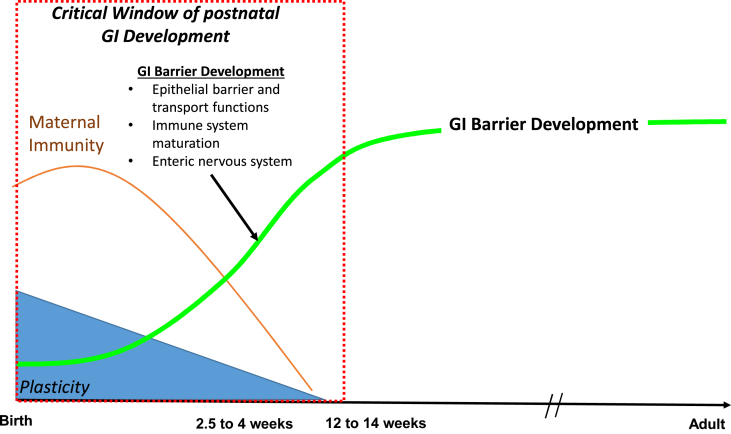
“…complete by 12 to 14 ity and shape the adult phenotype and function of the GI barrier. to a wide variety of antigen including self-antigen and bacteria, help in differentiating between self and non-self-antigen and further facilitate to achieve homeostasis (Martin et al., 2010; Wu and Wu, 2012).”
BackgroundKelly, J. R., Kennedy, P. J., Cryan, J. F., Dinan, T. G., Clarke, G., & Hyland, N. P. (2015) · Frontiers in Cellular Neuroscience · doi:10.3389/fncel.2015.00392 · Cited by 1,110 · cited 2×
“Whereas the microbiome has receivedmuch attention as an important defense barrier through several proposed mechanisms, reviewing the body of microbiome studies is beyond the scope of this review, but we direct readers to other excellent reviews on the topic (Backhed et al., 2005; Honda and Littman, 2016; Kelly et al.,…”
BackgroundThe alarmin IL-33 promotes regulatory T-cell function in the intestine
Schiering, C., Krausgruber, T., Chomka, A., Fröhlich, A., Adelmann, K., Wohlfert, E. A., Pott, J., Griseri, T., Bollrath, J., Hegazy, A. N., et al. (2014) · Nature · doi:10.1038/nature13577 · Cited by 1,007 · cited 2×
“, IL-17A, IL-33, IL-23 and transforming growth factor-b), which have important immunomodulatory properties (Schiering et al., 2014).”
Background
Cited by
Sorted by citations
Items 101–200 of 453
Li, Y., Han, L., Liu, J., Kang, L., Zhao, L., & Cui, K. (2023) · Microorganisms · doi:10.3390/microorganisms11102472 · Cited by 24
“The small intestine, an important multifunctional organ, plays essential roles in the digestion and absorption of nutrients, regulation of immune responses, and secretion of various enzymes and immunoglobulins [5,6].”
BackgroundPoudel, P., Levesque, C. L., Samuel, R. S., & St‐Pierre, B. (2020) · BMC Veterinary Research · doi:10.1186/s12917-020-02282-x · Cited by 23
Rattigan, R., Sweeney, T., Maher, S., Ryan, M. T., Thornton, K. H., & O’Doherty, J. V. (2020) · Animal Feed Science and Technology · doi:10.1016/j.anifeedsci.2020.114693 · Cited by 25
Weaning Induces Stress-Dependent DNA Methylation and Transcriptional Changes in Piglet PBMCs
Corbett, R. J., Luttman, A. M., Wurtz, K. E., Siegford, J. M., Raney, N. E., Ford, L. M., & Ernst, C. W. (2021) · Frontiers in Genetics · doi:10.3389/fgene.2021.633564 · Cited by 23
González-Solé, F., Solà‐Oriol, D., Ramayo‐Caldas, Y., Rodríguez-Prado, M., González‐Ortiz, G., Bedford, M. R., & Pérez, J. F. (2022) · Scientific Reports · doi:10.1038/s41598-022-15963-4 · Cited by 23
Choi, H., Chen, Y., Longo, F., & Kim, S. W. (2023) · Journal of Animal Science · doi:10.1093/jas/skad116 · Cited by 23
Link between intestinal immunity and practical approaches to swine nutrition
Humphrey, B. D., Zhao, J., & Faris, R. M. (2019) · animal · doi:10.1017/s1751731119001861 · Cited by 23
“The structure and function relationships of barrier function and intestinal immunity development have been reviewed in detail (Everaert et al., 2017; Moeser et al., 2017).”
BackgroundFalk, M., Bernhoft, A., Reinoso‐Maset, E., Salbu, B., Lebed, P. J., Framstad, T., Fuhrmann, H., & Oropeza-Moe, M. (2019) · Journal of Trace Elements in Medicine and Biology · doi:10.1016/j.jtemb.2019.126439 · Cited by 23
“Thus, reduced Se supply as a result of reduced feed intake after weaning [108] and thereby a disturbance of the intestinal function [123] combined with higher stress levels [122] may have resulted in a lack of differences between groups regarding SelP, GPx3 and SeAlb.”
BackgroundTian, S., Wang, J., Wang, J., & Zhu, W. (2021) · Applied and Environmental Microbiology · doi:10.1128/aem.01318-21 · Cited by 24
“particularly during the first week after weaning (1, 7).”
BackgroundFu, Q., Lin, Q., Chen, D., Yu, B., Luo, Y., Zheng, P., Mao, X., Huang, Z., Yu, J., Luo, J., et al. (2022) · BMC Veterinary Research · doi:10.1186/s12917-022-03242-3 · Cited by 22
Wang, M., Huang, H., Wang, L., Yin, L., Yang, H., Chen, C., Zheng, Q., & He, S. (2022) · Frontiers in Nutrition · doi:10.3389/fnut.2022.1012207 · Cited by 22
“However, early weaning is linked with injury of the gastrointestinal barrier, a decline in metabolism, an increase in disease susceptibility, and then reduced production efficiency (2).”
BackgroundWiarda, J. E., & Loving, C. L. (2022) · Frontiers in Immunology · doi:10.3389/fimmu.2022.1048708 · Cited by 27
“Weaning results in stress and intestinal distress characterized by a combination of inflammation, diarrhea, disease susceptibility, weight loss, increased epithelial permeability, and decreased nutrient absorption (47, 48).”
BackgroundO’Doherty, J. V., Dowley, A., Conway, E., & Sweeney, T. (2023) · Animals · doi:10.3390/ani14010013 · Cited by 23
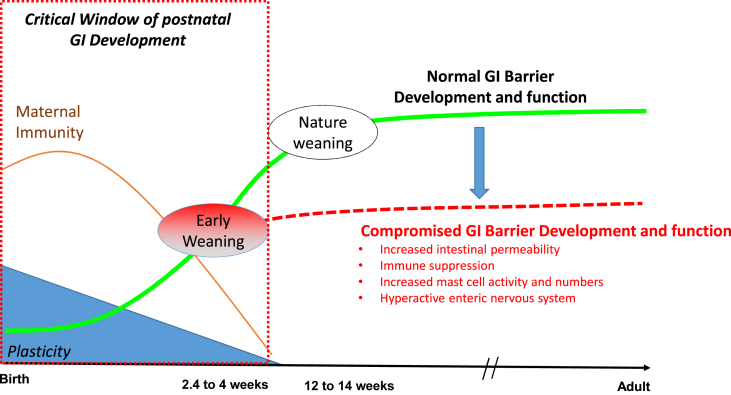
“In contrast, wild piglets undergo a gradual weaning process over 10–14 weeks, allowing for more robust gastrointestinal development [6].”
BackgroundFu, R., Liang, C., Chen, D., Tian, G., Zheng, P., He, J., Yu, J., Mao, X., Luo, Y., Luo, J., et al. (2023) · Journal of Animal Science and Biotechnology/Journal of animal science and biotechnology · doi:10.1186/s40104-023-00835-2 · Cited by 28
“In piglets, intestinal barrier dysfunction and accompanied by the enhancement of intestinal permeability are often observed, with subsequent diarrhea and growth retardation [9, 10].”
BackgroundLiao, S., Tang, S., Chang, M., Qi, M., Li, J., Tan, B., Gao, Q., Zhang, S., Li, X., Yin, Y., et al. (2020) · Animals · doi:10.3390/ani10020290 · Cited by 21
“However, in commercial pig production, weaning is abrupt, occurring early (between 14 and 30 days of age) [3].”
BackgroundSu, H., Zhao, W., Zhang, F., Song, M., Liu, F., Zheng, J., Ling, M., Yang, X., Yang, Q., He, H., et al. (2020) · Food & Function · doi:10.1039/d0fo00376j · Cited by 21
Venardou, B., O’Doherty, J. V., Maher, S., Ryan, M. T., Gath, V., Ravindran, R., Kiely, C., Rajauria, G., García‐Vaquero, M., & Sweeney, T. (2022) · Journal of Animal Science and Biotechnology/Journal of animal science and biotechnology · doi:10.1186/s40104-022-00685-4 · Cited by 20
Meta-analysis reveals the predictable dynamic development of the gut microbiota in commercial pigs
Dong, W., Ricker, N., Holman, D. B., & Johnson, T. A. (2023) · Microbiology Spectrum · doi:10.1128/spectrum.01722-23 · Cited by 20
Gormley, A. R., Garavito-Duarte, Y., & Kim, S. W. (2024) · Biology · doi:10.3390/biology13090663 · Cited by 23
“weaned from its mother at approximately 10 of age [35].”
BackgroundOuyang, Z., Ren, P., Zheng, D., Huang, L., Wei, T., Yang, C., Kong, X., Yin, Y., He, S., & He, Q. (2021) · Livestock Science · doi:10.1016/j.livsci.2021.104499 · Cited by 20
Wang, Y., Yang, Z., Zhou, Y., Tan, J., Sun, H., Sun, D., Mu, Y., Peng, J., & Wei, H. (2022) · Journal of Animal Science and Biotechnology/Journal of animal science and biotechnology · doi:10.1186/s40104-022-00674-7 · Cited by 19
Patience, J. F., & Ramirez, A. (2022) · Translational Animal Science · doi:10.1093/tas/txac063 · Cited by 24
Landscapes of Enteric Virome Signatures in Early-Weaned Piglets
Tao, S., Zou, H., Li, J., & Hong Kui, W. E. I. (2022) · Microbiology Spectrum · doi:10.1128/spectrum.01698-22 · Cited by 21
Koo, B., Choi, J., Holanda, D. M., Yang, C., & Nyachoti, C. M. (2022) · Amino Acids · doi:10.1007/s00726-022-03213-w · Cited by 19
“After weaning, animals are vulnerable to enteric disease due to their immature digestive and immune systems and commonly undergo inflammation and oxidative stress (Moeser et al. 2017; Pluske et al. 2018).”
BackgroundMa, J., Wang, J., Jin, X., Liu, S., Tang, S., Zhang, Z., Long, S., & Piao, X. (2023) · Antioxidants · doi:10.3390/antiox12020307 · Cited by 19
“At the early weaning stages, the digestive and immune systems of piglets have not developed completely, combined with the impact of various stress factors such as feeding patterns and environmental changes, the gut structure and function of piglets are vulnerable to alterations, and the mortality and morbidity rates a…”
BackgroundZhao, H., Tian, M., Xiong, L., Lin, T., Zhang, S., Yue, X., Liu, X., Chen, F., Zhang, S., & Guan, W. (2023) · Food & Function · doi:10.1039/d3fo00068k · Cited by 19
Liu, T., Ma, W., Wang, J., Wei, Y., Wang, Y., Luo, Z., Zhang, Y., Zeng, X., Guan, W., Shao, D., et al. (2024) · Antioxidants · doi:10.3390/antiox13070816 · Cited by 19
Toward rational selection criteria for selection of probiotics in pigs
Wang, W., & Gänzle, M. G. (2019) · Advances in applied microbiology · doi:10.1016/bs.aambs.2019.03.003 · Cited by 19
Håkenåsen, I. M., Øverland, M., Ånestad, R. M., Åkesson, C. P., Sundaram, A. Y. M., Press, C. M., & Mydland, L. T. (2020) · Journal of Functional Foods · doi:10.1016/j.jff.2020.104118 · Cited by 17
Ming, D., Xu, X., Jiang, X., Li, Y., Sun, W., Xiang, J., Huang, M., Pi, Y., & Li, X. (2024) · Animal nutrition · doi:10.1016/j.aninu.2024.08.004 · Cited by 19
Zhang, J., Chen, Y., Guo, X., Li, X., Zhang, R., Wang, M., Zhu, W., & Yu, K. (2024) · Journal of Animal Science and Biotechnology/Journal of animal science and biotechnology · doi:10.1186/s40104-024-01111-7 · Cited by 19
Cao, S., Huang, K., Wen, X., Gao, J., Cui, B., Yao, K., Zhan, X., Hu, S., Wu, Q., Xiao, H., et al. (2022) · Frontiers in Microbiology · doi:10.3389/fmicb.2022.961989 · Cited by 18
“Weaning is accompanied by intestinal injury, disorders of digestion, antioxidant system dysfunction, immune imbalance, diarrhea, and even death of piglets (Moeser et al., 2017; Cao et al., 2018; Cao et al., 2022).”
BackgroundZhang, B., Liu, M., Yue, Z., Chen, X., Li, C., Liu, L., & Li, F. (2023) · International Journal of Molecular Sciences · doi:10.3390/ijms24021787 · Cited by 18
“Many deleterious events can occur in the intestinal tract during early weaning, such as intestinal villi atrophy, crypt hyperplasia, intestinal inflammation, and increased intestinal permeability due to the disruption of tight junctions [8,36,37].”
BackgroundNuamah, E., Ditengou, J. I. C. P., Hirwa, F., Cheon, I., Chae, B., & Choi, N. (2024) · Antioxidants · doi:10.3390/antiox13020236 · Cited by 18
“…early weaning, which is linked to immature digestive and immune organs [3], injury of the gastrointestinal barrier, and a decline in metabolism [4], poses substantial physiological, environmental, and social stressors for piglets, including abrupt separation from their mothers, exposure to…”
Early step-down weaning of dairy calves from a high milk volume with glutamine supplementation
Wickramasinghe, J. P., Kaya, C. A., Baumgard, L. H., & Appuhamy, J. A. D. R. N. (2022) · Journal of Dairy Science · doi:10.3168/jds.2021-21009 · Cited by 18
“tion and immune activation, which is unfavorable to the growth and wellbeing of the animals (Moeser et al., 2007; Moeser et al., 2017).”
BackgroundZhao, J., Hu, J., & Ma, X. (2021) · Nutrients · doi:10.3390/nu13082756 · Cited by 17
“Young animals and infants at weaning would suffer a series of severe oxidation stress from changes of environment and dietary nutrition, leading to injury of intestinal barrier and disorder of gut microbial community, and then result in lower performance, clinical diarrhea, and even death [9,10].”
BackgroundCorreia, A. M., Genova, J. L., Kim, S. W., Abranches, F. F., & Rocha, G. C. (2024) · Scientific Reports · doi:10.1038/s41598-024-62551-9 · Cited by 17
Rattigan, R., Lawlor, P. G., Cormican, P., Crespo‐Piazuelo, D., Cullen, J. T., Phelan, J. P., Ranjitkar, S., Crispie, F., & Gardiner, G. E. (2023) · Scientific Reports · doi:10.1038/s41598-023-33175-2 · Cited by 17
Fabà, L., Hulshof, T. G., Venrooij, K. C. M., & van Hees, H. M. J. (2023) · Journal of Animal Science · doi:10.1093/jas/skad419 · Cited by 17
“…lumen results in disturbances including intestinal villus atrophy, reduced enzyme activity and nutrient absorption (Brooks and Tsourgiannis, 2003; Moeser et al., 2017), increased intestinal permeability (Carey et al., 1994), and inflammation (Lallès et al., 2007) which altogether results in a…”
BackgroundResultInfluentialGuzmán-Pino, S. A., Lazcano, C., de Luca, V., Figueroa, J., Valenzuela, C., V, & Roura, E. (2019) · Animals · doi:10.3390/ani9060336 · Cited by 17
“The early weaning practice common in modern intensive pig production systems, represents one of the most critical phases because piglets are subjected to social, environmental, and nutritional stressors [4,5].”
BackgroundImpact of Weaning and Maternal Immune Activation on the Metabolism of Pigs
Southey, B. R., Bolt, C. R., Rymut, H. E., Keever-Keigher, M. R., ULANOV, A. V., Zhong, L., Rund, L. A., Johnson, R. W., & Rodriguez‐Zas, S. L. (2021) · Frontiers in Molecular Biosciences · doi:10.3389/fmolb.2021.660764 · Cited by 18
Dietary Pharmacological Zinc and Copper Enhances Voluntary Feed Intake of Nursery Pigs
Mille, C. M. D., Burrough, E. R., Kerr, B. J., Schweer, W., & Gabler, N. K. (2022) · Frontiers in Animal Science · doi:10.3389/fanim.2022.874284 · Cited by 16
“Commercial pigs are typically weaned during a critical period of gastrointestinal tract development, and the subsequent weaning stress can result in villus atrophy and crypt hyperplasia, as well as negative impacts on intestinal barrier function, intestinal absorption and secretion, immune system activation, and the e…”
BackgroundMoita, V. H. C., & Kim, S. W. (2023) · Journal of Animal Science · doi:10.1093/jas/skad134 · Cited by 16
Xu, J., Jia, Z., Shu, X., Long, C., & Wang, L. (2023) · Microorganisms · doi:10.3390/microorganisms11112646 · Cited by 19
Correia, A. M., Genova, J. L., Saraiva, A., & Rocha, G. C. (2023) · Frontiers in Veterinary Science · doi:10.3389/fvets.2023.1243357 · Cited by 16
“Goblet cells are responsible for the production of mucus that acts as a physical barrier against the invasion of pathogens, while tight junction proteins form a selective physical barrier to prevent endotoxin absorption (39).”
BackgroundWu, J., Lin, Z., Wang, J., Liu, C., Zhao, J., Liu, H., & Ma, X. (2024) · Journal of Functional Foods · doi:10.1016/j.jff.2024.106094 · Cited by 16
Pedroso‐Santana, S., Arcia, E. L., Fleitas‐Salazar, N., Gancino, M., Mansilla, R., Gómez-Gaete, C., Altamirano, C., Fernández, K. F., Ruiz, A., & Toledo, J. R. (2020) · Materials Science and Engineering C · doi:10.1016/j.msec.2020.111260 · Cited by 19
Holanda, D. M., & Kim, S. W. (2022) · Journal of Animal Science and Biotechnology/Journal of animal science and biotechnology · doi:10.1186/s40104-022-00691-6 · Cited by 16
“The weaning stress can lead to inflammatory activation in the intestine and damage of enterocytes [1, 2], reducing the digestibility of nutrients in feeds and nutrient absorp-”
BackgroundSu, H., Yang, S., Chen, S., Chen, X., Guo, M., Zhu, L., Xu, W., & Liu, H. (2024) · International Journal of Molecular Sciences · doi:10.3390/ijms25168582 · Cited by 15
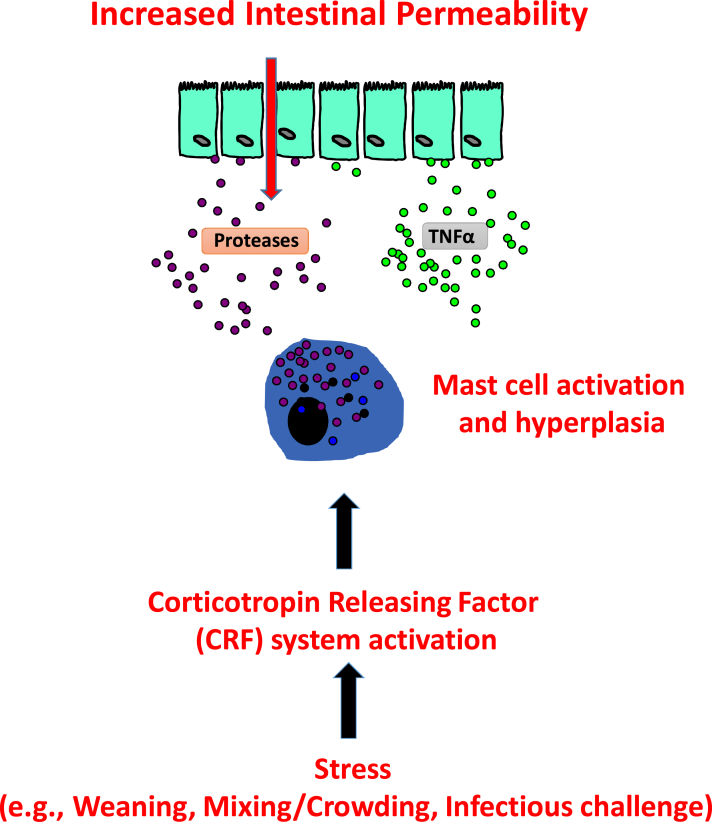
“And it has been shown that early weaning causes changes in the intestinal corticotropin-releasing factor (CRF) system, which can lead to intestinal barrier disorders and intestinal flora imbalance in pigs [81].”
BackgroundDietary Intervention of Benzoic Acid for Intestinal Health and Growth of Nursery Pigs
Choi, H., & Kim, S. W. (2024) · Animals · doi:10.3390/ani14162394 · Cited by 16
“During the post-weaning period, weaning stress dramatically decreases the feed intake of pigs, limiting nutrients for bacterial survival and proliferation, reducing intestinal morphology, and leading to intestinal barrier dysfunction [5].”
BackgroundWang, Z., Zhao, Y., Fan, D., Zhang, J., Diao, Q., & Cui, K. (2025) · Microorganisms · doi:10.3390/microorganisms13020404 · Cited by 15
“In addition, weaning stress often leads to imbalances in the antioxidant system and damage to the immune system in lambs [9], which result in increased susceptibility to disease.”
Haptoglobin and C-Reactive Protein—Non-specific Markers for Nursery Conditions in Swine
Hennig‐Pauka, I., Menzel, A., Boehme, T. R., Schierbaum, H., Ganter, M., & Schulz, J. (2019) · Frontiers in Veterinary Science · doi:10.3389/fvets.2019.00092 · Cited by 15
Dietary Supplementation with Trihexanoin Enhances Intestinal Function of Weaned Piglets
Wu, T., Li, K., Yi, D., Wang, L., Zhao, D., Lyu, Y., Zhang, L., Chen, H., Ding, B., Hou, Y., et al. (2018) · International Journal of Molecular Sciences · doi:10.3390/ijms19103277 · Cited by 15
“Thus, weaning is one of the most critical developmental stages of the digestive tract [3].”
BackgroundSong, M., Kim, B., Cho, J. H., Kyoung, H., Choe, J., Cho, J.-Y., Kim, Y., Kim, H. B., & Lee, J. J. (2022) · Journal of Microbiology and Biotechnology · doi:10.4014/jmb.2205.05033 · Cited by 14
“In particular, weaned pigs are vulnerable to diseases due to intestinal barrier breakdown because weaning stresses induce local inflammatory damage to epithelial cells [9].”
InfluentialMussard, E., Lencina, C., Gallo, L., Barilly, C., Poli, M., Fève, K., Albin, M., Cauquil, L., Knudsen, C., Achard, C. S., et al. (2022) · Frontiers in Cell and Developmental Biology · doi:10.3389/fcell.2022.983031 · Cited by 14
“However, it is not known whether pig organoids retain the major alterations of the epithelial barrier function observed at the suckling-to-weaning transition in piglets (Moeser et al., 2017).”
BackgroundZhang, Y., Tian, X., Dong, Y., Li, R., Shen, M., Yi, D., Wu, T., Wang, L., Zhao, D., & Hou, Y. (2023) · Frontiers in Cellular and Infection Microbiology · doi:10.3389/fcimb.2023.1284166 · Cited by 14
“The intestinal epithelial cells, such as immune sentinel cells, play important immunomodulatory properties by recognising pathogenic microorganisms and secreting growth factors and interleukins (Moeser et al., 2017).”
BackgroundFeng, L., Luo, Z., Wang, J., Wu, K., Wang, W., Liu, Z., Wen, J., Wang, Z., Duns, G. J., Ma, X., et al. (2024) · Animal nutrition · doi:10.1016/j.aninu.2024.05.005 · Cited by 14
Ipema, A. F., Gerrits, W. J. J., Bokkers, E. A. M., van Marwijk, M. A., Laurenssen, B. F. A., Kemp, B., & Bolhuis, J. E. (2022) · Frontiers in Veterinary Science · doi:10.3389/fvets.2022.838018 · Cited by 14
Review: innovation through research in the North American pork industry
Boyd, R. D., Zier-Rush, C. E., Moeser, A. J., Culbertson, M., Stewart, K. R., Rosero, D. S., & Patience, J. F. (2019) · animal · doi:10.1017/s1751731119001915 · Cited by 14
“of the GI epithelial barrier, enteric nervous system and mucosal innate immune responses (Medland et al., 2016; Moeser et al., 2017; Pohl et al., 2017), which coincides with diminished performance and resiliency to later-life stress or infectious challenges.”
BackgroundSun, F., Li, H., Sun, Z., Liu, L., Zhang, X., & Zhao, J. (2023) · Animals · doi:10.3390/ani13060964 · Cited by 13
“always results in a series of problems such as increased diarrhea, poor feed utilization, and low survival rate since weaning stress can disrupt the intestinal redox balance and immune function of piglets [3,4].”
BackgroundQin, W., Yu, Z., Li, Z. Y., Liu, H., Li, W., Zhao, J., Ren, Y., & Ma, L. (2023) · Microorganisms · doi:10.3390/microorganisms11051254 · Cited by 14
“Oxidative stress induced by weaning can damage the intestinal structure and function [33], seriously affecting the health of piglets.”
BackgroundPapakonstantinou, G. I., Meletis, E., Petrotos, K., Kostoulas, P., Tsekouras, N. S., Καντερέ, Μ., Voulgarakis, N., Gougoulis, D. A., Filippopoulos, L., Christodoulopoulos, G., et al. (2023) · Agriculture · doi:10.3390/agriculture13071356 · Cited by 13
Curative effects of sophorolipid on physical wounds: In vitro and in vivo studies
Kwak, M., Park, M., Kim, J., Lee, H., & Whang, K. (2021) · Veterinary Medicine and Science · doi:10.1002/vms3.481 · Cited by 13
Rajković, E., Schwarz, C., Tischler, D., Schedle, K., Reisinger, N., Emsenhuber, C., Oceľová, V., Roth, N., Frieten, D., Dusel, G., et al. (2021) · Animals · doi:10.3390/ani11102771 · Cited by 14
“PWD is often associated with different pathogenic enterotoxigenic E. coli (ETEC) serotypes and Salmonella [1,5].”
BackgroundInfluentialImpacts of weaning age on dietary needs of whey permeate for pigs at 7 to 11 kg body weight
Jang, K. B., Duarte, M. E., Purvis, J. M., & Kim, S. W. (2021) · Journal of Animal Science and Biotechnology/Journal of animal science and biotechnology · doi:10.1186/s40104-021-00637-4 · Cited by 13
“It has been known that weaning stress could have potential to cause the intestinal dysfunction of nursery pigs during postweaning period [23].”
BackgroundInfluentialZhang, C., Li, C., Zhao, P., Shao, Q., Ma, Y., Bai, D., Liao, C., He, L., Huang, S., & Wang, Y. (2022) · Animal Biotechnology · doi:10.1080/10495398.2022.2086878 · Cited by 13
Wang, D., Zhang, Y., Chen, Q., Kuang, Y., Fan, J., Xu, X. L., Zhu, H., Gao, Q., Cheng, S., Cong, X., et al. (2022) · Frontiers in Veterinary Science · doi:10.3389/fvets.2022.964766 · Cited by 13
“These metabolic disorders, induced by weanling stress, are associated with inflammatory response, and impairment of redox balance and intestinal health (2, 3).”
BackgroundMo, K., Yu, W., Li, J., Zhang, Y., Xu, Y., Huang, X., & Ni, H. (2022) · Journal of the Science of Food and Agriculture · doi:10.1002/jsfa.12322 · Cited by 13
Lewton, J. R., Woodward, A. D., Moser, R. L., Thelen, K. M., Moeser, A. J., Trottier, N. L., Tempelman, R. J., & Rozeboom, D. W. (2022) · Translational Animal Science · doi:10.1093/tas/txac083 · Cited by 12
Zhang, F., Chen, M., Liu, X., Ji, X., Li, S., & Jin, E. (2023) · Animal nutrition · doi:10.1016/j.aninu.2023.08.007 · Cited by 13
Jang, K. B., & Kim, S. W. (2022) · Animal Bioscience · doi:10.5713/ab.22.0269 · Cited by 12
“Moeser et al [37] showed that intestinal damage by weaning stress would be sustained for about 14 d after weaning with impaired intestinal functions, resulting in a reduction in the digestive and absorptive capacity in the small intestine of nursery pigs.”
BackgroundSadurní, M., Barroeta, A. C., Sol, C., Puyalto, M., & Castillejos, L. (2023) · Journal of Animal Science · doi:10.1093/jas/skad090 · Cited by 14
Outlaw, A. C., Gachman, A. M., Kim, H. J., Xu, X., Tan, Z., Qin, Z.-H., Peng, X., & Rudar, M. (2023) · Translational Animal Science · doi:10.1093/tas/txad111 · Cited by 12
“The first month of postnatal life is a critical period for intestinal development in pigs (Moeser et al., 2017).”
Zhang, Y., Xu, B., Zhao, L., Zhu, L.-Y., Batonon-Alavo, D. I., Jachacz, J., Qi, D., Zhang, S., Ma, L., & Sun, L. (2019) · Animals · doi:10.3390/ani9121048 · Cited by 12
“Maternal dietary DL-Met and/or OH-Met supplementation also increased free amino acids in milk that were associated with redox control (cystine and taurine), which might enhance the ability of piglets to cope with stress [36].”
BackgroundDufourny, S., Antoine, N., Pitchugina, E., Delcenserie, V., Godbout, S., Douny, C., Scippo, M., Froidmont, É., Rondia, P., Wavreille, J., et al. (2021) · Microorganisms · doi:10.3390/microorganisms9030572 · Cited by 12
“Indeed, many mechanisms related to the barrier properties of the gas‐ trointestinal tract are to be explored, such as permeability of the epithelium or interleu‐ kins and growth factors secretion [25].”
BackgroundHan, Y., Zhan, T., Tang, C., Zhao, Q., Dansou, D. M., Yu, Y., Barbosa, F. F., & Zhang, J. (2021) · Animals · doi:10.3390/ani11051292 · Cited by 14
“Weaning stress generally causes a considerable incidence of PWD in piglets, which results in an increase in morbidity and mortality and serious economic losses [24,25,40].”
BackgroundZhang, Y., Wu, T., Chen, Z., Meng, Y., Zhu, Z., Wang, Q., Tian, J., Yi, D., Wang, L., Zhao, D., et al. (2021) · Animals · doi:10.3390/ani11051424 · Cited by 12
Yang, Z., Wu, Y., Liu, X., Zhang, M., Peng, J., & Wei, H. (2022) · Nutrients · doi:10.3390/nu14173485 · Cited by 11
“An emerging study demonstrated that early weaning contributes to a severe inflammatory response [48].”
BackgroundBARDUCCI, R. S., Santos, A. A. D., Pacheco, L. G., Putarov, T. C., Koch, J. F. A., Callegari, M. A., Dias, C. P., de Carvalho, R. H., & da Silva, C. A. (2024) · Animals · doi:10.3390/ani14040631 · Cited by 11
“This low feed intake induces changes in the permeability of the gastrointestinal tract, especially in the first two weeks post-weaning, with a reduction in villus height and in the depth of the crypts of the intestinal mucosa, decreasing the absorption capacity [8,9].”
BackgroundChoi, H., Rocha, G. C., & Kim, S. W. (2025) · Animal Science Journal · doi:10.1111/asj.70027 · Cited by 11
Kwon, C. H., Safaie, E. S., Torres, J. A., & Jang, Y. D. (2025) · Animals · doi:10.3390/ani15081119 · Cited by 11
“…may increase the challenges in the gut, resulting in increased postweaning diarrhea and gut inflammation due to undigested and unabsorbed dietary components, which can result in impaired intestinal barrier functions, although they may grow faster than those not consuming feed at high level [26,33].”
Ding, D., Mou, D., Zhu, H., Jiang, X., Che, L., Fang, Z., Xu, S., Lin, Y., Zhuo, Y., Li, J., et al. (2022) · Frontiers in Nutrition · doi:10.3389/fnut.2022.900421 · Cited by 11
Evidence-Based Recommendations for Herd Health Management of Porcine Post-Weaning Diarrhea
Eriksen, E. Ø., Pedersen, K. S., Larsen, I., & Nielsen, J. P. (2022) · Animals · doi:10.3390/ani12141737 · Cited by 11
Wang, X., Deng, T., Zhou, X., Chu, L., Zeng, X., Zhang, S., Guan, W., & Chen, F. (2024) · Antioxidants · doi:10.3390/antiox13020246 · Cited by 12
“Weaning piglets undergo a challenging transition characterized by diarrhea, growth inhibition, and increased mortality, leading to significant economic losses [1,2].”
Dumitru, M., Hăbeanu, M., Lefter, N. A., & Gheorghe, A. (2020) · ROMANIAN BIOTECHNOLOGICAL LETTERS · doi:10.25083/rbl/25.6/2060.2069 · Cited by 11
Zuniga, J. C., Rueda, A. M. F., Samuel, R. S., St‐Pierre, B., & Levesque, C. L. (2024) · Microorganisms · doi:10.3390/microorganisms12091786 · Cited by 10
“In addition, the gut of weaned pigs is affected by increased permeability, alterations in enteric neuron numbers and cholinergic activity, as well as by upregulation of proinflammatory cytokines and hyperplasia of intestinal mast cells [10].”
BackgroundChen, J., Zhang, X., Zhang, Y., Jiang, S., Han, Y., Zhang, L., Zhang, Y., & Du, H. (2024) · Journal of Animal Science · doi:10.1093/jas/skae311 · Cited by 10
Tissue and cellular spatiotemporal dynamics in colon aging
Daly, A. C., Cambuli, F., Äijö, T., Lötstedt, B., Marjanovic, N. D., Fernandez, S., Kuksenko, O., Smith-Erb, M., Domovic, D., Wittenberghe, N. V., et al. (2025) · Nature Biotechnology · doi:10.1038/s41587-025-02830-6 · Cited by 11
“From the cecum to the rectum, the colon carries out spatially confined regional functions, which emerge postnatally and are required for the digestion of solid food 4,5 .”
Genova, J. L., Melo, A. D. B., Rupolo, P. E., Carvalho, S. T., Costa, L. B., & Carvalho, P. L. D. O. (2020) · Czech Journal of Animal Science · doi:10.17221/70/2020-cjas · Cited by 13
“Furthermore, the nervous system is also one of the main regulators of local gastrointestinal systemic and immune responses via neuroimmune synapses and can modulate the sensitivity and adherence of bacterial toxins (Moeser et al. 2017).”
BackgroundInfluentialResende, M., Chaves, R. F., García, R., Barbosa, J. A., Marques, A. S., Rezende, L. R., Peconick, A. P., Garbossa, C. A. P., Mesa, D., da Silva, C. C., et al. (2020) · Livestock Science · doi:10.1016/j.livsci.2020.104311 · Cited by 12
Thayer, M. T., Garcia, R. M., Duttlinger, A. W., Mahoney, J. A., Schinckel, A. P., Asmus, M. D., Jones, D. B., Dunn, J. L., & Richert, B. T. (2022) · Translational Animal Science · doi:10.1093/tas/txac160 · Cited by 10
Júnior, D. T. V., Rodrigues, G. D. A., Soares, M. H., Silva, C. B., Frank, E. O., González-Vega, J. C., Htoo, J. K., Brand, H. G., Silva, B. A. N., & Saraiva, A. (2023) · Livestock Science · doi:10.1016/j.livsci.2023.105202 · Cited by 10
Niu, K., Wang, H., Kim, S., Wassie, T., & Wu, X. (2023) · Journal of the Science of Food and Agriculture · doi:10.1002/jsfa.13002 · Cited by 10
Hawe, S., Scollan, N. D., Gordon, A. W., & Magowan, E. A. (2020) · Translational Animal Science · doi:10.1093/tas/txaa147 · Cited by 10
“However, multiple studies have shown creep feeding does not necessarily improve pre- and postweaning growth or litter uniformity, as not all piglets consume the creep offered (Sulabo et al., 2010; Muns and Magowan, 2018).”
BackgroundShi, C., Xu, S., Huang, C., Wang, Z., Wang, W., Ming, D., Yin, X., Liu, H., & Wang, F. (2022) · Frontiers in Neuroscience · doi:10.3389/fnins.2022.878541 · Cited by 10
“Enteric neuroplasticity is an adaption to intestinal contents and the intestinal microenvironment and is pronounced during early development in mammals (Moeser et al., 2017).”
BackgroundZhang, Y., Yi, D., Xu, H., Tan, Z., Meng, Y., Wu, T., Wang, L., Zhao, D., & Hou, Y. (2022) · BMC Veterinary Research · doi:10.1186/s12917-022-03410-5 · Cited by 10
Cui, M., Tang, G., Yan, F., Wang, S., Wang, X., Yao, J., & Xu, X. (2023) · Frontiers in Immunology · doi:10.3389/fimmu.2023.1119747 · Cited by 9
Vitamin B5 supplementation enhances intestinal development and alters microbes in weaned piglets
Wang, X., Qin, Y., Li, J., Huang, P., Li, Y., Huang, J., Wang, Q., & Yang, H. (2024) · Animal Biotechnology · doi:10.1080/10495398.2024.2335340 · Cited by 9
“6,7 11 Pantothenic acid, a form of water-soluble vitamin B5 (VB5), serves as a crucial raw material for the synthesis of coenzyme A (CoA) in cells.”
Zheng, X., Wang, Y., Zhou, X., Deng, T., Zhao, Y., Fu, Z., Wei, Y., Ma, W., Zhang, S., Guan, W., et al. (2024) · Animal nutrition · doi:10.1016/j.aninu.2024.04.020 · Cited by 9
Zhou, M., Yan, Z., Wang, D., Li, C., Wang, L., Li, R., Yin, J., & Yin, Y. (2025) · Veterinary Quarterly · doi:10.1080/01652176.2024.2447600 · Cited by 9
Metadata
- Authors
- Moeser, A. J., Pohl, C. S., & Rajput, M.
- Affiliations
- Michigan State University (US)
- Corresponding author
- Moeser, Adam J.
- Venue
- Animal nutrition
- Publisher
- Elsevier BV
- Published
- 2017-12
- Volume
- 3
- Issue
- 4
- Pages
- 313-321
- ISSN
- 2405-6383 (ISSN-L)
- 2405-6545
- PMC
- PMC5941262
- OpenAlex
- W2732972012
- Cited by
- 452
- References
- 95
- Citations by year
- 2026: 54 · 2025: 53 · 2024: 61 · 2023: 63 · 2022: 85 · 2021: 60 · 2020: 38 · 2019: 34 · 2018: 4
- FWCI
- 2.53
- Type
- journal article
- Language
- en
- Open access
- gold
- doi.org
- Licence
- Locations
- Animal nutrition (publishedVersion, cc-by-nc-nd)
- Europe PMC (PubMed Central) (publishedVersion, cc-by-nc-nd)
- PubMed Central (publishedVersion, cc-by-nc-nd)
- PubMed (publishedVersion)
- DOAJ (DOAJ: Directory of Open Access Journals) (submittedVersion, cc-by-sa)
- Funders
- National Institutes of Health (HD072968)
- USDA National Institute of Food and Agriculture (2017-67015-26673)
- Topics
- Life Sciences › Agricultural and Biological Sciences › Animal Science and Zoology › Animal Nutrition and Physiology
- Health Sciences › Veterinary › Small Animals › Veterinary medicine and infectious diseases
- Health Sciences › Medicine › Gastroenterology › Gastrointestinal motility and disorders
- Keywords
- weaning stress, gastrointestinal barrier, pigs, gut health, intestinal epithelium, enteric nervous system, intestinal immunity, disease susceptibility, early life stress, barrier dysfunction
About these checks
Registry, retraction, Cites and statistics results are computed, not judged, with one exception: a printed reference that no index lists is read once by a model before it counts as a citation error. Claims are extracted by a model and kept only when their quote appears verbatim in the text; each cited source is then checked, with a model’s help, for whether it says what the claim relies on. Those verdicts can be wrong — read the claim’s quote and the cited source before relying on one.
Statistics and arithmetic are recomputed, not judged.
Confidence bands are shown only for fields calibrated on our annotated test set. None is calibrated yet, so no band is shown.
What counts as a claim ›How we measure confidence ›How we check this ›
Are you an author, or do you see a problem with this page? Request a review
