

The DOI matches its Crossref record; 95 of the 95 references it cites were found in a registry or an index.
Weaning stress and gastrointestinal barrier development: Implications for lifelong gut health in pigs
Open accessAbstract
The gastrointestinal (GI) barrier serves a critical role in survival and overall health of animals and humans. Several layers of barrier defense mechanisms are provided by the epithelial, immune and enteric nervous systems. Together they act in concert to control normal gut functions (e.g., digestion, absorption, secretion, immunity, etc.) whereas at the same time provide a barrier from the hostile conditions in the luminal environment. Breakdown of these critical GI functions is a central pathophysiological mechanism in the most serious GI disorders in pigs. This review will focus on the development and functional properties of the GI barrier in pigs and how common early life production stressors, such as weaning, can alter immediate and long-term barrier function and disease susceptibility. Specific stress-related pathophysiological mechanisms responsible for driving GI barrier dysfunction induced by weaning and the implications to animal health and performance will be discussed.
Overview
The claims and statistics of this paper haven’t been checked yet.
Run the check — free, no account needed. It reads the open-access text and checks the sources it cites.
Integrity signals
Registry
Cites
Statistics
Figures
Verification
Claims the paper makes
The claims and statistics of this paper haven’t been checked yet.
Run the check — free, no account needed. It reads the open-access text and checks the sources it cites.
Claims other papers make about this one
Each is checked against this paper’s own text: does it say what the citing paper says it does?
In the citing paper
“In piglets, early weaning stress impairs intestinal barrier function (271) and increases inflammation (272) and oxidative stress (273).”
From Diet and the Microbiota–Gut–Brain Axis: Sowing the Seeds of Good Mental Health (2021) · cites this paper as [271]
Self-check
Percentages, sums and reported differences re-computed from the paper’s own numbers.
The self-check needs the paper’s full text.
Citations
Cites
Changes of Intestinal Functions in Liver Cirrhosis
Fukui, H., & Wiest, R. (2016) · Inflammatory Intestinal Diseases · doi:10.1159/000444436 · Cited by 6,820
Host-Bacterial Mutualism in the Human Intestine
Bäckhed, F., Ley, R. E., Sonnenburg, J. L., Peterson, D. A., & Gordon, J. I. (2005) · Science · doi:10.1126/science.1104816 · Cited by 5,277
Intestinal mucosal barrier function in health and disease
Turner, J. R. (2009) · Nature reviews. Immunology · doi:10.1038/nri2653 · Cited by 3,952 · cited 2×
“…barrier, which is regulated predominantly by the tight junctions (TJs), which consist of numerous intracellular and apical intercellular membrane proteins (e.g., zonula occludens, occludin, and claudins) (Edelblum and Turner, 2009; Groschwitz and Hogan, 2009; Marchiando et al., 2010; Turner, 2009).”
BackgroundThe microbiota in adaptive immune homeostasis and disease
Honda, K., & Littman, D. R. (2016) · Nature · doi:10.1038/nature18848 · Cited by 1,846 · cited 1×
“…receivedmuch attention as an important defense barrier through several proposed mechanisms, reviewing the body of microbiome studies is beyond the scope of this review, but we direct readers to other excellent reviews on the topic (Backhed et al., 2005; Honda and Littman, 2016; Kelly et al., 2015).”
BackgroundIgE and mast cells in allergic disease
Galli, S. J., & Tsai, M. (2012) · Nature Medicine · doi:10.1038/nm.2755 · Cited by 1,799 · cited 2×
“Mast cells are required for host defense and wound healing; however, excessive activation of mast cells is a central pathophysiologic mechanisms in inflammatory disease such as allergy and asthma and functional stress-related GI disorders including irritable bowel syndrome in humans (Boeckxstaens, 2015; Galli and Tsai…”
BackgroundIntestinal barrier function: molecular regulation and disease pathogenesis
Groschwitz, K. R., & Hogan, S. P. (2009) · Journal of Allergy and Clinical Immunology · doi:10.1016/j.jaci.2009.05.038 · Cited by 1,775 · cited 1×
“…barrier, which is regulated predominantly by the tight junctions (TJs), which consist of numerous intracellular and apical intercellular membrane proteins (e.g., zonula occludens, occludin, and claudins) (Edelblum and Turner, 2009; Groschwitz and Hogan, 2009; Marchiando et al., 2010; Turner, 2009).”
BackgroundBarbara, G., Stanghellini, V., De Giorgio, R., Cremon, C., Cottrell, G. S., Santini, D., Pasquinelli, G., Morselli-Labate, A. M., Grady, E. F., Bunnett, N. W., et al. (2004) · Gastroenterology · doi:10.1053/j.gastro.2003.11.055 · Cited by 1,475 · cited 4×
“Similar to human IBS, Pohl et al. (2017) demonstrated that adult pigs that were previously early weaned (16 d wean age) exhibited enhanced co-localization of intestinal mast cells with enteric nerves, compared with late weaned pigs (weaned at 28 d of age) (Pohl et al., 2017).”
BackgroundInfluentialThe role of gut microbiota in immune homeostasis and autoimmunity
Wu, H.-J., & Wu, E. (2012) · Gut Microbes · doi:10.4161/gmic.19320 · Cited by 1,426 · cited 1×
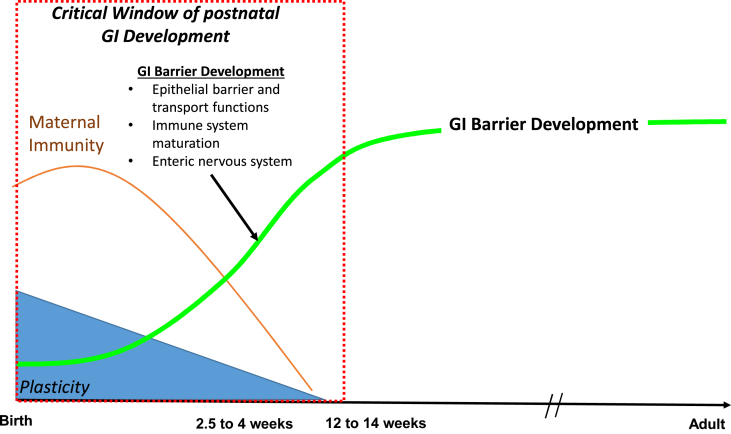
“…complete by 12 to 14 ity and shape the adult phenotype and function of the GI barrier. to a wide variety of antigen including self-antigen and bacteria, help in differentiating between self and non-self-antigen and further facilitate to achieve homeostasis (Martin et al., 2010; Wu and Wu, 2012).”
BackgroundKelly, J. R., Kennedy, P. J., Cryan, J. F., Dinan, T. G., Clarke, G., & Hyland, N. P. (2015) · Frontiers in Cellular Neuroscience · doi:10.3389/fncel.2015.00392 · Cited by 1,110 · cited 2×
“Whereas the microbiome has receivedmuch attention as an important defense barrier through several proposed mechanisms, reviewing the body of microbiome studies is beyond the scope of this review, but we direct readers to other excellent reviews on the topic (Backhed et al., 2005; Honda and Littman, 2016; Kelly et al.,…”
BackgroundThe alarmin IL-33 promotes regulatory T-cell function in the intestine
Schiering, C., Krausgruber, T., Chomka, A., Fröhlich, A., Adelmann, K., Wohlfert, E. A., Pott, J., Griseri, T., Bollrath, J., Hegazy, A. N., et al. (2014) · Nature · doi:10.1038/nature13577 · Cited by 1,007 · cited 2×
“, IL-17A, IL-33, IL-23 and transforming growth factor-b), which have important immunomodulatory properties (Schiering et al., 2014).”
Background
Cited by
Sorted by citations
Items 401–453 of 453
Xia, B., Zhong, R., Wu, W., Luo, C., Meng, Q., Gao, Q., Zhao, Y., Chen, L., Zhang, S., Zhao, X., et al. (2022) · Figshare · doi:10.6084/m9.figshare.20762934
Eriksen, E. Ø., Kudirkienė, E., Barington, K., Goecke, N. B., Blirup-Plum, S. A., Nielsen, J. P., Olsen, J. E., Jensen, H. E., Pankoke, K., Larsen, L. E., et al. (2024) · Figshare · doi:10.6084/m9.figshare.26603578
Eriksen, E. Ø., Kudirkienė, E., Barington, K., Goecke, N. B., Blirup-Plum, S. A., Nielsen, J. P., Olsen, J. E., Jensen, H. E., Pankoke, K., Larsen, L. E., et al. (2024) · Figshare · doi:10.6084/m9.figshare.26603587
Eriksen, E. Ø., Kudirkienė, E., Barington, K., Goecke, N. B., Blirup-Plum, S. A., Nielsen, J. P., Olsen, J. E., Jensen, H. E., Pankoke, K., Larsen, L. E., et al. (2024) · Figshare · doi:10.6084/m9.figshare.26603581
Wen, C., Geervliet, M., de Vries, H., Fabà, L., den Hil, P. J. R.-V., Skovgaard, K., Savelkoul, H. F. J., Schols, H. A., Wells, J. M., Tijhaar, E. J., et al. (2024) · Figshare · doi:10.6084/m9.figshare.26581682
Fu, R., Liang, C., Chen, D., Tian, G., Zheng, P., He, J., Yu, J., Mao, X., Luo, Y., Luo, J., et al. (2024) · Figshare · doi:10.6084/m9.figshare.26575682
Xia, B., Zhong, R., Wu, W., Luo, C., Meng, Q., Gao, Q., Zhao, Y., Chen, L., Zhang, S., Zhao, X., et al. (2022) · Figshare · doi:10.6084/m9.figshare.20762937
Xia, B., Zhong, R., Wu, W., Luo, C., Meng, Q., Gao, Q., Zhao, Y., Chen, L., Zhang, S., Zhao, X., et al. (2022) · Figshare · doi:10.6084/m9.figshare.20762919
Fu, R., Liang, C., Chen, D., Tian, G., Zheng, P., He, J., Yu, J., Mao, X., Luo, Y., Luo, J., et al. (2024) · Figshare · doi:10.6084/m9.figshare.26575685
Xia, B., Zhong, R., Wu, W., Luo, C., Meng, Q., Gao, Q., Zhao, Y., Chen, L., Zhang, S., Zhao, X., et al. (2022) · Figshare · doi:10.6084/m9.figshare.20762952
Xia, B., Zhong, R., Wu, W., Luo, C., Meng, Q., Gao, Q., Zhao, Y., Chen, L., Zhang, S., Zhao, X., et al. (2022) · Figshare · doi:10.6084/m9.figshare.20762946
Eriksen, E. Ø., Kudirkienė, E., Barington, K., Goecke, N. B., Blirup-Plum, S. A., Nielsen, J. P., Olsen, J. E., Jensen, H. E., Pankoke, K., Larsen, L. E., et al. (2024) · Figshare · doi:10.6084/m9.figshare.26603584
Xia, B., Zhong, R., Wu, W., Luo, C., Meng, Q., Gao, Q., Zhao, Y., Chen, L., Zhang, S., Zhao, X., et al. (2022) · Figshare · doi:10.6084/m9.figshare.20762931
Xia, B., Zhong, R., Wu, W., Luo, C., Meng, Q., Gao, Q., Zhao, Y., Chen, L., Zhang, S., Zhao, X., et al. (2022) · Figshare · doi:10.6084/m9.figshare.20762943
Xia, B., Zhong, R., Wu, W., Luo, C., Meng, Q., Gao, Q., Zhao, Y., Chen, L., Zhang, S., Zhao, X., et al. (2022) · Figshare · doi:10.6084/m9.figshare.20762925
Automated Feeder Activity Measurement System for Weaned Pigs in Nursery PensPreprint
Pandey, S., Park, Y., Yeung, C., Shumaly, M., Soares, V. M., Steibel, J. P., & Rosero, D. (2025) · SSRN Electronic Journal · doi:10.2139/ssrn.5479935
Yin, L.-M., Chen, J., Li, J., Wang, Z.-B., Wang, Q.-Y., Li, J.-Z., Xu, K., Yin, Y.-L., & Yang, H.-S. (2026) · Journal of Animal Science · doi:10.1093/jas/skag048
“One of the greatest challenges for piglets throughout their life is weaning, which can lead to diarrhea, intestinal epithelium damage, intestinal dysfunction, decreased brush border enzyme activity, growth retardation, and even death (Moeser et al 2017; Tang et al 2022a).”
Flavored Vitamin–Mineral Supplementation via Water Improves the Performance of Newly Weaned Piglets
Gomes, P. H. I., de Abreu, M. L. T., Silva, C. C., Passos, A. A., Prata, M. F., Benfato, M. D. S., Canata, D. A. M., Riaño, A. G., Miranda, A. L., Correa, I. S., et al. (2026) · Animal Science Journal · doi:10.1111/asj.70166
“…critical managements in swine production, characterized by the high intensity of stress caused to piglets due to the separation from the dam, as well as changes in the environment, changes in the feeding regime, and changes in the social circle, all of which occur abruptly (Moeser et al. 2017).”
Decundo, J. M., Mozo, J., Gaudio, D. S. P., Martínez, G., Dieguez, S. N., Bianchi, C. P., Eguia, V. R., Maté, L., Lirón, J. P., Amanto, F. A., et al. (2026) · Frontiers in Veterinary Science · doi:10.3389/fvets.2026.1771820
“This stress, combined with the piglet’s immature digestive and immune systems, results in reduced feed intake (anorexia), compromised nutrient absorption, disorganized epithelial architecture, and an imbalanced gut microbiota homeostasis (dysbiosis) (4–6).”
Potential Role of Brown Macroalgae on Pig Health: A Review
Satessa, G. D., & Khanal, P. (2026) · ACS Nutrition Science · doi:10.1021/acsnutrsci.5c00021
Zhao, Y., Wang, Z., Fan, D., Zhang, J., Tu, Y., Diao, Q., & Cui, K. (2026) · Journal of Animal Science and Biotechnology/Journal of animal science and biotechnology · doi:10.1186/s40104-026-01371-5
“Moreover, early weaning downregulates the expression of tight junction proteins, such as ZO-1 and Occludin [4, 5], thereby increasing intestinal permeability and triggering bacterial translocation and inflammatory cascade reactions [6–8].”
Cai, W., Xie, K., Li, Y., Yu, B., Luo, Y., Zheng, P., Mao, X., Yu, J., Luo, J., Yan, H., et al. (2026) · Animal nutrition · doi:10.1016/j.aninu.2025.12.013
Pendón, M. D., Ferreyra, M., Valette, E., Girardi, J. I., Errea, A. J., Dardis, C., Bengoa, A. A., Tanco, M. E., Croce, A. G. S., Machuca, M., et al. (2026) · Probiotics and Antimicrobial Proteins · doi:10.1007/s12602-026-11003-z
“These changes determine modification of gastrointestinal physiology and increased susceptibility to infections that can result in impaired feed conversion, reduction in weight gain rate and increased morbidity and mortality [3].”
Etude des effets des médiateurs du stress sur l'immunité intestinale des porcelets
Gavaud, S. (2022) · theses.fr (ABES) · doi:10.70675/18305d3cz137az416bz9a7az499d89869fcd
Wang, X., Fan, X., ChengYing, L., Chen, P., Li, S., Peng, J., Zhou, W., Zhou, Z., Li, X., Li, J., et al. (2026) · Animals · doi:10.3390/ani16081254
“The better performance of the A2 group is probably associated with its higher initial dose during the early post-weaning stage, when piglets are particularly vulnerable to intestinal stress [29,30].”
Joseph, W., Verso, L. L., & Guay, F. (2026) · Livestock Science · doi:10.1016/j.livsci.2026.105960
Ding, Z., Ahn, J., & Kim, I. H. (2026) · Animals · doi:10.3390/ani16091326
“Such disruptions not only hinder early growth performance but may also have lasting effects on health status and production efficiency [4,5].”
Xiangshi, L., Xu, P., Cao, S., Zeng, Z., Wang, S., Zhang, H., Kiros, T. G. G., & Zhang, S. (2026) · Antioxidants · doi:10.3390/antiox15050623
“Such precocious weaning compromises intestinal barrier function, with empirical evidence linking the severity of barrier impairment to the earliness of weaning [3].”
Zhu, W., Liu, X., Hu, S., Feng, B., Li, Y., Li, X., Ma, F., Li, J., Gao, Y., & Xu, H. (2026) · Frontiers in Microbiology · doi:10.3389/fmicb.2026.1845847
“Intestinal health problems potentially resulted in growth retardation, increased mortality, and elevated economic losses in young animals (Moeser et al., 2017).”
Zhao, F., Tian, Y., He, W., Tian, W., Fan, R., & Zhang, A. (2026) · Frontiers in Veterinary Science · doi:10.3389/fvets.2026.1768380
“The impact of early weaning stress on intestinal health has been widely reported (15–17).”
Metabolic and Digestive Functions of Glucagon-Like Peptide-1 in Pigs
Čulka, Ľ., Krepelková, Z., Bárdová, K., & Novotny, J. F. (2026) · Folia veterinaria · doi:10.2478/fv-2026-0018
“This is particularly relevant during weaning stress and dietary transitions in commercial pig production, where maintaining gut health is crucial for animal welfare and performance [30].”
Fan, Y., Yin, C., Jiang, X., Xu, L. L., Gao, G., Ming, D., Li, Y., Sun, W., Li, X., & Pi, Y. (2026) · Microorganisms · doi:10.3390/microorganisms14071440
Larsen, R., Chakroun, S., Khalilzadehsabet, T., Wallen, O. A., Letourneau-Montminy, M.-P., Flamand, N., Marzo, V. D., de Oliveira, D. E., Rico, J. E., Silvestri, C., et al. (2026) · Animal Nutriomics · doi:10.1017/anr.2026.10041
Velásquez, C. A. C., Calvache, T. G. P., Botero–Espinoza, L., López, P. A. P., & Timarán, D. A. V. (2026) · Tropical Animal Health and Production · doi:10.1007/s11250-026-05163-x
“Early weaning has been associated with impaired mucosal barrier development and altered host defenses (Smith et al. 2010; Moeser et al. 2017).”
Choi, H., & Kim, S. W. (2026) · Journal of Animal Physiology and Animal Nutrition · doi:10.1111/jpn.70091
“One of the biggest challenges is the transition from sow's milk to solid diet (Moeser et al. 2017; Zheng et al. 2021), which can lead to reduced feed intake, impaired nutrient digestion, and growth retardation (Pluske 2016; Kim and Duarte 2021).”
Li, Y., Zhou, Y. B., Lu, C., & Cao, H. (2026) · Frontiers in Veterinary Science · doi:10.3389/fvets.2026.1873487
“In practice, this leads to reduced feed intake, growth retardation, and increased diarrhea, which not only compromise subsequent performance but also impair health and can even cause mortality (4, 5).”
Martínez, G., Decundo, J. M., Diéguez, S. N., Gaudio, D. S. P., Bianchi, C. P., Colusi, E., Amanto, F. A., & Soraci, A. L. (2026) · Animals · doi:10.3390/ani16142250
Xu, Y., Ma, Y., Cao, Y., Guan, X., Ma, J., Zhang, H., Yin, X., Sun, Y., & Li, Y. (2026) · Animal Feed Science and Technology · doi:10.1016/j.anifeedsci.2026.117007
Lawal, A. S., Oladele, P. O., Johnson, T. A., Adeola, O., & Ajuwon, K. M. (2026) · Journal of Animal Science · doi:10.1093/jas/skag271
Kyoung, H., Ha, S., Park, K. I., Ahn, J., Kang, Y., Hwang, H., Kim, H. W., Oh, S., Yang, J., Kim, J., et al. (2026) · Journal of Animal Science · doi:10.1093/jas/skag276
Zhao, X., Hui, Q., Dong, H., Azevedo, P. A., Karmin, O., & Yang, C. (2026) · Journal of Agricultural and Food Chemistry · doi:10.1021/acs.jafc.6c06020
Kwon, C. H., Safaie, E. S., Lee, J. H., Torres, J. A., Mendoza, S. M., Wen, J., Wiltafsky-Martin, M. K., Kim, S., Krishnan, H. B., & Jang, Y. D. (2026) · Journal of Animal Science · doi:10.1093/jas/skag290
Becker, C. B., Elzinga, J., Morsing, M. K., Jørgensen, C. B., Fredholm, M., Hansen, M. S., Nielsen, S. S., Nielsen, J. P., & Jensen, H. E. (2026) · Veterinary and Animal Science · doi:10.1016/j.vas.2026.100867
“The abrupt change from milk to solid feed, exposure to environmental and social stressors, and concurrent changes in the intestinal microbiota impose substantial challenges on the developing intestinal barrier (Moeser et al., 2017).”
Yang, Y., Li, Z. F., Cao, S. C., Zhao, J. F., Chen, Q. P., Yin, H., & Liu, J. B. (2026) · Livestock Science · doi:10.1016/j.livsci.2026.106053
Zhuo, W., Yu, Z., Liu, K., Zhang, W., Ma, Z., 徐泽君, Wang, J., Li, T., Zhu, G., Wang, B., et al. (2026) · Frontiers in Immunology · doi:10.3389/fimmu.2026.1964247
Gut Microbiota–Mucosal Immune Interactions Underlying Intestinal Homeostasis in Weaned Piglets
Qin, J., Li, T., Li, X., Han, P., Jin, M., & Qiao, L. (2026) · Animals · doi:10.3390/ani16193075
“Post-weaning microbial succession is a physiological process, but it may become maladaptive when microbial functional adaptation, epithelial repair, and mucosal immune maturation fail to proceed in a coordinated manner [3,21].”
Influentialde Souza, D. F., Rocha, G. C., Fuentes, D. P., Porto, L. L., de Oliveira, P. V., da Silva, M. D. C. S., Kasuya, M. C. M., Alves, M. D. P., & Eller, M. R. (2026) · Molecular Nutrition & Food Research · doi:10.1002/mnfr.70609
Teixeira, L. M., Genova, J. L., Duarte, M. E., Santana, J. P., Reis, L. F. L., Teixeira, A. L. M., & Rocha, G. C. (2026) · Animals · doi:10.3390/ani16193100
Sterndale, S. O., Miller, D. W., Mansfield, J. P., Kim, J.-C., & Pluske, J. R. (2026) · Livestock Science · doi:10.1016/j.livsci.2026.106058
Wongchanla, S., Park, Y., Park, S., Sun, S., & Liu, Y. (2026) · Frontiers in Veterinary Science · doi:10.3389/fvets.2026.1938098
Li, X., Liu, Q., Lin, J., Ding, M., Tiande, Z., Chen, J., Chen, X., Li, S., & 游金明 (2026) · Food Bioscience · doi:10.1016/j.fbio.2026.110320
Nzeyimana, M. C., Nsengiyumva, D., Nimbona, C., Munyaneza, N., Bao, Y., Zhong, R., Liang, C., & Zhang, H. (2026) · Open Journal of Animal Sciences · doi:10.4236/ojas.2026.164028
Metadata
- Authors
- Moeser, A. J., Pohl, C. S., & Rajput, M.
- Affiliations
- Michigan State University (US)
- Corresponding author
- Moeser, Adam J.
- Venue
- Animal nutrition
- Publisher
- Elsevier BV
- Published
- 2017-12
- Volume
- 3
- Issue
- 4
- Pages
- 313-321
- ISSN
- 2405-6383 (ISSN-L)
- 2405-6545
- PMC
- PMC5941262
- OpenAlex
- W2732972012
- Cited by
- 452
- References
- 95
- Citations by year
- 2026: 54 · 2025: 53 · 2024: 61 · 2023: 63 · 2022: 85 · 2021: 60 · 2020: 38 · 2019: 34 · 2018: 4
- FWCI
- 2.53
- Type
- journal article
- Language
- en
- Open access
- gold
- doi.org
- Licence
- Locations
- Animal nutrition (publishedVersion, cc-by-nc-nd)
- Europe PMC (PubMed Central) (publishedVersion, cc-by-nc-nd)
- PubMed Central (publishedVersion, cc-by-nc-nd)
- PubMed (publishedVersion)
- DOAJ (DOAJ: Directory of Open Access Journals) (submittedVersion, cc-by-sa)
- Funders
- National Institutes of Health (HD072968)
- USDA National Institute of Food and Agriculture (2017-67015-26673)
- Topics
- Life Sciences › Agricultural and Biological Sciences › Animal Science and Zoology › Animal Nutrition and Physiology
- Health Sciences › Veterinary › Small Animals › Veterinary medicine and infectious diseases
- Health Sciences › Medicine › Gastroenterology › Gastrointestinal motility and disorders
- Keywords
- weaning stress, gastrointestinal barrier, pigs, gut health, intestinal epithelium, enteric nervous system, intestinal immunity, disease susceptibility, early life stress, barrier dysfunction
About these checks
Registry, retraction, Cites and statistics results are computed, not judged, with one exception: a printed reference that no index lists is read once by a model before it counts as a citation error. Claims are extracted by a model and kept only when their quote appears verbatim in the text; each cited source is then checked, with a model’s help, for whether it says what the claim relies on. Those verdicts can be wrong — read the claim’s quote and the cited source before relying on one.
Statistics and arithmetic are recomputed, not judged.
Confidence bands are shown only for fields calibrated on our annotated test set. None is calibrated yet, so no band is shown.
What counts as a claim ›How we measure confidence ›How we check this ›
Are you an author, or do you see a problem with this page? Request a review
