

The DOI matches its Crossref record; 81 of the 81 references it cites were found in a registry or an index.
The Integrative Human Microbiome Project: Dynamic Analysis of Microbiome-Host Omics Profiles during Periods of Human Health and Disease
Open accessAbstract
Much has been learned about the diversity and distribution of human-associated microbial communities, but we still know little about the biology of the microbiome, how it interacts with the host, and how the host responds to its resident microbiota. The Integrative Human Microbiome Project (iHMP, http://hmp2.org), the second phase of the NIH Human Microbiome Project, will study these interactions by analyzing microbiome and host activities in longitudinal studies of disease-specific cohorts and by creating integrated data sets of microbiome and host functional properties. These data sets will serve as experimental test beds to evaluate new models, methods, and analyses on the interactions of host and microbiome. Here we describe the three models of microbiome-associated human conditions, on the dynamics of preterm birth, inflammatory bowel disease, and type 2 diabetes, and their underlying hypotheses, as well as the multi-omic data types to be collected, integrated, and distributed through public repositories as a community resource.
Overview
The claims and statistics of this paper haven’t been checked yet.
Run the check — free, no account needed. It reads the open-access text and checks the sources it cites.
Integrity signals
Registry
Cites
Statistics
Figures
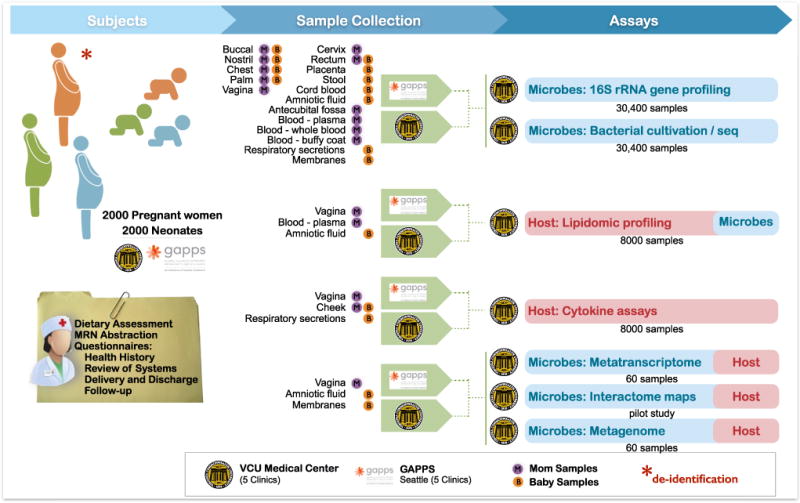
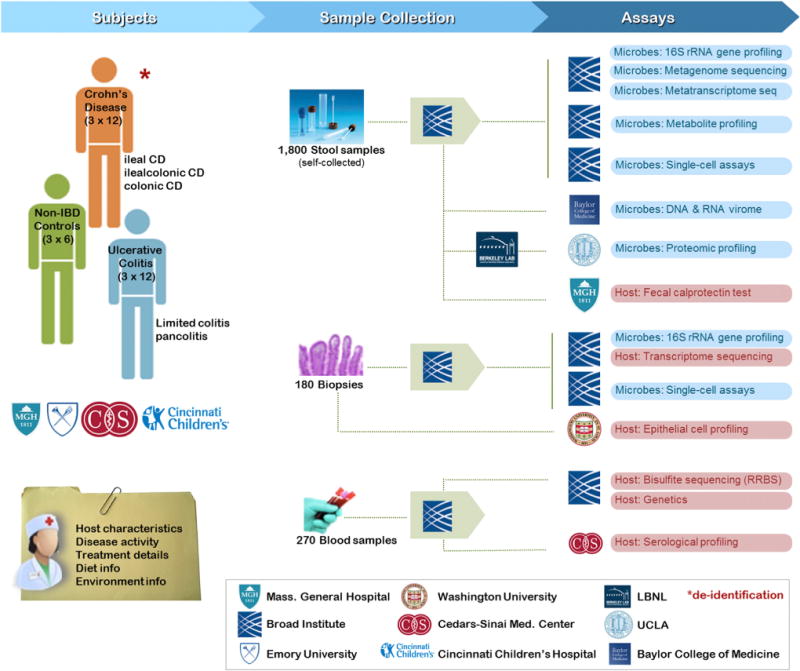
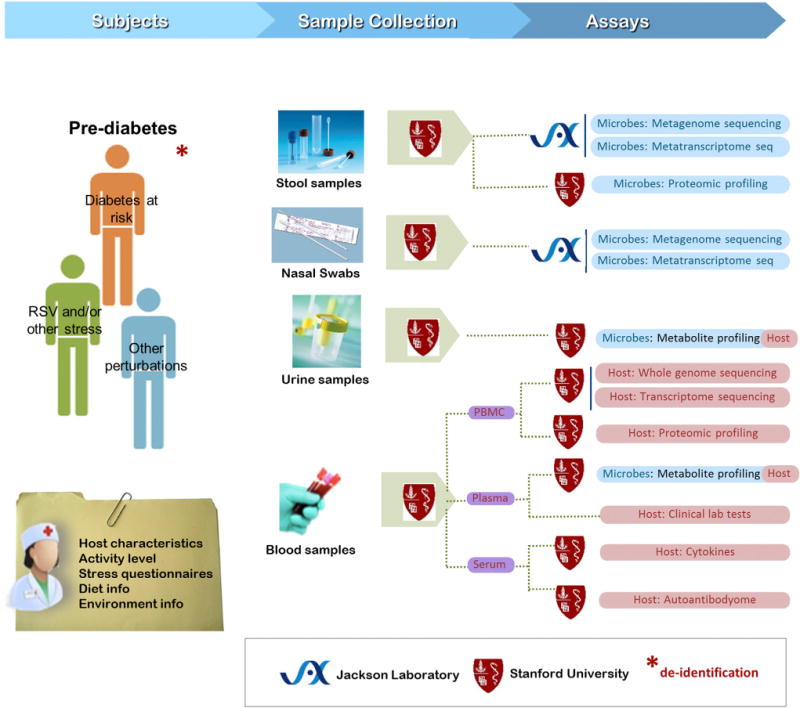
Verification
Claims the paper makes
The claims and statistics of this paper haven’t been checked yet.
Run the check — free, no account needed. It reads the open-access text and checks the sources it cites.
Self-check
Percentages, sums and reported differences re-computed from the paper’s own numbers.
The self-check needs the paper’s full text.
Citations
Cites
A Global Measure of Perceived Stress
Cohen, S., Kamarck, T., & Mermelstein, R. (1983) · Journal of Health and Social Behavior · doi:10.2307/2136404 · Cited by 32,807
Naive Bayesian Classifier for Rapid Assignment of rRNA Sequences into the New Bacterial Taxonomy
Wang, Q., Garrity, G. M., Tiedje, J. M., & Cole, J. R. (2007) · Applied and Environmental Microbiology · doi:10.1128/aem.00062-07 · Cited by 20,145
An obesity-associated gut microbiome with increased capacity for energy harvest
Turnbaugh, P. J., Ley, R. E., Mahowald, M. A., Magrini, V., Mardis, E. R., & Gordon, J. I. (2006) · Nature · doi:10.1038/nature05414 · Cited by 12,444
Structure, function and diversity of the healthy human microbiome
The Human Microbiome Project Consortium (2012) · Nature · doi:10.1038/nature11234 · Cited by 11,726
A human gut microbial gene catalogue established by metagenomic sequencing
MetaHIT Consortium, Qin, J., Li, R., Raes, J., Arumugam, M., Burgdorf, K. S., Manichanh, C., Nielsen, T., Pons, N., Levenez, F., et al. (2010) · Nature · doi:10.1038/nature08821 · Cited by 11,624
A metagenome-wide association study of gut microbiota in type 2 diabetes
Qin, J., Li, Y., Cai, Z., Li, S., Zhu, J., Zhang, F., Liang, S., Zhang, W., Guan, Y., Shen, D., et al. (2012) · Nature · doi:10.1038/nature11450 · Cited by 6,762
Frank, D. N., St. Amand, A. L., Feldman, R. A., Boedeker, E. C., Harpaz, N., & Pace, N. R. (2007) · Proceedings of the National Academy of Sciences · doi:10.1073/pnas.0706625104 · Cited by 4,611
Intestinal microbiota metabolism of l-carnitine, a nutrient in red meat, promotes atherosclerosis
Koeth, R. A., Wang, Z., Levison, B. S., Buffa, J. A., Org, E., Sheehy, B. T., Britt, E. B., Fu, X., Wu, Y., Li, L., et al. (2013) · Nature Medicine · doi:10.1038/nm.3145 · Cited by 4,386
Unravelling the pathogenesis of inflammatory bowel disease
Xavier, R. J., & Podolsky, D. K. (2007) · Nature · doi:10.1038/nature06005 · Cited by 4,364
The Treatment-Naive Microbiome in New-Onset Crohn’s Disease
Gevers, D., Kugathasan, S., Denson, L. A., Vázquez-Baeza, Y., Van Treuren, W., Ren, B., Schwager, E., Knights, D., Song, S. J., Yassour, M., et al. (2014) · Cell Host & Microbe · doi:10.1016/j.chom.2014.02.005 · Cited by 3,220
Cited by
Sorted by citations
Current understanding of the human microbiome
Gilbert, J. A., Blaser, M. J., Caporaso, J. G., Jansson, J. K., Lynch, S. V., & Knight, R. (2018) · Nature Medicine · doi:10.1038/nm.4517 · Cited by 2,609
Using MetaboAnalyst 4.0 for Comprehensive and Integrative Metabolomics Data Analysis
Chong, J., Wishart, D. S., & Xia, J. (2019) · Current Protocols in Bioinformatics · doi:10.1002/cpbi.86 · Cited by 2,183
Best practices for analysing microbiomes
Knight, R., Vrbanac, A., Taylor, B. C., Aksenov, A., Callewaert, C., Debelius, J., Gonzalez, A., Kosciolek, T., McCall, L.-I., McDonald, D., et al. (2018) · Nature Reviews Microbiology · doi:10.1038/s41579-018-0029-9 · Cited by 2,030
Lloyd-Price, J., Abu-Ali, G., & Huttenhower, C. (2016) · Genome Medicine · doi:10.1186/s13073-016-0307-y · Cited by 1,891
Gut microbiota-derived metabolites as key actors in inflammatory bowel disease
Lavelle, A., & Sokol, H. (2020) · Nature Reviews Gastroenterology & Hepatology · doi:10.1038/s41575-019-0258-z · Cited by 2,015
Species-level functional profiling of metagenomes and metatranscriptomes
Franzosa, E. A., McIver, L. J., Rahnavard, G., Thompson, L. R., Schirmer, M., Weingart, G., Lipson, K. S., Knight, R., Caporaso, J. G., Segata, N., et al. (2018) · Nature Methods · doi:10.1038/s41592-018-0176-y · Cited by 1,693
Chong, J., Liu, P., Zhou, G., & Xia, J. (2020) · Nature Protocols · doi:10.1038/s41596-019-0264-1 · Cited by 1,708
The Integrative Human Microbiome Project
The Integrative HMP (iHMP) Research Network Consortium, Proctor, L. M., Creasy, H. H., Fettweis, J. M., Lloyd-Price, J., Mahurkar, A., Zhou, W., Buck, G. A., Snyder, M. P., Strauss, J. F., et al. (2019) · Nature · doi:10.1038/s41586-019-1238-8 · Cited by 1,381
Integrative omics for health and disease
Karczewski, K. J., & Snyder, M. P. (2018) · Nature Reviews Genetics · doi:10.1038/nrg.2018.4 · Cited by 1,158
A defined commensal consortium elicits CD8 T cells and anti-cancer immunity
Tanoue, T., Morita, S., Plichta, D. R., Skelly, A. N., Suda, W., Sugiura, Y., Narushima, S., Vlamakis, H., Motoo, I., Sugita, K., et al. (2019) · Nature · doi:10.1038/s41586-019-0878-z · Cited by 1,145
The gut microbiota at the intersection of diet and human health
Gentile, C. L., & Weir, T. L. (2018) · Science · doi:10.1126/science.aau5812 · Cited by 1,049
RETRACTED ARTICLE: Microbiome analyses of blood and tissues suggest cancer diagnostic approach
Poore, G. D., Kopylova, E., Zhu, Q., Carpenter, C., Fraraccio, S., Wandro, S., Kosciolek, T., Janssen, S., Metcalf, J., Song, S. J., et al. (2020) · Nature · doi:10.1038/s41586-020-2095-1 · Cited by 989
RetractedThomas, A. M., Manghi, P., Asnicar, F., Pasolli, E., Armanini, F., Zolfo, M., Beghini, F., Manara, S., Karcher, N., Pozzi, C., et al. (2019) · Nature Medicine · doi:10.1038/s41591-019-0405-7 · Cited by 1,030
The vaginal microbiome and preterm birth
Fettweis, J. M., Serrano, M. G., Brooks, J. P., Edwards, D. J., Girerd, P. H., Parikh, H. I., Huang, B., Arodz, T. J., Edupuganti, L., Glascock, A. L., et al. (2019) · Nature Medicine · doi:10.1038/s41591-019-0450-2 · Cited by 983
Next-Generation Machine Learning for Biological Networks
Camacho, D. M., Collins, K. M., Powers, R. K., Costello, J. C., & Collins, J. J. (2018) · Cell · doi:10.1016/j.cell.2018.05.015 · Cited by 1,012
The Colonic Crypt Protects Stem Cells from Microbiota-Derived Metabolites
Kaiko, G. E., Ryu, H., Koues, O. I., Collins, P. L., Solnica‐Krezel, L., Pearce, E. J., Pearce, E. L., Oltz, E. M., & Stappenbeck, T. S. (2016) · Cell · doi:10.1016/j.cell.2016.05.018 · Cited by 761
Microbiome-wide association studies link dynamic microbial consortia to disease
Gilbert, J. A., Quinn, R. A., Debelius, J. W., Xu, Z. Z., Morton, J. T., Garg, N., Jansson, J. K., Dorrestein, P. C., & Knight, R. D. (2016) · Nature · doi:10.1038/nature18850 · Cited by 731
A microfluidics-based in vitro model of the gastrointestinal human–microbe interface
Shah, P., Fritz, J. V., Glaab, E., Desai, M. S., Greenhalgh, K., Frachet, A., Niegowska, M., Estes, M., Jäger, C., Seguin-Devaux, C., et al. (2016) · Nature Communications · doi:10.1038/ncomms11535 · Cited by 660
Karkman, A., Pärnänen, K., & Larsson, D. G. J. (2019) · Nature Communications · doi:10.1038/s41467-018-07992-3 · Cited by 628
The Microbiome Quality Control Project Consortium, Sinha, R., Abu-Ali, G., Vogtmann, E., Fodor, A. A., Ren, B., Amir, A., Schwager, E., Crabtree, J., Ma, S., et al. (2017) · Nature Biotechnology · doi:10.1038/nbt.3981 · Cited by 587
Longitudinal multi-omics of host–microbe dynamics in prediabetes
Zhou, W., Sailani, M. R., Contrepois, K., Zhou, Y., Ahadi, S., Leopold, S. R., Zhang, M. J., Rao, V., Avina, M., Mishra, T., et al. (2019) · Nature · doi:10.1038/s41586-019-1236-x · Cited by 583
A Longitudinal Big Data Approach for Precision Health
Schüssler-Fiorenza Rose, S. M., Contrepois, K., Moneghetti, K. J., Zhou, W., Mishra, T., Mataraso, S., Dagan-Rosenfeld, O., Ganz, A. B., Dunn, J., Hornburg, D., et al. (2019) · Nature Medicine · doi:10.1038/s41591-019-0414-6 · Cited by 494
Microbiome and Human Health: Current Understanding, Engineering, and Enabling Technologies
Aggarwal, N., Kitano, S., Puah, G. R. Y., Kittelmann, S., Hwang, I. Y., & Chang, M. W. (2022) · Chemical Reviews · doi:10.1021/acs.chemrev.2c00431 · Cited by 571
Metagenomics, Metatranscriptomics, and Metabolomics Approaches for Microbiome Analysis
Aguiar‐Pulido, V., Huang, W., Suárez-Ulloa, V., Cickovski, T., Mathee, K., & Narasimhan, G. (2016) · Evolutionary Bioinformatics · doi:10.4137/ebo.s36436 · Cited by 549
The Human Oral Microbiome in Health and Disease: From Sequences to Ecosystems
Willis, J. R., & Gabaldón, T. (2020) · Microorganisms · doi:10.3390/microorganisms8020308 · Cited by 495
Ananthakrishnan, A. N., Luo, C., Yajnik, V., Khalili, H., Garber, J. J., Stevens, B. W., Cleland, T., & Xavier, R. J. (2017) · Cell Host & Microbe · doi:10.1016/j.chom.2017.04.010 · Cited by 451
Multi-Omics Profiling for Health
Babu, M., & Snyder, M. P. (2023) · Molecular & Cellular Proteomics · doi:10.1016/j.mcpro.2023.100561 · Cited by 434
Interactions between Bacteriophage, Bacteria, and the Mammalian Immune System
Van Belleghem, J. D., Dąbrowska, K., Vaneechoutte, M., Barr, J. J., & Bollyky, P. L. (2018) · Viruses · doi:10.3390/v11010010 · Cited by 408
The dormant blood microbiome in chronic, inflammatory diseases
Potgieter, M., Bester, J., Kell, D. B., & Pretorius, E. (2015) · FEMS Microbiology Reviews · doi:10.1093/femsre/fuv013 · Cited by 384
Thomas, S., Izard, J., Walsh, E. K., Batich, K. A., Chongsathidkiet, P., Clarke, G. A., Sela, D. A., Muller, A. J., Mullin, J. M., Albert, K., et al. (2017) · Cancer Research · doi:10.1158/0008-5472.can-16-2929 · Cited by 400
Metagenomics of Parkinson’s disease implicates the gut microbiome in multiple disease mechanisms
Wallen, Z. D., Demirkan, A., Twa, G., Cohen, G., Dean, M. N., Standaert, D. G., Sampson, T. R., & Payami, H. (2022) · Nature Communications · doi:10.1038/s41467-022-34667-x · Cited by 346
A practical guide to the oral microbiome and its relation to health and disease
Krishnan, K., Chen, T., & Paster, B. (2017) · Oral Diseases · doi:10.1111/odi.12509 · Cited by 347
A Forward Chemical Genetic Screen Reveals Gut Microbiota Metabolites That Modulate Host Physiology
Chen, H., Nwe, P.-K., Yang, Y., Rosen, C. E., Bielecka, A. A., Kuchroo, M. R., Cline, G. W., Kruse, A. C., Ring, A. M., Crawford, J. M., et al. (2019) · Cell · doi:10.1016/j.cell.2019.03.036 · Cited by 349
Exploring the emerging role of the microbiome in cancer immunotherapy
Fessler, J. L., Matson, V. Z., & Gajewski, T. F. (2019) · Journal for ImmunoTherapy of Cancer · doi:10.1186/s40425-019-0574-4 · Cited by 325
MetaboAnalystR 2.0: From Raw Spectra to Biological Insights
Chong, J., Yamamoto, M., & Xia, J. (2019) · Metabolites · doi:10.3390/metabo9030057 · Cited by 311
Host Genetics and Gut Microbiome: Challenges and Perspectives
Kurilshikov, A., Wijmenga, C., Fu, J., & Zhernakova, A. (2017) · Trends in Immunology · doi:10.1016/j.it.2017.06.003 · Cited by 309
MicrobiotaProcess: A comprehensive R package for deep mining microbiome
Xu, S., Zhan, L., Tang, W., Dai, Z., Zhou, L., Feng, T., Chen, M., Liu, S., Wu, T., Hu, E., et al. (2023) · The Innovation · doi:10.1016/j.xinn.2023.100388 · Cited by 312
Racioethnic diversity in the dynamics of the vaginal microbiome during pregnancy
Serrano, M. G., Parikh, H. I., Brooks, J. P., Edwards, D. J., Arodz, T. J., Edupuganti, L., Huang, B., Girerd, P. H., Bokhari, Y. A., Bradley, S. P., et al. (2019) · Nature Medicine · doi:10.1038/s41591-019-0465-8 · Cited by 300
Predictive metabolomic profiling of microbial communities using amplicon or metagenomic sequences
Mallick, H., Franzosa, E. A., Mclver, L. J., Banerjee, S., Sirota‐Madi, A., Kostic, A. D., Clish, C. B., Vlamakis, H. C., Xavier, R. J., & Huttenhower, C. (2019) · Nature Communications · doi:10.1038/s41467-019-10927-1 · Cited by 283
Drug-microbiota interactions: an emerging priority for precision medicine
Zhao, Q. C., Chen, Y., Huang, W., Zhou, H., & Zhang, W. (2023) · Signal Transduction and Targeted Therapy · doi:10.1038/s41392-023-01619-w · Cited by 309
Interplay between diet, gut microbiota, epigenetic events, and colorectal cancer
Bultman, S. J. (2016) · Molecular Nutrition & Food Research · doi:10.1002/mnfr.201500902 · Cited by 275
Ma, Z., Zuo, T., Frey, N., & Rangrez, A. Y. (2024) · Signal Transduction and Targeted Therapy · doi:10.1038/s41392-024-01946-6 · Cited by 322
Ketogenic Diet and Microbiota: Friends or Enemies?
Paoli, A., Mancin, L., Bianco, A., Thomas, E., Mota, J. F., & Piccini, F. (2019) · Genes · doi:10.3390/genes10070534 · Cited by 276
Williamson, I., Arnold, J. W., Samsa, L. A., Gaynor, L. T., DiSalvo, M., Cocchiaro, J. L., Carroll, I. M., Azcárate-Peril, M. A., Rawls, J. F., Allbritton, N. L., et al. (2018) · Cellular and Molecular Gastroenterology and Hepatology · doi:10.1016/j.jcmgh.2018.05.004 · Cited by 259
Resveratrol, Metabolic Syndrome, and Gut Microbiota
Chaplin, A. M. L., Carpéné, C., & Mercader, J. (2018) · Nutrients · doi:10.3390/nu10111651 · Cited by 256
Gut microbiota dysbiosis in a cohort of patients with psoriasis
Hidalgo‐Cantabrana, C., Gómez, J., Delgado, S., Requena‐López, S., Queiro‐Silva, R., Margolles, A., Coto, E., Sánchez, B., & Coto‐Segura, P. (2019) · British Journal of Dermatology · doi:10.1111/bjd.17931 · Cited by 236
Baseline human gut microbiota profile in healthy people and standard reporting template
King, C. H., Desai, H., Sylvetsky, A. C., LoTempio, J. E., Ayanyan, S., Carrie, J., Crandall, K. A., Fochtman, B. C., Gasparyan, L., Gulzar, N., et al. (2019) · PLoS ONE · doi:10.1371/journal.pone.0206484 · Cited by 251
Vindigni, S. M., Zisman, T. L., Suskind, D. L., & Damman, C. J. (2016) · Therapeutic Advances in Gastroenterology · doi:10.1177/1756283x16644242 · Cited by 241
Host immunoglobulin G selectively identifies pathobionts in pediatric inflammatory bowel diseases
Armstrong, H., Alipour, M., Valcheva, R. S., Bording‐Jorgensen, M., Jovel, J., Zaidi, D., Shah, P., Lou, Y., Ebeling, C., Mason, A. L., et al. (2019) · Microbiome · doi:10.1186/s40168-018-0604-3 · Cited by 228
Dąbrowska, K., & Abedon, S. T. (2019) · Microbiology and Molecular Biology Reviews · doi:10.1128/mmbr.00012-19 · Cited by 229
Integrative Personal Omics Profiles during Periods of Weight Gain and Loss
Piening, B., Zhou, W., Contrepois, K., Röst, H. L., Gu, G. J., Mishra, T., Hanson, B., Bautista, E. J., Leopold, S. R., Yeh, C. Y., et al. (2018) · Cell Systems · doi:10.1016/j.cels.2017.12.013 · Cited by 212
NIH Human Microbiome Portfolio Analysis Team (2019) · Microbiome · doi:10.1186/s40168-019-0620-y · Cited by 215
Tools for Analysis of the Microbiome
Galloway-Peña, J., & Hanson, B. (2020) · Digestive Diseases and Sciences · doi:10.1007/s10620-020-06091-y · Cited by 234
Effects of Rare Microbiome Taxa Filtering on Statistical Analysis
Cao, Q., Sun, X., Rajesh, K., Chalasani, N., Gelow, K., Katz, B. P., Shah, V. H., Sanyal, A. J., & Smirnova, E. (2021) · Frontiers in Microbiology · doi:10.3389/fmicb.2020.607325 · Cited by 211
CAMISIM: simulating metagenomes and microbial communities
Fritz, A., Hofmann, P., Majda, S., Dahms, E., Dröge, J., Fiedler, J., Lesker, T. R., Belmann, P., DeMaere, M. Z., Darling, A. E., et al. (2019) · Microbiome · doi:10.1186/s40168-019-0633-6 · Cited by 194
Chong, J., & Xia, J. (2020) · Methods in molecular biology · doi:10.1007/978-1-0716-0239-3_17 · Cited by 192
Worby, C. J., Schreiber, H. L., Straub, T. J., van Dijk, L. R., Bronson, R. A., Olson, B. S., Pinkner, J. S., Obernuefemann, C. L. P., Muñoz, V. L., Paharik, A. E., et al. (2022) · Nature Microbiology · doi:10.1038/s41564-022-01107-x · Cited by 188
Duran-Pinedo, A. E., & Frias-Lopez, J. (2015) · Microbes and Infection · doi:10.1016/j.micinf.2015.03.014 · Cited by 187
MixMC: A Multivariate Statistical Framework to Gain Insight into Microbial Communities
Cao, K. L., Costello, M., Lakis, V., Bartolo, F., Chua, X., Brazeilles, R., & Rondeau, P. (2016) · PLoS ONE · doi:10.1371/journal.pone.0160169 · Cited by 188
Genome editing using the endogenous type I CRISPR-Cas system in Lactobacillus crispatus
Hidalgo-Cantabrana, C., Goh, Y. J., Pan, M., Sanozky-Dawes, R., & Barrangou, R. (2019) · Proceedings of the National Academy of Sciences · doi:10.1073/pnas.1905421116 · Cited by 189
Undisclosed, unmet and neglected challenges in multi-omics studies
Tarazona, S., Arzalluz-Luque, Á., & Conesa, A. (2021) · Nature Computational Science · doi:10.1038/s43588-021-00086-z · Cited by 185
Drug Metabolism by the Host and Gut Microbiota: A Partnership or Rivalry?
Swanson, H. I. (2015) · Drug Metabolism and Disposition · doi:10.1124/dmd.115.065714 · Cited by 181
Multi-omic approaches for host-microbiome data integration
Chetty, A., & Blekhman, R. (2024) · Gut Microbes · doi:10.1080/19490976.2023.2297860 · Cited by 199
Microbiome Multi-Omics Network Analysis: Statistical Considerations, Limitations, and Opportunities
Jiang, D., Armour, C. R., Hu, C., Meng, M., Tian, C., Sharpton, T. J., & Jiang, Y. (2019) · Frontiers in Genetics · doi:10.3389/fgene.2019.00995 · Cited by 170
Cueva, C., Gil‐Sánchez, I., Ayuda‐Durán, B., González‐Manzano, S., Gonzaléz‐Paramás, A. M., Santos‐Buelga, C., Bartolomé, B., & Moreno-Arribas, M. V. (2017) · Molecules · doi:10.3390/molecules22010099 · Cited by 173
González, N., Prieto, I., del Puerto‐Nevado, L., Portal‐Núñez, S., Ardura, J. A., Cortón, M., Fernández‐Fernández, B., Aguilera, Ó., Gómez‐Guerrero, C., Mas, S., et al. (2017) · Oncotarget · doi:10.18632/oncotarget.14472 · Cited by 177
Metagenomic Approaches for Understanding New Concepts in Microbial Science
Alves, L. D. F., Westmann, C. A., Lovate, G. L., de Siqueira, G. M. V., Borelli, T. C., & Guazzaroni, M. (2018) · International Journal of Genomics · doi:10.1155/2018/2312987 · Cited by 167
Optimization of fecal sample processing for microbiome study — The journey from bathroom to bench
Wu, W., Chen, C., Panyod, S., Chen, R.-A., Wu, M., Sheen, L., & Chang, S. (2018) · Journal of the Formosan Medical Association · doi:10.1016/j.jfma.2018.02.005 · Cited by 167
Gut microbial co-abundance networks show specificity in inflammatory bowel disease and obesity
Chen, L., Collij, V., Jaeger, M., van den Munckhof, I., Vila, A. V., Kurilshikov, A., Gaćeša, R., Sinha, T., Oosting, M., Joosten, L. A. B., et al. (2020) · Nature Communications · doi:10.1038/s41467-020-17840-y · Cited by 158
The Role of the Gut Microbiota in Lipid and Lipoprotein Metabolism
Yu, Y., Raka, F., & Adeli, K. (2019) · Journal of Clinical Medicine · doi:10.3390/jcm8122227 · Cited by 166
Bioactive compounds for human and planetary health
Kussmann, M., Cunha, D. H. A., & Berciano, S. (2023) · Frontiers in Nutrition · doi:10.3389/fnut.2023.1193848 · Cited by 190
Lu, H., Ren, Z., Li, A., Li, J., Xu, S., Zhang, H., Jiang, J., Yang, J., Luo, Q., Zhou, K., et al. (2019) · Journal of Oral Microbiology · doi:10.1080/20002297.2018.1563409 · Cited by 143
Machine learning for data integration in human gut microbiome
Li, P., Luo, H., Ji, B., & Nielsen, J. (2022) · Microbial Cell Factories · doi:10.1186/s12934-022-01973-4 · Cited by 155
Metagenomic analysis of microbe-mediated vitamin metabolism in the human gut microbiome
Das, P., Babaei, P., & Nielsen, J. (2019) · BMC Genomics · doi:10.1186/s12864-019-5591-7 · Cited by 143
Exploring and Understanding the Biochemical Diversity of the Human Microbiota
Koppel, N., & Balskus, E. P. (2016) · Cell chemical biology · doi:10.1016/j.chembiol.2015.12.008 · Cited by 140
‘Multi-omics’ data integration: applications in probiotics studies
Kwoji, I. D., Aiyegoro, O. A., Okpeku, M., & Adeleke, M. A. (2023) · npj Science of Food · doi:10.1038/s41538-023-00199-x · Cited by 143
Ganda, E., Bisinotto, R. S., Lima, S. F., Kronauer, K., Decter, D. H., Oikonomou, G., Schukken, Y. H., & Bicalho, R. C. (2016) · Scientific Reports · doi:10.1038/srep37565 · Cited by 129
Specific Gut Microbiome and Serum Metabolome Changes in Lung Cancer Patients
Zhao, F., An, R., Wang, L., Shan, J., & Wang, X. (2021) · Frontiers in Cellular and Infection Microbiology · doi:10.3389/fcimb.2021.725284 · Cited by 129
Ahmadi, S., Nagpal, R., Wang, S., Gagliano, J., Kitzman, D. W., Soleimanian-Zad, S., Sheikh-Zeinoddin, M., Read, R., & Yadav, H. (2019) · The Journal of Nutritional Biochemistry · doi:10.1016/j.jnutbio.2019.01.011 · Cited by 124
Host and microbiome multi-omics integration: applications and methodologies
Wang, Q., Wang, K., Wu, W., Giannoulatou, E., Ho, J. W. K., & Li, L. (2019) · Biophysical Reviews · doi:10.1007/s12551-018-0491-7 · Cited by 125
Metatranscriptome of the Oral Microbiome in Health and Disease
Solbiati, J., & Frias‐Lopez, J. (2018) · Journal of Dental Research · doi:10.1177/0022034518761644 · Cited by 119
Zhang, X., & Yi, N. (2020) · BMC Bioinformatics · doi:10.1186/s12859-020-03803-z · Cited by 117
Diversity of Vaginal Microbiome in Pregnancy: Deciphering the Obscurity
Gupta, P., Singh, M. P., & Goyal, K. (2020) · Frontiers in Public Health · doi:10.3389/fpubh.2020.00326 · Cited by 124
Computational methods for chromosome-scale haplotype reconstruction
Garg, S. (2021) · Genome Biology · doi:10.1186/s13059-021-02328-9 · Cited by 116
Carlson, J. M., Leonard, A. B., Hyde, E. R., Petrosino, J., & Primm, T. P. (2017) · Infection and Drug Resistance · doi:10.2147/idr.s129055 · Cited by 115
The Microbiome and Hematopoietic Cell Transplantation: Past, Present, and Future
Andermann, T. M., Peled, J. U., Ho, C. M., Reddy, P. R., Riches, M., Storb, R. F., Teshima, T., van den Brink, M. R. M., Alousi, A. M., Balderman, S., et al. (2018) · Transplantation and Cellular Therapy · doi:10.1016/j.bbmt.2018.02.009 · Cited by 113
Bronchiectasis: Current Concepts in Pathogenesis, Immunology, and Microbiology
Boyton, R. J., & Altmann, D. M. (2016) · Annual Review of Pathology Mechanisms of Disease · doi:10.1146/annurev-pathol-012615-044344 · Cited by 113
Characterization of oral and gut microbiome temporal variability in hospitalized cancer patients
Galloway-Peña, J., Smith, D. P., Sahasrabhojane, P. V., Wadsworth, W. D., Fellman, B. M., Ajami, N. J., Shpall, E. J., Daver, N. G., Guindani, M., Petrosino, J. F., et al. (2017) · Genome Medicine · doi:10.1186/s13073-017-0409-1 · Cited by 118
Role of gut microbiota in aging-related health decline: insights from invertebrate models
Clark, R. I., & Walker, D. W. (2017) · Cellular and Molecular Life Sciences · doi:10.1007/s00018-017-2671-1 · Cited by 121
Hoffmann, A. R., Proctor, L. M., Surette, M. G., & Suchodolski, J. S. (2015) · Veterinary Pathology · doi:10.1177/0300985815595517 · Cited by 121
Nutrients Turned into Toxins: Microbiota Modulation of Nutrient Properties in Chronic Kidney Disease
Fernández-Prado, R., Esteras, R., Pérez-Gómez, M. V., Gracia-Iguacel, C., González‐Parra, E., Sanz, A. B., Ortíz, A., & Sánchez-Niño, M. D. (2017) · Nutrients · doi:10.3390/nu9050489 · Cited by 109
Immunity, microbiota and kidney disease
Knauf, F., Brewer, J. R., & Flavell, R. A. (2019) · Nature Reviews Nephrology · doi:10.1038/s41581-019-0118-7 · Cited by 112
Schiebenhoefer, H., Bossche, T. V. D., Fuchs, S., Renard, B. Y., Muth, T., & Martens, L. (2019) · Expert Review of Proteomics · doi:10.1080/14789450.2019.1609944 · Cited by 108
Musella, M., Wathsala, R., Tavella, T., Rampelli, S., Barone, M., Palladino, G., Biagi, E., Brigidi, P., Turroni, S., Franzellitti, S., et al. (2020) · The Science of The Total Environment · doi:10.1016/j.scitotenv.2020.137209 · Cited by 115
Parasite microbiome project: Grand challenges
Dheilly, N. M., Martínez, J. M., Rosario, K., Brindley, P. J., Fichorova, R. N., Kaye, J. Z., Kohl, K. D., Knoll, L. J., Lukeš, J., Perkins, S. L., et al. (2019) · PLoS Pathogens · doi:10.1371/journal.ppat.1008028 · Cited by 106
Intra‐oral single‐site comparisons of periodontal and peri‐implant microbiota in health and disease
Yu, X., Chan, Y., Zhuang, L., Lai, H., Lang, N. P., Leung, W. K., & Watt, R. M. (2019) · Clinical Oral Implants Research · doi:10.1111/clr.13459 · Cited by 103
OmicsAnalyst: a comprehensive web-based platform for visual analytics of multi-omics data
Zhou, G., Ewald, J., & Xia, J. (2021) · Nucleic Acids Research · doi:10.1093/nar/gkab394 · Cited by 102
Systems biology of host–microbe metabolomics
Heinken, A., & Thiele, I. (2015) · WIREs Systems Biology and Medicine · doi:10.1002/wsbm.1301 · Cited by 99
Qiu, C. C., Caricchio, R., & Gallucci, S. (2019) · Frontiers in Immunology · doi:10.3389/fimmu.2019.02608 · Cited by 106
Metage2Metabo, microbiota-scale metabolic complementarity for the identification of key species
Belcour, A., Frioux, C., Aïte, M., Bretaudeau, A., Hildebrand, F., & Siegel, A. (2020) · eLife · doi:10.7554/elife.61968 · Cited by 99
Metadata
- Venue
- Cell Host & Microbe
- Publisher
- Elsevier BV
- Published
- 2014-09
- Volume
- 16
- Issue
- 3
- Pages
- 276-289
- ISSN
- 1931-3128 (ISSN-L)
- PMC
- PMC5109542
- OpenAlex
- W2624135745
- Cited by
- 536
- References
- 80
- Citations by year
- 2026: 34 · 2025: 30 · 2024: 46 · 2023: 46 · 2022: 56 · 2021: 63 · 2020: 64 · 2019: 73 · 2018: 52 · 2017: 30 · 2016: 25 · 2015: 17
- FWCI
- 9.79
- Type
- journal article
- Language
- en
- Open access
- hybrid
- doi.org
- Locations
- Cell Host & Microbe (publishedVersion, cc-by)
- PubMed (publishedVersion)
- PubMed Central (acceptedVersion, cc-by)
- eScholarship (California Digital Library) (submittedVersion)
- Funders
- National Institute on Aging (U19AG063744)
- National Human Genome Research Institute (U01HG004866)
- National Institute of Allergy and Infectious Diseases (UH3AI083263)
- National Institute of Diabetes and Digestive and Kidney Diseases (U54DK102556, U54DK102557)
- Eunice Kennedy Shriver National Institute of Child Health and Human Development (U54HD080784)
- Topics
- Life Sciences › Biochemistry, Genetics and Molecular Biology › Molecular Biology › Gut microbiota and health
- Health Sciences › Dentistry › Periodontics › Oral microbiology and periodontitis research
- Physical Sciences › Environmental Science › Ecology › Microbial Community Ecology and Physiology
- Keywords
- human microbiome, host-microbiome interactions, microbiome dynamics, preterm birth, inflammatory bowel disease, type 2 diabetes, multi-omics integration, longitudinal cohort, public data repositories
- MeSH terms
- Bacteria, Diabetes Mellitus, Type 2, Health, Humans, Inflammatory Bowel Diseases, Bacterial Physiological Phenomena, Premature Birth, Microbiota
About these checks
Registry, retraction, Cites and statistics results are computed, not judged, with one exception: a printed reference that no index lists is read once by a model before it counts as a citation error. Claims are extracted by a model and kept only when their quote appears verbatim in the text; each cited source is then checked, with a model’s help, for whether it says what the claim relies on. Those verdicts can be wrong — read the claim’s quote and the cited source before relying on one.
Statistics and arithmetic are recomputed, not judged.
Confidence bands are shown only for fields calibrated on our annotated test set. None is calibrated yet, so no band is shown.
What counts as a claim ›How we measure confidence ›How we check this ›
Are you an author, or do you see a problem with this page? Request a review
