

The DOI matches its Crossref record; 74 of the 75 references it cites were found in a registry or an index.
Systematic analysis of intrinsic enhancer-promoter compatibility in the mouse genome
Open accessPublished version of a preprint
Abstract
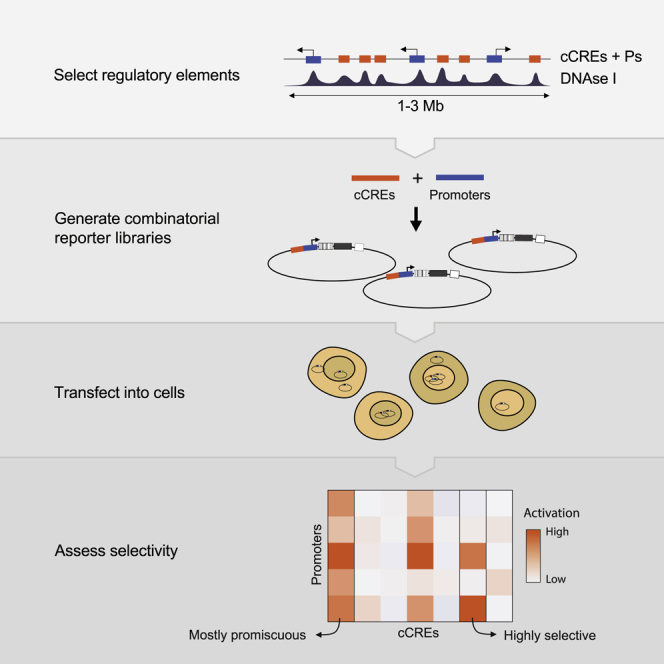
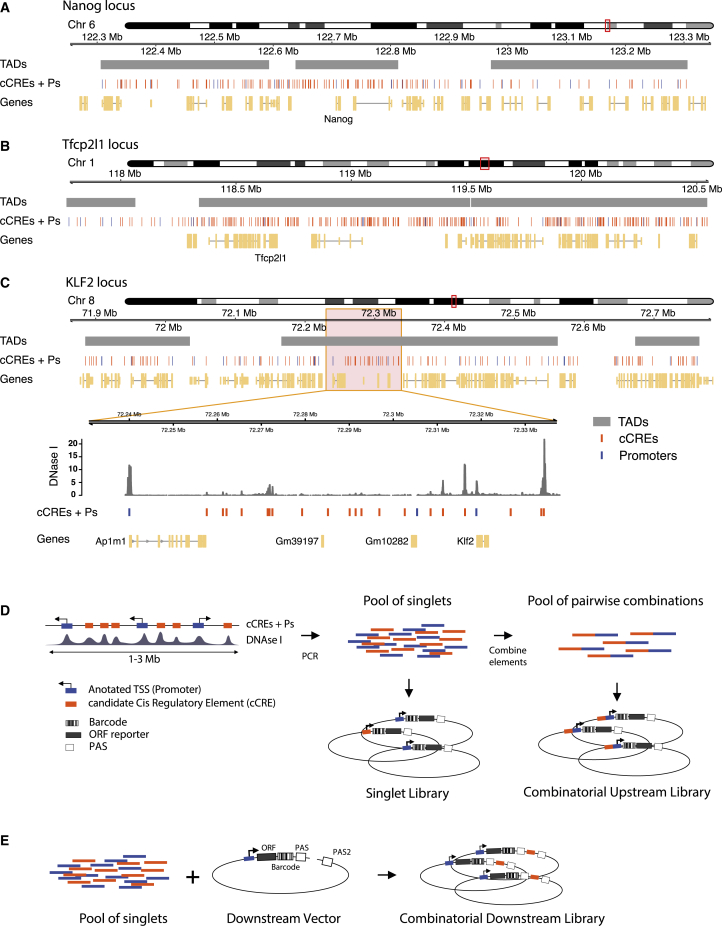
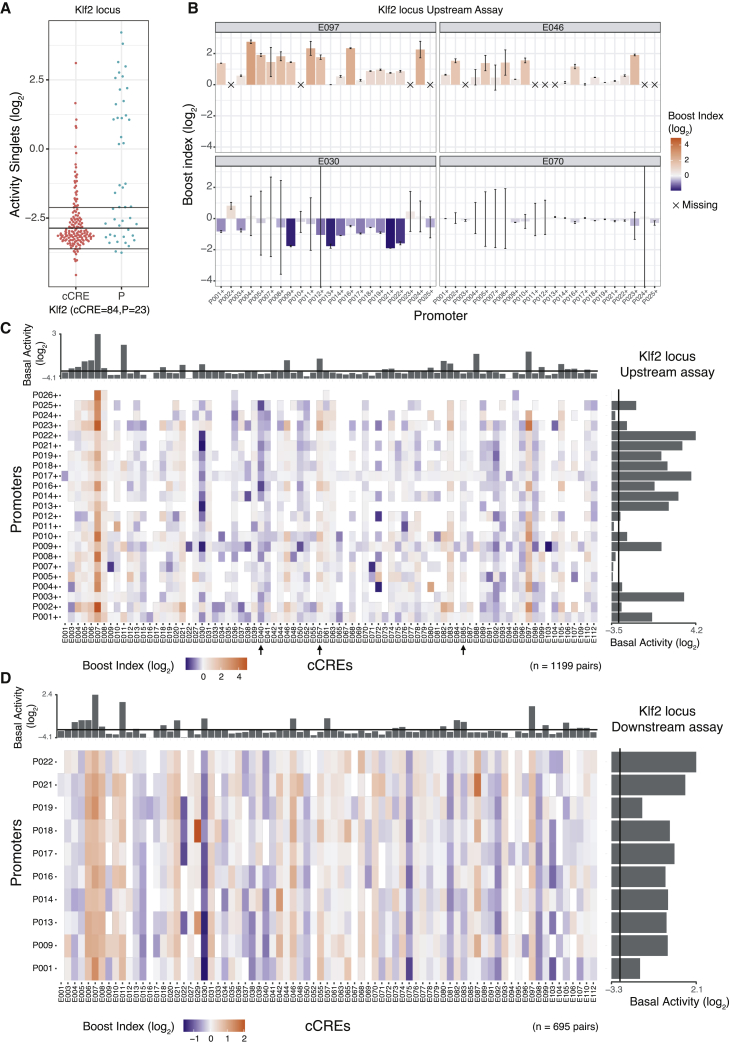
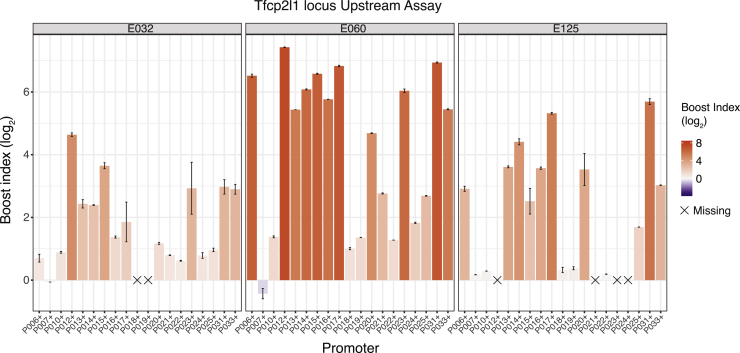
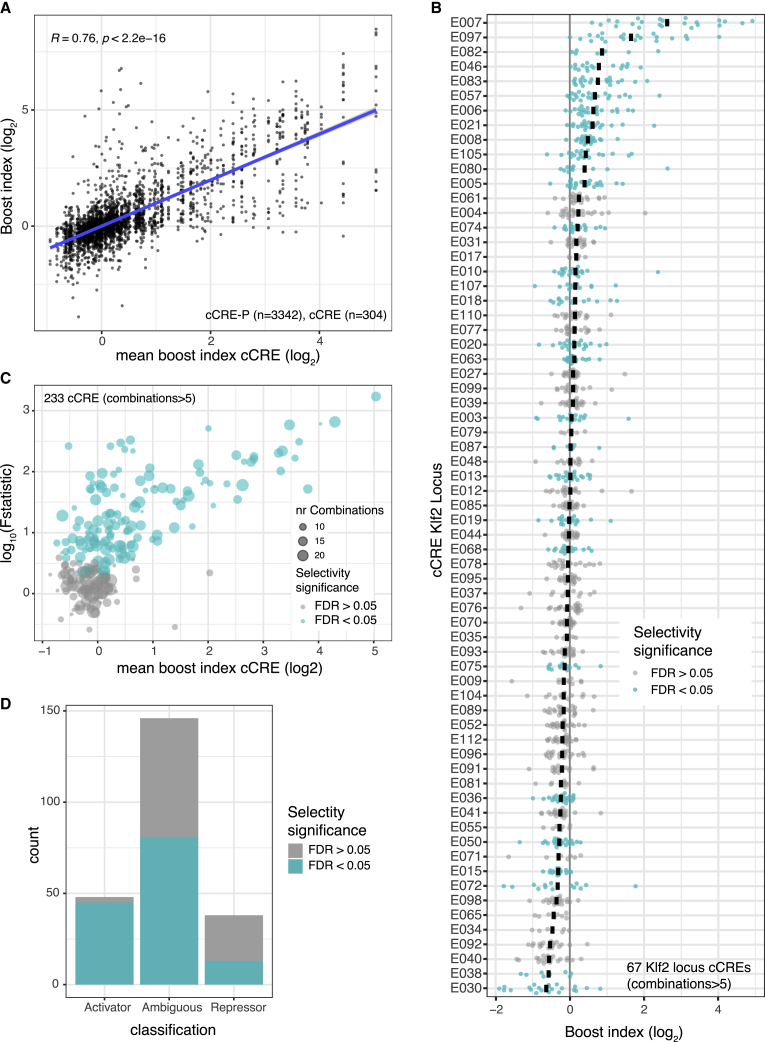
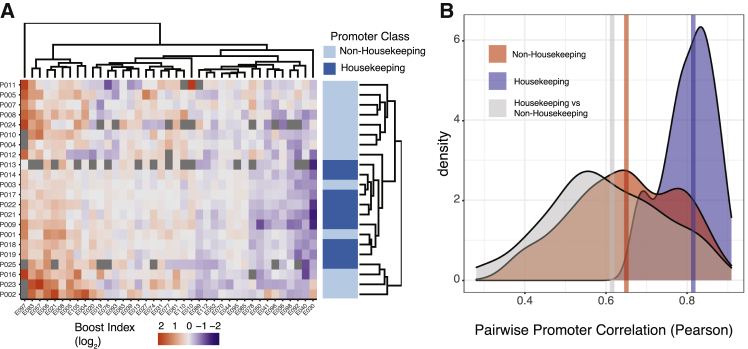
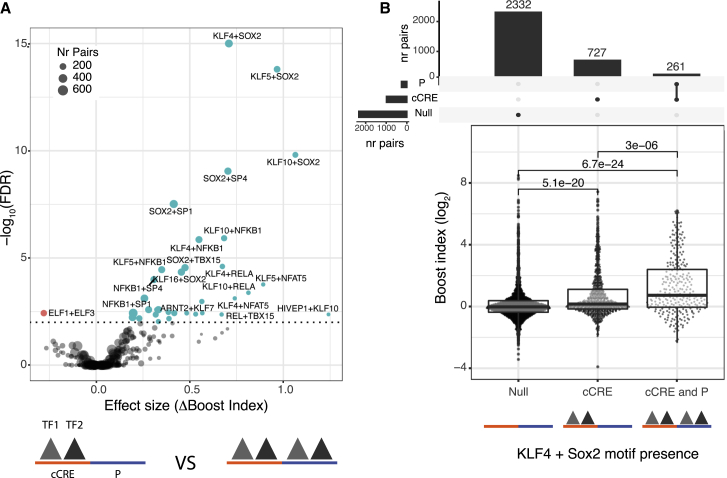
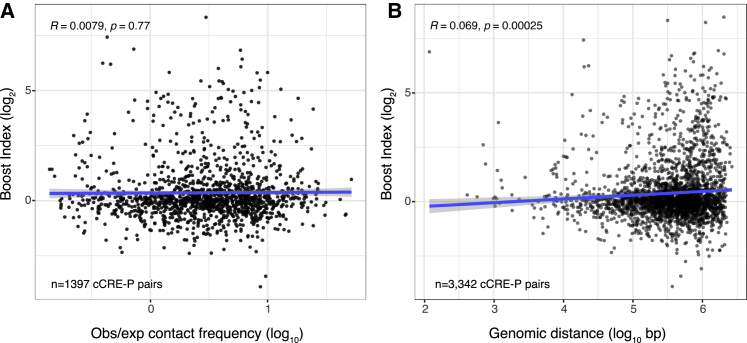
Gene expression is in part controlled by cis-regulatory elements (CREs) such as enhancers and repressive elements. Anecdotal evidence has indicated that a CRE and a promoter need to be biochemically compatible for promoter regulation to occur, but this compatibility has remained poorly characterized in mammalian cells. We used high-throughput combinatorial reporter assays to test thousands of CRE-promoter pairs from three Mb-sized genomic regions in mouse cells. This revealed that CREs vary substantially in their promoter compatibility, ranging from striking specificity to broad promiscuity. More than half of the tested CREs exhibit significant promoter selectivity. Housekeeping promoters tend to have similar CRE preferences, but other promoters exhibit a wide diversity of compatibilities. Higher-order transcription factors (TF) motif combinations may account for compatibility. CRE-promoter selectivity does not correlate with looping interactions in the native genomic context, suggesting that chromatin folding and compatibility are two orthogonal mechanisms that confer specificity to gene regulation.
Overview
The claims and statistics of this paper haven’t been checked yet.
Run the check — free, no account needed. It reads the open-access text and checks the sources it cites.
Integrity signals
Registry
Cites
Statistics
Figures
Verification
Claims the paper makes
The claims and statistics of this paper haven’t been checked yet.
Run the check — free, no account needed. It reads the open-access text and checks the sources it cites.
Claims other papers make about this one
Each is checked against this paper’s own text: does it say what the citing paper says it does?
The cited source says what the claim attributes to it.
In the citing paper
“Analysis of a number of enhancer-promoter pairs in the mouse genome has demonstrated that different enhancers show various levels of specificity, ranging from the ability to activate a wide range of promoters to highly specific activation of a particular promoter [136].”
From Enhancer Function in the 3D Genome (2023) · cites this paper as [136]
Self-check
Percentages, sums and reported differences re-computed from the paper’s own numbers.
The self-check needs the paper’s full text.
Citations
Cites
R: A Language and Environment for Statistical Computing
R Core Team (2000) · doi:10.32614/r.manuals · Cited by 355,893
Fast gapped-read alignment with Bowtie 2
Langmead, B., & Salzberg, S. L. (2012) · Nature Methods · doi:10.1038/nmeth.1923 · Cited by 56,400
An integrated encyclopedia of DNA elements in the human genome
The ENCODE Project Consortium (2012) · Nature · doi:10.1038/nature11247 · Cited by 18,072
ggplot2: Elegant Graphics for Data Analysis
Ginestet, C. E. (2011) · Journal of the Royal Statistical Society Series A (Statistics in Society) · doi:10.1111/j.1467-985x.2010.00676_9.x · Cited by 14,511
Heinz, S., Benner, C., Spann, N., Bertolino, E., Lin, Y. C., Laslo, P., Cheng, J. X., Murre, C., Singh, H., & Glass, C. K. (2010) · Molecular Cell · doi:10.1016/j.molcel.2010.05.004 · Cited by 13,382
MEME SUITE: tools for motif discovery and searching
Bailey, T. L., Boden, M., Buske, F. A., Frith, M., Grant, C. E., Clementi, L., Ren, J., Li, W. W., & Noble, W. S. (2009) · Nucleic Acids Research · doi:10.1093/nar/gkp335 · Cited by 10,648
Landscape of transcription in human cells
Djebali, S., Davis, C. A., Merkel, A., Dobin, A., Lassmann, T., Mortazavi, A., Tanzer, A., Lagarde, J., Lin, W., Schlesinger, F., et al. (2012) · Nature · doi:10.1038/nature11233 · Cited by 5,187
GENCODE reference annotation for the human and mouse genomes
Frankish, A., Diekhans, M., Ferreira, A.-M., Johnson, R., Jungreis, I., Loveland, J. E., Mudge, J. M., Sisu, C., Wright, J. C., Armstrong, J. C., et al. (2018) · Nucleic Acids Research · doi:10.1093/nar/gky955 · Cited by 3,006
Snakemake—a scalable bioinformatics workflow engine
Köster, J., & Rahmann, S. (2012) · Bioinformatics · doi:10.1093/bioinformatics/bts480 · Cited by 2,780
An atlas of active enhancers across human cell types and tissues
The FANTOM Consortium, Andersson, R., Gebhard, C., Miguel-Escalada, I., Hoof, I., Bornholdt, J., Boyd, M., Chen, Y., Zhao, X., Schmidl, C., et al. (2014) · Nature · doi:10.1038/nature12787 · Cited by 2,550
Expanded encyclopaedias of DNA elements in the human and mouse genomes
The ENCODE Project Consortium, Abascal, F., Acosta, R., Addleman, N. J., Adrian, J., Afzal, V., Ai, R., Aken, B., Akiyama, J. A., Jammal, O. A., et al. (2020) · Nature · doi:10.1038/s41586-020-2493-4 · Cited by 2,378
Disruptions of Topological Chromatin Domains Cause Pathogenic Rewiring of Gene-Enhancer Interactions
Lupiáñez, D. G., Kraft, K., Heinrich, V., Krawitz, P., Brancati, F., Klopocki, E., Horn, D., Kayserili, H., Opitz, J. M., Laxova, R., et al. (2015) · Cell · doi:10.1016/j.cell.2015.04.004 · Cited by 2,132
Determination and Inference of Eukaryotic Transcription Factor Sequence Specificity
Weirauch, M. T., Yang, A. W. H., Albu, M., Coté, A. G., Montenegro‐Montero, A., Drewe, P., Najafabadi, H. S., Lambert, S. A., Mann, I. K., Cook, K. B., et al. (2014) · Cell · doi:10.1016/j.cell.2014.08.009 · Cited by 1,749
Expression of a β-globin gene is enhanced by remote SV40 DNA sequences
Banerji, J., Rusconi, S., & Schaffner, W. (1981) · Cell · doi:10.1016/0092-8674(81)90413-x · Cited by 1,724
An Extended Transcriptional Network for Pluripotency of Embryonic Stem Cells
Kim, J., Chu, J., Shen, X., Wang, J., & Orkin, S. H. (2008) · Cell · doi:10.1016/j.cell.2008.02.039 · Cited by 1,361
Transcriptional enhancers: from properties to genome-wide predictions
Shlyueva, D., Stampfel, G., & Stark, A. (2014) · Nature Reviews Genetics · doi:10.1038/nrg3682 · Cited by 1,356
Multiscale 3D Genome Rewiring during Mouse Neural Development
Bonev, B., Mendelson Cohen, N., Szabo, Q., Fritsch, L., Papadopoulos, G. L., Lubling, Y., Xu, X., Lv, X., Hugnot, J.-P., Tanay, A., et al. (2017) · Cell · doi:10.1016/j.cell.2017.09.043 · Cited by 1,338
Lettice, L. A. (2003) · Human Molecular Genetics · doi:10.1093/hmg/ddg180 · Cited by 1,164
Genome-Wide Quantitative Enhancer Activity Maps Identified by STARR-seq
Arnold, C. D., Gerlach, D., Stelzer, C., Boryń, Ł. M., Rath, M., & Stark, A. (2013) · Science · doi:10.1126/science.1232542 · Cited by 1,125
Long-range enhancer–promoter contacts in gene expression control
Schoenfelder, S., & Fraser, P. (2019) · Nature Reviews Genetics · doi:10.1038/s41576-019-0128-0 · Cited by 1,102
Ever-Changing Landscapes: Transcriptional Enhancers in Development and Evolution
Long, H. K., Prescott, S. L., & Wysocka, J. (2016) · Cell · doi:10.1016/j.cell.2016.09.018 · Cited by 945
BatchPrimer3: A high throughput web application for PCR and sequencing primer design
You, F. M., Huo, N., Gu, Y., Luo, M., Ma, Y., Dave, H., Lazo, G. R., Dvořák, J., & Anderson, O. D. (2008) · BMC Bioinformatics · doi:10.1186/1471-2105-9-253 · Cited by 792
Deng, W., Lee, J., Wang, H., Miller, J., Reik, A., Gregory, P. D., Dean, A., & Blobel, G. A. (2012) · Cell · doi:10.1016/j.cell.2012.03.051 · Cited by 734
Resolving the 3D Landscape of Transcription-Linked Mammalian Chromatin Folding
Hsieh, T.-H. S., Cattoglio, C., Slobodyanyuk, E., Hansen, A. S., Rando, O. J., Tjian, R., & Darzacq, X. (2020) · Molecular Cell · doi:10.1016/j.molcel.2020.03.002 · Cited by 661
Developmental enhancers and chromosome topology
Furlong, E. E. M., & Levine, M. (2018) · Science · doi:10.1126/science.aau0320 · Cited by 641
The "beta-like-globin" gene domain in human erythroid cells.
Tuan, D., Solomon, W., Li, Q., & London, I. M. (1985) · Proceedings of the National Academy of Sciences · doi:10.1073/pnas.82.19.6384 · Cited by 601
Proximity among Distant Regulatory Elements at the β-Globin Locus Requires GATA-1 and FOG-1
Vakoc, C. R., Letting, D. L., Gheldof, N., Sawado, T., Bender, M. A., Groudine, M., Weiss, M. J., Dekker, J., & Blobel, G. A. (2005) · Molecular Cell · doi:10.1016/j.molcel.2004.12.028 · Cited by 490
Enhancer–core-promoter specificity separates developmental and housekeeping gene regulation
Zabidi, M. A., Arnold, C. D., Schernhuber, K., Pagani, M., Rath, M., Frank, O., & Stark, A. (2015) · Nature · doi:10.1038/nature13994 · Cited by 471
Computational analysis of core promoters in the Drosophila genome
Ohler, U., Liao, G., Niemann, H., & Rubin, G. M. (2002) · Genome biology · doi:10.1186/gb-2002-3-12-research0087 · Cited by 458
dbSUPER: a database of super-enhancers in mouse and human genome
Khan, A., & Zhang, X. (2015) · Nucleic Acids Research · doi:10.1093/nar/gkv1002 · Cited by 392
Fiering, S., Epner, E. M., Robinson, K. M., Zhuang, Y., Telling, A., Hu, M., Martin, D. I. K., Enver, T., Ley, T. J., & Groudine, M. T. (1995) · Genes & Development · doi:10.1101/gad.9.18.2203 · Cited by 334
Decoding enhancers using massively parallel reporter assays
Inoue, F., & Ahituv, N. (2015) · Genomics · doi:10.1016/j.ygeno.2015.06.005 · Cited by 272
FOXO1 is an essential regulator of pluripotency in human embryonic stem cells
Zhang, X., Yalcin, S., Lee, D., Yeh, T.-Y. J., Lee, S.-M., Su, J., Mungamuri, S. K., Rimmelé, P., Kennedy, M., Sellers, R. S., et al. (2011) · Nature Cell Biology · doi:10.1038/ncb2293 · Cited by 267
Enhancer–promoter specificity mediated by DPE or TATA core promoter motifs
Butler, J. E. F., & Kadonaga, J. T. (2001) · Genes & Development · doi:10.1101/gad.924301 · Cited by 265
El Khattabi, L., Zhao, H., Kalchschmidt, J., Young, N., Jung, S., Van Blerkom, P., Kieffer-Kwon, P., Kieffer-Kwon, K.-R., Park, S., Wang, X., et al. (2019) · Cell · doi:10.1016/j.cell.2019.07.011 · Cited by 244
Starcode: sequence clustering based on all-pairs search
Zorita, E. V., Cuscó, P., & Filion, G. J. P. (2015) · Bioinformatics · doi:10.1093/bioinformatics/btv053 · Cited by 241
Kircher, M., Xiong, C., Martin, B., Schubach, M., Inoue, F., Bell, R. J. A., Costello, J. F., Shendure, J., & Ahituv, N. (2019) · Nature Communications · doi:10.1038/s41467-019-11526-w · Cited by 234
Regulatory Enhancer–Core-Promoter Communication via Transcription Factors and Cofactors
Zabidi, M. A., & Stark, A. (2016) · Trends in Genetics · doi:10.1016/j.tig.2016.10.003 · Cited by 228
Functional Dissection of the Enhancer Repertoire in Human Embryonic Stem Cells
Barakat, T. S., Halbritter, F., Zhang, M., Rendeiro, A. F., Perenthaler, E., Bock, C., & Chambers, I. (2018) · Cell stem cell · doi:10.1016/j.stem.2018.06.014 · Cited by 227
A systematic evaluation of the design and context dependencies of massively parallel reporter assays
Klein, J. C., Agarwal, V., Inoue, F., Keith, A., Martin, B., Kircher, M., Ahituv, N., & Shendure, J. (2020) · Nature Methods · doi:10.1038/s41592-020-0965-y · Cited by 226
Jing, H., Vakoc, C. R., Ying, L., Mandat, S. A., Wang, H., Zheng, X., & Blobel, G. A. (2008) · Molecular Cell · doi:10.1016/j.molcel.2007.11.020 · Cited by 221
Joshi, O., Wang, S.-Y., Kuznetsova, T., Atlasi, Y., Peng, T., Fabre, P. J., Habibi, E., Shaik, J., Saeed, S., Handoko, L., et al. (2015) · Cell stem cell · doi:10.1016/j.stem.2015.11.010 · Cited by 208
High-throughput identification of human SNPs affecting regulatory element activity
(2019) · doi:10.1038/s41588-019-0455-2 · Cited by 205
Self-citationRegulatory Landscaping: How Enhancer-Promoter Communication Is Sculpted in 3D
Robson, M. I., Ringel, A. R., & Mundlos, S. (2019) · Molecular Cell · doi:10.1016/j.molcel.2019.05.032 · Cited by 203
Sequence determinants of human gene regulatory elements
Sahu, B., Hartonen, T., Pihlajamaa, P., Wei, B., Dave, K., Zhu, F., Kaasinen, E., Lidschreiber, K., Lidschreiber, M., Daub, C. O., et al. (2022) · Nature Genetics · doi:10.1038/s41588-021-01009-4 · Cited by 198
Groudine, M. T., Kohwi-shigematsu, T., Gelinas, R. E., Stamatoyannopoulos, G., & PAPAYANNOPOULOU, T. (1983) · Proceedings of the National Academy of Sciences · doi:10.1073/pnas.80.24.7551 · Cited by 190
Systematic identification of silencers in human cells
Pang, B., & Snyder, M. P. (2020) · Nature Genetics · doi:10.1038/s41588-020-0578-5 · Cited by 183
In search of the determinants of enhancer–promoter interaction specificity
van Arensbergen, J., van Steensel, B., & Bussemaker, H. J. (2014) · Trends in Cell Biology · doi:10.1016/j.tcb.2014.07.004 · Cited by 180
Compatibility rules of human enhancer and promoter sequences
Bergman, D. T., Jones, T. R., Liu, V., Ray, J., Jagoda, E., Siraj, L., Kang, H. Y., Nasser, J., Kane, M., Rios, A., et al. (2022) · Nature · doi:10.1038/s41586-022-04877-w · Cited by 169
Diaferia, G. R., Balestrieri, C., Prosperini, E., Nicoli, P., Spaggiari, P., Zerbi, A., & Natoli, G. (2016) · The EMBO Journal · doi:10.15252/embj.201592404 · Cited by 149
Klf4 Interacts Directly with Oct4 and Sox2 to Promote Reprogramming
Wei, Z., Yang, Y., Zhang, P., Andrianakos, R., Hasegawa, K., Lyu, J., Chen, X., Bai, G., Liu, C., Pera, M. F., et al. (2009) · Stem Cells · doi:10.1002/stem.231 · Cited by 146
Genome-wide mapping of autonomous promoter activity in human cells
van Arensbergen, J., FitzPatrick, V. D., de Haas, M., Pagie, L., Sluimer, J., Bussemaker, H. J., & van Steensel, B. (2017) · Nature Biotechnology · doi:10.1038/nbt.3754 · Cited by 140
Super-Enhancers at the Nanog Locus Differentially Regulate Neighboring Pluripotency-Associated Genes
Blinka, S. M., Reimer, M. H., Pulakanti, K., & Rao, S. (2016) · Cell Reports · doi:10.1016/j.celrep.2016.09.002 · Cited by 129
Gisselbrecht, S. S., Palagi, A., Kurland, J. V., Rogers, J. M., Ozadam, H., Zhan, Y., Dekker, J., & Bulyk, M. L. (2020) · Molecular Cell · doi:10.1016/j.molcel.2019.10.004 · Cited by 128
Transcriptional cofactors display specificity for distinct types of core promoters
Haberle, V., Arnold, C. D., Pagani, M., Rath, M., Schernhuber, K., & Stark, A. (2019) · Nature · doi:10.1038/s41586-019-1210-7 · Cited by 123
Automated high-throughput mapping of promoter-enhancer interactions in zebrafish embryos
Gehrig, J., Reischl, M., Kalmár, É., Ferg, M., Hadzhiev, Y., Zaucker, A., Song, C., Schindler, S., Liebel, U., & Müller, F. (2009) · Nature Methods · doi:10.1038/nmeth.1396 · Cited by 123
Transcriptional Silencers: Driving Gene Expression with the Brakes On
Segert, J. A., Gisselbrecht, S. S., & Bulyk, M. L. (2021) · Trends in Genetics · doi:10.1016/j.tig.2021.02.002 · Cited by 116
Promoter specificity mediates the independent regulation of neighboring genes.
Merli, C., Bergstrom, D. E., Cygan, J. A., & Blackman, R. K. (1996) · Genes & Development · doi:10.1101/gad.10.10.1260 · Cited by 115
Li, X., & Noll, M. (1994) · The EMBO Journal · doi:10.1002/j.1460-2075.1994.tb06274.x · Cited by 105
Dense and pleiotropic regulatory information in a developmental enhancer
Fuqua, T., Jordan, J., van Breugel, M. E., Halavatyi, A. A., Tischer, C., Polidoro, P., Abe, N., Tsai, A., Mann, R. S., Stern, D. L., et al. (2020) · Nature · doi:10.1038/s41586-020-2816-5 · Cited by 98
Caudal, a key developmental regulator, is a DPE-specific transcriptional factorPreprint
Juven‐Gershon, T., Hsu, J.-Y., & Kadonaga, J. T. (2008) · Genes & Development · doi:10.1101/gad.1698108 · Cited by 98
Akagi, T., Kuure, S., Uranishi, K., Koide, H., Costantini, F. D., & Yokota, T. (2015) · Journal of Biological Chemistry · doi:10.1074/jbc.m115.675595 · Cited by 93
Genome-wide assessment of sequence-intrinsic enhancer responsiveness at single-base-pair resolution
Arnold, C. D., Zabidi, M. M. A., Pagani, M., Rath, M., Schernhuber, K., Kazmar, T., & Stark, A. (2016) · Nature Biotechnology · doi:10.1038/nbt.3739 · Cited by 92
King, D., Hong, C. K., Shepherdson, J. L., Granas, D. M., Maricque, B. B., & Cohen, B. A. (2020) · eLife · doi:10.7554/elife.41279 · Cited by 76
Enhancer-promoter communication at theDrosophila engrailedlocus
Kwon, D. Y., Mucci, D., Langlais, K. K., Americo, J. L., DeVido, S. K., Cheng, Y., & Kassis, J. A. (2009) · Development · doi:10.1242/dev.036426 · Cited by 58
Bertolino, E., & Singh, H. (2002) · Molecular Cell · doi:10.1016/s1097-2765(02)00597-x · Cited by 54
Kermekchiev, M. B., Pettersson, M., Matthias, P., & Schaffner, W. (1991) · Europe PMC (PubMed Central) · Cited by 44
Chang, T. H., Primig, M., Hadchouel, J., Tajbakhsh, S., Rocancourt, D., Fernandez, A., Kappler, R., Scherthan, H., & BUCKINGHAM, M. E. (2004) · Developmental Biology · doi:10.1016/j.ydbio.2004.02.013 · Cited by 41
GABPα regulates Oct-3/4 expression in mouse embryonic stem cells
Kinoshita, K., Ura, H., Akagi, T., Usuda, M., Koide, H., & Yokota, T. (2006) · Biochemical and Biophysical Research Communications · doi:10.1016/j.bbrc.2006.12.071 · Cited by 36
Davis, J. E., Insigne, K. D., Jones, E. M., Hastings, Q. B., Boldridge, W. C., & Kosuri, S. (2020) · Cell Systems · doi:10.1016/j.cels.2020.05.011 · Cited by 34
Agrawal, P., Blinka, S. M., Pulakanti, K., Reimer, M. H., Stelloh, C. T., Meyer, A. E., & Rao, S. (2021) · Journal of Biological Chemistry · doi:10.1074/jbc.ra120.015152 · Cited by 28
Augmenting and directing long-range CRISPR-mediated activation in human cells
Tak, Y. E., Horng, J. E., Perry, N. T., Schultz, H. T., Iyer, S., Yao, Q., Zou, L. S., Aryee, M. J., Pinello, L., & Joung, J. K. (2021) · Nature Methods · doi:10.1038/s41592-021-01224-1 · Cited by 28
Regulatory Principles Governing Tissue Specificity of Developmental EnhancersPreprint
Farley, E. K., Olson, K. M., & Levine, M. (2015) · Cold Spring Harbor Symposia on Quantitative Biology · doi:10.1101/sqb.2015.80.027227 · Cited by 26
Cited by
Sorted by citations
Deciphering the multi-scale, quantitative cis-regulatory code
Kim, S., & Wysocka, J. (2023) · Molecular Cell · doi:10.1016/j.molcel.2022.12.032 · Cited by 302
Enhancer selectivity in space and time: from enhancer–promoter interactions to promoter activation
Yang, J. H., & Hansen, A. S. (2024) · Nature Reviews Molecular Cell Biology · doi:10.1038/s41580-024-00710-6 · Cited by 191
Compatibility rules of human enhancer and promoter sequences
Bergman, D. T., Jones, T. R., Liu, V., Ray, J., Jagoda, E., Siraj, L., Kang, H. Y., Nasser, J., Kane, M., Rios, A., et al. (2022) · Nature · doi:10.1038/s41586-022-04877-w · Cited by 169
An encyclopedia of enhancer-gene regulatory interactions in the human genome
Gschwind, A. R., Mualim, K. S., Karbalayghareh, A., Sheth, M. U., Dey, K. K., Jagoda, E., Nurtdinov, R. N., Xi, W., Tan, A. S., Jones, H., et al. (2023) · doi:10.1101/2023.11.09.563812 · Cited by 119
Identification of non-coding silencer elements and their regulation of gene expression
Pang, B., van Weerd, J. H., Hamoen, F. L., & Snyder, M. P. (2022) · Nature Reviews Molecular Cell Biology · doi:10.1038/s41580-022-00549-9 · Cited by 103
Metadata
- Authors
- Martinez-Ara, M., Comoglio, F., van Arensbergen, J., & van Steensel, B.
- Affiliations
- The Netherlands Cancer Institute (NL)
- Corresponding author
- van Steensel, Bas
- Venue
- Molecular Cell
- Publisher
- Elsevier BV
- Published
- 2022-07
- Volume
- 82
- Issue
- 13
- Pages
- 2519-2531.e6
- ISSN
- 1097-2765 (ISSN-L)
- PMC
- PMC9278412
- OpenAlex
- W4225797159
- Cited by
- 101
- References
- 75
- Citations by year
- 2026: 15 · 2025: 23 · 2024: 24 · 2023: 27 · 2022: 12
- FWCI
- 7.02
- Type
- journal article
- Language
- en
- Open access
- hybrid
- doi.org
- Licence
- Locations
- Molecular Cell (publishedVersion, cc-by-nc-nd)
- bioRxiv (Cold Spring Harbor Laboratory) (acceptedVersion, cc-by-nc-nd)
- PubMed Central (publishedVersion, cc-by-nc-nd)
- PubMed (publishedVersion)
- Funders
- National Science Foundation
- Schweizerischer Nationalfonds zur Förderung der Wissenschaftlichen Forschung (165206)
- KWF Kankerbestrijding
- Topics
- Life Sciences › Biochemistry, Genetics and Molecular Biology › Molecular Biology › Genomics and Chromatin Dynamics
- Life Sciences › Biochemistry, Genetics and Molecular Biology › Molecular Biology › Chromatin Remodeling and Cancer
- Life Sciences › Biochemistry, Genetics and Molecular Biology › Molecular Biology › Gene Regulatory Network Analysis
- Keywords
- cis-regulatory elements, enhancers, promoter selectivity, transcription factor binding motifs, chromatin looping, chromatin folding, gene expression regulation, mouse genome
- MeSH terms
- Animals, Enhancer Elements, Genetic, Gene Expression Regulation, Mammals, Promoter Regions, Genetic, Regulatory Sequences, Nucleic Acid, Transcription Factors, Genome, Genomics, Mice
About these checks
Registry, retraction, Cites and statistics results are computed, not judged, with one exception: a printed reference that no index lists is read once by a model before it counts as a citation error. Claims are extracted by a model and kept only when their quote appears verbatim in the text; each cited source is then checked, with a model’s help, for whether it says what the claim relies on. Those verdicts can be wrong — read the claim’s quote and the cited source before relying on one.
Statistics and arithmetic are recomputed, not judged.
Confidence bands are shown only for fields calibrated on our annotated test set. None is calibrated yet, so no band is shown.
What counts as a claim ›How we measure confidence ›How we check this ›
Are you an author, or do you see a problem with this page? Request a review
