

The DOI matches its Crossref record; 39 of the 42 references it cites were found in a registry or an index.
Global, regional, and national sepsis incidence and mortality, 1990–2017: analysis for the Global Burden of Disease Study
Open accessAbstract
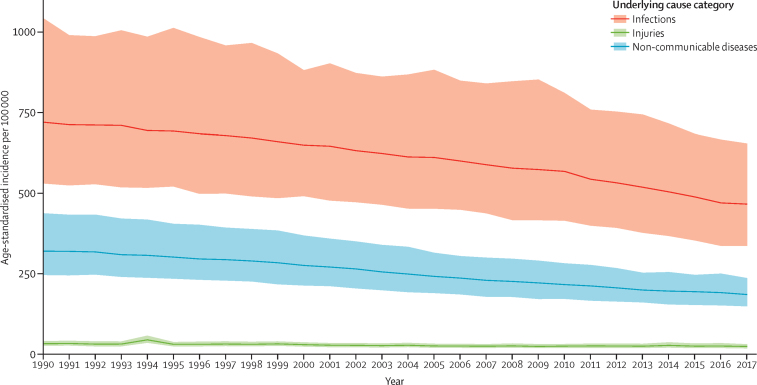
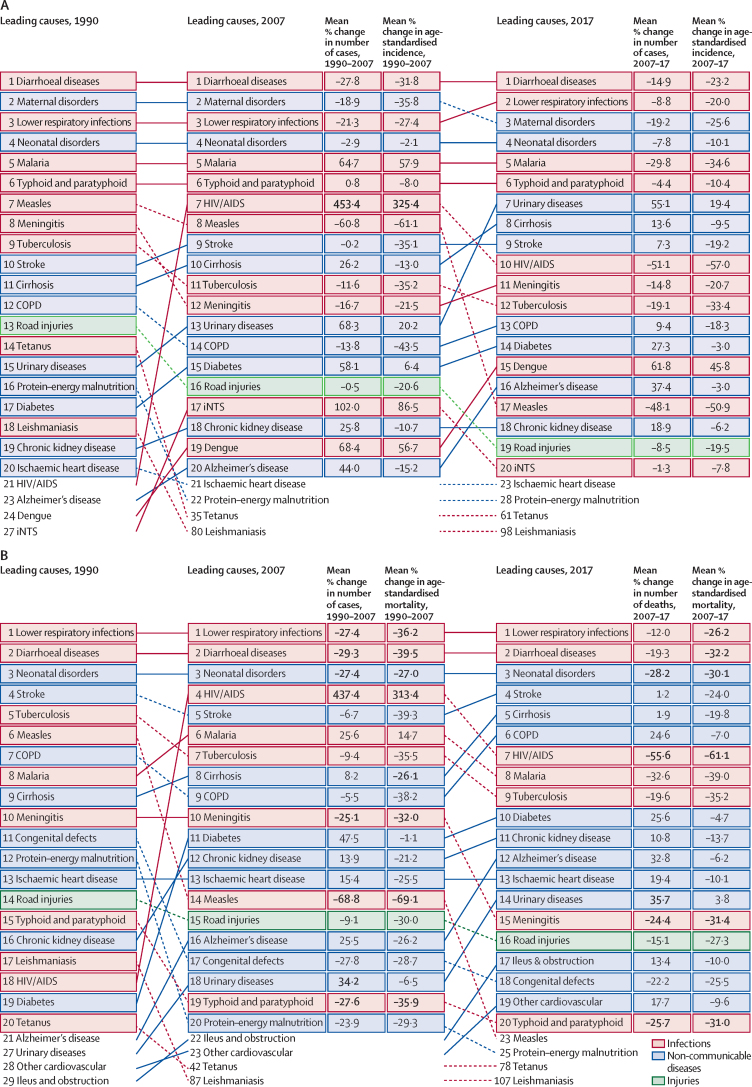
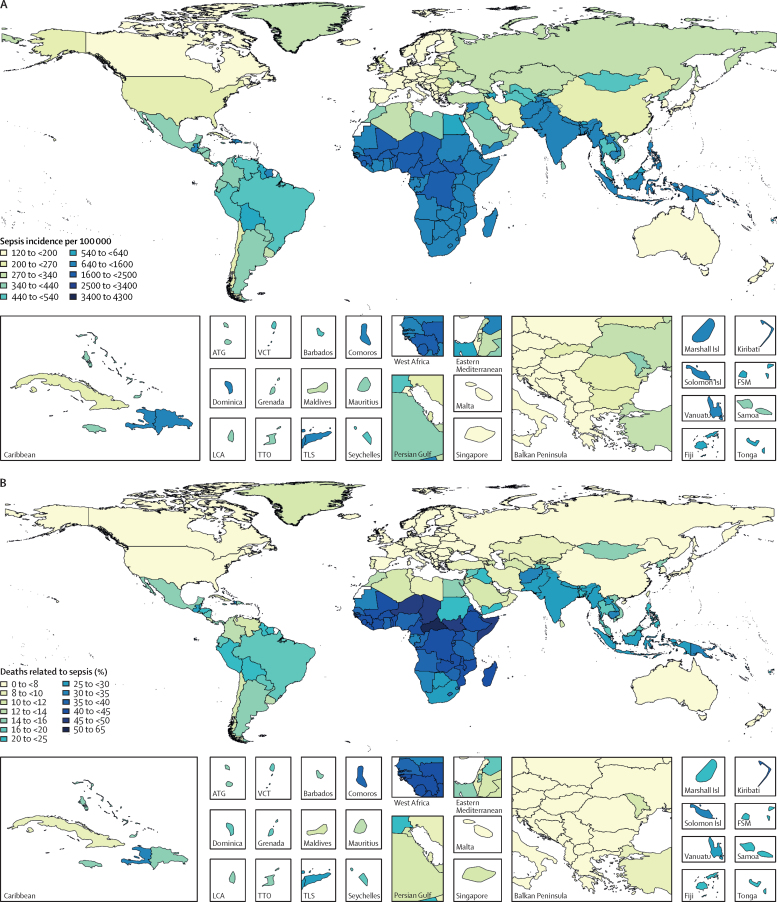
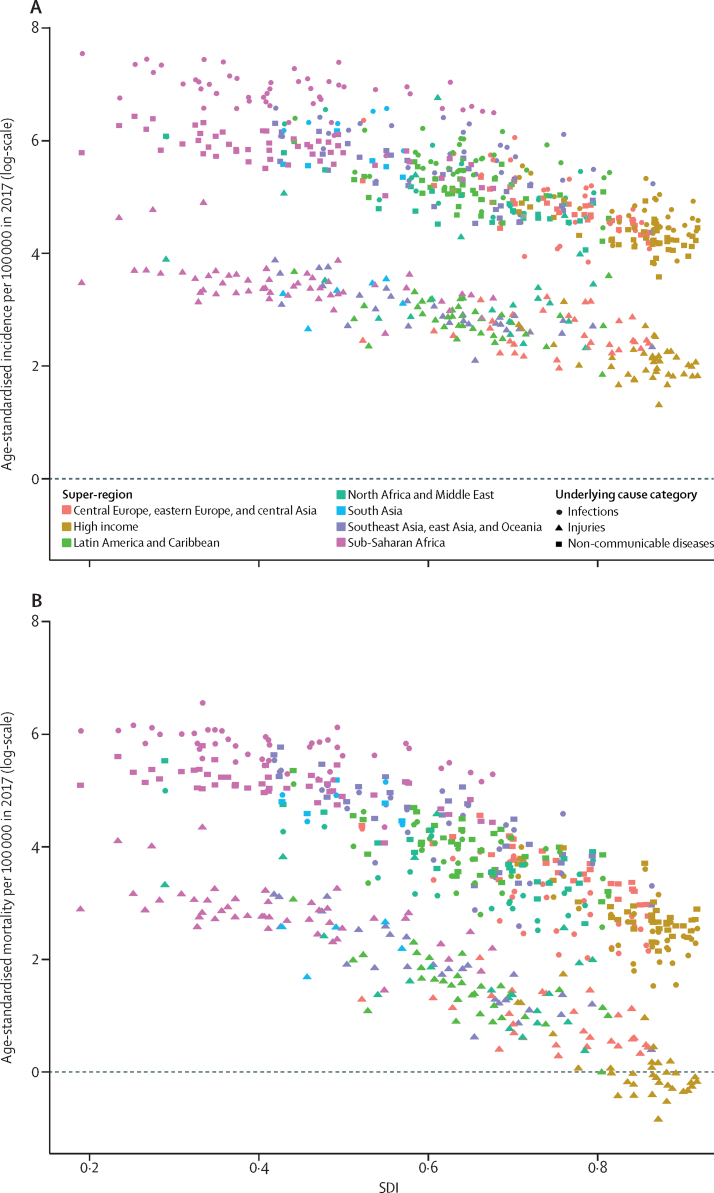
BACKGROUND: Sepsis is life-threatening organ dysfunction due to a dysregulated host response to infection. It is considered a major cause of health loss, but data for the global burden of sepsis are limited. As a syndrome caused by underlying infection, sepsis is not part of standard Global Burden of Diseases, Injuries, and Risk Factors Study (GBD) estimates. Accurate estimates are important to inform and monitor health policy interventions, allocation of resources, and clinical treatment initiatives. We estimated the global, regional, and national incidence of sepsis and mortality from this disorder using data from GBD 2017. METHODS: We used multiple cause-of-death data from 109 million individual death records to calculate mortality related to sepsis among each of the 282 underlying causes of death in GBD 2017. The percentage of sepsis-related deaths by underlying GBD cause in each location worldwide was modelled using mixed-effects linear regression. Sepsis-related mortality for each age group, sex, location, GBD cause, and year (1990-2017) was estimated by applying modelled cause-specific fractions to GBD 2017 cause-of-death estimates. We used data for 8·7 million individual hospital records to calculate in-hospital sepsis-associated case-fatality, stratified by underlying GBD cause. In-hospital sepsis-associated case-fatality was modelled for each location using linear regression, and sepsis incidence was estimated by applying modelled case-fatality to sepsis-related mortality estimates. FINDINGS: In 2017, an estimated 48·9 million (95% uncertainty interval [UI] 38·9-62·9) incident cases of sepsis were recorded worldwide and 11·0 million (10·1-12·0) sepsis-related deaths were reported, representing 19·7% (18·2-21·4) of all global deaths. Age-standardised sepsis incidence fell by 37·0% (95% UI 11·8-54·5) and mortality decreased by 52·8% (47·7-57·5) from 1990 to 2017. Sepsis incidence and mortality varied substantially across regions, with the highest burden in sub-Saharan Africa, Oceania, south Asia, east Asia, and southeast Asia. INTERPRETATION: Despite declining age-standardised incidence and mortality, sepsis remains a major cause of health loss worldwide and has an especially high health-related burden in sub-Saharan Africa. FUNDING: The Bill & Melinda Gates Foundation, the National Institutes of Health, the University of Pittsburgh, the British Columbia Children's Hospital Foundation, the Wellcome Trust, and the Fleming Fund.
Overview
The claims and statistics of this paper haven’t been checked yet.
Run the check — free, no account needed. It reads the open-access text and checks the sources it cites.
Integrity signals
Registry
Cites
Statistics
Figures
Verification
Claims the paper makes
The claims and statistics of this paper haven’t been checked yet.
Run the check — free, no account needed. It reads the open-access text and checks the sources it cites.
Claims other papers make about this one
Each is checked against this paper’s own text: does it say what the citing paper says it does?
The source backs part of the claim, not all of it — or backs it for a different population, condition or comparison.
In the citing paper
“A clear relationship can be seen – the poorest nations, all former European colonies, have the highest sepsis incidence”
From On race, human variation, and who gets and dies of sepsis (2022) · cites this paper as Rudd et al., 2020
Experimental — accuracy not yet measuredThe cited source says what the claim attributes to it.
In the citing paper
“This approach follows the methods validated by many studies on the epidemiology of sepsis26, 27, 28, 29 and was used by Rudd and colleagues.10”
From Global burden of bacterial antimicrobial resistance 1990–2021: a systematic analysis with forecasts to 2050 (2024) · cites this paper as [10]
The cited source says what the claim attributes to it.
In the citing paper
“Previously published global estimates reported a 53% decline in age-standardised sepsis-related deaths from 1990 to 2017.10”
From Global burden of bacterial antimicrobial resistance 1990–2021: a systematic analysis with forecasts to 2050 (2024) · cites this paper as [10]
In the citing paper
“8.2 million of the 11.1 million sepsis deaths worldwide that year occurred in low and middle income nations”
From On race, human variation, and who gets and dies of sepsis (2022) · cites this paper as Rudd et al., 2020
In the citing paper
“more people in middle and low income nations die of sepsis per incident than in wealthy nations”
From On race, human variation, and who gets and dies of sepsis (2022) · cites this paper as Rudd et al., 2020
In the citing paper
“The majority of the world's sepsis burden is borne by the least wealthiest nations, most former European colonies.”
From On race, human variation, and who gets and dies of sepsis (2022) · cites this paper as Rudd et al., 2020
In the citing paper
“Worldwide, the bulk of sepsis burden falls on marginalized peoples (Gracey & King, 2009; Rudd et al., 2020).”
From On race, human variation, and who gets and dies of sepsis (2022) · cites this paper as Rudd et al., 2020
Self-check
Percentages, sums and reported differences re-computed from the paper’s own numbers.
The self-check needs the paper’s full text.
Citations
Cites
James, S. L., Abate, D., Abate, K. H., Abay, S. M., Abbafati, C., Abbasi, N., Abbastabar, H., Abd-Allah, F., Abdela, J., Abdelalim, A., et al. (2018) · The Lancet · doi:10.1016/s0140-6736(18)32279-7 · Cited by 13,867
Bone, R. C., BALK, R. A., Cerra, F. B., Dellinger, R. P., Fein, A. M., Knaus, W. A., Schein, R. M. H., & Sibbald, W. J. (1992) · CHEST Journal · doi:10.1378/chest.101.6.1644 · Cited by 13,335
Vos, T., Abajobir, A. A., Abate, K. H., Abbafati, C., Abbas, K. M., Abd-Allah, F., Abdulkader, R. S., Abdulle, A. M., Abebo, T. A., Abera, S. F., et al. (2017) · The Lancet · doi:10.1016/s0140-6736(17)32154-2 · Cited by 13,220
Self-citationRoth, G. A., Abate, D., Abate, K. H., Abay, S. M., Abbafati, C., Abbasi, N., Abbastabar, H., Abd-Allah, F., Abdela, J., Abdelalim, A., et al. (2018) · The Lancet · doi:10.1016/s0140-6736(18)32203-7 · Cited by 8,600
Self-citationAngus, D. C., Linde-Zwirble, W. T., Lidicker, J., Clermont, G., Carcillo, J., & Pinsky, M. R. (2001) · Critical Care Medicine · doi:10.1097/00003246-200107000-00002 · Cited by 8,503
Self-citationSurviving Sepsis Campaign: International guidelines for management of sepsis and septic shock: 2016.
Rhodes, A., Evans, L. E., Alhazzani, W., Levy, M. M., Antonelli, M., Ferrer, R., Kumar, A., Sevransky, J. E., Sprung, C. L., Nunnally, M. E., et al. (2017) · Intensive Care Medicine · doi:10.1007/s00134-017-4683-6 · Cited by 6,621
Self-citationThe epidemiology of sepsis in the United States from 1979 through 2000
Martin, G. S., Mannino, D. M., Eaton, S., & Moss, M. (2003) · New England Journal of Medicine · doi:10.1056/nejmoa022139 · Cited by 5,841
Stanaway, J. D., Afshin, A., Gakidou, E., Lim, S. S., Abate, D., Abate, K. H., Abbafati, C., Abbasi, N., Abbastabar, H., Abd-Allah, F., et al. (2018) · The Lancet · doi:10.1016/s0140-6736(18)32225-6 · Cited by 4,943
Self-citationKyu, H. H., Abate, D., Abate, K. H., Abay, S. M., Abbafati, C., Abbasi, N., Abbastabar, H., Abd-Allah, F., Abdela, J., Abdelalim, A., et al. (2018) · The Lancet · doi:10.1016/s0140-6736(18)32335-3 · Cited by 4,192
Self-citationFleischmann, C., Scherag, A., Adhikari, N. K. J., Hartog, C. S., Tsaganos, T., Schlattmann, P., Angus, D. C., & Reinhart, K. (2016) · American Journal of Respiratory and Critical Care Medicine · doi:10.1164/rccm.201504-0781oc · Cited by 3,548
Self-citation
Research works printed but not linked: 1
- Singer, 2016, The third international consensus definitions for sepsis and septic shock (Sepsis-3), JAMA, 315, 801, 10.1001/jama.2016.0287 · DOI · Paper page
Cited by
Sorted by citations
Items 901–1,000 of 1,054
Luan, H., Liu, Q., Fan, H., Guo, Y.-H., Cao, C., Zhao, J., & Lin, J. (2026) · PeerJ · doi:10.7717/peerj.21316
“…sepsis-3 definition document an incidence of 747 cases per 100,000 person-years and in-hospital mortality of 15.5% at 30 days and 20.1% at 90 days ( Rudd et al., 2020 ), rising to 34% during COVID-19 surges ( Rudd et al., 2020 ), while a 2023 Chinese cohort reported ICU mortality of 32% and 90-day…”
InfluentialNyamessameye, D., Piron, M., Barry, A., Mohammed, S., Seyll, E., & Martiny, D. (2026) · European Journal of Clinical Microbiology and Infectious Diseases · doi:10.1007/s10096-026-05534-0
“In 2020, the World Health Organisa - tion estimated 48.9 million cases of sepsis, associated with 11 million deaths, representing nearly 20% of global mor - tality [1–3 ].”
InfluentialChiamwittayanukul, P., Satirapoj, B., Tangwonglert, T., Supasyndh, O., Thimachai, P., Kaewput, W., & Siriwattanasit, N. (2026) · BMC Nephrology · doi:10.1186/s12882-026-05050-5
Amjad, E., & Sokouti, B. (2026) · BMC Infectious Diseases · doi:10.1186/s12879-026-13547-5
“The problem of sepsis is a major health issue in the population due to its high incidence and a high mortality rate [1].”
InfluentialChen, L.-L., Li, R.-J., Qin, H.-Q., Jiang, Y., Jiang, Q., Li, Y.-T., Li, Y.-Y., & Jiang, J. (2026) · Respiratory Research · doi:10.1186/s12931-026-03720-4
“Global epidemiological data estimate approximately 49 million sepsis cases annually, with about 1.1 million deaths [1].”
InfluentialWang, W., Ruan, Y.-S., Wu, X., Li, L., Liu, N., & Li, Y.-Y. (2026) · Medicine · doi:10.1097/md.0000000000048814
“3] Despite advancements in critical care, mortality rates persist stubbornly high, reflecting the limitation of current single-target therapies against its complex pathophysiology, which involves concurrent excessive inflammation and immunosuppression.”
Li, T., Liu, Y., Wang, W.-Z., Li, Q.-Y., & Chen, B. (2026) · Frontiers in Immunology · doi:10.3389/fimmu.2026.1817391
Pan, G.-H., Wang, W.-H., Yang, G., & Liu, H.-N. (2026) · Journal of Thoracic Disease · doi:10.21037/jtd-2026-0824
“Despite significant advances in critical care medicine, it remains a leading cause of morbidity and mortality in intensive care units (ICUs) worldwide, imposing an enormous epidemiological and economic burden on global healthcare systems (2,3).”
Nair, R. R., Babu, T., Balusamy, B., Khoh, W. H., Momani, A. M., & Zneid, B. A. (2026) · Machine Learning and Knowledge Extraction · doi:10.3390/make8050129
“Sepsis, a potentially fatal organ failure caused by a dysregulated host response to infection, accounts for over 11 million deaths in intensive care units (ICUs) annually [1].”
Wei, J., Huang, X.-J., Wang, Z., & Zhang, H. (2026) · PLoS ONE · doi:10.1371/journal.pone.0348268
Ejjalti, Z., Rabbaa, S., Laaziouez, Y., Bouchab, H., Khantour, A. E., Nasser, B., Andreoletti, P., Limami, Y., Cherkaoui-Malki, M., & Kebbaj, R. E. (2026) · Journal of Toxicology and Environmental Health, Part A · doi:10.1080/15287394.2026.2668523
“Sepsis is a clinical syndrome arising from a systemic inflammatory response triggered by infection and is associated with significant morbidity and mortality worldwide (La via et al. 2024; Rudd et al. 2020).”
Varga, Á., Bekesi, T., Mátrai, Á., Fazekas, L., Deák, Á., Ujhelyi, B., László, I., & Németh, N. (2026) · Frontiers in Physiology · doi:10.3389/fphys.2026.1816515
“According to a 2020 study, in 2017, there were an estimated 48.9 million cases worldwide, with severe sepsis cases accounting for nearly half of this number and mortality estimated at 11 million (Singer et al., 2016; Rudd et al., 2020).”
InfluentialLuo, R., Xu, S.-Y., Chen, Y.-T., Liu, Z.-M., Deng, X.-F., Li, C.-X., Hui, K., Chen, Y.-L., Hong, C.-Y., Chen, C.-B., et al. (2026) · Frontiers in Medicine · doi:10.3389/fmed.2026.1808427
Wu, H.-X., Zhang, K.-Q., Wen, J., & Wang, Y. (2026) · Journal of Cardiothoracic Surgery · doi:10.1186/s13019-026-04242-2
“It is a major contributor to illness and death in critical care settings [1], with a global estimate of 48.9 million sepsis cases and 11.0 million sepsis-related deaths in 2017 [2].”
InfluentialLi, M., Zhao, T., Sun, J., Wang, Y., & Shen, L. (2026) · Immunological Investigations · doi:10.1080/08820139.2026.2667875
“According to estimates from the World Health Organization, sepsis currently affects approximately 49 million people and accounts for nearly 20% of total global deaths, placing a substantial burden on healthcare systems worldwide (Rudd et al., 2020).”
Longitudinal blood transcriptome profiling reveals immune dynamics in sepsis
Hwang, J., Cha, J. H., Ahn, S., Park, J.-H., Kim, S., Jung, M., Choi, Y., Seok, H., Choi, W. S., Nam, M.-H., et al. (2026) · BMC Infectious Diseases · doi:10.1186/s12879-026-13416-1 · Cited by 1
“This global health threat affects approximately 48.9 million people annually and is responsible for an estimated 11 to 14 million sepsis-related deaths each year [2, 3].”
InfluentialPharmacological intervention of the HMGB1-pCTS-L axis to ameliorate inflammatory diseases
Chen, W., Li, J., Qiang, X., Li, L., Zhu, S., Deng, M., & Wang, H. (2026) · Frontiers in Immunology · doi:10.3389/fimmu.2026.1843251 · Cited by 1
Shao, J., Zhou, L., Wang, H., Gu, X., Wang, T., Yu, T., Zhai, J., Hu, A., Zhu, Y., Lei, W., et al. (2026) · BMC Gastroenterology · doi:10.1186/s12876-026-04889-0
“The Global Burden of Disease (GBD) study in 2017 indicated that there were 48.9 million cases of sepsis and 11 million sepsis-related deaths globally [2].”
InfluentialSerum cholinesterase as a biomarker for sepsis-associated immunosuppression via Hub gene RORA
He, Q., & Huang, X. (2026) · PLoS ONE · doi:10.1371/journal.pone.0348979
“Despite advances in supportive care and antibiotic therapy, the persistent high mortality rate underscores our incomplete understanding of its complex pathophysiology [1–3].”
Gong, X., Chen, S., Liu, D., Lin, Y., Chen, Y., & Fu, J.-X. (2026) · Scientific Reports · doi:10.1038/s41598-026-47996-4
“As a life-threatening condition, urosepsis is associated with a high mortality rate 2 , and obstructive uropathy is a major etiology of this disease.”
Zhang, F.-M., Zhang, L., & Wang, Y.-H. (2026) · Frontiers in Medicine · doi:10.3389/fmed.2026.1826751
Huang, C., Liu, H., Wenwen, Q. I., Shuyuan, Z. H. A. O., Xu, J., Jing, F., & Chen, E. (2026) · Frontiers in Medicine · doi:10.3389/fmed.2026.1815560
Kumara, S., Umakanth, M., Kt, S., Thilakarathne, A., Nishad, N., Anopriyanth, S., Gunawardana, I., Francis, V., & Mayurathan, P. (2026) · Cureus · doi:10.7759/cureus.108551
“These findings align with the global picture where BSIs and sepsis cause substantial morbidity and death, particularly in LMICs [1-3].”
InfluentialThomas, S. S., Krishnakripa, K., Abhinand, K., Menon, A. M., Ranjith, G., Sony, S. M., Babu, P., Kumar, G. B., Nair, B. G., Arun, K. B., et al. (2026) · Antibiotics · doi:10.3390/antibiotics15050505 · Cited by 1
“According to the World Health Organization (WHO), approximately 48.9 million cases of sepsis occurred globally in 2017, resulting in nearly 11 million deaths— accounting for ~20% of all global mortality—with around 40% of cases affecting children under five years of age [13,14].”
InfluentialThe Prevalence and Outcome of Sepsis in Critically Ill Patients in Malawi.
Shah, S., Chamarthi, R., Gondwe, J., Kosoff, A., & Charles, A. G. (2026) · Journal of Surgical Research · doi:10.1016/j.jss.2026.03.031
Pang, X.-F., & Zhu, F. (2026) · Frontiers in Pharmacology · doi:10.3389/fphar.2026.1811495
Arjun, V., Varghese, S., & Joseph, R. M. (2026) · Cureus · doi:10.7759/cureus.108080
“Every year, almost 49 million people worldwide suffer from sepsis, which results in nearly 11 million deaths, nearly 20% of all deaths worldwide [4].”
Ruehman, A. J., Covington, E., Branan, T. N., Hawkins, W. A., & Smith, S. E. (2026) · American Journal of Critical Care · doi:10.4037/ajcc2026584
Singhal, C., Shamsi, S., Gupta, S., & Chaudhuri, S. (2026) · Electrochimica Acta · doi:10.1016/j.electacta.2026.149008
Bogdan, P.-M., Bogdan-Goroftei, R.-E., Pleșea-Condratovici, A., Armencia, A., Duceac, L., Salim, C., Guțu, C., Arbune, M., Moroianu, L., Vlase, C., et al. (2026) · Diagnostics · doi:10.3390/diagnostics16091388
“In the literature, inflammatory markers and coagulation parameters are frequently described as indicators of disease severity and prognosis in various critical pathologies, including sepsis or acute respiratory failure [37–40].”
Parreño, S. J. (2026) · Comput. Methods Programs Biomed. · doi:10.1016/j.cmpb.2026.109429
Mangroliya, B., Singh, M., Singh, V., Agarwal, A., Bairwa, M., Jauhari, S., Singh, H., Gupta, P., & Omar, B. (2026) · Cureus · doi:10.7759/cureus.108560
“…to estimates from the Global Burden of Disease Study, as referenced by the World Health Organization (WHO) and Global Sepsis Alliance, sepsis affects nearly 49 million people annually and contributes to approximately 11 million deaths worldwide, accounting for nearly 20% of all deaths [1,3,4].”
Gu, A.-Q., Shu, H., Zhang, Y., Yang, B., Li, S., Ma, J., Liang, S., Wang, K., Guo, H.-H., & Huang, S. (2026) · European Journal of Pharmacology · doi:10.1016/j.ejphar.2026.178956
Du, Y., Xiao, D., Li, H., Fan, L., Shen, K., Zhang, B., Zhang, L., Guo, L., Li, Q., Zheng, J., et al. (2026) · Acta Pharmaceutica Sinica B · doi:10.1016/j.apsb.2026.05.007
Zhuo, X.-M., Jian, G., & Chen, H. (2026) · Blood Cells, Molecules & Diseases · doi:10.1016/j.bcmd.2026.103009
Albumin in Sepsis and Septic Shock: A Systematic Review and Meta-Analysis
Shetty, U., Sharma, A., Batool, A., Hussaini, H., Chaudhary, S., Abdul, R. H. M., Wei, C. R., & Hirani, S. (2026) · Cureus · doi:10.7759/cureus.108831
Han, Y. J. (2026) · Public Health Action · doi:10.5588/pha.26.0006
“1,7,8 The persistence of ARF proxy mortality among adolescents may reflect limitations of pathogen-specific progress in settings where timely access to acute respiratory and critical care remains uneven.”
Zhang, S., Luo, K., Wei, X., Qing, C., Zhang, J.-G., Wei, H., Yan, Y., Yang, Y.-T., Zeng, Z.-G., & Huang, S. (2026) · Journal of Pharmacological Sciences · doi:10.1016/j.jphs.2026.05.007
Laursen, M., Knudsen, J. D., Hansen, D. S., Pedersen, M., Antsupova, V. S., Johansen, H. K., & Ahlström, M. (2026) · Anaerobe · doi:10.1016/j.anaerobe.2026.103053
Call for Papers on Artificial Intelligence in Sepsis: From Prediction to Precision
Yan, M. Y., & Zhang, Z.-H. (2026) · Artificial Intelligence in Emergency Medicine · doi:10.1016/j.aiemed.2026.100021
Awadh, A. A., Sheerah, A., Alsaeed, M., Abbas, A., Filimban, W., Bazayd, A. S., & Alamri, A. (2026) · New Microbes and New Infections · doi:10.1016/j.nmni.2026.101774
“Published mortality rates for Aeromonas septicemia range from 15% to 68%, depending on patient population characteristics and infection severity [7,8].”
Yang, Y., Lin, W.-J., Zhuo, Y.-F., Yang, J.-L., Wei, Y., Pan, W.-D., Liao, Y.-L., & Yao, Y.-S. (2026) · Phytomedicine · doi:10.1016/j.phymed.2026.158338
Ding, L., Bai, C.-Y., Jian, L.-G., Hu, D.-J., Xiong, J., Zhang, Z., He, Q., Wang, Y.-N., Xu, J.-Y., Ge, L., et al. (2026) · BMJ Open · doi:10.1136/bmjopen-2025-108626
Varela-Rey, I., Prado, S. M. D., & Gómez‐Ríos, M. Á. (2026) · Revista Española de Anestesiología y Reanimación · doi:10.1016/j.redar.2026.502165
Li, T. Z., Lv, Y., Zhang, J., Rui, H., Ma, X., Wang, J., Jiang, Y., Yuan, Y., Meng, Y., Ma, X., et al. (2026) · Biochemical and Biophysical Research Communications · doi:10.1016/j.bbrc.2026.154048 · Cited by 1
Reanimación en choque séptico: de las metas fijas a la perfusión personalizada
Morales, C. C. C., Henao, S. B., Franco, L. F. S., & VALENCIA, B. A. G. (2026) · Acta Colombiana de Cuidado Intensivo · doi:10.1016/j.acci.2026.100616
Pediatric Sepsis Cohort Detection Using In-Context Pointwise V-Usable Information
Li, Y., Geva, A., Bethard, S. J., Miller, T. A., Madden, K., Eisenberg, M. A., Kelly, D. P., & Savova, G. (2026) · Language Resources and Evaluation Conference (LREC) · doi:10.63317/38bj4pwcnt3q
Li, H., Liang, Y., Xiao, W., Zheng, Y., Hua, T., & Yang, M. (2026) · Infection and Drug Resistance · doi:10.2147/idr.s603823
Sepsis policy, guidelines, and standards in Canada: a jurisdictional scoping review
Sheikh, F., Chechulina, V., Daneman, N., Garber, G. E., Hendrick, K., Kissoon, N. “., Loubani, O. M., Mbuagbaw, L., Russell, K., Walker, J. D., et al. (2026) · BMC Health Services Research · doi:10.1186/s12913-026-14646-4
“Although sepsis can affect anyone, nearly 85% of cases occur in areas with a lower sociodemographic index, a measure that considers income, education, and fertility rates, highlighting the disproportionate burden of sepsis among equity-denied communities [2].”
InfluentialSelf-citationGut Microbiota as a Key Modulator in the Pathophysiology of Sepsis: SURVEIL Project
Bazzano, C., Caramaschi, A., Massa, N., Collani, S., Mellai, M., Barizzone, N., Rocchetti, A., Bottino, P., Caroppo, S., Bonato, V., et al. (2026) · MicrobiologyOpen · doi:10.1002/mbo3.70301
“In a landmark analysis, Rudd et al. (2020) reported that in 2017, sepsis accounted for approximately 49 million cases and 11 million deaths worldwide—about 1 in 5 deaths globally.”
Comparison of the Diagnostic Value of Presepsin and Procalcitonin as Markers of Bacterial Sepsis
Fadrian, F., Ahmad, A., Sadeli, R., Putri, V. Y., & Agustian, D. R. (2026) · Indonesian Journal of Tropical and Infectious Disease · doi:10.20473/ijtid.v14i1.69526
“32,33”
Petrović, J. (2026) · Diagnostics · doi:10.3390/diagnostics16091334
“According to recent global estimates, sepsis affects approximately 49 million individuals annually and is associated with around 11 million deaths, accounting for nearly 20% of all deaths worldwide [1].”
Ibadin, E. E., Dossouvi, K. M., Omoregie, R., Sellera, F. P., Idemudia, N. L., & Smith, S. P. (2026) · BMC Infectious Diseases · doi:10.1186/s12879-026-13458-5
“%) sepsis-related deaths were reported globally, with LMICs disproportionately accounting for the majority of deaths [5].”
Jouffroy, R., Garrouste, V., Gilbert, B., Travers, S., Bloch-Laine, E., Ecollan, P., Bounes, V., Boularan, J., Vivien, B., & Guèye, P. (2026) · Scientific Reports · doi:10.1038/s41598-026-49834-z · Cited by 1
“…early broad-spectrum antibiotic therapy and early hemodynamic optimization 1,28,29 are those with the greatest impact 1,29,30 , especially for septic shock patients 13 among which they must be initiated within the first hour after recognition 1,4,27 when the treatment effect is the greatest 1,29 .”
Kang, Q., Deng, F., Li, S., Wang, T., & Lin, H. (2026) · Pharmaceuticals · doi:10.3390/ph19050678
“Based on whether they are the primary pathogens, these diseases can be categorized into those directly caused by bacterial infection, such as pneumonia, diarrhea, tonsillitis, bronchitis, and, most severely, sepsis, which has a global mortality rate of up to 19.7% [2].”
InfluentialYan, X.-L., Zhang, D., Zhou, X.-H., Huang, R., Tian, Y., & Li, L. (2026) · BMC Infectious Diseases · doi:10.1186/s12879-026-13428-x
“Around 48.9 million sepsis cases occurred worldwide in 2017, with as high as 11 million deaths, comprising 19.7% of all deaths globally, and constituting the largest cause of death in intensive care units (ICUs) [2].”
InfluentialGenomic and functional approaches point to potential determinants of neonatal K. pneumoniae sepsis
Rout, M., Rani, K. A., Mahanta, D. J., Majhi, S., Sahoo, S. S., Mallick, S., Mohapatra, D., Som, T. K., Mahapatra, A., Mohanty, S., et al. (2026) · Microbiology Spectrum · doi:10.1128/spectrum.04118-25
Wang, H.-Y., Lin, L., Yu, H., Fan, C., Sun, A.-Y., Yang, Y., & Sun, H.-Z. (2026) · BMC Medical Imaging · doi:10.1186/s12880-026-02361-9
“Furthermore, AP can affect surrounding organs, leading to complications such as pancreatic pseudocysts, hemorrhage, infections, and even systemic inflammatory response syndrome, which can be life-threatening [5, 6].”
The AGO2–ATOX1 axis exacerbates inflammation in a mouse sepsis model
Huang, P.-T., He, M.-L., Mo, X.-Y., & Deng, L. (2026) · Central European Journal of Immunology · doi:10.5114/ceji/209136
“Globally, sepsis accounts for approximately 11 million deaths annually, representing one-fifth of all mortality cases [5, 6].”
Hung, K.-C., Chang, L.-C., Wu, J.-Y., Lai, Y.-C., Ho, C., Lin, C.-M., & Chen, I.-W. (2026) · Frontiers in Nutrition · doi:10.3389/fnut.2026.1758059
Liang, J., Wei, R., Yi, W., Chen, J.-C., Li, D.-X., Xiao, L., Lai, Q., Fang, Q., Lu, J.-B., Wei, Y., et al. (2026) · Medicine · doi:10.1097/md.0000000000048476
“[2] Notably, neonates and young infants represent a highly vulnerable population, with perinatal bacterial infections being a major cause of neonatal mortality.”
Sona, G., Anitha, D., & Narmatha, B. (2026) · Journal of Innovative Image Processing · doi:10.36548/jiip.2026.2.005
“Recent medical reports reveal that sepsis leads to about 50 million cases and 11 million fatalities per year while accounting for nearly 5% of global fatalities in general [1].”
Ren, Y., Dang, H., Fu, Y.-Q., Liu, C.-J., & Li, J. (2026) · BMC Infectious Diseases · doi:10.1186/s12879-026-13402-7
“Sepsis is a major cause of mortality and critical illness globally, with a high disease burden and patients often having long-term physical, psychological and cognitive impairments, making it an important public health problem [3].”
Ji, Y., Huang, L., Cao, C., Xiao, W.-Y., Hua, T.-F., & Yang, M. (2026) · Frontiers in Medicine · doi:10.3389/fmed.2026.1770215
“In China, the in-hospital mortality rate for sepsis reaches 28.4% (4, 5).”
InfluentialYang, Y.-L., Xiao, Z.-Y., Liu, L.-J., Hu, T., Liu, Y., & Wang, D. (2026) · Renal Failure · doi:10.1080/0886022x.2026.2657652
“Sepsis represents a major factor inducing mortality among critical cases, with approximately 49 million individuals affected globally and a mortality rate of 19.7% [3].”
InfluentialJiang, Y., Ding, H.-F., & Li, X.-Q. (2026) · BMC Infectious Diseases · doi:10.1186/s12879-026-13339-x
“Global estimates in 2017 indicated 48.9 million sepsis cases and 11.0 million sepsis-related deaths, accounting for 19.7% of all global deaths [3].”
InfluentialLi, Y., Luo, W., Zhang, Q., Bai, F., Wei, J., Ling, T. A. N. G., Deng, Y., Zuo, D., Peng, T., Li, H., et al. (2026) · BMC Infectious Diseases · doi:10.1186/s12879-026-13279-6 · Cited by 1
“Epidemiological data show that there are approximately 48.9 million cases of sepsis globally each year, resulting in 11 million deaths, accounting for 19.7% of global mortality [2].”
InfluentialKLF2 alleviates sepsis-induced acute kidney injury via the lncRNA GAS6-AS2/GOLPH3 axis
Feng, W., Zhu, Y.-F., Li, K., Xu, X.-S., Zhang, B.-Y., & Zhou, J. (2026) · BMC Nephrology · doi:10.1186/s12882-026-04908-y
“Global disease burden of SA-AKI is substantial, with approximately 49 million sepsis cases occurring annually worldwide and SA-AKI complicating 40–50% of these patients [3, 4].”
Cisneros, P., Caviedes, J. F. O., Ladino, L. M. P., Quintero, N., Cervera, V. G. O., Ospina, J. D. U., & Alcantar, E. P. C. (2026) · Interactive Journal of Medical Research · doi:10.2196/98772
“Sepsis affected an estimated 48.9 million people and caused 11 million deaths worldwide in 2017 (nearly 1 in 5 deaths globally), equating to more than 30,000 deaths per day [1].”
InfluentialLong‐term hippocampal alterations and cognitive impairment in a murine model of surgical sepsis
Cho, D. S., Schmitt, R. E., Dasgupta, A., Ducharme, A. M., & Doles, J. D. (2026) · FEBS Open Bio · doi:10.1002/2211-5463.70240
Wang, Q.-X., Zhao, Y.-H., Ma, Y., Wang, J., Han, Y., & Huang, H.-B. (2026) · BMC Infectious Diseases · doi:10.1186/s12879-026-13272-z
“Survivors also frequently experience long-term sequelae, placing a substantial burden on patients and healthcare systems [4–6].”
Rahman, M. D. S., Azad, T. B., Hasan, M. N., Jahan, S., Hride, H. K., & Ahmed, H. (2026) · IEEE International Conference on Quantum Photonics, Artificial Intelligence & Networking (QPAIN) · doi:10.1109/qpain69676.2026.11546115
“Sepsis is responsible for approximately 11 million deaths each year worldwide and affects nearly 49 million people globally [1].”
Nguyễn, P. V., Trương, H. X., Sorya, S., Sojam, N., Đinh, Q. H., Đỗ, L. M., Trần, T., Phan, K., & Nguyễn, H. H. (2026) · Tạp chí Y học Quân sự · doi:10.59459/1859-1655/jmm.966
“Theo báo cáo về gánh nặng bệnh tật toàn cầu, mỗi năm có khoảng 48,9 triệu ca mắc NKH và 11 triệu ca TV vì NKH, chiếm gần 20% tổng số ca TV toàn cầu [2].”
Zheng, H., Bei, C.-Y., Mo, Z.-C., & Wei, B. (2026) · Frontiers in Medicine · doi:10.3389/fmed.2026.1816016
Xu, Y.-L., Wang, X.-Y., Li, A., Guo, S., & Mei, X. (2026) · Scientific Reports · doi:10.1038/s41598-026-47654-9
Chen, J., Lin, J., Wang, H., Gu, C.-F., Lu, X., & Sun, C. (2026) · Medicine · doi:10.1097/md.0000000000048209
“[1] With shifting demographics, older adults are now constituting an increasing proportion of critically ill patients.”
Biomarkers in predicting mortality among ICU patients with sepsis
Uğur, S., & Kaçmaz, M. (2026) · Medicine · doi:10.1097/md.0000000000048284
“[1] Given these striking figures, it is of crucial importance to evaluate the prognoses of patients with sepsis on the day of ICU admission, which may be facilitated by readily available biomarkers.”
Bao, J., Gao, H., & Jiang, J. (2026) · Frontiers in Pharmacology · doi:10.3389/fphar.2026.1755295
“The key parameter settings of CiteSpace were as follows: (Singer et al., 2026): Timespan: 2005–2025 (Slice Length = 1); (Rudd et al., 2020); Selection Criteria: g-index (k = 25), LRF = 2.5, L/N = 10, LBY = 5, e = 1.0; (Morrissey et al., 2025); Nodes Labeled: 1.0%; (Gao X. et al., FIGURE 1 The…”
InfluentialCSTA and DDX24: potential biomarkers regulating ferroptosis in sepsis and their diagnostic value
Shen, X., Jin, Y., Yang, K., Qian, X., & Guo, J. (2026) · BMC Medical Genomics · doi:10.1186/s12920-026-02358-x
“A 2017 global health assessment estimated that sepsis affected approximately 48.9 million individuals, with a fatality rate of 22.5%, contributing to nearly one-fifth of all deaths worldwide [3, 4].”
InfluentialGoel, M., & Popli, R. (2026) · International Conference on Computing for Sustainable Global Development · doi:10.23919/indiacom70271.2026.11526345
“Septic patients may develop clinical deterioration at a rapid rate, and in many cases, the deterioration may escalate to severe sepsis or septic shock within hours, which enhances the risk of multi-organ failure and death [2].”
Zhang, T.-Y., Gao, H., & Wang, S. (2026) · Frontiers in Medicine · doi:10.3389/fmed.2026.1805614
Bunea, A., Ghibea, O., Popovici, D.-M., Daniel, I., & Andronic, O. (2026) · arXiv.org · doi:10.48550/arxiv.2604.04698
Jain, K., Bharate, P. B., Patil, A., Wadde, S. K., Kinge, A. D., & Bagul, D. (2026) · International Journal of Drug Delivery Technology · doi:10.25258/ijddt.16.2.48
“The Global Burden of Disease study estimated nearly 49 million sepsis cases and 11 million sepsis-related deaths worldwide in 2017, representing approximately 20% of all global mortality [1].”
Bezerra, M. L. C., Maia, J. M., & Motta, F. A. (2026) · 2026 Global Medical Engineering Physics Exchanges/ Pan American Health Care Exchanges (GMEPE/PAHCE) · doi:10.1109/gmepe/pahce69420.2026.11550307
A Histone Deacetylase Activity Model for the Discovery and Validation of Sepsis Biomarkers
Wang, Y.-Y., Shu, T., Li, Y.-P., Kang, Q.-Q., Jia, Z.-S., & Ma, C.-Y. (2026) · Endocrine, Metabolic & Immune Disorders - Drug Targets · doi:10.2174/0118715303458056260211101424
Proton-activated chloride channel 1 is essential for innate host defense against bacterial sepsis
Garo, L. P., Brueck, K., Walachowski, S., Jayaraman, A., Strueve, M., Xu, S., Yang, H., Helmkamp, M. M., Choi, S. H., Reinhardt, C., et al. (2026) · Proceedings of the National Academy of Sciences · doi:10.1073/pnas.2515768123
“Bacterial sepsis remains a major health burden (1).”
Hybrid inverse reinforcement learning for mimicking clinicians' decision‑making in sepsis treatment
Wang, Z., Zhou, C., Wang, Y.-F., Chen, T., & Hadjiiski, L. (2026) · Medical Imaging · doi:10.1117/12.3085828
Hu, J., Gao, X., Li, G. P., He, X., Ke, Y., Zhang, Z., Pang, D., Lin, Z., Xie, C., Chen, X., et al. (2026) · PLoS Pathogens · doi:10.1371/journal.ppat.1014192
“Sepsis is a leading cause of death in critically ill patients, affecting 48.9 million people annually and causing up to 11 million deaths [1,2].”
InfluentialIdentify value of rate pressure product in children with compensatory septic shock
Ge, H.-Y., Qu, D., Yu, C., Liu, S., & Zhang, J. (2026) · European Journal of Medical Research · doi:10.1186/s40001-026-04316-w
“Compared to those with compensatory septic shock, children with decompensated septic shock had significantly higher median 24-h pSOFA score (9 [6.5, 10] vs. 6 [4, 9]; P = 0.04), Phoenix score (5 [3, 7] vs. 4 [2, 6]; P = 0.041), and vasoactive-inotropic score (40 [10, 80] vs. 10 [0, 40]; P = 0.016).”
InfluentialTejada, S., Giglio, A., Aranda, M., Socias, A., del Castillo, A., Mena, J., Franco, S., Ortega, M., Nieto, Y., & Borges-Sa, M. (2026) · Biomedicines · doi:10.3390/biomedicines14040839
“It remains one of the leading causes of in-hospital mortality worldwide [2].”
Kim, S.-Y., Kim, U., Kim, N., Lee, T.-E., Lee, J., Oh, D.-K., & Shin, H. (2026) · International Journal of Molecular Sciences · doi:10.3390/ijms27083356
“However, current clinical management remains largely limited to infection control and supportive measures aimed at preserving organ function, as no approved disease-specific therapies for sepsis are currently available [3,4].”
Lai, Z., & Zhang, H. (2026) · International Journal of General Medicine · doi:10.2147/ijgm.s590306
Zhang, X., Chen, M., Zhang, B., Gao, T., Xu, Y., Chen, X., & Yu, W. (2026) · Journal of Clinical Medicine · doi:10.3390/jcm15083038
“Advancements in the concepts and technologies of critical care medicine have enabled a growing number of patients to survive critical illnesses, such as sepsis, severe trauma, and severe acute pancreatitis [1–3].”
Fenofibrate Mitigates Acute Lung Injury in a Rat Model of Feces-Induced Peritonitis
Akbaş, A., Daşıran, M., Daghmoura, H., Akbaş, B., Aygun, H., Serdaroglu, A., Uyanıkgil, Y., Ercan, G., & Erbaş, O. (2026) · International Journal of Molecular Sciences · doi:10.3390/ijms27083556
“Sepsis remains a major global health problem and a leading cause of death and long-term morbidity [1].”
Zirhirhi, K., Joutey, O. T., Lamghari, S., Chabbar, S., Mounir, A., & Bouhouri, M. A. (2026) · Cureus · doi:10.7759/cureus.107160
Huang, X.-F., Zhang, A.-Q., Wen, D., Li, H., & Zeng, L. (2026) · Pathogens · doi:10.3390/pathogens15040433
“The biologically active form of vitamin D, 1 α ,25-dihydroxyvitamin D 3 [1,25-(OH) 2 D 3 ], exerted its effects mainly by binding to the vitamin D receptor (VDR) and initiated downstream transcriptional regulation.”
Update der S3-Leitlinie Sepsis 2025 – was ist neu?
Rusev, S., Bergmann, L., Unterberg, M., Adamzik, M., & Rahmel, T. (2026) · AINS - Anästhesiologie · Intensivmedizin · Notfallmedizin · Schmerztherapie · doi:10.1055/a-2697-1050 · Cited by 1
“Trotz medi-zinischer Fortschritte sterben weltweit noch immer etwa 20 30% der Patienten mit Sepsis während ihrer Behand-lung im Krankenhaus, bei septischem Schock sogar bis zu 40 50% [2].”
Rajeev, A., Shaikh, S., Kaur, H., Sharma, A., Dimowo, P. K., & Murugesh, B. (2026) · Cureus · doi:10.7759/cureus.107323
RanGAP1 plays a vital role in anti-infective functions of macrophages and sepsis progression.
Mao, L., Liu, G.-M., Zhang, J., Zhao, Q.-Z., Zhang, X.-Y., Zhang, S., Zhang, Y., & Bai, X.-C. (2026) · Immunology Letters · doi:10.1016/j.imlet.2026.107180
Kulkarni, M., Bourne, C. M., Mahale, A. B., Exconde, P. M., Murphy, C., Goodrow, H. T., Cervantes, S., Kardhashi, M., Kambayashi, M., Yoo, W., et al. (2026) · PLoS Pathogens · doi:10.1371/journal.ppat.1014178 · Cited by 2
Metadata
- Authors
- Rudd, K. E., Johnson, S. C., Agesa, K. M., Shackelford, K. A., Tsoi, D., Kievlan, D. R., Colombara, D. V., Ikuta, K. S., Kissoon, N., Finfer, S., Fleischmann-Struzek, C., Machado, F. R., Reinhart, K. K., Rowan, K., Seymour, C. W., Watson, R. S., West, T. E., Marinho, F., Hay, S. I., Lozano, R., Lopez, A. D., Angus, D. C., Murray, C. J. L., & Naghavi, M.
- Affiliations
- University of Pittsburgh (US)
- University of Washington (US)
- University of British Columbia (CA)
- UNSW Sydney (AU)
- Jena University Hospital (DE)
- Seattle Children's Hospital (US)
- Universidade de São Paulo (BR)
- Corresponding author
- Naghavi, Mohsen
- ORCID
- Venue
- The Lancet
- Publisher
- Elsevier BV
- Published
- 2020-01
- Volume
- 395
- Issue
- 10219
- Pages
- 200-211
- ISSN
- 0099-5355 (ISSN-L)
- 0140-6736
- PMC
- PMC6970225
- OpenAlex
- W2998853022
- Cited by
- 7,971
- References
- 42
- Citations by year
- 2026: 1540 · 2025: 1722 · 2024: 1545 · 2023: 1195 · 2022: 899 · 2021: 735 · 2020: 329
- FWCI
- 567.33
- Type
- journal article
- Language
- en
- Open access
- hybrid
- doi.org
- Licence
- Locations
- The Lancet (publishedVersion, cc-by)
- PubMed Central (publishedVersion, cc-by)
- PubMed (publishedVersion)
- LA Referencia (Red Federada de Repositorios Institucionales de Publicaciones Científicas) (submittedVersion, other-oa)
- Minerva Access (University of Melbourne) (submittedVersion, cc-by)
- Funders
- Bill & Melinda Gates Foundation
- National Institutes of Health (T32HL007287, T32HL007820, R35GM119519)
- National Health and Medical Research Council (no 1117230)
- Topics
- Health Sciences › Medicine › Critical Care and Intensive Care Medicine › Sepsis Diagnosis and Treatment
- Health Sciences › Medicine › Public Health, Environmental and Occupational Health › Global Health and Epidemiology
- Health Sciences › Medicine › Pediatrics, Perinatology and Child Health › Neonatal and Maternal Infections
- Keywords
- sepsis, sepsis incidence, sepsis mortality, global burden of disease, case fatality, underlying cause of death, age-standardized incidence rate, temporal trends, regional variation, sub-Saharan Africa, South Asia, hospital records, cause-specific mortality, health policy interventions, resource allocation, health loss, nosocomial infections, infection-related mortality, sepsis surveillance
- MeSH terms
- Global Burden of Disease, Adolescent, Adult, Aged, Aged, 80 and over, Cause of Death, Child, Child, Preschool, Female, Humans, Infant, Infant, Newborn, Male, Middle Aged, Socioeconomic Factors, Incidence, Age Distribution, Sex Distribution, Sepsis, Young Adult
About these checks
Registry, retraction, Cites and statistics results are computed, not judged, with one exception: a printed reference that no index lists is read once by a model before it counts as a citation error. Claims are extracted by a model and kept only when their quote appears verbatim in the text; each cited source is then checked, with a model’s help, for whether it says what the claim relies on. Those verdicts can be wrong — read the claim’s quote and the cited source before relying on one.
Statistics and arithmetic are recomputed, not judged.
Confidence bands are shown only for fields calibrated on our annotated test set. None is calibrated yet, so no band is shown.
What counts as a claim ›How we measure confidence ›How we check this ›
Are you an author, or do you see a problem with this page? Request a review
