

The DOI matches its Crossref record; 39 of the 42 references it cites were found in a registry or an index.
Global, regional, and national sepsis incidence and mortality, 1990–2017: analysis for the Global Burden of Disease Study
Open accessAbstract
BACKGROUND: Sepsis is life-threatening organ dysfunction due to a dysregulated host response to infection. It is considered a major cause of health loss, but data for the global burden of sepsis are limited. As a syndrome caused by underlying infection, sepsis is not part of standard Global Burden of Diseases, Injuries, and Risk Factors Study (GBD) estimates. Accurate estimates are important to inform and monitor health policy interventions, allocation of resources, and clinical treatment initiatives. We estimated the global, regional, and national incidence of sepsis and mortality from this disorder using data from GBD 2017. METHODS: We used multiple cause-of-death data from 109 million individual death records to calculate mortality related to sepsis among each of the 282 underlying causes of death in GBD 2017. The percentage of sepsis-related deaths by underlying GBD cause in each location worldwide was modelled using mixed-effects linear regression. Sepsis-related mortality for each age group, sex, location, GBD cause, and year (1990-2017) was estimated by applying modelled cause-specific fractions to GBD 2017 cause-of-death estimates. We used data for 8·7 million individual hospital records to calculate in-hospital sepsis-associated case-fatality, stratified by underlying GBD cause. In-hospital sepsis-associated case-fatality was modelled for each location using linear regression, and sepsis incidence was estimated by applying modelled case-fatality to sepsis-related mortality estimates. FINDINGS: In 2017, an estimated 48·9 million (95% uncertainty interval [UI] 38·9-62·9) incident cases of sepsis were recorded worldwide and 11·0 million (10·1-12·0) sepsis-related deaths were reported, representing 19·7% (18·2-21·4) of all global deaths. Age-standardised sepsis incidence fell by 37·0% (95% UI 11·8-54·5) and mortality decreased by 52·8% (47·7-57·5) from 1990 to 2017. Sepsis incidence and mortality varied substantially across regions, with the highest burden in sub-Saharan Africa, Oceania, south Asia, east Asia, and southeast Asia. INTERPRETATION: Despite declining age-standardised incidence and mortality, sepsis remains a major cause of health loss worldwide and has an especially high health-related burden in sub-Saharan Africa. FUNDING: The Bill & Melinda Gates Foundation, the National Institutes of Health, the University of Pittsburgh, the British Columbia Children's Hospital Foundation, the Wellcome Trust, and the Fleming Fund.
Overview
The claims and statistics of this paper haven’t been checked yet.
Run the check — free, no account needed. It reads the open-access text and checks the sources it cites.
Integrity signals
Registry
Cites
Statistics
Figures
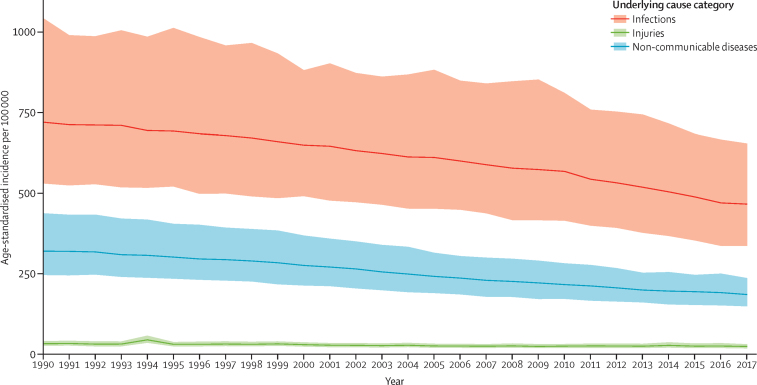
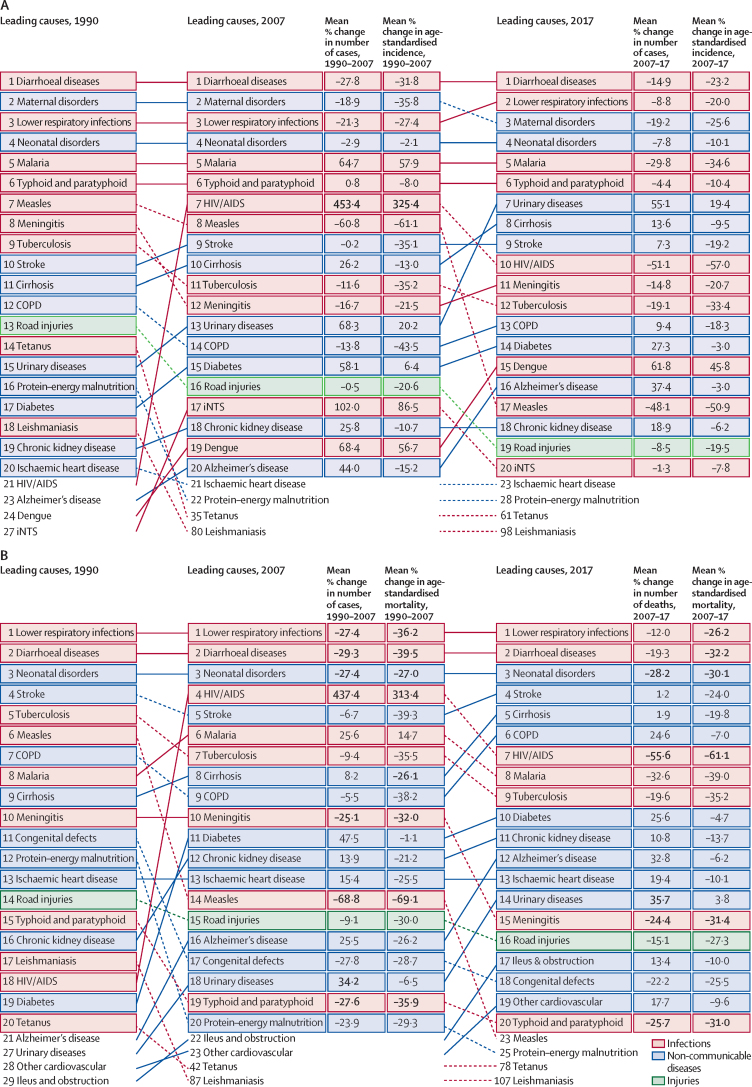
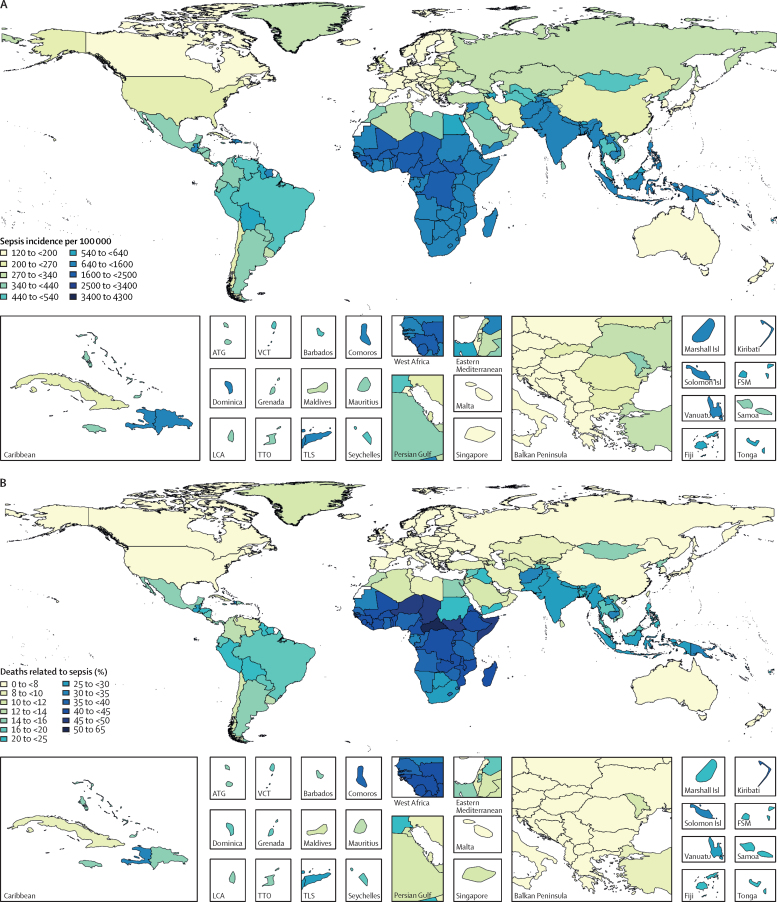
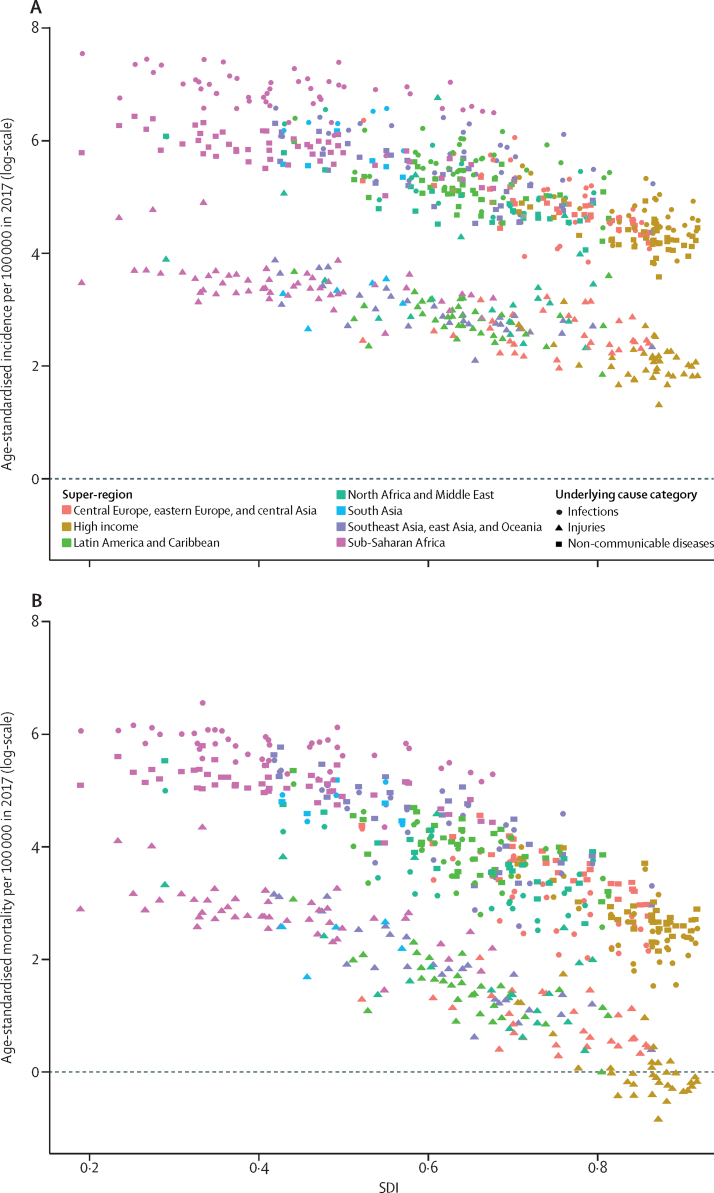
Verification
Claims the paper makes
The claims and statistics of this paper haven’t been checked yet.
Run the check — free, no account needed. It reads the open-access text and checks the sources it cites.
Claims other papers make about this one
Each is checked against this paper’s own text: does it say what the citing paper says it does?
The source backs part of the claim, not all of it — or backs it for a different population, condition or comparison.
In the citing paper
“A clear relationship can be seen – the poorest nations, all former European colonies, have the highest sepsis incidence”
From On race, human variation, and who gets and dies of sepsis (2022) · cites this paper as Rudd et al., 2020
Experimental — accuracy not yet measuredThe cited source says what the claim attributes to it.
In the citing paper
“This approach follows the methods validated by many studies on the epidemiology of sepsis26, 27, 28, 29 and was used by Rudd and colleagues.10”
From Global burden of bacterial antimicrobial resistance 1990–2021: a systematic analysis with forecasts to 2050 (2024) · cites this paper as [10]
The cited source says what the claim attributes to it.
In the citing paper
“Previously published global estimates reported a 53% decline in age-standardised sepsis-related deaths from 1990 to 2017.10”
From Global burden of bacterial antimicrobial resistance 1990–2021: a systematic analysis with forecasts to 2050 (2024) · cites this paper as [10]
In the citing paper
“8.2 million of the 11.1 million sepsis deaths worldwide that year occurred in low and middle income nations”
From On race, human variation, and who gets and dies of sepsis (2022) · cites this paper as Rudd et al., 2020
In the citing paper
“more people in middle and low income nations die of sepsis per incident than in wealthy nations”
From On race, human variation, and who gets and dies of sepsis (2022) · cites this paper as Rudd et al., 2020
In the citing paper
“The majority of the world's sepsis burden is borne by the least wealthiest nations, most former European colonies.”
From On race, human variation, and who gets and dies of sepsis (2022) · cites this paper as Rudd et al., 2020
In the citing paper
“Worldwide, the bulk of sepsis burden falls on marginalized peoples (Gracey & King, 2009; Rudd et al., 2020).”
From On race, human variation, and who gets and dies of sepsis (2022) · cites this paper as Rudd et al., 2020
Self-check
Percentages, sums and reported differences re-computed from the paper’s own numbers.
The self-check needs the paper’s full text.
Citations
Cites
James, S. L., Abate, D., Abate, K. H., Abay, S. M., Abbafati, C., Abbasi, N., Abbastabar, H., Abd-Allah, F., Abdela, J., Abdelalim, A., et al. (2018) · The Lancet · doi:10.1016/s0140-6736(18)32279-7 · Cited by 13,867
Bone, R. C., BALK, R. A., Cerra, F. B., Dellinger, R. P., Fein, A. M., Knaus, W. A., Schein, R. M. H., & Sibbald, W. J. (1992) · CHEST Journal · doi:10.1378/chest.101.6.1644 · Cited by 13,335
Vos, T., Abajobir, A. A., Abate, K. H., Abbafati, C., Abbas, K. M., Abd-Allah, F., Abdulkader, R. S., Abdulle, A. M., Abebo, T. A., Abera, S. F., et al. (2017) · The Lancet · doi:10.1016/s0140-6736(17)32154-2 · Cited by 13,220
Self-citationRoth, G. A., Abate, D., Abate, K. H., Abay, S. M., Abbafati, C., Abbasi, N., Abbastabar, H., Abd-Allah, F., Abdela, J., Abdelalim, A., et al. (2018) · The Lancet · doi:10.1016/s0140-6736(18)32203-7 · Cited by 8,600
Self-citationAngus, D. C., Linde-Zwirble, W. T., Lidicker, J., Clermont, G., Carcillo, J., & Pinsky, M. R. (2001) · Critical Care Medicine · doi:10.1097/00003246-200107000-00002 · Cited by 8,503
Self-citationSurviving Sepsis Campaign: International guidelines for management of sepsis and septic shock: 2016.
Rhodes, A., Evans, L. E., Alhazzani, W., Levy, M. M., Antonelli, M., Ferrer, R., Kumar, A., Sevransky, J. E., Sprung, C. L., Nunnally, M. E., et al. (2017) · Intensive Care Medicine · doi:10.1007/s00134-017-4683-6 · Cited by 6,621
Self-citationThe epidemiology of sepsis in the United States from 1979 through 2000
Martin, G. S., Mannino, D. M., Eaton, S., & Moss, M. (2003) · New England Journal of Medicine · doi:10.1056/nejmoa022139 · Cited by 5,841
Stanaway, J. D., Afshin, A., Gakidou, E., Lim, S. S., Abate, D., Abate, K. H., Abbafati, C., Abbasi, N., Abbastabar, H., Abd-Allah, F., et al. (2018) · The Lancet · doi:10.1016/s0140-6736(18)32225-6 · Cited by 4,943
Self-citationKyu, H. H., Abate, D., Abate, K. H., Abay, S. M., Abbafati, C., Abbasi, N., Abbastabar, H., Abd-Allah, F., Abdela, J., Abdelalim, A., et al. (2018) · The Lancet · doi:10.1016/s0140-6736(18)32335-3 · Cited by 4,192
Self-citationFleischmann, C., Scherag, A., Adhikari, N. K. J., Hartog, C. S., Tsaganos, T., Schlattmann, P., Angus, D. C., & Reinhart, K. (2016) · American Journal of Respiratory and Critical Care Medicine · doi:10.1164/rccm.201504-0781oc · Cited by 3,548
Self-citation
Research works printed but not linked: 1
- Singer, 2016, The third international consensus definitions for sepsis and septic shock (Sepsis-3), JAMA, 315, 801, 10.1001/jama.2016.0287 · DOI · Paper page
Cited by
Sorted by citations
Items 301–400 of 1,054
HDAC6 inhibition reprograms endothelial and macrophage responses to protect the lung in endotoxemia
Li, Y., Wang, Y., Li, W., & Yu, J.-Y. (2026) · Respiratory Research · doi:10.1186/s12931-026-03607-4 · Cited by 1
“Sepsis remains a leading cause of mortality and morbidity worldwide [2, 3].”
Zeng, J., Xie, M., Sun, Y., Dong, Z., Wang, M., Zeng, H., Zhu, C., & Song, Y. (2026) · BMC Infectious Diseases · doi:10.1186/s12879-026-12984-6 · Cited by 1
Cao, S.-Q., Cai, D.-T., Zhang, S., He, Y.-C., Yuan, X.-J., Zhu, Z., Miao, X.-F., Wu, S.-N., Zhong, Y., Yang, F., et al. (2026) · npj Digit. Medicine · doi:10.1038/s41746-026-02500-0 · Cited by 1
Fan, W., Zhao, R., Liu, J., Luo, R., & Chen, Y. (2026) · Frontiers in Immunology · doi:10.3389/fimmu.2026.1762637 · Cited by 1
Serum iron is associated with the prognosis in sepsis based on a large-scale database
Luo, J., & Ding, N. (2026) · BMC Infectious Diseases · doi:10.1186/s12879-026-12810-z · Cited by 1
“The incidence and mortality rates in sepsis vary in different regions, with the highest burdens especially in countries with lowest level economy [3].”
Cusack, R., Garduno, A., Cumpf, S., Reyes-Morales, P., Léone, M., Fernández, A. B., Rodríguez, A., & Martín-Loeches, I. (2026) · Medical Science · doi:10.3390/medsci14010117 · Cited by 1
“Sepsis and septic shock are leading causes of morbidity and mortality in critical illness, accounting for an estimated 48.9 million global cases and 11 million deaths annually [1,2].”
InfluentialAsiri, A., Amer, K. A., Alqahtani, M. S., Almathami, L. A., Asiri, O. A., Alnasser, S. S., Khuzayyim, A. A. A., Alqahtani, B. A., Asiri, F., & Asiri, H. M. M. (2026) · Healthcare · doi:10.3390/healthcare14050680 · Cited by 1
“Globally, sepsis affects approximately 49 million individuals annually with 11 million deaths, representing nearly 20% of worldwide mortality [3].”
InfluentialWang, H., Sun, M., & Fan, H. (2026) · Current Issues in Molecular Biology · doi:10.3390/cimb48030311 · Cited by 1
“Nearly 48.9 million sepsis cases occurred globally in 2017, resulting in eleven million deaths and around a fifth of all deaths worldwide [2].”
InfluentialLi, B., & Zhao, L. Y. (2026) · Journal of Inflammation Research · doi:10.2147/jir.s587066 · Cited by 2
Han, Y. J. (2026) · Diseases · doi:10.3390/diseases14030094
“…not analyzed as a standalone cause because, within the GBD framework, sepsis is modeled as a clinical syndrome arising from multiple underlying etiologies rather than as an underlying cause of death; accordingly, sepsis-related deaths are attributed to the precipitating infectious causes [22,23].”
Liu, Y., Shi, Z., Luo, H., Fu, W., Li, Y., Xie, J., Li, M., Zhang, Z., Xia, B., & Lin, L. (2026) · European Journal of Pharmacology · doi:10.1016/j.ejphar.2026.178722 · Cited by 1
Yang, S. E., Meng, J., Johnston, C. J., Gavade, S., Schwieterman, W., Hubert, H., Newstead, M. W., Singer, B. H., & Spencer-Segal, J. L. (2026) · Brain Behavior and Immunity · doi:10.1016/j.bbi.2026.106535 · Cited by 1
“Severe infection can lead to a dysregulated immune response and organ dysfunction—a condition known as sepsis, which affects approximately 50 million individuals globally each year (Rudd et al., 2020).”
Sahin, N., Aydemi̇r, S., Selmi, N. H., Ertaş, İ., Gökçe, Y. K., Döğer, C., Terzi, G., & Ensarioğlu, M. (2026) · Diagnostics · doi:10.3390/diagnostics16060844 · Cited by 1
“It is characterized by life-threatening organ dysfunction resulting from a dysregulated host response to infection, with mortality rates ranging from 25% to over 50% depending on disease severity and comorbid conditions [1,2].”
Modulating Vimentin: A Systems-Level Therapeutic Strategy for Sepsis and Complex Diseases
Chen, R., Wu, J., Jafari, D., & Gad, A. K. B. (2026) · Life · doi:10.3390/life16030457 · Cited by 1
“Sepsis continues to pose a major challenge to global health systems, affecting approximately 49 million individuals and claiming 11 million lives annually [1].”
Cumambrin B Alleviates Sepsis-Associated Acute Lung Injury by Activating the Nrf2/HO-1 Pathway
Que, Y., Ruan, D., Xu, M.-X., Nie, Y.-L., Huang, G.-Z., Zhao, H., & Yang, Y.-Z. (2026) · Biomedicines · doi:10.3390/biomedicines14030729 · Cited by 1
“Sepsis is a life-threatening multi-organ dysfunction syndrome caused by the body’s abnormal response to infection, and it is one of the leading causes of death among patients in intensive care units [1–3].”
Muhunzi, D., Mrema, E., Banda, F., & Mashauri, H. L. (2026) · Health Science Reports · doi:10.1002/hsr2.72145 · Cited by 1
“The syndrome continues to be a major cause of morbidity and mortality globally, particularly in low‐ and middle‐income countries (LMICs) [2, 3].”
Zhang, X., Song, L., Cao, J.-L., Liu, J.-M., Lin, Y., Yuan, H., Trtić-Petrović, T., Ye, H.-M., & Zhang, Y. (2026) · Journal of Rare Earths · doi:10.1016/j.jre.2026.03.018 · Cited by 1
The Global Intensive Care Unit
Riunga, F., Wambua, G. M., & Lee, B. W. (2026) · Critical Care Clinics · doi:10.1016/j.ccc.2026.01.002 · Cited by 1
Abady, E., Urbon, S., Moubarak, E. S., Mathew, K. T., Fahmy, K., Deeba, F., Oweidat, M., Amin, M. H. J., & Alsabri, M. (2026) · Sage open pediatrics · doi:10.1177/30502225261451613 · Cited by 1
“50,51 The FEAST trial fundamentally changed practice, proving fluid boluses are harmful in settings lacking ICU support.”
Yu, Z., Feng, J., & Qin, F. (2026) · Intensive Care Science · doi:10.1016/j.iics.2026.08.003
Wijen, A., van Teeffelen, I., Wolffs, P., Penders, B., & Kamenshchikova, A. (2026) · SSM - Qualitative Research in Health · doi:10.1016/j.ssmqr.2026.100881
Lee, Y., Kim, H.-J., Park, J.-Y., & Yu, M.-Y. (2026) · Journal of Korean Critical Care Nursing · doi:10.34250/jkccn.2026.19.3.70
“2017년 전 세계 패혈증 관련 사망 자는 약 1,100만 명으로 전체 사망의 20%를 차지하여 주요 공중보건 문제로 보고되었다[4].”
Zimmermann, C., Born, S., Rose, N., Pletz, M. W., Scherag, A., Reinhart, K., & Fleischmann-Struzek, C. (2026) · Scientific Reports · doi:10.1038/s41598-026-75831-3
“It occurs with an estimated yearly incidence of 50 million cases and is associated with approximately 11 million deaths 3 .”
Self-citationWang, M.-Z., Feng, H.-F., Qin, C., Yin, Y.-J., & Huang, X.-L. (2026) · Frontiers in Pharmacology · doi:10.3389/fphar.2026.1877785
Wang, J., Wang, Y., Li, L., Zhang, C., Wen, K., 皮晓红, Yao, K., & Du, Q. (2026) · Frontiers in Endocrinology · doi:10.3389/fendo.2026.1946659
Circulating follicular helper T cells are associated with mortality in sepsis
Sun, Y., Pan, X., Zhang, C., Kang, L., Li, Y., & Zhang, L. (2026) · Frontiers in Immunology · doi:10.3389/fimmu.2026.1931433
AI/ML-enabled sepsis prediction systems: laboratory considerations from development to deployment
Durant, T. J. S., Aldewereld, Z., Peaper, D. R., & Wheeler, S. (2026) · Journal of Clinical Microbiology · doi:10.1128/jcm.01461-25
“Sepsis remains one of the leading causes of in-hospital mortality worldwide and is responsible for an estimated 11 million deaths annually (3).”
Nemeckova, M., Conner, T., & Steven, A. (2026) · PLoS ONE · doi:10.1371/journal.pone.0360913
“Sepsis is a substantial global health problem associated with high incidence and unacceptably high mortality and morbidity [1].”
Liu, Y., Wu, J.-Q., & Li, J.-Z. (2026) · Frontiers in Cell and Developmental Biology · doi:10.3389/fcell.2026.1983746
Wang, Y.-P., Ma, K.-C., Zhang, H.-L., & Chen, H. (2026) · Diagnostics · doi:10.3390/diagnostics16213519
Suba, M.-I., Bînă, A. M., Pescaru, C. C., Roșca, R., Hogea, B. G., Gurguş, D., Popa, Z. L., Abu-Awwad, S.-A., & Abu-Awwad, A. (2026) · Medicina · doi:10.3390/medicina62112079
Early serum electrolyte profiles in pediatric sepsis and their association with mortality
Tan, L.-J., Miao, H.-J., Dou, J., Shan, Y., Tang, X.-F., Hu, H.-R., Fu, J.-L., Zhang, Y.-C., & Cui, Y. (2026) · European Journal of Pediatrics · doi:10.1007/s00431-026-07567-1
“It is the most important risk factor for child mortality and also a challenge for today's critical medicine [1, 2].”
InfluentialTan, W., Wang, C., Liu, X., Deng, J., Sang, Z., & Hu, X. (2026) · Journal of Ethnopharmacology · doi:10.1016/j.jep.2026.122573
Al-Harbi, F. A., Ajubaili, O. K., Alharbi, M. F., Alharbi, A. M., Alalawi, A. N., Al-Najem, R. M., Alhabib, Y. A., & Alghulayqah, A. (2026) · Journal of the National Medical Association · doi:10.1016/j.jnma.2026.101106
Chen, C., Jin, Y.-T., Chen, W.-M., Yuan, H., Hu, Y.-C., & Hu, J. (2026) · Frontiers in Cellular and Infection Microbiology · doi:10.3389/fcimb.2026.1891550
Using extracorporeal ozone to treat experimental gram-negative sepsis: an exploratory study
Razmand, B., Fowler, C., Skorup, P., Sjöholm, J., Wictor, P.-O., Günther, M., Lipcsey, M., & Franzén, S. (2026) · Critical Care · doi:10.1186/s44541-026-00020-8
“Sepsis is the third leading cause of death globally [1].”
Begum, T., Ahsan, A., Fatema, K., & Ahmed, F. (2026) · Bangladesh Critical Care Journal · doi:10.3329/bccj.v14i2.94158
Hu, C., Cheng, D., & Hu, S. (2026) · Frontiers in Medicine · doi:10.3389/fmed.2026.1940916
Rotea, A., Rotea, B., Șuba, M.-I., Roșca, O., Cerbu, B., Enătescu, I., Dima, M., Iacob, E., Gluhovschi, A., & Iacob, D. (2026) · Journal of Clinical Medicine · doi:10.3390/jcm15218246
Evaluating the quality and reliability of YouTube videos about sepsis
Arça, D. Ö., Erdemir, İ., Şafak, F. E., Gök, C. K., Doğan, S. N. K., Odacıoğlu, M., Kılınç, M. O., Hanci, S. Y., & Hancı, V. (2026) · Medicine · doi:10.1097/md.0000000000051114
“[5] Timely diagnosis and treatment of sepsis are critical to improving patient outcomes and reducing mortality.”
Shen, Z.-X., Zhang, H.-J., & Wang, Y. (2026) · BMC Medical Informatics and Decision Making · doi:10.1186/s12911-026-03580-4
“Recent global estimates suggest that sepsis affects approximately 48.9 million individuals annually, resulting in 11 million deaths [2].”
InfluentialDiscordance between actual care and recommendations by a reinforcement learning model for sepsis
Nauka, P. C., Kennedy, J. N., Chen, X., Komorowski, M., Chang, C.-C. H., Pirracchio, R., Tang, L., McVerry, B. J., Angus, D. C., Hauskrecht, M., et al. (2026) · npj Health Systems · doi:10.1038/s44401-026-00156-2
Self-citationCheng, X., Qi, G.-L. H., & Zhao, S.-J. (2026) · Brain Research Bulletin · doi:10.1016/j.brainresbull.2026.112172
Digholkar, G., Pardeshi, A., Sung, J. J., & Pearson, R. M. (2026) · ACS Omega · doi:10.1021/acsomega.6c07501
León-Hernández, C. Y., Torres-Rojas, A., González-Hernández, L. A., Roblero-Arriaga, L. C., Moral-Trinidad, L. E. D., Martínez-Ayala, P., Vázquez-Limón, J. C., Ruíz-Herrera, V. V., Sánchez-Reyes, K., Andrade-Villanueva, J. F., et al. (2026) · Pathogens · doi:10.3390/pathogens15111100
Yan, X., Li, M., Yan, C., Dang, Y., Lv, Y., 李同琴, Zhang, J., Wu, Y., & Ma, L. (2026) · Frontiers in Immunology · doi:10.3389/fimmu.2026.1935801
Jin, L., Wu, Y., & Wang, H. (2026) · Journal of Clinical Medicine · doi:10.3390/jcm15218213
Jiang, Z.-K., Wu, L.-J., Zhou, X.-Y., Xu, J., Xiong, X., Chen, J., & Hu, Y.-H. (2026) · Frontiers in Pediatrics · doi:10.3389/fped.2026.1986840
“Global estimates from the 2017 Global Burden of Disease study placed the worldwide sepsis burden at approximately 48.9 million cases, of which nearly half — 25.2 million — occurred in children and adolescents under 20 years of age (2).”
InfluentialChandra, G., Bischof, K., Saggar, S., & Chandra, S. (2026) · Journal of Artificial Intelligence and Knowledge Engineering · doi:10.37819/jaike.26.0015
“Sepsis — the life-threatening organ dysfunction caused by dysregulated host response to infection — affects an estimated 48.9 million individuals and causes 11 million deaths annually (Rudd et al., 2020).”
InfluentialZhang, C.-L., Cui, Q.-Q., Wu, Q.-Y., Tang, W., Zhang, L., & Chu, L. (2026) · PLoS ONE · doi:10.1371/journal.pone.0359578
“Sepsis is life-threatening organ dysfunction caused by a dysregulated host response to infection and remains a major cause of death worldwide [1,2].”
Mora, P., Lakbar, I., Myatra, S. N., Gaye, B., Souissi, A. B., Glenn Hernández, P., Madani, N., Boyer, L., & Léone, M. (2026) · Critical Care Medicine · doi:10.1097/ccm.0000000000007371
Meyer-Eschenbach, F., Schmiedler, R., von Stoephasius, J., Zhang, C., Kronfli, L., Frey, N., Näher, A.-F., Ehret, J., Nothacker, J., von Kalle, C., et al. (2026) · JAMIA Journal of the American Medical Informatics Association · doi:10.1093/jamia/ocag144
Ding, X., Bao, P., Huang, X., Xu, R., Tang, X., Wu, Y., 崔小莉, & Lu, Y. (2026) · Frontiers in Microbiology · doi:10.3389/fmicb.2026.1949602
Whose sepsis? Tropical infections and the limits of contemporary sepsis evidence
Kumar, T. P., & Gupta, N. R. (2026) · Transactions of the Royal Society of Tropical Medicine and Hygiene · doi:10.1093/trstmh/trag132
Zeng, W., Zhang, Y., Fan, L., Xun, Y., Jiang, Z., & FeiFei, D. (2026) · Frontiers in Cellular and Infection Microbiology · doi:10.3389/fcimb.2026.1921762
Varma, G. P., & Dr.Manjunatha, N. (2026) · International Journal of Drug Delivery Technology · doi:10.25258/ijddt.16.75s.160
Priya, V. (2026) · International Journal of Drug Delivery Technology · doi:10.25258/ijddt.16.73s.41
Choudhary, G., Gharge, S. S., Mahashabde, M. L., Sharveen, G. D., & Kumbhar (2026) · International Journal of Drug Delivery Technology · doi:10.25258/ijddt.16.70s.118
“The World Health Organization designated sepsis a global health priority in 2017, with the Global Burden of Disease Study reporting 48.9 million incident cases and 11.0 million sepsis-related deaths annually, accounting for 19.7% of global mortality [2,3].”
InfluentialYao, H., Li, Z., Lü, J., & Shen, W. (2026) · Frontiers in Medicine · doi:10.3389/fmed.2026.1942203
Wang, C., Xi, C., Zhang, Y., Ma, R.-F., Shi, M.-M., Gao, Y., Liu, L.-P., Ning, C.-Y., & Chen, A.-B. (2026) · Frontiers in Immunology · doi:10.3389/fimmu.2026.1973456
Qian, L.-F., Zhao, Q.-M., Wang, Y., Zhang, J.-W., Wang, J., Lin, W., Jiang, H.-P., Cui, Y., & Ji, S.-Y. (2026) · Journal of Molecular Histology · doi:10.1007/s10735-026-10991-0
“Sepsis is a life-threatening condition of multiorgan dysfunction arising from a dysregulated host response to infection and is marked by excessive inflammatory responses caused by the unregulated release of inflammatory mediators (Rudd et al. 2020, Poll et al. 2021, Vincent et al. 2013).”
Wu, L.-H., Zeng, C.-F., Xiao, C.-X., Fu, Y.-Q., Bai, K., Li, J., Xu, F., & Dang, H. (2026) · International Immunopharmacology · doi:10.1016/j.intimp.2026.117518
Infection-associated acute kidney injury in resource-limited settings.
Hawkes, M., Batte, A., Chawla, L. S., & Conroy, A. L. (2026) · Nature Reviews Nephrology · doi:10.1038/s41581-026-01138-1
Lima, A. L. B., Martins, J. S., Carvalho, I. R., Manara, C. D. S., Rodrigues, S. B., Almeida, J. P., Marins, M. M., Florence, P. Z., & Fernandes, A. C. (2026) · Cureus · doi:10.7759/cureus.117966
Amin, A. A., Althubiti, M., Fatani, S. H., Mufti, A. H., Azher, Z. A., Malibari, G. M., & Bogari, N. M. (2026) · Frontiers in Molecular Biosciences · doi:10.3389/fmolb.2026.1958117
“Early prediction of circulatory collapse remains a critical gap (La et al., 2025; Rudd et al., 2020) driven by a breakdown in the fine equilibrium between pro-inflammatory amplification and immunoregulatory counter-suppression (Delano and Ward, 2016; Ma et al., 2025), a process mediated centrally…”
Liao, Y.-S., Deng, Y.-P., Song, J.-L., Yu, X., Li, Q., Lu, B., & Chen, G.-Y. (2026) · Frontiers in Cellular and Infection Microbiology · doi:10.3389/fcimb.2026.1934020
“Sepsis is life-threatening organ dysfunction caused by a dysregulated host response to infection and remains a major contributor to global mortality (Singer et al., 2016; Rudd et al., 2020).”
Feng, W.-Y., Chen, Y., Zhang, X.-Y., Fu, R., Hu, Q., Mo, F., & Wang, J.-F. (2026) · Frontiers in Medicine · doi:10.3389/fmed.2026.1978491
Liu, T., Wang, Y., Zeng, L., Miao, X., Peng, Y., Yu, J., Li, J., Zhao, Q., Chen, Z., Dai, R., et al. (2026) · Frontiers in Immunology · doi:10.3389/fimmu.2026.1931628
Chinese Perioperative Septic Shock Investigators for the Chinese Peri-Operative Organ Protection Group, Li, C., Li, H., Zhang, H., Zhang, X., Zhao, B., 朱少俊, Huang, L., 马震俊, Wang, Y., et al. (2026) · JAMA · doi:10.1001/jama.2026.21322
Proteomic identification of resistin as a NET-associated neutrophil activity marker in sepsis
Hashiguchi, E., Shinkai, A., Katsuno, M., Hayakawa, M., Totoki, T., Tasaki, M., & Ito, T. (2026) · Journal of Intensive Care · doi:10.1186/s40560-026-00954-8
“According to the World Health Organization, there were an estimated 48.9 million cases of sepsis and 11 million sepsis-related deaths worldwide in 2020, accounting for approximately 20% of all global deaths [2, 3].”
InfluentialZhang, Y.-H., Liao, G.-Y., Liu, C.-H., Chen, G.-Y., Song, J.-L., Liao, Y.-T., & Zhang, L.-L. (2026) · Journal of Intensive Care · doi:10.1186/s40560-026-00953-9
“Sepsis is life-threatening organ dysfunction caused by a dysregulated host response to infection and remains a major cause of death and resource use worldwide [1, 2].”
Zhang, L.-Y., Chen, P., Li, J., Xiao, W.-L., & Zhou, W.-T. (2026) · Frontiers in Medicine · doi:10.3389/fmed.2026.1864043
Quan, R.-L., Wang, C.-L., Li, W., Jiang, K.-P., & Huang, K.-Z. (2026) · Frontiers in Medicine · doi:10.3389/fmed.2026.1941213
Schisandra chinensis in sepsis intervention through multi-target mechanisms and organ protection
Chen, M., Wang, H., Bu, K., Raorao, Z., & Qin, C. (2026) · Fitoterapia · doi:10.1016/j.fitote.2026.107511
Gatti, M., Giorgi, B., Paola, R. D., Santarella, F., & Pea, F. (2026) · The Pediatric Infectious Disease Journal · doi:10.1097/inf.0000000000005429
Wu, Y., Lu, J., Mo, Y., Xu, Y., Yan, X., Yan, C., & Wang, Y. (2026) · Frontiers in Immunology · doi:10.3389/fimmu.2026.1998563
Sulangi, C. W. (2026) · Natural Resources for Human Health · doi:10.53365/nrfhh.3339
“Globally, sepsis accounted for an estimated 48.9 million cases and 11 million deaths in 2017, underscoring its substantial contribution to preventable mortality [4,5] .”
InfluentialWilliams, J., Kollisch-Singule, M., Elmadany, N., Habashi, N., Nieman, G., & Varisco, B. (2026) · Intensive Care Medicine Experimental · doi:10.1186/s40635-026-00985-3
“According to the Global Burden of Disease data, approximately 49 million cases of sepsis are estimated to occur worldwide each year [1].”
Alevizopoulos, A. G., Anastasiou, G. G., Nomikos, P., & Kritikos, I. (2026) · Metabolism Open · doi:10.1016/j.metop.2026.100508
“Sepsis accounts for an estimated 11 million deaths annually, and the liver acts both as an effector of host defence and as a frequent target of injury [1 – 3].”
Ha, N. K., Lee, H.-U., Kim, C., 임찬주, Yoo, S., Kim, J., 허주원, Kim, H., & Son, M. (2026) · Hospitals · doi:10.3390/hospitals3040020
Huang, T., Tan, Z., Jiang, L., Yang, X., Wang, S., & Huang, Y. (2026) · Frontiers in Medicine · doi:10.3389/fmed.2026.1956921
Xiao, L., Pei, W., & Zhu, H. (2026) · Frontiers in Nutrition · doi:10.3389/fnut.2026.1933045
Ding, R., Zhang, S., Liu, X., Jiang, H., Wang, C., Zhang, Z., Li, X., & Song, X. (2026) · Frontiers in Medicine · doi:10.3389/fmed.2026.1896167
“It imposes a substantial global burden, with an estimated 49 million new cases and 11 million deaths annually, accounting for nearly one-fifth of global mortality (5).”
Ding, Z.-Z., Li, Q., Ma, C.-Y., & Li, H. (2026) · Frontiers in Cellular and Infection Microbiology · doi:10.3389/fcimb.2026.1845721
Almass, A., Alshihri, M. S., Alibrahim, N. S., Alotaibi, M. M., Alharbi, Z., Sharif, H. I., Alabbas, H., Alharbi, A., Alsayali, L., Althobaiti, A., et al. (2026) · International Journal of Environmental Research and Public Health · doi:10.3390/ijerph23101291
Ren, Y.-M., Meng, H.-Q., Li, B.-B., Wang, Y.-H., Gu, L.-L., Lv, R.-Y., Xue, L.-T., Xu, L., Zhang, H., Wang, D.-H., et al. (2026) · Frontiers in Pharmacology · doi:10.3389/fphar.2026.1901895
“The lower estimate comes from the GBD 2017 analysis, whereas the higher estimate comes from the GBD 2021 update, with differences in the observation period, input data, and estimation methods (Rudd et al., 2020; GBD, 2021 Global Sepsis Collaborators, 2025).”
Implementasi qSOFA sebagai Alat Deteksi Dini Sepsis pada Infeksi Akut: Sebuah Literature Review
Silvia, D., Melastuti, E., & Wahyuningsih, I. (2026) · Jurnal Locus Penelitian dan Pengabdian · doi:10.58344/locus.v5i10.6171
Pancreatic Stone Protein: A Promising Biomarker for Sepsis Detection – A Review
Fathima, H., & Faseela, T. (2026) · Archives of Medicine and Health Sciences · doi:10.4103/amhs.amhs_237_25
Evaluation of a Commercial Pediatric Sepsis Early Detection Alert in the Emergency Department
Mitchell, C. M., Zhang, Z., Ranard, B. L., Hruby, G. W., Lee, S. M., Qian, M., Tsze, D. S., Malia, L. A., Babineau, J., Adelman, J. S., et al. (2026) · Archives of Pediatrics and Adolescent Medicine · doi:10.1001/jamapediatrics.2026.4575
Pan, B.-C., Sun, Y.-N., Yang, G.-Y., Fu, H.-P., Li, X., & Sun, Y.-Z. (2026) · Frontiers in Medicine · doi:10.3389/fmed.2026.1952142
Clinically Contextualized State Spaces Provide Continuous Representations of Sepsis
Kobara, S., Kay, M., Choudhary, T., Krishnamoorthy, V., Podgoreanu, M., Hayashi, Y., Agarwal, S., & Kamaleswaran, R. (2026) · Research Square · doi:10.21203/rs.3.rs-11221040/v1
“Precision medicine in sepsis remains an unmet need in critical care, given its unacceptably high mortality despite advances in supportive care 1–3 .”
Anti-Inflammatory Effects of Hypoxia, Hypercapnia, and Hypercapnic Hypoxia: Prospects for Use
ZhA, D., & Baranova, E. V. (2026) · Journal of Evolutionary Biochemistry and Physiology · doi:10.1134/s0022093026050042
“In 2017, approximately 48.9 million cases of sepsis were recorded worldwide, of which 11 million patients died from this pathology, accounting for 19.7% of all deaths globally [21].”
InfluentialYılmaz, H., Tulunay, M., & Yılmaz, A. A. (2026) · Journal of Clinical Medicine · doi:10.3390/jcm15197731
“In 2017, an estimated 48.9 million incident cases of sepsis and 11.0 million sepsis-related deaths occurred worldwide, representing 19.7% of all global deaths [1].”
InfluentialArumairaj, A., Dhanani, D., Tashrifwala, F., Veluswamy, A. S., Venugopalan, A., Annam, R., Dhorajiya, P., & Vajjala, V. (2026) · Infectious Disease Reports · doi:10.3390/idr18050118
“Sepsis continues to be a leading cause of morbidity, mortality, and healthcare expenditure worldwide [3].”
InfluentialJeongmin, M., Yoon, C., Jeong, H. H., Park, S.-H., & Kim, K. (2026) · Journal of Clinical Medicine · doi:10.3390/jcm15207848
“Given the recommendations of the World Health Assembly and the substantial global and Korean burden of sepsis [19–21], a more explicit national approach should be implemented.”
InfluentialPoroșnicu, T. M., Gindac, C., Elagez, A., Păpurică, M., Pescariu, A., Bratosin, F., Hogea, E., Sandesc, D., & Bedreag, O. (2026) · Biomedicines · doi:10.3390/biomedicines14102230
“…one of the leading causes of death in intensive care units worldwide, with an estimated 48.9 million incident cases and 11 million sepsis-related deaths in 2017, and its current definition emphasises life-threatening organ dysfunction caused by a dysregulated host response to infection [1,2].”
InfluentialCTSM: A novel cumulative-time-based stacking algorithm for predicting sepsis onset
Liu, X., Liu, S., He, W., & Mao, S. (2026) · Biomedical Signal Processing and Control · doi:10.1016/j.bspc.2026.110764
Infections chez le patient immunodéprimé en réanimation
Mokart, D., Bisbal, M., Gonzalez, F., Chow‐Chine, L., Faucher, M., & Roger, C. (2026) · EMC-Anesthésie réanimation/Encyclopédie médico-chirurgicale. Anesthésie, réanimation · doi:10.1016/s0246-0289(26)49706-6
Prognostic value of T lymphocyte CD40L expression levels in patients with sepsis
Shao, B., Huang, Z., Liu, Y., Wang, Z., Huang, F., & Wang, J. (2026) · Frontiers in Medicine · doi:10.3389/fmed.2026.1949041
Mu, Y., Tang, H., Zeng, Y., Wang, Q., Huang, T., Li, W., Wu, X., & Pi, S.-M. (2026) · Frontiers in Medicine · doi:10.3389/fmed.2026.1915095
Metadata
- Authors
- Rudd, K. E., Johnson, S. C., Agesa, K. M., Shackelford, K. A., Tsoi, D., Kievlan, D. R., Colombara, D. V., Ikuta, K. S., Kissoon, N., Finfer, S., Fleischmann-Struzek, C., Machado, F. R., Reinhart, K. K., Rowan, K., Seymour, C. W., Watson, R. S., West, T. E., Marinho, F., Hay, S. I., Lozano, R., Lopez, A. D., Angus, D. C., Murray, C. J. L., & Naghavi, M.
- Affiliations
- University of Pittsburgh (US)
- University of Washington (US)
- University of British Columbia (CA)
- UNSW Sydney (AU)
- Jena University Hospital (DE)
- Seattle Children's Hospital (US)
- Universidade de São Paulo (BR)
- Corresponding author
- Naghavi, Mohsen
- ORCID
- Venue
- The Lancet
- Publisher
- Elsevier BV
- Published
- 2020-01
- Volume
- 395
- Issue
- 10219
- Pages
- 200-211
- ISSN
- 0099-5355 (ISSN-L)
- 0140-6736
- PMC
- PMC6970225
- OpenAlex
- W2998853022
- Cited by
- 7,971
- References
- 42
- Citations by year
- 2026: 1540 · 2025: 1722 · 2024: 1545 · 2023: 1195 · 2022: 899 · 2021: 735 · 2020: 329
- FWCI
- 567.33
- Type
- journal article
- Language
- en
- Open access
- hybrid
- doi.org
- Licence
- Locations
- The Lancet (publishedVersion, cc-by)
- PubMed Central (publishedVersion, cc-by)
- PubMed (publishedVersion)
- LA Referencia (Red Federada de Repositorios Institucionales de Publicaciones Científicas) (submittedVersion, other-oa)
- Minerva Access (University of Melbourne) (submittedVersion, cc-by)
- Funders
- Bill & Melinda Gates Foundation
- National Institutes of Health (T32HL007287, T32HL007820, R35GM119519)
- National Health and Medical Research Council (no 1117230)
- Topics
- Health Sciences › Medicine › Critical Care and Intensive Care Medicine › Sepsis Diagnosis and Treatment
- Health Sciences › Medicine › Public Health, Environmental and Occupational Health › Global Health and Epidemiology
- Health Sciences › Medicine › Pediatrics, Perinatology and Child Health › Neonatal and Maternal Infections
- Keywords
- sepsis, sepsis incidence, sepsis mortality, global burden of disease, case fatality, underlying cause of death, age-standardized incidence rate, temporal trends, regional variation, sub-Saharan Africa, South Asia, hospital records, cause-specific mortality, health policy interventions, resource allocation, health loss, nosocomial infections, infection-related mortality, sepsis surveillance
- MeSH terms
- Global Burden of Disease, Adolescent, Adult, Aged, Aged, 80 and over, Cause of Death, Child, Child, Preschool, Female, Humans, Infant, Infant, Newborn, Male, Middle Aged, Socioeconomic Factors, Incidence, Age Distribution, Sex Distribution, Sepsis, Young Adult
About these checks
Registry, retraction, Cites and statistics results are computed, not judged, with one exception: a printed reference that no index lists is read once by a model before it counts as a citation error. Claims are extracted by a model and kept only when their quote appears verbatim in the text; each cited source is then checked, with a model’s help, for whether it says what the claim relies on. Those verdicts can be wrong — read the claim’s quote and the cited source before relying on one.
Statistics and arithmetic are recomputed, not judged.
Confidence bands are shown only for fields calibrated on our annotated test set. None is calibrated yet, so no band is shown.
What counts as a claim ›How we measure confidence ›How we check this ›
Are you an author, or do you see a problem with this page? Request a review
