

The DOI matches its Crossref record; 39 of the 42 references it cites were found in a registry or an index.
Global, regional, and national sepsis incidence and mortality, 1990–2017: analysis for the Global Burden of Disease Study
Open accessAbstract
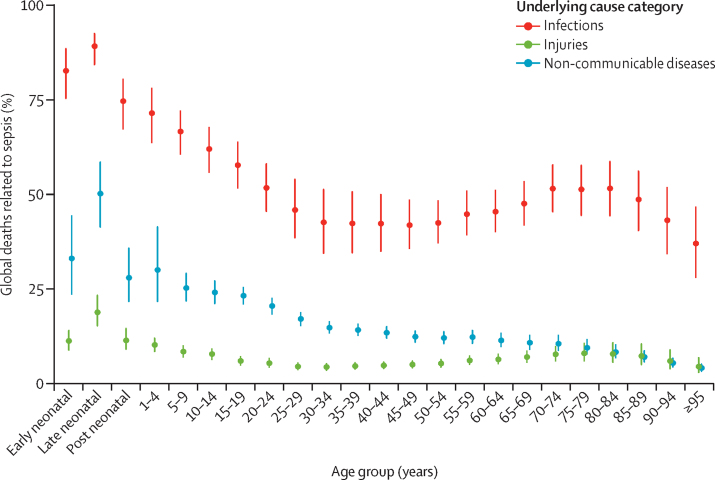
BACKGROUND: Sepsis is life-threatening organ dysfunction due to a dysregulated host response to infection. It is considered a major cause of health loss, but data for the global burden of sepsis are limited. As a syndrome caused by underlying infection, sepsis is not part of standard Global Burden of Diseases, Injuries, and Risk Factors Study (GBD) estimates. Accurate estimates are important to inform and monitor health policy interventions, allocation of resources, and clinical treatment initiatives. We estimated the global, regional, and national incidence of sepsis and mortality from this disorder using data from GBD 2017. METHODS: We used multiple cause-of-death data from 109 million individual death records to calculate mortality related to sepsis among each of the 282 underlying causes of death in GBD 2017. The percentage of sepsis-related deaths by underlying GBD cause in each location worldwide was modelled using mixed-effects linear regression. Sepsis-related mortality for each age group, sex, location, GBD cause, and year (1990-2017) was estimated by applying modelled cause-specific fractions to GBD 2017 cause-of-death estimates. We used data for 8·7 million individual hospital records to calculate in-hospital sepsis-associated case-fatality, stratified by underlying GBD cause. In-hospital sepsis-associated case-fatality was modelled for each location using linear regression, and sepsis incidence was estimated by applying modelled case-fatality to sepsis-related mortality estimates. FINDINGS: In 2017, an estimated 48·9 million (95% uncertainty interval [UI] 38·9-62·9) incident cases of sepsis were recorded worldwide and 11·0 million (10·1-12·0) sepsis-related deaths were reported, representing 19·7% (18·2-21·4) of all global deaths. Age-standardised sepsis incidence fell by 37·0% (95% UI 11·8-54·5) and mortality decreased by 52·8% (47·7-57·5) from 1990 to 2017. Sepsis incidence and mortality varied substantially across regions, with the highest burden in sub-Saharan Africa, Oceania, south Asia, east Asia, and southeast Asia. INTERPRETATION: Despite declining age-standardised incidence and mortality, sepsis remains a major cause of health loss worldwide and has an especially high health-related burden in sub-Saharan Africa. FUNDING: The Bill & Melinda Gates Foundation, the National Institutes of Health, the University of Pittsburgh, the British Columbia Children's Hospital Foundation, the Wellcome Trust, and the Fleming Fund.
Overview
The claims and statistics of this paper haven’t been checked yet.
Run the check — free, no account needed. It reads the open-access text and checks the sources it cites.
Integrity signals
Registry
Cites
Statistics
Figures
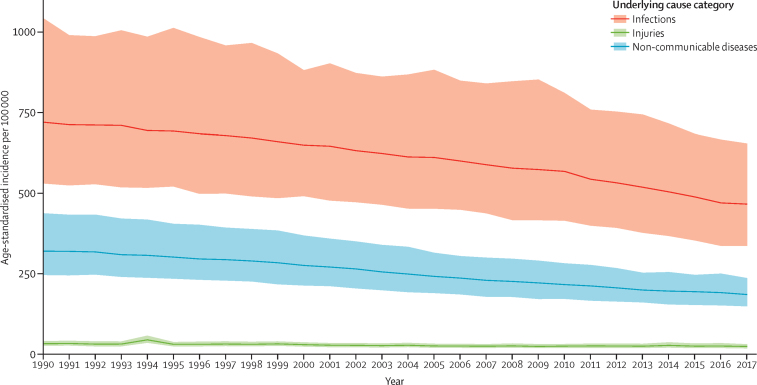
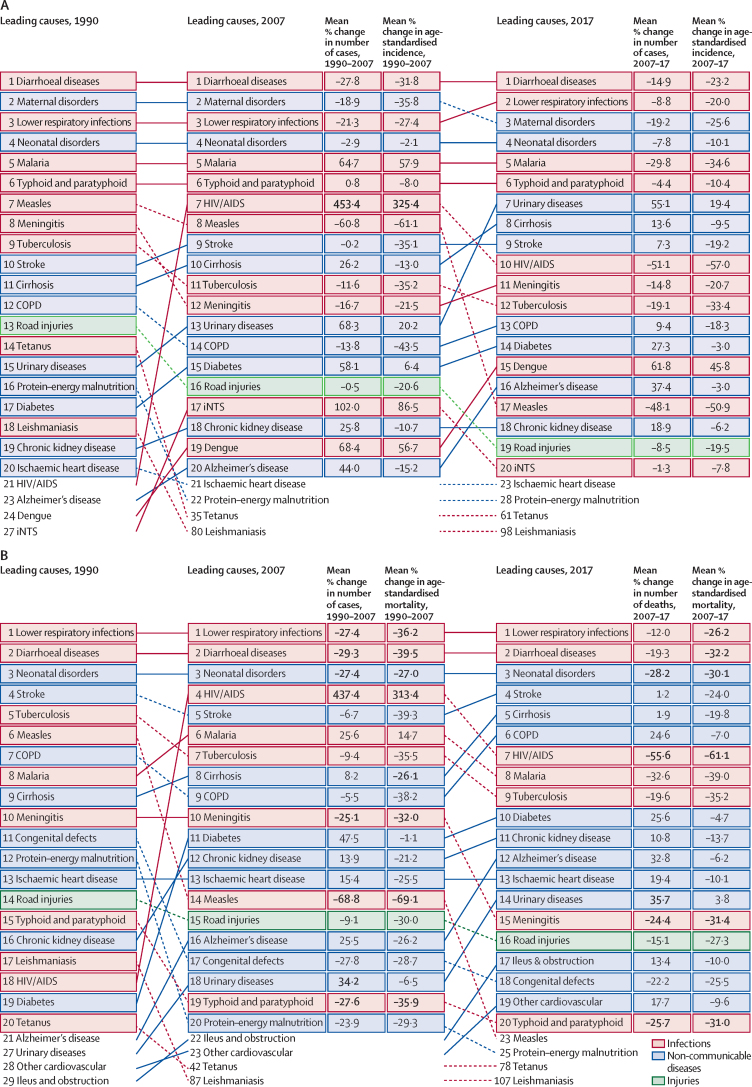
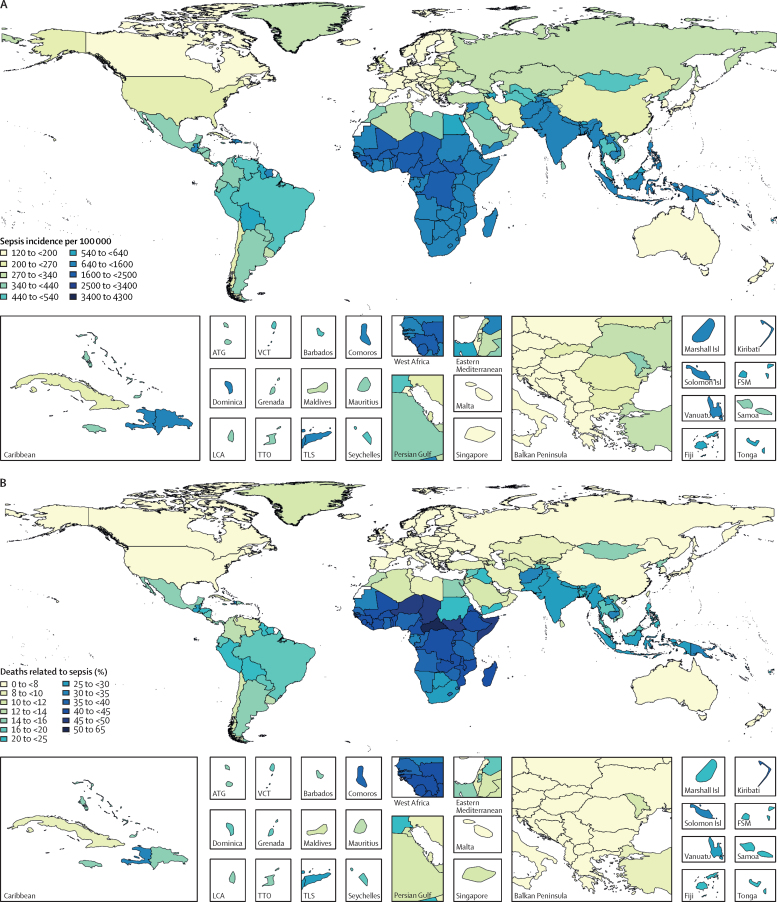
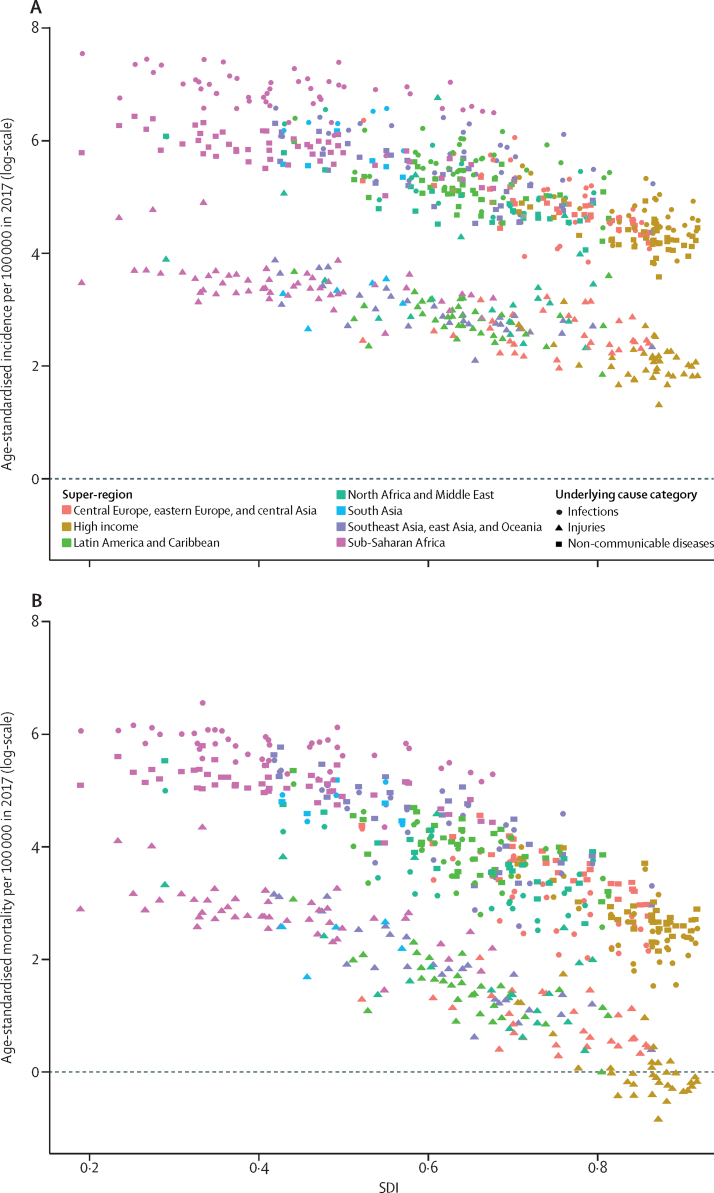
Verification
Claims the paper makes
The claims and statistics of this paper haven’t been checked yet.
Run the check — free, no account needed. It reads the open-access text and checks the sources it cites.
Claims other papers make about this one
Each is checked against this paper’s own text: does it say what the citing paper says it does?
The source backs part of the claim, not all of it — or backs it for a different population, condition or comparison.
In the citing paper
“A clear relationship can be seen – the poorest nations, all former European colonies, have the highest sepsis incidence”
From On race, human variation, and who gets and dies of sepsis (2022) · cites this paper as Rudd et al., 2020
Experimental — accuracy not yet measuredThe source backs part of the claim, not all of it — or backs it for a different population, condition or comparison.
In the citing paper
“8.2 million of the 11.1 million sepsis deaths worldwide that year occurred in low and middle income nations”
From On race, human variation, and who gets and dies of sepsis (2022) · cites this paper as Rudd et al., 2020
Experimental — accuracy not yet measuredThe cited source says what the claim attributes to it.
In the citing paper
“This approach follows the methods validated by many studies on the epidemiology of sepsis26, 27, 28, 29 and was used by Rudd and colleagues.10”
From Global burden of bacterial antimicrobial resistance 1990–2021: a systematic analysis with forecasts to 2050 (2024) · cites this paper as [10]
The cited source says what the claim attributes to it.
In the citing paper
“Previously published global estimates reported a 53% decline in age-standardised sepsis-related deaths from 1990 to 2017.10”
From Global burden of bacterial antimicrobial resistance 1990–2021: a systematic analysis with forecasts to 2050 (2024) · cites this paper as [10]
In the citing paper
“more people in middle and low income nations die of sepsis per incident than in wealthy nations”
From On race, human variation, and who gets and dies of sepsis (2022) · cites this paper as Rudd et al., 2020
In the citing paper
“The majority of the world's sepsis burden is borne by the least wealthiest nations, most former European colonies.”
From On race, human variation, and who gets and dies of sepsis (2022) · cites this paper as Rudd et al., 2020
In the citing paper
“Worldwide, the bulk of sepsis burden falls on marginalized peoples (Gracey & King, 2009; Rudd et al., 2020).”
From On race, human variation, and who gets and dies of sepsis (2022) · cites this paper as Rudd et al., 2020
Self-check
Percentages, sums and reported differences re-computed from the paper’s own numbers.
The self-check needs the paper’s full text.
Citations
Cites
James, S. L., Abate, D., Abate, K. H., Abay, S. M., Abbafati, C., Abbasi, N., Abbastabar, H., Abd-Allah, F., Abdela, J., Abdelalim, A., et al. (2018) · The Lancet · doi:10.1016/s0140-6736(18)32279-7 · Cited by 13,867
Bone, R. C., BALK, R. A., Cerra, F. B., Dellinger, R. P., Fein, A. M., Knaus, W. A., Schein, R. M. H., & Sibbald, W. J. (1992) · CHEST Journal · doi:10.1378/chest.101.6.1644 · Cited by 13,335
Vos, T., Abajobir, A. A., Abate, K. H., Abbafati, C., Abbas, K. M., Abd-Allah, F., Abdulkader, R. S., Abdulle, A. M., Abebo, T. A., Abera, S. F., et al. (2017) · The Lancet · doi:10.1016/s0140-6736(17)32154-2 · Cited by 13,220
Self-citationRoth, G. A., Abate, D., Abate, K. H., Abay, S. M., Abbafati, C., Abbasi, N., Abbastabar, H., Abd-Allah, F., Abdela, J., Abdelalim, A., et al. (2018) · The Lancet · doi:10.1016/s0140-6736(18)32203-7 · Cited by 8,600
Self-citationAngus, D. C., Linde-Zwirble, W. T., Lidicker, J., Clermont, G., Carcillo, J., & Pinsky, M. R. (2001) · Critical Care Medicine · doi:10.1097/00003246-200107000-00002 · Cited by 8,503
Self-citationSurviving Sepsis Campaign: International guidelines for management of sepsis and septic shock: 2016.
Rhodes, A., Evans, L. E., Alhazzani, W., Levy, M. M., Antonelli, M., Ferrer, R., Kumar, A., Sevransky, J. E., Sprung, C. L., Nunnally, M. E., et al. (2017) · Intensive Care Medicine · doi:10.1007/s00134-017-4683-6 · Cited by 6,621
Self-citationThe epidemiology of sepsis in the United States from 1979 through 2000
Martin, G. S., Mannino, D. M., Eaton, S., & Moss, M. (2003) · New England Journal of Medicine · doi:10.1056/nejmoa022139 · Cited by 5,841
Stanaway, J. D., Afshin, A., Gakidou, E., Lim, S. S., Abate, D., Abate, K. H., Abbafati, C., Abbasi, N., Abbastabar, H., Abd-Allah, F., et al. (2018) · The Lancet · doi:10.1016/s0140-6736(18)32225-6 · Cited by 4,943
Self-citationKyu, H. H., Abate, D., Abate, K. H., Abay, S. M., Abbafati, C., Abbasi, N., Abbastabar, H., Abd-Allah, F., Abdela, J., Abdelalim, A., et al. (2018) · The Lancet · doi:10.1016/s0140-6736(18)32335-3 · Cited by 4,192
Self-citationFleischmann, C., Scherag, A., Adhikari, N. K. J., Hartog, C. S., Tsaganos, T., Schlattmann, P., Angus, D. C., & Reinhart, K. (2016) · American Journal of Respiratory and Critical Care Medicine · doi:10.1164/rccm.201504-0781oc · Cited by 3,548
Self-citation
Research works printed but not linked: 1
- Singer, 2016, The third international consensus definitions for sepsis and septic shock (Sepsis-3), JAMA, 315, 801, 10.1001/jama.2016.0287 · DOI · Paper page
Cited by
Sorted by citations
Items 201–300 of 1,054
Long-Term Mortality among Hospitalized Adults with Sepsis in Uganda: A Prospective Cohort Study.
Wailagala, A., Okello, S., Kayondo, W., Ayebare, R., Olebo, D. F., Kayiira, M., Gregory, M., Kemigisha, S. M., Koehler, J. W., Schoepp, R., et al. (2026) · American Journal of Tropical Medicine and Hygiene · doi:10.4269/ajtmh.24-0212 · Cited by 1
Lee, Y., Kim, J., Han, M., Lee, J. A., Kim, J. H., Ahn, J. Y., Jeong, S. J., Ku, N. S., Choi, J. Y., Yeom, J., et al. (2026) · International Journal of Antimicrobial Agents · doi:10.1016/j.ijantimicag.2026.107915 · Cited by 1
Levy, M., Mary, A.-L., Cour‐Andlauer, F., Rousseaux, J., Berthomieu, L., Bréhin, C., Béchet, S., Sierra-Colomina, M., Aupiais, C., Angoulvant, F., et al. (2026) · Annals of Intensive Care · doi:10.1016/j.aicoj.2026.100112 · Cited by 1
Pawar, V. S., Shinde, R., & Patil, S. R. (2026) · Cureus · doi:10.7759/cureus.112605 · Cited by 1
“It is estimated to affect nearly 49 million people annually, resulting in approximately 11 million deaths worldwide [17].”
Kim, T., Yoo, J., Lee, S.-H., & Jung, W. (2026) · Medicina · doi:10.3390/medicina62071353 · Cited by 1
“The burden of this condition extends to health systems, which expend substantial resources on care and bear rising costs [2].”
Mattisson, Y., & Tverring, J. (2026) · Journal of International Medical Research · doi:10.1177/03000605261457800 · Cited by 1
Zhang, B., Zhang, H., Cheng, L., & Wang, N. (2026) · Tissue and Cell · doi:10.1016/j.tice.2026.103831 · Cited by 1
Wang, C., Jiang, X., Chen, Y., Nan, W.-B., & Peng, Z.-Y. (2026) · Drug Design, Development and Therapy · doi:10.2147/dddt.s623143 · Cited by 1
Sachetto, A., Dwivedi, D., Bonifay, A., Cointe, S., Hisada, Y., Dignat-George, F., Lacroix, R., Liaw, P., & Mackman, N. (2026) · Research and Practice in Thrombosis and Haemostasis · doi:10.1016/j.rpth.2026.106833 · Cited by 1
“Despite the treatment with broad-spectrum antibiotics and other supportive care, the mortality rate remains high (15%-30%), with sepsis accounting for 20% of all deaths globally [6,7].”
Shahnawaj, M., Hellol, H. I., Hasan, M. R., Uddin, R., Hossain, N. M., Arif, S. B., & Akhtar, S. (2026) · BioMedInformatics · doi:10.3390/biomedinformatics6040040 · Cited by 1
“An estimated 48.9 million people worldwide are affected by sepsis every year, resulting in 11 million deaths annually [2].”
InfluentialYang, S., Zhou, Z.-X., Xie, Y.-P., & Chen, X.-F. (2026) · Biomarkers · doi:10.1080/1354750x.2026.2697747 · Cited by 1
“According to data in 2020, there were 48.9 million cases of sepsis worldwide in 2017, resulting in 11 million deaths (Rudd et al. 2020).”
InfluentialAbbas, A., Aziz, H. A. A., Hamed, R. M. R., Soliman, S. B., El-Ghani, S. A. A., & Soliman, N. (2026) · BMC Infectious Diseases · doi:10.1186/s12879-026-13794-6 · Cited by 1
“…focus on BSI and advancements in laboratory diagnostics, this infection remains a serious healthcare emergency, with reported mortality rates reaching up to 43% among patients with healthcare-associated infections in Egyptian setting and a range of 10% to 20% in global literature [2, 4].”
Yang, T.-L., Chen, J.-J., Zhang, R., Ma, M., Liu, M., Fu, Y.-J., Jiang, Y.-J., Shang, H., & Zhang, Z.-N. (2026) · International Immunopharmacology · doi:10.1016/j.intimp.2026.117060 · Cited by 1
Clinical implications of ferroptosis in critical illness: a narrative review
Stroobants, T., Willemart, C., Walravens, M., Veeckmans, G., Ligthart, S., Hoste, E. A. J., Benoît, D., Berghe, T. V., & Jorens, P. G. (2026) · Journal of Intensive Care · doi:10.1186/s40560-026-00899-y · Cited by 1
“Sepsis has in-hospital mortality rates exceeding 10%, which can reach 40% in patients with septic shock [68].”
Li, X.-X., Ouyang, B.-Q., Zhang, M.-D., Sun, H.-R., Ye, H., You, L.-J., Yuan, W.-F., Wang, H.-K., Yang, H.-N., Xu, K.-L., et al. (2026) · Naunyn-Schmiedeberg's Archives of Pharmacology · doi:10.1007/s00210-026-05592-3 · Cited by 1
“Clinically, it occurs when an infection triggers an excessive and uncontrolled inflammatory response, leading to widespread tissue damage, multiple organ failure and is one of the leading causes of death among hospitalized patients (Angus and Poll 2013; Rudd et al. 2020).”
Jiang, X., Zhang, L., 游经宏, Ma, J., Zhang, Y., Hu, C., Peng, Z., & Liu, C. (2026) · Journal of Critical Care · doi:10.1016/j.jcrc.2026.155666 · Cited by 1
Ma, J., Qi, X., Li, W.-D., Feng, X., Ma, J.-B., Ma, H.-M., Man, J.-X., Ma, T., De, T., Liu, J., et al. (2026) · Annals medicus · doi:10.1080/07853890.2026.2684073 · Cited by 1
“The condition is linked to high rates of prevalence and mortality and a large burden of healthcare [8,9].”
Childhood sepsis burden: pathogens/antimicrobial-resistant bacteria, 1990–2021 and 2050 forecasts
Zhu, W., Jiang, P., Yu, J., Shen, T., Yang, X. L., Xu, Y., 金胜威, & Jiang, Y. (2026) · Frontiers in Cellular and Infection Microbiology · doi:10.3389/fcimb.2026.1855912 · Cited by 1
Damavandi, S., Emami, H., Asadi, F., Nazari, E., & Rahmatizadeh, S. (2026) · BMC Anesthesiology · doi:10.1186/s12871-026-03983-w · Cited by 1
“Such countries with lower and middle economies have a greater burden as far as resource availability for the purpose of quicker diagnosis and treatment is concerned [1].”
Yang, Z., Kao, X., Zhang, L., Huang, N., Wang, Y., Chen, J., He, M., Tang, Q., & 梁章荣 (2026) · Chinese Medicine · doi:10.1186/s13020-026-01420-1 · Cited by 2
“This accounts for 19.7% of all global deaths, presenting a formidable challenge to health systems worldwide [2].”
InfluentialCai, S.-M., Guo, P., Wang, H., Fu, S.-S., Ding, K., Liang, X., Qin, P., Wang, Z., He, Y., Li, J., et al. (2026) · mSystems · doi:10.1128/msystems.01716-25 · Cited by 1
Evrard, B., Giamarellos-Bourboulis, E., & Roquilly, A. (2026) · Intensive Care Medicine · doi:10.1007/s00134-026-08517-z · Cited by 1
“Sepsis remains a major global health burden, associated with substantial morbidity and mortality [1].”
Shu, Y., Cheng, J., Zou, Y., Zhu, J., Wu, Y., Guo, J., Li, D., Dai, B., & Yuan, Y. (2026) · Talanta · doi:10.1016/j.talanta.2026.130142 · Cited by 1
Phenotypic Antibiotic Susceptibility Testing at the limit of one bacterial cellPreprint
Johansson, L., Ahmad, I., Larsson, J., Zikrin, S., Knagge, P., Fange, D., & Elf, J. (2025) · bioRxiv (Cold Spring Harbor Laboratory) · doi:10.1101/2025.04.13.648565 · Cited by 1
“Every year, 10 million people die from sepsis (Rudd et al. 2020).”
Shi, L. J., Ke, S. F., Zhu, L. M., Fu, L. S., Chen, L. Y., & Zhuang, Y. N. (2026) · Shock · doi:10.1097/shk.0000000000002885 · Cited by 1
“Therefore, early identification of high-risk patients and timely intervention are critical steps in improving sepsis prognosis (4).”
Machine learning prediction of sepsis in paralytic ileus using interpretable clinical models
Song, Q.-Z., Wu, X.-L., Taheri, F. A., Meng, L., Wang, W., & Mo, X. (2026) · Frontiers in Cellular and Infection Microbiology · doi:10.3389/fcimb.2026.1705126 · Cited by 1
Ellison, C., Cottam, C., Lian, Z. J., Onur, T., Choudhury, B., Ong, Y. Y. T., Phan, M., Schembri, M. A., & Connolly, J. P. R. (2026) · PLoS Pathogens · doi:10.1371/journal.ppat.1014299 · Cited by 1
“ExPEC isolates are also frequently resistant to multiple antibiotics and were responsible for ~23% of the 1.27 million deaths globally attributed to antimicrobial resistance in 2019 [8,9].”
InfluentialIrimie, A.-I., Dinescu, S., Novac, M., Vasile, R., Rotaru-Zăvăleanu, A., Ruscu, M., & Radu, L. (2026) · Journal of Clinical Medicine · doi:10.3390/jcm15124799 · Cited by 1
“Despite the consolidation of bundle-based care, hospital mortality of patients admitted to intensive care units (ICUs) with sepsis or septic shock remains in the range of 20–40% in contemporary cohorts and is highest at the extremes of age [4,5].”
InfluentialZhang, M., Fu, D.-L., Zhang, Q., Liang, T., & Guo, H. (2026) · International Immunopharmacology · doi:10.1016/j.intimp.2026.116648 · Cited by 1
Țocu, G., Ștefănescu, B., Țocu, L., Dimofte, F., Luțenco, V., Mihailov, O., Mihailov, R., & Matei, L. S. (2026) · Biomedicines · doi:10.3390/biomedicines14061271 · Cited by 1
“A substantial proportion of potentially preventable deaths in critically ill patients is still related to sepsis, which continues to represent a major challenge for modern medicine [1–3].”
Chumchuen, K., Sukvichian, J., & Chusri, S. (2026) · Journal of Hospital Infection · doi:10.1016/j.jhin.2026.05.047 · Cited by 1
Zhou, N., Tan, B., Jiang, Y., Wang, H., Peng, W., Yin, M., Fu, L. Y., & Peng, S. (2026) · Journal of Inflammation Research · doi:10.2147/jir.s598139 · Cited by 1
Aga, O. N. L., Moyo, S. J., Manyahi, J., Kibwana, U., Löhr, I. H., Langeland, N., Blomberg, B., & Johnston, I. G. (2026) · PLoS Biology · doi:10.1371/journal.pbio.3003848 · Cited by 8
“The isolates were divided by country based on metadata, and countries were grouped into superregions as defined by the Global Burden of Disease regional classification system [49].”
The Implementation Gap in Early Septic Shock Resuscitation: A Three-Barrier Framework
Kadir, S., Murphy, T. W., & Shiber, J. (2026) · Journal of Clinical Medicine · doi:10.3390/jcm15124572 · Cited by 1
Qian, Z. (2026) · Journal of Inflammation Research · doi:10.2147/jir.s611267 · Cited by 1
Zhang, C., Xie, C., Zhang, Z., Luo, R.-J., & Xu, F. (2026) · Pathogens · doi:10.3390/pathogens15060596 · Cited by 1
“The substantial global burden of sepsis was highlighted by the 2017 estimates of 49 million cases and 11 million related deaths, which represented nearly 20% of all deaths worldwide [2,3].”
Molecular Mechanisms Involved in the Pathophysiology of Sepsis: Role of Signaling Pathways
Yılmaz, S., Ateş, Ş., Uçar, S., & Cömert, A. (2026) · Journal of Biochemical and Molecular Toxicology · doi:10.1002/jbt.70956 · Cited by 1
“This staggering figure represents nearly 20% of all global mortalities linked to the condition [ 5].”
Meena, D. S., Bohra, G. K., Malik, M., Lodha, N., Kumar, D., Midha, N. K., Tak, V., Rohila, A. K., Banerjee, M., & Garg, M. (2026) · BMC Infectious Diseases · doi:10.1186/s12879-026-13680-1 · Cited by 2
“A recent meta-analysis estimated that 49 million cases of sepsis occur globally each year, with a mortality rate of 26.7% [2].”
InfluentialQiao, J., Zou, L., Zhao, J.-C., Cui, C., Huang, X., & Fan, Y. (2026) · Frontiers in Bioinformatics · doi:10.3389/fbinf.2026.1729982 · Cited by 1
“In 2017, an estimated 25 million children worldwide developed sepsis, resulting in more than three million deaths (Rudd et al., 2020).”
Hajji, O., Behnes, M., Rusnak, J., Jawhar, S., Brück, L. M., Dulatahu, F., Hetjens, S., Abumayyaleh, M., Akın, İ., Schupp, T., et al. (2026) · Journal of Clinical Medicine · doi:10.3390/jcm15114203 · Cited by 1
“Current international guidelines emphasize early identification and timely, evidence-based treatment, but outcomes remain highly heterogeneous across patient subgroups [4,5].”
First-week absolute lymphocyte count dynamics and 28-day mortality in older adults with sepsis
Aktekin, E. Y., Kosovalı, B. D., Bektaş, Ş., Erdem, D., & Biçer, F. T. B. (2026) · BMC Infectious Diseases · doi:10.1186/s12879-026-13688-7 · Cited by 1
“At the global level, the burden of sepsis is still very high; the reporting of approximately 48.9 million cases and 11 million sepsis-related deaths for 2017 clearly demonstrates the weight of this syndrome in modern medicine [2].”
InfluentialJi, Y., Xiao, X., Li, Y., Meng, H., Huang, F., & Wang, J. (2026) · Frontiers in Cellular and Infection Microbiology · doi:10.3389/fcimb.2026.1800050 · Cited by 1
Wu, Z. Y., Yao, B., & Yu, J. (2026) · Frontiers in Medicine · doi:10.3389/fmed.2026.1841517 · Cited by 2
You, S.-Y., Xing, Z.-H., & hu, J. (2026) · Frontiers in Endocrinology · doi:10.3389/fendo.2026.1834832 · Cited by 1
Torabi, S., Omuro, P. K., Adam, E. H., & Kammerer, T. (2026) · Diagnostics · doi:10.3390/diagnostics16111664 · Cited by 1
Ay, M., & Sari, R. (2026) · Journal of Clinical Medicine · doi:10.3390/jcm15114111 · Cited by 1
“Despite advances in critical care, mortality rates remain high, particularly among patients who develop septic shock, where reported mortality ranges between 30% and 50% [1–3].”
Chalkias, A. F. (2026) · Comprehensive physiology · doi:10.1002/cph4.70176 · Cited by 1
Dexmedetomidine versus usual care in adult patients with septic shock receiving vasopressors
Wolfkind, I. B., Geftos, L. T., Mitchell, W., McOsker, R. J., Puglisi, J., & Gill, B. (2026) · European Journal of Anaesthesiology and Intensive Care · doi:10.1097/ea9.0000000000000113 · Cited by 1
Ren, Q., Chen, Y., Xu, X., Wang, J., Du, Y.-F., Shi, Y., & Shao, X. (2026) · Journal of Intensive Care Medicine · doi:10.1177/08850666261448521 · Cited by 1
Duan, J., Jiang, L.-Y., Hu, K.-L., Shi, H.-R., Chi, X., Feng, W.-T., Wang, G.-D., Xiang, S.-L., & Xiong, B. (2026) · Frontiers in Immunology · doi:10.3389/fimmu.2026.1809540 · Cited by 1
Alam, T., Rajdeep, D., Kamal, S., Siddiqui, S., Waheed, S. A., Chola, M. S., Faheem, M. S. B., & Amin, M. H. J. (2026) · Frontiers in Public Health · doi:10.3389/fpubh.2026.1715043 · Cited by 1
“According to recent studies, sepsis accounts for nearly one in five deaths worldwide, highlighting the need for reestablishment of prevention and management strategies (6).”
InfluentialSchmiegel, S., Marchi, H., Hege, P., Elkenkamp, S., Düvel, J. A., Düsing, C., Greiner, W., Scholz, S. S., Witzke, D., Tebbe, J. J., et al. (2026) · JMIR Medical Informatics · doi:10.2196/79929 · Cited by 5
“In 2017, an estimated 48.9 million incident cases of sepsis were recorded worldwide, and 11.0 million sepsis-related deaths were reported, representing 19.7% of all global deaths [16].”
InfluentialTang, J., Li, H., Zhang, Z., Cao, J., & Nie, H. (2026) · Frontiers in Medicine · doi:10.3389/fmed.2026.1761104 · Cited by 1
Yang, R., Hu, N., Chen, H., 李文强, & Zheng, T. (2026) · Cellular and Molecular Life Sciences · doi:10.1007/s00018-026-06224-y · Cited by 1
“Sepsis is a severe systemic syndrome caused by an uncontrolled host response to infection, frequently accompanied by AKI, and is characterized by high morbidity and mortality rates [1].”
Wang, X., Huang, Q., Zuo, Z., Wang, Z., Zhang, L., & Qian, Z. (2026) · Cell Death and Disease · doi:10.1038/s41419-026-08773-3 · Cited by 1
“The burden is concentrated in low-and middle-income countries and disproportionately affects the extremes of age [1, 2].”
InfluentialResearch progress on neutrophil extracellular traps in sepsis-induced coagulopathy (Review)
Hu, J.-D., Jin, M.-L., Cao, Z.-H., Zheng, B.-B., Zheng, Y., & Shen, H. (2026) · Molecular Medicine Reports · doi:10.3892/mmr.2026.13897 · Cited by 1
“Adults aged ≥70 years exhibited the highest mortality rates, with sepsis‑related deaths in this age group increasing from 8.34 million in 2019 to 15.5 million in 2021 (13).”
InfluentialGatica, S., Caporal, P., Díaz, F., Jabornisky, R., Simón, F., & Kissoon, N. “. (2026) · BMC Public Health · doi:10.1186/s12889-026-27279-3 · Cited by 1
“By trimming 4-character codes from the definition of sepsis, specificity brought by the use of the fourth character might have been compromised to a degree yet to be uncovered by case-wise analyses warranting further collaborative investigation with the Global Burden of Disease [2].”
InfluentialSelf-citationShi, D., Gu, W., Yang, X.-J., Sun, Y.-Q., Yin, J.-W., Miao, H., & Ge, X. (2026) · World Journal of Pediatrics · doi:10.1007/s12519-026-01038-1 · Cited by 1
“A further study indicated that from 2016 to 2020, sepsis was the leading direct cause of death in children under five in Africa and Asia, contributing to up to 36.7% of fatalities [1].”
InfluentialYe, F., Sun, Y., & Pan, J.-Y. (2026) · Biochemical and Biophysical Research Communications - BBRC · doi:10.1016/j.bbrc.2026.153669 · Cited by 1
Early sepsis prediction using a hybrid LSTM-GAT model: a study on the PhysioNet 2019 dataset
Khorram, B., & Kouchaki, S. (2026) · BMJ Health & Care Informatics · doi:10.1136/bmjhci-2025-101762 · Cited by 1
Decoding Immune Dysregulation in Sepsis Through Extracellular Vesicles: A Path to Precision Medicine
Schiavello, M., Vizio, B., Bosco, O., Dini, C., Pivetta, E., Morello, F., & Lupia, E. (2026) · Pharmaceutics · doi:10.3390/pharmaceutics18050570 · Cited by 1
Odih, E., Abdulahi, J., Amulele, A., Bates, M., Heinz, E., Hu, W., Jain, K., Magobo, R., Olwagen, C., Tembo, J., et al. (2026) · PLoS Medicine · doi:10.1371/journal.pmed.1005077 · Cited by 1
“Sepsis is a leading cause of death among neonates, particularly in Africa and Asia, where the highest global incidence of neonatal mortality was recorded in 2022, with over 21 deaths per 1,000 live births [1–3].”
Zhang, H., Huang, W., Dai, X.-L., Zheng, J., Jiang, X., Yang, Y., Zhong, H., & Yang, G. (2026) · Biomedicines · doi:10.3390/biomedicines14051145 · Cited by 1
PPARα: Linking Cardiac Metabolism to Therapeutic Opportunities in Cardiovascular Diseases
Roes, M., Libert, C., & Vandewalle, J. (2026) · Cells · doi:10.3390/cells15100940 · Cited by 1
“Sepsis is a life-threatening inflammatory syndrome resulting from a dysregulated host response to infection, accounting for 1 out of 5 deaths worldwide [78].”
Yokoyama, R., Hayasaka, T., Yarimizu, K., Yamakawa, K., Tagami, T., Umemura, Y., & Endo, A. (2026) · Annals of Intensive Care · doi:10.1016/j.aicoj.2026.100088 · Cited by 1
Yang, Y., Dong, C., & Zhang, R. (2026) · International Journal of Biology and Life Sciences · doi:10.54097/vnn0pk11 · Cited by 1
“Epidemiological estimates suggest sepsis accounts for approximately 48.9 million cases and 11 million deaths annually, representing a mortality rate of roughly 22.5% [1].”
InfluentialZhou, Y., Ma, M., Xu, C., Wang, M., & Lu, Q. (2026) · British Journal of Pharmacology · doi:10.1111/bph.70478 · Cited by 1
“Its global burden is immense, with reported annual incidences surpassing 48.9 million cases, resulting in roughly 11 million deaths and constituting 20% of all-cause mortality (Rudd et al., 2020).”
InfluentialHu, S., Liu, Q.-L., Li, X.-Q., & Luo, L. (2026) · BMC Pediatrics · doi:10.1186/s12887-026-06791-w · Cited by 1
“Children are particularly vulnerable to sepsis, with approximately 25 million cases reported globally in 2017, resulting in over 3 million deaths [1].”
Lv, Y., Meng, Y., Rui, H., Li, T. Z., Zhang, J., Liu, J., Ma, X., Wang, J., Yuan, Y., Jiang, Y., et al. (2026) · PLoS ONE · doi:10.1371/journal.pone.0348261 · Cited by 1
“According to statistics from 2020, this condition affected 48.9 million people worldwide and contributed to 11 million deaths, accounting for approximately 20% of all fatalities globally [2].”
InfluentialTerteşş, R., Petcu, L., Ionescu, C., Bulbuc, I., Pînzaru, A. D., Niţu, B., Daba, L., Mocanu, E., Halichidis, S., Cârciumaru, N., et al. (2026) · Biomedicines · doi:10.3390/biomedicines14050990 · Cited by 1
“The World Health Organization recognizes sepsis as a global health priority, with approximately 11 million sepsis-related deaths reported annually worldwide [2], prompting urgent calls for improved prevention, early diagnosis, and risk-adapted therapeutic strategies [3,4].”
Li, Y., Ding, H., & Li, X. (2026) · BMC Infectious Diseases · doi:10.1186/s12879-026-13418-z
“In 2017, an estimated 48.9 million (95% uncertainty interval [UI] 38.9–62.9) sepsis cases and 11.0 million (10.1–12.0) sepsis-related deaths occurred worldwide, accounting for 19.7% (18.2–21.4) of global deaths [2].”
InfluentialZhang, X.-J., Liu, J., Jiang, R., Yang, X.-Y., He, W.-C., Cao, R., & Chen, L. (2026) · BMC Pediatrics · doi:10.1186/s12887-026-06884-6 · Cited by 1
“This epidemiological shift creates substantial healthcare burdens, where 15–20% of critically ill children experience preventable deaths due to delayed risk stratification [2].”
Manika, M. M., Iteke, R. F., Barhayiga, B. N., Mujing’a, F. M., Éric, K. I., Matanda, S. K., Kakisingi, C. N., Teta, I. M., Yves, M. B., Djuma, J. R., et al. (2026) · Journal of Anesthesia Analgesia and Critical Care · doi:10.1186/s44158-026-00384-w · Cited by 1
“Comorbidities were highly prevalent among non-survivors, particularly stroke and HIV infection, conditions known to reduce physiological reserve and impair immune responses, thereby increasing vulnerability to sepsis-related complications [33, 40–42].”
Woo, H., Kim, S., Oh, J., Yim, Y., Woo, S.-L., Park, S., Pizzol, D., López-Gil, J., Hwang, H. S., & Yon, D. (2026) · Critical Care · doi:10.1186/s13054-026-06024-7 · Cited by 1
“Estimates from the GBD 2017 study suggested that global, regional, and national sepsis-related deaths declined from approximately 15.7 million in 1990 to 11 million in 2017, representing a 29.7% decrease [12].”
InfluentialSharma, A., Hanly, M., & Bhonagiri, D. (2026) · Critical Care Medicine · doi:10.1097/ccm.0000000000007126 · Cited by 1
Li, M., Wang, H.-B., Wang, H., & Xu, Z. (2026) · Medicine · doi:10.1097/md.0000000000048296 · Cited by 1
“[1] Defined by the Sepsis-3 criteria, it reflects a dysregulated host response to infection that precipitates organ dysfunction [2] and is characterized by systemic inflammation and progressive multi-organ failure.”
Hypothalamic arcuate microglia in sepsis: AgRP circuit engagement and ARHGAP24-dependent remodeling
Che, M., Feng, Z., Xu, W., Ling, X., Zhou, M., Peng, J., Wu, G., Li, K., Peng, J., Yung, K. K. L., et al. (2026) · Journal of Neuroinflammation · doi:10.1186/s12974-026-03786-3 · Cited by 1
“Sepsis represents a life-threatening syndrome of dysregulated host response to infection, affecting nearly 50 million individuals annually [3, 28].”
Zhang, R. Y., Long, F., Wu, J., Xu, W., Ruoming, T., Li, L., Long, Y., Su, L., & Qu, H. (2026) · Intensive and Critical Care Nursing · doi:10.1016/j.iccn.2026.104413 · Cited by 3
RetractedQiu, X.-H., Hu, B., Ke, J.-H., & Gu, J. (2026) · Archives of medical science : AMS · doi:10.5114/aoms/216397 · Cited by 1
“For standardized criteria defining these CVD conditions, detailed guidelines are available in a recently published comprehensive review article [22].”
Triglyceride‐Glucose Index‐Based Nomogram for Predicting Short‐Term Mortality in Sepsis Patients
Zhang, J., Jiang, Y.-J., Lv, Y., Li, T., & Ma, L. (2026) · Kaohsiung Journal of Medical Sciences · doi:10.1002/kjm2.70199 · Cited by 1
Baldetti, M., Velocci, S., Belardi, R., Lecce, V. N. D., Paganelli, C., Fortunato, N. A., Ricciardulli, T., Terrinoni, A., Pieri, M., Bernardini, S., et al. (2026) · Diagnostics · doi:10.3390/diagnostics16071076 · Cited by 1
“After 4 years, in 2021, 166 million sepsis cases were estimated, with 21.4 million of all-cause sepsis-related deaths reported, accounting for 31.5% of global deaths [2,3].”
InfluentialWang, X., Li, Y., Zhang, X., Li, W., Qin, B., & Bi, X. (2026) · Environmental Research · doi:10.1016/j.envres.2026.124425 · Cited by 2
Ren, X., & Xue, X. (2026) · Precision medicine and engineering. · doi:10.1016/j.preme.2026.100068 · Cited by 1
Singh, A., & Gupta, P. (2026) · Diagnostic microbiology and infectious disease · doi:10.1016/j.diagmicrobio.2026.117421 · Cited by 1
Galvan, M., Fujarski, M., Beslendi, C., Schaumburg, F., Varghese, J., & Liesche, J. (2026) · mLife · doi:10.1002/mlf2.70076 · Cited by 1
“The delayed start of treatment due to slow species identi fi cation (if microbiological laboratories are available at all) could contribute to the high incidence of sepsis in sub ‐ Saharan Africa, the most severe form of bloodstream infection 6 – 8 .”
Nafamostat mesilate improves sepsis outcomes by modulating complement and coagulation pathways.
He, Q., Yang, Y.-J., Xie, Z., Wu, Y., Yang, C.-H., Qian, Y.-Q., & Zhong, M. (2026) · Journal of Advanced Research · doi:10.1016/j.jare.2026.04.041 · Cited by 1
Hübner, T., & Schöffski, O. (2026) · Healthcare · doi:10.3390/healthcare14081103 · Cited by 1
“In Western healthcare systems, costs associated with sepsis management now exceed those of oncology [3], while intensive care services alone represent 10–20% of total hospital costs [5].”
Cuproptosis in Sepsis: Cell Type-Specific Mechanisms and Clinical Prospects
Fang, S., Li, W., Chang, Z., Tang, X., Niu, X., Chen, Y., & Hu, X. (2026) · Drug Design Development and Therapy · doi:10.2147/dddt.s600729 · Cited by 2
Li, Y.-Q., Liu, A.-H., Zhang, X., Lv, N., Chen, T.-Q., Hao, C.-P., & Wu, D.-M. (2026) · Science in progress · doi:10.1177/00368504261442885 · Cited by 1
Smith, L. A., Augustin, B., Jacob, V., Black, L. P., Bertrand, A. H., Hopson, C., Cagmat, E. B., Datta, S., Reddy, S. T., Guirgis, F. W., et al. (2026) · bioRxiv (Cold Spring Harbor Laboratory) · doi:10.64898/2026.03.28.714506
Zhou, Y., Zheng, X., Zheng, Y., & Yang, Z. (2026) · Frontiers in Endocrinology · doi:10.3389/fendo.2026.1767422 · Cited by 1
Tan, D., Zhang, P., Zheng, T. M., Liang, K. Y. H., Su, C., Chen, Y., Lu, T., Richards, J. B., Chong, A. Y.-Y., Lawler, P. R., et al. (2026) · medRxiv · doi:10.64898/2026.03.25.26349312 · Cited by 1
“Sepsis is a critical medical condition caused by dysregulated immune response to infection, accounting for an estimated 20% of global mortality 1,2 .”
Wu, F., Li, X., Su, X., Tao, Z., Huang, Z., & Lu, Z.-Q. (2026) · International Journal of Pharmaceutics: X · doi:10.1016/j.ijpx.2026.100528 · Cited by 1
“Despite significant progress in antimicrobial therapy and critical care, sepsis remains a leading cause of mortality worldwide, with an estimated 48.9 million cases and 11 million related deaths each year (Rudd et al., 2020).”
InfluentialLiu, F., Liu, L., Zhao, X., & Zhou, F. (2026) · Molecular Biology Reports · doi:10.1007/s11033-026-11715-z · Cited by 1
“Despite significant advancements in antibiotic therapy, fluid resuscitation, and supportive care, sepsis-related mortality remains high [1, 2].”
Daşıran, M., Akbaş, A., Akbaş, B., Bora, E., Aygun, H., & Erbaş, O. (2026) · Medicina · doi:10.3390/medicina62040621 · Cited by 1
Monocyte Distribution Width as a Biomarker of Sepsis
Kotsiri, I., Theodoridis, D., Tsifi, A., & Magiorkinis, E. (2026) · LabMed · doi:10.3390/labmed3020009 · Cited by 1
“Host-response biomarkers—including CRP and PCT—provide valuable supportive information but cannot independently diagnose sepsis, particularly in the emergency department where rapid clinical decisions are required [70].”
Qin, R.-Q., Gao, X.-C., & He, J. (2026) · BMC Pulmonary Medicine · doi:10.1186/s12890-026-04191-5 · Cited by 1
“Sepsis is a life-threatening condition characterized by organ dysfunction resulting from a dysregulated host response to infection, with mortality rates reaching up to 22.5% [1, 2].”
InfluentialKo, L., Nierhaus, A., & Kluge, S. (2026) · Pneumologie · doi:10.1055/a-2853-3828 · Cited by 1
Cao, Y.-Q., Chen, K., Chen, C.-F., Qiu, M., Chen, F.-Y., Zhao, L., Li, F., Luo, J.-Y., Tang, W.-H., Wang, Y.-Y., et al. (2026) · PeerJ · doi:10.7717/peerj.20844 · Cited by 1
“…sepsis, characterized by dysregulation of the immune system, abnormal platelet function, an excessive inflammatory response, and systemic multi-organ dysfunction, is acknowledged globally as a significant public health issue, associated with high morbidity and mortality ( Rudd et al., 2020 ).”
Marcus, C., Hof, S., Gesing, A., Thelen, P., Orzol, S., Vocke, A., Schulz, J., Kuebart, A., Truse, R., Vollmer, C., et al. (2026) · Intensive Care Medicine Experimental · doi:10.1186/s40635-026-00881-w · Cited by 1
Metadata
- Authors
- Rudd, K. E., Johnson, S. C., Agesa, K. M., Shackelford, K. A., Tsoi, D., Kievlan, D. R., Colombara, D. V., Ikuta, K. S., Kissoon, N., Finfer, S., Fleischmann-Struzek, C., Machado, F. R., Reinhart, K. K., Rowan, K., Seymour, C. W., Watson, R. S., West, T. E., Marinho, F., Hay, S. I., Lozano, R., Lopez, A. D., Angus, D. C., Murray, C. J. L., & Naghavi, M.
- Affiliations
- University of Pittsburgh (US)
- University of Washington (US)
- University of British Columbia (CA)
- UNSW Sydney (AU)
- Jena University Hospital (DE)
- Seattle Children's Hospital (US)
- Universidade de São Paulo (BR)
- Corresponding author
- Naghavi, Mohsen
- ORCID
- Venue
- The Lancet
- Publisher
- Elsevier BV
- Published
- 2020-01
- Volume
- 395
- Issue
- 10219
- Pages
- 200-211
- ISSN
- 0099-5355 (ISSN-L)
- 0140-6736
- PMC
- PMC6970225
- OpenAlex
- W2998853022
- Cited by
- 7,971
- References
- 42
- Citations by year
- 2026: 1540 · 2025: 1722 · 2024: 1545 · 2023: 1195 · 2022: 899 · 2021: 735 · 2020: 329
- FWCI
- 567.33
- Type
- journal article
- Language
- en
- Open access
- hybrid
- doi.org
- Licence
- Locations
- The Lancet (publishedVersion, cc-by)
- PubMed Central (publishedVersion, cc-by)
- PubMed (publishedVersion)
- LA Referencia (Red Federada de Repositorios Institucionales de Publicaciones Científicas) (submittedVersion, other-oa)
- Minerva Access (University of Melbourne) (submittedVersion, cc-by)
- Funders
- Bill & Melinda Gates Foundation
- National Institutes of Health (T32HL007287, T32HL007820, R35GM119519)
- National Health and Medical Research Council (no 1117230)
- Topics
- Health Sciences › Medicine › Critical Care and Intensive Care Medicine › Sepsis Diagnosis and Treatment
- Health Sciences › Medicine › Public Health, Environmental and Occupational Health › Global Health and Epidemiology
- Health Sciences › Medicine › Pediatrics, Perinatology and Child Health › Neonatal and Maternal Infections
- Keywords
- sepsis, sepsis incidence, sepsis mortality, global burden of disease, case fatality, underlying cause of death, age-standardized incidence rate, temporal trends, regional variation, sub-Saharan Africa, South Asia, hospital records, cause-specific mortality, health policy interventions, resource allocation, health loss, nosocomial infections, infection-related mortality, sepsis surveillance
- MeSH terms
- Global Burden of Disease, Adolescent, Adult, Aged, Aged, 80 and over, Cause of Death, Child, Child, Preschool, Female, Humans, Infant, Infant, Newborn, Male, Middle Aged, Socioeconomic Factors, Incidence, Age Distribution, Sex Distribution, Sepsis, Young Adult
About these checks
Registry, retraction, Cites and statistics results are computed, not judged, with one exception: a printed reference that no index lists is read once by a model before it counts as a citation error. Claims are extracted by a model and kept only when their quote appears verbatim in the text; each cited source is then checked, with a model’s help, for whether it says what the claim relies on. Those verdicts can be wrong — read the claim’s quote and the cited source before relying on one.
Statistics and arithmetic are recomputed, not judged.
Confidence bands are shown only for fields calibrated on our annotated test set. None is calibrated yet, so no band is shown.
What counts as a claim ›How we measure confidence ›How we check this ›
Are you an author, or do you see a problem with this page? Request a review
