

The DOI matches its Crossref record; 39 of the 42 references it cites were found in a registry or an index.
Global, regional, and national sepsis incidence and mortality, 1990–2017: analysis for the Global Burden of Disease Study
Open accessAbstract
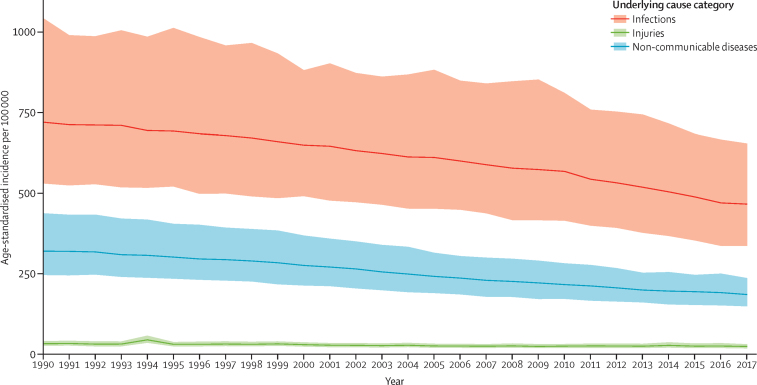
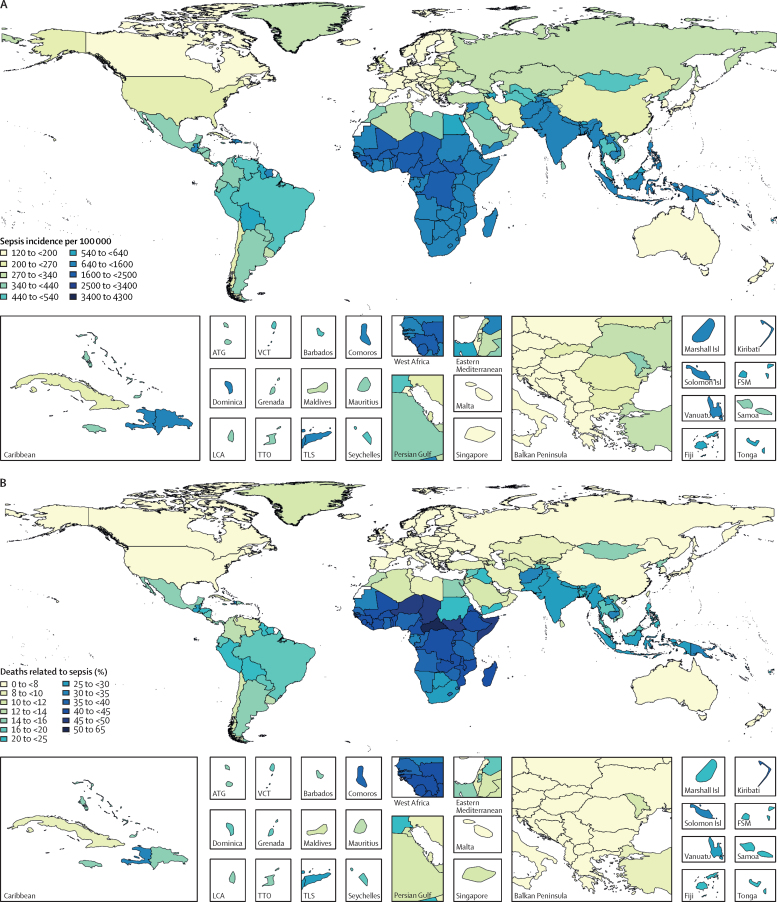
BACKGROUND: Sepsis is life-threatening organ dysfunction due to a dysregulated host response to infection. It is considered a major cause of health loss, but data for the global burden of sepsis are limited. As a syndrome caused by underlying infection, sepsis is not part of standard Global Burden of Diseases, Injuries, and Risk Factors Study (GBD) estimates. Accurate estimates are important to inform and monitor health policy interventions, allocation of resources, and clinical treatment initiatives. We estimated the global, regional, and national incidence of sepsis and mortality from this disorder using data from GBD 2017. METHODS: We used multiple cause-of-death data from 109 million individual death records to calculate mortality related to sepsis among each of the 282 underlying causes of death in GBD 2017. The percentage of sepsis-related deaths by underlying GBD cause in each location worldwide was modelled using mixed-effects linear regression. Sepsis-related mortality for each age group, sex, location, GBD cause, and year (1990-2017) was estimated by applying modelled cause-specific fractions to GBD 2017 cause-of-death estimates. We used data for 8·7 million individual hospital records to calculate in-hospital sepsis-associated case-fatality, stratified by underlying GBD cause. In-hospital sepsis-associated case-fatality was modelled for each location using linear regression, and sepsis incidence was estimated by applying modelled case-fatality to sepsis-related mortality estimates. FINDINGS: In 2017, an estimated 48·9 million (95% uncertainty interval [UI] 38·9-62·9) incident cases of sepsis were recorded worldwide and 11·0 million (10·1-12·0) sepsis-related deaths were reported, representing 19·7% (18·2-21·4) of all global deaths. Age-standardised sepsis incidence fell by 37·0% (95% UI 11·8-54·5) and mortality decreased by 52·8% (47·7-57·5) from 1990 to 2017. Sepsis incidence and mortality varied substantially across regions, with the highest burden in sub-Saharan Africa, Oceania, south Asia, east Asia, and southeast Asia. INTERPRETATION: Despite declining age-standardised incidence and mortality, sepsis remains a major cause of health loss worldwide and has an especially high health-related burden in sub-Saharan Africa. FUNDING: The Bill & Melinda Gates Foundation, the National Institutes of Health, the University of Pittsburgh, the British Columbia Children's Hospital Foundation, the Wellcome Trust, and the Fleming Fund.
Overview
The claims and statistics of this paper haven’t been checked yet.
Run the check — free, no account needed. It reads the open-access text and checks the sources it cites.
Integrity signals
Registry
Cites
Statistics
Figures
Verification
Claims the paper makes
The claims and statistics of this paper haven’t been checked yet.
Run the check — free, no account needed. It reads the open-access text and checks the sources it cites.
Claims other papers make about this one
Each is checked against this paper’s own text: does it say what the citing paper says it does?
The source backs part of the claim, not all of it — or backs it for a different population, condition or comparison.
In the citing paper
“A clear relationship can be seen – the poorest nations, all former European colonies, have the highest sepsis incidence”
From On race, human variation, and who gets and dies of sepsis (2022) · cites this paper as Rudd et al., 2020
Experimental — accuracy not yet measuredThe cited source says what the claim attributes to it.
In the citing paper
“This approach follows the methods validated by many studies on the epidemiology of sepsis26, 27, 28, 29 and was used by Rudd and colleagues.10”
From Global burden of bacterial antimicrobial resistance 1990–2021: a systematic analysis with forecasts to 2050 (2024) · cites this paper as [10]
The cited source says what the claim attributes to it.
In the citing paper
“Previously published global estimates reported a 53% decline in age-standardised sepsis-related deaths from 1990 to 2017.10”
From Global burden of bacterial antimicrobial resistance 1990–2021: a systematic analysis with forecasts to 2050 (2024) · cites this paper as [10]
In the citing paper
“8.2 million of the 11.1 million sepsis deaths worldwide that year occurred in low and middle income nations”
From On race, human variation, and who gets and dies of sepsis (2022) · cites this paper as Rudd et al., 2020
In the citing paper
“more people in middle and low income nations die of sepsis per incident than in wealthy nations”
From On race, human variation, and who gets and dies of sepsis (2022) · cites this paper as Rudd et al., 2020
In the citing paper
“The majority of the world's sepsis burden is borne by the least wealthiest nations, most former European colonies.”
From On race, human variation, and who gets and dies of sepsis (2022) · cites this paper as Rudd et al., 2020
In the citing paper
“Worldwide, the bulk of sepsis burden falls on marginalized peoples (Gracey & King, 2009; Rudd et al., 2020).”
From On race, human variation, and who gets and dies of sepsis (2022) · cites this paper as Rudd et al., 2020
Self-check
Percentages, sums and reported differences re-computed from the paper’s own numbers.
The self-check needs the paper’s full text.
Citations
Cites
James, S. L., Abate, D., Abate, K. H., Abay, S. M., Abbafati, C., Abbasi, N., Abbastabar, H., Abd-Allah, F., Abdela, J., Abdelalim, A., et al. (2018) · The Lancet · doi:10.1016/s0140-6736(18)32279-7 · Cited by 13,867
Bone, R. C., BALK, R. A., Cerra, F. B., Dellinger, R. P., Fein, A. M., Knaus, W. A., Schein, R. M. H., & Sibbald, W. J. (1992) · CHEST Journal · doi:10.1378/chest.101.6.1644 · Cited by 13,335
Vos, T., Abajobir, A. A., Abate, K. H., Abbafati, C., Abbas, K. M., Abd-Allah, F., Abdulkader, R. S., Abdulle, A. M., Abebo, T. A., Abera, S. F., et al. (2017) · The Lancet · doi:10.1016/s0140-6736(17)32154-2 · Cited by 13,220
Self-citationRoth, G. A., Abate, D., Abate, K. H., Abay, S. M., Abbafati, C., Abbasi, N., Abbastabar, H., Abd-Allah, F., Abdela, J., Abdelalim, A., et al. (2018) · The Lancet · doi:10.1016/s0140-6736(18)32203-7 · Cited by 8,600
Self-citationAngus, D. C., Linde-Zwirble, W. T., Lidicker, J., Clermont, G., Carcillo, J., & Pinsky, M. R. (2001) · Critical Care Medicine · doi:10.1097/00003246-200107000-00002 · Cited by 8,503
Self-citationSurviving Sepsis Campaign: International guidelines for management of sepsis and septic shock: 2016.
Rhodes, A., Evans, L. E., Alhazzani, W., Levy, M. M., Antonelli, M., Ferrer, R., Kumar, A., Sevransky, J. E., Sprung, C. L., Nunnally, M. E., et al. (2017) · Intensive Care Medicine · doi:10.1007/s00134-017-4683-6 · Cited by 6,621
Self-citationThe epidemiology of sepsis in the United States from 1979 through 2000
Martin, G. S., Mannino, D. M., Eaton, S., & Moss, M. (2003) · New England Journal of Medicine · doi:10.1056/nejmoa022139 · Cited by 5,841
Stanaway, J. D., Afshin, A., Gakidou, E., Lim, S. S., Abate, D., Abate, K. H., Abbafati, C., Abbasi, N., Abbastabar, H., Abd-Allah, F., et al. (2018) · The Lancet · doi:10.1016/s0140-6736(18)32225-6 · Cited by 4,943
Self-citationKyu, H. H., Abate, D., Abate, K. H., Abay, S. M., Abbafati, C., Abbasi, N., Abbastabar, H., Abd-Allah, F., Abdela, J., Abdelalim, A., et al. (2018) · The Lancet · doi:10.1016/s0140-6736(18)32335-3 · Cited by 4,192
Self-citationFleischmann, C., Scherag, A., Adhikari, N. K. J., Hartog, C. S., Tsaganos, T., Schlattmann, P., Angus, D. C., & Reinhart, K. (2016) · American Journal of Respiratory and Critical Care Medicine · doi:10.1164/rccm.201504-0781oc · Cited by 3,548
Self-citation
Research works printed but not linked: 1
- Singer, 2016, The third international consensus definitions for sepsis and septic shock (Sepsis-3), JAMA, 315, 801, 10.1001/jama.2016.0287 · DOI · Paper page
Cited by
Sorted by citations
Items 801–900 of 1,054
Explainable 6-Hour Sepsis Prediction using Transformers and Informative Missingness
Nellyet, A. N., Kaur, M., & Kaur, N. (2026) · International Conference on Inventive Computing and Informatics (ICICI) · doi:10.1109/icici68773.2026.11580688
“Sepsis remains a common cause of death in Intensive Care Units (ICUs) worldwide [1], [2].”
Dobrucki, M., Kuc, K. J., Brzezicki, K., Zegadło, K., Cieciora, M., Cieciora, A., Jakubiak, P., Kawiorska, M., Surowiec, J., & Bełcikowska-Skowron, W. R. (2026) · Journal of Education Health and Sport · doi:10.12775/jehs.2026.92.72701
“A comprehensive analysis from the Global Burden of Disease Study estimated 48.9 million incident cases of sepsis and 11.0 million sepsis-related deaths globally in 2017, accounting for nearly 20% of all global deaths 21.”
InfluentialDecreasing contamination rates in blood cultures: A plan-do-study-act approach.
Bothra, M., Ghuliani, R., Swarup, P., Majumder, S., Jain, A., & Verma, S. (2026) · National Medical Journal of India · doi:10.25259/nmji_801_2024
Zhong, T., Deng, K., Peng, Z., Li, J., Lei, S., Li, M., Chen, S., Cai, J., Guan, J., Chang, P., et al. (2026) · Biochemical Pharmacology · doi:10.1016/j.bcp.2026.118152
Yuan, C., Liu, Y., Wang, D., Chen, Y., & Zhu, X. (2026) · Environmental Research · doi:10.1016/j.envres.2026.125014
Aberrant STAT signaling and T cell dysregulation define a targetable pediatric sepsis endotype
Lindell, R. B., Sayed, S. U., Campos, J. S., Sheetz, S. A., Babu, A., Knight, M., Mauracher, A. A., Hay, C., Conrey, P. E., Fitzgerald, J. C., et al. (2026) · Journal of Clinical Investigation · doi:10.1172/jci202867 · Cited by 2
“Sepsis, a life-threatening organ dysfunction that develops in the setting of a dysregulated immune response to infection (1), remains a leading cause of adult and pediatric mortality worldwide (2).”
Zhou, R., Zhou, P., Sheng, Y., Xu, S., Li, W., Hou, X., Liao, X., Wu, F., Yang, F., & Zhang, D. (2026) · European journal of medical research · doi:10.1186/s40001-026-04668-3
“According to data from the Global Burden of Disease Study, approximately 48.9 million cases of sepsis occur annually, with lower respiratory tract infections consistently identified as a major cause [1].”
InfluentialXie, S., Lyu, F., Gao, K., Chen, Q., 陈梅玲, Yan, X., Li, T., Li, H., Zhao, Y., Qu, L., et al. (2026) · Chinese Medical Journal · doi:10.1097/cm9.0000000000004108
Magwenzi, S. (2026) · Journal of Precision Medicine and Artificial Intelligence · doi:10.64949/zj0wmb67
Chua, W. L., Cheng, L. J., Tan, J. Z., & Wang, X. (2026) · Quality of Life Research · doi:10.1007/s11136-026-04299-5
Li, L., Yang, Q., Zhang, H., Qi, Y., Xie, Y.-H., Ding, Z., & Chen, B. (2026) · International Immunopharmacology · doi:10.1016/j.intimp.2026.116978
Zheng, Y., Liu, T., Wei, D., Wang, P., & 樊晓军 (2026) · BMC Pediatrics · doi:10.1186/s12887-026-07103-y
“Furthermore, a substantial proportion of survivors experience long-term physical, cognitive, and psychological sequelae, imposing considerable economic and emotional strain on families and healthcare systems [1–4].”
Zhu, Z.-Y., Wu, M.-Y., Jia, W., Chen, B., Wu, L., Fu, X.-T., Gu, X., & Li, X.-P. (2026) · BMC Public Health · doi:10.1186/s12889-026-27922-z
“The GBD Study is an annual effort to quantify health loss due to various diseases, injuries, and risk factors at the global, regional, and national levels [17, 18].”
Keyimu, K., Abulizi, P., Rouzhahong, J., & Wei, C. (2026) · Frontiers in Medicine · doi:10.3389/fmed.2026.1838034
Xu, D., Zhou, Y., Li, Y.-M., & Zong, G.-J. (2026) · Heart & lung : the journal of critical care · doi:10.1016/j.hrtlng.2026.102868
Neutrophil in sepsis: functional aberration and regulated cell death
Liu, L., Yang, Y.-L., Yang, H.-X., & Yang, M. (2026) · Frontiers in Immunology · doi:10.3389/fimmu.2026.1863084
The interplay between type 2 diabetes mellitus and sepsis: a scoping review
Sham, S. S., Wong, S.-K., Chin, K.-Y., Yusof, N. L. M., Tan, T. L., Chau, E., Zamhot, A., Sanip, A., & Muharram, A. (2026) · International Journal of Medical Sciences · doi:10.7150/ijms.126520
“Sepsis causes an estimated 11 million deaths annually, accounting for 20% of global mortality [2].”
Zhang, M., Si, Y., Hu, Q., 越曙晗, Xiao, X., & Zhang, J. (2026) · BMC Medical Informatics and Decision Making · doi:10.1186/s12911-026-03618-7
“Sepsis, a life-threatening organ dysfunction triggered by dysregulated host responses to infection, affects over 48 million individuals globally annually, contributing to approximately 11 million deaths [1].”
Li, C., Liu, Z.-X., Zhang, D. D., Li, F.-H., Wang, D., Luo, Y.-X., Yao, Y., Liu, Q., Teng, X., Chen, S., et al. (2026) · Frontiers in Medicine · doi:10.3389/fmed.2026.1761815
Rivera, G. O., & Theiss, A. L. (2026) · Microbial Cell · doi:10.15698/mic2026.06.878
Yang, X.-J., Gu, W., Miao, H., Shi, D., Qian, Y.-L., Wu, M.-Y., Chen, X.-H., Sun, Y.-Q., & Ge, X. (2026) · Italian Journal of Pediatrics · doi:10.1186/s13052-026-02287-6
“In recent decades, the incidence of pediatric sepsis has been on a continuous upward trend, particularly evident in low-income and middle-income countries where limited medical resources exacerbate the risk of sepsis occurrence and mortality [2].”
Lu, J., Liao, Y., Liu, Z.-S., He, J., Xie, W., & Shen, Y.-Q. (2026) · Virulence · doi:10.1080/21505594.2026.2673266
“Sepsis, a life-threatening organ dysfunction caused by a dysregulated host response to infection [1], represents a major global health burden, with an estimated 48.9 million cases and 11 million deaths annually [2].”
InfluentialWang, H., Butler, J., Michels, E. H. A., Reijnders, T., van Engelen, T. S. R., de Vos, A. D., Cremer, O., Peters-Sengers, H., & van der Poll, T. (2026) · Frontiers in Cellular and Infection Microbiology · doi:10.3389/fcimb.2026.1821582
Medical Electronic Nose System for Rapid Diagnosis of Bloodstream Infection
Min, J., Li, J., Zhou, Y., Li, P., Liang, W., Gao, L., & Li, W. (2026) · IEEE Sensors Journal · doi:10.1109/jsen.2026.3683390
“According to data published by the World Health Organization (WHO) in 2020, an estimated 48.9 million cases of sepsis and 11 million sepsis-related deaths occurred globally, accounting for approximately 20% of all deaths worldwide [4].”
InfluentialOjeda, D. A., Alonso, M. P. B., Torres, I. C., Leiza, J. R. G., Salamanca, Á. G., Merino, F. J. M., Bastida, L. P., Rubio, A. P., Rueda, L. S., & de Llano, J. M. A. (2026) · Antibiotics · doi:10.3390/antibiotics15060579
“A recent study estimated that, on average, healthcare expenditure related to sepsis represents 0.33% of a country’s gross national product, with mortality rates ranging from 15% to 40% depending on the series [2,7].”
InfluentialZhang, H.-P., & Zhang, J.-Y. (2026) · Journal of Thoracic Disease · doi:10.21037/jtd-2026-0558
“Sepsis persists as a primary contributor to global mortality statistics, accounting for approximately 19.7% of all recorded deaths (7,8).”
InfluentialKarikis, I., Jachimiak, J. F., Arda, Y., Luckhurst, C., Paranjape, C. N., DeWane, M. P., Bartek, M., Ng-Kamstra, J., Kaafarani, H., Velmahos, G., et al. (2026) · Surgery · doi:10.1016/j.surg.2026.110183
Xie, H., Cao, Y., He, H., Zheng, B., Chen, M.-J., & Ying, Y. (2026) · European journal of pharmaceutics and biopharmaceutics · doi:10.1016/j.ejpb.2026.115076
Plant-Based Diet and Risk of Sepsis: A 16-Year Follow-Up Study
Xu, S., Fang, Z., Kong, X., Shi, J., Tang, Y., Zhao, B., Fang, F., Huang, J., & Lü, B. (2026) · Critical Care Medicine · doi:10.1097/ccm.0000000000007165
Tang, Y., Gao, X., Ding, H., Kong, L., & Zhu, X. (2026) · Virus Research · doi:10.1016/j.virusres.2026.199756
“Life-threatening infectious conditions are responsible for a substantial impact on the global healthcare burden; thus, primary prevention strategies are of utmost importance(Komorowski, 2020; Rudd et al., 2020; Stanski and Wong, 2020).”
Interprofessional Collaboration in the Management of Complex Infectious Disease Cases.
Baudoin, C. D., LeBrun, M., & McAtee, C. (2026) · Critical Care Nursing Clinics of North America · doi:10.1016/j.cnc.2026.04.011
Modernizing Antibiotic Regimens for Obstetric Infections Through Antimicrobial Stewardship.
Dutra, K. J., & Hess, B. (2026) · American Journal of Obstetrics & Gynecology MFM · doi:10.1016/j.ajogmf.2026.102011
Fan, J., Liang, J., Wu, S.-L., Wang, T., & Huo, J. (2026) · Thrombosis Research · doi:10.1016/j.thromres.2026.109733
Guo, W., Ma, L., Wang, Y., Gao, X.-M., Zhang, L., Qin, Q., Li, X., Nuermaimaiti, M., & Yu, X. (2026) · European Journal of Pharmacology · doi:10.1016/j.ejphar.2026.179038
Surovoy, Y. A., Galvidis, I., Alimov, A., Wang, Z.-H., Melekhin, A., & Burkin, M. (2026) · Pharmaceuticals · doi:10.3390/ph19060880
“However, the modern era of global spread of antimicrobial resistance [3] has driven their return into clinical practice [4], and they are increasingly used to treat infections caused by multidrug-resistant Gram-negative bacteria [5].”
Maswanganyi, N., Kaapu, K., Lekalakala-Mokaba, M. R., & Rukasha, I. (2026) · Infection and Drug Resistance · doi:10.2147/idr.s575283
Li, X.-H., Chi, Y., Zhuo, M., Li, X., Zhu, C., & Li, X. (2026) · Journal of Inflammation Research · doi:10.2147/jir.s573499
Kusyati, E., Iswanti, D., Mujahidah, S., & Mayangsari, D. (2026) · International Journal of Public Health Science (IJPHS) · doi:10.11591/ijphs.v15i2.26951
“Approximately 85% of sepsis cases occur in LMICs, underscoring the disproportionate impact on vulnerable populations [4], [11].”
Zhang, Y., Wang, L., Mao, J., Wu, Y., Foo, W., Wang, Z., Wu, J., Guo, Y., You, J., & Luo, L. (2026) · Journal of Controlled Release · doi:10.1016/j.jconrel.2026.115091
Thomas, E., Watson, M., Inglis, T., & Macdonald, S. (2026) · Journal of Medical Microbiology · doi:10.1099/jmm.0.002171
“Sepsis is a major global health challenge, responsible for an estimated 49 million cases and 11 million deaths annually, accounting for almost one in five deaths worldwide [1].”
Zeng, W., Ou, Z., Chang, S., Huang, J., Xie, Z., Cheng, D., He, L.-W., & Zhou, J. (2026) · Sensors and Actuators B: Chemical · doi:10.1016/j.snb.2026.140360
Shatnawi, M. Q., Alkhateeb, K., & Alzoubi, O. (2026) · Intelligent Medicine · doi:10.1016/j.ibmed.2026.100403
Munroe, E. S., Peltan, I. D., & Prescott, H. C. (2026) · Critical Care Clinics · doi:10.1016/j.ccc.2026.05.002
Circulating Novel Adipokines in Critically Ill Patients with and Without Sepsis
Giannopoulou, V., Ilias, I., Keskinidou, C., Vrettou, C., Kampouropoulou, O., Lotsios, N., Kardara, M., Papavassiliou, K., Poupouzas, G., Issaris, V., et al. (2026) · Biomedicines · doi:10.3390/biomedicines14061324
“Sepsis, defined as life-threatening organ dysfunction caused by a dysregulated host response to infection [1], remains the foremost cause of in-hospital death in intensive care units (ICUs), accounting for an estimated 11 million deaths annually worldwide [2].”
Zhang, L., Gu, Y., Yang, L., & Zou, Q. (2026) · Journal of biochemical and molecular toxicology · doi:10.1002/jbt.70929
Mpoumi, L., Sarantos, G., Bistola, V., Bezati, S., Verras, C., Rita, I., Tsiodras, S., Parissis, J., & Polyzogopoulou, E. (2026) · Journal of Personalized Medicine · doi:10.3390/jpm16060312
Saeed, A., Azari, M., Mehrian, S. R. A., Meftah, E., & Amanati, A. (2026) · Medical Reports · doi:10.1016/j.hmedic.2026.100469
Wang, L., Chen, M., Meng, X., Wang, R., Ma, Y., Zhang, A., Wei, D.-P., Wang, R.-L., & Xie, H. (2026) · Free Radical Biology & Medicine · doi:10.1016/j.freeradbiomed.2026.06.023
Sepsis-induced neuromuscular dysfunction: A systematic review with meta-analysis.
Becerra, Á., Rebolledo, N., Soto, F., Valenzuela-Fuenzalida, J., Loaiza-Giraldo, J. P., González, Á., Vallejos, A., Sanchis-Gimeno, J., & León-Rojas, J. E. (2026) · Journal of Infection and Public Health · doi:10.1016/j.jiph.2026.103285
The Immunometabolic Architecture of Sepsis
Rodrigues, V., Abecasis, D., & Moita, L. F. (2026) · Critical Care Clinics · doi:10.1016/j.ccc.2026.05.009
Zhao, M.-X., Guo, B.-F., Wang, Q., Yang, M., Yang, J.-Y., Liang, Y.-Y., Jiang, W., & Zhang, L. (2026) · Acta Pharmaceutica Sinica B · doi:10.1016/j.apsb.2026.06.015
“…certain chemotherapeutics and potent anti-inflammatory agents) affect healthy tissues indiscriminately, resulting in substantial adverse effects 3 ; (iii) suboptimal pharmacokinetic profiles, characterized by poor aqueous solubility, rapid elimination, and brief half-lives, which hinder…”
Heming, N., Baron, Ė., Müller, G., Badie, J., Préau, S., Siami, S., Pouplet, C., Berger, A., Damoisel, C., Argaud, L., et al. (2026) · BMJ Open · doi:10.1136/bmjopen-2026-119187
Sainaghi, P., Rizzi, M., Tonello, S., Vincenzi, F., Primatesta, M., Dianzani, U., Rolla, R., Tillio, P., Pirisi, M., Lupia, E., et al. (2026) · European journal of internal medicine · doi:10.1016/j.ejim.2026.107025
Barrio, M. S., Schüffelmann, C., Vico, A. D., & Vergara, E. O. (2026) · Medicina Intensiva · doi:10.1016/j.medin.2026.502543 · Cited by 1
Huang, C., Lin, L.-C., & Tang, T. (2026) · Medicina · doi:10.3390/medicina62061199
“However, the global mortality of FG has remained high, ranging from 20% to 40% [13,14].”
Antimicrobial Resistance in Patients with Sepsis
Zavascki, A. P., Gales, A. C., Mergulhão, P., & Kalil, A. C. (2026) · Critical Care Clinics · doi:10.1016/j.ccc.2026.05.006
Gade, N. R., Dugyala, R. R., Nandam, T., Kommalapati, S., Aitham, S., & Keerthipati, H. (2026) · Cureus · doi:10.7759/cureus.111148
“It remains a significant global health problem despite advances in critical care and the implementation of standard management practices, leading to prolonged hospitalization and post-discharge complications [2,3].”
Real-time Subgrouping of Sepsis and Systemic Inflammatory Syndromes
McMullan, R. R., Bhavani, S. V., & Sinha, P. (2026) · Critical Care Clinics · doi:10.1016/j.ccc.2026.05.008
Li, X., Yang, T., Huang, H., Ma, Y.-L., Liu, L., Li, Q.-Q., Zhang, N., Hui, Z., Li, Y., Bai, F., et al. (2026) · Acta Pharmaceutica Sinica B · doi:10.1016/j.apsb.2026.06.042
Early Recognition and Management of Sepsis
Cooke, S. R. (2026) · Critical Care Nursing Clinics of North America · doi:10.1016/j.cnc.2026.04.002
Cheng, Y., Xing, S., Chen, Y., Li, Y.-P., Zhao, W.-F., Su, B.-H., & Zhao, C.-S. (2026) · Journal of Membrane Science · doi:10.1016/j.memsci.2026.125848
Marotta, A., Vicenti, C., Odio, C., Vecchiet, J., Nicola, M. D., & Falasca, K. (2026) · Antibiotics · doi:10.3390/antibiotics15060608
“Recent epidemiological studies have highlighted substantial heterogeneity in sepsis incidence, mortality, and healthcare utilization across countries and healthcare systems [5,6].”
Li, L., Chen, H., Liu, Y., Zhao, K., Zhang, M., & Tong, F. (2026) · BMJ Open · doi:10.1136/bmjopen-2025-113187
Wang, X., Zou, Z., & Huang, H. (2026) · Neuropeptides · doi:10.1016/j.npep.2026.102639
Fung, A., Sappani, M., Heasley, C., Chen, C.-Y., Morris, S. K., Gill, P. J., Bassani, D. G., Hamer, D. H., Shah, P. S., Gaffar, S. M. A., et al. (2026) · BMJ Paediatrics Open · doi:10.1136/bmjpo-2026-004626
Ni, C., Ye, F., Zhang, X., Song, J., Yang, H.-F., & Cai, J.-D. (2026) · Journal of International Medical Research · doi:10.1177/03000605261452559
Lai, X., Wang, J.-S., Sun, Y.-J., Lin, J.-Y., Wang, L., Fang, Z.-X., & Chen, K. (2026) · BMC Infectious Diseases · doi:10.1186/s12879-026-13650-7
“Contemporary epidemiological estimates continue to show a substantial global burden of sepsis-related incidence and death, underscoring the ongoing need for improved risk stratification and prognostic assessment in critical care [1].”
Interpretable Machine Learning for Early Sepsis Prediction
Stylianides, C., Nicolaou, A., Vavlitou, A., Palazis, L., Kyriacou, E. C., Pattichis, M. S., Pattichis, C. S., & Panayides, A. S. (2026) · Proceedings - IEEE Symposium on Computer-Based Medical Systems · doi:10.1109/cbms69103.2026.00062
Pei, S., Li, D.-Q., Yu, X.-L., Huang, X.-F., Liu, J.-F., Song, Y., Zhu, L., Cui, J.-T., Cui, Y., & Xie, K.-L. (2026) · Renal Failure · doi:10.1080/0886022x.2026.2667584
“…were around 48.9 million sepsis cases globally in 2017, of which 11 million resulted in death, accounting for 19.7% of all fatalities worldwide [2]. only around half of patients with sepsis will fully recover, and 17% of those who survive will develop post-sepsis syndrome (PSS), which…”
InfluentialPradeep, A., Zubair, Z., Jia, K.-Y., Moumneh, M., Ennab, M., Khayat, O., Zayed, A. A., & Amor, M. (2026) · Journal of Clinical Medicine · doi:10.3390/jcm15114252
“Sepsis is defined as life-threatening organ dysfunction caused by a dysregulated host response to infection and remains a leading cause of in-hospital mortality and long-term morbidity worldwide [1,2].”
Phosphorylated toll-like receptor 4 defines a high-risk sepsis endotype
Mühlhaus, M., Dyck, B., Witowski, A., Unterberg, M., Wolf, A., Haberl, H., von Busch, A., Ziehe, D., Thon, P., Palmowski, L., et al. (2026) · Critical Care · doi:10.1186/s13054-026-06115-5
“Sepsis is a complex and life-threatening disease [1], claiming millions of lives each year [2].”
Chiang, D.-P., Pfaffl, M., Schelling, G., Meidert, A. S., Brandes, F., Ludwig, C., Wudy, S. I., Kirchner, B., Yu, M. S. C., Zenner, C., et al. (2026) · Scientific Reports · doi:10.1038/s41598-026-54598-7
Wiranata, S., Manuaba, I., Supadmanaba, I. G. P., Prabawa, I. P. Y., & Lestari, A. A. (2026) · Hematology, Transfusion and Cell Therapy · doi:10.1016/j.htct.2026.106476
“Furthermore, data analysis across 109 million individual death records under-scores the substantial global burden of the condition [2].”
Der Notfall Sepsis – Ersteinschätzung, Screening, Stabilisierung und Transport
Taeger, F., Moegelin-Last, E., & Gründling, M. (2026) · Notfallmedizin up2date · doi:10.1055/a-2573-8133
McKinlay, A., Barrington, G., Prior, S. J., & Tran, V. (2026) · Healthcare · doi:10.3390/healthcare14111509
Targeting VISTA for immunomodulation in sepsis: mechanisms and therapeutic potentials
Hu, B., Yan, J., Ji, W., Wang, H., Tao, T., & Bo, L. (2026) · Frontiers in Immunology · doi:10.3389/fimmu.2026.1850679
Gao, Q., Lai, X., Tian, Y., Wang, T., Zheng, X., & Zhang, A. (2026) · Frontiers in Medicine · doi:10.3389/fmed.2026.1722950
Quan, Z., Wang, T.-Y., Liu, D., Sun, Y., Zhang, B.-C., Niu, F., & Xu, J. (2026) · Discover Oncology · doi:10.1007/s12672-026-05215-6
“Sepsis and colorectal cancer (CRC) are high-burden diseases worldwide [1, 2].”
International survey on immunological diagnostics in children with sepsis
Schöbi, N., Agyeman, P., Sancho-Shimizu, V., Trück, J., Fitzgerald, J. C., & Schlapbach, L. (2026) · Intensive Care Medicine · doi:10.1007/s44253-026-00120-w
“Globally, sepsis accounts for approximately three million childhood deaths per year [3].”
Boolean Algebra -- Driven Sepsis Diagnosis
Weber, M., Kappert, K., Reidelbach, M., Gleixne, A., Fackeldey, K., & Bauer, W. (2026) · doi:10.48550/arxiv.2605.29686
“Rudd, Johnson, Agesa et al. used multicausal cause of death statistics for 2017 to determine a global incidence of 677.5 per 100,000 person-years [2].”
InfluentialFeng, X., Xu, P., Li, H., Peng, L.-N., Li, S., Ma, J., Ma, J.-B., Ma, Z.-J., Ma, L., Li, K., et al. (2026) · Frontiers in Microbiology · doi:10.3389/fmicb.2026.1820338
“According to statistics released by the Global Burden of Disease Study, there were over 166 million cases of sepsis worldwide in 2021, with sepsis-related deaths accounting for nearly 31.5% of all global deaths (Rudd et al., 2020).”
InfluentialZhou, J., Liu, Y., Hu, Q., Xu, C.-Z., Yin, F., Lu, Y., & Shi, Q. (2026) · Frontiers in Cellular and Infection Microbiology · doi:10.3389/fcimb.2026.1749207
“Sepsis represents a formidable global health challenge, responsible for an estimated 48.9 million cases and 11 million deaths annually (Fleischmann-Struzek et al., 2020; Rudd et al., 2020), accounting for up to 50% of all in-hospital fatalities.”
InfluentialGüldoğan, E., Yağın, B., Korkmaz, Y., Alzakari, S. A., Alkhalifa, A. K., Al-Hashem, F., & Yagin, F. H. (2026) · Diagnostics · doi:10.3390/diagnostics16111643
“…advances in our understanding of sepsis pathophysiology and therapeutic interventions over the past decades, the condition continues to impose a devastating burden on global healthcare systems, accounting for approximately 11 million deaths annually—representing nearly 20% of all global deaths [2].”
Xue, Y., Chen, S.-X., Chen, G.-R., Lin, W., Yu, X.-F., Lin, H., & Chen, R. (2026) · Frontiers in Medicine · doi:10.3389/fmed.2026.1758229
Rapid Microbiological Diagnostics for Sepsis: Narrative Review of Current and Prospective Approaches
Harrison, L. B., Sohani, Z. N., Lasry, D. E., Cheng, M. P., Lee, T. C., Babiker, A., Kadri, S. S., & Lawandi, A. (2026) · Critical Care Explorations · doi:10.1097/cce.0000000000001415
Kuriyama, A., Heels‐Ansdell, D., Fernando, S. M., Adhikari, N. K. J., Lamontagne, F., Teja, B. J., Lewis, K. A., Rochwerg, B. N., Carayannopoulos, K. L., Vázquez‐Grande, G., et al. (2026) · Acta Anaesthesiologica Scandinavica · doi:10.1111/aas.70267
Therapeutic effect of cilastatin administration in LPS-induced retinotoxicity
Felipe, D. S., Martín‐Sánchez, B., González-Nicolás, M. Á., Llorente, R., Marco, E. M., López‐Gallardo, M., & Lázaro, A. (2026) · Biomedicine & Pharmacotherapy · doi:10.1016/j.biopha.2026.119557
Bonnefil, V., Standage, S., Lautz, A., Stanski, N. L., Harmon, K., Lahni, P., Fitzgerald, J. C., Schwarz, A., Thomas, N. J., Haileselassie, B., et al. (2026) · Critical Care Explorations · doi:10.1097/cce.0000000000001410
Zhang, X., Ye, Q., Shi, Y., Wang, S., Ye, B., & Zhao, W. (2026) · European journal of medical research · doi:10.1186/s40001-026-04524-4
“Annually, sepsis affects approximately 50 million individuals globally, causing around 11 million fatalities and accounting for 20% of all mortalities worldwide [2].”
Zhuang, Y.-F., Zhang, X.-Y., Wang, D.-C., Chen, Q., Zhuang, X., & Yin, X.-P. (2026) · BMC Medical Informatics and Decision Making · doi:10.1186/s12911-026-03575-1
“Sepsis remains a leading cause of mortality in critical care, with an estimated 48.9 million incident cases and 11.0 million deaths globally in 2017, accounting for 19.7% of all deaths [1, 2].”
InfluentialQi, K., Guo, C., & Yang, L. (2026) · Shock · doi:10.1097/shk.0000000000002870
“With an estimated global burden of 48.9 million incident cases and 11 million deaths annually (3), it remains a leading cause of mortality in critically ill patients (2).”
InfluentialThe Cellular Response Capacity as Diagnostic Head Start in Neutrophil Endotoxemia Sensing
Messerer, D. A. C., Mohamed, A. O. K., Wohlgemuth, L., Vidoni, L., Knapp, C. L., Müller, P., Thomaß, B. D., Föhr, K. J., Barth, E., Weiss, M., et al. (2026) · The FASEB Journal · doi:10.1096/fj.202504316r
Zou, G., Chen, X., Chen, X., Huang, S. H. M., Song, F., Hu, B., Liu, G., Li, X., & Li, H. (2026) · Frontiers in Pharmacology · doi:10.3389/fphar.2026.1741601
“Observational data link tachycardia to worse outcomes in sepsis, underscoring the clinical relevance of heart rate (HR) control in this setting (Rudd et al., 2020; Levy et al., 2021; Na et al., 2023).”
Garcés, M. G., García, J. V., Triana, C. J., Montoya, J. C., & Rincón, E. H. H. (2026) · Frontiers in Digital Health · doi:10.3389/fdgth.2026.1794922
Ge, Z., Zhang, Y., Ma, K.-M., Xia, Z., Cao, J., Zhao, H., & Hu, J. (2026) · Journal of Thoracic Disease · doi:10.21037/jtd-2026-1-0346
“The incidence of sepsis has been reported to be alarmingly high, with estimates suggesting that nearly 50 million cases occur worldwide each year, resulting in approximately 11 million deaths annually (3).”
Unal, R. U., Ozhan, O., Balkaya, E. S., Yıldız, A., Dogru, F., Balkar, M. E., Maden, A., Yücekaya, A., Kucukakcali, Z., & Parlakpınar, H. (2026) · Scientific Reports · doi:10.1038/s41598-026-52131-4
Treml4 Drives Microglial Activation via the Lyn/Syk/ERK Pathway in Sepsis-Associated Encephalopathy
Li, R., Xie, J., Li, Q.-Q., Ouyang, Y., Zhang, Q., Wang, J.-F., & Deng, X.-M. (2026) · Neurochemical Research · doi:10.1007/s11064-026-04773-z
“The clinical features of SAE range from sickness behavior to impaired consciousness without overt central nervous system (CNS) infection, structural brain injury, or other identifiable metabolic abnormalities, with a prevalence of over 50% [5].”
Zhuo, L.-Y., Bao, X., Lai, M.-X., Shah, M. A. A., Chen, X.-F., Jiang, S., Zhen-yang, W., Chen, R., & Zhang, S. (2026) · Frontiers in Medicine · doi:10.3389/fmed.2026.1823604
Zhang, L., Wang, M., Miao, D., Wang, R., Li, L., Li, Z., Wang, L., & He, G. (2026) · BMC Pulmonary Medicine · doi:10.1186/s12890-026-04304-0
“Presently, UCR is considered an independent risk factor for mortality in critical patients with acute heart failure and COVID-19, and patients undergoing hemodialysis [18–20].”
Role of CSF Presepsin in Critically Ill Patients with Cerebral Damage
Hudák, V., Tomajková, E., Capková, J., Večurkovská, I., Pallas, T., Firment, J., Grega, R., Adawi, R. A., & Mareková, M. (2026) · Bratislava Medical Journal · doi:10.1007/s44411-026-00630-1
Metadata
- Authors
- Rudd, K. E., Johnson, S. C., Agesa, K. M., Shackelford, K. A., Tsoi, D., Kievlan, D. R., Colombara, D. V., Ikuta, K. S., Kissoon, N., Finfer, S., Fleischmann-Struzek, C., Machado, F. R., Reinhart, K. K., Rowan, K., Seymour, C. W., Watson, R. S., West, T. E., Marinho, F., Hay, S. I., Lozano, R., Lopez, A. D., Angus, D. C., Murray, C. J. L., & Naghavi, M.
- Affiliations
- University of Pittsburgh (US)
- University of Washington (US)
- University of British Columbia (CA)
- UNSW Sydney (AU)
- Jena University Hospital (DE)
- Seattle Children's Hospital (US)
- Universidade de São Paulo (BR)
- Corresponding author
- Naghavi, Mohsen
- ORCID
- Venue
- The Lancet
- Publisher
- Elsevier BV
- Published
- 2020-01
- Volume
- 395
- Issue
- 10219
- Pages
- 200-211
- ISSN
- 0099-5355 (ISSN-L)
- 0140-6736
- PMC
- PMC6970225
- OpenAlex
- W2998853022
- Cited by
- 7,971
- References
- 42
- Citations by year
- 2026: 1540 · 2025: 1722 · 2024: 1545 · 2023: 1195 · 2022: 899 · 2021: 735 · 2020: 329
- FWCI
- 567.33
- Type
- journal article
- Language
- en
- Open access
- hybrid
- doi.org
- Licence
- Locations
- The Lancet (publishedVersion, cc-by)
- PubMed Central (publishedVersion, cc-by)
- PubMed (publishedVersion)
- LA Referencia (Red Federada de Repositorios Institucionales de Publicaciones Científicas) (submittedVersion, other-oa)
- Minerva Access (University of Melbourne) (submittedVersion, cc-by)
- Funders
- Bill & Melinda Gates Foundation
- National Institutes of Health (T32HL007287, T32HL007820, R35GM119519)
- National Health and Medical Research Council (no 1117230)
- Topics
- Health Sciences › Medicine › Critical Care and Intensive Care Medicine › Sepsis Diagnosis and Treatment
- Health Sciences › Medicine › Public Health, Environmental and Occupational Health › Global Health and Epidemiology
- Health Sciences › Medicine › Pediatrics, Perinatology and Child Health › Neonatal and Maternal Infections
- Keywords
- sepsis, sepsis incidence, sepsis mortality, global burden of disease, case fatality, underlying cause of death, age-standardized incidence rate, temporal trends, regional variation, sub-Saharan Africa, South Asia, hospital records, cause-specific mortality, health policy interventions, resource allocation, health loss, nosocomial infections, infection-related mortality, sepsis surveillance
- MeSH terms
- Global Burden of Disease, Adolescent, Adult, Aged, Aged, 80 and over, Cause of Death, Child, Child, Preschool, Female, Humans, Infant, Infant, Newborn, Male, Middle Aged, Socioeconomic Factors, Incidence, Age Distribution, Sex Distribution, Sepsis, Young Adult
About these checks
Registry, retraction, Cites and statistics results are computed, not judged, with one exception: a printed reference that no index lists is read once by a model before it counts as a citation error. Claims are extracted by a model and kept only when their quote appears verbatim in the text; each cited source is then checked, with a model’s help, for whether it says what the claim relies on. Those verdicts can be wrong — read the claim’s quote and the cited source before relying on one.
Statistics and arithmetic are recomputed, not judged.
Confidence bands are shown only for fields calibrated on our annotated test set. None is calibrated yet, so no band is shown.
What counts as a claim ›How we measure confidence ›How we check this ›
Are you an author, or do you see a problem with this page? Request a review
