

The DOI matches its Crossref record; 39 of the 42 references it cites were found in a registry or an index.
Global, regional, and national sepsis incidence and mortality, 1990–2017: analysis for the Global Burden of Disease Study
Open accessAbstract
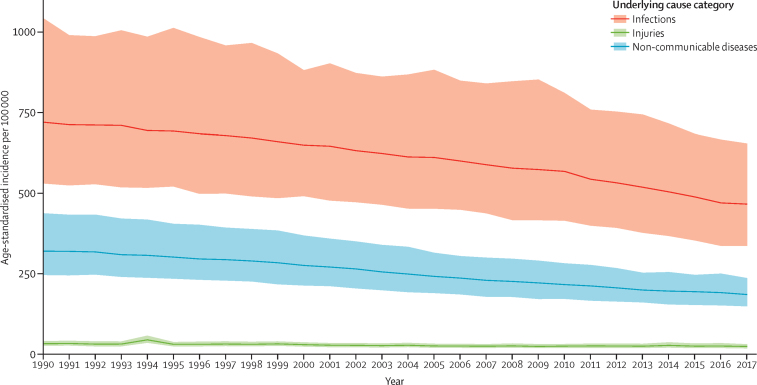
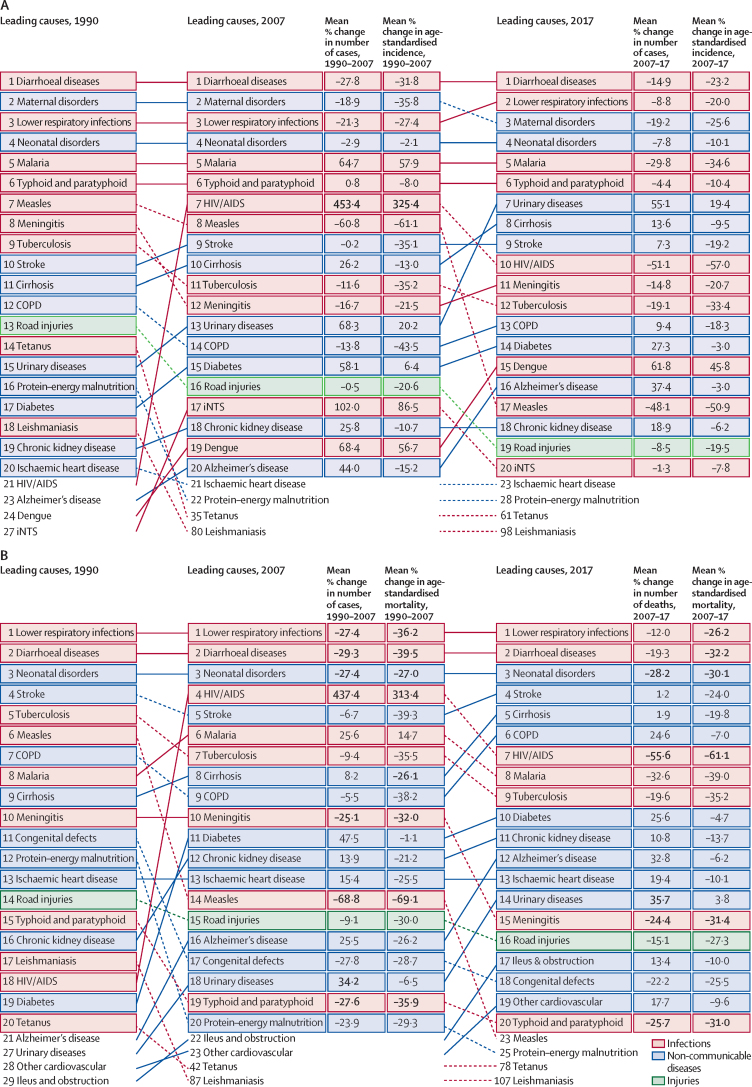
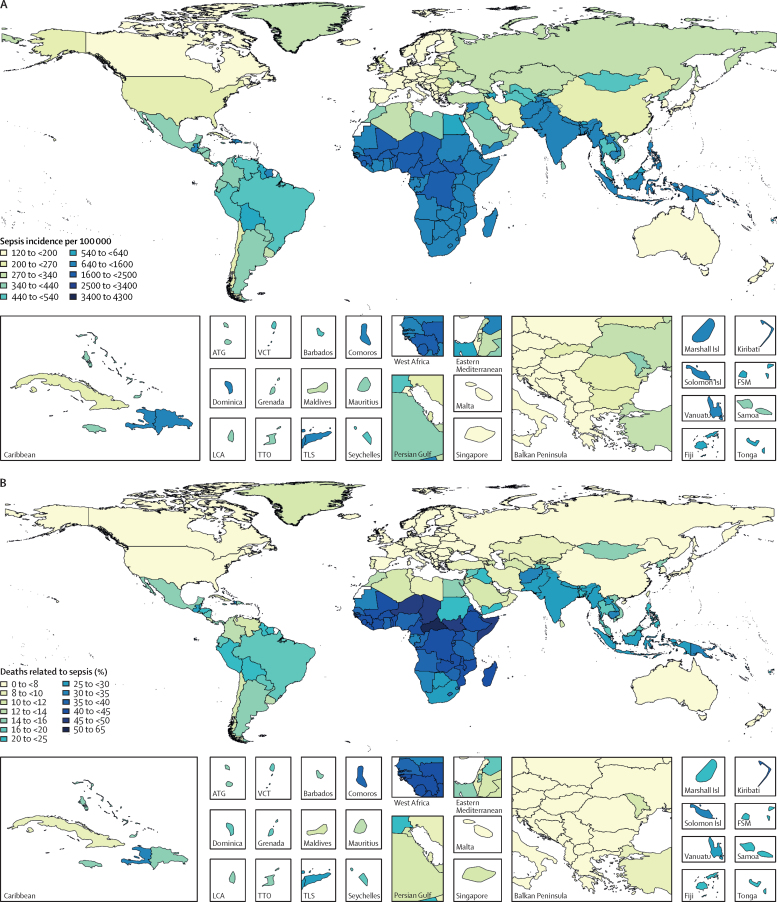
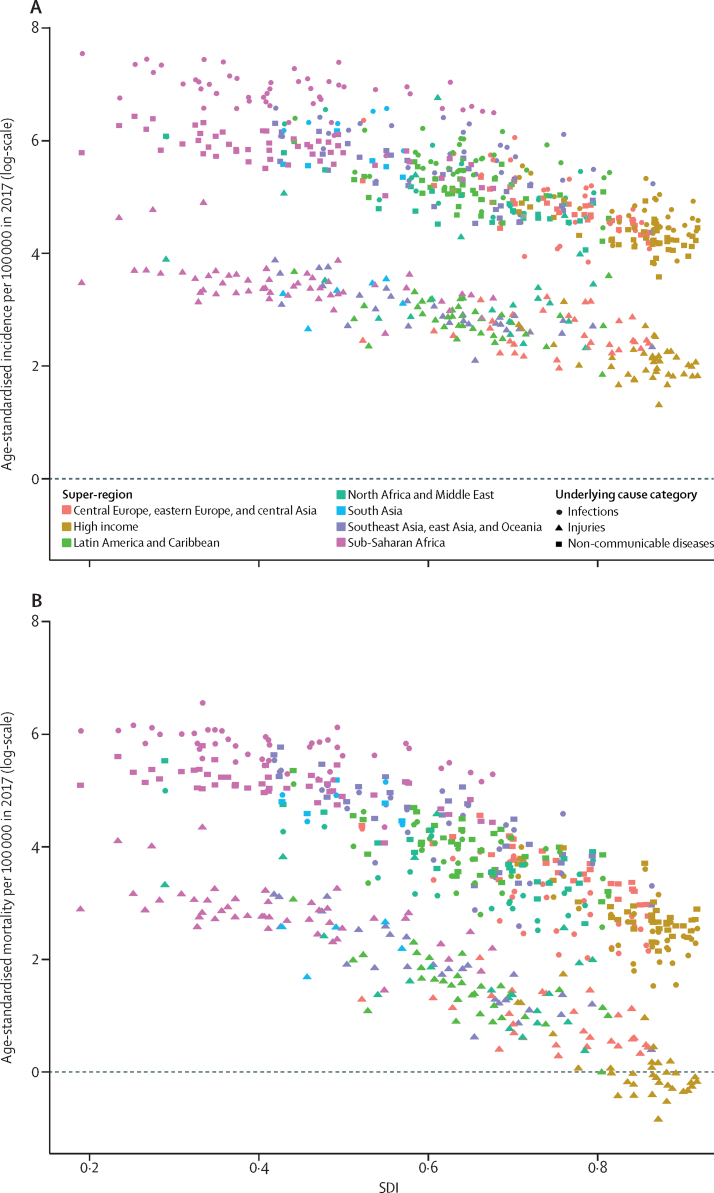
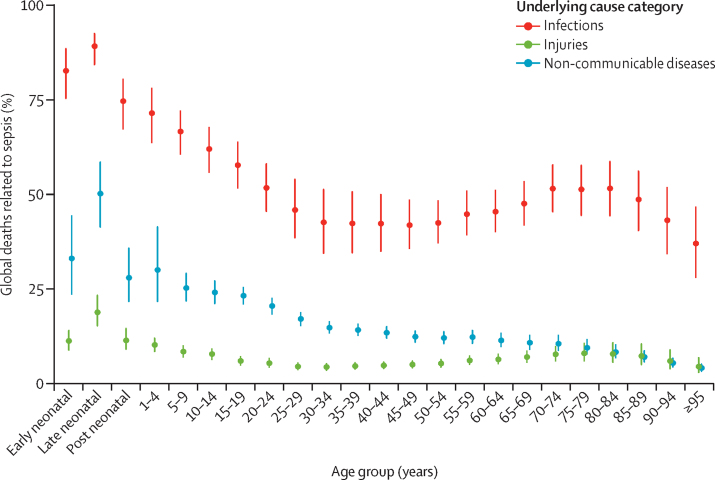
BACKGROUND: Sepsis is life-threatening organ dysfunction due to a dysregulated host response to infection. It is considered a major cause of health loss, but data for the global burden of sepsis are limited. As a syndrome caused by underlying infection, sepsis is not part of standard Global Burden of Diseases, Injuries, and Risk Factors Study (GBD) estimates. Accurate estimates are important to inform and monitor health policy interventions, allocation of resources, and clinical treatment initiatives. We estimated the global, regional, and national incidence of sepsis and mortality from this disorder using data from GBD 2017. METHODS: We used multiple cause-of-death data from 109 million individual death records to calculate mortality related to sepsis among each of the 282 underlying causes of death in GBD 2017. The percentage of sepsis-related deaths by underlying GBD cause in each location worldwide was modelled using mixed-effects linear regression. Sepsis-related mortality for each age group, sex, location, GBD cause, and year (1990-2017) was estimated by applying modelled cause-specific fractions to GBD 2017 cause-of-death estimates. We used data for 8·7 million individual hospital records to calculate in-hospital sepsis-associated case-fatality, stratified by underlying GBD cause. In-hospital sepsis-associated case-fatality was modelled for each location using linear regression, and sepsis incidence was estimated by applying modelled case-fatality to sepsis-related mortality estimates. FINDINGS: In 2017, an estimated 48·9 million (95% uncertainty interval [UI] 38·9-62·9) incident cases of sepsis were recorded worldwide and 11·0 million (10·1-12·0) sepsis-related deaths were reported, representing 19·7% (18·2-21·4) of all global deaths. Age-standardised sepsis incidence fell by 37·0% (95% UI 11·8-54·5) and mortality decreased by 52·8% (47·7-57·5) from 1990 to 2017. Sepsis incidence and mortality varied substantially across regions, with the highest burden in sub-Saharan Africa, Oceania, south Asia, east Asia, and southeast Asia. INTERPRETATION: Despite declining age-standardised incidence and mortality, sepsis remains a major cause of health loss worldwide and has an especially high health-related burden in sub-Saharan Africa. FUNDING: The Bill & Melinda Gates Foundation, the National Institutes of Health, the University of Pittsburgh, the British Columbia Children's Hospital Foundation, the Wellcome Trust, and the Fleming Fund.
Overview
The claims and statistics of this paper haven’t been checked yet.
Run the check — free, no account needed. It reads the open-access text and checks the sources it cites.
Integrity signals
Registry
Cites
Statistics
Figures
Verification
Claims the paper makes
The claims and statistics of this paper haven’t been checked yet.
Run the check — free, no account needed. It reads the open-access text and checks the sources it cites.
Claims other papers make about this one
Each is checked against this paper’s own text: does it say what the citing paper says it does?
The source backs part of the claim, not all of it — or backs it for a different population, condition or comparison.
In the citing paper
“A clear relationship can be seen – the poorest nations, all former European colonies, have the highest sepsis incidence”
From On race, human variation, and who gets and dies of sepsis (2022) · cites this paper as Rudd et al., 2020
Experimental — accuracy not yet measuredThe cited source says what the claim attributes to it.
In the citing paper
“This approach follows the methods validated by many studies on the epidemiology of sepsis26, 27, 28, 29 and was used by Rudd and colleagues.10”
From Global burden of bacterial antimicrobial resistance 1990–2021: a systematic analysis with forecasts to 2050 (2024) · cites this paper as [10]
The cited source says what the claim attributes to it.
In the citing paper
“Previously published global estimates reported a 53% decline in age-standardised sepsis-related deaths from 1990 to 2017.10”
From Global burden of bacterial antimicrobial resistance 1990–2021: a systematic analysis with forecasts to 2050 (2024) · cites this paper as [10]
In the citing paper
“8.2 million of the 11.1 million sepsis deaths worldwide that year occurred in low and middle income nations”
From On race, human variation, and who gets and dies of sepsis (2022) · cites this paper as Rudd et al., 2020
In the citing paper
“more people in middle and low income nations die of sepsis per incident than in wealthy nations”
From On race, human variation, and who gets and dies of sepsis (2022) · cites this paper as Rudd et al., 2020
In the citing paper
“The majority of the world's sepsis burden is borne by the least wealthiest nations, most former European colonies.”
From On race, human variation, and who gets and dies of sepsis (2022) · cites this paper as Rudd et al., 2020
In the citing paper
“Worldwide, the bulk of sepsis burden falls on marginalized peoples (Gracey & King, 2009; Rudd et al., 2020).”
From On race, human variation, and who gets and dies of sepsis (2022) · cites this paper as Rudd et al., 2020
Self-check
Percentages, sums and reported differences re-computed from the paper’s own numbers.
The self-check needs the paper’s full text.
Citations
Cites
James, S. L., Abate, D., Abate, K. H., Abay, S. M., Abbafati, C., Abbasi, N., Abbastabar, H., Abd-Allah, F., Abdela, J., Abdelalim, A., et al. (2018) · The Lancet · doi:10.1016/s0140-6736(18)32279-7 · Cited by 13,867
Bone, R. C., BALK, R. A., Cerra, F. B., Dellinger, R. P., Fein, A. M., Knaus, W. A., Schein, R. M. H., & Sibbald, W. J. (1992) · CHEST Journal · doi:10.1378/chest.101.6.1644 · Cited by 13,335
Vos, T., Abajobir, A. A., Abate, K. H., Abbafati, C., Abbas, K. M., Abd-Allah, F., Abdulkader, R. S., Abdulle, A. M., Abebo, T. A., Abera, S. F., et al. (2017) · The Lancet · doi:10.1016/s0140-6736(17)32154-2 · Cited by 13,220
Self-citationRoth, G. A., Abate, D., Abate, K. H., Abay, S. M., Abbafati, C., Abbasi, N., Abbastabar, H., Abd-Allah, F., Abdela, J., Abdelalim, A., et al. (2018) · The Lancet · doi:10.1016/s0140-6736(18)32203-7 · Cited by 8,600
Self-citationAngus, D. C., Linde-Zwirble, W. T., Lidicker, J., Clermont, G., Carcillo, J., & Pinsky, M. R. (2001) · Critical Care Medicine · doi:10.1097/00003246-200107000-00002 · Cited by 8,503
Self-citationSurviving Sepsis Campaign: International guidelines for management of sepsis and septic shock: 2016.
Rhodes, A., Evans, L. E., Alhazzani, W., Levy, M. M., Antonelli, M., Ferrer, R., Kumar, A., Sevransky, J. E., Sprung, C. L., Nunnally, M. E., et al. (2017) · Intensive Care Medicine · doi:10.1007/s00134-017-4683-6 · Cited by 6,621
Self-citationThe epidemiology of sepsis in the United States from 1979 through 2000
Martin, G. S., Mannino, D. M., Eaton, S., & Moss, M. (2003) · New England Journal of Medicine · doi:10.1056/nejmoa022139 · Cited by 5,841
Stanaway, J. D., Afshin, A., Gakidou, E., Lim, S. S., Abate, D., Abate, K. H., Abbafati, C., Abbasi, N., Abbastabar, H., Abd-Allah, F., et al. (2018) · The Lancet · doi:10.1016/s0140-6736(18)32225-6 · Cited by 4,943
Self-citationKyu, H. H., Abate, D., Abate, K. H., Abay, S. M., Abbafati, C., Abbasi, N., Abbastabar, H., Abd-Allah, F., Abdela, J., Abdelalim, A., et al. (2018) · The Lancet · doi:10.1016/s0140-6736(18)32335-3 · Cited by 4,192
Self-citationFleischmann, C., Scherag, A., Adhikari, N. K. J., Hartog, C. S., Tsaganos, T., Schlattmann, P., Angus, D. C., & Reinhart, K. (2016) · American Journal of Respiratory and Critical Care Medicine · doi:10.1164/rccm.201504-0781oc · Cited by 3,548
Self-citation
Research works printed but not linked: 1
- Singer, 2016, The third international consensus definitions for sepsis and septic shock (Sepsis-3), JAMA, 315, 801, 10.1001/jama.2016.0287 · DOI · Paper page
Cited by
Sorted by citations
Items 701–800 of 1,054
Wang, Z.-Y., You, T., Liu, Y.-J., Li, S.-F., Xiao, X., Shao, B., Yao, Y., Zhang, Y.-P., Lu, Y.-J., Huang, F., et al. (2026) · BMC Infectious Diseases · doi:10.1186/s12879-026-13971-7
“In 2017, there were 48.9 million estimated cases of sepsis world-wide, including 11 million sepsis related deaths, accounting for 19.7% of total global deaths [3].”
InfluentialEvaluating the efficacy of esmolol in septic shock: a systematic review and meta-analysis
Al-Nafai, R., Aljahdali, G., Alrebish, L., Albeladi, M., Alharbi, H., Maghrabi, R., Alotaibi, H. N., Algathama, L., Abbas, A., Albariqi, R. A., et al. (2026) · Systematic Reviews · doi:10.1186/s13643-026-03260-4
“A dysregulated immune response to infection can lead to septic shock, a life-threatening condition associated with mortality rates ranging from 15% in sepsis without shock to up to 56% in patients with septic shock [1, 2].”
Shen, Y.-S., Zhang, W., Zhang, C.-X., You, Y.-D., Lin, K.-N., Zheng, P., Weng, J.-S., & Ye, Y. (2026) · Scientific Reports · doi:10.1038/s41598-026-62320-w
Tian, P.-P., Yi, H.-W., Wang, T., Yang, H., Du, M.-Y., Zhu, L., Wang, X.-M., Xie, L.-C., Wan, L., & Tian, T. (2026) · Frontiers in Microbiology · doi:10.3389/fmicb.2026.1874736
“The overall CA was 99.4% at 6 h and 100% at 16–20 h, which is consistent with previous reports (Cherkaoui et al., 2022; Edmondson et al., 2024; Martins et al., 2020; Messiaen et al., 2025; Özgen Top et al., 2024; Rudd et al., 2020).”
InfluentialSu, Z., Wen, Y., Zhong, W., Ding, H., & Zeng, H.-K. (2026) · Frontiers in Medicine · doi:10.3389/fmed.2026.1836373
“In 2017, globally, 48.9 million sepsis cases were diagnosed, with 11 million fatalities, contributing 19.7% to global deaths and posing a significant health burden (2).”
InfluentialSouza, B. D. V. L., Solveira, G., de Souza, G. F. R., Orsi, H., de Lira, D. R. P., Fernandes, I. D. A., Ferreira, A. M., Mondelli, A. L., Sacchi, C. T., Campos, K. R., et al. (2026) · Brazilian Journal of Microbiology · doi:10.1007/s42770-026-02018-3
“Interestingly, both the incidence and mortality of sepsis are highest in early childhood and in old age, and lower in the intermediate age groups [ 6].”
Yang, J.-B., Cai, L., Liu, X., Zhou, K.-H., Lu, J.-Y., & Yang, Y.-G. (2026) · European Journal of Medical Research · doi:10.1186/s40001-026-04858-z
“Epidemiological studies further demonstrated that MODS is common among ICU patients with sepsis, being frequently accompanied by prolonged hospitalisa - tion, increased need for organ support and a substantially higher risk of death [4, 5].”
Bioinformatics analysis reveals the association of bile acid metabolism-related genes with sepsis
Xie, J., Ling, Y., Sun, Y.-Y., Yao, Y., Zhang, M.-S., & Zhou, X.-Y. (2026) · PLoS ONE · doi:10.1371/journal.pone.0352431
“Sepsis has been established as a global health emergency by the World Health Organization (WHO) in 2017, with a nosocomial mortality rate of up to 20% [1].”
InfluentialLesur, O., Molnar, T., Chagnon, F., Farand, P., & Croteau, É. (2026) · Critical Care Sepsis and Severe Infection · doi:10.1186/s44541-026-00015-5
“Sepsis remains a frequent cause of admission to intensive care units and is still associated with high morbidity and mortality rates, particularly in the presence of multiple organ failure and despite significant improvements in its identification and management over recent decades [1–3].”
Zhou, J., & Chi, C. (2026) · Medicine · doi:10.1097/md.0000000000049563
“[2] According to the third global consensus statement on the diagnosis of sepsis and septic shock, sepsis is a critical medical condition characterized by the body’s excessive and uncontrolled inflammatory response to an infection, which ultimately leads to systemic failure of one or more organs.”
International, but for whom? Pediatric sepsis guidelines and the limits of global applicability
Thomson, J. (2026) · PLOS Global Public Health · doi:10.1371/journal.pgph.0006881
“However, the generalizability of these recommendations to LMIC settings is uncertain, despite these settings accounting for more than 85% of global pediatric sepsis cases and deaths [2,3].”
Comparison of Severity Scoring Systems as Predictors of Mortality in Emergency Sepsis Patients
Equbal, A., Kushawaha, M. K., Sinha, A., & Azad, B. P. (2026) · International Journal of Pharmaceutical Quality Assurance · doi:10.25258/ijpqa.16.11.76
“This result agrees with the global epidemiological data that show an exponential increase of sepsis incidence and mortality with age because of the immunosenescence, the high comorbidity burden, and the low physiological reserve (Rudd et al., 2020) [9].”
Evaluation of Red Cell Distribution Width (RDW) as an Early Marker of Sepsis in Emergency Patients
Saleem, A., Tunio, R. A., Khalid, R., Nasir, S., Shehbaz, L., & Zainab, K. (2026) · Journal of Health, Wellness and Community Research · doi:10.61919/v1xd7n34
“The global burden of sepsis remains substantial, with disproportionate morbidity and mortality in low-and middle-income countries where delayed presentation, overcrowded emergency services, and limited diagnostic resources may compromise early decision-making (4).”
Petrakis, V., Toumpanakis, D., & Kyriazopoulou, E. (2026) · Seminars in Respiratory and Critical Care Medicine · doi:10.1055/a-2933-0145
Clinical Outcomes and Prognostic Determinants in Sepsis: A Retrospective Study
Patel, A. K., Kumar, G., Deepak, R., & Kumar, S. (2026) · International Journal of Pharmaceutical Quality Assurance · doi:10.25258/ijpqa.16.10.92
“The data shows that sepsis accounts for 19.7 percent of all global deaths which demonstrates the significant healthcare costs and social effects that sepsis creates for society [3].”
InfluentialVu, J., Wagg, C., Holody, C. D., Wong, A., Baidwan, T., Lo, M., Khodabocus, I., Liu, S.-N., Macala, K., Dufour, A., et al. (2026) · bioRxiv · doi:10.64898/2026.07.03.736409
Derso, B. M., Kassa, B. A., Abate, T. A., Birhanu, A. G., & Tessema, T. S. (2026) · BMC Microbiology · doi:10.1186/s12866-026-05361-5
“The occurrence of these CP bacterial isolates in both adult and neonatal ICU environments, particularly in the neonatal ICU, may be a crucial risk factor for neonatal infection in sub-Saharan countries where neonatal sepsis is the main cause of death of neonates [40].”
Wei, Y., Xu, W., Yang, S., & Zhang, C.-F. (2026) · Frontiers in Cellular and Infection Microbiology · doi:10.3389/fcimb.2026.1772123
“Sepsis is a critical medical condition characterized by life-threatening organ dysfunction due to an uncontrolled and dysregulated host response to infection (Rudd et al., 2020).”
Zhang, Q., Zhang, Y., Li, X., Tian, X., Meng, Z.-J., Zhang, J., Weng, J., Lin, K.-H., Cheng, B., Gong, Y.-Q., et al. (2026) · Frontiers in Medicine · doi:10.3389/fmed.2026.1859896
RISK FACTORS FOR MULTI ORGAN DYSFUNCTION SYNDROME IN SEPSIS AMONG CHILDREN
Shoaib, M., Rizwan, W., Fatima, F., Tahir, M., Munir, U., & Ali, P. (2026) · Genetics and Molecular Research · doi:10.4238/0y3jh119
“Severe estimates for the prevalence of pediatric sepsis vary by healthcare systems, reporting and diagnostic criteria, but studies indicate that a large percentage of cases of pediatric sepsis progress to MODS [3].”
Cao, K.-J., Ge, J.-Q., & Fang, H.-Z. (2026) · Frontiers in Medicine · doi:10.3389/fmed.2026.1874204
Wibawa, P. N. P., Juliantini, N. P. L., & Ekayanti, N. L. W. (2026) · Jurnal Sehat Indonesia (JUSINDO) · doi:10.59141/-.v8i2.512
“…a major global health burden, characterized by life-threatening organ dysfunction due to a dysregulated host response to infection, and is associated with high morbidity and mortality worldwide, particularly in patients with bloodstream infections (BSIs) (Lamy et al., 2020; Rudd et al., 2020).”
Khan, Z., Malik, M., Liaqut, R., Altaf, A., & Anum, H. (2026) · Life Science · doi:10.37185/lns.1.1.881
Monjazebi, F., Zamanzadeh, V., Ashoub, M., & Jahangirifard, B. (2026) · BMC Anesthesiology · doi:10.1186/s12871-026-04072-8
“The Global Burden of Disease Study estimated 48.9 million cases of sepsis annually with 11 million sepsis-related deaths in 2017, representing 19.7% of global mortality [1].”
InfluentialYoshihara, I., Yoshihara, N., Hanafusa, K., Sueyoshi, K., Ono, Y., Umei, N., Watanabe, S., Okamoto, K., Tanaka, H., & Kondo, Y. (2026) · Journal of Intensive Care · doi:10.1186/s40560-026-00901-7
“%) reported annually [1].”
Wang, X., Fu, M., Li, C., Jin, J., Cui, N., Liao, X., Wang, Z., Zuo, Z., Huang, Q., Zhang, L., et al. (2026) · Journal of Intensive Care · doi:10.1186/s40560-026-00902-6
“This concept is particularly relevant in older adults, who have high infection-related mortality and limited physiological reserve [2, 16–18].”
Xie, B., Zhou, B., Teng, H., Li, J.-Q., Wang, J., & Cui, X.-J. (2026) · Frontiers in Cellular and Infection Microbiology · doi:10.3389/fcimb.2026.1814760
“Sepsis, a dysregulated systemic in fl ammatory response syndrome triggered by infection, remains a leading cause of death in patients admitted to the intensive care unit (ICU), accounting for nearly 20% of global mortality (Seymour et al., 2016; Rudd et al., 2020; Evans et al., 2021).”
Decoy receptor 3 as a diagnostic marker for sepsis: a meta-analysis
Zhang, X.-K., Gao, R.-Y., Han, Y.-Z., Hou, S.-Y., Li, W., & Huang, L. H. (2026) · Intensive Care Medicine Experimental · doi:10.1186/s40635-026-00943-z
“The latest data show that 19 million new cases of sepsis occur globally each year, with a mortality rate higher than that of stroke, which undoubtedly imposes a heavy burden on public health [7].”
Zhu, L.-H., Gao, Z.-R., Yu, Y., Wu, Z.-H., Diao, Y.-F., Zhang, J.-H., Nie, X., & Zha, C. (2026) · Frontiers in Nutrition · doi:10.3389/fnut.2026.1793046
Twichell, E., Sattler, L. A., & Reynolds, D. (2026) · Current Opinion in Critical Care · doi:10.1097/mcc.0000000000001409
Xin, Q., Ma, L., Yu, X., & Du, G. (2026) · Frontiers in Cellular and Infection Microbiology · doi:10.3389/fcimb.2026.1854135
“Sepsis is a life-threatening organ dysfunction caused by a dysregulated host response to infection, and it represents a major global health burden with an estimated incidence of 48.9 million cases and 11 million sepsis-related deaths annually (Rudd et al., 2020).”
InfluentialPozzessere, P., Pascali, M., Brescia, V., Carrieri, V., Saracino, A., Vitariello, G., Lovero, R., Troiano, G., Colella, M., & Cazzolla, A. P. (2026) · Medicina · doi:10.3390/medicina62071405 · Cited by 2
“Globally, sepsis accounts for 48.9 million cases and 11 million deaths annually, representing 19.7% of all deaths [3–5].”
InfluentialBaşer, Ö. F., & Karapehlivan, M. (2026) · Pharmaceuticals · doi:10.3390/ph19071130
“This rate is reported to rise up to 60% in individuals diagnosed with septic shock—severe sepsis accompanied by circulatory and metabolic abnormalities [16,17].”
InfluentialEffect of triglyceride levels on bone marrow-derived dendritic cells in sepsis
Zhang, M., Zhang, Y., Wu, F., Chen, J., Su, X., Tao, Z., Li, K., Ye, J., & Lu, Z. (2026) · International Immunopharmacology · doi:10.1016/j.intimp.2026.116620
Yang, Y.-X., Liu, X.-Q., Xue, J.-X., Yun, C., Dou, Y., Wang, J., & Zhang, X.-H. (2026) · International Immunopharmacology · doi:10.1016/j.intimp.2026.116799
Recent advances in early screening and diagnosis of sepsis: a narrative review
Zhou, X.-L., Hu, X. X., Shu, L.-Y., & Wang, Y.-S. (2026) · Frontiers in Cellular and Infection Microbiology · doi:10.3389/fcimb.2026.1864446
“Some 85% of cases and fat out-of-controlalities were recorded in low-and middle-income countries (Rudd et al., 2020).”
Qin, C.-C., Wang, W.-W., Du, Q.-Y., Kong, L., & Li, G.-C. (2026) · Frontiers in Immunology · doi:10.3389/fimmu.2026.1872111
Vera-Ponce, V. J., Ballena-Caicedo, J., Valladolid-Sandoval, L. A. M., Zuzunaga-Montoya, F. E., Acosta-Porzoliz, R. P. E., Rivera-Lozada, O., & Valladares-Garrido, M. J. (2026) · PLoS ONE · doi:10.1371/journal.pone.0351072
“Sepsis and septic shock remain conditions with a high global burden, with an estimated 49 million cases and 11 million deaths annually in 2017, and in-hospital mortality that, in ICU settings, may approach 25–40% depending on severity and comorbidities [1,2].”
Amputations in Sepsis Patients: A Population-Based Cohort Study of Rates and Risk Factors.
Ackermann, K., Aryal, N. R., Westbrook, J., & Li, L. (2026) · ANZ journal of surgery · doi:10.1111/ans.70835
Identifying Rate-Limiting Steps in the Antimicrobial Workflow for Community-Onset Sepsis.
Song, M. J., Won, S., Kim, M. C., Jung, S., Ko, R., Park, S., Suh, G.-Y., & Lee, Y. (2026) · International Journal of Infectious Diseases · doi:10.1016/j.ijid.2026.108964
Prognostic Role of Presepsin, Proadrenomedullin, and Interleukin-6 in Sepsis.
Karagöz, S. A., Akdeniz, Y. S., Konukoğlu, D., Kıyak, S. K., Biberoğlu, S., Ipekci, A., Çakmak, F., Öztürk, A., Ikizceli, I., & Özkan, S. (2026) · Journal of Emergency Nursing · doi:10.1016/j.jen.2026.06.001
Jiménez-Zarazúa, O., Tolentino-Pérez, B., Vélez-Ramírez, L., & Mondragón, J. (2026) · Clinical medicine (London) · doi:10.1016/j.clinme.2026.100610
The hidden infectious disease-related sepsis risk of wildfire-specific PM2.5.
Mahendran, R., Xu, R.-B., Zhang, L., Ye, T.-T., Zhang, Y.-W., Xu, Z.-H., Huang, W.-Z., Yang, Z.-Y., Abramson, M., Johnston, F., et al. (2026) · Environmental Research · doi:10.1016/j.envres.2026.125212
Wang, A.-H., Yin, C.-F., Jin, Y., Yang, L., Li, S.-R., Li, J.-X., Xu, L., Shi, R.-Y., Weng, M.-T., Liu, W., et al. (2026) · Journal of Inflammation Research · doi:10.2147/jir.s575566
S100A16 as a potential therapeutic target in sepsis-induced acute lung injury
Liu, Z., Chen, J., Sun, Y., & Zhao, P. (2026) · Biochimica et Biophysica Acta (BBA) - Molecular Basis of Disease · doi:10.1016/j.bbadis.2026.168372
Huang, Y.-F., Li, X.-C., & Jiang, R. (2026) · Biochemical and Biophysical Research Communications - BBRC · doi:10.1016/j.bbrc.2026.154303
Cormaci, V. M., Menichelli, D., Malatesta, D., Sole, F. D., Gazzaniga, G., Pignatelli, P., Galardo, G., Pugliese, F., & Pastori, D. (2026) · Journal of Infection · doi:10.1016/j.jinf.2026.106818
Yu, Q., Wang, Y., 刘紫麟, Yu, J., W, H., Yang, F., Li, G., Chen, L., & Jiang, C. (2026) · Life Sciences · doi:10.1016/j.lfs.2026.124601
Taefehshokr, S., Okwor, I. B., Shan, L., & Gounni, A. (2026) · ImmunoHorizons · doi:10.1093/immhor/vlag031
Wu, Z., Wang, X. J., Xia, J., Zheng, X., Meng, J., Yu, H., Yu, Y. U., & Zhou, H. (2026) · International Journal of Infectious Diseases · doi:10.1016/j.ijid.2026.109015
Machado, F. R., Azevedo, L., Pellozo, L. R., Ferreira, J., de Souza, J. L. D., Lisboa, T., Moraes, R. B., Salomão, R., dos Santos, T. D., Rosa, R., et al. (2026) · Annals of Intensive Care · doi:10.1016/j.aicoj.2026.100128
Self-citationMufti, S., Junaid, S., Amin, I., Ali, T., & Mufti, S. (2026) · Cureus · doi:10.7759/cureus.113759
“Sepsis, the systemic response to infection, is responsible for an estimated 11 million deaths per year worldwide, with a disproportionate burden in South Asia and sub-Saharan Africa [6,7].”
Chiscano‐Camón, L., Ruiz‐Rodríguez, J. C., Ruiz‐Sanmartín, A., Nicolás-Morales, P., Hernández-González, M., & Ferrer, R. (2026) · Journal of Intensive Care · doi:10.1186/s40560-026-00898-z
“Sepsis remains a leading cause of morbidity and mortality worldwide despite substantial advances in supportive care and antimicrobial therapy [1].”
Xie, B., Cao, Y., Xiao, Y., Zhu, D., Guan, X., & Chen, G. (2026) · Dose-Response · doi:10.1177/15593258261474770
Lin, J., Wang, X.-J., Chen, K., Liu, Y., Zhang, Y., Xu, T., & Yang, X.-J. (2026) · Frontiers in Medicine · doi:10.3389/fmed.2026.1841230
Hubungan Skor FORREST dengan Mortalitas Pasien Kritis Non-Trauma di IGD RS PKU Muhammadiyah Gamping
Susatiyo, F. A., Pramono, A., & Gugun, A. M. (2026) · Majalah Anestesia & Critical Care · doi:10.55497/majanestcricar.v44i2.505
Chang, W.-H., Wu, W.-J., Shen, H.-F., & Hu, T.-Y. (2026) · BMC Infectious Diseases · doi:10.1186/s12879-026-13907-1
“Sepsis and septic shock remain major causes of morbidity and mortality in intensive care units (ICUs) worldwide, accounting for a substantial proportion of global deaths and healthcare utilization [1–3].”
Fu, X., Yang, J., Lv, Q., Zhang, X.-T., Wang, S., Cai, S.-K., & Zhang, M. (2026) · Frontiers in Medicine · doi:10.3389/fmed.2026.1817161
“It has been estimated that approximately 48.9 million cases of sepsis were diagnosed and 11.0 million sepsis-related deaths occurred worldwide in 2017 (3).”
InfluentialKarmacharya, A., Pokhrel, S., Sharma, D., Khadka, C., Pradhan, N., & Phuyal, N. (2026) · Medical Journal of Eastern Nepal · doi:10.3126/mjen.v5i01.96385
“According to data released in 2020, there were 11 million sepsis-related fatalities and 48.9 million cases globally, accounting for 20% of all deaths [4].”
InfluentialDündar, N. B., Sarphie, D., Yüce, K., Aygencel, G., Türkoğlu, M., Mian, R., Moss, P. A. H., ILHAN, M. N., & Bozdayı, G. (2026) · Frontiers in Immunology · doi:10.3389/fimmu.2026.1829226
Thorkildsen, M. S., Gustad, L. T., Åsvold, B. O., Mohus, R. M., Ellervik, C., Teumer, A., Marouli, E., Medici, M., Damås, J. K., Flatby, H. M., et al. (2026) · Frontiers in Endocrinology · doi:10.3389/fendo.2026.1852413
Taneska, A. C., Trajceska, L., Petronijevik, Z., Kartalova, M. J., Boshevska, G., Gjorgjievski, N., & Selim, G. (2026) · International Journal of Artificial Organs · doi:10.1177/03913988261446104
Purba, A. F. M., Rusip, G., Mutia, M., & Lubis, Y. E. P. (2026) · Journal of Pharmacy and Science · doi:10.36490/journal-jps.com.v9i2.1647
“Despite substantial advances in antimicrobial therapy, resuscitation strategies, organ support, and intensive care management, sepsis remains a major global health problem associated with high morbidity, prolonged hospitalization, increased healthcare costs, and considerable mortality [3].”
Impact of altered HDL2b/HDL3 ratio on the function of innate immune cells in sepsis
Zhao, S.-B., Jiang, Y.-C., Lian, P.-Q., Ji, C., Huang, Z.-W., & Liu, X.-Y. (2026) · Lipids in Health and Disease · doi:10.1186/s12944-026-03005-1
“The epidemiology 2020 report showed that, in 2017, approximately tens of million cases of sepsis accounting for 20% of all global deaths occurred [36].”
ZBP1-driven pyroptosis-associated alveolar macrophages exacerbate epithelial dysfunction in sepsis
Zhou, F., Tian, H., Wang, H., Huang, H., Lin, X., Zhao, Y., Chen, H., & Gong, T. (2026) · Cell Death and Disease · doi:10.1038/s41419-026-09043-y
“Globally, an estimated 48.9 million annual sepsis cases and 11.0 million related deaths account for 19.7% of all global deaths [2].”
InfluentialWang, J., Huang, Y., Xie, Z., Yu, J., Xiao, L., Liu, X., Wang, Z., Zhu, J., Shen, M., & Xiao, L. (2026) · BMC Infectious Diseases · doi:10.1186/s12879-026-13795-5
“Within this cohort, the mortality rates were 11.93% for patients with hypertension and 11.33% for those without hypertension, which is consistent with findings from earlier studies [33].”
InfluentialRisk factors for sepsis: a systematic review and meta-analysis
Qin, C., Lin, S.-S., Pang, L.-S., Hu, M.-H., Ma, D., Zhou, Z.-Z., Xu, X.-J., & Ji, C. (2026) · Frontiers in Public Health · doi:10.3389/fpubh.2026.1790141
Wah, W., Poole, A. P., Campbell, L., Cohen, J., Cooper, J., Deane, A. M., Delaney, A., Eastwood, G., Finfer, S., French, C., et al. (2026) · The Lancet Regional Health - Western Pacific · doi:10.1016/j.lanwpc.2026.101912
Self-citationLe, M. N., Do, A., Pham, H. T., Nguyen, C., Cao, T., Nguyen, H., Vu, H. D., Nguyen, H. T., Nguyen, A. T., Dao, H. C., et al. (2026) · Antibiotics · doi:10.3390/antibiotics15070639
“Infections remain one of the leading causes of neonatal morbidity and mortality, particularly in low-and middle-income countries (LMICs), where sepsis-attributable neonatal mortality rates vary from 10 to 29% [1,2].”
Age but not sex modifies lymphoid immune responses in murine sepsisPreprint
Wang, D., Rodhouse, C. E., Tang, H., Hernández-Ríos, M., Yu, X., Wu, R., Wiggins, W. B., Dirain, M., Ungaro, R., Nacionales, D. C., et al. (2026) · Research Square · doi:10.21203/rs.3.rs-9751570/v1
“This places a massive economic and societal burden on patients, families, and healthcare systems 3 .”
Blood-based targeted sequencing of microbial cell-free DNA in severe pneumonia-associated sepsis
Huang, H., Ye, X., Gu, D., Huang, E., Yu, X. H., Ai, L., Deng, J., Guo, P., Liu, H., Chen, Y., et al. (2026) · Respiratory Research · doi:10.1186/s12931-026-03786-0
“Sepsis is a life-threatening syndrome of dysregulated host response to infection and remains a leading cause of death worldwide [1–3].”
Tang, Y.-J., Liu, H.-Y., Li, N.-Q., Zhang, X., Lin, Y.-L., Zhang, Y., Li, Y., Deng, J.-L., Yang, P.-L., Meng, Q.-M., et al. (2026) · Clinical and Translational Medicine · doi:10.1002/ctm2.70726
“4,5 Despite extensive research efforts, the current management of sepsis-induced AKI (S-AKI) remains largely supportive, and no targeted therapies have demonstrated consistent clinical efficacy.”
Interhospital Transfers in ICU- and Non-ICU-Treated Sepsis Patients in Germany Between 2016 and 2019
Fleischmann-Struzek, C., Ruhnke, T., Freytag, A., Dutschkus, F., Kochanek, M., Swart, E., Dröge, P., Dennler, U., Pletz, M., & Rose, N. (2026) · Critical Care Explorations · doi:10.1097/cce.0000000000001412
Self-citationWang, H., Zhang, Y., Ouyang, A., Wang, T., Hou, H.-D., Hou, H.-F., & Chen, B. (2026) · Frontiers in Immunology · doi:10.3389/fimmu.2026.1826457
Gupta, S. V., Pottmeyer, I., Mischler, N., Moulin, E., Williams, R. L., Meylan, S., & Shieh, L. (2026) · BMJ Innovations · doi:10.1136/bmjinnov-2025-001548
Hwang, J.-E., Shim, H., Park, M., Kim, Y.-K., Bae, W., Cho, S.-H., Chung, I.-J., & Sun, E.-G. (2026) · Cell Death Discovery · doi:10.1038/s41420-026-03198-5
“Despite advances in critical care, sepsis remains one of the leading causes of death worldwide, accounting for nearly 20% of global mortality [3].”
Kato, A., Saito, M., Miyazaki, H., Kearney, B. M., Nakashima, M., Nakashima, H., Koyama, K., & Kinoshita, M. (2026) · Intensive Care Medicine Experimental · doi:10.1186/s40635-026-00931-3
“Advances in intensive care and evidence-based guidelines have improved the short-term survival of patients with sepsis, particularly in high-income settings [1].”
Multinational collaborations in critical care research: feasible and useful?
Salluh, J., Pisani, L., Moralez, G., & Myatra, S. N. (2026) · Current Opinion in Critical Care · doi:10.1097/mcc.0000000000001406
Chen, M.-Y., Liu, Y., Liu, C.-C., Li, Y.-R., Li, H., Yue, S., Xu, P., Hu, Y., Han, P., Wang, Y., et al. (2026) · Developmental and Comparative Immunology · doi:10.1016/j.dci.2026.105664
Tripathy, S., Das, S., & Ansari, M. E. (2026) · Indian Pediatrics · doi:10.1007/s13312-026-00370-z
“The highest incidence of sepsis and related mortality is seen in children aged 0–5 years [1].”
Chen, J.-B., Zhang, J.-Q., Yan, Z.-Z., Zhu, C.-Y., Chen, X.-N., Sun, Z.-Q., Li, Q., & Chen, Z.-X. (2026) · Respiratory Research · doi:10.1186/s12931-026-03764-6
“The lung is an organ particularly susceptible to sepsis, and more than half of septic patients develop acute lung injury (ALI) [2, 3].”
Combining machine learning and physiological network models for sepsis prediction
Backes, J., Tsanda, A., Knopp, T., Renz, W., & Schöll, E. (2026) · Frontiers in Network Physiology · doi:10.3389/fnetp.2026.1852577
“Nearly 20% of all deaths worldwide and approximately 11 million deaths annually stem from sepsis, a life-threatening organ dysfunction caused by a dysregulated host response to infection (Rudd et al., 2020).”
Zhu, H., Hong, M., Hu, W., & Yu, Q.-Y. (2026) · Medicine · doi:10.1097/md.0000000000049392
“Subsequent literature review revealed that the top upregulated DEGs, CD177 , [15,16] and the top downregulated DEGs, ALOX15 , [17–20] are associated with the coagulation system.”
Long-term ozone exposure and the risk of mortality in sepsis patients in a Chinese cohort
Xiao, W., Zhu, Y., Chen, F., Cao, Y., Jiang, Y., & Zhu, Y. (2026) · Frontiers in Public Health · doi:10.3389/fpubh.2026.1782393
Li, D., Yue, Z., & Zhen, G.-S. (2026) · Inhalation Toxicology · doi:10.1080/08958378.2026.2687782
“Sepsis, defined as a dysregulated host response to infection resulting in life-threatening organ dysfunction, remains a paramount global health challenge, contributing to substantial morbidity, mortality, and healthcare costs (Rudd et al. 2020; Singer et al. 2016).”
Sepsis prognosis in the emergency department: assessment of shock indices, SOFA, qSOFA, and lactate
Akpinar, G., Bulut, S. P., Ozsemerci, H. A., Kose, A., Doğan, S., Basıbuyuk, A. E., Yılmaz, A., & Hamitoglu, M. (2026) · International Journal of Emergency Medicine · doi:10.1186/s12245-026-01264-4
“Sepsis is defined as a life-threatening organ dysfunction resulting from the body’s disordered response to infection and is a significant cause of morbidity and mortality worldwide [1, 2].”
Lin, P.-C., Chang, C.-L., Chang, S.-W., Tang, H.-F., Liu, C., Yu, Y.-M., Chung, Y.-H., & Chu, F. (2026) · Journal for Healthcare Quality · doi:10.1097/jhq.0000000000000531
Zheng, Y., Gao, J., Hua, T., Dong, W., & Yang, M. (2026) · Renal Failure · doi:10.1080/0886022x.2026.2677246 · Cited by 2
“Sepsis remains a major challenge in critical care medicine worldwide, accounting for approximately 20% of global deaths [1,2]. acute kidney injury (aKi) is one of the most frequent and severe complications of sepsis, and over 70% of patients with sepsis develop aKi [3,4], Multiple…”
Boujanian, C., Khoury, C. A., Chaar, M. E., Saliba, R., Hanna, L., & Tokajian, S. (2026) · Microbiology spectrum · doi:10.1128/spectrum.00503-26
“by BSIs, was estimated to contribute to approximately 11 million deaths, accounting for nearly 20% of all global mortality (1).”
Carneiro, D. D. C., Meira, C., Dias, R. B., Rocha, V. P. C., Damasceno, P. K., Barbosa, J., & Soares, M. B. P. (2026) · Stem cell research & therapeutics · doi:10.1186/s13287-026-05093-3
“Risk groups include elderly people, neonates, immunocompromised individuals (e.g., cancer patients, HIV/AIDS, transplant recipients), and critically ill patients undergoing invasive procedures, long-time hospitalization and/or prolonged antibiotic use [26].”
Kart, K., Kuşat, T., Başak, F., & Kara, M. (2026) · Bratislavské lekárske listy/Bratislava medical journal · doi:10.1007/s44411-026-00702-2
“Sepsis remains one of the leading causes of mortality in intensive care units worldwide and continues to represent a major global health problem despite advances in diagnostic and therapeutic approaches [2].”
Hincapié-Osorno, C., Jaimes, F., & Bouma, H. (2026) · Frontiers in Medicine · doi:10.3389/fmed.2026.1850281
Early versus delayed enteral nutrition in septic shock: a target trial emulation study
Zhang, P., Huang, Y., Zhang, X.-C., Zhu, X.-X., Wang, M., Xia, H., & Zuo, T. (2026) · Frontiers in Nutrition · doi:10.3389/fnut.2026.1831524
Böhm, E. W., Zadeh, J. K., Omran, W., Arad, T., Pfeiffer, N., Wagner, F. M., Patzak, A. R., Oelze, M. W., Daiber, A., Helmstädter, J., et al. (2026) · Frontiers in Pharmacology · doi:10.3389/fphar.2026.1778848
“Sepsis is a leading global health burden and is estimated to account for nearly 20% of all deaths worldwide (Levy et al., 2012; Rudd et al., 2020).”
Arbeláez-Rodríguez, R. S., Lopez-Marroquin, V., & Triana-Vidal, L. E. (2026) · Infectio · doi:10.22354/24223794.1291
Tran, N. D., Nguyen, N. T. Q., Vu, T. T. T., Diep, P.-H., Villescas, N. N., Nguyen, N. N. Y., Sato, K. M., Weiss, J., Doan, T. N. M., & Diep, B. A. (2026) · Antimicrobial Agents and Chemotherapy · doi:10.1128/aac.01936-25
“E valuating new drugs targeting antimicrobial-resistant pathogens, such as Pseudomo nas aeruginosa , in clinical trials has proven particularly challenging for severe sepsis and septic shock, which are associated with high mortality rates (1).”
Microbial proteases and endothelial barrier disruption in sepsis: A neglected nexus
Rao, S. S. S. N., Shenoy, S. M., Gutti, R. K., Prabhu, V. K., Joshi, M. B., Nayak, U. Y., & Prasad, A. S. B. (2026) · Virulence · doi:10.1080/21505594.2026.2687236
“Globally, over 11 million deaths are caused by sepsis annually, reflecting the need to identify new pathogenic mechanisms and drug targets [6].”
Simsic, B., Ewin, T., Hennessy, J., Janson, S., Baird, R. W., & Meumann, E. M. (2026) · Journal of Clinical Microbiology · doi:10.1128/jcm.00311-26
“S epsis is a time-critical medical emergency requiring urgent treatment to reduce the high mortality, which is more than 20% (1–4).”
Prediction models for mortality in patients with sepsis: a systematic review and meta-analysis
Lei, S., Ruan, H., Wang, J., Zhao, G., Zhao, H., Liu, J., & Li, J. (2026) · Frontiers in Medicine · doi:10.3389/fmed.2026.1730156
“Globally, approximately 48.9 million cases of sepsis and 11 million sepsis-related deaths were recorded, accounting for 19.7% of all global deaths (4).”
InfluentialWang, L., Pei, F., Gu, B., Ramesh, N. T., Long, H., Guan, X., Wu, J. I. A. H. U. I., & Bhavani, S. V. (2026) · Critical Care Medicine · doi:10.1097/ccm.0000000000007227
Metadata
- Authors
- Rudd, K. E., Johnson, S. C., Agesa, K. M., Shackelford, K. A., Tsoi, D., Kievlan, D. R., Colombara, D. V., Ikuta, K. S., Kissoon, N., Finfer, S., Fleischmann-Struzek, C., Machado, F. R., Reinhart, K. K., Rowan, K., Seymour, C. W., Watson, R. S., West, T. E., Marinho, F., Hay, S. I., Lozano, R., Lopez, A. D., Angus, D. C., Murray, C. J. L., & Naghavi, M.
- Affiliations
- University of Pittsburgh (US)
- University of Washington (US)
- University of British Columbia (CA)
- UNSW Sydney (AU)
- Jena University Hospital (DE)
- Seattle Children's Hospital (US)
- Universidade de São Paulo (BR)
- Corresponding author
- Naghavi, Mohsen
- ORCID
- Venue
- The Lancet
- Publisher
- Elsevier BV
- Published
- 2020-01
- Volume
- 395
- Issue
- 10219
- Pages
- 200-211
- ISSN
- 0099-5355 (ISSN-L)
- 0140-6736
- PMC
- PMC6970225
- OpenAlex
- W2998853022
- Cited by
- 7,971
- References
- 42
- Citations by year
- 2026: 1540 · 2025: 1722 · 2024: 1545 · 2023: 1195 · 2022: 899 · 2021: 735 · 2020: 329
- FWCI
- 567.33
- Type
- journal article
- Language
- en
- Open access
- hybrid
- doi.org
- Licence
- Locations
- The Lancet (publishedVersion, cc-by)
- PubMed Central (publishedVersion, cc-by)
- PubMed (publishedVersion)
- LA Referencia (Red Federada de Repositorios Institucionales de Publicaciones Científicas) (submittedVersion, other-oa)
- Minerva Access (University of Melbourne) (submittedVersion, cc-by)
- Funders
- Bill & Melinda Gates Foundation
- National Institutes of Health (T32HL007287, T32HL007820, R35GM119519)
- National Health and Medical Research Council (no 1117230)
- Topics
- Health Sciences › Medicine › Critical Care and Intensive Care Medicine › Sepsis Diagnosis and Treatment
- Health Sciences › Medicine › Public Health, Environmental and Occupational Health › Global Health and Epidemiology
- Health Sciences › Medicine › Pediatrics, Perinatology and Child Health › Neonatal and Maternal Infections
- Keywords
- sepsis, sepsis incidence, sepsis mortality, global burden of disease, case fatality, underlying cause of death, age-standardized incidence rate, temporal trends, regional variation, sub-Saharan Africa, South Asia, hospital records, cause-specific mortality, health policy interventions, resource allocation, health loss, nosocomial infections, infection-related mortality, sepsis surveillance
- MeSH terms
- Global Burden of Disease, Adolescent, Adult, Aged, Aged, 80 and over, Cause of Death, Child, Child, Preschool, Female, Humans, Infant, Infant, Newborn, Male, Middle Aged, Socioeconomic Factors, Incidence, Age Distribution, Sex Distribution, Sepsis, Young Adult
About these checks
Registry, retraction, Cites and statistics results are computed, not judged, with one exception: a printed reference that no index lists is read once by a model before it counts as a citation error. Claims are extracted by a model and kept only when their quote appears verbatim in the text; each cited source is then checked, with a model’s help, for whether it says what the claim relies on. Those verdicts can be wrong — read the claim’s quote and the cited source before relying on one.
Statistics and arithmetic are recomputed, not judged.
Confidence bands are shown only for fields calibrated on our annotated test set. None is calibrated yet, so no band is shown.
What counts as a claim ›How we measure confidence ›How we check this ›
Are you an author, or do you see a problem with this page? Request a review
