

The DOI matches its Crossref record; 39 of the 42 references it cites were found in a registry or an index.
Global, regional, and national sepsis incidence and mortality, 1990–2017: analysis for the Global Burden of Disease Study
Open accessAbstract
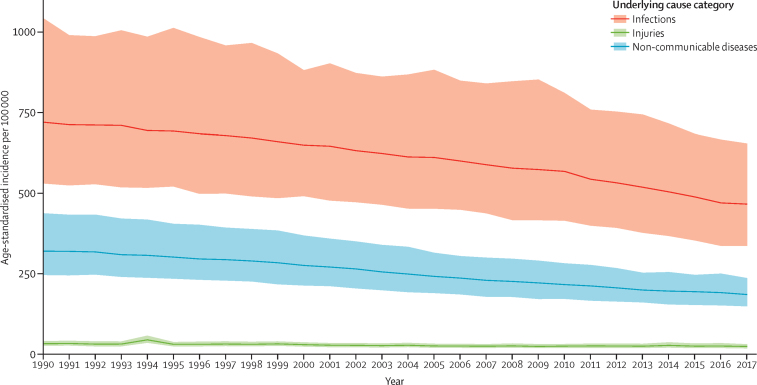
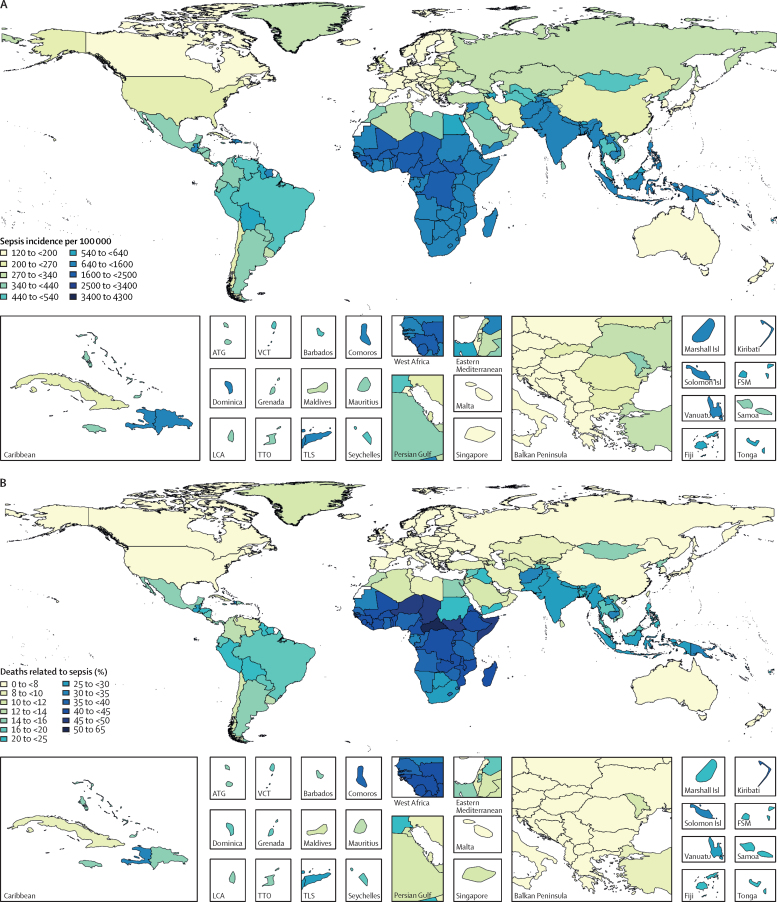
BACKGROUND: Sepsis is life-threatening organ dysfunction due to a dysregulated host response to infection. It is considered a major cause of health loss, but data for the global burden of sepsis are limited. As a syndrome caused by underlying infection, sepsis is not part of standard Global Burden of Diseases, Injuries, and Risk Factors Study (GBD) estimates. Accurate estimates are important to inform and monitor health policy interventions, allocation of resources, and clinical treatment initiatives. We estimated the global, regional, and national incidence of sepsis and mortality from this disorder using data from GBD 2017. METHODS: We used multiple cause-of-death data from 109 million individual death records to calculate mortality related to sepsis among each of the 282 underlying causes of death in GBD 2017. The percentage of sepsis-related deaths by underlying GBD cause in each location worldwide was modelled using mixed-effects linear regression. Sepsis-related mortality for each age group, sex, location, GBD cause, and year (1990-2017) was estimated by applying modelled cause-specific fractions to GBD 2017 cause-of-death estimates. We used data for 8·7 million individual hospital records to calculate in-hospital sepsis-associated case-fatality, stratified by underlying GBD cause. In-hospital sepsis-associated case-fatality was modelled for each location using linear regression, and sepsis incidence was estimated by applying modelled case-fatality to sepsis-related mortality estimates. FINDINGS: In 2017, an estimated 48·9 million (95% uncertainty interval [UI] 38·9-62·9) incident cases of sepsis were recorded worldwide and 11·0 million (10·1-12·0) sepsis-related deaths were reported, representing 19·7% (18·2-21·4) of all global deaths. Age-standardised sepsis incidence fell by 37·0% (95% UI 11·8-54·5) and mortality decreased by 52·8% (47·7-57·5) from 1990 to 2017. Sepsis incidence and mortality varied substantially across regions, with the highest burden in sub-Saharan Africa, Oceania, south Asia, east Asia, and southeast Asia. INTERPRETATION: Despite declining age-standardised incidence and mortality, sepsis remains a major cause of health loss worldwide and has an especially high health-related burden in sub-Saharan Africa. FUNDING: The Bill & Melinda Gates Foundation, the National Institutes of Health, the University of Pittsburgh, the British Columbia Children's Hospital Foundation, the Wellcome Trust, and the Fleming Fund.
Overview
The claims and statistics of this paper haven’t been checked yet.
Run the check — free, no account needed. It reads the open-access text and checks the sources it cites.
Integrity signals
Registry
Cites
Statistics
Figures
Verification
Claims the paper makes
The claims and statistics of this paper haven’t been checked yet.
Run the check — free, no account needed. It reads the open-access text and checks the sources it cites.
Claims other papers make about this one
Each is checked against this paper’s own text: does it say what the citing paper says it does?
The source backs part of the claim, not all of it — or backs it for a different population, condition or comparison.
In the citing paper
“A clear relationship can be seen – the poorest nations, all former European colonies, have the highest sepsis incidence”
From On race, human variation, and who gets and dies of sepsis (2022) · cites this paper as Rudd et al., 2020
Experimental — accuracy not yet measuredThe cited source says what the claim attributes to it.
In the citing paper
“This approach follows the methods validated by many studies on the epidemiology of sepsis26, 27, 28, 29 and was used by Rudd and colleagues.10”
From Global burden of bacterial antimicrobial resistance 1990–2021: a systematic analysis with forecasts to 2050 (2024) · cites this paper as [10]
The cited source says what the claim attributes to it.
In the citing paper
“Previously published global estimates reported a 53% decline in age-standardised sepsis-related deaths from 1990 to 2017.10”
From Global burden of bacterial antimicrobial resistance 1990–2021: a systematic analysis with forecasts to 2050 (2024) · cites this paper as [10]
In the citing paper
“8.2 million of the 11.1 million sepsis deaths worldwide that year occurred in low and middle income nations”
From On race, human variation, and who gets and dies of sepsis (2022) · cites this paper as Rudd et al., 2020
In the citing paper
“more people in middle and low income nations die of sepsis per incident than in wealthy nations”
From On race, human variation, and who gets and dies of sepsis (2022) · cites this paper as Rudd et al., 2020
In the citing paper
“The majority of the world's sepsis burden is borne by the least wealthiest nations, most former European colonies.”
From On race, human variation, and who gets and dies of sepsis (2022) · cites this paper as Rudd et al., 2020
In the citing paper
“Worldwide, the bulk of sepsis burden falls on marginalized peoples (Gracey & King, 2009; Rudd et al., 2020).”
From On race, human variation, and who gets and dies of sepsis (2022) · cites this paper as Rudd et al., 2020
Self-check
Percentages, sums and reported differences re-computed from the paper’s own numbers.
The self-check needs the paper’s full text.
Citations
Cites
James, S. L., Abate, D., Abate, K. H., Abay, S. M., Abbafati, C., Abbasi, N., Abbastabar, H., Abd-Allah, F., Abdela, J., Abdelalim, A., et al. (2018) · The Lancet · doi:10.1016/s0140-6736(18)32279-7 · Cited by 13,867
Bone, R. C., BALK, R. A., Cerra, F. B., Dellinger, R. P., Fein, A. M., Knaus, W. A., Schein, R. M. H., & Sibbald, W. J. (1992) · CHEST Journal · doi:10.1378/chest.101.6.1644 · Cited by 13,335
Vos, T., Abajobir, A. A., Abate, K. H., Abbafati, C., Abbas, K. M., Abd-Allah, F., Abdulkader, R. S., Abdulle, A. M., Abebo, T. A., Abera, S. F., et al. (2017) · The Lancet · doi:10.1016/s0140-6736(17)32154-2 · Cited by 13,220
Self-citationRoth, G. A., Abate, D., Abate, K. H., Abay, S. M., Abbafati, C., Abbasi, N., Abbastabar, H., Abd-Allah, F., Abdela, J., Abdelalim, A., et al. (2018) · The Lancet · doi:10.1016/s0140-6736(18)32203-7 · Cited by 8,600
Self-citationAngus, D. C., Linde-Zwirble, W. T., Lidicker, J., Clermont, G., Carcillo, J., & Pinsky, M. R. (2001) · Critical Care Medicine · doi:10.1097/00003246-200107000-00002 · Cited by 8,503
Self-citationSurviving Sepsis Campaign: International guidelines for management of sepsis and septic shock: 2016.
Rhodes, A., Evans, L. E., Alhazzani, W., Levy, M. M., Antonelli, M., Ferrer, R., Kumar, A., Sevransky, J. E., Sprung, C. L., Nunnally, M. E., et al. (2017) · Intensive Care Medicine · doi:10.1007/s00134-017-4683-6 · Cited by 6,621
Self-citationThe epidemiology of sepsis in the United States from 1979 through 2000
Martin, G. S., Mannino, D. M., Eaton, S., & Moss, M. (2003) · New England Journal of Medicine · doi:10.1056/nejmoa022139 · Cited by 5,841
Stanaway, J. D., Afshin, A., Gakidou, E., Lim, S. S., Abate, D., Abate, K. H., Abbafati, C., Abbasi, N., Abbastabar, H., Abd-Allah, F., et al. (2018) · The Lancet · doi:10.1016/s0140-6736(18)32225-6 · Cited by 4,943
Self-citationKyu, H. H., Abate, D., Abate, K. H., Abay, S. M., Abbafati, C., Abbasi, N., Abbastabar, H., Abd-Allah, F., Abdela, J., Abdelalim, A., et al. (2018) · The Lancet · doi:10.1016/s0140-6736(18)32335-3 · Cited by 4,192
Self-citationFleischmann, C., Scherag, A., Adhikari, N. K. J., Hartog, C. S., Tsaganos, T., Schlattmann, P., Angus, D. C., & Reinhart, K. (2016) · American Journal of Respiratory and Critical Care Medicine · doi:10.1164/rccm.201504-0781oc · Cited by 3,548
Self-citation
Research works printed but not linked: 1
- Singer, 2016, The third international consensus definitions for sepsis and septic shock (Sepsis-3), JAMA, 315, 801, 10.1001/jama.2016.0287 · DOI · Paper page
Cited by
Sorted by citations
Items 601–700 of 1,054
Nasman, P., Molkentin, J., Liles, W. C., Tian, R., Zingarelli, B., & Standage, S. (2026) · Scientific Reports · doi:10.1038/s41598-026-65153-9
Sripol, P., Suchartlikitwong, P., Punakabutra, N., Sophonphan, J., Li, N. M. K., & Anugulruengkitt, S. (2026) · Microbiology Spectrum · doi:10.1128/spectrum.01571-26
“The World Health Organization (WHO) reported in 2017 that nearly half of all global sepsis cases occurred among children, with an estimated 20 million cases and 2 million deaths worldwide, contributing to longer hospital stays and higher hospital costs (2, 3).”
Parzniewski, M., Ostruszka, N., Marusińska, M., Karpiński, M., Czyz, W., Kolawa, S., Markiewicz, W., Borowiec, A., Pilecka, J., & Wojciechowski, J. (2026) · International Journal of Innovative Technologies in Social Science · doi:10.31435/ijitss.3(51).2026.5768
“Most of the global mortality is concentrated in low-and middle-income settings (Rudd et al., 2020).”
InfluentialSabahat, U., Thomas, L., Anwar, E., & Agha, A. (2026) · Frontiers in Medicine · doi:10.3389/fmed.2026.1891671
Tian, L., Xu, S., Xie, X., Wang, M., & Huang, L. (2026) · Frontiers in Gastroenterology · doi:10.3389/fgstr.2026.1902608
Yen, C., Niu, K.-Y., & ZhangJian, S.-J. (2026) · Critical Care Medicine · doi:10.1097/ccm.0000000000007312
Wang, H., Zhao, Z.-R., Chen, T., & Yang, H.-H. (2026) · Scientific Reports · doi:10.1038/s41598-026-63839-8
Vo, T. V., Lu, D. T., & Thai, D. M. (2026) · Archives of Academic Emergency Medicine · doi:10.22037/aaem.v14i1.3029
“It was estimated that in 2017 there were approximately 48.9 million cases of sepsis and 11 million sepsis-related deaths, accounting for nearly one-fifth of all global deaths; of these, the Asia-Pacific and SoutheastAsiaregionsbearadisproportionatelyhighburden (3).”
InfluentialNing, S., Liu, Y., Cao, C., Song, A., Sun, R., Rong, Z., & Zhao, C. (2026) · Frontiers in Cellular and Infection Microbiology · doi:10.3389/fcimb.2026.1852916
Singla, D., Agrawal, S., Kumari, R., Naithani, M., Kandy, P. T., Singh, S., & Mangla, M. (2026) · Cureus · doi:10.7759/cureus.114064
“In a recent study, globally, 48.9 million cases of sepsis were identified, with 11 million fatalities [2].”
Influentialda Silva, C. M., da Silva, M. M. A., & Morales, M. M. (2026) · International Journal of Molecular Sciences · doi:10.3390/ijms27156990
“According to the latest Global Burden of Disease estimates, sepsis affects approximately 166 million individuals annually and is responsible for 21.4 million deaths, which is nearly 31.5% of all global mortality [6,7].”
InfluentialAzamfirei, L., Cehan, V. D., Cehan, A. R., Pui, M. C., & Lazăr, A. (2026) · Biomolecules · doi:10.3390/biom16081189
“The Global Burden of Disease analysis estimated 48.9 million sepsis cases and 11.0 million sepsis-related deaths worldwide in 2017 [4].”
InfluentialOrhan, S., Ay, M., Ay, M., & Gulsoy, K. (2026) · Life · doi:10.3390/life16081367
“Sepsis remains a major public health burden worldwide, with an estimated 48.9 million new sepsis cases and 11 million sepsis-related deaths annually [3].”
InfluentialXu, Y., Wei, J., Chen, M., Pang, J., Shi, W., Liu, S., Hua, T., & Yang, M. (2026) · International Immunopharmacology · doi:10.1016/j.intimp.2026.116841
Luo, J., Liang, Q., Gong, M., Liu, Y., D’Ursi, P., Zheng, Y., & Yang, X. (2026) · International Immunopharmacology · doi:10.1016/j.intimp.2026.116873
Semret, M., Ajibola, O., Barbé, B., Campbell, J. R., Ondoa, P., Affolabi, D., Ronat, J.-B., Corsini, R., Jacobs, J., Buhler, C., et al. (2026) · The Lancet Microbe · doi:10.1016/j.lanmic.2026.101444
Bao, J., Yang, X., Liu, X., Han, Z., Chen, S., Ling, Z., Xiang, H., Chang, K., Zhao, C., & Zhao, W. (2026) · Polymer · doi:10.1016/j.polymer.2026.130633
Peng, Y., Mo, L.-J., Zeng, G.-T., Xu, X.-W., Zhang, X.-L., Cheng, Y., Jiang, Y.-X., & Yue, J.-H. (2026) · Neuropharmacology · doi:10.1016/j.neuropharm.2026.111146
Zou, Y., Ren, H., Zheng, J., & Huang, Y.-J. (2026) · Journal of Inflammation Research · doi:10.2147/jir.s604761
Kılıç, İ., & Yildiz, A. (2026) · Journal of Clinical Medicine · doi:10.3390/jcm15166171
Wang, T.-T., Sun, Y., Zhang, M.-N., Cao, S.-C., & Wang, Y. (2026) · Journal of Inflammation Research · doi:10.2147/jir.s588858
Fuchigami, Y. (2026) · In Silico Research in Biomedicine · doi:10.1016/j.insi.2026.100547
Jayasingh, N. S., Memon, S. A., S, S. K., Thomas, G. G., Raiyani, P. R., Jha, H., & Kathi, S. B. (2026) · Cureus · doi:10.7759/cureus.114510
“…to improve survival, reduce complications, preserve function, and strengthen continuity of care. this interaction because early recognition, antimicrobial therapy, haemodynamic resuscitation, source control, organ support, and critical care coordination all contribute to clinical outcomes [3].”
Kemertaş, K., Dibekoğlu, C., Zeytinoğlu, M., Aygün, H., Arslan, A., Gül, S. Ş., & Erbaş, O. (2026) · Diagnostics · doi:10.3390/diagnostics16162560
McRea, A. R., Mussa, R. Y., Sunzula, E. M., Mlele, V. M., Oltman, S., Msemwa, C. L., Mathias, L., Maidana, J. M. B., Sun, K., Mfinanga, J., et al. (2026) · BMJ Paediatrics Open · doi:10.1136/bmjpo-2026-004856
Self-citationRahmoun, M. A., Elabbadi, A., Brun‐Buisson, C., & Watier, L. (2026) · International Journal of Infectious Diseases · doi:10.1016/j.ijid.2026.109060
Mishra, N., Gupta, A., Gupta, R., Kumar, M., & Shukla, A. (2026) · BMJ Open · doi:10.1136/bmjopen-2026-121640
Angelo, S., Sheikh, F., Neupane, M., Pant, S., Puccio, E. A., Schumacher, C., Lee, A., Jasti, S., Mair, C., Cooper, D., et al. (2026) · Critical Care Explorations · doi:10.1097/cce.0000000000001462
Self-citationMiyazato, A., Sakurai, R., Okamoto, K., Tanaka, H., & Kondo, Y. (2026) · BMJ Open · doi:10.1136/bmjopen-2025-115951
Li, R., Wang, H., Wang, J., Guo, S., & Lu, J. (2026) · Clinical and Experimental Medicine · doi:10.1007/s10238-026-02227-y
“Sepsis is a life-threatening organ dysfunction caused by dysregulated host responses to infection, with approximately 49 million sepsis cases and 11 million related deaths worldwide each year [ 2, 3, 6, 17, 18 ].”
The Role of Pyroptosis in Exacerbating Sepsis-Induced Myocardial Injury: Mechanisms and Implications
Qiu, Y., Huang, L., & Fan, Y. (2026) · Journal of Inflammation Research · doi:10.2147/jir.s613363
Nguyễn, T. V., Nguyen, T. S., Truong, M. N., Anh, D. D., Tran, H. T. T., Vũ, S. V., Nguyen, T., Nguyễn, T. D., Trịnh, S. V., Quách, H. X., et al. (2026) · International Journal of Infectious Diseases · doi:10.1016/j.ijid.2026.109074
Ali, B., Aizdee, Q. H., Munir, U. A., Kanjoo, M. A., & Mustafa, F. E. (2026) · Cureus · doi:10.7759/cureus.115139
Qiu, C.-Y., Wang, Y., Zhang, Z.-Y., & Wu, Z. (2026) · Letters in Drug Design & Discovery · doi:10.1016/j.lddd.2026.100544
Fan, L.-J., Hu, H.-B., Liang, Z.-L., Cai, Y.-J., Liu, Q.-F., Li, S.-Y., Xie, W., Zou, Z.-M., & Liu, Y.-N. (2026) · Journal of Inflammation Research · doi:10.2147/jir.s611803
Inflammatory gut–liver crosstalk: mechanisms and therapeutic targets
Murao, A., Aziz, M., & Wang, P. (2026) · Experimental & Molecular Medicine · doi:10.1038/s12276-026-01810-3
“It affects approximately 50 million patients worldwide annually, signi fi cantly impacting public health and health care costs; however, no speci fi c therapeutics exist beyond supportive care 11 .”
Scărlătescu, E. (2026) · Research and Practice in Thrombosis and Haemostasis · doi:10.1016/j.rpth.2026.106904
Sartika, S. D., Halim, R., Katu, S., & Ulfah, A. (2026) · IJID Regions · doi:10.1016/j.ijregi.2026.100987
“It accounts for an estimated 11 million sepsis-related deaths each year, with a burden that falls disproportionately on low-and middle-income countries [ 1 , 2 ].”
Aihaiti, D., & Abuduhaer, A. (2026) · Journal of Multidisciplinary Healthcare · doi:10.2147/jmdh.s632837
Lubis, A., Warli, S., Hamdi, T., Gunanti, & Rusda, M. (2026) · Journal of Asian Scientific Research · doi:10.55493/5003.v16i3.6145
“Globally, sepsis accounts for an estimated 48.9 million cases and about 11 million deaths worldwide each year, contributing to nearly one-fifth of all deaths worldwide [6].”
InfluentialKang, Y., Yun, S., Song, S., Kim, J. E., Kim, H. J., Cho, E., Ahn, S. Y., Kwon, Y., & Kang, M.-W. (2026) · Heart & lung : the journal of critical care · doi:10.1016/j.hrtlng.2026.102904
Ma, Q., Yang, H.-R., Wang, J.-Z., Zhang, Y.-L., Zhang, X., & Zhou, W.-J. (2026) · Medicine · doi:10.1097/md.0000000000050020
“[1] Traditionally, septic patients have been predominantly managed in intensive care units.”
Anion gap trajectory patterns and prognosis in sepsis patients: A multicenter retrospective study
Xiao, D.-H., Wang, Q.-Q., Gao, Y., Wu, W., Liu, R., Yao, L., Li, M., & Li, P. (2026) · Medicine · doi:10.1097/md.0000000000049961
“[1] Current prognostic tools for sepsis are limited by several challenges: clinical scoring systems rely on static parameters, failing to dynamically reflect disease progression [2] ; biomarkers lack specificity and are susceptible to interference from comorbid conditions [3,4] ; imaging techniques…”
Zhou, T., Cheng, W.-Y., Jiang, G.-H., Zhang, X.-J., Liu, L., & Wu, J. (2026) · Frontiers in Medicine · doi:10.3389/fmed.2026.1899792
Wang, Z., Yu, H., Yang, L., & Cui, Y. (2026) · BMC Neurology · doi:10.1186/s12883-026-05203-x
“Sepsis represents one of the most significant challenges in contemporary critical care medicine, affecting approximately 49 million individuals globally each year and accounting for approximately 20% of all worldwide mortality [1].”
Yang, X.-M., He, M.-Y., Liu, Z.-D., Li, Q., Huang, H.-C., & Chen, L.-Y. (2026) · Frontiers in Nutrition · doi:10.3389/fnut.2026.1878332
“With global population aging, both the incidence and mortality of sepsis among older adults continue to rise, posing a substantial public health burden (2).”
Multiomics Profiling Identifies Blood‐Based Diagnostic Markers for Sepsis
Zhang, X., Guo, X.-Q., Jiang, S., Cao, Y., Wang, S.-Y., Xie, W., Tian, J., Zhou, Y.-Z., Wang, M., Chang, H., et al. (2026) · Journal of Cellular Physiology · doi:10.1002/jcp.70213
“Statistically, an estimated 48.9 million incident cases of sepsis occurred globally in 2017, accounting for approximately 20% of all global deaths(Rudd et al. 2020).”
InfluentialShengmai Injection as adjunctive therapy in sepsis and septic shock: a retrospective cohort study
Li, Y., Chen, X., Li, Q.-M., Wu, L., Yu, L., Peng, W.-H., Luo, Y.-S., Huang, P.-S., Ye, Y., Chen, B.-L., et al. (2026) · Frontiers in Cellular and Infection Microbiology · doi:10.3389/fcimb.2026.1870034
“The epidemiological data further demonstrated that sepsis causes 11 million deaths annually, accounting for 19.7% of global mortalities (Rudd et al., 2020).”
InfluentialYi, L., Yu, T., & Zheng, X.-L. (2026) · PLoS ONE · doi:10.1371/journal.pone.0353124
“According to a 2017 global burden of disease study, sepsis accounted for approximately 48.9 million incident cases and 11.0 million deaths worldwide, representing nearly 20% of all global mortality [4].”
InfluentialSKAP1, FYN and CD3E Are Potential Biomarkers and Therapeutic Targets of Sepsis
Shen, X.-K., Guo, J., Yang, K.-L., & Jin, Y.-H. (2026) · Immunological Investigations · doi:10.1080/08820139.2026.2701227
“According to statistics in 2017, a total of 48.9 million cases of sepsis were reported globally, with a mortality rate of 22.5% (Gavelli et al., 2021; Rudd et al., 2020).”
Influential钱幼娟, Lin, C., Lin, H., Leng, Y., Xie, K., Shan, Y., & Xu, L. (2026) · Frontiers in Medicine · doi:10.3389/fmed.2026.1891245
Borges-Sa, M., Martín-Martínez, E., Aranda, M., Socias, A., Tejada, S., del Castillo, A., Garau, M., de Amezaga, L. P., Mena, J., & Giglio, A. (2026) · Antibiotics · doi:10.3390/antibiotics15080737
“Even before this resurgence, sepsis was implicated in approximately one in five deaths worldwide [3].”
Ge, H.-F., Chen, F., Peng, L.-L., Ma, H.-Y., Li, S.-X., Hu, J.-T., & Tang, Z.-H. (2026) · Frontiers in Cellular and Infection Microbiology · doi:10.3389/fcimb.2026.1839805
“Recent Global Burden of Disease estimates indicate that sepsis accounted for tens of millions of incident cases and approximately 11 million deaths worldwide in 2017, highlighting its substantial contribution to critical illness and mortality (Rudd et al., 2020).”
Huang, Q., Zhou, Y.-L., Li, J.-M., Song, C., Du, L.-Z., Yu, C., & Xu, Y.-P. (2026) · Frontiers in Public Health · doi:10.3389/fpubh.2026.1889106
Chairunnisa, M. A., & Pusparini, P. (2026) · International Journal of Medical and Biomedical Studies · doi:10.32553/j77dcd71
“Sepsis patients are defined based on the diagnosis recorded in the medical records according to the criteria sepsis–3, that is, the presence of life–threatening organ dysfunction with an increased sequential organ failure assessment (SOFA) ≥2 points.”
Toğuç, H., Altuntaş, A. M., & Çavdar, M. (2026) · Frontiers in Nutrition · doi:10.3389/fnut.2026.1878377
Chen, L., & Yang, Q. (2026) · Pakistan Journal of Medical Sciences · doi:10.12669/pjms.42.8.19637
Yang, S., Ren, Z.-H., Li, Y.-R., Zhao, Z.-H., Sun, C.-S., Liu, L., Jin, L., Wang, L., & Hou, Z.-Y. (2026) · Frontiers in Medicine · doi:10.3389/fmed.2026.1880921
Deng, Y., Wang, C., Jin, Y.-T., Hu, Y.-C., & Xu, Y. (2026) · International Immunopharmacology · doi:10.1016/j.intimp.2026.117200
Getie, M., Tafere, W., Tsega, A., Gebreyesus, T., Belay, G., Getachew, H., Gashaw, Y., Tadese, A., Birku, T., Birhan, T., et al. (2026) · PLoS ONE · doi:10.1371/journal.pone.0354710
Sheikh, S. W., Ali, A., Ahsan, A., Shang, F., Xue, T., & Gollahon, L. (2026) · Pathogens · doi:10.3390/pathogens15080795
Pracher, L., Jorda, A., Eberl, S., Weber, M., & Zeitlinger, M. A. (2026) · Medical Microbiology and Immunology · doi:10.1007/s00430-026-00883-1
Gu, C., Feng, Y.-S., He, Q.-S., Zhang, L., & Liu, J. (2026) · Cancer Medicine · doi:10.1002/cam4.72138
Nawawi, N. M., Kamaluddin, I. D. K., Nurdin, A. Z., Nur, M. J., & Kadir, A. (2026) · Journal La Medihealtico · doi:10.37899/journallamedihealtico.v7i3.3367
Aisyah, N. D., Nugroho, A. K., Andayani, T. M., Effendie, A. R., Setyawati, P. F., Saubaki, I., Mukminin, U. S., Devi, L. S., & Letelay, Y. R. (2026) · F1000Research · doi:10.12688/f1000research.185962.1
TREM-1 in Sepsis and Septic Shock: From Pathophysiology to Precision Immunomodulation
Evrard, B., van der Poll, T., Chousterman, B. G., & François, B. (2026) · Seminars in Respiratory and Critical Care Medicine · doi:10.1055/a-2984-4651
Khilji, M. M. A., Qavi, A., Nawab, S., Abbasi, S. R., & Ali, Z. (2026) · First Workshop on Insights from Negative Results in NLP · doi:10.71000/bzgjde47
Coordinated response of vascular and glial cells in a pig model of sepsis
Olney, K. C., Barnett, J. H., Tallant, L., Gibson, K. A., Todd, K. T., de Ávila, C., Hota, P., Pandian, A. S., Cay-Durgun, P., Serhan, M., et al. (2026) · Translational Psychiatry · doi:10.1038/s41398-026-04301-1
“Sepsis affects an estimated 49 million people globally each year and is a leading cause of critical illness, hospitalization, and death [7, 8].”
Zheng, Z., Tian, R., Chen, Y., Li, Y., Pan, T., & Pan, T. (2026) · Journal of Translational Medicine · doi:10.1186/s12967-026-08626-9
“Global epidemiological data estimated approximately 48.9 million incident cases of sepsis and 11 million sepsis-related deaths in 2017, accounting for nearly one-fifth of all deaths worldwide [3].”
InfluentialIchon, J. M. I., Vallverdú-Ferrer, M., Jensen, E. W., Avendaño, C. F., Nnagbo, J., Yébenes-Serra, L., Struys, M., & Nieuwenhuijs-Moeke, G. (2026) · Journal of clinical monitoring and computing · doi:10.1007/s10877-026-01472-6
“Despite their clinical relevance, current monitoring approaches rely largely on intermittent vital signs and laboratory biomarkers, which often lack sensitivity for early or evolving inflammatory states [ 5].”
Meng, Q., Yu, L.-L., Jing, X., Li, M. M., Huang, Q.-R., Xu, T. L., Bian, Y., & Li, S. (2026) · Current Medical Science · doi:10.1007/s11596-026-00225-5
“It is a major cause of Qi Meng and Ling-ling Yu have contributed equally to this work. mortality, and the latest Global Burden of Disease Study reported 11.0 million sepsis-related deaths in 2017, representing 19.7% of all global deaths [2].”
InfluentialSong, W., Yin, H.-B., Liu, D., Yan, D.-E., Zeng, H.-L., & Xie, E.-L. (2026) · BMC Infectious Diseases · doi:10.1186/s12879-026-14063-2
“The following exclusion criteria were used: [1] without sepsis [2], age 18 years [3], length of ICU stay 1 day [4], missing data of albumin, total cholesterol, white blood cell count or lymphocyte percentage (required for calculating total lymphocyte count) within the first 24 h of ICU…”
InfluentialSallar, S. A., Quao, N. S. A., Owoo, C., Khorassani, C., & Becker, T. K. (2026) · F1000Research · doi:10.12688/f1000research.186684.1
Dai, X., Li, S., Ge, H., Zhang, C., Hu, C.-L., Xiong, H.-P., & Wei, H.-Y. (2026) · Frontiers in Cardiovascular Medicine · doi:10.3389/fcvm.2026.1835581
“In 2017 alone, an estimated 48.9 million incident cases of sepsis were recorded worldwide, resulting in approximately 11 million sepsis-related deaths, accounting for nearly 20% of all global deaths (2).”
InfluentialHuang, Y.-Q., Fei, S.-N., Huang, M., Huang, X.-Z., & Lu, F. (2026) · Frontiers in Genetics · doi:10.3389/fgene.2026.1837345
“Although AKI and sepsis are distinct pathological entities, they share profound commonalities at the molecular level, particularly regarding the dysregulation of the host immune response (Rudd et al., 2020).”
Aeromonas hydrophila sepsis after ERCP and laparoscopic cholecystectomy: a case report
Liu, J., Yao, M., Liang, C., Dai, X.-L., Deng, C., An, Y., Yu, M., Peng, Z., Zhang, X., Wang, Y.-Y., et al. (2026) · Frontiers in Medicine · doi:10.3389/fmed.2026.1883706
“Sepsis refers to life-threatening organ dysfunction induced by dysregulated host responses to infection, and early targeted therapy improves patient prognosis (5).”
Five things the intensivist cannot forget in the management of septic shock
Pontes, C. D. N., Estenssoro, E., & Machado, F. R. (2026) · Critical Care Science · doi:10.62675/2965-2774.20260360
Self-citationDing, Q., Li, J.-H., Hu, Z.-Y., Jiang, S.-Y., Yu, X.-Y., Zhao, Q., Wen, K., Gu, H.-C., Wang, Y.-K., Xiao, Y., et al. (2026) · International Immunopharmacology · doi:10.1016/j.intimp.2026.117157
Wu, D., Ni, W.-J., Zhang, X.-Y., & Liu, X. (2026) · Frontiers in Medicine · doi:10.3389/fmed.2026.1860367
Jahagirdar, A., Nagarajaiah, R. B., & Prerana, U. (2026) · International Journal of Drug Delivery Technology · doi:10.25258/ijddt.16.67s.41
“Contemporary estimates suggest that sepsis contributes to millions of deaths every year, with a disproportionate share occurring in low-and middle-income countries [3,4].”
Hui, Z., Shen, N., Zhang, H., Yu, M., Li, Z., Ping, J., & Fu, Q. (2026) · Frontiers in Cell and Developmental Biology · doi:10.3389/fcell.2026.1880883
“Approximately 48.9 million sepsis cases occur annually worldwide, resulting in 11 million deaths (Rudd et al., 2020).”
InfluentialZhang, L.-J., Sun, W., Wang, S., Zhao, B., Zhong, Y., Wang, Y.-Y., Yang, L., & Wang, Y.-J. (2026) · BMC Infectious Diseases · doi:10.1186/s12879-026-14047-2
“Annu-ally, there are an estimated 48.9 million sepsis cases and 11 million related deaths worldwide [2].”
InfluentialTian, R., Wu, W.-J., Wang, X., Xue, Z., & Li, J. (2026) · International Immunopharmacology · doi:10.1016/j.intimp.2026.117163
Li, X.-L., Yang, Y.-D., Zhang, X.-Q., Lu, T.-Y., Liu, L.-L., Kong, Z.-J., & Cui, T. (2026) · Journal of Cardiothoracic Surgery · doi:10.1186/s13019-026-04539-2
“Sepsis is a major contributor to global mortality and morbidity, accounting for a substantial proportion of deaths worldwide, whereas cardiac arrhythmias are common complications in critically ill patients and are associated with adverse short-term outcomes [1–4].”
bin Mansoor, U., Rashid, M., & Naqvi, R. (2026) · arXiv.org · doi:10.48550/arxiv.2607.16681
“Sepsis is a life-threatening organ dysfunction caused by a dysregulated host response to infection, affecting approximately 49 million people annually worldwide with mortality rates of 20–50% [1].”
He, A., Yang, S., Leiming, X. U., You, C., Li, S., Sun, W., Yu, J., & Zheng, R. (2026) · BMC Infectious Diseases · doi:10.1186/s12879-026-14034-7
“Sepsis is a common syndrome in the Intensive Care Unit (ICU), primarily caused by an imbalance between anti-inflammatory and pro-inflammatory responses in the host following infection, thereby leading to multiple organ dysfunction [1], and it affects millions of people worldwide annually.”
InfluentialMartínez, M. L., Torrents, E., Camprubí–Rimblas, M., Bringué, J., Ceccato, A., Ferrer, R., Artigas, A., & Guillamat‐Prats, R. (2026) · Intensive Care Medicine Experimental · doi:10.1186/s40635-026-00941-1
Birkić, N., Ehrman, R. R., Cekinović-Grbeša, Đ., Minić, Ž., & Reynolds, C. A. (2026) · Intensive Care Medicine Experimental · doi:10.1186/s40635-026-00942-0
“Although the incidence of sepsis decreased between 1990 and 2017, it continues to impose a substantial healthcare and economic burden, particularly in low-income countries [71].”
Caspases and programmed cell death in sepsis: mechanisms, pathophysiology, and therapeutic targets
He, H., 谢秀丽, Zhou, L., Lin, Y., Liu, A., Guo, P., Zhu, Y., Tang, Y., Han, Z., Wang, Y., et al. (2026) · Frontiers in Immunology · doi:10.3389/fimmu.2026.1879033
“%) in 2017 (3).”
Ma, B., Lin, G., Li, J., Xie, L., Yang, J.-L., & Tong, H.-S. (2026) · PLoS ONE · doi:10.1371/journal.pone.0353698
“According to global data in 2017, the annual incidence of sepsis exceeded 48 million cases, with the related mortality accounting for nearly 20% of all global deaths [2].”
Jang, H., Yoo, W., Rhee, H., Ko, R., Suh, G.-Y., Lim, C.-M., & Lee, K. (2026) · Journal of Thoracic Disease · doi:10.21037/jtd-2026-1406
“While early recognition and resuscitation bundles have improved acute survival (1,2) and more patients are surviving the initial hyperacute phase of sepsis, a significant proportion of patients subsequently develop persistent organ dysfunction requiring prolonged mechanical ventilation (MV) (3,4).”
Cheng, Z., Li, J., & Liu, F. (2026) · Frontiers in Pharmacology · doi:10.3389/fphar.2026.1864683
“According to estimates from the Global Burden of Disease (GBD) study, approximately 48.9 million cases of sepsis and 11.0 million sepsis-related deaths were recorded worldwide in 2017, accounting for 19.7% of all global deaths (Rudd et al., 2020).”
InfluentialEvidence of immune-metabolic imbalance prior to sepsis: a prospective study in the UK Biobank
Liu, X., Zhou, D., Liao, D., & Chen, Q. (2026) · Frontiers in Nutrition · doi:10.3389/fnut.2026.1836381
Li, Z., Wang, J., Hong, Z., Li, M., Liu, T., Wang, Y., & Men, L.-C. (2026) · Frontiers in Cell and Developmental Biology · doi:10.3389/fcell.2026.1889833
Yuan, Y., Lei, S., Duan, A., & Li, J. (2026) · Renal Failure · doi:10.1080/0886022x.2026.2698155 · Cited by 1
“Sepsis is a life-threatening syndrome in which infection triggers a dysregulated host response, resulting in acute organ dysfunction and substantial morbidity and mortality [1,2].”
Methodological Assessment of PDMS Passive Sampling for Skin VOC Collection Across Body Sites
Kobara, S., Huang, M., Ilhamsyah, R., Struk, D., Dimandja, J., Hesketh, P. J., Arrubla, D., Fensore, C., Polito, C., Kamaleswaran, R., et al. (2026) · bioRxiv · doi:10.3390/metabo16100728
“Critical illnesses such as sepsis and acute respiratory distress syndrome (ARDS) remain leading causes of global morbidity and mortality [10–12], with clinical downstream outcomes strongly influenced by the timeliness of detection and intervention [13].”
Shehroz, R. (2026) · BMC Pulmonary Medicine · doi:10.1186/s12890-026-04470-1
“Sepsis remains a major cause of preventable mortality worldwide and a major driver of health care utilization, with substantial variation by age, sex, race, and region [1].”
Wang, W., Xia, R., ZHANG, C., Cheng, M., Zheng, Y., Ji, H., Xu, F., Lv, S., Xu, N. W., Mao, Y., et al. (2026) · Inflammation · doi:10.1007/s10753-026-02552-0
“Despite advances in critical care and therapeutic strategies that have reduced sepsis-related mortality, case-fatality rates remain unacceptably high, with reported mortality ranging from 20% to 40% [2].”
Li, Y., Liao, W., Liang, Q., & Li, Y. (2026) · Frontiers in Cardiovascular Medicine · doi:10.3389/fcvm.2026.1881939
“The mortality rate of sepsis-related myocardial dysfunction remains as high as 70% – 90% (11, 12).”
The mechanisms by which free heme exacerbates sepsis and the potential therapeutic targets
Sun, Z., Cheng, J., Zhu, Y., Jiang, L., & Li, M. (2026) · Frontiers in Immunology · doi:10.3389/fimmu.2026.1743737
Metadata
- Authors
- Rudd, K. E., Johnson, S. C., Agesa, K. M., Shackelford, K. A., Tsoi, D., Kievlan, D. R., Colombara, D. V., Ikuta, K. S., Kissoon, N., Finfer, S., Fleischmann-Struzek, C., Machado, F. R., Reinhart, K. K., Rowan, K., Seymour, C. W., Watson, R. S., West, T. E., Marinho, F., Hay, S. I., Lozano, R., Lopez, A. D., Angus, D. C., Murray, C. J. L., & Naghavi, M.
- Affiliations
- University of Pittsburgh (US)
- University of Washington (US)
- University of British Columbia (CA)
- UNSW Sydney (AU)
- Jena University Hospital (DE)
- Seattle Children's Hospital (US)
- Universidade de São Paulo (BR)
- Corresponding author
- Naghavi, Mohsen
- ORCID
- Venue
- The Lancet
- Publisher
- Elsevier BV
- Published
- 2020-01
- Volume
- 395
- Issue
- 10219
- Pages
- 200-211
- ISSN
- 0099-5355 (ISSN-L)
- 0140-6736
- PMC
- PMC6970225
- OpenAlex
- W2998853022
- Cited by
- 7,971
- References
- 42
- Citations by year
- 2026: 1540 · 2025: 1722 · 2024: 1545 · 2023: 1195 · 2022: 899 · 2021: 735 · 2020: 329
- FWCI
- 567.33
- Type
- journal article
- Language
- en
- Open access
- hybrid
- doi.org
- Licence
- Locations
- The Lancet (publishedVersion, cc-by)
- PubMed Central (publishedVersion, cc-by)
- PubMed (publishedVersion)
- LA Referencia (Red Federada de Repositorios Institucionales de Publicaciones Científicas) (submittedVersion, other-oa)
- Minerva Access (University of Melbourne) (submittedVersion, cc-by)
- Funders
- Bill & Melinda Gates Foundation
- National Institutes of Health (T32HL007287, T32HL007820, R35GM119519)
- National Health and Medical Research Council (no 1117230)
- Topics
- Health Sciences › Medicine › Critical Care and Intensive Care Medicine › Sepsis Diagnosis and Treatment
- Health Sciences › Medicine › Public Health, Environmental and Occupational Health › Global Health and Epidemiology
- Health Sciences › Medicine › Pediatrics, Perinatology and Child Health › Neonatal and Maternal Infections
- Keywords
- sepsis, sepsis incidence, sepsis mortality, global burden of disease, case fatality, underlying cause of death, age-standardized incidence rate, temporal trends, regional variation, sub-Saharan Africa, South Asia, hospital records, cause-specific mortality, health policy interventions, resource allocation, health loss, nosocomial infections, infection-related mortality, sepsis surveillance
- MeSH terms
- Global Burden of Disease, Adolescent, Adult, Aged, Aged, 80 and over, Cause of Death, Child, Child, Preschool, Female, Humans, Infant, Infant, Newborn, Male, Middle Aged, Socioeconomic Factors, Incidence, Age Distribution, Sex Distribution, Sepsis, Young Adult
About these checks
Registry, retraction, Cites and statistics results are computed, not judged, with one exception: a printed reference that no index lists is read once by a model before it counts as a citation error. Claims are extracted by a model and kept only when their quote appears verbatim in the text; each cited source is then checked, with a model’s help, for whether it says what the claim relies on. Those verdicts can be wrong — read the claim’s quote and the cited source before relying on one.
Statistics and arithmetic are recomputed, not judged.
Confidence bands are shown only for fields calibrated on our annotated test set. None is calibrated yet, so no band is shown.
What counts as a claim ›How we measure confidence ›How we check this ›
Are you an author, or do you see a problem with this page? Request a review
