

The DOI matches its Crossref record; 39 of the 42 references it cites were found in a registry or an index.
Global, regional, and national sepsis incidence and mortality, 1990–2017: analysis for the Global Burden of Disease Study
Open accessAbstract
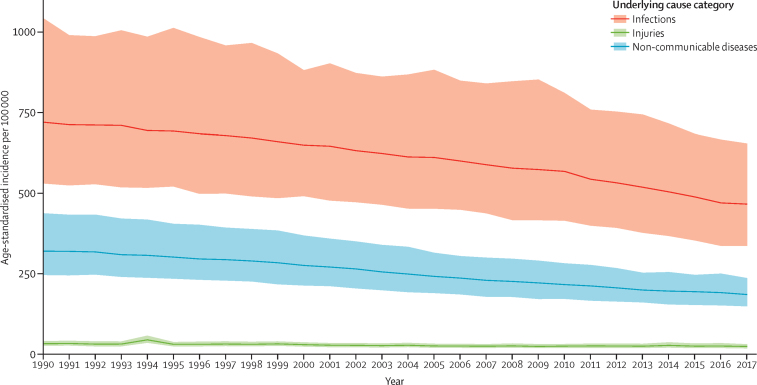
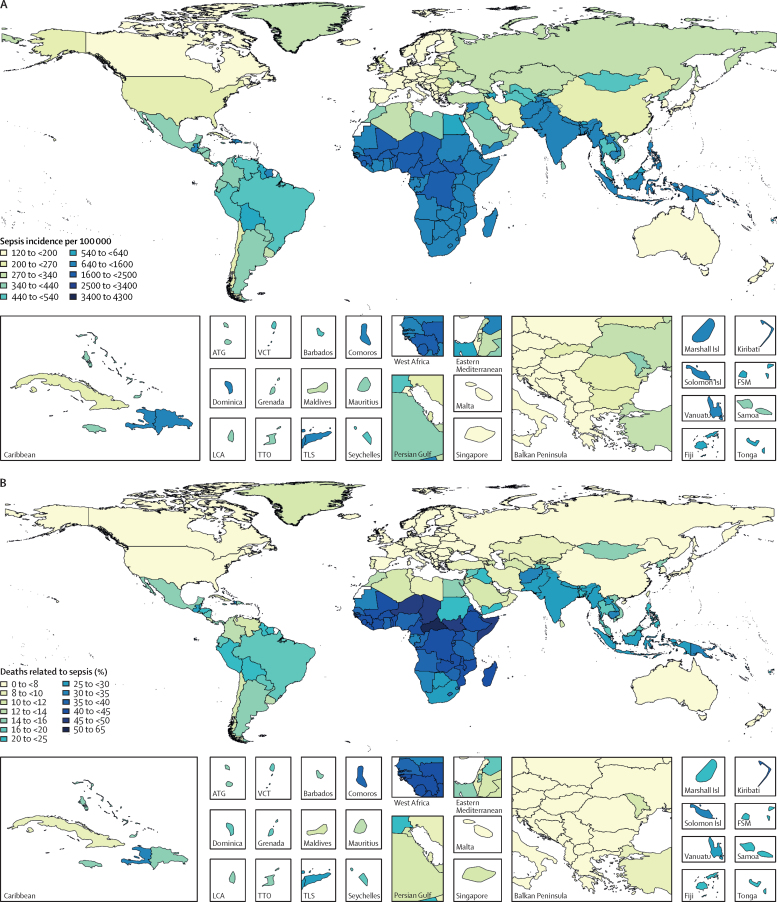
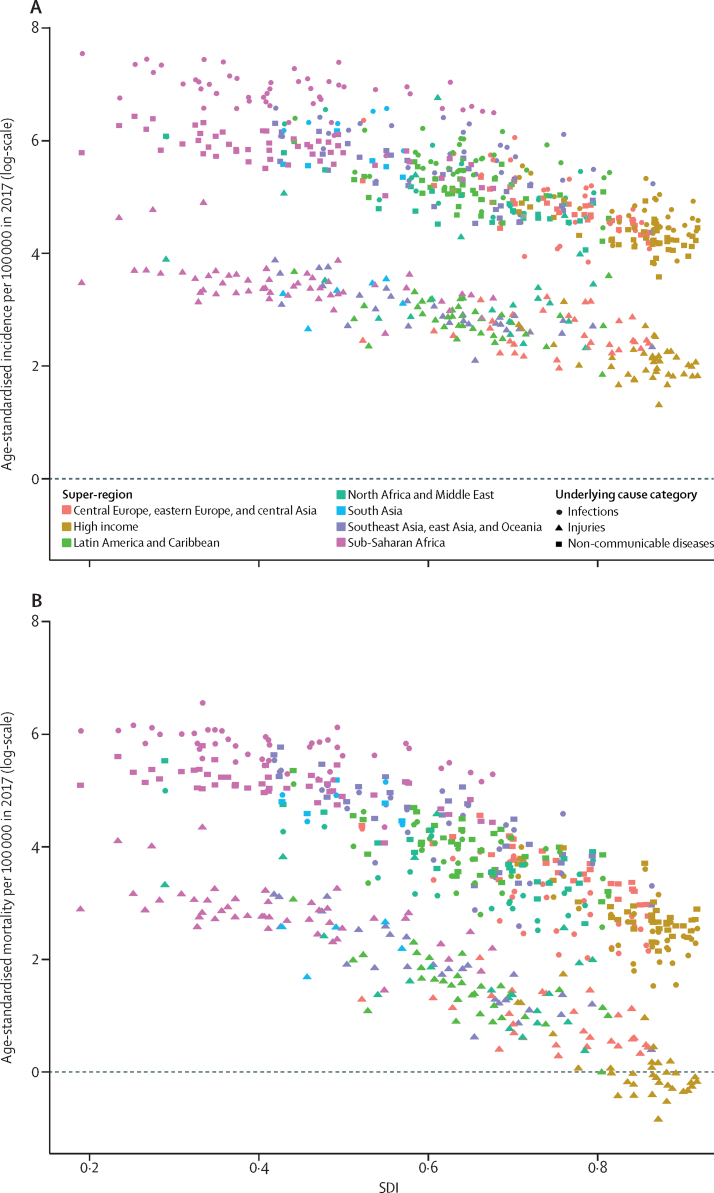
BACKGROUND: Sepsis is life-threatening organ dysfunction due to a dysregulated host response to infection. It is considered a major cause of health loss, but data for the global burden of sepsis are limited. As a syndrome caused by underlying infection, sepsis is not part of standard Global Burden of Diseases, Injuries, and Risk Factors Study (GBD) estimates. Accurate estimates are important to inform and monitor health policy interventions, allocation of resources, and clinical treatment initiatives. We estimated the global, regional, and national incidence of sepsis and mortality from this disorder using data from GBD 2017. METHODS: We used multiple cause-of-death data from 109 million individual death records to calculate mortality related to sepsis among each of the 282 underlying causes of death in GBD 2017. The percentage of sepsis-related deaths by underlying GBD cause in each location worldwide was modelled using mixed-effects linear regression. Sepsis-related mortality for each age group, sex, location, GBD cause, and year (1990-2017) was estimated by applying modelled cause-specific fractions to GBD 2017 cause-of-death estimates. We used data for 8·7 million individual hospital records to calculate in-hospital sepsis-associated case-fatality, stratified by underlying GBD cause. In-hospital sepsis-associated case-fatality was modelled for each location using linear regression, and sepsis incidence was estimated by applying modelled case-fatality to sepsis-related mortality estimates. FINDINGS: In 2017, an estimated 48·9 million (95% uncertainty interval [UI] 38·9-62·9) incident cases of sepsis were recorded worldwide and 11·0 million (10·1-12·0) sepsis-related deaths were reported, representing 19·7% (18·2-21·4) of all global deaths. Age-standardised sepsis incidence fell by 37·0% (95% UI 11·8-54·5) and mortality decreased by 52·8% (47·7-57·5) from 1990 to 2017. Sepsis incidence and mortality varied substantially across regions, with the highest burden in sub-Saharan Africa, Oceania, south Asia, east Asia, and southeast Asia. INTERPRETATION: Despite declining age-standardised incidence and mortality, sepsis remains a major cause of health loss worldwide and has an especially high health-related burden in sub-Saharan Africa. FUNDING: The Bill & Melinda Gates Foundation, the National Institutes of Health, the University of Pittsburgh, the British Columbia Children's Hospital Foundation, the Wellcome Trust, and the Fleming Fund.
Overview
The claims and statistics of this paper haven’t been checked yet.
Run the check — free, no account needed. It reads the open-access text and checks the sources it cites.
Integrity signals
Registry
Cites
Statistics
Figures
Verification
Claims the paper makes
The claims and statistics of this paper haven’t been checked yet.
Run the check — free, no account needed. It reads the open-access text and checks the sources it cites.
Claims other papers make about this one
Each is checked against this paper’s own text: does it say what the citing paper says it does?
The source backs part of the claim, not all of it — or backs it for a different population, condition or comparison.
In the citing paper
“A clear relationship can be seen – the poorest nations, all former European colonies, have the highest sepsis incidence”
From On race, human variation, and who gets and dies of sepsis (2022) · cites this paper as Rudd et al., 2020
Experimental — accuracy not yet measuredThe source backs part of the claim, not all of it — or backs it for a different population, condition or comparison.
In the citing paper
“8.2 million of the 11.1 million sepsis deaths worldwide that year occurred in low and middle income nations”
From On race, human variation, and who gets and dies of sepsis (2022) · cites this paper as Rudd et al., 2020
Experimental — accuracy not yet measuredThe cited source says what the claim attributes to it.
In the citing paper
“This approach follows the methods validated by many studies on the epidemiology of sepsis26, 27, 28, 29 and was used by Rudd and colleagues.10”
From Global burden of bacterial antimicrobial resistance 1990–2021: a systematic analysis with forecasts to 2050 (2024) · cites this paper as [10]
The cited source says what the claim attributes to it.
In the citing paper
“Previously published global estimates reported a 53% decline in age-standardised sepsis-related deaths from 1990 to 2017.10”
From Global burden of bacterial antimicrobial resistance 1990–2021: a systematic analysis with forecasts to 2050 (2024) · cites this paper as [10]
In the citing paper
“more people in middle and low income nations die of sepsis per incident than in wealthy nations”
From On race, human variation, and who gets and dies of sepsis (2022) · cites this paper as Rudd et al., 2020
In the citing paper
“The majority of the world's sepsis burden is borne by the least wealthiest nations, most former European colonies.”
From On race, human variation, and who gets and dies of sepsis (2022) · cites this paper as Rudd et al., 2020
In the citing paper
“Worldwide, the bulk of sepsis burden falls on marginalized peoples (Gracey & King, 2009; Rudd et al., 2020).”
From On race, human variation, and who gets and dies of sepsis (2022) · cites this paper as Rudd et al., 2020
Self-check
Percentages, sums and reported differences re-computed from the paper’s own numbers.
The self-check needs the paper’s full text.
Citations
Cites
James, S. L., Abate, D., Abate, K. H., Abay, S. M., Abbafati, C., Abbasi, N., Abbastabar, H., Abd-Allah, F., Abdela, J., Abdelalim, A., et al. (2018) · The Lancet · doi:10.1016/s0140-6736(18)32279-7 · Cited by 13,867
Bone, R. C., BALK, R. A., Cerra, F. B., Dellinger, R. P., Fein, A. M., Knaus, W. A., Schein, R. M. H., & Sibbald, W. J. (1992) · CHEST Journal · doi:10.1378/chest.101.6.1644 · Cited by 13,335
Vos, T., Abajobir, A. A., Abate, K. H., Abbafati, C., Abbas, K. M., Abd-Allah, F., Abdulkader, R. S., Abdulle, A. M., Abebo, T. A., Abera, S. F., et al. (2017) · The Lancet · doi:10.1016/s0140-6736(17)32154-2 · Cited by 13,220
Self-citationRoth, G. A., Abate, D., Abate, K. H., Abay, S. M., Abbafati, C., Abbasi, N., Abbastabar, H., Abd-Allah, F., Abdela, J., Abdelalim, A., et al. (2018) · The Lancet · doi:10.1016/s0140-6736(18)32203-7 · Cited by 8,600
Self-citationAngus, D. C., Linde-Zwirble, W. T., Lidicker, J., Clermont, G., Carcillo, J., & Pinsky, M. R. (2001) · Critical Care Medicine · doi:10.1097/00003246-200107000-00002 · Cited by 8,503
Self-citationSurviving Sepsis Campaign: International guidelines for management of sepsis and septic shock: 2016.
Rhodes, A., Evans, L. E., Alhazzani, W., Levy, M. M., Antonelli, M., Ferrer, R., Kumar, A., Sevransky, J. E., Sprung, C. L., Nunnally, M. E., et al. (2017) · Intensive Care Medicine · doi:10.1007/s00134-017-4683-6 · Cited by 6,621
Self-citationThe epidemiology of sepsis in the United States from 1979 through 2000
Martin, G. S., Mannino, D. M., Eaton, S., & Moss, M. (2003) · New England Journal of Medicine · doi:10.1056/nejmoa022139 · Cited by 5,841
Stanaway, J. D., Afshin, A., Gakidou, E., Lim, S. S., Abate, D., Abate, K. H., Abbafati, C., Abbasi, N., Abbastabar, H., Abd-Allah, F., et al. (2018) · The Lancet · doi:10.1016/s0140-6736(18)32225-6 · Cited by 4,943
Self-citationKyu, H. H., Abate, D., Abate, K. H., Abay, S. M., Abbafati, C., Abbasi, N., Abbastabar, H., Abd-Allah, F., Abdela, J., Abdelalim, A., et al. (2018) · The Lancet · doi:10.1016/s0140-6736(18)32335-3 · Cited by 4,192
Self-citationFleischmann, C., Scherag, A., Adhikari, N. K. J., Hartog, C. S., Tsaganos, T., Schlattmann, P., Angus, D. C., & Reinhart, K. (2016) · American Journal of Respiratory and Critical Care Medicine · doi:10.1164/rccm.201504-0781oc · Cited by 3,548
Self-citation
Research works printed but not linked: 1
- Singer, 2016, The third international consensus definitions for sepsis and septic shock (Sepsis-3), JAMA, 315, 801, 10.1001/jama.2016.0287 · DOI · Paper page
Cited by
Sorted by citations
Items 501–600 of 1,054
Liu, V. B., Sue, L. Y., Byrd, T. F., & Wu, Y. N. (2026) · Intelligence-Based Medicine · doi:10.1016/j.ibmed.2026.100432
Geroteo, J. S., Dauger, S., & Levy, M. (2026) · EMC - Médecine d urgence · doi:10.1016/s1959-5182(26)41791-2
Zhao, Y., Gong, X., Bi, W., Wang, J.-Q., & Wu, C.-J. (2026) · Frontiers in Immunology · doi:10.3389/fimmu.2026.1937759
Liu, Y., Liu, Z., Xu, H., Zhou, Y., Chen, Y., Wang, L., Zhao, F., Gao, L., & Pan, T. (2026) · Frontiers in Cellular and Infection Microbiology · doi:10.3389/fcimb.2026.1912506
“Current international critical care guidelines and the European Association of Urology clinical guidelines emphasize the need for prompt surgical intervention together with the early empirical intravenous administration of broad-spectrum antibiotics in the treatment of urosepsis (Rudd et al., 2020).”
Sepsis, endemic and emerging infectious diseases: converging concepts and clinical implications
Salomão, R., Leite, G. G. F., Salomão, M. C., Dal‐Pizzol, F., van der Poll, T., & Singer, M. (2026) · The Lancet Infectious Diseases · doi:10.1016/s1473-3099(26)00373-7
Chowdhury, F. U. H., Uddin, R. A. M. E., Ali, M., Dutta, P., Das, D., Hanif, A., Gregorio, S. D., Kar, M., Jahangir, F. B., Khan, S., et al. (2026) · EClinicalMedicine · doi:10.1016/j.eclinm.2026.104171
Wang, S.-S., Meng, C., Bian, H.-J., Zhang, X., Cong, M., Ren, J.-L., Sun, J.-Z., Zhang, H.-Y., & Liu, D.-X. (2026) · Journal of Inflammation Research · doi:10.2147/jir.s636359
Lora, E. Á., Díaz, J. P., Rodríguez, T., Hurtado, A. J. A., Villamil, N. L., Cuenta, F. J. A., Rojas-Suárez, J. A., & Castell, C. R. D. (2026) · Acta Colombiana de Cuidado Intensivo · doi:10.1016/j.acci.2026.100664
Short-Chain Fatty Acids in Sepsis: Mechanisms of Action and Therapeutic Advances
Wang, Z., Wen, X., Yuan, S., Zhang, J., & Xu, D. (2026) · Biomedicines · doi:10.3390/biomedicines14091992
“The Global Burden of Disease Study has shown that sepsis continues to impose a substantial global burden, with high numbers of cases and deaths and marked variations across regions, age groups, and healthcare resource settings [1].”
Li, H., Zhu, Q., Ren, Y., Shen, M., & Xu, J. (2026) · Practical Laboratory Medicine · doi:10.1016/j.plabm.2026.e00555
“More than 40 million sepsis cases occur globally each year, with mortality ranging from 20% to 50% [1].”
Lei, Z., Liang, H., Cheng, Q., Kong, W., Du, Y., Yao, X., Feng, F., Jin, Y., Wang, W., Li, H., et al. (2026) · Pharmaceutics · doi:10.3390/pharmaceutics18091113
“Meropenem is a frontline broad-spectrum carbapenem for severe sepsis [1,2].”
Huabbangyang, T., Tiyawat, G., Puysopa, N., Wattanasaringkarn, T., Khunjan, J., Inthanon, W., Duangkaew, N., Wanphen, C., & Nithimathachoke, A. (2026) · Clinical Epidemiology · doi:10.2147/clep.s620744
“1,2 3–8 Early recognition of sepsis is essential to facilitate timely treatment and improve clinical outcomes.”
Qian, X.-Y., Ma, H., Zhu, Y.-P., Li, S.-H., Ma, S.-Y., Dou, R.-X., Tang, Z.-X., Guan, X.-D., Lui, K., & Cai, C.-J. (2026) · Journal of Inflammation Research · doi:10.2147/jir.s621352
“2,3 Sepsis exhibits significant heterogeneity, and different patients may have different response trajectories, pathophysiological mechanisms, and clinical outcomes.”
Hu, J.-Y., Deng, F.-X., Hu, T.-Y., Meng, B.-B., Deng, S.-Y., Zhang, L.-N., & Li, W.-C. (2026) · Health Science Reports · doi:10.1002/hsr2.73206
The Sepsis Chain of Survival: Each Link Needs a Top-to-Bottom Approach.
Gurjar, M., & Scheer, C. S. (2026) · Critical Care Medicine · doi:10.1097/ccm.0000000000007111
Ferroptosis in neonatal and paediatric disease: From molecular mechanism to therapeutic target
Zhang, C., Ding, L., Wang, D., Wei, B., Wei, L., Kong, Y., Zhang, Y., Han, Z., Yang, Q., Liu, S., et al. (2026) · European Journal of Cell Biology · doi:10.1016/j.ejcb.2026.151572
Xing, Y., Zhang, Y., Bai, C., Qiu, Y., Wang, C., Chen, L., Wang, T., & Chen, J. (2026) · CPT Pharmacometrics & Systems Pharmacology · doi:10.1002/psp4.70338
Mohamed, M. M., Ahmed, S. A., Omar, N. M. S., Metin, Ö., Çokay, Y., & Adan, H. A. A. (2026) · Resuscitation Plus · doi:10.1016/j.resplu.2026.101483
Zhang, Y., & Sun, Q.-S. (2026) · Biomedicines · doi:10.3390/biomedicines14092035
“Sepsis is defined by organ dysfunction from a dysregulated host response to infection [9], remains a leading global cause of death [10], and includes reproducible immune endotypes and a transcriptionally defined immunosuppressed monocyte state (MS1) [11–17].”
Girard, W. S., Turkistani, F., Kakande, R., Adejayan, V., Zulfiqar, M., Ndyomugabe, M., Gruccio, P., Ojuman, P., Otoupalova, E., Banguti, P., et al. (2026) · Critical Care Explorations · doi:10.1097/cce.0000000000001481
Liu, Z., Zhang, L., Xie, J., Zhou, J., Yang, Y., & Wang, L. (2026) · Gels · doi:10.3390/gels12090832
“Sepsis is a life-threatening syndrome involving systemic and microcirculatory dysfunction and a major global health burden [85–87].”
Pan, G.-T., Liu, X., Deng, Y., Wang, Y.-H., Ma, L.-R., Li, Y.-T., Zhu, Y.-Z., & Yan, P.-Y. (2026) · Journal of Inflammation Research · doi:10.2147/jir.s611721
Bayford, R., Nathaniel, N. N., Shah, A. J., Appiah, S., Jiang, D., Brealey, D., Singer, M., & Demosthenous, A. (2026) · Biosensors & bioelectronics · doi:10.1016/j.bios.2026.119218
Shimazui, T., Shimada, T., Oami, T., Endo, A., Yamakawa, K., Tagami, T., Umemura, Y., Shimoyama, K., & Nakada, T. (2026) · Annals of Intensive Care · doi:10.1016/j.aicoj.2026.100157
“Sepsis is a life-threatening condition that accounts for approxi mately 20% of deaths worldwide [1].”
Alshammari, S., Alrawaili, B., Alshammari, R., Alruwaili, S., Alruwaili, R., Alzahrani, A., & Alzahrani, A. (2026) · Cureus · doi:10.7759/cureus.116457
Chen, S., Lu, H., Liang, X., Zhang, Z., Liu, J., Ji, X., Chen, J., Du, P., Hu, H., Du, J., et al. (2026) · Journal of Ethnopharmacology · doi:10.1016/j.jep.2026.122389
Liu, Q.-S., Zheng, M., Wang, Z.-C., He, Y.-F., Xu, J.-Y., Wang, W., & Sun, X. (2026) · Journal of Inflammation Research · doi:10.2147/jir.s635181
“5,6 In China, several Chinese patent medicines (CPMs), particularly injectable formulations, have been recommended and used as adjunctive therapies for sepsis.”
Barrio, M. S., Schüffelmann, C., Vico, A. D., & Vergara, E. O. (2026) · Medicina Intensiva (English Edition) · doi:10.1016/j.medine.2026.502543
Shi, K., Jiang, W., Song, L., Wang, Y.-C., Li, X.-H., Wang, J., Shi, Y., Yang, Z.-X., Cai, X.-Z., Han, W., et al. (2026) · Annals of Intensive Care · doi:10.1016/j.aicoj.2026.100167
“Each year, approximately 50 million cases of sepsis are reported worldwide, with 50% of these patients experiencing acute kidney injury (AKI) [2,3].”
Ru, X.-W., Liu, R.-Y., Yang, Z.-H., Huang, C.-Z., Zhang, C., Li, T.-W., Yang, J.-M., Liu, Y., Cui, X.-Y., Chen, H.-B., et al. (2026) · World Journal of Pediatrics · doi:10.1007/s12519-026-01073-y
“Globally, sepsis affects more than 25 million children annually, causing more than three million deaths [5], with intensive care unit (ICU) mortality reaching 8% in high-income countries.”
Paddis, C., Ramjan, L., Treloar, E. C., Chandru, P., Nguyen, K., Moore, N., Shetty, A., & Kabil, G. (2026) · International Emergency Nursing · doi:10.1016/j.ienj.2026.101914
Wang, Y.-N., Zhao, J.-L., Zhang, Y.-S., Shen, J., Shi, Y.-X., Liu, Q.-X., & Zhang, X.-F. (2026) · Journal of Inflammation Research · doi:10.2147/jir.s632459
Tai, C.-S., Chung, H., Lin, T., Chang, C., Perng, C., Shang, H., & Jian, M. (2026) · Antibiotics · doi:10.3390/antibiotics15090896
“Bloodstream infections represent a leading cause of morbidity and mortality in hospitalized patients worldwide, with sepsis-related fatalities imposing a significant burden on healthcare systems [1,2].”
Jutzeler, C., Borgwardt, K. M., Toussaint, N., Lukamowicz-Rajska, M., Battegay, M., Boroli, F., Brugger, S., Büchler, A. C., Calandra, T., Chiche, J., et al. (2026) · CMI Communications · doi:10.1016/j.cmicom.2026.105225
Lin, Y.-Z., Li, S., Ma, Y., Shao, D.-Q., Jiang, W., Yang, J., & Wang, P. (2026) · Talanta: The International Journal of Pure and Applied Analytical Chemistry · doi:10.1016/j.talanta.2026.130678
Presenting Symptoms and Antibiotic Timing Among Hospitalized Adults With Presumed Sepsis
Conlon, A., Seelye, S. M., Walzl, E., Bhanderi, H., Gupta, A. B., Horowitz, J. K., Jayaprakash, N., Kuhl, N., Malani, A. N., McLaughlin, E., et al. (2026) · JAMA Network Open · doi:10.1001/jamanetworkopen.2026.35575
Ahmed, S., Mukhtar, M., & Salim, C. (2026) · Cureus · doi:10.7759/cureus.117040
In Vitro Antibacterial Activity of Crude Leaf Extracts of Pentas Schimperiana
Bitana, T., Temesgen, B. K., & Assefa, F. (2026) · Natural Product Communications · doi:10.1177/1934578x261488321
“2,3 Preventing and effectively treating infections is also important to achieving Sustainable Developments Goal ensure healthy lives and promoting well-being for people of all ages.”
Cao, Y.-X., Galvidis, I., Alimov, A., Standing, J., Burkin, M., & Surovoy, Y. A. (2026) · Frontiers in Pharmacology · doi:10.3389/fphar.2026.1827712
“Infections, caused by resistant microorganisms, remain one of the dominant causes of morbidity and mortality in hospitalized patients (Rudd et al., 2020) with intensive care patients being particularly vulnerable.”
Giglio, A., Macias-Fassio, E., Salas-Sosa, S., López, D., Pruenza, C., Morales, A., & Borges-Sa, M. (2026) · PLOS Global Public Health · doi:10.1371/journal.pgph.0006059
“In 2017, an estimated 48.9 million incident cases and 11 million sepsis-related deaths occurred worldwide, representing 19.7% of all global deaths [2].”
InfluentialAdmission APRI and Early Mortality in ICU Patients with Sepsis: A Retrospective Cohort Study
Al-Qarni, I., Alkudmani, Z. S., Alghamdi, N. A., Almatrudi, H. M., Alsaidan, M., & Alshuweishi, Y. (2026) · Microorganisms · doi:10.3390/microorganisms14091922
“Despite advances in antimicrobial therapy and critical care, sepsis remains a major cause of mortality among critically ill patients, particularly when progression to septic shock results in profound circulatory and metabolic disturbances and multi-organ failure [2,3].”
Zhang, Y., Guo, J., Zhang, J., Zheng, Y., Wang, H., & Zhang, S. (2026) · International Immunopharmacology · doi:10.1016/j.intimp.2026.117346
A proposed management pathway for community-acquired Gram-negative sepsis in Chinese older adults.
Jing, L.-L., Zhang, W.-W., & Liu, Y.-L. (2026) · Journal of Infection in Developing Countries · doi:10.3855/jidc.22560
“The ageing of the global population has intensified the geriatric sepsis burden, since older adults with sepsis face distinct challenges [5].”
Pan, W.-Y., Tian, C.-H., Ding, Y.-C., Pei, Z.-J., Cao, Y., & Gao, M. (2026) · International Journal of Biological Macromolecules · doi:10.1016/j.ijbiomac.2026.154251
Surje, R., Jadhav, I., Shrivastava, P., & Jain, A. K. (2026) · Adesh University Journal of Medical Sciences & Research · doi:10.25259/aujmsr_2_2026
Thomas, S. S., Kumar, G. B., Nair, B. G., Babu, P., Edison, L. K., Pillai, A. B., & Madhavan, A. (2026) · Frontiers in Immunology · doi:10.3389/fimmu.2026.1922248
“Their fi ndings showed that approximately 48.5 million cases of sepsis and 11 million sepsis-associated deaths were reported in 2017, which is double that of previous years (101).”
InfluentialHilyati, N., Adnan, M., Mahmuda, I. N. N., Astiyani, R. F. B., Putri, O. B., & Pradita, D. B. (2026) · Jurnal Kesehatan · doi:10.26630/jk.v17i2.5802
“Based on Global Burden of Disease data, sepsis is estimated to cause approximately 48.9 million cases and 11 million deaths annually, representing about 19.8% of all global deaths (Rudd et al., 2020).”
InfluentialÖzyiğitoğlu, D., Çapar, A., Çapar, E., & Başlılar, Ş. (2026) · Life · doi:10.3390/life16091429
“It remains a leading cause of morbidity and mortality among critically ill patients admitted to intensive care units (ICUs) worldwide [1–3].”
Ross, J. E., Tomoiaga, A., Owor, N., Lu, X., Shinyale, J., Kiyingi, T., Asasira, I., Eliku, P., Nsubuga, J. B., Nsereko, C., et al. (2026) · Critical Care Explorations · doi:10.1097/cce.0000000000001439
A high-risk sepsis subtype identified by regulated cell death signatures and MAD2L2 validation
Luo, L.-F., Cao, D., Liao, Z.-X., Lin, C.-Y., Wang, A.-H., Zeng, L., Yang, J., Song, W., & Deng, Y.-Y. (2026) · Frontiers in Immunology · doi:10.3389/fimmu.2026.1846661
Bovine serum albumin sensitizes the mouse brain to lipopolysaccharides
Jiang, Y., Feng, Y., Li, X., Zhao, B., Yang, Z., Wei, R., & Yuan, F. (2026) · PLoS ONE · doi:10.1371/journal.pone.0356781
“Globally, sepsis accounted for 11 million deaths, which corresponded to 19.7% of total mortality [3].”
InfluentialConty, J. D. L. C., Michael, O., Kanthakumar, P., & Adebiyi, A. (2026) · Research Square · doi:10.21203/rs.3.rs-10630708/v1
“Sepsis is a life-threatening syndrome caused by a dysregulated host response to infection that affects approximately 48.9 million people worldwide each year 1 .”
InfluentialOptimised murine model of influenza-induced respiratory sepsis for studying acute kidney injury
Jiao, Y., Chan, W., Cai, Y., Liu, A. C., Zhang, Y., Nicholls, J., & Rainer, T. (2026) · Laboratory Animal Research · doi:10.1186/s42826-026-00294-6
“Sepsis affects 49 million people annually and causes 11 million deaths worldwide [1, 2].”
Kong, W.-J., Xue, J.-X., Yu, L., Zhou, Q., Huai-qi, Z., Jin, J., & Deng, J.-T. (2026) · PLoS ONE · doi:10.1371/journal.pone.0357109
Cao, L.-H., Zhou, Y.-L., Shen, P.-C., Cui, H., Tang, J., Xiao, M., Fang, P., Ding, G.-L., & Qiu, J. (2026) · Frontiers in Medicine · doi:10.3389/fmed.2026.1890758
Liang, X.-M., Li, Y., & Gui, S.-Q. (2026) · Frontiers in Endocrinology · doi:10.3389/fendo.2026.1920813
Kurt, Z., & Yumrutepe, S. (2026) · Respiratory Medicine · doi:10.1016/j.rmed.2026.109119
Meng, Y., Pan, Y., Duan, P.-P., Ji, H., Peng, C.-F., Zhao, Z.-J., Chen, L., Du, J.-K., & Yang, T. (2026) · Immunobiology · doi:10.1016/j.imbio.2026.153235
Okewale, O. A., Oduntan, E., ONUIKE, C. B., Ojo, O. S., & BENEDICT, S. O. (2026) · International Journal of Management and Data Analytics · doi:10.68485/ijmada.20266152
“…and 11 million sepsis-related deaths in 2017, with a disproportionate burden in low-and middle-income settings where delayed presentation, limited laboratory capacity, and constrained critical-care resources may impede timely escalation (Rudd et al., 2020; World Health Organization [WHO], 2024).”
Timing of hemoadsorption in sepsis: redefining early through mediator-guided therapy
Kusirisin, P., Kellum, J. A., & Srisawat, N. (2026) · Journal of Intensive Care · doi:10.1186/s40560-026-00932-0
“An estimated 49 million cases occur world-wide each year, resulting in approximately 11 million sepsis-related deaths and accounting for nearly one in five deaths globally [2].”
Ma, X., Zhang, Y., Huang, Z., Zhang, L., Lin, Y., Fu, X., & Li, P. (2026) · Molecular Biology Reports · doi:10.1007/s11033-026-12646-5
“Despite advances in supportive care, effective targeted therapies for sepsis-associated lung injury remain limited, and long-term outcomes are still poor [4, 5].”
Turgman, O., Boelens, C. M., Schinkel, M., Wiersinga, W., & van der Poll, T. (2026) · European journal of emergency medicine · doi:10.1097/mej.0000000000001363
“Sepsis is a life-threatening organ dysfunction caused by a dysregulated host response to infection [1,2].”
Microenvironment-informed inference of transcriptional progression geometryPreprint
Kobara, S., Rahman, S. A., Ribeiro, S. P., Coopersmith, C. M., & Kamaleswaran, R. (2026) · bioRxiv (Cold Spring Harbor Laboratory) · doi:10.64898/2026.08.21.746284
“For example, in critical illnesses such as sepsis, which remains a major contributor to global mortality 4–6 , therapeutic strategies are largely supportive, underscoring the difficulty of translating molecular insights into effective, stage-specific interven-65 tions 7 .”
CLEC-1 promotes early IFN response in cDC1s and favors immune dysregulation during sepsis in mice
Ogor, T. T., Porée, E., Coronilla, J. S., Davieau, M., Gourain, V., Camille, L., Martin, F. P., Fourgeux, C., Chédeville, C., Mignon, J., et al. (2026) · iScience · doi:10.1016/j.isci.2026.117239
A single-cell transcriptomic atlas reveals the immune panorama of neonatal sepsis.
Wang, J., Chen, Y., Zou, P.-C., Du, Y., Li, Y., Zhang, L., Zhou, J., Wan, L., Xu, Y., Wang, Y., et al. (2026) · Cell Reports · doi:10.1016/j.celrep.2026.117878
Amuyao, F. M., & Adisa, I. T. (2026) · International Journal of Innovative Science and Research Technology (IJISRT) · doi:10.38124/ijisrt/26jul1334
“Sepsis is a life-threatening organ dysfunction caused by a dysregulated host response to infection, accounting for over 270,000 deaths annually in the United States [1,2].”
Zhang, M., Yi, K., Zhang, L., Li, D.-H., Liang, S., Tang, Z., & Gao, X.-X. (2026) · Canadian Liver Journal · doi:10.3138/canlivj-2026-0016
Wang, X., Liu, Y., Zhou, Y., Zou, L., Zhou, X., Du, Z., Bao, D., Zhao, Y., Zhu, Y., Wu, Y., et al. (2026) · International Journal of Biological Sciences · doi:10.7150/ijbs.136855 · Cited by 1
“According to the statistical report of World Health Organization (WHO), approximately 49 million people worldwide develop sepsis annually, with the death toll reaching 11 million, accounting for 20% of all global deaths[2].”
Jiang, L.-Y., Li, L., Xu, Y.-T., Liu, J., Ding, W.-F., Liu, J.-L., Yin, D.-F., Ou, S., & Wen, L. (2026) · Annals medicus · doi:10.1080/07853890.2026.2717823
“Notably, sepsis accounted for an estimated 11 million deaths in 2017, comprising nearly one-fifth of all-cause mortality globally [2].”
Zhang, G., Liu, H., Zhang, Q., Cheng, S., Ling, S., Xue, J., Kou, N., Wu, J.-Q., Li, X., Yang, H., et al. (2026) · Frontiers in Pharmacology · doi:10.3389/fphar.2026.1785167
“Epidemiological data from 2017 showed that there were 48.9 million newly diagnosed sepsis cases and 11 million sepsis-associated deaths globally, with the latter accounting for 19.7% of all deaths worldwide (Meyer and Prescott, 2024; Rudd et al., 2020).”
InfluentialWei, Y., Xu, S., & Yang, M.-J. (2026) · Frontiers in Cell and Developmental Biology · doi:10.3389/fcell.2026.1888879
Liu, L., Cai, B., & He, B. (2026) · Frontiers in Medicine · doi:10.3389/fmed.2026.1906761
Microcirculatory alterations and dysfunction in sepsis
Liu, S., Liu, W., & Zhang, L.-P. (2026) · Hemodynamics · doi:10.1097/hd9.0000000000000035
Wu, W., Ma, C., Xi, W.-J., Zhao, L., Huang, M., Yang, S., Fu, R., Kang, Y., & Chi, X.-J. (2026) · ACS Applied Materials and Interfaces · doi:10.1021/acsami.6c09916
Beyond Supportive Care: Targeting the Microcirculation in Septic Shock.
Wieruszewski, P. (2026) · Critical Care Medicine · doi:10.1097/ccm.0000000000007324
Kiakou, D., Zachariou, M., Bourdakou, M., Kyprianou, T., & Spyrou, G. M. (2026) · Frontiers in Bioinformatics · doi:10.3389/fbinf.2026.1890081
“Subsequently, sepsis has become an important public health challenge (Rudd et al., 2020) and even though advances in diagnosis have led to successful treatments under multidimensional data collection (Lafon et al., 2026), the risk of patient deterioration yet remains.”
Wang, L., Gao, Z., Wang, C., Zhao, Y., Deng, Z., Bai, Y., Yang, M., Zou, Y., & Kang, H. (2026) · Frontiers in Immunology · doi:10.3389/fimmu.2026.1881375
Cao, Y., Ma, S., Liu, L., Zhang, J., Duan, J., Si, X., Zhu, Z., Wang, H., Zheng, H., Forgham, H., et al. (2026) · Chemical Science · doi:10.1039/d6sc04285f
Wang, R., Hu, X.-J., Xu, Z., & Liu, R. (2026) · International Journal of Medical Informatics · doi:10.1016/j.ijmedinf.2026.106670
Alamgir, K., Muhammad, S., Shahid, M., Makki, L. K., Alnuwaysir, S. N., Alharbi, R., Alnizami, A., Alhaggass, N. S., Al-Megrin, W., Allemailem, K. S., et al. (2026) · Scientific Reports · doi:10.1038/s41598-026-66747-z
Lee, D., Lee, Y., Kim, J., Han, M., Kim, J., Lee, J.-A., Kim, J. H., Ahn, J. Y., Jeong, S., Choi, J.-Y., et al. (2026) · Critical Care Medicine · doi:10.1097/ccm.0000000000007306
Li, P.-C., Yu, F.-Y., Hong, E., Wu, Y., Ge, D.-X., Zhang, Q.-P., Li, Y.-J., & Wu, Y. (2026) · Frontiers in Immunology · doi:10.3389/fimmu.2026.1827446
Sepsis care and management: Where do we stand?
Giamarellos-Bourboulis, E. (2026) · Journal of Internal Medicine · doi:10.1111/joim.70154
Ding, K. (2026) · Undergraduate Research in Natural and Clinical Science and Technology (URNCST) Journal · doi:10.26685/urncst.1004
“…anchors, indications, and timing windows would allow meaningful cross-site comparison and focus efforts of improvement on steps most likely to improve bundle completion — including earlier cultures and lactate testing — without compromising the priority of timely antibiotic administration [1, 2].”
da Silva, S. F. F. N. B., Shimizu, I. S., Lima, C. A. S., Adhikari, N. K. J., Papali, A. C., & Ferreira, J. C. (2026) · PLoS ONE · doi:10.1371/journal.pone.0355354
“Previous studies have found that mortality rates for adults with sepsis [2–4] and acute respiratory distress syndrome (ARDS) [5–7] are higher in resource-limited settings compared to resource-rich settings.”
Dumargne, H., Ly, S. H., Louzier, V., Allaouchiche, B., Hammed, A., & Dargent, A. (2026) · Critical Care · doi:10.1186/s13054-026-06160-0
“It is a severe and frequent condition in the intensive care unit (ICU), with a high mortality rate [2].”
Deng, Q.-Q., Dong, Z., Li, Q.-Q., Bai, J.-X., Bai, J.-Q., & Wang, X. (2026) · SCIENCE NATURE · doi:10.1007/s00114-026-02144-w
“Its most severe form can progress to Acute Respiratory Dis - tress Syndrome (ARDS), which carries a mortality rate of 25%−40% and accounts for approximately 20% of global deaths, thereby representing a growing public health challenge worldwide (Rudd et al. 2020; Long et al. 2022).”
Human beta defensins 3 and 6 serve as diagnostic tools for identifying sepsis and pneumonia
Almansour, N., Al‐Rashed, F., Kochumon, S., Mahmeed, A. A., Farid, E., Bindayna, K. M., Saeed, H. M., & Ahmad, R. (2026) · Frontiers in Immunology · doi:10.3389/fimmu.2026.1854226
“According to the World Health Organization (WHO), sepsis is responsible for up to 20% of global deaths, ranking it among the leading causes of mortality worldwide (2).”
Aonuma, K., Kumasawa, J., & Hasegawa, K. (2026) · Journal of critical care · doi:10.1016/j.jcrc.2026.155709
Tomás, E., & Tomás, N. (2026) · African Journal of Emergency Medicine · doi:10.1016/j.afjem.2026.101001
Zhang, L.-L., Wang, L.-Q., Wang, Y.-H., Xu, L.-M., Sun, W.-W., & He, A.-F. (2026) · BMC Infectious Diseases · doi:10.1186/s12879-026-14212-7
“Recent epidemiological studies estimate that sepsis affects approximately 48.9 million individuals worldwide, with sepsis-related deaths comprising 19.7% of the total annual deaths [1].”
InfluentialSallee, C., Noa, A. S., Bhowmik, M., Nobles, A. C., Wang, Z.-J., Liu, J., Richter, J. R., Blalock, J., Patel, R., Gaggar, A., et al. (2026) · Frontiers in Medicine · doi:10.3389/fmed.2026.1893157
Micro/nanorobotics for sepsis diagnosis and therapy: a frontier in precision medicine
Liu, Y.-K., Wang, K., Wan, G.-Y., Gao, F.-L., Tang, H.-M., Bai, X.-J., Li, Z.-F., & Wang, Y.-C. (2026) · Theranostics · doi:10.7150/thno.139332
Mohyeldin, R. H., Abdelnaser, M., Rofaeil, R. R., Attya, M. E., Niera, N. M. S., Ayad, M. S., & Sharata, E. E. (2026) · Scientific Reports · doi:10.1038/s41598-026-65493-6
A 24-hour landmark machine learning model for predicting new-onset sepsis-associated encephalopathy
Hong, W., Jiang, Z., Ruan, J., Weng, D., Zhang, R., & Dong, L. (2026) · Frontiers in Medicine · doi:10.3389/fmed.2026.1904524
Ahmed, A. A., Abdirahman, A. M., Jama, S. M. A., Abdullahi, I. M., Hassan, M. A., & Yusuf, S. A. (2026) · Critical Care Sepsis and Severe Infection · doi:10.1186/s44541-026-00014-6
“Sepsis remains a major global health challenge and a leading cause of morbidity and mortality, particularly in low-and middle-income countries (LMICs), where the burden is disproportionately high [1, 2].”
Zhang, B.-X., Li, X., Xu, Q., Wang, T., Sun, Y.-L., Aji, N., Zhou, X.-T., Zhao, K.-K., Wu, Y.-H., & Cheng, Z. (2026) · Molecular Biology Reports · doi:10.1007/s11033-026-12556-6
IL-37 and IL-38 in sepsis: immune-metabolic rheostats in a dynamic inflammatory continuum
Yan, H.-L., Ma, L.-T., Huang, X.-J., Dang, X.-B., Ma, L.-Y., Dai, W., Gao, W.-S., He, W., Bao, S., & Du, G.-L. (2026) · Frontiers in Immunology · doi:10.3389/fimmu.2026.1869119
The Potential for Severe, Acute Inflammation to Impact Tissue Oxygenation—A Narrative Review
Nimmo, A. J., & Younsi, A. (2026) · Oxygen · doi:10.3390/oxygen6030022
Zimmerman, J. J., Raman, S., Butt, W., Cermelli, S., Davis, R. F., Killien, E., George, S., Gibbons, K. S., Irwin, A. D., Navalkar, K., et al. (2026) · Pediatric Critical Care Medicine · doi:10.1097/pcc.0000000000004027
Metadata
- Authors
- Rudd, K. E., Johnson, S. C., Agesa, K. M., Shackelford, K. A., Tsoi, D., Kievlan, D. R., Colombara, D. V., Ikuta, K. S., Kissoon, N., Finfer, S., Fleischmann-Struzek, C., Machado, F. R., Reinhart, K. K., Rowan, K., Seymour, C. W., Watson, R. S., West, T. E., Marinho, F., Hay, S. I., Lozano, R., Lopez, A. D., Angus, D. C., Murray, C. J. L., & Naghavi, M.
- Affiliations
- University of Pittsburgh (US)
- University of Washington (US)
- University of British Columbia (CA)
- UNSW Sydney (AU)
- Jena University Hospital (DE)
- Seattle Children's Hospital (US)
- Universidade de São Paulo (BR)
- Corresponding author
- Naghavi, Mohsen
- ORCID
- Venue
- The Lancet
- Publisher
- Elsevier BV
- Published
- 2020-01
- Volume
- 395
- Issue
- 10219
- Pages
- 200-211
- ISSN
- 0099-5355 (ISSN-L)
- 0140-6736
- PMC
- PMC6970225
- OpenAlex
- W2998853022
- Cited by
- 7,971
- References
- 42
- Citations by year
- 2026: 1540 · 2025: 1722 · 2024: 1545 · 2023: 1195 · 2022: 899 · 2021: 735 · 2020: 329
- FWCI
- 567.33
- Type
- journal article
- Language
- en
- Open access
- hybrid
- doi.org
- Licence
- Locations
- The Lancet (publishedVersion, cc-by)
- PubMed Central (publishedVersion, cc-by)
- PubMed (publishedVersion)
- LA Referencia (Red Federada de Repositorios Institucionales de Publicaciones Científicas) (submittedVersion, other-oa)
- Minerva Access (University of Melbourne) (submittedVersion, cc-by)
- Funders
- Bill & Melinda Gates Foundation
- National Institutes of Health (T32HL007287, T32HL007820, R35GM119519)
- National Health and Medical Research Council (no 1117230)
- Topics
- Health Sciences › Medicine › Critical Care and Intensive Care Medicine › Sepsis Diagnosis and Treatment
- Health Sciences › Medicine › Public Health, Environmental and Occupational Health › Global Health and Epidemiology
- Health Sciences › Medicine › Pediatrics, Perinatology and Child Health › Neonatal and Maternal Infections
- Keywords
- sepsis, sepsis incidence, sepsis mortality, global burden of disease, case fatality, underlying cause of death, age-standardized incidence rate, temporal trends, regional variation, sub-Saharan Africa, South Asia, hospital records, cause-specific mortality, health policy interventions, resource allocation, health loss, nosocomial infections, infection-related mortality, sepsis surveillance
- MeSH terms
- Global Burden of Disease, Adolescent, Adult, Aged, Aged, 80 and over, Cause of Death, Child, Child, Preschool, Female, Humans, Infant, Infant, Newborn, Male, Middle Aged, Socioeconomic Factors, Incidence, Age Distribution, Sex Distribution, Sepsis, Young Adult
About these checks
Registry, retraction, Cites and statistics results are computed, not judged, with one exception: a printed reference that no index lists is read once by a model before it counts as a citation error. Claims are extracted by a model and kept only when their quote appears verbatim in the text; each cited source is then checked, with a model’s help, for whether it says what the claim relies on. Those verdicts can be wrong — read the claim’s quote and the cited source before relying on one.
Statistics and arithmetic are recomputed, not judged.
Confidence bands are shown only for fields calibrated on our annotated test set. None is calibrated yet, so no band is shown.
What counts as a claim ›How we measure confidence ›How we check this ›
Are you an author, or do you see a problem with this page? Request a review
