

The DOI matches its Crossref record; 39 of the 42 references it cites were found in a registry or an index.
Global, regional, and national sepsis incidence and mortality, 1990–2017: analysis for the Global Burden of Disease Study
Open accessAbstract
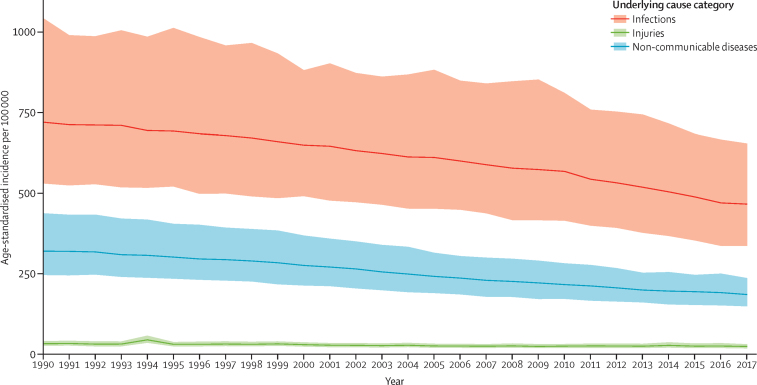
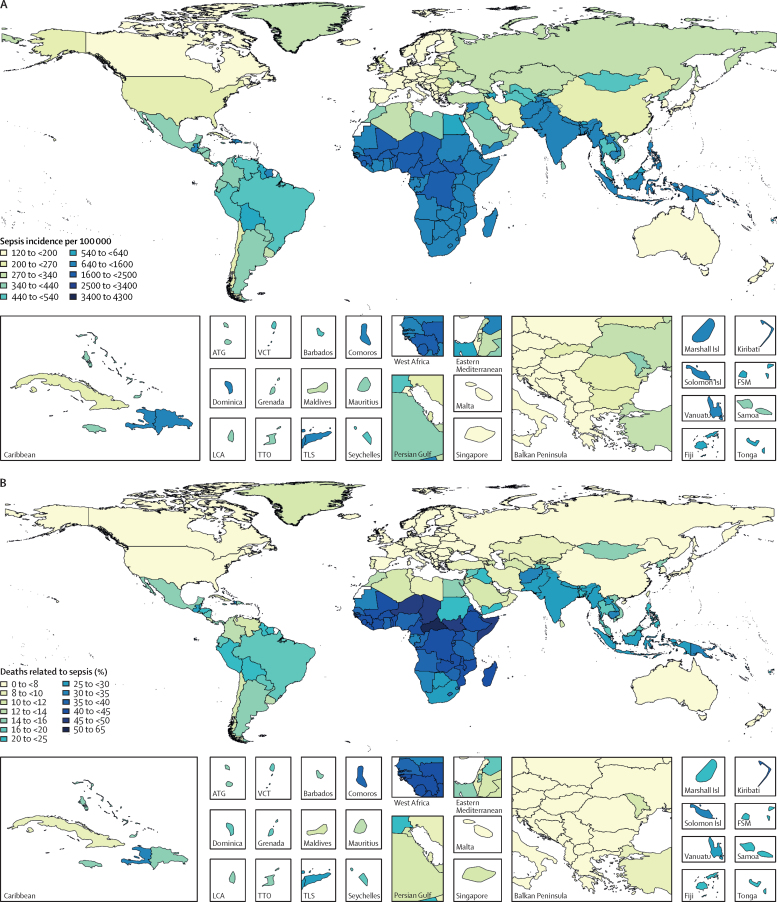
BACKGROUND: Sepsis is life-threatening organ dysfunction due to a dysregulated host response to infection. It is considered a major cause of health loss, but data for the global burden of sepsis are limited. As a syndrome caused by underlying infection, sepsis is not part of standard Global Burden of Diseases, Injuries, and Risk Factors Study (GBD) estimates. Accurate estimates are important to inform and monitor health policy interventions, allocation of resources, and clinical treatment initiatives. We estimated the global, regional, and national incidence of sepsis and mortality from this disorder using data from GBD 2017. METHODS: We used multiple cause-of-death data from 109 million individual death records to calculate mortality related to sepsis among each of the 282 underlying causes of death in GBD 2017. The percentage of sepsis-related deaths by underlying GBD cause in each location worldwide was modelled using mixed-effects linear regression. Sepsis-related mortality for each age group, sex, location, GBD cause, and year (1990-2017) was estimated by applying modelled cause-specific fractions to GBD 2017 cause-of-death estimates. We used data for 8·7 million individual hospital records to calculate in-hospital sepsis-associated case-fatality, stratified by underlying GBD cause. In-hospital sepsis-associated case-fatality was modelled for each location using linear regression, and sepsis incidence was estimated by applying modelled case-fatality to sepsis-related mortality estimates. FINDINGS: In 2017, an estimated 48·9 million (95% uncertainty interval [UI] 38·9-62·9) incident cases of sepsis were recorded worldwide and 11·0 million (10·1-12·0) sepsis-related deaths were reported, representing 19·7% (18·2-21·4) of all global deaths. Age-standardised sepsis incidence fell by 37·0% (95% UI 11·8-54·5) and mortality decreased by 52·8% (47·7-57·5) from 1990 to 2017. Sepsis incidence and mortality varied substantially across regions, with the highest burden in sub-Saharan Africa, Oceania, south Asia, east Asia, and southeast Asia. INTERPRETATION: Despite declining age-standardised incidence and mortality, sepsis remains a major cause of health loss worldwide and has an especially high health-related burden in sub-Saharan Africa. FUNDING: The Bill & Melinda Gates Foundation, the National Institutes of Health, the University of Pittsburgh, the British Columbia Children's Hospital Foundation, the Wellcome Trust, and the Fleming Fund.
Overview
The claims and statistics of this paper haven’t been checked yet.
Run the check — free, no account needed. It reads the open-access text and checks the sources it cites.
Integrity signals
Registry
Cites
Statistics
Figures
Verification
Claims the paper makes
The claims and statistics of this paper haven’t been checked yet.
Run the check — free, no account needed. It reads the open-access text and checks the sources it cites.
Claims other papers make about this one
Each is checked against this paper’s own text: does it say what the citing paper says it does?
The source backs part of the claim, not all of it — or backs it for a different population, condition or comparison.
In the citing paper
“A clear relationship can be seen – the poorest nations, all former European colonies, have the highest sepsis incidence”
From On race, human variation, and who gets and dies of sepsis (2022) · cites this paper as Rudd et al., 2020
Experimental — accuracy not yet measuredThe cited source says what the claim attributes to it.
In the citing paper
“This approach follows the methods validated by many studies on the epidemiology of sepsis26, 27, 28, 29 and was used by Rudd and colleagues.10”
From Global burden of bacterial antimicrobial resistance 1990–2021: a systematic analysis with forecasts to 2050 (2024) · cites this paper as [10]
The cited source says what the claim attributes to it.
In the citing paper
“Previously published global estimates reported a 53% decline in age-standardised sepsis-related deaths from 1990 to 2017.10”
From Global burden of bacterial antimicrobial resistance 1990–2021: a systematic analysis with forecasts to 2050 (2024) · cites this paper as [10]
In the citing paper
“8.2 million of the 11.1 million sepsis deaths worldwide that year occurred in low and middle income nations”
From On race, human variation, and who gets and dies of sepsis (2022) · cites this paper as Rudd et al., 2020
In the citing paper
“more people in middle and low income nations die of sepsis per incident than in wealthy nations”
From On race, human variation, and who gets and dies of sepsis (2022) · cites this paper as Rudd et al., 2020
In the citing paper
“The majority of the world's sepsis burden is borne by the least wealthiest nations, most former European colonies.”
From On race, human variation, and who gets and dies of sepsis (2022) · cites this paper as Rudd et al., 2020
In the citing paper
“Worldwide, the bulk of sepsis burden falls on marginalized peoples (Gracey & King, 2009; Rudd et al., 2020).”
From On race, human variation, and who gets and dies of sepsis (2022) · cites this paper as Rudd et al., 2020
Self-check
Percentages, sums and reported differences re-computed from the paper’s own numbers.
The self-check needs the paper’s full text.
Citations
Cites
James, S. L., Abate, D., Abate, K. H., Abay, S. M., Abbafati, C., Abbasi, N., Abbastabar, H., Abd-Allah, F., Abdela, J., Abdelalim, A., et al. (2018) · The Lancet · doi:10.1016/s0140-6736(18)32279-7 · Cited by 13,867
Bone, R. C., BALK, R. A., Cerra, F. B., Dellinger, R. P., Fein, A. M., Knaus, W. A., Schein, R. M. H., & Sibbald, W. J. (1992) · CHEST Journal · doi:10.1378/chest.101.6.1644 · Cited by 13,335
Vos, T., Abajobir, A. A., Abate, K. H., Abbafati, C., Abbas, K. M., Abd-Allah, F., Abdulkader, R. S., Abdulle, A. M., Abebo, T. A., Abera, S. F., et al. (2017) · The Lancet · doi:10.1016/s0140-6736(17)32154-2 · Cited by 13,220
Self-citationRoth, G. A., Abate, D., Abate, K. H., Abay, S. M., Abbafati, C., Abbasi, N., Abbastabar, H., Abd-Allah, F., Abdela, J., Abdelalim, A., et al. (2018) · The Lancet · doi:10.1016/s0140-6736(18)32203-7 · Cited by 8,600
Self-citationAngus, D. C., Linde-Zwirble, W. T., Lidicker, J., Clermont, G., Carcillo, J., & Pinsky, M. R. (2001) · Critical Care Medicine · doi:10.1097/00003246-200107000-00002 · Cited by 8,503
Self-citationSurviving Sepsis Campaign: International guidelines for management of sepsis and septic shock: 2016.
Rhodes, A., Evans, L. E., Alhazzani, W., Levy, M. M., Antonelli, M., Ferrer, R., Kumar, A., Sevransky, J. E., Sprung, C. L., Nunnally, M. E., et al. (2017) · Intensive Care Medicine · doi:10.1007/s00134-017-4683-6 · Cited by 6,621
Self-citationThe epidemiology of sepsis in the United States from 1979 through 2000
Martin, G. S., Mannino, D. M., Eaton, S., & Moss, M. (2003) · New England Journal of Medicine · doi:10.1056/nejmoa022139 · Cited by 5,841
Stanaway, J. D., Afshin, A., Gakidou, E., Lim, S. S., Abate, D., Abate, K. H., Abbafati, C., Abbasi, N., Abbastabar, H., Abd-Allah, F., et al. (2018) · The Lancet · doi:10.1016/s0140-6736(18)32225-6 · Cited by 4,943
Self-citationKyu, H. H., Abate, D., Abate, K. H., Abay, S. M., Abbafati, C., Abbasi, N., Abbastabar, H., Abd-Allah, F., Abdela, J., Abdelalim, A., et al. (2018) · The Lancet · doi:10.1016/s0140-6736(18)32335-3 · Cited by 4,192
Self-citationFleischmann, C., Scherag, A., Adhikari, N. K. J., Hartog, C. S., Tsaganos, T., Schlattmann, P., Angus, D. C., & Reinhart, K. (2016) · American Journal of Respiratory and Critical Care Medicine · doi:10.1164/rccm.201504-0781oc · Cited by 3,548
Self-citation
Research works printed but not linked: 1
- Singer, 2016, The third international consensus definitions for sepsis and septic shock (Sepsis-3), JAMA, 315, 801, 10.1001/jama.2016.0287 · DOI · Paper page
Cited by
Sorted by citations
Vos, T., Lim, S. S., Abbafati, C., Abbas, K. M., Abbasi, M., Abbasifard, M., Abbasi-Kangevari, M., Abbastabar, H., Abd-Allah, F., Abdelalim, A., et al. (2020) · The Lancet · doi:10.1016/s0140-6736(20)30925-9 · Cited by 19,358
Self-citationGlobal burden of bacterial antimicrobial resistance in 2019: a systematic analysis
Murray, C. J. L., Ikuta, K. S., Sharara, F., Swetschinski, L., Robles Aguilar, G., Gray, A., Han, C., Bisignano, C., Rao, P., Wool, E., et al. (2022) · The Lancet · doi:10.1016/s0140-6736(21)02724-0 · Cited by 16,316
Self-citationNaghavi, M., Vollset, S. E., Ikuta, K. S., Swetschinski, L. R., Gray, A. P., Wool, E. E., Robles Aguilar, G., Mestrovic, T., Smith, G., Han, C., et al. (2024) · The Lancet · doi:10.1016/s0140-6736(24)01867-1 · Cited by 3,791
Self-citationIkuta, K. S., Swetschinski, L. R., Robles Aguilar, G., Sharara, F., Mestrovic, T., Gray, A. P., Davis Weaver, N., Wool, E. E., Han, C., Gershberg Hayoon, A., et al. (2022) · The Lancet · doi:10.1016/s0140-6736(22)02185-7 · Cited by 2,235
Self-citationKarki, R., Sharma, B. R., Tuladhar, S., Williams, E. P., Zalduondo, L., Samir, P., Zheng, M., Sundaram, B., Banoth, B., Malireddi, R. K. S., et al. (2021) · Cell · doi:10.1016/j.cell.2020.11.025 · Cited by 1,734
Prevalence and outcomes of infection among patients in intensive care units in 2017.
Vincent, J.-L., Sakr, Y., Singer, M., Martin-Loeches, I., Machado, F. R., Marshall, J. C., Finfer, S., Pelosi, P., Brazzi, L., Aditianingsih, D., et al. (2020) · JAMA · doi:10.1001/jama.2020.2717 · Cited by 1,011
Self-citationFleischmann-Struzek, C., Mellhammar, L., Rose, N., Cassini, A., Rudd, K. E., Schlattmann, P., Allegranzi, B., & Reinhart, K. (2020) · Intensive Care Medicine · doi:10.1007/s00134-020-06151-x · Cited by 982
Self-citationCalder, P., Carr, A., Gombart, A., & Eggersdorfer, M. (2020) · Nutrients · doi:10.3390/nu12041181 · Cited by 972
Nogal, A., Valdes, A. M., & Menni, C. (2021) · Gut Microbes · doi:10.1080/19490976.2021.1897212 · Cited by 917
Intravenous Vitamin C in Adults with Sepsis in the Intensive Care Unit
Lamontagne, F., Masse, M.-H., Menard, J., Sprague, S., Pinto, R., Heyland, D. K., Cook, D. J., Battista, M.-C., Day, A. G., Guyatt, G. H., et al. (2022) · New England Journal of Medicine · doi:10.1056/nejmoa2200644 · Cited by 350
Moskowitz, A., Huang, D. T., Hou, P. C., Gong, J., Doshi, P. B., Grossestreuer, A. V., Andersen, L. W., Ngo, L., Sherwin, R. L., Berg, K. M., et al. (2020) · JAMA · doi:10.1001/jama.2020.11946 · Cited by 253
Public health utility of cause of death data: applying empirical algorithms to improve data quality
Johnson, S. C., Cunningham, M., Dippenaar, I. N., Sharara, F., Wool, E. E., Agesa, K. M., Han, C., Miller-Petrie, M. K., Wilson, S., Fuller, J. E., et al. (2021) · BMC Medical Informatics and Decision Making · doi:10.1186/s12911-021-01501-1 · Cited by 175
Self-citationBonet, M., Brizuela, V., Abalos, E., Cuesta, C., Baguiya, A., Chamillard, M., Fawole, B., Knight, M., Kouanda, S., Lumbiganon, P., et al. (2020) · The Lancet Global Health · doi:10.1016/s2214-109x(20)30109-1 · Cited by 176
Impact of a deep learning sepsis prediction model on quality of care and survival
Boussina, A., Shashikumar, S. P., Malhotra, A., Owens, R. L., El-Kareh, R., Longhurst, C. A., Quintero, K., Donahue, A., Chan, T. C., Nemati, S., et al. (2024) · npj Digital Medicine · doi:10.1038/s41746-023-00986-6 · Cited by 170
The Impact of Immune System Aging on Infectious Diseases
Quiros-Roldan, E., Sottini, A., Natali, P. G., & Imberti, L. (2024) · Microorganisms · doi:10.3390/microorganisms12040775 · Cited by 133
“Severe infections in the elderly can evolve into sepsis, a life-threatening event caused by host response failure, resulting in multiorgan collapse [215].”
Source control in emergency general surgery: WSES, GAIS, SIS-E, SIS-A guidelines
Coccolini, F., Sartelli, M., Sawyer, R., Rasa, K., Viaggi, B., Abu-Zidan, F., Soreide, K., Hardcastle, T., Gupta, D., Bendinelli, C., et al. (2023) · World Journal of Emergency Surgery · doi:10.1186/s13017-023-00509-4 · Cited by 99
Zhang, S., Yu, J., Xu, X., Yin, C., Lu, Y., Yao, B., Tory, M., Padilla, L. M., Caterino, J., Zhang, P., et al. (2024) · Proceedings of the CHI Conference on Human Factors in Computing Systems · doi:10.1145/3613904.3642343 · Cited by 99
“9 million patients worldwide, resulting in around 11 million sepsis-related deaths [10, 60, 82].”
BackgroundCarvalho, M. J., Sands, K., Thomson, K., Portal, E., Mathias, J., Milton, R., Gillespie, D., Dyer, C., Akpulu, C., Boostrom, I., et al. (2022) · Nature Microbiology · doi:10.1038/s41564-022-01184-y · Cited by 95
Liu, J., Bu, X., Wei, L., Wang, X., Lai, L., Dong, C., Ma, A., & Wang, T. (2021) · Journal of Hypertension · doi:10.1097/hjh.0000000000002958 · Cited by 100
Lou, X., Xue, J., Shao, R., Yang, Y., Ning, D., Mo, C., Wang, F., & Chen, G. (2023) · Frontiers in Immunology · doi:10.3389/fimmu.2022.1063543 · Cited by 87
Blood culture-free ultra-rapid antimicrobial susceptibility testing
Kim, T. H., Kang, J., Jang, H., Joo, H., Lee, G. Y., Kim, H., Cho, U., Bang, H., Jang, J., Han, S., et al. (2024) · Nature · doi:10.1038/s41586-024-07725-1 · Cited by 90
Surviving Sepsis campaign: international guidelines for Management of Sepsis and Septic Shock 2026
Prescott, H. C., Antonelli, M., Alhazzani, W., Møller, M. H., Alshamsi, F., Azevedo, L. C. P., Belley-Cote, E., De Waele, J., Derde, L., Dionne, J. C., et al. (2026) · Critical Care Medicine · doi:10.1097/ccm.0000000000007075 · Cited by 117
Self-citationSaito, M., Fujinami, Y., Ono, Y., Ohyama, S., Fujioka, K., Yamashita, K., Inoue, S., & Kotani, J. (2021) · Brain, Behavior, and Immunity · doi:10.1016/j.bbi.2020.11.010 · Cited by 66
Gold nanoparticles reduce inflammation in cerebral microvessels of mice with sepsis
Di Bella, D., Ferreira, J. P. S., Silva, R. D. N. O., Echem, C., Milan, A., Akamine, E. H., Carvalho, M. H., & Rodrigues, S. F. (2021) · Journal of Nanobiotechnology · doi:10.1186/s12951-021-00796-6 · Cited by 69
van der Vegt, A. H., Scott, I. A., Dermawan, K., Schnetler, R. J., Kalke, V. R., & Lane, P. J. (2023) · Journal of the American Medical Informatics Association · doi:10.1093/jamia/ocad075 · Cited by 72
“Sepsis accounts for nearly 20% of deaths worldwide, killing over 11 million people in 2017.(1) Sepsis has been defined as a “life-threatening organ dysfunction caused by a dysregulated host response to infection”.”
BackgroundKijpaisalratana, N., Sanglertsinlapachai, D., Techaratsami, S., Musikatavorn, K., & Saoraya, J. (2022) · International Journal of Medical Informatics · doi:10.1016/j.ijmedinf.2022.104689 · Cited by 65
Rothrock, S. G., Cassidy, D. D., Barneck, M., Schinkel, M., Guetschow, B., Myburgh, C., Nguyen, L., Earwood, R., Nanayakkara, P. W. B., Nannan Panday, R. S., et al. (2020) · Annals of Emergency Medicine · doi:10.1016/j.annemergmed.2020.04.042 · Cited by 57
Persson, I., Östling, A., Arlbrandt, M., Söderberg, J., & Becedas, D. (2021) · JMIR Formative Research · doi:10.2196/28000 · Cited by 58
Preti, L. M., Ardito, V., Compagni, A., Petracca, F., & Cappellaro, G. (2024) · Journal of Medical Internet Research · doi:10.2196/55897 · Cited by 62
Liao, H., Li, H., Bao, H., Jiang, L., Du, J., Guo, Y., & Si, Y. (2022) · Frontiers in Neurology · doi:10.3389/fneur.2022.909436 · Cited by 55
Systemic inflammation induced the delayed reduction of excitatory synapses in the CA3 during ageing
Manabe, T., Rácz, I., Schwartz, S., Oberle, L., Santarelli, F., Emmrich, J. V., Neher, J. J., & Heneka, M. T. (2021) · Journal of Neurochemistry · doi:10.1111/jnc.15491 · Cited by 44
Gut-brain axis in the pathogenesis of sepsis-associated encephalopathy
Wang, X., Wen, X., Yuan, S., & Zhang, J. (2024) · Neurobiology of Disease · doi:10.1016/j.nbd.2024.106499 · Cited by 47
Weiss, S. L., Peters, M. J., Oczkowski, S. J. W., Belley‐Côté, E. P., Buysse, C., Choong, K. L. M., Deep, A., Inwald, D. P., Flori, H. R., Kneyber, M. C. J., et al. (2026) · Pediatric Critical Care Medicine · doi:10.1097/pcc.0000000000003927 · Cited by 46
Self-citationZhu, C.-L., Xie, J., Liu, Q., Wang, Y., Li, H.-R., Yu, C.-M., Li, P., Deng, X.-M., Bian, J.-J., & Wang, J.-F. (2023) · International Journal of Biological Sciences · doi:10.7150/ijbs.79913 · Cited by 42
Sazonov, V., Abylkassov, R., Tobylbayeva, Z., Saparov, A., Mironova, O., & Poddighe, D. (2021) · Frontiers in Pediatrics · doi:10.3389/fped.2021.672260 · Cited by 40
Postbiotics as potential new therapeutic agents for sepsis
Lou, X., Xue, J., Shao, R., Mo, C., Wang, F., & Chen, G. (2023) · Burns & Trauma · doi:10.1093/burnst/tkad022 · Cited by 38
Silencing of amygdala circuits during sepsis prevents the development of anxiety-related behaviours
Bourhy, L., Mazeraud, A., Costa, L. H. A., Levy, J., Rei, D., Hecquet, E., Gabanyi, I., Bozza, F. A., Chrétien, F., Lledo, P.-M., et al. (2022) · Brain · doi:10.1093/brain/awab475 · Cited by 37
Chen, L., Qing, W., Yi, Z., Lin, G., Peng, Q., & Zhou, F. (2021) · Frontiers in Nutrition · doi:10.3389/fnut.2021.701760 · Cited by 31
Zhou, Z., Yang, Y., Wei, Y., & Xie, Y. (2024) · Neurochemical Research · doi:10.1007/s11064-024-04115-x · Cited by 30
Iron status and the risk of sepsis and severe COVID-19: a two-sample Mendelian randomization study
Mohus, R. M., Flatby, H., Liyanarachi, K. V., DeWan, A. T., Solligård, E., Damås, J. K., Åsvold, B. O., Gustad, L. T., & Rogne, T. (2022) · Scientific Reports · doi:10.1038/s41598-022-20679-6 · Cited by 28
Deep-Learning Model for Screening Sepsis Using Electrocardiography
Kwon, J.-M., Lee, Y. R., Jung, M.-S., Lee, Y.-J., Jo, Y.-Y., Kang, D.-Y., Lee, S. Y., Cho, Y.-H., Shin, J.-H., Ban, J.-H., et al. (2021) · Scandinavian Journal of Trauma, Resuscitation and Emergency Medicine · doi:10.1186/s13049-021-00953-8 · Cited by 28
Düsing, C., Cimiano, P., Rehberg, S., Scherer, C., Kaup, O., Köster, C., Hellmich, S., Herrmann, D., Meier, K. L., Claßen, S., et al. (2024) · Artificial Intelligence in Medicine · doi:10.1016/j.artmed.2024.102982 · Cited by 26
Li, S., Dou, R., Song, X., Lui, K., Xu, J., Guo, Z., Hu, X., Guan, X., & Cai, C. (2023) · Journal of Clinical Medicine · doi:10.3390/jcm12030915 · Cited by 25
Kupffer cell reverse migration into the liver sinusoids mitigates neonatal sepsis and meningitis
Araujo David, B., Atif, J., Vargas e Silva Castanheira, F., Yasmin, T., Guillot, A., Ait Ahmed, Y., Peiseler, M., Hommes, J. W., Salm, L., Brundler, M.-A., et al. (2024) · Science Immunology · doi:10.1126/sciimmunol.adq9704 · Cited by 25
Weiss, S. L., Peters, M. J., Oczkowski, S. J. W., Belley‐Côté, E. P., Buysse, C., Choong, K. L. M., Deep, A., Inwald, D. P., Flori, H. R., Kneyber, M. C. J., et al. (2026) · Intensive Care Medicine · doi:10.1007/s00134-026-08360-2 · Cited by 44
“Sepsis remains a leading cause of morbidity, mortality, and healthcare utilization for children worldwide [1, 2].”
Self-citationLei, Y., Zhou, R., Sun, X., Tang, F., Gao, H., Chen, L., & Li, X. (2021) · Annals of Translational Medicine · doi:10.21037/atm-21-6579 · Cited by 22
The Precision Resuscitation With Crystalloids in Sepsis (PRECISE) Trial: A Trial Protocol
Bhavani, S. V., Holder, A., Miltz, D., Kamaleswaran, R., Khan, S., Easley, K., Murphy, D. J., Franks, N., Wright, D. W., Kraft, C., et al. (2024) · JAMA Network Open · doi:10.1001/jamanetworkopen.2024.34197 · Cited by 21
Michels, E. H. A., Dequin, P., Butler, J., Guillon, A., Evrard, B., Paling, F., Reijnders, T., Schuurman, A., van Engelen, T. S. R., Brands, X., et al. (2026) · The Lancet Respiratory Medicine · doi:10.1016/s2213-2600(25)00429-1 · Cited by 18
Jiang, S., Dai, S., Li, Y., Zhou, X., Jiang, C., Tian, C., Yuan, Y., Li, C., & Zhao, Y. (2025) · EClinicalMedicine · doi:10.1016/j.eclinm.2024.103048 · Cited by 18
Ke, X., Zhang, F., Huang, G., & Wang, A. (2022) · Computational and Mathematical Methods in Medicine · doi:10.1155/2022/4820464 · Cited by 16
Zhang, X., Li, S., Luo, H., He, S., Yang, H., Li, L., Tian, T., Han, Q., Ye, J., Huang, C., et al. (2022) · Signal Transduction and Targeted Therapy · doi:10.1038/s41392-022-01035-6 · Cited by 14
Wang, J., Yan, Y., Wang, C., Tao, X., Cheng, P., Liu, B., Gong, J., Qin, J., & Niu, B. (2026) · European Journal of Pharmacology · doi:10.1016/j.ejphar.2026.179060 · Cited by 13
Pathogen characteristics are key determinants of distinct host response phenotypes of sepsis
Chanderraj, R., Bartek, B., Stringer, K. A., Tiba, M. H., Sjoding, M. W., He, Y., Nuppnau, M., Bongers, K. S., Adame, M. D., Lou, S. S., et al. (2026) · Journal of Clinical Investigation · doi:10.1172/jci197346 · Cited by 16
“…Recent advances have identified 2 molecular phenotypes of sepsis — termed “hyperinflammatory” and “hypoinflammatory” — through latent class analysis, revealing distinct differences in their biological features, clinical outcomes, and therapeutic responses to randomized interventions (9,…”
Lafon, T., Weingart, M., Vaidie, J., Calfee, C. S., Jacob, S. T., Freund, Y., Shapiro, N. I., Barraud, O., Monneret, G., van der Poll, T., et al. (2026) · EClinicalMedicine · doi:10.1016/j.eclinm.2026.103864 · Cited by 14
“60 In these settings, particularly when resources are constrained, the clinical course of sepsis is frequently marked by delayed presentation, severe illness on admission and early mortality, reflecting barriers to timely care-seeking, recognition and intervention.”
Molecular control of PDPNhi macrophage subset induction by ADAP as a host defense in sepsis
Zhang, P., Wang, X., Yang, X., & Liu, H. (2025) · JCI Insight · doi:10.1172/jci.insight.186456 · Cited by 10
Hu, J., Feng, S.-Y., Wu, L., He, S.-Z., Chen, X.-F., Li, G., Min, Y., Xu, H.-L., Sun, Q.-S., Xie, S., et al. (2026) · Journal of Advanced Research · doi:10.1016/j.jare.2026.04.065 · Cited by 10
National Estimates of Pediatric Sepsis in US Hospitals Using Clinical Data
Rhee, C., Balamuth, F., Dysart, K., Miller, E., Li, Z., Huang, J., Gunturi, D., Ostapenko, S., Jin, R., DelloStritto, L. K., et al. (2026) · JAMA · doi:10.1001/jama.2026.3100 · Cited by 23
Yin, Y., Lv, G., Zhang, W., Yuan, J., Yang, Y., Wang, Y., Liu, S., Wang, S., Yan, B., Bo, H., et al. (2023) · Behavioural Brain Research · doi:10.1016/j.bbr.2023.114326 · Cited by 9
On race, human variation, and who gets and dies of sepsis
Brinkworth, J. F., & Shaw, J. G. (2022) · American Journal of Biological Anthropology · doi:10.1002/ajpa.24527 · Cited by 9
Philippon, A.-L., Lebal, S., Cancella de Abreu, M., Gerlier, C., Mirò, O., Simon, T., & Freund, Y. (2025) · European Journal of Emergency Medicine · doi:10.1097/mej.0000000000001212 · Cited by 10
Clinical subphenotypes and molecular endotypes in sepsis: toward an integrated and dynamic framework
Zhang, G., Wu, X., Liu, S., Xu, H., Cai, C., Liu, J., Liu, S., Wang, P., & Xie, J. (2026) · Annals of Intensive Care · doi:10.1016/j.aicoj.2026.100060 · Cited by 7
“Sepsis, a life-threatening organ dysfunction resulting from a dysregulated host response to infection, remains a major global health burden with an estimated 48.9 million cases and 11 million deaths in 2017 [1,2].”
InfluentialThe brain washing system in sepsis-associated encephalopathy
Chen, T., Hu, J., Liao, Y., Xie, S., & Zhang, L. (2025) · Journal of Neuroinflammation · doi:10.1186/s12974-025-03602-4 · Cited by 8
Kurul, Ş., Reijnierse, J. J., Koppens, H. J., Onland, W., Simons, S. H. P., Reiss, I. K. M., Taal, H. R., & Visser, D. H. (2024) · BMJ Paediatrics Open · doi:10.1136/bmjpo-2024-002884 · Cited by 10
Sulfated bile acid produced by a human gut commensal alleviates paediatric sepsis in mice
Liu, X., Zhang, H., Wang, Y.-Z., Tu, X., Wen, J., Lei, S., Liu, N., Wei, X., Li, Y., Li, Y., et al. (2026) · Nature Microbiology · doi:10.1038/s41564-026-02351-1 · Cited by 7
“Sepsis has been reported to be a major cause of morbidity, mortality and health care costs for children worldwide 1,38 .”
InfluentialBalanced Fluid or 0.9% Saline in Children Treated for Septic Shock
Balamuth, F., Weiss, S. L., Long, E., Thompson, G. C., Artis, A. S., Campos, A. B., Borland, M. L., Dalziel, S. R., Yock‐Corrales, A., Singh, R., et al. (2026) · New England Journal of Medicine · doi:10.1056/nejmoa2601969 · Cited by 12
Lactylation modification - a bridge between sepsis and macrophage metabolic reprogramming
Fang, Z., Zhu, G. S., Nie, D. Y., & Xu, B. (2026) · Frontiers in Immunology · doi:10.3389/fimmu.2026.1738765 · Cited by 7
Qin, W., Wang, H., Lv, K., Liu, S., Ma, T., Sang, S., & Chen, Y. (2026) · International Journal of Antimicrobial Agents · doi:10.1016/j.ijantimicag.2026.107786 · Cited by 10
Macrophage metabolism reprogramming in sepsis: Pathogenesis and therapeutic implications (Review)
Zhao, T., Zhang, W., Ren, Z., & Feng, X. (2026) · International Journal of Molecular Medicine · doi:10.3892/ijmm.2026.5823 · Cited by 7
Aga, O. N. L., Moyo, S. J., Manyahi, J., Kibwana, U. O., Löhr, I. H., Langeland, N., Blomberg, B., & Johnston, I. G. (2025) · bioRxiv (Cold Spring Harbor Laboratory) · doi:10.1101/2025.09.20.677523 · Cited by 2
“The isolates were divided by country based on metadata, and countries were grouped into superregions as defined by the Global Burden of Disease regional classification system (Rudd et al., 2020).”
Qiu, Y., Bi, H., Xie, W., Zhao, J., Zhang, T., Fu, J., Liu, X., & Li, G. (2026) · Frontiers in Immunology · doi:10.3389/fimmu.2026.1779575 · Cited by 5
Lei, S., Ruan, H., Zhao, H., Feng, Z., Wang, J., Zhao, G., Liu, J., & Li, J. (2026) · Journal of Infection and Public Health · doi:10.1016/j.jiph.2026.103211 · Cited by 7
Machine learning predicts sepsis deterioration trajectories.
Zhang, R., Long, F., Zhao, Z., Wu, J., Tan, R., Xu, W., Li, L., Long, Y., & Qu, H. (2026) · NPJ Digital Medicine · doi:10.1038/s41746-026-02565-x · Cited by 6
“Theprocessbeganwith45candidate variablesidenti fi ed through literature review and expert consultation (Supplementary note 1 – 5).”
Brenner, T., Skarabis, A., Schaller, S. J., von Groote, T., Putensen, C., Guenther, U., Sauer, M., Decker, S., Dusse, F., Weiss, M., et al. (2026) · Intensive Care Medicine · doi:10.1007/s00134-026-08521-3 · Cited by 5
“With up to 50 million cases and ~ 11 million deaths annually, sepsis accounts for nearly 20% of worldwide deaths [2].”
The Dual Role of Interleukin-10 in Sepsis: Research Progress and Therapeutic Prospects
Wang, X., Huang, Q., Dai, J., Zhang, L., & Qian, Z. (2026) · Inflammation · doi:10.1007/s10753-026-02512-8 · Cited by 7
“Globally, sepsis remains a dominant driver of death and disability; the Global Burden of Disease analysis estimated 48.9 million incident cases and 11.0 million sepsis-related deaths in 2017, approaching one-fifth of all global deaths [2].”
InfluentialWang, L., Liu, S., Wang, X., Wu, H., Zhao, X., Wu, D., Wang, Q., Wang, P., Xu, Y., Shen, K., et al. (2026) · Journal of Nanobiotechnology · doi:10.1186/s12951-026-04368-4 · Cited by 4
“In 2017, approximately 49 million sepsis cases and more than 11 million sepsis-associated deaths were reported globally [2].”
Lin, W., Dong, C., Jiang, Q., Lou, Y., Wang, L., & He, Z. (2026) · Redox Report · doi:10.1080/13510002.2026.2657075 · Cited by 6
“A 2020 Global Burden of Disease report published in The Lancet estimated approximately 49 million cases of sepsis worldwide in 2017, with a sepsis-related mortality rate of about 22%, accounting for 19% of all global deaths [2].”
Song, R., Ma, Y.-R., Wan, J.-F., Hao, S., Chen, B., Liao, Y.-C., Liao, Y.-J., Xiao, Y.-Z., Zhang, X., Zhang, Z., et al. (2026) · Proceedings of the National Academy of Sciences of the United States of America · doi:10.1073/pnas.2510914123 · Cited by 5
“According to the World Health Organization, sepsis accounted for 48.9 million cases and 11 million deaths globally in 2020, representing 20% of all deaths worldwide (2).”
InfluentialPerformance of a Sepsis Prediction Model Across Different Sepsis Definitions
Dutta, S., McMurry, R., Tasi, M. C., Dunham, L. N., McEvoy, D. S., Stump, T., Filbin, M. R., & Rhee, C. (2026) · JAMA Network Open · doi:10.1001/jamanetworkopen.2026.5599 · Cited by 6
Myatra, S. N., Boyer, K. M., Hidalgo, J. L., Maves, R. C., Acharya, S. P., Jacob, S. T., Kortz, T. B., Nadkarni, V. M., Cornejo, M. S. P., Pérez-Fernández, J., et al. (2026) · Critical Care Medicine · doi:10.1097/ccm.0000000000007102 · Cited by 5
Self-citationLymphocyte function inhibition and exhaustion in sepsis: mechanisms and applications
Yan, Y., Wang, J., Wang, C., Tao, X., Cheng, P., Qin, J., & Niu, B. (2026) · Frontiers in Immunology · doi:10.3389/fimmu.2026.1619478 · Cited by 2
Mauriello, A., Correra, A., Maratea, A. C., Cetoretta, V., Giallauria, F., Esposito, G., Desiderio, A., Marrazzo, G., Liccardo, B., Russo, V., et al. (2026) · Journal of Clinical Medicine · doi:10.3390/jcm15051953 · Cited by 7
Sejersen, K., Sütterlin, S., & Larsson, A. O. (2026) · Biomedicines · doi:10.3390/biomedicines14030694 · Cited by 4
Kumar, A., Kumar, A., Tyagi, A., Singh, R., & Charaya, M. U. (2026) · European Journal of Clinical Microbiology & Infectious Diseases · doi:10.1007/s10096-026-05577-3 · Cited by 5
“In severe cases, BSIs may progress to sepsis, a life-threatening condition characterized by dysregulated host responses and organ dysfunction [1, 15].”
Agentifying Patient Dynamics within LLMs through Interacting with Clinical World ModelPreprint
Wu, M., Yan, Y., Cai, Z., Ji, K., Fang, C., Sheng, Z., Wang, X., Wang, R., Zhang, H., Li, S., et al. (2026) · arXiv (Cornell University) · doi:10.48550/arxiv.2605.14723 · Cited by 8
“Sepsis remains a leading cause of mortality in Intensive Care Units (ICUs), presenting a major challenge in critical care medicine [1, 2, 3].”
Govender, K. N., Street, T. L., Sanderson, N. D., Leach, L., Morgan, M., & Eyre, D. W. (2026) · The Lancet Microbe · doi:10.1016/j.lanmic.2025.101333 · Cited by 3
Low-density neutrophil heterogeneity and spleen tyrosine kinase as therapeutic targets in sepsis
Teague, H., Knabe, L., da Cruz, R. S., Yao, X.-L., Allen, K., Williams, T., Demirkale, C., Woldehanna, M., Evans, E. H., Hobson, A., et al. (2026) · JCI Insight · doi:10.1172/jci.insight.201057 · Cited by 4
Zhang, Y., Kirchler, T., & Wang, A. (2026) · Journal of Medical Systems · doi:10.1007/s10916-026-02376-3 · Cited by 6
Badero, O. J., Omokore, O. A., Oore-ofe, O., Osibowale, B. T., Quadri, I. O., Olayinka, T. O., Olabode, D., Kalu, K. E., Adeyemi, A., Buari, M. O., et al. (2026) · Cureus · doi:10.7759/cureus.106312 · Cited by 5
“Equitable implementation in low-and middle-income countries remains essential to avoid widening global disparities [47].”
Wang, K., Xiong, H., Zhu, Y., Zhou, Y., & Kang, Y. (2026) · Scientific Reports · doi:10.1038/s41598-026-46063-2 · Cited by 6
Gut microbiota and sepsis: mechanisms, clinical correlations, and therapeutic prospects
Yu, J., & Liu, X. (2026) · Frontiers in Medicine · doi:10.3389/fmed.2026.1793041 · Cited by 4
“…sepsis contributes directly or indirectly to approximately 5.3 million deaths annually, making it one of the leading causes of global mortality (6), Current therapeutic approaches face significant limitations, including antimicrobial resistance, the inability to reverse immunoparalysis, and…”
InfluentialYu, X.-R., Wang, H., Wang, J., Yuan, X., Zhou, X.-D., He, Q.-S., Владиславович, М. И., Sun, L., Dong, Y.-H., & Zou, Z. (2026) · Military Medical Research · doi:10.1016/j.mmr.2026.100002
“…deaths are defined according to the Sepsis-3 criteria as life-threatening organ dysfunction due to a dysregulated host response to infection [19] and are modeled based on Global Burden of Disease (GBD) 2021 cause-of-death estimates [20] to identify deaths from infection in the causal pathway [21].”
Immune molecular mechanisms of PANoptosis in sepsis-induced acute kidney injury
Zheng, J., Lan, J., Zhao, Z.-Y., Luo, L., Zhang, X.-J., & Hu, Q. (2026) · Inflammation and Regeneration · doi:10.1186/s41232-026-00412-w · Cited by 3
“Worldwide, approximately 48.9 million sepsis cases are documented annually, leading to 11 million deaths and representing 19.7% of global mortality [2].”
InfluentialChen, L., Ren, R., Zhang, S., Zhu, J., Li, X., Zhang, X., Wu, X., Liu, B., Fang, Q., & Ruan, Z. (2026) · Free Radical Biology and Medicine · doi:10.1016/j.freeradbiomed.2026.03.016 · Cited by 5
Du, R., Pan, T., Wang, Y., Fan, Y., Liu, Q., Tao, X.-X., Guo, S., Tian, D., Foo, R., Xie, K.-L., et al. (2026) · Signal Transduction and Targeted Therapy · doi:10.1038/s41392-026-02592-w · Cited by 4
Kim, T. E., Lee, J.-Y., Mun, C., Jeon, J., Yang, J.-Y., Lee, S.-H., Kang, H., Park, S.-G., & Lee, M.-Y. (2026) · Biosensors & bioelectronics · doi:10.1016/j.bios.2026.118577 · Cited by 4
Dong, Q. Z., Tao, J., Yuan, J., Tian, J., Cheng, Y., Wang, J., Xiao, C., Chen, X., Wang, Y., Li, W., et al. (2026) · Cellular Signalling · doi:10.1016/j.cellsig.2026.112574 · Cited by 2
Comorbidities and Inflammation: How Chronic Diseases Prime the Host Response in Sepsis
Miguel, M. V. O., Santos, R. M., de Oliveira, M. M., Pelosi, G. G., & de Freitas, A. (2026) · International Journal of Molecular Sciences · doi:10.3390/ijms27167395 · Cited by 2
“Sepsis remains a major challenge to global health, accounting for approximately 20% of all deaths worldwide [1,2].”
InfluentialKim, M., Khin, P. P., Jung, H., Chae, C. W., Jeon, B. H., & Kim, C. (2026) · International Journal of Molecular Sciences · doi:10.3390/ijms27135918 · Cited by 3
“A 2025 Global Burden of Disease analysis estimated 166 million sepsis cases and 21.4 million all-cause sepsis-related deaths worldwide in 2021, while earlier widely cited estimates for 2017 reported 48.9 million cases and 11.0 million sepsis-related deaths [3,4].”
InfluentialRapid diagnosis of sepsis and bloodstream infections
Wester, M., Lim, J.-S., Ghaderinia, M., Koprowski, K., Van, A. B., Heredia, J., White, K., Kumar, J. S., Valera, E., & Bashir, R. (2026) · Nature Reviews Bioengineering · doi:10.1038/s44222-026-00446-2 · Cited by 4
“The highest burden of sepsis occurs in low-income and middle-income countries 2 (Box 1).”
Gulia, H., Suhag, M., Bagal, N., Deshwal, P. R., Kumar, S. S., & Joshi, R. K. (2026) · Indian Journal of Critical Care Medicine · doi:10.5005/jp-journals-10071-25196 · Cited by 3
Metadata
- Authors
- Rudd, K. E., Johnson, S. C., Agesa, K. M., Shackelford, K. A., Tsoi, D., Kievlan, D. R., Colombara, D. V., Ikuta, K. S., Kissoon, N., Finfer, S., Fleischmann-Struzek, C., Machado, F. R., Reinhart, K. K., Rowan, K., Seymour, C. W., Watson, R. S., West, T. E., Marinho, F., Hay, S. I., Lozano, R., Lopez, A. D., Angus, D. C., Murray, C. J. L., & Naghavi, M.
- Affiliations
- University of Pittsburgh (US)
- University of Washington (US)
- University of British Columbia (CA)
- UNSW Sydney (AU)
- Jena University Hospital (DE)
- Seattle Children's Hospital (US)
- Universidade de São Paulo (BR)
- Corresponding author
- Naghavi, Mohsen
- ORCID
- Venue
- The Lancet
- Publisher
- Elsevier BV
- Published
- 2020-01
- Volume
- 395
- Issue
- 10219
- Pages
- 200-211
- ISSN
- 0099-5355 (ISSN-L)
- 0140-6736
- PMC
- PMC6970225
- OpenAlex
- W2998853022
- Cited by
- 7,971
- References
- 42
- Citations by year
- 2026: 1540 · 2025: 1722 · 2024: 1545 · 2023: 1195 · 2022: 899 · 2021: 735 · 2020: 329
- FWCI
- 567.33
- Type
- journal article
- Language
- en
- Open access
- hybrid
- doi.org
- Licence
- Locations
- The Lancet (publishedVersion, cc-by)
- PubMed Central (publishedVersion, cc-by)
- PubMed (publishedVersion)
- LA Referencia (Red Federada de Repositorios Institucionales de Publicaciones Científicas) (submittedVersion, other-oa)
- Minerva Access (University of Melbourne) (submittedVersion, cc-by)
- Funders
- Bill & Melinda Gates Foundation
- National Institutes of Health (T32HL007287, T32HL007820, R35GM119519)
- National Health and Medical Research Council (no 1117230)
- Topics
- Health Sciences › Medicine › Critical Care and Intensive Care Medicine › Sepsis Diagnosis and Treatment
- Health Sciences › Medicine › Public Health, Environmental and Occupational Health › Global Health and Epidemiology
- Health Sciences › Medicine › Pediatrics, Perinatology and Child Health › Neonatal and Maternal Infections
- Keywords
- sepsis, sepsis incidence, sepsis mortality, global burden of disease, case fatality, underlying cause of death, age-standardized incidence rate, temporal trends, regional variation, sub-Saharan Africa, South Asia, hospital records, cause-specific mortality, health policy interventions, resource allocation, health loss, nosocomial infections, infection-related mortality, sepsis surveillance
- MeSH terms
- Global Burden of Disease, Adolescent, Adult, Aged, Aged, 80 and over, Cause of Death, Child, Child, Preschool, Female, Humans, Infant, Infant, Newborn, Male, Middle Aged, Socioeconomic Factors, Incidence, Age Distribution, Sex Distribution, Sepsis, Young Adult
About these checks
Registry, retraction, Cites and statistics results are computed, not judged, with one exception: a printed reference that no index lists is read once by a model before it counts as a citation error. Claims are extracted by a model and kept only when their quote appears verbatim in the text; each cited source is then checked, with a model’s help, for whether it says what the claim relies on. Those verdicts can be wrong — read the claim’s quote and the cited source before relying on one.
Statistics and arithmetic are recomputed, not judged.
Confidence bands are shown only for fields calibrated on our annotated test set. None is calibrated yet, so no band is shown.
What counts as a claim ›How we measure confidence ›How we check this ›
Are you an author, or do you see a problem with this page? Request a review
