

The DOI matches its Crossref record; 39 of the 42 references it cites were found in a registry or an index.
Global, regional, and national sepsis incidence and mortality, 1990–2017: analysis for the Global Burden of Disease Study
Open accessAbstract
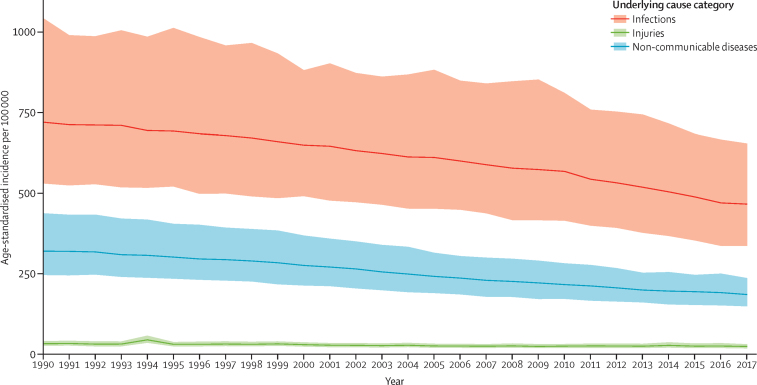
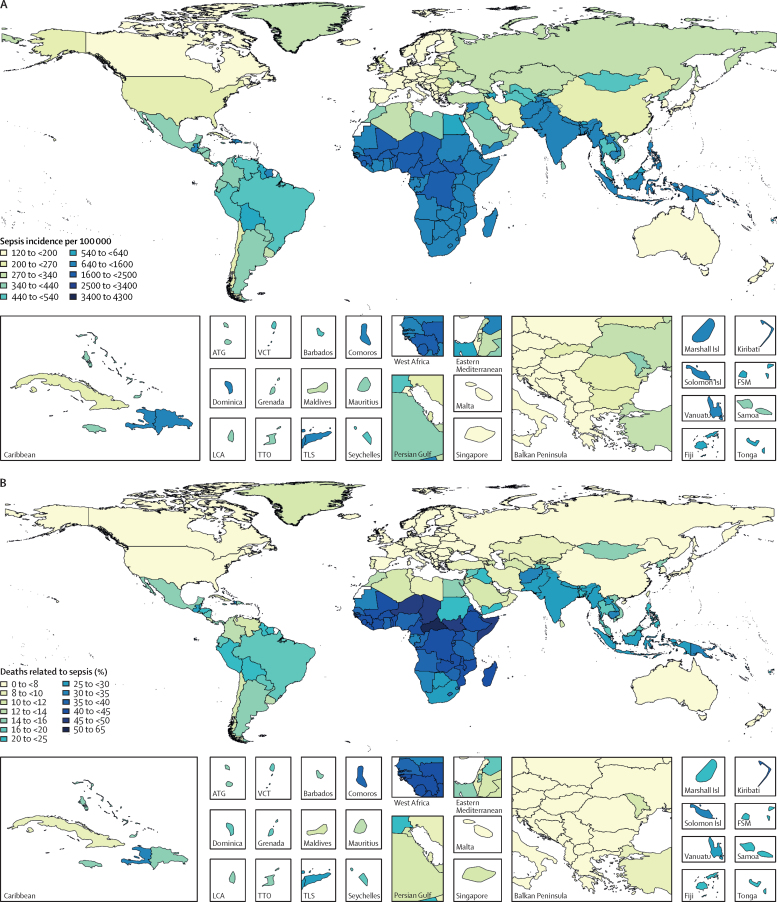
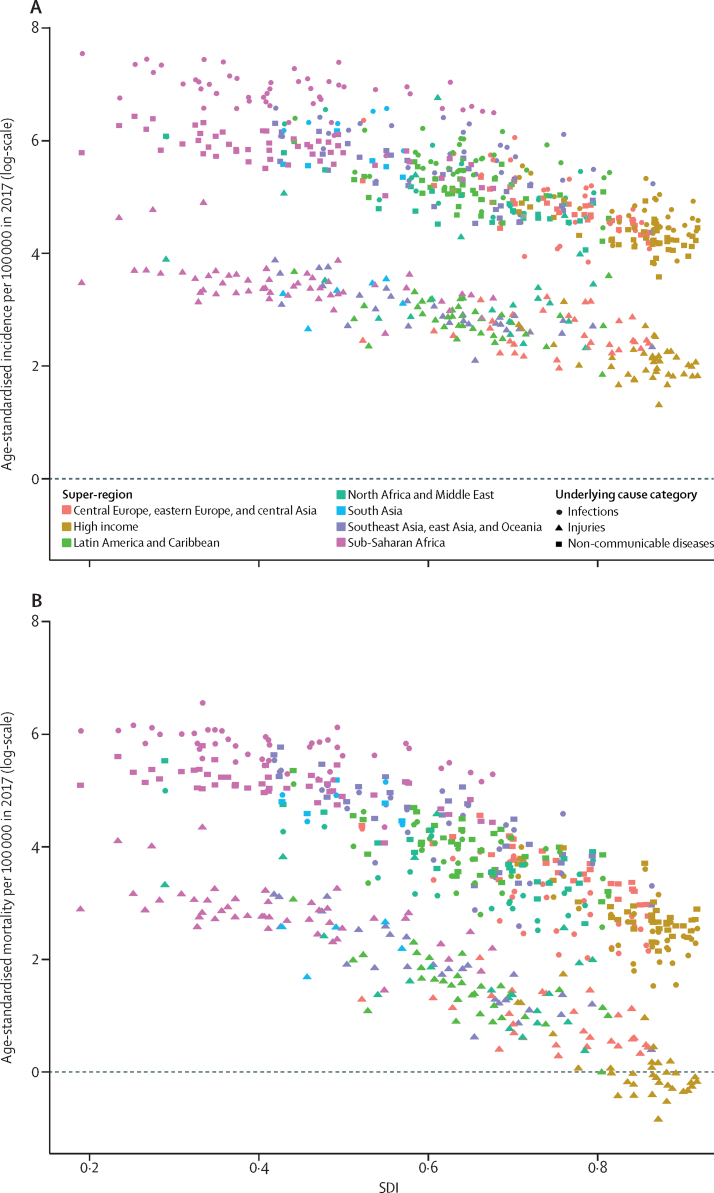
BACKGROUND: Sepsis is life-threatening organ dysfunction due to a dysregulated host response to infection. It is considered a major cause of health loss, but data for the global burden of sepsis are limited. As a syndrome caused by underlying infection, sepsis is not part of standard Global Burden of Diseases, Injuries, and Risk Factors Study (GBD) estimates. Accurate estimates are important to inform and monitor health policy interventions, allocation of resources, and clinical treatment initiatives. We estimated the global, regional, and national incidence of sepsis and mortality from this disorder using data from GBD 2017. METHODS: We used multiple cause-of-death data from 109 million individual death records to calculate mortality related to sepsis among each of the 282 underlying causes of death in GBD 2017. The percentage of sepsis-related deaths by underlying GBD cause in each location worldwide was modelled using mixed-effects linear regression. Sepsis-related mortality for each age group, sex, location, GBD cause, and year (1990-2017) was estimated by applying modelled cause-specific fractions to GBD 2017 cause-of-death estimates. We used data for 8·7 million individual hospital records to calculate in-hospital sepsis-associated case-fatality, stratified by underlying GBD cause. In-hospital sepsis-associated case-fatality was modelled for each location using linear regression, and sepsis incidence was estimated by applying modelled case-fatality to sepsis-related mortality estimates. FINDINGS: In 2017, an estimated 48·9 million (95% uncertainty interval [UI] 38·9-62·9) incident cases of sepsis were recorded worldwide and 11·0 million (10·1-12·0) sepsis-related deaths were reported, representing 19·7% (18·2-21·4) of all global deaths. Age-standardised sepsis incidence fell by 37·0% (95% UI 11·8-54·5) and mortality decreased by 52·8% (47·7-57·5) from 1990 to 2017. Sepsis incidence and mortality varied substantially across regions, with the highest burden in sub-Saharan Africa, Oceania, south Asia, east Asia, and southeast Asia. INTERPRETATION: Despite declining age-standardised incidence and mortality, sepsis remains a major cause of health loss worldwide and has an especially high health-related burden in sub-Saharan Africa. FUNDING: The Bill & Melinda Gates Foundation, the National Institutes of Health, the University of Pittsburgh, the British Columbia Children's Hospital Foundation, the Wellcome Trust, and the Fleming Fund.
Overview
The claims and statistics of this paper haven’t been checked yet.
Run the check — free, no account needed. It reads the open-access text and checks the sources it cites.
Integrity signals
Registry
Cites
Statistics
Figures
Verification
Claims the paper makes
The claims and statistics of this paper haven’t been checked yet.
Run the check — free, no account needed. It reads the open-access text and checks the sources it cites.
Claims other papers make about this one
Each is checked against this paper’s own text: does it say what the citing paper says it does?
The source backs part of the claim, not all of it — or backs it for a different population, condition or comparison.
In the citing paper
“A clear relationship can be seen – the poorest nations, all former European colonies, have the highest sepsis incidence”
From On race, human variation, and who gets and dies of sepsis (2022) · cites this paper as Rudd et al., 2020
Experimental — accuracy not yet measuredThe cited source says what the claim attributes to it.
In the citing paper
“This approach follows the methods validated by many studies on the epidemiology of sepsis26, 27, 28, 29 and was used by Rudd and colleagues.10”
From Global burden of bacterial antimicrobial resistance 1990–2021: a systematic analysis with forecasts to 2050 (2024) · cites this paper as [10]
The cited source says what the claim attributes to it.
In the citing paper
“Previously published global estimates reported a 53% decline in age-standardised sepsis-related deaths from 1990 to 2017.10”
From Global burden of bacterial antimicrobial resistance 1990–2021: a systematic analysis with forecasts to 2050 (2024) · cites this paper as [10]
In the citing paper
“8.2 million of the 11.1 million sepsis deaths worldwide that year occurred in low and middle income nations”
From On race, human variation, and who gets and dies of sepsis (2022) · cites this paper as Rudd et al., 2020
In the citing paper
“more people in middle and low income nations die of sepsis per incident than in wealthy nations”
From On race, human variation, and who gets and dies of sepsis (2022) · cites this paper as Rudd et al., 2020
In the citing paper
“The majority of the world's sepsis burden is borne by the least wealthiest nations, most former European colonies.”
From On race, human variation, and who gets and dies of sepsis (2022) · cites this paper as Rudd et al., 2020
In the citing paper
“Worldwide, the bulk of sepsis burden falls on marginalized peoples (Gracey & King, 2009; Rudd et al., 2020).”
From On race, human variation, and who gets and dies of sepsis (2022) · cites this paper as Rudd et al., 2020
Self-check
Percentages, sums and reported differences re-computed from the paper’s own numbers.
The self-check needs the paper’s full text.
Citations
Cites
James, S. L., Abate, D., Abate, K. H., Abay, S. M., Abbafati, C., Abbasi, N., Abbastabar, H., Abd-Allah, F., Abdela, J., Abdelalim, A., et al. (2018) · The Lancet · doi:10.1016/s0140-6736(18)32279-7 · Cited by 13,867
Bone, R. C., BALK, R. A., Cerra, F. B., Dellinger, R. P., Fein, A. M., Knaus, W. A., Schein, R. M. H., & Sibbald, W. J. (1992) · CHEST Journal · doi:10.1378/chest.101.6.1644 · Cited by 13,335
Vos, T., Abajobir, A. A., Abate, K. H., Abbafati, C., Abbas, K. M., Abd-Allah, F., Abdulkader, R. S., Abdulle, A. M., Abebo, T. A., Abera, S. F., et al. (2017) · The Lancet · doi:10.1016/s0140-6736(17)32154-2 · Cited by 13,220
Self-citationRoth, G. A., Abate, D., Abate, K. H., Abay, S. M., Abbafati, C., Abbasi, N., Abbastabar, H., Abd-Allah, F., Abdela, J., Abdelalim, A., et al. (2018) · The Lancet · doi:10.1016/s0140-6736(18)32203-7 · Cited by 8,600
Self-citationAngus, D. C., Linde-Zwirble, W. T., Lidicker, J., Clermont, G., Carcillo, J., & Pinsky, M. R. (2001) · Critical Care Medicine · doi:10.1097/00003246-200107000-00002 · Cited by 8,503
Self-citationSurviving Sepsis Campaign: International guidelines for management of sepsis and septic shock: 2016.
Rhodes, A., Evans, L. E., Alhazzani, W., Levy, M. M., Antonelli, M., Ferrer, R., Kumar, A., Sevransky, J. E., Sprung, C. L., Nunnally, M. E., et al. (2017) · Intensive Care Medicine · doi:10.1007/s00134-017-4683-6 · Cited by 6,621
Self-citationThe epidemiology of sepsis in the United States from 1979 through 2000
Martin, G. S., Mannino, D. M., Eaton, S., & Moss, M. (2003) · New England Journal of Medicine · doi:10.1056/nejmoa022139 · Cited by 5,841
Stanaway, J. D., Afshin, A., Gakidou, E., Lim, S. S., Abate, D., Abate, K. H., Abbafati, C., Abbasi, N., Abbastabar, H., Abd-Allah, F., et al. (2018) · The Lancet · doi:10.1016/s0140-6736(18)32225-6 · Cited by 4,943
Self-citationKyu, H. H., Abate, D., Abate, K. H., Abay, S. M., Abbafati, C., Abbasi, N., Abbastabar, H., Abd-Allah, F., Abdela, J., Abdelalim, A., et al. (2018) · The Lancet · doi:10.1016/s0140-6736(18)32335-3 · Cited by 4,192
Self-citationFleischmann, C., Scherag, A., Adhikari, N. K. J., Hartog, C. S., Tsaganos, T., Schlattmann, P., Angus, D. C., & Reinhart, K. (2016) · American Journal of Respiratory and Critical Care Medicine · doi:10.1164/rccm.201504-0781oc · Cited by 3,548
Self-citation
Research works printed but not linked: 1
- Singer, 2016, The third international consensus definitions for sepsis and septic shock (Sepsis-3), JAMA, 315, 801, 10.1001/jama.2016.0287 · DOI · Paper page
Cited by
Sorted by citations
Items 101–200 of 1,054
Verma, A., Sinha, R., Periwal, S., Mishra, P., Anbarasan, A., Naranje, K., & Singh, A. (2026) · Indian Journal of Pediatrics · doi:10.1007/s12098-026-06168-y · Cited by 3
“Recent estimates suggest that sepsis contributes to 7–15% of all neonatal deaths globally, with LMICs bearing the greatest burden [1, 2 ].”
Recent advances in the biosensing platforms for sepsis diagnosis
Mishra, V. D., Pandey, M., Kumar, H., Panigrahi, P. K., & Bhattacharya, S. (2026) · RSC Advances · doi:10.1039/d5ra06963g · Cited by 3
Zhu, H., Li, P., Wang, B., Fu, H., Guo, Y., Han, Z., Huang, S., Xie, Y., He, J., Zheng, S., et al. (2026) · Critical Care · doi:10.1186/s13054-026-06070-1 · Cited by 4
“Sepsis is a life-threatening organ dysfunction caused by a dysregulated host response to infection and remains a leading cause of global mortality [1, 2].”
Sex-related disparities in sepsis in western Europe: A systematic review and meta-analysis.
Mowafy, H. L., Garin, N., Katsounas, A., Castellvi, P., & Rello, J. (2026) · European journal of internal medicine · doi:10.1016/j.ejim.2026.106900 · Cited by 3
c-FLIP as a master regulator of immune homeostasis and disease mechanisms
Urbini, E., Adamo, A., Hu, Y., Giacobazzi, L., Dusi, S., Sanctis, F. D., Carbone, C., Gibellini, D., Pilotto, S., Corbo, V., et al. (2026) · Cell Death and Disease · doi:10.1038/s41419-026-08771-5 · Cited by 6
“Sepsis and septic shock remain major global killers, with ~48.9 million cases and ~11.0 million deaths in 2017 — nearly one-fi fth of worldwide mortality [405].”
InfluentialWang, Z., Li, X., Yuan, B., & Zhang, J. (2026) · Frontiers in Immunology · doi:10.3389/fimmu.2026.1801896 · Cited by 5
Theobald, V., Gregorius, J., Berger, M. M., Decker, S., Feißt, M., Herbstreit, F., Nußhag, C., Skarabis, A., Schmidt, K. D., Schmitt, F. C. F., et al. (2026) · Critical Care · doi:10.1186/s13054-026-06025-6 · Cited by 3
“Sepsis and septic shock are life-threatening conditions that affect 50 million people annually and are responsible for an estimated 11 million deaths each year throughout the world [1].”
Novel PET tracers for infection: Host-response, pathogen-specific, and targeted ligands
Mdanda, S., Sibiya, S. M., Zikhali, Q., Mzizi, Y. V., Nemakhavhani, L., Mokoena, A., Ratsakatika, T., Mohlala, L., Shungube, M., Qebethu, M., et al. (2026) · Seminars in Nuclear Medicine · doi:10.1053/j.semnuclmed.2026.03.015 · Cited by 3
The Lancet Commission on Sepsis: transforming sepsis care and outcomes.
Shankar-Hari, M., Ming, D. K., Mendelson, M., Rupali, P., Adhikari, N. K. J., Ranzani, O., Randolph, A. G., Davenport, E., van der Poll, T., Moita, L., et al. (2026) · The Lancet · doi:10.1016/s0140-6736(26)00648-3 · Cited by 3
Doualeh, M., Mullally, C. A., Thorsén, M., Raby, E., Litton, E., Leedham, S., Payne, M. S., & Currie, A. J. (2026) · Journal of Medical Microbiology · doi:10.1099/jmm.0.002155 · Cited by 2
“Sepsis, a life-threatening organ dysfunction typically caused by a dysregulated host response to infection, remains a major global health burden [1], with an annual global incidence estimated at ~49 million cases, resulting in 11 million deaths worldwide – a mortality rate of around 22% [2].”
Hidalgo, J. L., Akech, S., Acharya, S. P., Coopersmith, C. M., Jacob, S. T., Johnston, C., Kissoon, N. “., Machado, F. R., Maves, R. C., Molyneux, E., et al. (2026) · Critical Care Medicine · doi:10.1097/ccm.0000000000007093 · Cited by 3
Self-citationJóźwiak, G., Verge, M. P., Luraschi, A., Mestiri, C., McSorley, E., Wilson-Owen, D., Fauci, S. L., García-Castillo, M., Delarze, E., Fromm, K., et al. (2026) · Scientific Reports · doi:10.1038/s41598-026-44519-z · Cited by 2
Prediction-guided clustering for sepsis phenotyping: a retrospective cohort analysis
Hilders, P., Lijović, L., Otten, M., Biesheuvel, L. A., Hiemstra, F., van der Kuil, M., Jagesar, A. R., Thoral, P., Ercole, A., & Elbers, P. (2026) · Intensive Care Medicine Experimental · doi:10.1186/s40635-026-00882-9 · Cited by 4
“Sepsis remains one of the leading causes of death in the intensive care unit (ICU) and is implicated in one in five deaths globally [1].”
Zhu, Y.-R., Li, G., Guo, Y.-L., He, Y., Zhang, W.-Y., Gao, L., Zhang, J., Guo, P.-X., Lin, H., Zhang, W.-J., et al. (2026) · Journal of Clinical Investigation · doi:10.1172/jci196636 · Cited by 3
“Worldwide, an estimated 48.9 million cases of sepsis and 11 million related deaths occur annually (4).”
InfluentialLee, C. M., Atreya, M., Bennett, T., Farris, R. W., Faustino, E., Fernández-Sarmiento, J., Geva, A., Hall, M., Rogerson, C., Shah, S. S., et al. (2026) · Pediatric Critical Care Medicine · doi:10.1097/pcc.0000000000003933 · Cited by 3
Cho, K., Lee, Y., Lee, S. H., Bahuguna, A., Domínguez-Horta, M. D. C., & Martínez‐Donato, G. (2026) · Pharmaceuticals · doi:10.3390/ph19030510 · Cited by 2
“Despite the substantial advances in medical sciences, hyperinflammation and sepsis continue to pose a major global health challenge, contributing to high morbidity and mortality [1,10].”
Ali, A., Kordi, H. A., Alhag, M. H., Salama, A., Alqarni, Z. G., Dwayat, A., Mustafa, A., Okasha, A., Abdullah, S., Alali, N. S. M., et al. (2026) · Journal of Clinical Medicine Research · doi:10.14740/jocmr6464 · Cited by 3
“It is a major cause of morbidity and mortality, accounting for millions of deaths every year, highlighting the need for continuous improvements in clinical management and supportive care [2, 3].”
Acute management of sepsis beyond 24 hours
Premachandra, A., & Heming, N. (2024) · Seminars in Respiratory and Critical Care Medicine · doi:10.1055/s-0044-1787991 · Cited by 2
Neumann, C., Bloos, F., Hla, T. T. W., Bygott, T., Bogatsch, H., Kiehntopf, M., Börner, F., Press, A. T., Bauer, M. W., Retter, A., et al. (2026) · Critical Care Medicine · doi:10.1097/ccm.0000000000007270 · Cited by 1
Neuro-symbolic artificial intelligence for real-time sepsis mortality prediction
Santis, F. D., Park, G., & Zanichelli, F. (2026) · Engineering Applications of Artificial Intelligence · doi:10.1016/j.engappai.2026.114920 · Cited by 3
Sewify, K., Elmessery, R., Alzuwayed, O., Gomaa, W., Alshaer, A., Almutairi, A., Abdelshafey, E., & Girardis, M. (2026) · Critical Care Explorations · doi:10.1097/cce.0000000000001451 · Cited by 2
“…intravenous immunoglobulin; meta-analysis; Pentaglobin; sepsis; septic shock S epsis remains a major cause of death and prolonged critical illness despite advances in early recognition, antimicrobial therapy, source con-trol, hemodynamic optimization, and organ support strategies (1–3).”
Kattan, E., Ospina-Táscon, G., Orozco, N., Teboul, J., Melo, P., Wendel-Garcia, P., Morales, S., Amthauer, M., Hunsicker, O., Ibarra-Estrada, M., et al. (2026) · Intensive Care Medicine · doi:10.1007/s00134-026-08551-x · Cited by 2
“Despite advances in early recognition, timely source control, and protocolized resuscitation, septic shock is still associated with substantial resource utilization, high morbidity and mortality, and significant long-term sequelae among survivors [1–4].”
Sepsis in Dogs and Cats—Consensus Definition and Clinical Criteria
Goggs, R. A. N., Cortellini, S., DeClue, A. E., Giunti, M., Hopper, K., Menard, J. M., Rabelo, R. C., Rozanski, E. A., Sharp, C. R., Silverstein, D. C., et al. (2026) · Journal of Veterinary Emergency and Critical Care · doi:10.1111/vec.70129
“Sepsis resulted in an estimated 11 million human deaths in 2017, equivalent to ∼ 20% of global mortality [ 4 ].”
Hu, Q., Peng, L., Chen, X.-Y., Zhu, Y.-L., Zhang, L., Lu, M.-Y., Deng, X.-M., & Wang, J.-F. (2026) · International Immunopharmacology · doi:10.1016/j.intimp.2026.117105 · Cited by 2
Heimrich, K. G., Prell, T., Rose, N., Schönenberg, A., Pletz, M. W., Ruhnke, T., & Fleischmann-Struzek, C. (2026) · Age and Ageing · doi:10.1093/ageing/afag200 · Cited by 2
“Sepsis, a response to infection leading to organ dysfunction, remains among the leading causes of mortality worldwide [ 1, 2].”
Self-citationNguyen, T. L., Nguyen, T.-T., Nguyen, N. N. Y., Huynh, P. B. N., Bui, T. P., Nguyen, T., Ho, V. H. N., Tran, C. D., Hoang, T. O., Le, V. T., et al. (2026) · Medicine · doi:10.1097/md.0000000000049526 · Cited by 2
“[1,2] 16] However, its potential role in modifying treatment effects remains unexplored.”
Zhou, K.-H., Ou, C., Li, X., Tang, Z.-H., & Hu, J.-T. (2026) · Frontiers in Medicine · doi:10.3389/fmed.2026.1857973 · Cited by 2
Sent, A. T., Salie, S., & Morrow, B. (2026) · Pediatric Critical Care Medicine · doi:10.1097/pcc.0000000000003993 · Cited by 2
Hyper-inflammation and immunosuppression: redefining sepsis therapy using modern approaches
Prajapati, M., Singh, V., Mishra, A., Khatua, D., Rana, M., & Jyoti, A. (2026) · Frontiers in Pharmacology · doi:10.3389/fphar.2026.1810887 · Cited by 2
“(Rudd et al., 2020).”
Peng, T.-T., Li, Y., Ren, Y.-K., Yang, M., Long, Z.-H., Zuo, D., Huang, L., Liu, H.-W., Duan, Z.-X., & Li, H. (2026) · PLoS ONE · doi:10.1371/journal.pone.0351216 · Cited by 2
“Among its complications, pulmonary complications in non-pulmonary sepsis (PC-NPS) are one of the most common and lethal, with an incidence ranging from 25% to 45% and a mortality rate as high as 30% to 40% [2, 3].”
Rehn, P., Koos, B., Witowski, A., Wappler, F., Henzler, D., Seidlitz, S., Maier-Hein, L., Katzenschlager, S., von Garrel, A., Hölzl, K., et al. (2026) · Journal of critical care · doi:10.1016/j.jcrc.2026.155645 · Cited by 2
Medical Record Abstraction for Quality Improvement in Sepsis Care Using Artificial Intelligence
Boussina, A. E., Allison, C., Quintero, K., Jain, S., VanDenBerg, C., Hogarth, M., Sitapati, A. M., Singh, K., Malhotra, A., McCurdy, et al. (2026) · JAMA Network Open · doi:10.1001/jamanetworkopen.2026.11885 · Cited by 3
“17 In this study, we sought to test the hypothesis that AI-enabled scaling of SEP-1 measurement beyond standard sampling and near–real-time communication of care quality performance by individual physicians can improve measure performance.”
Berikkhanova, K., Inuwa, I., Taigulov, E., Kozhakhmetov, S., Bikhanov, N., Omarbekov, A., Berikkhanova, G., Sultan, Y., Jibo, A. G., Abdrakhmanova, S. A., et al. (2026) · International Journal of Molecular Sciences · doi:10.3390/ijms27114978 · Cited by 2
“Estimates from 1990 to 2017 indicate nearly 49 million incident cases and approximately 11 million related deaths worldwide, accounting for close to one-fifth of all global mortality [2].”
Zimmermann, T., Snow, T. A. C., López-Ayala, P., Al-Hindawi, A., Elkhodair, S., Arulkumaran, N., Siegemund, M., Singer, M., & Brealey, D. (2026) · Intensive Care Medicine Experimental · doi:10.1186/s40635-026-00923-3 · Cited by 2
“Infection and sepsis are common causes of emergency department (ED) visits, hospital admission and the need for intensive care [1].”
Yang, Y.-M., Hua, Y.-W., Yang, S.-Y., Liu, N., & Li, J. (2026) · Biology Direct · doi:10.1186/s13062-026-00836-x · Cited by 2
“Despite progress in critical care, sepsis remains a major cause of mortality and morbidity worldwide [3], mainly because of the heterogeneous nature of patients, complex pathological mechanisms and limited predictive value of conventional biomarkers such as C-reactive protein (CRP), procalcitonin…”
Cardiovascular Subphenotypes in Sepsis
Chotalia, M., Ali, M., Chotalia, R., Patel, J. M., Parekh, D., & Bangash, M. N. (2026) · Critical Care Medicine · doi:10.1097/ccm.0000000000007159 · Cited by 3
Hellenthal, K. E. M., Porschen, C., Zarbock, A., Ertmer, C., Lanckohr, C., Rohrmann, A., von Groote, T. V., Schaumburg, F., & Lange, M. (2026) · Critical Care Medicine · doi:10.1097/ccm.0000000000007187 · Cited by 2
Zhang, F.-L., Wu, T.-S., Zhou, H., Ma, J., Wu, Z.-Q., Chen, S.-N., Ma, K., Li, Y.-H., Chen, X., Tan, W.-Y., et al. (2026) · Journal of Nanobiotechnology · doi:10.1186/s12951-026-04540-w · Cited by 2
“Which induces a high disease burden globally, resulting in approximately 48.9 million sepsis patients annually, with a mortality rate exceeding 20% of the global death toll [1].”
InfluentialHe, J., Luo, S., Xu, W., Chen, Y., Liu, G., Tang, J., Yang, Y., Zhao, B., Ma, L., Sheng, H., et al. (2026) · Frontiers in Immunology · doi:10.3389/fimmu.2026.1818068 · Cited by 1
Zhang, G., Dai, K., Meng, Q., Hua, T., Yao, Y., Zhu, H., & Liu, W. (2026) · Frontiers in Cell and Developmental Biology · doi:10.3389/fcell.2026.1805864 · Cited by 2
“Despite advances in supportive care, specific therapeutic interventions have largely failed (Cohen, 2002), primarily due to the lack of tools to stratify patients based on their underlying molecular heterogeneity (Rudd et al., 2020; Marshall, 2014; Rhodes et al., 2017).”
Gavrilovic, S., Stipić, N., Vasilić, M., Andrić, V., Nedeljkov, D., & Čarapić, V. (2026) · Biomolecules & biomedicine · doi:10.17305/bb.2026.13931 · Cited by 2
Li, Z., Li, P., Peng, T., Zhou, X., Liu, Y., Ai, C., Xiao, N., Song, S., Lei, X., Liu, J., et al. (2026) · Gut Microbes · doi:10.1080/19490976.2026.2671382 · Cited by 4
Andersson, L.-J., Simonsen, G. S., Solligård, E., & Fredriksen, K. (2026) · Emergency Medicine Journal · doi:10.1136/emermed-2025-215135 · Cited by 2
Ahn, C., Lee, G. S., Kim, J. H., Ahn, S., Hwang, S. Y., Kim, S.-M., Kim, W. Y., Park, S. M., Choi, S.-H., Kwon, W. Y., et al. (2026) · European Journal of Internal Medicine · doi:10.1016/j.ejim.2026.106933 · Cited by 2
Varga, N.-I., Benea, A.-T., Hachi, V., Ignuta, F., Suba, M.-I., Turaiche, M., Mot, M.-D., & Horhat, F. G. (2026) · Diagnostics · doi:10.3390/diagnostics16101522 · Cited by 2
“…course is often rapidly progressive: an initially localized infection may evolve within hours into systemic inflammation, endothelial dysfunction, microcirculatory failure, and multiorgan injury, ultimately leading to septic shock and death if appropriate treatment is delayed or inadequate [1,3,5].”
Sepsis in Frail Older Adults: Tailored Antimicrobial Stewardship and Individualized Care Approach
Fabbri, E., Tebano, G., de Angelis, A., Prete, A. D., Maestri, L., Cristini, F., & Muratori, P. (2026) · Antibiotics · doi:10.3390/antibiotics15050496 · Cited by 2
“It has been estimated to account for approximately 20% of global deaths, based on Global Burden of Disease analyses [5,6].”
Deng, M., Tong, Z., Li, X., Chen, S., Wu, J., Dai, J., Xu, J., Li, M., Cao, L., Weng, X., et al. (2026) · British Journal of Pharmacology · doi:10.1111/bph.70393 · Cited by 2
“Sepsis remains a life-threatening syndrome driven by a dysregulated host response to infection, frequently progressing to systemic inflammation, multi-organ dysfunction and high mortality (Cao et al., 2023; Rudd et al., 2020; Singer et al., 2016).”
Lv, S.-Y., Cui, C.-T., Jin, L.-Y., Jiang, W.-X., & Li, H.-H. (2026) · Antioxidants and Redox Signaling · doi:10.1177/15230864261443780 · Cited by 2
“S epsis is a potentially fatal disorder marked by a dysregulated immune reaction to infection, frequently resulting in failure of multiple organs (Rudd et al., 2020).”
Liu, S.-Y., Xu, S., Gao, J.-L., Kong, X.-K., Shi, J., Miao, Y., Tang, Y.-T., Zhao, B., Fang, F., Wang, A.-T., et al. (2026) · Military Medical Research · doi:10.1016/j.mmr.2026.100031
“The Global Burden of Disease Study estimates that approximately 48.9 million individuals develop sepsis worldwide, leading to 11 million fatalities (i.e., nearly 20% of all global deaths) [2].”
Influentialde la Torre, J. C. G., Frenkel, A., Chavez-Lencinas, C., Rendon, A., Fabian, M., Cáceres-DelAguila, J. A., & Hueda-Zavaleta, M. (2026) · PLoS ONE · doi:10.1371/journal.pone.0331266 · Cited by 2
“Sepsis and bloodstream infections (BSIs) represent a critical global health issue, particularly in low-and middle-income countries (LMICs), where delayed diagnoses and treatment gaps compound mortality [1].”
Xu, P., Lou, J., Kong, H., Li, J., Xiang, Z., Zhu, X., Cui, S., Huang, N., Xu, S., Le, X., et al. (2026) · Frontiers in Cellular and Infection Microbiology · doi:10.3389/fcimb.2026.1710916 · Cited by 2
“Sepsis remains a leading cause of death among critically ill patients, and its complexity is ampli fi ed in the context of severe burn injury, where the initial trauma triggers a profound and prolonged systemic response (Cecconi et al., 2018; Rudd et al., 2020).”
Li, Z., & Zhang, G. Q. (2026) · European journal of medical research · doi:10.1186/s40001-026-04401-0 · Cited by 2
“Sepsis remains a leading cause of mortality in critically ill patients worldwide [1,2] and is frequently complicated by acute myocardial dysfunction, commonly referred to as sepsis-induced cardiomyopathy (SICM) [3].”
Zhu, W., Libert, C., & Vanderhaeghen, T. (2026) · EMBO Molecular Medicine · doi:10.1038/s44321-026-00416-6 · Cited by 2
“With an annual incidence of 49 million cases and 11 million deaths, the World Health Organization has recognised sepsis as a global health priority (Reinhart et al, 2017; Rudd et al, 2020).”
Gut microbiome in sepsis: from dysbiotic biomarker to precision and palliative decision-making
Wang, L.-M., Chen, C., Danzheng, J., & Zhao, J. (2026) · Frontiers in Medicine · doi:10.3389/fmed.2026.1811304 · Cited by 1
Sun, Y.-Q., Shao, W.-S., Wang, X., Yang, R.-Z., Li, W., Xu, C., Tian, Y., Cao, L., & Tian, M. (2026) · Frontiers in Cellular and Infection Microbiology · doi:10.3389/fcimb.2026.1795806 · Cited by 2
Wang, J., Cai, X., & Liang, Q. (2026) · Frontiers in Pharmacology · doi:10.3389/fphar.2026.1808772 · Cited by 1
“According to data from the Global Burden of Disease study published in *The Lancet*, there were approximately 48.9 million new cases of sepsis worldwide in 2017, leading to about 11 million related deaths, accounting for nearly 20% of global mortality (Rudd et al., 2020).”
InfluentialNovac, M. B., Gorecki, G.-P., PĂTRU, A., Dijmărescu, A. L., Hădăreanu, D.-R., Assani, M.-Z., Boldeanu, L., Boldeanu, M. V., & Stoica, G. A. (2026) · Diagnostics · doi:10.3390/diagnostics16081193 · Cited by 3
“In 2017, an estimated 48.9 million sepsis cases and 11 million deaths were reported worldwide, although recent trends suggest a gradual decline, partly attributed to initiatives such as the Surviving Sepsis Campaign and advances in sepsis definitions, including Sepsis-3 [1,24–26].”
InfluentialVajrala, A., Reddy, M., & Bailey, R. C. (2026) · Trends in Analytical Chemistry (TrAC) · doi:10.1016/j.trac.2026.118842 · Cited by 2
Long, S., Sun, J., Wu, Y., Yi, J., Ren, S., Ran, X., Xiaofeng, L., Sethi, G., Luo, Z., & Duan, C. (2026) · Phytomedicine · doi:10.1016/j.phymed.2026.158174 · Cited by 2
Li, M., Liu, X., Lan, R., Xiong, Y., Che, Y., Yixin, M., Li, H., Yan, G., Gao, H., Bai, X., et al. (2026) · Genome Medicine · doi:10.1186/s13073-026-01635-9 · Cited by 2
“They cause over 400 million urinary tract infections and approximately 230,000 related deaths annually, impose a substantial public health burden [3–6].”
Zheng, Z., Liao, Y., Jiang, Y., Jia, Z., Lin, W., Xu, D., Jin, Y., Zhao, Q., Wu, G., Ye, B., et al. (2026) · British Journal of Pharmacology · doi:10.1111/bph.70419 · Cited by 2
“Sepsis, as one of the primary factors contributing to elevated mortality rates globally, has emerged as a critical public health issue requiring urgent attention (Rudd et al., 2020).”
Mușat, F., Andronic, O., Bolocan, A., Palcău, C., Dobre, A., Ion, D., & Păduraru, D. (2026) · Medicina · doi:10.3390/medicina62040640 · Cited by 2
RETREG1‐Mediated Reticulophagy is Essential for Dendritic Cell Maturation and Function in Sepsis
Yao, R.-Q., Ren, C., Zheng, L., Li, J., Wu, W., Li, Y., Wang, L., Duan, Y., Wang, L., Liu, S., et al. (2026) · Advanced Science · doi:10.1002/advs.202511021 · Cited by 1
“Data published in 2020 indicate 48.9 million cases and 11 million sepsis-related deaths worldwide, accounting for 20% of all global deaths [ 2 ].”
InfluentialThe cellular response capacity (CRC) as a novel immunomonitoring approach in sepsis
Messerer, D., Müller, P., Wohlgemuth, L., Münnich, F., Stukan, L., Mohamed, A. O. K., Hagemann, J., Koller, A. S., Jovanovski, D., Lauer, S., et al. (2026) · Military Medical Research · doi:10.1016/j.mmr.2026.100010 · Cited by 2
“Globally, sepsis affects approximately 50 million individuals each year and accounts for approximately 11 million deaths [4].”
Do, D.-K., Rockenschaub, P., Boie, S. D., Kumpf, O., Volk, H., Balzer, F., von Dincklage, F., & Lichtner, G. (2026) · Journal of Medical Internet Research · doi:10.2196/72083 · Cited by 7
“Sepsis is a life-threatening condition resulting from a dysregulated response to an infection that leads to organ dysfunction [1], responsible for up to 20% of all deaths worldwide [2].”
10 Steps to Improve Sepsis Care in Low-Resource Settings
Kortz, T. B., Hidalgo, J. L., Akech, S., Myatra, S. N., Maves, R. C., Pérez-Fernández, J., Acharya, S. P., Coopersmith, C. M., Jacob, S. T., Johnston, C., et al. (2026) · Critical Care Medicine · doi:10.1097/ccm.0000000000007090 · Cited by 3
Self-citationHu, X., Gong, C., Sun, S., Gao, Y., Lu, X., Yu, S. M., Qin, M., Zhu, H., & Li, Y. (2026) · BMC Microbiology · doi:10.1186/s12866-026-04929-5 · Cited by 3
“Sepsis, defined as life-threatening organ dysfunction caused by a dysregulated host response to infection [1], affected approximately 48.9 million patients and resulted in 11 million deaths, representing 19.7% of global mortality in 2017 [2].”
Influential孙中义, Qu, J., Peng, S., Hu, Y., Eliaz, A., Chertow, G. M., Eliaz, I., & Peng, Z. (2026) · MedComm · doi:10.1002/mco2.70659 · Cited by 2
Kong, Y., Wang, J., Gan, W., Jiang, Q., Yang, Y., & Zhang, F. (2026) · Advanced Functional Materials · doi:10.1002/adfm.74922 · Cited by 2
“Although traditional antibiotic therapy remains the cornerstone of clinical treatment, its non-selective bactericidal mechanism not only disrupts the host’s normal microbiota but also accelerates the evolution of multidrug-resistant bacteria [2–4].”
Li, M.-J., Lu, Z.-H., Cao, L.-J., & Sun, Y. (2026) · PLoS ONE · doi:10.1371/journal.pone.0343684 · Cited by 2
“According to the Global Burden of Disease Study, sepsis was responsible for approximately 11 million deaths worldwide in 2017, accounting for nearly 20% of all global deaths [2].”
Hacım, N. A., Akbaş, A., Akbaş, B., Ercan, G., Serdaroglu, A., Aygün, H., & Erbaş, O. (2026) · Journal of Clinical Medicine · doi:10.3390/jcm15062270 · Cited by 2
“Global burden analyses estimated approximately 48.9 million sepsis cases and nearly 11 million sepsis-related deaths worldwide in 2017, underscoring the substantial global impact of the disease [2].”
InfluentialZhou, Z., Yan, Y., Tian, S., Long, Y., Deng, C.-L., Liu, F., & Xiong, L. (2026) · International Journal of Biological Macromolecules · doi:10.1016/j.ijbiomac.2026.151232 · Cited by 2
Lee, M. J., Kim, B. M., Choi, S. R., Kim, S. H., Park, Y. J., Kim, Y.-S., Choi, K., Yune, C. J., Chung, T. N., Bae, J., et al. (2026) · Cells · doi:10.3390/cells15060513 · Cited by 2
“Worldwide, it has a high incidence and mortality and continues to be a public health problem [2–4].”
Havaldar, A. A., Saji, A., Thomas, T. S., Selvam, M., Josy, J., Nandhini, C. S., & Madhammal, N. (2026) · Indian Journal of Critical Care Medicine · doi:10.5005/jp-journals-10071-25170 · Cited by 1
Machine learning prediction of 30-day mortality in adults with a positive blood culture
Maray, I., Valledor, P., & Fernández, J. (2026) · Enfermedades Infecciosas y Microbiología Clínica · doi:10.1016/j.eimc.2026.503265 · Cited by 1
Effect of Vasopressin Initiation Threshold on Septic Shock Mortality
Peltan, I. D., Groat, D., Jacobs, J. R., Tillman, E. H., Klippel, C., Brintz, B. J., Chauv, S., Arizmendez, N., Beesley, S. J., Carr, J. R., et al. (2026) · JAMA · doi:10.1001/jama.2026.21333
Toroi, W., Musyoki, V., Max, B., Omena, D., Mothobi, N. Z., Chani, K., Chanoan, J., & Ronnachit, A. (2026) · Frontiers in Public Health · doi:10.3389/fpubh.2026.1914935
“The low positivity rate could be attributed to patients’ prior exposure to antibiotic therapy before visiting the healthcare facility, reducing the bacterial recovery load by suppressing bacterial growth before sample collection (2, 5).”
InfluentialZarama, V., Espinola, J., & Camargo, C. A. (2026) · Journal of critical care · doi:10.1016/j.jcrc.2026.155740 · Cited by 1
Cisteró, B., Ceccato, A., Plata-Menchaca, E. P., Monforte, V., Caus-Capdevila, Q., Areny‐Balagueró, A., Campaña-Duel, E., Camprubí–Rimblas, M., Gomà, G., Guijarro, C., et al. (2026) · Frontiers in Immunology · doi:10.3389/fimmu.2026.1897997
Zou, A., Zhu, X., Zhu, R., Xue, C., Zhang, Q., Li, M., Yu, T., Gao, Y., Ruan, Z., Fu, Y., et al. (2026) · Advanced Science · doi:10.1002/advs.77231 · Cited by 1
“Sepsis is a life-threatening systemic syndrome characterized by a dysregulated host response to infection that frequently progresses to multiorgan failure and remains associated with high mortality worldwide [ 1–5 ].”
吴, 增., Wang, Y., Mao, G., Gao, Y., Tao, K., & Li, R. (2026) · Inflammation Research · doi:10.1007/s00011-026-02359-7 · Cited by 1
“Sepsis remains one of the main causes of death in intensive care units [3].”
Czempik, P. (2026) · Journal of Clinical Medicine · doi:10.3390/jcm15176773 · Cited by 1
“In 2017, there were 48.9 million cases and 11 million deaths due to sepsis globally, which constitutes 19.7% of all deaths [1].”
InfluentialHornsey, M., Taylor, I., King, T., Brown, Z., Cançado, D. N. T., Judd, K., Kuszynski, E. P., Lines, R., Lyon, R., Wang, X., et al. (2026) · Journal of Clinical Microbiology · doi:10.1128/jcm.00558-26 · Cited by 1
Sepsis as CNS-governed metabolic triage
Yurtsever, B., & Demirkol, D. (2026) · Frontiers in Immunology · doi:10.3389/fimmu.2026.1842915 · Cited by 1
Antimicrobial resistance in the post-pandemic era as a new challenge to global health
Elmi, A., Ibrahim, R., & Mohamed, N. A. (2026) · Discover Public Health · doi:10.1186/s12982-026-02800-6 · Cited by 1
“Policies that regulate antibiotic use in agriculture, control environmental contamination, and monitor zoonotic reservoirs are necessary to mitigate the spread of resistance on a global scale [29, 30].”
Comparison of a Computable Pediatric Sepsis Phenotype Tool in Argentinian and U.S. Cohorts
Bohn, R. I. C., Galván, M. E., Lanziotti, V. S., Kernan, K. F., Guzmán, C. V., Vassallo, J. C., Carcillo, J. A., Landry, L., Park, H.-J., Ruvinsky, S., et al. (2026) · Pediatric Critical Care Medicine · doi:10.1097/pcc.0000000000004023
Yu, R., Wu, J., Chen, A., Xue, J., Guo, S., Chen, S., Dong, S., Li, L., Gui, X., Wang, L., et al. (2026) · Journal of Nanobiotechnology · doi:10.1186/s12951-026-04939-5
“While shock accounts for about 15% of sepsis-related mortality, the immunoparalysis phase accounts for 85% of deaths, usually due to the state of immunoparalysis leading to secondary double infections and multiple organ dysfunction syndrome (MODS) [7–10].”
Castillo-Morales, L. M., Vega-Useche, C., & Jaramillo, G. D. (2026) · Frontiers in Health Services · doi:10.3389/frhs.2026.1907012 · Cited by 1
“Nevertheless, regional evidence on feasible, formally evaluated educational and implementation strategies remains limited (2, 24).”
InfluentialMa, S., 潘秋莎, Lin, J., Zeng, R., Xi, X., Ye, Y., Gu, Z., Zhong, K., Yang, S., Wang, L., et al. (2026) · Chinese Medicine · doi:10.1186/s13020-026-01475-0 · Cited by 1
“Among its major complications, sepsis-associated acute lung injury (SALI) is particularly devastating, affecting 25–45% of septic patients and contributing substantially to mortality [21, 36].”
Wei, H., Meng, X., Fan, H., Xia, T., Wang, H., Yang, Y., Han, Y., Chen, D., Song, H., Peng, L., et al. (2026) · International Immunopharmacology · doi:10.1016/j.intimp.2026.116816 · Cited by 1
Rhee, C., Singer, M., Pak, T. R., McKenna, C., Agan, A., DelloStritto, L., Shappell, C., Filbin, M., Dutta, S., Kadri, S., et al. (2026) · The Lancet Respiratory Medicine · doi:10.1016/s2213-2600(26)00187-6 · Cited by 1
Kocaoğlu, S., Alatlı, T., Sığırlı, D., & Gümüş, S. (2026) · Life · doi:10.3390/life16081327 · Cited by 1
“Sepsis is defined as life-threatening organ dysfunction caused by a dysregulated host response to infection and remains a leading cause of morbidity and mortality in intensive care units (ICU) worldwide [1,2].”
Liu, X., Zhang, Y., Feng, L., Xiang, A., Kang, Z.-Q., Zhang, Q., & Kang, L. (2026) · Journal of Intensive Care · doi:10.1186/s40560-026-00920-4 · Cited by 1
“Globally, approximately 49 million sepsis cases occur annually, resulting in about 11 million deaths, accounting for nearly 20% of all global deaths [4].”
Sepsis-related immunosuppression: a comprehensive review of current research breakthroughs
Ren, S., & Wen, J. (2026) · Critical Care · doi:10.1186/s13054-026-06168-6 · Cited by 1
“The threat of sepsis to children’s survival cannot be ignored [2].”
Cell death mechanisms in sepsis-associated adaptive immune dysfunction
Li, X., Qian, W., Cao, N., & He, Y. (2026) · Journal of Critical Care · doi:10.1016/j.jcrc.2026.155696 · Cited by 1
Sepsis-induced endothelial glycocalyx disruption and remodeling: an ultrastructural study in mice
Hisamune, R., Yamakawa, K., Wu, H., Fujioka, Y., Kayano, K., Ushio, N., Oide, R., Terasawa, M., Suzuki, K., Nakano, T., et al. (2026) · Intensive Care Medicine Experimental · doi:10.1186/s40635-026-00954-w · Cited by 1
“Despite advances in clinical treatment, mortality remains high at 20–40% [3, 4].”
Multi-cohort consensus clustering identifies three distinct transcriptomic endotypes in sepsis
Chi, N., Mu, S.-Y., Jin, X., Zhang, G., Gao, M., Guo, Y.-R., Chen, Y.-L., & Qi, Y. (2026) · BMC Bioinformatics · doi:10.1186/s12859-026-06559-0 · Cited by 1
Zhang, X.-F., Fu, Q.-Z., Zhang, H.-Z., Song, H.-S., Hao, H., Li, Y.-Y., & Sun, Y. (2026) · Journal of Intensive Care · doi:10.1186/s40560-026-00904-4 · Cited by 1
“Sepsis-induced myocardial injury (SIMI) is a critical complication associated with mortality rates of 70%–90% [3–5].”
Qiu, Y.-Y., Liao, L., Zhang, T., Ma, Y.-M., Fu, J.-Y., Wang, J.-K., Liu, X., & Xie, W. (2026) · Inflammation · doi:10.1007/s10753-026-02555-x · Cited by 1
“Sepsis, defined as life-threatening organ dysfunction arising from a dysregulated host response to infection, continues to be a vital cause of mortality in intensive care units world-wide [1 , 2].”
Hooft, A. M., Hwang, K. S. S., Mussa, R. Y., Singh, P., Sawe, H. R., Mfinanga, J. A., Addo, N., Kortz, T. B., & Manyahi, J. (2026) · BMC Pediatrics · doi:10.1186/s12887-026-07261-z · Cited by 1
“This region of the world also has the highest rates of morbidity and mortality from sepsis, with over two million deaths per year, which is likely an underestimate [5].”
Metadata
- Authors
- Rudd, K. E., Johnson, S. C., Agesa, K. M., Shackelford, K. A., Tsoi, D., Kievlan, D. R., Colombara, D. V., Ikuta, K. S., Kissoon, N., Finfer, S., Fleischmann-Struzek, C., Machado, F. R., Reinhart, K. K., Rowan, K., Seymour, C. W., Watson, R. S., West, T. E., Marinho, F., Hay, S. I., Lozano, R., Lopez, A. D., Angus, D. C., Murray, C. J. L., & Naghavi, M.
- Affiliations
- University of Pittsburgh (US)
- University of Washington (US)
- University of British Columbia (CA)
- UNSW Sydney (AU)
- Jena University Hospital (DE)
- Seattle Children's Hospital (US)
- Universidade de São Paulo (BR)
- Corresponding author
- Naghavi, Mohsen
- ORCID
- Venue
- The Lancet
- Publisher
- Elsevier BV
- Published
- 2020-01
- Volume
- 395
- Issue
- 10219
- Pages
- 200-211
- ISSN
- 0099-5355 (ISSN-L)
- 0140-6736
- PMC
- PMC6970225
- OpenAlex
- W2998853022
- Cited by
- 7,971
- References
- 42
- Citations by year
- 2026: 1540 · 2025: 1722 · 2024: 1545 · 2023: 1195 · 2022: 899 · 2021: 735 · 2020: 329
- FWCI
- 567.33
- Type
- journal article
- Language
- en
- Open access
- hybrid
- doi.org
- Licence
- Locations
- The Lancet (publishedVersion, cc-by)
- PubMed Central (publishedVersion, cc-by)
- PubMed (publishedVersion)
- LA Referencia (Red Federada de Repositorios Institucionales de Publicaciones Científicas) (submittedVersion, other-oa)
- Minerva Access (University of Melbourne) (submittedVersion, cc-by)
- Funders
- Bill & Melinda Gates Foundation
- National Institutes of Health (T32HL007287, T32HL007820, R35GM119519)
- National Health and Medical Research Council (no 1117230)
- Topics
- Health Sciences › Medicine › Critical Care and Intensive Care Medicine › Sepsis Diagnosis and Treatment
- Health Sciences › Medicine › Public Health, Environmental and Occupational Health › Global Health and Epidemiology
- Health Sciences › Medicine › Pediatrics, Perinatology and Child Health › Neonatal and Maternal Infections
- Keywords
- sepsis, sepsis incidence, sepsis mortality, global burden of disease, case fatality, underlying cause of death, age-standardized incidence rate, temporal trends, regional variation, sub-Saharan Africa, South Asia, hospital records, cause-specific mortality, health policy interventions, resource allocation, health loss, nosocomial infections, infection-related mortality, sepsis surveillance
- MeSH terms
- Global Burden of Disease, Adolescent, Adult, Aged, Aged, 80 and over, Cause of Death, Child, Child, Preschool, Female, Humans, Infant, Infant, Newborn, Male, Middle Aged, Socioeconomic Factors, Incidence, Age Distribution, Sex Distribution, Sepsis, Young Adult
About these checks
Registry, retraction, Cites and statistics results are computed, not judged, with one exception: a printed reference that no index lists is read once by a model before it counts as a citation error. Claims are extracted by a model and kept only when their quote appears verbatim in the text; each cited source is then checked, with a model’s help, for whether it says what the claim relies on. Those verdicts can be wrong — read the claim’s quote and the cited source before relying on one.
Statistics and arithmetic are recomputed, not judged.
Confidence bands are shown only for fields calibrated on our annotated test set. None is calibrated yet, so no band is shown.
What counts as a claim ›How we measure confidence ›How we check this ›
Are you an author, or do you see a problem with this page? Request a review
