

The DOI matches its Crossref record; 39 of the 42 references it cites were found in a registry or an index.
Global, regional, and national sepsis incidence and mortality, 1990–2017: analysis for the Global Burden of Disease Study
Open accessAbstract
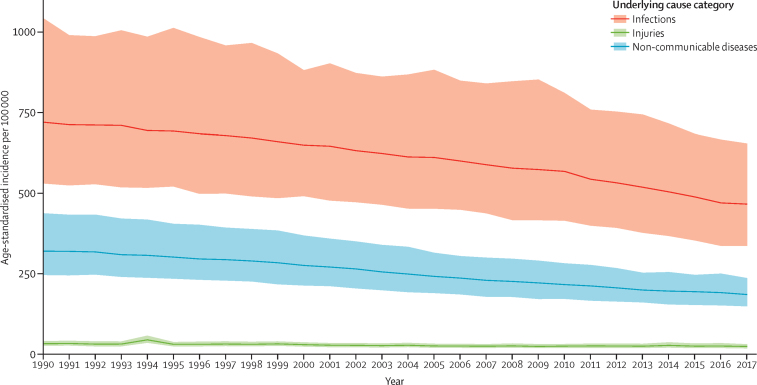
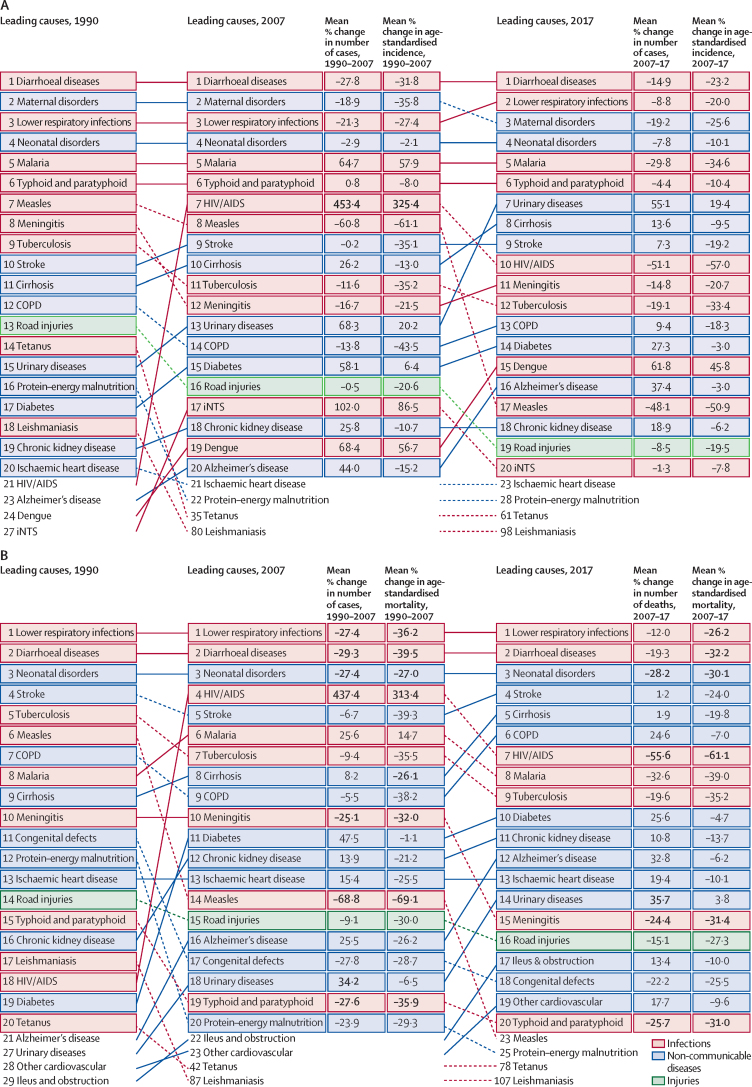
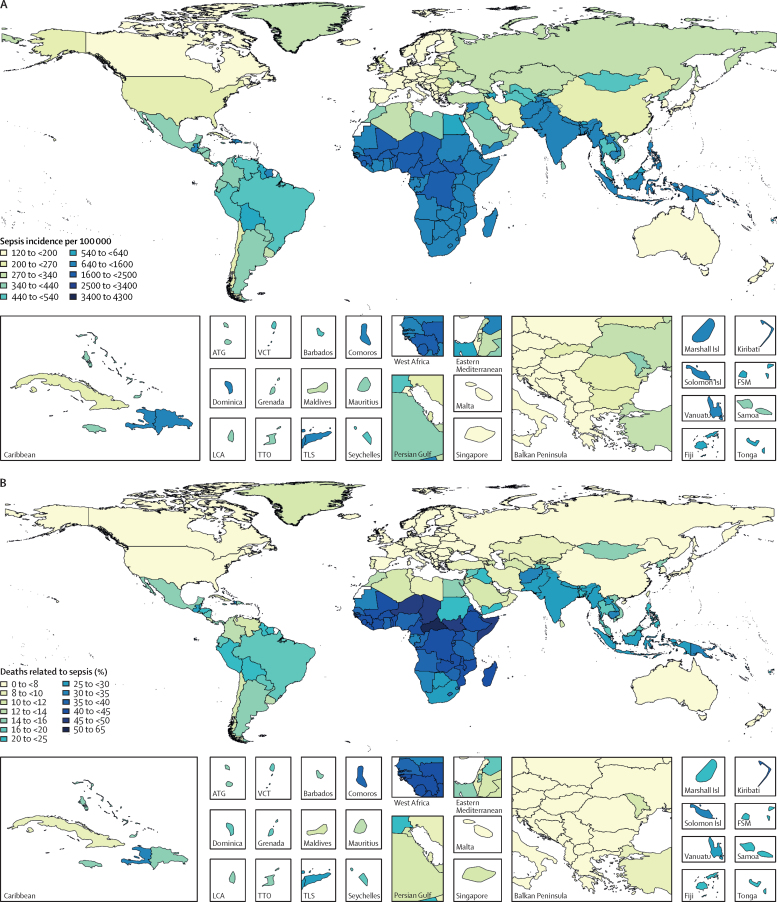
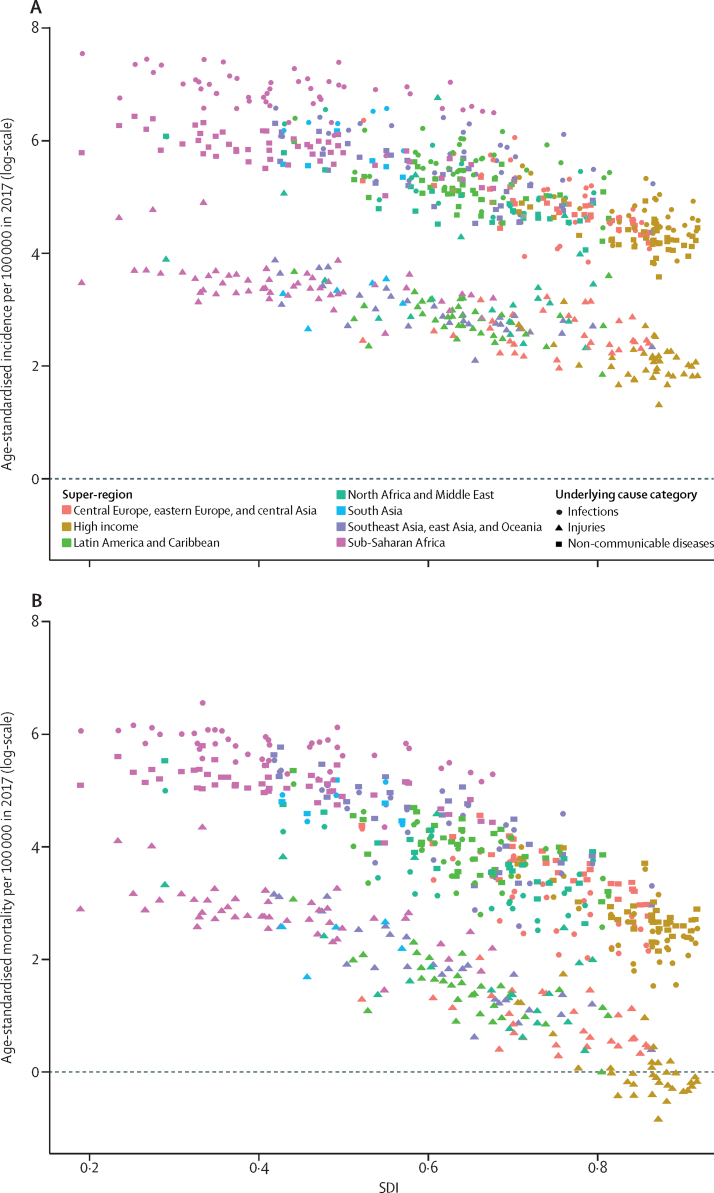
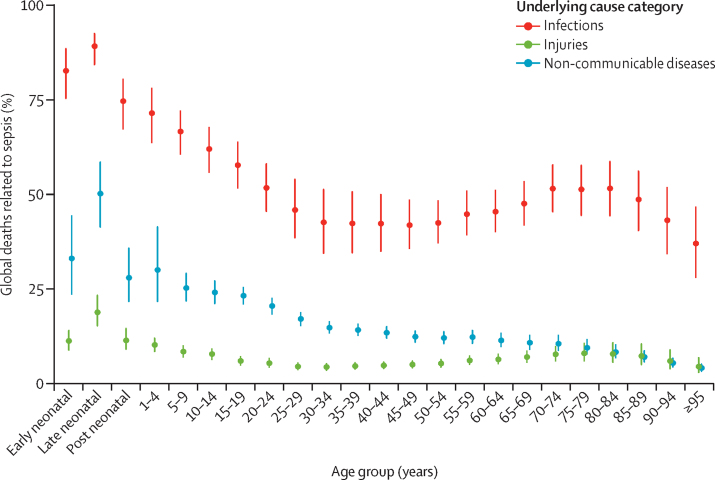
BACKGROUND: Sepsis is life-threatening organ dysfunction due to a dysregulated host response to infection. It is considered a major cause of health loss, but data for the global burden of sepsis are limited. As a syndrome caused by underlying infection, sepsis is not part of standard Global Burden of Diseases, Injuries, and Risk Factors Study (GBD) estimates. Accurate estimates are important to inform and monitor health policy interventions, allocation of resources, and clinical treatment initiatives. We estimated the global, regional, and national incidence of sepsis and mortality from this disorder using data from GBD 2017. METHODS: We used multiple cause-of-death data from 109 million individual death records to calculate mortality related to sepsis among each of the 282 underlying causes of death in GBD 2017. The percentage of sepsis-related deaths by underlying GBD cause in each location worldwide was modelled using mixed-effects linear regression. Sepsis-related mortality for each age group, sex, location, GBD cause, and year (1990-2017) was estimated by applying modelled cause-specific fractions to GBD 2017 cause-of-death estimates. We used data for 8·7 million individual hospital records to calculate in-hospital sepsis-associated case-fatality, stratified by underlying GBD cause. In-hospital sepsis-associated case-fatality was modelled for each location using linear regression, and sepsis incidence was estimated by applying modelled case-fatality to sepsis-related mortality estimates. FINDINGS: In 2017, an estimated 48·9 million (95% uncertainty interval [UI] 38·9-62·9) incident cases of sepsis were recorded worldwide and 11·0 million (10·1-12·0) sepsis-related deaths were reported, representing 19·7% (18·2-21·4) of all global deaths. Age-standardised sepsis incidence fell by 37·0% (95% UI 11·8-54·5) and mortality decreased by 52·8% (47·7-57·5) from 1990 to 2017. Sepsis incidence and mortality varied substantially across regions, with the highest burden in sub-Saharan Africa, Oceania, south Asia, east Asia, and southeast Asia. INTERPRETATION: Despite declining age-standardised incidence and mortality, sepsis remains a major cause of health loss worldwide and has an especially high health-related burden in sub-Saharan Africa. FUNDING: The Bill & Melinda Gates Foundation, the National Institutes of Health, the University of Pittsburgh, the British Columbia Children's Hospital Foundation, the Wellcome Trust, and the Fleming Fund.
Overview
The claims and statistics of this paper haven’t been checked yet.
Run the check — free, no account needed. It reads the open-access text and checks the sources it cites.
Integrity signals
Registry
Cites
Statistics
Figures
Verification
Claims the paper makes
The claims and statistics of this paper haven’t been checked yet.
Run the check — free, no account needed. It reads the open-access text and checks the sources it cites.
Claims other papers make about this one
Each is checked against this paper’s own text: does it say what the citing paper says it does?
The source backs part of the claim, not all of it — or backs it for a different population, condition or comparison.
In the citing paper
“A clear relationship can be seen – the poorest nations, all former European colonies, have the highest sepsis incidence”
From On race, human variation, and who gets and dies of sepsis (2022) · cites this paper as Rudd et al., 2020
Experimental — accuracy not yet measuredThe cited source says what the claim attributes to it.
In the citing paper
“This approach follows the methods validated by many studies on the epidemiology of sepsis26, 27, 28, 29 and was used by Rudd and colleagues.10”
From Global burden of bacterial antimicrobial resistance 1990–2021: a systematic analysis with forecasts to 2050 (2024) · cites this paper as [10]
The cited source says what the claim attributes to it.
In the citing paper
“Previously published global estimates reported a 53% decline in age-standardised sepsis-related deaths from 1990 to 2017.10”
From Global burden of bacterial antimicrobial resistance 1990–2021: a systematic analysis with forecasts to 2050 (2024) · cites this paper as [10]
In the citing paper
“8.2 million of the 11.1 million sepsis deaths worldwide that year occurred in low and middle income nations”
From On race, human variation, and who gets and dies of sepsis (2022) · cites this paper as Rudd et al., 2020
In the citing paper
“more people in middle and low income nations die of sepsis per incident than in wealthy nations”
From On race, human variation, and who gets and dies of sepsis (2022) · cites this paper as Rudd et al., 2020
In the citing paper
“The majority of the world's sepsis burden is borne by the least wealthiest nations, most former European colonies.”
From On race, human variation, and who gets and dies of sepsis (2022) · cites this paper as Rudd et al., 2020
In the citing paper
“Worldwide, the bulk of sepsis burden falls on marginalized peoples (Gracey & King, 2009; Rudd et al., 2020).”
From On race, human variation, and who gets and dies of sepsis (2022) · cites this paper as Rudd et al., 2020
Self-check
Percentages, sums and reported differences re-computed from the paper’s own numbers.
The self-check needs the paper’s full text.
Citations
Cites
James, S. L., Abate, D., Abate, K. H., Abay, S. M., Abbafati, C., Abbasi, N., Abbastabar, H., Abd-Allah, F., Abdela, J., Abdelalim, A., et al. (2018) · The Lancet · doi:10.1016/s0140-6736(18)32279-7 · Cited by 13,867
Bone, R. C., BALK, R. A., Cerra, F. B., Dellinger, R. P., Fein, A. M., Knaus, W. A., Schein, R. M. H., & Sibbald, W. J. (1992) · CHEST Journal · doi:10.1378/chest.101.6.1644 · Cited by 13,335
Vos, T., Abajobir, A. A., Abate, K. H., Abbafati, C., Abbas, K. M., Abd-Allah, F., Abdulkader, R. S., Abdulle, A. M., Abebo, T. A., Abera, S. F., et al. (2017) · The Lancet · doi:10.1016/s0140-6736(17)32154-2 · Cited by 13,220
Self-citationRoth, G. A., Abate, D., Abate, K. H., Abay, S. M., Abbafati, C., Abbasi, N., Abbastabar, H., Abd-Allah, F., Abdela, J., Abdelalim, A., et al. (2018) · The Lancet · doi:10.1016/s0140-6736(18)32203-7 · Cited by 8,600
Self-citationAngus, D. C., Linde-Zwirble, W. T., Lidicker, J., Clermont, G., Carcillo, J., & Pinsky, M. R. (2001) · Critical Care Medicine · doi:10.1097/00003246-200107000-00002 · Cited by 8,503
Self-citationSurviving Sepsis Campaign: International guidelines for management of sepsis and septic shock: 2016.
Rhodes, A., Evans, L. E., Alhazzani, W., Levy, M. M., Antonelli, M., Ferrer, R., Kumar, A., Sevransky, J. E., Sprung, C. L., Nunnally, M. E., et al. (2017) · Intensive Care Medicine · doi:10.1007/s00134-017-4683-6 · Cited by 6,621
Self-citationThe epidemiology of sepsis in the United States from 1979 through 2000
Martin, G. S., Mannino, D. M., Eaton, S., & Moss, M. (2003) · New England Journal of Medicine · doi:10.1056/nejmoa022139 · Cited by 5,841
Stanaway, J. D., Afshin, A., Gakidou, E., Lim, S. S., Abate, D., Abate, K. H., Abbafati, C., Abbasi, N., Abbastabar, H., Abd-Allah, F., et al. (2018) · The Lancet · doi:10.1016/s0140-6736(18)32225-6 · Cited by 4,943
Self-citationKyu, H. H., Abate, D., Abate, K. H., Abay, S. M., Abbafati, C., Abbasi, N., Abbastabar, H., Abd-Allah, F., Abdela, J., Abdelalim, A., et al. (2018) · The Lancet · doi:10.1016/s0140-6736(18)32335-3 · Cited by 4,192
Self-citationFleischmann, C., Scherag, A., Adhikari, N. K. J., Hartog, C. S., Tsaganos, T., Schlattmann, P., Angus, D. C., & Reinhart, K. (2016) · American Journal of Respiratory and Critical Care Medicine · doi:10.1164/rccm.201504-0781oc · Cited by 3,548
Self-citation
Research works printed but not linked: 1
- Singer, 2016, The third international consensus definitions for sepsis and septic shock (Sepsis-3), JAMA, 315, 801, 10.1001/jama.2016.0287 · DOI · Paper page
Cited by
Sorted by citations
Items 401–500 of 1,054
Wang, G., & Chen, F. (2026) · Microorganisms · doi:10.3390/microorganisms14102214
“Each year, an estimated 48 million people develop sepsis, resulting in ~11 million deaths worldwide [18,53,54].”
Yeni, M., Ürüşan, H., Bayraktar, B., & Kotan, G. C. (2026) · Biomedicines · doi:10.3390/biomedicines14102223
Zhang, J.-F., Mo, Q.-Y., Liu, J.-H., Zhang, Y.-H., Cai, Z.-Y., Duan, X.-Y., Jin, T.-R., Zhu, Y.-N., Lyu, J., & Zhang, X.-S. (2026) · Journal of the American Association of Nurse Practitioners · doi:10.1097/jxx.0000000000001374
Balaji, C. A., Divakar, A., & Pillai, M. (2026) · Cureus · doi:10.7759/cureus.117288
Morán, V. M. C., Pazmiño, D. A. L., Cuenca, E. G. D., Ochoa, M. E. Q., Panchana, R. J. M., & González, D. D. C. (2026) · Revista Veritas de Difusão Científica · doi:10.61616/rvdc.v7i2.1834
Wu, S.-L., Zhang, J.-Y., Guo, S.-Q., Hu, Y.-T., Shen, H., Xu, Y.-J., & Yang, B.-N. (2026) · Immunity, Inflammation and Disease · doi:10.1002/iid3.70548
“Global Burden of Disease data demonstrate that sepsis continues to impose a massive public health burden worldwide, with high morbidity and mortality [3].”
Zhang, R.-R., Hong, Y.-J., Hai, D., Du, H.-Y., Zhao, L.-W., Li, Z.-Y., Yin, F.-K., Zheng, W.-L., Wang, K.-C., Pan, J.-Y., et al. (2026) · Journal of Inflammation Research · doi:10.2147/jir.s642803
Wei, X., Lu, X., Liu, X.-Z., Chen, L.-L., Jiang, X., Tu, Y., & Wang, Z.-B. (2026) · Respiratory Medicine · doi:10.1016/j.rmed.2026.109200
Toward earlier sepsis recognition: Prospective validation of the Lung Injury Prediction (LIP) score
Kumar, A., Manrai, M., Bansal, N., Pramanik, S. K., Mopagar, V., Singh, S. K., Vashisht, R., & Gautam, A. (2026) · Medical Journal Armed Forces India · doi:10.1016/j.mjafi.2026.08.014
Chandru, P., Alkhouri, H., Fogg, T., & Long, E. (2026) · Emergency Medicine Australasia · doi:10.1111/1742-6723.70362
Abbas, B., Abbas, A., Khan, I., & Nazeer, S. (2026) · Clinical Immunology · doi:10.1016/j.clim.2026.110782
Wang, D.-C., Liu, Y.-P., Wang, Y.-T., Zhuang, X., Yin, X.-P., Zhang, X.-Y., & Zhuang, Y.-F. (2026) · PLOS Digital Health · doi:10.1371/journal.pdig.0001758
Shou, Y., Liu, Y., Zhao, X., Xu, Z., Bai, X., Gao, F., Li, Z., & Wang, Y. (2026) · International Journal of Nanomedicine · doi:10.2147/ijn.s639374
Protective Effects of Picropodophyllotoxin on CLP-Induced Sepsis in Mice
Han, G., Kim, J., Kim, M. S., Park, D. H., & Bae, J.-S. (2026) · Current Issues in Molecular Biology · doi:10.3390/cimb48101049
“Sepsis may result from bacterial, fungal, or viral infections and remains associated with high mortality, with reported in-hospital mortality rates of 30–50% [3].”
Li, F., Wang, R., Ding, T.-T., Pan, S., & Qin, M. (2026) · Infection and Drug Resistance · doi:10.2147/idr.s642072
Li, J., Sun, Y., He, M., 廖學儀, Zou, Q., & Pan, S. (2026) · Journal of Inflammation Research · doi:10.2147/jir.s641837
Yu, Z.-H., Li, R., Wang, X., Zhou, Y., Han, X.-J., Yang, Y., Liu, X.-R., Pei, C.-B., Zhang, Q., Xu, G.-G., et al. (2026) · Clinical Interventions in Aging · doi:10.2147/cia.s630597
“5,6 Atypical inflammatory responses, high baseline comorbidity burden, and frailty-related physiological reserve decline reduce the discriminative value of conventional scores in this group.”
Köse, A., Keser, Z. B., Gül, M., Yaşar, Ş., Özhan, O., Ulutaş, Z., Dogru, F., Kurucay, E., LEVENT, A., Balkar, M. E., et al. (2026) · International Journal of Molecular Sciences · doi:10.3390/ijms27209088
“Despite advances in antimicrobial and supportive care, sepsis remains a major cause of morbidity and mortality worldwide [2].”
Lee, H. N. R., Lin, J., Baer, B., Haffizulla, A., Ware, L. B., Harrison, F. E., & Bastarache, J. A. (2026) · Brain Behavior and Immunity · doi:10.1016/j.bbi.2026.107062
Duan, A.-Y., Yuan, Y., Lei, S.-Y., & Li, J.-S. (2026) · International Journal of Infectious Diseases · doi:10.1016/j.ijid.2026.109180
Yang, S., Huang, Y., Yang, J., Wang, Y., Zhou, P., Song, S., Qian, S., Dong, Y., Ling, L., Li, A., et al. (2026) · Artificial Intelligence in Emergency Medicine · doi:10.1016/j.aiemed.2026.100038
Kolev, M., Naskinova, I., Lazarova, M., Klisurov, V., & Kalinov, H. (2026) · International Journal of Molecular Sciences · doi:10.3390/ijms27209273
“Sepsis is life-threatening organ dysfunction caused by a dysregulated host response to infection [1], and it remains one of the largest contributors to global mortality [2].”
Diagnostic Errors in Sepsis: A Systematic Review of the Literature
Kwok, C. S., Lee, S., Afzal, A., Bennett, S., Halvorsen, J., & Hammell, C. (2026) · Journal of Clinical Medicine · doi:10.3390/jcm15208152
“Globally, sepsis accounts for 49 million cases each year, resulting in deaths reaching 11 million [8].”
Kurtulmuş, İ. A., Bozgül, Ş. M. K., Acar, C., Ak, G., Ozmen, R., Avcı, H. D., Efgan, M. D., Uslu, Ç., Karaman, Z. T., & Bozkurt, D. (2026) · International Journal of General Medicine · doi:10.2147/ijgm.s639020
Zhang, H.-Y., Liang, S., Yue, X.-Y., He, X.-F., Zhao, H.-R., Su, Y., & Wu, J. (2026) · International Journal of Nanomedicine · doi:10.2147/ijn.s622399
Grob, C. A., Wilden, C., Ampofo, E., Steiner, L. A., & Laschke, M. W. (2026) · Microvascular Research · doi:10.1016/j.mvr.2026.105030
Sepsis-associated efferocytosis deficiency: Molecular mechanisms and novel therapeutic targets
Qin, X., Zhong, A., Zhou, Z., Xiaoli, S., Song, Y., & 徐士欣 (2026) · Clinical Immunology · doi:10.1016/j.clim.2026.110787
Neutrophil Extracellular Traps (NETs), Immunothrombosis and the Microvascular Siege in Sepsis‐ARDS
El‐Sehrawy, A. A. M. A., Mansurov, D., Baig, M. R., Abdelrahim, I. M., Bainsal, N., Bansal, P., Abdullah, S. S., Khaleel, Z. T., Jabir, M. S., & Smerat, A. (2026) · Pulmonary Circulation · doi:10.1002/pul2.70438
Rong, J., Jiang, L., Guo, J., Li, J.-Z., Jiang, W., Xu, C.-G., & Fang, J.-J. (2026) · Journal of Inflammation Research · doi:10.2147/jir.s644343
Liu, J., Zhao, Y.-H., Zhang, X.-H., Guo, Y., Yu, D., Song, X.-Y., Wang, Q.-X., Tian, J., Chang, X.-L., Lu, Q.-L., et al. (2026) · Journal of Advanced Research · doi:10.1016/j.jare.2026.10.035
PLA2G2A is a candidate biomarker for sepsis diagnosis in mice through machine learning algorithms
Zhu, H., Peng, P., Han, S.-Q., & Yang, R.-L. (2026) · Frontiers in Immunology · doi:10.3389/fimmu.2026.1937718
Montaña, M. S. P., Acosta, J. D. B., Galvis, L. P. A., Güezguan-Pérez, J. A., & Fandiño, Y. R. M. (2026) · Frontiers in Medicine · doi:10.3389/fmed.2026.1941982
Huang, T.-C., Pan, M.-Y., Pan, L.-F., Liang, P., Mou, C.-L., & Lu, J.-Y. (2026) · Frontiers in Cardiovascular Medicine · doi:10.3389/fcvm.2026.1918792
ÖZÇELİK, A., Danış, F., & Çelik, K. (2026) · Journal of Clinical Medicine · doi:10.3390/jcm15197591
Xing, D., Xiao, Z., Liu, B., Xu, J., 梁宇峰, & Wei, X. (2026) · Frontiers in Cellular and Infection Microbiology · doi:10.3389/fcimb.2026.1888168
“Children represented nearly half of these cases, with over 3 million annual deaths, disproportionately affecting resource-limited regions (Rudd et al., 2020; Bassat et al., 2023; Watson et al., 2024).”
Bui, N. Q., Nguyen, N. P., Ong, T. H., Nguyen, P., Vo, T. V., Truong, M. A. M., Tran, D. H., & Thai, D. M. (2026) · Trends in Pediatrics · doi:10.59213/tp.2026.362
Early Clearance of Lactate and Its Outcome in Septic Patients
Ahmed, K., & Ali, Z. (2026) · Pakistan journal of health sciences · doi:10.54393/pjhs.v7i9.4257
Toppin, P. J., Correia, M. D. T., Chang, Y., Adhikari, L., McLaverty, B. P., & Natarajan, A. (2026) · Intensive Care Medicine Experimental · doi:10.1186/s40635-026-00972-8
“Septic shock is sepsis with associated circulatory failure and systemic hypo-perfusion, resulting in markedly increased mortality and cost [2–5].”
InfluentialZhang, E., Sha, L., Zhu, C., Zhou, Z., Jin, Z., Yu, X., Meng, P., Meng, K., Wei, H., & Xu, Q. (2026) · Immunity & Inflammation · doi:10.1007/s44466-026-00054-0
“Sepsis is a life-threatening organ dysfunction caused by a dysregulated host response to infection, representing a major global health burden with an estimated 48.9 million incident cases and 11 million sepsis-related deaths annually [1, 2].”
InfluentialXu, Y., Zheng, S.-J., Liu, Z.-Q., & Zhao, S.-L. (2026) · Frontiers in Medicine · doi:10.3389/fmed.2026.1954894
Reina-Aguilar, C., Yébenes, J. C., Castro, P., Vela, E., Badía, J. M., Ruíz-Rodríguez, J., Jiménez-Fábrega, F. X., Artigas, A., & Lorencio, C. (2026) · Medical Science · doi:10.3390/medsci14060616
Surje, R., Shrivastava, P., Jain, A. K., & Gupta, K. (2026) · Journal of Madha Academy of Research and Science · doi:10.25259/jmars_1_2026
Ma, J., Wang, Z., Qi, X., Li, W., Wang, J., Huang, Y., Ma, Q., Li, F., Lu, X., Fu, Y., et al. (2026) · Metabolic Brain Disease · doi:10.1007/s11011-026-01994-7
“Globally, sepsis affects approximately 288 individuals per 100,000 person-years, with age-standardized incidence and mortality rates having declined by 37.0% and 52.8%, respectively, since 1990 (Fleischmann et al. 2016; Rudd et al. 2020).”
InfluentialNagy, G., Hollosi, J., Turan, C., Laczkó, D., Sipos, Z., Hegyi, P., Zubek, L., & Molnár, Z. (2026) · Intensive Care Medicine Experimental · doi:10.1186/s40635-026-00967-5
Advancing sepsis research and critical care: from predictive analytics to novel therapeutics
Cui, Y., & Xie, K.-L. (2026) · Anesthesiology and Perioperative Science · doi:10.1007/s44254-026-00197-8
Wan, C.-Q., Lu, J.-M., Xu, L.-Y., Jiang, M., Zhu, C., Zhang, W., Han, P.-P., Zhang, J.-R., Wang, J., Ren, W.-W., et al. (2026) · Journal of Ethnopharmacology · doi:10.1016/j.jep.2026.122441
METTL7B Expression in Sepsis: Association With Disease Severity and 28‐Day Mortality
Zhang, Y., Wang, Y.-H., Yang, M.-J., & Huang, D. (2026) · Journal of clinical laboratory analysis (Print) · doi:10.1002/jcla.70366
Sun, C., Wei, S.-Y., Tao, J.-X., Chen, H.-Y., Yan, C., Wang, J.-C., Xu, J., Duan, L., Zhan, Y.-B., Zou, Y.-P., et al. (2026) · Advancement of science · doi:10.1002/advs.202519007
Birken, S. A., Shrestha, S., Clark, L. S., Wagi, C. R., Lacci‐Reilly, K. R., Kowalkowski, M. A., Palakshappa, J. A., King, J. E., Miller, C. D., Sebok‐Syer, S. S., et al. (2026) · Critical Care Explorations · doi:10.1097/cce.0000000000001490
“We empirically evaluated and refined the framework using qualitative interviews with sepsis care professionals (e.g., ED physicians, pharmacists, registered nurses) at hospitals throughout the United States.”
InfluentialWang, X.-J., Wang, K., Zhao, F.-X., Li, F.-X., & Li, L. (2026) · Frontiers in Medicine · doi:10.3389/fmed.2026.1893289
“Despite advances in early antimicrobial therapy, fluid resuscitation, vasopressor use, organ support, and sepsis bundles, mortality remains high, particularly among patients with septic shock, advanced age, multiple comorbidities, hepatic or renal dysfunction, or delayed presentation (2 – 4).”
Xu, J., Wang, P., & Xu, M. (2026) · Frontiers in Cell and Developmental Biology · doi:10.3389/fcell.2026.1885384
“…support, targeted interventions remain insufficient, largely because the molecular underpinnings of sepsis are extraordinarily complex, involving multiple overlapping and interactive forms of programmed cell death (PCD) (Singer et al., 2016; Rudd et al., 2020; van der Poll et al., 2021).”
Metabolomics Profiles and Prognostic Biomarkers in Sepsis Survivors and Nonsurvivors.
Xu, J., Huang, Z., Li, H., Han, X.-T., Liu, Y.-J., Zhang, X.-W., Li, J.-C., Yang, J., Huang, Z.-Z., Huang, D.-L., et al. (2026) · Journal of Surgical Research · doi:10.1016/j.jss.2026.08.034
Kang, J.-X., & Lee, J. H. (2026) · Medicine · doi:10.1097/md.0000000000050916
“[2] In the emergency department (ED), timely risk stratification is essential to guide decisions regarding monitoring intensity, intensive care unit admission, and initiation of aggressive treatment.”
Cao, Y., Wang, M., Li, Y., Shi, S.-Q., Wang, C.-J., Wu, Y.-Q., Gao, Z., Wang, L., Liu, Y.-Y., & Kang, H.-J. (2026) · Frontiers in Cellular and Infection Microbiology · doi:10.3389/fcimb.2026.1923833
Supportive care and in-hospital mortality among children with suspected sepsis in Bamako, Mali
Still, W. L., Keita, A. M., Tapia, M. D., Cherukumilli, S., Liang, Y., Stafford, K. A., Onwuchekwa, U., Juma, J., Sow, S. O., Kotloff, K. L., et al. (2026) · Frontiers in Pediatrics · doi:10.3389/fped.2026.1924848
He, M., Zhang, Y., Xiao, J., Yang, M., Wen, Y., & Huang, D. (2026) · Frontiers in Medicine · doi:10.3389/fmed.2026.1926236
“Sepsis is life-threatening organ dysfunction caused by a dysregulated host response to infection and remains a major global cause of death (1, 2).”
Biosensing Platforms and Multimodal Monitoring of Sepsis-Associated Cell Death
Coman, O., Azamfirei, L., Frandeș, O., & Grigorescu, B. (2026) · Biosensors · doi:10.3390/bios16100531
“Pro-inflammatory and immunosuppressive responses may occur sequentially or coexist during the course of the disease, contributing to substantial biological heterogeneity between patients [2,4,5].”
Grugel, R., Westhus, B., Nowak, H., Adamzik, M., Rahmel, T., & Eisenacher, M. (2026) · Intensive Care Medicine Experimental · doi:10.1186/s40635-026-00973-7
Nauclér, P., van der Werff, S. D., Winroth, A., Ternhag, A., & Johansson, A. F. (2026) · Infectious Diseases · doi:10.1080/23744235.2026.2731937
Plata-Menchaca, E. P., & Hernández-Jiménez, E. (2026) · Frontiers in Medical Technology · doi:10.3389/fmedt.2026.1916860
“The global burden remains substantial, with 48.9 million sepsis cases and 11.0 million sepsis-related deaths estimated in 2017 (2).”
InfluentialChen, W.-T., Ye, Y.-T., Ye, Z., Jiang, X.-S., Lin, J.-Z., Tang, M., & Song, Y.-W. (2026) · Frontiers in Medicine · doi:10.3389/fmed.2026.1919161
Nurse-Led Early Deterioration Surveillance in Adult ICU: A Concept Analysis
Villanueva-Bonus, S. A., & Rosa, R. D. D. (2026) · Asian Journal of Public Health and Nursing · doi:10.62377/s7n0nz20
“This concept is especially relevant amid aging ICU populations, multimorbidity, rising global sepsis burden (Rudd et al., 2020), and increasing technological complexity.”
Sun, J.-X., Wang, J.-Y., Dong, Y.-X., Liu, J.-Y., Ding, Y.-Y., Fan, S.-L., Chen, D., & Shou, S.-T. (2026) · JMIR Medical Informatics · doi:10.2196/90285
“Sepsis-related deaths account for approximately 20% of all global deaths, making it one of the leading threats to human life [2].”
Xie, H., Guan, C.-H., Xu, X., Liao, S.-F., Yang, J.-H., Yang, L.-X., Yu, Z.-Z., Zhang, Y., Liu, B., Wang, J., et al. (2026) · Frontiers in Pharmacology · doi:10.3389/fphar.2026.1796036
“Sepsis is a life-threatening organ dysfunction caused by a dysregulated host response to infection (Rudd et al., 2020).”
Rao, H.-H., Guo, F., Tian, J., Zuo, C.-J., & Chen, H.-W. (2026) · Frontiers in Immunology · doi:10.3389/fimmu.2026.1892665
“Level 3 retrospective comparative studies (n = 6) (35, 42 – 46) followed, exempli fi ed by the epidemiological work of Angus et al. (35) and Rudd et al. (42).”
Liu, J.-H., Wei, Z.-X., Ye, S., & Shao, M. (2026) · Experimental and Therapeutic Medicine · doi:10.3892/etm.2026.13308
“For patients in the intensive care unit (ICU), sepsis and septic shock are critical determi‑ nants of mortality prognosis (1).”
Patalano, M., Konyar, E., & Paynabar, K. (2026) · doi:10.48550/arxiv.2609.23705
“In 2017, sepsis accounted for an estimated 48.9 million incident cases and 11.0 million deaths worldwide, representing approximately the 20% of all global deaths (Rudd et al., 2020).”
InfluentialCorreia, E., Maudhuizon, T., Hérault, A., Bekri, S., Fontaine, E. M., Bellien, J., Mulder, P., Tamion, F., & Besnier, E. (2026) · Intensive Care Medicine Experimental · doi:10.1186/s40635-026-00975-5
“Sepsis is a significant global health concern, accounting for at least 30 million cases and 6 million deaths annually worldwide [1].”
Ravichandran, N., Fitzgerald, A., Quinlan, D., Fitzpatrick, P., Hayes, E., Umana, E., Molloy, M., Breslin, T., Cotter, A. B., & Cullen, W. (2026) · European Journal of Pediatrics · doi:10.1007/s00431-026-07438-9
“Sepsis accounts for over 8% of paediatric intensive care unit (PICU) admissions and causes more than 4.5 million childhood deaths annually [2, 3].”
InfluentialTürkiş, F. C., & Varol, B. (2026) · Frontiers in Medicine · doi:10.3389/fmed.2026.1929426
Editorial: Advancing pediatric critical care: sepsis, immune dysregulation, and precision therapies
Stark, R. J., & Song, Z.-X. (2026) · Frontiers in Pediatrics · doi:10.3389/fped.2026.1977584
Armalia, S., Sudarto, Jibran, K., & Maulana, D. H. (2026) · Eureka Herba Indonesia · doi:10.37275/ehi.v7i2.148
Lee, G.-M., Won, J.-Y., Cho, E. Y., Kim, J., Kim, K. J., Lee, Y. S., Lee, H. J., & Kim, J. (2026) · Journal of Medical Internet Research · doi:10.2196/95665
“In 2020, about 48.9 million cases of sepsis and 11 million related deaths were estimated globally, accounting for 20% of all deaths [5].”
InfluentialWalkowicz, M., Jarczewski, J., Słomiński, B., Bierzanowski, S., Pietruczuk, K., & Steckiewicz, K. P. (2026) · Frontiers in Bioengineering and Biotechnology · doi:10.3389/fbioe.2026.1942504
“Currently, it accounts for approximately 20% of global deaths (Rudd et al., 2020), while septic shock can exhibit a 30%–40% mortality rate (La Via et al., 2024).”
Pan, F., Yu, F., Zhang, T., Cai, Q., Jiang, J., Zhang, H., Chen, P., & Weng, W. (2026) · Frontiers in Cellular and Infection Microbiology · doi:10.3389/fcimb.2026.1861487
“The global disease burden of BSIs is staggering, and contemporary epidemiological estimates indicate approximately 30-50 million cases annually, with associated crude mortality rates reaching 20-40% (Holmes et al., 2025; Rudd et al., 2020).”
Xu, Y.-F., Ren, J., Zheng, Y., Huang, L.-F., Xie, Y.-W., & Cui, N. (2026) · Frontiers in Cellular and Infection Microbiology · doi:10.3389/fcimb.2026.1938021
“Sepsis remains a serious problem in intensive care units (ICUs) worldwide, as it is one of the primary causes of in-hospital mortality and complications among critically ill patients (Rudd et al., 2020).”
Fu, B., Sun, Y., & Zhang, X. (2026) · Frontiers in Cell and Developmental Biology · doi:10.3389/fcell.2026.1907621
“Globally, pediatric sepsis affects an estimated 25.2 million children annually, contributing to over 3.4 million pediatric deaths and accounting for approximately 25%–30% of all PICU admissions (Rudd et al., 2020; Alharbi et al., 2025).”
InfluentialRUNX3: a regulator of macrophage apoptosis with positive prognostic impact in sepsis
Sun, Y., Yang, Z., Jin, X., Guo, Y., & Wang, H. (2026) · Genes & Genomics · doi:10.1007/s13258-026-01797-1
“Sepsis, characterized by organ dysfunction due to dysregulated host responses to infection, results in approximately 48.9 million new cases and 11 million deaths annually, accounting for 19.7% of global mortality (Rudd et al. 2020).”
InfluentialGigliotti, S., Manno, M., Colosimo, M., Divenuto, F., Dragone, F., Greco, M., Peronace, C., Gallo, L., Trimboli, F., Minchella, P., et al. (2026) · Microbiology spectrum · doi:10.1128/spectrum.01767-26
“advances in early recognition, source control, antimicrobial therapy, and organ support, it remains a major global health burden with high morbidity and mortality, particularly in critically ill patients and in those with bloodstream infection and organ failure (2, 3).”
Zhao, T.-Y., Wen, K.-X., Han, X.-M., Tan, R.-M., Wang, Y.-T., & Du, Q.-S. (2026) · Frontiers in Medicine · doi:10.3389/fmed.2026.1889209
“Globally, it affects roughly 50 million individuals each year and is responsible for about 11 million deaths, accounting for nearly 20% of all mortalities, with the highest incidence and severity observed in intensive care units (ICUs) (2, 3).”
Li, J., Kang, H., Wang, B., Zou, F., Liu, W., Guo, W., & 廖新亮 (2026) · Frontiers in Immunology · doi:10.3389/fimmu.2026.1739115
Long, E., Hearps, S., Butt, W., Rozen, T. H., Williams, J., Williams, A., Gelbart, B., Mcnab, S., Borland, M., Cross, J., et al. (2026) · Pediatric Critical Care Medicine · doi:10.1097/pcc.0000000000004055
Hashemi, H., Moghtaderi, S., Dezfouli, M., Moghaddasi, M., Parvaresh, A., & Karevan, N. (2026) · The Egyptian Journal of Internal Medicine · doi:10.1186/s43162-026-00713-z
“With an estimated 11 million sepsis-related deaths annually, which accounts for nearly 20% of all global deaths, sepsis remains a major global health challenge with high morbidity and mortality, particularly among critically ill patients [2].”
Mendes, H., Correia, J. V. S., Salles, M. M. M., Kattan, E., Hernández, G., & Melo, R. (2026) · Critical Care Medicine · doi:10.1097/ccm.0000000000007364
Identification of potential key genes involved in iron deficiency for sepsis
Wu, Z.-H., Yi, Z.-Q., Yao, H.-Y., Li, D.-P., Zhou, H.-J., Wu, J.-M., Huang, Y.-Y., & Zhang, W.-Z. (2026) · Medicine · doi:10.1097/md.0000000000050597
“[3] The pathophysiology of sepsis involves complex interactions among inflammation, immune dysfunction, organ injury, and metabolic disturbances.”
Fu, Z.-Y., Yu, X.-R., Yang, Y.-L., Bai, Y.-L., You, J., Li, Y., Qin, F., & Huang, Z.-W. (2026) · Frontiers in Medicine · doi:10.3389/fmed.2026.1875464
Cheng, J., Liu, Y., Li, S.-J., Li, H.-D., Huo, J.-M., Tan, L.-P., & Luo, Z.-X. (2026) · Annals medicus · doi:10.1080/07853890.2026.2731669
“Bloodstream infection (BSI) remains a major global health problem associated with substantial morbidity and mortality [1].”
Sepsis in Women: Moving from Aggregate Comparisons to Context-Specific Evidence.
Tufan, Z. (2026) · International Journal of Infectious Diseases · doi:10.1016/j.ijid.2026.109115
Kobakova, Y., Kirkova-Bogdanova, A., Becheva, M. V. V., Semerdzhieva, N., Ivanova, S., Chaneva, M., Atanasova, V., Bashov, I. E., Yonchev, Y., Todorov, R. F., et al. (2026) · Pharmacia · doi:10.3897/pharmacia.73.e212551
“Thus, the number of sepsis survivors who develop subsequent infections is predicted to rise substantially in the next few decades (Rudd et al. 2020).”
Rapid Bacterial Typing via Fluorescence Differential Staining and Deep Learning.
Peng, X.-T., Tian, Y.-X., Zhang, Z.-K., Sun, Y.-F., Peng, W., Chen, L.-P., Wang, M.-T., Zhang, X., Liu, S.-L., & Wang, Z.-G. (2026) · Analytical Chemistry · doi:10.1021/acs.analchem.6c04116
Ibrahim, A. A., Khan, T., Khan, A., Obare, S. O., Dellinger, A. L., & LaJeunesse, D. (2026) · ACS Applied Bio Materials · doi:10.1021/acsabm.6c01063
Meng, N., Zhou, J., Guo, X., Hong, T., Li, X., Wei, X., Zhang, C., Zhang, X., Liu, S., Zhang, Y., et al. (2026) · Advanced Science · doi:10.1002/advs.77642
Xia, Y., & Yang, J. (2026) · Frontiers in Cellular and Infection Microbiology · doi:10.3389/fcimb.2026.1894489
“Globally, there are approximately 48.9 million sepsis cases annually, with about 11 million deaths, accounting for 19.7% of all global deaths (Rudd et al., 2020).”
InfluentialGong, Z., Liu, X., Xiang, X., Li, T., Feng, Z., Yang, J., Wang, L., Wang, L., & Zhang, W. (2026) · Frontiers in Immunology · doi:10.3389/fimmu.2026.1911134
“With its substantial mortality burden, sepsis is a critical threat to global health security (34, 35).”
Calcium homeostasis imbalance in sepsis: molecular mechanisms and therapeutic perspectives
Zhong, R., Chen, Z.-Y., Gu, J., Zhu, J., Xu, J., & Jiang, P. (2026) · Frontiers in Medicine · doi:10.3389/fmed.2026.1910574
“Thus, sepsis remains one of the leading causes of health loss globally (6).”
Luo, R., Xie, Y.-X., Deng, X.-F., Hong, C.-Y., Liang, Y.-Y., Xia, J.-Q., Zhang, D., Liu, J.-J., Chen, C.-B., & Chen, H.-S. (2026) · Frontiers in Immunology · doi:10.3389/fimmu.2026.1939205
Zheng, H., & Chen, W. (2026) · PLoS ONE · doi:10.1371/journal.pone.0357585
“Sepsis is defined as life-threatening organ dysfunction caused by a dysregulated host response to infection and remains a major global cause of death and critical illness [1,2].”
Zhang, W., Zhai, Q., Hu, X., Ye, H., Li, W., Guo, M., Song, S., Wang, H., Wang, Y., Mao, J., et al. (2026) · Anesthesia & Analgesia · doi:10.1213/ane.0000000000008288
Wang, Y., & Zhao, P. (2026) · Frontiers in Cellular and Infection Microbiology · doi:10.3389/fcimb.2026.1866390
“Both the incidence and mortality of sepsis increase markedly with age, particularly among individuals aged over 70 years (Strnad et al., 2017; Rudd et al., 2020).”
InfluentialHamadtalla, A. A. M., Mohammed, I. M. H., Abbas, M., Elmi, Y., Elhbishi, A. I. E., Elgailani, N. E. A., & Mohamed, O. (2026) · Cureus · doi:10.7759/cureus.116968
“The preceding GBD 2017 analysis had already doubled earlier estimates, reporting 48.9 million incident cases and 11.0 million sepsis-related deaths, with the greatest burden concentrated in sub-Saharan Africa, Oceania, and South and East Asia [3].”
Influential
Metadata
- Authors
- Rudd, K. E., Johnson, S. C., Agesa, K. M., Shackelford, K. A., Tsoi, D., Kievlan, D. R., Colombara, D. V., Ikuta, K. S., Kissoon, N., Finfer, S., Fleischmann-Struzek, C., Machado, F. R., Reinhart, K. K., Rowan, K., Seymour, C. W., Watson, R. S., West, T. E., Marinho, F., Hay, S. I., Lozano, R., Lopez, A. D., Angus, D. C., Murray, C. J. L., & Naghavi, M.
- Affiliations
- University of Pittsburgh (US)
- University of Washington (US)
- University of British Columbia (CA)
- UNSW Sydney (AU)
- Jena University Hospital (DE)
- Seattle Children's Hospital (US)
- Universidade de São Paulo (BR)
- Corresponding author
- Naghavi, Mohsen
- ORCID
- Venue
- The Lancet
- Publisher
- Elsevier BV
- Published
- 2020-01
- Volume
- 395
- Issue
- 10219
- Pages
- 200-211
- ISSN
- 0099-5355 (ISSN-L)
- 0140-6736
- PMC
- PMC6970225
- OpenAlex
- W2998853022
- Cited by
- 7,971
- References
- 42
- Citations by year
- 2026: 1540 · 2025: 1722 · 2024: 1545 · 2023: 1195 · 2022: 899 · 2021: 735 · 2020: 329
- FWCI
- 567.33
- Type
- journal article
- Language
- en
- Open access
- hybrid
- doi.org
- Licence
- Locations
- The Lancet (publishedVersion, cc-by)
- PubMed Central (publishedVersion, cc-by)
- PubMed (publishedVersion)
- LA Referencia (Red Federada de Repositorios Institucionales de Publicaciones Científicas) (submittedVersion, other-oa)
- Minerva Access (University of Melbourne) (submittedVersion, cc-by)
- Funders
- Bill & Melinda Gates Foundation
- National Institutes of Health (T32HL007287, T32HL007820, R35GM119519)
- National Health and Medical Research Council (no 1117230)
- Topics
- Health Sciences › Medicine › Critical Care and Intensive Care Medicine › Sepsis Diagnosis and Treatment
- Health Sciences › Medicine › Public Health, Environmental and Occupational Health › Global Health and Epidemiology
- Health Sciences › Medicine › Pediatrics, Perinatology and Child Health › Neonatal and Maternal Infections
- Keywords
- sepsis, sepsis incidence, sepsis mortality, global burden of disease, case fatality, underlying cause of death, age-standardized incidence rate, temporal trends, regional variation, sub-Saharan Africa, South Asia, hospital records, cause-specific mortality, health policy interventions, resource allocation, health loss, nosocomial infections, infection-related mortality, sepsis surveillance
- MeSH terms
- Global Burden of Disease, Adolescent, Adult, Aged, Aged, 80 and over, Cause of Death, Child, Child, Preschool, Female, Humans, Infant, Infant, Newborn, Male, Middle Aged, Socioeconomic Factors, Incidence, Age Distribution, Sex Distribution, Sepsis, Young Adult
About these checks
Registry, retraction, Cites and statistics results are computed, not judged, with one exception: a printed reference that no index lists is read once by a model before it counts as a citation error. Claims are extracted by a model and kept only when their quote appears verbatim in the text; each cited source is then checked, with a model’s help, for whether it says what the claim relies on. Those verdicts can be wrong — read the claim’s quote and the cited source before relying on one.
Statistics and arithmetic are recomputed, not judged.
Confidence bands are shown only for fields calibrated on our annotated test set. None is calibrated yet, so no band is shown.
What counts as a claim ›How we measure confidence ›How we check this ›
Are you an author, or do you see a problem with this page? Request a review
