

How Censorship in China Allows Government Criticism but Silences Collective Expression
Open accessThe DOI matches its Crossref record; 53 of the 54 references it cites were found in a registry or an index, and 1 are not checked yet; none of the 12 sources its claims cite is checked for support yet.
Abstract
We offer the first large scale, multiple source analysis of the outcome of what may be the most extensive effort to selectively censor human expression ever implemented. To do this, we have devised a system to locate, download, and analyze the content of millions of social media posts originating from nearly 1,400 different social media services all over China before the Chinese government is able to find, evaluate, and censor (i.e., remove from the Internet) the subset they deem objectionable. Using modern computer-assisted text analytic methods that we adapt to and validate in the Chinese language, we compare the substantive content of posts censored to those not censored over time in each of 85 topic areas. Contrary to previous understandings, posts with negative, even vitriolic, criticism of the state, its leaders, and its policies are not more likely to be censored. Instead, we show that the censorship program is aimed at curtailing collective action by silencing comments that represent, reinforce, or spur social mobilization, regardless of content. Censorship is oriented toward attempting to forestall collective activities that are occurring now or may occur in the future—and, as such, seem to clearly expose government intent.
Checked 2026-11-22 · 1 reference not checked yet
Overview
CoChat Summary
TL;DR
The paper uses large-scale, real-time collection of Chinese social media posts to test why China censors online expression. It finds that censorship does not target criticism of the state or leaders; instead, it targets posts with collective action potential, regardless of whether they support or criticize the government.
Key findings
- Across the data, an average of approximately 13% of all social media posts were censored. Ex ante political sensitivity had only a weak relationship with censorship: Low and Medium categories were censored at 16% and 17%, respectively, versus 24% for High.
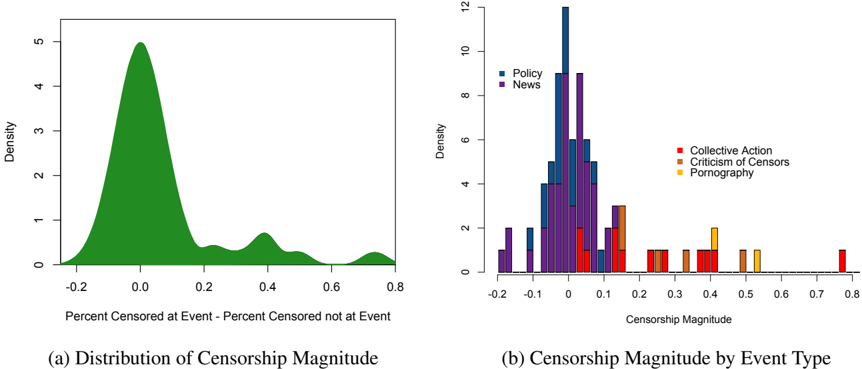
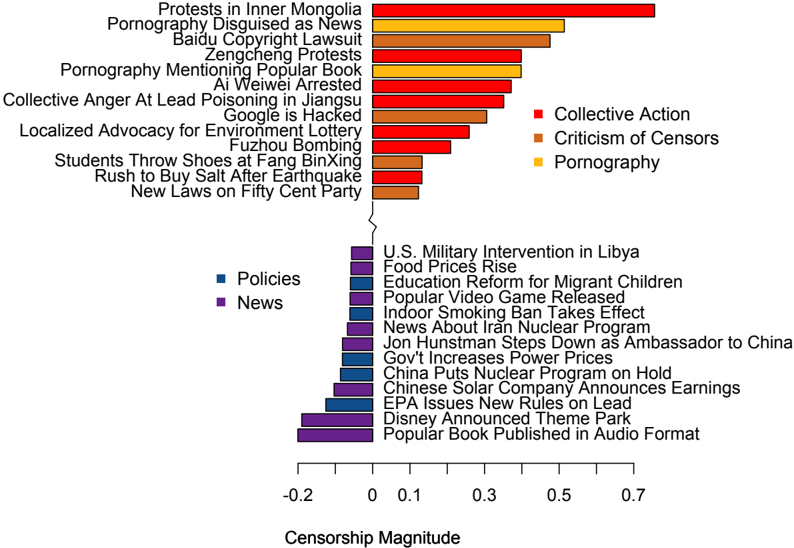
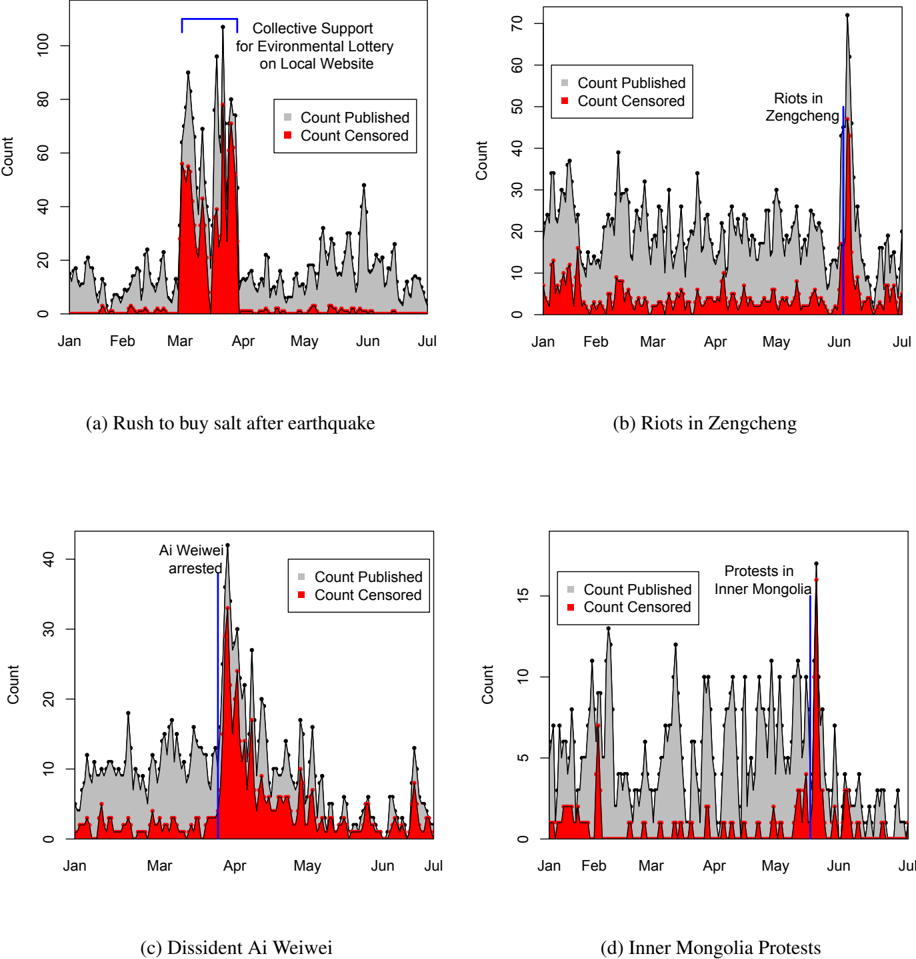
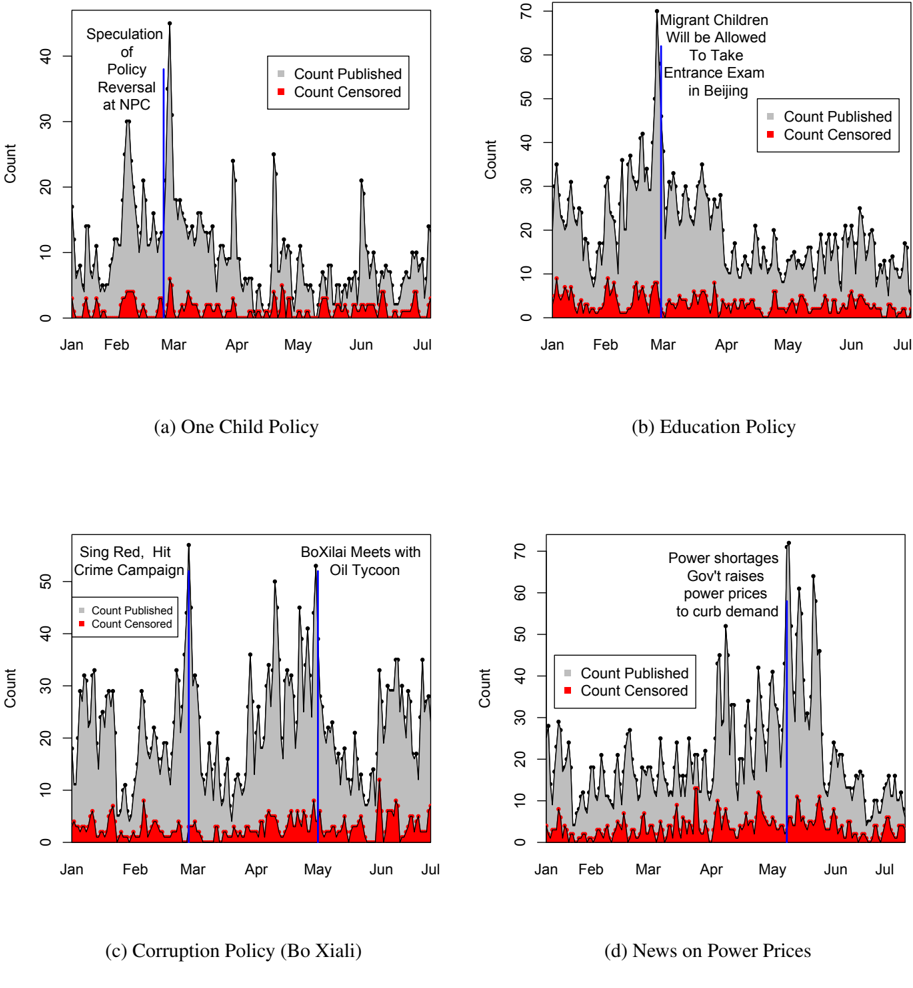
- Censorship was much higher during volume bursts tied to collective action: average censorship magnitude was 27% for collective action, compared with -1% for policy and -4% for news.
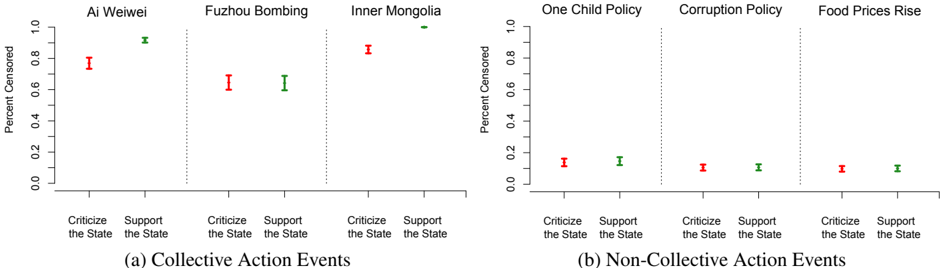
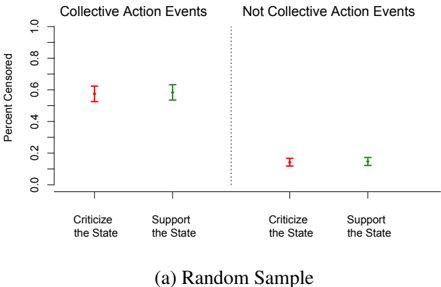
- For collective action events such as Ai Weiwei’s arrest, Inner Mongolia protests, and Fuzhou bombings, posts were censored at about 80% on average whether they criticized or supported the state. For non-collective-action events such as the one child policy, corruption policy, and food prices, censorship was about 10% on average for both critical and supportive posts.
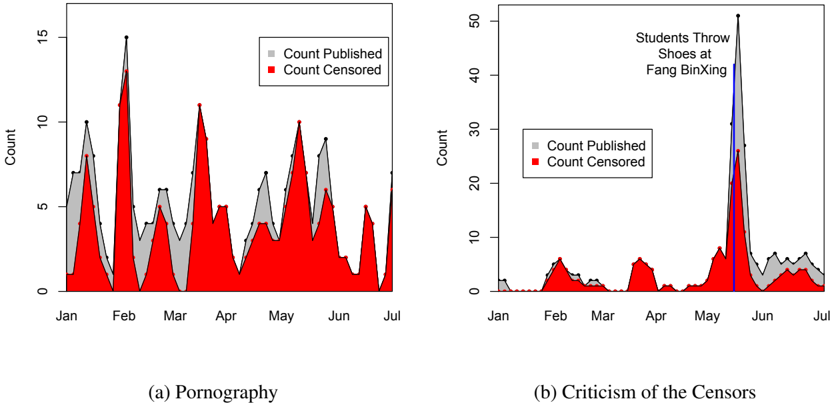
- Censorship also targeted pornography and criticism of the censors, but not government policy or other news. The authors argue censorship is aimed at curtailing collective action by silencing comments that represent, reinforce, or spur social mobilization.
Methods
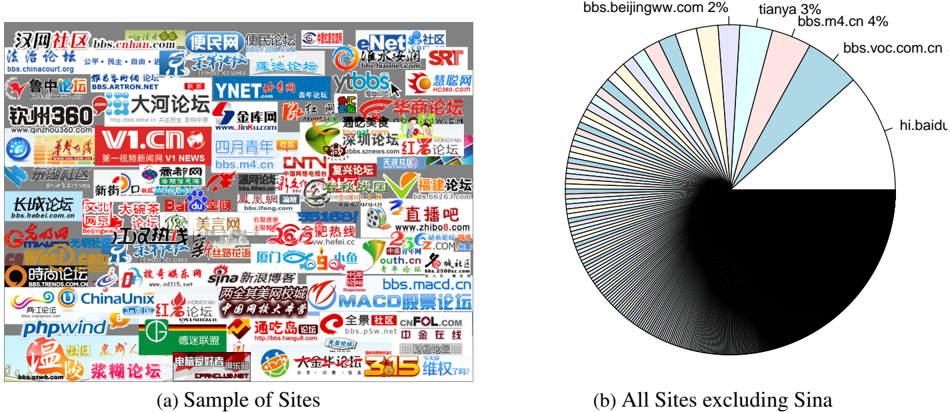
- The authors built a system to locate, download, and analyze posts from 1,382 Chinese websites during the first half of 2011, before government censors could remove them. They collected 3,674,698 posts, randomly selected 127,283 for further analysis, and overall collected and analyzed 11,382,221 posts.
- They used a stratified random sampling design covering 85 topic areas across three hypothesized political sensitivity levels, detected 87 volume bursts in 67 of the 85 topic areas using robust regression-based burst detection, and classified events into collective action potential, criticism of censors, pornography, government policies, and other news.
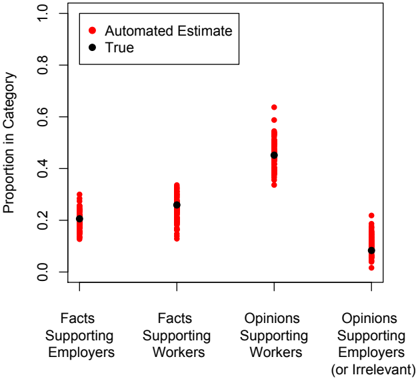
- To analyze content, they adapted the Hopkins and King “ReadMe” automated text analysis method to Chinese and extended it with a Bayesian procedure to estimate the percent censored within categories. Validation used native Chinese speakers coding 1,000 posts about 2010 labor strikes, with 100 as training and 900 as test; event coding reliability was 98.9% (86 of 87 events).
Limitations
- The paper states that its methodology misses self-censorship and censorship that may occur before the post is obtained; it also does not quantify the direct effects of the Great Firewall, keyword blocking, or search filtering.
- The authors state they have not studied physical violence, such as arrest of bloggers, or threats of the same; although many officials and levels of government influence censorship decisions, their data only sometimes distinguish among these sources, and they cannot determine the consequences of these limitations.
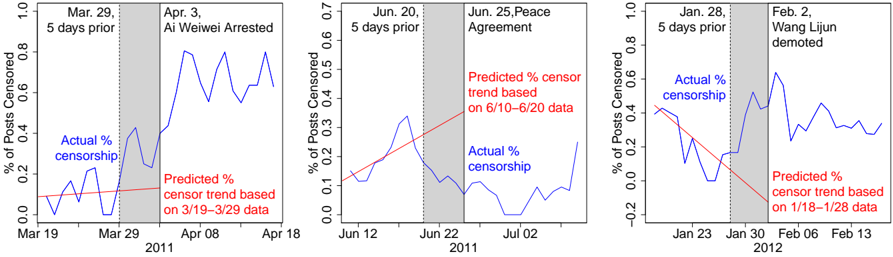
- The authors note that the presumably smaller number of discussions they cannot observe are likely to be those of most interest to the Chinese government, and they offer little evidence connecting social media findings to press freedom or other types of human expression in China. They also state that the predictive analysis was conducted retrospectively and with only three events, so further prospective validation would be valuable.
Model-written summary. Check it against the paper before relying on it.
Integrity signals
Registry
Cites
Statistics
Figures
Verification
Claims the paper makes
0 Valid · 7 Not valid · 7 Not checked · 88 Own results and interpretations
A result the paper reports from its own data — it cites no other source for it, so there is none to check. The quote shows it is in the paper.
In the paper
“Our data show that the Chinese censorship program allows for a wide variety of criticisms of the Chinese government, its officials, and its policies.”
§ How Censorship in China Allows Government Criticism but Silences Collective Expression * > Outline of Results
plain- Asserted: passes — The authors put it forward as true.
- Checkable: passes — It can be checked against evidence.
- Load-bearing: passes — The paper’s conclusions depend on it.
- Based: passes — The paper gives a reason why it holds.
A result the paper reports from its own data — it cites no other source for it, so there is none to check. The quote shows it is in the paper.
In the paper
“Contrary to previous understandings, posts with negative, even vitriolic, criticism of the state, its leaders, and its policies are not more likely to be censored.”
- Also stated in: § 1 Introduction · plain
“we find that when the Chinese people write scathing criticisms of their government and its leaders, the probability that their post will be censored does not increase.”
§ How Censorship in China Allows Government Criticism but Silences Collective Expression * > Abstract
plain- Asserted: passes — The authors put it forward as true.
- Checkable: passes — It can be checked against evidence.
- Load-bearing: passes — The paper’s conclusions depend on it.
- Based: passes — The paper gives a reason why it holds.
- Also stated in: § 1 Introduction · plain
A result the paper reports from its own data — it cites no other source for it, so there is none to check. The quote shows it is in the paper.
In the paper
“Large increases in online volume are good predictors of censorship when these increases are associated with events related to collective action, e.g., protest on the ground.”
§ How Censorship in China Allows Government Criticism but Silences Collective Expression * > Outline of Results
plainstates an association- Asserted: passes — The authors put it forward as true.
- Checkable: passes — It can be checked against evidence.
- Load-bearing: passes — The paper’s conclusions depend on it.
- Based: passes — The paper gives a reason why it holds.
A result the paper reports from its own data — it cites no other source for it, so there is none to check. The quote shows it is in the paper.
In the paper
“In addition, we measure sentiment within each of these events and show that during these events, the government censors views that are both supportive and critical of the state.”
§ How Censorship in China Allows Government Criticism but Silences Collective Expression * > Outline of Results
plainstates a cause- Asserted: passes — The authors put it forward as true.
- Checkable: passes — It can be checked against evidence.
- Load-bearing: passes — The paper’s conclusions depend on it.
- Based: passes — The paper gives a reason why it holds.
A result the paper reports from its own data — it cites no other source for it, so there is none to check. The quote shows it is in the paper.
In the paper
“We thus conduct the same analysis for the demotion of Wang Lijun in Panel (c) of Figure 11, and again see a large difference in actual and predicted percent censorship before Wang's demotion.”
§ How Censorship in China Allows Government Criticism but Silences Collective Expression * > Additional information
plainSingle case- Asserted: passes — The authors put it forward as true.
- Checkable: passes — It can be checked against evidence.
- Load-bearing: unclear — It is unclear whether the paper’s conclusions depend on it.
- Based: passes — The paper gives a reason why it holds.
46 more claims
Create a free account to see all 102 claims and every source verdict.
- Probably not a substantial claim. 26
- It may state two separate claims as one. 33
Claims other papers make about this one
Each is checked against this paper’s own text: does it say what the citing paper says it does?
The source backs part of the claim, not all of it — or backs it for a different population, condition or comparison.
In the citing paper
“Authorities are keen to review social media posts and have contentious messages removed (King etal., 2013) to ensure that potential threats remain invisible.”
From How Dictators Control the Internet: A Review Essay (2020) · cites this paper as King et al., 2013
Experimental — accuracy not yet measuredThe source backs part of the claim, not all of it — or backs it for a different population, condition or comparison.
In the citing paper
“In most autocratic regimes, governmental interference in digital infrastructure and communication is commonplace.”
From How Dictators Control the Internet: A Review Essay (2020) · cites this paper as King et al., 2013
Experimental — accuracy not yet measuredThe source backs part of the claim, not all of it — or backs it for a different population, condition or comparison.
In the citing paper
“First, the timing of censorship during a coup is consistent with many studies that have shown that Internet censorship is targeted during sensitive political time periods and periods of potential power transitions, such as elections and large-scale protests [23,25,44,47,73].”
From A multi-perspective view of Internet censorship in Myanmar (2021) · cites this paper as [44]
Experimental — accuracy not yet measuredThe cited source says what the claim attributes to it.
In the citing paper
“research has shown how mobilization organized through public coordination is repressed using that very same public information-for instance, repression is preemptively increased before focal days (Truex 2019); and autocracies censor online calls for collective action (King, Pan, and Roberts 2013), coerce online opinion leaders (Pan and Siegel 2020), and at times, turn off the internet entirely.”
From Coordinated Dis-Coordination (2024) · cites this paper as King, Pan, and Roberts 2013
The check wasn’t confident either way, so it gives no verdict — never disputed.
In the citing paper
“In China, for instance, two virtual police officers remind citizens that their browsing behavior is monitored (King etal., 2013).”
From How Dictators Control the Internet: A Review Essay (2020) · cites this paper as King et al., 2013
Experimental — accuracy not yet measured
1 more claim about this paper
Create a free account to see every claim other papers make about this one.
Citations
Cites
Robust estimation of a location parameter
Huber, P. J. (1964) · The Annals of Mathematical Statistics · doi:10.1214/aoms/1177703732 · Cited by 7,228
Robust Regression and Outlier Detection
Piepel, G. F. (1989) · Technometrics · doi:10.1080/00401706.1989.10488524 · Cited by 6,144
Robust Regression and Outlier Detection
Rousseeuw, P. J., & Leroy, A. M. (1987) · Wiley Series in Probability and Statistics · doi:10.1002/0471725382 · Cited by 5,609
Logistic Regression in Rare Events Data
King, G., & Zeng, L. (2001) · Political Analysis · doi:10.1093/oxfordjournals.pan.a004868 · Cited by 4,316 · cited 1×
“We do this via well-known and widely used case-control methodology (King and Zeng 2001).”
MethodSelf-citationDemocracy and Development: Political Institutions and Well-Being in the World, 1950–1990
Przeworski, A., Alvarez, M. E., Cheibub, J. A., & Limongi, F. (2000) · doi:10.1017/cbo9780511804946 · Cited by 2,845
Rightful Resistance in Rural China
O'Brien, K. J., & Li, L. (2006) · Cambridge University Press eBooks · doi:10.1017/cbo9780511791086 · Cited by 1,104
The Dynamics of Informational Cascades: The Monday Demonstrations in Leipzig, East Germany, 1989–91
Lohmann, S. (1994) · World Politics · doi:10.2307/2950679 · Cited by 1,035 · cited 1×
“Protests in East Germany, Eastern Europe, and most recently the Middle East have all preceded regime change (Ash 2002; Lohmann 1994; Przeworski et al. 2000).”
BackgroundRightful Resistance in Rural China
O'Brien, K., & Li, L.-J. (2006) · doi:10.1017/cbo9780511791086.003 · Cited by 987
China's Changing of the Guard: Authoritarian Resilience
Nathan, A. J. (2003) · Journal of Democracy · doi:10.1353/jod.2003.0019 · Cited by 927
Sparks and prairie fires: A theory of unanticipated political revolution
Kuran, T. (1989) · Public Choice · doi:10.1007/bf00116762 · Cited by 905 · cited 1×
“In fact, Kuran (1989) and Lohmann (2002) show that it is information about a collective action event that propels collective action and so distinguishing this from explicit calls for collective action would be difficult if not impossible.”
Background
Research works printed but not linked: 13
- 22. Freedom House. 2012. "Freedom of the Press, 2012." www.freedomhouse.org.
- 8. Chang, Parris. 1983. Elite Conflict in the Post-Mao China. New York: Occasional Papers Reprints.
- 26. Hinton, Harold. 1955. The "Unprincipled Dispute" Within Chinese Communist Top Lead- ership. Washington, DC: U.S. Information Agency.
- 44. Perry, Elizabeth. 2002. Challenging the Mandate of Heaven: Social Protest and State Power in China. Armork, NY: M. E. Sharpe.
- 52. Schurmann, Franz. 1966. Ideology and Organization in Communist China. Berkeley, CA: University of California Press.
- Tsai, 2007, Capitalism without Democracy: The Private Sector in Contemporary China
- 48. Qiang, Xiao. 2011. The Rise of Online Public Opinion and Its Political Impact. In Chang- ing Media, Changing China, ed. Susan Shirk. New York: Oxford University Press pp. 202-224.
- 9. Charles, David. 1966. The Dismissal of Marshal P'eng Teh-huai. In China Under Mao: Politics Takes Command, ed. Roderick MacFarquhar. Cambridge: MIT University Press pp. 20-33.
- 54. Shirk, Susan. 2007. China: Fragile Superpower: How China's Internal Politics Could Derail Its Peaceful Rise. New York: Oxford University Press.
- 56. Teiwes, Frederick. 1979. Politics and Purges in China: Retification and the Decline of Party Norms. Armork, NY: M. E. Sharpe. Tsai, Kellee. 2007a. Capitalism without Democracy: The Private Sector in Contemporary China. Ithaca, NY: Cornell University Press.
- 15. Duan, Qing. 2007. China's IT Leadership. Vdm Verlag.
- 38. MacFarquhar, Roderick. 1974. The Origins of the Cultural Revolution Volume 1: Contra- dictions Among the People 1956-1957. New York: Columbia University Press.
- 12. Chen, Xiaoyan and Peng Hwa Ang. 2011. Internet Police in China: Regulation, Scope and Myths. In Online Society in China: Creating, Celebrating, and Instrumentalising the Online Carnival, ed. David Herold and Peter Marolt. New York: Routledge pp. 40-52.
Cited by
Items 1,101–1,200 of 2,443
Discourse and Queer Sinophone Male Identities: A Western Immigrant Perspective
Freestone, P. (2025) · Cambridge University Press eBooks · doi:10.1017/9781009221269 · Cited by 7
Rice Bunnies vs. the River Crab: China’s Feminists, #MeToo, and Networked Authoritarianism
Guttenberg, V. (2021) · Flux International Relations Review · doi:10.26443/firr.v11i1.59 · Cited by 8
Disruptions as Opportunities: Governing Chinese Society with Interactive Authoritarianism
Sun, T. (2022) · University of Michigan Press eBooks · doi:10.3998/mpub.12326710 · Cited by 6
Ronay, R., Oostrom, J. K., She, M. H. C., & Maner, J. K. (2023) · Group Processes & Intergroup Relations · doi:10.1177/13684302231151942 · Cited by 8
“…low shared group identity; see Haslam et al., 2020), social barriers (e.g., low proximity or limited communication channels between followers; King et al., 2013), or cultural barriers (e.g., inequalities; Ronay et al., 2020, 2022) that constrain the ability to cooperate and thus reduce the…”
BackgroundAuthoritarian Ruling Parties' Recruitment Dilemma: Evidence from China
Angiolillo, F. (2023) · Journal of East Asian Studies · doi:10.1017/jea.2023.20 · Cited by 9
“The CCP is motivated to pull this cohort towards supporting the regime rather than criticizing it, as has frequently happened online, resulting in the CCP feeling compelled to censor online content (Chen and Xu 2017; King, Pan, and Roberts 2013).”
BackgroundZhou, S., & Yang, X. (2024) · Journalism · doi:10.1177/14648849241246407 · Cited by 12
“For example, Chinese people can freely express their opinions and offer constructive criticism about the state and its policies and leaders on Weibo in many cases (King et al., 2013, 2014; Miller, 2018; Zhu and Fu, 2021).”
InfluentialTactics and Targets: Labor Protest and State Response in China
Bao, S. (2024) · Sociological Quarterly · doi:10.1080/00380253.2024.2378134 · Cited by 7
“While official newspapers rarely mention popular unrest, social media platforms can be censored based on the political content of posts (King, Pan, and Roberts 2013).”
Sorg, A., & Wucherpfennig, J. (2024) · International Studies Quarterly · doi:10.1093/isq/sqae107 · Cited by 5
Global economic influence and domestic regime support: evidence from China
Tan, Y., Steinberg, D. A., & McDowell, D. (2024) · Review of International Political Economy · doi:10.1080/09692290.2024.2402817 · Cited by 10
“This partly reflects the fact that issues surrounding the economy are considered less sensitive and have a lower likelihood of censorship (King et al., 2013).”
Lei, Q., & Tang, R. (2024) · Discourse & Communication · doi:10.1177/17504813241281711 · Cited by 11
“Recently, some scholars have gradually shifted their focus from the political potential of the Internet to the underlying role of the Chinese government in shaping the networked space through censorship and management (Han, 2015; King et al., 2013; Schneider, 2018).”
‘Living in a post-truth era’? Online misinformation in everyday life in rural and urban China
Yan, P. S., & Schroeder, R. (2024) · Information Communication & Society · doi:10.1080/1369118x.2024.2413112 · Cited by 19
“Social scientists found that the government is more likely to remove information that has the potential to galvanize citizens into collective action (King et al., 2013).”
Damocles's Switchboard: Information Externalities and the Autocratic Logic of Internet Control
Sun, M. (2024) · International Organization · doi:10.1017/s0020818324000237 · Cited by 6
“Diamond 2010; King, Pan, and Roberts 2013.”
Understanding Avoidance of Political Discussions in an Autocratizing Society
Tse, C. H., & Lee, F. L. F. (2025) · International Journal of Public Opinion Research · doi:10.1093/ijpor/edaf013 · Cited by 5
The Political and Diplomatic Implications of Social Media: the Cases of China and South Africa
Wu, Y.-S. (2013) · African East-Asian Affairs · doi:10.7552/0-1-4 · Cited by 5
Liao, H. (2014) · International Symposium on Open Collaboration · doi:10.1145/2641580.2641611 · Cited by 5
“Another group of researchers found that individual criticisms of the government are permitted but that collective expression (which may lead to protests) is censored [12].”
BackgroundHao, H., Levkoff, S. E., Wang, W., Zhang, Q., Chen, H., & Zhu, D. (2020) · International Journal of Healthcare Information Systems and Informatics · doi:10.4018/ijhisi.2020100101 · Cited by 6
Official framing—portraying the implementation of an unpopular policy as responsive governance
Li, Y. (2021) · Social movement studies · doi:10.1080/14742837.2021.1929145 · Cited by 6
Community deception in weighted networks
Fionda, V., & Pirrò, G. (2021) · IEEE/ACM International Conference on Advances in Social Networks Analysis and Mining (ASONAM) · doi:10.1145/3487351.3488337 · Cited by 5
“As an example, information about users’ community membership can be used by governments to block forms of society self-organization [3].”
BackgroundWankmüller, S. (2022) · Journal of Computational Social Science · doi:10.1007/s42001-022-00191-7 · Cited by 6
“[62] Unspecified Likely by the authors Unclear”
Ward, P., & Denney, S. (2023) · Problems of Post-Communism · doi:10.1080/10758216.2023.2180038 · Cited by 5
“There is also an extensive literature on internet censor-ship (e.g., King, Pan, and Roberts 2013, 2017), with research focusing on authoritarian states.”
BackgroundFrom the Great Wall to the Great Firewall: A Historical Analysis of Surveillance
AKDUMAN, B. (2023) · International Journal of Social Sciences · doi:10.52096/usbd.7.28.21 · Cited by 5
“One key aspect of this domestic control function is the suppression of dissenting voices and the monitoring of online activities to identify and neutralize potential threats to the state (King et al., 2013: 327).”
BackgroundGlobalizing information networks, social media, and participation
Kuznetsova, D., & Tolbert, C. J. (2023) · Social Science Quarterly · doi:10.1111/ssqu.13287 · Cited by 15
#WhatIsDemocracy: finding key actors in a Chinese influence campaign
Jacobs, C. S., & Carley, K. M. (2023) · Computational and mathematical organization theory · doi:10.1007/s10588-023-09380-9 · Cited by 9
“While China’s iron-clad censorship policies, such as the Great Firewall to filter and block content internally, are well-known (Cran-dall et al. 2007; King et al. 2013), how China shapes international dialogue is less known.”
Liu, Y., Zhou, S., & Zhang, H. (2022) · Journalism and Media · doi:10.3390/journalmedia4030054 · Cited by 6
Beyond Diversity: Queer Politics, Activism, and Representation in Contemporary Japan
Kawasaka, K., & Würrer, S. (2024) · De Gruyter eBooks · doi:10.1515/9783110767995 · Cited by 9
Grievance shocks and coordination in protest
Correa, S., Nandong, G., & Shadmehr, M. (2024) · American Journal of Political Science · doi:10.1111/ajps.12859 · Cited by 8
Digital orientation and analyst recommendations: Evidence from China
Zhu, D., Zhang, X., & Wang, J. (2024) · Asia Pacific Journal of Management · doi:10.1007/s10490-024-09976-y · Cited by 7
“…text analysis of annual reports is mostly about exploring firms’ strategic behaviors such as digital development and digital transformation, but King et al. (2013) proposed that text analysis is focused more on exploring the intentions and emotions of the authors behind the paper and does not…”
Han, R. (2024) · Communication and the Public · doi:10.1177/20570473241264904 · Cited by 7
“First, the state strengthened its control throughout this phase by improving censorship (Bamman et al., 2012; Cairns, 2019; K. W. Fu et al., 2013; King et al., 2013; MacKinnon, 2009) and experimenting with online information manipulation tactics such as astroturfing (Han, 2018a; King et al., 2017;…”
Passing on the red genes: Communism nostalgia in online fictions and ideological governance in China
Han, R. (2024) · Regulation & Governance · doi:10.1111/rego.12622 · Cited by 5
Communication, coordination, and surveillance in the shadow of repression
Chau, T., Hassan, M., & Little, A. T. (2024) · American Journal of Political Science · doi:10.1111/ajps.12904 · Cited by 7
Chen, X., Guan, T., & Yang, Y. (2024) · Policy & Internet · doi:10.1002/poi3.432 · Cited by 6
“For example, although the Chinese state may tolerate general criticism of the government, expressions that incite collective action are promptly suppressed (King, Pan, and Roberts 2013).”
Mobile Internet and the Quality of Elections in Low-Income Democracies
Yeandle, A. (2025) · British Journal of Political Science · doi:10.1017/s0007123424000814 · Cited by 7
Governments, publics, and enemies: Intragroup dynamics as barriers to conflict resolution
Bachar, G. J., & Weiner, A. S. (2014) · Dynamics of Asymmetric Conflict · doi:10.1080/17467586.2014.970564 · Cited by 10
Wozniak, A. M. (2015) · Applied Linguistics Review · doi:10.1515/applirev-2015-0005 · Cited by 5
“3 King et al. (2013).”
Paradoxes of Deliberative Interactions on Government-Managed Social Media: Evidence from China
Medaglia, R., & Zhu, D. (2016) · Annual International Conference on Digital Government Research · doi:10.1145/2912160.2912184 · Cited by 5
“the uniqueness of the context of the Chinese Internet brings in possible biases in the study, due to the strong regulatory role that the Chinese authorities exercise in the governance of digital platforms [39], also in the form of censorship [48, 70, 79, 80, 88].”
BackgroundComparison Metrics for Large Scale Political Event Data Sets
Schrodt, P. A., & Analytics, P. (2015) · Cited by 7
Public audiencing: Using Twitter to study audience engagement with characters and actors
Barbour, K. (2016) · University of Adelaide Press eBooks · doi:10.20851/publics-11 · Cited by 5
Socialbots Whitewashing Contested Elections; A Case Study from Honduras
Gallagher, E., Suárez–Serrato, P., & Richards, E. I. V. (2018) · Advances in intelligent systems and computing · doi:10.1007/978-981-13-1165-9_50 · Cited by 6
“es: 41,255. Communities: 4,108. 1.1 Background A review of Botometer, it’s effectiveness and design can be found in [5]. The use of socialbots for political purposes and for spam can be found in [7], [6]. Other methods of bot detection have also been successful [1,4,2,3]. However Botometer, provides public API access…”
BackgroundInfluentialGoverning China’s Coal Challenge: Changing Public Policy, Debate and Advocacy
Jeffreys, E. M., & Xu, J. L. (2018) · Environmental Communication · doi:10.1080/17524032.2018.1452775 · Cited by 5
“Censorship works instead to “reduce the probability of collective action by clipping social ties whenever any collective movements are in evidence or expected” (King et al., 2013, p. 326).”
BackgroundApplying clustering algorithms to determine authorship of chinese twitter messages
Yan, J., & Matthews, S. J. (2016) · IEEE MIT Undergraduate Research Technology Conference (URTC) · doi:10.1109/urtc.2016.8361150 · Cited by 6
“China”, which prevents Chinese internet users from accessing certain Web sites altogether, (2) “keyword blocking”, which sifts through an immense amount of data to prevent posts containing certain banned key words or phrases, and (3) “hand censoring”, which differs greatly from the first two automated approaches of ce…”
BackgroundInfluentialA Design Approach for Automated Prevention of Cyberbullying Using Language Features on Social Media
Li, W. (2019) · International Conference on Information Management · doi:10.1109/infoman.2019.8714683 · Cited by 7
“metaphors, homophones and homographs) to disguise cyberbullying and avoid censorship and managements [6-7].”
BackgroundNeural Network Prediction of Censorable Language
Ng, K. Y., Feldman, A., Peng, J., et al. (2019) · doi:10.18653/v1/w19-2105 · Cited by 5
“Research shows that some of the censorship decisions are not necessarily driven by the criticism of the state (King et al., 2013), the presence of controversial topics (Ng et al., 2018a,b), or posts that describe negative events.”
BackgroundThree Phases in the Development of China’s Network Society
Qiu, J. L. (2019) · doi:10.1093/oso/9780198843498.003.0021 · Cited by 5
(Un)Naturality and Chinese queer masculinities on Ailaibulai
Zhou, Z. B. (2020) · Feminist Media Studies · doi:10.1080/14680777.2020.1754634 · Cited by 6
Gokhale, C., & Olugbara, O. O. (2020) · SN Computer Science · doi:10.1007/s42979-020-00292-y · Cited by 5
“This is because there are many forums and websites that offer hacking training in exchange for Bitcoins [28, 32].”
BackgroundFew-Shot Upsampling for Protest Size Detection
Halterman, A., & Radford, B. J. (2021) · Findings of the Association for Computational Linguistics: ACL (Findings of ACL) · doi:10.18653/v1/2021.findings-acl.325 · Cited by 9
“, 2017), the specific armed actors engaged in civil war violence from documents labeled with “rebel” or “government” (Lyall, 2010), or the specific phrases in news text that lead to their censorship (King et al., 2013).”
BackgroundOnline social cohesion reflects real-world group action in Syria during the Arab Spring
Chiovaro, M., Windsor, L., Windsor, A. J., & Paxton, A. (2021) · PLoS ONE · doi:10.1371/journal.pone.0254087 · Cited by 8
“Governments have been shown to be quite tolerant of dissent so long as it does not metamorphose into collective action [20].”
BackgroundYang, K. C. C., & Kang, Y. (2018) · IGI Global eBooks · doi:10.4018/978-1-5225-7113-1.ch055 · Cited by 7
Comprehensive law-based governance in China? Legislating authoritarianism in the Xi Jinping era
Wang, H. H., & Shi, S. Y. (2022) · Journal of Contemporary East Asia Studies · doi:10.1080/24761028.2022.2120715 · Cited by 8
Once Accessing the Internet, Less Trusting of Local Officials? Evidence from A Panel Survey in China
You, Y., Yu, S., & Xiao, S. (2022) · Society · doi:10.1007/s12115-022-00758-0 · Cited by 6
Yan, X., & La, L. (2023) · Governance · doi:10.1111/gove.12757 · Cited by 6
“It proactively shapes public opinion by controlling media attention (King et al., 2017), muting alternative voices (King et al., 2013; Stockmann, 2010), setting the agenda for public debate (Repnikova, 2017), deterring political opposition (Huang, 2015), and fabricating public rhetoric (Han, 2015).”
BackgroundMin, C., & Shen, F. (2023) · Telematics and Informatics · doi:10.1016/j.tele.2023.102010 · Cited by 12
Wu, S. J., & Littman, R. (2024) · Cambridge University Press eBooks · doi:10.1017/9781009170123.010 · Cited by 5
Munzert, S. (2014) · Zeitschrift für Politikwissenschaft · doi:10.5771/1430-6387-2014-1-2-205 · Cited by 5
Big Data and Democracy: Facts and Values
Gorham, A. E. (2017) · PS Political Science & Politics · doi:10.1017/s104909651700107x · Cited by 7
Abbott, J. P. (2019) · Asian Politics & Policy · doi:10.1111/aspp.12442 · Cited by 5
Mapping Chongqing's Urban Media Ecology
McArthur, I. (2018) · doi:10.1145/3284389.3284393 · Cited by 5
“[14] however, suggested the situation is more complex and nuanced than is acknowledged outside of China.”
BackgroundAssessing Post Deletion in Sina Weibo: Multi-modal Classification of Hot Topics
Arefi, M. N., Pandi, R., Tschantz, M. C., Crandall, J. R., Fu, K., Shi, D. Q., & Sha, M. (2019) · Workshop on Natural Language Processing for Internet Freedom: Censorship, Disinformation, and Propaganda (NLP4IF) · doi:10.18653/v1/d19-5001 · Cited by 12
Information and Communication Technologies as Contentious Repertoire
Liu, J. (2020) · European Journal of Sociology · doi:10.1017/s000397562000003x · Cited by 8
Sapiezynska, E., Lagos, C., & Cabalín, C. (2013) · Cuadernos info · doi:10.7764/cdi.32.468 · Cited by 5
A Randomized Experimental Study of Censorship in China ∗
King, G., Pan, J., & Roberts, M. E. (2013) · Cited by 7
Self-citationThe Enduring Challenges for Collective Lobbying: The Case of China’s Elite Universities
Liang, J. (2017) · The China Journal · doi:10.1086/690498 · Cited by 5
Automated Discovery of Internet Censorship by Web Crawling
Darer, A., Farnan, O., & Wright, J. (2018) · ACM Conference on Web Science (WebSci) · doi:10.1145/3201064.3201091 · Cited by 5
“Of these, many are country specific and have focused on China [10][18][22][25][40], Indonesia [21][36], Iran [7][8], Pakistan [2][27] and Thailand [19] among others.”
BackgroundEthical Challenges in Comparative Politics Experiments in ChinaPreprint
Lü, X. (2015) · SSRN Electronic Journal · doi:10.4324/9781315694139-15 · Cited by 5
Creemers, R. J. E. H. (2014) · SSRN Electronic Journal · doi:10.2139/ssrn.2379959 · Cited by 5
Towards Area-Smart Data Science: Critical Questions for Working with Big Data from ChinaPreprint
Stockmann, D. (2016) · SSRN Electronic Journal · doi:10.2139/ssrn.2718120 · Cited by 5
Challenging the Regime, Defending the Regime: Contesting Cyberspace in China
Han, R. (2012) · eScholarship (California Digital Library) · Cited by 9
Contextual Effects and Support for Liberalism: A Comparative Analysis
Zhang, H. (2018) · TSpace (University of Toronto) · Cited by 5
Taxing Dissent: The Impact of a Social Media Tax in UgandaPreprint
Boxell, L., & STEINERT-THRELKELD, Z. (2021) · SSRN Electronic Journal · doi:10.2139/ssrn.3766440 · Cited by 18
“Observed behavior of Chinese censorship corroborates the focus on collective action information (King et al. 2013).”
Government-led or Public-led? Chinese Policy Agenda Setting during the COVID-19 PandemicPreprint
Dai, Y., Li, Y., Cheng, C.-Y., et al. (2020) · SSRN Electronic Journal · doi:10.2139/ssrn.3756660 · Cited by 5
Ideological Intervention: Shaping Shared Mental ModelsPreprint
Murtazashvili, I., & Zhou, Y. (2021) · SSRN Electronic Journal · doi:10.2139/ssrn.3821161 · Cited by 5
Populismo de extrema derecha y redes sociales: ¿el futuro de la democracia en juego?
Capdevila Gómez, A., Casero Ripollés, A., Cozzo, E., Gayo Avello, D., Gerbaudo, P., Guerrero-Solé, F., Manchón, L. M., Moragas, F., Perales-García, C., Pérez-Altable, L., et al. (2023) · doi:10.31009/cr.2023.01 · Cited by 9
A survey of internet censorship and its measurement: Methodology, trends, and challenges
Wendzel, S., Volpert, S., Zillien, S., Lenz, J., Rünz, P., & Caviglione, L. (2025) · Computers & Security · doi:10.1016/j.cose.2025.104732 · Cited by 12
“By claiming to protect societal values, public morality, or vulnerable groups [106, 111, 119], mostly il-legal content is targeted.”
Social media and the democratization of political participation: a global perspective
Basha, H., Mustafa, S., & Mousa, K. M. (2026) · Frontiers in Political Science · doi:10.3389/fpos.2026.1719957 · Cited by 9
Choi, D., Peskoff, D., & Stewart, B. (2026) · Political Science Research and Methods · doi:10.1017/psrm.2025.10086 · Cited by 9
Reporting after removal: the effects of journalist expulsion on foreign news coverage
DeButts, M., & Pan, J. (2024) · Journal of Communication · doi:10.1093/joc/jqae015 · Cited by 6
Self-citationDrowning Out Dissent: The Thai Military’s Quest to Fabricate Popular Support on Twitter
Sirikupt, C. (2024) · The International Journal of Press/Politics · doi:10.1177/19401612241279158 · Cited by 15
“Rulers are wary not just about these events in and of itself but also individuals who can lead discussions that initiate them (King et al. 2013: 2; Koesel and Bunce 2011).”
InfluentialBans vs. Warning Labels: Examining Bystanders’ Support for Community-wide Moderation Interventions
Jhaver, S. (2025) · ACM Transactions on Computer-Human Interaction · doi:10.1145/3715116 · Cited by 12
“For example, state-led interventions, which could ban entire web sites, domains, or protocols [61], are more likely to be seen as censorship.”
Бедерсон, В. Д., Chernysheva, L., & Семенов, А. В. (2025) · Social Media + Society · doi:10.1177/20563051251344455 · Cited by 9
Strategic fiscal spending: Evidence from China
Lee, Y. (2022) · Governance · doi:10.1111/gove.12689 · Cited by 5
Staatliche Cyberkonflikte: Proxy-Strategien von Autokratien und Demokratien im Vergleich
Zettl-Schabath, K. (2023) · Politik in der digitalen Gesellschaft · doi:10.14361/9783839468883 · Cited by 6
Censor and Sensitivity: How China Handles US Embassy’s Public Diplomacy in Chinese Cyber Space
Pu, X., Wang, C., & Zhou, Y. (2023) · Journal of Chinese Political Science · doi:10.1007/s11366-023-09868-w · Cited by 7
“While China’s censorship has attracted growing attention in political science research [6, 15, 35], the majority of existing studies have focused on censorship of the domestic actors, leaving unclear how the country navigates foreign agencies’ public diplomacy with censorship.”
Tell me the truth? Dictatorship and the commitment to media freedom
Sheen, G. C.-H., Tung, H. H., & Wu, W. (2023) · Journal of Theoretical Politics · doi:10.1177/09516298231208419 · Cited by 4
“Current studies (e.g. King et al., 2013) aim to uncover the censorship policies of authoritarian governments by collecting the censored information (before it is censored).”
BackgroundBrown, R. J. (2024) · Politics · doi:10.1177/02633957241236404 · Cited by 7
“There has notably been extensive research on censorship in China which has noted how this varies according to time (King et al., 2013; Sun and Zhao, 2022; Weinberg et al., 2021) and space (Sun and Zhao, 2022; Wright, 2014: 132; Xu et al., 2011), and even observations of the involvement of non-CCP…”
Shao, L. H., Liu, D., & Wang, F. (2024) · Political Research Quarterly · doi:10.1177/10659129241242040 · Cited by 8
“Whereas the previous literature has created a typology of censorship between collective action and criticism (King, Pan, and Roberts 2013; Shao 2018), we fi nd that censorship can be more nuanced.”
InfluentialSzwajnoch, E. (2024) · China Information · doi:10.1177/0920203x241259431 · Cited by 5
“39 Overall, during targeted crackdowns, particular provisions that are not always enforced are executed.”
Zhang, N., & Huang, L. (2024) · Asian Journal of Communication · doi:10.1080/01292986.2024.2409649 · Cited by 5
“While it is important to acknowledge the censorship and suppression imposed by government control over social media (King et al., 2013), evidence suggests that opinion leaders can still make a notable impact on promoting pro-environmental causes.”
Collaborative authoritarianism and its unintended consequences
Schmidt-Feuerheerd, B. (2024) · Democratization · doi:10.1080/13510347.2024.2432018 · Cited by 10
Disguised Repression: Targeting Opponents with Nonpolitical Crimes to Undermine Dissent
Pan, J., Xu, X., & Xu, Y. (2024) · The Journal of Politics · doi:10.1086/734267 · Cited by 16
Self-citationResilient Rhetoric for Legitimacy: Analyzing Leaders’ Discourse on Democracy in China’s Reform Era
Huang, H.-H. (2024) · Journal of Chinese Political Science · doi:10.1007/s11366-024-09906-1 · Cited by 5
“Research on CCP propaganda has primarily focused on the strategies and skills involved in creating such propaganda [23–25] rather than on the actual content of propaganda.”
Washida, H. (2025) · Democratization · doi:10.1080/13510347.2024.2448846 · Cited by 4
“37 Nevertheless, given that an infectious disease discouraged in-person collective actions, 38 it is worth examining whether mass uprising was the key motivation of statistical manipulation during the pandemic.”
Ideology vs. Collective Action
Kogelmann, B. (2025) · Erkenntnis · doi:10.1007/s10670-025-00937-5 · Cited by 4
“…posts attempting to coordinate collective action are taken down, leading the authors to conclude “the purpose of the censorship program is to reduce the probability of collective action by clipping social ties whenever any collective movements are in evidence or expected” (King et al., 2013: 326).”
Unveiling the Making of Trending Topics on a Digital Platform: A Research Note on Chinese Sina Weibo
Liu, X., Zhao, J., Li, Z., Wang, D., & Chen, A. (2025) · Social Science Computer Review · doi:10.1177/08944393251324647 · Cited by 7
“…been explored in several areas, including emergence detection (Li et al., 2022; Miao et al., 2015), textual feature analysis (Cui & Kertesz, 2023; King et al., 2013; Hong et al., 2023; Huang et al., 2023; Wang et al., 2024), cross-platform comparisons (Kim et al., 2021; Yu et al., 2012), and…”
InfluentialDigital government construction and civic policy participation: evidence from China
Xia, S. (2025) · Policy Sciences · doi:10.1007/s11077-025-09576-7 · Cited by 7
“…to fortify social control, including but not limited to the use of information and communication techniques for information censorship and propaganda (Bolsover & Howard, 2019; King et al., 2013), as well as social monitoring based on artificial intelligence technology (Beraja et al., 2023).”
Twisted tongue: limits of China’s propaganda during crises and policy changes
Yang, T. Z., & Zhu, H. (2025) · Political Science Research and Methods · doi:10.1017/psrm.2025.10009 · Cited by 8
Regularized Campaigns as a New Institution for Effective Governance
Shen, S. V., Wang, Q., & Zhang, B. (2023) · Policy Studies Journal · doi:10.1111/psj.70052 · Cited by 8
“Mechanisms for public accountability are weaker or repressed, rendering alternative information channels, such as investigative journalism or civic reporting, ineffective or risky to use (King et al. 2013; Roberts 2018).”
CHINA AND THE AFRICAN INTERNET: PERSPECTIVES FROM KENYA AND ETHIOPIA
Gagliardone, I. (2013) · INDEX COMUNICACIÓN · Cited by 4
Whisper campaigns: market risks through online rumours on the Chinese Internet
Herold, D. K. (2015) · China Journal of Social Work · doi:10.1080/17525098.2015.1082493 · Cited by 6
“…on rumours that such posters were paid 0.5 RMB per post, Internet users created the term ‘Wumaodang’ (‘50 Cent Party’) for them, a term that is now often used to label any poster who is too supportive of the Chinese government (Greitens 2013; King, Pan, and Roberts 2013; Marolt 2011; Mina 2014).”
BackgroundInfluentialIssues and place: the hyperlink network of homeowner forums and implications for collective action
Huang, R., & Sun, X. (2014) · Chinese Journal of Communication · doi:10.1080/17544750.2014.993409 · Cited by 6
Richet, J. (2013) · Communications of the ACM · doi:10.1145/2492007.2492021 · Cited by 4
Metadata
- Authors
- KING, G., PAN, J., & ROBERTS, M. E.
- Affiliations
- Harvard University (US)
- Corresponding author
- KING, GARY
- PAN, JENNIFER
- Venue
- American Political Science Review
- Publisher
- Cambridge University Press (CUP)
- Published
- 2013-05
- Volume
- 107
- Issue
- 2
- Pages
- 326-343
- ISSN
- 0003-0554 (ISSN-L)
- 1537-5943
- OpenAlex
- W2144188763
- Cited by
- 2,415
- References
- 48
- Citations by year
- 2026: 161 · 2025: 206 · 2024: 249 · 2023: 272 · 2022: 230 · 2021: 193 · 2020: 206 · 2019: 157 · 2018: 178 · 2017: 153 · 2016: 137 · 2015: 120 · 2014: 91 · 2013: 54
- FWCI
- 395.09
- Type
- journal article
- Language
- en
- Open access
- green
- nrs.harvard.edu
- Licence
- Locations
- American Political Science Review (publishedVersion)
- Digital Access to Scholarship at Harvard (DASH) (Harvard University) (submittedVersion, cc-by)
- RePEc: Research Papers in Economics (submittedVersion)
- Topics
- Social Sciences › Communication › Social Media and Politics
- Social Sciences › Law › Freedom of Expression and Defamation
- Social Sciences › Sociology and Political Science › Media Influence and Politics
- Keywords
- internet censorship, Chinese government, social media, collective action, social mobilization, political criticism, online speech
About these checks
Registry, retraction, Cites and statistics results are computed, not judged, with one exception: a printed reference that no index lists is read once by a model before it counts as a citation error. Claims are extracted by a model and kept only when their quote appears verbatim in the text; each cited source is then checked, with a model’s help, for whether it says what the claim relies on. Those verdicts can be wrong — read the claim’s quote and the cited source before relying on one.
A language model drew the claims from the paper on 2026-10-11, under version 3 of the claim definition (model deepseek-v4.1-flash, prompt extract-v3).
A second model labelled each claim on 2026-10-11 (model jev-1.13-20260917, definition revision gold-guideline-v0.2).
Statistics and arithmetic are recomputed, not judged.
Confidence bands are shown only for fields calibrated on our annotated test set. None is calibrated yet, so no band is shown.
What counts as a claim ›How we measure confidence ›How we check this ›
Are you an author, or do you see a problem with this page? Request a review
Data sources
Bibliographic data: Semantic Scholar, OpenAlex, Crossref.
Contains information from the Semantic Scholar Academic Graph Datasets, made available under the ODC Attribution License (ODC-BY 1.0).
Semantic Scholar’s data is described in: Kinney, R., et al. (2023). The Semantic Scholar Open Data Platform. arXiv:2301.10140.
