

How Censorship in China Allows Government Criticism but Silences Collective Expression
Open accessThe DOI matches its Crossref record; 53 of the 54 references it cites were found in a registry or an index, and 1 are not checked yet; none of the 12 sources its claims cite is checked for support yet.
Abstract
We offer the first large scale, multiple source analysis of the outcome of what may be the most extensive effort to selectively censor human expression ever implemented. To do this, we have devised a system to locate, download, and analyze the content of millions of social media posts originating from nearly 1,400 different social media services all over China before the Chinese government is able to find, evaluate, and censor (i.e., remove from the Internet) the subset they deem objectionable. Using modern computer-assisted text analytic methods that we adapt to and validate in the Chinese language, we compare the substantive content of posts censored to those not censored over time in each of 85 topic areas. Contrary to previous understandings, posts with negative, even vitriolic, criticism of the state, its leaders, and its policies are not more likely to be censored. Instead, we show that the censorship program is aimed at curtailing collective action by silencing comments that represent, reinforce, or spur social mobilization, regardless of content. Censorship is oriented toward attempting to forestall collective activities that are occurring now or may occur in the future—and, as such, seem to clearly expose government intent.
Checked 2026-11-22 · 1 reference not checked yet
Overview
CoChat Summary
TL;DR
The paper uses large-scale, real-time collection of Chinese social media posts to test why China censors online expression. It finds that censorship does not target criticism of the state or leaders; instead, it targets posts with collective action potential, regardless of whether they support or criticize the government.
Key findings
- Across the data, an average of approximately 13% of all social media posts were censored. Ex ante political sensitivity had only a weak relationship with censorship: Low and Medium categories were censored at 16% and 17%, respectively, versus 24% for High.
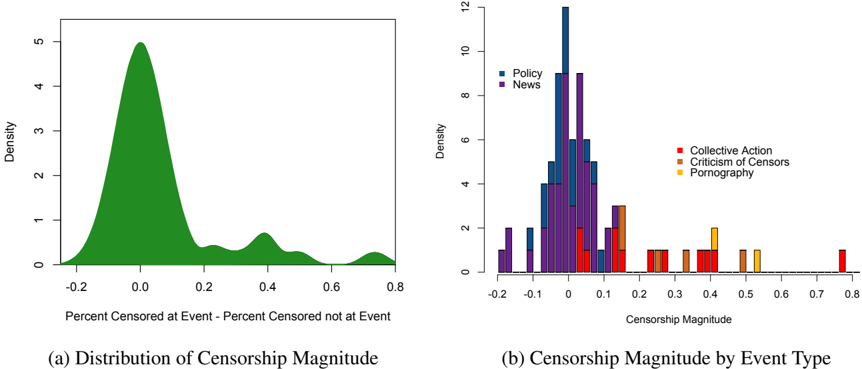
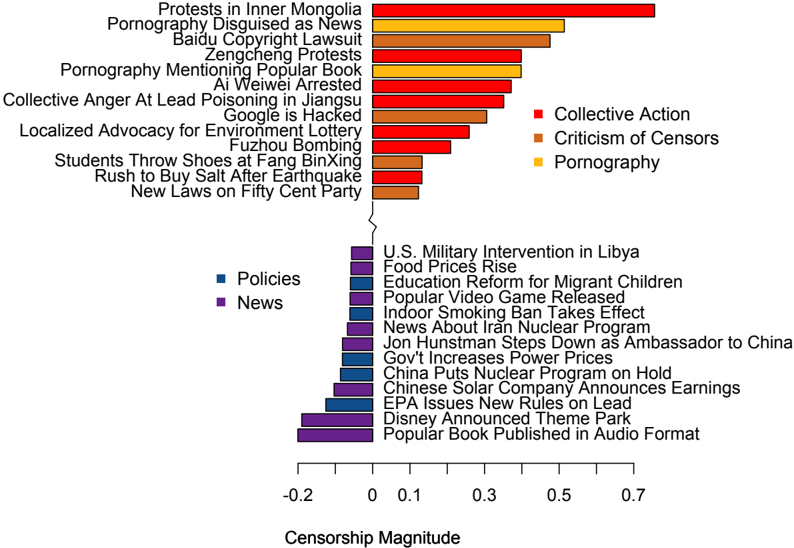
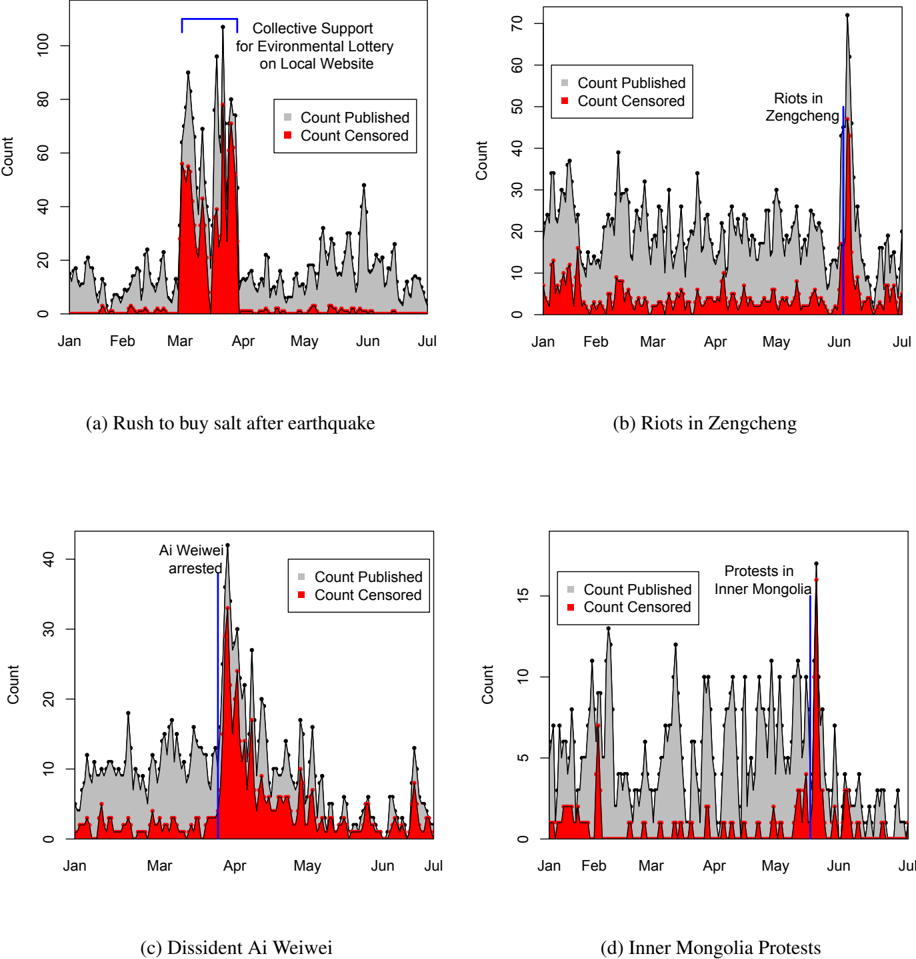
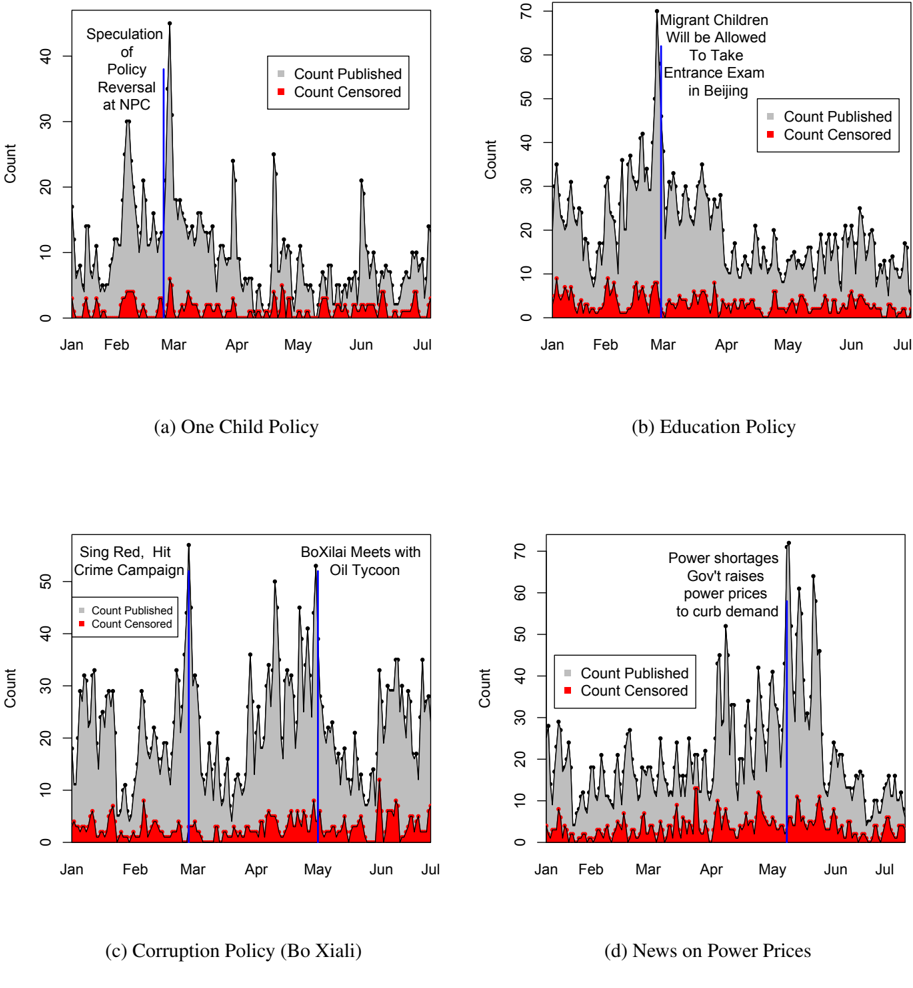
- Censorship was much higher during volume bursts tied to collective action: average censorship magnitude was 27% for collective action, compared with -1% for policy and -4% for news.
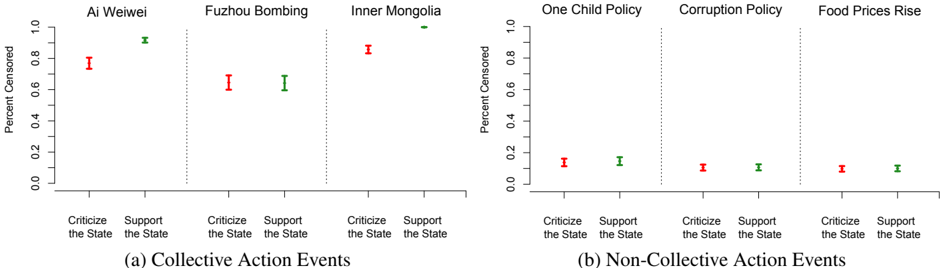
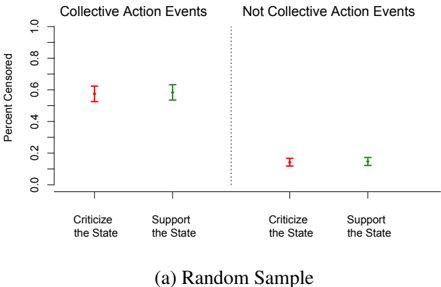
- For collective action events such as Ai Weiwei’s arrest, Inner Mongolia protests, and Fuzhou bombings, posts were censored at about 80% on average whether they criticized or supported the state. For non-collective-action events such as the one child policy, corruption policy, and food prices, censorship was about 10% on average for both critical and supportive posts.
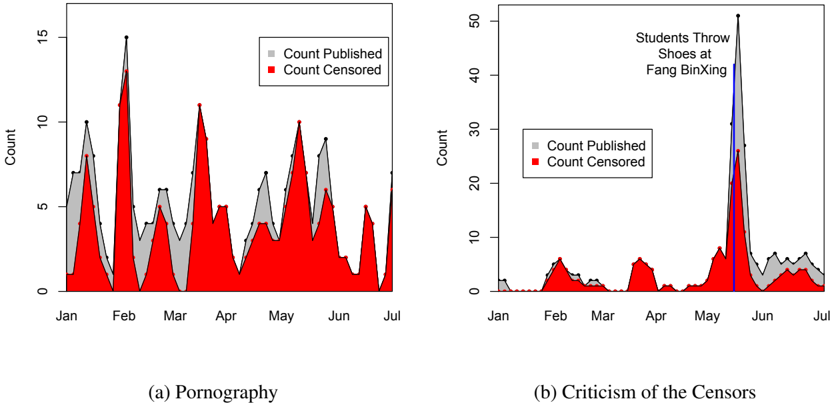
- Censorship also targeted pornography and criticism of the censors, but not government policy or other news. The authors argue censorship is aimed at curtailing collective action by silencing comments that represent, reinforce, or spur social mobilization.
Methods
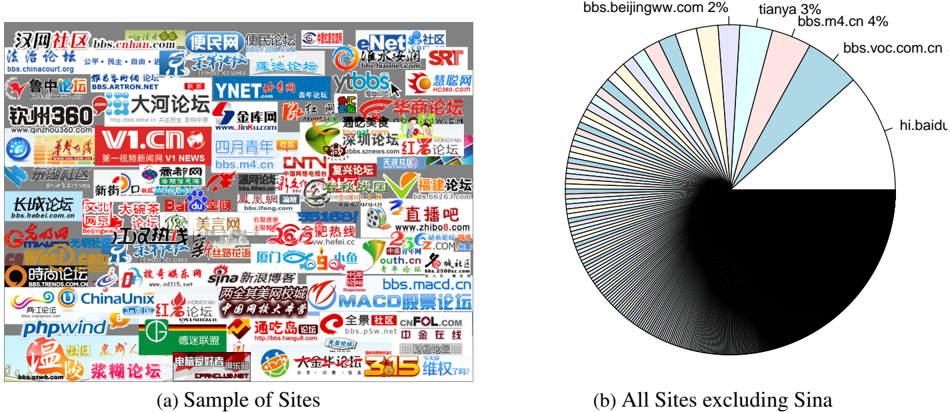
- The authors built a system to locate, download, and analyze posts from 1,382 Chinese websites during the first half of 2011, before government censors could remove them. They collected 3,674,698 posts, randomly selected 127,283 for further analysis, and overall collected and analyzed 11,382,221 posts.
- They used a stratified random sampling design covering 85 topic areas across three hypothesized political sensitivity levels, detected 87 volume bursts in 67 of the 85 topic areas using robust regression-based burst detection, and classified events into collective action potential, criticism of censors, pornography, government policies, and other news.
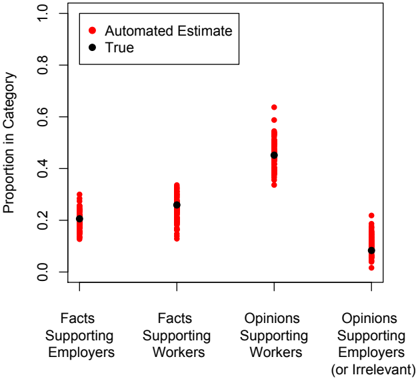
- To analyze content, they adapted the Hopkins and King “ReadMe” automated text analysis method to Chinese and extended it with a Bayesian procedure to estimate the percent censored within categories. Validation used native Chinese speakers coding 1,000 posts about 2010 labor strikes, with 100 as training and 900 as test; event coding reliability was 98.9% (86 of 87 events).
Limitations
- The paper states that its methodology misses self-censorship and censorship that may occur before the post is obtained; it also does not quantify the direct effects of the Great Firewall, keyword blocking, or search filtering.
- The authors state they have not studied physical violence, such as arrest of bloggers, or threats of the same; although many officials and levels of government influence censorship decisions, their data only sometimes distinguish among these sources, and they cannot determine the consequences of these limitations.
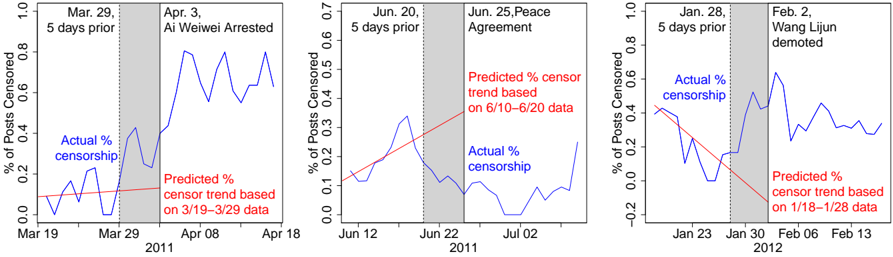
- The authors note that the presumably smaller number of discussions they cannot observe are likely to be those of most interest to the Chinese government, and they offer little evidence connecting social media findings to press freedom or other types of human expression in China. They also state that the predictive analysis was conducted retrospectively and with only three events, so further prospective validation would be valuable.
Model-written summary. Check it against the paper before relying on it.
Integrity signals
Registry
Cites
Statistics
Figures
Verification
Claims the paper makes
0 Valid · 7 Not valid · 7 Not checked · 88 Own results and interpretations
A result the paper reports from its own data — it cites no other source for it, so there is none to check. The quote shows it is in the paper.
In the paper
“Our data show that the Chinese censorship program allows for a wide variety of criticisms of the Chinese government, its officials, and its policies.”
§ How Censorship in China Allows Government Criticism but Silences Collective Expression * > Outline of Results
plain- Asserted: passes — The authors put it forward as true.
- Checkable: passes — It can be checked against evidence.
- Load-bearing: passes — The paper’s conclusions depend on it.
- Based: passes — The paper gives a reason why it holds.
A result the paper reports from its own data — it cites no other source for it, so there is none to check. The quote shows it is in the paper.
In the paper
“Contrary to previous understandings, posts with negative, even vitriolic, criticism of the state, its leaders, and its policies are not more likely to be censored.”
- Also stated in: § 1 Introduction · plain
“we find that when the Chinese people write scathing criticisms of their government and its leaders, the probability that their post will be censored does not increase.”
§ How Censorship in China Allows Government Criticism but Silences Collective Expression * > Abstract
plain- Asserted: passes — The authors put it forward as true.
- Checkable: passes — It can be checked against evidence.
- Load-bearing: passes — The paper’s conclusions depend on it.
- Based: passes — The paper gives a reason why it holds.
- Also stated in: § 1 Introduction · plain
A result the paper reports from its own data — it cites no other source for it, so there is none to check. The quote shows it is in the paper.
In the paper
“Large increases in online volume are good predictors of censorship when these increases are associated with events related to collective action, e.g., protest on the ground.”
§ How Censorship in China Allows Government Criticism but Silences Collective Expression * > Outline of Results
plainstates an association- Asserted: passes — The authors put it forward as true.
- Checkable: passes — It can be checked against evidence.
- Load-bearing: passes — The paper’s conclusions depend on it.
- Based: passes — The paper gives a reason why it holds.
A result the paper reports from its own data — it cites no other source for it, so there is none to check. The quote shows it is in the paper.
In the paper
“In addition, we measure sentiment within each of these events and show that during these events, the government censors views that are both supportive and critical of the state.”
§ How Censorship in China Allows Government Criticism but Silences Collective Expression * > Outline of Results
plainstates a cause- Asserted: passes — The authors put it forward as true.
- Checkable: passes — It can be checked against evidence.
- Load-bearing: passes — The paper’s conclusions depend on it.
- Based: passes — The paper gives a reason why it holds.
A result the paper reports from its own data — it cites no other source for it, so there is none to check. The quote shows it is in the paper.
In the paper
“We thus conduct the same analysis for the demotion of Wang Lijun in Panel (c) of Figure 11, and again see a large difference in actual and predicted percent censorship before Wang's demotion.”
§ How Censorship in China Allows Government Criticism but Silences Collective Expression * > Additional information
plainSingle case- Asserted: passes — The authors put it forward as true.
- Checkable: passes — It can be checked against evidence.
- Load-bearing: unclear — It is unclear whether the paper’s conclusions depend on it.
- Based: passes — The paper gives a reason why it holds.
46 more claims
Create a free account to see all 102 claims and every source verdict.
- Probably not a substantial claim. 26
- It may state two separate claims as one. 33
Claims other papers make about this one
Each is checked against this paper’s own text: does it say what the citing paper says it does?
The source backs part of the claim, not all of it — or backs it for a different population, condition or comparison.
In the citing paper
“Authorities are keen to review social media posts and have contentious messages removed (King etal., 2013) to ensure that potential threats remain invisible.”
From How Dictators Control the Internet: A Review Essay (2020) · cites this paper as King et al., 2013
Experimental — accuracy not yet measuredThe source backs part of the claim, not all of it — or backs it for a different population, condition or comparison.
In the citing paper
“In most autocratic regimes, governmental interference in digital infrastructure and communication is commonplace.”
From How Dictators Control the Internet: A Review Essay (2020) · cites this paper as King et al., 2013
Experimental — accuracy not yet measuredThe source backs part of the claim, not all of it — or backs it for a different population, condition or comparison.
In the citing paper
“First, the timing of censorship during a coup is consistent with many studies that have shown that Internet censorship is targeted during sensitive political time periods and periods of potential power transitions, such as elections and large-scale protests [23,25,44,47,73].”
From A multi-perspective view of Internet censorship in Myanmar (2021) · cites this paper as [44]
Experimental — accuracy not yet measuredThe cited source says what the claim attributes to it.
In the citing paper
“research has shown how mobilization organized through public coordination is repressed using that very same public information-for instance, repression is preemptively increased before focal days (Truex 2019); and autocracies censor online calls for collective action (King, Pan, and Roberts 2013), coerce online opinion leaders (Pan and Siegel 2020), and at times, turn off the internet entirely.”
From Coordinated Dis-Coordination (2024) · cites this paper as King, Pan, and Roberts 2013
The check wasn’t confident either way, so it gives no verdict — never disputed.
In the citing paper
“In China, for instance, two virtual police officers remind citizens that their browsing behavior is monitored (King etal., 2013).”
From How Dictators Control the Internet: A Review Essay (2020) · cites this paper as King et al., 2013
Experimental — accuracy not yet measured
1 more claim about this paper
Create a free account to see every claim other papers make about this one.
Citations
Cites
Robust estimation of a location parameter
Huber, P. J. (1964) · The Annals of Mathematical Statistics · doi:10.1214/aoms/1177703732 · Cited by 7,228
Robust Regression and Outlier Detection
Piepel, G. F. (1989) · Technometrics · doi:10.1080/00401706.1989.10488524 · Cited by 6,144
Robust Regression and Outlier Detection
Rousseeuw, P. J., & Leroy, A. M. (1987) · Wiley Series in Probability and Statistics · doi:10.1002/0471725382 · Cited by 5,609
Logistic Regression in Rare Events Data
King, G., & Zeng, L. (2001) · Political Analysis · doi:10.1093/oxfordjournals.pan.a004868 · Cited by 4,316 · cited 1×
“We do this via well-known and widely used case-control methodology (King and Zeng 2001).”
MethodSelf-citationDemocracy and Development: Political Institutions and Well-Being in the World, 1950–1990
Przeworski, A., Alvarez, M. E., Cheibub, J. A., & Limongi, F. (2000) · doi:10.1017/cbo9780511804946 · Cited by 2,845
Rightful Resistance in Rural China
O'Brien, K. J., & Li, L. (2006) · Cambridge University Press eBooks · doi:10.1017/cbo9780511791086 · Cited by 1,104
The Dynamics of Informational Cascades: The Monday Demonstrations in Leipzig, East Germany, 1989–91
Lohmann, S. (1994) · World Politics · doi:10.2307/2950679 · Cited by 1,035 · cited 1×
“Protests in East Germany, Eastern Europe, and most recently the Middle East have all preceded regime change (Ash 2002; Lohmann 1994; Przeworski et al. 2000).”
BackgroundRightful Resistance in Rural China
O'Brien, K., & Li, L.-J. (2006) · doi:10.1017/cbo9780511791086.003 · Cited by 987
China's Changing of the Guard: Authoritarian Resilience
Nathan, A. J. (2003) · Journal of Democracy · doi:10.1353/jod.2003.0019 · Cited by 927
Sparks and prairie fires: A theory of unanticipated political revolution
Kuran, T. (1989) · Public Choice · doi:10.1007/bf00116762 · Cited by 905 · cited 1×
“In fact, Kuran (1989) and Lohmann (2002) show that it is information about a collective action event that propels collective action and so distinguishing this from explicit calls for collective action would be difficult if not impossible.”
Background
Research works printed but not linked: 13
- 22. Freedom House. 2012. "Freedom of the Press, 2012." www.freedomhouse.org.
- 8. Chang, Parris. 1983. Elite Conflict in the Post-Mao China. New York: Occasional Papers Reprints.
- 26. Hinton, Harold. 1955. The "Unprincipled Dispute" Within Chinese Communist Top Lead- ership. Washington, DC: U.S. Information Agency.
- 44. Perry, Elizabeth. 2002. Challenging the Mandate of Heaven: Social Protest and State Power in China. Armork, NY: M. E. Sharpe.
- 52. Schurmann, Franz. 1966. Ideology and Organization in Communist China. Berkeley, CA: University of California Press.
- Tsai, 2007, Capitalism without Democracy: The Private Sector in Contemporary China
- 48. Qiang, Xiao. 2011. The Rise of Online Public Opinion and Its Political Impact. In Chang- ing Media, Changing China, ed. Susan Shirk. New York: Oxford University Press pp. 202-224.
- 9. Charles, David. 1966. The Dismissal of Marshal P'eng Teh-huai. In China Under Mao: Politics Takes Command, ed. Roderick MacFarquhar. Cambridge: MIT University Press pp. 20-33.
- 54. Shirk, Susan. 2007. China: Fragile Superpower: How China's Internal Politics Could Derail Its Peaceful Rise. New York: Oxford University Press.
- 56. Teiwes, Frederick. 1979. Politics and Purges in China: Retification and the Decline of Party Norms. Armork, NY: M. E. Sharpe. Tsai, Kellee. 2007a. Capitalism without Democracy: The Private Sector in Contemporary China. Ithaca, NY: Cornell University Press.
- 15. Duan, Qing. 2007. China's IT Leadership. Vdm Verlag.
- 38. MacFarquhar, Roderick. 1974. The Origins of the Cultural Revolution Volume 1: Contra- dictions Among the People 1956-1957. New York: Columbia University Press.
- 12. Chen, Xiaoyan and Peng Hwa Ang. 2011. Internet Police in China: Regulation, Scope and Myths. In Online Society in China: Creating, Celebrating, and Instrumentalising the Online Carnival, ed. David Herold and Peter Marolt. New York: Routledge pp. 40-52.
Cited by
Items 1,201–1,300 of 2,443
Networks and campaigns but not movements: collective action in the disciplining Chinese State
Gåsemyr, H. J. (2016) · Journal of Civil Society · doi:10.1080/17448689.2016.1239609 · Cited by 4
Finding Academic Concerns on Real Estate of U.S. and China: A Topic Modeling Based Exploration
Zhang, Z., Qiang, M., & Jiang, H. (2017) · Springer eBooks · doi:10.1007/978-981-10-6190-5_73 · Cited by 5
On Identifying Anomalies in Tor Usage with Applications in Detecting Internet Censorship
Wright, J., Darer, A., & Farnan, O. (2018) · ACM Conference on Web Science (WebSci) · doi:10.1145/3201064.3201093 · Cited by 4
“[21] studied manual censorship practices in Chinese long-form blogging, and demonstrated that the Chinese censorship authorities were chiefly concerned with preventing calls to collective action whilst allowing significant”
Zhang, Y., Гуо, Л., de Zúñiga, H. G., Xie, T., & Zhang, R. J. (2021) · The Social Science Journal · doi:10.1080/03623319.2020.1851952 · Cited by 5
“While disseminating alternative information is one of the most celebrated democratizing potentials of China’s social media (Fu et al., 2013; King et al., 2013), it is not equally enjoyed by the whole population.”
Yan, X.-F., & Wang, C. (2021) · Chinese Journal of Communication · doi:10.1080/17544750.2021.1915833 · Cited by 6
“In particular, information related to anti-government actions (King et al., 2013) and politicians (Arefi et al., 2019) is more likely to be regulated.”
BackgroundInfluentialHwang, I. H. (2022) · Studies in Comparative International Development · doi:10.1007/s12116-022-09349-w · Cited by 4
The duration of political imprisonment: Evidence from China
Steinert, C. (2022) · Conflict Management and Peace Science · doi:10.1177/07388942221080105 · Cited by 15
“Autocratic regimes are concerned with individuals that initiate collective action, given that coordinated group actions may threaten their survival (King et al., 2013).”
BackgroundInternet involvement, information consumption, and political participation in urban China
Wang, X., & Meng, T. (2022) · Chinese Journal of Sociology · doi:10.1177/2057150x221121698 · Cited by 7
“In contrast, spontaneous internet discussions and exchanges by the public are not officially encouraged because they can easily lead to mass disturbance (King et al., 2013).”
BackgroundEstimating the Cost of Internet Censorship in China: Evidence from a Gamified Remote Platform
Fan, J., & Guan, R. (2023) · Journalism and Media · doi:10.3390/journalmedia4020027 · Cited by 6
China as Number One? The Emerging Values of a Rising Power
Zhong, Y., & Inglehart, R. (2023) · University of Michigan Press eBooks · doi:10.3998/mpub.12529012 · Cited by 7
From the Great Wall to the Great Firewall: A Historical Analysis of Surveillance
AKDUMAN, B. (2023) · International Journal of Social Sciences · doi:10.52096/usbd.7.28.30 · Cited by 6
Performative censorship: Why some free speech conflicts should be taken seriously but not literally
George, C. (2023) · Media Culture & Society · doi:10.1177/01634437231203881 · Cited by 4
“Research on China suggest that state censor-ship has different political objectives, not all of which require total blackouts of dis-approved information and ideas (King et al., 2013; Roberts, 2018; Tai, 2014).”
BackgroundAn analysis of automatic image filtering on WeChat Moments
Knockel, J., Ruan, L., & Crete‐Nishihata, M. (2018) · USENIX Security Symposium · Cited by 4
China’s Social Media Platforms: Weibo
Zhang, S. I. (2020) · Springer eBooks · doi:10.1007/978-981-15-7635-5_2 · Cited by 6
Limits on the Democratizing Influence of the Internet: Lessons from Post-Soviet States
Vanderhill, R. (2015) · Project Muse (Johns Hopkins University) · Cited by 9
International actors in NIMBY controversies: Obstacle or opportunity for environmental campaigns?
Benjamins, M. P. (2014) · China Information · doi:10.1177/0920203x14546732 · Cited by 4
Strategic cross-Strait discourse: A comparative analysis of three presidential terms
Sullivan, J., & Sapir, E. V. (2013) · China Information · doi:10.1177/0920203x12471928 · Cited by 9
Stevens, R. J. L., Moustapha, M. M., Evelyn, P., & Stevenson, R. J. (2013) · Journal of Sustainable Development · doi:10.5539/jsd.v6n4p86 · Cited by 8
Chen, G. (2014) · Global Constitutionalism · doi:10.1017/s2045381713000282 · Cited by 8
Interpreting China’s Model for Business
Windsor, D. (2017) · Elsevier eBooks · doi:10.1016/b978-0-08-100750-1.00003-6 · Cited by 4
Media Since 1949: Changes and Continuities
Xu, J. L., & Sun, W. (2018) · SAGE Publications Ltd eBooks · doi:10.4135/9781526436085.n56 · Cited by 5
Topical Discourse Structures: Using topic modeling in discourse analysis approaches
Brinkmann, F. (2019) · Human IT · Cited by 4
Does internet access increase the perception of corruption?
Yi, C., & Hu, S. (2021) · Crime Law and Social Change · doi:10.1007/s10611-021-09987-6 · Cited by 5
Huang, H. (2012) · SSRN Electronic Journal · doi:10.2139/ssrn.2131538 · Cited by 4
Jiang, M., & Zhao, K. (2014) · SSRN Electronic Journal · doi:10.2139/ssrn.2436922 · Cited by 4
Information Manipulation and Reform in Authoritarian RegimesPreprint
Chen, J.-D., & Xu, Y. (2017) · SSRN Electronic Journal · doi:10.2139/ssrn.2487437 · Cited by 5
Gagliardone, I., Pohjonen, M., Zerai, A., Beyene, Z., Aynekulu, G., Gebrewolde, T., Seifu, M., Stremlau, N., Bright, J., Bekalu, M. A., et al. (2016) · SSRN Electronic Journal · doi:10.2139/ssrn.2782070 · Cited by 6
Crisis Rhetoric and Policy Change in China: Toward a Dynamic Process Model of Crisis Exploitation
Liu, Y. (2019) · Utrecht University Repository (Utrecht University) · Cited by 4
Cross-national analysis of global security discourse using word embeddingsPreprint
Sakamoto, T. (2020) · doi:10.33774/apsa-2020-5k2mt · Cited by 5
Political Marketing in a Hierarchy: Media's Scorekeeping Role in ChinaPreprint
Zeng, Y. (2024) · SSRN Electronic Journal · doi:10.2139/ssrn.4974115 · Cited by 4
Colglazier, C., TeBlunthuis, N., & Shaw, A. (2024) · Proceedings of the International AAAI Conference on Web and Social Media · doi:10.1609/icwsm.v18i1.31316 · Cited by 8
Ma, D., & Lu, M. (2024) · International Journal of Public Opinion Research · doi:10.1093/ijpor/edae006 · Cited by 4
Lin, K.-C. (2024) · Asian Survey · doi:10.1525/as.2024.2134795 · Cited by 7
Zhang, N., & Díaz-Kommonen, L. (2024) · Communication and Democracy · doi:10.1080/27671127.2024.2388647 · Cited by 8
Outsiders in the Media: How a Sense of “Foreignness” Shapes Support for Censorship in China
Wu, Z. (2025) · Political Communication · doi:10.1080/10584609.2025.2529926 · Cited by 4
“King et al. (2013) suggest that the government censors posts that have the potential to incite collective action rather than those that criticize it, while Lorentzen (2014) finds that acceptance of criticism of local officials is tied to the overall level of discontent within the society.”
Cultural governance and censorship: unpacking China’s Qinglang Action
Wang, Y., Syed, M. A. M., & Shamshudeen, R. I. (2025) · Asian Journal of Communication · doi:10.1080/01292986.2025.2526475 · Cited by 4
“Critics argue that a one-size-fits-all policy reflects an over-extension of state power, with the potential to suppress innovation and stifle self-expression (King et al., 2013), essential components of a vibrant entertainment industry.”
Petrova, M., & Tapsoba, A. (2025) · Economic Policy · doi:10.1093/epolic/eiaf012 · Cited by 15
When numbers remain silent: the protest potential of Kazakhstan’s youth amid social tension
Khamzina, Z. A., Buribayev, Y. A., & Buribayeva, A. (2025) · Frontiers in Communication · doi:10.3389/fcomm.2025.1597886 · Cited by 11
Ma, Y., & Liu, C. (2025) · Journal of Chinese Political Science · doi:10.1007/s11366-025-09923-8 · Cited by 3
“This vast and highly active online population presents a significant governance challenge for the ruling party-state, whose primary objective is to maintain social stability [ 5 , 44].”
Digital Resilience in Social Media Feminist Activism: Reactance Theory Applied to Weibo and Zhihu
Zhang, J., & Quan‐Haase, A. (2026) · Media and Communication · doi:10.17645/mac.11402 · Cited by 4
“These practices are adaptive and dynamic as platforms are constantly implementing novel techniques (T. Sun & Zhao, 2022), approaches (King et al., 2013), and criteria (Chen & Xu, 2017).”
Consuming a difficult past unapproved: Chairman Mao as commodity
Qian, L. (2020) · Memory Studies · doi:10.1177/1750698020927747 · Cited by 3
“Meanwhile, while the Chinese censorship is functioning well for curbing collective action and deleting sensitive messages, it leaves a certain room, at least privately, for people to criticize the government (King et al., 2013).”
BackgroundPolitical Discourse in China: How Does China Frame Hong Kong Protests to Its Domestic Audience?
Yang, Y. (2023) · Journal of Quantitative Description Digital Media · doi:10.51685/jqd.2023.013 · Cited by 6
Chyzh, O. V. (2023) · The Journal of Politics · doi:10.1086/726933 · Cited by 3
“…and network analysis, scholars have long applied models of disease contagion to study the spread of information (Loh-mann 1994), censorship (King, Pan, and Roberts 2013), pro-tests and repression (Siegel 2011; Van Belle 1996), social movements (Ayoub, Page, and Whitt 2021), and diffusion…”
BackgroundChinese Overseas Foreign Direct Investment and Online Digital Freedom in Developing Countries
Hunter, L. Y., Biglaiser, G., & Lu, K. (2024) · Asian Survey · doi:10.1525/as.2024.2134388 · Cited by 4
Authoritarian responsiveness online: social media strategy of Russian regional governance centers
Zinnatullin, A. (2024) · Policy Studies · doi:10.1080/01442872.2024.2376082 · Cited by 6
“It applies both to (1) the reaction of the auth-orities to the discontent formulated by certain groups of the population and manifested in collective action; and to (2) proactive monitoring of potential protest moods (King, Pan, and Roberts 2013, 2014).”
Censorship and Creative Communities: Fragility and Change of Fanfiction Writing in China
Wang, R. (2024) · Qualitative Sociology · doi:10.1007/s11133-024-09567-9 · Cited by 9
“Rather than being the direct target of censorship, the fanfiction community usually experiences the collateral damage caused by censorship because pornography has the continuous highest censorship level and fanfiction does include pornographic content (King et al. 2013).”
Wong, F. H. C. (2024) · The International Journal of Press/Politics · doi:10.1177/19401612241285785 · Cited by 3
“Overwhelming the media environment not only diverts attention away from protests in sensitive times (King et al. 2013) but also makes it difficult for users to search for relevant sources (Earl et al. 2022).”
Xu, H., & Weninger, C. (2025) · Discourse Context & Media · doi:10.1016/j.dcm.2025.100865 · Cited by 7
Shen, F., & Wang, T. (2015) · Chinese Journal of Communication · doi:10.1080/17544750.2015.1046186 · Cited by 5
Analysing Everyday Online Political Talk in China: Theoretical and Methodological Reflections
Wright, S., Graham, T., Sun, Y., Wang, W. Y., Luo, X., & Carson, A. (2016) · Communication, politics & culture · Cited by 10
Torres, M., & Qin, L. (2017) · Asia Pacific Education Review · doi:10.1007/s12564-017-9470-0 · Cited by 3
From Suppressive to Proactive?: Chinese Governments' Media Control Strategies in Popular Protests
Chen, S., & Zhang, C. (2019) · China An International Journal · doi:10.1353/chn.2019.0013 · Cited by 5
THE NATURAL RESOURCE CURSE IN XINJIANG
Yin, W. (2015) · CEU political science journal · Cited by 6
Haunted by the State: A Study of the Politicisation of Chinese Journalism and its Consequences
He, B. (2020) · Media History · doi:10.1080/13688804.2020.1717939 · Cited by 4
Chinese Citizenry Social Media Pressures and Public Official Responses
Masterson, J. R. (2020) · Advances in electronic government, digital divide, and regional development book series · doi:10.4018/978-1-7998-3152-5.ch007 · Cited by 3
Migdal, J. S. (2020) · Journal of Chinese Governance · doi:10.1080/23812346.2020.1796163 · Cited by 7
Illiberal Media in a Liberal Democracy: Examining Identity in Australia’s Mandarin Language News
Jensen, M. J., & Chen, T. C.-C. (2021) · Issues & Studies · doi:10.1142/s1013251121500053 · Cited by 5
Huang, Y., & Boukes, M. (2022) · Chinese Journal of Communication · doi:10.1080/17544750.2022.2084127 · Cited by 3
“Social media censorship and issue framing (Gunitsky, 2015; King et al., 2013) also reduce the visibility of messages indicating social instability in the Chinese context.”
Predicting age and gender from network telemetry: Implications for privacy and impact on policy
Kuang, L., Pobbathi, S., Mansury, Y. S., Shapiro, M. A., & Gurbani, V. K. (2022) · PLoS ONE · doi:10.1371/journal.pone.0271714 · Cited by 6
“In line with the censoring of information disseminated and shared online, reflected in China [26, 27], electronic surveillance by the government can be justified on the basis of national security [28].”
BackgroundPopular Contention and Progressive Legal Repression in China
He, H. (2022) · The China Quarterly · doi:10.1017/s0305741022001497 · Cited by 3
Torres-Echeverry, N. (2023) · Theory and Society · doi:10.1007/s11186-022-09509-w · Cited by 5
“…on elections (Bail et al., 2020), the effects of microtargeting (Bond et al., 2012; Hersh, 2015), and the use of social media by authoritarian regimes (King et al., 2013, 2014).1 While this literature has been central in understanding the relationship between social media and politics, it…”
BackgroundDigitale Hate Speech: Interdisziplinäre Perspektiven auf Erkennung, Beschreibung und Regulation
Jaki, S., & Steiger, S. (2023) · Springer eBooks · doi:10.1007/978-3-662-65964-9 · Cited by 68
Sources of Authoritarian Resilience: New Perspectives on Power-Sharing and Popular Support
Kofanov, D. (2023) · Comparative Politics · doi:10.5129/001041523x16969585493955 · Cited by 3
Chen, J., Li, Y., & Zheng, L. (2023) · PLoS ONE · doi:10.1371/journal.pone.0287340 · Cited by 5
Online controls and the protest- repression nexus in Iran
Gohdes, A. (2023) · Oxford University Press eBooks · doi:10.1093/oso/9780197743577.003.0007 · Cited by 5
Casas, A. (2024) · Political Communication · doi:10.1080/10584609.2024.2306503 · Cited by 8
“Second, it contributes to the literature on social media, public diplomacy, geopolitics, and digital repression, by emphasizing that all countries – non-Western countries such as Russia and China, but also Western ones such as the US – can (to a different extent) use or condition social media platforms for their geopo…”
BackgroundInfluentialNetwork topology facilitates internet traffic control in autocracies
Keremoğlu, E., Weidmann, N. B., Gamero-Garrido, A., Carisimo, E., Dainotti, A., & Snoeren, A. C. (2024) · PNAS Nexus · doi:10.1093/pnasnexus/pgae069 · Cited by 3
“The blocking of access to particular websites (5) or even the shutdown of the entire domestic Internet (6, 7) constitute extreme forms of Internet control; more subtle techniques include censor-ship of content deemed unacceptable (8) or the spread of misinfor-mation (9).”
BackgroundMichaelsen, M., & Ruijgrok, K. (2024) · Oxford University Press eBooks · doi:10.1093/oxfordhb/9780198871996.013.59 · Cited by 9
Zhang, Q., & Wang, C. (2024) · Humanities and Social Sciences Communications · doi:10.1057/s41599-024-02983-w · Cited by 11
“However, when online nationalist engagement poses challenges to the government, platforms will employ restrictive strategies to appease the public or even censor the audiences ’ content (King et al., 2013; Han, 2018; Han and Shao, 2022).”
Negotiating censorial power and its legitimacy: a case study of the second face of state censorship
Luo, Z. (2024) · Journal of Political Power · doi:10.1080/2158379x.2024.2370813 · Cited by 3
“Extant research studies state censorship mainly by its strategies, effects, and responses from the censored/public (King et al .”
Wang, Y., & Lin, X. (2024) · Chinese Journal of Communication · doi:10.1080/17544750.2024.2377602 · Cited by 4
“Regulatory systems can limit open discussions on social media (King et al., 2013), compelling certain citizens toward new forms of media expression.”
Al-Zaman, M. S., & Noman, M. M. S. (2024) · Javnost - The Public · doi:10.1080/13183222.2024.2396211 · Cited by 8
“Some studies explored methods of censorship (Faris and Villeneuve 2008; King, Pan, and Roberts 2013; Schewick 2015; Shahbaz and Funk 2021; Zit-train and Palfrey 2008), while some identi fi ed the reasons (Kperogi 2023; Master and Garman 2023; Mina 2014; Zittrain et al. 2017; Zittrain and Palfrey…”
Li, X., & Zheng, B. (2024) · Social Science Research · doi:10.1016/j.ssresearch.2024.103112 · Cited by 9
RetractedParticipatory Censorship in Authoritarian Regimes
Yang, T. Z. (2022) · Comparative Political Studies · doi:10.1177/00104140241302762 · Cited by 10
“…information gathering through bottom-up reports and stabilize the regime, allowing excessive uncontrolled information on social media could also be problematic as it can reveal widespread dissatisfaction and provide a focal point for collective actions (King et al., 2013; Lorentzen, 2014).”
InfluentialHaimed, S. (2024) · Cogent Social Sciences · doi:10.1080/23311886.2024.2435595 · Cited by 8
“…such as censorship, propaganda, and the cultivation of self-censorship among journalists (alyukov, 2024; edel & Josua, 2018; George, 2019; G. King et al., 2013; lorentzen, 2014; Wu, 2014). understanding these dynamics can shed light on the ideological underpinnings and power structures…”
Normalization of Censorship: Evidence from China
Yang, T. Z. (2024) · The Journal of Politics · doi:10.1086/734239 · Cited by 11
Wu-Ouyang, B., & Hu, Y. (2025) · Journalism & Mass Communication Quarterly · doi:10.1177/10776990241313183 · Cited by 6
“This source has been effectively utilized in academic research (e.g., Boulianne, 2020; King et al., 2013).”
Vierbergen, M. (2025) · Convergence The International Journal of Research into New Media Technologies · doi:10.1177/13548565251323343 · Cited by 6
“However, rather than curbing government criticism, King, Pan and Roberts argue that online censorship in China is directed towards anticipating and demobilising collective organisation (2013).”
Development Impact of Social Media
Ackland, R., & Tanaka, K. (2015) · World Bank, Washington, DC eBooks · doi:10.1596/23642 · Cited by 6
“Recent studies by King et al. (2013, 2014) investigated the extent of Chinese censorship on social media and found that the Chinese government is much more likely to censor information regarding collective action (e.g. anti-government protests), compared with posts that are critical of the…”
Reconfiguring public relations with China
Bean, H., & Dodge, P. S.-W. (2017) · Public Relations Inquiry · doi:10.1177/2046147x16672704 · Cited by 3
“While criticism of the Chinese state and its façade of social harmony is moderately tolerated in the classroom and in online media settings, censors routinely silence collective expression and commentary that could potentially spur social mobilization (King et al., 2013).”
BackgroundFrom Angry Youth to Anxious Parents: The Mediated Politics of Everyday Life
Meng, B. (2018) · Palgrave Macmillan US eBooks · doi:10.1057/978-1-137-46214-5_5 · Cited by 3
Social Media Strategies of Political Power: An Analysis of the Ruling Party in Turkey
Yüksel, H. (2018) · Advances in social networking and online communities book series · doi:10.4018/978-1-5225-2854-8.ch008 · Cited by 3
Bureaucratic Politics and Labour Policy in China
Thomas, F. R. (2018) · China An International Journal · Cited by 3
User Demographics and Censorship on Sina Weibo
Kenney, W., & Leberknight, C. S. (2021) · Hawaii International Conference on System Sciences (HICSS) · doi:10.24251/hicss.2021.330 · Cited by 4
Mapping Cantonese: The Pro-Cantonese Protest and Sina Weibo in Guangzhou
Wang, W. Y. (2019) · Springer eBooks · doi:10.1007/978-3-030-02438-3_100 · Cited by 5
Larreguy, H., Marshall, J., & Snyder, J. M. (2014) · Cited by 5
Are Importance Ratings Stable? A Study of Perceptions of Information Quality
Klein, B. D., Guo, Y., & Zhou, C. (2016) · Journal of the Midwest Association for Information Systems · doi:10.17705/3jmwa.00015 · Cited by 3
Algorithmic advances in anonymous communication over networks
Fanti, G., & Viswanath, P. (2016) · Conference on Information Sciences and Systems · doi:10.1109/ciss.2016.7460490 · Cited by 3
“In the simplest version of this problem, a sender wishes to communicate with a receiver without the receiver learning the sender’s identity.”
BackgroundGovernment Website, Social Media, and Citizens' Perceptions of Corruption
Ma, L. (2016) · Advances in social networking and online communities book series · doi:10.4018/978-1-5225-2019-1.ch008 · Cited by 4
The Geopolitics of Tech: Baidu's Vietnam
Logan, S. (2015) · ScholarlyCommons (University of Pennsylvania) · Cited by 3
Find your Adelaide: Digital placemaking with Adelaide City Explorer
Peacock, D., & MacKenzie, J. (2016) · University of Adelaide Press eBooks · doi:10.20851/publics-06 · Cited by 5
Liao, L., & Gaudin, J. (2017) · Cybergeo · doi:10.4000/cybergeo.28348 · Cited by 3
Political Communication Chinese Style: The Elite Network in State-Regulated Sina Weibo
Lin, Z., Hamm, A., & Reinhardt, S. (2018) · Springer eBooks · doi:10.1007/978-3-658-20700-7_5 · Cited by 3
Wang, P. (2019) · Telematics and Informatics · doi:10.1016/j.tele.2019.04.005 · Cited by 3
Social Network Service Platforms and China’s Cyber Nationalism in the Web 2.0 Age
Pan, N. (2020) · Springer eBooks · doi:10.1007/978-981-15-4538-2_4 · Cited by 3
Chinese investment and corruption in Africa
Culver, C. (2021) · Journal of Chinese Economic and Business Studies · doi:10.1080/14765284.2021.1925822 · Cited by 6
Digital Media and Social Movements: Obstacles to Building a Global Media Ethic
Rohlinger, D. A., & DeLucchi, C. (2021) · Springer eBooks · doi:10.1007/978-3-319-32103-5_27 · Cited by 4
Liu, Y., Wu, J., Qi, J., Deng, Y., & Tuerhong, A. (2022) · Urban Affairs Review · doi:10.1177/10780874221091591 · Cited by 4
Evans, J. A. (2022) · Sociological Methods & Research · doi:10.1177/00491241221123086 · Cited by 6
“The book comes from three top research performers who have individually and together published leading work with these methods on topics that range across several areas of American and international politics (Feder et al. 2021; Grimmer 2009; Grimmer and Stewart 2013; King, Pan, and Roberts 2013).”
BackgroundBuilding public support by internet regulations in China? Evidence based on quasi-natural experiment
Wang, S., Wan, Q., & Wang, G. (2022) · Journal of Asian Public Policy · doi:10.1080/17516234.2022.2137898 · Cited by 4
“On the one hand, China’s Internet regulations filter out information that threatens the regime, including political scandals, collective action and liberal ideas (King et al., 2013; Knockel et al., 2015).”
Metadata
- Authors
- KING, G., PAN, J., & ROBERTS, M. E.
- Affiliations
- Harvard University (US)
- Corresponding author
- KING, GARY
- PAN, JENNIFER
- Venue
- American Political Science Review
- Publisher
- Cambridge University Press (CUP)
- Published
- 2013-05
- Volume
- 107
- Issue
- 2
- Pages
- 326-343
- ISSN
- 0003-0554 (ISSN-L)
- 1537-5943
- OpenAlex
- W2144188763
- Cited by
- 2,415
- References
- 48
- Citations by year
- 2026: 161 · 2025: 206 · 2024: 249 · 2023: 272 · 2022: 230 · 2021: 193 · 2020: 206 · 2019: 157 · 2018: 178 · 2017: 153 · 2016: 137 · 2015: 120 · 2014: 91 · 2013: 54
- FWCI
- 395.09
- Type
- journal article
- Language
- en
- Open access
- green
- nrs.harvard.edu
- Licence
- Locations
- American Political Science Review (publishedVersion)
- Digital Access to Scholarship at Harvard (DASH) (Harvard University) (submittedVersion, cc-by)
- RePEc: Research Papers in Economics (submittedVersion)
- Topics
- Social Sciences › Communication › Social Media and Politics
- Social Sciences › Law › Freedom of Expression and Defamation
- Social Sciences › Sociology and Political Science › Media Influence and Politics
- Keywords
- internet censorship, Chinese government, social media, collective action, social mobilization, political criticism, online speech
About these checks
Registry, retraction, Cites and statistics results are computed, not judged, with one exception: a printed reference that no index lists is read once by a model before it counts as a citation error. Claims are extracted by a model and kept only when their quote appears verbatim in the text; each cited source is then checked, with a model’s help, for whether it says what the claim relies on. Those verdicts can be wrong — read the claim’s quote and the cited source before relying on one.
A language model drew the claims from the paper on 2026-10-11, under version 3 of the claim definition (model deepseek-v4.1-flash, prompt extract-v3).
A second model labelled each claim on 2026-10-11 (model jev-1.13-20260917, definition revision gold-guideline-v0.2).
Statistics and arithmetic are recomputed, not judged.
Confidence bands are shown only for fields calibrated on our annotated test set. None is calibrated yet, so no band is shown.
What counts as a claim ›How we measure confidence ›How we check this ›
Are you an author, or do you see a problem with this page? Request a review
Data sources
Bibliographic data: Semantic Scholar, OpenAlex, Crossref.
Contains information from the Semantic Scholar Academic Graph Datasets, made available under the ODC Attribution License (ODC-BY 1.0).
Semantic Scholar’s data is described in: Kinney, R., et al. (2023). The Semantic Scholar Open Data Platform. arXiv:2301.10140.
