

The DOI matches its Crossref record; 231 of the 232 references it cites were found in a registry or an index.
Can probiotics modulate human disease by impacting intestinal barrier function?
Open accessAbstract
Intestinal barrier integrity is a prerequisite for homeostasis of mucosal function, which is balanced to maximise absorptive capacity, while maintaining efficient defensive reactions against chemical and microbial challenges. Evidence is mounting that disruption of epithelial barrier integrity is one of the major aetiological factors associated with several gastrointestinal diseases, including infection by pathogens, obesity and diabetes, necrotising enterocolitis, irritable bowel syndrome and inflammatory bowel disease. The notion that specific probiotic bacterial strains can affect barrier integrity fuelled research in which in vitro cell lines, animal models and clinical trials are used to assess whether probiotics can revert the diseased state back to homeostasis and health. This review catalogues and categorises the lines of evidence available in literature for the role of probiotics in epithelial integrity and, consequently, their beneficial effect for the reduction of gastrointestinal disease symptoms.
Overview
The claims and statistics of this paper haven’t been checked yet.
Run the check — free, no account needed. It reads the open-access text and checks the sources it cites.
Integrity signals
Registry
Cites
Statistics
Figures
Verification
Claims the paper makes
The claims and statistics of this paper haven’t been checked yet.
Run the check — free, no account needed. It reads the open-access text and checks the sources it cites.
Claims other papers make about this one
Each is checked against this paper’s own text: does it say what the citing paper says it does?
In the citing paper
“There is substantial evidence that probiotics can strengthen the intestinal barrier, regulate mucosal immune function, and produce metabolites beneficial to the host to maintain health, as illustrated in Figure 1 [22,23].”
From Probiotics Regulate Gut Microbiota: An Effective Method to Improve Immunity (2021) · cites this paper as [22]
In the citing paper
“a variety of studies do suggest that probiotics are able to improve mucosal barrier function (Bron et al., 2017).”
From Viral Infections, the Microbiome, and Probiotics (2021) · cites this paper as Bron et al., 2017
In the citing paper
“There is compelling evidence that probiotics are able to support the intestinal barrier (Bron et al., 2017), which may act to dampen the increased inflammatory tone seen in aging and enhance the immune response to viral infections and vaccinations.”
From Viral Infections, the Microbiome, and Probiotics (2021) · cites this paper as Bron et al., 2017
In the citing paper
“The GI microbiome is thought to be a key player in this process as it is essential for the proper maintenance of the intestinal barrier through various mechanisms, e.g., production of SCFA (Bron et al., 2017) as well as tryptophan metabolites (Rothhammer and Quintana, 2019).”
From Viral Infections, the Microbiome, and Probiotics (2021) · cites this paper as Bron et al., 2017
In the citing paper
“Similar as the endogenous microbiota, probiotics may improve mucosal barrier function, limiting the ability of viral particles to cross this physical barrier and maintain this barrier during viral disease (Bron et al., 2017).”
From Viral Infections, the Microbiome, and Probiotics (2021) · cites this paper as Bron et al., 2017
In the citing paper
“Numerous pre-clinical studies have shown that oral probiotics are capable of positively influencing gut barrier function and systemic immunity, and thus, in the case of pneumonia, may enhance the host’s ability to suppress and clear reproducing lung pathogens as they emerge (Bron et al., 2017) (Forsythe, 2014).”
From Viral Infections, the Microbiome, and Probiotics (2021) · cites this paper as Bron et al., 2017
Self-check
Percentages, sums and reported differences re-computed from the paper’s own numbers.
The self-check needs the paper’s full text.
Citations
Cites
1 retracted
Hunter, C. J., Williams, M., Petrosyan, M., Guner, Y. S., Mittal, R., Mock, D. C., Upperman, J. S., Ford, H. R., & Prasadarao, N. V. (2008) · Infection and Immunity · doi:10.1128/iai.01192-08 · Cited by 60 · cited 1×
“Probiotics were also shown to enhance enterocyte proliferation and migration((148)), to reduce apoptosis and promote epithelial cytoprotective responses((160,162,163)), to improve the expression of the enterocyte injury markers intestinal-type and liver-type fatty-acidbinding proteins (I-FABP and L-FABP)((164)), to re…”
BackgroundRetractedDermyshi, E., Wang, Y., Yan, C., Hong, W., Qiu, G., Gong, X., & Zhang, T. (2017) · Neonatology · doi:10.1159/000454668 · Cited by 24,586
Hill (2014) · doi:10.1038/nrgastro.2014.66 · Cited by 9,592 · cited 1×
“The latter are defined as ‘live micro-organisms that, when administered in adequate amounts, confer a health benefit on the host’((5,6)).”
BackgroundMetabolic Endotoxemia Initiates Obesity and Insulin Resistance
Cani, P. D., Amar, J., Iglesias, M. A., Poggi, M., Knauf, C., Bastelica, D., Neyrinck, A. M., Fava, F., Tuohy, K. M., Chabo, C., et al. (2007) · Diabetes · doi:10.2337/db06-1491 · Cited by 6,638
Obesity alters gut microbial ecology
Ley, R. E., Bäckhed, F., Turnbaugh, P., Lozupone, C. A., Knight, R. D., & Gordon, J. I. (2005) · Proceedings of the National Academy of Sciences · doi:10.1073/pnas.0504978102 · Cited by 6,176
Commensal microbe-derived butyrate induces the differentiation of colonic regulatory T cells
Furusawa, Y., Obata, Y., Fukuda, S., Endo, T. A., Nakato, G., Takahashi, D., Nakanishi, Y., Uetake, C., Kato, K., Kato, T., et al. (2013) · Nature · doi:10.1038/nature12721 · Cited by 5,549
Cani, P. D., Bibiloni, R., Knauf, C., Waget, A., Neyrinck, A. M., Delzenne, N. M., & Burcelin, R. (2008) · Diabetes · doi:10.2337/db07-1403 · Cited by 4,819
Self-citationCross-talk between Akkermansia muciniphila and intestinal epithelium controls diet-induced obesity
Everard, A., Belzer, C., Geurts, L., Ouwerkerk, J. P., Druart, C., Bindels, L. B., Guiot, Y., Derrien, M., Muccioli, G. G., Delzenne, N. M., et al. (2013) · Proceedings of the National Academy of Sciences · doi:10.1073/pnas.1219451110 · Cited by 4,511 · cited 1×
“anti-inflammatory properties, Reg3γ, and increased the mucus layer thickness((120,121)).”
BackgroundInflammation, stress, and diabetes
Wellen, K. E., & Hotamisligil, G. S. (2005) · Journal of Clinical Investigation · doi:10.1172/jci25102 · Cited by 4,143
Induction of Colonic Regulatory T Cells by Indigenous Clostridium Species
Atarashi, K., Tanoue, T., Shima, T., Imaoka, A., Kuwahara, T., Momose, Y., Cheng, G., Yamasaki, S., Saito, T., Ohba, Y., et al. (2011) · Science · doi:10.1126/science.1198469 · Cited by 3,752
Research works printed but not linked: 1
- 10.1172/JCI20514 · DOI · Paper page
Cited by
Sorted by citations
Items 401–500 of 500
EFECTO DE LA DIETA SOBRE LA MODULACIÓN DE LA MICROBIOTA EN EL DESARROLLO DE LA OBESIDAD
Suárez-Diéguez, T., Galván, M., Rodriguez, G. L., Olivo, D., & Nájera, M. O. (2018) · RESPYN Revista de Salud Pública y Nutrición · doi:10.29105/respyn17.1-5 · Cited by 1
The Microbiome in Food Allergy and Eosinophilic Esophagitis
Yee, A. L., Buschmann, M. M., Ciaccio, C. E., & Gilbert, J. A. (2020) · Springer eBooks · doi:10.1007/978-3-030-33292-1_11 · Cited by 1
Staniak, N., Piaseczna-Spitaleri, E., & Biała, G. (2022) · Postępy Higieny i Medycyny Doświadczalnej · doi:10.2478/ahem-2022-0042 · Cited by 1
Improving the quality of free-fat bifidus milk using some plants' seeds
Nasr, N. M., Metry, W. A., & Ibrahim, A. M. A. (2023) · Fayoum Journal of Agricultural Research and Development /Fayoum Journal of Agricultural Research and Development · doi:10.21608/fjard.2023.297296 · Cited by 1
Elwan, T. H., Abdennour, A. E. K., Akl, U. I., Elshennawy, A., & Shatla, I. M. (2023) · Advanced Gut & Microbiome Research · doi:10.1155/2023/1080495 · Cited by 1
Benefits and safety of probiotics in gastrointestinal diseases
Profir, M., Roşu, O. A., Ionescu, R. F., Pavelescu, L. A., & Creţoiu, S. M. (2024) · Elsevier eBooks · doi:10.1016/b978-0-12-824472-2.00011-7 · Cited by 1
Hassan, E. E., Ibrahim, N. E., Menshawy, M. M., Darwish, A. M., Khattab, A.-E. N. A., & Farghaly, A. A. (2025) · Gene Reports · doi:10.1016/j.genrep.2025.102271 · Cited by 1
Gamal, H., Nabil, A., Gaber, Y., EL-Gendy, A. O., & Hussein, R. M. (2025) · Journal of Biological Research - Bollettino della Società Italiana di Biologia Sperimentale · doi:10.4081/jbr.2025.13586 · Cited by 1
Mining Human Microbiome for Therapeutics
Ghattargi, V. C., Sape, K., Kumbhare, S. V., & Shouche, Y. S. (2019) · Springer eBooks · doi:10.1007/978-981-13-8315-1_18 · Cited by 1
Evdokimova, S. A., Nokhaeva, V. S., Karetkin, B. A., Shakir, I. V., & Panfilov, V. I. (2022) · KnE Life Sciences · doi:10.18502/kls.v7i1.10148 · Cited by 1
“The metabolic products of probiotics, namely, bacteriocins and short-chain fatty acids, exhibit antagonistic action against pathogenic and opportunistic microorganisms by interacting with their adhesion sites, suppress the synthesis of toxins [5].”
BackgroundThe gut microbiome and gut-liver axis in NAFLDPreprint
Guo, C., Ji, J., Wu, J., Wu, L., Feng, J., Li, J., Yu, Q., Dai, W., Li, Y., & Zheng, Y. (2024) · doi:10.22541/au.170666810.08665505/v1
Polysaturated with culture: what probiotics do for us
Winter, G. (2017) · Gastrointestinal Nursing · doi:10.12968/gasn.2017.15.3.22
Therapeutic Targeting of Gut-Bone Signaling to Treat Osteoporosis
McCabe, L. R., & Parameswaran, N. (2018) · Springer eBooks · doi:10.1007/978-3-319-98464-3_13
Microbiota: a Sword that Breaks Through Diabetes
Dai, Z. J., Zhang, J. Q., Wu, Q., Fang, H., Tang, D., & Wang, D. R. (2020) · journal of nutritional oncology · doi:10.34175/jno202003001
“In addition, probiotics reduce inflammation by improving the intestinal barrier integrity and reducing the release of proinflammatory cytokines, thereby increasing the glucose alcohol content and insulin sensitivity [84].”
BackgroundЧепур, С. В., Nn, P., Chubar, O. V., Cygan, V. N., Сергеевна, Б. Л., Sidorov, S. P., Bazhenov, M. V., Mosin, A. V., Vinogradov, M. V., & Семакин, Р. В. (2020) · Reviews on Clinical Pharmacology and Drug Therapy · doi:10.17816/rcf183197-212
He, Y., Li, Y., Gong, Y., Wang, Y., Jin, X., Shi, D., & Wang, X. (2020) · doi:10.21203/rs.3.rs-16231/v1
“HDRsEf1 induces A20 to inhibit CYP3A29 expression, dependent on TLR1/2 Engagement of TLRs by Gram-positive bacteria can regulate the NF-κB activity in animal intestinal tissues (Bron et al., 2017).”
BackgroundThe Role of the Microbiome in Cancer and the Development of Cancer Therapeutics.
Belknap, K. C., Cote, A. L., McGill, C. M., Andam, C. P., & Barth, B. M. (2020) · PubMed
Probiotic as Immune Modulator; A New Trend in Medication
Mahmood, Z., Zahid, M., Jahangeer, M., Riasat, A., Munir, N., & Asad, M. I. (2020) · FRONTIERS IN CHEMICAL SCIENCES · doi:10.52700/fcs.v1i2.10
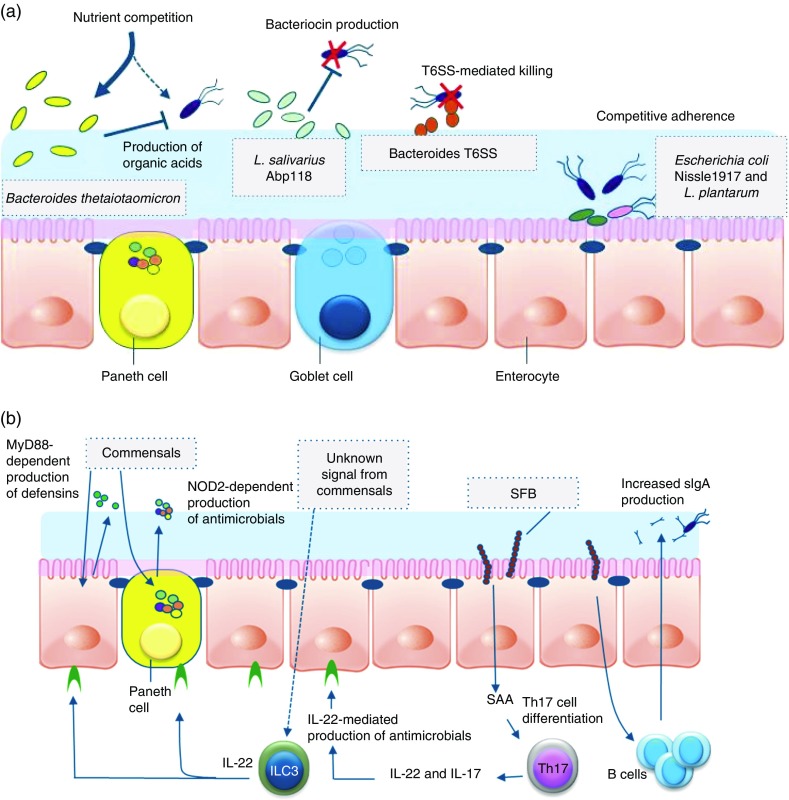
“The induction of probiotics may reduce the intestinal diseases by increasing the production of mucus, IgA production, anti-microbial peptide, increasing the competitive adhesion of probiotcs on intestinal surface and promoting barrier functions on epithelial cells (Bron et al., 2017).”
BackgroundGalena, A. E. (2021) · University of North Florida Digital Commons (University of North Florida)
Khan, A., Faraz, N., Hanif, F., & Mumtaz, M. (2020) · Journal of Bahria University Medical and Dental College · doi:10.51985/jbumdc2020013
Intestinal Dysbiosis in Autoimmune Diseases
de Oliveira, G. L. V. (2021) · Elsevier eBooks · doi:10.1016/b978-0-12-819265-8.00038-3
Aplikasi Lactobacillus plantarum NHC6 dalam Jus Nanas
Ariyanto, Y. S., Meryandini, A., & Sunarti, T. C. (2021) · Jurnal Sumberdaya Hayati · doi:10.29244/jsdh.7.1.1-8
Immunity, microbiome and probiotics in viral infections
Rosenson, R. I. (2021) · Terapevt (General Physician) · doi:10.33920/med-12-2108-07
The interaction between the microbiome, diet and health
Walsh, C. M., & Haasbroek, C. (2021) · South African Journal of Clinical Nutrition · doi:10.1080/16070658.2021.1966226
Cotter, P. D., & García-Gutiérrez, E. (2021) · Faculty Opinions – Post-Publication Peer Review of the Biomedical Literature · doi:10.3410/f.739818536.793586761
Gupta, T., Kaur, H., Kapila, S., & Kapila, R. (2021) · Research Square · doi:10.21203/rs.3.rs-533546/v1
Palumbo, P., Lombardi, F., Evtoski, Z., Siragusa, G., Kapaj, A., Maurizio, G., Cifone, M. G., & Cinque, B. (2017) · Cancer Studies and Therapeutics · doi:10.31038/cst.2017281
Visual Atlas Analysis on Literature of Intestinal Flora Based on CiteSpace Bibliometrics
谢, 珂. (2022) · Advances in Clinical Medicine · doi:10.12677/acm.2022.12101353
Current trends and future perspectives of probiotics on human health: an overview
Mandal, S., & Mandal, N. C. (2023) · Elsevier eBooks · doi:10.1016/b978-0-323-90113-0.00005-5
The Gut Microbiome and Alzheimer’s Disease: Can the Gut be Used to Prevent or Treat Dementia?
Vundi, S., & Chatila, Z. K. (2022) · Journal of Student Research · doi:10.47611/jsrhs.v11i4.3356
Deng, Z., Meng, Y., Zhao, L., Luo, W., Zhang, J., Hu, J., Jiang, H., & Zhang, Q. (2023) · Cellular and Molecular Biology · doi:10.14715/cmb/2022.69.2.4
A Survey of Commercially Available Probiotics
Misra, S., & Raghuwanshi, S. (2023) · Springer eBooks · doi:10.1007/978-981-99-1463-0_24
Sirichokchatchawan, W. (2016) · Chula Digiverse · doi:10.58837/chula.the.2016.1906
Veteriner Bilimlerinde Probiyotiklerin Terapötik, Profilaktik ve Fonksiyonel Kullanımı
Karadağoğlu, Ö., Rıaz, R., Çıldır, Ö. Ş., Makav, M., Kaya, K., Küçükoflaz, M., AYDIN, E., Ölmez, M., Şahin, T., Sezer, M., et al. (2023) · Özgür Yayınları eBooks · doi:10.58830/ozgur.pub358
Helmint Kaynaklı Enfeksiyonların Kontrolünde Probiyotikler
Aydın, N., Ölmez, N., & Barış, S. A. R. I. (2023) · Özgür Yayınları eBooks · doi:10.58830/ozgur.pub358.c1524
Köpek ve Kedilerde Yeni Gelişmeler: Probiyotikler
Batı, Y. U., Sezer, M., & Akyüz, E. (2023) · Özgür Yayınları eBooks · doi:10.58830/ozgur.pub358.c1523
Obezitede Probiyotiklerin Glukoz ve Lipid Metabolizması Üzerine Etkisi
Aygörmez, S. (2023) · Özgür Yayınları eBooks · doi:10.58830/ozgur.pub358.c1526
Genetiği Değiştirilmiş Probiyotikler
Çıldır, Ö. Ş. (2023) · Özgür Yayınları eBooks · doi:10.58830/ozgur.pub358.c1516
Health and Nutritional Implications of COVID-19: A Mini Review
Tasnim, T., & Karim, K. M. R. (2021) · Bangladesh Journal of Nutrition · doi:10.3329/bjnut.v34i1.70003
“It is recently shown that exogenous, living, ‘desirable’ bacteria called probiotics can help maintain the gastrointestinal barrier of the host (Bron et al., 2017).”
BackgroundEra of biotics in managing colonic disorders
Bhatt, S., Anitha, K., Sah, S. K., Apte, N. P., Mullamitha, S., & Chechatwala, J. (2024) · Elsevier eBooks · doi:10.1016/b978-0-443-14044-0.00013-2
Wang, H., An, J., Fan, C., Zhai, Z., Zhang, H., & Hao, Y. (2022) · Figshare · doi:10.6084/m9.figshare.19234610
Probiotics in dairy farming: A holistic approach to animal nutrition
Shukla, N., Tripathi, A., Tiwari, A., & Sharma, K. (2024) · International Journal of Advanced Biochemistry Research · doi:10.33545/26174693.2024.v8.i5sf.1206 · Cited by 1
Historical development of T-tube enterostomy
Stamov, P. (2023) · Scripta Scientifica Medica · doi:10.14748/ssm.v55i1.9581
USO DE PROBIÓTICOS ASSOCIADOS À COSMÉTICOS NO TRATAMENTO DA DERMATITE ATÓPICA
Medeiros, A. C., Oliveira, K. P. A., Oliveira, L. C. D. M., de Souza, M. E. M., Godinho, A. S. D. S., Godinho, K. P. L., Altera, D. D. S., & Soyer, T. G. (2024) · Revista científica FACS. · doi:10.70159/rcfacs.v24i1.689
Ahmad, H. A., Qazi, N. G., Jalal, N., & Khan, M. I. (2024) · doi:10.1002/9781394238071.ch4
Transforming Infection Treatment with Microbiome-Based Therapeutics
Haider, A., Ali, A., Israr, M., Mariam, F., Rasheed, M. M., Taqveem, A., Waqas, U., Xu, D., Liu, Y., & Duan, T. (2024) · Springer eBooks · doi:10.1007/978-981-97-3790-1_16
Probiotics and the Microbiota-Gut-Brain Axis
Asalipiseheh, A. (2024) · IntechOpen eBooks · doi:10.5772/intechopen.1006494
Role of Oral Microbiota Balance and Probiotic Therapy in Radiation-Induced Oral MucositisPreprint
Wang, J., & Chen, M. (2025) · SSRN Electronic Journal · doi:10.2139/ssrn.5069827
Plantas condimentares e probióticos: propriedades funcionais e prevenção de doenças
de Oliveira, D. A., Braga, M. A., & Marcussi, S. (2025) · STUDIES IN HEALTH SCIENCES · doi:10.54022/shsv6n1-003
Natural Antimicrobial Compounds in Food Safety
Vesković-Moračanin, S. M. (2025) · Springer eBooks · doi:10.1007/978-3-031-85089-9_4
Megapanou, M., Komninou, E., Zampeli, E., Gavriatopoulou, M., Ψαλτοπούλου, Θ., & Liontos, M. (2025) · Advanced Gut & Microbiome Research · doi:10.1155/agm3/7773978
Biofilm-mediated oral delivery of probiotics
Jacob, J., Settem, R. P., Nuthangi, V. H., Balaji, S., Kumar, S. S., Sahabudeen, S. M., Shemesh, M., Rajasekharan, S. K., & Sharma, A. (2025) · Elsevier eBooks · doi:10.1016/b978-0-443-27594-4.00017-6
Probiotics and molecular mechanism of health benefit
Das, J., Maiti, B. K., Bhattacharjee, S., Rakshit, R., Ray, B., Karmakar, R., Patel, M., & Padhan, B. (2025) · Elsevier eBooks · doi:10.1016/b978-0-443-27594-4.00023-1
Biswas, P., Ahmed, S. S., Mondal, S., Oladokun, S., Gundogdu, O., & Mallick, A. I. (2025) · bioRxiv (Cold Spring Harbor Laboratory) · doi:10.1101/2025.09.27.678929
Biodiversity Analysis of the Human Gut Microbiome in Healthy Individuals Using Bioinformatics ToolsPreprint
Sbei, T., & Abbady, A. Q. (2025) · Research Square · doi:10.21203/rs.3.rs-7776578/v1
Tikuneh, A. H., Bogale, E. K., Beyene, G. A., & Deribew, A. (2025) · Systematic Reviews · doi:10.1186/s13643-025-03013-9 · Cited by 1
Xu, J., Xu, H., Guo, X., Zhao, H., Wang, J., Li, J., He, J., Huang, H., Huang, C., Zhao, C., et al. (2024) · Figshare · doi:10.6084/m9.figshare.26694702
Xu, J., Xu, H., Guo, X., Zhao, H., Wang, J., Li, J., He, J., Huang, H., Huang, C., Zhao, C., et al. (2024) · Figshare · doi:10.6084/m9.figshare.26694693
Xu, J., Xu, H., Guo, X., Zhao, H., Wang, J., Li, J., He, J., Huang, H., Huang, C., Zhao, C., et al. (2024) · Figshare · doi:10.6084/m9.figshare.25434309
Xu, J., Xu, H., Guo, X., Zhao, H., Wang, J., Li, J., He, J., Huang, H., Huang, C., Zhao, C., et al. (2024) · Figshare · doi:10.6084/m9.figshare.26694696
Wang, H., An, J., Fan, C., Zhai, Z., Zhang, H., & Hao, Y. (2022) · Figshare · doi:10.6084/m9.figshare.19234613
Xu, J., Xu, H., Guo, X., Zhao, H., Wang, J., Li, J., He, J., Huang, H., Huang, C., Zhao, C., et al. (2024) · Figshare · doi:10.6084/m9.figshare.25434226
Xu, J., Xu, H., Guo, X., Zhao, H., Wang, J., Li, J., He, J., Huang, H., Huang, C., Zhao, C., et al. (2024) · Figshare · doi:10.6084/m9.figshare.26694699
Potentiality of advanced nanomaterial based on microorganisms for regenerative medicine
Ritu, Gulia, S., Singh, S., Majhi, K., Panchal, P., Das, A., & Chandra, P. (2025) · Elsevier eBooks · doi:10.1016/b978-0-443-31526-8.00003-0 · Cited by 1
Guarnieri, A., Venditti, N., Brancazio, N., Mukhtar, F., Falcone, M., Worku, A. T., Naro, M. D., Scapagnini, G., Petronio, G. P., & Marco, R. D. (2026) · BMC Microbiology · doi:10.1186/s12866-026-04808-z
“Their beneficial effects include restoration of gut eubiosis, modulation of inflammation, and prevention of pathogenic colonization through mechanisms such as competitive exclusion, antimicrobial production, and immune modulation [11–14].”
Intestinal Flora and Depression: Interaction Mechanisms and Therapeutic Prospects
Zhang, H.-R., & Yang, Y.-T. (2026) · Pharmacopsychiatry · doi:10.1055/a-2784-3589
Wang, W., Pan, L., Miao, C., Chen, Q., Wang, H., Sun, C., Chang, X., Zhang, Y., Wang, J., & Xiong, W. (2026) · Microorganisms · doi:10.3390/microorganisms14030679
Probiotics: Significance in Human Health
Gopal, N. (2026) · International Journal of Advanced Research in Science Communication and Technology · doi:10.48175/ijarsct-31844
Safabakhsh, M., Mohammadpour, M., Rohani, P., Ekbatani, M., Pourhadi, Z., Imani, H., & Shab‐Bidar, S. (2026) · Scientific Reports · doi:10.1038/s41598-026-45936-w
Plant proteins and gut health: Understanding the impact on microbiota and human health
Subrahmanyam, K., Mir, T. A., Gul, M. K., Gan, R. Y., & Sehrawat, R. (2026) · Elsevier eBooks · doi:10.1016/b978-0-443-32976-0.00015-1
Pal, D., Anandhi, A., Keerthi, A. R., Nanda, N., & Kate, V. (2026) · Journal of Gastrointestinal Cancer · doi:10.1007/s12029-026-01449-3
Research Progress on the Role of Lactobacillus reuteri in Irritable Bowel Syndrome: A Review
Zhen, J., Zhou, Z., Zhu, R., Kuang, M., & Huang, P. (2026) · Biology · doi:10.3390/biology15100808
“Additionally, L. reuteri competes with other microorganisms for nutrients and colonization space, limiting the growth of harmful bacteria [21–23].”
Prebiotics, Probiotics, and Postbiotics in Therapy
Sobti, R. C., Negi, R. K., & Rana, A. (2026) · Springer eBooks · doi:10.1007/978-981-95-9031-5_6
Zhang, Z., Liu, Y., Zhao, B., Yan, Z., Zhu, X., Mu, G., & Wu, X. (2026) · Probiotics and Antimicrobial Proteins · doi:10.1007/s12602-026-11053-3
Probiotics in football (soccer): a survey on practitioner’s current perceptions and practices
Bongiovanni, T., Pappous, A. S., Clarke, G., Munuswamy, R., Moloney, G. M., Cryan, J., Pinto, D., Rinaldi, F., Rossi, A., & Marcora, S. (2026) · Science and Medicine in Football · doi:10.1080/24733938.2026.2682129
Restoration of microbiota balance using spore-forming probiotic microorganisms: a review
Ardatskaya, M. D., & Garushyan, G. V. (2026) · Consilium Medicum · doi:10.26442/20751753.2026.5.203651
Gut microbiota as a drug discovery target: Mechanistic insights and therapeutic potential
Mondal, S., Chowdhury, S., Kar, K., Mazumder, K., & Chakraborty, P. (2026) · Gut Microbiome and Health · doi:10.1016/j.gmh.2026.100002
Teramura, E., Fujiwara, S., Koga, Y., Matsushima, M., Cho, T., Itoh, H., Hirose, S., Nagata, J., Yamamoto, S., Imai, J., et al. (2026) · Digestion · doi:10.1159/000552916
Das, K., Khatun, R., Begum, S., Bhattacharyya, K., Datta, M., Saha, D., Sarma, A., Mehta, P., & Das, B. K. (2026) · Metabolic Brain Disease · doi:10.1007/s11011-026-01922-9
“Such advantageous impact of probiotics on an individual’s well-being, expressed through improvements in the organism’s immune response, is their immunomodulatory activity, which is the strongest clinical evidence (Bron et al. 2017; Plaza-Diaz et al., 2014).”
Lee, Y.-S., & Kim, S. (2026) · Metabolites · doi:10.3390/metabo16070481
“Previous studies have also demonstrated that probiotics can enhance epithelial barrier integrity through modulation of tight junction-associated pathways and mucosal defense mechanisms [49].”
Probiotic–polyphenol synergy: Emerging insights for gut microbiome health and functional food design
Bhuiyan, M. N. I. (2026) · The Microbe · doi:10.1016/j.microb.2026.100765
Zhang, X., Liu, X., Lu, S., Zhang, Z., Gao, W., Zhang, X. X., 鲁兴萌, Yang, L., & Cai, T. (2026) · Pesticide Biochemistry and Physiology · doi:10.1016/j.pestbp.2026.107262
张, 燕. (2026) · Traditional Chinese Medicine · doi:10.12677/tcm.2026.157364
Wang, N., Song, F., Chen, H., & Li, X. (2026) · Frontiers in Bioscience-Landmark · doi:10.31083/fbl48167
Probiotics in Autoimmune Disease: Strain-specific Mechanisms and Therapeutic Perspectives
Zhou, J., Cao, J., Dong, S., Li, H., Yang, S., Yan, Z., Wang, C., Pei, Y., Su, Y., Wen, B., et al. (2026) · Clinical Reviews in Allergy & Immunology · doi:10.1007/s12016-026-09190-2
“Studies have shown that Saccha - romyces boulardii secretes a protease capable of directly degrading bacterial toxins and their receptors, while competitively inhibiting pathogen colonization in the gut [196].”
El-Bassyouni, H. T., Zarouk, W. A., Eldeen, G. N., Elkalla, W. S., Sokkar, M. F., Lotfy, R. S., & Mansour, N. M. (2026) · Gene Reports · doi:10.1016/j.genrep.2026.102623
Veciana-Galindo, C., Núñez-Delegido, E., González-Santos, J., Agüera-Santos, J., Navarro‐López, V., & Alberola-Jordá, I. (2026) · Frontiers in Endocrinology · doi:10.3389/fendo.2026.1882392
MURAI, Y., Iwasawa, T., Takeda, S., Ohki, K., Kato, K., & Ito, T. (2026) · Frontiers in Nutrition · doi:10.3389/fnut.2026.1933552
Vijverman, L., Maddalena, T., Delrue, C., & Speeckaert, M. M. (2026) · Biomedicines · doi:10.3390/biomedicines14102143
“Overall, these mechanisms promote sugar fermentation, increase SCFA production, minimize protein-bound uremic toxins, and reduce overall inflammation [8,108,109].”
Saloni, T., Chaithra, N., & Umamaheshwari, S. (2026) · Frontiers in Cellular and Infection Microbiology · doi:10.3389/fcimb.2026.1894309
“Furthermore, probiotics can in fl uence innate and adaptive immune pathways, including Toll-like receptor (TLR)-mediated signalling, NF-k B activation, and IL-17-dependent antifungal immunity, which are critical for mucosal defense against Candida albicans (Conti and Gaffen, 2015; Bron et al., 2017).”
Jain, D. L., Kudera, T., Maršík, P., Polesný, Z., & Kokoška, L. (2026) · Veterinary Research Communications · doi:10.1007/s11259-026-11534-4
“…activity of ethnoveterinary plant extracts, antibiotic growth promoters, antibiotics, phytochemicals and their synthetic analogues against diarrhoea-associated and probiotic-bacteria of livestock Dhiraj Lakhichand Jain 1 · Tomas Kudera 1 · Petr Marsik 2 · Zbynek Polesny 1 · Ladislav Kokoska 1”
Extracts of okra mucilage protect intestinal homeostasis through gut microbiota and immune responses
Qing, M., Sun, B., Li, Y., Meng, Z., Lu, Q., Li, K., & Chen, G. (2026) · Journal of Natural Medicines · doi:10.1007/s11418-026-02083-w
“Disruption of intestinal barrier integrity is closely associated with a variety of gastrointestinal disorders, including inflammatory bowel disease (IBD), metabolic syndrome, and age-related dysfunction [ 6].”
Probiotics in Atopic Dermatitis: Does Gut Microbiome Modulation Enhance Skin Condition?
Łukańko, K., Blachucik, A., Marciniak, W., Biegańska, K., & Nowicka, J. (2026) · Postępy Mikrobiologii - Advancements of Microbiology · doi:10.2478/am-2026-0013
Administering Lactobacillus helveticus H9 Alleviates Dextran Sodium Sulfate-Induced Colitis in Rats
Zhang, W., Feng, C., Zhang, T., Kwok, L., & He, Q. (2026) · Fermentation · doi:10.3390/fermentation12110503
Metadata
- Authors
- Bron, P. A., Kleerebezem, M., Brummer, R.-J., Cani, P. D., Mercenier, A., MacDonald, T. T., Garcia-Ródenas, C. L., & Wells, J. M.
- Affiliations
- Nederlands Instituut Voor Zuivel Oonderzoek (NL)
- Wageningen University & Research (NL)
- Örebro University (SE)
- Walloon Excellence in Lifesciences and Biotechnology (BE)
- Nestlé (Switzerland) (CH)
- Queen Mary University of London (GB)
- Corresponding author
- Bron, Peter A.
- ORCID
- Venue
- British Journal Of Nutrition
- Publisher
- Cambridge University Press (CUP)
- Published
- 2017-01-14
- Volume
- 117
- Issue
- 1
- Pages
- 93-107
- ISSN
- 0007-1145 (ISSN-L)
- 1475-2662
- PMC
- PMC5297585
- OpenAlex
- W2573938105
- Cited by
- 499
- References
- 232
- Citations by year
- 2026: 54 · 2025: 47 · 2024: 55 · 2023: 52 · 2022: 64 · 2021: 67 · 2020: 54 · 2019: 43 · 2018: 42 · 2017: 19
- FWCI
- 4.68
- Type
- journal article
- Language
- en
- Open access
- hybrid
- doi.org
- Licence
- Locations
- British Journal Of Nutrition (publishedVersion, cc-by-nc-nd)
- PubMed Central (publishedVersion, cc-by-nc-nd)
- PubMed (publishedVersion)
- Socio-Environmental Systems Modeling (acceptedVersion, cc-by-nc-nd)
- Digital Access to Libraries (Université catholique de Louvain (UCL), l'Université de Namur (UNamur) and the Université Saint-Louis (USL-B)) (submittedVersion, other-oa)
- Queen Mary Research Online (Queen Mary University of London) (submittedVersion, cc-by-nc-nd)
- Data Archiving and Networked Services (DANS) (submittedVersion, cc-by-nc-nd)
- Funders
- Fonds De La Recherche Scientifique - FNRS (WELBIO-CR-2012S-02R)
- Walloon excellence in life sciences and biotechnology
- FP7 Ideas: European Research Council (336452)
- Topics
- Life Sciences › Agricultural and Biological Sciences › Food Science › Probiotics and Fermented Foods
- Life Sciences › Biochemistry, Genetics and Molecular Biology › Molecular Biology › Gut microbiota and health
- Health Sciences › Medicine › Gastroenterology › Gastrointestinal motility and disorders
- Keywords
- probiotics, intestinal barrier function, epithelial barrier integrity, mucosal homeostasis, gastrointestinal diseases, irritable bowel syndrome, inflammatory bowel disease, necrotizing enterocolitis, obesity, diabetes mellitus, pathogen infection
- MeSH terms
- Animals, Humans, Intestinal Diseases, Intestines, Probiotics
About these checks
Registry, retraction, Cites and statistics results are computed, not judged, with one exception: a printed reference that no index lists is read once by a model before it counts as a citation error. Claims are extracted by a model and kept only when their quote appears verbatim in the text; each cited source is then checked, with a model’s help, for whether it says what the claim relies on. Those verdicts can be wrong — read the claim’s quote and the cited source before relying on one.
Statistics and arithmetic are recomputed, not judged.
Confidence bands are shown only for fields calibrated on our annotated test set. None is calibrated yet, so no band is shown.
What counts as a claim ›How we measure confidence ›How we check this ›
Are you an author, or do you see a problem with this page? Request a review
