

The DOI matches its Crossref record; 231 of the 232 references it cites were found in a registry or an index.
Can probiotics modulate human disease by impacting intestinal barrier function?
Open accessAbstract
Intestinal barrier integrity is a prerequisite for homeostasis of mucosal function, which is balanced to maximise absorptive capacity, while maintaining efficient defensive reactions against chemical and microbial challenges. Evidence is mounting that disruption of epithelial barrier integrity is one of the major aetiological factors associated with several gastrointestinal diseases, including infection by pathogens, obesity and diabetes, necrotising enterocolitis, irritable bowel syndrome and inflammatory bowel disease. The notion that specific probiotic bacterial strains can affect barrier integrity fuelled research in which in vitro cell lines, animal models and clinical trials are used to assess whether probiotics can revert the diseased state back to homeostasis and health. This review catalogues and categorises the lines of evidence available in literature for the role of probiotics in epithelial integrity and, consequently, their beneficial effect for the reduction of gastrointestinal disease symptoms.
Overview
The claims and statistics of this paper haven’t been checked yet.
Run the check — free, no account needed. It reads the open-access text and checks the sources it cites.
Integrity signals
Registry
Cites
Statistics
Figures
Verification
Claims the paper makes
The claims and statistics of this paper haven’t been checked yet.
Run the check — free, no account needed. It reads the open-access text and checks the sources it cites.
Claims other papers make about this one
Each is checked against this paper’s own text: does it say what the citing paper says it does?
In the citing paper
“There is substantial evidence that probiotics can strengthen the intestinal barrier, regulate mucosal immune function, and produce metabolites beneficial to the host to maintain health, as illustrated in Figure 1 [22,23].”
From Probiotics Regulate Gut Microbiota: An Effective Method to Improve Immunity (2021) · cites this paper as [22]
In the citing paper
“a variety of studies do suggest that probiotics are able to improve mucosal barrier function (Bron et al., 2017).”
From Viral Infections, the Microbiome, and Probiotics (2021) · cites this paper as Bron et al., 2017
In the citing paper
“There is compelling evidence that probiotics are able to support the intestinal barrier (Bron et al., 2017), which may act to dampen the increased inflammatory tone seen in aging and enhance the immune response to viral infections and vaccinations.”
From Viral Infections, the Microbiome, and Probiotics (2021) · cites this paper as Bron et al., 2017
In the citing paper
“The GI microbiome is thought to be a key player in this process as it is essential for the proper maintenance of the intestinal barrier through various mechanisms, e.g., production of SCFA (Bron et al., 2017) as well as tryptophan metabolites (Rothhammer and Quintana, 2019).”
From Viral Infections, the Microbiome, and Probiotics (2021) · cites this paper as Bron et al., 2017
In the citing paper
“Similar as the endogenous microbiota, probiotics may improve mucosal barrier function, limiting the ability of viral particles to cross this physical barrier and maintain this barrier during viral disease (Bron et al., 2017).”
From Viral Infections, the Microbiome, and Probiotics (2021) · cites this paper as Bron et al., 2017
In the citing paper
“Numerous pre-clinical studies have shown that oral probiotics are capable of positively influencing gut barrier function and systemic immunity, and thus, in the case of pneumonia, may enhance the host’s ability to suppress and clear reproducing lung pathogens as they emerge (Bron et al., 2017) (Forsythe, 2014).”
From Viral Infections, the Microbiome, and Probiotics (2021) · cites this paper as Bron et al., 2017
Self-check
Percentages, sums and reported differences re-computed from the paper’s own numbers.
The self-check needs the paper’s full text.
Citations
Cites
1 retracted
Hunter, C. J., Williams, M., Petrosyan, M., Guner, Y. S., Mittal, R., Mock, D. C., Upperman, J. S., Ford, H. R., & Prasadarao, N. V. (2008) · Infection and Immunity · doi:10.1128/iai.01192-08 · Cited by 60 · cited 1×
“Probiotics were also shown to enhance enterocyte proliferation and migration((148)), to reduce apoptosis and promote epithelial cytoprotective responses((160,162,163)), to improve the expression of the enterocyte injury markers intestinal-type and liver-type fatty-acidbinding proteins (I-FABP and L-FABP)((164)), to re…”
BackgroundRetractedDermyshi, E., Wang, Y., Yan, C., Hong, W., Qiu, G., Gong, X., & Zhang, T. (2017) · Neonatology · doi:10.1159/000454668 · Cited by 24,586
Hill (2014) · doi:10.1038/nrgastro.2014.66 · Cited by 9,592 · cited 1×
“The latter are defined as ‘live micro-organisms that, when administered in adequate amounts, confer a health benefit on the host’((5,6)).”
BackgroundMetabolic Endotoxemia Initiates Obesity and Insulin Resistance
Cani, P. D., Amar, J., Iglesias, M. A., Poggi, M., Knauf, C., Bastelica, D., Neyrinck, A. M., Fava, F., Tuohy, K. M., Chabo, C., et al. (2007) · Diabetes · doi:10.2337/db06-1491 · Cited by 6,638
Obesity alters gut microbial ecology
Ley, R. E., Bäckhed, F., Turnbaugh, P., Lozupone, C. A., Knight, R. D., & Gordon, J. I. (2005) · Proceedings of the National Academy of Sciences · doi:10.1073/pnas.0504978102 · Cited by 6,176
Commensal microbe-derived butyrate induces the differentiation of colonic regulatory T cells
Furusawa, Y., Obata, Y., Fukuda, S., Endo, T. A., Nakato, G., Takahashi, D., Nakanishi, Y., Uetake, C., Kato, K., Kato, T., et al. (2013) · Nature · doi:10.1038/nature12721 · Cited by 5,549
Cani, P. D., Bibiloni, R., Knauf, C., Waget, A., Neyrinck, A. M., Delzenne, N. M., & Burcelin, R. (2008) · Diabetes · doi:10.2337/db07-1403 · Cited by 4,819
Self-citationCross-talk between Akkermansia muciniphila and intestinal epithelium controls diet-induced obesity
Everard, A., Belzer, C., Geurts, L., Ouwerkerk, J. P., Druart, C., Bindels, L. B., Guiot, Y., Derrien, M., Muccioli, G. G., Delzenne, N. M., et al. (2013) · Proceedings of the National Academy of Sciences · doi:10.1073/pnas.1219451110 · Cited by 4,511 · cited 1×
“anti-inflammatory properties, Reg3γ, and increased the mucus layer thickness((120,121)).”
BackgroundInflammation, stress, and diabetes
Wellen, K. E., & Hotamisligil, G. S. (2005) · Journal of Clinical Investigation · doi:10.1172/jci25102 · Cited by 4,143
Induction of Colonic Regulatory T Cells by Indigenous Clostridium Species
Atarashi, K., Tanoue, T., Shima, T., Imaoka, A., Kuwahara, T., Momose, Y., Cheng, G., Yamasaki, S., Saito, T., Ohba, Y., et al. (2011) · Science · doi:10.1126/science.1198469 · Cited by 3,752
Nicotinic acetylcholine receptor α7 subunit is an essential regulator of inflammation
Wang, H., Yu, M., Ochani, M., Amella, C. A., Tanovic, M., Susarla, S., Li, J. H., Wang, H., Yang, H., Ulloa, L., et al. (2003) · Nature · doi:10.1038/nature01339 · Cited by 3,228
Turnbaugh, P. J., Bäckhed, F., Fulton, L., & Gordon, J. I. (2008) · Cell Host & Microbe · doi:10.1016/j.chom.2008.02.015 · Cited by 2,915
Vrieze, A., Van Nood, E., Holleman, F., Salojärvi, J., Kootte, R. S., Bartelsman, J. F. W. M., Dallinga–Thie, G. M., Ackermans, M. T., Serlie, M. J., Oozeer, R., et al. (2012) · Gastroenterology · doi:10.1053/j.gastro.2012.06.031 · Cited by 2,913 · cited 1×
“Indeed, recent studies on UC((222)) and the metabolic syndrome((223)) indicated that gut microbiota infusion improved remission period length or insulin resistance, respec-”
BackgroundTreg induction by a rationally selected mixture of Clostridia strains from the human microbiota
Atarashi, K., Tanoue, T., Oshima, K., Suda, W., Nagano, Y., Nishikawa, H., Fukuda, S., Saito, T., Narushima, S., Hase, K., et al. (2013) · Nature · doi:10.1038/nature12331 · Cited by 2,872
Cani, P. D., Possemiers, S., Van de Wiele, T., Guiot, Y., Everard, A., Rottier, O., Geurts, L., Naslain, D., Neyrinck, A., Lambert, D. M., et al. (2009) · Gut · doi:10.1136/gut.2008.165886 · Cited by 2,518 · cited 1×
“These observations are in agreement with the reduction of metabolic endotoxaemia, gut barrier dysfunction and inflammatory disorders that could be achieved in mice by prebiotic supplementation, which restored the bifidobacterial abundance in the intestinal microbiota((76,83,93,94)).”
ResultBacteriocins: Developing innate immunity for food
Cotter, P. D., Hill, C., & Ross, R. P. (2005) · Nature Reviews Microbiology · doi:10.1038/nrmicro1273 · Cited by 2,380 · cited 1×
“Alternatively, probiotics may produce broad- or narrow-spectrum bacteriocins, which are small ribosomally synthesised peptides that inhibit the growth of other bacteria((45)), which may affect enteric pathogens directly.”
BackgroundNeu, J., & Walker, W. A. (2011) · New England Journal of Medicine · doi:10.1056/nejmra1005408 · Cited by 2,141
Obesity-induced inflammatory changes in adipose tissue
Wellen, K. E., & Hotamisligil, G. S. (2003) · Journal of Clinical Investigation · doi:10.1172/jci200320514 · Cited by 1,823
Cani, P. D., Neyrinck, A. M., Fava, F., Knauf, C., Burcelin, R., Tuohy, K. M., Gibson, G. R., & Delzenne, N. M. (2007) · Diabetologia · doi:10.1007/s00125-007-0791-0 · Cited by 1,770 · cited 1×
“These observations are in agreement with the reduction of metabolic endotoxaemia, gut barrier dysfunction and inflammatory disorders that could be achieved in mice by prebiotic supplementation, which restored the bifidobacterial abundance in the intestinal microbiota((76,83,93,94)).”
ResultVan der Sluis, M., De Koning, B. A. E., De Bruijn, A. C. J. M., Velcich, A., Meijerink, J. P. P., Van Goudoever, J. B., Büller, H. A., Dekker, J., Van Seuningen, I., Renes, I. B., et al. (2006) · Gastroenterology · doi:10.1053/j.gastro.2006.04.020 · Cited by 1,684 · cited 1×
“Mice lacking Muc2, the major secreted mucin in the intestine, develop spontaneous colitis demonstrating its important barrier function((10)).”
BackgroundShin, N.-R., Lee, J.-C., Lee, H.-Y., Kim, M.-S., Whon, T. W., Lee, M.-S., & Bae, J.-W. (2014) · Gut · doi:10.1136/gutjnl-2012-303839 · Cited by 1,550 · cited 1×
“anti-inflammatory properties, Reg3γ, and increased the mucus layer thickness((120,121)).”
BackgroundJohansson, M., Larsson, J. M. H., & Hansson, G. C. (2010) · Proceedings of the National Academy of Sciences · doi:10.1073/pnas.1006451107 · Cited by 1,535
Kaser, A., Lee, A., Franke, A., Glickman, J. N., Zeißig, S., Tilg, H., Nieuwenhuis, E. E. S., Higgins, D. E., Schreiber, S., Glimcher, L. H., et al. (2008) · Cell · doi:10.1016/j.cell.2008.07.021 · Cited by 1,465
Symbiotic bacteria direct expression of an intestinal bactericidal lectin
Cash, H. L., Whitham, C. V., Behrendt, C. L., & Hooper, L. V. (2006) · Science · doi:10.1126/science.1127119 · Cited by 1,432 · cited 1×
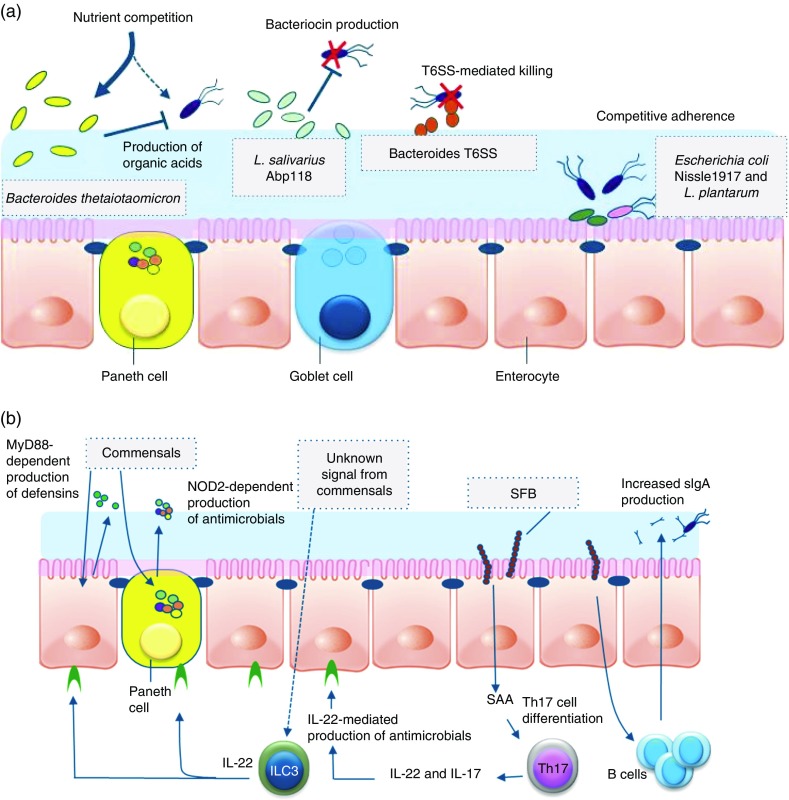
“Indeed, colonisation of germ-free mice and the expansion of bacteria after weaning caused an increased regenerating family member 3 (Reg3) production((64,65)).”
BackgroundMucin dynamics and enteric pathogens
McGuckin, M. A., Lindén, S. K., Sutton, P., & Florin, T. H. (2011) · Nature Reviews Microbiology · doi:10.1038/nrmicro2538 · Cited by 1,428 · cited 2×
“This could be through bacterial interaction with innate cells in the mucosa producing cytokines (e.g. IL-22(11), IL-8(72)) that can increase the expression of specific mucin genes.”
BackgroundVaishnava, S., Yamamoto, M., Severson, K. M., Ruhn, K. A., Yu, X., Koren, O., Ley, R., Wakeland, E. K., & Hooper, L. V. (2011) · Science · doi:10.1126/science.1209791 · Cited by 1,412
Antagonistic activities of lactobacilli and bifidobacteria against microbial pathogens
Servin, A. L. (2004) · FEMS Microbiology Reviews · doi:10.1016/j.femsre.2004.01.003 · Cited by 1,267 · cited 1×
“Probiotics may also directly compete for mucosal adherence sites with pathogenic bacteria, a mechanism termed competitive exclusion((46)).”
BackgroundInnate immunity of the newborn: basic mechanisms and clinical correlates
Levy, O. (2007) · Nature reviews. Immunology · doi:10.1038/nri2075 · Cited by 1,227
Spiller, R. C., Jenkins, D., Thornley, J. P., Hebden, J. M., Wright, T., Skinner, M., & Neal, K. R. (2000) · Gut · doi:10.1136/gut.47.6.804 · Cited by 1,155 · cited 1×
“In addition, several other diseases also appear to be associated with a ‘leaky’ gut phenotype, including the post-infectious subtype of IBS((224)), and possibly also allergy((225)).”
BackgroundEpithelial NEMO links innate immunity to chronic intestinal inflammation
Nenci, A., Becker, C., Wullaert, A., Gareus, R., Loo, G., Danese, S., Huth, M., Nikolaev, A., Neufert, C. F., Madison, B., et al. (2007) · Nature · doi:10.1038/nature05698 · Cited by 1,077 · cited 1×
“Similarly, mice with a knockout of NEMO (ikappa kinase γ), an activator of NF-κB, develop spontaneous colitis because of the role of NF-κB in inducing epithelial repair and innate effector mechanisms in the intestine((18)).”
BackgroundEverard, A., Lazarevic, V., Derrien, M., Girard, M., Muccioli, G. G., Neyrinck, A. M., Possemiers, S., Van Holle, A., François, P., de Vos, W. M., et al. (2011) · Diabetes · doi:10.2337/db11-0227 · Cited by 1,076 · cited 1×
“However, the precise mechanism underlying these health improvements remain unclear, and may not be entirely attributed to Bifidobacterium spp.((95)).”
BackgroundRajilić–Stojanović, M., Biagi, E., Heilig, H. G. H. J., Kajander, K., Kekkonen, R. A., Tims, S., & de Vos, W. M. (2011) · Gastroenterology · doi:10.1053/j.gastro.2011.07.043 · Cited by 1,041 · cited 1×
“This is of particular interest in the light of the significant differences that have been reported for the intestinal microbiota composition when comparing IBS patients and healthy controls in both adult((172)) and children((192))”
BackgroundVaishnava, S., Behrendt, C. L., Ismail, A. S., Eckmann, L., & Hooper, L. V. (2008) · Proceedings of the National Academy of Sciences · doi:10.1073/pnas.0808723105 · Cited by 1,019
Kassinen, A., Krogius-Kurikka, L., Mäkivuokko, H., Rinttilä, T., Paulin, L., Corander, J., Malinen, E., Apajalahti, J., & Palva, A. (2007) · Gastroenterology · doi:10.1053/j.gastro.2007.04.005 · Cited by 1,002 · cited 2×
“After an initial report from Finland(171), increasing evidence emerged on distinct and various alterations in gut microbial composition in subgroups of IBS patients around the globe(171–175).”
BackgroundProbiotics for prevention of necrotizing enterocolitis in preterm infants
AlFaleh, K. M., & Anabrees, J. (2014) · Cochrane Database of Systematic Reviews · doi:10.1002/14651858.cd005496.pub4 · Cited by 965
Saavedra, J. M., Bauman, N. A., Perman, J. A., Yolken, R. H., Saavedra, J. M., Bauman, N. A., & Oung, I. (1994) · The Lancet · doi:10.1016/s0140-6736(94)91708-6 · Cited by 958
Caspase-8 regulates TNF-α-induced epithelial necroptosis and terminal ileitis
Günther, C., Martini, E., Wittkopf, N., Amann, K., Weigmann, B., Neumann, H., Waldner, M. J., Hedrick, S. Μ., Tenzer, S., Neurath, M. F., et al. (2011) · Nature · doi:10.1038/nature10400 · Cited by 882
Amar, J., Chabo, C., Waget, A., Klopp, P., Vachoux, C., Bermúdez‐Humarán, L. G., Smirnova, N. F., Bergé, M., Sulpice, T., Lahtinen, S. J., et al. (2011) · EMBO Molecular Medicine · doi:10.1002/emmm.201100159 · Cited by 877 · cited 1×
“lactis 420, which not only normalised inflammation status but also corrected insulin sensitivity and hyperinsulinemia((117)).”
BackgroundCorr, S. C., Li, Y., Riedel, C. U., O'Toole, P. W., Hill, C., & Gahan, C. G. M. (2007) · Proceedings of the National Academy of Sciences · doi:10.1073/pnas.0700440104 · Cited by 853 · cited 2×
“monocytogenes infection and barrier disruption in vivo in a mouse model((36)).”
BackgroundMack, D. R., Michail, S. K., Wei, S. H., McDougall, L., & Hollingsworth, M. A. (1999) · American Journal of Physiology-Gastrointestinal and Liver Physiology · doi:10.1152/ajpgi.1999.276.4.g941 · Cited by 839
An irritable bowel syndrome subtype defined by species-specific alterations in faecal microbiota
Jeffery, I. B., O'Toole, P. W., Öhman, L., Claesson, M. J., Deane, J., Quigley, E. M. M., & Simrén, M. (2012) · Gut · doi:10.1136/gutjnl-2011-301501 · Cited by 835
Dewulf, E. M., Cani, P. D., Claus, S. P., Fuentes, S., Puylaert, P. G., Neyrinck, A. M., Bindels, L. B., de Vos, W. M., Gibson, G. R., Thissen, J.-P., et al. (2013) · Gut · doi:10.1136/gutjnl-2012-303304 · Cited by 825
Targeting gut microbiota in obesity: effects of prebiotics and probiotics
Delzenne, N. M., Neyrinck, A. M., Bäckhed, F., & Cani, P. D. (2011) · Nature Reviews Endocrinology · doi:10.1038/nrendo.2011.126 · Cited by 805
Psychosocial Aspects of the Functional Gastrointestinal Disorders
Levy, R. L., Olden, K. W., Naliboff, B. D., Bradley, L. A., Francisconi, C., Drossman, D. A., & Creed, F. (2006) · Gastroenterology · doi:10.1053/j.gastro.2005.11.057 · Cited by 776
Erridge, C., Attina, T., Spickett, C. M., & Webb, D. J. (2007) · The American Journal of Clinical Nutrition · doi:10.1093/ajcn/86.5.1286 · Cited by 776 · cited 1×
“A high fat content in the diet and changes in barrier function are considered to be important factors in endotoxaemia((80,81)).”
BackgroundKruis, W., SCHÜTZ, E., Fric, P., Fixa, B., Judmaier, G., & Stolte, M. (1997) · Alimentary Pharmacology & Therapeutics · doi:10.1046/j.1365-2036.1997.00225.x · Cited by 774 · cited 1×
“coli strain Nissle (Serotype 06: K5: H1) with regard to their efficacy in preventing a relapse of the disease over a period of 12 weeks, probiotic treatment was equivalent to mesalazine((207)).”
BackgroundParnell, J. A., & Reimer, R. A. (2009) · American Journal of Clinical Nutrition · doi:10.3945/ajcn.2009.27465 · Cited by 749 · cited 1×
“One of these studies described enhanced weight loss and improved glucose regulation in obese adults who consumed fructooligosaccharide (FOS) supplements (21 g/d) for 12 weeks, which was tentatively associated with FOS-induced suppressed ghrelin and enhanced peptide YY production((100)).”
BackgroundThe efficacy of probiotics in the treatment of irritable bowel syndrome: a systematic review
Moayyedi, P., Ford, A. C., Talley, N. J., Cremonini, F., Foxx-Orenstein, A. E., Brandt, L. J., & Quigley, E. M. M. (2010) · Gut · doi:10.1136/gut.2008.167270 · Cited by 728
The composition of the gut microbiota shapes the colon mucus barrier
Jakobsson, H. E., Rodríguez‐Piñeiro, A. M., Schütte, A., Ermund, A., Boysen, P., Bemark, M., Sommer, F., Bäckhed, F., Hansson, G. C., & Johansson, M. E. (2015) · The EMBO Reports · doi:10.15252/embr.201439263 · Cited by 700 · cited 1×
“In the colon, a thick firm layer of mucus overlays the epithelium and is devoid of bacteria, despite the large numbers residing in the lumen((49)).”
BackgroundKadooka, Y., Sato, M., Imaizumi, K., Ogawa, A., Ikuyama, K., Akai, Y., Okano, M., Kagoshima, M., & Tsuchida, T. (2010) · European Journal of Clinical Nutrition · doi:10.1038/ejcn.2010.19 · Cited by 700 · cited 1×
“gasseri SBT2055 for 12 weeks reduced fat-mass gain, body weight, waist:hip ratio in overweight subjects compared with placebo((110)), an effect recently confirmed by the authors((111)).”
BackgroundThe endocannabinoid system links gut microbiota to adipogenesis
Muccioli, G. G., Naslain, D., Bäckhed, F., Reigstad, C. S., Lambert, D. M., Delzenne, N. M., & Cani, P. D. (2010) · Molecular Systems Biology · doi:10.1038/msb.2010.46 · Cited by 691 · cited 1×
“These observations are in agreement with the reduction of metabolic endotoxaemia, gut barrier dysfunction and inflammatory disorders that could be achieved in mice by prebiotic supplementation, which restored the bifidobacterial abundance in the intestinal microbiota((76,83,93,94)).”
ResultEmerging molecular insights into the interaction between probiotics and the host intestinal mucosa
Bron, P. A., van Baarlen, P., & Kleerebezem, M. (2012) · Nature Reviews Microbiology · doi:10.1038/nrmicro2690 · Cited by 690 · cited 2×
“In addition to the resident microbiota, various bacteria transiently pass through the intestine as a consequence of ingestion – for example in fermented food products, or as supplements containing probiotics((3,4)).”
BackgroundSelf-citationMack, D. R., Ahrné, S., Hyde, L., Wei, S. H., & Hollingsworth, M. A. (2003) · Gut · doi:10.1136/gut.52.6.827 · Cited by 686
Fecal microbiota transplantation and emerging applications
Borody, T. J., & Khoruts, A. (2012) · Nature Reviews Gastroenterology & Hepatology · doi:10.1038/nrgastro.2011.244 · Cited by 677
Karczewski, J., Troost, F. J., Konings, I., Dekker, J., Kleerebezem, M., Brummer, R.-J. M., & Wells, J. M. (2010) · American Journal of Physiology-Gastrointestinal and Liver Physiology · doi:10.1152/ajpgi.00327.2009 · Cited by 676 · cited 7×
“Karczewski et al.(25) performed TJ staining in duodenal samples obtained from healthy volunteers after perfusion with Lactobacillus plantarum WCFS1, revealing that the TJ localisations of scaffold protein ZO-1 (zonula occludens-1, also known as tight junction protein-1) and the transmembrane protein occludin were sign…”
BackgroundInfluentialGastrointestinal microbiome signatures of pediatric patients with irritable bowel syndrome
Saulnier, D. M., Riehle, K., Mistretta, T., Diaz, M., Mandal, D., Raza, S., Weidler, E. M., Qin, X., Coarfa, C., Milosavljevic, A., et al. (2011) · Gastroenterology · doi:10.1053/j.gastro.2011.06.072 · Cited by 672 · cited 1×
“This is of particular interest in the light of the significant differences that have been reported for the intestinal microbiota composition when comparing IBS patients and healthy controls in both adult((172)) and children((192))”
BackgroundInflammatory Bowel Disease and Adenomas in Mice Expressing a Dominant Negative N-Cadherin
Hermiston, M. L., & Gordon, J. I. (1995) · Science · doi:10.1126/science.270.5239.1203 · Cited by 669 · cited 1×
“E-cadherin homotypic interactions that help maintain junctional integrity((13)).”
BackgroundKhoruts, A., Dicksved, J., Jansson, J. K., & Sadowsky, M. J. (2010) · Journal of Clinical Gastroenterology · doi:10.1097/mcg.0b013e3181c87e02 · Cited by 649 · cited 1×
“difficile-associated disease, which has been successful even after the failure of multiple courses of antibiotics((220,221)).”
BackgroundFate, activity, and impact of ingested bacteria within the human gut microbiota
Derrien, M., & van Hylckama Vlieg, J. E. T. (2015) · Trends in Microbiology · doi:10.1016/j.tim.2015.03.002 · Cited by 605
Lactobacillus Sepsis Associated With Probiotic Therapy
Land, M. H., Rouster-Stevens, K., Woods, C. R., Cannon, M. L., Cnota, J., & Shetty, A. K. (2005) · Pediatrics · doi:10.1542/peds.2004-2137 · Cited by 599 · cited 1×
“infants and, although cases of sepsis due to probiotic administration have been occasionally described in preterm((167)) and immunocompromised patients((168)), these cases remain rare.”
BackgroundFADD prevents RIP3-mediated epithelial cell necrosis and chronic intestinal inflammation
Welz, P.-S., Wullaert, A., Vlantis, K., Kondylis, V., Fernández-Majada, V., Ermolaeva, M., Kirsch, P., Sterner-Kock, A., van Loo, G., & Pasparakis, M. (2011) · Nature · doi:10.1038/nature10273 · Cited by 594
Secreted bioactive factors from Bifidobacterium infantis enhance epithelial cell barrier function
Ewaschuk, J. B., Diaz, H., Meddings, L., Diederichs, B., Dmytrash, A., Backer, J., Looijer-van Langen, M., & Madsen, K. L. (2008) · American Journal of Physiology-Gastrointestinal and Liver Physiology · doi:10.1152/ajpgi.90227.2008 · Cited by 590 · cited 1×
“A soluble factor from Bifidobacterium infantis also increases occludin and ZO-1 in epithelial cells in vitro and ameliorates colitis in IL-10 knock-out mice((214,215)).”
BackgroundEpithelial crosstalk at the microbiota–mucosal interface
Wells, J. M., Rossi, O., Meijerink, M., & van Baarlen, P. (2010) · Proceedings of the National Academy of Sciences · doi:10.1073/pnas.1000092107 · Cited by 574 · cited 1×
“More recently, the concept of indirect pathogen antagonism arose by the recognition that microbial colonisation can stimulate innate and adaptive immune responses in the intestinal mucosa((11,62)).”
Background(2011) · Springer eBooks · doi:10.1007/springerreference_44317 · Cited by 549
Updated Meta-analysis of Probiotics for Preventing Necrotizing Enterocolitis in Preterm Neonates
Deshpande, G. C., Rao, S. C., Patole, S., & Bulsara, M. K. (2010) · PEDIATRICS · doi:10.1542/peds.2009-1301 · Cited by 530
Inflammatory processes have differential effects on claudins 2, 3 and 4 in colonic epithelial cells
Prasad, S. B., Mingrino, R., Kaukinen, K., Hayes, K. L., Powell, R. M., MacDonald, T. T., & Collins, J. E. (2005) · Laboratory Investigation · doi:10.1038/labinvest.3700316 · Cited by 514 · cited 1×
“Cytokine IL-13 induces up-regulation of claudin 2, changing ion transport across the epithelium((198)).”
BackgroundMennigen, R. B., Nolte, K., Rijcken, E. J. M., Utech, M., Loeffler, B., Senninger, N. J., & Bruewer, M. (2009) · American Journal of Physiology-Gastrointestinal and Liver Physiology · doi:10.1152/ajpgi.90534.2008 · Cited by 484
Gareau, M. G., Jury, J., MacQueen, G., Sherman, P. M., & Perdue, M. H. (2007) · Gut · doi:10.1136/gut.2006.117176 · Cited by 472 · cited 1×
“Barrier integrity improvements measured in these models include a decreased permeability to small solutes((153)), macromolecules and endotoxin((157)).”
BackgroundWehkamp, J., Harder, J., Wehkamp, K., Meissner, B. W.-V., Schlee, M., Enders, C., Sonnenborn, U., Nuding, S., Bengmark, S., Fellermann, K., et al. (2004) · Infection and Immunity · doi:10.1128/iai.72.10.5750-5758.2004 · Cited by 471
Bifidobacterium longum with Fructo-Oligosaccharides in Patients with Non Alcoholic Steatohepatitis
Malaguarnera, M., Vacante, M., Antic, T., Giordano, M., Chisari, G., Acquaviva, R., Mastrojeni, S., Malaguarnera, G., Mistretta, A., Volti, G. L., et al. (2011) · Digestive Diseases and Sciences · doi:10.1007/s10620-011-1887-4 · Cited by 459
Pastorelli, L., Salvo, C. D., Mercado, J. R., Vecchi, M. L., & Pizarro, T. T. (2013) · Frontiers in Immunology · doi:10.3389/fimmu.2013.00280 · Cited by 446 · cited 1×
“In active IBD, mucosal inflammation is accompanied by impaired barrier function((195)).”
BackgroundCarroll, I. M., Ringel‐Kulka, T., Siddle, J. P., & Ringel, Y. (2012) · Neurogastroenterology & Motility · doi:10.1111/j.1365-2982.2012.01891.x · Cited by 425
Interaction Between Obesity and the Gut Microbiota: Relevance in Nutrition
Delzenne, N. M., & Cani, P. D. (2011) · Annual Review of Nutrition · doi:10.1146/annurev-nutr-072610-145146 · Cited by 418
Marteau, P. R., Lémann, M., Seksik, P., Laharie, D., Colombel, J. F., Bouhnik, Y., Cadiot, G., Soulé, J. C., Bourreille, A., Metman, E.-H., et al. (2005) · Gut · doi:10.1136/gut.2005.076604 · Cited by 412
Treatment of Ulcerative Colitis Using Fecal Bacteriotherapy
Borody, T. J., Warren, E. F., Leis, S., Surace, R., & Ashman, O. (2003) · Journal of Clinical Gastroenterology · doi:10.1097/00004836-200307000-00012 · Cited by 388 · cited 1×
“Indeed, recent studies on UC((222)) and the metabolic syndrome((223)) indicated that gut microbiota infusion improved remission period length or insulin resistance, respec-”
BackgroundYan, F., Cao, H., Cover, T. L., Washington, M. K., Shi, Y., Liu, L., Chaturvedi, R., Peek, R. M., Wilson, K. T., & Polk, D. B. (2011) · Journal of Clinical Investigation · doi:10.1172/jci44031 · Cited by 386 · cited 1×
“rhamnosus GG, which prevents cytokine-induced epithelial barrier dysfunction by signalling through the epidermal growth factor receptor((209)).”
BackgroundInterplay between obesity and associated metabolic disorders: New insights into the gut microbiota
Cani, P. D., & Delzenne, N. M. (2009) · Current Opinion in Pharmacology · doi:10.1016/j.coph.2009.06.016 · Cited by 377 · cited 1×
“Among the reduced abundance bacterial groups were the bifidobacteria((87)), which”
BackgroundFunctional dysbiosis within the gut microbiota of patients with constipated‐irritable bowel syndrome
Chassard, C., Dapoigny, M. C., Scott, K. P., Crouzet, L., Del’Homme, C., Marquet, P., Martin, J. C., Pickering, G. P., Ardid, D., Eschalier, A., et al. (2012) · Alimentary Pharmacology & Therapeutics · doi:10.1111/j.1365-2036.2012.05007.x · Cited by 377
Isolauri, E., Majamaa, H., Arvola, T., Rantala, I. S., Virtanen, E., & Arvilommi, H. S. (1993) · Gastroenterology · doi:10.1016/0016-5085(93)91059-q · Cited by 374
Epidemiology and health care seeking in the functional GI disorders: a population-based study
Koloski, N. A., Talley, N. J., & Boyce, P. M. (2002) · The American Journal of Gastroenterology · doi:10.1111/j.1572-0241.2002.05783.x · Cited by 371
The gut microbiome as therapeutic target
Cani, P. D., & Delzenne, N. M. (2011) · Pharmacology & Therapeutics · doi:10.1016/j.pharmthera.2011.01.012 · Cited by 365
The intestinal epithelial barrier in the control of homeostasis and immunity
Rescigno, M. (2011) · Trends in Immunology · doi:10.1016/j.it.2011.04.003 · Cited by 361 · cited 1×
“The endogenous microbiota play a key role in establishing mucosal barrier function development in infancy, but also in maintenance of this function during later life((216)).”
BackgroundRole of Toll-like Receptors in Spontaneous Commensal-Dependent Colitis
Rakoff-Nahoum, S., Hao, L., & Medzhitov, R. M. (2006) · Immunity · doi:10.1016/j.immuni.2006.06.010 · Cited by 354
The impact of probiotics and prebiotics on the immune system
Klaenhammer, T. R., Kleerebezem, M., Kopp, M., & Rescigno, M. (2012) · Nature reviews. Immunology · doi:10.1038/nri3312 · Cited by 343 · cited 2×
“In diverse Bacteroides species, a type VI secretion system (T6SS) mediates cell-contact-dependent mechanisms of inter-bacterial antagonism via the export antibacterial proteins((228)).”
BackgroundRosenfeldt, V., Benfeldt, E., Valerius, N. H., Pærregaard, A., & Michaelsen, K. F. (2004) · The Journal of Pediatrics · doi:10.1016/j.jpeds.2004.06.068 · Cited by 326 · cited 1×
“Notably, both positive((144,226)) and negative((26,227)) impacts of probiotic consumption on barrier function have been reported, suggesting that a balanced view is required to evaluate their capacity to modulate intestinal barrier function in humans, particularly when severely compromised”
BackgroundLiu, A. Y. ‐., Destoumieux‐Garzón, D., Wong, A. V., Park, C. H., Valore, E. V., Liu, L., & Ganz, T. (2002) · Journal of Investigative Dermatology · doi:10.1046/j.0022-202x.2001.01651.x · Cited by 324
Luoto, R., Kalliomäki, M. A., Laitinen, K., & Isolauri, E. (2010) · International Journal of Obesity · doi:10.1038/ijo.2010.50 · Cited by 323 · cited 1×
“rhamnosus GG reduces excessive weight gain during the first years of life in children((113)), thereby suggesting that perinatal intervention may”
BackgroundAntiobesity and lipid-lowering effects of Bifidobacterium spp. in high fat diet-induced obese rats
An, H. M., Park, S. Y., Lee, D. K., Kim, J. R., Cha, M. K., Lee, S. W., Lim, H. T., Kim, K. J., & Ha, N. J. (2011) · Lipids in Health and Disease · doi:10.1186/1476-511x-10-116 · Cited by 320
RIPK1 ensures intestinal homeostasis by protecting the epithelium against apoptosis
Takahashi, N., Vereecke, L., Bertrand, M. J. M., Duprez, L., Berger, S. B., Divert, T., Gonçalves, A., Sze, M., Gilbert, B., Kourula, S., et al. (2014) · Nature · doi:10.1038/nature13706 · Cited by 318
Pretzer, G., Snel, J., Molenaar, D., Wiersma, A., Bron, P. A., Lambert, J., de Vos, W. M., van der Meer, R., Smits, M. A., & Kleerebezem, M. (2005) · Journal of Bacteriology · doi:10.1128/jb.187.17.6128-6136.2005 · Cited by 316
Self-citationAronsson, L., Huang, Y., Parini, P., Korach-André, M., Håkansson, J., Gustafsson, J.-Å., Pettersson, S., Arulampalam, V., & Rafter, J. J. (2010) · PLoS ONE · doi:10.1371/journal.pone.0013087 · Cited by 309 · cited 1×
“plantarum 14 supplementation was shown to reduce the mean adipocyte size((106)) and Lactobacillus paracasei F19 could induce a reduction of total fat mass and plasma TAG possibly via a mechanism involving angiopoietin-like factor 4((107)).”
BackgroundManzoni, P., Mostert, M., Leonessa, M., Priolo, C., Farina, D., Monetti, C., Latino, M. A., & Gomirato, G. (2006) · Clinical Infectious Diseases · doi:10.1086/504324 · Cited by 305
Emulsified lipids increase endotoxemia: possible role in early postprandial low-grade inflammation
Laugerette, F., Vors, C., Géloën, A., Chauvin, M., Soulage, C. O., Lambert-Porcheron, S., Peretti, N., Alligier, M., Burcelin, R., Laville, M., et al. (2010) · The Journal of Nutritional Biochemistry · doi:10.1016/j.jnutbio.2009.11.011 · Cited by 304 · cited 1×
“A high fat content in the diet and changes in barrier function are considered to be important factors in endotoxaemia((80,81)).”
BackgroundRole of commercial probiotic strains against human pathogen adhesion to intestinal mucus
Collado, M. C., Meriluoto, J., & Salminen, S. (2007) · Letters in Applied Microbiology · doi:10.1111/j.1472-765x.2007.02212.x · Cited by 303 · cited 1×
“Intriguingly, this Bifidobacterium strain was also shown to competitively exclude the binding of pathogenic bacteria to the mucosa((118)) and improve TJ integrity((119)) in vitro, again pointing towards enhanced intestinal barrier function as the compensatory mode of action.”
BackgroundDupont, A. W., Richards, Jelinek, K. A., Krill, J. T., Rahimi, E. F., & Ghouri, Y. A. (2014) · Clinical and Experimental Gastroenterology · doi:10.2147/ceg.s27530 · Cited by 303
A systematic review and meta-analysis: probiotics in the treatment of irritable bowel syndrome
Hoveyda, N., Heneghan, C., Mahtani, K. R., Perera, R., Roberts, N., & Glasziou, P. (2009) · BMC Gastroenterology · doi:10.1186/1471-230x-9-15 · Cited by 297
Gossum, A. V., Dewit, O., Louis, E. J., Hertogh, G., Baert, F., Fontaine, F., Devos, M., Enslen, M., Paintin, M., & Franchimont, D. P. (2006) · Inflammatory Bowel Diseases · doi:10.1002/ibd.20063 · Cited by 296
Hase, K., Eckmann, L., Leopard, J. D., Varki, N. M., & Kagnoff, M. F. (2002) · Infection and Immunity · doi:10.1128/iai.70.2.953-963.2002 · Cited by 294 · cited 1×
“However, some studies reported no change in production of defensins by commensal colonisation of the gut((66,67)), which may be due to differences in the regulatory control of certain AMP.”
BackgroundAdlerberth, I., Ahrne, S., Johansson, M. L., Molin, G., Hanson, L. A., & Wold, A. E. (1996) · Applied and Environmental Microbiology · doi:10.1128/aem.62.7.2244-2251.1996 · Cited by 293 · cited 1×
“Probiotics have been shown to inhibit the colonisation of pathogens through competition for common receptors of adhesion((48)).”
BackgroundHodges, K., & Gill, R. K. (2010) · Gut Microbes · doi:10.4161/gmic.1.1.11036 · Cited by 288 · cited 1×
“Many pathogens influence barrier permeability through production of toxins that disrupt TJ and/or cause increased secretion or decreased absorption of fluids and electrolytes((52,53)).”
BackgroundAsahara, T., Shimizu, K., Nomoto, K., Hamabata, T., Ozawa, A., & Takeda, Y. (2004) · Infection and Immunity · doi:10.1128/iai.72.4.2240-2247.2004 · Cited by 277 · cited 1×
“coli (EHEC) 0157:H7 strains in vitro, as well as in vivo in a mouse infection model((54)).”
BackgroundTop-Down Systems Biology Modeling of Host Metabotype−Microbiome Associations in Obese Rodents
Waldram, A., Holmes, E. C., Wang, Y., Rantalainen, M., Wilson, I. D., Tuohy, K. M., McCartney, A. L., Gibson, G. R., & Nicholson, J. K. (2009) · Journal of Proteome Research · doi:10.1021/pr8009885 · Cited by 274
Cleusix, V., Lacroix, C., Vollenweider, S., Duboux, M., & Blay, G. L. (2007) · BMC Microbiology · doi:10.1186/1471-2180-7-101 · Cited by 271 · cited 1×
“For example, Lactobacillus reuteri can produce reuterin, a secondary metabolite with broadspectrum antimicrobial activity that can modulate the microbiota composition, as well as directly inhibit enteric pathogens((44)).”
BackgroundCaplan, M. S., Miller–Catchpole, R., Kaup, S. M., Russell, T., Lickerman, M. J., Amer, M. D., Xiao, Y., & Thomson, R. (1999) · Gastroenterology · doi:10.1016/s0016-5085(99)70450-6 · Cited by 269
Regulation of Homeostasis and Inflammation in the Intestine
MacDonald, T. T., Monteleone, I., Fantini, M. C., & Monteleone, G. (2011) · Gastroenterology · doi:10.1053/j.gastro.2011.02.047 · Cited by 267 · cited 1×
“There is rather strong evidence that the immune response in CD is directed against the indigenous microbiota, but in UC the role of the microbiota is more contentious((194)).”
BackgroundSaccharomyces boulardii protease inhibits Clostridium difficile toxin A effects in the rat ileum
Castagliuolo, I., LaMont, J. T., Nikulásson, S. Þ., & Pothoulakis, C. (1996) · Infection and Immunity · doi:10.1128/iai.64.12.5225-5232.1996 · Cited by 263 · cited 1×
“A more specific mechanism has been proposed for probiotic yeast Saccharomyces boulardii that secretes a protease that can degrade Toxin A that is produced by Clostridium difficile((56)).”
BackgroundSteed, H., Macfarlane, G. T., Blackett, K. L., Bahrami, B., Reynolds, N., Walsh, S., Cummings, J. H., & Macfarlane, S. (2010) · Alimentary Pharmacology & Therapeutics · doi:10.1111/j.1365-2036.2010.04417.x · Cited by 256 · cited 1×
“Synbiotic therapies combine probiotics with prebiotics, and although an initial synbiotic study did not report any benefit in post-operative occurrence of CD((203)), a more recent study reported a slight but significant enhancement of the induction of remission of active CD((204)).”
BackgroundAidy, S. E., van Baarlen, P., Derrien, M., Lindenbergh-Kortleve, D. J., Hooiveld, G. J. E. J., Levenez, F., Dore, J. M., Dekker, J. P., Samsom, J. N., Nieuwenhuis, E. E. S., et al. (2012) · Mucosal Immunology · doi:10.1038/mi.2012.32 · Cited by 247 · cited 1×
“Indeed, colonisation of germ-free mice and the expansion of bacteria after weaning caused an increased regenerating family member 3 (Reg3) production((64,65)).”
BackgroundUnderstanding the Susceptibility of the Premature Infant to Necrotizing Enterocolitis (NEC)
Hunter, C. J., Upperman, J. S., Ford, H. R., & Niklas, V. (2008) · Pediatric Research · doi:10.1203/pdr.0b013e31815ed64c · Cited by 246
Sherman, P. M., Johnson-Henry, K. C., Yeung, H. P., Ngo, P. S. C., Goulet, J., & Tompkins, T. A. (2005) · Infection and Immunity · doi:10.1128/iai.73.8.5183-5188.2005 · Cited by 246 · cited 3×
“Lactobacillus acidophilus LB((57)) and Lactobacillus helveticus R0052((58)) have been shown to antagonise the cytoskeleton rearrangements caused by EPEC in vitro.”
BackgroundGastrointestinal development and meeting the nutritional needs of premature infants
Neu, J. (2007) · American Journal of Clinical Nutrition · doi:10.1093/ajcn/85.2.629s · Cited by 246
Everard, A., Geurts, L., Caesar, R., Hul, M. V., Matamoros, S., Duparc, T., Denis, R., Cochez, P. M., Pierard, F., Castel, J., et al. (2014) · Nature Communications · doi:10.1038/ncomms6648 · Cited by 245 · cited 1×
“epithelium can enhance the production of inducible antimicrobials such as epithelial β-defensins and members of the antimicrobial C-type lectins in the gut((63)).”
Kadooka, Y., Sato, M., Ogawa, A., Miyoshi, M., Uenishi, H., Ogawa, H., Ikuyama, K., Kagoshima, M., & Tsuchida, T. (2013) · British Journal Of Nutrition · doi:10.1017/s0007114513001037 · Cited by 232 · cited 1×
“gasseri SBT2055 for 12 weeks reduced fat-mass gain, body weight, waist:hip ratio in overweight subjects compared with placebo((110)), an effect recently confirmed by the authors((111)).”
BackgroundTHE ROLE OF THE INTESTINAL BARRIER IN THE PATHOGENESIS OF NECROTIZING ENTEROCOLITIS
Anand, R., Leaphart, C. L., Mollen, K. P., & Hackam, D. J. (2007) · Shock · doi:10.1097/01.shk.0000239774.02904.65 · Cited by 232
Mohan, R., Koebnick, C., Schildt, J., Schmidt, S., Mueller, M. J., Possner, M., Radke, M. H., & Blaut, M. (2006) · Journal of Clinical Microbiology · doi:10.1128/jcm.00767-06 · Cited by 231 · cited 1×
“clostridia and enterobacteria((145))), which may be related to accompanying increased faecal SCFA levels and lower faecal pH((150)).”
BackgroundMATTE, H. O., RODRIGUEZ, O. F., & CASTRO, E. A. (1955) · PubMed · Cited by 229
Indrio, F., Riezzo, G., Raimondi, F., Bisceglia, M., Cavallo, L., & Francavilla, R. (2008) · The Journal of Pediatrics · doi:10.1016/j.jpeds.2007.11.005 · Cited by 222
Clarke, G. A., Cryan, J. F., Dinan, T. G., & Quigley, E. M. M. (2012) · Alimentary Pharmacology & Therapeutics · doi:10.1111/j.1365-2036.2011.04965.x · Cited by 221 · cited 1×
“Particularly, lactic acid bacteria have been selected as promising probiotic candidates in the treatment of IBS((191)).”
BackgroundAltenhoefer, A., Oswald, S., Sonnenborn, U., Enders, C., Schulze, J., Hacker, J., & Oelschlaeger, T. A. (2004) · FEMS Immunology & Medical Microbiology · doi:10.1016/s0928-8244(03)00368-7 · Cited by 221 · cited 1×
“of an unidentified factor rather than competition for receptors((51)).”
BackgroundRougé, C., Piloquet, H., Butel, M., Berger, B. W., Rochat, F., Ferraris, L., Robert, C. D., Legrand, A., de la Cochetière, M.-F., Nguyen, J., et al. (2009) · American Journal of Clinical Nutrition · doi:10.3945/ajcn.2008.26919 · Cited by 216
Laval, L., Martín, R., Natividad, J. M., Chain, F., Miquel, S., de Maredsous, C. D., Capronnier, S., Sokol, H., Verdu, E. F., Vlieg, J. E. T. V. H., et al. (2014) · Gut Microbes · doi:10.4161/19490976.2014.990784 · Cited by 215 · cited 1×
“Mostly, in vitro and ex vivo cell culture((181,182)), as well as animal models such as mice and rats((184,185)), have been used in which epithelial barrier integrity is experimentally disrupted before the”
BackgroundNaito, E., Yoshida, Y., Makino, K., KOUNOSHI, Y., Kunihiro, S., Takahashi, R., Matsuzaki, T., Miyazaki, K., & Ishikawa, F. (2010) · Journal of Applied Microbiology · doi:10.1111/j.1365-2672.2010.04922.x · Cited by 213 · cited 1×
“barrier function and glucose regulation can be elicited by mechanisms that are independent of body weight and fat mass development((109)).”
BackgroundThe effect of a bifidobacter supplemented bovine milk on intestinal permeability of preterm infants
Stratiki, Z., Costalos, C., Sevastiadou, S., Kastanidou, O., Skouroliakou, M., Giakoumatou, A., & Petrohilou, V. (2007) · Early Human Development · doi:10.1016/j.earlhumdev.2006.12.002 · Cited by 208 · cited 2×
“an increased relative abundance of faecal bifidobacteria((144)).”
BackgroundHuman-derived probiotic Lactobacillus reuteri strains differentially reduce intestinal inflammation
Liu, Y., Fatheree, N. Y., Mangalat, N., & Rhoads, J. M. (2010) · American Journal of Physiology-Gastrointestinal and Liver Physiology · doi:10.1152/ajpgi.00124.2010 · Cited by 207 · cited 1×
“lated both intestinal inflammation and barrier outcomes((148,158,165)).”
Smirnova, M. G., Guo, L., Birchall, J. P., & Pearson, J. P. (2003) · Cellular Immunology · doi:10.1016/s0008-8749(03)00059-5 · Cited by 206 · cited 2×
“Analogously, lipopolysaccharide (LPS) can stimulate expression and secretion of MUC5AC and MUC5B(75), and thereby enhance mucus barrier function(75).”
BackgroundBifidobacterium bifidum improves intestinal integrity in a rat model of necrotizing enterocolitis
Khailova, L. S., Dvorak, K., Arganbright, K. M., Halpern, M. D., Kinouchi, T., Yajima, M., & Dvořák, B. (2009) · American Journal of Physiology-Gastrointestinal and Liver Physiology · doi:10.1152/ajpgi.00141.2009 · Cited by 199 · cited 3×
“Probiotics were also shown to enhance enterocyte proliferation and migration((148)), to reduce apoptosis and promote epithelial cytoprotective responses((160,162,163)), to improve the expression of the enterocyte injury markers intestinal-type and liver-type fatty-acidbinding proteins (I-FABP and L-FABP)((164)), to re…”
BackgroundGriffiths, E. A., Duffy, L. C., Schanbacher, F. L., Qiao, H., Dryja, D., Leavens, A., Rossman, J., Rich, G. A., DiRienzo, D. B., & Ogra, P. L. O. (2004) · Digestive Diseases and Sciences · doi:10.1023/b:ddas.0000026302.92898.ae · Cited by 199
The Role of Bifidobacteria in Gut Barrier Function After Thermal Injury in Rats
Wang, Z., Xiao, G., Yao, Y.-M., Guo, S., Lu, K., & Sheng, Z. (2006) · The Journal of Trauma: Injury, Infection, and Critical Care · doi:10.1097/01.ta.0000196574.70614.27 · Cited by 193
Mihatsch, W., Braegger, C., Decsi, T., Kolaček, S., Lanzinger, H., Mayer, B., Moreno, L. A., Pohlandt, F., Puntis, J. W. L., Shamir, R., et al. (2011) · Clinical Nutrition · doi:10.1016/j.clnu.2011.09.004 · Cited by 193 · cited 1×
“small trials that use different probiotic strains((126,127)).”
Probiotics in the management of irritable bowel syndrome and inflammatory bowel disease
Whelan, K., & Quigley, E. M. M. (2013) · Current Opinion in Gastroenterology · doi:10.1097/mog.0b013e32835d7bba · Cited by 190 · cited 1×
“Taken together, the use of probiotics as a therapy for active CD or for maintenance of disease remission has been disappointing, which has also been concluded in various recent reviews((205,206)).”
BackgroundLoonen, L. M. P., Stolte, E. H., Jaklofsky, M., Meijerink, M., Dekker, J. P., van Baarlen, P., & Wells, J. M. (2013) · Mucosal Immunology · doi:10.1038/mi.2013.109 · Cited by 189 · cited 1×
“In the small intestine, the mucus layer is thinner, but bacteria are rarely seen in contact with the epithelium((8)), the exception being segmented filamentous bacteria in mice that have an atypical and intimate association with enterocytes((50)).”
BackgroundEnteral feeding of premature infants with Saccharomyces boulardii
Costalos, C., Skouteri, V., Gounaris, A., Sevastiadou, S., Triandafilidou, A., Ekonomidou, C., Kontaxaki, F., & Petrochilou, V. (2003) · Early Human Development · doi:10.1016/s0378-3782(03)00090-2 · Cited by 185
Liu, Y., Fatheree, N. Y., Mangalat, N., & Rhoads, J. M. (2011) · American Journal of Physiology-Gastrointestinal and Liver Physiology · doi:10.1152/ajpgi.00266.2011 · Cited by 185 · cited 3×
“lated both intestinal inflammation and barrier outcomes((148,158,165)).”
BackgroundRomeo, M. G., Romeo, D. M., Trovato, L., Oliveri, S. M., Palermo, F., Cota, F., & Betta, P. (2010) · Journal of Perinatology · doi:10.1038/jp.2010.57 · Cited by 183
Ahl, D., Liu, H., Schreiber, O., Roos, S., Phillipson, M., & Holm, L. (2016) · Acta Physiologica · doi:10.1111/apha.12695 · Cited by 182
Lactobacillus plantarum 299v Inhibits Escherichia coli-Induced Intestinal Permeability
Mangell, P., Nejdfors, P., Wang, M., Ahrné, S., Weström, B. R., Thorlacius, H., & Jeppsson, B. W. (2002) · Digestive Diseases and Sciences · doi:10.1023/a:1017947531536 · Cited by 181
A prospective randomised trial of probiotics in critically ill patients
MCNAUGHT, C., WOODCOCK, N., ANDERSON, A., & MACFIE, J. (2005) · Clinical Nutrition · doi:10.1016/j.clnu.2004.08.008 · Cited by 179 · cited 2×
“Bacteria can compete with enteric pathogens by competition for carbohydrates depending on the diet((227)).”
BackgroundYun, S., Park, H. O., & Kang, J. H. (2009) · Journal of Applied Microbiology · doi:10.1111/j.1365-2672.2009.04350.x · Cited by 179 · cited 1×
“development in overweight rats((104,105)), whereas in high-fatdiet-induced obese mouse models L.”
BackgroundFailure of Synbiotic 2000 to Prevent Postoperative Recurrence of Crohn’s Disease
Chermesh, I., Tamir, A., Reshef, R., Chowers, Y., Suissa, A., Katz, D., Gelber, M., Halpern, Z., Bengmark, S., & Eliakim, R. (2007) · Digestive Diseases and Sciences · doi:10.1007/s10620-006-9549-7 · Cited by 178 · cited 1×
“Synbiotic therapies combine probiotics with prebiotics, and although an initial synbiotic study did not report any benefit in post-operative occurrence of CD((203)), a more recent study reported a slight but significant enhancement of the induction of remission of active CD((204)).”
BackgroundTanaka, H., Takechi, M., Kiyonari, H., Shioi, G., Tamura, A., & Tsukita, S. (2015) · Gut · doi:10.1136/gutjnl-2014-308419 · Cited by 175
Yan, F., Liu, L., Dempsey, P. J., Tsai, Y.-H., Raines, E. W., Wilson, C. L., Cao, H., Cao, Z., Liu, L., & Polk, D. B. (2013) · Journal of Biological Chemistry · doi:10.1074/jbc.m113.492397 · Cited by 174 · cited 1×
“A soluble factor from Bifidobacterium infantis also increases occludin and ZO-1 in epithelial cells in vitro and ameliorates colitis in IL-10 knock-out mice((214,215)).”
BackgroundŠrůtková, D., Schwarzer, M., Hudcovic, T., Zakostelska, Z. J., Dráb, V., Španová, A., Rittich, B., Kozáková, H., & Schabussová, I. (2015) · PLoS ONE · doi:10.1371/journal.pone.0134050 · Cited by 172
The effects of butyrate enemas on visceral perception in healthy volunteers
Vanhoutvin, S. A. L. W., Troost, F. J., Kilkens, T. O. C., Lindsey, P. J., Hamer, H. M., Jonkers, D. M. A. E., Venema, K., & Brummer, R. ‐. M. (2009) · Neurogastroenterology & Motility · doi:10.1111/j.1365-2982.2009.01324.x · Cited by 171 · cited 1×
“The role of butyrate is especially interesting in this perspective, because it has been shown to alleviate the perception of afferent visceral signalling and, as a consequence, could improve IBS symptoms((193)).”
BackgroundUnderwood, M. A., Salzman, N. H., Bennett, S. H., Barman, M., Mills, D. A., Marcobal, A. M., Tancredi, D. J., Bevins, C. L., & Sherman, M. P. (2009) · Journal of Pediatric Gastroenterology and Nutrition · doi:10.1097/mpg.0b013e31818de195 · Cited by 169
Novel opportunities for next-generation probiotics targeting metabolic syndrome
Cani, P. D., & Van Hul, M. (2015) · Current Opinion in Biotechnology · doi:10.1016/j.copbio.2014.10.006 · Cited by 167 · cited 2×
“In many of these studies, diet-induced obesity models were used to induce metabolic dysfunction in the animal models to subsequently address the possible health beneficial role of probiotic supplementation((103)).”
BackgroundMethodGotteland, M., Cruchet, S., & Verbeke, S. M. (2001) · Alimentary Pharmacology & Therapeutics · doi:10.1046/j.1365-2036.2001.00898.x · Cited by 166 · cited 5×
“For example, Gotteland et al.((26)) evaluated the impact of consumption of Lactobacillus rhamnosus GG in healthy human volunteers upon epithelial barrier challenge by treatment with the nonsteroidal anti-inflammatory drug indomethacin.”
BackgroundInfluentialMohan, R., Koebnick, C., Schildt, J., Mueller, M., Radke, M., & Blaut, M. (2008) · Pediatric Research · doi:10.1203/pdr.0b013e318181b7fa · Cited by 165 · cited 1×
“Notably, this study also reported decreased calprotectin (marker for intestinal inflammation) and increased serum IgA levels in faecal samples((146)), supporting the proposed impact of this probiotic on barrier function either directly or via the decreased relative abundance of pathogenic bacterial groups.”
BackgroundSundin, J., Rangel, I., Fuentes, S., Heikamp‐de Jong, I., Hultgren‐Hörnquist, E., de Vos, W. M., & Brummer, R. J. (2015) · Alimentary Pharmacology & Therapeutics · doi:10.1111/apt.13055 · Cited by 164 · cited 1×
“Separate analysis of the faecal and mucosaassociated microbiome in IBS revealed specific patterns and correlates with mucosal lymphocyte phenotypes((176)).”
BackgroundSelf-citationLactobacillus plantarum strain No. 14 reduces adipocyte size in mice fed high-fat diet
Takemura, N., Okubo, T., & Sonoyama, K. (2010) · Experimental Biology and Medicine · doi:10.1258/ebm.2010.009377 · Cited by 163 · cited 1×
“plantarum 14 supplementation was shown to reduce the mean adipocyte size((106)) and Lactobacillus paracasei F19 could induce a reduction of total fat mass and plasma TAG possibly via a mechanism involving angiopoietin-like factor 4((107)).”
BackgroundThe gut microbiota manages host metabolism
Cani, P. D. (2013) · Nature Reviews Endocrinology · doi:10.1038/nrendo.2013.240 · Cited by 161 · cited 1×
“In addition to the resident microbiota, various bacteria transiently pass through the intestine as a consequence of ingestion – for example in fermented food products, or as supplements containing probiotics((3,4)).”
BackgroundDelivery strategies to enhance oral vaccination against enteric infections
Davitt, C. J. H., & Lavelle, E. C. (2015) · Advanced Drug Delivery Reviews · doi:10.1016/j.addr.2015.03.007 · Cited by 160 · cited 1×
“As an alternative, attenuated pathogenic bacteria, which were developed as oral vaccines, have been used for experimental challenge studies in humans((27)).”
BackgroundCarey, C. M., Kostrzynska, M., Ojha, S., & Thompson, S. (2008) · Journal of Microbiological Methods · doi:10.1016/j.mimet.2008.01.014 · Cited by 157 · cited 1×
“EHEC in vitro by fifteen different probiotics, depending on their capacity to produce organic acids((55)).”
BackgroundSiggers, R. H., Siggers, J., Boyé, M., Thymann, T., Mølbak, L., Leser, T. D., Jensen, B. B., & Sangild, P. T. (2008) · Journal of Nutrition · doi:10.1093/jn/138.8.1437 · Cited by 156
Ζουμποπούλου, Γ., Foligné, B., Christodoulou, K., Grangette, C., Pot, B., & Tsakalidou, E. (2007) · International Journal of Food Microbiology · doi:10.1016/j.ijfoodmicro.2007.10.013 · Cited by 155
Increased gut permeability in Crohn’s disease: is TNF the link?
Gibson, P. R. (2004) · Gut · doi:10.1136/gut.2004.047092 · Cited by 152
Moal, V. L.-L., Amsellem, R., Servin, A. L., & Coconnier, M.-H. (2002) · Gut · doi:10.1136/gut.50.6.803 · Cited by 152 · cited 1×
“Lactobacillus acidophilus LB((57)) and Lactobacillus helveticus R0052((58)) have been shown to antagonise the cytoskeleton rearrangements caused by EPEC in vitro.”
BackgroundSilva, S. D., Masselot, C. R., Ait-Belgnaoui, A., Mancuso, A., Mercade, M., Salvador–Cartier, C., Gillet, M., Ferrier, L., Loubière, P., Dague, É., et al. (2014) · American Journal of Physiology-Gastrointestinal and Liver Physiology · doi:10.1152/ajpgi.00290.2013 · Cited by 147 · cited 1×
“Mostly, in vitro and ex vivo cell culture((181,182)), as well as animal models such as mice and rats((184,185)), have been used in which epithelial barrier integrity is experimentally disrupted before the”
BackgroundParassol, N., Freitas, M., Thoreux, K., Dalmasso, G., Bourdet‐Sicard, R., & Rampal, P. (2004) · Research in Microbiology · doi:10.1016/j.resmic.2004.09.013 · Cited by 146 · cited 1×
“plantarum 299v((59,60)) and Lactobacillus casei DN-114 001((61))”
Jung, S.-P., Lee, K.-M., Kang, J.-H., Yun, S.-I., Park, H.-O., Moon, Y., & Kim, J.-Y. (2013) · Korean Journal of Family Medicine · doi:10.4082/kjfm.2013.34.2.80 · Cited by 140 · cited 2×
“Jung et al.(112) have shown that the ingestion of Lactobacillus gasseri BNR17, a strain showing beneficial effects in rodents, reduced weight and waist and hip circumference after 12 weeks of treatment.”
BackgroundGerm-free and Colonized Mice Generate the Same Products from Enteric Prodefensins
Pütsep, K., Axelsson, L.-G., Boman, A., Midtvedt, T., Normark, S. J., Boman, H. G., & Andersson, M. (2000) · Journal of Biological Chemistry · doi:10.1074/jbc.m007816200 · Cited by 140 · cited 1×
“However, some studies reported no change in production of defensins by commensal colonisation of the gut((66,67)), which may be due to differences in the regulatory control of certain AMP.”
BackgroundNew Concepts of Microbial Translocation in the Neonatal Intestine: Mechanisms and Prevention
Sherman, M. P. (2010) · Clinics in Perinatology · doi:10.1016/j.clp.2010.05.006 · Cited by 139
Good, M. L., Sodhi, C. P., Ozolek, J. A., Buck, R. H., Goehring, K. C., Thomas, D. L., Vikram, A., Bibby, K. J., Morowitz, M. J., Firek, B., et al. (2014) · American Journal of Physiology-Gastrointestinal and Liver Physiology · doi:10.1152/ajpgi.00452.2013 · Cited by 135 · cited 2×
“Moreover, in these models, the mucosal expression of various factors involved in barrier function regulation and maintenance could be normalised by probiotic supplementation, including TLR4(158) and TLR9(159), mucin and trefoil factor (TFF)(160) and antimicrobial protein and peptides(161).”
BackgroundKang, J.-H., Yun, S.-I., & Park, H.-O. (2010) · The Journal of Microbiology · doi:10.1007/s12275-010-0363-8 · Cited by 135 · cited 1×
“development in overweight rats((104,105)), whereas in high-fatdiet-induced obese mouse models L.”
BackgroundIntestinal, segmented, filamentous bacteria
Klaasen, H. L. B. M., Koopman, J. P., Poelma, F. G. J., & Beynen, A. C. (1992) · FEMS Microbiology Letters · doi:10.1111/j.1574-6968.1992.tb04986.x · Cited by 132 · cited 1×
“In the small intestine, the mucus layer is thinner, but bacteria are rarely seen in contact with the epithelium((8)), the exception being segmented filamentous bacteria in mice that have an atypical and intimate association with enterocytes((50)).”
BackgroundSzajewska, H., Wanke-Rytt, M., & Patro-Gołąb, B. (2011) · Alimentary Pharmacology & Therapeutics · doi:10.1111/j.1365-2036.2011.04837.x · Cited by 131 · cited 1×
“diarrhoea in children((33,34)), although with a variable outcome.”
BackgroundEffects of Oral Lactobacillus GG on Enteric Microflora in Low-Birth-Weight Neonates
Agarwal, R. K., Sharma, N., Chaudhry, R., Deorari, A. K., Paul, V. K., Gewolb, I. H., & Panigrahi, P. (2003) · Journal of Pediatric Gastroenterology and Nutrition · doi:10.1097/00005176-200303000-00019 · Cited by 129
Immunomodulatory effects of Lactobacillus plantarum on human colon cancer cells
Paolillo, R., Carratelli, C. R., Sorrentino, S., Mazzola, N., & Rizzo, A. (2009) · International Immunopharmacology · doi:10.1016/j.intimp.2009.07.008 · Cited by 126
Gut Microbiota and the Pathogenesis of Insulin Resistance
Delzenne, N. M., & Cani, P. D. (2011) · Current Diabetes Reports · doi:10.1007/s11892-011-0191-1 · Cited by 121
Whelan, K. (2011) · Current Opinion in Clinical Nutrition and Metabolic Care · doi:10.1097/mco.0b013e32834b8082 · Cited by 120
Sherman, M. P., Bennett, S. H., Hwang, F. F. Y., & Yu, C. (2004) · BioMetals · doi:10.1023/b:biom.0000027706.51112.62 · Cited by 120
Amelioration of the Effects ofCitrobacter rodentiumInfection in Mice by Pretreatment with Probiotics
Johnson‐Henry, K. C., Nadjafi, M., Avitzur, Y., Mitchell, D. J., Ngan, B., Galindo‐Mata, E., Jones, N. L., & Sherman, P. M. (2005) · The Journal of Infectious Diseases · doi:10.1086/430318 · Cited by 120
Probiotics for the Treatment of Inflammatory Bowel Disease
Veerappan, G. R., Betteridge, J. D., & Young, P. E. (2012) · Current Gastroenterology Reports · doi:10.1007/s11894-012-0265-5 · Cited by 117
Chen, J. J., Wang, R., Li, X., & Wang, R. (2011) · Experimental Biology and Medicine · doi:10.1258/ebm.2011.010399 · Cited by 116 · cited 1×
“longum supplementation via increased expression of intestinal REG-family proteins((116)).”
BackgroundPutaala, H., Salusjärvi, T., Nordström, M., Saarinen, M., Ouwehand, A. C., Hansen, E. B., & Rautonen, N. (2008) · Research in Microbiology · doi:10.1016/j.resmic.2008.08.002 · Cited by 114 · cited 1×
“Intriguingly, this Bifidobacterium strain was also shown to competitively exclude the binding of pathogenic bacteria to the mucosa((118)) and improve TJ integrity((119)) in vitro, again pointing towards enhanced intestinal barrier function as the compensatory mode of action.”
BackgroundLin, P. W., Nasr, T. R., Berardinelli, A., Kumar, A., & Neish, A. S. (2008) · Pediatric Research · doi:10.1203/pdr.0b013e3181827c0f · Cited by 112 · cited 1×
“Probiotics were also shown to enhance enterocyte proliferation and migration((148)), to reduce apoptosis and promote epithelial cytoprotective responses((160,162,163)), to improve the expression of the enterocyte injury markers intestinal-type and liver-type fatty-acidbinding proteins (I-FABP and L-FABP)((164)), to re…”
BackgroundProbiotics stimulate enterocyte migration and microbial diversity in the neonatal mouse intestine
Preidis, G. A., Saulnier, D. M. A., Blutt, S. E., Mistretta, T., Riehle, K. P., Major, A. M., Venable, S. F., Finegold, M. J., Petrosino, J. F., Conner, M. E., et al. (2012) · The FASEB Journal · doi:10.1096/fj.10-177980 · Cited by 111 · cited 2×
“lated both intestinal inflammation and barrier outcomes((148,158,165)).”
BackgroundPachikian, B. D., Neyrinck, A. M., Deldicque, L., Backer, F. C. D., Catry, É., Dewulf, E. M., Sohet, F. M., Bindels, L. B., Everard, A., Francaux, M., et al. (2010) · Journal of Nutrition · doi:10.3945/jn.109.117374 · Cited by 111 · cited 1×
“These observations are in agreement with the reduction of metabolic endotoxaemia, gut barrier dysfunction and inflammatory disorders that could be achieved in mice by prebiotic supplementation, which restored the bifidobacterial abundance in the intestinal microbiota((76,83,93,94)).”
ResultWang, H., Gong, J., Wang, W., Long, Y., Fu, X., Fu, Y., Qian, W., & Hou, X. (2014) · PLoS ONE · doi:10.1371/journal.pone.0090153 · Cited by 108
Biancheri, P., Sabatino, A. D., Corazza, G. R., & MacDonald, T. T. (2012) · Cell and Tissue Research · doi:10.1007/s00441-012-1390-z · Cited by 107 · cited 1×
“Matrix metalloproteinases such as matrix metallopeptidase (MMP)-12 made by activated macrophages and MMP-3 made by activated myofibroblasts degrade the epithelial basement membrane and disrupt epithelial cell adhesion leading to anoikis((199)).”
BackgroundIntestinal microbiota in pathophysiology and management of irritable bowel syndrome.
(2014) · PubMed Central · doi:10.3748/wjg.v20.i27.8886 · Cited by 106
Agostini, S., Goubern, M., Tondereau, V., Salvador–Cartier, C., Bézirard, V., Lévèque, M., Keränen, H., Théodorou, V., Bourdu-Naturel, S., Goupil-Feuillerat, N., et al. (2012) · Neurogastroenterology & Motility · doi:10.1111/j.1365-2982.2011.01865.x · Cited by 106 · cited 1×
“Mostly, in vitro and ex vivo cell culture((181,182)), as well as animal models such as mice and rats((184,185)), have been used in which epithelial barrier integrity is experimentally disrupted before the”
BackgroundInterferon-γ Regulation of Intestinal Epithelial Permeability
Beaurepaire, C., Smyth, D. R., & McKay, D. M. (2009) · Journal of Interferon & Cytokine Research · doi:10.1089/jir.2008.0057 · Cited by 102 · cited 1×
“Pro-inflammatory cytokines such as interferonγ((196)) and TNF-α make the epithelium leaky((197)).”
BackgroundMichail, S., & Abernathy, F. (2002) · Journal of Pediatric Gastroenterology and Nutrition · doi:10.1097/00005176-200209000-00021 · Cited by 96 · cited 1×
“plantarum 299v((59,60)) and Lactobacillus casei DN-114 001((61))”
(2014) · PubMed Central · doi:10.3748/wjg.v20.i27.8859 · Cited by 95
Menéndez, A., Willing, B. P., Montero, M., Wlodarska, M., So, C. C., Bhinder, G., Vallance, B. A., & Finlay, B. B. (2012) · Journal of Innate Immunity · doi:10.1159/000341630 · Cited by 95
Refinement of a Human Challenge Model for Evaluation of Enterotoxigenic Escherichia coli Vaccines
Harro, C. D., Chakraborty, S., Feller, A. J., DeNearing, B., Cage, A., Ram, M., Lundgren, A., Svennerholm, A., Bourgeois, A. L., Walker, R. I., et al. (2011) · Clinical and Vaccine Immunology · doi:10.1128/cvi.05194-11 · Cited by 95 · cited 1×
“offering a model system for controlled enteric pathogen challenge studies in human individuals((28,29)).”
BackgroundRisk factors of development of gut-derived bacterial translocation in thermally injured rats
Zhong-tang, W. (2004) · World Journal of Gastroenterology · doi:10.3748/wjg.v10.i11.1619 · Cited by 90
Li, S., Huang, X.-L., Sui, J., Chen, S., Xie, Y., Deng, Y., Wang, J., Xie, L., Li, T., He, Y., et al. (2013) · European Journal of Pediatrics · doi:10.1007/s00431-013-2220-3 · Cited by 89 · cited 1×
“Several studies have evaluated the potential of probiotics in eradication therapy of Helicobacter pylori((32)) and the prevention of rotavirus-caused”
BackgroundArora, T., Anastasovska, J., Gibson, G. R., Tuohy, K. M., Sharma, R. K., Bell, J. D., & Frost, G. S. (2012) · British Journal Of Nutrition · doi:10.1017/s0007114511006957 · Cited by 88 · cited 1×
“acidophilus NCDC supplementation in diet-induced obese mice did not induce any significant changes in body fat composition and/or liver and muscle fat content((108)).”
BackgroundDiet during Rotavirus Enteritis Affects Jejunal Permeability to Macromolecules in Suckling Rats
Isolauri, E., Kaila, M., Arvola, T., Majamaa, H., Rantala, I. S., Virtanen, E., & Arvilommi, H. S. (1993) · Pediatric Research · doi:10.1203/00006450-199306000-00002 · Cited by 85
Effect of commensals and probiotics on visceral sensitivity and pain in irritable bowel syndrome
Theodorou, V., Ait-Belgnaoui, A., Agostini, S., & Eutamene, H. (2014) · Gut Microbes · doi:10.4161/gmic.29796 · Cited by 83
Bovee-Oudenhoven, I. M. J., Lettink-Wissink, M. L. G., van Doesburg, W., Witteman, B. J. M., & van der Meer, R. (2003) · Gastroenterology · doi:10.1016/s0016-5085(03)00884-9 · Cited by 83 · cited 1×
“offering a model system for controlled enteric pathogen challenge studies in human individuals((28,29)).”
BackgroundAngelakis, E., Bastelica, D., Amara, A. B., Filali, A. E., Dutour, A., Mège, J., Alessi, M., & Raoult, D. (2011) · Microbial Pathogenesis · doi:10.1016/j.micpath.2011.10.004 · Cited by 82 · cited 1×
“However, a recent study showed that in 3-weekold mice the high-dosage supplementation with Lactobacillus ingluviei (4× 10(10) CFU) led to increased overall weight gain, as well as total liver weight, while not affecting fat mass despite increased transcription levels of the lipogenic markers (PPARγ and sterol regulato…”
BackgroundColonization Resistance: Battle of the Bugs or Ménage à Trois with the Host?
Spees, A. M., Lopez, C. A., Kingsbury, D. D., Winter, S., & Bäumler, A. J. (2013) · PLoS Pathogens · doi:10.1371/journal.ppat.1003730 · Cited by 78 · cited 1×
“The presence of commensal bacteria can inhibit the efficacy of enteropathogens via ‘colonisation resistance’, which encompasses a variety of molecular mechanisms involving microbe–microbe and/or microbe–host interactions((42,43)).”
BackgroundMultispecies probiotic protects gut barrier function in experimental models
Vivinus-Nébot, M. (2014) · World Journal of Gastroenterology · doi:10.3748/wjg.v20.i22.6832 · Cited by 72 · cited 1×
“Mostly, in vitro and ex vivo cell culture((181,182)), as well as animal models such as mice and rats((184,185)), have been used in which epithelial barrier integrity is experimentally disrupted before the”
BackgroundToumi, R., Abdelouhab, K., Rafa, H., Soufli, I., Raissi-Kerboua, D., Djeraba, Z., & Touil-Boukoffa, C. (2013) · Immunopharmacology and Immunotoxicology · doi:10.3109/08923973.2013.790413 · Cited by 68
Emami, C. N., Petrosyan, M., Giuliani, S., Williams, M., Hunter, C. J., Prasadarao, N. V., & Ford, H. R. (2009) · Surgical Infections · doi:10.1089/sur.2009.054 · Cited by 66
The role of epithelial tight junctions involved in pathogen infections
Lu, R., Yang, W., & Hu, Y.-J. (2014) · Molecular Biology Reports · doi:10.1007/s11033-014-3543-5 · Cited by 65 · cited 1×
“Many pathogens influence barrier permeability through production of toxins that disrupt TJ and/or cause increased secretion or decreased absorption of fluids and electrolytes((52,53)).”
BackgroundEvaluation of probiotic treatment in a neonatal animal model
Lee, D. J., Drongowski, R. A., Coran, A. G., & Harmon, C. M. (2000) · Pediatric Surgery International · doi:10.1007/s003830050736 · Cited by 64 · cited 1×
“clostridia and enterobacteria((145))), which may be related to accompanying increased faecal SCFA levels and lower faecal pH((150)).”
Background
Research works printed but not linked: 1
- 10.1172/JCI20514 · DOI · Paper page
Cited by
Sorted by citations
Mucus barrier, mucins and gut microbiota: the expected slimy partners?
Paone, P., & Cani, P. D. (2020) · Gut · doi:10.1136/gutjnl-2020-322260 · Cited by 1,665
Human gut microbiota/microbiome in health and diseases: a review
Gomaa, E. Z. (2020) · Antonie van Leeuwenhoek · doi:10.1007/s10482-020-01474-7 · Cited by 1,294
Regulation of the intestinal barrier by nutrients: The role of tight junctions
Suzuki, T. (2020) · Animal Science Journal · doi:10.1111/asj.13357 · Cited by 796
“These aspects are not extensively discussed in the current review as they have been recently reviewed elsewhere (Bron et al., 2017; Hiippala et al., 2018).”
BackgroundFermented foods in a global age: east meets West
Tamang, J. P., Cotter, P. D., Endo, A., Han, N. S., Kort, R., Liu, S. Q., Mayo, B., Westerik, N., & Hutkins, R. (2020) · Comprehensive Reviews in Food Science and Food Safety · doi:10.1111/1541-4337.12520 · Cited by 719
Li, P., Wang, H., Guo, L., Gou, X., Chen, G., Lin, D., Fan, D., Guo, X., & Liu, Z. (2022) · BMC Medicine · doi:10.1186/s12916-022-02657-x · Cited by 581
“Although the present study did not find a causal effect of bacteria, which were previously reported to impair the intestinal barrier in PE, some probiotics such as Bifidobacterium have been reported to stimulate the expression of Mucins 3 in intestinal epithelial cells [67] and restore mucus growth [68], thereby maint…”
Result
Metadata
- Authors
- Bron, P. A., Kleerebezem, M., Brummer, R.-J., Cani, P. D., Mercenier, A., MacDonald, T. T., Garcia-Ródenas, C. L., & Wells, J. M.
- Affiliations
- Nederlands Instituut Voor Zuivel Oonderzoek (NL)
- Wageningen University & Research (NL)
- Örebro University (SE)
- Walloon Excellence in Lifesciences and Biotechnology (BE)
- Nestlé (Switzerland) (CH)
- Queen Mary University of London (GB)
- Corresponding author
- Bron, Peter A.
- ORCID
- Venue
- British Journal Of Nutrition
- Publisher
- Cambridge University Press (CUP)
- Published
- 2017-01-14
- Volume
- 117
- Issue
- 1
- Pages
- 93-107
- ISSN
- 0007-1145 (ISSN-L)
- 1475-2662
- PMC
- PMC5297585
- OpenAlex
- W2573938105
- Cited by
- 499
- References
- 232
- Citations by year
- 2026: 54 · 2025: 47 · 2024: 55 · 2023: 52 · 2022: 64 · 2021: 67 · 2020: 54 · 2019: 43 · 2018: 42 · 2017: 19
- FWCI
- 4.68
- Type
- journal article
- Language
- en
- Open access
- hybrid
- doi.org
- Licence
- Locations
- British Journal Of Nutrition (publishedVersion, cc-by-nc-nd)
- PubMed Central (publishedVersion, cc-by-nc-nd)
- PubMed (publishedVersion)
- Socio-Environmental Systems Modeling (acceptedVersion, cc-by-nc-nd)
- Digital Access to Libraries (Université catholique de Louvain (UCL), l'Université de Namur (UNamur) and the Université Saint-Louis (USL-B)) (submittedVersion, other-oa)
- Queen Mary Research Online (Queen Mary University of London) (submittedVersion, cc-by-nc-nd)
- Data Archiving and Networked Services (DANS) (submittedVersion, cc-by-nc-nd)
- Funders
- Fonds De La Recherche Scientifique - FNRS (WELBIO-CR-2012S-02R)
- Walloon excellence in life sciences and biotechnology
- FP7 Ideas: European Research Council (336452)
- Topics
- Life Sciences › Agricultural and Biological Sciences › Food Science › Probiotics and Fermented Foods
- Life Sciences › Biochemistry, Genetics and Molecular Biology › Molecular Biology › Gut microbiota and health
- Health Sciences › Medicine › Gastroenterology › Gastrointestinal motility and disorders
- Keywords
- probiotics, intestinal barrier function, epithelial barrier integrity, mucosal homeostasis, gastrointestinal diseases, irritable bowel syndrome, inflammatory bowel disease, necrotizing enterocolitis, obesity, diabetes mellitus, pathogen infection
- MeSH terms
- Animals, Humans, Intestinal Diseases, Intestines, Probiotics
About these checks
Registry, retraction, Cites and statistics results are computed, not judged, with one exception: a printed reference that no index lists is read once by a model before it counts as a citation error. Claims are extracted by a model and kept only when their quote appears verbatim in the text; each cited source is then checked, with a model’s help, for whether it says what the claim relies on. Those verdicts can be wrong — read the claim’s quote and the cited source before relying on one.
Statistics and arithmetic are recomputed, not judged.
Confidence bands are shown only for fields calibrated on our annotated test set. None is calibrated yet, so no band is shown.
What counts as a claim ›How we measure confidence ›How we check this ›
Are you an author, or do you see a problem with this page? Request a review
