

A developmental, mentalization-based approach to the understanding and treatment of borderline personality disorder
Open accessThe DOI matches its Crossref record; 231 of the 239 references it cites were found in a registry or an index; 32 of the 232 sources its claims cite were checked for support.
Abstract
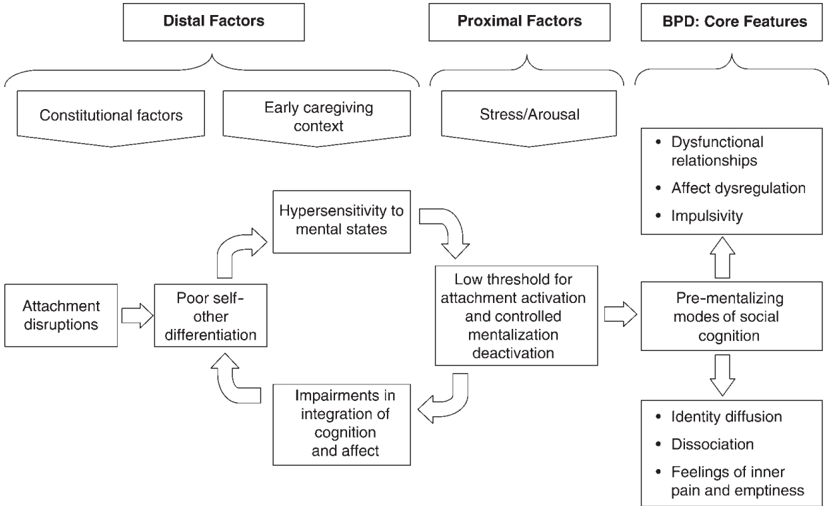
The precise nature and etiopathogenesis of borderline personality disorder (BPD) continues to elude researchers and clinicians. Yet, increasing evidence from various strands of research converges to suggest that affect dysregulation, impulsivity, and unstable relationships constitute the core features of BPD. Over the last two decades, the mentalization-based approach to BPD has attempted to provide a theoretically consistent way of conceptualizing the interrelationship between these core features of BPD, with the aim of providing clinicians with a conceptually sound and empirically supported approach to BPD and its treatment. This paper presents an extended version of this approach to BPD based on recently accumulated data. In particular, we suggest that the core features of BPD reflect impairments in different facets of mentalization, each related to impairments in relatively distinct neural circuits underlying these facets. Hence, we provide a comprehensive account of BPD by showing how its core features are related to each other in theoretically meaningful ways. More specifically, we argue that BPD is primarily associated with a low threshold for the activation of the attachment system and deactivation of controlled mentalization, linked to impairments in the ability to differentiate mental states of self and other, which lead to hypersensitivity and increased susceptibility to contagion by other people's mental states, and poor integration of cognitive and affective aspects of mentalization. The combination of these impairments may explain BPD patients' propensity for vicious interpersonal cycles, and their high levels of affect dysregulation and impulsivity. Finally, the implications of this expanded mentalization-based approach to BPD for mentalization-based treatment and treatment of BPD more generally are discussed.
Overview
CoChat Summary
TL;DR
This paper presents an expanded developmental, mentalization-based model of borderline personality disorder (BPD), arguing that its core features reflect impairments in different facets of mentalization linked to relatively distinct neural circuits. It proposes that BPD involves low thresholds for attachment-system activation and controlled-mentalization deactivation, explaining vicious interpersonal cycles, affect dysregulation, impulsivity, identity diffusion, dissociation, and inner pain.
Key findings
- BPD’s core features are emotional dysregulation, high impulsivity leading to self-harm and suicidality, and disturbed interpersonal functioning; lifetime prevalence is estimated to be as much as 6%, and between 25 and 33% may meet criteria in outpatient and forensic populations.
- Mentalization is multidimensional—automatic/controlled, cognitive/affective, internal/external, and self/other focused—and BPD is primarily associated with failures of explicit, internal, cognitive mentalization, alongside a low threshold for attachment activation and deactivation of controlled mentalization.
- These impairments may produce hypersensitivity and susceptibility to contagion by others’ mental states, poor self-other differentiation, hypermentalization or mentalization failure, and reemergence of prementalizing modes such as psychic equivalence, pretend mode, and teleological mode.
- Treatment implications include aiming for an optimal balance between attachment activation and mentalization; insight-oriented treatments focused on traumatic past may be contraindicated for patients with serious mentalization impairments.
Methods
- Theoretical/review paper presenting an expanded mentalization-based developmental model of BPD, integrating prior formulations with recently accumulated data.
- Draws on extant neuroimaging, developmental social and cognitive research, factor analytic and clinical studies, attachment research, and treatment literature; no new empirical sample or primary data collection is reported.
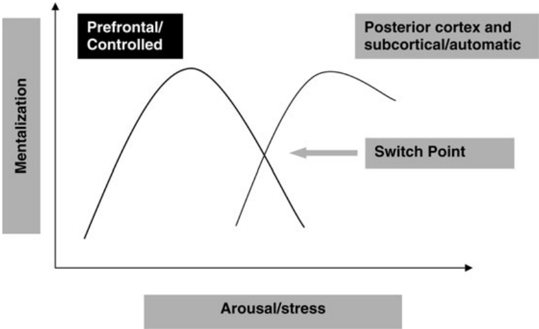
- Main analysis is a conceptual synthesis relating BPD features to four mentalization polarities and proposed neural systems, including a biobehavioral switch model of stress and controlled versus automatic mentalization.
Limitations
- The paper states that cited neuroimaging and physiological studies require further replication because of sometimes small sample sizes, disparate experimental paradigms, and heterogeneity in sample selection (e.g., comorbidity with depression, childhood abuse, PTSD, and copying styles).
- The paper notes that reliable description of BPD in adolescence remains controversial regarding homogeneity, comorbidity between and within axes, arbitrary cutoffs, and poor test-retest reliability, and that stability into adulthood is suggestive rather than well-established.
- The paper states that some predictions remain to be investigated (e.g., recovery time of mentalization with hyperactivating versus deactivating strategies) and that evidence on maladaptive parental mentalizing is still lacking; evident from the text, it is a conceptual/review article and does not empirically test the proposed model.
Model-written summary. Check it against the paper before relying on it.
Integrity signals
Registry
Cites
Statistics
Figures
Verification
Claims the paper makes
24 Valid · 11 Not valid · 130 Not checked · 108 Own results and interpretations
The cited sources support only part of this claim — read each source’s verdict below.
In the paper
“As we have already noted, retrospective evaluations have led to recognition that disorganization of the attachment system is a key aspect of the psychopathology of BPD (Gunderson & Lyons-Ruth, 2008).”
What the sources say
- Partly supportedcites Gunderson & Lyons-Ruth, 2008 matched to “BPD's Interpersonal Hypersensitivity Phenotype: A Gene-Environment-Developmental Model” (2008) sourceExperimental — accuracy not yet measured
The paper calls disorganized attachment especially important to understanding BPD and links it to an adult attachment pattern seen in patients (passage [1], section labeled Abstract). Its Conclusions describe attachment disorganization as one likely developmental pathway, not a defining feature of BPD psychopathology. The RETROSPECTIVE REPORTS section discusses patients’ accounts of difficult childhood relationships but does not say those evaluations established attachment disorganization. (LLM, conf=0.82)
plainstates an association- Asserted: passes — The authors put it forward as true.
- Checkable: passes — It can be checked against evidence.
- Load-bearing: passes — The paper’s conclusions depend on it.
- Based: passes — The paper gives a reason why it holds.
- Partly supported
The cited sources support only part of this claim — read each source’s verdict below.
In the paper
“Indeed, studies of adult attachment patterns of BPD patients repeatedly highlight a combination of preoccupied and unresolved attachment associated with BPD (Agrawal, Gunderson, Holmes, & Lyons-Ruth, 2004; Fonagy et al., 1996; Nakash-Eisikovits, Dutra, & Westen, 2002).”
What the sources say
- Supportedcites Agrawal, Gunderson, Holmes, & Lyons-Ruth, 2004 matched to “Attachment Studies with Borderline Patients: A Review” (2004) source
The Results report that all five studies using the Adult Attachment Interview found the greatest proportion of borderline individuals in the preoccupied or unresolved categories. The Discussion states that BPD attachments seem best characterized as unresolved with preoccupied features in relation to parents, matching the attributed claim. (LLM, conf=0.94)
- Not checked yetcites Fonagy et al., 1996 matched to “The relation of attachment status, psychiatric classification, and response to psychotherapy.” (1996) source
- Partly supportedcites Nakash-Eisikovits, Dutra, & Westen, 2002 matched to “Relationship Between Attachment Patterns and Personality Pathology in Adolescents” (2002) sourceExperimental — accuracy not yet measured
The Association Between Attachment Status and Axis II Pathology section links both anxious/ambivalent and disorganized/unresolved attachment to borderline personality disorder. But this paper studies adolescents, not adult BPD patients, and reports the two associations separately rather than a combined attachment pattern. Its discussion of an adult association concerns preoccupied attachment only. (LLM, conf=0.88)
boostedstates an association- Asserted: passes — The authors put it forward as true.
- Checkable: passes — It can be checked against evidence.
- Load-bearing: unclear — It is unclear whether the paper’s conclusions depend on it.
- Based: passes — The paper gives a reason why it holds.
- Supported
The cited sources support only part of this claim — read each source’s verdict below.
In the paper
“Such gene-environment effects could be one way that the known influence of heredity (Distel et al., 2008; LyonsRuth et al., 2007; Ni et al., 2007) is mediated in BPD.”
What the sources say
- Supportedcites Distel et al., 2008 matched to “Heritability of borderline personality disorder features is similar across three countries” (2008) source
The citation supports the sentence’s reference to a known hereditary influence, not its proposed gene–environment mechanism. The indexed paper’s title identifies its subject as the heritability of borderline personality disorder features; it does not need to establish the citing authors’ speculative explanation of how that influence is mediated. (LLM, conf=0.84)
- Supportedcites LyonsRuth et al., 2007 matched to “Serotonin transporter polymorphism and borderline or antisocial traits among low-income young adults” (2007) source
The Conclusions report genetic influence on liability to borderline and antisocial personality disorders. The Discussion proposes that the observed genetic association may reflect a gene–environment interaction, while noting that the interaction was not tested in this study. That supports the citing sentence’s tentative ‘could be’ formulation. (LLM, conf=0.90)
- Not matchedcites Ni et al., 2007
This doesn’t read as a citation we can look up.
hedgedstates a possible cause- Asserted: passes — The authors put it forward as true.
- Checkable: passes — It can be checked against evidence.
- Load-bearing: unclear — It is unclear whether the paper’s conclusions depend on it.
- Based: passes — The paper gives a reason why it holds.
- Supported
The cited sources support only part of this claim — read each source’s verdict below.
In the paper
“dissociative comorbidity is more frequently reported by patients with BPD than other groups”
What the sources say
- Not checked — no full text of the sourcecites Sar, Akyuz, Kugu, Ozturk, & Ertem-Vehid, 2006 matched to “Axis I Dissociative Disorder Comorbidity in Borderline Personality Disorder and Reports of Childhood Trauma” (2006) source
- Partly supportedcites Zanarini, Frankenburg, Jager-Hyman, Reich, & Fitzmaurice, 2008 matched to “The course of dissociation for patients with borderline personality disorder and axis II comparison subjects: a 10‐year follow‐up study” (2008) sourceExperimental — accuracy not yet measured
The Results report that 76 borderline patients, but only two axis II comparison subjects, had high dissociation scores at baseline. This supports a difference in reported dissociative symptoms between those groups, not a higher frequency of diagnosed dissociative comorbidity across other groups generally. The paper measures symptoms with the Dissociative Experiences Scale rather than reporting rates of comorbid dissociative disorders. (LLM, conf=0.86)
plainstates an association- Asserted: passes — The authors put it forward as true.
- Checkable: passes — It can be checked against evidence.
- Load-bearing: unclear — It is unclear whether the paper’s conclusions depend on it.
- Based: passes — The paper gives a reason why it holds.
The cited sources that could be checked couldn’t confirm or dispute this claim.
In the paper
“may be an extreme indication of such separateness (Ross, 2007; Zanarini et al., 2008).”
What the sources say
- Not checked — no full text of the sourcecites Ross, 2007 matched to “Borderline Personality Disorder and Dissociation” (2007) source
- Could not verifycites Zanarini et al., 2008 matched to “The course of dissociation for patients with borderline personality disorder and axis II comparison subjects: a 10‐year follow‐up study” (2008) sourceExperimental — accuracy not yet measured
The Methods describe dissociation through absorption, depersonalization, and amnesia, while the Discussion reports how their severity changed over time. Neither section characterizes dissociation as an extreme indication of separateness; searches for separateness and related descriptions found no such passage. Page numbers were not available in our copy. (LLM, conf=0.75)
hedgedstates an association- Asserted: passes — The authors put it forward as true.
- Checkable: passes — It can be checked against evidence.
- Load-bearing: unclear — It is unclear whether the paper’s conclusions depend on it.
- Based: passes — The paper gives a reason why it holds.
157 more claims · 13 with their cited sources checked
Create a free account to see all 273 claims and to verify the 9 references still open.
- Probably not a substantial claim. 41
- It may state two separate claims as one. 81
Claims other papers make about this one
Each is checked against this paper’s own text: does it say what the citing paper says it does?
The source backs part of the claim, not all of it — or backs it for a different population, condition or comparison.
In the citing paper
“In this account, an insecure attachment relationship between primary caregiver and child results in avoidance of internal thinking and feeling states in the child because acknowledging such internal states would further threaten an already vulnerable relationship with the caregiver.”
From First evidence of a prospective relation between avoidance of internal states and borderline personality disorder features in adolescents. (2015) · cites this paper as [19]
Experimental — accuracy not yet measuredThe source backs part of the claim, not all of it — or backs it for a different population, condition or comparison.
In the citing paper
“In turn, the child is at increased risk of developing BPD.”
From First evidence of a prospective relation between avoidance of internal states and borderline personality disorder features in adolescents. (2015) · cites this paper as [19]
Experimental — accuracy not yet measuredThe source backs part of the claim, not all of it — or backs it for a different population, condition or comparison.
In the citing paper
“In line with this, mentalization as an emotion regulation strategy has been considered a top-down strategy, relying in the explicit emotion regulation and in the theory of mind brain systems (Fonagy and Luyten, 2009; Vrticka and Vuilleumier, 2012).”
From Mindfulness and Emotion Regulation: Insights from Neurobiological, Psychological, and Clinical Studies (2017) · cites this paper as Fonagy and Luyten, 2009
Experimental — accuracy not yet measuredIn the citing paper
“stress and distress is thought to have a detrimental impact on the capacity to mentalize, especially if the stress is interpersonal in nature.”
From Investigating the association between parental reflective functioning and distress tolerance in motherhood. (2015) · cites this paper as Fonagy & Luyten, 2009
In the citing paper
“Stress and heightened arousal may inhibit the engagement of cortically-controlled processes of explicit mentalization that underscore reflection and reasoning when engaged with others (Fonagy & Luyten, 2009).”
From Investigating the association between parental reflective functioning and distress tolerance in motherhood. (2015) · cites this paper as Fonagy & Luyten, 2009
Citations
Cites
Fredrickson, B. L. (2001) · American Psychologist · doi:10.1037//0003-066x.56.3.218 · Cited by 18,025 · cited 2×
“…insight into BPD. Studies suggest that the ability to continue to mentalize even under considerable stress leads to so-called “broaden and build” (Fredrickson, 2001) cycles of attachment security, which reinforce feelings of secure attachment, personal agency, and affect regulation (“build”),…”
BackgroundRizzolatti, G., & Craighero, L. (2004) · Annual Review of Neuroscience · doi:10.1146/annurev.neuro.27.070203.144230 · Cited by 7,433 · cited 1×
“…system involves a more body-based, frontoparietal mirror neuron system that is involved in understanding the multimodal embodied self (e.g., face and body recognition) and understanding others through motor-simulation mechanisms (Gallese, Keysers, & Rizzolatti, 2004; Rizzolatti & Craighero, 2004).”
Background(1993) · Cited by 7,136
Attachment in adulthood: structure, dynamics, and change
(2008) · Choice Reviews Online · doi:10.5860/choice.45-2903 · Cited by 4,315
Affect Regulation, Mentalization, and the Development of the Self
Fonagy, P., Gergely, G., Jurist, E. L., & Target, M. (2018) · doi:10.4324/9780429471643 · Cited by 3,886
Self-citationThe Child's Conception of Space
Lawrence, E., Piaget, J., Inhelder, B., Langdon, F. J., & Lunzer, J. L. (1957) · British Journal of Educational Studies · doi:10.2307/3118882 · Cited by 3,213
Cattaneo, L., & Rizzolatti, G. (2009) · Archives of Neurology · doi:10.1001/archneurol.2009.41 · Cited by 3,137
Self-referential processing in our brain—A meta-analysis of imaging studies on the self
Northoff, G., Heinzel, A., de Greck, M., Bermpohl, F., Dobrowolny, H., & Panksepp, J. (2006) · NeuroImage · doi:10.1016/j.neuroimage.2005.12.002 · Cited by 2,792 · cited 1×
“The aFMC is involved in mentalizing (Frith & Frith, 2006; Gilbert et al., 2007) and self-referential processing (Northoff et al., 2006).”
BackgroundMayberg, H. S., Liotti, M., Brannan, S. K., McGinnis, S., Mahurin, R. K., Jerabek, P. A., Silva, J. A., Tekell, J. L., Martin, C. C., Lancaster, J. L., et al. (1999) · American Journal of Psychiatry · doi:10.1176/ajp.156.5.675 · Cited by 2,416 · cited 2×
“…for attention and long-term memory (Cabeza & Nyberg, 2000), perhaps specifically responsible for integrating emotion and cognition (e.g., emotional encoding of episodic memories; Maddock, 1999) and subserving moodmediated inhibition or enhancement of cognitive processing (Mayberg et al., 1999).”
BackgroundThe debate over dopamine’s role in reward: the case for incentive salience
Berridge, K. C. (2007) · Psychopharmacology · doi:10.1007/s00213-006-0578-x · Cited by 2,347 · cited 1×
“These findings suggest that for securely attached mothers, infant cues (whether positive or negative in affect) may act as an important affective signal of “incentive salience” (Berridge, 2007), reinforcing and motivating responsive maternal care.”
Background
Research works printed but not linked: 12
- Williams, 2006, Handbook of mentalisation based treatments
- 10.1093/med/9780198569183.001.0001 · DOI · Paper page
- 10.1111/1469-7610.0013_7 · doi:10.1111/1469-7610.0013_7 · Paper page
- Gergely, 1996, The social biofeedback model of parental affect-mirroring, International Journal of Psycho-Analysis, 77, 1181
- Luyten, 2009, The interpersonal regulation of stress
- Bloom, 2004, Descartes' baby
- Hobson, 2002, The cradle of thought: Explorations of the origins of thinking
- Fearon, 2006, Handbook of mentalisaiton based treatments
- Diamond, 1991, Self–other differentiation of object representations
- Hesse, 2008, Handbook of attachment theory and research, 552
- Luyten, 2009, Mentalization as a multidimensional concept
- O'Connor, 2006, Developmental psychopathology: Vol. 3. Risk, disorder and adaptation, 202
Cited by
Items 301–400 of 1,140
Barone, L., & Carone, N. (2021) · Attachment & Human Development · doi:10.1080/14616734.2020.1738510 · Cited by 18
“However, recently, Fonagy and Luyten (2009) suggested that “mentalization is likely to be a function loosely coupled with the attachment system” (p. 1374).”
BackgroundResultInfluentialRunions, K., Wong, J. W. Y., Pace, G., & Salmin, I. (2020) · Adolescent Research Review · doi:10.1007/s40894-020-00137-y · Cited by 31
Attachment, Trauma, and Mentalization in Intimate Partner Violence: A Preliminary Investigation
Condino, V., Giovanardi, G., Vagni, M., Lingiardi, V., Pajardi, D., & Colli, A. (2020) · Journal of Interpersonal Violence · doi:10.1177/0886260520980383 · Cited by 30
“From this perspective, secure attachment is likely related to optimal and flexible mentalization since people with this classification tend to process social information in an objective and reflective manner (Fonagy & Luyten, 2009).”
BackgroundLiu, Y., Chen, C., Zhou, Y., Zhang, N., & Liu, S. (2024) · Frontiers in Psychiatry · doi:10.3389/fpsyt.2024.1361535 · Cited by 31
Keefe, J. R., Huque, Z. M., DeRubeis, R. J., Barber, J. P., Milrod, B. L., & Chambless, D. L. (2019) · Psychotherapy · doi:10.1037/pst0000215 · Cited by 26
“For patients with more BPD traits, relatively lower levels of emotional expression in PFPP may reflect successful work by the therapist and patient to contain affect in order to better work with the meanings and circumstances surrounding panic and anxiety (Fonagy & Luyten, 2009).”
BackgroundMentalizing-Based Treatment with Adolescents and Families
Bleiberg, E. (2013) · Child and Adolescent Psychiatric Clinics of North America · doi:10.1016/j.chc.2013.01.001 · Cited by 35
Fizke, E., Buchheim, A., & Juen, F. (2013) · Psihologija · doi:10.2298/psi1302161f · Cited by 35
“Mental illness is reported to be associated with disorganized attachment representations (Allen, Hauser, & Borman-Spurell, 1996, Dozier et al., 2008) and with reduced mentalizing abilities (Fonagy et al., 1996, 2002; Fonagy & Luyten, 2009) especially in patients with BPD.”
BackgroundDevelopmental Pathways to BPD-Related Features in Adolescence: Infancy to Age 15
Brumariu, L. E., Owen, M. T., Dyer, N., & Lyons-Ruth, K. (2020) · Journal of Personality Disorders · doi:10.1521/pedi_2020_34_480 · Cited by 21
Mata, C., Santelices, M. P., & Verges, A. J. (2020) · Early Child Development and Care · doi:10.1080/03004430.2020.1755664 · Cited by 34
“…the capacity to understand other’s mental states is reduced, distorted and is less flexible mainly because of the diminished attention to social cues, deteriorating the ability to mentalize in an implicit and explicit level (Fonagy & Luyten, 2009; Lieberman, 2007; Nolte et al., 2013).”
BackgroundMasland, S. R., Schnell, S. E., & Shah, T. V. (2020) · Current Behavioral Neuroscience Reports · doi:10.1007/s40473-020-00220-7 · Cited by 30
Medrea, F., & Bengà, O. (2021) · Cognitie, Creier, Comportament · doi:10.24193/cbb.2021.25.05 · Cited by 31
Rishede, M., Juul, S., Bo, S., Gondan, M., Møeller, S. B., & Simonsen, S. (2021) · Frontiers in Psychiatry · doi:10.3389/fpsyt.2021.634332 · Cited by 26
“, internal-external, automatic-controlled, affective-cognitive, selfother) (28, 29).”
BackgroundInfluentialMusetti, A., Pingani, L., Zagaria, A., Uberti, D., Meli, S., Lenzo, V., Gori, A., Franceschini, C., & Galeazzi, G. M. (2022) · Frontiers in Psychology · doi:10.3389/fpsyg.2022.985148 · Cited by 26
“Mentalization has its roots in attachment relationships, so that disruptions of early attachment, such as childhood maltreatment, can compromise the development of an adequate RF (Fonagy and Luyten, 2009).”
BackgroundMiraglia, L., Peretti, G., Manzi, F., Dio, C. D., Massaro, D., & Marchetti, A. (2023) · Frontiers in Psychology · doi:10.3389/fpsyg.2023.999921 · Cited by 33
“The ability to mentalize (Fonagy, 1989, 1991; Fonagy and Bateman, 2008; Fonagy and Luyten, 2009), also called Theory of Mind (ToM; Premack and Woodruff, 1978; Wimmer and Perner, 1983; Perner and Wimmer, 1985; Wellman et al.”
BackgroundSanislow, C. A., Marcus, K. L., & Reagan, E. (2011) · Current Psychiatry Reports · doi:10.1007/s11920-011-0250-y · Cited by 28
“A variety of psychotherapies with empirically demonstrated efficacy have been developed (eg, dialectical behavioral therapy [DBT] [11–13], mentalization [14, 15], and transferencefocused therapy [16], as well as cognitive behaviorally based group treatments (eg, Systems Training for Emotional Predictability and Proble…”
BackgroundPsychic reality and the nature of consciousness
Fonagy, P., & Allison, E. (2015) · The International Journal of Psychoanalysis · doi:10.1111/1745-8315.12403 · Cited by 28
“Firstly, as we have argued on many previous occasions, they may result in a compromised capacity for mentalization – to think about our own and others’ feelings (Fonagy and Target, 1997, 2000, 2006, 2007a; Fonagy et al., 2002, 2007; Fonagy and Luyten, 2009).”
BackgroundSelf-citationReflective functioning in an adolescent community sample
Cropp, C., Alexandrowicz, R. W., & Taubner, S. (2019) · Mental Health & Prevention · doi:10.1016/j.mph.2019.200156 · Cited by 26
Flasbeck, V., Enzi, B., & Brüne, M. (2019) · Frontiers in Psychiatry · doi:10.3389/fpsyt.2019.00357 · Cited by 25
“With regard to social cognition, a growing body of literature suggests that patients with BPD experience difficulties in “mentalizing” (or “cognitive empathy”), which refers to the ability to reflect upon one’s own and others’ mental states in terms of intentions, beliefs, desires, or feelings (6, 7).”
BackgroundA Mentalization-Informed Staging Approach to Clinical High Risk for Psychosis
Armando, M., Hutsebaut, J., & Debbané, M. (2019) · Frontiers in Psychiatry · doi:10.3389/fpsyt.2019.00385 · Cited by 29
“These different strands of evidence also underline the utility of the concept of mentalization, which unifies different psychological constructs related to thinking about mental states into a coherent framework articulated to a therapy model (65, 66).”
BackgroundSocial Cognition Capacities as Predictors of Outcome in Mentalization-Based Treatment (MBT)
Kvarstein, E. H., Folmo, E. J., Antonsen, B. T., Normann‐Eide, E., Pedersen, G., & Wilberg, T. (2020) · Frontiers in Psychiatry · doi:10.3389/fpsyt.2020.00691 · Cited by 25
“The problematic consequence of high sensitivity and negative bias, can be interpersonal misinterpretations, repeated conflicts, and unstable relationships (1).”
BackgroundInfluentialWhite, L. O., Klein, A. M., von Klitzing, K., Graneist, A., Otto, Y., Hill, J., Over, H., Fonagy, P., & Crowley, M. J. (2016) · Frontiers in Psychology · doi:10.3389/fpsyg.2016.01926 · Cited by 26
“…for theories of mentalizing – particularly the interaction of mentalizing with motivational states and stress regulation (Ickes and Simpson, 2001; Tomasello et al., 2005; Fonagy and Luyten, 2009) – few if any experimental studies directly address the roles of context and disposition in mentalizing.”
InfluentialSelf-citationQuek, J., Melvin, G. A., Bennett, C., Gordon, M. S., Saeedi, N., & Newman, L. K. (2018) · Journal of Personality Disorders · doi:10.1521/pedi_2018_32_336 · Cited by 32
Antonucci, L. A., Taurisano, P., Coppola, G., & Cassibba, R. (2018) · Neuroscience & Biobehavioral Reviews · doi:10.1016/j.neubiorev.2018.11.002 · Cited by 26
Personality Pathology in Youth
Sharp, C., & Clercq, B. J. D. (2020) · Cambridge University Press eBooks · doi:10.1017/9781108333931.015 · Cited by 27
Relationship between Mentalizing and Working Conditions in Health Care
Steinmair, D., Richter, F., & Löffler‐Stastka, H. (2020) · International Journal of Environmental Research and Public Health · doi:10.3390/ijerph17072420 · Cited by 22
Cole, E. R., Strauss, C., Fife‐Schaw, C., & McCarthy‐Jones, S. (2017) · Psychology and Psychotherapy Theory Research and Practice · doi:10.1111/papt.12129 · Cited by 22
Luyten, P. (2017) · Journal of the American Psychoanalytic Association · doi:10.1177/0003065117712518 · Cited by 23
“Hence, in normative development, experiences of relatedness are intrinsically related to the development of feelings of autonomy, competence, and identity (Fonagy and Luyten 2009; Fredrickson 2001; Mikulincer and Shaver 2007).”
BackgroundSelf-citationMentalisierung in der Teamsupervision
Kotte, S. C., & Taubner, S. (2016) · Organisationsberatung Supervision Coaching · doi:10.1007/s11613-016-0443-7 · Cited by 19
Derks, S. D. M., van Wijngaarden, S., Wouda, M., Schuengel, C., & Sterkenburg, P. S. (2019) · Trials · doi:10.1186/s13063-019-3608-9 · Cited by 27
Apego y estrés en niños con Diabetes tipo 1 y sus madres
Costa‐Cordella, S., Luyten, P., Giraudo, F., Salas, F. M., Shmueli‐Goetz, Y., & Fonagy, P. (2020) · Revista chilena de pediatría · doi:10.32641/rchped.v91i1.1197 · Cited by 28
Self-citationDisturbed families or families disturbed: a reconsideration
Giles, E. M., Cross, A. S., Matthews, R. V., & Lacey, J. H. (2021) · Eating and Weight Disorders - Studies on Anorexia Bulimia and Obesity · doi:10.1007/s40519-021-01160-1 · Cited by 26
A REALIST EVALUATION OF THE PROCESSES AND OUTCOMES OF INFANT MASSAGE PROGRAMS
Underdown, A., Norwood, R., & Barlow, J. (2013) · Infant Mental Health Journal · doi:10.1002/imhj.21408 · Cited by 25
Epistemisches Vertrauen und Lernen
Nolte, T. (2018) · Vandenhoeck & Ruprecht eBooks · doi:10.13109/9783666452499.157 · Cited by 29
Do Competitive Contexts Affect Mindreading Performance?
Colle, L., Dimaggio, G., Carcione, A., Nicolò, G., Semerari, A., & Chiavarino, C. (2020) · Frontiers in Psychology · doi:10.3389/fpsyg.2020.01284 · Cited by 20
“Other evolutionary selected motives may be at the roots of state-dependent failure in making sense of mental states (Dimaggio et al., 2007, 2015b; Fonagy and Luyten, 2009; Liotti and Gilbert, 2011; Dimaggio and Lysaker, 2015) noted that this capacity collapses under the activation of disturbed attachment, which dimini…”
BackgroundUnholy Questions About Five Central Tenets of Psychoanalysis That Need to be Empirically Verified
Luyten, P. (2015) · Psychoanalytic Inquiry · doi:10.1080/07351690.2015.987590 · Cited by 21
“…mapping (which is probably to a great extent underpinned by the so-called mirror neuron system), and thus starts to feel like the other person (who purportedly projects), because he or she is unable to inhibit his or her attempt to map the self on to the other (Fonagy and Luyten, 2009).”
BackgroundSelf-citationThe ‘extreme female brain’: increased cognitive empathy as a dimension of psychopathology
Dinsdale, N. L., Mökkönen, M., & Crespi, B. J. (2016) · Evolution and Human Behavior · doi:10.1016/j.evolhumbehav.2016.02.003 · Cited by 23
“More generally, psychological accounts of the causes of BPD center on hyper-vigilance regarding the emotional states of others, negative expectations from social relationships, low thresholds for activation of social attachment systems, and low thresholds for deactivation of controlled, objective mentalization (Arntz…”
BackgroundMethodInfluentialAn investigation of the mentalization-based model of borderline pathology in adolescents
Quek, J., Bennett, C., Melvin, G. A., Saeedi, N., Gordon, M. S., & Newman, L. K. (2018) · Comprehensive Psychiatry · doi:10.1016/j.comppsych.2018.04.005 · Cited by 26
Reflective Function and Borderline Traits in Adolescents
Sharp, C., Penner, F., & Ensink, K. (2019) · Journal of Personality Disorders · doi:10.1521/pedi_2019_33_416 · Cited by 24
“For example, when marked mirroring fails in the context of disorganized attachment and caregivers respond with anger and fear instead of helping infants regulate distress, children are theorized to internalize an alien self (Fonagy & Luyten, 2009).”
BackgroundBigras, N., Bosisio, M., Daspe, M., & Godbout, N. (2020) · International Journal of Sexual Health · doi:10.1080/19317611.2020.1796881 · Cited by 24
“According to Fonagy and Luyten (2009), identifying the cause of painful emotions helps to contain the emotional reaction and reduce its intensity.”
BackgroundResponding to mentalization invitations in psychotherapy sessions—A conversation analysis approach
Keselman, H., Osvaldsson, K., Kullgard, N., & Holmqvist, R. (2016) · Psychotherapy Research · doi:10.1080/10503307.2016.1219422 · Cited by 20
Tay, S.-A. P. S., Hulbert, C. A., Jackson, H. J., & Chanen, A. M. (2017) · Psychiatry Research · doi:10.1016/j.psychres.2017.06.016 · Cited by 23
“Female participants aged 15 – 24 years diagnosed with BPD (n = 41) or MDD (n = 37) completed the Reading the Mind in the Eyes Test (RMET) and Happé’s Cartoon Task, measures of affective and cognitive dimensions of ToM, respectively.”
InfluentialWall, K., Kalpakci, A. H., Hall, K., Crist, N., & Sharp, C. (2018) · Borderline Personality Disorder and Emotion Dysregulation · doi:10.1186/s40479-018-0091-y · Cited by 20
Mentalization-based treatment for adolescents with conduct disorder (MBT-CD): a feasibility study
Hauschild, S., Kasper, L. A., Volkert, J., Sobanski, E., & Taubner, S. (2022) · European Child & Adolescent Psychiatry · doi:10.1007/s00787-022-02113-4 · Cited by 25
“According to the biobehavioral switch model [21], in a state of high emotional arousal, a change in mentalizing occurs via a transition from mainly cortically mediated, reflective processing of information to subcortically steered, automatic processing leading to fight and flight reactions.”
BackgroundMethodJansen, N., Kühl, J., Eller, N., Kingdon, P., & Firk, C. (2023) · Clinical Social Work Journal · doi:10.1007/s10615-023-00882-2 · Cited by 25
“…has a significant effect on when this point is reached, i.e., when the mentalizing system switches into an automatic mode, which is characterized by inhibited attention and elevated vigilance for attachment-related rejection and abandonment (Fonagy et al., 2011; Fonagy & Luyten, 2009; Mayes, 2006).”
BackgroundResultRamos, V., Canta, G. R., de Castro, F., & Leal, I. M. P. (2016) · Bulletin of the Menninger Clinic · doi:10.1521/bumc.2016.80.3.213 · Cited by 19
The Transition to Motherhood: Psychoanalysis and Neuroscience Perspectives
Mohr, M. V., Mayes, L. C., & Rutherford, H. J. V. (2017) · The Psychoanalytic Study of the Child · doi:10.1080/00797308.2016.1277905 · Cited by 25
Hertzmann, L., Abse, S., Target, M., Glausius, K., Nyberg, V., & Lassri, D. (2017) · Psychoanalytic Psychotherapy · doi:10.1080/02668734.2017.1320685 · Cited by 22
“…2006) was originally developed for patients with borderline personality disorder (BPD) (Bateman & Fonagy, 2004; Bateman, Fonagy, & Allen, 2009; Fonagy & Luyten, 2009) who often experience overwhelming and intense emotional distress, particularly in relation to inter-personal aspects of their…”
BackgroundChildhood behavioral inhibition is associated with impaired mentalizing in adolescence
Ballespí, S., Pérez-Domingo, A., Vives, J., Sharp, C., & Barrantes-Vidal, N. (2018) · PLoS ONE · doi:10.1371/journal.pone.0195303 · Cited by 20
“, not only thoughts, but also feelings, emotions, desires, impulses) [11] according to four basic dimensions [12].”
BackgroundEmpathy and Alexithymia in Borderline Personality Disorder: Clinical and Laboratory Measures
New, A. S., Rot, M. A. H., Ripoll, L. H., Pérez-Rodríguez, M. M., Lazarus, S. A., Zipursky, E., Weinstein, S. R., Koenigsberg, H. W., Hazlett, E. A., Goodman, M. S., et al. (2012) · Journal of Personality Disorders · doi:10.1521/pedi_2012_26_037 · Cited by 17
Luyten, P., Lowyck, B., & Vermote, R. (2010) · Psychoanalytic Psychotherapy · doi:10.1080/02668734.2010.522115 · Cited by 20
“The notion that interpersonal issues are central in personality disturbances has been strongly influenced by attachment theory (Fonagy & Luyten, 2009; Fonagy et al., 2010; Levy, 2005; Levy et al., 2006; Meyer & Pilkonis, 2005) and contemporary interpersonal formulations (Pincus, 2005).”
BackgroundSelf-citationPersonality disorders in adolescence: Label or opportunity?
Hutsebaut, J., Feenstra, D. J., & Luyten, P. (2013) · Clinical Psychology Science and Practice · doi:10.1111/cpsp.12052 · Cited by 28
Self-citationA Mentalization-Based Treatment Approach to Caring for Youth in Foster Care
Jacobsen, M. N., Ha, C., & Sharp, C. (2015) · Journal of Infant Child and Adolescent Psychotherapy · doi:10.1080/15289168.2015.1093921 · Cited by 22
“Given the established link between traumatic experiences including child maltreatment with impaired mentalization abilities (Allen, 2013; Fonagy & Luyten, 2009; Ensink et al., 2014a; Ensink et al., 2014b), a mentalization-based approach to the treatment and care of youth is important to implement…”
BackgroundPharmacological interventions for people with borderline personality disorder
Stoffers‐Winterling, J., Storebø, O. J., Vӧllm, B., Mattivi, J. T., Nielsen, S. S., Kielsholm, M. L., Faltinsen, E. G., Simonsen, E. H., & Lieb, K. (2018) · Cochrane Database of Systematic Reviews · doi:10.1002/14651858.cd012956 · Cited by 22
Heel, M. V., Luyten, P., Meulemeester, C. D., Vanwalleghem, D., Vermote, R., & Lowyck, B. (2019) · Journal of Personality Disorders · doi:10.1521/pedi_2019_33_373 · Cited by 21
Self-citationIntroduction: An Idea Whose Time Has Come
Sharp, C., & Tackett, J. L. (2014) · Springer eBooks · doi:10.1007/978-1-4939-0591-1_1 · Cited by 18
Schaap‐Jonker, H., & Corveleyn, J. M. T. (2014) · Archive for the Psychology of Religion · doi:10.1163/15736121-12341292 · Cited by 19
“In this article, the construct of mentalizing is defined along the four polarities which Fonagy and Luyten (2009) have described and are summarized above, with an emphasis on the dynamic aspects of the process of mentalizing, and especially on the dynamic interaction between thinking and feeling in…”
BackgroundMethodInfluentialLuyten, P., & Fonagy, P. (2014) · Springer eBooks · doi:10.1007/978-1-4939-1314-5_13 · Cited by 24
“Moreover, these dysfunctions have been linked to failure of topdown regulation and/or impairments in bottom-up input, reflecting hypersensitivity of limbic structures that in concert may be responsible for the impairments in autonomic regulation, emotion regulation, and neuroendocrine stress responses typically observ…”
BackgroundInfluentialSelf-citationConstructing and Mentalizing the Matrix
Karterud, S. (2011) · Routledge eBooks · doi:10.1177/0533316411417941 · Cited by 17
“They are sensitive, react more easily, more intensely, and are more likely to reach the ‘switch point’ where the ability to mentalize is closed down and fight/flight responses take over (Fonagy and Luyten 2009).”
BackgroundHuprich, S. K. (2011) · Journal of Personality Assessment · doi:10.1080/00223891.2011.577473 · Cited by 17
“…are being described in more integrative ways, which often supports many of the major ideas inherent in the original psychodynamic model (see Fonagy & Luyten, 2009; Fonagy & Target, 1997, 2006, for good examples of how neuroscience and attachment theory are being integrated to provide more…”
BackgroundAttachment in Adolescence and Borderline Personality Disorder
Steele, M., Bate, J., Nikitiades, A., & Buhl‐Nielsen, B. (2015) · Journal of Infant Child and Adolescent Psychotherapy · doi:10.1080/15289168.2015.1004882 · Cited by 28
Freda, M. F., & Esposito, G. (2017) · Qualitative Research Journal · doi:10.1108/qrj-06-2016-0039 · Cited by 22
Detecting the Presence of a Personality Disorder Using Interpersonal and Self-Dysfunction
Beeney, J. E., Lazarus, S. A., Hallquist, M. N., Stepp, S. D., Wright, A. G. C., Scott, L. N., Giertych, R. A., & Pilkonis, P. A. (2018) · Journal of Personality Disorders · doi:10.1521/pedi_2018_32_345 · Cited by 20
“…1968; Kernberg, 1985), unstable identity (Wilkinson-Ryan & Westen, 2000), self-other differentiation (Piaget, 2013), accurate self-representation (Fonagy & Luyten, 2009) and self-directedness (Marcia, Waterman, Matteson, & Archer, 2012), all of which have at least some mention in the LPFS.…”
BackgroundBadoud, D., Rüfenacht, E., Debbané, M., & Perroud, N. A. (2018) · Research in Psychotherapy Psychopathology Process and Outcome · doi:10.4081/ripppo.2018.317 · Cited by 21
“Its acquisition, as well as its adaptive functioning along the lifespan, critically relies upon attention control and emotion regulation skills (Fonagy & Luyten, 2009).”
BackgroundKullgard, N., Persson, P. O. Å., Möller, C. M., Falkenström, F., & Holmqvist, R. (2013) · Psychoanalytic Psychotherapy · doi:10.1080/02668734.2013.795909 · Cited by 27
“AAI was developed by George et al. (1985) and (references redacted for review).”
BackgroundInfluentialHalfon, S., Coşkun-Toker, A., Bekar, Ö., & Steele, H. (2020) · Journal of Infant Child and Adolescent Psychotherapy · doi:10.1080/15289168.2020.1771531 · Cited by 20
Giannoulis, E., Nousis, C., Sula, I.-J., Georgitsi, M.-E., & Malogiannis, I. A. (2025) · Biomedicines · doi:10.3390/biomedicines13071783 · Cited by 25
“These insights offer a neurobiological explanations for identity diffusion, interpersonal hypersensitivity, and dissociative states, which have traditionally been conceptualised in psychodynamic terms [61].”
Malberg, N. T. (2021) · Psychoanalytic Perspectives · doi:10.1080/1551806x.2021.1845033 · Cited by 18
Ballespí, S., Vives, J., Nonweiler, J., Pérez-Domingo, A., & Neus Barrantes-vidal, A. (2021) · Frontiers in Psychology · doi:10.3389/fpsyg.2021.721584 · Cited by 22
Koelen, J. A., Eurelings‐Bontekoe, L., & Kempke, S. (2016) · The Journal of Psychology · doi:10.1080/00223980.2016.1175997 · Cited by 19
“…chronic stress, these individuals suffer from a breakthrough of previously warded off negative emotions, that are subsequently difficult to regulate, mentalize, and verbalize, which (further) undermines their interpersonal functioning (Fonagy & Luyten, 2009; Mikulincer, Dolev, & Shaver, 2004).”
BackgroundResultMechanisms of Change in Treatments of Personality Disorders: Introduction to the Special Section
Kramer, U. (2018) · Journal of Personality Disorders · doi:10.1521/pedi.2018.32.supp.1 · Cited by 15
Vahidi, E., Ghanbari, S., & Behzadpoor, S. (2021) · International Journal of Adolescence and Youth · doi:10.1080/02673843.2021.1931376 · Cited by 23
“Our results support the BPD metallization model and also Linehan’s BPD model, emphasizing on the role of breaks in mentalizing and emotional dysregulation in BPD development (Fonagy & Luyten, 2009; Linehan et al., 2006).”
BackgroundResultMDMA-assisted psychotherapy for borderline personality disorder
Traynor, J. M., Roberts, D. E., Ross, S., Zeifman, R., & Choi-Kain, L. (2022) · Focus · doi:10.1176/appi.focus.20220056 · Cited by 15
Childhood Precursors of Adult Borderline Personality Disorder Features: A Longitudinal Study
Cramer, P. (2016) · The Journal of Nervous and Mental Disease · doi:10.1097/nmd.0000000000000514 · Cited by 19
“…include lack of normative commitment and disregard of social mores, a poorly integrated sense of self, feelings of emptiness, and difficulty in forming stable, lasting relationships with others (cf. Fonagy and Luyten, 2009; Gunderson and Lyons-Ruth, 2008; Trull et al., 2010; Zanarini, 1993).”
BackgroundHerrmann, A. S., Beutel, M. E., Gerzymisch, K., Lane, R. D., Pastore-Molitor, J., Wiltink, J., Zwerenz, R., Banerjee, M., & Subič-Wrana, C. (2018) · PLoS ONE · doi:10.1371/journal.pone.0195430 · Cited by 17
Gangs and Adolescent Mental Health: a Narrative Review
Macfarlane, A. (2018) · Journal of Child & Adolescent Trauma · doi:10.1007/s40653-018-0231-y · Cited by 23
“An underlying problem in these individuals could be in mentalisation, a concept espoused by psychologist Peter Fonagy, which refers to the ability to differentiate self from others, specifically with regard to intentional mental states (e.g. needs, desires and feelings) (Fonagy and Luyten 2009).”
BackgroundCognition and violent behavior in psychotic disorders: A nationwide case-control study
Lamsma, J., Cahn, W., & Fazel, S. (2019) · Schizophrenia Research Cognition · doi:10.1016/j.scog.2019.100166 · Cited by 16
“, 2013), underregulation of negative emotions (Fonagy and Luyten, 2009), blurring of self-other boundaries (Adshead et al.”
BackgroundChen, S., & Grupe, D. W. (2021) · Mindfulness · doi:10.1007/s12671-021-01707-4 · Cited by 21
Luyten, P., & Fonagy, P. (2015) · Springer eBooks · doi:10.1007/978-3-319-23300-0_9 · Cited by 22
“This process has a strong neurobiological basis, involving, for instance, the neuropeptide oxytocin, which is known to have a key role in fostering attachment and regulating stress (Fonagy and Luyten 2009, Neumann 2008).”
BackgroundResultSelf-citationFrancis, J., Sawyer, A. C. P., Roberts, R., Yelland, C., Drioli‐Phillips, P., & Williams, A. S. (2022) · Journal of Clinical Psychology · doi:10.1002/jclp.23465 · Cited by 20
Castellini, G., Tarchi, L., Cassioli, E., Ricca, V., Daga, G. A., Aguglia, A., Albert, U., Atti, A. R., Barlati, S., Blasi, G., et al. (2024) · Acta Psychiatrica Scandinavica · doi:10.1111/acps.13649 · Cited by 17
“21 On the contrary, a role for variants of non-maladaptive personality traits in mentalization, or vice versa, has since not fully emerged.”
BackgroundSchurz, M., Berenz, J.-P., Maerz, J., Perla, R., Buchheim, A., & Labek, K. (2024) · Brain Sciences · doi:10.3390/brainsci14040395 · Cited by 23
“It has been suggested [21,24–26] that patients with BPD strongly rely on fast and automatic forms of mentalizing in combination with problems in controlled and cognitive mentalizing.”
BackgroundAn integrated theory for Attention-Deficit Hyperactivity Disorder [ADHD]
Jones, B., & Allison, E. (2010) · Psychoanalytic Psychotherapy · doi:10.1080/02668734.2010.491198 · Cited by 22
“In recent years Peter Fonagy and colleagues have conceptualized the capacities for attentional control, reliable distinction of psychic reality and external reality, emotion regulation and self-representation (culminating in representation of the autobiographical self as extended in time) as aspects of the capacity to…”
Introduction to Mentalization-Based Approaches for Parents, Children, Youths, and Families
Volkert, J., Taubner, S., Byrne, G., Rossouw, T. I., & Midgley, N. (2021) · American Journal of Psychotherapy · doi:10.1176/appi.psychotherapy.20210020 · Cited by 18
Fischer-Kern, M., Tmej, A., Naderer, A., Zimmermann, J., & Nolte, T. (2022) · Attachment & Human Development · doi:10.1080/14616734.2021.2015794 · Cited by 14
Shahar, G., Porcerelli, J. H., Kamoo, R., Epperson, C. N., Czarkowski, K. A., Magriples, U., & Mayes, L. C. (2010) · Journal of the American Psychoanalytic Association · doi:10.1177/0003065110392228 · Cited by 18
“Under situations of high stress, individuals tend to show less flexible mentalization abilities; instead they may be vigilant only to affect cues without reflecting on possible meanings (Fonagy and Luyten 2009; Luyten et al. 2009).”
BackgroundObserving mentalizing art therapy groups for people diagnosed with borderline personality disorder
Springham, N., & Camic, P. M. (2017) · International Journal of Art Therapy · doi:10.1080/17454832.2017.1288753 · Cited by 20
“…and invalidation of the individual’s experience, e.g. deprivation of benign human attention, as a key aspect in the aetiology of BPD problems (Fonagy & Luyten, 2009; Zanarini, 2000), this finding provides an important new perspective on how MBT art therapy may be operating for this clinical…”
BackgroundParental mentalizing as a key resource for difficult transitions
Taubner, S. (2019) · Attachment & Human Development · doi:10.1080/14616734.2019.1589060 · Cited by 15
“Recently, the concept of mentalizing has been further developed by addressing the underlying processes and different facets of effectivementalizing (Fonagy & Luyten, 2009).”
BackgroundMentalizing Emotions and Social Cognition in Bullies and Victims
Pedditzi, M. L., Fadda, R., Striano, T., & Lucarelli, L. (2022) · International Journal of Environmental Research and Public Health · doi:10.3390/ijerph19042410 · Cited by 21
“Limits in parental mentalization might be a risk factor to develop a variety of psychological disorders, such as antisocial [14], borderline [15], and interpersonal problems like bullying and conduct problems during adolescence [16].”
BackgroundKnox, J. (2013) · Journal of Analytical Psychology · doi:10.1111/1468-5922.12029 · Cited by 15
“They cope with the intolerable prospect of conceiving of the mental state of their tormentors through a defensive disruption of depicting feelings and thoughts (Gabbard 1997; Fonagy & Luyten 2009).”
BackgroundClinical reflections on the intersections of autism and personality development
Lai, M. (2022) · Autism · doi:10.1177/13623613221088073 · Cited by 19
Blunden, A. G., Henry, J. D., Pilkington, P. D., & Pizarro‐Campagna, E. (2024) · Journal of Affective Disorders · doi:10.1016/j.jad.2024.08.215 · Cited by 20
“Abnormalities in empathic processing are thought to contribute to sociocognitive difficulties in BPD (Fonagy and Luyten, 2009; Harari et al., 2010; Jeung and Herpertz, 2014; Ripoll et al., 2013) and BPD-related problems with cognitive and affective empathy have previously been identified (Bora,…”
Borderline Personality Disorder in Adolescence: Phenomenology and Construct Validity
Fossati, A. (2014) · Springer eBooks · doi:10.1007/978-1-4939-0591-1_3 · Cited by 18
Schultz‐Venrath, U. (2011) · Gruppenpsychotherapie und Gruppendynamik · doi:10.13109/grup.2011.47.2.111 · Cited by 14
Cohen, L. J., Ndukwe, N., Siegfried, R. N., Kopeykina, I., Yaseen, Z. S., & GALYNKER, I. I. (2018) · Journal of Psychiatric Practice · doi:10.1097/pra.0000000000000348 · Cited by 18
Stob, V., Slade, A., Brotnow, L., Adnopoz, J. A., & WOOLSTON, J. L. (2019) · Journal of Infant Child and Adolescent Psychotherapy · doi:10.1080/15289168.2019.1591887 · Cited by 17
“The absence of mentalizing capacity is often referred to as “prementalizing” (Bateman & Fonagy, 2012; Fonagy & Luyten, 2009); the predilection within dyads (parent-child, partners, etc.) to respond to and try to change others’ behaviors without considering the mental states that underlie them…”
BackgroundDevelopment of dynamic interpersonal therapy in complex care (DITCC): a pilot study
Rao, A., Lemma, A., Fonagy, P., Sosnowska, M., Constantinou, M., Fijak-Koch, M., & Gelberg, G. (2019) · Psychoanalytic Psychotherapy · doi:10.1080/02668734.2019.1622147 · Cited by 18
“The clinical consequence of mistrust and non-mentalizing is not simply a lack of therapeutic response, it is also an increased risk of suicide (Bateman, O’Connell, Lorenzini, Gardner, & Fonagy, 2016; Fonagy & Luyten, 2009, 2018).”
BackgroundSelf-citationDavidsen, A. S., & Fosgerau, C. F. (2015) · European Journal of Psychotherapy & Counselling · doi:10.1080/13642537.2015.1027785 · Cited by 17
“Furthermore, it is repeatedly said to be typified by mirroring (Allen et al., 2008; Fonagy & Luyten, 2009), as when responding to another person’s mental states by mirroring them automatically in posture, facial expression and vocal tone (Allen & Fonagy, 2006).”
BackgroundBöses Blut – ein Rückblick: Bindung und Psychoanalyse, 2015
Fonagy, P., & Campbell, C. (2017) · PSYCHE · doi:10.21706/ps-71-4-275 · Cited by 24
Self-citationBeck, E., Sharp, C., Poulsen, S., Bo, S., Pedersen, J., & Simonsen, E. H. (2017) · Borderline Personality Disorder and Emotion Dysregulation · doi:10.1186/s40479-017-0074-4 · Cited by 21
The mediating role of mentalizing between attachment and eating disorders
Redondo, I., & Luyten, P. (2018) · Bulletin of the Menninger Clinic · doi:10.1521/bumc.2018.82.3.202 · Cited by 19
Self-citation
Metadata
- Authors
- Fonagy, P., & Luyten, P.
- Affiliations
- University College London (GB)
- KU Leuven (BE)
- Corresponding author
- Fonagy, Peter
- Venue
- Development and Psychopathology
- Publisher
- Cambridge University Press (CUP)
- Published
- 2009-10-14
- Volume
- 21
- Issue
- 4
- Pages
- 1355-1381
- ISSN
- 0954-5794 (ISSN-L)
- 1469-2198
- OpenAlex
- W2098937677
- Cited by
- 1,146
- References
- 239
- Citations by year
- 2026: 77 · 2025: 87 · 2024: 115 · 2023: 56 · 2022: 68 · 2021: 120 · 2020: 87 · 2019: 73 · 2018: 100 · 2017: 60 · 2016: 63 · 2015: 70 · 2014: 43 · 2013: 43 · 2012: 32
- FWCI
- 3.56
- Type
- journal article
- Language
- en
- Open access
- green
- discovery.ucl.ac.uk
- Locations
- Development and Psychopathology (publishedVersion)
- PubMed (publishedVersion)
- UCL Discovery (University College London) (submittedVersion)
- Digital Access to Libraries (Université catholique de Louvain (UCL), l'Université de Namur (UNamur) and the Université Saint-Louis (USL-B)) (submittedVersion)
- Topics
- Social Sciences › Psychology › Clinical Psychology › Personality Disorders and Psychopathology
- Social Sciences › Psychology › Clinical Psychology › Psychoanalysis and Psychopathology Research
- Social Sciences › Psychology › Clinical Psychology › Personality Traits and Psychology
- Keywords
- borderline personality disorder, mentalization, affect dysregulation, impulsivity, unstable relationships, attachment system, cognitive-affective integration, neural circuits, etiopathogenesis, mentalization-based treatment
- MeSH terms
- Affect, Borderline Personality Disorder, Cognition, Emotions, Humans, Interpersonal Relations, Self Concept, Theory of Mind
About these checks
Registry, retraction, Cites and statistics results are computed, not judged, with one exception: a printed reference that no index lists is read once by a model before it counts as a citation error. Claims are extracted by a model and kept only when their quote appears verbatim in the text; each cited source is then checked, with a model’s help, for whether it says what the claim relies on. Those verdicts can be wrong — read the claim’s quote and the cited source before relying on one.
The claim verdicts this report counts are experimental: their accuracy is not yet measured.
A language model drew the claims from the paper on 2026-10-10, under version 3 of the claim definition (model deepseek-v4.1-flash, prompt extract-v3).
A second model labelled each claim on 2026-10-10 (model jev-1.13-20260917, definition revision gold-guideline-v0.2).
Cited sources are checked with a language model’s help (gpt-6-sol).
Statistics and arithmetic are recomputed, not judged.
Confidence bands are shown only for fields calibrated on our annotated test set. None is calibrated yet, so no band is shown.
What counts as a claim ›How we measure confidence ›How we check this ›
Are you an author, or do you see a problem with this page? Request a review
Data sources
Bibliographic data: Semantic Scholar, OpenAlex, Crossref.
Contains information from the Semantic Scholar Academic Graph Datasets, made available under the ODC Attribution License (ODC-BY 1.0).
Semantic Scholar’s data is described in: Kinney, R., et al. (2023). The Semantic Scholar Open Data Platform. arXiv:2301.10140.
