

A developmental, mentalization-based approach to the understanding and treatment of borderline personality disorder
Open accessThe DOI matches its Crossref record; 231 of the 239 references it cites were found in a registry or an index; 32 of the 232 sources its claims cite were checked for support.
Abstract
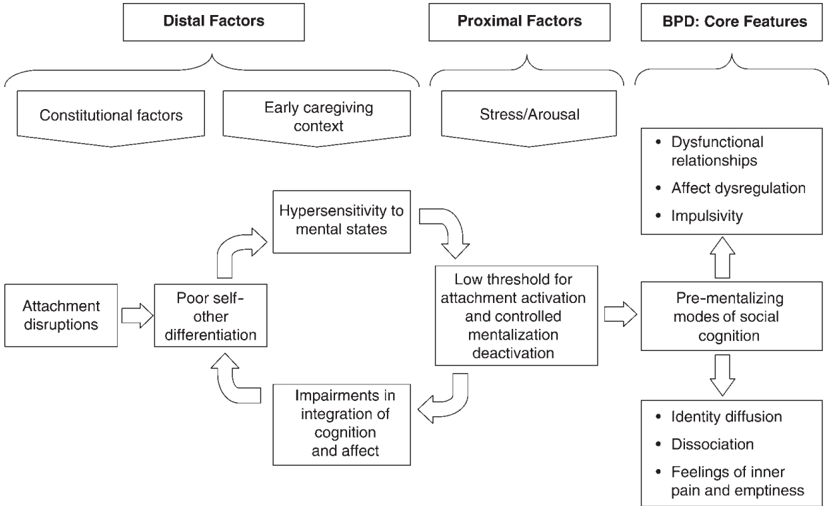
The precise nature and etiopathogenesis of borderline personality disorder (BPD) continues to elude researchers and clinicians. Yet, increasing evidence from various strands of research converges to suggest that affect dysregulation, impulsivity, and unstable relationships constitute the core features of BPD. Over the last two decades, the mentalization-based approach to BPD has attempted to provide a theoretically consistent way of conceptualizing the interrelationship between these core features of BPD, with the aim of providing clinicians with a conceptually sound and empirically supported approach to BPD and its treatment. This paper presents an extended version of this approach to BPD based on recently accumulated data. In particular, we suggest that the core features of BPD reflect impairments in different facets of mentalization, each related to impairments in relatively distinct neural circuits underlying these facets. Hence, we provide a comprehensive account of BPD by showing how its core features are related to each other in theoretically meaningful ways. More specifically, we argue that BPD is primarily associated with a low threshold for the activation of the attachment system and deactivation of controlled mentalization, linked to impairments in the ability to differentiate mental states of self and other, which lead to hypersensitivity and increased susceptibility to contagion by other people's mental states, and poor integration of cognitive and affective aspects of mentalization. The combination of these impairments may explain BPD patients' propensity for vicious interpersonal cycles, and their high levels of affect dysregulation and impulsivity. Finally, the implications of this expanded mentalization-based approach to BPD for mentalization-based treatment and treatment of BPD more generally are discussed.
Overview
CoChat Summary
TL;DR
This paper presents an expanded developmental, mentalization-based model of borderline personality disorder (BPD), arguing that its core features reflect impairments in different facets of mentalization linked to relatively distinct neural circuits. It proposes that BPD involves low thresholds for attachment-system activation and controlled-mentalization deactivation, explaining vicious interpersonal cycles, affect dysregulation, impulsivity, identity diffusion, dissociation, and inner pain.
Key findings
- BPD’s core features are emotional dysregulation, high impulsivity leading to self-harm and suicidality, and disturbed interpersonal functioning; lifetime prevalence is estimated to be as much as 6%, and between 25 and 33% may meet criteria in outpatient and forensic populations.
- Mentalization is multidimensional—automatic/controlled, cognitive/affective, internal/external, and self/other focused—and BPD is primarily associated with failures of explicit, internal, cognitive mentalization, alongside a low threshold for attachment activation and deactivation of controlled mentalization.
- These impairments may produce hypersensitivity and susceptibility to contagion by others’ mental states, poor self-other differentiation, hypermentalization or mentalization failure, and reemergence of prementalizing modes such as psychic equivalence, pretend mode, and teleological mode.
- Treatment implications include aiming for an optimal balance between attachment activation and mentalization; insight-oriented treatments focused on traumatic past may be contraindicated for patients with serious mentalization impairments.
Methods
- Theoretical/review paper presenting an expanded mentalization-based developmental model of BPD, integrating prior formulations with recently accumulated data.
- Draws on extant neuroimaging, developmental social and cognitive research, factor analytic and clinical studies, attachment research, and treatment literature; no new empirical sample or primary data collection is reported.
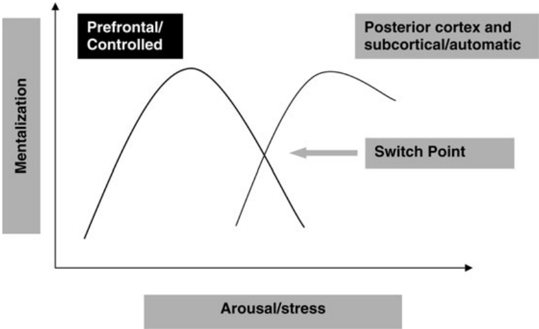
- Main analysis is a conceptual synthesis relating BPD features to four mentalization polarities and proposed neural systems, including a biobehavioral switch model of stress and controlled versus automatic mentalization.
Limitations
- The paper states that cited neuroimaging and physiological studies require further replication because of sometimes small sample sizes, disparate experimental paradigms, and heterogeneity in sample selection (e.g., comorbidity with depression, childhood abuse, PTSD, and copying styles).
- The paper notes that reliable description of BPD in adolescence remains controversial regarding homogeneity, comorbidity between and within axes, arbitrary cutoffs, and poor test-retest reliability, and that stability into adulthood is suggestive rather than well-established.
- The paper states that some predictions remain to be investigated (e.g., recovery time of mentalization with hyperactivating versus deactivating strategies) and that evidence on maladaptive parental mentalizing is still lacking; evident from the text, it is a conceptual/review article and does not empirically test the proposed model.
Model-written summary. Check it against the paper before relying on it.
Integrity signals
Registry
Cites
Statistics
Figures
Verification
Claims the paper makes
24 Valid · 11 Not valid · 130 Not checked · 108 Own results and interpretations
The cited sources support only part of this claim — read each source’s verdict below.
In the paper
“As we have already noted, retrospective evaluations have led to recognition that disorganization of the attachment system is a key aspect of the psychopathology of BPD (Gunderson & Lyons-Ruth, 2008).”
What the sources say
- Partly supportedcites Gunderson & Lyons-Ruth, 2008 matched to “BPD's Interpersonal Hypersensitivity Phenotype: A Gene-Environment-Developmental Model” (2008) sourceExperimental — accuracy not yet measured
The paper calls disorganized attachment especially important to understanding BPD and links it to an adult attachment pattern seen in patients (passage [1], section labeled Abstract). Its Conclusions describe attachment disorganization as one likely developmental pathway, not a defining feature of BPD psychopathology. The RETROSPECTIVE REPORTS section discusses patients’ accounts of difficult childhood relationships but does not say those evaluations established attachment disorganization. (LLM, conf=0.82)
plainstates an association- Asserted: passes — The authors put it forward as true.
- Checkable: passes — It can be checked against evidence.
- Load-bearing: passes — The paper’s conclusions depend on it.
- Based: passes — The paper gives a reason why it holds.
- Partly supported
The cited sources support only part of this claim — read each source’s verdict below.
In the paper
“Indeed, studies of adult attachment patterns of BPD patients repeatedly highlight a combination of preoccupied and unresolved attachment associated with BPD (Agrawal, Gunderson, Holmes, & Lyons-Ruth, 2004; Fonagy et al., 1996; Nakash-Eisikovits, Dutra, & Westen, 2002).”
What the sources say
- Supportedcites Agrawal, Gunderson, Holmes, & Lyons-Ruth, 2004 matched to “Attachment Studies with Borderline Patients: A Review” (2004) source
The Results report that all five studies using the Adult Attachment Interview found the greatest proportion of borderline individuals in the preoccupied or unresolved categories. The Discussion states that BPD attachments seem best characterized as unresolved with preoccupied features in relation to parents, matching the attributed claim. (LLM, conf=0.94)
- Not checked yetcites Fonagy et al., 1996 matched to “The relation of attachment status, psychiatric classification, and response to psychotherapy.” (1996) source
- Partly supportedcites Nakash-Eisikovits, Dutra, & Westen, 2002 matched to “Relationship Between Attachment Patterns and Personality Pathology in Adolescents” (2002) sourceExperimental — accuracy not yet measured
The Association Between Attachment Status and Axis II Pathology section links both anxious/ambivalent and disorganized/unresolved attachment to borderline personality disorder. But this paper studies adolescents, not adult BPD patients, and reports the two associations separately rather than a combined attachment pattern. Its discussion of an adult association concerns preoccupied attachment only. (LLM, conf=0.88)
boostedstates an association- Asserted: passes — The authors put it forward as true.
- Checkable: passes — It can be checked against evidence.
- Load-bearing: unclear — It is unclear whether the paper’s conclusions depend on it.
- Based: passes — The paper gives a reason why it holds.
- Supported
The cited sources support only part of this claim — read each source’s verdict below.
In the paper
“Such gene-environment effects could be one way that the known influence of heredity (Distel et al., 2008; LyonsRuth et al., 2007; Ni et al., 2007) is mediated in BPD.”
What the sources say
- Supportedcites Distel et al., 2008 matched to “Heritability of borderline personality disorder features is similar across three countries” (2008) source
The citation supports the sentence’s reference to a known hereditary influence, not its proposed gene–environment mechanism. The indexed paper’s title identifies its subject as the heritability of borderline personality disorder features; it does not need to establish the citing authors’ speculative explanation of how that influence is mediated. (LLM, conf=0.84)
- Supportedcites LyonsRuth et al., 2007 matched to “Serotonin transporter polymorphism and borderline or antisocial traits among low-income young adults” (2007) source
The Conclusions report genetic influence on liability to borderline and antisocial personality disorders. The Discussion proposes that the observed genetic association may reflect a gene–environment interaction, while noting that the interaction was not tested in this study. That supports the citing sentence’s tentative ‘could be’ formulation. (LLM, conf=0.90)
- Not matchedcites Ni et al., 2007
This doesn’t read as a citation we can look up.
hedgedstates a possible cause- Asserted: passes — The authors put it forward as true.
- Checkable: passes — It can be checked against evidence.
- Load-bearing: unclear — It is unclear whether the paper’s conclusions depend on it.
- Based: passes — The paper gives a reason why it holds.
- Supported
The cited sources support only part of this claim — read each source’s verdict below.
In the paper
“dissociative comorbidity is more frequently reported by patients with BPD than other groups”
What the sources say
- Not checked — no full text of the sourcecites Sar, Akyuz, Kugu, Ozturk, & Ertem-Vehid, 2006 matched to “Axis I Dissociative Disorder Comorbidity in Borderline Personality Disorder and Reports of Childhood Trauma” (2006) source
- Partly supportedcites Zanarini, Frankenburg, Jager-Hyman, Reich, & Fitzmaurice, 2008 matched to “The course of dissociation for patients with borderline personality disorder and axis II comparison subjects: a 10‐year follow‐up study” (2008) sourceExperimental — accuracy not yet measured
The Results report that 76 borderline patients, but only two axis II comparison subjects, had high dissociation scores at baseline. This supports a difference in reported dissociative symptoms between those groups, not a higher frequency of diagnosed dissociative comorbidity across other groups generally. The paper measures symptoms with the Dissociative Experiences Scale rather than reporting rates of comorbid dissociative disorders. (LLM, conf=0.86)
plainstates an association- Asserted: passes — The authors put it forward as true.
- Checkable: passes — It can be checked against evidence.
- Load-bearing: unclear — It is unclear whether the paper’s conclusions depend on it.
- Based: passes — The paper gives a reason why it holds.
The cited sources that could be checked couldn’t confirm or dispute this claim.
In the paper
“may be an extreme indication of such separateness (Ross, 2007; Zanarini et al., 2008).”
What the sources say
- Not checked — no full text of the sourcecites Ross, 2007 matched to “Borderline Personality Disorder and Dissociation” (2007) source
- Could not verifycites Zanarini et al., 2008 matched to “The course of dissociation for patients with borderline personality disorder and axis II comparison subjects: a 10‐year follow‐up study” (2008) sourceExperimental — accuracy not yet measured
The Methods describe dissociation through absorption, depersonalization, and amnesia, while the Discussion reports how their severity changed over time. Neither section characterizes dissociation as an extreme indication of separateness; searches for separateness and related descriptions found no such passage. Page numbers were not available in our copy. (LLM, conf=0.75)
hedgedstates an association- Asserted: passes — The authors put it forward as true.
- Checkable: passes — It can be checked against evidence.
- Load-bearing: unclear — It is unclear whether the paper’s conclusions depend on it.
- Based: passes — The paper gives a reason why it holds.
157 more claims · 13 with their cited sources checked
Create a free account to see all 273 claims and to verify the 9 references still open.
- Probably not a substantial claim. 41
- It may state two separate claims as one. 81
Claims other papers make about this one
Each is checked against this paper’s own text: does it say what the citing paper says it does?
The source backs part of the claim, not all of it — or backs it for a different population, condition or comparison.
In the citing paper
“In this account, an insecure attachment relationship between primary caregiver and child results in avoidance of internal thinking and feeling states in the child because acknowledging such internal states would further threaten an already vulnerable relationship with the caregiver.”
From First evidence of a prospective relation between avoidance of internal states and borderline personality disorder features in adolescents. (2015) · cites this paper as [19]
Experimental — accuracy not yet measuredThe source backs part of the claim, not all of it — or backs it for a different population, condition or comparison.
In the citing paper
“In turn, the child is at increased risk of developing BPD.”
From First evidence of a prospective relation between avoidance of internal states and borderline personality disorder features in adolescents. (2015) · cites this paper as [19]
Experimental — accuracy not yet measuredThe source backs part of the claim, not all of it — or backs it for a different population, condition or comparison.
In the citing paper
“In line with this, mentalization as an emotion regulation strategy has been considered a top-down strategy, relying in the explicit emotion regulation and in the theory of mind brain systems (Fonagy and Luyten, 2009; Vrticka and Vuilleumier, 2012).”
From Mindfulness and Emotion Regulation: Insights from Neurobiological, Psychological, and Clinical Studies (2017) · cites this paper as Fonagy and Luyten, 2009
Experimental — accuracy not yet measuredIn the citing paper
“stress and distress is thought to have a detrimental impact on the capacity to mentalize, especially if the stress is interpersonal in nature.”
From Investigating the association between parental reflective functioning and distress tolerance in motherhood. (2015) · cites this paper as Fonagy & Luyten, 2009
In the citing paper
“Stress and heightened arousal may inhibit the engagement of cortically-controlled processes of explicit mentalization that underscore reflection and reasoning when engaged with others (Fonagy & Luyten, 2009).”
From Investigating the association between parental reflective functioning and distress tolerance in motherhood. (2015) · cites this paper as Fonagy & Luyten, 2009
Citations
Cites
Fredrickson, B. L. (2001) · American Psychologist · doi:10.1037//0003-066x.56.3.218 · Cited by 18,025 · cited 2×
“…insight into BPD. Studies suggest that the ability to continue to mentalize even under considerable stress leads to so-called “broaden and build” (Fredrickson, 2001) cycles of attachment security, which reinforce feelings of secure attachment, personal agency, and affect regulation (“build”),…”
BackgroundRizzolatti, G., & Craighero, L. (2004) · Annual Review of Neuroscience · doi:10.1146/annurev.neuro.27.070203.144230 · Cited by 7,433 · cited 1×
“…system involves a more body-based, frontoparietal mirror neuron system that is involved in understanding the multimodal embodied self (e.g., face and body recognition) and understanding others through motor-simulation mechanisms (Gallese, Keysers, & Rizzolatti, 2004; Rizzolatti & Craighero, 2004).”
Background(1993) · Cited by 7,136
Attachment in adulthood: structure, dynamics, and change
(2008) · Choice Reviews Online · doi:10.5860/choice.45-2903 · Cited by 4,315
Affect Regulation, Mentalization, and the Development of the Self
Fonagy, P., Gergely, G., Jurist, E. L., & Target, M. (2018) · doi:10.4324/9780429471643 · Cited by 3,886
Self-citationThe Child's Conception of Space
Lawrence, E., Piaget, J., Inhelder, B., Langdon, F. J., & Lunzer, J. L. (1957) · British Journal of Educational Studies · doi:10.2307/3118882 · Cited by 3,213
Cattaneo, L., & Rizzolatti, G. (2009) · Archives of Neurology · doi:10.1001/archneurol.2009.41 · Cited by 3,137
Self-referential processing in our brain—A meta-analysis of imaging studies on the self
Northoff, G., Heinzel, A., de Greck, M., Bermpohl, F., Dobrowolny, H., & Panksepp, J. (2006) · NeuroImage · doi:10.1016/j.neuroimage.2005.12.002 · Cited by 2,792 · cited 1×
“The aFMC is involved in mentalizing (Frith & Frith, 2006; Gilbert et al., 2007) and self-referential processing (Northoff et al., 2006).”
BackgroundMayberg, H. S., Liotti, M., Brannan, S. K., McGinnis, S., Mahurin, R. K., Jerabek, P. A., Silva, J. A., Tekell, J. L., Martin, C. C., Lancaster, J. L., et al. (1999) · American Journal of Psychiatry · doi:10.1176/ajp.156.5.675 · Cited by 2,416 · cited 2×
“…for attention and long-term memory (Cabeza & Nyberg, 2000), perhaps specifically responsible for integrating emotion and cognition (e.g., emotional encoding of episodic memories; Maddock, 1999) and subserving moodmediated inhibition or enhancement of cognitive processing (Mayberg et al., 1999).”
BackgroundThe debate over dopamine’s role in reward: the case for incentive salience
Berridge, K. C. (2007) · Psychopharmacology · doi:10.1007/s00213-006-0578-x · Cited by 2,347 · cited 1×
“These findings suggest that for securely attached mothers, infant cues (whether positive or negative in affect) may act as an important affective signal of “incentive salience” (Berridge, 2007), reinforcing and motivating responsive maternal care.”
Background
Research works printed but not linked: 12
- Williams, 2006, Handbook of mentalisation based treatments
- 10.1093/med/9780198569183.001.0001 · DOI · Paper page
- 10.1111/1469-7610.0013_7 · doi:10.1111/1469-7610.0013_7 · Paper page
- Gergely, 1996, The social biofeedback model of parental affect-mirroring, International Journal of Psycho-Analysis, 77, 1181
- Luyten, 2009, The interpersonal regulation of stress
- Bloom, 2004, Descartes' baby
- Hobson, 2002, The cradle of thought: Explorations of the origins of thinking
- Fearon, 2006, Handbook of mentalisaiton based treatments
- Diamond, 1991, Self–other differentiation of object representations
- Hesse, 2008, Handbook of attachment theory and research, 552
- Luyten, 2009, Mentalization as a multidimensional concept
- O'Connor, 2006, Developmental psychopathology: Vol. 3. Risk, disorder and adaptation, 202
Cited by
Items 101–200 of 1,140
The Impact of Level of Personality Organization on Treatment Response: A Systematic Review
Koelen, J. A., Luyten, P., Eurelings‐Bontekoe, L., Diguer, L., Vermote, R., Lowyck, B., & Bühring, M. E. F. (2012) · Psychiatry · doi:10.1521/psyc.2012.75.4.355 · Cited by 93
Self-citationWright, A. G. C., Zalewski, M., Hallquist, M. N., Hipwell, A. E., & Stepp, S. D. (2016) · Journal of Personality Disorders · doi:10.1521/pedi_2015_29_200 · Cited by 78
The Relationships between Psychological Mindedness, Parental Bonding and Adult Attachment
Bourne, K., Berry, K., & Jones, L. (2014) · Psychology and Psychotherapy Theory Research and Practice · doi:10.1111/papt.12007 · Cited by 77
Gullestad, F. S., Johansen, M. S., Høglend, P., Karterud, S., & Wilberg, T. (2013) · Psychotherapy Research · doi:10.1080/10503307.2012.684103 · Cited by 76
“One might hypothesize that patients with PDs, particularly BPD, are able to perform experimental mentalizing tasks relatively well under low arousal, but that they have greater difficulties with mentalizing under high emotional arousal in the context of attachment relationships (Fonagy & Luyten, 2009 ).”
BackgroundMentalizing Family Violence Part 1: Conceptual Framework
Asen, E., & Fonagy, P. (2016) · Family Process · doi:10.1111/famp.12261 · Cited by 94
Self-citationSocial disadvantage and borderline personality disorder: A study of social networks.
Beeney, J. E., Hallquist, M. N., Clifton, A. D., Lazarus, S. A., & Pilkonis, P. A. (2018) · Personality Disorders Theory Research and Treatment · doi:10.1037/per0000234 · Cited by 104
Antonsen, B. T., Johansen, M. S., Rø, F. G., Kvarstein, E. H., & Wilberg, T. (2016) · Comprehensive Psychiatry · doi:10.1016/j.comppsych.2015.05.016 · Cited by 73
“Although more research is required, it is hypothesized that subjects with BPD have particular mentalizing difficulties in the context of attachment relationships and high emotional arousal [18] whereas subjects with cluster C PDs like avoidant PD (AvPD) may have poor access to own and others states of mind on a more g…”
BackgroundParenting and addiction: neurobiological insights
Rutherford, H. J. V., & Mayes, L. C. (2017) · Current Opinion in Psychology · doi:10.1016/j.copsyc.2017.02.014 · Cited by 78
Vaskinn, A., Antonsen, B. T., Fretland, R. A., Dziobek, I., Sundet, K., & Wilberg, T. (2015) · Frontiers in Psychology · doi:10.3389/fpsyg.2015.01239 · Cited by 72
Vermote, R., Lowyck, B., Luyten, P., Vertommen, H., Corveleyn, J., Verhaest, Y., Stroobants, R., Vandeneede, B., Vansteelandt, K., & Peuskens, J. (2010) · Journal of Nervous & Mental Disease · doi:10.1097/nmd.0b013e3181cc0d59 · Cited by 72
“However, because of the dynamic relationship between reflective functioning and the attachment system, one can assume that the relationship between RF and change shows a more complex association than a linear trend (Luyten et al., 2009; Fonagy and Luyten, 2009).”
BackgroundSelf-citationLinking childhood emotional abuse and adult depressive symptoms: The role of mentalizing incapacity
Li, E. T., Carracher, E., & Bird, T. (2020) · Child Abuse & Neglect · doi:10.1016/j.chiabu.2019.104253 · Cited by 70
The Mediating Role of Parental Reflective Functioning in Child Social–emotional Development
Nijssens, L., Vliegen, N., & Luyten, P. (2020) · Journal of Child and Family Studies · doi:10.1007/s10826-020-01767-5 · Cited by 96
Self-citationSharp, C., Kalpakci, A., Mellick, W., Venta, A., & Temple, J. R. (2015) · European Child & Adolescent Psychiatry · doi:10.1007/s00787-014-0574-3 · Cited by 70
Reichborn‐Kjennerud, T., Ystrøm, E., Neale, M. C., Aggen, S. H., Mazzeo, S. E., Knudsen, G. P., Tambs, K., Czajkowski, N. O., & Kendler, K. S. (2013) · JAMA Psychiatry · doi:10.1001/jamapsychiatry.2013.1944 · Cited by 85
Debbané, M., Benmiloud, J., Salaminios, G., Solida-Tozzi, A., Armando, M., Fonagy, P., & BATEMAN, A. W. (2016) · Journal of Contemporary Psychotherapy · doi:10.1007/s10879-016-9337-4 · Cited by 79
“mentalization is characterized by reflexive/intuitive, fast and unconscious processing of internal and external information, contrary to controlled mentalization, which is reflective, declarative, slow and conscious (Fonagy and Luyten 2009).”
InfluentialSelf-citationHow can art therapy contribute to mentalization in borderline personality disorder?
Springham, N., Findlay, D., Woods, A., & Harris, J. (2012) · International Journal of Art Therapy · doi:10.1080/17454832.2012.734835 · Cited by 70
“Summarising a large body of neuro-scientific research, Fonagy and Luyten (2009) point out that adult BPD patients appear to have a lower threshold for the activation of the fight or flight system and an associated readiness to deactivate mentalizing.”
BackgroundLuyten, P., Campbell, C., Moser, M., & Fonagy, P. (2024) · Clinical Psychology Review · doi:10.1016/j.cpr.2024.102380 · Cited by 106
Self-citationMentalizing during social InterAction: A four component model
Wu, H., Liu, X., Hagan, C. C., & Mobbs, D. (2020) · Cortex · doi:10.1016/j.cortex.2019.12.031 · Cited by 87
The Interaction between Interoceptive and Action States within a Framework of Predictive Coding
Marshall, A. C., Gentsch, A., & Schütz-Bosbach, S. (2018) · Frontiers in Psychology · doi:10.3389/fpsyg.2018.00180 · Cited by 66
“These action schemas are subsequently used for the understanding of action volition, the development of a coherent self-structure as well as the ability to mentalize and engage in affect-regulation (Gergely et al., 2002; Fonagy and Luyten, 2009).”
BackgroundParental reflective functioning and the neural correlates of processing infant affective cues.
Rutherford, H. J. V., Maupin, A. N., Landi, N., Potenza, M. N., & Mayes, L. C. (2017) · Social Neuroscience · doi:10.1080/17470919.2016.1193559 · Cited by 65
“…06520, USA © 2016 Informa UK Limited, trading as Taylor & Francis Group their need for administration, transcription, and coding, as well as their potential to overlook the multidimensional nature of reflective functioning (Choi-Kain & Gunderson, 2008; Fonagy & Luyten, 2009; Luyten et al., 2012).”
BackgroundApplying attachment theory to effective practice with hard-to-reach youth: the AMBIT approach
Bevington, D., Fuggle, P., & Fonagy, P. (2015) · Attachment & Human Development · doi:10.1080/14616734.2015.1006385 · Cited by 98
“When working with patients with severe personality disorder, therapists frequently find that mentalizing (in both the self and the patient) is challenged by emotional arousal, even by quite small fluctuations in affect (Fonagy & Luyten, 2009).”
BackgroundSelf-citationKim, S., Sharp, C., & Carbone, C. (2014) · Personality Disorders: Theory, Research, and Treatment · doi:10.1037/per0000038 · Cited by 64
Attachment and Reflective Functioning in Women With Borderline Personality Disorder
Badoud, D., Prada, P., Nicastro, R., Germond, C., Luyten, P., Perroud, N., & Debbané, M. (2018) · Journal of Personality Disorders · doi:10.1521/pedi_2017_31_283 · Cited by 63
Self-citationBad Blood Revisited: Attachment and Psychoanalysis, 2015
Fonagy, P., & Campbell, C. (2015) · British Journal of Psychotherapy · doi:10.1111/bjp.12150 · Cited by 81
“It is underpinned by four polarities involving relatively distinct neural circuits: (1) automatic–controlled, (2) internally–externally based, (3) mentalizing with regard to self and others, and (4) cognitive versus affective (Fonagy & Luyten, 2009).”
BackgroundSelf-citationDevelopmental differences in diffusion tensor imaging parameters in borderline personality disorder
New, A. S., Carpenter, D. M., Perez-Rodriguez, M. M., Ripoll, L. H., Avedon, J., Patil, U., Hazlett, E. A., & Goodman, M. (2013) · Journal of Psychiatric Research · doi:10.1016/j.jpsychires.2013.03.021 · Cited by 61
“Abnormalities in the ILF may therefore lie at the core of the dysfunctional mentalizing (Fonagy and Luyten, 2009) and representational disturbances (Bender and Skodol, 2007) seen in BPD.”
Kopala-Sibley, D. C., & Zuroff, D. C. (2014) · Review of General Psychology · doi:10.1037/gpr0000013 · Cited by 61
“For instance, oxytocin plays a key role in affiliative behaviors ranging from parental care to pair bonding (Insel & Young, 2001; Neumann, 2008) and social support (Feldman et al., 2007) and facilitates relatedness to others and attachment security (Fonagy & Luyten, 2009; Mikulincer & Shaver, 2007).”
BackgroundTo know or not to know? Mentalization as protection from somatic complaints
Ballespí, S., Vives, J., Alonso, N., Sharp, C., Jiménez, M. S. R., Fonagy, P., & Barrantes-Vidal, N. (2019) · PLoS ONE · doi:10.1371/journal.pone.0215308 · Cited by 74
Self-citationAlexithymia in adolescents with borderline personality disorder
Loas, G., Speranza, M., Pham‐Scottez, A., Pérez-Díaz, F., & Corcos, M. (2011) · Journal of Psychosomatic Research · doi:10.1016/j.jpsychores.2011.11.006 · Cited by 79
“Further longitudinal studies are needed to establish the primary nature of alexithymia in BPD individuals and, in line with the mentalization deficit of BPD [3], to support the hypothesis that alexithymia could correspond to a low level of reflective functioning, and could be a core symptom of BPD.”
BackgroundEmotion Regulation and Mentalization in People at Risk for Food Addiction
Innamorati, M., Imperatori, C., Harnic, D., Erbuto, D., Patitucci, E., Janiri, L., Lamis, D. A., Pompili, M., Tamburello, S., & Fabbricatore, M. (2017) · Behavioral Medicine · doi:10.1080/08964289.2015.1036831 · Cited by 60
Fossati, A., Borroni, S., Dziobek, I., Fonagy, P., & Somma, A. (2018) · Psychoanalytic Psychology · doi:10.1037/pap0000130 · Cited by 75
“…of measures that assess mentalization, the MASC seems to cover the controlled (i.e. explicit) dimension of mentalization which reflects a serial and relatively slow process that is typically verbal and requires reflections, attention, intention, awareness, and effort (Fonagy & Luyten, 2009).”
BackgroundSelf-citationA neuro-cognitive process model of emotional intelligence
Smith, R., Killgore, W. D. S., Alkozei, A., & Lane, R. D. (2018) · Biological Psychology · doi:10.1016/j.biopsycho.2018.10.012 · Cited by 56
Assche, L. V., de Ven, L. V., Vandenbulcke, M., & Luyten, P. (2019) · Aging & Mental Health · doi:10.1080/13607863.2019.1571017 · Cited by 88
“It involves the coordination of different subsystems aimed at reducing distress through seeking actual or imagined proximity to an attachment figure (Fonagy & Luyten, 2009; Mikulincer & Shaver, 2007; Sbarra & Hazan, 2008).”
BackgroundSelf-citationMorris, L., Mansell, W., Williamson, T., Wray, A., & McEvoy, P. (2018) · Dementia · doi:10.1177/1471301218805329 · Cited by 68
The Neurobiology of Empathy in Borderline Personality Disorder
Ripoll, L. H., Snyder, R., Steele, H., & Siever, L. J. (2013) · Current Psychiatry Reports · doi:10.1007/s11920-012-0344-1 · Cited by 66
“Severe BPD symptoms occur in the context of social threat [7, 10, 11, 13, 14], contributing to transient episodes of paranoia, erotomania, or dissociation; relationships marked by projective identification and conflicted dependency; emptiness and identity diffusion; and impulsive suicidality or aggression [8, 12, 13].”
BackgroundInfluentialMeulemeester, C. D., Lowyck, B., Vermote, R., Verhaest, Y., & Luyten, P. (2017) · Psychiatry Research · doi:10.1016/j.psychres.2017.09.061 · Cited by 70
Self-citationPsychopharmacologic treatment of borderline personality disorder
Ripoll, L. H. (2013) · Dialogues in Clinical Neuroscience · doi:10.31887/dcns.2013.15.2/lripoll · Cited by 54
“arious theoretical orientations have converged upon the conceptualization of borderline personality disorder (BPD) as a disturbance in mental representations of self and other, contributing to core difficulties in identity, intimacy, empathy, and self-directed motivation.(1-3) In BPD, this core psychopathology contrib…”
BackgroundAttachment and its Vicissitudes in Borderline Personality Disorder
Levy, K. N., Beeney, J. E., & Temes, C. M. (2010) · Current Psychiatry Reports · doi:10.1007/s11920-010-0169-8 · Cited by 78
“Consistent with some theoretical models of the development of BPD, both of the above studies highlight the central role of attachment and attachment representations in the development of the disorder [ 33 , 34].”
ResultSharp, C., & Vanwoerden, S. (2014) · Journal of Personality Disorders · doi:10.1521/pedi.2014.28.1.78 · Cited by 55
“Fonagy and Luyten (2009) expanded this fractionation of ToM further to incorporate four dimensions of ToM function: automatic/controlled, cognitive/affective, internal/external-based, and self/other focused (see also Sharp et al., 2013).”
BackgroundEnhanced sensitivity and response bias for male anger in women with borderline personality disorder
Veague, H. B., & Hooley, J. M. (2014) · Psychiatry Research · doi:10.1016/j.psychres.2013.12.045 · Cited by 62
“In the case of BPD the interaction of biological vulnerabilities and problems in early attachment relationships are thought to lead to the development of disturbances in the mental representations of the self and others (Clarkin et al., 2007; Fonagy and Luyten, 2009).”
BackgroundThe Social–Cognitive Basis of BPD: A Theory of Hypermentalizing
Sharp, C. (2014) · Springer eBooks · doi:10.1007/978-1-4939-0591-1_15 · Cited by 70
Smaling, H. J. A., Huijbregts, S. C. J., Suurland, J., van der Heijden, K. B., Mesman, J., van Goozen, S. H. M., & Swaab, H. (2016) · Infancy · doi:10.1111/infa.12137 · Cited by 54
Recent Advances in the Developmental Aspects of Borderline Personality Disorder
Sharp, C., & Kim, S. (2015) · Current Psychiatry Reports · doi:10.1007/s11920-015-0556-2 · Cited by 56
Systematic Review on Mentalization as Key Factor in Psychotherapy
Lüdemann, J., Rabung, S., & Andreas, S. (2021) · International Journal of Environmental Research and Public Health · doi:10.3390/ijerph18179161 · Cited by 79
“, self-other, cognitive-affective, internal-external, automatic-controlled [19,20]), which may but do not have to simultaneously emerge and (differently) affect the psychotherapy process.”
BackgroundWoźniak‐Prus, M., Gambin, M., Cudo, A., & Sharp, C. (2022) · Journal of Personality Assessment · doi:10.1080/00223891.2021.2014505 · Cited by 65
“…stress disorder or schizophrenia (Baron-Cohen, 2000; Bateman & Fonagy, 2012; Bora & Berk, 2016; Bora & Pantelis, 2016; Cucchi et al., 2018; Fonagy & Luyten, 2009; Inoue et al., 2004; Katznelson, 2014; Kuipers et al., 2016; Palgi et al., 2014; Skårderud & Fonagy, 2012; Vaskinn et al.,…”
Subtypes of borderline personality disorder patients: a cluster-analytic approach
Smits, M. L., Feenstra, D. J., Bales, D. L., de Vos, J., Lucas, Z., Verheul, R., & Luyten, P. (2017) · Borderline Personality Disorder and Emotion Dysregulation · doi:10.1186/s40479-017-0066-4 · Cited by 52
“Although it has been previously noted that, given the heterogeneity of the disorder, it is unlikely that any so-called “one size fits all” treatment could be identified [5], this heterogeneity has been insufficiently taken into account in existing evidence-based treatments [6, 7].”
BackgroundResultSelf-citationPerroud, N., Badoud, D., Weibel, S., Nicastro, R., Hasler, R., Küng, A.-L., Luyten, P., Fonagy, P., Dayer, A., Aubry, J.-M., et al. (2017) · Psychiatry Research · doi:10.1016/j.psychres.2017.06.087 · Cited by 51
“RF is a multidimensional construct that partially overlaps with more narrowly defined social cognitive constructs, such as empathy (targeting the affective and cognitive understanding others’ emotions), theory of mind (targeting the cognitive understanding of others’ beliefs), and mindfulness (targeting emotional self…”
BackgroundSelf-citationBoucher, M., Pugliese, J., Allard-Chapais, C., Lecours, S., Ahoundova, L., Chouinard, R., & Gaham, S. (2017) · Personality and Mental Health · doi:10.1002/pmh.1385 · Cited by 69
Borelli, J. L., Brugnera, A., Zarbo, C., Rabboni, M., Bondi, E., Tasca, G. A., & Compare, A. (2018) · Attachment & Human Development · doi:10.1080/14616734.2018.1479870 · Cited by 62
“And yet, despite the upsurge in interest and knowledge in the impact of mentalization on psychological adjustment (e.g. Ensink et al., 2014; Fonagy & Luyten, 2009), as well as a continued interest in the role of attachment in predicting developmental trajectories, extremely little is known about…”
BackgroundBallespí, S., Vives, J., Sharp, C., Chanes, L., & Barrantes-Vidal, N. (2021) · Frontiers in Psychology · doi:10.3389/fpsyg.2021.566254 · Cited by 101
The Role of Epistemic Trust in Mentalization-Based Treatment of Borderline Psychopathology
Nolte, T., Hutsebaut, J., Sharp, C., Campbell, C., Fonagy, P., & BATEMAN, A. W. (2023) · Journal of Personality Disorders · doi:10.1521/pedi.2023.37.5.633 · Cited by 68
Self-citationSex differences moderate the relationship between adolescent language and mentalization.
Rutherford, H. J. V., Wareham, J. D., Vrouva, I., Mayes, L. C., Fonagy, P., & Potenza, M. N. (2012) · Personality Disorders Theory Research and Treatment · doi:10.1037/a0028938 · Cited by 64
“However, adversity may distinguish adolescents only in some elements of mentalization, considering the notion that heightened emotional arousal hinders explicit mentalization but not implicit mentalization (Fonagy & Luyten, 2009; Mayes, 2006).”
BackgroundInfluentialSelf-citationMancke, F., Herpertz, S. C., Kleindienst, N., & Bertsch, K. (2016) · Journal of Personality Disorders · doi:10.1521/pedi_2016_30_247 · Cited by 68
Miller, J. E., Kim, S., Boldt, L. J., Goffin, K. C., & Kochanska, G. (2019) · Developmental Psychology · doi:10.1037/dev0000660 · Cited by 64
“Those literatures focus on a set of related constructs, including mentalization and reflective functioning (Fonagy & Luyten, 2009; Fonagy & Target, 1997; Luyten, Mayes, Nijssens, & Fonagy, 2017; Luyten, Nijssens, et al., 2017; Slade, 2005; Suchman et al., 2017), social representations and internal…”
Aival‐Naveh, E., Rothschild‐Yakar, L., & Kurman, J. (2019) · Clinical Psychology Science and Practice · doi:10.1111/cpsp.12300 · Cited by 152
Woods, W. C., Arizmendi, C., Gates, K. M., Stepp, S. D., Pilkonis, P. A., & Wright, A. G. C. (2020) · Journal of Consulting and Clinical Psychology · doi:10.1037/ccp0000472 · Cited by 52
“Indeed, all major contemporary theories of BPD (e.g, Clarkin et al., 2006; Fonagy & Luyten (2009); Linehan, 1993) converge on this idea, while diverging as to the relative contributions of each domain to the pathology’s manifestation (Gunderson et al., 2018).”
BackgroundVerbal elaboration of distinct affect categories and BPD symptoms
Lecours, S., & Bouchard, M. (2011) · Psychology and Psychotherapy Theory Research and Practice · doi:10.1111/j.2044-8341.2010.02006.x · Cited by 64
Azhari, A., Bizzego, A., & Esposito, G. (2021) · Social Neuroscience · doi:10.1080/17470919.2021.1970016 · Cited by 54
“Some examples of brain areas involved in mentalisation include cortical structures such as the temporal cortex and subcortical areas like the amygdala [36]–[38].”
BackgroundMeulemeester, C. D., Lowyck, B., & Luyten, P. (2021) · Neuroscience & Biobehavioral Reviews · doi:10.1016/j.neubiorev.2021.04.022 · Cited by 63
Self-citationPrenatal reflective functioning in primiparous women with a high-risk profile.
Smaling, H. J. A., Huijbregts, S. C. J., Suurland, J., Van Der Heijden, K. B., Van Goozen, S. H. M., & Swaab, H. (2015) · Infant Mental Health Journal · doi:10.1002/imhj.21506 · Cited by 48
“These factors could affect prenatal maternal RF. Maternal characteristics that have been negatively related to RF include psychiatric illness (Fonagy & Luyten, 2009; Levinson & Fonagy, 2004; Perry, Newman, Hunter, & Dunlop, 2013; Toth, Rogosch, & Cicchetti, 2008), substance use during pregnancy…”
Allison, E., & Fonagy, P. (2016) · The Psychoanalytic Quarterly · doi:10.1002/psaq.12074 · Cited by 59
“We pseudomentalize (Fonagy and Luyten 2009) or hypermentalize (Sharp, Pane et al.”
BackgroundSelf-citationIdentity Impairment as a Central Dimension in Personality Pathology
Bogaerts, A., Luyckx, K., Bastiaens, T., Kaufman, E. A., & Claes, L. (2020) · Journal of Psychopathology and Behavioral Assessment · doi:10.1007/s10862-020-09804-9 · Cited by 55
Psychological therapies for people with borderline personality disorder
Storebø, O. J., Stoffers-Winterling, J. M., Völlm, B. A., Kongerslev, M. T., Mattivi, J. T., Kielsholm, M. L., Nielsen, S. S., Jørgensen, M. P., Faltinsen, E. G., Lieb, K., et al. (2018) · Cochrane Database of Systematic Reviews · doi:10.1002/14651858.cd012955 · Cited by 47
Does reflective functioning mediate the relationship between attachment and personality?
Nazzaro, M. P., Boldrini, T., Tanzilli, A., Muzi, L., Giovanardi, G., & Lingiardi, V. (2017) · Psychiatry Research · doi:10.1016/j.psychres.2017.06.045 · Cited by 47
Shai, D., Dollberg, D. G., & Szepsenwol, O. (2017) · Infant Behavior and Development · doi:10.1016/j.infbeh.2017.08.003 · Cited by 64
Hyper-Theory-of-Mind in Children with Psychotic Experiences
Clemmensen, L., van Os, J., Skovgaard, A. M., Væver, M. S., Blijd-Hoogewys, E. M. A., Bartels‐Velthuis, A. A., & Jeppesen, P. (2014) · PLoS ONE · doi:10.1371/journal.pone.0113082 · Cited by 61
“A more basic explanation may involve the heterogeneity and multidimensionality of ToM as a construct [23].”
BackgroundMancke, F., Schmitt, R., Winter, D., Niedtfeld, I., Herpertz, S. C., & Schmahl, C. (2018) · Journal of Psychiatry and Neuroscience · doi:10.1503/jpn.170132 · Cited by 45
Mentalizing Self and Other and Affect Regulation Patterns in Anorexia and Depression
Rothschild‐Yakar, L., Stein, D. J., Goshen, D., Shoval, G., Yacobi, A., Eger, G., Kartin, B., & Gur, E. (2019) · Frontiers in Psychology · doi:10.3389/fpsyg.2019.02223 · Cited by 56
Yuan, Y., Lee, H., Eack, S. M., & Newhill, C. E. (2023) · Journal of Personality Disorders · doi:10.1521/pedi.2023.37.1.16 · Cited by 57
Hayden, M. C., Müllauer, P. K., Gaugeler, R., Senft, B., & Andreas, S. (2018) · Journal of Clinical Psychology · doi:10.1002/jclp.22673 · Cited by 61
“This appears to be associated with greater difficulties to mentalize, as other studies have suggested (Bateman & Fonagy, 2009; Hausberg et al., 2012; Taubner et al., 2013).”
ResultParental Embodied Mentalizing: Let’s Be Explicit About What We Mean by Implicit
Shai, D., & Belsky, J. (2011) · Child Development Perspectives · doi:10.1111/j.1750-8606.2011.00195.x · Cited by 52
“Explicit mentalizing is typically interpreted, conscious, verbal, and reflective; it is a slow process that necessitates awareness and activates, in general, phylogenetically newer brain circuits involved in processing linguistic and symbolic material (Fonagy & Luyten, 2009).”
BackgroundBarone, L., Fossati, A., & Guiducci, V. (2011) · Attachment & Human Development · doi:10.1080/14616734.2011.602245 · Cited by 44
“Carlson, Egeland, & Sroufe, 2009 ; Fonagy & Luyten, 2009 ), our time consuming but highly informative analysis of full AAI interviews has clearly indicated the emotional environment as risk factor for the development of BPD and has delineated the crucial development based features of borderline attachment strategy fun…”
BackgroundResultBallespí, S., Vives, J., Debbané, M., Sharp, C., & Barrantes-Vidal, N. (2018) · Psychiatry Research · doi:10.1016/j.psychres.2018.10.048 · Cited by 53
“However, in light of its potential efficiency (e.g., Bateman and Fonagy, 2008; 2009), it has also been recently adapted for treatment of several mental disorders (Bateman and Fonagy, 2012), and a wider array of clinical settings (Allen and Fonagy, 2007).”
Cucchi, A., Hampton, J. A., & Moulton‐Perkins, A. (2018) · PeerJ · doi:10.7717/peerj.5756 · Cited by 69
Learning to mentalize: A mediational approach for caregivers and therapists.
Sharp, C., Shohet, C., Givon, D., Penner, F., Marais, L., & Fonagy, P. (2020) · Clinical Psychology Science and Practice · doi:10.1111/cpsp.12334 · Cited by 61
“Mentalizing is ineffective and likely to be inaccurate when it is dominated by automatic, excessively self-focused, emotion-driven ideas or when it is excessively focused on others, overly cognitive, and reflective in a ruminative manner (Fonagy & Luyten, 2009).”
BackgroundInfluentialSelf-citationMentalizing Family Violence Part 2: Techniques and Interventions
Asen, E., & Fonagy, P. (2017) · Family Process · doi:10.1111/famp.12276 · Cited by 48
Self-citationAttachment and Mentalizing Abilities in Patients with Inflammatory Bowel Disease
Agostini, A., Scaioli, E., Belluzzi, A., & Campieri, M. (2019) · Gastroenterology Research and Practice · doi:10.1155/2019/7847123 · Cited by 46
Kivity, Y., Levy, K. N., Kelly, K. M., & Clarkin, J. F. (2021) · Journal of Consulting and Clinical Psychology · doi:10.1037/ccp0000674 · Cited by 57
Labek, K., Viviani, R., Gizewski, E. R., Verius, M., & Buchheim, A. (2016) · Frontiers in Human Neuroscience · doi:10.3389/fnhum.2016.00345 · Cited by 46
“Mentalization is an important individual trait that maybe associated with better affect- and self-regulation capacity (Fonagy and Luyten, 2009; Viviani et al., 2011).”
BackgroundVermote, R., Fonagy, P., Vertommen, H., Verhaest, Y., Stroobants, R., Vandeneede, B., Corveleyn, J., Lowyck, B., Luyten, P., & Peuskens, J. (2009) · Journal of Personality Disorders · doi:10.1521/pedi.2009.23.3.294 · Cited by 42
Self-citationLyons-Ruth, K., Brumariu, L. E., Bureau, J.-F., Hennighausen, K., & Holmes, B. (2015) · Journal of Personality Disorders · doi:10.1521/pedi_2014_28_165 · Cited by 41
Catania, L. S., Hetrick, S. E., Newman, L. K., & Purcell, R. (2011) · Advances in Mental Health · doi:10.5172/jamh.2011.10.1.6 · Cited by 41
“Signifi cantly, these early traumas are associated with ongoing diffi culties in personality and interpersonal functioning with major impact on psychosocial functioning (Fonagy & Luyten, 2009; Fonagy & Target, 1997).”
BackgroundDoes Child Maltreatment Reduce or Increase Empathy? A Systematic Review and Meta-analysis
Zhang, H., Gao, X., Liang, Y., Yao, Q., & Wei, Q. (2023) · Trauma Violence & Abuse · doi:10.1177/15248380221145734 · Cited by 54
“As such, abused and neglected children find it considerably difficult to understand others’ mental states or resonate with other’s pain and distress (Fonagy & Luyten, 2009), which results in severe and long-lasting consequences for children’s cognitive and affective development (Currie & Widom,…”
BackgroundAdult attachment style modulates neural responses in a mentalizing task
Schneider-Haßloff, H., Straube, B., Nuscheler, B., Wemken, G., & Kircher, T. T. J. (2015) · Neuroscience · doi:10.1016/j.neuroscience.2015.06.062 · Cited by 45
Mentalization in borderline personality disorder: From bench to bedside.
Sharp, C., & Kalpakci, A. H. (2015) · Personality Disorders Theory Research and Treatment · doi:10.1037/per0000106 · Cited by 47
“…(Franzen et al., 2011; King-Casas et al., 2008; Sharp, 2012), psychiatry (Bateman & Fonagy, 2012), clinical psychology (Fonagy, Gergely, Jurist, & Target, 2002), developmental psychopathology (Fonagy & Luyten, 2009; Sharp, Ha, & Fonagy, 2011), and family therapy (Asen & Fonagy, 2012).”
Boduszek, D., Debowska, A., Willmott, D., Jones, A., DeLisi, M., & Kirkman, G. (2019) · Journal of Child Sexual Abuse · doi:10.1080/10538712.2019.1592272 · Cited by 50
Chatziioannidis, S., Andreou, C., Agorastos, A., Kaprinis, S., Malliaris, Y., Garyfallos, G., & Bozikas, V. P. (2019) · Psychiatry Research · doi:10.1016/j.psychres.2019.05.021 · Cited by 41
The relation between epistemic trust and borderline pathology in an adolescent inpatient sample
Orme, W. H., Bowersox, L., Vanwoerden, S., Fonagy, P., & Sharp, C. (2019) · Borderline Personality Disorder and Emotion Dysregulation · doi:10.1186/s40479-019-0110-7 · Cited by 49
Self-citationAttachment and quality of life in patients with inflammatory bowel disease
Agostini, A., Moretti, M., Calabrese, C., Rizzello, F., Gionchetti, P., Ercolani, M., & Campieri, M. (2014) · International Journal of Colorectal Disease · doi:10.1007/s00384-014-1962-3 · Cited by 49
“This developmental theory states that infants, through the interactions with caregivers, develop cognitive schemas of interpersonal relationships named attachment styles that guide affects and behavior during the life span [6, 7].”
BackgroundInfluentialWhite, L. O., Schulz, C. C., Schoett, M. J. S., Kungl, M., Keil, J., Borelli, J. L., & Vrtička, P. (2020) · Frontiers in Psychiatry · doi:10.3389/fpsyt.2020.517372 · Cited by 51
“Both the emotion regulation and mental state representation modules are summarized as cognitive control or cognitive mentalization processes in NAMA [see (76)].”
BackgroundInfluentialDuval, J., Ensink, K., Normandin, L., Sharp, C., & Fonagy, P. (2018) · Adolescent Psychiatry · doi:10.2174/2210676608666180208161619 · Cited by 61
“It has become apparent that a number of aspects of mentalizing may have implications for psychopathology (Fonagy & Luyten, 2009), but there is a lack of available instruments to identify the relative strengths of dimensions of mentalizing.”
BackgroundSelf-citationPattern of social cognition deficits in individuals with borderline personality disorder
Anupama, V. V., Bhola, P., Thirthalli, J., & Mehta, U. M. (2018) · Asian Journal of Psychiatry · doi:10.1016/j.ajp.2018.03.010 · Cited by 50
Velotti, P., Garofalo, C., Dimaggio, G., & Fonagy, P. (2018) · Mindfulness · doi:10.1007/s12671-018-1048-3 · Cited by 45
“From this perspective, mentalizing is clearly a multifaceted ability (Fonagy and Luyten 2009; Semerari et al. 2007) that may be better assessed focusing on its subcomponents (Choi-Kain and Gunderson 2008).”
BackgroundSelf-citationQuek, J., Newman, L. K., Bennett, C., Gordon, M. S., Saeedi, N., & Melvin, G. A. (2017) · Child Abuse & Neglect · doi:10.1016/j.chiabu.2017.08.008 · Cited by 39
“…and others’ behaviors by considering underlying mental states and intentions, has been proposed as a mechanism linking childhood maltreatment to BPD (Fonagy & Luyten, 2009); in spite of this, its role as a mediator between childhood maltreatment and BPD development has not been adequately tested.”
BackgroundResultInfluentialExperiential Avoidance Mediates the Link between Maternal Attachment Style and Theory of Mind
Vanwoerden, S., Kalpakci, A. H., & Sharp, C. (2015) · Comprehensive Psychiatry · doi:10.1016/j.comppsych.2014.11.015 · Cited by 39
“While research in adolescence exists supporting the theory that insecure attachment is associated with limited attention to and memory for social information [42–44], no research has”
BackgroundHypermentalizing in Social Anxiety: Evidence for a Context-Dependent Relationship
Ballespí, S., Vives, J., Sharp, C., Tobar, A., & Barrantes-Vidal, N. (2019) · Frontiers in Psychology · doi:10.3389/fpsyg.2019.01501 · Cited by 51
“In this sense, the adaptation of Mentalization Based Treatment (MBT) (Bateman and Fonagy, 2008, 2009) to SA could be useful to: (a) focus on this Higher Order Cognition (MZ) involved in SA by definition (American Psychiatric Association [APA], 2013), (b) specifically increasing awareness of the…”
BackgroundMethodLuyten, P., & Houdenhove, B. V. (2013) · Journal of Psychotherapy Integration · doi:10.1037/a0030269 · Cited by 50
Self-citationA Mentalization-Based Treatment Approach to Disturbances of Social Understanding in Schizophrenia
Brent, B. K., & Fonagy, P. (2014) · Elsevier eBooks · doi:10.1016/b978-0-12-405172-0.00015-6 · Cited by 49
“On the basis of the foregoing theory and evidence linking mentalization to the quality of attachment, from an MBT perspective, caregiving relationships very likely exert an important moderating influence on the individual’s capacity for interpersonal understanding (Fonagy and Luyten, 2009).”
BackgroundMethodInfluentialSelf-citationMentalization as Mediator between Adult Attachment and Interpersonal Distress
Hayden, M. C., Müllauer, P. K., Gaugeler, R., Senft, B., & Andreas, S. (2019) · Psychopathology · doi:10.1159/000496499 · Cited by 53
Jewell, T., Herle, M., Serpell, L., Eivors, A., Simic, M., Fonagy, P., & Eisler, I. (2021) · European Child & Adolescent Psychiatry · doi:10.1007/s00787-021-01930-3 · Cited by 47
Self-citationSocial Dysfunctioning and Brain in Borderline Personality Disorder
Herpertz, S. C., Jeung, H., Mancke, F., & Bertsch, K. (2014) · Psychopathology · doi:10.1159/000365106 · Cited by 50
Metadata
- Authors
- Fonagy, P., & Luyten, P.
- Affiliations
- University College London (GB)
- KU Leuven (BE)
- Corresponding author
- Fonagy, Peter
- Venue
- Development and Psychopathology
- Publisher
- Cambridge University Press (CUP)
- Published
- 2009-10-14
- Volume
- 21
- Issue
- 4
- Pages
- 1355-1381
- ISSN
- 0954-5794 (ISSN-L)
- 1469-2198
- OpenAlex
- W2098937677
- Cited by
- 1,146
- References
- 239
- Citations by year
- 2026: 77 · 2025: 87 · 2024: 115 · 2023: 56 · 2022: 68 · 2021: 120 · 2020: 87 · 2019: 73 · 2018: 100 · 2017: 60 · 2016: 63 · 2015: 70 · 2014: 43 · 2013: 43 · 2012: 32
- FWCI
- 3.56
- Type
- journal article
- Language
- en
- Open access
- green
- discovery.ucl.ac.uk
- Locations
- Development and Psychopathology (publishedVersion)
- PubMed (publishedVersion)
- UCL Discovery (University College London) (submittedVersion)
- Digital Access to Libraries (Université catholique de Louvain (UCL), l'Université de Namur (UNamur) and the Université Saint-Louis (USL-B)) (submittedVersion)
- Topics
- Social Sciences › Psychology › Clinical Psychology › Personality Disorders and Psychopathology
- Social Sciences › Psychology › Clinical Psychology › Psychoanalysis and Psychopathology Research
- Social Sciences › Psychology › Clinical Psychology › Personality Traits and Psychology
- Keywords
- borderline personality disorder, mentalization, affect dysregulation, impulsivity, unstable relationships, attachment system, cognitive-affective integration, neural circuits, etiopathogenesis, mentalization-based treatment
- MeSH terms
- Affect, Borderline Personality Disorder, Cognition, Emotions, Humans, Interpersonal Relations, Self Concept, Theory of Mind
About these checks
Registry, retraction, Cites and statistics results are computed, not judged, with one exception: a printed reference that no index lists is read once by a model before it counts as a citation error. Claims are extracted by a model and kept only when their quote appears verbatim in the text; each cited source is then checked, with a model’s help, for whether it says what the claim relies on. Those verdicts can be wrong — read the claim’s quote and the cited source before relying on one.
The claim verdicts this report counts are experimental: their accuracy is not yet measured.
A language model drew the claims from the paper on 2026-10-10, under version 3 of the claim definition (model deepseek-v4.1-flash, prompt extract-v3).
A second model labelled each claim on 2026-10-10 (model jev-1.13-20260917, definition revision gold-guideline-v0.2).
Cited sources are checked with a language model’s help (gpt-6-sol).
Statistics and arithmetic are recomputed, not judged.
Confidence bands are shown only for fields calibrated on our annotated test set. None is calibrated yet, so no band is shown.
What counts as a claim ›How we measure confidence ›How we check this ›
Are you an author, or do you see a problem with this page? Request a review
Data sources
Bibliographic data: Semantic Scholar, OpenAlex, Crossref.
Contains information from the Semantic Scholar Academic Graph Datasets, made available under the ODC Attribution License (ODC-BY 1.0).
Semantic Scholar’s data is described in: Kinney, R., et al. (2023). The Semantic Scholar Open Data Platform. arXiv:2301.10140.
