

A developmental, mentalization-based approach to the understanding and treatment of borderline personality disorder
Open accessThe DOI matches its Crossref record; 231 of the 239 references it cites were found in a registry or an index; 32 of the 232 sources its claims cite were checked for support.
Abstract
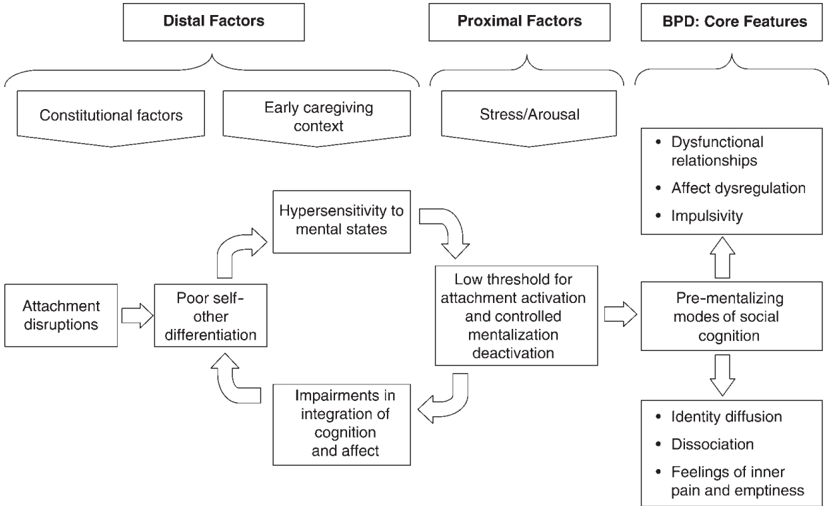
The precise nature and etiopathogenesis of borderline personality disorder (BPD) continues to elude researchers and clinicians. Yet, increasing evidence from various strands of research converges to suggest that affect dysregulation, impulsivity, and unstable relationships constitute the core features of BPD. Over the last two decades, the mentalization-based approach to BPD has attempted to provide a theoretically consistent way of conceptualizing the interrelationship between these core features of BPD, with the aim of providing clinicians with a conceptually sound and empirically supported approach to BPD and its treatment. This paper presents an extended version of this approach to BPD based on recently accumulated data. In particular, we suggest that the core features of BPD reflect impairments in different facets of mentalization, each related to impairments in relatively distinct neural circuits underlying these facets. Hence, we provide a comprehensive account of BPD by showing how its core features are related to each other in theoretically meaningful ways. More specifically, we argue that BPD is primarily associated with a low threshold for the activation of the attachment system and deactivation of controlled mentalization, linked to impairments in the ability to differentiate mental states of self and other, which lead to hypersensitivity and increased susceptibility to contagion by other people's mental states, and poor integration of cognitive and affective aspects of mentalization. The combination of these impairments may explain BPD patients' propensity for vicious interpersonal cycles, and their high levels of affect dysregulation and impulsivity. Finally, the implications of this expanded mentalization-based approach to BPD for mentalization-based treatment and treatment of BPD more generally are discussed.
Overview
CoChat Summary
TL;DR
This paper presents an expanded developmental, mentalization-based model of borderline personality disorder (BPD), arguing that its core features reflect impairments in different facets of mentalization linked to relatively distinct neural circuits. It proposes that BPD involves low thresholds for attachment-system activation and controlled-mentalization deactivation, explaining vicious interpersonal cycles, affect dysregulation, impulsivity, identity diffusion, dissociation, and inner pain.
Key findings
- BPD’s core features are emotional dysregulation, high impulsivity leading to self-harm and suicidality, and disturbed interpersonal functioning; lifetime prevalence is estimated to be as much as 6%, and between 25 and 33% may meet criteria in outpatient and forensic populations.
- Mentalization is multidimensional—automatic/controlled, cognitive/affective, internal/external, and self/other focused—and BPD is primarily associated with failures of explicit, internal, cognitive mentalization, alongside a low threshold for attachment activation and deactivation of controlled mentalization.
- These impairments may produce hypersensitivity and susceptibility to contagion by others’ mental states, poor self-other differentiation, hypermentalization or mentalization failure, and reemergence of prementalizing modes such as psychic equivalence, pretend mode, and teleological mode.
- Treatment implications include aiming for an optimal balance between attachment activation and mentalization; insight-oriented treatments focused on traumatic past may be contraindicated for patients with serious mentalization impairments.
Methods
- Theoretical/review paper presenting an expanded mentalization-based developmental model of BPD, integrating prior formulations with recently accumulated data.
- Draws on extant neuroimaging, developmental social and cognitive research, factor analytic and clinical studies, attachment research, and treatment literature; no new empirical sample or primary data collection is reported.
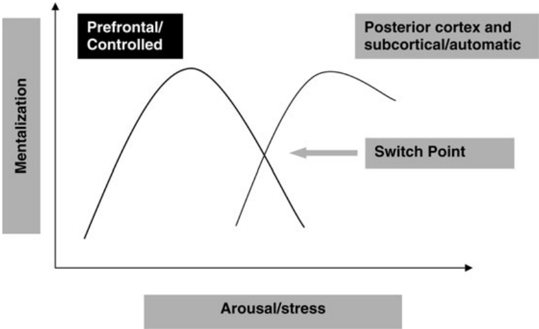
- Main analysis is a conceptual synthesis relating BPD features to four mentalization polarities and proposed neural systems, including a biobehavioral switch model of stress and controlled versus automatic mentalization.
Limitations
- The paper states that cited neuroimaging and physiological studies require further replication because of sometimes small sample sizes, disparate experimental paradigms, and heterogeneity in sample selection (e.g., comorbidity with depression, childhood abuse, PTSD, and copying styles).
- The paper notes that reliable description of BPD in adolescence remains controversial regarding homogeneity, comorbidity between and within axes, arbitrary cutoffs, and poor test-retest reliability, and that stability into adulthood is suggestive rather than well-established.
- The paper states that some predictions remain to be investigated (e.g., recovery time of mentalization with hyperactivating versus deactivating strategies) and that evidence on maladaptive parental mentalizing is still lacking; evident from the text, it is a conceptual/review article and does not empirically test the proposed model.
Model-written summary. Check it against the paper before relying on it.
Integrity signals
Registry
Cites
Statistics
Figures
Verification
Claims the paper makes
24 Valid · 11 Not valid · 130 Not checked · 108 Own results and interpretations
The cited sources support only part of this claim — read each source’s verdict below.
In the paper
“As we have already noted, retrospective evaluations have led to recognition that disorganization of the attachment system is a key aspect of the psychopathology of BPD (Gunderson & Lyons-Ruth, 2008).”
What the sources say
- Partly supportedcites Gunderson & Lyons-Ruth, 2008 matched to “BPD's Interpersonal Hypersensitivity Phenotype: A Gene-Environment-Developmental Model” (2008) sourceExperimental — accuracy not yet measured
The paper calls disorganized attachment especially important to understanding BPD and links it to an adult attachment pattern seen in patients (passage [1], section labeled Abstract). Its Conclusions describe attachment disorganization as one likely developmental pathway, not a defining feature of BPD psychopathology. The RETROSPECTIVE REPORTS section discusses patients’ accounts of difficult childhood relationships but does not say those evaluations established attachment disorganization. (LLM, conf=0.82)
plainstates an association- Asserted: passes — The authors put it forward as true.
- Checkable: passes — It can be checked against evidence.
- Load-bearing: passes — The paper’s conclusions depend on it.
- Based: passes — The paper gives a reason why it holds.
- Partly supported
The cited sources support only part of this claim — read each source’s verdict below.
In the paper
“Indeed, studies of adult attachment patterns of BPD patients repeatedly highlight a combination of preoccupied and unresolved attachment associated with BPD (Agrawal, Gunderson, Holmes, & Lyons-Ruth, 2004; Fonagy et al., 1996; Nakash-Eisikovits, Dutra, & Westen, 2002).”
What the sources say
- Supportedcites Agrawal, Gunderson, Holmes, & Lyons-Ruth, 2004 matched to “Attachment Studies with Borderline Patients: A Review” (2004) source
The Results report that all five studies using the Adult Attachment Interview found the greatest proportion of borderline individuals in the preoccupied or unresolved categories. The Discussion states that BPD attachments seem best characterized as unresolved with preoccupied features in relation to parents, matching the attributed claim. (LLM, conf=0.94)
- Not checked yetcites Fonagy et al., 1996 matched to “The relation of attachment status, psychiatric classification, and response to psychotherapy.” (1996) source
- Partly supportedcites Nakash-Eisikovits, Dutra, & Westen, 2002 matched to “Relationship Between Attachment Patterns and Personality Pathology in Adolescents” (2002) sourceExperimental — accuracy not yet measured
The Association Between Attachment Status and Axis II Pathology section links both anxious/ambivalent and disorganized/unresolved attachment to borderline personality disorder. But this paper studies adolescents, not adult BPD patients, and reports the two associations separately rather than a combined attachment pattern. Its discussion of an adult association concerns preoccupied attachment only. (LLM, conf=0.88)
boostedstates an association- Asserted: passes — The authors put it forward as true.
- Checkable: passes — It can be checked against evidence.
- Load-bearing: unclear — It is unclear whether the paper’s conclusions depend on it.
- Based: passes — The paper gives a reason why it holds.
- Supported
The cited sources support only part of this claim — read each source’s verdict below.
In the paper
“Such gene-environment effects could be one way that the known influence of heredity (Distel et al., 2008; LyonsRuth et al., 2007; Ni et al., 2007) is mediated in BPD.”
What the sources say
- Supportedcites Distel et al., 2008 matched to “Heritability of borderline personality disorder features is similar across three countries” (2008) source
The citation supports the sentence’s reference to a known hereditary influence, not its proposed gene–environment mechanism. The indexed paper’s title identifies its subject as the heritability of borderline personality disorder features; it does not need to establish the citing authors’ speculative explanation of how that influence is mediated. (LLM, conf=0.84)
- Supportedcites LyonsRuth et al., 2007 matched to “Serotonin transporter polymorphism and borderline or antisocial traits among low-income young adults” (2007) source
The Conclusions report genetic influence on liability to borderline and antisocial personality disorders. The Discussion proposes that the observed genetic association may reflect a gene–environment interaction, while noting that the interaction was not tested in this study. That supports the citing sentence’s tentative ‘could be’ formulation. (LLM, conf=0.90)
- Not matchedcites Ni et al., 2007
This doesn’t read as a citation we can look up.
hedgedstates a possible cause- Asserted: passes — The authors put it forward as true.
- Checkable: passes — It can be checked against evidence.
- Load-bearing: unclear — It is unclear whether the paper’s conclusions depend on it.
- Based: passes — The paper gives a reason why it holds.
- Supported
The cited sources support only part of this claim — read each source’s verdict below.
In the paper
“dissociative comorbidity is more frequently reported by patients with BPD than other groups”
What the sources say
- Not checked — no full text of the sourcecites Sar, Akyuz, Kugu, Ozturk, & Ertem-Vehid, 2006 matched to “Axis I Dissociative Disorder Comorbidity in Borderline Personality Disorder and Reports of Childhood Trauma” (2006) source
- Partly supportedcites Zanarini, Frankenburg, Jager-Hyman, Reich, & Fitzmaurice, 2008 matched to “The course of dissociation for patients with borderline personality disorder and axis II comparison subjects: a 10‐year follow‐up study” (2008) sourceExperimental — accuracy not yet measured
The Results report that 76 borderline patients, but only two axis II comparison subjects, had high dissociation scores at baseline. This supports a difference in reported dissociative symptoms between those groups, not a higher frequency of diagnosed dissociative comorbidity across other groups generally. The paper measures symptoms with the Dissociative Experiences Scale rather than reporting rates of comorbid dissociative disorders. (LLM, conf=0.86)
plainstates an association- Asserted: passes — The authors put it forward as true.
- Checkable: passes — It can be checked against evidence.
- Load-bearing: unclear — It is unclear whether the paper’s conclusions depend on it.
- Based: passes — The paper gives a reason why it holds.
The cited sources that could be checked couldn’t confirm or dispute this claim.
In the paper
“may be an extreme indication of such separateness (Ross, 2007; Zanarini et al., 2008).”
What the sources say
- Not checked — no full text of the sourcecites Ross, 2007 matched to “Borderline Personality Disorder and Dissociation” (2007) source
- Could not verifycites Zanarini et al., 2008 matched to “The course of dissociation for patients with borderline personality disorder and axis II comparison subjects: a 10‐year follow‐up study” (2008) sourceExperimental — accuracy not yet measured
The Methods describe dissociation through absorption, depersonalization, and amnesia, while the Discussion reports how their severity changed over time. Neither section characterizes dissociation as an extreme indication of separateness; searches for separateness and related descriptions found no such passage. Page numbers were not available in our copy. (LLM, conf=0.75)
hedgedstates an association- Asserted: passes — The authors put it forward as true.
- Checkable: passes — It can be checked against evidence.
- Load-bearing: unclear — It is unclear whether the paper’s conclusions depend on it.
- Based: passes — The paper gives a reason why it holds.
157 more claims · 13 with their cited sources checked
Create a free account to see all 273 claims and to verify the 9 references still open.
- Probably not a substantial claim. 41
- It may state two separate claims as one. 81
Claims other papers make about this one
Each is checked against this paper’s own text: does it say what the citing paper says it does?
The source backs part of the claim, not all of it — or backs it for a different population, condition or comparison.
In the citing paper
“In this account, an insecure attachment relationship between primary caregiver and child results in avoidance of internal thinking and feeling states in the child because acknowledging such internal states would further threaten an already vulnerable relationship with the caregiver.”
From First evidence of a prospective relation between avoidance of internal states and borderline personality disorder features in adolescents. (2015) · cites this paper as [19]
Experimental — accuracy not yet measuredThe source backs part of the claim, not all of it — or backs it for a different population, condition or comparison.
In the citing paper
“In turn, the child is at increased risk of developing BPD.”
From First evidence of a prospective relation between avoidance of internal states and borderline personality disorder features in adolescents. (2015) · cites this paper as [19]
Experimental — accuracy not yet measuredThe source backs part of the claim, not all of it — or backs it for a different population, condition or comparison.
In the citing paper
“In line with this, mentalization as an emotion regulation strategy has been considered a top-down strategy, relying in the explicit emotion regulation and in the theory of mind brain systems (Fonagy and Luyten, 2009; Vrticka and Vuilleumier, 2012).”
From Mindfulness and Emotion Regulation: Insights from Neurobiological, Psychological, and Clinical Studies (2017) · cites this paper as Fonagy and Luyten, 2009
Experimental — accuracy not yet measuredIn the citing paper
“stress and distress is thought to have a detrimental impact on the capacity to mentalize, especially if the stress is interpersonal in nature.”
From Investigating the association between parental reflective functioning and distress tolerance in motherhood. (2015) · cites this paper as Fonagy & Luyten, 2009
In the citing paper
“Stress and heightened arousal may inhibit the engagement of cortically-controlled processes of explicit mentalization that underscore reflection and reasoning when engaged with others (Fonagy & Luyten, 2009).”
From Investigating the association between parental reflective functioning and distress tolerance in motherhood. (2015) · cites this paper as Fonagy & Luyten, 2009
Citations
Cites
Fredrickson, B. L. (2001) · American Psychologist · doi:10.1037//0003-066x.56.3.218 · Cited by 18,025 · cited 2×
“…insight into BPD. Studies suggest that the ability to continue to mentalize even under considerable stress leads to so-called “broaden and build” (Fredrickson, 2001) cycles of attachment security, which reinforce feelings of secure attachment, personal agency, and affect regulation (“build”),…”
BackgroundRizzolatti, G., & Craighero, L. (2004) · Annual Review of Neuroscience · doi:10.1146/annurev.neuro.27.070203.144230 · Cited by 7,433 · cited 1×
“…system involves a more body-based, frontoparietal mirror neuron system that is involved in understanding the multimodal embodied self (e.g., face and body recognition) and understanding others through motor-simulation mechanisms (Gallese, Keysers, & Rizzolatti, 2004; Rizzolatti & Craighero, 2004).”
Background(1993) · Cited by 7,136
Attachment in adulthood: structure, dynamics, and change
(2008) · Choice Reviews Online · doi:10.5860/choice.45-2903 · Cited by 4,315
Affect Regulation, Mentalization, and the Development of the Self
Fonagy, P., Gergely, G., Jurist, E. L., & Target, M. (2018) · doi:10.4324/9780429471643 · Cited by 3,886
Self-citationThe Child's Conception of Space
Lawrence, E., Piaget, J., Inhelder, B., Langdon, F. J., & Lunzer, J. L. (1957) · British Journal of Educational Studies · doi:10.2307/3118882 · Cited by 3,213
Cattaneo, L., & Rizzolatti, G. (2009) · Archives of Neurology · doi:10.1001/archneurol.2009.41 · Cited by 3,137
Self-referential processing in our brain—A meta-analysis of imaging studies on the self
Northoff, G., Heinzel, A., de Greck, M., Bermpohl, F., Dobrowolny, H., & Panksepp, J. (2006) · NeuroImage · doi:10.1016/j.neuroimage.2005.12.002 · Cited by 2,792 · cited 1×
“The aFMC is involved in mentalizing (Frith & Frith, 2006; Gilbert et al., 2007) and self-referential processing (Northoff et al., 2006).”
BackgroundMayberg, H. S., Liotti, M., Brannan, S. K., McGinnis, S., Mahurin, R. K., Jerabek, P. A., Silva, J. A., Tekell, J. L., Martin, C. C., Lancaster, J. L., et al. (1999) · American Journal of Psychiatry · doi:10.1176/ajp.156.5.675 · Cited by 2,416 · cited 2×
“…for attention and long-term memory (Cabeza & Nyberg, 2000), perhaps specifically responsible for integrating emotion and cognition (e.g., emotional encoding of episodic memories; Maddock, 1999) and subserving moodmediated inhibition or enhancement of cognitive processing (Mayberg et al., 1999).”
BackgroundThe debate over dopamine’s role in reward: the case for incentive salience
Berridge, K. C. (2007) · Psychopharmacology · doi:10.1007/s00213-006-0578-x · Cited by 2,347 · cited 1×
“These findings suggest that for securely attached mothers, infant cues (whether positive or negative in affect) may act as an important affective signal of “incentive salience” (Berridge, 2007), reinforcing and motivating responsive maternal care.”
Background
Research works printed but not linked: 12
- Williams, 2006, Handbook of mentalisation based treatments
- 10.1093/med/9780198569183.001.0001 · DOI · Paper page
- 10.1111/1469-7610.0013_7 · doi:10.1111/1469-7610.0013_7 · Paper page
- Gergely, 1996, The social biofeedback model of parental affect-mirroring, International Journal of Psycho-Analysis, 77, 1181
- Luyten, 2009, The interpersonal regulation of stress
- Bloom, 2004, Descartes' baby
- Hobson, 2002, The cradle of thought: Explorations of the origins of thinking
- Fearon, 2006, Handbook of mentalisaiton based treatments
- Diamond, 1991, Self–other differentiation of object representations
- Hesse, 2008, Handbook of attachment theory and research, 552
- Luyten, 2009, Mentalization as a multidimensional concept
- O'Connor, 2006, Developmental psychopathology: Vol. 3. Risk, disorder and adaptation, 202
Cited by
Psychological therapies for people with borderline personality disorder.
Stoffers-Winterling, J. M., Völlm, B. A., Rücker, G., Timmer, A., Huband, N., & Lieb, K. (2012) · Cochrane Database of Systematic Reviews · doi:10.1002/14651858.cd005652.pub2 · Cited by 895
Fonagy, P., Luyten, P., Moulton-Perkins, A., Lee, Y.-W., Warren, F., Howard, S., Ghinai, R., Fearon, P., & Lowyck, B. (2016) · PLOS ONE · doi:10.1371/journal.pone.0158678 · Cited by 754
Self-citationThe mentalizing approach to psychopathology: State of the art and future directions
Luyten, P., Campbell, C., Allison, E., & Fonagy, P. (2020) · Annual Review of Clinical Psychology · doi:10.1146/annurev-clinpsy-071919-015355 · Cited by 748
“These impairments are typically expressed in terms of patients’ overly simplistic or overanalytic/hyperactive accounts of their own mental states and those of others (Fonagy & Luyten 2009).”
BackgroundSelf-citationGuendelman, S., Medeiros, S., & Rampes, H. (2017) · Frontiers in Psychology · doi:10.3389/fpsyg.2017.00220 · Cited by 577
“In line with this, mentalization as an emotion regulation strategy has been considered a top-down strategy, relying in the explicit emotion regulation and in the theory of mind brain systems (Fonagy and Luyten, 2009; Vrticka and Vuilleumier, 2012).”
BackgroundFonagy, P., Luyten, P., & Allison, E. (2015) · Journal of Personality Disorders · doi:10.1521/pedi.2015.29.5.575 · Cited by 540
“…way, as is also demonstrated by studies suggesting that the process of ―relationship-recruiting‖ may play a crucial role in explaining resilience and the emergence of so-called broaden-and-build cycles (Fonagy & Luyten, 2009; Hauser, Allen, & Golden, 2006). nonspecific factors in psychotherapy.”
BackgroundSelf-citationThe structure of personality pathology: Both general (‘g’) and specific (‘s’) factors?
Sharp, C., Wright, A. G. C., Fowler, J. C., Frueh, B. C., Allen, J. G., Oldham, J., & Clark, L. A. (2015) · Journal of Abnormal Psychology · doi:10.1037/abn0000033 · Cited by 515
“As described by others (Bender & Skodol, 2007; Fonagy & Luyten, 2009; Kernberg, 1984; Linehan, 1993), BPD is unique in that impairment in the ability to maintain and use benign and coherent internal images of self and others are integrated into one disorder.”
BackgroundBPD's Interpersonal Hypersensitivity Phenotype: A Gene-Environment-Developmental Model
Gunderson, J. G., & Lyons-Ruth, K. (2008) · Journal of Personality Disorders · doi:10.1521/pedi.2008.22.1.22 · Cited by 511
The parental reflective functioning questionnaire: Development and preliminary validation
Luyten, P., Mayes, L. C., Nijssens, L., & Fonagy, P. (2017) · PLOS ONE · doi:10.1371/journal.pone.0176218 · Cited by 496
Self-citationTheory of mind and emotion regulation difficulties in adolescents with borderline traits
Sharp, C., Pane, H., Ha, C., Venta, A., Patel, A. B., Sturek, J., & Fonagy, P. (2011) · Journal of the American Academy of Child & Adolescent Psychiatry · doi:10.1016/j.jaac.2011.01.017 · Cited by 492
Self-citationThe Development of Borderline Personality Disorder—A Mentalizing Model
Fonagy, P., & Bateman, A. (2008) · Journal of Personality Disorders · doi:10.1521/pedi.2008.22.1.4 · Cited by 484
Self-citationPsychological therapies for people with borderline personality disorder
Storebø, O. J., Stoffers-Winterling, J. M., Völlm, B. A., Kongerslev, M. T., Mattivi, J. T., Jørgensen, M. S., Faltinsen, E., Todorovac, A., Sales, C. P., Callesen, H. E., et al. (2020) · Cochrane Database of Systematic Reviews · doi:10.1002/14651858.cd012955.pub2 · Cited by 450
On the interaction of social affect and cognition: empathy, compassion and theory of mind
Preckel, K., Kanske, P., & Singer, T. (2018) · Current Opinion in Behavioral Sciences · doi:10.1016/j.cobeha.2017.07.010 · Cited by 348
“It has, however, also been discussed as important in psychopathology, for instance in borderline personality disorder for which a stress related mentalizing deficit has been hypothesized [40].”
Luyten, P., & Blatt, S. J. (2013) · American Psychologist · doi:10.1037/a0032243 · Cited by 340
Self-citationBerthelot, N., Ensink, K., Bernazzani, O., Normandin, L., Luyten, P., & Fonagy, P. (2015) · Infant Mental Health Journal · doi:10.1002/imhj.21499 · Cited by 334
“The current perception is that mentalization is multifaceted, with mentalization in specific domains likely to be the best predictors of specific skills, difficulties, and psychopathology (Allen, 2013; Allen & Fonagy, 2006; Fonagy & Luyten, 2009; Luyten, Fonagy, Lowyck, & Vermote, 2012).”
Self-citationThe neurobiology of mentalizing.
Luyten, P., & Fonagy, P. (2015) · Personality Disorders: Theory, Research, and Treatment · doi:10.1037/per0000117 · Cited by 306
Self-citationFears of compassion and happiness in relation to alexithymia, mindfulness, and self‐criticism
Gilbert, P., McEwan, K., Gibbons, L., Chotai, S., Duarte, J., & Matos, M. (2012) · Psychology and Psychotherapy: Theory, Research and Practice · doi:10.1111/j.2044-8341.2011.02046.x · Cited by 285
Neuroscience of human social interactions and adult attachment style
Vrtička, P., & Vuilleumier, P. (2012) · Frontiers in Human Neuroscience · doi:10.3389/fnhum.2012.00212 · Cited by 285
“…(PFC), OFC, and posterior cingulate cortex (PCC), as well as the precuneus, superior temporal sulcus (STS), and temporo-parietal junction (TPJ), plus specialized sensory regions in superior temporal gyrus, lateral occipital cortex, and fusiform cortex (Lieberman, 2007; Fonagy and Luyten, 2009).”
BackgroundMethodInfluentialEmotional Dysregulation in Children and Adolescents With Psychiatric Disorders. A Narrative Review
Paulus, F. W., Ohmann, S., Möhler, E., Plener, P., & Popow, C. (2021) · Frontiers in Psychiatry · doi:10.3389/fpsyt.2021.628252 · Cited by 280
Liotti, G., & Gilbert, P. (2011) · Psychology and Psychotherapy: Theory, Research and Practice · doi:10.1348/147608310x520094 · Cited by 263
Recognition of Facial Affect in Borderline Personality Disorder
Domes, G., Czieschnek, D., Weidler, F., Berger, C., Fast, K., & Herpertz, S. C. (2008) · Journal of Personality Disorders · doi:10.1521/pedi.2008.22.2.135 · Cited by 254
Parental Reflective Functioning: Theory, Research, and Clinical Applications
Luyten, P., Nijssens, L., Fonagy, P., & Mayes, L. C. (2017) · The Psychoanalytic Study of the Child · doi:10.1080/00797308.2016.1277901 · Cited by 242
“to be associated with an awareness of the influence of trauma on one’s own development and that of one’s child (Fonagy and Luyten, 2009; Fonagy, Luyten, and Strathearn 2011; Berthelot et al. 2015).”
BackgroundSelf-citationEnsink, K., Normandin, L., Target, M., Fonagy, P., Sabourin, S., & Berthelot, N. (2015) · British Journal of Developmental Psychology · doi:10.1111/bjdp.12074 · Cited by 238
“…unwilling to imagine the child’s internal experience, may discourage coherent discourse about mental states, and undermine the development of mentalization in children to avoid engaging with the psychological impact and suffering they inflict (Allen, Fonagy, & Bateman, 2008; Fonagy & Luyten, 2009).”
BackgroundSelf-citationSharp, C., & Fonagy, P. (2015) · Journal of Child Psychology and Psychiatry · doi:10.1111/jcpp.12449 · Cited by 237
“From a more psychodynamic perspective, the attachment and mentalization-based theory of BPD (Fonagy & Luyten, 2009; Fonagy, Target, & Gergely, 2000) posits that failures of seeing actions in terms of underpinning mental states, or misinterpretations of these, may account for core features of BPD.…”
BackgroundSelf-citationAdversity, attachment, and mentalizing
Fonagy, P., & Bateman, A. W. (2016) · Comprehensive Psychiatry · doi:10.1016/j.comppsych.2015.11.006 · Cited by 227
“It is gratifying that many, if not most, of the findings we have reviewed are consistent with the model proposed by Fonagy and Luyten [28].”
BackgroundResultInfluentialSelf-citation(2017) · doi:10.1186/s40479-017-0061-9 · Cited by 224
“This often leads to the experience of emotional contagion, which has clear implications for social appraisal situations [74, 75]: BPD individuals can feel forced to be rigid and highly controlling in order to maintain a subjective sense of coherence and integrity [76].”
BackgroundSelf-citationHypermentalizing in Adolescent Inpatients: Treatment Effects and Association With Borderline Traits
Sharp, C., Ha, C., Carbone, C., Kim, S., Perry, K., Williams, L., & Fonagy, P. (2013) · Journal of Personality Disorders · doi:10.1521/pedi.2013.27.1.3 · Cited by 215
Self-citationKanske, P., Böckler, A., Trautwein, F.-M., Parianen Lesemann, F. H., & Singer, T. (2016) · Social Cognitive and Affective Neuroscience · doi:10.1093/scan/nsw052 · Cited by 209
“As the down-regulation of TPJ can come at the cost of impaired mentalizing, the questions is whether chronified variants may be a precursor for mental disorders [as has been hypothesized in borderline personality disorder (Fonagy and Luyten, 2009)].”
BackgroundBelsky, D. W., Caspi, A., Arseneault, L., Bleidorn, W., Fonagy, P., Goodman, M., Houts, R., & Moffitt, T. E. (2012) · Development and Psychopathology · doi:10.1017/s0954579411000812 · Cited by 194
“…assessment tools and treatments derived from diathesis–stress theories of borderline etiology, including dialectical behavioral therapy (Linehan, Armstrong, Suarez, Allmon, & Heard, 1991) and mentalization-based therapy (Fonagy & Luyten, 2009), also receive support from findings in this study.”
Self-citationMentalization‐based Therapeutic Interventions for Families
Asen, E., & Fonagy, P. (2012) · Journal of Family Therapy · doi:10.1111/j.1467-6427.2011.00552.x · Cited by 192
“…attentional problems, the inability to represent the mental state of the self and difficulties in reflecting on the mental states of others can disrupt attachment relationships; and a poor attachment relationship undermines the natural emergence of mentalizing capacities (Fonagy and Luyten, 2009).”
BackgroundSelf-citationLuyten, P., & Blatt, S. J. (2011) · Clinical Psychology Review · doi:10.1016/j.cpr.2010.09.003 · Cited by 185
“Borderline patients, in turn, show strong fluctuations in levels of aggression (i.e., both high and low scores) as a result of the tendency to both idealize and denigrate significant others because of their inability to tolerate ambivalent feelings (Fonagy & Luyten, 2009).”
BackgroundInfluentialSelf-citationNolte, T., Guiney, J., Fonagy, P., Mayes, L. C., & Luyten, P. (2011) · Frontiers in Behavioral Neuroscience · doi:10.3389/fnbeh.2011.00055 · Cited by 179
“…conceptualize attachment relationships as part of a complex network of epigenetic factors which interact to confer risk of or resilience to the development of stress-related psychopathology (e.g., Fonagy and Luyten, 2009; van Ijzendoorn et al., 2010; Luyten et al., submitted for publication).”
InfluentialSelf-citationStietz, J., Jauk, E., Krach, S., & Kanske, P. (2019) · Frontiers in Psychiatry · doi:10.3389/fpsyt.2019.00126 · Cited by 173
“This may reflect an adaptive response to highly salient situations requiring immediate action, but could also turn maladaptive as has been hypothesized with a stress-related mentalizing deficit in borderline personality disorder (30).”
BackgroundBorderline personality disorder, mentalization, and the neurobiology of attachment
Fonagy, P., Luyten, P., & Strathearn, L. (2011) · Infant Mental Health Journal · doi:10.1002/imhj.20283 · Cited by 176
“From the perspective of the mentalization-based approach to BPD (Bateman & Fonagy, 2004a, 2006; Fonagy & Luyten, 2009), three other facets of BPD that emerge as aspects of disturbed social relatedness from both factor-analytic and clinical studies deserve special attention (e.g., Sanislow et al.,…”
BackgroundSelf-citationBrain mechanisms underlying the impact of attachment-related stress on social cognition
Nolte, T., Bolling, D. Z., Hudac, C. M., Fonagy, P., Mayes, L., & Pelphrey, K. A. (2013) · Frontiers in Human Neuroscience · doi:10.3389/fnhum.2013.00816 · Cited by 176
Self-citationEmpathy and Alexithymia in Borderline Personality Disorder: Clinical and Laboratory Measures
New, A. S., Rot, M. A. H., Ripoll, L. H., Perez-Rodriguez, M. M., Lazarus, S., Zipursky, E., Weinstein, S. R., Koenigsberg, H. W., Hazlett, E. A., Goodman, M., et al. (2012) · Journal of Personality Disorders · doi:10.1521/pedi.2012.26.5.660 · Cited by 171
Hypermentalizing in Borderline Personality Disorder: A Model and Data
Sharp, C., & Vanwoerden, S. (2015) · Journal of Infant, Child, and Adolescent Psychotherapy · doi:10.1080/15289168.2015.1004890 · Cited by 168
“Fonagy and colleagues (Fonagy, 1989, 1991; Fonagy, Gergely, Jurist, & Target, 2002; Fonagy & Luyten, 2009; Sharp & Fonagy, 2008) have proposed a mentalization-based theory of BPD that posits that a vulnerability to failures or misinterpretations of actions in terms of underpinning mental states may…”
BackgroundMethodInfluentialLyons-Ruth, K., Bureau, J.-F., Holmes, B., Easterbrooks, A., & Brooks, N. H. (2013) · Psychiatry Research · doi:10.1016/j.psychres.2012.09.030 · Cited by 170
“Many theorists have offered formulations concerning ongoing deviations in parent-child interaction likely to be associated with BPD symptoms (Linehan, 1993; Gunderson, 1996; Fruzzetti et al., 2005; Fonagy and Luyten, 2009).”
BackgroundGilbert, P., McEwan, K., Catarino, F., Baião, R., & Palmeira, L. (2014) · British Journal of Clinical Psychology · doi:10.1111/bjc.12037 · Cited by 164
“One of the key processes that enable the engagement with and exploration of emotions is the openness and validation of others, particularly early attachment relationships (Fonagy & Luyton, 2009).”
BackgroundResultEnsink, K., Bégin, M., Normandin, L., & Fonagy, P. (2016) · European Journal of Psychotraumatology · doi:10.3402/ejpt.v7.30611 · Cited by 166
“In family contexts where abuse occurs, some parents may actively undermine the development of mental state thinking in order to avoid engaging with the distress that they cause their children (Allen, Fonagy, & Bateman, 2008; Fonagy & Luyten, 2009).”
BackgroundSelf-citationLong, M., Verbeke, W., Ein-Dor, T., & Vrtička, P. (2020) · Cortex · doi:10.1016/j.cortex.2020.01.010 · Cited by 159
Attachment, Neurobiology, and Mentalizing along the Psychosis Continuum
Debbané, M., Salaminios, G., Luyten, P., Badoud, D., Armando, M., Solida Tozzi, A., Fonagy, P., & Brent, B. K. (2016) · Frontiers in Human Neuroscience · doi:10.3389/fnhum.2016.00406 · Cited by 157
“For example, current evidence on the therapeutic effects of oxytocin administration in the treatment of psychotic symptoms are mixed (Feifel et al., 2016; Lee et al., 2016) and although oxytocin administration is shown to facilitate trust and corporation in healthy samples, the opposite effect has been observed in som…”
BackgroundInfluentialSelf-citationWhen Words Just Won’t Do: Introducing Parental Embodied Mentalizing
Shai, D., & Belsky, J. (2011) · Child Development Perspectives · doi:10.1111/j.1750-8606.2011.00181.x · Cited by 151
“…data showing that different brain areas are recruited for automatic (implicit) and controlled (explicit) mentalizing (e.g., Lieberman, 2007) led Fonagy and Luyten (2009) to draw distinctions between implicit (nonconscious , nonverbal, automatic) and explicit (verbal, reflective, controlled)…”
Franzen, N., Hagenhoff, M., Baer, N., Schmidt, A., Mier, D. U., Sammer, G., Gallhofer, B., Kirsch, P., & Lis, S. (2010) · Psychiatry Research · doi:10.1016/j.psychres.2010.11.012 · Cited by 184
“Although experimental data support the hypothesis that primarily fast and automatic social cognitive processes are dysfunctional in BPD, these data disagree with assumptions made in therapeutical models that focus on a deactivation of controlled mentalization as one cause underlying the problems to differentiate menta…”
BackgroundRutherford, H. J. V., Booth, C. R., Luyten, P., Bridgett, D. J., & Mayes, L. C. (2015) · Infant Behavior and Development · doi:10.1016/j.infbeh.2015.04.005 · Cited by 149
Self-citationElevated empathy in adults following childhood trauma
Greenberg, D. M., Baron‐Cohen, S., Rosenberg, N., Fonagy, P., & Rentfrow, P. J. (2018) · PLoS ONE · doi:10.1371/journal.pone.0203886 · Cited by 196
Self-citationEnsink, K., Berthelot, N., Bernazzani, O., Normandin, L., & Fonagy, P. (2014) · Frontiers in Psychology · doi:10.3389/fpsyg.2014.01471 · Cited by 144
“More recently, Fonagy and Luyten (2009) proposed that attachment and RF are loosely connected, because although mentalization originates in the context of attachment relationships, it subsequently has a distinct developmental path with specific factors contributing to its further development, such…”
BackgroundMethodResultInfluentialSelf-citationAttachment states of mind, mentalization, and their correlates in a first‐episode psychosis sample
MacBeth, A., Gumley, A., Schwannauer, M., & Fisher, R. (2011) · Psychology and Psychotherapy: Theory, Research and Practice · doi:10.1348/147608310x530246 · Cited by 140
The widening scope of mentalizing: A discussion
Fonagy, P., BATEMAN, A. W., & Bateman, A. (2011) · Psychology and Psychotherapy Theory Research and Practice · doi:10.1111/j.2044-8341.2010.02005.x · Cited by 188
“Patients may show impairments in some of these polarities, but not necessarily in others (Fonagy & Luyten, 2009; Luyten et al., 2010) as a function of situational considerations, especially the social context they find themselves in.”
BackgroundSelf-citationBadoud, D., Luyten, P., Fonseca-Pedrero, E., Eliez, S., Fonagy, P., & Debbané, M. (2015) · PLOS ONE · doi:10.1371/journal.pone.0145892 · Cited by 138
“Nevertheless, a large body of work relates impairments in RF to adult and adolescent BPD and borderline traits ([30 – 31] for reviews).”
BackgroundSelf-citationEmpathy in narcissistic personality disorder: From clinical and empirical perspectives.
Baskin-Sommers, A., Krusemark, E., & Ronningstam, E. (2014) · Personality Disorders: Theory, Research, and Treatment · doi:10.1037/per0000061 · Cited by 137
Herpertz, S. C., & Bertsch, K. (2015) · American Journal of Psychiatry · doi:10.1176/appi.ajp.2015.15020216 · Cited by 136
“with emotional imitation processes reflected in increased activationof the somatosensorycortex, this formof “empathy” is likely to result in an affect-dominated and unmediated perception of others, known as emotional contagion (5, 65).”
BackgroundA mentalization-based approach to the understanding and treatment of functional somatic disorders
Luyten, P., van Houdenhove, B., Lemma, A., Target, M., & Fonagy, P. (2012) · Psychoanalytic Psychotherapy · doi:10.1080/02668734.2012.678061 · Cited by 134
“the meta-cognitive capacity to interpret oneself and others in terms of mental states (Fonagy & Luyten, 2009 ).”
BackgroundSelf-citationDissociation and its disorders: competing models, future directions, and a way forward
Lynn, S. J., Maxwell, R., Merckelbach, H., Lilienfeld, S. O., Kloet, D. V. H.-V. D., & Miskovic, V. (2019) · Clinical Psychology Review · doi:10.1016/j.cpr.2019.101755 · Cited by 134
Schizotypy from a developmental perspective
Debbane, M., & Barrantes-Vidal, N. (2015) · Schizophrenia Bulletin · doi:10.1093/schbul/sbu175 · Cited by 133
The measurement of reflective function in adolescents with and without borderline traits
Ha, C., Sharp, C., Ensink, K., Fonagy, P., & Cirino, P. (2013) · Journal of Adolescence · doi:10.1016/j.adolescence.2013.09.008 · Cited by 134
“All rights reserved. insecure attachment potentiates the development of social-cognitive (mentalizing) dysfunction associated with the disorder (Fonagy & Luyten, 2009; Sharp & Fonagy, 2008).”
InfluentialSelf-citationWhat is Emptiness? Clarifying the 7th Criterion for Borderline Personality Disorder
Klonsky, E. D. (2008) · Journal of Personality Disorders · doi:10.1521/pedi.2008.22.4.418 · Cited by 129
A Multilevel Perspective on the Development of Borderline Personality Disorder
Fonagy, P., & Luyten, P. (2016) · Developmental Psychopathology · doi:10.1002/9781119125556.devpsy317 · Cited by 127
Self-citationAttachment and Personality Disorders: A Short Review
Lorenzini, N., & Fonagy, P. (2013) · Focus · doi:10.1176/appi.focus.11.2.155 · Cited by 127
Self-citationSchlaffke, L., Lissek, S., Lenz, M., Juckel, G., Schultz, T., Tegenthoff, M., Schmidt-Wilcke, T., & Brüne, M. (2015) · Human Brain Mapping · doi:10.1002/hbm.22610 · Cited by 122
“…with regard to the sources of information (e.g., emotional contagion vs. cognitive inference), as well as with regard to the material used for the assessment of cognitive and affective ToM, all of which can significantly impact the recruitment of the ToM neural network [Fonagy and Luyten, 2009].”
BackgroundImpairments of Interpersonal Functioning: Empathy and Intimacy in Borderline Personality Disorder
Jeung, H., & Herpertz, S. C. (2014) · Psychopathology · doi:10.1159/000357191 · Cited by 117
Dinsdale, N., & Crespi, B. J. (2013) · Journal of Personality Disorders · doi:10.1521/pedi.2013.27.2.172 · Cited by 115
“MENTALIZATION USING PASSIVE STIMULI Given the recent interest in mentalization-based approaches to treating BPD (Fonagy & Luyten, 2009) and the availability of instruments from autism research for assessing theory of mind skills, recent work has begun to assess " mindreading " skills in borderline…”
BackgroundMentalization and dissociation in the context of trauma: Implications for child psychopathology
Ensink, K., Bégin, M., Normandin, L., Godbout, N., & Fonagy, P. (2017) · Journal of Trauma & Dissociation · doi:10.1080/15299732.2016.1172536 · Cited by 114
“There is growing evidence that mentalization may be particularly important in the context of trauma (Allen, Fonagy & Bateman, 2008; Fonagy & Luyten, 2009), and dissociation is widely recognized as an important psychological process in models linking sexual abuse with mental health problems…”
BackgroundSelf-citationHypermentalizing, attachment, and epistemic trust in adolescent BPD: Clinical illustrations.
Bo, S., Sharp, C., Fonagy, P., & Kongerslev, M. (2017) · Personality Disorders: Theory, Research, and Treatment · doi:10.1037/per0000161 · Cited by 114
“Thus, mentalizing dysfunctions arguably seem to underlie many of the defining features of BPD pathology (Fonagy & Luyten, 2009).”
BackgroundResultInfluentialSelf-citationUnconscious emotion: A cognitive neuroscientific perspective
Smith, R. S., & Lane, R. D. (2016) · Neuroscience & Biobehavioral Reviews · doi:10.1016/j.neubiorev.2016.08.013 · Cited by 135
Chiesa, M., & Fonagy, P. (2014) · Personality and Mental Health · doi:10.1002/pmh.1245 · Cited by 114
Self-citationHuang, Y. L., Fonagy, P., Feigenbaum, J., Montague, P. R., Nolte, T., & and London Personality and Mood Disorder Research Consortium (2020) · Psychopathology · doi:10.1159/000506406 · Cited by 110
Self-citationAggression in borderline personality disorder: A multidimensional model.
Mancke, F., Herpertz, S. C., & Bertsch, K. (2015) · Personality Disorders: Theory, Research, and Treatment · doi:10.1037/per0000098 · Cited by 109
“This leaves BPD patients " vulnerable to losing a sense of self " (Fonagy & Luyten, 2009, p. 1362) and to being increasingly overwhelmed by others' mental states.”
BackgroundShai, D., & Belsky, J. (2017) · Attachment & Human Development · doi:10.1080/14616734.2016.1255653 · Cited by 109
“…a multifaceted, psychological capacity, one that has verbal and nonverbal, symbolic and behavioral, as well as implicit and explicit aspects (e.g., Fonagy & Luyten, 2009; Slade, 2005), in which “the caregiver’s recognition of the child’s intentional stance . . . is communicated nonverbally,…”
BackgroundPharmacological interventions for people with borderline personality disorder
Stoffers-Winterling, J. M., Storebø, O. J., Pereira Ribeiro, J., Kongerslev, M. T., Völlm, B. A., Mattivi, J. T., Faltinsen, E., Todorovac, A., Jørgensen, M. S., Callesen, H. E., et al. (2022) · Cochrane Database of Systematic Reviews · doi:10.1002/14651858.cd012956.pub2 · Cited by 108
Culture and psychopathology: An attempt at reconsidering the role of social learning
Fonagy, P., Campbell, C., Constantinou, M., Higgitt, A., Allison, E., & Luyten, P. (2021) · Development and Psychopathology · doi:10.1017/s0954579421000092 · Cited by 141
“Mentalizing theory has always maintained that when our immediate social context, conceptualized dyadically, does not provide this kind of experience, we are vulnerable to the development of psychopathology (Fonagy & Luyten, 2009; Luyten et al., 2020).”
Self-citationSharp, C., Venta, A., Vanwoerden, S., Schramm, A., Ha, C., Newlin, E., Reddy, R., & Fonagy, P. (2016) · Comprehensive Psychiatry · doi:10.1016/j.comppsych.2015.07.008 · Cited by 105
“The mentalization-based theory of BPD as described by Fonagy and colleagues [20,21,25,26] posits that impairment in all the facets of mentalizing capacity partly explains the interpersonal difficulties associated with BPD.”
MethodSelf-citationBerthelot, N., Lemieux, R., Garon-Bissonnette, J., Lacharité, C., & Muzik, M. (2019) · Child Abuse & Neglect · doi:10.1016/j.chiabu.2019.104065 · Cited by 106
Mentalizing and emotion regulation: Evidence from a nonclinical sample
Schwarzer, N.-H., Nolte, T., Fonagy, P., & Gingelmaier, S. (2021) · International Forum of Psychoanalysis · doi:10.1080/0803706x.2021.1873418 · Cited by 135
“Hypothesis 2: Since emotions are based on selfaffect state propositions (Fonagy & Luyten, 2009), it is furthermore expected that self-focused mentalizing is especially associated with the ability to regulate emotions (“What do I feel and how does it affect my own behavior?”).”
BackgroundSelf-citationTranslation: Mentalizing as treatment target in borderline personality disorder.
Fonagy, P., Luyten, P., & Bateman, A. (2015) · Personality Disorders: Theory, Research, and Treatment · doi:10.1037/per0000113 · Cited by 99
Self-citationPosttraumatic stress disorder: a social-cognitive perspective.
Sharp, C., Fonagy, P., & Allen, J. G. (2012) · Clinical Psychology: Science and Practice · doi:10.1111/cpsp.12002 · Cited by 92
“Recently, emerging theory and data have lent support to the proposal that the quality of early attachment relations is an important source of individual differences in mentalizing capacity (Fonagy & Luyten, 2009).”
BackgroundSelf-citationAvoidant personality disorder: current insights
Lampe, L. A., & Malhi, G. S. (2018) · Psychology Research and Behavior Management · doi:10.2147/prbm.s121073 · Cited by 120
“Mentalization refers to the capacity to speculate about the underlying drivers (eg, wants, needs, intentions, and goals) of others’ behaviors and emotions.(76) Deficits in mentalization have been shown to be associated with lower self-esteem and poorer relational functioning.”
Borelli, J. L., Cohen, C. T., Pettit, C., Normandin, L., Target, M., Fonagy, P., & Ensink, K. (2019) · Frontiers in Psychology · doi:10.3389/fpsyg.2019.01062 · Cited by 118
Self-citationMatzke, B., Herpertz, S. C., Berger, C., Fleischer, M., & Domes, G. (2014) · Psychopathology · doi:10.1159/000351122 · Cited by 93
Philips, B., Wennberg, P., Konradsson, P., & Franck, J. (2018) · European Addiction Research · doi:10.1159/000485564 · Cited by 93
Smith, R., Lane, R. D., Parr, T., & Friston, K. J. (2019) · Neuroscience & Biobehavioral Reviews · doi:10.1016/j.neubiorev.2019.09.002 · Cited by 89
Roles of age, gender and psychological difficulties in adolescent mentalizing
Poznyak, E., Morosan, L., Perroud, N., Speranza, M., Badoud, D., & Debbané, M. (2019) · Journal of Adolescence · doi:10.1016/j.adolescence.2019.06.007 · Cited by 91
Mentalization‐based treatment and its evidence‐base status: A systematic literature review
Malda‐Castillo, J., Browne, C., & Perez‐Algorta, G. (2019) · Psychology and Psychotherapy: Theory, Research and Practice · doi:10.1111/papt.12195 · Cited by 89
Richman, M. J., & Unoka, Z. (2015) · British Journal of Psychiatry · doi:10.1192/bjp.bp.114.152108 · Cited by 89
Offenders With Antisocial Personality Disorder Display More Impairments in Mentalizing
Newbury-Helps, J., Feigenbaum, J., & Fonagy, P. (2016) · Journal of Personality Disorders · doi:10.1521/pedi_2016_30_246 · Cited by 135
Self-citationBorderline Personality Disorder: To diagnose or not to diagnose? That is the question
Campbell, K., Clarke, K., Massey, D. L., & Lakeman, R. (2020) · International Journal of Mental Health Nursing · doi:10.1111/inm.12737 · Cited by 109
The social mind: disentangling affective and cognitive routes to understanding others
Kanske, P. (2018) · Interdisciplinary Science Reviews · doi:10.1080/03080188.2018.1453243 · Cited by 85
“The pattern is, however, also reminiscent of increased emotional distraction in psychopathology (Kanske et al. 2013; Kanske, Schonfelder, et al. 2015) and the hypothesis of stress-impaired mentalization, particularly in borderline personality disorder (Fonagy and Luyten 2009; Mier et al. 2013).”
BackgroundHenco, L., Diaconescu, A. O., Lahnakoski, J. M., Brandi, M.-L., Hörmann, S., Hennings, J., Hasan, A., Papazova, I., Strube, W., Bolis, D., et al. (2020) · PLOS Computational Biology · doi:10.1371/journal.pcbi.1008162 · Cited by 78
Beeney, J. E., Stepp, S. D., Hallquist, M. N., Scott, L. N., Wright, A. G. C., Ellison, W. D., Nolf, K. A., & Pilkonis, P. A. (2015) · Personality Disorders: Theory, Research, and Treatment · doi:10.1037/per0000110 · Cited by 86
“Theorists suggest individuals high in attachment avoidance are able to maintain some social cognitive capacities, except under higher levels of stress (Fonagy & Luyten, 2009).”
De Meulemeester, C., Vansteelandt, K., Luyten, P., & Lowyck, B. (2018) · Personality Disorders: Theory, Research, and Treatment · doi:10.1037/per0000256 · Cited by 84
Self-citationBrüne, M., Walden, S., Edel, M., & Dimaggio, G. (2015) · Comprehensive Psychiatry · doi:10.1016/j.comppsych.2015.08.003 · Cited by 104
“Accordingly, patients with BPD may be impaired, especially when emotionally aroused, in their ability to form a realistic picture of what another person is thinking or feeling, and of the motives underlying others’ actions [4,6].”
BackgroundSomatosensory amplification – An old construct from a new perspective
Köteles, F. G., & Witthöft, M. (2017) · Journal of Psychosomatic Research · doi:10.1016/j.jpsychores.2017.07.011 · Cited by 105
Evidence-based pharmacotherapy for personality disorders
Ripoll, L. H., Triebwasser, J., & Siever, L. J. (2011) · The International Journal of Neuropsychopharmacology · doi:10.1017/s1461145711000071 · Cited by 83
“…intrapsychic pain, dissociation, and interpersonal dysfunction associated with BPD. BPD has been conceptualized as related to disturbed attachment (Fonagy & Luyten, 2009) and dysfunctional representations of self and other (Bender & Skodol, 2007), with other symptoms seen as sequelae to this core…”
BackgroundEnsink, K., Borelli, J. L., Roy, J., Normandin, L., Slade, A., & Fonagy, P. (2018) · Infancy · doi:10.1111/infa.12263 · Cited by 93
Self-citationVolkert, J., Hauschild, S., & Taubner, S. (2019) · Current Psychiatry Reports · doi:10.1007/s11920-019-1012-5 · Cited by 101
Nijssens, L., Bleys, D., Casalin, S., Vliegen, N., & Luyten, P. (2018) · Journal of Child and Family Studies · doi:10.1007/s10826-018-1029-0 · Cited by 107
Self-citationStuhrmann, L. Y., Göbel, A., Bindt, C., & Mudra, S. (2022) · Frontiers in Psychology · doi:10.3389/fpsyg.2022.765312 · Cited by 114
The structure and stability of temperament from infancy to toddlerhood: A one-year prospective study
Casalin, S., Luyten, P., Vliegen, N., & Meurs, P. (2011) · Infant Behavior and Development · doi:10.1016/j.infbeh.2011.08.004 · Cited by 114
Self-citationMentalization-based treatments with children and families: A systematic review of the literature
Byrne, G., Murphy, S., & Connon, G. (2020) · Clinical Child Psychology and Psychiatry · doi:10.1177/1359104520920689 · Cited by 82
“Conversely, an inability to represent the mental state of self and others undermines the capacity to develop more mature mentalizing skills (Fonagy & Luyten, 2009).”
Assche, L. V., Luyten, P., Bruffaerts, R., Persoons, P., de Ven, L. V., & Vandenbulcke, M. (2012) · Clinical Psychology Review · doi:10.1016/j.cpr.2012.10.003 · Cited by 120
Self-citationVulnerability for functional somatic disorders: A contemporary psychodynamic approach.
Luyten, P., Van Houdenhove, B., Lemma, A., Target, M., & Fonagy, P. (2013) · Journal of Psychotherapy Integration · doi:10.1037/a0032360 · Cited by 80
“…nervous system); and (c) activation of neural systems involved in mentalization, including the lateral prefrontal cortex, medial prefrontal cortex, lateral parietal cortex, medial parietal cortex, medial temporal lobe, and rostral anterior cingulated cortex (Fonagy & Luyten, 2009; Lieberman, 2007).”
BackgroundResultSelf-citation
Metadata
- Authors
- Fonagy, P., & Luyten, P.
- Affiliations
- University College London (GB)
- KU Leuven (BE)
- Corresponding author
- Fonagy, Peter
- Venue
- Development and Psychopathology
- Publisher
- Cambridge University Press (CUP)
- Published
- 2009-10-14
- Volume
- 21
- Issue
- 4
- Pages
- 1355-1381
- ISSN
- 0954-5794 (ISSN-L)
- 1469-2198
- OpenAlex
- W2098937677
- Cited by
- 1,146
- References
- 239
- Citations by year
- 2026: 77 · 2025: 87 · 2024: 115 · 2023: 56 · 2022: 68 · 2021: 120 · 2020: 87 · 2019: 73 · 2018: 100 · 2017: 60 · 2016: 63 · 2015: 70 · 2014: 43 · 2013: 43 · 2012: 32
- FWCI
- 3.56
- Type
- journal article
- Language
- en
- Open access
- green
- discovery.ucl.ac.uk
- Locations
- Development and Psychopathology (publishedVersion)
- PubMed (publishedVersion)
- UCL Discovery (University College London) (submittedVersion)
- Digital Access to Libraries (Université catholique de Louvain (UCL), l'Université de Namur (UNamur) and the Université Saint-Louis (USL-B)) (submittedVersion)
- Topics
- Social Sciences › Psychology › Clinical Psychology › Personality Disorders and Psychopathology
- Social Sciences › Psychology › Clinical Psychology › Psychoanalysis and Psychopathology Research
- Social Sciences › Psychology › Clinical Psychology › Personality Traits and Psychology
- Keywords
- borderline personality disorder, mentalization, affect dysregulation, impulsivity, unstable relationships, attachment system, cognitive-affective integration, neural circuits, etiopathogenesis, mentalization-based treatment
- MeSH terms
- Affect, Borderline Personality Disorder, Cognition, Emotions, Humans, Interpersonal Relations, Self Concept, Theory of Mind
About these checks
Registry, retraction, Cites and statistics results are computed, not judged, with one exception: a printed reference that no index lists is read once by a model before it counts as a citation error. Claims are extracted by a model and kept only when their quote appears verbatim in the text; each cited source is then checked, with a model’s help, for whether it says what the claim relies on. Those verdicts can be wrong — read the claim’s quote and the cited source before relying on one.
The claim verdicts this report counts are experimental: their accuracy is not yet measured.
A language model drew the claims from the paper on 2026-10-10, under version 3 of the claim definition (model deepseek-v4.1-flash, prompt extract-v3).
A second model labelled each claim on 2026-10-10 (model jev-1.13-20260917, definition revision gold-guideline-v0.2).
Cited sources are checked with a language model’s help (gpt-6-sol).
Statistics and arithmetic are recomputed, not judged.
Confidence bands are shown only for fields calibrated on our annotated test set. None is calibrated yet, so no band is shown.
What counts as a claim ›How we measure confidence ›How we check this ›
Are you an author, or do you see a problem with this page? Request a review
Data sources
Bibliographic data: Semantic Scholar, OpenAlex, Crossref.
Contains information from the Semantic Scholar Academic Graph Datasets, made available under the ODC Attribution License (ODC-BY 1.0).
Semantic Scholar’s data is described in: Kinney, R., et al. (2023). The Semantic Scholar Open Data Platform. arXiv:2301.10140.
