

The DOI matches its Crossref record; 68 of the 68 references it cites were found in a registry or an index.
Screen for DNA‐damage‐responsive histone modifications identifies H3K9Ac and H3K56Ac in human cells
Open accessAbstract
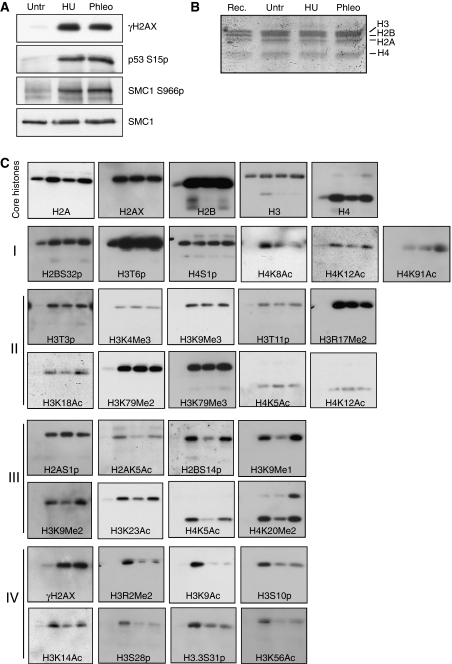
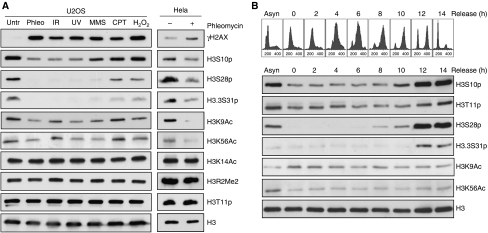
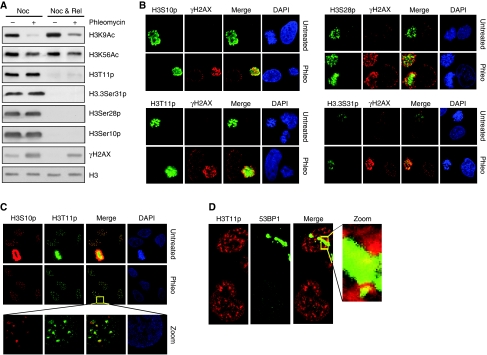
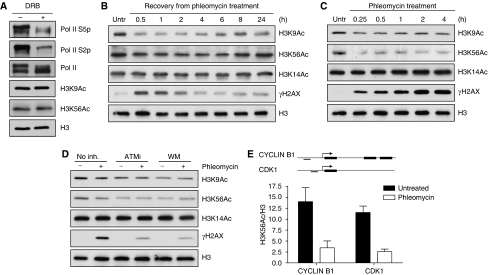
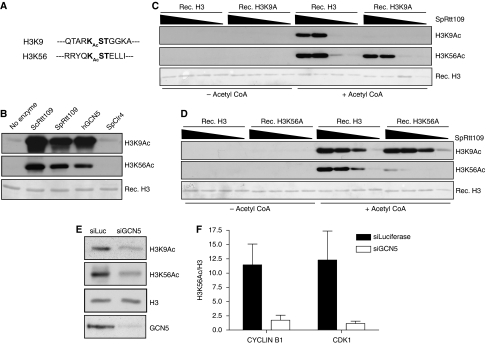
Recognition and repair of damaged DNA occurs within the context of chromatin. The key protein components of chromatin are histones, whose post-translational modifications control diverse chromatin functions. Here, we report our findings from a large-scale screen for DNA-damage-responsive histone modifications in human cells. We have identified specific phosphorylations and acetylations on histone H3 that decrease in response to DNA damage. Significantly, we find that DNA-damage-induced changes in H3S10p, H3S28p and H3.3S31p are a consequence of cell-cycle re-positioning rather than DNA damage per se. In contrast, H3K9Ac and H3K56Ac, a mark previously uncharacterized in human cells, are rapidly and reversibly reduced in response to DNA damage. Finally, we show that the histone acetyl-transferase GCN5/KAT2A acetylates H3K56 in vitro and in vivo. Collectively, our data indicate that though most histone modifications do not change appreciably after genotoxic stress, H3K9Ac and H3K56Ac are reduced in response to DNA damage in human cells.
Overview
The claims and statistics of this paper haven’t been checked yet.
Run the check — free, no account needed. It reads the open-access text and checks the sources it cites.
Integrity signals
Registry
Cites
Statistics
Figures
Verification
Claims the paper makes
The claims and statistics of this paper haven’t been checked yet.
Run the check — free, no account needed. It reads the open-access text and checks the sources it cites.
Claims other papers make about this one
Each is checked against this paper’s own text: does it say what the citing paper says it does?
In the citing paper
“we recently found that H3K9 and H3K56 acetylations (H3K9Ac and H3K56Ac) are negatively regulated by DNA damage20.”
From Human HDAC1 and HDAC2 function in the DNA-damage response to promote DNA nonhomologous end-joining (2010) · cites this paper as [20]
In the citing paper
“the observed decrease in H3K56Ac levels were not due to effects of DNA damage on cell-cycle distributions, as this histone mark is not cell cycle regulated20,35”
From Human HDAC1 and HDAC2 function in the DNA-damage response to promote DNA nonhomologous end-joining (2010) · cites this paper as [20]
Self-check
Percentages, sums and reported differences re-computed from the paper’s own numbers.
The self-check needs the paper’s full text.
Citations
Cites
Chromatin modifications and their function
Kouzarides, T. (2007) · Cell · doi:10.1016/j.cell.2007.02.005 · Cited by 10,883
DNA double-stranded breaks induce histone H2AX phosphorylation on serine 139
Rogakou, E. P., Pilch, D. R., Orr, A. H., Ivanova, V. S., & Bonner, W. M. (1998) · Journal of Biological Chemistry · doi:10.1074/jbc.273.10.5858 · Cited by 5,438
ATM and ATR Substrate Analysis Reveals Extensive Protein Networks Responsive to DNA Damage
Matsuoka, S., Ballif, B. A., Smogorzewska, A., McDonald, E. R., Hurov, K. E., Luo, J., Bakalarski, C. E., Zhao, Z., Solimini, N., Lerenthal, Y., et al. (2007) · Science · doi:10.1126/science.1140321 · Cited by 3,075
Checkpoints: Controls That Ensure the Order of Cell Cycle Events
Hartwell, L. H., & Weinert, T. A. (1989) · Science · doi:10.1126/science.2683079 · Cited by 3,053
The complex language of chromatin regulation during transcription
Berger, S. L. (2007) · Nature · doi:10.1038/nature05915 · Cited by 2,768
Combinatorial patterns of histone acetylations and methylations in the human genome
Wang, Z., Zang, C., Rosenfeld, J. A., Schones, D. E., Barski, A., Cuddapah, S., Cui, K., Roh, T.-Y., Peng, W., Zhang, M. Q., et al. (2008) · Nature Genetics · doi:10.1038/ng.154 · Cited by 2,331
The DNA Damage Response: Ten Years After
Harper, J. W., & Elledge, S. J. (2007) · Molecular Cell · doi:10.1016/j.molcel.2007.11.015 · Cited by 1,705
Functions of Site-Specific Histone Acetylation and Deacetylation
Shahbazian, M. D., & Grunstein, M. (2007) · Annual Review of Biochemistry · doi:10.1146/annurev.biochem.76.052705.162114 · Cited by 1,635
Hickson, I., Zhao, Y., Richardson, C. J., Green, S. J., Martin, N. M. B., Orr, A. I., Reaper, P. M., Jackson, S. P., Curtin, N. J., & Smith, G. C. M. (2004) · Cancer Research · doi:10.1158/0008-5472.can-04-2727 · Cited by 1,220
Self-citationPartitioning and Plasticity of Repressive Histone Methylation States in Mammalian Chromatin
Peters, A. H. F. M., Kubicek, S., Mechtler, K., O’Sullivan, R. J., Derijck, A. A. H. A., Perez-Burgos, L., Kohlmaier, A., Opravil, S., Tachibana, M., Shinkai, Y., et al. (2003) · Molecular Cell · doi:10.1016/s1097-2765(03)00477-5 · Cited by 1,208
Cited by
Sorted by citations
Regulation of chromatin by histone modifications
Bannister, A. J., & Kouzarides, T. (2011) · Cell Research · doi:10.1038/cr.2011.22 · Cited by 6,012
Lateral Thinking: How Histone Modifications Regulate Gene Expression
Lawrence, M., Daujat, S., & Schneider, R. (2015) · Trends in Genetics · doi:10.1016/j.tig.2015.10.007 · Cited by 967
Jin, Q., Yu, L., Wang, L., Zhang, Z., Kasper, L. H., Lee, J., Wang, C., Brindle, P. K., Dent, S. Y. R., & Ge, K. (2011) · The EMBO Journal · doi:10.1038/emboj.2010.318 · Cited by 877
Chromatin structure and the inheritance of epigenetic information
Margueron, R., & Reinberg, D. (2010) · Nature Reviews Genetics · doi:10.1038/nrg2752 · Cited by 761
Human HDAC1 and HDAC2 function in the DNA-damage response to promote DNA nonhomologous end-joining
Miller, K. M., Tjeertes, J. V., Coates, J., Legube, G., Polo, S. E., Britton, S., & Jackson, S. P. (2010) · Nature Structural & Molecular Biology · doi:10.1038/nsmb.1899 · Cited by 629
Self-citationPoly(ADP-ribose)–Dependent Regulation of DNA Repair by the Chromatin Remodeling Enzyme ALC1
Ahel, D., Hořejší, Z., Wiechens, N., Polo, S. E., Garcia-Wilson, E., Ahel, I., Flynn, H., Skehel, M., West, S. C., Jackson, S. P., et al. (2009) · Science · doi:10.1126/science.1177321 · Cited by 588
Self-citationAnalysis of protein dynamics at active, stalled, and collapsed replication forksPreprint
Sirbu, B. M., Couch, F. B., Feigerle, J. T., Bhaskara, S., Hiebert, S. W., & Cortez, D. (2011) · Genes & Development · doi:10.1101/gad.2053211 · Cited by 445
Reduced histone biosynthesis and chromatin changes arising from a damage signal at telomeres
O'Sullivan, R. J., Kubicek, S., Schreiber, S. L., & Karlseder, J. (2010) · Nature Structural & Molecular Biology · doi:10.1038/nsmb.1897 · Cited by 416
Cell cycle-dependent deacetylation of telomeric histone H3 lysine K56 by human SIRT6
Michishita, E., McCord, R. A., Boxer, L. D., Barber, M. F., Hong, T., Gozani, O., & Chua, K. F. (2009) · Cell Cycle · doi:10.4161/cc.8.16.9367 · Cited by 384
SIRT6 recruits SNF2H to DNA break sites, preventing genomic instability through chromatin remodeling
Toiber, D., Erdel, F., Bouazoune, K., Silberman, D. M., Zhong, L., Mulligan, P., Sebastian, C., Cosentino, C., Martinez-Pastor, B., Giacosa, S., et al. (2013) · Molecular Cell · doi:10.1016/j.molcel.2013.06.018 · Cited by 381
Quantitative Proteomic Analysis of Histone Modifications
Huang, H., Lin, S., Garcia, B. A., & Zhao, Y. (2015) · Chemical Reviews · doi:10.1021/cr500491u · Cited by 383
β- N -acetylglucosamine (O-GlcNAc) is part of the histone code
Sakabe, K., Wang, Z., & Hart, G. W. (2010) · Proceedings of the National Academy of Sciences · doi:10.1073/pnas.1009023107 · Cited by 387
Thompson, L. H. (2012) · Mutation Research/Reviews in Mutation Research · doi:10.1016/j.mrrev.2012.06.002 · Cited by 357
Sharma, G. G., So, S., Gupta, A. K. D., Kumar, R., Cayrou, C., Avvakumov, N., Bhadra, U., PANDITA, R. K., Porteus, M. H., Chen, D. J., et al. (2010) · Molecular and Cellular Biology · doi:10.1128/mcb.01476-09 · Cited by 329
Füllgrabe, J., Kavanagh, E. T., & Joseph, B. (2011) · Oncogene · doi:10.1038/onc.2011.121 · Cited by 322
Goodarzi, A. A., Jeggo, P., & Lobrich, M. (2010) · DNA Repair · doi:10.1016/j.dnarep.2010.09.013 · Cited by 305
Ogiwara, H., Ui, A., Otsuka, A., Satoh, H., Yokomi, I., Nakajima, S., Yasui, A., Yokota, J., & Kohno, T. (2011) · Oncogene · doi:10.1038/onc.2010.592 · Cited by 320
Manifestations and mechanisms of stem cell aging
Liu, L. A., & Rando, T. A. (2011) · The Journal of Cell Biology · doi:10.1083/jcb.201010131 · Cited by 318
Histone deacetylase 1 (HDAC1), but not HDAC2, controls embryonic stem cell differentiation
Dovey, O. M., Foster, C. T., & Cowley, S. M. (2010) · Proceedings of the National Academy of Sciences · doi:10.1073/pnas.1000478107 · Cited by 298
Nuclear Acetyl-CoA Production by ACLY Promotes Homologous Recombination
Sivanand, S., Rhoades, S., Jiang, Q., Lee, J. V., Benci, J., Zhang, J., Yuan, S., Viney, I., Zhao, S., Carrer, A., et al. (2017) · Molecular Cell · doi:10.1016/j.molcel.2017.06.008 · Cited by 295
Lee, H.-S., Park, J., Kim, S., Kwon, S.-J., & Kwon, J. (2010) · The EMBO Journal · doi:10.1038/emboj.2010.27 · Cited by 269
Multiple faces of the SAGA complex
Koutelou, E., Hirsch, C. L., & Dent, S. (2010) · Current Opinion in Cell Biology · doi:10.1016/j.ceb.2010.03.005 · Cited by 276
Chromatin dynamics: Interplay between remodeling enzymes and histone modifications
Swygert, S. G., & Peterson, C. L. (2014) · Biochimica et Biophysica Acta (BBA) - Gene Regulatory Mechanisms · doi:10.1016/j.bbagrm.2014.02.013 · Cited by 275
Goodarzi, A. A., Kurka, T., & Jeggo, P. A. (2011) · Nature Structural & Molecular Biology · doi:10.1038/nsmb.2077 · Cited by 255
The sirtuin SIRT6 deacetylates H3 K56Ac in vivo to promote genomic stability
Yang, B., Zwaans, B. M. M., Eckersdorff, M., & Lombard, D. B. (2009) · Cell Cycle · doi:10.4161/cc.8.16.9329 · Cited by 254
Chromatin and the genome integrity network
Papamichos‐Chronakis, M., & Peterson, C. L. (2012) · Nature Reviews Genetics · doi:10.1038/nrg3345 · Cited by 257
Crosstalk between chromatin state and DNA damage response in cellular senescence and cancer.
Sulli, G., Di Micco, R., & di Fagagna, F. D. (2012) · Nature Reviews Cancer · doi:10.1038/nrc3344 · Cited by 238
Tip60: Connecting chromatin to DNA damage signaling
Sun, Y., Jiang, X., & Price, B. D. (2010) · Cell Cycle · doi:10.4161/cc.9.5.10931 · Cited by 230
Ionizing radiation biomarkers for potential use in epidemiological studies
Pernot, E., Hall, J. A., Baatout, S., Benotmane, M. A., Blanchardon, E., Bouffler, S. D., Saghire, H. E., Gomolka, M., Guertler, A., Harms‐Ringdahl, M., et al. (2012) · Mutation Research/Reviews in Mutation Research · doi:10.1016/j.mrrev.2012.05.003 · Cited by 215
Lysine-Specific Demethylase 1 Regulates the Embryonic Transcriptome and CoREST Stability
Foster, C. T., Dovey, O. M., Lezina, L., Luo, J., Gant, T. W., Barlev, N. A., Bradley, A., & Cowley, S. M. (2010) · Molecular and Cellular Biology · doi:10.1128/mcb.00521-10 · Cited by 198
Multiple roles of class I HDACs in proliferation, differentiation, and development
Reichert, N., Choukrallah, M.-A., & Matthias, P. (2012) · Cellular and Molecular Life Sciences · doi:10.1007/s00018-012-0921-9 · Cited by 194
Sundar, I. K., Yao, H., & Rahman, I. (2012) · Antioxidants and Redox Signaling · doi:10.1089/ars.2012.4863 · Cited by 201
The histone shuffle: histone chaperones in an energetic dance
Das, C., Tyler, J. K., & Churchill, M. E. A. (2010) · Trends in Biochemical Sciences · doi:10.1016/j.tibs.2010.04.001 · Cited by 185
Cancers with wrong HATs: the impact of acetylation
Di Cerbo, V., & Schneider, R. (2013) · Briefings in Functional Genomics · doi:10.1093/bfgp/els065 · Cited by 178
Epigenetic Modifications in Double-Strand Break DNA Damage Signaling and Repair
Rossetto, D., Truman, A. W., Kron, S. J., & Côté, J. (2010) · Clinical Cancer Research · doi:10.1158/1078-0432.ccr-10-0513 · Cited by 183
p300-mediated Acetylation of Histone H3 Lysine 56 Functions in DNA Damage Response in Mammals
Vempati, R. K., Jayani, R. S., Notani, D., Sengupta, A., Galande, S., & Haldar, D. (2010) · Journal of Biological Chemistry · doi:10.1074/jbc.m110.149393 · Cited by 177
Chlamydia Infection Promotes Host DNA Damage and Proliferation but Impairs the DNA Damage Response
Chumduri, C., Gurumurthy, R. K., Zadora, P. K., Mi, Y., & Meyer, T. F. (2013) · Cell Host & Microbe · doi:10.1016/j.chom.2013.05.010 · Cited by 174
Mammalian DNA repair: HATs and HDACs make their mark through histone acetylation
Gong, F., & Miller, K. M. (2013) · Mutation research. Fundamental and molecular mechanisms of mutagenesis · doi:10.1016/j.mrfmmm.2013.07.002 · Cited by 175
Self-citationGCN5 and E2F1 stimulate nucleotide excision repair by promoting H3K9 acetylation at sites of damage
Guo, R. R., Chen, J., Mitchell, D. L., & Johnson, D. G. (2010) · Nucleic Acids Research · doi:10.1093/nar/gkq983 · Cited by 168
A Role for Gcn5 in Replication-Coupled Nucleosome Assembly
Burgess, R. J., Zhou, H., Han, J., & Zhang, Z. (2010) · Molecular Cell · doi:10.1016/j.molcel.2010.01.020 · Cited by 164
Modulation of histone H3 lysine 56 acetylation as an antifungal therapeutic strategy
Wurtele, H., Tsao, S., Lépine, G., Mullick, A., Tremblay, J., Drogaris, P., Lee, E.-H., Thibault, P., Verreault, A., & Raymond, M. (2010) · Nature Medicine · doi:10.1038/nm.2175 · Cited by 157
Niu, J., Shi, Y., Tan, G., Yang, C. H., Fan, M., Pfeffer, L. M., & Wu, Z. (2012) · Journal of Biological Chemistry · doi:10.1074/jbc.m112.355495 · Cited by 157
RetractedEpigenetics, DNA damage, and aging
Soto-Palma, C., Niedernhofer, L. J., Faulk, C. D., & Dong, X. (2022) · Journal of Clinical Investigation · doi:10.1172/jci158446 · Cited by 160
Young, L. C., McDonald, D., & Hendzel, M. J. (2013) · Journal of Biological Chemistry · doi:10.1074/jbc.m113.491514 · Cited by 151
Chromatin and the DNA damage response: The cancer connection
Luijsterburg, M. S., & van Attikum, H. (2011) · Molecular Oncology · doi:10.1016/j.molonc.2011.06.001 · Cited by 148
Histone Modifications and DNA Double-Strand Break Repair after Exposure to Ionizing Radiations
Hunt, C. R., Ramnarain, D. B., Horikoshi, N., Iyengar, P., PANDITA, R. K., Shay, J. W., & Pandita, T. K. (2013) · Radiation Research · doi:10.1667/rr3308.2 · Cited by 152
Editing the Epigenome: Reshaping the Genomic Landscape
Holtzman, L., & Gersbach, C. A. (2018) · Annual Review of Genomics and Human Genetics · doi:10.1146/annurev-genom-083117-021632 · Cited by 147
Dovey, O. M., Foster, C. T., Conte, N., Edwards, S. A., Edwards, J. M., Singh, R., Vassiliou, G. S., Bradley, A., & Cowley, S. M. (2013) · Blood · doi:10.1182/blood-2012-07-441949 · Cited by 143
Targeting epigenetic regulators as a promising avenue to overcome cancer therapy resistance
Song, J., Yang, P. X., Chen, C., Ding, W., Tillement, O., Bai, H., & Zhang, S. (2025) · Signal Transduction and Targeted Therapy · doi:10.1038/s41392-025-02266-z · Cited by 159
Acetylation Reader Proteins: Linking Acetylation Signaling to Genome Maintenance and Cancer
Gong, F., Chiu, L.-Y., & Miller, K. M. (2016) · PLoS Genetics · doi:10.1371/journal.pgen.1006272 · Cited by 137
Self-citationStructural basis for recognition of H3K56-acetylated histone H3–H4 by the chaperone Rtt106
Su, D., Hu, Q., Li, Q., Thompson, J. R., Cui, G., Fazly, A., Davies, B. A., Botuyan, M. V., Zhang, Z., & Mer, G. (2012) · Nature · doi:10.1038/nature10861 · Cited by 128
Functions of SAGA in development and disease
Wang, L., & Dent, S. (2014) · Epigenomics · doi:10.2217/epi.14.22 · Cited by 133
The Chromatin Response to DNA Breaks: Leaving a Mark on Genome Integrity
Smeenk, G., & van Attikum, H. (2013) · Annual Review of Biochemistry · doi:10.1146/annurev-biochem-061809-174504 · Cited by 135
Histone H3 Lysine 56 Methylation Regulates DNA Replication through Its Interaction with PCNA
Yu, Y., Song, C., Zhang, Q., DiMaggio, P. A., Garcia, B. A., York, A. G., Carey, M., & Grunstein, M. R. (2012) · Molecular Cell · doi:10.1016/j.molcel.2012.01.019 · Cited by 132
Carter, R. J., Nickson, C. M., Thompson, J. M., Kacperek, A., Hill, M. A., & Parsons, J. L. (2017) · International Journal of Radiation Oncology*Biology*Physics · doi:10.1016/j.ijrobp.2017.11.012 · Cited by 123
Prieur, A., Besnard, E., Babled, A., & Lemaitre, J.-M. (2011) · Nature Communications · doi:10.1038/ncomms1473 · Cited by 117
Sundar, I. K., Nevid, M. Z., Friedman, A. E., & Rahman, I. (2013) · Journal of Proteome Research · doi:10.1021/pr400998n · Cited by 115
Interplay of Histone Marks with Serine ADP-Ribosylation
Bartlett, E. J., Bonfiglio, J. J., Prokhorova, E. A., Colby, T., Zobel, F., Ahel, I., & Matić, I. (2018) · Cell Reports · doi:10.1016/j.celrep.2018.08.092 · Cited by 107
Li, Q., Fazly, A., Zhou, H., Huang, S., Zhang, Z., & Stillman, B. (2009) · PLoS Genetics · doi:10.1371/journal.pgen.1000684 · Cited by 108
Interaction of BARD1 and HP1 Is Required for BRCA1 Retention at Sites of DNA Damage
Wu, W., Nishikawa, H., Fukuda, T., Vittal, V., Asano, M., Miyoshi, Y., Klevit, R. E., & Ohta, T. (2015) · Cancer Research · doi:10.1158/0008-5472.can-14-2796 · Cited by 109
Differential effects of garcinol and curcumin on histone and p53 modifications in tumour cells
Collins, H. M., Abdelghany, M. K., Messmer, M., Yue, B., Deeves, S. E., Kindle, K. B., Mantelingu, K., Aslam, A., Winkler, G. S., Kundu, T. K., et al. (2013) · BMC Cancer · doi:10.1186/1471-2407-13-37 · Cited by 96
Assembling chromatin: The long and winding road
Annunziato, A. T. (2011) · Biochimica et Biophysica Acta (BBA) - Gene Regulatory Mechanisms · doi:10.1016/j.bbagrm.2011.07.005 · Cited by 93
Preserving genome integrity and function: the DNA damage response and histone modifications
Kim, J. J., Lee, S. Y., & Miller, K. M. (2019) · Critical Reviews in Biochemistry and Molecular Biology · doi:10.1080/10409238.2019.1620676 · Cited by 96
Self-citationTalukdar, P. D., & Chatterji, U. (2023) · Signal Transduction and Targeted Therapy · doi:10.1038/s41392-023-01651-w · Cited by 103
Sirtuins and DNA damage repair: SIRT7 comes to play
Vázquez, B. N., Thackray, J. K., & Serrano, L. (2017) · Nucleus · doi:10.1080/19491034.2016.1264552 · Cited by 96
Wolf–Hirschhorn syndrome candidate 1 is involved in the cellular response to DNA damage
Hajdú, I., Ciccia, A., Lewis, S. M., & Elledge, S. J. (2011) · Proceedings of the National Academy of Sciences · doi:10.1073/pnas.1110081108 · Cited by 92
Leung, J. W. C., Agarwal, P., Canny, M. D., Gong, F., Robison, A. D., Finkelstein, I. J., Durocher, D., & Miller, K. M. (2014) · PLoS Genetics · doi:10.1371/journal.pgen.1004178 · Cited by 93
Self-citationAn Overview of Chromatin-Regulating Proteins in Cells
Zhang, P., Torres, K. E., Liu, X., Liu, C.-G., & Pollock, R. E. (2016) · Current Protein and Peptide Science · doi:10.2174/1389203717666160122120310 · Cited by 91
Acetylation blocks DNA damage–induced chromatin ADP-ribosylation
Liszczak, G., Diehl, K. L., Dann, G. P., & Muir, T. W. (2018) · Nature Chemical Biology · doi:10.1038/s41589-018-0097-1 · Cited by 90
Histone H3 Lysine 56 Acetylation and the Response to DNA Replication Fork Damage
Würtele, H., Kaiser, G. S., Bacal, J., St-Hilaire, E., Lee, E. H., Tsao, S., Dorn, J. F., Maddox, P. S., Lisby, M., Pasero, P., et al. (2011) · Molecular and Cellular Biology · doi:10.1128/mcb.05415-11 · Cited by 93
Muñoz-Galván, S., Jimeno, S., Rothstein, R. J., & Aguilera, A. (2013) · PLoS Genetics · doi:10.1371/journal.pgen.1003237 · Cited by 89
Epigenetics in radiation-induced fibrosis
Weigel, C., Schmezer, P., Plass, C., & Popanda, O. (2014) · Oncogene · doi:10.1038/onc.2014.145 · Cited by 91
Histone marks: repairing DNA breaks within the context of chromatin
Miller, K. M., & Jackson, S. P. (2012) · Biochemical Society Transactions · doi:10.1042/bst20110747 · Cited by 91
Self-citationFunctions of Ubiquitin and SUMO in DNA Replication and Replication Stress
García‐Rodríguez, N., Wong, R. P. C., & Ulrich, H. D. (2016) · Frontiers in Genetics · doi:10.3389/fgene.2016.00087 · Cited by 90
Ubiquitin‐Activated Interaction Traps (UBAITs) identify E3 ligase binding partners
O’Connor, H. F., Lyon, N., Leung, J. W. C., Agarwal, P., Swaim, C. D., Miller, K. M., & Huibregtse, J. M. (2015) · EMBO Reports · doi:10.15252/embr.201540620 · Cited by 86
Self-citationDrogaris, P., Villeneuve, V., Pomiès, C., Lee, E. H., Bourdeau, V., Bonneil, É., Ferbeyre, G., Verreault, A., & Thibault, P. (2012) · Scientific Reports · doi:10.1038/srep00220 · Cited by 83
Meng, F., Qian, M., Peng, B., Peng, L., Wang, X., ZHENG, K. C., Liu, Z., Tang, X., Zhang, S., Sun, S., et al. (2020) · eLife · doi:10.7554/elife.55828 · Cited by 83
Selective Inhibition of HDAC1 and HDAC2 as a Potential Therapeutic Option for B-ALL
Stubbs, M. C., Kim, W.-I., Bariteau, M. A., Davis, T. N., Vempati, S., Minehart, J. C., Witkin, M. D., Qi, J., Krivtsov, A. V., Bradner, J. E., et al. (2015) · Clinical Cancer Research · doi:10.1158/1078-0432.ccr-14-1290 · Cited by 82
Bo, S., Togliatto, G., Gambino, R., Ponzo, V., Lombardo, G., Rosato, R., Cassader, M., & Brizzi, M. F. (2018) · Acta Diabetologica · doi:10.1007/s00592-017-1097-4 · Cited by 89
Kebede, A. F., Schneider, R., & Daujat, S. (2014) · FEBS Journal · doi:10.1111/febs.13047 · Cited by 89
Opposing ISWI- and CHD-class chromatin remodeling activities orchestrate heterochromatic DNA repair
Klement, K., Luijsterburg, M. S., Pinder, J. B., Cena, C. S., Nero, V. D., Wintersinger, C. M., Dellaire, G., van Attikum, H., & Goodarzi, A. A. (2014) · The Journal of Cell Biology · doi:10.1083/jcb.201405077 · Cited by 79
EGFR Modulates DNA Synthesis and Repair through Tyr Phosphorylation of Histone H4
Chou, R., Wang, Y., Hsieh, Y., Li, L., Xia, W., Chang, W., Chang, L., Cheng, C.-C., Lai, C., Hsu, J. L., et al. (2014) · Developmental Cell · doi:10.1016/j.devcel.2014.06.008 · Cited by 78
Wang, L., Xu, Z., Khawar, M. B., Liu, C., & Li, W. (2017) · Reproduction · doi:10.1530/rep-17-0153 · Cited by 78
SUMO, a small, but powerful, regulator of double-strand break repair
Garvin, A. J., & Morris, J. R. (2017) · Philosophical Transactions of the Royal Society B Biological Sciences · doi:10.1098/rstb.2016.0281 · Cited by 73
Epigenetic regulation of genomic integrity
Deem, A. K., Li, X., & Tyler, J. K. (2012) · Chromosoma · doi:10.1007/s00412-011-0358-1 · Cited by 78
Jack, A. P. M., Bussemer, S., Hahn, M., Pünzeler, S., Snyder, M., Wells, M. B., Csankovszki, G., Solovei, I. V., Schotta, G., & Hake, S. B. (2013) · PLoS ONE · doi:10.1371/journal.pone.0051765 · Cited by 73
ASF1A and ATM regulate H3K56-mediated cell-cycle checkpoint recovery in response to UV irradiation
Battu, A., Ray, A., & Wani, A. A. (2011) · Nucleic Acids Research · doi:10.1093/nar/gkr523 · Cited by 77
Busato, F., Khouzai, B. E., & Mognato, M. (2022) · International Journal of Molecular Sciences · doi:10.3390/ijms231810211 · Cited by 75
Histone modifications: crucial elements for damage response and chromatin restoration
Zhu, Q., & Wani, A. A. (2010) · Journal of Cellular Physiology · doi:10.1002/jcp.22060 · Cited by 72
Transcriptional Regulation at DSBs: Mechanisms and Consequences
Machour, F. E., & Ayoub, N. (2020) · Trends in Genetics · doi:10.1016/j.tig.2020.01.001 · Cited by 68
Epigenetic Control of Cytokine Gene Expression
Falvo, J. V., Jasenosky, L. D., Kruidenier, L., & Goldfeld, A. E. (2013) · Advances in immunology · doi:10.1016/b978-0-12-407708-9.00002-9 · Cited by 69
p53 promotes repair of heterochromatin DNA by regulating JMJD2b and SUV39H1 expression
Zheng, H., Chen, L., Pledger, W. J., Fang, J., & Chen, J. (2013) · Oncogene · doi:10.1038/onc.2013.6 · Cited by 69
Liang, S., Jin, Y.-X., Yuan, B., Zhang, J., & Kim, N. (2017) · Scientific Reports · doi:10.1038/s41598-017-11161-9 · Cited by 64
Carrivain, P., Cournac, A., Lavelle, C., Lesne, A., Mozziconacci, J., Paillusson, F., Signon, L., Victor, J., & Barbi, M. (2012) · Soft Matter · doi:10.1039/c2sm25789k · Cited by 64
Sundar, I. K., & Rahman, I. (2016) · American Journal of Physiology-Lung Cellular and Molecular Physiology · doi:10.1152/ajplung.00253.2016 · Cited by 62
Sharda, A., Rashid, M., Shah, S. G., Sharma, A. K., Singh, S. R., Gera, P. B., Krishna, C. M., & Gupta, S. (2020) · Clinical Epigenetics · doi:10.1186/s13148-019-0800-4 · Cited by 62
Histone acetylation dynamics in repair of DNA double-strand breaks
Aricthota, S., Rana, P. P., & Haldar, D. (2022) · Frontiers in Genetics · doi:10.3389/fgene.2022.926577 · Cited by 67
Functional Roles of Bromodomain Proteins in Cancer
Boyson, S. P., Gao, C., Quinn, K. M., Boyd, J. R., Paculová, H., Frietze, S. E., & Glass, K. C. (2021) · Cancers · doi:10.3390/cancers13143606 · Cited by 59
Seiler, D. M., Rouquette, J., Schmid, V. J., Strickfaden, H., Ottmann, C., Drexler, G. A., Mazurek, B., Greubel, C., Hable, V., Dollinger, G., et al. (2011) · Chromosome Research · doi:10.1007/s10577-011-9244-1 · Cited by 64
Reading chromatin signatures after DNA double-strand breaks
Wilson, M. D., & Durocher, D. (2017) · Philosophical Transactions of the Royal Society B Biological Sciences · doi:10.1098/rstb.2016.0280 · Cited by 60
Metadata
- Authors
- Tjeertes, J. V., Miller, K. M., & Jackson, S. P.
- Affiliations
- University of Cambridge (GB)
- Corresponding author
- Miller, Kyle M
- Jackson, Stephen P
- Venue
- The EMBO Journal
- Published
- 2009-04-30
- Volume
- 28
- Issue
- 13
- Pages
- 1878-1889
- ISSN
- 0261-4189 (ISSN-L)
- 1460-2075
- PMC
- PMC2684025
- OpenAlex
- W2046691617
- Cited by
- 347
- References
- 68
- Citations by year
- 2026: 7 · 2025: 10 · 2024: 21 · 2023: 15 · 2022: 16 · 2021: 18 · 2020: 14 · 2019: 17 · 2018: 13 · 2017: 21 · 2016: 21 · 2015: 22 · 2014: 20 · 2013: 31 · 2012: 31
- FWCI
- 13.54
- Type
- journal article
- Language
- en
- Open access
- hybrid
- doi.org
- Licence
- Locations
- The EMBO Journal (publishedVersion, cc-by-nc-nd)
- PubMed Central (publishedVersion, cc-by-nc-nd)
- PubMed (publishedVersion)
- Funders
- Wellcome Trust (086861/Z/08/Z, 086861)
- Cancer Research UK (A5290)
- Directorate for Biological Sciences
- Biotechnology and Biological Sciences Research Council
- Topics
- Life Sciences › Biochemistry, Genetics and Molecular Biology › Molecular Biology › Genomics and Chromatin Dynamics
- Life Sciences › Biochemistry, Genetics and Molecular Biology › Molecular Biology › DNA Repair Mechanisms
- Life Sciences › Biochemistry, Genetics and Molecular Biology › Molecular Biology › Epigenetics and DNA Methylation
- Keywords
- DNA damage response, histone modifications, H3K9 acetylation, H3K56 acetylation, histone acetylation, histone phosphorylation, histone acetyltransferase, chromatin, genotoxic stress
- MeSH terms
- p300-CBP-Associated Factor, Acetylation, Cell Cycle, DNA Damage, DNA Repair, HeLa Cells, Histones, Humans, Phosphorylation, Protein Processing, Post-Translational, Histone Code, Cell Line, Tumor, Histone Acetyltransferases
About these checks
Registry, retraction, Cites and statistics results are computed, not judged, with one exception: a printed reference that no index lists is read once by a model before it counts as a citation error. Claims are extracted by a model and kept only when their quote appears verbatim in the text; each cited source is then checked, with a model’s help, for whether it says what the claim relies on. Those verdicts can be wrong — read the claim’s quote and the cited source before relying on one.
Statistics and arithmetic are recomputed, not judged.
Confidence bands are shown only for fields calibrated on our annotated test set. None is calibrated yet, so no band is shown.
What counts as a claim ›How we measure confidence ›How we check this ›
Are you an author, or do you see a problem with this page? Request a review
