

Deep learning for small and big data in psychiatry
Open accessThe DOI matches its Crossref record; 171 of the 171 references it cites were found in a registry or an index.
Abstract
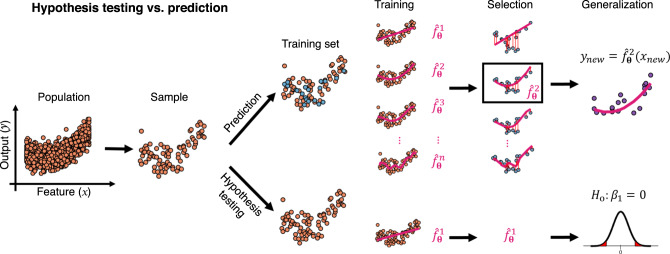
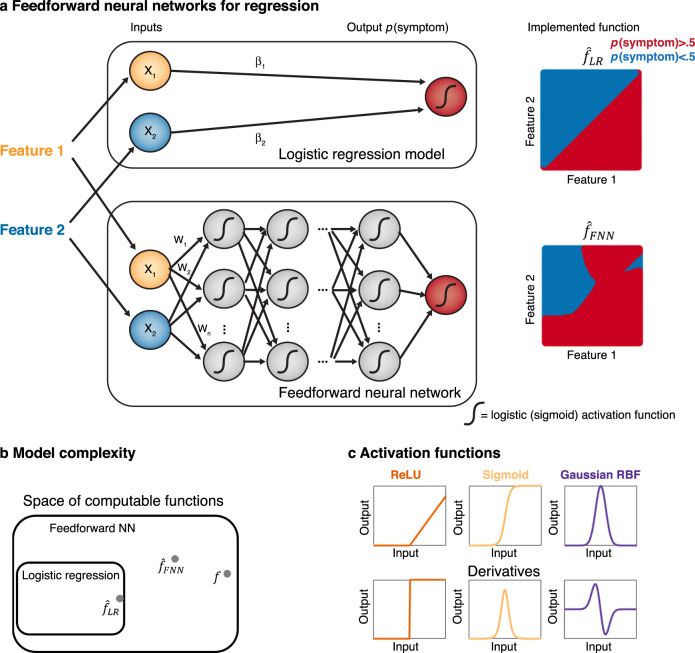
Psychiatry today must gain a better understanding of the common and distinct pathophysiological mechanisms underlying psychiatric disorders in order to deliver more effective, person-tailored treatments. To this end, it appears that the analysis of ‘small’ experimental samples using conventional statistical approaches has largely failed to capture the heterogeneity underlying psychiatric phenotypes. Modern algorithms and approaches from machine learning, particularly deep learning, provide new hope to address these issues given their outstanding prediction performance in other disciplines. The strength of deep learning algorithms is that they can implement very complicated, and in principle arbitrary predictor-response mappings efficiently. This power comes at a cost, the need for large training (and test) samples to infer the (sometimes over millions of) model parameters. This appears to be at odds with the as yet rather ‘small’ samples available in psychiatric human research to date (n < 10,000), and the ambition of predicting treatment at the single subject level (n = 1). Here, we aim at giving a comprehensive overview on how we can yet use such models for prediction in psychiatry. We review how machine learning approaches compare to more traditional statistical hypothesis-driven approaches, how their complexity relates to the need of large sample sizes, and what we can do to optimally use these powerful techniques in psychiatric neuroscience.
Overview
The claims and statistics of this paper haven’t been checked yet.
Free: it reads the open-access text and checks the first 5 claims that cite a source we can check. Create a free account to check every claim.
Integrity signals
Registry
Cites
Statistics
Figures
Verification
Claims the paper makes
The claims and statistics of this paper haven’t been checked yet.
Free: it reads the open-access text and checks the first 5 claims that cite a source we can check. Create a free account to check every claim.
Claims other papers make about this one
Each is checked against this paper’s own text: does it say what the citing paper says it does?
The source backs part of the claim, not all of it — or backs it for a different population, condition or comparison.
In the citing paper
“The most recently developed DL techniques have obtained good outstanding performance across a variety of applications, including audio and speech processing, visual data processing, natural language processing (NLP), among others [11–14].”
From Review of deep learning: concepts, CNN architectures, challenges, applications, future directions (2021) · cites this paper as [14]
Experimental — accuracy not yet measured
Self-check
Percentages, sums and reported differences re-computed from the paper’s own numbers.
The self-check needs the paper’s full text.
Citations
Cites
Very Deep Convolutional Networks for Large-Scale Image Recognition
Simonyan, K., & Zisserman, A. (2014) · arXiv · doi:10.48550/arxiv.1409.1556 · Cited by 114,148 · cited 1×
“…instance, rather than training a DNN from scratch on an object recognition task each time one faces a new problem setting, machine learners frequently make use of already publicly available trained DNN models like AlexNet [14] or VGGNet [151], and simply fi ne-tune parameters on their current task.”
ImageNet classification with deep convolutional neural networks
Krizhevsky, A., Sutskever, I., & Hinton, G. E. (2017) · Communications of the ACM · doi:10.1145/3065386 · Cited by 112,155
LeCun, Y., Bengio, Y., & Hinton, G. (2015) · Nature · doi:10.1038/nature14539 · Cited by 84,126
Gradient-based learning applied to document recognition
Lecun, Y., Bottou, L., Bengio, Y., & Haffner, P. (1998) · Proceedings of the IEEE · doi:10.1109/5.726791 · Cited by 58,805 · cited 1×
“…learning theory and determines model selection, recent empirical observations with DL models surprisingly suggest that once models are strongly over-fi t, beyond the point where a perfect match to the training data is obtained, they may actually lead to even better generalization [59 – 62].”
BackgroundRegression shrinkage and selection via the lasso
Tibshirani, R. (1996) · Journal of the Royal Statistical Society Series B: Statistical Methodology · doi:10.1111/j.2517-6161.1996.tb02080.x · Cited by 51,482 · cited 1×
“L1 and L2 regularizations are also often used even for simple linear regression models, where the former is known as the ‘ least absolute shrinkage and selection operator ’ [112], and the combination of L1 and L2 regularizatiosn has been termed ‘ elastic net ’ [113].”
BackgroundEstimating the Dimension of a Model
Schwarz, G. (1978) · The Annals of Statistics · doi:10.1214/aos/1176344136 · Cited by 47,033
Optimization by Simulated Annealing
Kirkpatrick, S., Gelatt, C. D., & Vecchi, M. P. (1983) · Science · doi:10.1126/science.220.4598.671 · Cited by 45,134
The Nature of Statistical Learning Theory
Vapnik, V. N. (1995) · doi:10.1007/978-1-4757-2440-0 · Cited by 39,138
(2014) · Cited by 33,419
(2008) · Journal of Machine Learning Research · Cited by 33,051
Learning representations by back-propagating errors
Rumelhart, D. E., Hinton, G. E., & Williams, R. J. (1986) · Nature · doi:10.1038/323533a0 · Cited by 31,892
The Elements of Statistical Learning
Hastie, T., Tibshirani, R., & Friedman, J. (2009) · Springer Series in Statistics · doi:10.1007/978-0-387-84858-7 · Cited by 25,970
Learning Phrase Representations using RNN Encoder–Decoder for Statistical Machine Translation
Cho, K., van Merrienboer, B., Gulcehre, C., Bahdanau, D., Bougares, F., Schwenk, H., & Bengio, Y. (2014) · Proceedings of the 2014 Conference on Empirical Methods in Natural Language Processing (EMNLP) · doi:10.3115/v1/d14-1179 · Cited by 25,545 · cited 1×
“Some in this sense, deep RNN architectures have been purpose designed to bridge long temporal delays, such as long short-term memory (LSTM) [15] or gated recurrent unit (GRU)-based networks [42].”
BackgroundPan, S. J., & Yang, Q. (2010) · IEEE Transactions on Knowledge and Data Engineering · doi:10.1109/tkde.2009.191 · Cited by 23,387
Book Review: Pattern Recognition and Machine Learning
Nasrabadi, N. M. (2007) · Journal of Electronic Imaging · doi:10.1117/1.2819119 · Cited by 22,066 · cited 3×
“…a statistical approach often entails that we have to treat the network ’ s hidden activation states as random variables as well, so-called latent variables [109], which implies that we often can only use approximations to the log-likelihood such as the so-called evidence lower bound [55, 110, 111].”
BackgroundMethodAdvances in neural information processing systems 7
Cios, K., & Shields, M. (1997) · Neurocomputing · doi:10.1016/s0925-2312(97)90018-7 · Cited by 22,059
Multilayer feedforward networks are universal approximators
Hornik, K., Stinchcombe, M., & White, H. (1989) · Neural Networks · doi:10.1016/0893-6080(89)90020-8 · Cited by 21,728
Regularization and Variable Selection Via the Elastic Net
Zou, H., & Hastie, T. (2005) · Journal of the Royal Statistical Society Series B: Statistical Methodology · doi:10.1111/j.1467-9868.2005.00503.x · Cited by 20,957
Auto-Encoding Variational Bayes
Kingma, D. P., & Welling, M. (2013) · arXiv · doi:10.48550/arxiv.1312.6114 · Cited by 20,067 · cited 1×
“However, a statistical approach often entails that we have to treat the network’s hidden activation states as random variables as well, so-called latent variables [109], which implies that we often can only use approximations to the loglikelihood such as the so-called evidence lower bound [55, 110, 111].”
BackgroundDeep learning in neural networks: an overview
Schmidhuber, J. (2015) · Neural Networks · doi:10.1016/j.neunet.2014.09.003 · Cited by 18,570
Information Theory and an Extension of the Maximum Likelihood Principle
Akaike, H. (1998) · Springer Series in Statistics · doi:10.1007/978-1-4612-1694-0_15 · Cited by 17,781
A fast learning algorithm for deep belief nets
Hinton, G. E., Osindero, S., & Teh, Y.-W. (2006) · Neural Computation · doi:10.1162/neco.2006.18.7.1527 · Cited by 16,336
Visualizing and understanding convolutional networks
Zeiler, M. D., & Fergus, R. (2014) · Lecture Notes in Computer Science · doi:10.1007/978-3-319-10590-1_53 · Cited by 15,839
A survey on deep learning in medical image analysis
Litjens, G., Kooi, T., Bejnordi, B. E., Setio, A. A. A., Ciompi, F., Ghafoorian, M., van der Laak, J. A. W. M., van Ginneken, B., & Sánchez, C. I. (2017) · Medical Image Analysis · doi:10.1016/j.media.2017.07.005 · Cited by 15,332
Nonlinear Dimensionality Reduction by Locally Linear Embedding
Roweis, S. T., & Saul, L. K. (2000) · Science · doi:10.1126/science.290.5500.2323 · Cited by 14,965
Dermatologist-level classification of skin cancer with deep neural networks
Esteva, A., Kuprel, B., Novoa, R. A., Ko, J., Swetter, S. M., Blau, H. M., & Thrun, S. (2017) · Nature · doi:10.1038/nature21056 · Cited by 14,362
The Proceedings of the National Academy of Sciences
Richards, J. W. (1915) · Science · doi:10.1126/science.42.1074.161 · Cited by 13,983
Approximation by superpositions of a sigmoidal function
Cybenko, G. (1989) · Mathematics of Control, Signals, and Systems · doi:10.1007/bf02551274 · Cited by 13,883
A Global Geometric Framework for Nonlinear Dimensionality Reduction
Tenenbaum, J. B., Silva, V. D., & Langford, J. C. (2000) · Science · doi:10.1126/science.290.5500.2319 · Cited by 13,585
(2016) · Cited by 11,679
Cross validatory choice and assessment of statistical predictions
Stone, M. (1974) · Journal of the Royal Statistical Society Series B: Statistical Methodology · doi:10.1111/j.2517-6161.1974.tb00994.x · Cited by 10,881 · cited 1×
“CV could be used to either select a model or assess the out-ofsample PE [54, 76], but cannot be used for both simultaneously.”
MethodExplaining and Harnessing Adversarial Examples
Goodfellow, I. J., Shlens, J., & Szegedy, C. (2014) · arXiv · doi:10.48550/arxiv.1412.6572 · Cited by 10,381 · cited 1×
“Adversarial training, on the other hand, directly attempts to fi nd weak spots in a model by searching for slight input perturbations which will cause large deviations in the output, and thus could ‘ fool ’ the model [128, 129].”
BackgroundLearning Deep Architectures for AI
Bengio, Y. (2009) · Foundations and Trends® in Machine Learning · doi:10.1561/2200000006 · Cited by 9,239
Mastering the game of Go without human knowledge
Silver, D., Schrittwieser, J., Simonyan, K., Antonoglou, I., Huang, A., Guez, A., Hubert, T., Baker, L., Lai, M., Bolton, A., et al. (2017) · Nature · doi:10.1038/nature24270 · Cited by 9,084
Multilayer feedforward networks are universal approximators
HornikK., StinchcombeM., & WhiteH. (1989) · Neural Networks · doi:10.5555/70405.70408 · Cited by 9,081
Speech recognition with deep recurrent neural networks
Graves, A., Mohamed, A.-R., & Hinton, G. (2013) · 2013 IEEE International Conference on Acoustics, Speech and Signal Processing · doi:10.1109/icassp.2013.6638947 · Cited by 8,893 · cited 1×
“For instance, deep neural networks (DNNs) are remarkably successful at tasks requiring object or scene recognition [12 – 14] and natural language processing [15, 16].”
BackgroundInsel, T., Cuthbert, B., Garvey, M., Heinssen, R., Pine, D. S., Quinn, K., Sanislow, C., & Wang, P. (2010) · American Journal of Psychiatry · doi:10.1176/appi.ajp.2010.09091379 · Cited by 7,067
Regression and time series model selection in small samples
HURVICH, C. M., & TSAI, C.-L. (1989) · Biometrika · doi:10.1093/biomet/76.2.297 · Cited by 6,586
Rush, A. J., Trivedi, M. H., Wisniewski, S. R., Nierenberg, A. A., Stewart, J. W., Warden, D., Niederehe, G., Thase, M. E., Lavori, P. W., Lebowitz, B. D., et al. (2006) · American Journal of Psychiatry · doi:10.1176/ajp.2006.163.11.1905 · Cited by 5,643
An overview of gradient descent optimization algorithms
Ruder, S. (2016) · arXiv · doi:10.48550/arxiv.1609.04747 · Cited by 4,962
Learning Deep Architectures for AI
Bengio, Y. (2009) · now publishers, Inc. eBooks · doi:10.1561/9781601982957 · Cited by 4,941
On the approximate realization of continuous mappings by neural networks
Funahashi, K.-I. (1989) · Neural Networks · doi:10.1016/0893-6080(89)90003-8 · Cited by 4,206
Optimization as a Model for Few-Shot Learning
Ravi, S., & Larochelle, H. (2017) · International Conference on Learning Representations · Cited by 4,031
Bayesian Inference in Statistical Analysis.
Kadane, J. B., Box, G. E. P., & Tiao, G. C. (1975) · Journal of the American Statistical Association · doi:10.2307/2285412 · Cited by 3,824
Variational Inference: A Review for Statisticians
Blei, D. M., Kucukelbir, A., & McAuliffe, J. D. (2017) · Journal of the American Statistical Association · doi:10.1080/01621459.2017.1285773 · Cited by 3,811
SpecAugment: A Simple Data Augmentation Method for Automatic Speech Recognition
Park, D. S., Chan, W., Zhang, Y., Chiu, C.-C., Zoph, B., Cubuk, E. D., & Le, Q. V. (2019) · Interspeech 2019 · doi:10.21437/interspeech.2019-2680 · Cited by 3,558 · cited 1×
“For image data, this includes rotations, translations, rescaling, fl ipping, shearing, or stretching of the original images, or simply adding noise (see also [140 – 141] for speech recognition examples).”
Method5th International Conference on Learning Representations (ICLR 17)
Havrylov, S., & Titov, I. (2017) · Cited by 3,503
The Efficacy of Cognitive Behavioral Therapy: A Review of Meta-analyses
Hofmann, S. G., Asnaani, A., Vonk, I. J. J., Sawyer, A. T., & Fang, A. (2012) · Cognitive Therapy and Research · doi:10.1007/s10608-012-9476-1 · Cited by 3,445
Understanding deep learning requires rethinking generalization
Zhang, C., Bengio, S., Hardt, M., Recht, B., & Vinyals, O. (2016) · arXiv · doi:10.48550/arxiv.1611.03530 · Cited by 2,838
The Predictive Sample Reuse Method with Applications
Geisser, S. (1975) · Journal of the American Statistical Association · doi:10.1080/01621459.1975.10479865 · Cited by 2,748
Scalable and accurate deep learning with electronic health records
Rajkomar, A., Oren, E., Chen, K., Dai, A. M., Hajaj, N., Hardt, M., Liu, P. J., Liu, X., Marcus, J., Sun, M., et al. (2018) · npj Digital Medicine · doi:10.1038/s41746-018-0029-1 · Cited by 2,648
Proceedings of the 23rd international conference on Machine learning
Cohen, W. W., & Moore, A. (2006) · Cited by 2,647
Learning Hierarchical Features for Scene Labeling
Farabet, C., Couprie, C., Najman, L., & LeCun, Y. (2013) · IEEE Transactions on Pattern Analysis and Machine Intelligence · doi:10.1109/tpami.2012.231 · Cited by 2,620
Bias in error estimation when using cross-validation for model selection
Varma, S., & Simon, R. (2006) · BMC Bioinformatics · doi:10.1186/1471-2105-7-91 · Cited by 2,485
Stochastic Backpropagation and Approximate Inference in Deep Generative Models
Rezende, D. J., Mohamed, S., & Wierstra, D. (2014) · arXiv (Cornell University) · doi:10.48550/arxiv.1401.4082 · Cited by 2,405
Scalable and accurate deep learning with electronic health records.
Rajkomar, A., Oren, E., Chen, K., Dai, A. M., Hajaj, N., Hardt, M., Liu, P. J., Liu, X., Marcus, J., Sun, M., et al. (2018) · eScholarship (California Digital Library) · Cited by 2,242
Leshno, M., Lin, V. Y., Pinkus, A., & Schocken, S. (1993) · Neural Networks · doi:10.1016/s0893-6080(05)80131-5 · Cited by 2,121
Variational Inference: A Review for Statisticians
Blei, D. M., Kucukelbir, A., & McAuliffe, J. (2023) · Figshare · doi:10.6084/m9.figshare.5203696.v2 · Cited by 2,088
Variational Inference: A Review for Statisticians
Blei, D. M., Kucukelbir, A., & McAuliffe, J. (2017) · Figshare · doi:10.6084/m9.figshare.5203696 · Cited by 1,919
Bayesian Inference in Statistical Analysis
Hill, B. M. (1974) · Technometrics · doi:10.1080/00401706.1974.10489222 · Cited by 1,833
Reconciling modern machine-learning practice and the classical bias–variance trade-off
Belkin, M., Hsu, D., Ma, S., & Mandal, S. (2019) · Proceedings of the National Academy of Sciences · doi:10.1073/pnas.1903070116 · Cited by 1,595
Mitosis Detection in Breast Cancer Histology Images with Deep Neural Networks
Cireşan, D. C., Giusti, A., Gambardella, L. M., & Schmidhuber, J. (2013) · Lecture Notes in Computer Science · doi:10.1007/978-3-642-40763-5_51 · Cited by 1,536
Statistics versus machine learning
Bzdok, D., Altman, N., & Krzywinski, M. (2018) · Nature Methods · doi:10.1038/nmeth.4642 · Cited by 1,508
Learning to learn by gradient descent by gradient descent
Andrychowicz, M., Denil, M., Gomez, S., Hoffman, M. W., Pfau, D., Schaul, T., Shillingford, B., & de Freitas, N. (2016) · arXiv · doi:10.48550/arxiv.1606.04474 · Cited by 1,486 · cited 1×
“For instance, Andrychowicz et al. [157] demonstrate how the optimization procedure of a model can itself be optimized via gradient descent and thereby outperforms handcrafted optimization algorithms in many different settings.”
BackgroundIdentification of a Common Neurobiological Substrate for Mental Illness
Goodkind, M., Eickhoff, S. B., Oathes, D. J., Jiang, Y., Chang, A., Jones-Hagata, L. B., Ortega, B. N., Zaiko, Y. V., Roach, E. L., Korgaonkar, M. S., et al. (2015) · JAMA Psychiatry · doi:10.1001/jamapsychiatry.2014.2206 · Cited by 1,404
On the use of cross-validation for time series predictor evaluation
Bergmeir, C., & Benítez, J. M. (2012) · Information Sciences · doi:10.1016/j.ins.2011.12.028 · Cited by 1,292
Gamma, alpha, delta, and theta oscillations govern cognitive processes
Başar, E., Başar-Eroglu, C., Karakaş, S., & Schürmann, M. (2001) · International Journal of Psychophysiology · doi:10.1016/s0167-8760(00)00145-8 · Cited by 1,219
Building better biomarkers: brain models in translational neuroimaging
Woo, C.-W., Chang, L. J., Lindquist, M. A., & Wager, T. D. (2017) · Nature Neuroscience · doi:10.1038/nn.4478 · Cited by 1,056
Identification of autism spectrum disorder using deep learning and the ABIDE dataset
Heinsfeld, A. S., Franco, A. R., Craddock, R. C., Buchweitz, A., & Meneguzzi, F. (2018) · NeuroImage: Clinical · doi:10.1016/j.nicl.2017.08.017 · Cited by 1,016
Orrù, G., Pettersson-Yeo, W., Marquand, A. F., Sartori, G., & Mechelli, A. (2012) · Neuroscience & Biobehavioral Reviews · doi:10.1016/j.neubiorev.2012.01.004 · Cited by 1,012
Computational psychiatry as a bridge from neuroscience to clinical applications
Huys, Q. J. M., Maia, T. V., & Frank, M. J. (2016) · Nature Neuroscience · doi:10.1038/nn.4238 · Cited by 1,002
Hierarchical Feature Representation and Multimodal Fusion with Deep Learning for AD/MCI Diagnosis
Suk, H.-I., Lee, S.-W., & Shen, D. (2014) · NeuroImage · doi:10.1016/j.neuroimage.2014.06.077 · Cited by 968
Machine Learning Approaches for Clinical Psychology and Psychiatry
Dwyer, D. B., Falkai, P., & Koutsouleris, N. (2018) · Annual Review of Clinical Psychology · doi:10.1146/annurev-clinpsy-032816-045037 · Cited by 966
Guclu, U., & van Gerven, M. A. J. (2015) · Journal of Neuroscience · doi:10.1523/jneurosci.5023-14.2015 · Cited by 961
(2004) · doi:10.1177/0049124103262065 · Cited by 906
Meta-Learning in Neural Networks: A Survey
Hospedales, T. M., Antoniou, A., Micaelli, P., & Storkey, A. J. (2021) · IEEE Transactions on Pattern Analysis and Machine Intelligence · doi:10.1109/tpami.2021.3079209 · Cited by 886
Meta-Learning in Neural Networks: A Survey
Hospedales, T., Antoniou, A., Micaelli, P., & Storkey, A. (2020) · arXiv · doi:10.48550/arxiv.2004.05439 · Cited by 886
Cole, J. H., Poudel, R. P. K., Tsagkrasoulis, D., Caan, M. W. A., Steves, C., Spector, T. D., & Montana, G. (2017) · NeuroImage · doi:10.1016/j.neuroimage.2017.07.059 · Cited by 872
Stochastic Gradient Learning in Neural Networks
Bottou, L. (1991) · Cited by 817
Machine Learning for Precision Psychiatry: Opportunities and Challenges
Bzdok, D., & Meyer-Lindenberg, A. (2018) · Biological Psychiatry: Cognitive Neuroscience and Neuroimaging · doi:10.1016/j.bpsc.2017.11.007 · Cited by 796 · cited 2×
“In many empirical situations, and particularly in psychiatric research, this approach has not brought on the desired progress [27, 56].”
BackgroundMethodSelf-citationAssessing and tuning brain decoders: Cross-validation, caveats, and guidelines
Varoquaux, G., Raamana, P. R., Engemann, D. A., Hoyos-Idrobo, A., Schwartz, Y., & Thirion, B. (2017) · NeuroImage · doi:10.1016/j.neuroimage.2016.10.038 · Cited by 792
Leakage in data mining: Formulation, detection, and avoidance
Kaufman, S., Rosset, S., Perlich, C., & Stitelman, O. (2012) · ACM Transactions on Knowledge Discovery from Data · doi:10.1145/2382577.2382579 · Cited by 791
Applications of Deep Learning in Biomedicine
Mamoshina, P., Vieira, A., Lane, E., & Zhavoronkov, A. (2016) · Molecular Pharmaceutics · doi:10.1021/acs.molpharmaceut.5b00982 · Cited by 701
Vieira, S., Pinaya, W. H. L., & Mechelli, A. (2017) · Neuroscience & Biobehavioral Reviews · doi:10.1016/j.neubiorev.2017.01.002 · Cited by 656
Shin, H.-C., Tenenholtz, N. A., Rogers, J. K., Schwarz, C. G., Senjem, M. L., Gunter, J. L., Andriole, K. P., & Michalski, M. (2018) · Lecture Notes in Computer Science · doi:10.1007/978-3-030-00536-8_1 · Cited by 638
McTeague, L. M., Huemer, J., Carreon, D. M., Jiang, Y., Eickhoff, S. B., & Etkin, A. (2017) · American Journal of Psychiatry · doi:10.1176/appi.ajp.2017.16040400 · Cited by 635
(2014) · International Conference on Learning Representations · Cited by 634
What kinds of things are psychiatric disorders?
Kendler, K. S., Zachar, P., & Craver, C. (2011) · Psychological Medicine · doi:10.1017/s0033291710001844 · Cited by 617
Deep learning for neuroimaging: a validation study
Plis, S. M., Hjelm, D. R., Salakhutdinov, R., Allen, E. A., Bockholt, H. J., Long, J. D., Johnson, H. J., Paulsen, J. S., Turner, J. A., & Calhoun, V. D. (2014) · Frontiers in Neuroscience · doi:10.3389/fnins.2014.00229 · Cited by 586 · cited 2×
“It may therefore be more fruitful to provide the entire voxel level data to DNNs (e.g., [114, 131]).”
BackgroundBenign overfitting in linear regression
Bartlett, P. L., Long, P. M., Lugosi, G., & Tsigler, A. (2020) · Proceedings of the National Academy of Sciences · doi:10.1073/pnas.1907378117 · Cited by 547
Statistical inference for noisy nonlinear ecological dynamic systems
Wood, S. N. (2010) · Nature · doi:10.1038/nature09319 · Cited by 546
Calhoun, V. D., & Sui, J. (2016) · Biological Psychiatry: Cognitive Neuroscience and Neuroimaging · doi:10.1016/j.bpsc.2015.12.005 · Cited by 461
2004 IEEE International Conference on Acoustics, Speech, and Signal Processing (ICASSP'04)
仲地, 孝. (2004) · 電子情報通信学会誌 · Cited by 404
Predicting Alzheimer's disease: a neuroimaging study with 3D convolutional neural networks
Payan, A., & Montana, G. (2015) · arXiv (Cornell University) · doi:10.48550/arxiv.1502.02506 · Cited by 401 · cited 2×
“Models could be pre-trained on similar, or ideally perhaps even the same disorder as targeted in a current application, and then merely fi ne-tuned on the target data (see also [93, 155]).”
BackgroundMethodUnsupervised learning of hierarchical representations with convolutional deep belief networks
Lee, H., Grosse, R., Ranganath, R., & Ng, A. Y. (2011) · Communications of the ACM · doi:10.1145/2001269.2001295 · Cited by 388
Pathological brain detection based on AlexNet and transfer learning
Lu, S., Lu, Z., & Zhang, Y.-D. (2019) · Journal of Computational Science · doi:10.1016/j.jocs.2018.11.008 · Cited by 380
Proceedings of the 12th international conference on World Wide Web
Hencsey, G., & Association for Computing Machinery-Digital Library (2003) · Cited by 373
Kim, J., Calhoun, V. D., Shim, E., & Lee, J.-H. (2016) · NeuroImage · doi:10.1016/j.neuroimage.2015.05.018 · Cited by 354
Vocal Tract Length Perturbation (VTLP) improves speech recognition
Jaitly, N., & Hinton, E. (2013) · Cited by 348
DeepAD: Alzheimer’s Disease Classification via Deep Convolutional Neural Networks using MRI and fMRI
Sarraf, S., DeSouza, D. D., Anderson, J., Tofighi, G., & Initiativ, F. T. A. D. N. (2016) · bioRxiv (Cold Spring Harbor Laboratory) · doi:10.1101/070441 · Cited by 325
Zou, L., Zheng, J., Miao, C., Mckeown, M. J., & Wang, Z. J. (2017) · IEEE Access · doi:10.1109/access.2017.2762703 · Cited by 311
A small number of abnormal brain connections predicts adult autism spectrum disorder
Yahata, N., Morimoto, J., Hashimoto, R., Lisi, G., Shibata, K., Kawakubo, Y., Kuwabara, H., Kuroda, M., Yamada, T., Megumi, F., et al. (2016) · Nature Communications · doi:10.1038/ncomms11254 · Cited by 305
Hypoxia regulates global membrane protein endocytosis through caveolin-1 in cancer cells
Bourseau-Guilmain, E., Menard, J. A., Lindqvist, E., Indira Chandran, V., Christianson, H. C., Cerezo Magaña, M., Lidfeldt, J., Marko-Varga, G., Welinder, C., & Belting, M. (2016) · Nature Communications · doi:10.1038/ncomms11371 · Cited by 305
Predicting Polygenic Risk of Psychiatric Disorders
Martin, A. R., Daly, M. J., Robinson, E. B., Hyman, S. E., & Neale, B. M. (2019) · Biological Psychiatry · doi:10.1016/j.biopsych.2018.12.015 · Cited by 299
Comparing dynamic causal models using AIC, BIC and free energy
Penny, W. D. (2012) · NeuroImage · doi:10.1016/j.neuroimage.2011.07.039 · Cited by 298
Axiom: A Householder-Parameterized Pure Unitary RNN for Long-Range Sequence Modeling
Chaudhary, S. (2026) · Zenodo (CERN European Organization for Nuclear Research) · doi:10.5281/zenodo.20108465 · Cited by 293
Wolfers, T., Buitelaar, J. K., Beckmann, C. F., Franke, B., & Marquand, A. F. (2015) · Neuroscience & Biobehavioral Reviews · doi:10.1016/j.neubiorev.2015.08.001 · Cited by 290 · cited 1×
“Recently the focus has therefore shifted toward adopting ML approaches to infer more complex models directly from data (see e.g., [9, 27, 31, 56 – 58] for reviews).”
Deep neural networks in psychiatry
Durstewitz, D., Koppe, G., & Meyer-Lindenberg, A. (2019) · Molecular Psychiatry · doi:10.1038/s41380-019-0365-9 · Cited by 278
Self-citationZeng, L.-L., Wang, H., Hu, P., Yang, B., Pu, W., Shen, H., Chen, X., Liu, Z., Yin, H., Tan, Q., et al. (2018) · eBioMedicine · doi:10.1016/j.ebiom.2018.03.017 · Cited by 277
An investigation of model selection criteria for neural network time series forecasting
Qi, M., & Zhang, G. P. (2001) · European Journal of Operational Research · doi:10.1016/s0377-2217(00)00171-5 · Cited by 256
Sleep Quality Prediction From Wearable Data Using Deep Learning
Sathyanarayana, A., Joty, S., Fernandez-Luque, L., Ofli, F., Srivastava, J., Elmagarmid, A., Arora, T., & Taheri, S. (2016) · JMIR mHealth and uHealth · doi:10.2196/mhealth.6562 · Cited by 242
Characterisation of mental health conditions in social media using Informed Deep Learning
Gkotsis, G., Oellrich, A., Velupillai, S., Liakata, M., Hubbard, T. J. P., Dobson, R. J. B., & Dutta, R. (2017) · Scientific Reports · doi:10.1038/srep45141 · Cited by 239
Detecting Neuroimaging Biomarkers for Psychiatric Disorders: Sample Size Matters
Schnack, H. G., & Kahn, R. S. (2016) · Frontiers in Psychiatry · doi:10.3389/fpsyt.2016.00050 · Cited by 229
Wiley‐Interscience Series in Discrete Mathematics and Optimization
(2007) · Cellular Automata · doi:10.1002/9781118032381.scard · Cited by 215
2021 IEEE International Conference on Big Data (Big Data)
(2021) · doi:10.1109/bigdata52589.2021 · Cited by 212
Unitary Evolution Recurrent Neural Networks
Arjovsky, M., Shah, A., & Bengio, Y. (2015) · arXiv (Cornell University) · doi:10.48550/arxiv.1511.06464 · Cited by 210
To understand deep learning we need to understand kernel learning
Belkin, M., Ma, S., & Mandal, S. (2018) · arXiv · doi:10.48550/arxiv.1802.01396 · Cited by 201
Spatio-temporal deep learning method for ADHD fMRI classification
Mao, Z., Su, Y., Xu, G., Wang, X., Huang, Y., Yue, W., Sun, L., & Xiong, N. (2019) · Information Sciences · doi:10.1016/j.ins.2019.05.043 · Cited by 193
Guo, X., Dominick, K. C., Minai, A. A., Li, H., Erickson, C. A., & Lu, L. J. (2017) · Frontiers in Neuroscience · doi:10.3389/fnins.2017.00460 · Cited by 177
Alcoholism Detection by Data Augmentation and Convolutional Neural Network with Stochastic Pooling
Wang, S.-H., Lv, Y.-D., Sui, Y., Liu, S., Wang, S.-J., & Zhang, Y.-D. (2018) · Journal of Medical Systems · doi:10.1007/s10916-017-0845-x · Cited by 176
Essentially No Barriers in Neural Network Energy Landscape
Draxler, F., Veschgini, K., Manfred Salmhofer, B., & Hamprecht, F. A. (2018) · arXiv (Cornell University) · doi:10.48550/arxiv.1803.00885 · Cited by 171 · cited 1×
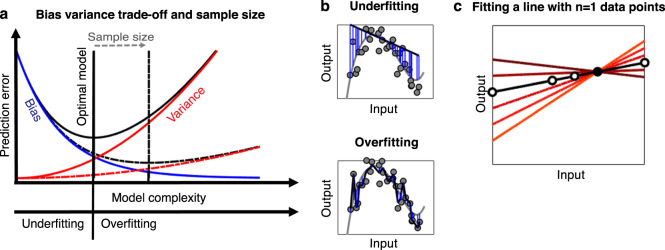
“Hence, one needs to be aware that the applicability of more complicated models like DNNs is not merely limited by the sample sizes required to meet the bias-variance-challenge, but also by the additional issues involved in finding a near-optimal solution (which is usually not that unique in DNNs, see [92]), and the co…”
BackgroundYan, W., Calhoun, V., Song, M., Cui, Y., Yan, H., Liu, S., Fan, L., Zuo, N., Yang, Z., Xu, K., et al. (2019) · EBioMedicine · doi:10.1016/j.ebiom.2019.08.023 · Cited by 169
Learning Robust Features using Deep Learning for Automatic Seizure Detection
Thodoroff, P., Pineau, J., & Lim, A. (2016) · arXiv (Cornell University) · doi:10.48550/arxiv.1608.00220 · Cited by 163 · cited 1×
“Models could be pre-trained on similar, or ideally perhaps even the same disorder as targeted in a current application, and then merely fi ne-tuned on the target data (see also [93, 155]).”
BackgroundDeepFMRI: End-to-end deep learning for functional connectivity and classification of ADHD using fMRI
Riaz, A., Asad, M., Alonso, E., & Slabaugh, G. (2020) · Journal of Neuroscience Methods · doi:10.1016/j.jneumeth.2019.108506 · Cited by 157
Scaling description of generalization with number of parameters in deep learning
Geiger, M., Jacot, A., Spigler, S., Gabriel, F., Sagun, L., d’Ascoli, S., Biroli, G., Hongler, C., & Wyart, M. (2020) · Journal of Statistical Mechanics: Theory and Experiment · doi:10.1088/1742-5468/ab633c · Cited by 155
DeepMood: Modeling Mobile Phone Typing Dynamics for Mood Detection
Cao, B., Zheng, L., Zhang, C., Yu, P. S., Piscitello, A., Zulueta, J., Ajilore, O., Ryan, K., & Leow, A. D. (2017) · Proceedings of the 23rd ACM SIGKDD International Conference on Knowledge Discovery and Data Mining · doi:10.1145/3097983.3098086 · Cited by 145
VIGAN: Missing view imputation with generative adversarial networks
Shang, C., Palmer, A., Sun, J., Chen, K.-S., Lu, J., & Bi, J. (2017) · 2017 IEEE International Conference on Big Data (Big Data) · doi:10.1109/bigdata.2017.8257992 · Cited by 142
Computability with low-dimensional dynamical systems
Koiran, P., Cosnard, M., & Garzón, M. (1994) · Theoretical Computer Science · doi:10.1016/0304-3975(94)90229-1 · Cited by 142
Pinaya, W. H. L., Mechelli, A., & Sato, J. R. (2019) · Human Brain Mapping · doi:10.1002/hbm.24423 · Cited by 138
Kuan, P.-F., Yang, X., Clouston, S., Ren, X., Kotov, R., Waszczuk, M., Singh, P. K., Glenn, S. T., Gomez, E. C., Wang, J., et al. (2019) · Translational Psychiatry · doi:10.1038/s41398-018-0355-8 · Cited by 137
Wong, E. H. F., Yocca, F., Smith, M. A., & Lee, C.-M. (2010) · The International Journal of Neuropsychopharmacology · doi:10.1017/s1461145710000866 · Cited by 134
Quaak, M., van de Mortel, L. A., Thomas, R. M., & van Wingen, G. A. (2021) · NeuroImage Clinical · doi:10.1016/j.nicl.2021.102584 · Cited by 132 · cited 2×
“Samples below N= 200 produce very heterogeneous performance results, and usually do not contain data from multiple sites, making it difficult to judge models in this range [162].”
BackgroundRecommendations and future directions for supervised machine learning in psychiatry
Cearns, M., Hahn, T., & Baune, B. T. (2019) · Translational Psychiatry · doi:10.1038/s41398-019-0607-2 · Cited by 127 · cited 2×
“None-theless, leaking data used for model selection into the model assessment step is perhaps the most common mistake made in the literature (see also [77]).”
BackgroundMethodIdentifying substance use risk based on deep neural networks and Instagram social media data
Hassanpour, S., Tomita, N., DeLise, T., Crosier, B., & Marsch, L. A. (2019) · Neuropsychopharmacology · doi:10.1038/s41386-018-0247-x · Cited by 125
Scanner invariant representations for diffusion MRI harmonization
Moyer, D., Ver Steeg, G., Tax, C. M. W., & Thompson, P. M. (2020) · Magnetic Resonance in Medicine · doi:10.1002/mrm.28243 · Cited by 123
Koppe, G., Toutounji, H., Kirsch, P., Lis, S., & Durstewitz, D. (2019) · PLoS Computational Biology · doi:10.1371/journal.pcbi.1007263 · Cited by 121
Self-citationSystematic misestimation of machine learning performance in neuroimaging studies of depression
Flint, C., Cearns, M., Opel, N., Redlich, R., Mehler, D. M. A., Emden, D., Winter, N. R., Leenings, R., Eickhoff, S. B., Kircher, T., et al. (2021) · Neuropsychopharmacology · doi:10.1038/s41386-021-01020-7 · Cited by 120 · cited 2×
“The larger the test set, of course, the lower will be the uncertainty about the mean PE estimate, i.e., its variance or standard error (see also [80]).”
BackgroundMethodBayesian non-parametrics and the probabilistic approach to modelling
Ghahramani, Z. (2013) · Philosophical Transactions of the Royal Society A: Mathematical, Physical and Engineering Sciences · doi:10.1098/rsta.2011.0553 · Cited by 109 · cited 1×
“While such approaches come with the danger of biasing the resulting model or parameter estimates in the wrong direction, they are on the other hand known to potentially strongly reduce the variance in the resulting parameter estimates and to protect to some degree against over fi tting [160].”
BackgroundRecurrent Orthogonal Networks and Long-Memory TasksPreprint
Henaff, M., Szlam, A. D., & LeCun, Y. (2016) · arXiv (Cornell University) · doi:10.48550/arxiv.1602.06662 · Cited by 109 · cited 1×
“Additional more purpose tailored regularization solutions have been proposed to solve the long-term dependency problem in ‘ vanilla ’ RNN, e.g., by directly modifying the loss function (e.g., [89]) or indirectly via speci fi c parameterizations of the weight matrices (e.g., [117 – 118]).”
BackgroundAcoustics, Speech and Signal Processing (ICASSP), 2017 IEEE International Conference on
Spyrou, L., & Escudero, J. (2017) · IEEE International Conference on Acoustics Speech and Signal Processing · Cited by 104
Smartphone-Based Tracking of Sleep in Depression, Anxiety, and Psychotic Disorders
Aledavood, T., Torous, J. B., Triana, A. M., Naslund, J. A., Onnela, J.-P. “., & Keshavan, M. S. (2019) · Current Psychiatry Reports · doi:10.1007/s11920-019-1043-y · Cited by 104
Psychiatric Illnesses as Disorders of Network Dynamics
Durstewitz, D., Huys, Q. J. M., & Koppe, G. (2020) · Biological Psychiatry Cognitive Neuroscience and Neuroimaging · doi:10.1016/j.bpsc.2020.01.001 · Cited by 101 · cited 5×
“This comes with additional issues that we will only brie fl y touch upon here: First, time series data in biology and psychology are generated by some larger underlying dynamical system, which we only partially observe [4, 89, 90].”
BackgroundMethodInfluentialSelf-citationSynthesis of recurrent neural networks for dynamical system simulation
Trischler, A., & D’Eleuterio, G. M. T. (2016) · Neural Networks · doi:10.1016/j.neunet.2016.04.001 · Cited by 93
Brain Biomarker Interpretation in ASD Using Deep Learning and fMRI
Li, X., Dvornek, N. C., Zhuang, J., Ventola, P. E., & Duncan, J. S. (2018) · Lecture notes in computer science · doi:10.1007/978-3-030-00931-1_24 · Cited by 93
Classical F-Tests and Confidence Regions for Ridge Regression
Obenchain, R. L. (1977) · Technometrics · doi:10.1080/00401706.1977.10489582 · Cited by 88
Machine Learning: Deepest Learning as Statistical Data Assimilation Problems
Abarbanel, H. D. I., Rozdeba, P. J., & Shirman, S. (2018) · Neural Computation · doi:10.1162/neco_a_01094 · Cited by 87
Pulini, A. A., Kerr, W. T., Loo, S. K., & Lenartowicz, A. (2019) · Biological Psychiatry: Cognitive Neuroscience and Neuroimaging · doi:10.1016/j.bpsc.2018.06.003 · Cited by 85
Orthogonal Recurrent Neural Networks with Scaled Cayley TransformPreprint
Helfrich, K., Willmott, D., & Ye, Q. (2017) · arXiv (Cornell University) · doi:10.48550/arxiv.1707.09520 · Cited by 83 · cited 1×
“Additional more purpose tailored regularization solutions have been proposed to solve the long-term dependency problem in ‘ vanilla ’ RNN, e.g., by directly modifying the loss function (e.g., [89]) or indirectly via speci fi c parameterizations of the weight matrices (e.g., [117 – 118]).”
BackgroundAndrea Montanari, A., Ruan, F., Sohn, Y., et al. (2019) · arXiv (Cornell University) · doi:10.48550/arxiv.1911.01544 · Cited by 78
Bystritsky, A., Nierenberg, A. A., Feusner, J. D., & Rabinovich, M. I. (2012) · Journal of Psychiatric Research · doi:10.1016/j.jpsychires.2011.10.013 · Cited by 75
Montanari, A., Ruan, F., Sohn, Y., & Yan, J. (2025) · The Annals of Statistics · doi:10.1214/25-aos2489 · Cited by 75
Impact of Physical Activity on Sleep:A Deep Learning Based Exploration
Sathyanarayana, A., Joty, S., Fernández-Luque, L., Ofli, F., Srivastava, J., Elmagarmid, A. K., Taheri, S., & Arora, T. (2016) · arXiv (Cornell University) · doi:10.48550/arxiv.1607.07034 · Cited by 74
Effective degrees of freedom: a flawed metaphor
Janson, L., Fithian, W., & Hastie, T. J. (2015) · Biometrika · doi:10.1093/biomet/asv019 · Cited by 74
Learning dynamical systems by recurrent neural networks from orbits
Kimura, M., & Nakano, R. (1998) · Neural Networks · doi:10.1016/s0893-6080(98)00098-7 · Cited by 68
Learning Neural Markers of Schizophrenia Disorder Using Recurrent Neural NetworksPreprint
Dakka, J., Bashivan, P., Gheiratmand, M., Rish, I., Jha, S., & Greiner, R. (2017) · arXiv (Cornell University) · doi:10.48550/arxiv.1712.00512 · Cited by 66 · cited 1×
“…based on mobile data [26], to detect mental disorders from speech [101 – 103], to discriminate between psychiatric patients and healthy controls [104, 105] (see [106] for GRU based approach), or to process text passages from social media platforms to identify subjects at high risk for drinking…”
BackgroundPlis, S., Amin, M. F., Chekroud, A. M., Hjelm, D., Damaraju, E., Lee, H. J., Bustillo, J., Cho, K., Pearlson, G. D., & Calhoun, V. D. (2018) · NeuroImage · doi:10.1016/j.neuroimage.2018.07.047 · Cited by 59
Recurrent Neural Networks in Mobile Sampling and Intervention
Koppe, G., Guloksuz, S., Reininghaus, U., & Durstewitz, D. (2019) · Schizophrenia Bulletin · doi:10.1093/schbul/sby171 · Cited by 50
Self-citationAnatomically informed data augmentation for functional MRI with applications to deep learning
Nguyen, K. P., Fatt, C. C., Treacher, A., Mellema, C., Trivedi, M. H., & Montillo, A. (2020) · SPIE Medical Imaging: Image Processing · doi:10.1117/12.2548630 · Cited by 41
Multimodal Deep Learning for Mental Disorders Prediction from Audio Speech SamplesPreprint
Naderi, H., Soleimani, B. H., & Matwin, S. (2019) · arXiv (Cornell University) · doi:10.48550/arxiv.1909.01067 · Cited by 35 · cited 1×
“…been used to forecast depressive and manic states in bipolar patients based on mobile data [26], to detect mental disorders from speech [101 – 103], to discriminate between psychiatric patients and healthy controls [104, 105] (see [106] for GRU based approach), or to process text passages…”
MethodImproved variational methods in statistical data assimilation
Ye, J., Kadakia, N., Rozdeba, P. J., Abarbanel, H. D. I., & Quinn, J. C. (2015) · Nonlinear processes in geophysics · doi:10.5194/npg-22-205-2015 · Cited by 32
OR 2.0 Context-Aware Operating Theaters and Machine Learning in Clinical Neuroimaging
(2019) · Lecture notes in computer science · doi:10.1007/978-3-030-32695-1 · Cited by 28
Computational models as statistical tools
Durstewitz, D., Koppe, G., & Toutounji, H. (2016) · Current Opinion in Behavioral Sciences · doi:10.1016/j.cobeha.2016.07.004 · Cited by 24
Self-citationAdvanced Data Analysis in Neuroscience
Durstewitz, D. (2017) · Bernstein series in computational neuroscience · doi:10.1007/978-3-319-59976-2 · Cited by 21
Self-citationBetter Depth-Width Trade-offs for Neural Networks through the lens of Dynamical SystemsPreprint
Chatziafratis, V., Nagarajan, S. G., & Panageas, I. (2020) · arXiv (Cornell University) · doi:10.48550/arxiv.2003.00777 · Cited by 17
Correcting differences in multi-site neuroimaging data using Generative Adversarial NetworksPreprint
Nguyen, H. H., Morris, R. W., Harris, A. W. F., Korgoankar, M. S., & Ramos, F. T. (2018) · arXiv (Cornell University) · doi:10.48550/arxiv.1803.09375 · Cited by 16 · cited 1×
“Along another line, Nguyen et al. [148] used GANs to unbias MRI images from different sites by successfully transforming images from one site into those from another.”
BackgroundMood detection from daily conversational speech using denoising autoencoder and LSTM
Huang, K.-Y., Wu, C., Su, M.-H., & Fu, H.-C. (2017) · IEEE International Conference on Acoustics Speech and Signal Processing · doi:10.1109/icassp.2017.7953133 · Cited by 15
Neuhaus, A. H., & Popescu, F. C. (2018) · Biological Psychiatry · doi:10.1016/j.biopsych.2017.09.032 · Cited by 12
Men's Health: The Practice Nurse's Handbook
Peate, I. (2007) · Medical Entomology and Zoology · Cited by 8
Inferring Dynamical Systems with Long-Range Dependencies through Line Attractor Regularization.Preprint
Schmidt, D., Koppe, G., Beutelspacher, M., & Durstewitz, D. (2019) · arXiv (Cornell University) · Cited by 6
Self-citationPrecision variational approximations in statistical data assimilationPreprint
Ye, J., Kadakia, N., Rozdeba, P. J., et al. (2014) · doi:10.5194/npgd-1-1603-2014 · Cited by 5 · cited 1×
“…and latent (hidden) variables as random variables, the variational annealing approach proposes to gradually increase the ratio between observation and latent variable noise in the loss function, that is, to decrease the relative noise in the hidden variables across training iterations [124, 125].”
BackgroundQuaak, M., van de Mortel, L. A., Thomas, R. M., et al. (2020) · medRxiv · doi:10.1101/2020.06.12.20129130 · Cited by 2
Research works printed but not linked: 12
- Montufar GF, Pascanu R, Cho K, Bengio Y. On the number of linear regions of deep neural networks. Advances in neural information processing systems. Curran Associates, Inc.; 2014. p. 2924–32.
- Ma X, Yang H, Chen Q, Huang D, Wang Y. Proceedings of the 6th International Workshop on Audio/Visual Emotion Challenge; 2016. p. 35–42.
- Yang T, Wu C, Huang K, Su M. in 2016 10th International Symposium on Chinese Spoken Language Processing (ISCSLP). IEEE; 2016. p. 1–5.
- Jarrett K, Kavukcuoglu K, Ranzato MA, LeCun Y. 2009 IEEE 12th international conference on computer vision. IEEE; 2009. p. 2146–53.
- Bishop CM Pattern recognition and machine learning 2006 New York, USA Springer
- Szegedy C, Zaremba W, Sutskever I, Bruna J, Erhan D, Goodfellow I, et al. Intriguing properties of neural networks. arXiv preprint arXiv:13126199. 2013.
- Ballard DH in AAAI 279-84 (1987).
- Gupta A, Ayhan M, Maida A in International Conference on Machine Learning; 2013. p. 987–94.
- Goodfellow I, Pouget-Abadie J, Mirza M, Xu B, Warde-Farley D, Ozair S, et al. Advances in neural information processing systems; 2014. p. 2672–80.
- Bowles C, Chen L, Guerrero R, Bentley P, Gunn R, Hammers A, et al. Gan augmentation: Augmenting training data using generative adversarial networks. arXiv preprint arXiv:181010863. 2018.
- Lee D-H. The simple and efficient semi-supervised learning method for deep neural networks. Workshop on challenges in representation learning, ICML. 2013:3.
- Yosinski J, Clune J, Bengio Y, Lipson H. How transferable are features in deep neural networks? Advances in neural information processing systems. Montreal, Canada: MIT Press; 2014. p 3320–28.
Cited by
Review of deep learning: concepts, CNN architectures, challenges, applications, future directions
Alzubaidi, L., Zhang, J., Humaidi, A. J., Al-Dujaili, A., Duan, Y., Al-Shamma, O., Santamaría, J., Fadhel, M. A., Al-Amidie, M., & Farhan, L. (2021) · Journal of Big Data · doi:10.1186/s40537-021-00444-8 · Cited by 7,906
Torous, J., Bucci, S., Bell, I. H., Kessing, L. V., Faurholt‐Jepsen, M., Whelan, P., Carvalho, A. F., Keshavan, M., Linardon, J., & Firth, J. (2021) · World Psychiatry · doi:10.1002/wps.20883 · Cited by 1,199
Stein, D. J., Shoptaw, S. J., Vigo, D. V., Lund, C., Cuijpers, P., Bantjes, J., Sartorius, N., & Maj, M. (2022) · World Psychiatry · doi:10.1002/wps.20998 · Cited by 331
Modern views of machine learning for precision psychiatry
Chen, Z. S., Kulkarni, P. (., Galatzer-Levy, I. R., Bigio, B., Nasca, C., & Zhang, Y. (2022) · Patterns · doi:10.1016/j.patter.2022.100602 · Cited by 210
“This poses potential overfitting and interpretability challenges in psychiatric applications [18].”
BackgroundAhmad, S., Shakeel, I., Mehfuz, S., & Ahmad, J. (2023) · Computer Science Review · doi:10.1016/j.cosrev.2023.100568 · Cited by 197
Metadata
- Authors
- Koppe, G., Meyer-Lindenberg, A., & Durstewitz, D.
- Affiliations
- Heidelberg University (DE)
- Corresponding author
- Koppe, Georgia
- Durstewitz, Daniel
- Venue
- Neuropsychopharmacology
- Published
- 2020-07-15
- Volume
- 46
- Issue
- 1
- Pages
- 176-190
- ISSN
- 0893-133X (ISSN-L)
- 1740-634X
- PMC
- PMC7689428
- OpenAlex
- W3042578835
- Cited by
- 189
- References
- 168
- Citations by year
- 2026: 16 · 2025: 27 · 2024: 55 · 2023: 34 · 2022: 36 · 2021: 17 · 2020: 4
- FWCI
- 0.78
- Type
- journal article
- Language
- en
- Open access
- hybrid
- doi.org
- Licence
- cc-by
- creativecommons.org/licenses/by/4.0 (tdm)
- creativecommons.org/licenses/by/4.0 (vor)
- Locations
- Neuropsychopharmacology (publishedVersion, cc-by)
- PubMed Central (publishedVersion, cc-by)
- PubMed (publishedVersion)
- Informationszentrum Lebenswissenschaften (ZB MED) (submittedVersion, cc-by)
- Funders
- Deutsche Forschungsgemeinschaft (CRC TRR 265: Project A06, CRC TRR 265: Project B08, ME 1591/4-1, 5485966, CRC636: Project B7, 255156212, CRC1158: Project B09, GRK 2350/1 Research Training Group 2350: Project B2, CRC TRR 265: Project S02, Du 354/8-2, Du 354/10-1)
- Bundesministerium für Bildung und Forschung (01EF1803A, 01ZX1904A)
- Topics
- Physical Sciences › Computer Science › Artificial Intelligence › Machine Learning in Healthcare
- Health Sciences › Health Professions › Health Information Management › Artificial Intelligence in Healthcare
- Life Sciences › Neuroscience › Cognitive Neuroscience › Functional Brain Connectivity Studies
- Keywords
- deep learning, machine learning, mental illness, small sample size, treatment prediction, personalized treatment, psychiatric phenotypes, sample size requirements, model complexity, psychiatric neuroscience
- MeSH terms
- Machine Learning, Deep Learning, Big Data, Mental Disorders, Humans, Psychiatry
About these checks
Registry, retraction, Cites and statistics results are computed, not judged, with one exception: a printed reference that no index lists is read once by a model before it counts as a citation error. Claims are extracted by a model and kept only when their quote appears verbatim in the text; each cited source is then checked, with a model’s help, for whether it says what the claim relies on. Those verdicts can be wrong — read the claim’s quote and the cited source before relying on one.
Statistics and arithmetic are recomputed, not judged.
Confidence bands are shown only for fields calibrated on our annotated test set. None is calibrated yet, so no band is shown.
What counts as a claim ›How we measure confidence ›How we check this ›
Are you an author, or do you see a problem with this page? Request a review
Data sources
Bibliographic data: Semantic Scholar, OpenAlex, Crossref.
Contains information from the Semantic Scholar Academic Graph Datasets, made available under the ODC Attribution License (ODC-BY 1.0).
Semantic Scholar’s data is described in: Kinney, R., et al. (2023). The Semantic Scholar Open Data Platform. arXiv:2301.10140.
