

Wnt/β-catenin signalling: function, biological mechanisms, and therapeutic opportunities
Open accessThe DOI matches its Crossref record; 345 of the 345 references it cites were found in a registry or an index.
Abstract
The Wnt/β-catenin pathway comprises a family of proteins that play critical roles in embryonic development and adult tissue homeostasis. The deregulation of Wnt/β-catenin signalling often leads to various serious diseases, including cancer and non-cancer diseases. Although many articles have reviewed Wnt/β-catenin from various aspects, a systematic review encompassing the origin, composition, function, and clinical trials of the Wnt/β-catenin signalling pathway in tumour and diseases is lacking. In this article, we comprehensively review the Wnt/β-catenin pathway from the above five aspects in combination with the latest research. Finally, we propose challenges and opportunities for the development of small-molecular compounds targeting the Wnt signalling pathway in disease treatment.
Overview
The claims and statistics of this paper haven’t been checked yet.
Free: it reads the open-access text and checks the first 5 claims that cite a source we can check. Create a free account to check every claim.
Integrity signals
Registry
Cites
Statistics
Figures
Verification
Claims the paper makes
The claims and statistics of this paper haven’t been checked yet.
Free: it reads the open-access text and checks the first 5 claims that cite a source we can check. Create a free account to check every claim.
Claims other papers make about this one
Each is checked against this paper’s own text: does it say what the citing paper says it does?
The source backs part of the claim, not all of it — or backs it for a different population, condition or comparison.
In the citing paper
“The inactivation of GSK3β disrupts the integrity and function of the destruction complex, thereby preventing β-catenin phosphorylation. As a result, unphosphorylated, stable β-catenin accumulates in the cytoplasm, translocates to the nucleus, and activates the transcription of its target genes, including c-Myc and Cyclin D1 [35, 46, 47, 52–55].”
From PPP1R18-mediated activation of Wnt/β-catenin and EMT is dependent on ERK signaling in clear cell renal cell carcinoma (2026) · cites this paper as [53]
Experimental — accuracy not yet measuredThe cited source says what the claim attributes to it.
In the citing paper
“Wnt signaling is a critical pathway involved in multiple developmental processes and can also contribute to malignant transformation.”
From Multiple myeloma: signaling pathways and targeted therapy (2024) · cites this paper as [64]
The check wasn’t confident either way, so it gives no verdict — never disputed.
In the citing paper
“For example, resistance training reduces muscle atrophy by inhibiting complement component 1q (C1q)-induced Wnt signaling as well as the PI3K-Akt-tuberous sclerosis complex (TSC) cascade, which regulates the activity of the target of rapamycin complex 1 (mTORC1) via the Ras homolog enriched in the brain (Rheb)”
From Exercise-Induced Muscle–Fat Crosstalk: Molecular Mediators and Their Pharmacological Modulation for the Maintenance of Metabolic Flexibility in Aging (2025) · cites this paper as [93]
Experimental — accuracy not yet measuredThe check wasn’t confident either way, so it gives no verdict — never disputed.
In the citing paper
“Resistance training in mice attenuates muscle fibrosis and atrophy by suppressing C1q-induced Wnt/β-catenin signaling, specifically through the glycogen synthase kinase-3 beta (GSK)-3β/β-catenin axis”
From Exercise-Induced Muscle–Fat Crosstalk: Molecular Mediators and Their Pharmacological Modulation for the Maintenance of Metabolic Flexibility in Aging (2025) · cites this paper as [93]
Experimental — accuracy not yet measured
Self-check
Percentages, sums and reported differences re-computed from the paper’s own numbers.
The self-check needs the paper’s full text.
Citations
Cites
4 retracted
Epigenetic regulation of Wnt-signaling pathway in acute lymphoblastic leukemia
Román-Gómez, J., Cordeu, L., Agirre, X., Jiménez-Velasco, A., San José-Eneriz, E., Garate, L., Calasanz, M. J., Heiniger, A., Torres, A., & Prosper, F. (2007) · Blood · doi:10.1182/blood-2006-09-047043 · Cited by 168 · cited 1×
“The results indicate the role of abnormal Wnt signalling in ALL and establish a group of patients with a significantly worse prognosis (methylated group).(253)”
BackgroundRetractedSatō, Y., Asoh, T., & Oizumi, K. (1998) · Bone · doi:10.1016/s8756-3282(98)00134-3 · Cited by 140 · cited 2×
“Fourteen bone-related biomarkers in elderly people with memory problems were not clinically diagnosed with asymptomatic AD, and the expression of TRAIL and DKK1 was elevated in the brain.(257,258) Wnt signalling has a neuroprotective effect, and DKK1, as an antagonist of the canonical Wnt signalling pathway, is negati…”
BackgroundResultRetractedFu, X., Zhu, X., Qin, F., Zhang, Y., Lin, J., Ding, Y., Yang, Z., Shang, Y., Wang, L., Zhang, Q., et al. (2018) · Molecular Cancer · doi:10.1186/s12943-018-0783-3 · Cited by 109 · cited 1×
“The lncRNAs Linc00210 and lncRNA-CCAL inhibit the activity of CTNNBIP1 and activator protein-2α (AP-2α), respectively, and block the binding of CTNNBIP1 and AP-2α to β-catenin, enhancing the interaction between β-catenin and the TCF/LEF complex.(67,68) LncRNA-NEAT1 interacts with DDX5 and promotes the formation of a c…”
BackgroundRetractedLiu, B., Wu, S., Han, L., & Zhang, C. (2015) · International Journal of Molecular Medicine · doi:10.3892/ijmm.2015.2382 · Cited by 25 · cited 3×
“The absence of Wnt signalling inhibits the nuclear transport of β-catenin mediated by ZBP1, resulting in a decrease in Runx2 and Sp7 (osteogenic factors) expression in mouse bone marrowderived MSCs.132,133 DHCR7 and INSIG1/2 are related to the effect of cholesterol metabolism on bone formation.”
BackgroundRetractedIdentification of stem cells in small intestine and colon by marker gene Lgr5
Barker, N., van Es, J. H., Kuipers, J., Kujala, P., van den Born, M., Cozijnsen, M., Haegebarth, A., Korving, J., Begthel, H., Peters, P. J., et al. (2007) · Nature · doi:10.1038/nature06196 · Cited by 5,687
Wnt/β-Catenin Signaling: Components, Mechanisms, and Diseases
MacDonald, B. T., Tamai, K., & He, X. (2009) · Developmental Cell · doi:10.1016/j.devcel.2009.06.016 · Cited by 5,583
Wnt/β-Catenin Signaling in Development and Disease
Clevers, H. (2006) · Cell · doi:10.1016/j.cell.2006.10.018 · Cited by 5,568
Wnt/β-Catenin Signaling, Disease, and Emerging Therapeutic Modalities
Nusse, R., & Clevers, H. (2017) · Cell · doi:10.1016/j.cell.2017.05.016 · Cited by 4,342
Activation of β-Catenin-Tcf Signaling in Colon Cancer by Mutations in β-Catenin or APC
Morin, P. J., Sparks, A. B., Korinek, V., Barker, N., Clevers, H., Vogelstein, B., & Kinzler, K. W. (1997) · Science · doi:10.1126/science.275.5307.1787 · Cited by 3,942
Melanoma-intrinsic β-catenin signalling prevents anti-tumour immunity
Spranger, S., Bao, R., & Gajewski, T. F. (2015) · Nature · doi:10.1038/nature14404 · Cited by 2,830 · cited 1×
“Using a mouse melanoma model, the researchers confirmed that the intrinsically active β-catenin signal of the tumour led to T cell rejection and resistance to anti-PD-L1/anti-CTLA-4 monoclonal antibody treatment.(301) Simultaneously, the analysis of primary melanoma lesions with BRAF mutations showed that T cell infil…”
Background
Research works printed but not linked: 8
- Amemiya T Tsuboi M Uchida S Electron microscopic and electron histochemical studies on embryonal rhabdomyosarcoma of the orbit. Zeitschrift fur Krebsforschung und klinische Onkol. Cancer Res. Clin. Oncol. 1975 83 305 314 169642
- Cruciat CM Niehrs C Secreted and transmembrane wnt inhibitors and activators[J] Cold Spring Harb. Perspect. Biol. 2013 5 a015081 23085770 PMC3578365 · DOI · Paper page
- Malinauskas T Modular mechanism of Wnt signaling inhibition by Wnt inhibitory factor 1[J] Nat. Struct. Mol. Biol. 2011 18 886 893 21743455 PMC3430870 · DOI · Paper page
- Jiang X Dishevelled promotes Wnt receptor degradation through recruitment of ZNRF3/RNF43 E3 ubiquitin ligases[J] Mol. Cell 2015 58 522 533 25891077 · DOI · Paper page
- Kwon C Notch post-translationally regulates β-catenin protein in stem and progenitor cells[J] Nat. cell Biol. 2011 13 1244 1251 21841793 PMC3187850 · DOI · Paper page
- Jimeno A A First-in-Human Phase I Study of the Anticancer Stem Cell Agent Ipafricept (OMP-54F28), a Decoy Receptor for Wnt Ligands, in Patients with Advanced Solid Tumors Clin. Cancer Res.: Off. J. Am. Assoc. Cancer Res. 2017 23 7490 7497 28954784 · DOI · Paper page
- Arensman M The CREB-binding protein inhibitor ICG-001 suppresses pancreatic cancer growth Mol. cancer therapeutics 2014 13 2303 2314 PMC4188417 25082960 · DOI · Paper page
- Emami K A small molecule inhibitor of beta-catenin/CREB-binding protein transcription [corrected] Proc. Natl Acad. Sci. USA 2004 101 12682 12687 15314234 PMC515116 · DOI · Paper page
Cited by
Items 301–400 of 1,003
Decoding the role of miRNAs in oral cancer pathogenesis: A focus on signaling pathways
Doghish, A. S., El-Husseiny, A. A., Khidr, E. G., Elrebehy, M. A., Elballal, M. S., Abdel‐Reheim, M. A., Mageed, S. S. A., Zaki, M. B., Mohammed, O. A., Khaled, R., et al. (2023) · Pathology - Research and Practice · doi:10.1016/j.prp.2023.154949 · Cited by 26
A growth factor-reduced culture system for colorectal cancer organoids
Tan, R., Zhang, Z., Ding, P., Liu, Y., Liu, H., Lu, M., & Chen, Y. (2024) · Cancer Letters · doi:10.1016/j.canlet.2024.216737 · Cited by 27
Li, B., Jiang, T., Wang, J., Ge, H., Zhang, Y., Li, T., Wang, C., & Wang, W. (2024) · Materials Today Bio · doi:10.1016/j.mtbio.2024.101300 · Cited by 26
LTBR acts as a novel immune checkpoint of tumor‐associated macrophages for cancer immunotherapy
Wang, L., Fan, J., Wu, S., Cheng, S., Zhao, J., Fan, F., Gao, C.-C., Qiao, R., Sheng, Q., Hu, Y., et al. (2024) · iMeta · doi:10.1002/imt2.233 · Cited by 25
“However, Wnt signaling inhibitors also bring systematic side effects, including neurological complications, kidney injury, and intestinal toxicity, due to the essential role of Wnt signaling in the tissue development and homeostasis [54].”
BackgroundIm, H., Song, Y., Jung, Y. H., Kim, J. K., Park, D., Kim, H., Kim, H., & Shin, J.-O. (2025) · International Journal of Molecular Sciences · doi:10.3390/ijms26031382 · Cited by 25
Sohel, M. (2025) · Medicinal Research Reviews · doi:10.1002/med.22107 · Cited by 25
“The Wnt/ β ‐ catenin cascade is crucial in the development and progression of human maliganancies [53].”
Deepak, K., Shee, M., Roy, P., & Mandal, M. (2026) · Cell Death · doi:10.1016/j.celld.2026.100009 · Cited by 25
Yao, J., Wei, W., Wen, J., Cao, Y., & Li, H. (2023) · Frontiers in Neuroscience · doi:10.3389/fnins.2023.1093180 · Cited by 25
“The Ctnnb1 gene encodes β-catenin, a pivotal component of the Wnt signaling pathway that plays a significant role in the regulation of cell proliferation, differentiation, and apoptosis (Liu et al., 2022).”
BackgroundWang, Y., Gao, G., Wei, X., Zhang, Y., & Yu, J. L. (2023) · Drug Design Development and Therapy · doi:10.2147/dddt.s405450 · Cited by 25
Wnt signaling in synaptogenesis of Alzheimer's disease
Zhang, C., Wang, J., & Wang, W. (2023) · Ibrain · doi:10.1002/ibra.12130 · Cited by 25
Signalling pathways in the osteogenic differentiation of periodontal ligament stem cells
Ru, L., Pan, B., & Zheng, J. (2023) · Open Life Sciences · doi:10.1515/biol-2022-0706 · Cited by 25
“As a result, the amount of βcatenin in the cytoplasm increases and promotes β-catenin entry into the nucleus, which in turn activates the intranuclear lymphoid enhancer-binding factor-1 (LEF-1)/T lymphocyte factor (TCF) transcription system and participates in the regulation of cell cycle progression and differentiati…”
BackgroundKuku, K. O., Shearer, J. J., Hashemian, M., Oyetoro, R. O., Park, H., Dulek, B., Bielinski, S. J., Larson, N. B., Ganz, P., Levy, D. A., et al. (2024) · Annals of Internal Medicine · doi:10.7326/m23-2328 · Cited by 25
Boo, Y. C. (2024) · Antioxidants · doi:10.3390/antiox13020146 · Cited by 25
“Wnt is a family of lipid-modified glycoprotein ligands that bind to a Frizzled family receptor that spans across the plasma membrane and interacts with the Dishevelled protein in the cytoplasm to transmit signals [42].”
BackgroundFang, W., Song, X., Li, H., Meng, F., Lv, T., Huang, J., Ji, X., Lv, J., Cai, Z., & Wang, Z. (2024) · Biochimica et Biophysica Acta (BBA) - Molecular Cell Research · doi:10.1016/j.bbamcr.2024.119766 · Cited by 25
Elimam, H., Mageed, S. S. A., Hatawsh, A., Moussa, R., Radwan, A., Elfar, N., Alhamshry, N. A. A., Abd‐Elmawla, M. A., Mohammed, O. A., Zaki, M. B., et al. (2024) · Medical Oncology · doi:10.1007/s12032-024-02455-w · Cited by 25
Exploring the Impact of the β-Catenin Mutations in Hepatocellular Carcinoma: An In-Depth Review
Idrissi, Y. A., Rajabi, M. R., Beumer, J. H., Monga, S. P., & Saeed, A. (2024) · Cancer Control · doi:10.1177/10732748241293680 · Cited by 25
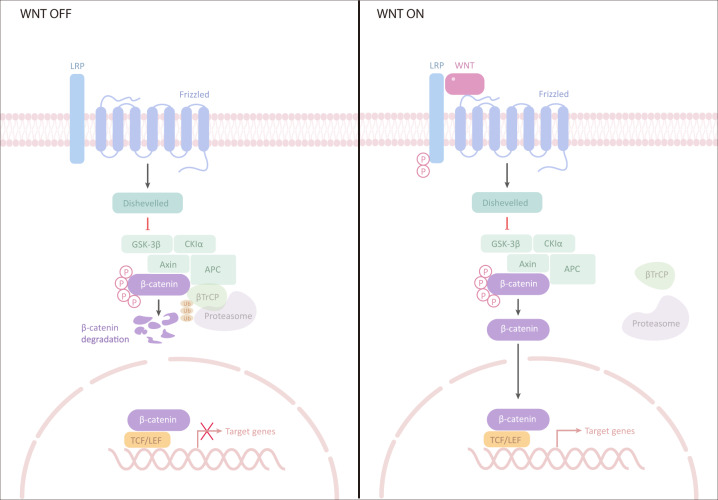
“38 In the absence of Wnt signals, this destruction complex phosphorylates β -catenin through the E3 ubiquitin ligase β -transducin repeat containing protein (E3 ligase β -TRCP), marking it for degradation by the proteasome.”
BackgroundStructural and Functional Insights into Dishevelled-Mediated Wnt Signaling
Wang, L., Zhu, R., Wen, Z., Fan, H., Norwood-Jackson, T., Jathan, D., & Lee, H. (2024) · Cells · doi:10.3390/cells13221870 · Cited by 25
Induced proximity at the cell surface
Till, N. A., Ramanathan, M., & Bertozzi, C. R. (2025) · Nature Biotechnology · doi:10.1038/s41587-025-02592-1 · Cited by 25
“Receptor proximity plays a central role in the endogenous Wnt–β-catenin signaling pathway 90 .”
InfluentialYang, L., Wang, S., Qiao, Z., Liu, Y., Wang, X., Liu, L., Yang, C., Ding, J., Lei, M., Zheng, J., et al. (2025) · Nature Communications · doi:10.1038/s41467-025-64069-8 · Cited by 25
Cellular Stress, Inflammation and Barrier Damage in Gut Epithelial Cells Caused by Aspartame
Pat, Y., Yazıcı, D., Zeyneloglu, C., Babayev, H., Ardıçlı, S., García-Sánchez, A., Bu, X., Heider, A., Viscardi, O. G., Chang, L., et al. (2025) · Allergy · doi:10.1111/all.70095 · Cited by 24
“The WNT pathway is a crucial signalling cascade for stem cell maintenance, cell proliferation, differentiation and tissue regeneration [16, 17] (Figure S5B).”
Getu, A. A., Zhou, M., Cheng, S., & Tan, M. (2023) · Cancer Letters · doi:10.1016/j.canlet.2023.216183 · Cited by 25
Milan, T. M., Eskenazi, A. P. E., de Oliveira, L. D., SILVA, G. H. D. O., Bighetti‐Trevisan, R. L., Freitas, G. P., & Almeida, L. O. (2023) · Cellular Signalling · doi:10.1016/j.cellsig.2023.110773 · Cited by 24
Ding, X., Lv, S., Guo, Z., Gong, X., Wang, C., Zhang, X., & Meng, K. (2023) · Reproductive Sciences · doi:10.1007/s43032-023-01300-1 · Cited by 24
“The Wnt/β-catenin signaling pathway plays an important role in embryonic and organ development as well as in maintaining tissue homeostasis [63].”
BackgroundSelf-citationWnt5a: A promising therapeutic target for inflammation, especially rheumatoid arthritis
Huang, Y., Xue, Q., Chang, J., Wang, X., & Miao, C. (2023) · Cytokine · doi:10.1016/j.cyto.2023.156381 · Cited by 24
Chikungunya virus perturbs the Wnt/β-catenin signaling pathway for efficient viral infection
Chatterjee, S., Ghosh, S., Datey, A., Mahish, C., Chattopadhyay, S., & Chattopadhyay, S. (2023) · Journal of Virology · doi:10.1128/jvi.01430-23 · Cited by 24
Sex Differences in Colon Cancer: Genomic and Nongenomic Signalling of Oestrogen
Harvey, B. J., & Harvey, H. M. (2023) · Genes · doi:10.3390/genes14122225 · Cited by 25
“Wnt/ β -catenin signalling plays a key role in various biological processes, including embryonic development, tissue homeostasis, and cell proliferation [195,196].”
BackgroundAlbalawi, A. Z., Alatawi, A. S., Al-Atwi, S. M., Alhwyty, L. S., Alharbi, K. M., Alshehri, S. A., Almarwani, W. A., Aljohani, K., Hassan, H. M., & Al-Gayyar, M. M. H. (2024) · Biomolecules and Biomedicine · doi:10.17305/bb.2024.10367 · Cited by 24
Efficacy of probiotics in hair growth and dandruff control: A systematic review and meta-analysis
Yin, C.-S., Nguyen, T. T. M., Yi, E.-J., Zheng, S., Bellere, A. D., Zheng, Q., Jin, X., Kim, M., Park, S., Oh, S., et al. (2024) · Heliyon · doi:10.1016/j.heliyon.2024.e29539 · Cited by 25
Li, Q., Wang, J., & Zhao, C. (2024) · Biomedicines · doi:10.3390/biomedicines12102389 · Cited by 24
“Key pathways, such as the Wnt/ β - catenin pathway [168–170], the RANKL/RANK/OPG axis [171–173], and the TGF-β pathway [174,175], play central roles in maintaining the balance between bone formation and resorption.”
BackgroundMechanism and application prospect of magnesium-based materials in cancer treatment
Ma, Y., Wang, Y., Song, S., Yu, X., Xu, C., Wan, L., Yao, F., Yang, K., Witte, F., & Yang, S. (2025) · Journal of Magnesium and Alloys · doi:10.1016/j.jma.2025.02.010 · Cited by 25
Jennewein, M. F., Schultz, M. D., Beaver, S., Battisti, P., Bakken, J., Hanson, D. J., Akther, J., Zhou, F., Mohamath, R., Singh, J., et al. (2025) · Molecular Therapy · doi:10.1016/j.ymthe.2025.04.007 · Cited by 25
YAP/TAZ-associated cell signaling – at the crossroads of cancer and neurodevelopmental disorders
Ajongbolo, A. O., & Langhans, S. A. (2025) · Frontiers in Cell and Developmental Biology · doi:10.3389/fcell.2025.1522705 · Cited by 23
Cancer stem cells: Bridging microenvironmental interactions and clinical therapy
Wang, H., Li, J., Du, F., & Deng, H. (2025) · Clinical and Translational Medicine · doi:10.1002/ctm2.70406 · Cited by 24
Fibroblast–Myofibroblast Transition in Osteoarthritis Progression: Current Insights
Peng, R., Lin, Q., Yang, Z., Li, H., Li, J. J., & Xing, D. (2025) · International Journal of Molecular Sciences · doi:10.3390/ijms26167881 · Cited by 24
The Role of Gut Microbiota in Colorectal Cancer Pathogenesis: A Comprehensive Literature Review
Păduraru, D. N., Palcău, A. C., Dincă, V. G., Ciuc, D. M., & Constantinescu, A. (2025) · International Journal of Molecular Sciences · doi:10.3390/ijms262411870 · Cited by 23
“These signaling cascades upregulate oncogenic targets such as c-Myc and cyclin D1, driving uncontrolled cellular proliferation, resistance to apoptosis, and acquisition of neoplastic phenotypes [51].”
RNA methylation and cellular response to oxidative stress-promoting anticancer agents
Ponzetti, M., Rucci, N., & Falone, S. (2023) · Cell Cycle · doi:10.1080/15384101.2023.2165632 · Cited by 23
“Considered the acknowledged role of the Wnt/β-catenin axis [135], Pang and colleagues’ results seem to suggest that the OS-triggered modulation of the m(6)A epitranscriptome occurs via regulation of one of the most important and conserved signal transduction pathways in tissue homeostasis.”
BackgroundJiang, W., Chen, Y., Sun, M.-J., Huang, X. B., Zhang, H., Fu, Z., Wang, J., Zhang, S., Lian, C., Tang, B., et al. (2023) · Cell Reports · doi:10.1016/j.celrep.2023.112969 · Cited by 23
Pham, T. H., Kim, E., Trang, N. M., & Jeong, G. (2023) · Journal of Periodontal Research · doi:10.1111/jre.13208 · Cited by 23
Molecular Insight into Gastric Cancer Invasion—Current Status and Future Directions
Matsuoka, T., & Yashiro, M. (2023) · Cancers · doi:10.3390/cancers16010054 · Cited by 23
“An activated Wnt/ β -catenin pathway represents an EMT modulatory signaling owing to its regulation of epithelial integrity and tight adherens junctions, and plays a crucial role in enhancing invasion [53].”
BackgroundDiabetic Foot Ulcer Wound Healing and Tissue Regeneration: Signaling Pathways and Mechanisms
Hegazi, S., Aly, R., Mesilhy, R., & Aljohary, H. (2024) · IntechOpen eBooks · doi:10.5772/intechopen.1004267 · Cited by 23
Hussein, M. A., Kamalakkannan, A., Valinezhad, K., Kannan, J., Paleati, N., Saad, R., Kajdacsy‐Balla, A., & Munirathinam, G. (2024) · Current Research in Toxicology · doi:10.1016/j.crtox.2024.100166 · Cited by 24
Mechanisms of resistance to trastuzumab in HER2-positive gastric cancer
Li, Z., Zhao, H., Hu, H., Shang, H.-L., Ren, Y., Qiu, W., Su, H., Lyu, H., & Chen, X. (2024) · Chinese Journal of Cancer Research · doi:10.21147/j.issn.1000-9604.2024.03.07 · Cited by 23
Deciphering signaling pathway interplay via miRNAs in malignant pleural mesothelioma
Salman, A., Mageed, S. S. A., Fathi, D., Elrebehy, M. A., Abulsoud, A. I., Elshaer, S. S., Khidr, E. G., AL‐Noshokaty, T. M., Khaled, R., Rizk, N. I., et al. (2023) · Pathology - Research and Practice · doi:10.1016/j.prp.2023.154947 · Cited by 23
Kang, J., Liu, M., Yang, Q., Dang, X., Li, Q., Wang, T., Qiu, B., Zhang, Y., Guo, X., Li, X., et al. (2025) · Frontiers in Aging Neuroscience · doi:10.3389/fnagi.2025.1558078 · Cited by 22
Programmed cell death and tissue regeneration: a link that should be resolved
Kopeina, G. S., Efimenko, A. Y., Va, T., & Zhivotovsky, B. (2025) · Physiological Reviews · doi:10.1152/physrev.00036.2024 · Cited by 23
López-Fuentes, E., Clugston, A. S., Lee, A. G., Sayles, L. C., Sorensen, N., Ventura, M. V. P., Leung, S. G., Dinh, T., Breese, M. R., & Sweet-Cordero, A. (2025) · Cancer Discovery · doi:10.1158/2159-8290.cd-25-0237 · Cited by 24
Wu, Y., Chen, Z., Hu, Y., Zengin, G., Zhang, Q., Li, M., & Sun, W. (2026) · Interdisciplinary medicine · doi:10.1002/inmd.70120 · Cited by 22
Zhu, H., Chen, Z., Yu, J., Wu, J., Zhuo, X., Chen, Q., Liang, Y., Li, G., & Wan, Y. (2022) · Annals of Translational Medicine · doi:10.21037/atm-22-3685 · Cited by 22
Yang, Q., Qin, T., An, T., Wu, H., Xu, G., Xiang, J., Lei, K., Zhang, S., Xia, J. L., Su, G., et al. (2023) · European Journal of Pharmacology · doi:10.1016/j.ejphar.2023.175628 · Cited by 22
Self-citationChen, X., Lv, X., Gao, L., Liu, J., Wang, W. J., Guo, L., Frasinyuk, M. S., Zhang, W., Watt, D. S., Liu, C., et al. (2023) · Cells · doi:10.3390/cells12071066 · Cited by 22
Self-citationAlsaab, H. O. (2023) · Pathology - Research and Practice · doi:10.1016/j.prp.2023.154566 · Cited by 23
Pundkar, C. Y., Antony, F., Kang, X., Mishra, A., Babu, R. J., Chen, P., Li, F., & Suryawanshi, A. S. (2023) · Heliyon · doi:10.1016/j.heliyon.2023.e16688 · Cited by 22
Tian, Y., Lai, T., Li, Z., Mao, M., Jin, Y., Liu, Y., & Guo, R. (2023) · Molecular Medicine Reports · doi:10.3892/mmr.2023.13037 · Cited by 22
“The Wnt signaling pathway is a highly conserved axis participating in various physiological and pathological processes (4).”
BackgroundInfluentialMechanical Signaling in Dental Pulp Stem Cells
Zhao, J., Du, W., Guo, D., Wang, S., & Du, W. T. (2023) · Frontiers in Bioscience-Landmark · doi:10.31083/j.fbl2810274 · Cited by 22
“When a Wnt signal is present, the cytoplasmic domains of Lrp5 or Lrp6 are phosphorylated, which eventually raises the level of β -catenin in the cytoplasm, allowing it to enter the nucleus and activate transcriptional activity [ 133].”
BackgroundRajabi, A., Nejati, M., Homayoonfal, M., Arj, A., Razavi, Z. S., Ostadian, A., Mohammadzadeh, B., Vosough, M., Karimi, M., Rahimian, N., et al. (2023) · International Journal of Biological Macromolecules · doi:10.1016/j.ijbiomac.2023.128949 · Cited by 22
Abu‐Elfotuh, K., Hamdan, A. M., Mohamed, S. A., Bakr, R. O., Ahmed, A. H., Atwa, A. M., Hamdan, A. M., Alanzai, A. G., Alnahhas, R. K., Gowifel, A. M. H., et al. (2024) · Journal of Ethnopharmacology · doi:10.1016/j.jep.2024.117731 · Cited by 23
Wang, Y., Xu, R., Yan, Y., He, B., Miao, C., Fang, Y., Wan, H., & Zhou, G. (2024) · Biomedicines · doi:10.3390/biomedicines12020353 · Cited by 22
Zhao, C., Li, X., Zhang, R., Lyu, H., Xiao, S., Guo, D. S., Ali, D. W., Michalak, M., Chen, X., Zhou, C., et al. (2024) · Biomedicine & Pharmacotherapy · doi:10.1016/j.biopha.2024.116372 · Cited by 22
Matsuzaka, Y., & Yashiro, R. (2024) · Biologics · doi:10.3390/biologics4020008 · Cited by 23
“In a physiological situation using a model of mammary duct branching morphogenesis, heparanase activity promotes the release of fibroblast growth factor-10 (FGF-10) bound to the HS of perlecan.”
BackgroundTherapeutic potential of mushrooms: A review on NF-κB modulation in chronic inflammation
Amirullah, N. A., Abdullah, E., Abidin, N. Z., Abdullah, N., & Manickam, S. (2024) · Food Bioscience · doi:10.1016/j.fbio.2024.105059 · Cited by 22
Therapeutic targeting of Wnt antagonists by small molecules for treatment of osteoporosis
Shah, A. A., Chand, D., Ahamad, S., Porwal, K., Chourasia, M. K., Mohanan, K., Srivastava, K. R., & Chattopadhyay, N. (2024) · Biochemical Pharmacology · doi:10.1016/j.bcp.2024.116587 · Cited by 22
Nagarathna, P. J., Patil, S. R., Veeraraghavan, V. P., Daniel, S., Aileni, K. R., & Karobari, M. I. (2025) · European Journal of Pharmacology · doi:10.1016/j.ejphar.2024.177222 · Cited by 23
Zhong, Y., Wang, Y., Wang, C., Cao, K., Wang, X., Xu, X., Yang, M., Zhang, G., Liu, H., & Lu, J. (2025) · Journal for ImmunoTherapy of Cancer · doi:10.1136/jitc-2024-011230 · Cited by 22
Unraveling the Role of Ubiquitin-Conjugating Enzyme UBE2T in Tumorigenesis: A Comprehensive Review
Gao, C., Liu, Y., Yu, J. X., Wang, R., Shi, J., Chen, R.-Y., Yang, G., & Chen, J. (2024) · Cells · doi:10.3390/cells14010015 · Cited by 21
Cell differentiation-related signaling pathways in hepatocellular carcinoma metastasis
Xiang, Z., Li, J., Xu, Y., Xu, C., Zheng, S., Chen, J., Wei, X., & Xu, X. (2025) · Cancer Letters · doi:10.1016/j.canlet.2025.217846 · Cited by 21
Lin, A., Xiong, M., Tang, B., Jiang, A., Shen, J., Liu, Z., Cheng, Q., Zhang, J., & Luo, P. (2025) · Hepatology International · doi:10.1007/s12072-025-10838-y · Cited by 21
“Mutations within the Wnt signaling pathway are strongly associated with a wide spectrum of growth-related disorders and tumorigenesis [100].”
Kim, R., & Chang, W. (2025) · International Journal of Molecular Sciences · doi:10.3390/ijms262311724 · Cited by 22
“Mechanistically, Wnt ligands engage Frizzled and LRP5/6 co-receptors to stabilize β -catenin, allowing its nuclear translocation and transcriptional activation with TCF/LEF [65].”
Targeting TFAP2β condensation suppresses the development of esophageal squamous cell carcinoma
Deng, Z., Pu, L., Deng, K., Liu, W., Zhang, J.-F., Zhang, L., Meng, Q., Zhou, W., Jin, H., Xu, D., et al. (2025) · Cell · doi:10.1016/j.cell.2025.11.019 · Cited by 21
Self-citationYang, W., Zhao, Q., Yao, M., Li, X., Shan, Z., & Wang, Y. (2022) · Journal of Thoracic Disease · doi:10.21037/jtd-22-475 · Cited by 21
“The canonical Wnt pathway is usually highly conserved, which activates the β -catenin pathway by binding extracellular Wnt ligands to membrane receptors via an autocrine/paracrine approach, which is ultimately involved in promoting cell proliferation, differentiation, and migration (12).”
InfluentialLi, M., Wang, Y., Xue, J., Xu, Q., Zhang, Y., Liu, J., Xu, H., Guan, Z., Bian, C., Zhang, G., et al. (2023) · Molecular Biology Reports · doi:10.1007/s11033-023-08398-1 · Cited by 21
“Wnt signal is significant in the growth and development of tooth embryo and the biological behavior after eruption [24].”
BackgroundSelf-citationAn, F., Sun, B. S., Liu, Y., Wang, C., Wang, X., Wang, J., Liu, Y., & Yan, C. (2023) · Molecular Genetics and Genomics · doi:10.1007/s00438-023-02077-3 · Cited by 22
“The nuclear segment mainly includes β-catenin, TCF/LEF family members that translocate to the nucleus (Liu et al. 2022).”
BackgroundHuang, Y.-H., Zhang, R., Lyu, H., Xiao, S., Guo, D. S., Chen, X., Zhou, C., & Tang, J. (2024) · International Journal of Biological Sciences · doi:10.7150/ijbs.91832 · Cited by 21
“In the nucleus, β -catenin can interact with TCF/LEF to induce transcription of target genes [24], but FOXO can competitively bind with β - catenin to inhibit the activity of β -catenin/TCF [156].”
BackgroundStatus and role of the ubiquitin–proteasome system in renal fibrosis
Chen, Y., Dai, R., Cheng, M., Wang, W., Liu, C., Cao, Z., Ge, Y., Wang, Y., & Zhang, L. (2024) · Biomedicine & Pharmacotherapy · doi:10.1016/j.biopha.2024.117210 · Cited by 21
Keratoacanthoma versus Squamous-Cell Carcinoma: Histopathological Features and Molecular Markers
Bahmad, H. F., Stoyanov, K., Mendez, T., Trinh, S., Terp, K., Qian, L., & Alexis, J. B. (2024) · Dermatopathology · doi:10.3390/dermatopathology11040029 · Cited by 21
Mechanisms of breast cancer metastasis: the role of extracellular matrix
Chen, R., Zhang, R., Ke, F., Guo, X., Zeng, F., & Liu, Q. (2024) · Molecular and Cellular Biochemistry · doi:10.1007/s11010-024-05175-x · Cited by 21
Anand, S., & Patel, T. (2024) · Discover Oncology · doi:10.1007/s12672-024-01662-1 · Cited by 21
Relationship between enriched environment and neurodegeneration: a review from mechanism to therapy
Xu, Y.-Q., Chen, Y., Xing, J., & Yao, J. (2025) · Clinical Epigenetics · doi:10.1186/s13148-025-01820-4 · Cited by 21
HER2-positive gastric cancer: from targeted therapy to CAR-T cell therapy
Shao, Q., Deng, J., Wu, H., & Huang, Z.-P. (2025) · Frontiers in Immunology · doi:10.3389/fimmu.2025.1560280 · Cited by 21
Loss of function of the zinc finger homeobox 4 gene, ZFHX4, underlies a neurodevelopmental disorder
Baca, M. D. R. P., Palomares‐Bralo, M., Vanhooydonck, M., Hamerlinck, L., D’haene, E., Leimbacher, S., Jacobs, E., Cock, L. D., D’haenens, E., Dheedene, A., et al. (2025) · The American Journal of Human Genetics · doi:10.1016/j.ajhg.2025.04.008 · Cited by 22
miR-21-5p Enriched Exosomes from Human Embryonic Stem Cells Promote Osteogenesis via YAP1 Modulation
Huang, X., Zhao, Z., Zhan, W., Deng, M., Wu, X., Chen, Z., Xie, J., Ye, W., Zhao, M., & Chu, J. (2024) · International Journal of Nanomedicine · doi:10.2147/ijn.s484751 · Cited by 21
Wnt/β-catenin signaling pathway: an attractive potential therapeutic target in osteosarcoma
Ding, Y., & Chen, Q. (2025) · Frontiers in Oncology · doi:10.3389/fonc.2024.1456959 · Cited by 20
The regulatory networks and mechanisms of bone microenvironment in tumorigenesis and metastasis
Huang, G., Hou, T., Song, D., & Meng, T. (2025) · Journal of bone oncology · doi:10.1016/j.jbo.2025.100729 · Cited by 20
“[54] Aberrant activation of the Wnt/ β -cat- enin pathway can induce uncontrolled proliferation of mesenchymal stem cells and osteoprogenitor cells, accompanied by excessive secretion of osteogenic factors.”
Advances in the mechanism for steroid-induced osteonecrosis of the femoral head
Zhou, R., Bian, Y., Cai, X., Sun, H., Lv, Z., Xu, Y., Wang, Y., Wang, H., Zhu, W., Feng, B., et al. (2026) · Bone Research · doi:10.1038/s41413-025-00477-2 · Cited by 21
Li, K., Mao, S., Li, X., Zhao, H., Wang, J., Wang, C., Wu, L., Zhang, K., Yang, H., Jin, M., et al. (2023) · Cancer Science · doi:10.1111/cas.15721 · Cited by 20
Self-citationXu, Y., & Zhu, Q. (2023) · International Journal of Molecular Sciences · doi:10.3390/ijms24054820 · Cited by 18
“When Wnt ligands bind to frizzled receptors, this degradation process is inhibited, and accumulated cytoplasmic β-catenin transfers to the nucleus and activates the transcription of EMT-related genes [29].”
BackgroundShen, F., Wu, C., Zhong, X., Ma, E., Peng, J., Zhu, W., Wo, D., & Ren, D. (2023) · Biomedicine & Pharmacotherapy · doi:10.1016/j.biopha.2023.114675 · Cited by 20
A novel tetra-PEG based hydrogel for prevention of esophageal stricture after ESD in a porcine model
Wei, Y., Tang, J. X., Li, J., Hou, X., Li, L., Zhang, D., Chai, D., Zhao, M., & Liu, F. (2023) · Colloids and Surfaces B Biointerfaces · doi:10.1016/j.colsurfb.2023.113321 · Cited by 20
Nuclear Actin Polymerization Regulates Cell Epithelial‐Mesenchymal Transition
Du, W. W., Qadir, J., Du, K. Y., Chen, Y., Wu, N., & Yang, B. B. (2023) · Advanced Science · doi:10.1002/advs.202300425 · Cited by 20
Long non-coding RNAs and pancreatic cancer: A multifaceted view
Wang, B., Chang, Y., Qie, Y., & Dang, S.-C. (2023) · Biomedicine & Pharmacotherapy · doi:10.1016/j.biopha.2023.115601 · Cited by 20
Wang, W.-Y., Zhang, Y., Jian, Y., Shi, H., Liu, J., Cheng, Y., Zheng, S., Qian, Z., Gao, X., & Wang, X. (2023) · Nanoscale · doi:10.1039/d3nr05195a · Cited by 21
Self-citationJusticia procumbens prevents hair loss in androgenic alopecia mice
Kim, D., Lee, E., Choi, P. G., Kim, H. S., Park, S., Seo, H., Hahm, J., Ahn, J., & Jung, C. H. (2023) · Biomedicine & Pharmacotherapy · doi:10.1016/j.biopha.2023.115913 · Cited by 20
Feng, C., Yu, A., Wang, Z., Wang, K., Chen, J., Wu, Y., Deng, T., Chen, H., Hou, Y., Ma, S., et al. (2024) · Journal of Experimental & Clinical Cancer Research · doi:10.1186/s13046-023-02910-y · Cited by 20
Pancreatic Neuroendocrine Tumors: Signaling Pathways and Epigenetic Regulation
Saleh, Z., Moccia, M. C., Ladd, Z., Joneja, U., Li, Y., Spitz, F. J., Hong, Y. K., & Gao, T. (2024) · International Journal of Molecular Sciences · doi:10.3390/ijms25021331 · Cited by 21
“Wnt/ β -Catenin Wnt/ β -catenin signaling is closely related to tumor progression, metastasis, migration, and invasion [120].”
BackgroundSelf-citationLiu, W., Du, L., Cui, Y., He, C., & He, Z. (2024) · Cellular and Molecular Life Sciences · doi:10.1007/s00018-023-05077-z · Cited by 20
Multiscale topology in interactomic network: from transcriptome to antiaddiction drug repurposing
Du, H., Wei, G., & Hou, T. (2024) · Briefings in Bioinformatics · doi:10.1093/bib/bbae054 · Cited by 22
“Our comprehensive study not only sets a new standard in addiction treatment research but also offers a versatile framework applicable to various diseases, underscoring its potential in advancing drug discovery.”
Shi, H.-Q., Li, X., Zhou, C., Dong, S., Cheng, Y., Hou, S., Fan, D.-A., Zhang, H., & Zhou, W. (2024) · iScience · doi:10.1016/j.isci.2024.110782 · Cited by 20
Götz, L., Rueckschloss, U., Reimer, A., Bömmel, H. M., Beilhack, A., Ergün, S., & Kleefeldt, F. (2024) · Aging Cell · doi:10.1111/acel.14384 · Cited by 20
“The same applies to β - catenin due to involvement in adult tissue homeostasis and adaption (Liu et al., 2022 ).”
Kim, Y.-E., Kim, M., Kim, S., Lee, R. H., Ujihara, Y., Marquez-Wilkins, E. M., Jiang, Y., Yang, E., Kim, H., Lee, C., et al. (2025) · Nature Communications · doi:10.1038/s41467-025-56720-1 · Cited by 21
Impact of Different Cell Types on the Osteogenic Differentiation Process of Mesenchymal Stem Cells
Wang, Z., Ren, L., Li, Z., Qingyuan, Q., Wang, H., Huang, X., & Ma, D. (2025) · Stem Cells International · doi:10.1155/sci/5551222 · Cited by 20
Lozovanu, V., Georgescu, C. E., Florescu, L. M., Georgiu, C., Silaghi, H., Fratea, A., & Silaghi, C. A. (2022) · Journal of Personalized Medicine · doi:10.3390/jpm12060943 · Cited by 20
“Consequently, the accumulation of b-catenin into the nucleus, and the interaction with specific transcription factors promote cell proliferation and morphogenesis [88].”
Background
Metadata
- Authors
- Liu, J., Xiao, Q., Xiao, J., Niu, C., Li, Y., Zhang, X., Zhou, Z., Shu, G., & Yin, G.
- Affiliations
- Central South University (CN)
- Corresponding author
- Yin, Gang
- Venue
- Signal Transduction and Targeted Therapy
- Published
- 2022-01-03
- Volume
- 7
- Issue
- 1
- Pages
- 3-3
- ISSN
- 2059-3635 (ISSN-L)
- PMC
- PMC8724284
- OpenAlex
- W4205498896
- Cited by
- 2,519
- References
- 345
- Citations by year
- 2026: 571 · 2025: 859 · 2024: 704 · 2023: 317 · 2022: 65
- FWCI
- 50.68
- Type
- journal article
- Language
- en
- Open access
- gold
- doi.org
- Licence
- cc-by
- creativecommons.org/licenses/by/4.0 (tdm)
- creativecommons.org/licenses/by/4.0 (vor)
- Locations
- Signal Transduction and Targeted Therapy (publishedVersion, cc-by)
- PubMed Central (publishedVersion, cc-by)
- PubMed (publishedVersion)
- DOAJ (DOAJ: Directory of Open Access Journals) (submittedVersion, cc-by-sa)
- Topics
- Life Sciences › Biochemistry, Genetics and Molecular Biology › Molecular Biology › Wnt/β-catenin signaling in development and cancer
- Life Sciences › Biochemistry, Genetics and Molecular Biology › Molecular Biology › Signaling Pathways in Disease
- Life Sciences › Biochemistry, Genetics and Molecular Biology › Molecular Biology › Hedgehog Signaling Pathway Studies
- Keywords
- Wnt/β-catenin signaling, Wnt proteins, β-catenin, embryonic development, tissue homeostasis, cancer, non-cancer diseases, small molecule inhibitors, therapeutic target, clinical trials
- MeSH terms
- Animals, Humans, Neoplasm Proteins, Neoplasms, Wnt Proteins, beta Catenin, Wnt Signaling Pathway
About these checks
Registry, retraction, Cites and statistics results are computed, not judged, with one exception: a printed reference that no index lists is read once by a model before it counts as a citation error. Claims are extracted by a model and kept only when their quote appears verbatim in the text; each cited source is then checked, with a model’s help, for whether it says what the claim relies on. Those verdicts can be wrong — read the claim’s quote and the cited source before relying on one.
Statistics and arithmetic are recomputed, not judged.
Confidence bands are shown only for fields calibrated on our annotated test set. None is calibrated yet, so no band is shown.
What counts as a claim ›How we measure confidence ›How we check this ›
Are you an author, or do you see a problem with this page? Request a review
Data sources
Bibliographic data: Semantic Scholar, OpenAlex, Crossref.
Contains information from the Semantic Scholar Academic Graph Datasets, made available under the ODC Attribution License (ODC-BY 1.0).
Semantic Scholar’s data is described in: Kinney, R., et al. (2023). The Semantic Scholar Open Data Platform. arXiv:2301.10140.
