

Clinical applications of stem cell-derived exosomes
Open accessThe DOI matches its Crossref record; 351 of the 352 references it cites were found in a registry or an index.
Abstract
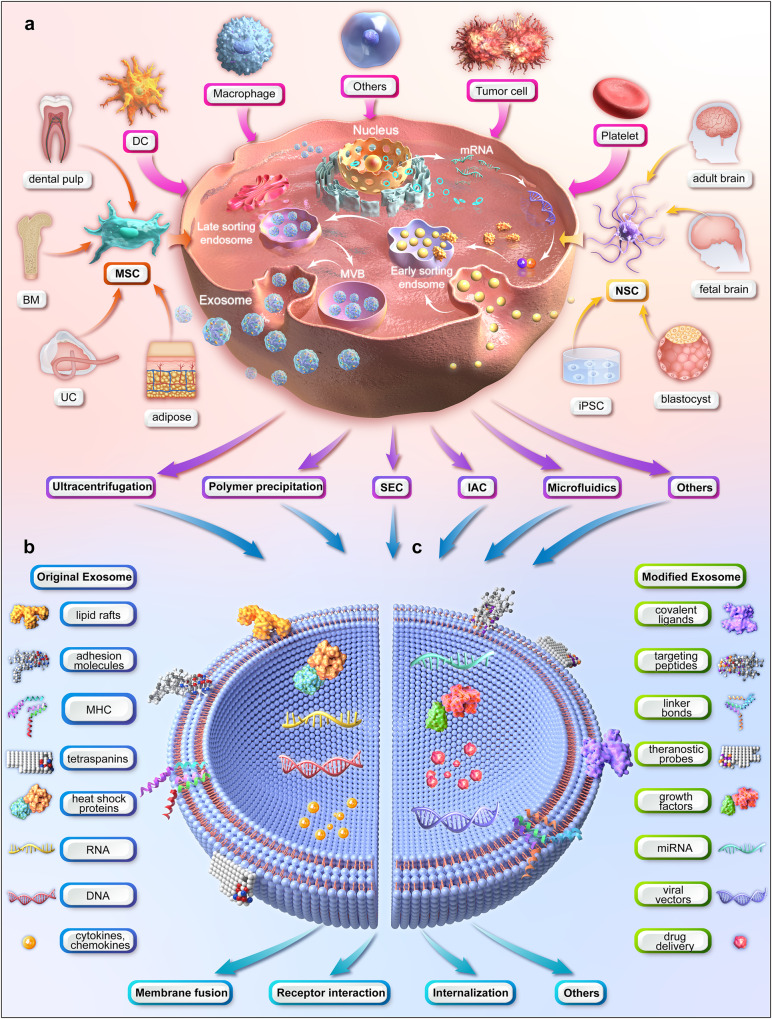
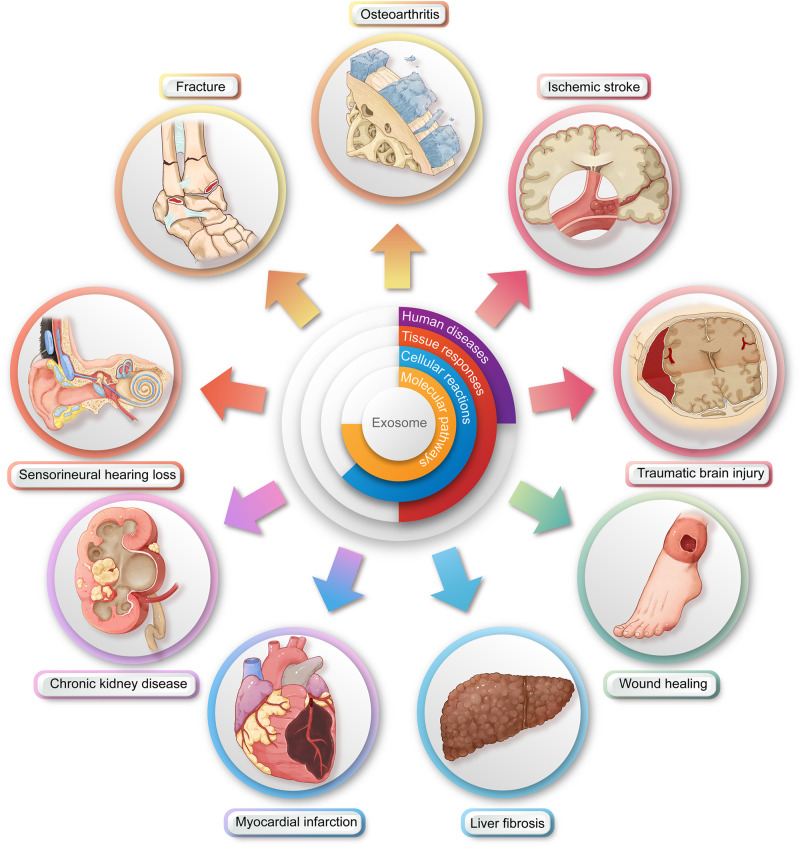
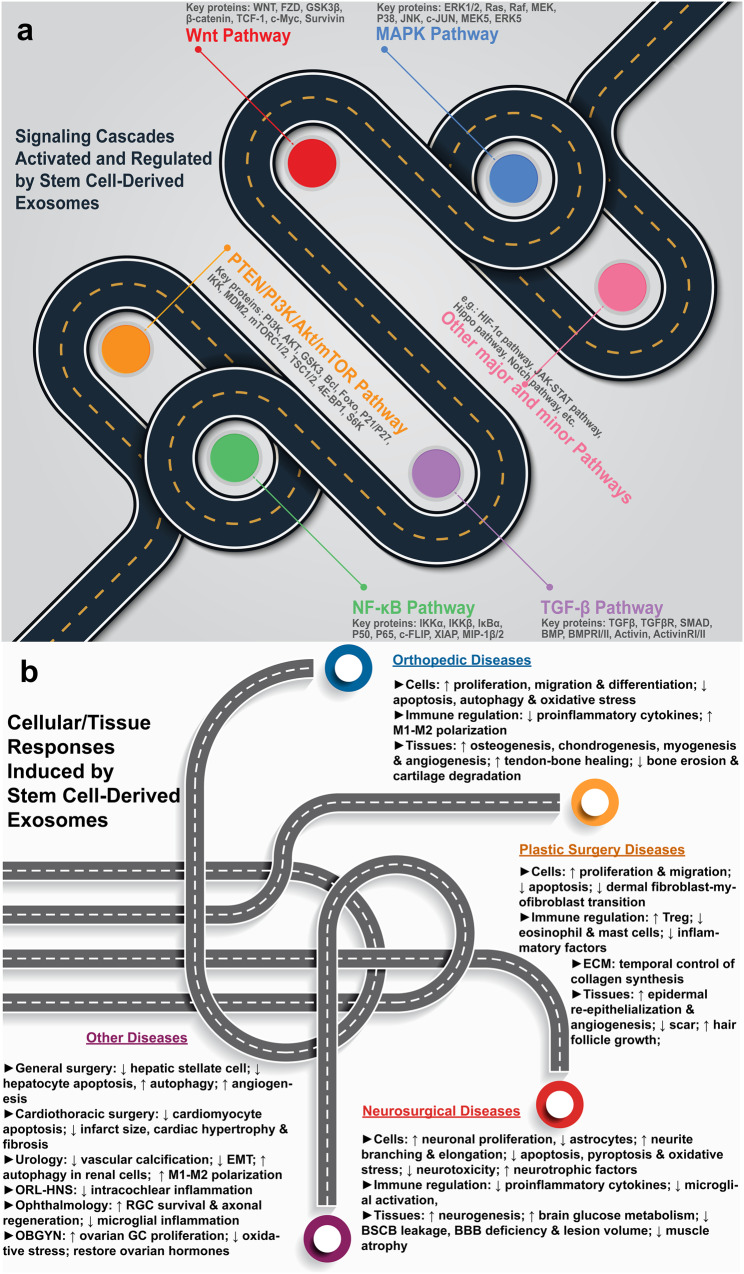
Although stem cell-based therapy has demonstrated considerable potential to manage certain diseases more successfully than conventional surgery, it nevertheless comes with inescapable drawbacks that might limit its clinical translation. Compared to stem cells, stem cell-derived exosomes possess numerous advantages, such as non-immunogenicity, non-infusion toxicity, easy access, effortless preservation, and freedom from tumorigenic potential and ethical issues. Exosomes can inherit similar therapeutic effects from their parental cells such as embryonic stem cells and adult stem cells through vertical delivery of their pluripotency or multipotency. After a thorough search and meticulous dissection of relevant literature from the last five years, we present this comprehensive, up-to-date, specialty-specific and disease-oriented review to highlight the surgical application and potential of stem cell-derived exosomes. Exosomes derived from stem cells (e.g., embryonic, induced pluripotent, hematopoietic, mesenchymal, neural, and endothelial stem cells) are capable of treating numerous diseases encountered in orthopedic surgery, neurosurgery, plastic surgery, general surgery, cardiothoracic surgery, urology, head and neck surgery, ophthalmology, and obstetrics and gynecology. The diverse therapeutic effects of stem cells-derived exosomes are a hierarchical translation through tissue-specific responses, and cell-specific molecular signaling pathways. In this review, we highlight stem cell-derived exosomes as a viable and potent alternative to stem cell-based therapy in managing various surgical conditions. We recommend that future research combines wisdoms from surgeons, nanomedicine practitioners, and stem cell researchers in this relevant and intriguing research area.
Overview
The claims and statistics of this paper haven’t been checked yet.
Free: it reads the open-access text and checks the first 5 claims that cite a source we can check. Create a free account to check every claim.
Integrity signals
Registry
Cites
Statistics
Figures
Verification
Claims the paper makes
The claims and statistics of this paper haven’t been checked yet.
Free: it reads the open-access text and checks the first 5 claims that cite a source we can check. Create a free account to check every claim.
Claims other papers make about this one
Each is checked against this paper’s own text: does it say what the citing paper says it does?
The cited source says what the claim attributes to it.
In the citing paper
“Despite their strong therapeutic promise in AD, the production of stem cell-derived exosomes remains challenging. Their yield from cultured media is extremely low, posing a major challenge for large-scale manufacturing and clinical translation [231].”
From The Impact of Neurotoxin Proteins Trafficked by Primary Cilia and Extracellular Vesicles in Neurodegenerative Diseases (2025) · cites this paper as [231]
Experimental — accuracy not yet measured
Self-check
Percentages, sums and reported differences re-computed from the paper’s own numbers.
The self-check needs the paper’s full text.
Citations
Cites
2 retracted
Ding, J., Wang, X., Chen, B., Zhang, J., & Xu, J. (2019) · BioMed Research International · doi:10.1155/2019/9742765 · Cited by 184 · cited 1×
“215 218 EPC-derived exosomes could accelerate cutaneous wound healing by promoting angiogenesis 219 through the Erk1/2 pathway 220 and p53 pathway.”
BackgroundRetractedJiang, Y., Zhang, J., Li, Z., & Jia, G. (2020) · Frontiers in Medicine · doi:10.3389/fmed.2020.577578 · Cited by 55 · cited 1×
“71 From a lncRNA perspective, especially the bone-speci fi c lncRNA H19, a Chinese group revealed that although a high-fat diet reduced osteogenic differentiation and weakened fracture healing, this could be reversed by MSC-derived exosomal lncRNA H19 via miR-467/ HoxA10 axis in an obesity-induced…”
BackgroundRetractedThéry, C., Witwer, K. W., Aikawa, E., Alcaraz, M. J., Anderson, J. D., Andriantsitohaina, R., Antoniou, A., Arab, T., Archer, F., Atkin‐Smith, G. K., et al. (2018) · Journal of Extracellular Vesicles · doi:10.1080/20013078.2018.1535750 · Cited by 11,099 · cited 1×
“55,56 Storage of exosomes The currently used preservation methods for long-term storage of exosomes mainly include cryopreservation, lyophilization, and spray-drying.”
MethodThe biology , function , and biomedical applications of exosomes
Kalluri, R., & LeBleu, V. S. (2020) · Science · doi:10.1126/science.aau6977 · Cited by 10,770
Poewe, W., Seppi, K., Tanner, C. M., Halliday, G. M., Brundin, P., Volkmann, J., Schrag, A.-E., & Lang, A. E. (2017) · Nature Reviews Disease Primers · doi:10.1038/nrdp.2017.13 · Cited by 5,415
Delivery of siRNA to the mouse brain by systemic injection of targeted exosomes
Alvarez-Erviti, L., Seow, Y., Yin, H., Betts, C., Lakhal, S., & Wood, M. J. A. (2011) · Nature Biotechnology · doi:10.1038/nbt.1807 · Cited by 4,930 · cited 1×
“50 Zhu et al. inserted tumor-targeting peptides, c(RGDyK), into the exosome surface using a chemical reaction to target glioblastoma.”
BackgroundDoyle, L., & Wang, M. (2019) · Cells · doi:10.3390/cells8070727 · Cited by 3,236 · cited 3×
“19 In addition, cargo pro fi ling is further subdivided into proteomic, lipidomic, and genomic analyses including western blotting, ELISA, fl ow cytometry, mass spectroscopy, and PCR. 36 Since each of the above characterization methods has advantages and disadvantages, it is a universal practice to…”
BackgroundMethodInfluentialBlood–brain barrier breakdown in Alzheimer disease and other neurodegenerative disorders
Sweeney, M. D., Sagare, A. P., & Zlokovic, B. V. (2018) · Nature Reviews Neurology · doi:10.1038/nrneurol.2017.188 · Cited by 3,076
Wound Healing: A Cellular Perspective
Rodrigues, M., Kosaric, N., Bonham, C. A., & Gurtner, G. C. (2019) · Physiological Reviews · doi:10.1152/physrev.00067.2017 · Cited by 3,013
Comprehensive Review on Alzheimer’s Disease: Causes and Treatment
Breijyeh, Z., & Karaman, R. (2020) · Molecules · doi:10.3390/molecules25245789 · Cited by 2,789
Research works printed but not linked: 1
- Carr NJ The pathology of healing and repair Surgery 2022 40 13 19
Cited by
Items 201–300 of 841
Li, J., Xu, M., Cai, B., Li, X., Liang, Z., Xia, X., Zhang, H., Zhang, Z., Tan, F., & Zheng, J. (2025) · Advanced Science · doi:10.1002/advs.202508574 · Cited by 13
Self-citationSelective Nanoparticulate Systems for Drug Delivery in Inflammatory Bowel Disease
Ribeiro, A., & Nunes, R. (2025) · Pharmaceutics · doi:10.3390/pharmaceutics18010055 · Cited by 13
“…Batch-to-batchinvariability Lack of standardization for isolation, purification and storage Low yield for large scale manufacturing Regulatory issues [99] miR-146a-loaded EVs significantly suppress inflammation by downregulating TRAF6 and IRAK1 in TNBS-induced colitis mice model [100].”
Hybrid exosomes: a rising horizon for precision cancer therapy
Sonar, S., Das, A., Nyahatkar, S., Dhar, R., Kalele, K., Balasubramaniam, V. R. M. T., Wong, L. S., Narayanan, K., & Subramaniyan, V. (2026) · RSC Advances · doi:10.1039/d5ra04927j · Cited by 13
“121 Another study demonstrated the potential of engineered macrophage-derived exosomes as a cancer immunotherapy.”
Pala, M., & Yılmaz, Ş. G. (2025) · Neural Plasticity · doi:10.1155/np/9581369 · Cited by 12
“Stem cell-derived EXOs are advantageous for treatment because of their immunity, nontoxicity, easy availability, lack Neural Plasticity of preservation, and nontumorigenic properties [85].”
Bento, E. B., Matos, C., & Ribeiro, H. L. (2025) · Cosmetics · doi:10.3390/cosmetics12030097 · Cited by 12
“They are rich in bioactive molecules, such as proteins, lipids, and nucleic acids, which can influence cellular processes and promote tissue regeneration [12].”
Exosome as bioactive nanovesicle for diagnostic and therapeutic applications in periodontitis
Wang, Y., Li, Y., Zhang, Y., Li, C., Lin, Y., Chen, S., & Han, B. (2025) · BMEMat · doi:10.1002/bmm2.70017 · Cited by 12
Wang, S., Zhuang, D., Xu, Q., Hou, D., Feng, T., Guo, J., & Wu, X. (2025) · International Journal of Biological Macromolecules · doi:10.1016/j.ijbiomac.2025.145213 · Cited by 12
Rosso, G., van Veen, S., Sancho‐Albero, M., Tamboia, G., Empereur‐mot, C., Perego, C., Kuipers, M. E., Dumontel, B., Ajó, A., Hoen, E. N. M. N., et al. (2025) · ACS Applied Nano Materials · doi:10.1021/acsanm.5c01459 · Cited by 12
Yu, M., Ma, H., Lai, X., Wu, J., Shen, M., & Yan, J. (2025) · Frontiers in Aging Neuroscience · doi:10.3389/fnagi.2025.1592578 · Cited by 12
“Currently, common NDDs include Alzheimer’s disease (AD), PD, amyotrophic lateral sclerosis (ALS), and multiple sclerosis Abbreviations: NDDs, neurodegenerative diseases; PD, Parkinson’s disease; AD, Alzheimer’s disease; ALS, amyotrophic lateral sclerosis; MS, multiple sclerosis; MSCs, mesenchymal stem cells; BBB, bloo…”
Hua, Z., Zhou, N., Zhou, Z., Fu, Z., Guo, R., Akogo, H. Y., Yang, J.-Y., Yu, M., Jiang, Y., Lan, S., et al. (2025) · Stem Cell Research & Therapy · doi:10.1186/s13287-025-04555-4 · Cited by 12
Xue, H., Shen, X.-L., Wang, Z., Bi, H., Xu, H., Wu, J., Cui, R., & Liu, M.-W. (2025) · International Journal of Molecular Medicine · doi:10.3892/ijmm.2025.5601 · Cited by 12
“Exosomal cargo derives from the cytoplasm, plasma membrane, and intracellular compart‑ ments, reflecting the physiological state and biological features of parent cells (56).”
Self-citationExosome Therapy: A Promising Avenue for Treating Intervertebral Disc Degeneration
Bhat, S., Kannan, S., Kolkundkar, U. K., & Seetharam, R. N. (2025) · Tissue Engineering and Regenerative Medicine · doi:10.1007/s13770-025-00746-5 · Cited by 12
“These mechanisms high-light how exosomal cargo directly influences cellular repair processes [34].”
Daryabari, S., Ghasemian, M., Lotfi, E., Solouki, A., Lin, K., Manoochehrabadi, T., Imeni, S. M. H., & Ghaleh, H. E. G. (2025) · Transplantation and Cellular Therapy · doi:10.1016/j.jtct.2025.09.024 · Cited by 12
Zhao, S., Tang, S., Chi, B., Yang, J., Zhu, L., & Yang, L. (2025) · Biosensors and Bioelectronics · doi:10.1016/j.bios.2025.118028 · Cited by 12
How Advanced Are Exosomes as Cell-Free Therapeutics for Spinal Cord Injury?
Wu, Y., Wang, Y., Zhou, J., Tang, Z., Huang, L., & Liu, S. (2025) · International Journal of Nanomedicine · doi:10.2147/ijn.s536652 · Cited by 13
Exosome-integrated biomaterials: A paradigm in musculoskeletal regeneration
Lv, Z., Xu, J., Cai, X., Wang, Y., Yang, X.-D., Wang, H., Bian, Y., Zhu, Y., Feng, B., & Weng, X. (2025) · Cell Reports Physical Science · doi:10.1016/j.xcrp.2025.102892 · Cited by 12
Emerging Therapeutic Strategies in Anti‐Aging Medicine: A Comprehensive Review
Peng, Y., Li, R., Li, H., Zhou, J., Liu, X., Valente, G. T., Melo, T. D. C., Chen, S., & 顾镭 (2026) · Medicine Bulletin · doi:10.1002/mdb2.70021 · Cited by 12
Choudhary, A., Rosh, I., Hussein, Y., Netser, S., Shemen, A., Suliman, T., Rike, W. A., Simchi, L., Shklyar, B., Abu-Akel, A. M., et al. (2026) · Cell Death and Disease · doi:10.1038/s41419-026-08474-x · Cited by 13
Fu, M., Huang, Z., Li, J., Li, Y., Fang, Z., Jiang, Y., Wu, K., & Guo, J. (2026) · Advanced Science · doi:10.1002/advs.202521824 · Cited by 12
Self-citationYu, W., Xu, J., Qiao, H., Liu, D., Sun, Y., Yan, R., Zhang, C., Yu, N., Song, Y., Ling, M., et al. (2024) · Journal of Proteomics · doi:10.1016/j.jprot.2024.105335 · Cited by 12
Self-citationStem Cell Therapy for Diseases of Livestock Animals: An In-Depth Review
Narasimha, R. B., Shreya, S., Anand, V., Yadav, V. K., Rath, P. K., Mishra, B. P., Kancharla, S., Kolli, P., Mandadapu, G., Kumar, S., et al. (2025) · Veterinary Sciences · doi:10.3390/vetsci12010067 · Cited by 12
Yang, Y., Deng, C., Aldali, F., Huang, Y., Luo, H., Liu, Y., Huang, D., Cao, X., Zhou, Q., Xu, J. M., et al. (2025) · Cells · doi:10.3390/cells14060409 · Cited by 13
“To enhance the effectiveness of IV-delivered sEVs, strategies such as surface modification can be employed.”
Zhang, R., Li, D., Zhou, Z., Hong, H., Shi, J., & Wu, Z. (2024) · ChemBioChem · doi:10.1002/cbic.202400512 · Cited by 11
Wang, N., Yin, M., Yu, J., Zhang, J., & Pan, X. (2024) · Electrophoresis · doi:10.1002/elps.202400055 · Cited by 11
“More and more studies have shown that exosomes can be secreted by various types of cells, including MSCs, blood cells, endothelial cells, nerve cells, and tumor cells [6].”
Zhao, T., Mu, Y., Deng, H., Liang, K., Zhou, F., Lin, Q., Cao, F., Zhou, F., & Yang, Z. (2024) · Frontiers in Cell and Developmental Biology · doi:10.3389/fcell.2024.1412363 · Cited by 11
Application of extracellular vesicles in diabetic osteoporosis
Jia, X., Zhang, G., & Yu, D. (2024) · Frontiers in Endocrinology · doi:10.3389/fendo.2024.1466775 · Cited by 11
Exosome-based therapies and biomarkers in stroke: Current advances and future directions
Poondla, N., Babaeizad, A., Sheykhhasan, M., Barry, C. J., Manoochehri, H., Tanzadehpanah, H., Mahaki, H., & Al-Musawi, S. (2025) · Experimental Neurology · doi:10.1016/j.expneurol.2025.115286 · Cited by 11
Pezeshki, P. S., Mahboubi, A., Ganjaroudi, N. M., Ghalehtaki, R., Zolbin, M. M., Salarvand, S., vangah, S. J., Mehrjoo, A., & Kajbafzadeh, A. M. (2025) · Stem Cell Research & Therapy · doi:10.1186/s13287-025-04503-2 · Cited by 11
“On the other hand, MSC-derived extracellular vesicles (MSC-EVs) have emerged as promising agents in regenerative medicine, particularly for conditions such as RC, where inflammation is a pillar to their pathogenesis [13, 14].”
Li, H., Xu, N., Li, S., Wang, X., Li, A., Wang, H., Wu, S., Zhou, S., Cai, C., & Zhang, T. (2025) · Stem Cell Research & Therapy · doi:10.1186/s13287-025-04587-w · Cited by 13
Tian, F., Kong, Y., Liu, Q., Zhu, S., Guo, X., Su, Y., Yu, B., Zhang, C., Zhu, D., Li, Z., et al. (2025) · Bioactive Materials · doi:10.1016/j.bioactmat.2025.10.007 · Cited by 12
“Recent advancements, such as the use of MSCs, offer promising solutions by activating endogenous repair signals[11 – 13].”
Self-citationChen, X., Liu, T., Chen, W., Lin, Z., Zhang, Q., Zhou, B., & Zhou, X. (2026) · Theranostics · doi:10.7150/thno.126530 · Cited by 12
“Compared to other circulating biomarkers, such as CTCs, nucleic acids, and metabolites, exosomes exhibit high abundance and superior stability due to their significantly larger size (Figure 11A) [112, 113].”
Safety Assessment of Extracellular Vesicle-Based Therapy in Regenerative Dentistry
Chuah, B. H., Law, J. X., Leong, X.-F., Pang, K.-L., Farm, Y.-R., Razali, M., & Ng, S. L. (2026) · International Journal of Molecular Sciences · doi:10.3390/ijms27020798 · Cited by 11
“…from particle counts to protein concentrations) complicates cross-study comparisons and hinders the development of standardised clinical protocols [139]; the optimal route of administration remains unclear (systemic delivery faces rapid clearance by the mononuclear phagocyte system [140], whereas…”
Zheng, Z., Xie, J., Zeng, J., Kang, Z., Liu, Z., Qi, M., Yu, C., & Wei, H. (2026) · Regenerative Biomaterials · doi:10.1093/rb/rbag009 · Cited by 12
“Notably, BMSCs display significant immunomodulatory and anti-inflammatory functions through paracrine mechanisms that facilitate tissue repair processes [132].”
Wang, X., Wang, W., Yao, R., Liu, Z., & Wang, Q. (2026) · Molecular and Cellular Probes · doi:10.1016/j.mcp.2026.102064 · Cited by 11
Li, C., Li, J., Chen, S., Xia, J., Song, J., Hu, T., Cui, Z., Gu, G., Chen, F., Mei, Z., et al. (2026) · Journal of Controlled Release · doi:10.1016/j.jconrel.2026.114840 · Cited by 11
Self-citationNegrete-Diaz, F., Martinez-Rodriguez, S., Guedan-Duran, A., Romero-Lopez, A., & Panetsos, F. (2026) · Pharmacological Research · doi:10.1016/j.phrs.2026.108245 · Cited by 11
Li, X.-H., Xiao, H.-X., Wang, Z.-X., Tang, X.-R., Yu, X., & Pan, Y.-P. (2024) · Cell Transplantation · doi:10.1177/09636897241235460 · Cited by 11
“In summary, proteomic analysis usually involves the study of proteins within Exosomes 67 .”
BackgroundSelf-citationZhang, J., Zhao, Y., Hu, H., Lv, M., & Zhang, H. (2025) · Microchimica Acta · doi:10.1007/s00604-024-06862-8 · Cited by 11
Small extracellular vesicles: crucial mediators for prostate cancer
Tang, S., Cheng, H., Zang, X., Tian, J., Ling, Z., Wang, L., Xu, W., & Jiang, J. (2025) · Journal of Nanobiotechnology · doi:10.1186/s12951-025-03326-w · Cited by 11
“Stem cells have regenerative capabilities and release sEVs that reflect this remarkable attribute [194].”
Exosome Therapy: A Novel Approach for Enhancing Estrogen Levels in Perimenopause
Alkhrait, S., Omran, M. M., Ghasroldasht, M. M., Park, H.-S., Katkhuda, R., & Al-Hendy, A. A. (2024) · International Journal of Molecular Sciences · doi:10.3390/ijms25137075 · Cited by 10
“In addition, compared to stem cells, stem cell-derived exosomes possess numerous advantages, such as non-immunogenicity, non-infusion toxicity, easy access, effortless preservation, and freedom from tumorigenic potential and ethical issues [19].”
BackgroundFonteles, C. S. R., Enterria‐Rosales, J., Lin, Y. L., Steele, J., Villarreal-Leal, R. A., Xiao, J., Idowu, D. I., Burgelin, B., Wlodarczyk, B. J., Finnell, R. H., et al. (2024) · Stem Cell Research & Therapy · doi:10.1186/s13287-024-04082-8 · Cited by 11
“Their small size, biocompatibility, and immune-modulatory surface proteins enable them to avoid rapid clearance by macrophages and other components of the innate immune system [14, 45].”
The functional regulation between extracellular vesicles and the DNA damage responses
Han, J., Xu, K., Xu, T., Qin, S., Duan, T., & Yang, J. J. (2025) · Mutation Research/Reviews in Mutation Research · doi:10.1016/j.mrrev.2025.108532 · Cited by 10
Mirzaahmadi, B., Ahmadian, S., Haddadi, P., Nezhad‐Mokhtari, P., Nezamdoust, F. V., Yalameha, B., Chegeni, S. A., Rashidi, S., Mousakhani, A., Sokullu, E., et al. (2025) · Cell Communication and Signaling · doi:10.1186/s12964-025-02286-w · Cited by 11
“But due to inherent heterogeneity in content and size, it is difficult to use a standard protocol for obtaining EVs from biological fluids with high GMP grade and clinical applications [10, 212].”
InfluentialClinical Status of Exosomes: A Review
Sgaglione, J., Neufeld, E. V., Swami, P. N., & Grande, D. A. (2025) · HSS Journal® The Musculoskeletal Journal of Hospital for Special Surgery · doi:10.1177/15563316251362179 · Cited by 10
“54 Internal modifications are further classified into pre-secretion and post-secretion loading techniques; this depends on whether MSCs are treated before exosome secretion, or if the secreted exosomes are the direct target of the treatment.”
InfluentialLi, W., Li, H., Fan, L., Zhao, R., Dong, F., Jia, X., Yin, L., Yang, S., Zhao, D., & Wang, J. (2025) · International Journal of Nanomedicine · doi:10.2147/ijn.s547871 · Cited by 10
Xiong, C., Chen, Z., Wu, X., Zhang, C., Yuan, Z., Wang, X., Xiao, Z., Chen, Y., Deng, S., Wu, X., et al. (2025) · European Journal of Pharmacology · doi:10.1016/j.ejphar.2025.178401 · Cited by 10
Self-citationKalhorniagolkar, M., Oryan, A., & Maffulli, N. (2026) · British Medical Bulletin · doi:10.1093/bmb/ldag003 · Cited by 10
Zhu, A., Jiang, Y., Pan, L., Li, J., Huang, Y., Shi, M., Di, L., Wang, L., & Wang, R. (2024) · Journal of Controlled Release · doi:10.1016/j.jconrel.2024.11.013 · Cited by 10
Self-citationPotential Use of Exosomal Non-Coding MicroRNAs in Leukemia Therapy: A Systematic Review
Gil-Kulik, P., Kluz, N., Przywara, D., Petniak, A., Wasilewska, M., Frączek-Chudzik, N., & Cieśla, M. (2024) · Cancers · doi:10.3390/cancers16233948 · Cited by 10
Regulatory Roles of Exosomes in Aging and Aging-Related Diseases
Xiao, N., Li, Q., Liang, G., Qian, Z., Lin, Y., Zhang, H., Fu, Y., Yang, X. M., Zhang, C., Yang, J., et al. (2025) · Biogerontology · doi:10.1007/s10522-025-10200-7 · Cited by 10
“The cargo within these exosomes reflects the condition of their parent cells (Tan et al. 2024), offering potential for their application in diagnosing diseases (Kalluri and LeBleu 2020).”
InfluentialExosome-based platforms for treatment of multiple sclerosis
Zonouz, A. M., Rahbardar, M. G., & Alibolandi, M. (2025) · Brain Research Bulletin · doi:10.1016/j.brainresbull.2025.111256 · Cited by 9
Jamil, N. Y., Nawrooz, M. S., Bishoyi, A. K., Ballal, S., Singh, A., Krithiga, T., Panigrahi, R., Bakhtiyarovna, B. Z., Taher, S. G., Alwan, M., et al. (2025) · Investigational New Drugs · doi:10.1007/s10637-025-01551-6 · Cited by 9
Zhu, Y., Bao, S., Yin, X., Yu, M., Wang, Q., & Dong, C. (2025) · Diabetes Research and Clinical Practice · doi:10.1016/j.diabres.2025.112364 · Cited by 9
Dairov, A., Issabekova, A., & Ogay, V. B. (2025) · Current Stem Cell Research & Therapy · doi:10.2174/011574888x393159250704132425 · Cited by 10
Extracellular vesicles as the drug delivery vehicle for gene-based therapy
Aquino, A. D., Rubinstein, A., Кудрявцев, И. В., Yakovlev, A. A., & Головкин, А. С. (2025) · Applied Physics Reviews · doi:10.1063/5.0255519 · Cited by 10
Substrate Stiffness Regulates the Osteogenesis of PDLSCs Via ERK-Mediated YAP Nuclear Translocation
Fu, Y., Wang, Y., Cheng, B., Zou, R., & Wan, W. (2025) · International Dental Journal · doi:10.1016/j.identj.2025.103852 · Cited by 9
“4,5 Stem cell therapy has been proposed as a viable alternative to induce and promote bone repair processes.”
Xiao, L., Zhang, Z., Li, T., Jiang, Y., Liu, Y., Lv, T., Qin, L., Zhu, Y., & Tang, W. (2025) · Aging Cell · doi:10.1111/acel.70327 · Cited by 9
Zheng, D., Bai, Y., Liu, Z., Zhao, Z., Kong, Y., Xu, Y., Jia, Q., Zhu, R., & Hu, Y. (2026) · Advanced Science · doi:10.1002/advs.202519701 · Cited by 10
Research progress of autoimmune diseases based on induced pluripotent stem cells
Ren, R., Jiang, J., Li, X., & Zhang, G. (2024) · Frontiers in Immunology · doi:10.3389/fimmu.2024.1349138 · Cited by 10
Self-citationApplications of Modified Mesenchymal Stem Cells as Targeted Systems against Tumor Cells
Garza-Treviño, E. N., Quiroz-Reyes, A. G., González, P. D., Murillo, J. A. R., Islas, J. F., Saavedra-Alonso, S., & González-Villarreal, C. A. (2024) · International Journal of Molecular Sciences · doi:10.3390/ijms25147791 · Cited by 9
“Lastly, there are no guidelines for therapeutic agents [82].”
BackgroundGe, Y., Jiang, L., Dong, Q., Xu, Y., Yam, J. W. P., & Zhong, X. (2024) · Journal of Clinical and Translational Hepatology · doi:10.14218/jcth.2024.00302 · Cited by 9
Zhang, Z., Li, M., Cheng, G., Wang, P., Zhou, C., Liu, Y., Duan, X., Wang, J., Xie, F., Zhu, Y., et al. (2024) · Stem Cell Research & Therapy · doi:10.1186/s13287-024-04093-5 · Cited by 9
“However, excessive detergent residue can spread to the connection between the graft and nerve endings, which is potentially dangerous for transplantation treatment [6, 8, 18].”
Combe, M., Isaac, K. S., Plews, J. R., & Sokolenko, S. (2025) · Stem Cell Research & Therapy · doi:10.1186/s13287-025-04279-5 · Cited by 9
“These properties have positioned them as a promising and safer alternative to traditional cell therapy [7].”
Tendon–Bone Healing: Synergistic Role of Platelets and Mesenchymal Stem Cells in Tissue Engineering
Wu, Y., Wang, X., Zhao, D., Lin, R., Zhang, X., & Lin, X. (2025) · Tissue Engineering Part B Reviews · doi:10.1089/ten.teb.2024.0333 · Cited by 9
“57 Despite these advantages, the lack of standardized methods for quan-ti fi cation and quality control presents a signi fi cant barrier to their clinical translation.”
Stem cell therapy: A promising therapeutic approach for skeletal muscle atrophy
Wang, Y., Chen, Z., Shen, Y., Wang, K., Han, Y.-M., Zhang, C., Yang, X.-M., & Chen, B. (2025) · World Journal of Stem Cells · doi:10.4252/wjsc.v17.i2.98693 · Cited by 8
“Cell-free therapies based on stem cell derivatives have better prospects compared to conventional cell transplantation therapy[156,157].”
Grignano, M. A., Pisani, S., Gregorini, M., Rainaudo, G., Avanzini, M. A., Croce, S., Valsecchi, C., Ceccarelli, G., Islami, T., Margiotta, E., et al. (2025) · International Journal of Molecular Sciences · doi:10.3390/ijms26073424 · Cited by 9
“In fact, their potential in this regard is increasingly recognized, and they are being explored as promising nanocarriers for chemotherapy, providing a novel therapeutic approach [26–33].”
Biocompatible lipid nanovehicles for preventive and therapeutic vaccine development
Jia, Y., Zhou, Z., Jiramonai, L., Chen, J., Hua, Q., Zhu, M., Zhang, J., & Liang, X. (2025) · Coordination Chemistry Reviews · doi:10.1016/j.ccr.2025.216718 · Cited by 8
Hong, Y., Feng, Z., Ge, Y., Xi, Y., Zhang, B., Wu, J., Xia, T., Tang, B., Wang, W., Chen, J. R., et al. (2025) · Regenerative Therapy · doi:10.1016/j.reth.2025.04.004 · Cited by 8
“Owing to their high biocompatibility, ef fi cient cellular uptake, and intrinsic ability to transfer functional miRNAs, these vesicles have emerged as an optimal platform for miRNA-based therapies [27,28].”
Zhang, Z., He, F., Li, W., Liu, B., Deng, C. D., & Qin, X. (2025) · Journal of Functional Biomaterials · doi:10.3390/jfb16060213 · Cited by 8
Tuning Cellular Perception in Pluripotent Stem Cells through Topography, Stiffness, and Patterning
Jiang, Y., Harberts, J. I., Chen, Y., Williams, R. J., Duan, W., Samarasinghe, R. M., Voelcker, N. H., & Elnathan, R. (2025) · Advanced NanoBiomed Research · doi:10.1002/anbr.202500036 · Cited by 8
Mahheidari, N., Alizadeh, M., Rashidi, M., & Rezakhani, L. (2025) · Tissue and Cell · doi:10.1016/j.tice.2025.103201 · Cited by 8
Kim, S. M., Min, K., Park, Y., & Moon, S. (2025) · npj Microgravity · doi:10.1038/s41526-025-00547-z · Cited by 8
“MSCsculturedundermicrogravityexhibitanincreasedreleaseofanti-in fl ammatory cytokines and exosomes, which could address one of the primary limitations of MSC-based therapies: variability in clinical ef fi cacy 69,79,84 .”
Therapeutic and Diagnostic Roles of MSC‐Derived Exosomes in Alzheimer's Disease
Patil, V. S., Parekh, B. K., Sharma, A., Farah, H., Renuka Jyothi, S., Mishra, S. S., Nanda, A., Al-Hasnaawei, S., & Kumar‐Mishra, M. (2025) · Brain and Behavior · doi:10.1002/brb3.71112 · Cited by 8
Ebrahimi, V., Abdolmohammadi‐Vahid, S., Soltani‐Zangbar, M. S., Ahmadi, H., & Maleki, L. A. (2025) · Biomedicine & Pharmacotherapy · doi:10.1016/j.biopha.2025.118889 · Cited by 8
Cheng, M., Liu, Y., Suo, M., Wang, K., Chen, X., & Li, Z. (2026) · International Journal of Molecular Sciences · doi:10.3390/ijms27031133 · Cited by 8
“Extracellular vesicles released by MSCs (MSC-derived exosomes) act as intercellular messengers and have been explored for disc repair [118].”
Exosome-Based Therapeutics in Dermatology and Beyond: A Narrative Review
Pham, G. M.-T. (2026) · Biomedicines · doi:10.3390/biomedicines14020338 · Cited by 8
“Human trials are still lacking, so translation will depend on early phase studies that confirm safety and define clinically meaningful endpoints for tendon healing [86].”
Yao, S., Zeng, L., Wang, H., liu, J., Cao, X., Xu, Z., Zhang, Y. R., He, S., Ye, B., Sun, T., et al. (2026) · Journal of Nanobiotechnology · doi:10.1186/s12951-025-04004-7 · Cited by 8
Zhang, F., Xing, L., Chu, W., Wang, Q., Sun, H., Liu, Y., An, G., & Liang, X. (2026) · International Journal of Nanomedicine · doi:10.2147/ijn.s622474 · Cited by 8
“147 In terms of translational practicality, EVs enable standardized production, cryopreservation, and transportation without viability maintenance, greatly reducing clinical application barriers.”
Native and engineered extracellular vesicles: novel tools for treating liver disease
Jiang, S., Tian, S., Wang, P., Liu, J., Sun, K., Zhou, X., Han, Y., & Shang, Y. (2024) · Journal of Materials Chemistry B · doi:10.1039/d3tb01921g · Cited by 8
Mushtaq, M., Zineldeen, D. H., Mateen, M. A., & Haider, K. H. (2024) · World Journal of Stem Cells · doi:10.4252/wjsc.v16.i5.467 · Cited by 8
Chen, H., Xu, H., Zhang, W., Luo, Z.-Y., Zhang, Z., Shi, H.-H., Dong, Y.-C., Xie, Z., Ben, Y., & An, S. (2024) · Current Stem Cell Research & Therapy · doi:10.2174/011574888x301827240613063513 · Cited by 8
Ke, L., Cao, Y., Lü, Z., & Hallajzadeh, J. (2024) · Frontiers in Cell and Developmental Biology · doi:10.3389/fcell.2024.1459246 · Cited by 8
“Stem cell-derived exosomes can transport ncRNAs that target genes involved in NSCs fate determination (Zhang L. et al., 2024; Tan et al., 2024).”
BackgroundInfluentialHuang, Y., Osouli, A., Li, H., Dudaney, M., Pham, J., Mancino, V., Khan, T., Chaudhuri, B., Pastor‐Soler, N. M., Hallows, K. R., et al. (2025) · Biomaterials · doi:10.1016/j.biomaterials.2025.123296 · Cited by 8
New Approach in Bioactive Materials for Regeneration Dental Application
Khaksar, E., Asadi, A., Rezaei, M., Abbasi, F., & Ghahramani, Y. (2025) · Advances in Applied NanoBio-Technologies · doi:10.18502/aanbt.v6i1.18640 · Cited by 8
The Potential Role of Exosomes in Communication Between Astrocytes and Endothelial Cells
Czpakowska, J., Glabinski, A. R., & Szpakowski, P. (2025) · International Journal of Molecular Sciences · doi:10.3390/ijms26104676 · Cited by 8
Va, B., Gorskaya, Y. F., & Нестеренко, В. Г. (2024) · Immunologiya · doi:10.33029/1816-2134-2024-45-3-385-395 · Cited by 8
Song, F., Wu, B., Wei, G., Cheng, S., Wei, L., Xiong, W., & Luo, D. (2025) · BMC Medicine · doi:10.1186/s12916-025-03965-8 · Cited by 7
“Stem cells possess a remarkable ability to differentiate into various cell types, making them invaluable in fields such as regenerative medicine, developmental biology, and disease treatment [12–14].”
Bai, C., Ren, H., Zhang, F., Li, D., Feng, Q., Li, Y., Chen, T., Li, C., Xiao, X., Zhang, H., et al. (2025) · Journal of Nanobiotechnology · doi:10.1186/s12951-025-03556-y · Cited by 7
Huang, Y., Chang, C.-Y., & Huang, C. (2025) · Biomedicines · doi:10.3390/biomedicines13092093 · Cited by 7
“Compared to MSCs, exosomes from MSCs offer several advantages, including non-immunogenicity, absence of infusion toxicity, and ease of access and storage, as well as a lack of tumorigenic potential and ethical issues [19].”
Rahnama, M., Abbasi, F., Ranjbarvan, P., & Golchin, A. (2025) · Stem Cell Reviews and Reports · doi:10.1007/s12015-025-11007-2 · Cited by 7
“Despite the therapeutic potential of MenMSCs, their therapeutic implementation is limited by several hurdles, including ethical issues, immunological rejection, and the risk of tumorigenicity [20].”
Qu, Q., Liu, S.-Y., Fu, B., Ao, Q., Long, Y., Liu, Z., Wei, W., Hou, W., Liu, X., & Tian, X. (2025) · Stem Cell Research & Therapy · doi:10.1186/s13287-025-04744-1 · Cited by 7
“Ultra-centrifugation is considered the ‘gold standard’ for exo-some isolation [65–67], but its low recovery rate, lengthy processing time, and high equipment costs render it unsuitable for scaled-up production [64].”
Guo, X., Liu, B., Xu, P., Chen, H., Gao, J., Yao, D., Li, X., Wang, Y., Wang, T., Yao, H., et al. (2025) · Stem Cell Research & Therapy · doi:10.1186/s13287-025-04773-w · Cited by 8
Self-citationPhytochemical nanoliposomes: next-generation therapeutics in precision oncology
Sowmiya, S., Suseela, V., & Jeyaramraja, P. R. (2025) · Nano Express · doi:10.1088/2632-959x/ae2041 · Cited by 7
Xing, J., Li, S., Wang, Y., Jia, X., Lin, R., Liu, X., Wang, D., Cui, N., Ji, P., Chen, J., et al. (2026) · Advanced Science · doi:10.1002/advs.202522920 · Cited by 7
“The small size and superior penetration of sEVs also limit their direct use in wound repair due to their short residence time and rapid clearance from the treated sites [ 19 ].”
Wang, Z., Luo, J., Yu, T., Hu, P., & Liu, J. (2026) · Stem Cell Research & Therapy · doi:10.1186/s13287-026-04927-4 · Cited by 7
“Compared with traditional stem cell transplantation therapy, exosomes offer notable advantages, including lower toxicity and reduced immunogenicity [32].”
Self-citationEngineered Exosomes: Advances in Therapeutic Applications for Otolaryngology–Head and Neck Diseases
Zhu, H., He, J., Yang, S., & Qin, G. (2026) · International Journal of Nanomedicine · doi:10.2147/ijn.s574708 · Cited by 7
“41,42 For example, engineered exosomes have been shown to reduce drug-induced apoptosis and oxidative stress in hair cells through the miR-182-5p/FOXO3 signaling pathway.”
Exosomes in tissue engineering and cell-free therapy: A comprehensive review
Zhang, L., Yang, F. F., Liu, J. B., Li, M., Mao, F., Ocansey, D. K. W., & Wu, Y. B. (2026) · European Cells and Materials · doi:10.22203/ecm.v055a06 · Cited by 9
Wu, Y., Sun, Y., Chen, J., Hu, M., Zhang, X., Xiong, X., Yu, Z., Yang, X., Li, H., & Wang, Y. (2026) · Bioactive Materials · doi:10.1016/j.bioactmat.2026.02.056 · Cited by 7
“Embryonic stem cell-derived sEV can stimulate endothelial angiogenesis and aid neural repair by modulating neuronal survival, axon growth, and synaptic plasticity pathways [11,37].”
Wu, X., Jin, S., Pan, Y., Zhen, W., Yu, S., Zhang, Y., Xu, F. Y., Wang, R., Wu, M., Sun, W., et al. (2026) · Stem Cell Research & Therapy · doi:10.1186/s13287-026-04997-4 · Cited by 7
Saviana, M., Romano, G., Morales, D. D. V., Acunzo, M., & Nana-Sinkam, P. S. (2026) · Comprehensive physiology · doi:10.1002/cph4.70128 · Cited by 8
Metadata
- Authors
- Tan, F., Li, X., Wang, Z., Li, J., Shahzad, K., & Zheng, J.
- Affiliations
- Tongji University (CN)
- Corresponding author
- Tan, Fei
- Venue
- Signal Transduction and Targeted Therapy
- Published
- 2024-01-12
- Volume
- 9
- Issue
- 1
- Pages
- 17-17
- ISSN
- 2059-3635 (ISSN-L)
- PMC
- PMC10784577
- OpenAlex
- W4390765704
- Semantic Scholar
- 7d21154a4aa525f5d1c118adcaa16de60d9798de
- Cited by
- 708
- References
- 352
- Citations by year
- 2026: 267 · 2025: 313 · 2024: 128
- FWCI
- 28.81
- Type
- journal article
- Language
- en
- Open access
- gold
- doi.org
- Licence
- cc-by
- creativecommons.org/licenses/by/4.0 (tdm)
- creativecommons.org/licenses/by/4.0 (vor)
- Locations
- Signal Transduction and Targeted Therapy (publishedVersion, cc-by)
- PubMed Central (publishedVersion, cc-by)
- PubMed (publishedVersion)
- DOAJ (DOAJ: Directory of Open Access Journals) (submittedVersion, cc-by-sa)
- Funders
- National Natural Science Foundation of China (82271192)
- Topics
- Life Sciences › Biochemistry, Genetics and Molecular Biology › Molecular Biology › Extracellular vesicles in disease
- Life Sciences › Biochemistry, Genetics and Molecular Biology › Cell Biology › Mesenchymal stem cell research
- Health Sciences › Dentistry › Periodontics › Periodontal Regeneration and Treatments
- Keywords
- stem cell-derived exosomes, exosome therapy, orthopedic surgery, neurosurgery, plastic surgery, cardiothoracic surgery, urology, head and neck surgery, ophthalmology, obstetrics and gynecology, tissue-specific responses, clinical translation
- MeSH terms
- Embryonic Stem Cells, Exosomes, Induced Pluripotent Stem Cells, Mesenchymal Stem Cells
About these checks
Registry, retraction, Cites and statistics results are computed, not judged, with one exception: a printed reference that no index lists is read once by a model before it counts as a citation error. Claims are extracted by a model and kept only when their quote appears verbatim in the text; each cited source is then checked, with a model’s help, for whether it says what the claim relies on. Those verdicts can be wrong — read the claim’s quote and the cited source before relying on one.
Statistics and arithmetic are recomputed, not judged.
Confidence bands are shown only for fields calibrated on our annotated test set. None is calibrated yet, so no band is shown.
What counts as a claim ›How we measure confidence ›How we check this ›
Are you an author, or do you see a problem with this page? Request a review
Data sources
Bibliographic data: Semantic Scholar, OpenAlex, Crossref.
Contains information from the Semantic Scholar Academic Graph Datasets, made available under the ODC Attribution License (ODC-BY 1.0).
Semantic Scholar’s data is described in: Kinney, R., et al. (2023). The Semantic Scholar Open Data Platform. arXiv:2301.10140.
