

Clinical applications of stem cell-derived exosomes
Open accessThe DOI matches its Crossref record; 351 of the 352 references it cites were found in a registry or an index.
Abstract
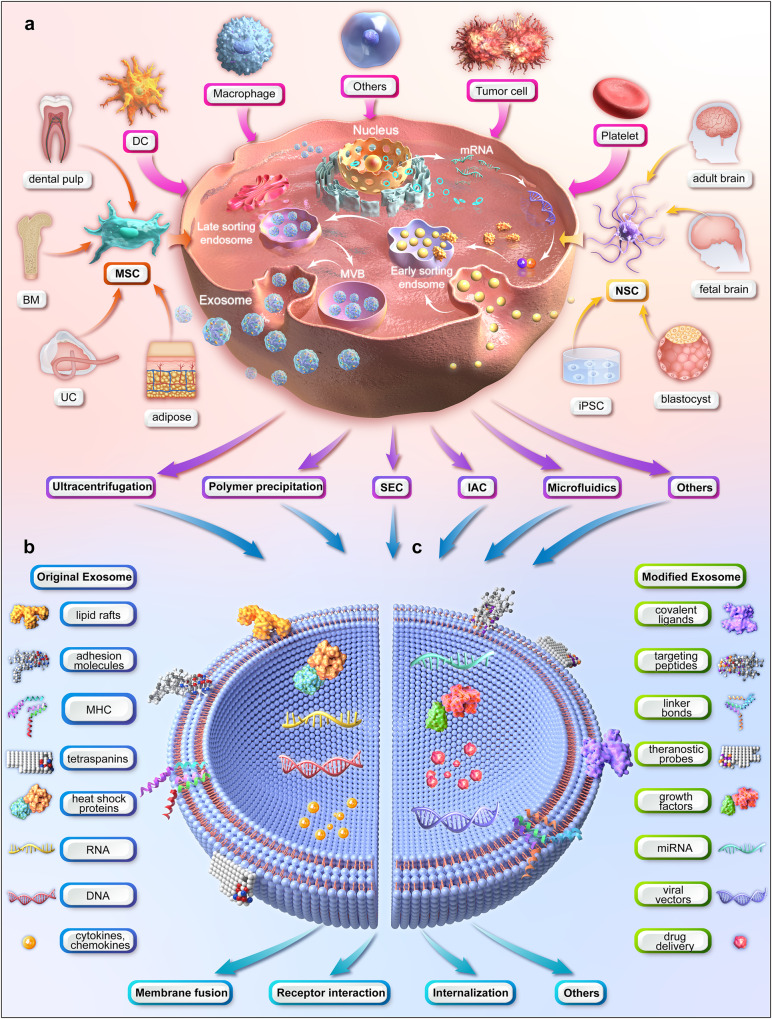
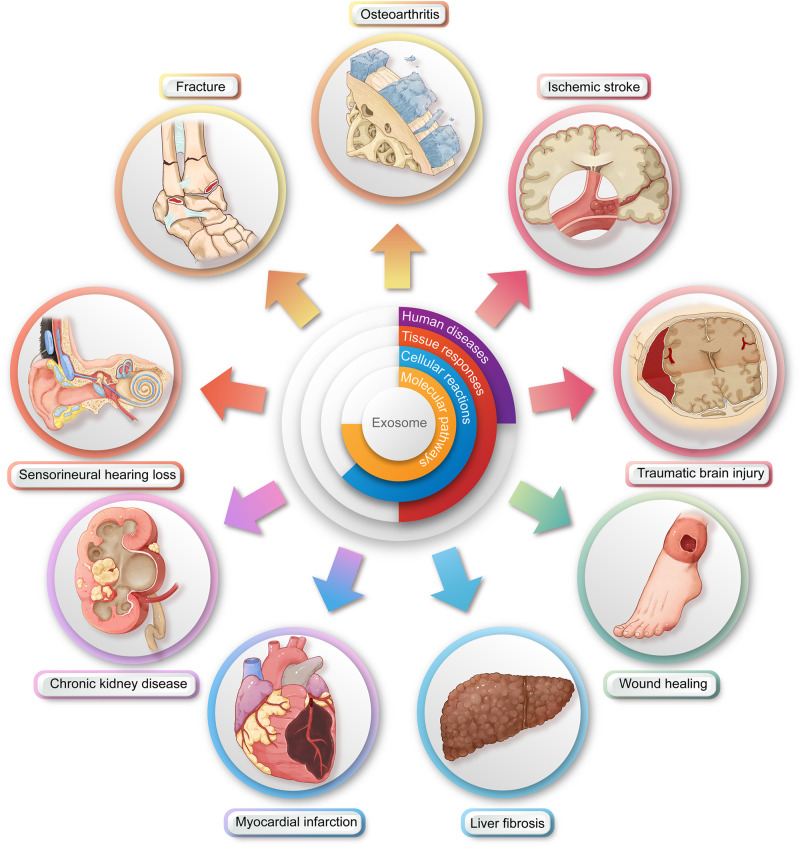
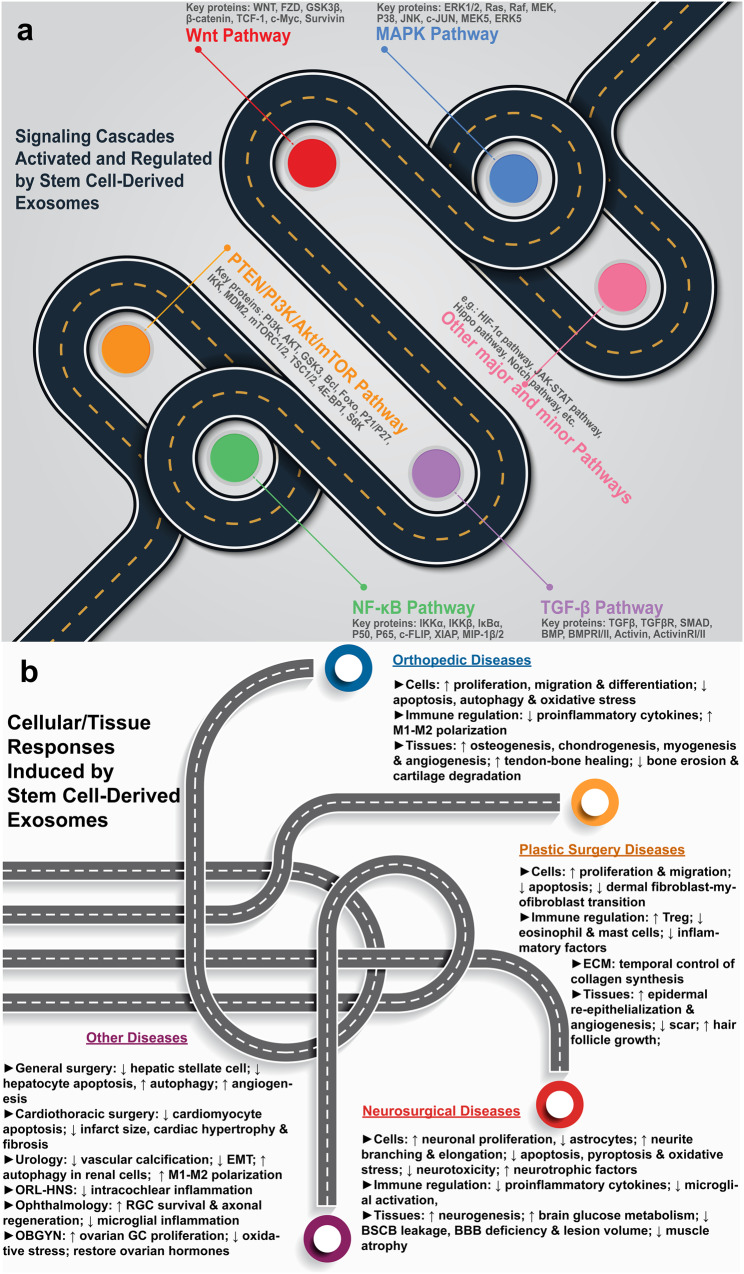
Although stem cell-based therapy has demonstrated considerable potential to manage certain diseases more successfully than conventional surgery, it nevertheless comes with inescapable drawbacks that might limit its clinical translation. Compared to stem cells, stem cell-derived exosomes possess numerous advantages, such as non-immunogenicity, non-infusion toxicity, easy access, effortless preservation, and freedom from tumorigenic potential and ethical issues. Exosomes can inherit similar therapeutic effects from their parental cells such as embryonic stem cells and adult stem cells through vertical delivery of their pluripotency or multipotency. After a thorough search and meticulous dissection of relevant literature from the last five years, we present this comprehensive, up-to-date, specialty-specific and disease-oriented review to highlight the surgical application and potential of stem cell-derived exosomes. Exosomes derived from stem cells (e.g., embryonic, induced pluripotent, hematopoietic, mesenchymal, neural, and endothelial stem cells) are capable of treating numerous diseases encountered in orthopedic surgery, neurosurgery, plastic surgery, general surgery, cardiothoracic surgery, urology, head and neck surgery, ophthalmology, and obstetrics and gynecology. The diverse therapeutic effects of stem cells-derived exosomes are a hierarchical translation through tissue-specific responses, and cell-specific molecular signaling pathways. In this review, we highlight stem cell-derived exosomes as a viable and potent alternative to stem cell-based therapy in managing various surgical conditions. We recommend that future research combines wisdoms from surgeons, nanomedicine practitioners, and stem cell researchers in this relevant and intriguing research area.
Overview
The claims and statistics of this paper haven’t been checked yet.
Free: it reads the open-access text and checks the first 5 claims that cite a source we can check. Create a free account to check every claim.
Integrity signals
Registry
Cites
Statistics
Figures
Verification
Claims the paper makes
The claims and statistics of this paper haven’t been checked yet.
Free: it reads the open-access text and checks the first 5 claims that cite a source we can check. Create a free account to check every claim.
Claims other papers make about this one
Each is checked against this paper’s own text: does it say what the citing paper says it does?
The cited source says what the claim attributes to it.
In the citing paper
“Despite their strong therapeutic promise in AD, the production of stem cell-derived exosomes remains challenging. Their yield from cultured media is extremely low, posing a major challenge for large-scale manufacturing and clinical translation [231].”
From The Impact of Neurotoxin Proteins Trafficked by Primary Cilia and Extracellular Vesicles in Neurodegenerative Diseases (2025) · cites this paper as [231]
Experimental — accuracy not yet measured
Self-check
Percentages, sums and reported differences re-computed from the paper’s own numbers.
The self-check needs the paper’s full text.
Citations
Cites
2 retracted
Ding, J., Wang, X., Chen, B., Zhang, J., & Xu, J. (2019) · BioMed Research International · doi:10.1155/2019/9742765 · Cited by 184 · cited 1×
“215 218 EPC-derived exosomes could accelerate cutaneous wound healing by promoting angiogenesis 219 through the Erk1/2 pathway 220 and p53 pathway.”
BackgroundRetractedJiang, Y., Zhang, J., Li, Z., & Jia, G. (2020) · Frontiers in Medicine · doi:10.3389/fmed.2020.577578 · Cited by 55 · cited 1×
“71 From a lncRNA perspective, especially the bone-speci fi c lncRNA H19, a Chinese group revealed that although a high-fat diet reduced osteogenic differentiation and weakened fracture healing, this could be reversed by MSC-derived exosomal lncRNA H19 via miR-467/ HoxA10 axis in an obesity-induced…”
BackgroundRetractedThéry, C., Witwer, K. W., Aikawa, E., Alcaraz, M. J., Anderson, J. D., Andriantsitohaina, R., Antoniou, A., Arab, T., Archer, F., Atkin‐Smith, G. K., et al. (2018) · Journal of Extracellular Vesicles · doi:10.1080/20013078.2018.1535750 · Cited by 11,099 · cited 1×
“55,56 Storage of exosomes The currently used preservation methods for long-term storage of exosomes mainly include cryopreservation, lyophilization, and spray-drying.”
MethodThe biology , function , and biomedical applications of exosomes
Kalluri, R., & LeBleu, V. S. (2020) · Science · doi:10.1126/science.aau6977 · Cited by 10,770
Poewe, W., Seppi, K., Tanner, C. M., Halliday, G. M., Brundin, P., Volkmann, J., Schrag, A.-E., & Lang, A. E. (2017) · Nature Reviews Disease Primers · doi:10.1038/nrdp.2017.13 · Cited by 5,415
Delivery of siRNA to the mouse brain by systemic injection of targeted exosomes
Alvarez-Erviti, L., Seow, Y., Yin, H., Betts, C., Lakhal, S., & Wood, M. J. A. (2011) · Nature Biotechnology · doi:10.1038/nbt.1807 · Cited by 4,930 · cited 1×
“50 Zhu et al. inserted tumor-targeting peptides, c(RGDyK), into the exosome surface using a chemical reaction to target glioblastoma.”
BackgroundDoyle, L., & Wang, M. (2019) · Cells · doi:10.3390/cells8070727 · Cited by 3,236 · cited 3×
“19 In addition, cargo pro fi ling is further subdivided into proteomic, lipidomic, and genomic analyses including western blotting, ELISA, fl ow cytometry, mass spectroscopy, and PCR. 36 Since each of the above characterization methods has advantages and disadvantages, it is a universal practice to…”
BackgroundMethodInfluentialBlood–brain barrier breakdown in Alzheimer disease and other neurodegenerative disorders
Sweeney, M. D., Sagare, A. P., & Zlokovic, B. V. (2018) · Nature Reviews Neurology · doi:10.1038/nrneurol.2017.188 · Cited by 3,076
Wound Healing: A Cellular Perspective
Rodrigues, M., Kosaric, N., Bonham, C. A., & Gurtner, G. C. (2019) · Physiological Reviews · doi:10.1152/physrev.00067.2017 · Cited by 3,013
Comprehensive Review on Alzheimer’s Disease: Causes and Treatment
Breijyeh, Z., & Karaman, R. (2020) · Molecules · doi:10.3390/molecules25245789 · Cited by 2,789
Research works printed but not linked: 1
- Carr NJ The pathology of healing and repair Surgery 2022 40 13 19
Cited by
Items 301–400 of 841
Fu, Y., Xie, J., Zhang, W., Zhang, X.-L., Zhang, X., Xu, M., Han, Y.-T., Liu, R.-Q., Xie, G.-M., Zhang, J., et al. (2024) · Heliyon · doi:10.1016/j.heliyon.2024.e34321 · Cited by 7
Gunjan, Himanshu, Pandey, R. P., Mukherjee, R., & Chang, C.-M. (2024) · Molecular and Cellular Probes · doi:10.1016/j.mcp.2024.101974 · Cited by 7
Mesenchymal stem cells: Guardians of women's health
Gao, G., Li, L., Li, C., Liu, D., Wang, Y., & Li, C. (2024) · Regenerative Therapy · doi:10.1016/j.reth.2024.10.011 · Cited by 7
Peng, X., Song, W., Yan, Z., Zhai, W., & Ren, L. (2024) · International Journal of Biological Macromolecules · doi:10.1016/j.ijbiomac.2024.137524 · Cited by 7
Qiao, Z., Wang, X., Zhao, H., Deng, Y., Zeng, W., Wu, J., & Chen, Y. (2024) · Stem Cell Research & Therapy · doi:10.1186/s13287-024-04004-8 · Cited by 7
“But as more and more data are published, it becomes clear that exosomes may transmit materials and convey information between cells [18].”
Maria, M. K. M., Moniem, E. M. A., Hanafy, A. K., Farag, D. B. E., Radwan, I. A., Abbass, M. M. S., Moshy, S. E., Rady, D., Dörfer, C. E., & El‐Sayed, K. M. F. (2025) · Dentistry Journal · doi:10.3390/dj13030106 · Cited by 7
“Similarly, in precursor cells within salivary glands [160], exosome treatment can activate and revive stem cell function [161].”
Peng, X., Xie, C., Wei, P., Li, Y., Cheng, A., Wei, J., Zhang, Y., Zhao, B., Huang, Y., & Wei, Z. (2025) · Chemical Engineering Journal · doi:10.1016/j.cej.2025.161853 · Cited by 7
The role of exosomes in bladder cancer immunotherapy
Ghasroldasht, M. M., & Agarwal, P. K. (2025) · Journal of the National Cancer Center · doi:10.1016/j.jncc.2025.04.001 · Cited by 7
Wang, W., Jiang, Y., Zhang, D., Zhang, X., Liang, Q. Y., Shi, J., Zhou, Y., & Zhou, F. (2025) · Journal of Nanobiotechnology · doi:10.1186/s12951-025-03588-4 · Cited by 7
“Engineered exosomes can inherit targeting motifs from parental cells, enabling precise delivery to specific tissues while minimizing off-target effects [21, 22].”
Cheng, W., Pan, J., Liu, W. X., Feng, R., Zou, L., Wang, R., Xing, Y., He, Q., Wang, J., & Jiang, T. (2025) · International Journal of Surgery · doi:10.1097/js9.0000000000003219 · Cited by 7
“Although the mechanisms underlying chondrocyte depletion remain incompletely understood, potential contributors may involve apoptotic processes, aberrant differentiation pathways, and impaired progenitor cell differentiation [ 11 , 12 ] .”
Ferroptosis and aging: Inducing and catalyzing neurodegenerative diseases
Song, Q., Sun, S., Song, Y., Wang, Y., Yin, Y., Zhang, L., & Cui, Q. (2025) · Neural Regeneration Research · doi:10.4103/nrr.nrr-d-25-00710 · Cited by 7
Bai, Y., Zhang, C., Wu, Z., Jing, H., Zhao, X., Zhang, A., Shi, P., & Zhang, S. (2025) · Analytical Chemistry · doi:10.1021/acs.analchem.5c05448 · Cited by 7
Jeraj, A. R., & Zameer, Z. (2025) · Journal of Computing & Biomedical Informatics · Cited by 7
Harnessing the Therapeutic Potential of Mesenchymal Stem Cells in Cancer Treatment
Kangari, P., Salahlou, R., & Vandghanooni, S. (2024) · Advanced Pharmaceutical Bulletin · doi:10.34172/apb.2024.052 · Cited by 7
“137 138-140 Angiogenesis, as a process involved in new vessel formation, can accelerate tumor growth, while exosomes derived from MSCs can prevent angiogenesis by regulating VEGF expression.”
BackgroundLevitte, S., Nilkant, R., Jensen, A. R., & Zhang, K. (2024) · Human Immunology · doi:10.1016/j.humimm.2024.111160 · Cited by 6
Exosomes in stroke management: A promising paradigm shift in stroke therapy
Wang, B., Chen, P., Li, W., & Chen, Z. (2024) · Neural Regeneration Research · doi:10.4103/nrr.nrr-d-24-00665 · Cited by 6
Extracellular vesicles in uveal melanoma - Biological roles and diagnostic value
Urzì, O., Bagge, R. O., & Crescitelli, R. (2025) · Cancer Letters · doi:10.1016/j.canlet.2025.217531 · Cited by 6
Yang, J.-J., He, S., Huang, B., Wang, P.-X., Feng, X., Lin, X., & Liu, J. (2025) · Frontiers in Pharmacology · doi:10.3389/fphar.2025.1550208 · Cited by 6
Lee, S. H. (2025) · Reproduction Fertility and Development · doi:10.1071/rd24151 · Cited by 6
Exosomes Loaded with Gold Nanoparticles and Temozolomide for Targeted Therapy of Glioblastoma
Shaikh, S. A., Younis, M., Shahzad, K. A., Renjie, G., Zhao, N., Bingyao, Q., & Yuan, L. (2025) · ACS Applied Nano Materials · doi:10.1021/acsanm.5c02069 · Cited by 6
Self-citationZhang, Z., Shen, J., Xu, R., Yang, Y., Yu, X., Yu, D., & Deng, F. (2025) · Materials Today Bio · doi:10.1016/j.mtbio.2025.101892 · Cited by 6
“The sEVs secreted by mesenchymal stem cells (MSCs) are endogenous cellular communication mediators that promote tissue repair [17].”
Potential of mesenchymal stem cell-derived exosomes in the treatment of androgenetic alopecia
Rajendran, R. L., Ahn, B., & Gangadaran, P. (2025) · World Journal of Stem Cells · doi:10.4252/wjsc.v17.i5.107078 · Cited by 6
Lee, N., Zechu, Z., Yoon, J., Mandakhbayar, N., Li, C., Lee, J., Kim, H., & Kim, H. S. (2025) · Materials Horizons · doi:10.1039/d5mh00593k · Cited by 6
“12,14,102 However, identifying the optimal cell sources for isolating exosomes with high chondrogenic potential remains an active area of research.”
Cao, Y., Sun, J., Guo, L., Wang, M., Su, L., Zhang, T., Wang, S., Chai, L., Yuan, Q., & Hu, L. (2025) · Current Issues in Molecular Biology · doi:10.3390/cimb47070499 · Cited by 6
“However, issues like insufficient clinical indications for exosome treatment and limited sources for parental stem cells remain to be addressed [76].”
Exosomes from Stem Cells as Therapeutic Agents for Cardiovascular Regeneration
Narmi, M. T., Darbandi, N. B., Gharavi, A. T., Babaeizad, A., & Sheykhhasan, M. (2025) · Wiley eBooks · doi:10.1002/9781394313785.ch5 · Cited by 6
Liu, Z., Han, Y., & Song, C. (2025) · Regenerative Therapy · doi:10.1016/j.reth.2025.06.010 · Cited by 6
“As a subtype of extracellular vesicles, exosomes range from 30 to 200 nm in diameter and can be secreted by most cell types including MSCs, immune cells, neuronal cells, epithelial cells, and endothelial cells [17].”
Liu, M., Zhu, Y., Li, Z., Yu, Y., Wang, D., Wang, Y., Jiang, X., & Li, B. (2025) · Cell Death and Disease · doi:10.1038/s41419-025-07925-1 · Cited by 6
Dairov, A., Issabekova, A., Sarsenova, M., Sekenova, A., Shakhatbayev, M., Alimbek, S., Kudaibergen, G. K., Nurkina, A., Akhmetollayev, I. A., Kang, K., et al. (2025) · Biology · doi:10.3390/biology14081033 · Cited by 6
Exosomes: the future of acellular nanotherapeutics in regenerative vascularization
Dawes, J. D. K., Abdelaal, M., Landmesser, M. E., Asgardoon, M. H., Waldron, O., Park, J., Jikaria, N. R., & Ravnic, D. J. (2025) · Frontiers in Bioengineering and Biotechnology · doi:10.3389/fbioe.2025.1607605 · Cited by 6
The New Approach to Treating Erectile Dysfunction: Stem Cell-Derived Extracellular Vesicles
Ping, X., Zhou, H., Zhang, Y., Liu, X., Tao, T., Liu, Q., Feng, S., & Lou, K. (2025) · International Journal of Nanomedicine · doi:10.2147/ijn.s547834 · Cited by 6
Cha, Z., Yu, L., Pu, J., Zhang, Y., Lu, Q., Huang, W., Li, T., & Lu, X. (2025) · Frontiers in Neurology · doi:10.3389/fneur.2025.1645457 · Cited by 6
Tang, G., Chi, M., Zhai, Y., Peng, R., & Hong, J. (2025) · Bioengineering · doi:10.3390/bioengineering12111175 · Cited by 7
Chen, K.-T., Huang, C., Yadav, V. K., Pikatan, N. W., Fong, I.-H., Kuo, K.-T., & Chiu, Y.-S. (2025) · International Journal of Pharmaceutics · doi:10.1016/j.ijpharm.2025.126367 · Cited by 6
Luo, C., Yu, X. F., Hua, L.-Y., Zeng, M.-Q., Xu, H., Duan, C., Xu, S., Da Yu, S. U. N., Ye, L., & He, D. (2025) · World Journal of Stem Cells · doi:10.4252/wjsc.v17.i11.111162 · Cited by 7
“Long-term maintenance would then be achieved through continued use of evidence-based, guideline-recommended therapies[65, 150,151].”
Yu, G., Chen, Y., Li, K., Qi, L., & Wang, L. (2025) · Stem Cell Research & Therapy · doi:10.1186/s13287-025-04841-1 · Cited by 7
“In the context of precision medicine, exosome-based strategies offer a controllable platform for targeted delivery, whereas whole-cell therapy remains advantageous for systemic or generalized treatment [115].”
Wang, K., Liu, F., Deng, J., Peng, J., Wang, M., Zhou, H., Xu, Y. J., Li, F., & Ouyang, M. (2025) · Cellular and Molecular Life Sciences · doi:10.1007/s00018-025-06023-x · Cited by 6
Yin, X., Wei, Y., Liu, Y., Chen, G. V., Chen, J., Cheng, J., Liu, Y., & Wei, H. (2026) · APOPTOSIS · doi:10.1007/s10495-025-02224-8 · Cited by 6
“Given their significant advantages and poten - tial, MSCs-Exo have been widely explored in disease diagnosis, therapy, drug delivery, and regenerative medicine [25].”
Shi, Y., Li, Z., Pu, Y., Wang, Q., Cui, Z., Qi, L., & Sun, Y. (2026) · Frontiers in Cellular Neuroscience · doi:10.3389/fncel.2025.1711454 · Cited by 7
The role of MSC-derived exosomes in immune modulation and regenerative medicine
Pandey, S. N., Afzal, M., Goyal, K., Rekha, M. M., Nayak, P. P., Maqbool, M., Khan, Y., Maji, C., Gupta, G., Alzarea, S. I., et al. (2026) · Journal of drug targeting · doi:10.1080/1061186x.2026.2620707 · Cited by 6
“…therapy medicinal products poses a strong restriction on donor screening, manufacturing and quality control and traceability of products [190,205,206]. currently, there is no universal agreement on how to coordinate the regulatory schemes of exosome-based therapeutics, and uncontrolled or…”
Kang, S. J., Kim, E. J., Baek, G. M. W. S. G., Park, J. H., Park, E. J., Park, J. O., & Rhee, W. J. (2026) · Journal of Industrial and Engineering Chemistry · doi:10.1016/j.jiec.2026.03.013 · Cited by 6
Nakazaki, M., Lankford, K. L., Ukai, R., Hirota, R., Oka, S., Sasaki, M., Kocsis, J. D., & Honmou, O. (2026) · Frontiers in Cellular Neuroscience · doi:10.3389/fncel.2026.1819046 · Cited by 6
“This clinical reality has driven intensive research into regenerative medicine approaches, with mesenchymal stem/stromal cells (MSCs) emerging as one of the most extensively investigated candidates for neurorestorative therapy (Uccelli et al., 2011; Tan et al., 2024).”
Chen, Q., Shao, B., Xu, Y., Li, X., Ren, S., Wang, H.-D., Zhang, J., Sun, C., Liu, T., Xiao, Y.-Y., et al. (2024) · International Immunopharmacology · doi:10.1016/j.intimp.2024.112825 · Cited by 6
Self-citationCell therapy: A beacon of hope in the battle against pulmonary fibrosis
Wan, R., Liu, Y., Yan, J., & Lin, J. (2025) · The FASEB Journal · doi:10.1096/fj.202402790r · Cited by 6
“197 To facilitate large-scale application of exosomes, future studies should explore ways to improve exosome purification efficiency and yield, while maintaining their biological activity.”
Yang, C., Lai, R. C., Phua, V. J. X., Aw, S. E., Zhang, B., Sim, W. K., Lim, S. K., & Ng, D. C. E. (2024) · International Journal of Molecular Sciences · doi:10.3390/ijms25073742 · Cited by 7
“Importantly, MSC-sEVs demonstrated therapeutic efficacy comparable to that of their parental MSCs [7,10–12].”
BackgroundDehghani, L., Rostamirad, S., Asilian, A., Izadikhah, E., Abedini, F., Shoushtarizadeh, M., Emami, M., & Soleimani, M. (2024) · Research Square · doi:10.21203/rs.3.rs-5252508/v1 · Cited by 6
Chen, Y., Hong, S., Wang, Z., Hong, X., Chen, G., Huang, Y., Lin, Y., Xie, X., Lin, C., & Lu, W. (2024) · Protein and Peptide Letters · doi:10.2174/0109298665347753241028072130 · Cited by 5
Self-citationZhou, Y., Ren, C., Zhang, Q., Xie, P., Chen, M., Zhang, H., Wang, Y., Niu, Q., Bianbaduojie, Liu, Y., et al. (2025) · Journal of Visualized Experiments · doi:10.3791/67644 · Cited by 5
The role of mesenchymal stem cell‑derived exosomes in asthma (Review)
Lv, K., Gao, J., Yang, L., & Yuan, X. (2025) · Molecular Medicine Reports · doi:10.3892/mmr.2025.13531 · Cited by 5
“They promote tissue repair and regeneration by transferring growth factors and miRNAs that enhance cell proliferation and differentiation (73). in addition, they modulate immune responses by altering the phenotype and function of immune cells such as T and B cells and macrophages (74).”
A Comprehensive Literature Review: The Potential of Exosomes in Hair Growth and Transplantation
Penha, F. A., Penha, G. A., & Acerbi, H. M. C. (2025) · International Society of Hair Restoration Surgery · doi:10.33589/35.3.73 · Cited by 5
Yang, Z.-P., Lu, S.-S., Pan, Y., Liao, Z., Xie, Y., Li, H., Zhou, Y., Shi, Z.-C., Qu, Y.-F., Wu, Z., et al. (2025) · PLoS ONE · doi:10.1371/journal.pone.0327173 · Cited by 5
“Research has demonstrated the safety and potential efficacy of stem cells in treating multiple diseases [6]; however, the low retention and survival rates of delivered stem cells hinder their clinical application [7].”
Qiu, T., Liu, Z., Zhang, H., Jia, J., Shao, X., Wang, S., Han, H., Li, Q., & Hu, M. (2025) · Colloids and Surfaces B Biointerfaces · doi:10.1016/j.colsurfb.2025.114947 · Cited by 5
Zeng, Q., Yu, R., Bai, G., Wu, Q., Chen, B., & Chen, A. (2025) · Photochemistry and Photobiology · doi:10.1111/php.70015 · Cited by 5
“16 MSC-EVs show great potential in the treatment of skin photoaging.”
Liu, X., Huang, X., Huang, X., Lin, J., Hu, J. J., & Lin, J. (2025) · Stem Cell Research & Therapy · doi:10.1186/s13287-025-04496-y · Cited by 5
“These findings provide a promising alternative to conventional stem cell therapies, which are often limited by ethical concerns, immunogenicity, and tumorigenicity [32].”
Zhang, Y., Zhang, S., Liao, P., Wu, H., Shan, H., Zhang, X., Wang, Y., Chen, S., Zhou, Y., Gu, W., et al. (2025) · Biotechnology and Bioengineering · doi:10.1002/bit.70047 · Cited by 5
The potential and mechanism of mesenchymal stem cells in the treatment of premature ovarian failure
Jin, W.-R., He, S., Mao, X.-X., Li, J., Zhang, X.-C., & Liu, Q. (2025) · Journal of Gynecology Obstetrics and Human Reproduction · doi:10.1016/j.jogoh.2025.103031 · Cited by 5
Self-citationBiomedical applications of extracellular vesicles (EVs): even better with cryogels
Rizqullah, A. H., & Saylan, Y. (2025) · Microchimica Acta · doi:10.1007/s00604-025-07560-9 · Cited by 5
“Exosomes are a ubiquitous presence in various biological fluids, spanning a wide spectrum from blood and urine to amniotic fluid, semen, cerebrospinal fluid, breast milk, and so on [36].”
Review of design strategies for active targeted drug delivery systems for pancreatic cancer
Rahmatulla, A., Xiao-ling, B., Wang, P., Wang, X., Li, S., Zhang, X., Qiao, X., & Chen, Y. (2025) · European Journal of Pharmaceutics and Biopharmaceutics · doi:10.1016/j.ejpb.2025.114915 · Cited by 5
Recent advances in nanomedicine strategies for nervous system injuries biomolecular regeneration
Ye, Q., Zhang, J., Wang, X., Li, T., Xu, J. L., Ye, X., & Cai, Y. C. (2025) · Materials & Design · doi:10.1016/j.matdes.2025.115333 · Cited by 6
Biohybrid decellularized peritumoral tissue hydrogel for liver failure treatment
Ge, D., Wang, Z., Chen, D., Li, F., & Ren, H. (2025) · Nano Today · doi:10.1016/j.nantod.2025.102968 · Cited by 5
Self-citationExosome‐Based Therapy for Osseous Regeneration in Dental and Maxillofacial Applications
Sivaseelan, A., Miron, R. J., Witek, L., & Wiedemann, T. G. (2025) · Journal of Biomedical Materials Research Part B Applied Biomaterials · doi:10.1002/jbmb.70025 · Cited by 5
Zhang, G.-K., & Zhou, F. (2026) · Chinese Medicine · doi:10.1186/s13020-026-01330-2 · Cited by 5
“While clinical translation requires standardization of isolation protocols and dosing, HSPC-derived exosomes represent a promising cell-free therapeutic paradigm for AA by integrating immunomodulation, hematopoietic support, and micro-environmental repair [77, 78].”
Li, H., Pan, H., & Feng, M. (2026) · Journal of Translational Medicine · doi:10.1186/s12967-025-07653-2 · Cited by 5
“Safety and immunogenicity are also key challenges [191].”
Liu, Z., He, Y., & Hao, C. (2026) · International Heart Journal · doi:10.1536/ihj.25-398 · Cited by 5
ROS-responsive diselenide exosomes restore mitophagy to resolve sterile inflammation in liver IRI
Zhou, T., Jiang, Z., Hu, Q., Qiu, S., Gao, J., Zhang, J., Xue, F., Lu, L., & Chang, L. (2026) · European Journal of Pharmaceutical Sciences · doi:10.1016/j.ejps.2026.107457 · Cited by 5
Wang, Y., Yang, H., Wang, W., Zhou, M., Wang, X., Tang, Y., Chen, W., Du, S., Pu, W., Li, Y., et al. (2026) · ACS Nano · doi:10.1021/acsnano.5c21336 · Cited by 5
Nanomedicine Strategies for Autoimmune Diseases: Targeting and Reprogramming Macrophages
Fang, Z., Jiang, M., Wang, Y., Zhou, Y., Zhang, M., & Lin, Y. (2026) · Small · doi:10.1002/smll.202513797 · Cited by 5
Qin, Y., Shen, D., Guo, K., Meng, X., Cui, X., Li, Y., & Jia, Y. (2026) · Cell Cycle · doi:10.1080/15384101.2025.2609649 · Cited by 5
“Exosomes, the principal mediators of the paracrine effects of hUC-MSCs, have emerged as a promising cell-free therapeutic approach [13].”
Convento, M. B., & Borges, F. T. (2026) · Journal of Nanotheranostics · doi:10.3390/jnt7010004 · Cited by 5
Xu, Y., Chen, Y., Wang, Y., Yang, Z. R., Ruan, Y.-E., Li, J., Huang, Y., Ming, X., Zhao, J., Zhang, Y., et al. (2026) · Proceedings of the National Academy of Sciences · doi:10.1073/pnas.2525881123 · Cited by 5
Self-citationCorraliza-Gómez, M., Ianni, M., Nogueira, D. E. S., Salvador, W. O. S., Migueis, M., García-Alloza, M., Rodrigues, C. A. V., Cabral, J. M. S., & Brites, D. M. T. O. (2026) · Journal of Biological Engineering · doi:10.1186/s13036-025-00597-7 · Cited by 5
“Embryonic and induced pluripotent stem cells, as well as the multipotent stem cells, such as hematopoietic, mesenchymal, neuro-progenitor and endothelial-derived exosomes became important due to the pluripotency or multipotency of their parental cells [14].”
Rajendran, R. L., Mahajan, A. A., Muthu, S., Chandra, S. K. R., Gangadaran, P., & Ahn, B. (2026) · Bioengineering · doi:10.3390/bioengineering13020247 · Cited by 5
“Novel Sources : While MSCs are a dominant source, there is growing interest in EVs from other cell types, including induced pluripotent stem cells (iPSCs), macrophages, and even non-mammalian sources [36].”
Ponnikorn, S., Thanasarnaksorn, W., Hongeng, S., Ratanapun, N., Phukhao, S., Sriwichai, P., & Suwanchinda, A. (2025) · Aesthetic Surgery Journal · doi:10.1093/asj/sjaf254 · Cited by 5
Li, Y., Xu, Z., Kusumbe, A. P., & Chen, J. (2026) · Dental Research · doi:10.1016/j.dtrs.2026.100029 · Cited by 6
Xiong, S., Ji, J., Cheng, W., Pang, Q., Lin, C., & Wei, P. (2026) · Plastic and Aesthetic Research · doi:10.20517/2347-9264.2025.123 · Cited by 5
The liver-bone axis: an emerging player in disease pathogenesis and therapeutic intervention
Han, S., Wei, Y., Yu, G., Jia, W., Liao, W., He, Y., Cheng, K., Zhao, J., Xiang, S., Zhang, W., et al. (2026) · Science China Life Sciences · doi:10.1007/s11427-025-3207-5 · Cited by 5
“BMSC-derived EVs are particularly noteworthy because of their lack of ethical controversy and ease of acquisition and engineering (Tan et al., 2024).”
Exosomes in depression: mechanistic insights, diagnostic potential, and therapeutic opportunities
Fei, W., Yang, J., & Wang, G. H. (2026) · Molecular Psychiatry · doi:10.1038/s41380-026-03622-3 · Cited by 6
“Vesicles are biodegradable and capable of crossing the BBB under certain conditions [153 – 156].”
Therapeutic potential of stem cell-derived extracellular vesicles in aging and regeneration
Dunstan, I. K., Anthony, D. C., Lugarini, F., & Idriss, S. (2026) · Frontiers in Aging · doi:10.3389/fragi.2026.1752530 · Cited by 6
“Clinical testing of EV-based therapeutics has been reviewed extensively elsewhere (Tan et al., 2024).”
Lan, T., Tang, T., Di, J., Qin, S.-F., Muzaipaier, A., Zhou, Q.-Y., Liu, B. Q., & Wu, Q. (2026) · Stem Cell Research & Therapy · doi:10.1186/s13287-026-05172-5 · Cited by 6
“These effects have generally been attributed to immunomodulation, pro-angiogenic signalling, and direct stimulation of cellular proliferation and differentiation [4–10].”
A novel tumor-derived exosomal gene signature predicts prognosis in patients with pancreatic cancer
Wang, Y., Liang, C., Liu, X., & Cheng, S. (2024) · Translational Cancer Research · doi:10.21037/tcr-23-2354 · Cited by 5
Zhou, J., Pu, Y., Ren, X., Li, L., Chen, Z., Lo, E. H., & Li, W. (2025) · Journal of Cerebral Blood Flow & Metabolism · doi:10.1177/0271678x251348816 · Cited by 5
Research progress on non-coding RNA regulatory networks and targeted therapy in diabetic nephropathy
Wang, X., Jing, R., Yang, T., Shao, R., Yang, F., Shi, Y., Xiujuan, Y., An, D., & Liang, Y. (2025) · Frontiers in Endocrinology · doi:10.3389/fendo.2025.1625307 · Cited by 5
Yun, M.-H., & Kim, B. (2024) · Nanomaterials · doi:10.3390/nano14171396 · Cited by 5
“Although in recent times stem cell-based therapy has shown considerable potential against various diseases, the therapy comes with inescapable drawbacks, including immunogenicity, infusion toxicity, effort preservation, ethical issues, and tumorigenic potential [12].”
BackgroundInfluentialNaffaa, M. M. (2025) · AIMS bioengineering · doi:10.3934/bioeng.2025005 · Cited by 5
Çiçek, G., Bağcı, F. Ö., Filizfidan, M., Duman, S., & Aktan, T. M. (2025) · Life · doi:10.3390/life15050702 · Cited by 5
Sharma, Y., Bhakuni, S., Mathew, C. K., Vaishnav, P. K., Giri, S., & Mohanty, S. (2025) · International Journal of Biological Macromolecules · doi:10.1016/j.ijbiomac.2025.145092 · Cited by 4
Exosomal miRNAs: A New Frontier in Cardiovascular Disease Diagnosis and Treatment
Qingpiao, S., & Zhang, Y. (2025) · Journal of Cardiovascular Translational Research · doi:10.1007/s12265-025-10617-y · Cited by 4
Ozdemir, A. M., Senoglu, H. L., & Dastourı, M. (2025) · Biomedicine Advances · doi:10.34172/bma.29 · Cited by 4
Extracellular Vesicle Production from Human Blood Vessel Organoids in a Vertical Wheel Bioreactor
Ene, J., Syed, F., Ma, S., Ma, S., Joshi, S., & Li, Y. (2025) · Methods in molecular biology · doi:10.1007/7651_2025_661 · Cited by 4
Exosomal non-coding RNA biomarkers in traumatic brain injury
Sayfullaevich, P. S., Tajimuratovna, B. U., Izzat, M., Muso, U., Jaxongirbek, T., Shakhboskhan, A., Soxiba, N., Emma, M., M.Bekchanova, M. B., Iskandar, S., et al. (2025) · Clinica Chimica Acta · doi:10.1016/j.cca.2025.120544 · Cited by 4
Huo, Y., Xiao, B., Yu, H., Xu, Y., Zheng, J., Huang, C., Wang, L., Lin, H., Xu, J., Yang, P., et al. (2025) · Neural Regeneration Research · doi:10.4103/nrr.nrr-d-25-00127 · Cited by 4
Self-citationLiu, X., Liu, T., Sun, C., Shao, B., Xiao, Y.-Y., Li, Y.-C., Wang, H.-D., Zhao, P.-Y., Chen, Q., & Wang, H. (2025) · Colloids and Surfaces B Biointerfaces · doi:10.1016/j.colsurfb.2025.115196 · Cited by 4
Suthumchai, N., Sudcharee, P., Dambua, A., Boonchu, P., Nopprang, P., Bamrungthai, J., Poothong, J., Sacharoen, A., Sangkitporn, S. K., Trinavarat, A., et al. (2025) · Scientific Reports · doi:10.1038/s41598-025-21218-9 · Cited by 4
“Released EVs carry cargos, such as proteins, nucleic acids (DNA, messenger RNA, and micro RNAs), and lipids from parental cells which can be transferred to recipient cells 9–11 .”
Soczyńska, J., Gawełczyk, W., Majcherczyk, K., Rydzek, J., Muzyka, A., Żołyniak, M., & Woźniak, S. (2025) · Cells · doi:10.3390/cells14211674 · Cited by 4
Zhong, W., Luo, N., Chen, Y., Li, J., Yang, Z., & Dong, R. (2025) · Chinese Medical Journal · doi:10.1097/cm9.0000000000003894 · Cited by 4
“[29,30] 42] Exosomes derived from HCC cell may promote HCC development by inducing T-cell exhaustion through immunosuppression.”
Self-citationYe, Y., Ye, Y., Tian, M., Zhao, Y., Guo, Z., Jin, C., Duan, S., & Zheng, Y. (2025) · International Journal of Nanomedicine · doi:10.2147/ijn.s528771 · Cited by 4
“76 Additionally, MSC-derived exosomes (MSC-exo) can serve as drug carriers, facilitating the targeted delivery of specific therapeutic molecules.”
Li, Y., Liu, B., Hu, G., Zhou, T., He, X., Guo, L., Zhang, L., Tong, W., Chen, Y., Xu, Y., et al. (2025) · PLoS ONE · doi:10.1371/journal.pone.0337060 · Cited by 4
“If EVs exhibit comparable or enhanced efficacy, their use may present a more targeted and scalable therapeutic strategy, given their stability, low immunogenicity, and ease of storage and handling [31,32].”
The Promise of Exosomes in Cardiac Repair: When ‘Best Things Come in Small Packages’
Yazbeck, A., Wehbe, Z., Menassa, Y., Abdelhamid, A., Eid, A. A., Sahebkar, A., & Eid, A. H. (2025) · Journal of Cellular and Molecular Medicine · doi:10.1111/jcmm.70918 · Cited by 4
“Moreover, CPC-ex have low immunogenicity, which reduces the risk of immune rejection [78].”
Saiduzzaman, S. M., Xu, R., Sampad, M. J. N., Hoffman, R. N., Seiler, S. T., Brail, Q., Yurevych, V., Walker, Z. J., Wells, T. N., Ong, E. M., et al. (2025) · Scientific Reports · doi:10.1038/s41598-025-31284-8 · Cited by 4
Advancements in the study of exosomes in disease diagnosis and treatment
He, T., Wang, Y., Li, X., Xiang, C., Tan, S., Fan, R., Tian, J., Pan, L., Wu, W., Li, D., et al. (2025) · International Journal of Pharmaceutics · doi:10.1016/j.ijpharm.2025.126471 · Cited by 4
Self-citationTeng, Y., Yang, Q., Zhao, Y., Zhu, L. X., Zhong, B., Wang, B., & Liu, Z. (2026) · Colloids and Surfaces B Biointerfaces · doi:10.1016/j.colsurfb.2026.115431 · Cited by 4
Metadata
- Authors
- Tan, F., Li, X., Wang, Z., Li, J., Shahzad, K., & Zheng, J.
- Affiliations
- Tongji University (CN)
- Corresponding author
- Tan, Fei
- Venue
- Signal Transduction and Targeted Therapy
- Published
- 2024-01-12
- Volume
- 9
- Issue
- 1
- Pages
- 17-17
- ISSN
- 2059-3635 (ISSN-L)
- PMC
- PMC10784577
- OpenAlex
- W4390765704
- Cited by
- 708
- References
- 352
- Citations by year
- 2026: 267 · 2025: 313 · 2024: 128
- FWCI
- 28.81
- Type
- journal article
- Language
- en
- Open access
- gold
- doi.org
- Licence
- cc-by
- creativecommons.org/licenses/by/4.0 (tdm)
- creativecommons.org/licenses/by/4.0 (vor)
- Locations
- Signal Transduction and Targeted Therapy (publishedVersion, cc-by)
- PubMed Central (publishedVersion, cc-by)
- PubMed (publishedVersion)
- DOAJ (DOAJ: Directory of Open Access Journals) (submittedVersion, cc-by-sa)
- Funders
- National Natural Science Foundation of China (82271192)
- Topics
- Life Sciences › Biochemistry, Genetics and Molecular Biology › Molecular Biology › Extracellular vesicles in disease
- Life Sciences › Biochemistry, Genetics and Molecular Biology › Cell Biology › Mesenchymal stem cell research
- Health Sciences › Dentistry › Periodontics › Periodontal Regeneration and Treatments
- Keywords
- stem cell-derived exosomes, exosome therapy, orthopedic surgery, neurosurgery, plastic surgery, cardiothoracic surgery, urology, head and neck surgery, ophthalmology, obstetrics and gynecology, tissue-specific responses, clinical translation
- MeSH terms
- Embryonic Stem Cells, Exosomes, Induced Pluripotent Stem Cells, Mesenchymal Stem Cells
About these checks
Registry, retraction, Cites and statistics results are computed, not judged, with one exception: a printed reference that no index lists is read once by a model before it counts as a citation error. Claims are extracted by a model and kept only when their quote appears verbatim in the text; each cited source is then checked, with a model’s help, for whether it says what the claim relies on. Those verdicts can be wrong — read the claim’s quote and the cited source before relying on one.
Statistics and arithmetic are recomputed, not judged.
Confidence bands are shown only for fields calibrated on our annotated test set. None is calibrated yet, so no band is shown.
What counts as a claim ›How we measure confidence ›How we check this ›
Are you an author, or do you see a problem with this page? Request a review
Data sources
Bibliographic data: Semantic Scholar, OpenAlex, Crossref.
Contains information from the Semantic Scholar Academic Graph Datasets, made available under the ODC Attribution License (ODC-BY 1.0).
Semantic Scholar’s data is described in: Kinney, R., et al. (2023). The Semantic Scholar Open Data Platform. arXiv:2301.10140.
