

Clinical applications of stem cell-derived exosomes
Open accessThe DOI matches its Crossref record; 351 of the 352 references it cites were found in a registry or an index.
Abstract
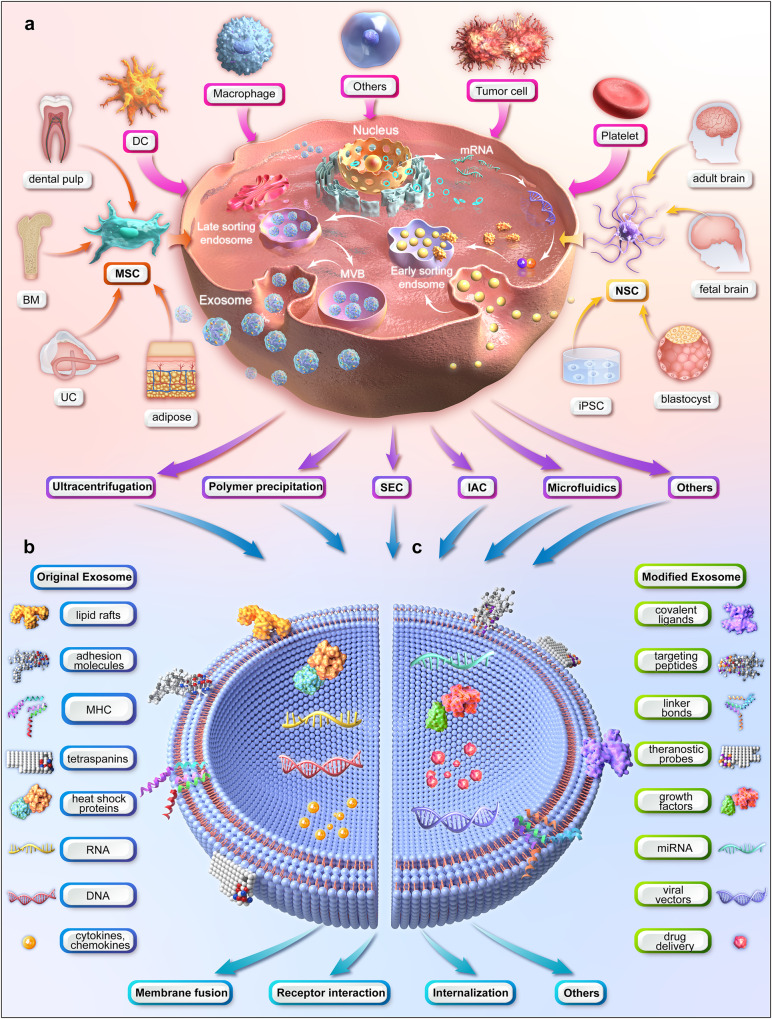
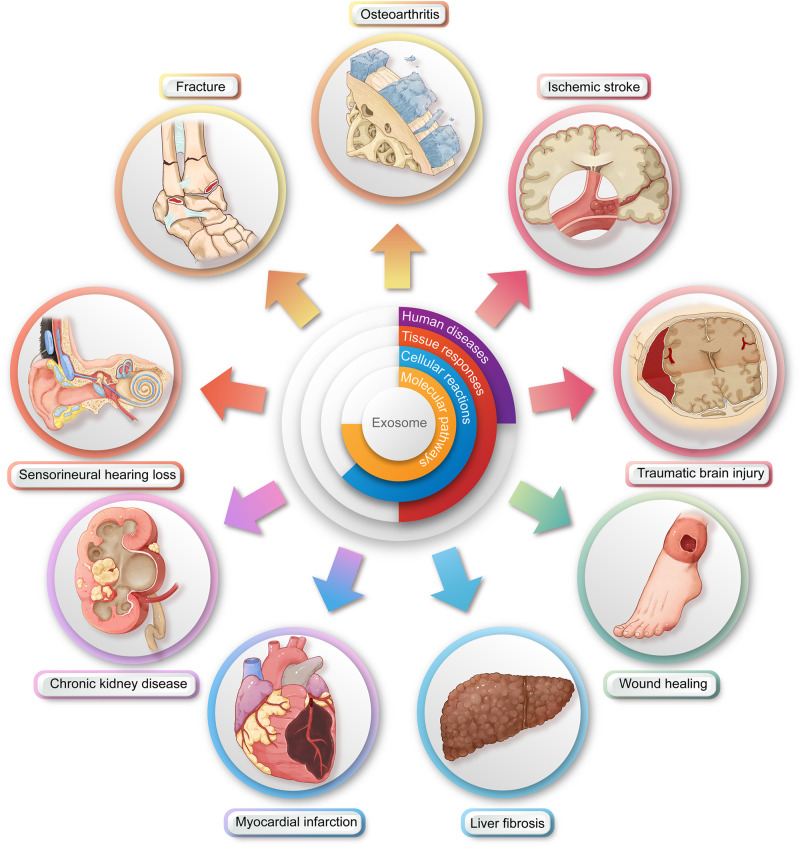
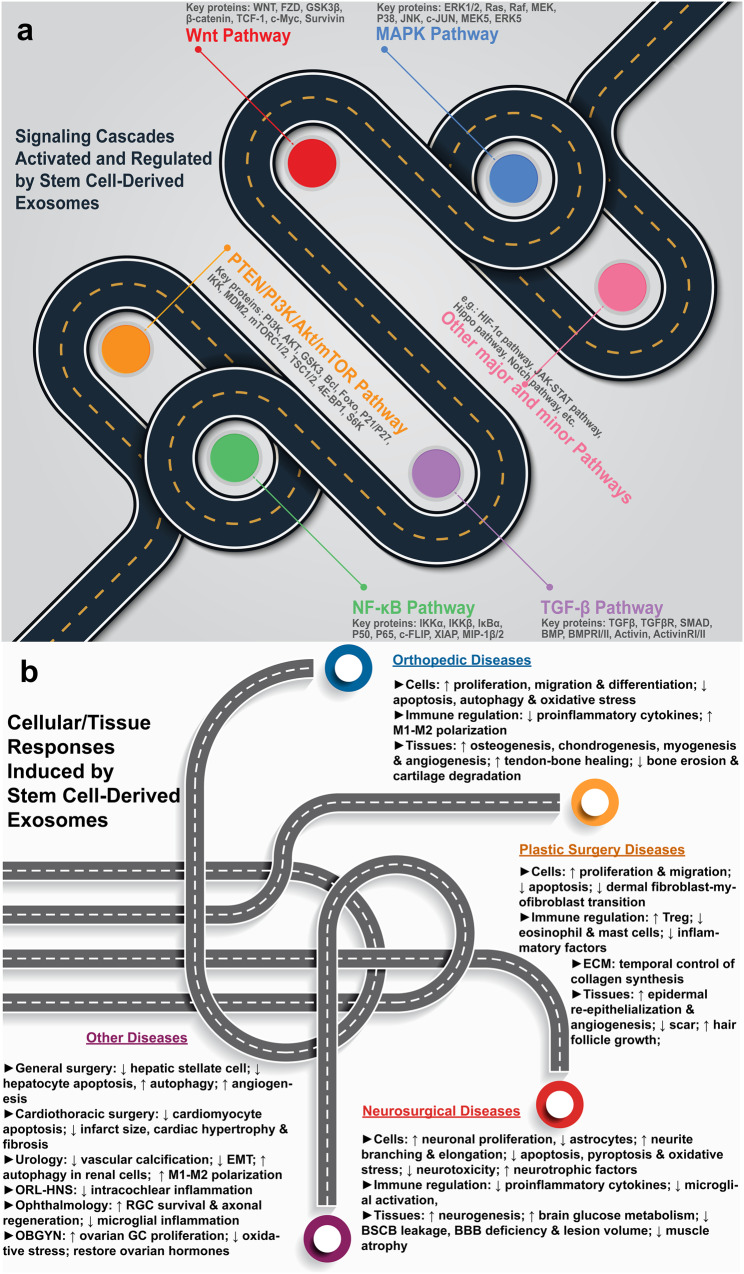
Although stem cell-based therapy has demonstrated considerable potential to manage certain diseases more successfully than conventional surgery, it nevertheless comes with inescapable drawbacks that might limit its clinical translation. Compared to stem cells, stem cell-derived exosomes possess numerous advantages, such as non-immunogenicity, non-infusion toxicity, easy access, effortless preservation, and freedom from tumorigenic potential and ethical issues. Exosomes can inherit similar therapeutic effects from their parental cells such as embryonic stem cells and adult stem cells through vertical delivery of their pluripotency or multipotency. After a thorough search and meticulous dissection of relevant literature from the last five years, we present this comprehensive, up-to-date, specialty-specific and disease-oriented review to highlight the surgical application and potential of stem cell-derived exosomes. Exosomes derived from stem cells (e.g., embryonic, induced pluripotent, hematopoietic, mesenchymal, neural, and endothelial stem cells) are capable of treating numerous diseases encountered in orthopedic surgery, neurosurgery, plastic surgery, general surgery, cardiothoracic surgery, urology, head and neck surgery, ophthalmology, and obstetrics and gynecology. The diverse therapeutic effects of stem cells-derived exosomes are a hierarchical translation through tissue-specific responses, and cell-specific molecular signaling pathways. In this review, we highlight stem cell-derived exosomes as a viable and potent alternative to stem cell-based therapy in managing various surgical conditions. We recommend that future research combines wisdoms from surgeons, nanomedicine practitioners, and stem cell researchers in this relevant and intriguing research area.
Overview
The claims and statistics of this paper haven’t been checked yet.
Free: it reads the open-access text and checks the first 5 claims that cite a source we can check. Create a free account to check every claim.
Integrity signals
Registry
Cites
Statistics
Figures
Verification
Claims the paper makes
The claims and statistics of this paper haven’t been checked yet.
Free: it reads the open-access text and checks the first 5 claims that cite a source we can check. Create a free account to check every claim.
Claims other papers make about this one
Each is checked against this paper’s own text: does it say what the citing paper says it does?
The cited source says what the claim attributes to it.
In the citing paper
“Despite their strong therapeutic promise in AD, the production of stem cell-derived exosomes remains challenging. Their yield from cultured media is extremely low, posing a major challenge for large-scale manufacturing and clinical translation [231].”
From The Impact of Neurotoxin Proteins Trafficked by Primary Cilia and Extracellular Vesicles in Neurodegenerative Diseases (2025) · cites this paper as [231]
Experimental — accuracy not yet measured
Self-check
Percentages, sums and reported differences re-computed from the paper’s own numbers.
The self-check needs the paper’s full text.
Citations
Cites
2 retracted
Ding, J., Wang, X., Chen, B., Zhang, J., & Xu, J. (2019) · BioMed Research International · doi:10.1155/2019/9742765 · Cited by 184 · cited 1×
“215 218 EPC-derived exosomes could accelerate cutaneous wound healing by promoting angiogenesis 219 through the Erk1/2 pathway 220 and p53 pathway.”
BackgroundRetractedJiang, Y., Zhang, J., Li, Z., & Jia, G. (2020) · Frontiers in Medicine · doi:10.3389/fmed.2020.577578 · Cited by 55 · cited 1×
“71 From a lncRNA perspective, especially the bone-speci fi c lncRNA H19, a Chinese group revealed that although a high-fat diet reduced osteogenic differentiation and weakened fracture healing, this could be reversed by MSC-derived exosomal lncRNA H19 via miR-467/ HoxA10 axis in an obesity-induced…”
BackgroundRetractedThéry, C., Witwer, K. W., Aikawa, E., Alcaraz, M. J., Anderson, J. D., Andriantsitohaina, R., Antoniou, A., Arab, T., Archer, F., Atkin‐Smith, G. K., et al. (2018) · Journal of Extracellular Vesicles · doi:10.1080/20013078.2018.1535750 · Cited by 11,099 · cited 1×
“55,56 Storage of exosomes The currently used preservation methods for long-term storage of exosomes mainly include cryopreservation, lyophilization, and spray-drying.”
MethodThe biology , function , and biomedical applications of exosomes
Kalluri, R., & LeBleu, V. S. (2020) · Science · doi:10.1126/science.aau6977 · Cited by 10,770
Poewe, W., Seppi, K., Tanner, C. M., Halliday, G. M., Brundin, P., Volkmann, J., Schrag, A.-E., & Lang, A. E. (2017) · Nature Reviews Disease Primers · doi:10.1038/nrdp.2017.13 · Cited by 5,415
Delivery of siRNA to the mouse brain by systemic injection of targeted exosomes
Alvarez-Erviti, L., Seow, Y., Yin, H., Betts, C., Lakhal, S., & Wood, M. J. A. (2011) · Nature Biotechnology · doi:10.1038/nbt.1807 · Cited by 4,930 · cited 1×
“50 Zhu et al. inserted tumor-targeting peptides, c(RGDyK), into the exosome surface using a chemical reaction to target glioblastoma.”
BackgroundDoyle, L., & Wang, M. (2019) · Cells · doi:10.3390/cells8070727 · Cited by 3,236 · cited 3×
“19 In addition, cargo pro fi ling is further subdivided into proteomic, lipidomic, and genomic analyses including western blotting, ELISA, fl ow cytometry, mass spectroscopy, and PCR. 36 Since each of the above characterization methods has advantages and disadvantages, it is a universal practice to…”
BackgroundMethodInfluentialBlood–brain barrier breakdown in Alzheimer disease and other neurodegenerative disorders
Sweeney, M. D., Sagare, A. P., & Zlokovic, B. V. (2018) · Nature Reviews Neurology · doi:10.1038/nrneurol.2017.188 · Cited by 3,076
Wound Healing: A Cellular Perspective
Rodrigues, M., Kosaric, N., Bonham, C. A., & Gurtner, G. C. (2019) · Physiological Reviews · doi:10.1152/physrev.00067.2017 · Cited by 3,013
Comprehensive Review on Alzheimer’s Disease: Causes and Treatment
Breijyeh, Z., & Karaman, R. (2020) · Molecules · doi:10.3390/molecules25245789 · Cited by 2,789
Pegtel, D. M., & Gould, S. J. (2019) · Annual Review of Biochemistry · doi:10.1146/annurev-biochem-013118-111902 · Cited by 2,682 · cited 1×
“20 As the three major exosome databases (i.e., ExoCarta, Vesicle-pedia, and EVpedia) summarize, exosomes contain numerous molecules, including proteins, glycoconjugates, lipids, nucleic acids, metabolites, and other bioactive substances (Fig.”
BackgroundCompston, J. E., McClung, M. R., & Leslie, W. D. (2019) · The Lancet · doi:10.1016/s0140-6736(18)32112-3 · Cited by 2,449
Ahuja, C. S., Wilson, J. R., Nori, S., Kotter, M. R. N., Druschel, C., Curt, A., & Fehlings, M. G. (2017) · Nature Reviews Disease Primers · doi:10.1038/nrdp.2017.18 · Cited by 2,441 · cited 1×
“92 Despite surgical intervention, clinical studies involving pharma-cotherapy can be broadly classi fi ed as either neuroprotective or neuroregenerative.”
BackgroundDiagnosis and Treatment of Hip and Knee Osteoarthritis: A Review
Katz, J. N., Arant, K. R., & Loeser, R. F. (2021) · JAMA · doi:10.1001/jama.2020.22171 · Cited by 2,305
Dobson, R., & Giovannoni, G. (2019) · European Journal of Neurology · doi:10.1111/ene.13819 · Cited by 2,148 · cited 1×
“196 A few preliminary studies have highlighted the potential of MSC-derived exosomes for MS treatment.”
BackgroundExosomes: biogenesis, biologic function and clinical potential
Zhang, Y., Liu, Y., Liu, H., & Tang, W. H. (2019) · Cell & Bioscience · doi:10.1186/s13578-019-0282-2 · Cited by 2,119 · cited 1×
“21,22 On the one hand, exosomes comprise a complex protein network including external proteins (e.g., tetraspanins, antigen-presenting complexes, and adhesion molecules) and internal proteins (e.g., heat shock proteins, ESCRT machinery, cytokines and chemokines, and membrane transporters).”
BackgroundMolecular and cellular mechanisms of liver fibrosis and its regression
Kisseleva, T., & Brenner, D. (2021) · Nature Reviews Gastroenterology & Hepatology · doi:10.1038/s41575-020-00372-7 · Cited by 2,024
The Amyloid-β Pathway in Alzheimer’s Disease
Hampel, H., Hardy, J., Blennow, K., Chen, C., Perry, G., Kim, S. H., Villemagne, V. L., Aisen, P., Vendruscolo, M., Iwatsubo, T., et al. (2021) · Molecular Psychiatry · doi:10.1038/s41380-021-01249-0 · Cited by 1,952
Martel-Pelletier, J., Barr, A. J., Cicuttini, F. M., Conaghan, P. G., Cooper, C., Goldring, M. B., Goldring, S. R., Jones, G., Teichtahl, A. J., & Pelletier, J.-P. (2016) · Nature Reviews Disease Primers · doi:10.1038/nrdp.2016.72 · Cited by 1,877
Stem cells: past, present, and future
Zakrzewski, W., Dobrzyński, M., Szymonowicz, M., & Rybak, Z. (2019) · Stem Cell Research & Therapy · doi:10.1186/s13287-019-1165-5 · Cited by 1,834 · cited 1×
“8 Exosome, secreted by almost all cell types including stem cells (Fig.”
BackgroundRNA delivery by extracellular vesicles in mammalian cells and its applications
O’Brien, K., Breyne, K., Ughetto, S., Laurent, L. C., & Breakefield, X. O. (2020) · Nature Reviews Molecular Cell Biology · doi:10.1038/s41580-020-0251-y · Cited by 1,811 · cited 1×
“69 From the perspective of an exosomal miRNA, one group discovered that miR-136-5p from bone marrow MSC-derived exosomes promoted osteoblast proliferation and differentiation in vitro, thereby promoting fracture healing in vivo.”
BackgroundFracture healing: mechanisms and interventions
Einhorn, T. A., & Gerstenfeld, L. C. (2015) · Nature Reviews Rheumatology · doi:10.1038/nrrheum.2014.164 · Cited by 1,807 · cited 1×
“63 Biopharmacological treatment for fractures can be given locally (e.g., bone morphogenetic protein, BMP) or systemically (e.g., parathyroid hormone, PTH).”
BackgroundTian, Y., Li, S., Song, J., Ji, T., Zhu, M., Anderson, G. J., Wei, J., & Nie, G. (2014) · Biomaterials · doi:10.1016/j.biomaterials.2013.11.083 · Cited by 1,801 · cited 1×
“47 Kim et al. loaded paclitaxel in RAW 264.7-derived exosomes using incubation and sonication to overcome multidrug resistance in cancer cells.”
MethodInfluentialThe exosome journey: from biogenesis to uptake and intracellular signalling
Gurung, S., Perocheau, D., Touramanidou, L., & Baruteau, J. (2021) · Cell Communication and Signaling · doi:10.1186/s12964-021-00730-1 · Cited by 1,791
Hallmarks of neurodegenerative diseases
Wilson, D. M., Cookson, M. R., Van Den Bosch, L., Zetterberg, H., Holtzman, D. M., & Dewachter, I. (2023) · Cell · doi:10.1016/j.cell.2022.12.032 · Cited by 1,789
Campbell, B. C. V., De Silva, D. A., Macleod, M. R., Coutts, S. B., Schwamm, L. H., Davis, S. M., & Donnan, G. A. (2019) · Nature Reviews Disease Primers · doi:10.1038/s41572-019-0118-8 · Cited by 1,750
Kellum, J. A., Romagnani, P., Ashuntantang, G., Ronco, C., Zarbock, A., & Anders, H.-J. (2021) · Nature Reviews Disease Primers · doi:10.1038/s41572-021-00284-z · Cited by 1,741
Systemically Injected Exosomes Targeted to EGFR Deliver Antitumor MicroRNA to Breast Cancer Cells
Ohno, S.-I., Takanashi, M., Sudo, K., Ueda, S., Ishikawa, A., Matsuyama, N., Fujita, K., Mizutani, T., Ohgi, T., Ochiya, T., et al. (2013) · Molecular Therapy · doi:10.1038/mt.2012.180 · Cited by 1,666
Filippi, M., Bar-Or, A., Piehl, F., Preziosa, P., Solari, A., Vukusic, S., & Rocca, M. A. (2018) · Nature Reviews Disease Primers · doi:10.1038/s41572-018-0041-4 · Cited by 1,562
Development of exosome-encapsulated paclitaxel to overcome MDR in cancer cells
Kim, M. S., Haney, M. J., Zhao, Y., Mahajan, V., Deygen, I., Klyachko, N. L., Inskoe, E., Piroyan, A., Sokolsky, M., Okolie, O., et al. (2016) · Nanomedicine: Nanotechnology, Biology and Medicine · doi:10.1016/j.nano.2015.10.012 · Cited by 1,410 · cited 1×
“48 Ohno et al. loaded antitumor let-7a miRNA in HEK293-derived exosomes using transfection to manage breast cancer.”
MethodMesenchymal stem cell secretome: toward cell-free therapeutic strategies in regenerative medicine
Vizoso, F., Eiro, N., Cid, S., Schneider, J., & Perez-Fernandez, R. (2017) · International Journal of Molecular Sciences · doi:10.3390/ijms18091852 · Cited by 1,363 · cited 1×
“11 In other words, stem cell-derived exosomes (SC-Exo) inherit similar therapeutic effects from their parental cell of origin, e.g., anti-in fl ammation, immunomodulation and tissue regeneration.”
BackgroundZhang, Y., Bi, J., Huang, J., Tang, Y., Du, S., & Li, P. (2020) · International Journal of Nanomedicine · doi:10.2147/ijn.s264498 · Cited by 1,323 · cited 3×
“…loading methods (e.g., transfection, co-incubation, and electroporation) and post-production loading methods (e.g., freeze-thaw cycles, incubation, sonication, extrusion, and hypotonic dialysis) depending on whether they are applied before or after exosome biogenesis 10,26,44 – 46 (Fig.”
BackgroundMethodMyocardial ischaemia–reperfusion injury and cardioprotection in perspective
Heusch, G. (2020) · Nature Reviews Cardiology · doi:10.1038/s41569-020-0403-y · Cited by 1,234 · cited 1×
“267 The 269 Similarly, human iPSC-derived exosomes could improve recovery from MI without increasing the frequency of arrhythmogenic complications in a swine model.”
BackgroundExosomes: key players in cancer and potential therapeutic strategy
Dai, J., Su, Y., Zhong, S., Cong, L., Liu, B., Yang, J., Tao, Y., He, Z., Chen, C., & Jiang, Y. (2020) · Signal Transduction and Targeted Therapy · doi:10.1038/s41392-020-00261-0 · Cited by 1,186 · cited 1×
“340,341 346 Finally, among the 40 clinical trials using stem cell-derived exosomes for disease treatment, 38 (95”
BackgroundClinical Neurology and Epidemiology of the Major Neurodegenerative Diseases
Erkkinen, M. G., Kim, M.-O., & Geschwind, M. D. (2018) · Cold Spring Harbor Perspectives in Biology · doi:10.1101/cshperspect.a033118 · Cited by 1,124 · cited 1×
“176 Currently, only two classes of drugs are approved for symptomatic AD treatment, including cholinesterase inhibitors and NMDA antagonists.”
BackgroundGurunathan, S., Kang, M.-H., Jeyaraj, M., Qasim, M., & Kim, J.-H. (2019) · Cells · doi:10.3390/cells8040307 · Cited by 1,122 · cited 1×
“39 There are various methods of upscaling exosome production, which are categorized into biochemical strategies (e.g., LPS, BMP-2, HIF-1 α , and IFN-γ and TNF-α ), physical strategies (hypoxia, thermal stress, and starvation), mechanical strategies (shear stress and 3D culturing) and instrumental…”
MethodCampbell, B. C. V., & Khatri, P. (2020) · The Lancet · doi:10.1016/s0140-6736(20)31179-x · Cited by 1,116
Stem cell-based therapy for human diseases
Hoang, D. M., Pham, P. T., Bach, T. Q., Ngo, A. T. L., Nguyen, Q. T., Phan, T. T. K., Nguyen, G. H., Le, P. T. T., Hoang, V. T., Forsyth, N. R., et al. (2022) · Signal Transduction and Targeted Therapy · doi:10.1038/s41392-022-01134-4 · Cited by 1,074 · cited 1×
“7 However, some trials have failed to show any bene fi t in the clinic.”
BackgroundBoxhoorn, L., Voermans, R. P., Bouwense, S. A., Bruno, M. J., Verdonk, R. C., Boermeester, M. A., van Santvoort, H. C., & Besselink, M. G. (2020) · The Lancet · doi:10.1016/s0140-6736(20)31310-6 · Cited by 1,049
Zhang, S., Chuah, S. J., Lai, R. C., Hui, J. H. P., Lim, S. K., & Toh, W. S. (2018) · Biomaterials · doi:10.1016/j.biomaterials.2017.11.028 · Cited by 919 · cited 1×
“88 Lastly, gingival MSC-derived exosomes proved to be immunosuppressive in preventing collagen-induced arthritis.”
BackgroundPrevalence of temporomandibular joint disorders: a systematic review and meta-analysis
Valesan, L. F., Da-Cas, C. D., Réus, J. C., Denardin, A. C. S., Garanhani, R. R., Bonotto, D., Januzzi, E., & de Souza, B. D. M. (2021) · Clinical Oral Investigations · doi:10.1007/s00784-020-03710-w · Cited by 891 · cited 1×
“309 Like other synovial joints in the body, TMJ is also prone to OA, sharing common pathophysiological processes (Section 3.2).”
BackgroundInfluentialThe neuropathology of traumatic brain injury
(2015) · Handbook of Clinical Neurology · doi:10.1016/b978-0-444-52892-6.00004-0 · Cited by 811
Kidney fibrosis: from mechanisms to therapeutic medicines
Huang, R., Fu, P., & Ma, L. (2023) · Signal Transduction and Targeted Therapy · doi:10.1038/s41392-023-01379-7 · Cited by 781
Khan, M., Nickoloff, E., Abramova, T., Johnson, J., Verma, S. K., Krishnamurthy, P., Mackie, A. R., Vaughan, E., Garikipati, V. N. S., Benedict, C., et al. (2015) · Circulation Research · doi:10.1161/circresaha.117.305990 · Cited by 753 · cited 1×
“276 In addition, Tavakoli Dargagni et al. demonstrated that ESC-derived exosomes could alleviate doxorubicin-induced cardiotoxicity by inhibiting TLR4-NLRP3-mediated pyroptotic cell death in cardiomyocytes.”
BackgroundZhang, Y., Chopp, M., Meng, Y., Katakowski, M., Xin, H., Mahmood, A., & Xiong, Y. (2015) · Journal of neurosurgery · doi:10.3171/2014.11.jns14770 · Cited by 737 · cited 1×
“159 In addition, exosome treatment signi fi cantly increased the number of newborn endothelial cells in the lesion boundary zone, and newborn immature and mature neurons in the dentate gyrus.”
BackgroundTao, S.-C., Yuan, T., Zhang, Y.-L., Yin, W.-J., Guo, S.-C., & Zhang, C.-Q. (2017) · Theranostics · doi:10.7150/thno.17133 · Cited by 729 · cited 1×
“83 Meanwhile, Wang et al. used TGF-β 1 to stimulate MSCs, and the resultant exosomal miR-135b increased chondrocyte proliferation by regulating speci fi city protein-1.”
BackgroundExosomes: Large-scale production, isolation, drug loading efficiency, and biodistribution and uptake
Kimiz-Gebologlu, I., & Oncel, S. S. (2022) · Journal of Controlled Release · doi:10.1016/j.jconrel.2022.05.027 · Cited by 722
Application of exosomes as liquid biopsy in clinical diagnosis
Zhou, B., Xu, K., Zheng, X., Chen, T., Wang, J., Song, Y., Shao, Y., & Zheng, S. (2020) · Signal Transduction and Targeted Therapy · doi:10.1038/s41392-020-00258-9 · Cited by 685 · cited 1×
“37,38 However, the coexisting contents and availability of each type of body fl uid might create challenges to exosome isolation.”
BackgroundHu, L., Wang, J., Zhou, X., Xiong, Z., Zhao, J., Yu, R., Huang, F., Zhang, H., & Chen, L. (2016) · Scientific Reports · doi:10.1038/srep32993 · Cited by 678
Dendritic cell-derived exosomes for cancer therapy.
Pitt, J. M., André, F., Amigorena, S., Soria, J.-C., Eggermont, A., Kroemer, G., & Zitvogel, L. (2016) · Journal of Clinical Investigation · doi:10.1172/jci81137 · Cited by 636 · cited 1×
“33 Furthermore, tumor-derived exosomes (Tex) not only are involved during tumor proliferation, invasion, metastasis, and immunity but also can be used as biomarkers for cancer diagnosis and treatment.”
BackgroundBiological functions of mesenchymal stem cells and clinical implications
Naji, A., Eitoku, M., Favier, B., Deschaseaux, F., Rouas-Freiss, N., & Suganuma, N. (2019) · Cellular and Molecular Life Sciences · doi:10.1007/s00018-019-03125-1 · Cited by 624 · cited 1×
“…; 2, functional disorders, such as epilepsy 203 and mechanical allodynia 204 ; 3, congenital abnormalities, such as spina bi fi da aperta 205 ; 4, neuropsychological conditions, such as depression 206 and stress 207 ; 5, brain aging 208 – 210 ; 6, iatrogenic brain problems, such as deep…”
BackgroundMesenchymal Stem Cell-Derived Exosomes: Applications in Regenerative Medicine
Hade, M. D., Suire, C. N., & Suo, Z. (2021) · Cells · doi:10.3390/cells10081959 · Cited by 607
A review on exosomes application in clinical trials: perspective, questions, and challenges
Rezaie, J., Feghhi, M., & Etemadi, T. (2022) · Cell Communication and Signaling · doi:10.1186/s12964-022-00959-4 · Cited by 602
Mesenchymal stem cell-derived exosomes as a new therapeutic strategy for liver diseases
Lou, G., Chen, Z., Zheng, M., & Liu, Y. (2017) · Experimental & Molecular Medicine · doi:10.1038/emm.2017.63 · Cited by 601 · cited 1×
“These include, but are not limited to, exosome therapy for fracture 333 spinal cord injury 334 traumatic brain injury 335 acute liver injury 336 and hearing loss 304,306 which might serve as future directions for exosome therapy-related clinical trials.”
BackgroundExosomes in bodily fluids are a highly stable resource of disease biomarkers
Boukouris, S., & Mathivanan, S. (2015) · PROTEOMICS – Clinical Applications · doi:10.1002/prca.201400114 · Cited by 586
Traumatic Brain Injury: Current Treatment Strategies and Future Endeavors
Galgano, M., Toshkezi, G., Qiu, X., Russell, T., Chin, L., & Zhao, L.-R. (2017) · Cell Transplantation · doi:10.1177/0963689717714102 · Cited by 582
Cellular biology of fracture healing
Bahney, C. S., Zondervan, R. L., Allison, P., Theologis, A., Ashley, J. W., Ahn, J., Miclau, T., Marcucio, R. S., & Hankenson, K. D. (2019) · Journal of Orthopaedic Research · doi:10.1002/jor.24170 · Cited by 577 · cited 2×
“62 Secondly, most of these cells can uptake exosomes, especially osteoblasts and vascular endothelial cells, 64 which are most related to fracture healing.”
BackgroundFang, S., Xu, C., Zhang, Y., Xue, C., Yang, C., Bi, H., Qian, X., Wu, M., Ji, K., Zhao, Y., et al. (2016) · Stem Cells Translational Medicine · doi:10.5966/sctm.2015-0367 · Cited by 577
Liu, W., Rong, Y., Wang, J., Zhou, Z., Ge, X., Ji, C., Jiang, D., Gong, F., Li, L., Chen, J., et al. (2020) · Journal of Neuroinflammation · doi:10.1186/s12974-020-1726-7 · Cited by 573
Zhang, S., Teo, K. Y. W., Chuah, S. J., Lai, R. C., Lim, S. K., & Toh, W. S. (2019) · Biomaterials · doi:10.1016/j.biomaterials.2019.02.006 · Cited by 572
Wu, J., Kuang, L., Chen, C., Yang, J., Zeng, W.-N., Li, T., Chen, H., Huang, S., Fu, Z., Li, J., et al. (2019) · Biomaterials · doi:10.1016/j.biomaterials.2019.03.022 · Cited by 570 · cited 1×
“79 Since it is easy to retrieve human IPFP from OA patients by arthroscopic operation within a clinic, this type of exosome therapy might simplify and accelerate the process from bench to bedside.”
Self-citationMechanisms of tendon injury and repair
Thomopoulos, S., Parks, W. C., Rifkin, D. B., & Derwin, K. A. (2015) · Journal of Orthopaedic Research · doi:10.1002/jor.22806 · Cited by 564 · cited 1×
“110 The following proof-of-concept studies indicate that MSC-derived exosomes could become the next-generation musculoskeletal treatment.”
BackgroundHypothalamic stem cells control ageing speed partly through exosomal miRNAs
Zhang, Y., Kim, M. S., Jia, B., Yan, J., Zuniga-Hertz, J. P., Han, C., & Cai, D. (2017) · Nature · doi:10.1038/nature23282 · Cited by 564 · cited 1×
“…such as epilepsy 203 and mechanical allodynia 204 ; 3, congenital abnormalities, such as spina bi fi da aperta 205 ; 4, neuropsychological conditions, such as depression 206 and stress 207 ; 5, brain aging 208 – 210 ; 6, iatrogenic brain problems, such as deep hypothermic circulatory arrest.”
BackgroundLi, X., Corbett, A. L., Taatizadeh, E., Tasnim, N., Little, J. P., Garnis, C., Daugaard, M., Guns, E., Hoorfar, M., & Li, I. T. S. (2019) · APL Bioengineering · doi:10.1063/1.5087122 · Cited by 564 · cited 2×
“43 There are various cargo loading techniques including pre-production loading methods (e.g., transfection, co-incubation, and electroporation) and post-production loading methods (e.g., freeze-thaw cycles, incubation, sonication, extrusion, and hypotonic dialysis) depending on whether they are…”
BackgroundSelf-citationCalzavacca, P., Licari, E., & Bellomo, R. (2010) · Surgical Intensive Care Medicine · doi:10.1007/978-0-387-77893-8_38 · Cited by 533
Mesenchymal‐stem‐cell‐derived exosomes accelerate skeletal muscle regeneration
Nakamura, Y., Miyaki, S., Ishitobi, H., Matsuyama, S., Nakasa, T., Kamei, N., Akimoto, T., Higashi, Y., & Ochi, M. (2015) · FEBS Letters · doi:10.1016/j.febslet.2015.03.031 · Cited by 511 · cited 1×
“111 These bene fi ts were at least in part mediated by miRNAs such as miR-494.”
BackgroundExosome-based immunotherapy: a promising approach for cancer treatment
Xu, Z., Zeng, S., Gong, Z., & Yan, Y. (2020) · Molecular Cancer · doi:10.1186/s12943-020-01278-3 · Cited by 482
Liu, W., Li, L., Rong, Y., Qian, D., Chen, J., Zhou, Z., Luo, Y., Jiang, D., Cheng, L., Zhao, S., et al. (2020) · Acta Biomaterialia · doi:10.1016/j.actbio.2019.12.020 · Cited by 466 · cited 1×
“76 In addition, exosomes derived from MSCs under hypoxia exhibited better effects on bone fracture healing than those under normoxia.”
BackgroundSelf-citationMao, G., Zhang, Z., Hu, S., Zhang, Z., Chang, Z., Huang, Z., Liao, W., & Kang, Y. (2018) · Stem Cell Research & Therapy · doi:10.1186/s13287-018-1004-0 · Cited by 462 · cited 1×
“82 In contrast to these studies using original exosomes, few groups modi fi ed exosomes prior to their systemic administration.”
ResultDing, W., Hu, S., Wang, P., Kang, H., Peng, R., Dong, Y., & Li, F. (2022) · Spine · doi:10.1097/brs.0000000000004417 · Cited by 459
Mead, B., & Tomarev, S. (2017) · Stem Cells Translational Medicine · doi:10.1002/sctm.16-0428 · Cited by 457 · cited 1×
“312 The exosomal neuroprotective and neuritogenic effects were accomplished through exosomal miRNAs, demonstrating a cell-free potential for traumatic and degenerative ocular diseases.”
BackgroundZhu, Y., Wang, Y., Zhao, B., Niu, X., Hu, B., Li, Q., Zhang, J., Ding, J., Chen, Y., & Wang, Y. (2017) · Stem Cell Research & Therapy · doi:10.1186/s13287-017-0510-9 · Cited by 446 · cited 1×
“85 Other studies have focused on not only chondrogenesis but also anti-in fl ammation and immune modulation during OA treatment.”
BackgroundMesenchymal Stem Cell-Derived Exosomes Promote Fracture Healing in a Mouse Model
Furuta, T., Miyaki, S., Ishitobi, H., Ogura, T., Kato, Y., Kamei, N., Miyado, K., Higashi, Y., & Ochi, M. (2016) · Stem Cells Translational Medicine · doi:10.5966/sctm.2015-0285 · Cited by 444 · cited 1×
“65 In a femoral nonunion model, exosomes enhanced fracture healing by promoting osteogenesis and angiogenesis possibly via the BMP-2/Smad1/RUNX2 pathway.”
BackgroundAntioxidant therapies in traumatic brain and spinal cord injury
Bains, M., & Hall, E. D. (2012) · Biochimica et Biophysica Acta (BBA) - Molecular Basis of Disease · doi:10.1016/j.bbadis.2011.10.017 · Cited by 428
Long, Q., Upadhya, D., Hattiangady, B., Kim, D.-K., An, S. Y., Shuai, B., Prockop, D. J., & Shetty, A. K. (2017) · Proceedings of the National Academy of Sciences · doi:10.1073/pnas.1703920114 · Cited by 401
Gong, M., Yu, B., Wang, J., Wang, Y., Liu, M., Paul, C., Millard, R. W., Xiao, D.-S., Ashraf, M., & Xu, M. (2017) · Oncotarget · doi:10.18632/oncotarget.16778 · Cited by 399 · cited 1×
“254 In addition, HSC-derived exosomes could repair ischemic hindlimb in mice by improving limb perfusion, capillary density, motor function and their amputation.”
BackgroundOsteonecrosis of the femoral head: pathophysiology and current concepts of treatment
Petek, D., Hannouche, D., & Suva, D. (2019) · EFORT Open Reviews · doi:10.1302/2058-5241.4.180036 · Cited by 399
Cancer-Derived Exosomes: Their Role in Cancer Biology and Biomarker Development
Kok, V. C., & Yu, C.-C. (2020) · International Journal of Nanomedicine · doi:10.2147/ijn.s272378 · Cited by 398 · cited 1×
“34 Lately, Tex has been used as an anti-tumor drug and an antigen presenter for DC vaccination, serving as a promising cell-free cancer immunotherapy.”
MethodPeripheral Nerve Regeneration and Muscle Reinnervation
Gordon, T. (2020) · International Journal of Molecular Sciences · doi:10.3390/ijms21228652 · Cited by 397 · cited 1×
“121 It was shown that adipose MSC-derived exosomes could target neurons by increasing neurite outgrowth in vitro and axonal regeneration and walking behavior in vivo.”
BackgroundTrehalose prevents aggregation of exosomes and cryodamage
Bosch, S., de Beaurepaire, L., Allard, M., Mosser, M., Heichette, C., Chrétien, D., Jegou, D., & Bach, J.-M. (2016) · Scientific Reports · doi:10.1038/srep36162 · Cited by 393 · cited 1×
“59 Heat-sensitive materials, e.g., exosomes and vaccines, treated by lyophilization of freeze-drying can be easily stored and reconstituted by simply adding water.”
BackgroundZhang, Y., Chopp, M., Zhang, Z. G., Katakowski, M., Xin, H., Qu, C., Ali, M., Mahmood, A., & Xiong, Y. (2017) · Neurochemistry International · doi:10.1016/j.neuint.2016.08.003 · Cited by 392 · cited 1×
“160 In a monkey model of TBI to the primary motor cortex, exosome-treated animals returned to pre-operative grasp patterns and latency to retrieve a food reward in the fi rst 3 – 5 weeks of recovery.”
BackgroundYu, M., Liu, W., Li, J., Lu, J., Lu, H., Jia, W., & Liu, F. (2020) · Stem Cell Research & Therapy · doi:10.1186/s13287-020-01824-2 · Cited by 385
Self-citationWu, Y., Deng, W., & Klinke II, D. J. (2015) · The Analyst · doi:10.1039/c5an00688k · Cited by 369 · cited 1×
“53 NTA facilitates fast detection and real-time exosome observation while having a higher resolution than fl ow cytometry.”
MethodLiver ischaemia–reperfusion injury: a new understanding of the role of innate immunity
Hirao, H., Nakamura, K., & Kupiec-Weglinski, J. W. (2022) · Nature Reviews Gastroenterology & Hepatology · doi:10.1038/s41575-021-00549-8 · Cited by 364
Zhang, W., Bai, X., Zhao, B., Li, Y., Zhang, Y., Li, Z., Wang, X., Luo, L., Han, F., Zhang, J., et al. (2018) · Experimental Cell Research · doi:10.1016/j.yexcr.2018.06.035 · Cited by 361
Zhang, L., Jiao, G., Ren, S., Zhang, X., Li, C., Wu, W., Wang, H., Liu, H., Zhou, H., & Chen, Y. (2020) · Stem Cell Research & Therapy · doi:10.1186/s13287-020-1562-9 · Cited by 357 · cited 1×
“66 In a tibial distraction osteogenesis model, exosomes secreted by young MSCs promoted osteogenic capacity of older MSCs and enhanced new bone formation in older rats.”
BackgroundUpdating MISEV: Evolving the minimal requirements for studies of extracellular vesicles
Witwer, K. W., Goberdhan, D. C., O'Driscoll, L., Théry, C., Welsh, J. A., Blenkiron, C., Buzás, E. I., Di Vizio, D., Erdbrügger, U., Falcón‐Pérez, J. M., et al. (2021) · Journal of Extracellular Vesicles · doi:10.1002/jev2.12182 · Cited by 352 · cited 1×
“55,56 Storage of exosomes The currently used preservation methods for long-term storage of exosomes mainly include cryopreservation, lyophilization, and spray-drying.”
MethodCui, G.-H., Guo, H.-D., Li, H., Zhai, Y., Gong, Z.-B., Wu, J., Liu, J.-S., Dong, Y.-R., Hou, S.-X., & Liu, J.-R. (2019) · Immunity & Ageing · doi:10.1186/s12979-019-0150-2 · Cited by 347
Liu, Y., Lin, L., Zou, R., Wen, C., Wang, Z., & Lin, F. (2018) · Cell Cycle · doi:10.1080/15384101.2018.1526603 · Cited by 334 · cited 1×
“80 The cellular work conducted by Kong et al. showed that synovial MSC-derived exosomal miR-320c could enhance chondrogenesis by targeting ADAM19.”
BackgroundSelf-citationCheng, X., Zhang, G., Zhang, L., Hu, Y., Zhang, K., Sun, X., Zhao, C., Li, H., Li, Y. M., & Zhao, J. (2018) · Journal of Cellular and Molecular Medicine · doi:10.1111/jcmm.13316 · Cited by 317 · cited 2×
“126 On the other hand, Chen et al. discovered that human ESC-derived exosomes could inhibit NLRP3 in fl ammasome to alleviate pyroptosis in nucleus pulposus cells by delivering miR-302c.”
BackgroundCho, B. S., Kim, J. O., Ha, D. H., & Yi, Y. W. (2018) · Stem Cell Research & Therapy · doi:10.1186/s13287-018-0939-5 · Cited by 313 · cited 1×
“215 218 EPC-derived exosomes could accelerate cutaneous wound healing by promoting angiogenesis 219 through the Erk1/2 pathway 220 and p53 pathway.”
BackgroundEffects of storage temperature on airway exosome integrity for diagnostic and functional analyses
Maroto, R., Zhao, Y., Jamaluddin, M., Popov, V. L., Wang, H., Kalubowilage, M., Zhang, Y., Luisi, J., Sun, H., Culbertson, C. T., et al. (2017) · Journal of Extracellular Vesicles · doi:10.1080/20013078.2017.1359478 · Cited by 310 · cited 1×
“57,58 Non-permeable disaccharide antifreeze, especially trehalose, represents the best choice as it prevents exosome aggregation and cryodamage.”
BackgroundWound Healing: A Comprehensive Review
Almadani, Y. H., Vorstenbosch, J., Davison, P. G., & Murphy, A. M. (2021) · Seminars in Plastic Surgery · doi:10.1055/s-0041-1731791 · Cited by 310 · cited 1×
“212 The overall but overlapping phases of wound healing include hemostasis, in fl ammation, angiogenesis, proliferation and remodeling, each of which is governed by distinct cell types and modulated by various signaling pathways.”
BackgroundYamashita, T., Takahashi, Y., & Takakura, Y. (2018) · Biological and Pharmaceutical Bulletin · doi:10.1248/bpb.b18-00133 · Cited by 306 · cited 1×
“57,58 Non-permeable disaccharide antifreeze, especially trehalose, represents the best choice as it prevents exosome aggregation and cryodamage.”
BackgroundZhu, Q., Ling, X., Yang, Y., Zhang, J., Li, Q., Niu, X., Hu, G., Chen, B., Li, H., Wang, Y., et al. (2019) · Advanced Science · doi:10.1002/advs.201801899 · Cited by 304 · cited 1×
“51 Nakase et al. bound exosomes with a complex formed by pH-sensitive fusion peptide and cationic lipid using electrostatic interaction, thereby achieving enhanced cytosolic delivery.”
BackgroundLin, Z., Wu, Y., Xu, Y., Li, G., Li, Z., & Liu, T. (2022) · Molecular Cancer · doi:10.1186/s12943-022-01650-5 · Cited by 297
Disease-modifying therapeutic strategies in osteoarthritis: current status and future directions
Cho, Y., Jeong, S., Kim, H., Kang, D., Lee, J., Kang, S.-B., & Kim, J.-H. (2021) · Experimental & Molecular Medicine · doi:10.1038/s12276-021-00710-y · Cited by 296 · cited 1×
“90 It is very valuable and relevant that MSC-derived exosome therapy for OA coincides with DMOADs: both are capable of targeting in fl ammatory cytokines, matrix-degrading enzymes, and the Wnt pathway.”
BackgroundNakase, I., & Futaki, S. (2015) · Scientific Reports · doi:10.1038/srep10112 · Cited by 295 · cited 1×
“52 Characterization and veri fi cation of exosomes Exosomes need to undergo characterization and veri fi cation before therapeutic applications.”
BackgroundShao, J., Zaro, J., & Shen, Y. (2020) · International Journal of Nanomedicine · doi:10.2147/ijn.s281890 · Cited by 295 · cited 1×
“…loading methods (e.g., transfection, co-incubation, and electroporation) and post-production loading methods (e.g., freeze-thaw cycles, incubation, sonication, extrusion, and hypotonic dialysis) depending on whether they are applied before or after exosome biogenesis 10,26,44 – 46 (Fig.”
MethodZhou, Y., Li, P., Goodwin, A. J., Cook, J. A., Halushka, P. V., Chang, E., Zingarelli, B., & Fan, H. (2019) · Critical Care · doi:10.1186/s13054-019-2339-3 · Cited by 293 · cited 1×
“292,293 Zhang et al. found that EPC-derived exosomes could improve the bioactivity of pulmonary microvascular endothelial cells and protect them from hyperoxic injury in the developing lung vasculature, thereby contributing to the treatment of bronchopulmonary dysplasia.”
BackgroundAngiogenic Mechanisms of Human CD34 + Stem Cell Exosomes in the Repair of Ischemic Hindlimb
Mathiyalagan, P., Liang, Y., Kim, D., Misener, S., Thorne, T., Kamide, C. E., Klyachko, E., Losordo, D. W., Hajjar, R. J., & Sahoo, S. (2017) · Circulation Research · doi:10.1161/circresaha.116.310557 · Cited by 291 · cited 1×
“255 This was most likely caused by internalization of exosomal miR-126-3p by endothelial cells relative to smooth muscle cells and fi broblasts.”
BackgroundPreservation of exosomes at room temperature using lyophilization
Charoenviriyakul, C., Takahashi, Y., Nishikawa, M., & Takakura, Y. (2018) · International Journal of Pharmaceutics · doi:10.1016/j.ijpharm.2018.10.032 · Cited by 287 · cited 1×
“60 Finally, in contrast to freeze-drying, spray-drying is a single-step process, thereby reducing the need for expensive equipment and lengthy multi-step milling.”
BackgroundMaas, S. L. N., de Vrij, J., van der Vlist, E. J., Geragousian, B., van Bloois, L., Mastrobattista, E., Schiffelers, R. M., Wauben, M. H. M., Broekman, M. L. D., & Nolte-'t Hoen, E. N. M. (2015) · Journal of Controlled Release · doi:10.1016/j.jconrel.2014.12.041 · Cited by 285
Mesenchymal stem cell exosomes: a two-edged sword in cancer therapy
Vakhshiteh, F., Atyabi, F., & Ostad, S. N. (2019) · International Journal of Nanomedicine · doi:10.2147/ijn.s200036 · Cited by 281 · cited 1×
“340,341 346 Finally, among the 40 clinical trials using stem cell-derived exosomes for disease treatment, 38 (95”
BackgroundZhang, J., Chen, C., Hu, B., Niu, X., Liu, X., Zhang, G., Zhang, C., Li, Q., & Wang, Y. (2016) · International Journal of Biological Sciences · doi:10.7150/ijbs.15514 · Cited by 278 · cited 1×
“215 218 EPC-derived exosomes could accelerate cutaneous wound healing by promoting angiogenesis 219 through the Erk1/2 pathway 220 and p53 pathway.”
BackgroundLi, Z., Liu, F., He, X., Yang, X., Shan, F., & Feng, J. (2019) · International Immunopharmacology · doi:10.1016/j.intimp.2018.12.001 · Cited by 277
Ding, M., Shen, Y., Wang, P., Xie, Z., Xu, S., Zhu, Z., Wang, Y., Lyu, Y., Wang, D., Xu, L., et al. (2018) · Neurochemical Research · doi:10.1007/s11064-018-2641-5 · Cited by 276
Next-generation stem cells — ushering in a new era of cell-based therapies
Kimbrel, E. A., & Lanza, R. (2020) · Nature Reviews Drug Discovery · doi:10.1038/s41573-020-0064-x · Cited by 275
Wang, Y., Zhao, M., Liu, S., Guo, J., Lu, Y., Cheng, J., & Liu, J. (2020) · Cell Death & Disease · doi:10.1038/s41419-020-03127-z · Cited by 267 · cited 1×
“30 However, they seem to play paradoxical roles in suppressing and promoting tumors.”
BackgroundEmerging Prospects of Exosomes for Cancer Treatment: From Conventional Therapy to Immunotherapy
Nam, G., Choi, Y., Kim, G. B., Kim, S., Kim, S. A., & Kim, I. (2020) · Advanced Materials · doi:10.1002/adma.202002440 · Cited by 267
Exosomes Derived from Human Induced Pluripotent Stem Cells Ameliorate the Aging of Skin Fibroblasts
Oh, M., Lee, J., Kim, Y. J., Rhee, W. J., & Park, J. H. (2018) · International Journal of Molecular Sciences · doi:10.3390/ijms19061715 · Cited by 257
Reza-Zaldivar, E. E., Hernández-Sapiéns, M. A., Gutiérrez-Mercado, Y. K., Sandoval-Ávila, S., Gomez-Pinedo, U., Márquez-Aguirre, A. L., Vázquez-Méndez, E., Padilla-Camberos, E., & Canales-Aguirre, A. A. (2019) · Neural Regeneration Research · doi:10.4103/1673-5374.255978 · Cited by 256
Liu, X., Li, Q., Niu, X., Hu, B., Chen, S., Song, W., Ding, J., Zhang, C., & Wang, Y. (2017) · International Journal of Biological Sciences · doi:10.7150/ijbs.16951 · Cited by 255
Inflammasome: Its role in traumatic brain and spinal cord injury
Mortezaee, K., Khanlarkhani, N., Beyer, C., & Zendedel, A. (2018) · Journal of Cellular Physiology · doi:10.1002/jcp.26287 · Cited by 251
Exosomes in clinical trial and their production in compliance with good manufacturing practice
Harn, H.-J., Chen, Y.-S., Lin, E.-Y., & Chiou, T.-W. (2020) · Tzu Chi Medical Journal · doi:10.4103/tcmj.tcmj_182_19 · Cited by 247 · cited 1×
“The clinical applications of exosomes as biomarkers have been extensively explored in other reviews 328 – 332 and are therefore beyond discussion in this review.”
BackgroundTian, T., Cao, L., He, C., Ye, Q., Liang, R., You, W., Zhang, H., Wu, J., Ye, J., Tannous, B. A., et al. (2021) · Theranostics · doi:10.7150/thno.56367 · Cited by 240
New insight into isolation, identification techniques and medical applications of exosomes
Yang, X.-X., Sun, C., Wang, L., & Guo, X.-L. (2019) · Journal of Controlled Release · doi:10.1016/j.jconrel.2019.07.021 · Cited by 239
Huang, Y., He, B., Wang, L., Yuan, B., Shu, H., Zhang, F., & Sun, L. (2020) · Stem Cell Research & Therapy · doi:10.1186/s13287-020-02005-x · Cited by 233 · cited 1×
“116 Other orthopedic diseases Osteoporosis is a metabolic bone disease characterized by low bone density and weakening of bone architecture, which increase the risk of fractures.”
BackgroundHydrogel Encapsulation of Mesenchymal Stem Cells and Their Derived Exosomes for Tissue Engineering
Khayambashi, P., Iyer, J., Pillai, S., Upadhyay, A., Zhang, Y., & Tran, S. (2021) · International Journal of Molecular Sciences · doi:10.3390/ijms22020684 · Cited by 232 · cited 1×
“…loading methods (e.g., transfection, co-incubation, and electroporation) and post-production loading methods (e.g., freeze-thaw cycles, incubation, sonication, extrusion, and hypotonic dialysis) depending on whether they are applied before or after exosome biogenesis 10,26,44 – 46 (Fig.”
MethodBucan, V., Vaslaitis, D., Peck, C.-T., Strauß, S., Vogt, P. M., & Radtke, C. (2019) · Molecular Neurobiology · doi:10.1007/s12035-018-1172-z · Cited by 229
MicroRNA-based therapeutics in central nervous system injuries
Sun, P., Liu, D. Z., Jickling, G. C., Sharp, F. R., & Yin, K.-J. (2018) · Journal of Cerebral Blood Flow & Metabolism · doi:10.1177/0271678x18773871 · Cited by 228 · cited 1×
“…TBI and SCI could be either mechanism-based (e.g., the role of brain-gut axis 167 transcriptional factors 168 in fl ammasome 169 and the complement system 170 ) or modi fi cation-based (loading exosomes with drugs, e.g., immuno-modulators 171 antioxidants 172 circular RNAs 173 and microRNAs 174 ).”
BackgroundParkinson’s Disease: A Review from Pathophysiology to Treatment
Marino, B. L. B., de Souza, L. R., Sousa, K. P. A., Ferreira, J. V., Padilha, E. C., da Silva, C. H. T. P., Taft, C. A., & Hage-Melim, L. I. S. (2020) · Mini-Reviews in Medicinal Chemistry · doi:10.2174/1389557519666191104110908 · Cited by 226
Ahuja, C. S., & Fehlings, M. (2016) · Stem Cells Translational Medicine · doi:10.5966/sctm.2015-0381 · Cited by 220
To Protect and to Preserve: Novel Preservation Strategies for Extracellular Vesicles
Kusuma, G. D., Barabadi, M., Tan, J. L., Morton, D. A. V., Frith, J. E., & Lim, R. (2018) · Frontiers in Pharmacology · doi:10.3389/fphar.2018.01199 · Cited by 218 · cited 1×
“61 ORTHOPEDIC AND TRAUMA SURGERY AND SC-EXO THERAPY are the most common traumatic large-organ injuries, and approximately 10% heal improperly.”
BackgroundKim, S., Lee, S., Kim, H., & Kim, T. (2018) · International Journal of Molecular Sciences · doi:10.3390/ijms19103119 · Cited by 215 · cited 3×
“290 Liu et al. showed that EPC-derived exosomes could inhibit pulmonary artery smooth muscle cells proliferation and their resistance to apoptosis by regulating the Mitofusin-2 and Ras-Raf-ERK1/2 pathways, thereby acting as a potential therapeutic candidate for the treatment of pulmonary arterial hypertension.”
BackgroundWen, Z., Mai, Z., Zhu, X., Wu, T., Chen, Y., Geng, D., & Wang, J. (2020) · Stem Cell Research & Therapy · doi:10.1186/s13287-020-1563-8 · Cited by 213
Yang, M., Lin, L., Sha, C., Li, T., Zhao, D., Wei, H., Chen, Q., Liu, Y., Chen, X., Xu, W., et al. (2020) · Laboratory Investigation · doi:10.1038/s41374-019-0321-y · Cited by 212
Current progress in the derivation and therapeutic application of neural stem cells
Tang, Y., Yu, P., & Cheng, L. (2017) · Cell Death & Disease · doi:10.1038/cddis.2017.504 · Cited by 211 · cited 2×
“…and induced pluripotent stem cells (iPSCs) are best examples of pluripotent stem cells, 2 whereas adult multipotent stem cells are exempli fi ed by hematopoietic stem cells (HSCs), 3 mesenchymal stem cells (MSCs), 4 neural stem cells (NSCs), 5 and endothelial stem/progenitor cells (EPCs) 6 (Fig.”
BackgroundExosomes from Endothelial Progenitor Cells Improve the Outcome of a Murine Model of Sepsis
Zhou, Y., Li, P., Goodwin, A. J., Cook, J. A., Halushka, P. V., Chang, E., & Fan, H. (2018) · Molecular Therapy · doi:10.1016/j.ymthe.2018.02.020 · Cited by 211 · cited 1×
“265 This was manifested by reduced lung and renal vascular leakage, improved organ function, and increased survival through the exosomal miR-126-5p and miR-126-3p.”
BackgroundLiang, B., Liang, J.-M., Ding, J.-N., Xu, J., Xu, J.-G., & Chai, Y.-M. (2019) · Stem Cell Research & Therapy · doi:10.1186/s13287-019-1410-y · Cited by 209 · cited 1×
“74 Alternatively, Lu et al. loaded MSC-derived exosomes with miR-29a, which showed a robust ability in promoting angiogenesis and osteogenesis by targeting vasohibin 1.”
BackgroundLin, F., Chen, W., Zhou, J., Zhu, J., Yao, Q., Feng, B., Feng, X., Shi, X., Pan, Q., Yu, J., et al. (2022) · Cell Death & Disease · doi:10.1038/s41419-022-04708-w · Cited by 206 · cited 1×
“241 Alternatively, Shao ’ s team focused on the pre-isolation modi fi cation of the exosomes, and revealed that exosomes derived from umbilical cord MSCs could ameliorate IL-6-induced ALI through exosomal miR-455-3p.”
BackgroundGao, L., Wang, L., Wei, Y., Krishnamurthy, P., Walcott, G. P., Menasché, P., & Zhang, J. (2020) · Science Translational Medicine · doi:10.1126/scitranslmed.aay1318 · Cited by 206 · cited 1×
“270 The work conducted by Wen et al. and Santoso et al. focused on the death of cardiomyocytes.”
MethodExosome-Based Vaccines: History, Current State, and Clinical Trials
Santos, P., & Almeida, F. (2021) · Frontiers in Immunology · doi:10.3389/fimmu.2021.711565 · Cited by 206
Stem cell-derived exosome versus stem cell therapy
Zhang, K., & Cheng, K. (2023) · Nature Reviews Bioengineering · doi:10.1038/s44222-023-00064-2 · Cited by 205 · cited 1×
“9 Exosomes are nanoscale, spherical, and lipid bi-layered single membrane extracellular vesicles, which act as intercellular messengers.”
BackgroundKervadec, A., Bellamy, V., El Harane, N., Arakélian, L., Vanneaux, V., Cacciapuoti, I., Nemetalla, H., Périer, M.-C., Toeg, H. D., Richart, A., et al. (2016) · The Journal of Heart and Lung Transplantation · doi:10.1016/j.healun.2016.01.013 · Cited by 205
BMSC-Derived Exosomal miR-29a Promotes Angiogenesis and Osteogenesis
Lu, G.-D., Cheng, P., Liu, T., & Wang, Z. (2020) · Frontiers in Cell and Developmental Biology · doi:10.3389/fcell.2020.608521 · Cited by 202 · cited 1×
“75 Furthermore, umbilical cord MSC-derived exosomes demonstrated comparable results to their bone marrow counter-parts during fracture healing.”
ResultSelf-citationExosomes of human placenta-derived mesenchymal stem cells stimulate angiogenesis
Komaki, M., Numata, Y., Morioka, C., Honda, I., Tooi, M., Yokoyama, N., Ayame, H., Iwasaki, K., Taki, A., Oshima, N., et al. (2017) · Stem Cell Research & Therapy · doi:10.1186/s13287-017-0660-9 · Cited by 201 · cited 1×
“253 Mechanistically, MSC-derived exosomes not only promote tube-like structure formation in vitro, but also mobilize endothelial cells into subcutaneous Matrigel plug in vivo, mainly through exosomal pro-angiogenic microRNAs, such as miR-30b.”
BackgroundManagement of acute liver failure
Stravitz, R. T., & Kramer, D. J. (2009) · Nature Reviews Gastroenterology & Hepatology · doi:10.1038/nrgastro.2009.127 · Cited by 200 · cited 1×
“240 In one study, Lin ’ s team focused on the cell death aspect of ALI, and found that MSC-derived exosomes could protect against ferroptosis via stabilization of SLC7A11 in carbon tetrachloride-induced ALI.”
BackgroundCritical limb ischemia: current challenges and future prospects
Uccioli, L., Meloni, M., Izzo, V., Giurato, L., Merolla, S., & Gandini, R. (2018) · Vascular Health and Risk Management · doi:10.2147/vhrm.s125065 · Cited by 200 · cited 1×
“252 As a cell-free therapy, placenta MSC-derived exosome infusion could enhance angiogenesis in a murine auricle ischemic injury model using laser Doppler blood fl ow analysis.”
MethodShao, M., Xu, Q., Wu, Z., Chen, Y., Shu, Y., Cao, X., Chen, M., Zhang, B., Zhou, Y., Yao, R., et al. (2020) · Stem Cell Research & Therapy · doi:10.1186/s13287-020-1550-0 · Cited by 200 · cited 1×
“242 Secondly, in contrast to ALI, liver fi brosis occurs when the liver sustains a chronic injury, which may progress into cirrhosis, liver failure, hepatocellular carcinoma, and even death.”
BackgroundPharmacological brain cytoprotection in acute ischaemic stroke — renewed hope in the reperfusion era
Fisher, M., & Savitz, S. I. (2022) · Nature Reviews Neurology · doi:10.1038/s41582-021-00605-6 · Cited by 198 · cited 1×
“134 Targeting each event of the above pathophysiology, nearly all subtypes of SC-exo demonstrated potent therapeutic effects on stroke recovery (Table 3).”
BackgroundSheffield, A. M., & Smith, R. J. H. (2019) · Cold Spring Harbor Perspectives in Medicine · doi:10.1101/cshperspect.a033258 · Cited by 193
Intervertebral disc degeneration and osteoarthritis: a common molecular disease spectrum
Fine, N., Lively, S., Séguin, C. A., Perruccio, A. V., Kapoor, M., & Rampersaud, R. (2023) · Nature Reviews Rheumatology · doi:10.1038/s41584-022-00888-z · Cited by 193 · cited 1×
“125 The emerging avenues of exosome therapy attempt to solve some of these issues.”
BackgroundZhang, J., Buller, B. A., Zhang, Z. G., Zhang, Y., Lu, M., Rosene, D. L., Medalla, M., Moore, T. L., & Chopp, M. (2022) · Experimental Neurology · doi:10.1016/j.expneurol.2021.113895 · Cited by 191
Chen, B., Sun, Y., Zhang, J., Zhu, Q., Yang, Y., Niu, X., Deng, Z., Li, Q., & Wang, Y. (2019) · Stem Cell Research & Therapy · doi:10.1186/s13287-019-1253-6 · Cited by 188 · cited 2×
“232 They noticed that exosomes could ameliorate endothelial senescence by activating Nrf2 and recover aging-related angiogenic dysfunction, thereby accelerating wound healing.”
BackgroundDiagnosis and Management of Acute Intracerebral Hemorrhage
Morotti, A., & Goldstein, J. N. (2016) · Emergency Medicine Clinics of North America · doi:10.1016/j.emc.2016.06.010 · Cited by 184
Mackie, A. R., Klyachko, E., Thorne, T., Schultz, K. M., Millay, M., Ito, A., Kamide, C. E., Liu, T., Gupta, R., Sahoo, S., et al. (2012) · Circulation Research · doi:10.1161/circresaha.112.266015 · Cited by 182
Singla, D., Johnson, T., & Tavakoli Dargani, Z. (2019) · Cells · doi:10.3390/cells8101224 · Cited by 182
Zhang, Z., Zou, X., Zhang, R., Xie, Y., Feng, Z., Li, F., Han, J., Sun, H., Ouyang, Q., Hua, S., et al. (2021) · Aging · doi:10.18632/aging.202466 · Cited by 180
Li, X., Chen, C., Wei, L., Li, Q., Niu, X., Xu, Y., Wang, Y., & Zhao, J. (2016) · Cytotherapy · doi:10.1016/j.jcyt.2015.11.009 · Cited by 177
Self-citationExosomes and Their MicroRNA Cargo: New Players in Peripheral Nerve Regeneration
Qing, L., Chen, H., Tang, J., & Jia, X. (2018) · Neurorehabilitation and Neural Repair · doi:10.1177/1545968318798955 · Cited by 177
Peng, Y., Zhao, J.-L., Peng, Z.-Y., Xu, W.-F., & Yu, G.-L. (2020) · Cell Death & Disease · doi:10.1038/s41419-020-2545-6 · Cited by 177 · cited 1×
“267 The 269 Similarly, human iPSC-derived exosomes could improve recovery from MI without increasing the frequency of arrhythmogenic complications in a swine model.”
BackgroundJia, Y., Zhu, Y., Qiu, S., Xu, J., & Chai, Y. (2019) · Stem Cell Research & Therapy · doi:10.1186/s13287-018-1115-7 · Cited by 176 · cited 1×
“68 As a major cargo of exosomes (Section 2.1), RNA can alter recipient cell gene expression and phenotypic function, with microRNA (miRNA) and long non-coding RNA (lncRNA) being the most widely studied.”
BackgroundInfluentialNakazaki, M., Morita, T., Lankford, K. L., Askenase, P. W., & Kocsis, J. D. (2021) · Journal of Extracellular Vesicles · doi:10.1002/jev2.12137 · Cited by 176
MSC-derived exosomes promote recovery from traumatic brain injury via microglia/macrophages in rat
Chen, Y., Li, J., Ma, B., Li, N., Wang, S., Sun, Z., Xue, C., Han, Q., Wei, J., & Zhao, R. C. (2020) · Aging · doi:10.18632/aging.103692 · Cited by 174 · cited 1×
“163 Wen et al. showed that bone marrow MSC-derived exosomes could reduce cell apoptosis in cortical tissue of mouse models of TBI, inhibit neuroin fl ammation, and promote the transformation of microglia to the anti-in fl ammatory phenotype.”
BackgroundSelf-citationYue, Y., Wang, C., Benedict, C., Huang, G., Truongcao, M., Roy, R., Cimini, M., Garikipati, V. N. S., Cheng, Z., Koch, W. J., et al. (2020) · Circulation Research · doi:10.1161/circresaha.119.315829 · Cited by 174 · cited 1×
“288 In terms of treatment of thoracic disorders, Liu et al. proved that human ESCs-derived exosomes could alleviate in fl ammation, prevent excessive collagen deposition and preserve alveolar architecture in the lungs of mice with bleomycin-induced pulmonary fi brosis.”
BackgroundEl Harane, N., Kervadec, A., Bellamy, V., Pidial, L., Neametalla, H. J., Perier, M.-C., Lima Correa, B., Thiébault, L., Cagnard, N., Duché, A., et al. (2018) · European Heart Journal · doi:10.1093/eurheartj/ehy012 · Cited by 173
He, L., Zhu, C., Jia, J., Hao, X.-Y., Yu, X.-Y., Liu, X.-Y., & Shu, M.-G. (2020) · Bioscience Reports · doi:10.1042/bsr20192549 · Cited by 170
Bai, Y., Han, Y.-D., Yan, X.-L., Ren, J., Zeng, Q., Li, X.-D., Pei, X.-T., & Han, Y. (2018) · Biochemical and Biophysical Research Communications · doi:10.1016/j.bbrc.2018.04.065 · Cited by 168
Self-citationChen, Y.-A., Lu, C.-H., Ke, C.-C., Chiu, S.-J., Jeng, F.-S., Chang, C.-W., Yang, B.-H., & Liu, R.-S. (2021) · Biomedicines · doi:10.3390/biomedicines9060594 · Cited by 167
Bone‐a‐Petite: Engineering Exosomes towards Bone, Osteochondral, and Cartilage Repair
Bei, H. P., Hung, P. M., Yeung, H. L., Wang, S., & Zhao, X. (2021) · Small · doi:10.1002/smll.202101741 · Cited by 165
Qiu, X., Liu, J., Zheng, C., Su, Y.-T., Bao, L., Zhu, B., Liu, S., Wang, L., Wang, X., Wang, Y., et al. (2020) · Cell Proliferation · doi:10.1111/cpr.12830 · Cited by 164
Concise Review: Embryonic Stem Cells Versus Induced Pluripotent Stem Cells: The Game Is On
Puri, M. C., & Nagy, A. (2012) · STEM CELLS · doi:10.1002/stem.788 · Cited by 162
Li, X., Jiang, C., & Zhao, J. (2016) · Journal of Diabetes and its Complications · doi:10.1016/j.jdiacomp.2016.05.009 · Cited by 159 · cited 1×
“215 218 EPC-derived exosomes could accelerate cutaneous wound healing by promoting angiogenesis 219 through the Erk1/2 pathway 220 and p53 pathway.”
BackgroundSelf-citationZhong, D., Cao, Y., Li, C.-J., Li, M., Rong, Z.-J., Jiang, L., Guo, Z., Lu, H.-B., & Hu, J.-Z. (2020) · Experimental Biology and Medicine · doi:10.1177/1535370219895491 · Cited by 158 · cited 1×
“101 In comparison, Chen and co-workers modi fi ed NSC-derived exosomes with FTY720, an immune modulator and microvascular regulator, to protect the barrier function of SCMECs via the PTEN/Akt pathway, thereby ameliorating hindlimb function.”
BackgroundWilliams, A. M., Dennahy, I. S., Bhatti, U. F., Halaweish, I., Xiong, Y., Chang, P., Nikolian, V. C., Chtraklin, K., Brown, J., Zhang, Y., et al. (2019) · Journal of Neurotrauma · doi:10.1089/neu.2018.5711 · Cited by 157 · cited 1×
“162 In comparison, studies completed in recent years shed new light on the molecular mechanisms underlying SC-exo therapy for TBI.”
BackgroundExosomes from different cells: Characteristics, modifications, and therapeutic applications
Li, M., Li, S., Du, C., Zhang, Y., Li, Y., Chu, L., Han, X., Galons, H., Zhang, Y., Sun, H., et al. (2020) · European Journal of Medicinal Chemistry · doi:10.1016/j.ejmech.2020.112784 · Cited by 157
Behera, J., Kumar, A., Voor, M. J., & Tyagi, N. (2021) · Theranostics · doi:10.7150/thno.58410 · Cited by 156 · cited 1×
“73 Instead of using naturally derived exosomes from MSCs, some researchers have conducted pre-isolation modi fi cation of exosomes to achieve better results.”
BackgroundTavakoli Dargani, Z., & Singla, D. K. (2019) · American Journal of Physiology-Heart and Circulatory Physiology · doi:10.1152/ajpheart.00056.2019 · Cited by 153 · cited 1×
“277 Similarly, Singla ’ s team showed that ESC-derived exosomes could improve cardiac remodeling by enhancing anti-in fl ammatory M2 macrophages and reducing in fl ammation-induced pyroptosis.”
BackgroundKwok, Z. H., Wang, C., & Jin, Y. (2021) · Processes · doi:10.3390/pr9020273 · Cited by 153 · cited 1×
“25 The entire lifecycle from exosome biogenesis to uptake and intracellular signaling can be tracked using fl uorescent, luminescent, and radioactive techniques.”
Ding, C., Zhu, L., Shen, H., Lu, J., Zou, Q., Huang, C., Li, H., & Huang, B. (2020) · Stem Cells · doi:10.1002/stem.3204 · Cited by 152
Recent Advances in Exosome-Based Drug Delivery for Cancer Therapy
Kim, H., Jang, H., Cho, H., Choi, J., Hwang, K. Y., Choi, Y., Kim, S. H., & Yang, Y. (2021) · Cancers · doi:10.3390/cancers13174435 · Cited by 152
TGF-β1 promoted chondrocyte proliferation by regulating Sp1 through MSC-exosomes derived miR-135b
Wang, R., Xu, B., & Xu, H. (2018) · Cell Cycle · doi:10.1080/15384101.2018.1556063 · Cited by 149
Tumor-derived exosomes: the next generation of promising cell-free vaccines in cancer immunotherapy
Naseri, M., Bozorgmehr, M., Zöller, M., Ranaei Pirmardan, E., & Madjd, Z. (2020) · OncoImmunology · doi:10.1080/2162402x.2020.1779991 · Cited by 149 · cited 1×
“35 Finally, the clinical applications of stem cell-derived exosomes will be discussed in detail in the following sections.”
BackgroundHaematopoietic stem cells: past, present and future
Ng, A. P., & Alexander, W. S. (2017) · Cell Death Discovery · doi:10.1038/cddiscovery.2017.2 · Cited by 146
Chen, J., Ren, S., Duscher, D., Kang, Y., Liu, Y., Wang, C., Yuan, M., Guo, G., Xiong, H., Zhan, P., et al. (2019) · Journal of Cellular Physiology · doi:10.1002/jcp.28873 · Cited by 145
Du, Y., Li, D., Han, C., Wu, H., Xu, L., Zhang, M., Zhang, J., & Chen, X. (2017) · Cellular Physiology and Biochemistry · doi:10.1159/000480533 · Cited by 142 · cited 1×
“248 Thirdly, non-alcoholic fatty liver disease (NAFLD) is known to adversely affect stroke recovery.”
BackgroundLi, Z., Zhang, M., Zheng, J., Tian, Y., Zhang, H., Tan, Y., Li, Q., Zhang, J., & Huang, X. (2021) · Frontiers in Endocrinology · doi:10.3389/fendo.2021.711902 · Cited by 140
Self-citationElia, C. A., Tamborini, M., Rasile, M., Desiato, G., Marchetti, S., Swuec, P., Mazzitelli, S., Clemente, F., Anselmo, A., Matteoli, M., et al. (2019) · Cells · doi:10.3390/cells8091059 · Cited by 139
Wu, X., Liu, Z., Hu, L., Gu, W., & Zhu, L. (2018) · Experimental Cell Research · doi:10.1016/j.yexcr.2018.06.003 · Cited by 136 · cited 1×
“292,293 Zhang et al. found that EPC-derived exosomes could improve the bioactivity of pulmonary microvascular endothelial cells and protect them from hyperoxic injury in the developing lung vasculature, thereby contributing to the treatment of bronchopulmonary dysplasia.”
BackgroundZhu, Z.-H., Jia, F., Ahmed, W., Zhang, G.-L., Wang, H., Lin, C.-Q., Chen, W.-H., & Chen, L.-K. (2023) · Neural Regeneration Research · doi:10.4103/1673-5374.346466 · Cited by 132
Wang, J., Chen, S., Zhang, W., Chen, Y., & Bihl, J. C. (2020) · CNS Neuroscience & Therapeutics · doi:10.1111/cns.13455 · Cited by 131
Xing, X., Li, Z., Yang, X., Li, M., Liu, C., Pang, Y., Zhang, L., Li, X., Liu, G., & Xiao, Y. (2020) · Aging · doi:10.18632/aging.102857 · Cited by 130
Self-citationWang, S.-S., Jia, J., & Wang, Z. (2018) · Journal of Alzheimer’s Disease · doi:10.3233/jad-170848 · Cited by 127
Self-citationBian, B., Zhao, C., He, X., Gong, Y., Ren, C., Ge, L., Zeng, Y., Li, Q., Chen, M., Weng, C., et al. (2020) · Journal of Extracellular Vesicles · doi:10.1080/20013078.2020.1748931 · Cited by 125
Jia, Y.-J., Zhou, Y., Wen, L.-L., Li, Y.-F., Wu, K.-M., Duan, R.-R., Yao, Y.-B., Jing, L.-J., Gong, Z., & Teng, J.-F. (2022) · Neural Regeneration Research · doi:10.4103/1673-5374.314323 · Cited by 124
Santoso, M. R., Ikeda, G., Tada, Y., Jung, J., Vaskova, E., Sierra, R. G., Gati, C., Goldstone, A. B., von Bornstaedt, D., Shukla, P., et al. (2020) · Journal of the American Heart Association · doi:10.1161/jaha.119.014345 · Cited by 123 · cited 1×
“272 Both Katsur et al. and Chen et al. focused on myocardial IRI.”
BackgroundClinical applications for exosomes: Are we there yet?
Perocheau, D., Touramanidou, L., Gurung, S., Gissen, P., & Baruteau, J. (2021) · British Journal of Pharmacology · doi:10.1111/bph.15432 · Cited by 123
Zhao, G., Liu, F., Liu, Z., Zuo, K., Wang, B., Zhang, Y., Han, X., Lian, A., Wang, Y., Liu, M., et al. (2020) · Stem Cell Research & Therapy · doi:10.1186/s13287-020-01616-8 · Cited by 122
Zhang, Y., Zhang, Y., Chopp, M., Zhang, Z. G., Mahmood, A., & Xiong, Y. (2020) · Neurorehabilitation and Neural Repair · doi:10.1177/1545968320926164 · Cited by 122 · cited 1×
“166 Although 100 µg and 1 day might be the optimal dose and therapeutic window respectively, exosomes exhibited a wide range of effective doses for treatment of TBI within a therapeutic window of at least 7 days post-injury.”
BackgroundTherapeutic options for premature ovarian insufficiency: an updated review
Huang, Q.-Y., Chen, S.-R., Chen, J., Shi, Q.-Y., & Lin, S. (2022) · Reproductive Biology and Endocrinology · doi:10.1186/s12958-022-00892-8 · Cited by 119
Regenerative and restorative medicine for eye disease
Gelder, R. N. V., Chiang, M. F., Dyer, M. A., Greenwell, T. N., Levin, L. A., Wong, R., & Svendsen, C. N. (2022) · Nature Medicine · doi:10.1038/s41591-022-01862-8 · Cited by 119 · cited 1×
“313 It is characterized by progressive degeneration of photoreceptors, RGCs or retinal pigment epithelium (RPE) cells.”
BackgroundAdvanced Necrotizing Enterocolitis Part 1: Mortality
Thyoka, M., Coppi, P. D., Eaton, S. D., Khoo, K. M. S., Hall, N. J., Curry, J., Kiely, E. M., Drake, D. P., Cross, K. M., & Pierro, A. (2012) · European Journal of Pediatric Surgery · doi:10.1055/s-0032-1306263 · Cited by 118 · cited 1×
“262 The authors compared the therapeutic effect of exosomes derived from four different types of stem cells, i.e., amniotic fl uid MSCs, bone marrow MSCs, amniotic fl uid NSCs and neonatal enteric NSCs. 263 When injected at a concentration of at least 4 × 10 8 , all types of SC-exo were shown to…”
BackgroundZhang, G., Zhu, Z., Wang, H., Yu, Y., Chen, W., Waqas, A., Wang, Y., & Chen, L. (2020) · Journal of Advanced Research · doi:10.1016/j.jare.2020.05.017 · Cited by 116 · cited 1×
“138 Secondly, SC-exo therapy could protect cells of the CNS. Kang et al. revealed that exosomes derived from bone marrow MSCs could rescue OGD-induced injury in neural cells by suppressing NLRP3 in fl ammasome-mediated pyroptosis.”
BackgroundStrategies to overcome the main challenges of the use of exosomes as drug carrier for cancer therapy
Hussen, B. M., Faraj, G. S. H., Rasul, M. F., Hidayat, H. J., Salihi, A. B., Baniahmad, A., Taheri, M. N., & Ghafouri‐Fard, S. (2022) · Cancer Cell International · doi:10.1186/s12935-022-02743-3 · Cited by 115
Xu, J., Bai, S., Cao, Y., Liu, L., Fang, Y., Du, J., Luo, L., Chen, M., Shen, B. Q., & Zhang, Q. (2020) · Diabetes Metabolic Syndrome and Obesity · doi:10.2147/dmso.s243549 · Cited by 114 · cited 1×
“221 In the proliferative stage, stem cell-derived exosomes could promote the proliferation and migration of fi broblasts and keratinocytes.”
BackgroundTreatment of experimental necrotizing enterocolitis with stem cell-derived exosomes
McCulloh, C. J., Olson, J. K., Wang, Y., Zhou, Y., Tengberg, N., Deshpande, S., & Besner, G. E. (2018) · Journal of Pediatric Surgery · doi:10.1016/j.jpedsurg.2018.02.086 · Cited by 113 · cited 3×
“1a): 1, isolation from primary CNS tissues (e.g., adult and fetal brain); 2, differentiation from pluripotent stem cells (e.g., iPSCs and ESCs); 3, reprogramming of somatic cells (e.g., fi broblasts and blood cells) to iNSCs.”
BackgroundInfluentialWang, C., Song, W. D., Chen, B., Liu, X., & He, Y. (2019) · The American Journal of Sports Medicine · doi:10.1177/0363546519876323 · Cited by 111 · cited 1×
“114 In a rabbit model of chronic rotator cuff tear, exosome therapy could prevent fatty in fi ltration and improve biomechanical properties.”
BackgroundWang, C., Hu, Q., Song, W., Yu, W., & He, Y. (2020) · The American Journal of Sports Medicine · doi:10.1177/0363546520908847 · Cited by 111
Li, B., Liu, J., Gu, G., Han, X., Zhang, Q., & Zhang, W. (2020) · Journal of Neurochemistry · doi:10.1111/jnc.15001 · Cited by 110
Research works printed but not linked: 1
- Carr NJ The pathology of healing and repair Surgery 2022 40 13 19
Cited by
Xu, G., Jin, J., Fu, Z., Wang, G., Lei, X., Xu, J., & Wang, J. (2025) · Signal Transduction and Targeted Therapy · doi:10.1038/s41392-025-02312-w · Cited by 269
“These biological properties are integral to two important applications of EVs in the treatment of refractory diseases, such as degeneration, in fl ammation, and tumorigenesis: as a natural therapeutic drug and as a drug delivery tool 16 .”
A comprehensive review of challenges and advances in exosome-based drug delivery systems
Palakurthi, S. S., Shah, B., Kapre, S., Charbe, N., Immanuel, S., Pasham, S., Thalla, M., Jain, A., & Palakurthi, S. (2024) · Nanoscale Advances · doi:10.1039/d4na00501e · Cited by 215
Clinical relevance of extracellular vesicles in cancer — therapeutic and diagnostic potential
Greening, D. W., Xu, R., Rai, A., Suwakulsiri, W., Chen, M., & Simpson, R. J. (2025) · Nature Reviews Clinical Oncology · doi:10.1038/s41571-025-01074-2 · Cited by 143
Pharmacokinetic characteristics of mesenchymal stem cells in translational challenges
Shan, Y., Zhang, M., Tao, E., Wang, J., Wei, N., Lü, Y., Liu, Q., Hao, K., Zhou, F., & Wang, G. (2024) · Signal Transduction and Targeted Therapy · doi:10.1038/s41392-024-01936-8 · Cited by 135
“25 Local administration is commonly employed because it allows direct delivery to the disease site.”
BackgroundRodríguez‐Eguren, A., Bueno-Fernández, C., Gómez‐Álvarez, M., Francés‐Herrero, E., Pellicer, A., Bellver, J., Seli, E. U., & Cervelló, I. (2024) · Human Reproduction Update · doi:10.1093/humupd/dmae013 · Cited by 132
“EVs can be isolated based on their size, surface charge, or immunoaffinity; ultracentrifugation is currently considered the gold standard technique (Tan et al. , 2024).”
Method
Metadata
- Authors
- Tan, F., Li, X., Wang, Z., Li, J., Shahzad, K., & Zheng, J.
- Affiliations
- Tongji University (CN)
- Corresponding author
- Tan, Fei
- Venue
- Signal Transduction and Targeted Therapy
- Published
- 2024-01-12
- Volume
- 9
- Issue
- 1
- Pages
- 17-17
- ISSN
- 2059-3635 (ISSN-L)
- PMC
- PMC10784577
- OpenAlex
- W4390765704
- Cited by
- 708
- References
- 352
- Citations by year
- 2026: 267 · 2025: 313 · 2024: 128
- FWCI
- 28.81
- Type
- journal article
- Language
- en
- Open access
- gold
- doi.org
- Licence
- cc-by
- creativecommons.org/licenses/by/4.0 (tdm)
- creativecommons.org/licenses/by/4.0 (vor)
- Locations
- Signal Transduction and Targeted Therapy (publishedVersion, cc-by)
- PubMed Central (publishedVersion, cc-by)
- PubMed (publishedVersion)
- DOAJ (DOAJ: Directory of Open Access Journals) (submittedVersion, cc-by-sa)
- Funders
- National Natural Science Foundation of China (82271192)
- Topics
- Life Sciences › Biochemistry, Genetics and Molecular Biology › Molecular Biology › Extracellular vesicles in disease
- Life Sciences › Biochemistry, Genetics and Molecular Biology › Cell Biology › Mesenchymal stem cell research
- Health Sciences › Dentistry › Periodontics › Periodontal Regeneration and Treatments
- Keywords
- stem cell-derived exosomes, exosome therapy, orthopedic surgery, neurosurgery, plastic surgery, cardiothoracic surgery, urology, head and neck surgery, ophthalmology, obstetrics and gynecology, tissue-specific responses, clinical translation
- MeSH terms
- Embryonic Stem Cells, Exosomes, Induced Pluripotent Stem Cells, Mesenchymal Stem Cells
About these checks
Registry, retraction, Cites and statistics results are computed, not judged, with one exception: a printed reference that no index lists is read once by a model before it counts as a citation error. Claims are extracted by a model and kept only when their quote appears verbatim in the text; each cited source is then checked, with a model’s help, for whether it says what the claim relies on. Those verdicts can be wrong — read the claim’s quote and the cited source before relying on one.
Statistics and arithmetic are recomputed, not judged.
Confidence bands are shown only for fields calibrated on our annotated test set. None is calibrated yet, so no band is shown.
What counts as a claim ›How we measure confidence ›How we check this ›
Are you an author, or do you see a problem with this page? Request a review
Data sources
Bibliographic data: Semantic Scholar, OpenAlex, Crossref.
Contains information from the Semantic Scholar Academic Graph Datasets, made available under the ODC Attribution License (ODC-BY 1.0).
Semantic Scholar’s data is described in: Kinney, R., et al. (2023). The Semantic Scholar Open Data Platform. arXiv:2301.10140.
